Casa Susanna – June 10th, 2023

Casa Susanna


Please join Cultivate Cinema Circle for Love is Love: Sébastien Lifshitz’s LGBTQ+ Portraits, five films directed by Frenchman Sébastien Lifshitz. Last up is Casa Susanna [2022].


Event Sponsors:

Venue Information:

Downtown Central Library Auditorium
1 Lafayette Square, Buffalo, NY 14203
(Enter from Clinton Street between Oak and Washington Streets)
716-858-8900 • www.BuffaloLib.org
COVID protocol will be followed.


Synopsis

Synopsis courtesy of press kit:

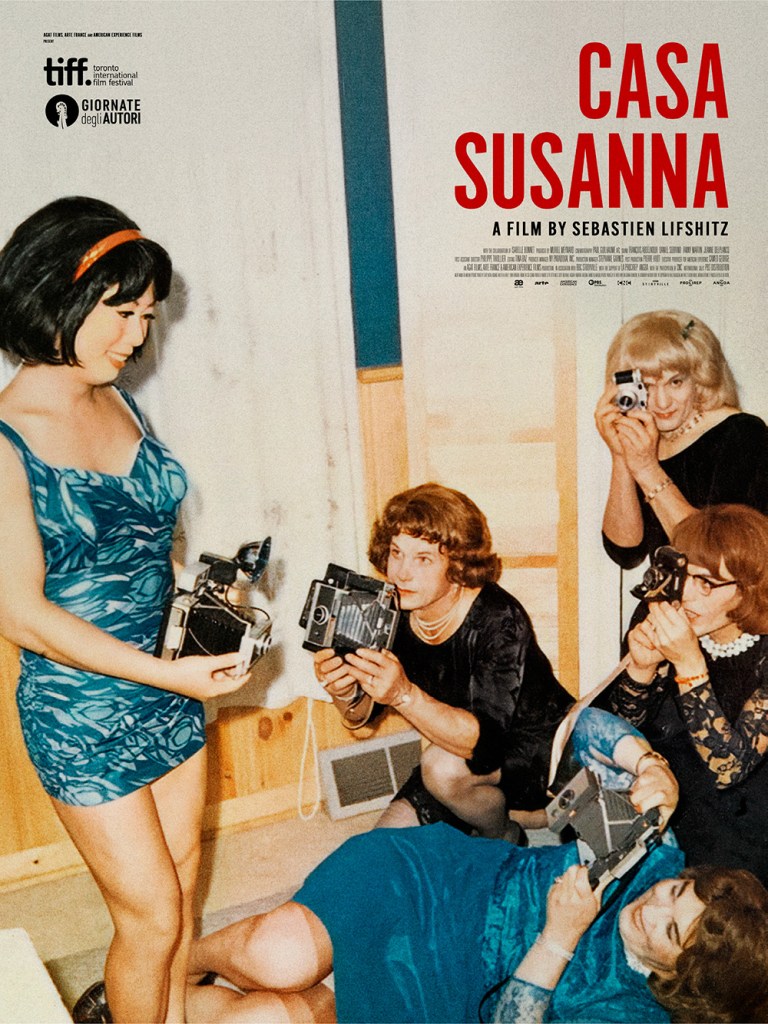
In the 1950s and ‘60s, an underground network of transgender women and cross-dressing men found refuge at a modest house in the Catskills region of New York. Known as Casa Susanna, the house provided a safe place for them to express their true selves and live for a few days as they had always dreamed—dressed as women without fear of being incarcerated or institutionalized for their self-expression. Told through the memories of those whose visits to the house would change their lives, the film provides a moving look back at a secret world where the persecuted and frightened found freedom, acceptance and, often, the courage to live their lives out of the shadows. A co-production with ARTE, CASA SUSANNA is directed by the critically acclaimed French filmmaker Sebastien Lifshitz.

Using a rich trove of color photos of Casa Susanna’s guests, archival footage and personal remembrances, the film reconstructs the forgotten life of Susanna Valenti, the courageous woman who ran the house. From her enlistment in the army as a man to her marriage to Marie, an eccentric older Italian woman, Susanna led a life that, even today, many would find hard to imagine. Like Susanna, many who came to the Catskills house were married and fathers, working as airplane pilots, tugboat captains, film directors and authors. They found each other and Casa Susanna through word-of-mouth and Transvestia, a magazine for and by the trans and cross-dressing community. In the film, two people whose lives were forever changed at Casa Susanna, Diane and Kate, travel back to the now-abandoned site and share their memories of a time when people like them, from all over the country, came to a place where they were free to dress and live as women from morning to night.

Tidbits:

  • Venice Film Festival – 2022 – Venice Days
  • Toronto International Film Festival – 2022
  • CPH:DOX – 2023
  • BFI London Film Festival – 2022
  • DOC NYC – 2022

Director’s Statement

Courtesy of press kit:

In the early 2000s, while writing WILD SIDE, a movie about a transgender person, I plunged into Paris’ underground scene. Over the months, I met a host of transgender women. The chaotic nature of their life stories came across as a terrible reflection of the way society had rejected and misunderstood them. Meeting these women convinced me that I had a duty to depict their lives, so trans identity might be better understood and accepted.

While researching WILD SIDE, I stumbled on a book mysteriously entitled Casa Susanna. To my surprise, I discovered this contained a collection of images depicting a US-based trans and cross-dressing community of the 1950s and ‘60s. The most striking thing was that they did not seem to be in costume. Quite the opposite: you could tell that they were carefully, sensitively, intent on embodying elegant, upper-middle-class American womanhood, a woman next door as Life Magazine or Harper’s Bazaar might have wanted us to see her. There was no accompanying text, just a short preface explaining that these pictures had been found by an antique-dealer couple at a flea market in New York City. There was nothing on the back of the pictures either and no correspondence to support provenance or history. The only words that did appear in one of the pictures was a wooden sign on a tree trunk that read Casa Susanna. Beside the tree stood a tall, long-haired brunette in a flower-print dress. It was summer. The weather was very sunny. This, people felt, must be Susanna, proudly standing outside what must be her own house.

Years passed. I made WILD SIDE, then a film portrait of Bambi, one of the first transgender women in France, and most recently PETITE FILLE ( Little Girl ), a documentary about Sasha, a seven-year-old trans girl. All three movies relate to trans identity in different eras. Together they make up a history of sorts from the 1940s to the present in France.

Then in 2016, I was offered the opportunity to organize a vast photographic exhibit, showing images from my own collection. This was Mauvais Genre ( Under Cover: A Secret History of Cross Dressers ). The show contained more than 500 amateur photographs depicting various forms of cross-dressing from the 19th century to the 1980s. As a result, I met Isabelle Bonnet, a photographic historian who had written a paper on the Casa Susanna pictures. Sheer grit had enabled Isabelle to identify and meet with some of the people shown in these mysterious photographs and to discover the true identity of Susanna herself.

When I read Isabelle’s paper, the mass of archival material found, and the discovery of surviving eyewitnesses convinced me I had to make a movie. So I went to New York in the late summer of 2021 and traveled up to the Catskills in search of Casa Susanna. I have been lucky enough to be able to bring this secret history, this invisible world, back to life with the help of Kate, Diana, Betsy and Gregory. Now their story, the story of a clandestine community, is there for all to see. With it, a fragment of queer history, stretching from the McCarthy era to the 1970s, is revealed. The unsettled nature of their existences and their bravery ring loud and clear. But now a new conservatism is rearing its head again and the rights of yesteryear, fiercely won, may yet again be challenged. The struggle isn’t over.


Director Bio

Sébastien Lifshitz, © AGAT FILMS & CIE – ARTE France. Courtesy of Music Box Films

“My work centers essentially on the idea of the portrait, that is to pick an individual and try to picture his or her inner landscape – one could almost call it the inner space. And the discontinued narrative helps me to approach it.”

Courtesy of The Lives of Thérèse press kit:

After studying art history, Sébastien Lifshitz began working in the world of contemporary art in 1990, assisting curator Bernard Blistène at the Pompidou Center, and photographer Suzanne Lafont. In 1994, he turned to filmmaking with his first short, Il faut que je l’aime.

In 1995, he made a documentary about film director Claire Denis, and in 1998 he completed his mid-length feature Open Bodies, which was selected for numerous international film festivals, including Cannes and Clermont-Ferrand, and won the Prix Jean Vigo and the Kodak Award for Best Short Film. In 1999, he directed Cold Lands for Arte as part of their series Gauche-Droite. The film was selected for the Venice Film Festival.

In 2000, he directed his first full-length feature, Come Undone, hailed by the critics and released internationally. In 2001, his second full-length feature, a documentary – road movie entitled The Crossing, was selected for the Director’s Fortnight in Cannes. In 2004 he began shooting Wild Side, which went on to be selected for numerous international festivals and won, among other awards, the Berlin Film Festival’s Teddy Award. In 2009 he shot Going South, which was selected for the 2010 Berlin Film Festival. Then in 2012, he directed Les Invisibles, a documentary film selected in Cannes Film Festival in the Official Selection. The film won the César (French Academy Award) for Best Documentary of 2013. That same year, he completed the documentary Bambi which was presented at the Berlin Film Festival, where it won the Teddy Award. In 2014, Sébastien Lifshitz received the «Chevalier de l’Ordre des Arts et Lettres.»

Filmography:

  • Casa Susanna (2022)
  • Bambi, une nouvelle femme [Bambi, A French Woman] (2021)
  • Petite Fille [Little Girl] (2020)
  • Avenue de lamballe (2019)
  • Adolescents (2019)
  • Les vies de Thérèse [The Lives of Thérèse] (2016)
  • Bambi (2013)
  • Les invisibles [The Invisibles] (2012)
  • Plein sud [Going South] (2009)
  • Jour et nuit (2008)
  • Les temoins (2006)
  • Wild Side (2004)
  • La traversée [The Crossing] (2001)
  • Presque rien [Come Undone] (2000)
  • Les terres froides [Cold Lands] (1999)
  • Les corps ouverts [Open Bodies] (1998)
  • Claire Denis la vagabonde (1995)
  • Il faut que je l’aime (1994)

Little Girl – May 27th, 2023

Little Girl


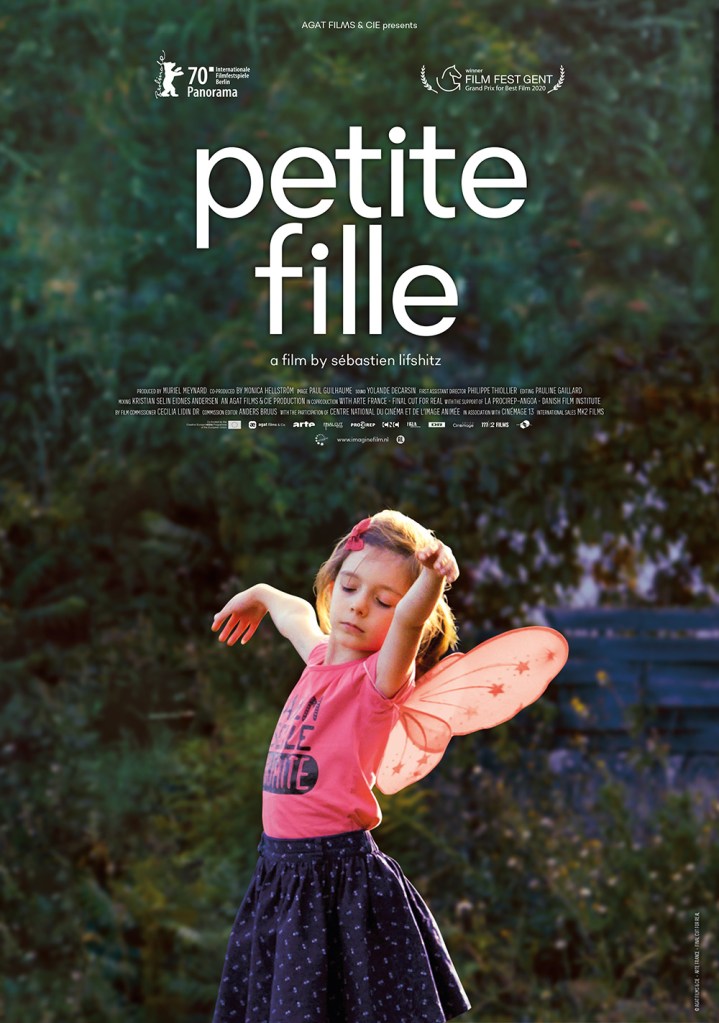
Please join Cultivate Cinema Circle for Love is Love: Sébastien Lifshitz’s LGBTQ+ Portraits, five films directed by Frenchman Sébastien Lifshitz. Next up is Little Girl [2020].


Event Sponsors:

Venue Information:

Downtown Central Library Auditorium
1 Lafayette Square, Buffalo, NY 14203
(Enter from Clinton Street between Oak and Washington Streets)
716-858-8900 • www.BuffaloLib.org
COVID protocol will be followed.


Synopsis

Synopsis courtesy of press kit:

LITTLE GIRL is the moving portrait of 7-year-old Sasha, who has always known that she is a girl. Sasha’s family has recently accepted her gender identity, embracing their daughter for who she truly is while working to confront outdated norms and find affirmation in a small community of rural France. Realized with delicacy and intimacy, Sébastien Lifshitz’s documentary poetically explores the emotional challenges, everyday feats, and small moments in Sasha’s life.

Out of respect and confidentiality to the family, full names will not be provided in the cast list or photo credits for this documentary. Thank you for honoring the family’s anonymity with any feature and review consideration. We hope that Sasha and her family’s story inspires others to affirm children who are comfortable addressing their gender identity publicly and that they are able to continue living out their beautiful life, uninterrupted.

Tidbits:

  • Berlin International Film Festival – 2020
  • CPH:DOX – 2020
  • European Film Awards – 2020 – Nominee: European Documentary
  • European Film Awards – 2020 – Winner: European Sound Designer

Director Bio

Sébastien Lifshitz, © AGAT FILMS & CIE – ARTE France. Courtesy of Music Box Films

“My work centers essentially on the idea of the portrait, that is to pick an individual and try to picture his or her inner landscape – one could almost call it the inner space. And the discontinued narrative helps me to approach it.”

Courtesy of The Lives of Thérèse press kit:

After studying art history, Sébastien Lifshitz began working in the world of contemporary art in 1990, assisting curator Bernard Blistène at the Pompidou Center, and photographer Suzanne Lafont. In 1994, he turned to filmmaking with his first short, Il faut que je l’aime.

In 1995, he made a documentary about film director Claire Denis, and in 1998 he completed his mid-length feature Open Bodies, which was selected for numerous international film festivals, including Cannes and Clermont-Ferrand, and won the Prix Jean Vigo and the Kodak Award for Best Short Film. In 1999, he directed Cold Lands for Arte as part of their series Gauche-Droite. The film was selected for the Venice Film Festival.

In 2000, he directed his first full-length feature, Come Undone, hailed by the critics and released internationally. In 2001, his second full-length feature, a documentary – road movie entitled The Crossing, was selected for the Director’s Fortnight in Cannes. In 2004 he began shooting Wild Side, which went on to be selected for numerous international festivals and won, among other awards, the Berlin Film Festival’s Teddy Award. In 2009 he shot Going South, which was selected for the 2010 Berlin Film Festival. Then in 2012, he directed Les Invisibles, a documentary film selected in Cannes Film Festival in the Official Selection. The film won the César (French Academy Award) for Best Documentary of 2013. That same year, he completed the documentary Bambi which was presented at the Berlin Film Festival, where it won the Teddy Award. In 2014, Sébastien Lifshitz received the «Chevalier de l’Ordre des Arts et Lettres.»

Filmography:

  • Casa Susanna (2022)
  • Bambi, une nouvelle femme [Bambi, A French Woman] (2021)
  • Petite Fille [Little Girl] (2020)
  • Avenue de lamballe (2019)
  • Adolescents (2019)
  • Les vies de Thérèse [The Lives of Thérèse] (2016)
  • Bambi (2013)
  • Les invisibles [The Invisibles] (2012)
  • Plein sud [Going South] (2009)
  • Jour et nuit (2008)
  • Les temoins (2006)
  • Wild Side (2004)
  • La traversée [The Crossing] (2001)
  • Presque rien [Come Undone] (2000)
  • Les terres froides [Cold Lands] (1999)
  • Les corps ouverts [Open Bodies] (1998)
  • Claire Denis la vagabonde (1995)
  • Il faut que je l’aime (1994)

Les Invisibles – April 29th, 2023

Les Invisibles


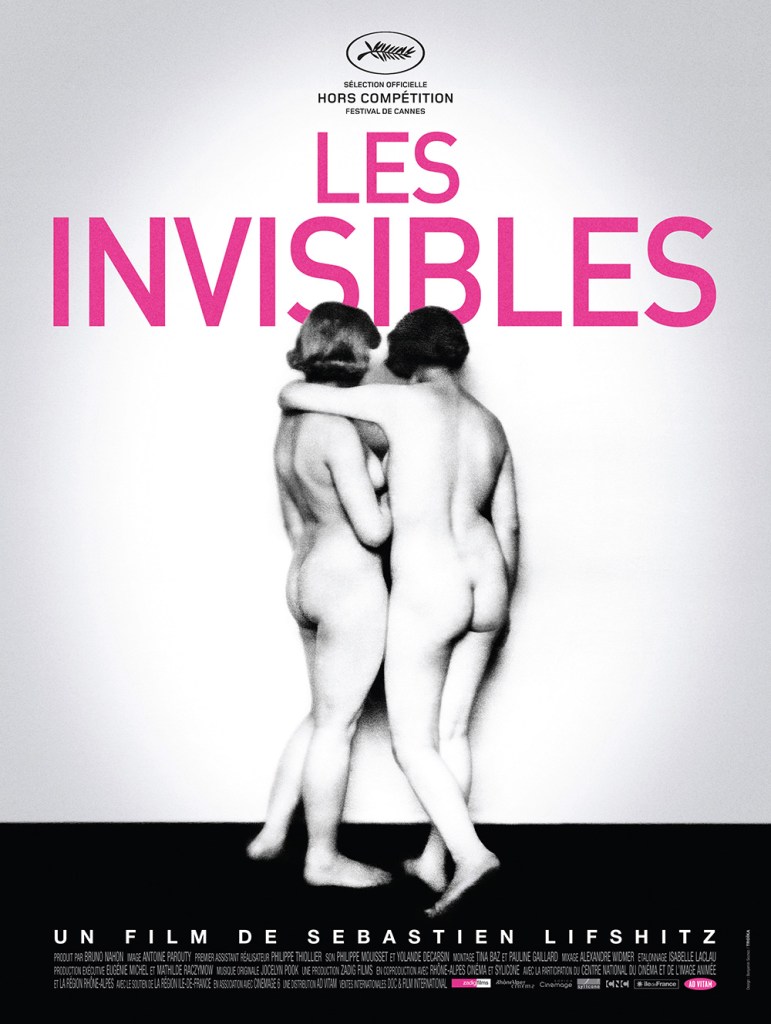
Please join Cultivate Cinema Circle for Love is Love: Sébastien Lifshitz’s LGBTQ+ Portraits, five films directed by Frenchman Sébastien Lifshitz. Next up is Les Invisibles [2012].


Event Sponsors:

Venue Information:

Downtown Central Library Auditorium
1 Lafayette Square, Buffalo, NY 14203
(Enter from Clinton Street between Oak and Washington Streets)
716-858-8900 • www.BuffaloLib.org
COVID protocol will be followed.


Synopsis

Synopsis courtesy of The Party Sales:

Men and women, born between the wars. They have nothing in common except their homosexuality, and their decision to live openly at a time when society rejected them. They’ve loved, struggled, desired, made love. Today they tell us about their pioneering lives, and how they navigated the desire to remain ordinary with the need to liberate themselves in order to thrive. They were fearless.

Tidbits:

  • Cannes Film Festival – 2012
  • BFI London Film Festival – 2012
  • César Awards – 2013 – Winner: Best Documentary Film

Director Bio

Sébastien Lifshitz, © AGAT FILMS & CIE – ARTE France. Courtesy of Music Box Films

“My work centers essentially on the idea of the portrait, that is to pick an individual and try to picture his or her inner landscape – one could almost call it the inner space. And the discontinued narrative helps me to approach it.”

Courtesy of The Lives of Thérèse press kit:

After studying art history, Sébastien Lifshitz began working in the world of contemporary art in 1990, assisting curator Bernard Blistène at the Pompidou Center, and photographer Suzanne Lafont. In 1994, he turned to filmmaking with his first short, Il faut que je l’aime.

In 1995, he made a documentary about film director Claire Denis, and in 1998 he completed his mid-length feature Open Bodies, which was selected for numerous international film festivals, including Cannes and Clermont-Ferrand, and won the Prix Jean Vigo and the Kodak Award for Best Short Film. In 1999, he directed Cold Lands for Arte as part of their series Gauche-Droite. The film was selected for the Venice Film Festival.

In 2000, he directed his first full-length feature, Come Undone, hailed by the critics and released internationally. In 2001, his second full-length feature, a documentary – road movie entitled The Crossing, was selected for the Director’s Fortnight in Cannes. In 2004 he began shooting Wild Side, which went on to be selected for numerous international festivals and won, among other awards, the Berlin Film Festival’s Teddy Award. In 2009 he shot Going South, which was selected for the 2010 Berlin Film Festival. Then in 2012, he directed Les Invisibles, a documentary film selected in Cannes Film Festival in the Official Selection. The film won the César (French Academy Award) for Best Documentary of 2013. That same year, he completed the documentary Bambi which was presented at the Berlin Film Festival, where it won the Teddy Award. In 2014, Sébastien Lifshitz received the «Chevalier de l’Ordre des Arts et Lettres.»

Filmography:

  • Casa Susanna (2022)
  • Bambi, une nouvelle femme [Bambi, A French Woman] (2021)
  • Petite Fille [Little Girl] (2020)
  • Avenue de lamballe (2019)
  • Adolescents (2019)
  • Les vies de Thérèse [The Lives of Thérèse] (2016)
  • Bambi (2013)
  • Les invisibles [The Invisibles] (2012)
  • Plein sud [Going South] (2009)
  • Jour et nuit (2008)
  • Les temoins (2006)
  • Wild Side (2004)
  • La traversée [The Crossing] (2001)
  • Presque rien [Come Undone] (2000)
  • Les terres froides [Cold Lands] (1999)
  • Les corps ouverts [Open Bodies] (1998)
  • Claire Denis la vagabonde (1995)
  • Il faut que je l’aime (1994)

Bambi, A French Woman – April 22nd, 2023

Bambi, A French Woman


Please join Cultivate Cinema Circle for Love is Love: Sébastien Lifshitz’s LGBTQ+ Portraits, five films directed by Frenchman Sébastien Lifshitz. First up is Bambi, A French Woman [Bambi, une nouvelle femme] [2021], a new longer cut of his 2013 documentary short Bambi.


Event Sponsors:

Venue Information:

Downtown Central Library Auditorium
1 Lafayette Square, Buffalo, NY 14203
(Enter from Clinton Street between Oak and Washington Streets)
716-858-8900 • www.BuffaloLib.org
COVID protocol will be followed.


Synopsis

Synopsis courtesy of website and The Party Sales:

Bambi was born in the suburb of Algiers in Bordj-Ménaïel in 1935. Her name was Jean-Pierre. Against all expectations, he tears himself away from his native land that he loves so much to join the Paris of the 1950s. He then begins a new life, where he will be able to free himself from his fears, from his malaise which the secret carefully. Thanks to the world of cabarets and his new friends at the Caroussel, he began his transformation and very quickly became a music hall star, better known as Bambi. Jean-Pierre is now called Marie-Pierre Pruvot, she is 77 years old and lives on a small pension from the National Education. It is she who tells us about her funny life.

The film will be constructed as a sort of collage made up of photos, super 8 images filmed by Bambi herself, or by her friends, including the famous Ladybug, the first famous transsexual in France; scraps of archives recovered from French or Italian television; excerpts from fiction films where Bambi played small roles.

Bambi’s life is almost a screenwriter’s invention, except it’s a real life and she’s the one who lived it. With this mosaic of sources, we are going to tell the story of a woman who was multiple, the story of a life where Bambi had to glue together faces so different from herself.

Director’s Cut:

From the day she was born in Algiers, Marie-Pierre has always wanted to wear dresses and has stubbornly refused her given name: Jean-Pierre. At the age of 17, her life takes a major turn when she comes upon a drag show on tour: le Carrousel de Paris. Marie-Pierre becomes Bambi, and within a few years establishes herself as a legendary figure of the Parisian cabaret scenes of the 50s and 60s. By collecting the story of one of the first transgender women, Sebastien Lifshitz continues his work initiated with Wild Side and Little Girl and portraits a forceful personality. This updated version of the film extends and deepens the short-film released in 2013 to become the feature-length version the director has always dreamt of making.


Director Bio

Sébastien Lifshitz, © AGAT FILMS & CIE – ARTE France. Courtesy of Music Box Films

“My work centers essentially on the idea of the portrait, that is to pick an individual and try to picture his or her inner landscape – one could almost call it the inner space. And the discontinued narrative helps me to approach it.”

Courtesy of The Lives of Thérèse press kit:

After studying art history, Sébastien Lifshitz began working in the world of contemporary art in 1990, assisting curator Bernard Blistène at the Pompidou Center, and photographer Suzanne Lafont. In 1994, he turned to filmmaking with his first short, Il faut que je l’aime.

In 1995, he made a documentary about film director Claire Denis, and in 1998 he completed his mid-length feature Open Bodies, which was selected for numerous international film festivals, including Cannes and Clermont-Ferrand, and won the Prix Jean Vigo and the Kodak Award for Best Short Film. In 1999, he directed Cold Lands for Arte as part of their series Gauche-Droite. The film was selected for the Venice Film Festival.

In 2000, he directed his first full-length feature, Come Undone, hailed by the critics and released internationally. In 2001, his second full-length feature, a documentary – road movie entitled The Crossing, was selected for the Director’s Fortnight in Cannes. In 2004 he began shooting Wild Side, which went on to be selected for numerous international festivals and won, among other awards, the Berlin Film Festival’s Teddy Award. In 2009 he shot Going South, which was selected for the 2010 Berlin Film Festival. Then in 2012, he directed Les Invisibles, a documentary film selected in Cannes Film Festival in the Official Selection. The film won the César (French Academy Award) for Best Documentary of 2013. That same year, he completed the documentary Bambi which was presented at the Berlin Film Festival, where it won the Teddy Award. In 2014, Sébastien Lifshitz received the «Chevalier de l’Ordre des Arts et Lettres.»

Filmography:

  • Casa Susanna (2022)
  • Bambi, une nouvelle femme [Bambi, A French Woman] (2021)
  • Petite Fille [Little Girl] (2020)
  • Avenue de lamballe (2019)
  • Adolescents (2019)
  • Les vies de Thérèse [The Lives of Thérèse] (2016)
  • Bambi (2013)
  • Les invisibles [The Invisibles] (2012)
  • Plein sud [Going South] (2009)
  • Jour et nuit (2008)
  • Les temoins (2006)
  • Wild Side (2004)
  • La traversée [The Crossing] (2001)
  • Presque rien [Come Undone] (2000)
  • Les terres froides [Cold Lands] (1999)
  • Les corps ouverts [Open Bodies] (1998)
  • Claire Denis la vagabonde (1995)
  • Il faut que je l’aime (1994)

Links

Here is a curated selection of links for additional insight/information:

  • Cultivate Cinema Circle info-sheet – link
  • “There have been moments in my life that have been so visually impacting that they are forever engraved vividly in my memory. I remember coming home, putting down my bags and hurriedly opening my newly bought thrift-store treasure. I sat in silence on my futon (as I had no other furniture) with an extremely bright bare light bulb over me as the wall-unit air conditioner hummed away. As I began to turn the pages I became transfixed by the extraordinary imagery before me, depicting ‘transvestites’ of the 1950s Parisian cabarets in glamour, candid, performance and group photos. I was simply astounded. Who were these creatures? How could this have existed then? How were they so beautiful? How did they have breasts? As my mind raced with endless questions I turned the pages and came upon a stunning blonde that looked like an ethereal goddess of the silver screen. The caption simply read ‘Bambi.’ Transition is unique for everyone. People often ask me, “When did you know you were trans?” – as if it was some sort of epiphany in which suddenly everything lights up theatrically, bells sound, a sequined halo appears and you declare: ‘I AM WOMAN.’ My journey was foggy at best. And in another of those visually impacting moments in my life, it was not until I saw beautiful transsexual women in American pageant videos that I realized this was possible and that it was possibly me.” — Marie-Pierre Pruvot (Bambi), Antidote [2022] – link
  • “In 2013 Sébastien Lifshitz’s documentary, Bambi, won the Teddy Award for Best Documentary at the Berlin International Film Festival, one of a series of prizes for films exploring LGBT themes as decided by an independent committee of judges. Bambi tells the remarkable story of Marie-Pierre Pruvot, a French transsexual who became one of the most famous and long-standing performers at Le Carrousel de Paris, the Parisian nightclub where the Travesty Revue drew sell-out crowds. Pruvot, now 78, tells her story in conventional documentary fashion – straight to camera with no interventions from her interviewer – intercut with archive performance footage and Pruvot’s own home movies, filmed on Super 8. This standard, even old-fashioned, format works here partly because the world of the story is so fascinating, but mainly because Pruvot herself is such an intelligent, thoughtful and articulate subject…Sébastien Lifchitz has created a very clear, direct, narrative here, as determined by Pruvot’s telling of her own story in her own way, and there is an element of performance in that. Some other voices might have been a good idea – Pruvot’s siblings perhaps? – and the film could easily have been extended to feature length. As it is, this is sixty minutes in Bambi’s company that left me wanting more. More than anything, what you take away from this film is an approach to life that faces up to, and faces down, the challenges that present themselves. Marie-Pierre Pruvot is an inspirational figure because she dared to create the person she knew she is, rather than remain the person she was born as.” — Michael Langan, Polari Magazine [2013] – link

Drunken Master – April 1st, 2023

Drunken Master


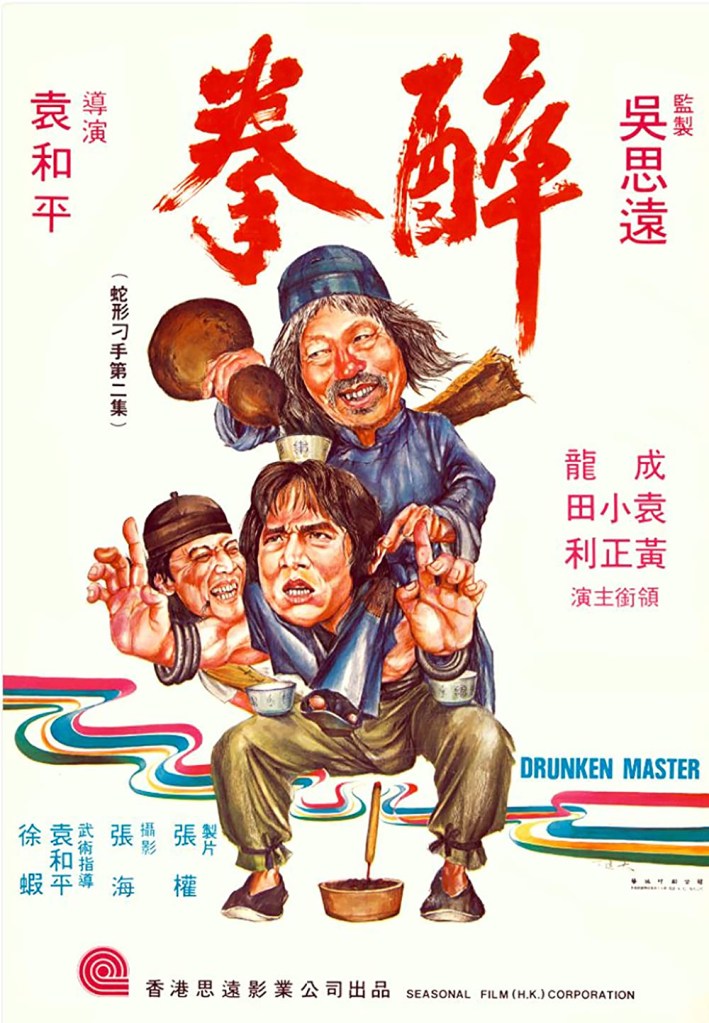
Please join Cultivate Cinema Circle as we screen five classic martial arts films from the 1970s. Last up is Yuen Woo-Ping’s Drunken Master [Zui quan] [1978] starring Bruce Lee.


Event Sponsors:

Venue Information:

Downtown Central Library Auditorium
1 Lafayette Square, Buffalo, NY 14203
(Enter from Clinton Street between Oak and Washington Streets)
716-858-8900 • www.BuffaloLib.org
COVID protocol will be followed.


Synopsis
The father of Wong Fei-hong, who has been attempting to teach his son kung-fu, but has found him too disobedient to teach and decides to send him off to his uncle, a cruel and torturous master of the 8-Drunken Genii kung-fu. After much suffering the son comes back to rescue the father.


Director Bio

Photo by K.Y. Cheng.

“Filmmaking is always about working with and working around limitations. And often it is because of limitations that filmmakers are come up creative ideas and solutions.”

Courtesy of Wikipedia:

Yuen was born in Guangzhou, Guangdong, China. With a support of Ng See-yuen, he achieved his first directing credit in 1978 on the seminal Snake in the Eagle’s Shadow, starring Jackie Chan, followed quickly by Drunken Master. The films were smash hits, launching Jackie Chan as a major film star, turning Seasonal Films into a major independent production company, and starting a trend towards comedy in martial arts films that continues to the following two decades.

Yuen went on to work with such figures as Sammo Hung in Magnificent Butcher (1979), Yuen Biao in Dreadnaught (1981), Donnie Yen in Iron Monkey (1993), and Jet Li and Michelle Yeoh in Tai Chi Master (1993), and Wing Chun (1994).

Yuen’s works, particularly his action choreography on Fist of Legend (1994), attracted the attention of the Wachowskis, who hired him as the martial arts choreographer on The Matrix (1999). The success of this collaboration, plus his action choreography on the following year’s hit Crouching Tiger, Hidden Dragon, made him a highly sought after figure in Hollywood. He went on to work on the Matrix sequels and Kill Bill (2003). More recent action choreography duties in Hong Kong cinema have included Kung Fu Hustle (2004), starring Stephen Chow, and Fearless (2006), starring Jet Li.

Yuen also choreographed the action sequences in The Forbidden Kingdom (2008), a Hollywood martial arts–adventure film, which was the first film to star together two of the best-known names in the martial arts film genre, Jackie Chan and Jet Li. He worked as a fight choreography consultant on Ninja Assassin (2009).

In late 2010, Yuen released his first film as director since 1996, True Legend, starring Vincent Zhao, Jay Chou and David Carradine (in a minor role). Yuen went on to work as stunt co-ordinator in two South Indian films, Enthiran (2010) and I (2014), both directed by S. Shankar. In 2015, Yuen directed Crouching Tiger, Hidden Dragon: Sword of Destiny, re-creating many of his signature action choreographies.

The annual and highly anticipated Hong Kong International Film Festival was held for its 45th edition in April 2021. Yuen is one of the six veteran Hong Kong filmmakers who directed local director Johnnie To Kei-fung’s highly anticipated anthology series Septet: The story of Hong Kong. The other filmmakers include Sammo Hung, Ann Hui On-wah, Patrick Tam, Tsui Hark and Ringo Lam. The short files were shot entirely on 35mm film with each of them touches on a nostalgic and moving story set across different time periods, with every one acting as an ode to the city.[2]

Filmography:

  • Septet: The Story of Hong Kong (segment Homecoming) (2020)
  • Master Z: The Ip Man Legacy (2018)
  • The Thousand Faces of Dunjia (2017)
  • Crouching Tiger, Hidden Dragon: Sword of Destiny (2016)
  • True Legend (2010)
  • The Tai Chi Master (2003)
  • Tai Chi II (1996)
  • The Red Wolf (1995)
  • Fire Dragon (1994)
  • Wing Chun (1994)
  • Tai Chi Master (1993)
  • Heroes Among Heroes (1993)
  • Iron Monkey (1993)
  • Last Hero in China (1993)
  • Tiger Cage III (1991)
  • Tiger Cage II (1990)
  • In the Line of Duty IV (1989)
  • Tiger Cage (1988)
  • The Close Encounters of Vampire (1986)
  • Ching fung dik sau (1985)
  • Siu Tai Gik (1984)
  • Tian shi zhuang xie (1983)
  • Oriental Voodoo (1982)
  • Kei moon duen gap (1982)
  • Legend of a Fighter (1982)
  • Dreadnaught (1981)
  • The Buddhist Fist (1980)
  • The Magnificent Butcher (1979)
  • Dance of the Drunken Mantis (1979)
  • Drunken Master (1978)
  • Snake in the Eagle’s Shadow (1978)

The Street Fighter – March 4th, 2023

The Street Fighter


Please join Cultivate Cinema Circle as we screen five classic martial arts films from the 1970s. Next is Shigehiro Ozawa’s The Street Fighter [Gekitotsu! Satsujin ken] [1974] starring Sonny Chiba.


Event Sponsors:

Venue Information:

Downtown Central Library Auditorium
1 Lafayette Square, Buffalo, NY 14203
(Enter from Clinton Street between Oak and Washington Streets)
716-858-8900 • www.BuffaloLib.org
COVID protocol will be followed.


Synopsis

An important business magnate dies, leaving billions to his daughter, the Mafia and Yakuza try to hire Terry (Chiba) to kidnap the daughter.


Director Bio

Courtesy of IMDb:

Shigehiro Ozawa was born on August 29, 1922 in Nagano Prefecture, Japan. He was a director and writer, known for Kanto hamonjo (1965), Tekiya no Ishimatsu (1976) and Kizu darake jinsei furui do de gonzansu (1972). He died on October 12, 2004.

Filmography:

  • Sister Street Fighter: Fifth Level Fist (1976)
  • Tekiya no Ishimatsu (1976)
  • Gekitotsu! Aikidô (1975)
  • The Streetfighter’s Last Revenge (1974)
  • San-daime Shumei (1974)
  • Gokuaku kenpô (1974)
  • Return of the Street Fighter (1974)
  • The Street Fighter (1974)
  • Miike Kangoku: Kyôaku han (1973)
  • Bokyo Komori-uta (1972)
  • Bounty Hunter 3: Eight Men to Kill (1972)
  • Kînagashî hyâkunîn (1972)
  • Gokudo makari touru (1972)
  • Kizu darake jinsei furui do de gonzansu (1972)
  • Scratched Faces (1971)
  • Nippon jokyô-den: Gekitô Himeyuri-misaki (1971)
  • Nihon kyokaku-den: Dosu (1971)
  • Okoma: The Orphan Gambler (1971)
  • Fudatsuki bakuto (1970)
  • Yukyo-retsuden (1970)
  • House of Gamblers (1970)
  • Gorotsuki butai (1969)
  • Tosei-nin Retsuden (1969)
  • Killer’s Mission (1969)
  • Hibotan bakuto: Nidaime shûmei (1969)
  • Yokogami-yaburino zenkamono (1968)
  • Bakuto retsuden (1968)
  • Ikasama bakuchi (1968)
  • Bazoku yakuza (1968)
  • Bakuchiuch Nagurikomi (1968)
  • Ah kaiten tokubetsu kogetikai (1968)
  • Bakuchi uchi (1967)
  • Naniwa kyokaku: dokyo shichinin giri (1967)
  • San-nin no bakuto (1967)
  • Bakuchi-uchi: Fujimi no shôbu (1967)
  • Bakuchi-uchi: Ippiki ryû (1967)
  • Ôtazune mono shichinin (1966)
  • Bakuto Shichi-nin (1966)
  • Kanto hamonjo (1965)
  • Kantô yakuza mono (1965)
  • Kangoku bakuto (1964)
  • Gambler (1964)
  • Bakuto tai tekiya (1964)
  • Jigokû meirei (1964)
  • Shinsengumi ketsufu roku – Kondo isami (1963)
  • Gyangu Chûshingura (1963)
  • Boryokudan (1963)
  • Yojinbô ichiba (1963)
  • Five Ronin (1963)
  • Uragiri mono wa jigoku daze (1962)
  • Sakura hangan (1962)
  • Echigo jishi matsuri (1962)
  • Jigokû no sâbaki wa ore ga surû (1962)
  • The Bandits (1962)
  • Kengo tengu matsuri (1961)
  • Akai kage-bôshi (1961)
  • Himayala mushuku – Shinzo yaburi no yaro domo (1961)
  • Hayabusa daimyo (1961)
  • Amazon mushuku seiki no daimaoh (1961)
  • Case of Umon: Nanbanzame Murders (1961)
  • Boku wa jigoku no tehinshi da (1961)
  • Nippatsume wa jigoku-iki daze (1960)
  • Nanatsu no kao no otoko daze (1960)
  • Zubekô tenshi (1960)
  • Muhô gai no yarô domo (1959)
  • Jigokû no sokô made tsuki auzê (1959)
  • Abare kaido (1959)
  • Shingo’s Original Challenge 2 (1959)
  • Kenka taiheiki (1958)
  • Kunisada Chûji (1958)
  • Tajobushin (1957)
  • Case of a Young Lord 4: Bridal Robe in Blood (1957)
  • Mitsu-kubi-tou (1956)
  • Kenjû tai kenjû (1956)
  • Anger! Rikidozan (1956)
  • Ninjutsu Sanshirô (1955)
  • Yuya dôji: Dai nibu: Akatsuki no yarikitai (1955)
  • Yuya dôji: Dai ichibu: Dewa no ko tengu (1955)
  • Hyakumen dôji Kanketsu-hen: Islam no joô (1955)
  • Hyakumen dôji Dai san-hen: Bateren no utage (1955)
  • Hyakumen dôji: Dai ni-hen: Satan no iwaya (1955)
  • Hyakumen doji: Dai ichi-hen: Giyaman no himitsu (1955)
  • Aa Dôyamaru (1954)
  • Mikazuki Dôji: Kanketsu-hen banri no makyô (1954)
  • Mikazuki Dôji: Dai ni-hen: Tenbakû o seiku (1954)
  • Mikazuki Dôji: Dai ichi-hen: Ken kumo yaribusuma (1954)
  • Uta goyomi iro wa wakashû (1954)
  • Nozarashi hime: Tsuigeki sanjukki (1954)

Links

Here is a curated selection of links for additional insight/information:

  • Cultivate Cinema Circle info-sheet – link
  • “Sonny Chiba was the anti-Bruce Lee. Bruce Lee was all about finesse with his martial arts; he moved like the proverbial butterfly who stung like a bee. When Sonny Chiba first made it big in America as Takuma Tsurugi in The Street Fighter films, he was a wasp—angry, spoiling for a fight, and reveling in the blood he drew and bones he broke. But Sonny Chiba was so much more than just his Street Fighter character. Over the course of a career that spanned over 60 years, he played superheroes, scientists, assassins, samurai, emperors, detectives, soldiers, and more…Born Sadaho Maeda in 1938 in Fukuoka, Japan, Sonny Chiba was a star even when he wasn’t on TV or film screens. He holds six black belts in six martial arts, including kendo, judo, and ninjutsu(!). In 1970, he started his own martial arts school for actors and stuntpeople named the Japan Action Club. He was the martial arts choreographer for dozens of film and TV projects, only some of which he starred in. Chiba was also a director, producer, and theater actor, including in a stage play of Biohazard video game series, better known in the U.S. as Resident Evil. Tragically, Chiba was another victim of Covid-19, which Oricon reports that he had been battling for some time. Although he was being treated in a Chiba prefecture hospital, he also developed pneumonia, and ultimately succumbed to it earlier today. He is survived by his three children, and the cinematic legacy he left behind will never be forgotten.” —Rob Bricken, Brooklyn Vegan [2021] – link
  • “Late last week, the world lost veteran actor and martial arts legend, Sonny Chiba. Although only particularly diehard American audiences knew of him until his role in Quentin Tarantino’s Kill Bill: Vol. 1, out of the dozens of grindhouse kung-fu brawlers leading up to his 2003 mainstream stateside introduction, one title arguably stood apart from the bone-crunching pack: The Street Fighter. Released in 1974, The Street Fighter garnered a level of American scandal—and, thereby a level of salacious success, of course—for achieving the first ever X-rating bestowed solely for its ‘extreme violence.’ Although many of our desensitized readers today would barely bat an eye at The Street Fighter’s throat-ripping, skull-smashing, penis-removing violence, back in the mid-1970s it was apparently enough for MPAA’s Code and Rating Administration (CARA) to deem the film too inappropriate for anyone under the age of 17. More specifically, as this dive into the archival bowels at The New York Times reveals, the ignominious claim to infamy can be attributed to one person in particular: Richard D. Heffner. ‘Some people consider us censors…We’re not. We don’t ban anything, or demand that changes be made in films,’ Heffner told journalist Gerald Jonas back in 1975. ‘We don’t make judgments about the value or quality of films. If you’re over the age of 17, nothing we do affects what you can see in a movie theater.’ Of course, it goes without saying that an ‘X’ rating has, until very recently, been seen as a film’s kiss of death. There’s also ratings board’s long history of arguable double standards, something even the NYT brought up in 1975, noting critics’ claims of CARA’s ‘hard line with films submitted by independent producers and distributors while letting the giant film companies get away with murder.’ The entire NYT profile is an interesting one, delving into the history of U.S. film regulation and censorship alongside arguments for and against the ‘X’ rating. In The Street Fighter’s case, ‘after reaping the benefits of free publicity from the original rating,’ the director managed to submit a heavily edited version which finally garnered a more palatable ‘R’ rating from CARA. Heffner, for his part, reportedly stated that he ‘couldn’t imagine any way to take the ‘X’ out of the film, short of destroying it and starting again,’ so his opinion was wrong at least once in his career…” —Andrew Paul, A.V. Club [2021] – link

Enter the Dragon – February 18th, 2023

Enter the Dragon


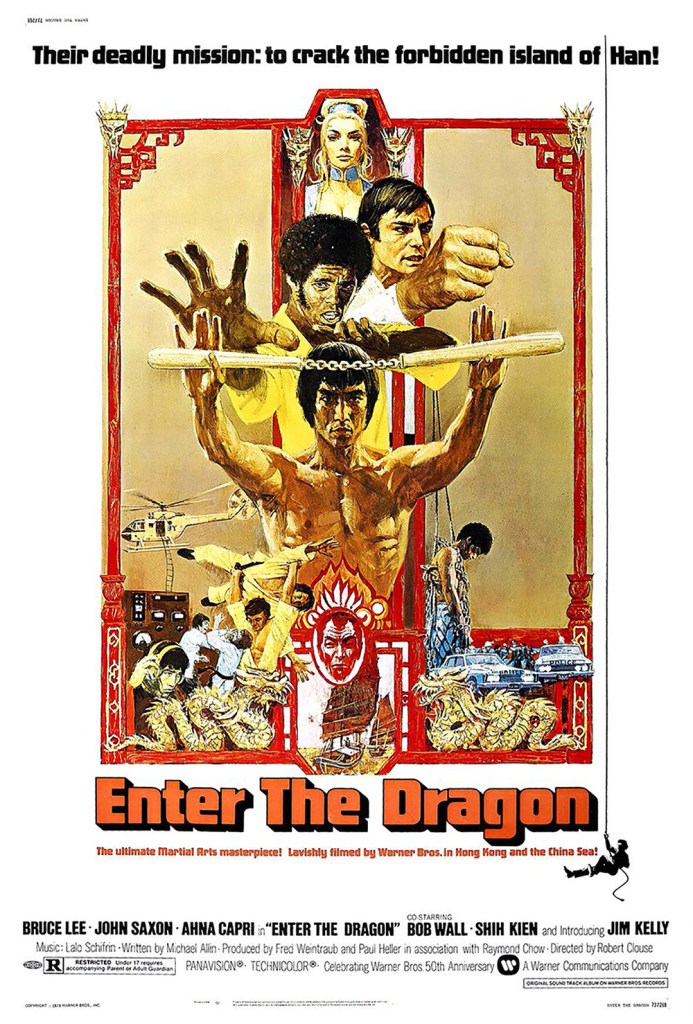
Please join Cultivate Cinema Circle as we screen five classic martial arts films from the 1970s. Next is Robert Clouse’s Enter the Dragon [1973] starring Bruce Lee.


Event Sponsors:

Venue Information:

Downtown Central Library Auditorium
1 Lafayette Square, Buffalo, NY 14203
(Enter from Clinton Street between Oak and Washington Streets)
716-858-8900 • www.BuffaloLib.org
COVID protocol will be followed.


Synopsis

Bruce Lee’s masterful final film, Enter the Dragon, stands the test of time as the most beloved martial arts epic in film history. This box office hit takes Lee to the island fortress of criminal warlord Han, whose martial arts academy covers up opium smuggling and prostitution activities.

Tidbits:

  • National Film Preservation Board – 2004 – National Film Registry

Director Bio

Courtesy of TCM:

Robert Clouse was a film director, writer and producer whose 30-year career was devoted primarily to martial arts films, most notably his collaboration with the legendary Bruce Lee in the 1973 martial arts classic, Enter the Dragon. The movie was a huge financial success for Warner Bros and Clouse, and gave him substantial momentum for future projects. It was essentially the only time the two worked together—though Lee also starred in Clouse’s The Game of Death from 1978. The movie was composed of a mix of previously filmed footage, sequences from other Lee films, and several shots of stand-ins (Lee had died in 1973, prior to the release of Enter the Dragon).

Clouse made his feature film-directing debut in 1970 with the action mystery Darker than Amber, followed by the drama Dreams of Glass, which he also wrote, that same year, but from then on action films became Clouse’s calling card. He worked with an odd range of actors over the years, from Yul Brynner and Max von Sydow in the 1975 sci-fi thriller The Ultimate Warrior to Jackie Chan in the 1980 action comedy The Big Brawl. From the mid-1980s through the end of his run in the early ’90s, Clouse continued to make martial arts films, though without the benefit of Lee or Chan-like name recognition. His later muses included Richard Norton, whom he worked with on several films, and Cynthia Rothrock, the star of both China O’Brien and China O’Brien II.

Filmography:

  • China O’Brien II (1991)
  • China O’Brien (1989)
  • Gymkata (1985)
  • The Rats (1982)
  • Force: Five (1981)
  • The Big Brawl (1980)
  • The Omega Connection (1979)
  • The Game of Death (1978)
  • The Amsterdam Kill (1978)
  • The Pack (1977)
  • Long Dark Night (1977)
  • The Ultimate Warrior (1975)
  • Black Belt Jones (1974)
  • Golden Needles (1974)
  • Enter the Dragon (1973)
  • Dreams of Glass (1970)
  • Darker Than Amber (1970)

Links

Here is a curated selection of links for additional insight/information:

  • Cultivate Cinema Circle info-sheet – link
  • “Bruce Lee’s last movie is the only one that gives him the star treatment he deserved. His charismatic presence is remarkable in Enter the Dragon, and it’s a shame he didn’t have the chance to become the great, unique star he seemed destined to be. The movie itself, produced by Fred Weintraub and Paul Heller in association with Raymond Chow of Hong Kong’s Concorde Productions, is a whoop-and-holler entertainment, which is to say that it’s a lavish, corny action movie, not boring for a second and as outrageously wry as it is visually appealing. Michael Allin’s inventive screenplay brings Lee to the island fortress of master criminal Shih Kien to find evidence to convict him of white slavery and opium trade. Kien organizes a martial arts contest, which is actually a front to find salesmen to peddle his wares throughout the world. John Saxon is extremely good as a compulsive gambler who joins the contest to find his way out of a losing streak. Jim Kelly is equally fine as a black American trying to earn money for the movement. Peter Archer is an unpleasant New Zealander contestant. Bob Wall is the big meanie who murdered Lee’s hapkido belt sister, played by Angela Mao Ying in one astonishing action sequence. Yang Sze is Shih’s muscle bound bodyguard. Geoffrey Weeks is Lee’s English Interpol contact. Betty Chung is a secret agent inside the fortress. Ahna Capri floats through the movie the way Myrna Loy used to in the early Oriental period of her career, dispensing pretty women to the tired contestants like sleeping pills. But it’s Bruce Lee’s movie. He’s a strange, otherworldly presence, a man of wisdom who excels at action, who speaks of the emotional content of the fight scorning the notion of anger. Lee staged the fight sequences himself, and they lift the movie the way Astaire and Rogers used to when they danced in movies of a different fantasy genre. Robert Clouse’s fluid direction brings this three-ring circus to action climax, so to speak, after action climax, wringing full potential out of the production. His work is an excellent example of a genre director proving his ready for more ambitious material. Clouse even steals, and quite deftly, from the mirror funhouse scene in Orson Welles’ Lady From Shanghai. Lalo Schifrin’s gigantic orchestral score inflates the movie with an appealing epic feeling that sometimes falls out of its story. Gilbert Hubbs’ garish photography is entirely appropriate to the Fu Manchu-like decor of James Wong Sun and costumes of Louis Sheng. Although the movie feels just a shade too long, film editors Kurt Hirschler and George Watters keep the proceedings going at a clip pace.” — Alan R. Howard, The Hollywood Reporter [1973] – link
  • “It was the summer of 1984 and while most of my friends were engaged in the bitter culture war that was Duran Duran v Culture Club, I was obsessed with a dead movie star called Bruce Lee. Our video store in Bramhall, Cheshire, was a classic early 80s den of rental iniquity, crammed with unclassified horror and martial arts flicks, and I wanted to see all of these morbid and violent treats before someone came along and banned them. My parents weren’t quite irresponsible enough to let me rent Last House on the Left or Driller Killer, but they had an open-door policy on kung fu, so one afternoon I went home with Enter the Dragon and nothing was the same again. Everything about Bruce Lee’s first American-produced movie (after three pictures made by Hong Kong studio Golden Harvest) is ludicrous and over-stylised in a way only the 1970s could manage. From its amazing orchestral funk soundtrack by Lalo Schifrin (also responsible for the Mission Impossible theme), to the kitsch set designs, it is a black-belt assault on the senses. It is also joyously dumb. Bruce Lee plays a Shaolin master recruited by the British secret service to infiltrate a fighting tournament arranged by reclusive millionaire Mr Han on his island off the coast of Hong Kong. You can tell Lee’s contact is a British agent because he looks like Captain Mainwaring and drinks tea in every scene he’s in. Han is suspected of running a trafficking operation, in which women are being kidnapped, drugged and then sold to rich psychopaths but instead of mounting a conventional intelligence operation, MI6 decides to send in a really violent monk. This all made perfect sense at the time…For years I had a poster of Enter the Dragon on my bedroom wall. It was a still from the fight scene in the island’s underground laboratory (which is where a young Jackie Chan pops up in one of his first acting roles). Bruce is standing with a pair of nunchucks above his head, shirtless, lithe and handsome – a very different representation of masculinity than I’d ever experienced before. It is such a potent, lasting image from a movie that is full of potent, lasting images: the scene where Jim Kelly’s character is hassled in the street by racist LA cops is a weird and unsettling thing to rewatch in the summer of 2020; and then there’s the moment Lee explains his technique as ‘fighting without fighting’ – part of his ‘be water’ philosophy that would go on to inspire the Hong Kong democracy protesters. Something I didn’t realise when I was 12 but I do now: for a joyously dumb movie, Enter the Dragon sure did have a lot to say.” — Keith Stuart, The Guardian [2020] – link

Hapkido – February 4th, 2023

Hapkido


Please join Cultivate Cinema Circle as we screen five classic martial arts films from the 1970s. Next is Huang Feng’s Hapkido [He qi dao] [Lady Kung Fu] [1972] starring Angela Mao.


Event Sponsors:

Venue Information:

Downtown Central Library Auditorium
1 Lafayette Square, Buffalo, NY 14203
(Enter from Clinton Street between Oak and Washington Streets)
716-858-8900 • www.BuffaloLib.org
COVID protocol will be followed.


Synopsis

Three Chinese students set up a school to teach the martial art of Hapkido. The Japanese subject their neighbourhood to a reign of terror, so the students use all their fighting skills to protect themselves and their neighbours.


Director Bio

Courtesy of HK Cinemagic:

A native of Anhui province, Huang Feng was born in Hefei in 1919. He joined the film industry as an actor in 1952, and became a scriptwriter two years later. Famous directors such as Li Han-hsiang, Doe Ching, Yan Jun and Griffin Yueh Feng had all worked from Huang’s scripts. He had also worked as an assistant director of Yan Jun. Later Shaw Brothers’ production manager Raymond Chow promoted Huang to directorship. Huang’s directorial debut was The Crimson Charm.

In 1971, Huang joined Golden Harvest where he directed the company’s first film The Angry River, and some multinational productions such as When Taekwondo Strikes, Hapkido and The Tournament.

In 1978, Huang founded a film company with Chan Sing and Angela Mao Ying, and produced The Legendary Strike. He also wrote the script of The Iron Fisted Monk, the directorial debut of Sammo Hung.

Filmography:

  • Lang tzu yi chao (1978)
  • Solim baekhomun (1978)
  • Naked Comes the Huntress (1978)
  • Heukgwon (1977)
  • Si da men pai (1977)
  • Mi zong sheng shou (1976)
  • Zhong tai quan tan sheng si zhan (1974)
  • The Shrine of Ultimate Bliss (1974)
  • When Taekwondo Strikes (1973)
  • Deadly China Doll (1973)
  • Hapkido (1972)
  • Lady Whirlwind (1972)
  • Yeodangsu (1972)
  • Bandits from Shantung (1972)
  • Daepyogaek (1971)
  • The Fast Sword (1971)
  • Xue fu men (1971)
  • The Angry River (1971)

The Big Boss – January 21st, 2023

The Big Boss


Please join Cultivate Cinema Circle as we screen five classic martial arts films from the 1970s. First up is Lo Wei’s The Big Boss [Tang shan da xiong] [1971] starring Bruce Lee.


Event Sponsors:

Venue Information:

Downtown Central Library Auditorium
1 Lafayette Square, Buffalo, NY 14203
(Enter from Clinton Street between Oak and Washington Streets)
716-858-8900 • www.BuffaloLib.org
COVID protocol will be followed.


Synopsis

A young man sworn to an oath of non-violence works with his cousins in an ice factory where they mysteriously begin to disappear.


Director Bio

Courtesy of HKMDB:

Lo Wei began his film career in Shanghai during World War II and he achieved stardom soon after moving to Hong Kong in 1948. His first major supporting role was in the landmark epic Sorrows of the Forbidden City. Lo achieved leading man status with Prisoner of Love in 1951, and graduated to the director’s chair in 1953 with The Husband’s Diary, in which he also starred. He was one of the Shaw Brothers’ most prominent filmmakers between 1964 and 1970 with nearly twenty features as director-actor. He next moved to Golden Harvest where he directed Bruce Lee’s first two mega hits, The Big Boss and Fist of Fury. In 1974 he founded the Lo Wei Film Company and directed a half-dozen features with Jackie Chan between 1976 and 1979. Lo’s output slowed down in the 1980s, but he continued to be involved in motion picture production until his death in 1996.

Filmography:

  • Dragon Fist (1979)
  • Immortal Warriors (1979)
  • Spiritual Kung Fu (1978)
  • Magnificent Bodyguards (1978)
  • To Kill with Intrigue (1977)
  • The Kung Fu Kid (1977)
  • Shaolin Wooden Men (1976)
  • The Killer Meteors (1976)
  • New Fist of Fury (1976)
  • Shantung Man in Hong Kong (1975)
  • The Girl with the Dexterous Touch (1975)
  • The Bedevilled (1974)
  • Yellow Faced Tiger (1974)
  • Naughty! Naughty! (1974)
  • Chinatown Capers (1974)
  • The Tattooed Dragon (1973)
  • None But the Brave (1973)
  • Seaman No. 7 (1973)
  • Back Alley Princess (1973)
  • A Man Called Tiger (1973)
  • Fist of Fury (1972)
  • The Hurricane (1972)
  • The Big Boss (1971)
  • Vengeance of a Snowgirl (1971)
  • The Comet Strikes (1971)
  • The Shadow Whip (1971)
  • The Invincible Eight (1971)
  • Brothers Five (1970)
  • The Golden Sword (1969)
  • Raw Courage (1969)
  • Dragon Swamp (1969)
  • Red Line 7000 (1969)
  • Death Valley (1968)
  • The Angel Strikes Again (1968)
  • Black Butterfly (1968)
  • Forever and Ever (1968)
  • Summons to Death (1967)
  • Madam Slender Plum (1967)
  • Angel with the Iron Fists (1967)
  • The Golden Buddha (1966)
  • Call of the Sea (1965)
  • Crocodile River (1965)
  • An Affair to Remember (1964)
  • The Better Halves (1964)
  • The Magic Lamp (1964)
  • The Golden Arrow (1963)
  • Song Without Words (1961)
  • Meng Lisi, Maid of the Jungle (1961)
  • Black Butterfly (1960)
  • The Tender Trap of Espionage (1960)
  • Tragic Melody (1960)
  • Honeymoon Affair (1960)
  • The Sweet Wild Flower (1959)
  • The Golden Phoenix (1958)
  • Jade-Green Lake (1958)
  • How to Marry a Millionaire (1958)
  • River of Romance (1957)
  • A Wrong Move (1954)
  • Blood-Stained Flowers (1954)
  • A Woman of Throbbing Passions (1953)
  • Mr. Handsome (1953)
  • Diary of a Husband (1953)

Links

  • Cultivate Cinema Circle info-sheet – link
  • “In The Big Boss, Lee was Cheng Chao-an, a naive hick sent to labor at a Thailand ice factory with his fellow ethnic Chinese. The factory is a front for a heroin-trafficking operation. When his cousins discover this, they begin to disappear one by one. Sworn to nonviolence by his mother, Chao-an does not fight until he is provoked. The original director of The Big Boss, Wu Chia-hsiang, and fight choreographer Han Ying-chieh, a wuxia vet who also played the titular boss, wanted Lee to perform traditional stylized fight scenes influenced by Cantonese opera and kung fu. Lee preferred the efficient brutality of a street fight. The film’s action scenes ended up being more Han than Lee, with lots of big punches and high kicks. But Lee forced Wu out as director, and Raymond Chow brought in Lo Wei to replace him….On The Big Boss, Lee’s work was paradigm-setting. His wildcat scream at the ice factory heralds his first explosion of motion and blood. His tortured face and shaking body after his second fight there disclose anguish at the murders he has just committed. He would continue to refine and elaborate on these gestures. Chao-an’s final fight with the boss—with its stylistic clash of Lee’s and Han’s choreographies as subtext—set the stage for Lee’s rapid rise. The movie became the highest-grossing film in Hong Kong to that point.” — Jeff Chang, Criterion’s Current [2020] — link
  • “Lee had spent most of the 1960s in American television, leaving behind Hollywood after a supporting role in 1969’s Marlowe. And with 1971’s kung-fu action film The Big Boss, directed by Lo Wei, Lee would revitalize his image and career with this runaway success. Lee is charming as Chinese immigrant who leaves behind his country existence to obtain a position alongside his cousin at a Thai ice factory. As soon as he arrives, his commitment to pacifism is immediately put to the test when there’s an altercation in which he must protect the virtues of a young woman accosted by a gang of miscreants, with his cousin arriving just in time to show Lee the ropes. Eventually, he discovers the ice factory is a front for a heroin ring, the owner using the ice to transport the drugs (as well as hide human bodies of factory workers who discover his secret). Efficiently paced, well-choreographed and full of entertaining moments featuring Lee, The Big Boss is the prototype for the template Lee would use over his next three features.” — Nicholas Bell, IONCINEMA [2020] — link
  • “After the frustration of being relegated to a cartoonish supporting role in “The Green Hornet,” Bruce Lee returned to Hong Kong, surprised to find that he was an icon there. The HK film business realized they had something in Lee and tried to capitalize on it quickly as Raymond Chow and Golden Harvest signed the star to a two-picture deal. Even then, they weren’t sure Lee could carry a film, and so they started shooting his 1971 breakthrough, The Big Boss, unsure of who would be the film’s lead. The movie was set-up to go either way so that either Lee’s character or the one played by a bigger star at the moment, James Tien, would be killed halfway through, turning the movie over to a vengeance flick for the remaining actor. Lee won. Watching the movie a half-century later allows one to see one of the best examples of instant star status. The minute Lee comes on screen, he just owns it. There’s a confidence and swagger that’s like early Clint Eastwood, an actor that Lee wanted to emulate, and you can see how Lee’s work with Hollywood icons in L.A. like Steve McQueen and James Coburn taught him a thing or two about holding the camera’s gaze. Lee plays a Chinese man who moves to Thailand to work in an ice factory run by a drug smuggler. He essentially helps lead a worker revolution and avenge the death of his cousin, played by Tien. Some of the filmmaking is clunkier than Lee’s later films, but it’s still one of the more engaging martial arts films of its era, and one of those movies after which nothing would really be the same.” — Brian Tallerico, RogerEbert.com [2020] — link

Flux Gourmet – January 7th, 2023

Flux Gourmet


Please join Cultivate Cinema Circle as we screen four films written & directed by Peter Strickland. Next up is his horror/satire Flux Gourmet [2022].


Event Sponsors:

Venue Information:

Downtown Central Library Auditorium
1 Lafayette Square, Buffalo, NY 14203
(Enter from Clinton Street between Oak and Washington Streets)
716-858-8900 • www.BuffaloLib.org
COVID protocol will be followed.


Synopsis

A sonic collective who can’t decide on a name takes up a residency at an institute devoted to culinary and alimentary performance. The members Elle di Elle, Billy Rubin and Lamina Propria are caught up in their own power struggles, only their dysfunctional dynamic is furthermore exacerbated when they have to answer to the institute’s head, Jan Stevens. With the various rivalries unfolding, Stones, the Institute’s ‘dossierge’ has to privately endure increasingly fraught stomach problems whilst documenting the collective’s activities.

Upon hearing of Stones’s visits to the gastroenterologist, Dr Glock, Elle coerces him into her performances in a desperate bid for authenticity. The reluctant Stones puts up with the collective’s plans to use his condition for their art whilst Jan Stevens goes to war with Elle over creative differences.

Tidbits:

  • Berlin International Film Festival – 2022

Director’s Statement

‘Flux Gourmet’ originally started as a satire on artists and their complex relationship with the institutes that fund their work. I tried to remain neutral and look at both perspectives offering both sympathy and ridicule. Whilst exploring the month-long residency of an art collective that deal with food, I became interested in the idea of taboo and shock value in art, which in this context opened up the dark side of the stomach and the bowels. This eventually led to the story of a man in the institute suffering from very private and embarrassing stomach problems – the kind of problems many people suffer from, but are sometimes too embarrassed to mention even to a doctor.

I’ve often felt frustrated with cinema’s ignorance of allergies and intolerances, which are often portrayed as comedy, particularly when someone’s face swells up from anaphylactic shock. Though there are no allergies or anaphylactic shock in ‘Flux Gourmet’, I hope that the film treats stomach problems responsibly, whilst still pushing the boundaries of taste. I wanted to explore coeliac disease for ‘Flux Gourmet’ and treat all the symptoms methodically. At first, with all the mention of flatulence, the audience might think we are making a comedy, but we soon realise that this is serious and we never hear a single fart throughout the film. All the deeply embarrassing problems are never shown. We only hear the character mention them in solemn voice-over, yet there is humour elsewhere with the gender and creative conflicts between band members and the institute.

It’s clear by the end of the film that having coeliac disease is not the end of the world for the character and people can easily adapt to it, but I hope that audiences will understand the disease more instead of thinking it’s a ‘fad’ and thinking a coeliac sufferer won’t have any stomach problems if he or she eats gluten. Also, a lot of emphasis is on the fear prior to diagnosis.

The influences for ‘Flux Gourmet’ are Robert Bresson’s films with his solemn and almost religious voice-overs, Rob Reiner’s ‘Spinal Tap’ for the rock n’ roll clichés, the Viennese Aktionists for the corporeal shock value and Marcel Marceau for his mime work. The time and place are not specified in order to enhance the film’s dream-like nature. Ultimately, through the use of performance art and avant-garde music, I want to reveal a very human story about problems that people are often too embarrassed to talk about, but hopefully many of us can relate to regardless of how healthy or unhealthy our stomachs are. Within the seriousness, I also wanted to present a somewhat silly world exploring creative conflict, rejection, power and the dilemmas facing both artists and their patrons.


Director Bio

“I’m glad British film produces mainstream crowd-pleasers, but I don’t want to make one.”

Courtesy of Daniel Gasenzer.

Courtesy of Flux Gourmet press kit:

Peter Strickland (born in Great Britain’s Thames Valley in 1973) has made five feature films steeped in tragedy, sonic psychosis, bondage, retail nightmares and stomach problems.

Peter Strickland started making short films on Super 8 and 16mm in the early ’90s. After directing his adaptation of Kafka’s ‘Metamorphosis’ for Reading’s Progress Theatre in 1992 he went on to direct a short film in New York called ‘Bubblegum’, which played at festivals in 1996. After a long hiatus making culinary soundscapes with The Sonic Catering Band, he returned to film in the early part of this century. His first feature film, ‘Katalin Varga’ was funded from an inheritance and shot and edited on a budget of £25,000. The Carpathian tragedy led to funding from the British film industry and the Milano-Dorking sonic anguish of ‘Berberian Sound Studio’ followed in 2012 along with the bondage romance, ‘The Duke of Burgundy’ in 2015. Several radio plays along with a concert film for Björk co-directed with Nick Fenton were made in the last few years and his fourth feature, the Thames Valley retail nightmare, ‘In Fabric’ was released in 2019. His latest feature is the gastrointestinal drama ‘Flux Gourmet’.

Filmography:

  • Flux Gourmet (2022)
  • In Fabric (2019)
  • The Duke of Burgundy (2015)
  • Björk: Biophilia Live (2014)
  • Berberian Sound Studio (2012)
  • Katalin Varga (2009)

Links

Here is a curated selection of links for additional insight/information:

  • Cultivate Cinema Circle info-sheet – link
  • “Director Peter Strickland’s transportive, fully realized alternate worlds put to shame most of the ‘cinematic universes’ that dominate contemporary film conversation. In The Duke of BurgundyIn Fabric, and now Flux Gourmet, Strickland and his collaborators assemble fantasy social scenes that operate on their own internal, slightly askew logic, with the rules of real-life social norms heightened for parodic effect, featuring dry dark humor, kink, and readily apparent cinematic influences. The Duke of Burgundy, for instance, presented an all-female community of BDSM-loving lepidopterists, seemingly all residing in improbable stately manors. Flux Gourmet presents a similar hermetic sylvan setting, this time depicting enthusiasts of a robustly imagined music scene, satirizing both the art world and the entangled romantic and creative travails of collaboration…Strickland has made a career out of using familiar tropes from “Euro-sleaze,” giallo, and schlock horror to elevate comedies of manners into epic endeavors. He conjures those genres’ garish colors and aggressive sound work around relationship conflicts in The Duke of Burgundy, a meditation on retail culture of In Fabric, and a metatextual look at filmmaking in Berberian Sound Studio. Flux Gourmet in many ways feels like it’s remixing elements from each of those earlier works. It combines the setting and attention to interpersonal dynamics of Duke of Burgundy (and reuses its reference to a “human toilet”), the older woman/younger man romance of In Fabric (with Christie again playing the woman, to boot), and the meticulous attention to Foley work from Berberian Sound Studio. More than that, the film draws directly from Strickland’s time as a musician, as he’s spent decades with the Sonic Catering Band, which does indeed turn food noises into music. Many of the songs Elle’s collective performs in the film were originally performed by that band. To a more literal extent than many filmmakers already do, Strickland has fashioned a world in which his personal predilections become fixations for his characters. Here the name of his band identifies an entire respected field.” — Dan Schindel, Reverse Shot [2022] – link
  • “Tim Sidell’s cinematography, Saffron Cullane’s wonderfully outlandish costumes and the uncanny sound design all deserve mention for the rich aesthetic blanket draped across the film. But underneath that blanket Flux Gourmet is lacking something of the deep-seated viscera of Strickland’s other work. Flux Gourmet is superficially, affectedly weird in a way that misses the unsettling dreamlike wrongness that is so key to Berberian Sound Studio or In Fabric, while the psychology of its characters are often too rote to elicit the empathy and drama of The Duke of Burgundy or Katalin Varga. That’s not to say that Flux Gourmet is without delectable morsels. The aforementioned cinematography is rich with colour and contrast, bringing out the deep reds and inky blacks that dominate the frame. Elsewhere, the collective’s performances are a baffling delight to watch, as are the studied performances of the cast. Moreover, while the viscera of the film could be more pungent, its exploration of the ways that food, sex, performance and conflict intersect are at the very least intriguing. There is a great deal to enjoy here for devotees of Strickland’s work and the film feels destined to be described as his weirdest piece yet.” — Christopher Machell, Cinevue [2022] – link