Buffalo is full of people helping to cultivate cinema and we want to celebrate those involved. The Cultivators is a new monthly feature in which we highlight individuals who are integral to the presentation, promotion and production of film here in the queen city.
THE CULTIVATORS #010
JEREMY MILLS
Former General Manager – Eastern Hills Cinema Former Marketing and Promotions Coordinator – Dipson Theatres
QUESTIONS & ANSWERS
What got you interested in movies?
My dad and I both have mildly obsessive collector personalities. We’re not full-blown hoarders—as much as my mom and my partner would probably argue otherwise. We just love our “stuff”. I’m not sure how my love of movies would’ve taken root if it weren’t for my dad’s catalogued and indexed collection of VHS tapes consisting of home video releases and wildly juxtaposed triple features dubbed from 80’s cable stations. I’d like to think I would’ve eventually been swept away by cinema regardless, but I wouldn’t trade the days I spent watching Beetlejuice and Jaws on an endless loop for anything.
I also have incredibly fond memories of spending time each weekend watching “At the Movies” with Gene Siskel and Roger Ebert. They were just the perfect duo. Siskel’s even-keeled, populist approach was the perfect compliment to Roger’s erudite, oftentimes aloof outlook. I still miss getting their opinions on each weekend’s new releases, but both of them cemented incredible legacies in their time, so they won’t be forgotten—least of all by me.
What is your favorite movie related memory?
When I was four years old my uncle and my dad dragged me to see Star Trek V: The Final Frontier. Yes, that is the installment with Spock’s evil brother and features the Enterprise Crew traveling to the center of the galaxy in search of God. Needless to say, I didn’t get it at all. I sort of have this fantastic nostalgia for being completely and utterly lost as I struggled to stay awake.
That memory is closely tied with seeing Tremors a year later and being completely terrified. I refused to walk across large open spaces for months afterward, lest giant sand worms burst through the floor and devour me. It’s possible those repeated viewings of Beetlejuice later on were some rudimentary form of immersion therapy.
How did you end up in Buffalo?
Although we met in college in Bloomington, IN, my partner is from Buffalo. We reconnected a couple years ago and decided to give our relationship a second chance. I was working for a movie theater owner in Detroit at the time and he introduced me to the president of Dipson Theatres, Michael Clement. When I expressed interest in moving to the area, Mike was gracious enough to let me lend my skills to the company and I’ve been doing my best to keep the arthouses at Amherst & Eastern Hills thriving ever since.
What do you want to see more of in Buffalo?
I would love to see more local businesses team up with movie theaters for special screenings. In terms of letting movie houses evolve into the full-service bars and entertainment complexes you’ll see in other areas of the country, New York State Law is regrettably a little behind the times. But there are still plenty of ways to host events that encompass local eateries, breweries, craft-makers—you name it. It just takes a little planning and a little passion. It would be great to see different aspects of the community come together, combining audiences and enriching the local culture with cinema.
What are your essential film books?
In no particular order:
Shock Value by Jason Zinoman – An oral history of sorts that focuses on the major auteurs of horror cinema. Absolutely essential reading for any genre fan. Firsthand accounts and historical context abound. Zinoman really gets inside the minds of these filmmakers and makes plainly irrefutable arguments towards the inherent value of scary art.
Future Noir: The Making of Blade Runner by Paul M. Sammon – Wildly in-depth and completely superfluous as the many versions of the film confirm what the author sometimes struggles to convey: that Blade Runner is pretty much the zenith of what sci-fi Cinema can achieve.
The Devil’s Candy: The Bonfire of the Vanities goes to Hollywood by Julie Salamon – Gives staggering insight into the difficulties of big-budget filmmaking and adaptation especially. Truly a document of 80’s excess that has to be read to be believed. It’s a wonder anyone involved made it out alive.
Cinematic Storytelling by Jennifer Van Sijll – This book is simplistic in its approach so it really makes the perfect gateway drug to filmmaking or film criticism. Filled with revelations hiding in plain sight from a number of certified “classics”. It was introduced to me as a textbook, but it’s appeal is really universal.
TOP TEN FILMS
I guess I’ll split this into two eras. The favorite films of my youth and my favorite films as an adult.
Growing up my list would’ve been:
Star Wars: Episode V – The Empire Strikes Back [1980], directed by Irvin Kershner
Jaws [1975], directed by Steven Spielberg
Aladdin [1992], directed by Ron Clements & John Musker
The Land Before Time [1988], directed by Don Bluth
The Brave Little Toaster [1987], directed by Jerry Rees
I suppose these are all self-explanatory. I watched my VHS copies until they fell apart. They are simple stories, yet they contain multitudes. As I got older I began to see the great pieces of cinema that inspired them all, but knowing that they are derived from other works doesn’t make them any less profound. I still blame Toaster for my ongoing and irrational attachment to inanimate objects.
Since discovering the whole wide sphere of cinema:
TIE
Alien [1979], directed by Ridley Scott
Blade Runner [1982], directed by Ridley Scott
La Dolce Vita [1960], directed by Federico Fellini
Mulholland Drive [2001], directed by David Lynch
Cloud Atlas [2012], directed by Tom Tykwer, Lana Wachowski & Lilly Wachowski
The Dreamers [2003], directed by Bernardo Bertolucci
I gravitate towards movies that push the envelope and stretch the boundaries of what cinema can achieve. I love movies that belong on a big screen—that don’t quite feel the same when you view them at home. My first job when I was 14 years old was scooping popcorn at a movie theater and here I am today, right back where I started. Now that I have a 1-year old flying around the house, I don’t have as much viewing time as I once did, but I’m beginning to curate a library of things I want to show him, and that feels like a perfectly acceptable replacement for my own indulgences.
Film stills from left to right, top to bottom are Beetlejuice, Jaws, “At the Movies”, Star Trek V: The Final Frontier, and Tremors.
Please join us as we celebrate our 50th screening alongside Hallwalls Contemporary Arts Center with Luchino Visconti’s Italian masterpiece Rocco e i suoi fratelli [Rocco and His Brothers] [1960]. This two-night 4K restoration engagement is part of the gallery’s 20th annual Long Nights, Bright Screens series.
February 8th’s screening will be introduced by riverrun Global Film Series curator and SUNY at Buffalo professor of Film & Media Theory Tanya Shilina-Conte. Will we also be giving away a digital copy of Ivo Blom’s Reframing Luchino Visconti: Film and Art thanks to Amsterdam University Press.
February 9th’s screening will be introduced by The Public‘s chief film critic M. Faust.
Screening Date #1: Wednesday, February 8th, 2017 | 7:00pm
Screening Date #2: Thursday, February 9th, 2017 | 7:00pm
Tickets:$8 general, $6 students & seniors, $5 members
Deal: Join us for post-screening drinks at Buffalo Proper for $5 glasses of wine, beer, or their cocktail The Mr Mule with ticket stub.
Event Sponsors:
Venue Information:
341 Delaware Ave, Buffalo, NY 14202
Synopsis
Courtesy of the Toronto International Film Festival:
Released in the same anno memorabile as Fellini’s La Dolce Vita and Antonioni’s L’Avventura, and long ensconced on Martin Scorsese’s short list of must-see films (it greatly influenced his Mean Streets and Raging Bull), Luchino Visconti’s magisterial family saga opens as an impoverished Sicilian clan arrives in dreary, mid-winter Milan in search of a better life. Their fiercely protective matriarch, who dreams of returning to what one son calls “the land of olives, moonshine and rainbows,” proves no match for the corrupting forces of the alien industrial north, and the five fratelli of the title variously fall victim to its depredations. “Among all my activities in the cinema, my favourite is working with actors,” Visconti declared in his lovely essay “Anthropomorphic Cinema,” a contention that is amply corroborated by Rocco; the film’s cinematographer Giuseppe Rotunno reports that he had to master a new method of shooting with three cameras simultaneously in order to capture the best performances in every take. While Rocco confirms Andrew Sarris’ claim that Visconti was “the best director of actresses in the world” (Annie Girardot is particularly affecting as the doomed prostitute Nadia), it also reveals that his actors were equally capable of histrionic heights: witness the sculptural potency of Alain Delon as Rocco, the sepulchral sexuality of Paolo Stoppa as a predatory sports impresario, and the injured emotionalism of Renato Salvatori as the naive boxing champion Simone. Only oxymoron suffices to describe the contradictory Visconti — communist patrician and reactionary modernist — and the teeming intensity of Rocco derives in part from the film’s seemingly irreconcilable mode of operatic neorealism. With two previously censored scenes included in this glorious restoration, Rocco more than ever qualifies as a colossus.
Tidbits:
Venice Film Festival – 1960 – Winner: Special Jury Prize
Inspirations
Although it is possible to see Rocco and His Brothers as a sequel to Luchino Visconti’s earlier movie on Italy’s south, La Terra Trema, there were many literary influences on the script which was written for the most part by Luchino Visconti; his frequent collaborator, the legendary scriptwriter Suso Cecchi d’Amico; and the novelist Vasco Pratolini.
Three of the stories in Giovanni Testori’s Il ponte della Ghisolfa served as major inspiration for Rocco and His Brothers (the short story collection is acknowledged in the film’s credits), including the milieu of boxing culture for young Italian men and the love triangle.
“In one of the episodes entitled “What are You Doing Sinatra?” Dario, a young man nicknamed Sinatra because of his good singing voice, becomes the lover of Gina, a young prostitute who formerly ‘belonged’ to Dario’s brother Attilio. The latter, in the presence of some friends, having surprised Gina and Dario making love in the night near the bridge of Ghisolfa, rapes the girl and ‘teaches the brother a lesson,’ by hitting him. Testori’s dialogue between the two brothers is strikingly similar to the words exchanged between Rocco and Simone, the action seen on screen closely follows the scene in the book.” — Claretta Micheletti Tonetti, Luchino Visconti
Giovanni Verga’s novel I Malavoglia, or The House by the Medlar Tree chronicled the saga of the hardworking Toscano family with five sons (one named Luca) struggling to survive poverty, terrible misfortunes, and despair in the Catania region.
“Probably my major inspiration for Rocco, a story I have been thinking about for a while, is I Malavoglia. I have been obsessed with this novel ever since the first time I read it. The principle core of Rocco is the same of Verga’s novel: in the novel, Ntoni and his family in order to survive and free themselves from material necessities, start a business of their own, while in Rocco, Rosaria’s sons try boxing, which in a way is a business. This is how this film is related to La Terra Trema — which is my interpretation of I Malavoglia — and may therefore be considered its second episode. Two more elements can be added to my ‘obsession’ for Verga’s major novel: the desire to make a film on a mother, who feels she is the owner of her sons and wants to exploit their energy to free herself from the problem of ‘daily necessities,’ without considering the young men’s differences in character or possibilities; a mother who, by aiming too far is defeated.” — Luchino Visconti
Paralleling his fascination with Verga, Visconti was strongly influenced by the work of the Italian Marxist, Antonio Gramsci. Gramsci’s analysis of the economic stagnation of southern Italy and the meaning of the mass migration of laborers from that region to northern cities like Milan brought an added dimension to Visconti: “The mythological vein which I had found in Verga no longer seemed adequate to me. I felt an impellent urge to find out for myself what were the historic, economic and social foundations on which that Southern drama had been built. Reading Gramsci I learned the truth that is still waiting to be resolved. Gramsci did not only convince me by the acuteness of his historical and political analysis but his teaching also explained to me the character of Southern Italy as a great social rupture and as a market for a colonialist type of exploitation by the ruling classes of the North.”
Thomas Mann’s Joseph and His Brothers resonated heavily with Visconti and helped shape his perception of family dynamics. The tale of a brother betrayed and sold into slavery by his own family is “inverted” in the film:
“Whereas in the novel the brothers sell Joseph to get rid of him, thus inadvertently serving a divine plan, in the film Rocco’s act of self-sacrifice for the benefit of the family is futile and destructive. The point is not just that Joseph lives in a world governed by divine Providence, whereas in the modern urban world God would be dead or simply silent. Mann’s Joseph has a remarkable ability to live in the present, to have no regrets of the past, and to reach toward the future step by step…The tender, simple Rocco is not a man of such spirit; he is a man of the past. He has the innocence of a pure fool, but he is at the mercy of time. He can bring momentary consolation to Nadia, but because she yearns for a permanent change in her life, a different kind of future, the fleeting moment of hope and happiness with him leads her to ever deeper spiritual desperation and destruction.” — Henry Bacon, Visconti: Explorations of Beauty and Decay
Fyodor Dostoevsky’s The Idiot was another powerful influence on Visconti. The plot of Rocco and His Brothers mirrors the novel’s relationship of the saintly Prince Lev Nikolayevich Myshkin and the violent and jealous Parfyon Semyonovich Rogozhin who both fall in love with the same woman, Anastassya Filippovna Barashkov.
“In both stories the woman inadvertently leads the men to compete for her, which in the end drives all three to misery. The women also die in the same way, stabbed by the more violent of their two lovers. And in both cases the two men meet after her murder and are joined in a brotherhood of pain that is beyond rational understanding.” — Henry Bacon, Visconti: Explorations of Beauty and Decay
In 1958 Luchino Visconti directed Arthur Miller’s A View from the Bridge and several aspects of the play can be seen in Rocco and His Brothers.
“The play involves not only incest and ‘brotherly’ jealousy, but traditional Southern Italian ‘honor’ put at risk in a modern urban setting, close to what occurs in Rocco.” — Sam Rohdie, Rocco and His Brothers, BFI Film Classics
In Miller’s play, a possessive and jealous uncle suspects that his niece’s charismatic immigrant lover may be gay. The theme of homosexuality is also explored in Rocco and His Brothers through the relationship of Simone and his boxing manager, Duilio Morini. During their first meeting, Morini’s motivation in hiring Simone is apparent — he appraises the young man as he would a racehorse. In the beginning their partnership is mutually beneficial — Simone’s body can win money and in return Morini enables Simone’s poor decisions and bad behavior. Simone is aware of the appeal his body has to both Morini and later to the owner of the dry cleaning store where Rocco works. In turn, Morini knows that Simone is a loose cannon who is bound to burn out his energy and the goodwill of others — in fact he depends on it. When he becomes Simone’s last resort, Morini sexually exploits the young man as he has long desired.
In “Representing the Un(re)presentable: Homosexuality in Luchino Visconti’s Rocco and His Brothers” (Studies in European Cinema Volume 7 Number 3) Eugenio Bolongaro writes:
“Simone has asked to see Duilio because he needs money, and accepts an invitation to the latter’s apartment. Once there, the conversation quickly degenerates into a brawl, which ends when Simone is knocked to the ground. In film, this kind of violence is a common means of releasing sexual tension that cannot be acknowledged, but in Rocco the sexual element is ‘elaborated’ on no less than three levels of representation: in the dialogue (which barely alludes to homosexual desire and primarily by indirect denial); in the physical interaction between the two characters (which Visconti goes to great lengths to disguise under the rhetoric of boxing); and finally and most unexpectedly in the uncanny images appearing on the brightly lit television screen that is at the center of many of the shots. These images and their strange behavior intimate to the spectator that this is not a banal homosexual encounter, but a crucial moment in the tragedy of Simone (and Rocco) and in the attempt by Visconti to forge a cinematic language adequate to that tragedy.”
A scene that was cut from the film (but appears in the published screenplay), echoed these homoerotic tensions. When Rocco returns from the army and is first noticed by Cerri (called Cecchi in the screenplay) at Simone’s gym, the two brothers talk in the locker room after sparring. While he is being massaged, Simone calls out to Rocco who is in the shower: “Don’t let that Cecchi seduce you. He gave me the same line, like he does to everybody. He’s a bastard.” He then teases Rocco about going out “wenching” — does he even know how? “Rocco,” Simone tells him, “be careful! Women are dangerous.”
The screenplay also includes an important deleted scene leading up to Simone’s meeting with Morini outside the boxing arena. Originally, the sequence began with the Cerri and his team inside, waiting impatiently for Simone to show up for his match. Simone, sweating and terrified, stands in the street outside with Luca as the fans enter. When he sees Morini get out of his car, Simone tells Luca to go ask him to meet him in a nearby cafe. Simone’s cowardice and shame underscore the stigma conveyed in the seduction in Morini’s apartment — a scene that does not exist in the screenplay at all.
Sketches by Mario Garbuglia.
Restoration
“Rocco and His Brothers is one of the most sumptuous black-and-white pictures I’ve ever seen: the images, shot by the great Giuseppe Rotunno, are pearly, elegant and lustrous — it’s like a simultaneous continuation and development of neorealism. Thanks to Gucci and The Film Foundation and our friends at the Cineteca di Bologna, Luchino Visconti’s masterpiece can be experienced once again in all its fearsome beauty and power.” — Martin Scorsese, Founder and Chair, The Film Foundation
Rocco and His Brothers was restored in 4K from the original camera negative shot on two different film stocks: DuPont LN (1959) and DuPont LS (1960). The impetus for restoring this film arose when the analysis of the elements revealed that some parts of the original camera negative were seriously compromised by fungi growing on the lightest areas of the image (those with less silver salts). Unfortunately, a few shots of the original camera negative were so badly damaged that they had to be replaced with a vintage contact-printed interpositive film. The original negative was compared with all available original elements: two first-generation interpositives printed on DuPont film stock (1960 and 1961), a second-generation duplicate negative, and the first-generation projection print shown at the Venice Film Festival in 1960 and preserved by the Archivio Storico delle Arti Contemporanee of La Biennale di Venezia (ASAC).
After the film’s debut at the Venice Film Festival in 1960, two shots were edited by order of the public prosecutor’s office and the board of censors. In this restored version, both sequences are unabridged. A previously removed scene from the last reel, found in the Venice print is also included in this restoration.
The color correction work was supervised by Maestro Giuseppe Rotunno, the film’s original director of photography, using the Venice print as a reference. The entire restoration process took more than 3,000 hours and was completed in April 2015.
Luxury Italian brand, Gucci, has been a supporter of the Film Foundation for nearly a decade. Rocco and His Brothers is the third Visconti restoration (following The Leopard (1965) and Senso (1954)) and the tenth overall film funded by Gucci. The Gucci partnership with The Film Foundation demonstrates the company’s ongoing commitment to restoring and preserving the work of artists and legacies. While statistics about the number of films lost to damage and deterioration are staggering, there is no more powerful way to make clear the preservation message than to provide audiences with the opportunity to experience cinematic treasures firsthand.
Created in 1990 by Martin Scorsese, The Film Foundation (film-foundation.org) is dedicated to protecting and preserving motion picture history. By working in partnership with archives and studios, the foundation preserves and restores cinematic treasures — nearly 700 to date — and makes these films available to international festivals and institutions. The foundation’s World Cinema Project restores, preserves and distributes neglected films from around the world. Twenty-five films from Mexico, South America, Africa, Eastern Europe, the Middle East, and Central and Southeast Asia have been preserved and are available for a global audience.
TFF is also teaching young people about the language and history of film through The Story of Movies, its innovative educational curriculum used by more than 100,000 educators nationwide. Joining Mr. Scorsese on the board of directors are Woody Allen, Paul Thomas Anderson, Wes Anderson, Francis Ford Coppola, Clint Eastwood, Curtis Hanson, Peter Jackson, Ang Lee, George Lucas, Christopher Nolan, Alexander Payne, Robert Redford, and Steven Spielberg. The Film Foundation is aligned with the Directors Guild of America, a key partner whose president and secretary treasurer also serve on the Foundation’s board.
Director Bio
“I took a round trip around Hollywood because I think it frightened me. I didn’t want to get burned in that glare.”
Courtesy of press-kit:
Luchino Visconti’s life was filled with dualities. Born Count Don Luchino Visconti di Modrone into ancient nobility and a follower of Fascism in the early 1930s, he became a devoted Marxist and a member of the Italian resistance during the war. One of the founders of neorealism (with Ossessione and La Terra Trema), his films became more and more operatic in tone in the 1950s and 1960s. A womanizer when he was young, later in life Visconti’s only important and lasting romantic relationships were with men. The journey from leisured aristocrat to one of cinema’s greatest directors was a long and convoluted road.
Visconti’s family was one of the most powerful and celebrated leaders of Milan going back to the Middle Ages and was even mentioned by Chaucer in “The Monk’s Tale.” His ancestor, Duke Carlo (1770–1836) was the first impresario of the La Scala. When the famous opera house became privately financed in 1897, the Visconti family led the efforts to support it. As president of the theater, Visconti’s grandfather Duke Guido hired a distinguished young conductor by the name of Arturo Toscanini and then supported him during his turbulent first years there while he changed the face of opera.
In 1899, Don Guido’s second son, Don Giuseppe married one of the richest women in Milan, Carla Erba, heir to a pharmaceutical company. This fortune kept their seven children in considerable wealth throughout their lives — although Luchino always seemed to find a way to spend it all. Don Giuseppe and Dona Carla were famous for their elegance and their taste for social life and culture. They introduced the young Luchino to all forms of art and theater and insisted that he study the cello. Toscanini became a major influence on Visconti’s musical upbringing and they later collaborated in the 1950s. The conductor’s daughters Wanda and Wally were his lifelong friends.
In his childhood home in Milan, the young Visconti created a theater by hanging a sheet where he and his brothers and friends would stage weekly productions, always with Luchino as director. Visconti was educated at home and later in private schools in Milan and Como, but had no plans for his future. He was a poor student and though he read voraciously, he refused to study. He discovered the cinema as a teenager and became an avid fan, first at the Cinema Centrale and later at the Palace. Rebellious, Visconti ran away from home several times. After one incident, he was sent to the boarding school of the Calasanzian Order — but even the monks failed to impress him and he never completed his education.
After failing at a job in the family business (the women secretaries were distracted by the handsome young man — and he by them), Visconti’s only option left was the army, which was already a family tradition. After a successful year in Piedmont’s cavalry school, Visconti became an officer in the Reggimento Savoia Cavalleria. He was an excellent rider and loved horses. During the period, he became close friends with Umberto of Savoia, the Prince of Piedmont and heir to the throne. On his release from the cavalry, Visconti started his first career as one of Italy’s most famous trainers and breeders of racehorses.
The young man’s passion for racing expanded into automobiles and he bought a Lancia Spider, which he liked to drive fast and recklessly at a track in Monza. On September 30, 1929, Visconti decided to take the car out and bullied his family’s chauffeur into joining him. Rounding a bend in the fog, Visconti was forced to brake suddenly and the car crashed, killing his passenger. Tortured by guilt, he did not drive again for twenty years and financially supported the chauffeur’s children for the rest of his life. Withdrawing from society, Visconti journeyed to the remote Tassili region of the Sahara. The mysterious (and seemingly mystical) two months he spent with the Touareg people there altered his life forever.
After returning from the Sahara, Visconti began to spend more time in Paris where he met and became friends with Misia Sert, Jean Cocteau, Jean Marais, Serge Lifar and other members of the artistic world. There, he wrote a one-act comedy, started a company designing chintz fabrics for upholstery and began to explore films that were banned in fascist Italy, including Josef von Sternberg’s The Blue Angel.
Visconti was able to travel internationally because he possessed a rare and precious document — an Italian passport. Very few citizens were granted passports under Mussolini, but Visconti was able to obtain one because his cousin was the Podestà of Milan, the representative of the Fascist party. While his family found Italian fascism both boorish and nationalistic, Visconti was curious about the new Nazi regime and fascinated by German culture. In 1933, he visited Munich and Berlin and was impressed by some of the changes he saw in Germany. He later explored the period and his own reactions to the rise of Hitler in his 1969 film, The Damned.
Returning to Paris, Visconti became the constant companion of Coco Chanel. The great couturier was infatuated with the young and handsome Count and introduced him to the cultural and intellectual world. Through her, Visconti met the famous German photographer Horst Horst, who became Visconti’s lover for many years and opened his eyes to the evils of fascism. It was during this time that Visconti made his first short film, as was the fashion among his French friends, starring his brother’s charming wife, Niki. Never finished and later destroyed when his palazzo was bombed during the war, the story of the film involved an adolescent boy who has three failed love affairs with three completely different kinds of women and finally commits suicide in despair.
In 1935, while skiing in Kitzbühel, Visconti met and fell in love with Irma Windisch-Graetz, a 21-year-old Austrian princess. The two corresponded and planned to marry, much to the delight of their mothers. However his fiancée’s father ordered the couple to wait until Visconti decided on a profession. Around the same time, Visconti had fallen in love with Horst Horst. Hoping that marriage would be a way to “save” himself, he issued an ultimatum: Irma must marry him at once despite her father’s misgivings. When she could not go against her father’s wishes, Visconti broke off the engagement.
That same year, Visconti met filmmaker Gabriel Pascal who later directed screen versions of Pygmalion and Major Barbara. The Hungarian was impressed with Visconti and proposed that they work together on a film based on Gustave Flaubert’s November to be produced by Alexander Korda. Visconti traveled to London to sign a contract as Pascal’s assistant director only to discover that the film was a tentative project and that there was no job.
Depressed, he returned to Paris where Chanel again had a hand in changing his life. She introduced Visconti to Jean Renoir and suggested that the young Italian should observe the great director while he was shooting La Vie Est à Nous, a film produced by the French Communist Party. It was on this film set that Visconti started both his professional cinema career and his lifelong devotion to the Communist Party.
In 1936, Visconti was hired as the assistant director on Renoir’s Les Bas-Fonds and a year later he worked on Une Partie de Campagne. On the second film, he also designed many of the costumes and during the filming; an appreciative Renoir presented Visconti with a typed translation of James M. Cain’s novel The Postman Always Rings Twice.
In a 1961 interview with London’s The Observer, Visconti said: “Renoir helped me to understand that unless the cinema is nourished by a profoundly human idea, it is empty. Man must always prevail in the landscape. A wall can only be beautiful in a film if there is someone in front of it: otherwise it says nothing.”
After Une Partie de Campagne, Visconti returned to Italy and started working in the theater. Shortly afterwards, Renoir came to Rome to make a French-Italian production of La Tosca. Visconti became his assistant again and helped on many facets of the production. But Italy’s declaration of war on the Allies ended Renoir’s involvement. In My Life and My Films, Jean Renoir wrote: “My farewells to my collaborators were sad occasions, and I particularly regretted parting from Luchino Visconti because of all the things we might have done together but did not do… I was never to see Luchino again, despite the great friendship between us. Such is life.” Carl Koch, who was working with the two on the script, took over the directing. Now lost, the film received lackluster reviews when it opened.
During the early years of the war, Visconti was actively involved with Cinema magazine, which, although published by Mussolini’s brother Vittorio, “managed to smuggle the more radical ideas of those who were anxious to abandon the ambiguity of Fascism,” according to filmmaker Carlo Lizzani. Visconti started a search for material to make his own film. He commissioned many scripts and bought the rights to three works by the 19th-century Sicilian author Giovanni Verga. But Visconti’s own hesitations and delays by the Italian government stalled the projects.
Then Visconti remembered Jean Renoir’s gift. The novels of current American writers such as William Faulkner and Cain were not banned in Italy, as the government believed that they demonstrated the decadence of American society. The Postman Always Rings Twice was the perfect vehicle for Visconti. He cast the very young Anna Magnani in her first dramatic role as Giovanna, but was forced to replace her with Clara Calamai when Magnani became pregnant. Visconti took the novel as inspiration and molded the story into an Italian neorealist cinema classic, which inspired directors such as Vittorio De Sica and Roberto Rossellini to follow in his footsteps. Ossessione was a remarkable change from the country’s ultra-glamorous “white telephone” films of the 1930s. In 1943, Visconti wrote:
“I was impelled toward the cinema by, above all, the need to tell stories of people who were alive, of people living amid things and not of the things themselves. The cinema that interests me is an anthropomorphic cinema. The most humble gestures of man, his bearing, his feelings, and instincts are sufficient to make the things that surround him poetic and alive. The significance of the human being, his presence, is the only thing that could dominate the images. The ambience that it creates and the living presence of its passions give them life and depth. And its momentary absence from the luminous rectangle gives to everything an appearance of dead nature.”
As it became evident that Italy was losing the war and the threat of German occupation grew, Visconti hid escaped prisoners and political refugees at his villa in Rome. His royal birth and prestige kept the Italian and German fascists from discovering his actions for several years. In March 1944, as part of the retaliation for a partisan bomb explosion, Visconti was imprisoned, beaten, and denied food for twelve days. Actress Maria Denis has been credited with intervening and saving Visconti’s life. “That was probably true,” Cecchi d’Amico said in a 1992 interview, “she had important friends among the fascists.”
During the war years, Visconti wrote several screenplays with the young Michelangelo Antonioni. Visconti also entered the world of theater in 1944 and for two remarkable years, presented brilliant renditions of plays that had never been seen in Italy before. Because of the starkness of the plays he chose and the intense realism of his staging, he became known as “the director of the soiled beds.”
After Italy was liberated in 1945, an American psychological warfare group approached Visconti and asked him to film the trials and executions of Pietro Koch and Pietro Caruso, both leaders in anti-partisan activities and murders during the war. His work became part of Mario Serandrei’s documentary history of the resistance and liberation, Giorni di gloria (Days of Glory). Serandrei went on to edit some of the great Italian classics including Visconti’s Senso and Rocco and his Brothers.
In 1947, Visconti started what he hoped would be a trilogy of Sicilian life entitled La Terra Trema. Inspired by the novels of Verga, Visconti journeyed to Acitrezza in eastern Sicily with assistant directors Franco Zeffirelli and Francesco Rosi. The film focused on the lives of local fisherman and their fight for survival. Without a script and using no professional actors, Visconti shot a three-hour film of incredible imagery that created great controversy wherever it was shown. When the film lost money, Visconti simply went back to the theater.
Visconti had a busy year in 1951. In addition to making a short documentary for Marco Ferreri, he shot Bellissima, one of his most important feature films. Here, the director finally was able to cast Magnani. It was on this film that Visconti first collaborated with several artists who would remain with him professionally for many years. Visconti co-scripted Bellissima with Francesco Rosi; famous neorealist writer Cesare Zavattini, who would work with Visconti several more times; and Suso Cecchi d’Amico, who would work on almost all of Visconti’s screenplays through L’Innocente — the director’s last film. Bellissima was also the first film with designer Piero Tosi, who would be responsible for costumes throughout the great director’s career.
In 1953, Visconti finished Senso, based on a short story by Camillo Boito, starring Alida Valli and Farley Granger. It was a lyric melodrama set in 1866 Venice inspired by the music of Giuseppe Verdi. The film, Visconti’s first color production, featured 1,394 actors, 2,100 horsemen and 8,000 extras. The next year, Visconti started another career as he directed the opera La Vestale for La Scala starring Maria Callas. Visconti talked about Callas in a 1968 New York Times article:
“I first saw Callas in Parsival, as the gypsy Kundry, in a rehearsal. She was horribly costumed and wore a little pill-box hat that she kept batting back on her head as she sang. I said to myself right then, ‘One day I’ll work with you and you won’t have to push hats out of your eyes.’”
It was the beginning of a great collaboration that lasted only a few years but became legendary for its artistic achievement. Visconti continued to create magnificent opera and ballet productions throughout life. He once said of his work:
“It has been said that my films are a little theatrical and my theater a little cinematic. Every means of expression is good. Neither the theater nor the cinema should avoid whatever serves it. It is possible that I have exaggerated by using techniques not typical of the cinema. But avoidance of the theatrical is not a rule.”
White Nights (Le Notti Bianche), Visconti’s next film in 1957, was a superbly romantic version of Dostoyevsky’s story, starring Maria Schell, Marcello Mastroianni, Jean Marais and Clara Calamai. It is about a humble clerk who courts a woman while she awaits the return of her lover. Financed by Visconti and three of his friends, it was supposed to be a low-budget film shot on location. Instead, Visconti decided that an artificial look was needed, so he had huge sets built on the Cinecittà lot. Considered to be one of his minor efforts, the film lost a good deal of money for the participants.
With Rocco and His Brothers, Visconti finally had a worldwide success that gave him access to Hollywood studio money. The Leopard (Il Gattopardo, 1963) with Burt Lancaster was financed by 20th Century Fox, but was brutally edited by the studio for its American release. It finally gained the public and critical acceptance it so richly deserved when the original version was restored and released by the Fox Classics’ division in the 1980s. Sandra (Vaghe Stelle Dell’orsa, 1965) and The Stranger (Lo Straniero, 1967) followed but did little for Visconti’s reputation. It was his investigation of a wealthy family in Nazi Germany in The Damned (La Caduta Degli Dei, 1969) that reaped Visconti great commercial rewards.
With Death in Venice (Morte a Venezia, 1971), the Italian director was finally able to adapt a novel from Thomas Mann who was one of the great influences of his life. His last three films, Ludwig (1973), Conversation Piece (Gruppo Di Famiglia In Un Interno, 1974) and finally, The Intruder (L’Innocente, 1976) all suffered from unfortunate casting decisions and a lessening of his directing skills and health. After suffering a stroke while editing Ludwig, Visconti directed The Intruder from a wheelchair (he stated that he’d probably direct his next film from a stretcher). On March 30, 1976, Visconti died in his villa in Rome from influenza complicated by a cardiac ailment.
“I never knew anyone like him, certainly not in the world of cinema, who could speak of Klimt, Karajan, Proust, “Peanuts,” Mozart, and Mantovani (he liked the Eurovision song contest), Duse and Doris Day.” — Dirk Bogarde, actor and writer, 1990
Visconti was often criticized for “voting left and living right” and he led a somewhat lavish lifestyle, decorating his many villas with antiques that he would buy by the dozen. But his devotion to the Communist Party was sincere. He once stated “I do like to live comfortably, but that does not prohibit me from having ideas about social reforms.” Visconti’s passion for realism was also sincere despite his “operatic” films. Ironically, his operas were famous for bringing realism to the stage —singers were asked to economize their gestures, sing with their backs to the audience, and act, as Visconti said, “like people.”
“He was terribly good looking. When he entered a room, no one could ignore him. He had a low, solemn way of moving; there was always something very solemn about him… Luchino could be very cruel; he was a very strong character… He was not a man of our time. He was a kind of Renaissance condottiere…He had no sense of money. He was the most generous man I ever knew, and when it was his own money at stake he didn’t care at all.” — Suso Cecchi d’Amico, Sight and Sound, Winter 1986–1987
Filmography:
L’Innocente (1976)
Conversation Piece (1974)
Ludwig (1972)
Death in Venice (1971)
Alla ricerca di Tadzio (1970)
The Damned (1969)
The Stranger (1967)
The Witches (1967) – “The Witch Burned Alive”
Vague Stars of Ursa… (1965)
The Leopard (1963)
Boccaccio ’70 (1962) – “The Job”
Dommage qu’elle soit une putain (1961)
Rocco and His Brothers (1961)
Of Life and Love (1958) – “The Lapdog”
White Nights (1957)
Senso (1954)
Appunti su un fatto di Cronaca (1953) (short)
Siamo Donne (1953) – “Anna Magnani”
Bellissima (1951)
La terra trema (1947)
Giorni di Gloria (1945) – “Lynching Of Carretta “Caruso Trial”
Obsession (1943)
Links
Here is a curated selection of links shared on our Facebook page for additional insight/information:
12/28/16 – “Rocco is one of the most sumptuous black-and-white pictures I’ve ever seen. The images, shot by the great Giuseppe Rotunno, are pearly, elegant and lustrous – it’s like a simultaneous continuation and development of neorealism. Thanks to Gucci and The Film Foundation and our friends at the Cineteca di Bologna, Luchino Visconti’s masterpiece can be experienced once again in all its fearsome beauty and power.” Martin Scorsese – link
1/7/17 – “Visconti’s 1960 epic Rocco and His Brothers has had a stealthy but perceptible influence in the 55 years since its release, most prominently in the thematics of Martin Scorsese movies such as Raging Bull, Goodfellas, Casino, and The Departed, all of which involve cohesive units gradually destabilized by forces both within and without.” Scott Eyman, Film Comment magazine – link
1/29/17 – “With the emotional sweep of a Verdi opera and the narrative density of a 19th-century novel, Rocco and His Brothers by Luchino Visconti represents the artistic apotheosis of Italian neo-realism. Visconti embedded his schematic sense of history in sensual and emotional detail — you don’t observe his characters so much as live alongside them. Its richness is inexhaustible. Neither the neighborhood intimacy of Mean Streets nor the grandeur of the Godfather movies is imaginable without Visconti’s example.” A.O. Scott, The New York Times – link
2/4/17 – Forget Rossellini and Fellini – no one did as much to shape Italian cinema as Luchino Visconti. “So why is he so underrated?” asks Jonathan Jones – link
2/6/17 – “The film’s initial fame was also partly caused by its scandalous content, causing serious problems with censors (the original cut was not broadly seen until restored 40 years later by cinematographer Giuseppe Rotunno). Rocco and His Brothers by Luchino Visconti is still shocking, if perhaps less for the reasons that appalled conservative politicians at the time, and rather more for its particular deconstructions of masculinity played-out within the context of larger historical forces.” Hamish Ford, Senses of Cinema – link
Buffalo is full of people helping to cultivate cinema and we want to celebrate those involved. The Cultivators is a new monthly feature in which we highlight individuals who are integral to the presentation, promotion and production of film here in the queen city.
I have been going to the movies since I was five years old, so I guess my love of movies has been pretty spontaneous. However, from the age of 8 to 13, I lived in a small town that had a neighborhood movie theatre within walking distance of my home and I saw SO many movies that came to town. I guess the love of film is something that gets in your blood. I have never stopped going to the movies.
What is your favorite movie related memory?
Standing on the North Park Theatre stage in March 2014 (right before we re-opened) and looking out at the beautiful restoration work that had been done over the previous ten months, I felt some satisfaction that I was part of the group that had saved the most beautiful movie theatre in Buffalo and that it would be around for generations to come.
How did you end up in Buffalo?
Although I was born in Buffalo, I have lived all over. I returned to Buffalo to complete a Ph.D. in History at the University of Buffalo and have been fortunate enough to be able to stay. Buffalo is a wonderful city and I enjoy living here.
What do you want to see more of in Buffalo?
While living in Memphis, I discovered the amazing steamed slider from Krystal, a fast-food chain. I am amazed that Buffalo has never had a Krystal or a White Castle Restaurant, so I’d like to see that come to town some day. The Buffalo News just reported that Chick-fil-A is coming, so you never know.
But seriously, what I most want to see is more young adults able to get good jobs in Buffalo so that they can stay and be part of our resurgence as a city. I would like to see more young families be able to raise their children in Buffalo.
What are your essential film books?
Ray Harryhausen: An Animated Life by Ray Harryhausen & Tony Dalton (2004)
Something Like an Autobiography by Akira Kurosawa
The Great Escape by Paul Brickhill
We Never Closed: The Windmill Story by Sheila Van Damm, the inspiration for the film Mrs. Henderson Presents
Loach on Loach (Directors on Directors) by Ken Loach
TOP TEN FILMS
The Man Who Would Be King [1975], directed by John Huston
The Great Escape [1963], directed by John Sturges
The Bridge on the River Kwai [1957], directed by David Lean
Star Wars: Episode IV – A New Hope [1977], directed by George Lucas
Seven Samurai [1954], directed by Akira Kurosawa
Cinema Paradiso [1988], directed by Giuseppe Tornatore
Mediterraneo [1991], directed by Gabriele Salvatores
Dr. Strangelove [1964], directed by Stanley Kubrick
The Godfather [1972], directed by Francis Ford Coppola
Macross: Do You Remember Love? [1984], directed by Ishiguro & Kawamori
Please join us for a special screening of Nanfu Wang’s Oscar short-listed documentary Hooligan Sparrow [2016]. This event is a collaboration with POV, PBS’ award-winning nonfiction film series.
Screening Date: Wednesday, January 25th, 2017 | 7:00pm
The danger is palpable as intrepid young filmmaker Nanfu Wang follows maverick activist Ye Haiyan (a.k.a Hooligan Sparrow) and her band of colleagues to Hainan Province in southern China, to protest the case of six elementary school girls who were sexually abused by their principal. Marked as enemies of the state, the activists are under constant government surveillance and faced interrogation, harassment, and imprisonment. Sparrow, who gained notoriety with her advocacy work for sex workers’ rights, continues to champion girls’ and women’s rights and arms herself with the power and reach of social media.
Filmmaker Wang becomes a target along with Sparrow, as she faces destroyed cameras and intimidation. Yet she bravely and tenaciously keeps shooting, guerrilla-style, with secret recording devices and hidden-camera glasses, and in the process, she exposes a startling number of undercover security agents on the streets. Eventually, through smuggling footage out of the country, Wang is able tell the story of her journey with the extraordinary revolutionary Sparrow, her fellow activists, and their seemingly impossible battle for human rights.
Hooligan Sparrow is Nanfu Wang’s feature debut. It’s executive produced by Andy Cohen, Executive Producer for Ai Weiwei: Never Sorry (Special Jury Prize, Sundance 2012) and Alison Klayman, Director/Producer of Ai Weiwei: Never Sorry; co-written by Mark Monroe, an award-winning documentary filmmaker and six-time Sundance veteran: The Cove (Winner, Best Documentary 2010 Academy Awards & Best Documentary Script, W.G.A. 2010); with original score by Nathan Halpern, Rich Hill (Grand Jury Prize, 2015), and graphics by Garry Waller, Watchers of the Sky (Special Jury Prize, Sundance 2014).
Tidbits:
Sundance Film Festival – 2016
Independent Spirit Awards – 2017 – Nominee: Truer Than Fiction Award
Director Statement
Courtesy of publicist:
I first heard about Ye Haiyan (who is known more widely by her nickname, Hooligan Sparrow, in China) a few years ago when I read an article online about a Chinese woman who was offering to work as a sex worker – for free. I’ve lived in China most of my life, and I’ve always been interested in issues related to sex workers’ rights, so I was curious to learn more about this woman and what motivated her. Sparrow had a long history of advocating for women’s rights in China, and her offer of free sex in the Ten Yuan Brothel stemmed from a desire to expose the terrible working conditions in the brothel and also the desperate lives of the migrant workers who visited them.
As I researched Sparrow, I learned that like me, she came from a poor farming village with limited access to education. I appreciated her respect for people whom Chinese society rejected, and I shared her desire to understand their lives more deeply. I reached out to her via e-mail in early 2013 to see if she’d be willing to let me film her as part of a larger video project about sex workers in China. She replied, “When you’re in China, we’ll talk.”
On May 14th, 2013, I returned to China from the U.S where I had lived for two years at the time. When I landed and got a hold of her, she was in the midst of preparing for a public protest with a number of other activists. Two government officials in southern China had taken six schoolgirls to a hotel for a night, and the local government seemed poised to hand down a perfunctory sentence. Sparrow and her fellow activists wanted justice to be served for the girls and their families, so they planned to stage a public demonstration denouncing the government and the officials, a move that could land all of them in prison.
The chain of events I witnessed in the months that followed the protest shocked me. I’ve never had illusions about fairness in China’s justice system or the accountability of its government. But I never expected to see ordinary people turn on their neighbors who were fighting for their rights. I never expected to be attacked by screaming mobs just for filming on the street. I never expected to be interrogated by national security agents, and that my family and friends would be harassed and threatened by secret police.
But this is the China I saw.
Director Bio
Courtesy of publicist:
Nanfu Wang is an independent filmmaker based in New York City. Her feature debut Hooligan Sparrow premiered at Sundance Film Festival in 2016. Wang was born in a remote farming village in Jiangxi Province, China. After losing her father at the age of 12, Wang was forced to forgo formal education and take whatever work she could to support her family. Unable to afford high school, she studied at a vocational school until she secured work as a teacher at a primary school at the age of 16, teaching herself English during her spare time.
After several years of working, Wang was admitted to a university’s Continuing Education Program, where she studied English literature. At the age of 22, she was awarded a full fellowship to attend a graduate program in English Language and Literature at Shanghai University. Realizing that she wanted to help tell the stories of people who came from backgrounds like hers, Wang decided to pursue graduate film studies, first in the journalism school at Ohio University and later at New York University’s documentary program. Wang holds three master degrees from New York University, Ohio University, and Shanghai University.
Since completing her studies, Wang has produced short films that have been distributed on many platforms and translated into several languages. Her work often features the stories of marginalized or mistreated people. Wang continues to seek out and tell the stories of people who have been ignored by their societies. Wang is a recipient of the Sundance Documentary Fund and Bertha Britdoc Journalism Fund, and a Sundance and IFP supported filmmaker.
Filmography:
In the Same Breath (2021)
One Child Nation (2019)
I Am Another You (2017)
Hooligan Sparrow (2016)
Links
Here is a curated selection of links shared on our Facebook page for additional insight/information:
Feel free to check out POV’s Community Engagement & Education Discussion Guide here – link
12/20/16 – “Hooligan Sparrow is a vital reminder of the importance of artistic and journalistic freedom, and that telling certain stories can be an inherently perilous proposition.” Katie Walsh, The Playlist – link
12/21/16 – Both Hooligan Sparrow and CCC alum Audrie & Daisy turned up in Tom Roston’s top docs of 2016 list! – link
1/4/17 – “A whistleblowing documentary made with fearless guerrilla cunning …” Owen Gleiberman, Variety – link
1/5/17 – Feng: “Multiple people were arrested and detained in the course of the documentary, including Ye Haiyan and other activists. Do you feel responsible for bringing attention to them?”
Wang: “I have had that conversation with the activists from the day I started filming. They all agreed more exposure could potentially protect them more. That’s how I felt too. Every move the government does is watched by the entire world.”
NPR’s Emily Feng speaks with Hooligan Sparrow director Nanfu Wang – link
1/15/17 – “Looking back on her summer of living dangerously, she [Hooligan Sparrow director Nanfu Wang] muses, ‘It was scary but from a documentary filmmaking standpoint, I’m grateful things happened the way they did. If I ended up making a story exactly the same as I imagined it at the start, that would be very boring. For me, this is the charm of documentary filmmaking.'” – link
1/18/17 – “Chinese Feminist ‘Hooligan Sparrow’ Faces Eviction by Beijing Authorities” Radio Free Asia – link
1/21/17 – Last week at the tenth annual documentary centered Cinema Eye Honors, the prize for Outstanding Debut Feature went to Oscar shortlister Hooligan Sparrow by Nanfu Wang! – link
1/23/17 – China Film Insider conducted a new extensive interview with director Nanfu Wang about Hooligan Sparrow and exposing sexual abuse in China – link
3/12/17 – This weekend, Nanfu Wang (director of CCC alum Hooligan Sparrow)’s new film I Am Another You debuts in competition at SXSW. No Film School listed it as one of the 10 Most Aniticipated Movies at SXSW 2017! – link
4/18/17 – Congrats to CCC alums Audrie and Daisy & Hooligan Sparrow, both of whom were honored at the Peabody Awards! – link
Buffalo is full of people helping to cultivate cinema and we want to celebrate those involved. The Cultivators is a new monthly feature in which we highlight individuals who are integral to the presentation, promotion and production of film here in the queen city.
I’d say having my own income was probably the biggest catalyst for my interest in movies. Having my first steady job as a teenager meant I could buy a DVD player, DVDs, and a TV. I could also afford to go the movies more regularly. From there it was a rabbit hole. I have hundreds of movies at home. I haven’t watched them all just yet, but I’m working on it. Whenever I have free time I put a movie on. It’s an especially great time to be a movie lover and of genre stuff specifically thanks to all the boutique labels—Criterion, Scream Factory, Arrow Video, Synapse Films, among others—releasing deluxe editions of some undiscovered gems.
Also, meeting fellow movie lovers was crucial to my interest in movies. Sometimes it was a friend who let me borrow a DVD or a teacher who screened a movie in class. People who love movies communicate in their own language. It’s full of the names of directors, actors, movie titles, and quotes. It’s always a thrill to meet someone who shares a passion for movies. It means I’ll come away from the conversation with a new recommendation to check out.
What is your favorite movie related memory?
When I was younger, my family and I would go to second-run theaters—or “cheap shows”—often. That’s something I remember fondly. I don’t recall the specific movies or anything, but the overall experience was something special to me. Just doing something together as a family. There was a movie theater on Elmwood Ave across from the Tops Plaza. I believe it was a second-run theater, but I’m not positive. We used to go there. Then it was demolished to make way for an Aldi store or whatever’s there now. There was also the Apple Tree theater we’d go to quite a bit. It was always a treat to go to the movies as a kid, especially if my sister and I could get popcorn and drinks.
A more recent and specific movie-related memory is from the Thursday Night Terrors screening of The Thing (1982) on December 15. I was keeping the announcement of Terrors continuing into a second season pretty hush-hush. I was hoping to make it a more memorable experience than just posting about it on social media. I wanted it to be a surprise. I wanted it to be special.
In preparation for The Thing, I had a trailer made with clips from the movies I’d be playing for the second season of the series. After each clip was a title card with the name of the film and its screening date. So, just when The Thing was supposed to start, this trailer starts playing. Roddy Piper is delivering his famous bubblegum line from They Live and so on. When the audience realizes what’s going on, they start cheering and clapping after every clip—louder and louder each time. I’m standing at the very back of the theater watching this unfold. I hear all this excitement from the crowd and start to choke up a little. It was just a beautiful moment and a highlight of my life. It was the culmination of a lot of hard work. Work that I love.
We had a packed house that night. We fought against the weather and the opening of Rogue One, and still somehow managed to have the biggest crowd yet for a Thursday Night Terrors screening. I don’t think I’ll ever forget that night or how everything ended up working out perfectly. It was all thanks to the horror fans out there. They are the most dedicated, passionate, and supportive group of people I have ever come across. It’s been an honor to be able to share these screenings with them.
How did you end up in Buffalo?
I was born and raised in Buffalo. It’s my home and I love it here. The food’s good, the people are cool, and there’s always something to do.
What do you want to see more of in Buffalo?
I think Buffalo is a wonderful and fruitful cultural center. It’s full of movies, music, literature, art, dance, photography, plays, and much more. I’d like to see more exploration of all those beautiful things here. There are a ton of creative people in this city and we should promote and foster that creativity here.
Of course, I’d like to see more movie screenings in Buffalo. I have some ideas of my own that I hope to explore in the new year.
What are your essential film books?
One film book I go back to often is the book of interviews with director David Lynch. It’s called Lynch on Lynch by Chris Rodley. Every time I rewatch one of Lynch’s movies I end up re-reading the chapter for that movie in the book. Lynch is my favorite director. His interviews can often be as cryptic as his films, but there’s some insight to be found there.
The Disaster Artist by Greg Sestero is essential reading for every film lover. The book is about one of the best worst movies ever made: The Room directed by the infamous Tommy Wiseau. Sestero co-starred in the film and is good friends with Wiseau. In the book Sestero shares stories from the set of the film and from his friendship with Wiseau. It’s absolutely ridiculous and hilarious. It’s one of my favorite books. It turns out James Franco is adapting the book into a film with him starring as Wiseau and his younger brother Dave Franco as Sestero. I can’t wait to see it.
I also love books about movies that feature some kind of list or number in their title. I have one called 500 Essential Cult Movies that I page through regularly. There’s another one called 200 Alternative Horror Films You Need to See. Rue Morgue magazine put that one out. I recently picked up a book Fangoria put out years ago called 101 Best Horror Movies You’ve Never Seen. As cheesy as these books sound, I love ‘em. It gives me a chance to discover titles I may have never heard of before or to learn more about movies I already love.
I like a lot of movie magazines as well from sort of highbrow stuff like Film Comment and Sight & Sound to more genre-specific magazines like Rue Morgue, Fangoria, and HorrorHound.
TOP TEN FILMS
I’ll give you ten of my favorite horror films. They’re always influx, but here’s just some of the horror films I love:
Eraserhead [1977], directed by David Lynch
Dawn of the Dead [1978], directed by George A. Romero
Day of the Dead [1985], directed by George A. Romero
The Fly [1988], directed by David Cronenberg
Dead Alive [Braindead] [1992], directed by Peter Jackson
Dèmoni [Demons] [1985], directed by Lamberto Bava
The Stuff [1985], directed by Larry Cohen
Night of the Creeps [1986], directed by Fred Dekker
Twin Peaks: Fire Walk with Me [1992], directed by David Lynch
The Thing [1982], directed by John Carpenter
Film stills from left to right, top to bottom are The Thing, They Live, and the Thursday Night Terrors logo designed by Josh Flanigan.
Robert Altman, one of America’s most distinctive filmmakers, journeys to England for the first time to create a unique film mosaic with an outstanding ensemble cast.
It is November, 1932. Gosford Park is the magnificent country estate to which Sir William McCordle and his wife, Lady Sylvia, gather relations and friends for a shooting party. They have invited an eclectic group including a countess, a World War I hero, the British matinee idol Ivor Novello and an American film producer who makes Charlie Chan movies. As the guests assemble in the gilded drawing rooms above, their personal maids and valets swell the ranks of the house servants in the teeming kitchens and corridors below-stairs.
But all is not as it seems: neither amongst the bejewelled guests lunching and dining at their considerable leisure, nor in the attic bedrooms and stark work stations where the servants labor for the comfort of their employers. Part comedy of manners and part mystery, the film is finally a moving portrait of events that bridge generations, class, sex, tragic personal history — and culminate in a murder. (Or is it two murders … ?)
Ultimately revealing the intricate relations of the above and below-stairs worlds with great clarity, Gosford Park illuminates a society and way of life quickly coming to an end.
Tidbits:
Berlin International Film Festival – 2002
Academy Awards – 2002 – Winner: Best Writing, Screenplay Written Directly for the Screen
Academy Awards – 2002 – Nominee: Best Picture, Best Actress in a Supporting Role, Best Actress in a Supporting Role, Best Director, Best Art Direction-Set Decoration & Best Costume Design
Writers Guild of America – 2002 – Winner: Best Screenplay Written Directly for the Screen (Screen)
Screen Actors Guild Awards – 2002 – Winner: Outstanding Performance by a Female Actor in a Supporting Role & Outstanding Performance by the Cast of a Theatrical Motion Picture
Golden Globes – 2002 – Winner: Best Director – Motion Picture
Golden Globes – 2002 – Nominee: Best Motion Picture – Comedy or Musical, Best Performance by an Actress in a Supporting Role in a Motion Picture, Best Performance by an Actress in a Supporting Role in a Motion Picture & Best Screenplay – Motion Picture
The Museum of Fine Arts program promised only brief words from filmmaker Robert Altman, 76, when he appeared last month for a sneak of Gosford Park, his murder mystery with an all-star British cast set at a palatial English estate before World War II. But Altman was so revved up by the screening, that he spoke long into the night:
“I refer to this film as Ten Little Indians meets Rules of the Game. Except for two American actors, it’s an English film. The cast were on the set all the time, people like Alan Bates, who didn’t have a thing to say in most scenes and was in the background. They were all paid the same thing. They accepted the deal or they didn’t. They’re used to acting in ensembles. Nobody wanted to misbehave. Even Maggie Smith, who has a funny reputation, was delightful. I can’t imagine that of an American cast today.
“A period piece like this usually is so proper, everyone talks so carefully, every shot is so precise. I went back to a style of twenty-five years ago of The Long Goodbye, in which I used cameras almost always in motion, moving arbitrarily. Audiences are trained too much by television, where you can get a beer and come back and nothing has changed. I want an audience that’s alert. The British accents? You don’t have to understand all the words, unless you are one of those people sitting with a TV dinner who needs to know everything.
“Bob Balaban came to me two-and-a-half years ago and asked if there was something we could develop together. I said, ‘I’ve never done a who-done-it. People come to an English house for the weekend.’ Some who watch the movie say, ‘I knew from the beginning who did it. You didn’t hide it very well.’ I say,’If you figured it out, that’s OK. I wasn’t trying to make a mystery.’ We’re not going to sit around for 2 1/2 hours to discover the plot, I’m bored with plots. And I’m not interested that anyone pay for the crime. That’s not what I care about. Less than 50% of murderers in the world are caught. What purpose would it serve?”
“I haven’t seen Rules of the Game for twenty years but it did inspire me [with the upstairs people and the below-stairs people.] Julian Fellowes, the screenwriter, is one of those upstairs people. His wife is a Lady-in-Waiting for the Countess of Kent. He was on the set all the time, tapping on my shoulder. As an American in England, I wanted it right. The social structure of below-stairs people is more complicated and structured that upstairs people, who don’t know any different than their behavior. The maid will be in the room, and they pay no notice. It could be a dog.”
The next morning at his hotel, Altman was just as talkative and immensely affable, but maybe he’d OD’d on the tea-and-crumpets milieu of Gosford Park. For a time, we had coffee and talked sports, about the dismaying collapse of the Sox. Said Altman, “In August, I thought they’re going to make it this year. I’m a Red Sox fan, and they are the only team I root for.” But what about being a native of Kansas City? “I always thought the Royals were flat.”
OK, Gosford Park. I wondered if he had any special affection for the old-fashioned detective genre. “No, I just have to have a point of view, a reference. It’s a classic situation: all suspects under one roof. I’ve never read Agatha Christie. Her Ten Little Indians? I don’t think so. The Hardy Boys? I didn’t read that kind of book. As a kid I read Spengler’s Decline of the West. I saw Sherlock Holmes in the movies. I don’t know if I could read it. But the genre has been copied, xeroxed, reprinted many ways. You dig out the information in your brain.”
His filmic research for the movie? “I watched the 1934 film, Charlie Chan in London, made for about $12, in which there isn’t one shot of London but there’s a country home with stables, a butler, a groom. We ran it, I didn’t get anything out of it. Still, there’s always the bumbling inspector like in Chan movies. I tried to set up a Charlie Chan parallel with Stephen Fry’s Inspector Thompson.”
I mentioned that Thompson moves about like Monsieur Hulot, the comic creation of France’s Jacques Tati. “You got it!” Altman responded happily. “You and Paul Thomas Anderson are the only ones. I just love Tati’s works. They are subtle but broad. Broadly subtle.”
The name of the movie? “Julian’s original title was The Other Side of the Tapestry. I thought that was awkward. He started looking through books and came up with Gosford Park. Nobody liked it, everyone fought me on it. But when you make a picture using a name, that’s its name. It’s not a gripping title. But then M*A*S*H wasn’t either.”
Few directors in recent American film history have gone through as many career ups and downs as Robert Altman did. Following years of television work, the rambunctious midwesterner set out on his own as a feature film director in the late 1950s, but didn’t find his first major success until 1970, with the antiauthoritarian war comedy M*A*S*H. Hoping for another hit just like it, studios hired him in the years that followed, most often receiving difficult, caustic, and subversive revisionist genre films. After the success of 1975’s panoramic American satire Nashville, Altman once again delved into projects that were more challenging, especially the astonishing, complex, Bergman-influenced 3 Women. Thereafter, Altman was out of Hollywood’s good graces, though in the eighties, a decade widely considered his fallow period, he came through with the inventive theater-to-film Nixon monologue Secret Honor and the TV miniseries political satire Tanner ’88. The double punch of The Player and the hugely influential ensemble piece Short Cuts brought him back into the spotlight, and he continued to be prolific in his output into 2006, when his last film, A Prairie Home Companion, was released months before his death at the age of eighty-one.
Filmography:
A Prairie Home Companion (2006)
The Company (2003)
Gosford Park (2001)
Dr. T and the Women (2000)
Cookie’s Fortune (1999)
The Gingerbread Man (1998)
Kansas City (1996)
Ready to Wear (1994)
Short Cuts (1993)
The Player (1992)
Vincent & Theo (1990)
The Caine Mutiny Court-Martial (1988)
Aria (1988)
O.C. And Stiggs (1987)
Beyond Therapy (1987)
Fool For Love (1985)
Secret Honor (1984)
Streamers (1983)
Come Back to the 5 & Dime, Jimmy Dean, Jimmy Dean (1982)
Popeye (1980)
Health (1980)
A Perfect Couple (1979)
Quintet (1979)
A Wedding (1978)
3 Women (1977)
Nashville (1975)
Thieves Like Us (1974)
California Split (1974)
The Long Goodbye (1973)
images (1972)
McCabe & Mrs. Miller (1971)
M*A*S*H (1970)
Brewster McCloud (1970)
That Cold Day in the Park (1969)
Countdown (1968)
The James Dean Story (1957)
The Delinquents (1957)
Links
Here is a curated selection of links shared on our Facebook page for additional insight/information:
10/29/16 – Need a beginner’s guide to the work of Robert Altman? Look no further than Noel Murray’s in-depth intro over at The A.V. Club! – link
10/30/16 – “The undeniable brilliance of Altman’s cinema is most closely tied to a simple point made in each of his greatest works: the tapestry of overlapping lives is richer than overproduced spectacle. Witness Nashville, The Player, Short Cuts, or Gosford Park: each film lets characters complicate events by their unique personality traits rather than showcases special-effects technicians and pyrotechnics.” Garrett Chaffin-Quiray (501 Movie Directors, 2007) – link
11/01/16 – “Robert Altman was one of the boldest, most versatile filmmakers of the late 20th century. He’s influenced generations of directors with his warm portraits of humanity in flux, his deft handling of ensemble casts and willingness to experiment with sound, storytelling and subject matter.” Owen Williams & Phil De Semlyen, Empire Magazine – link
11/14/16 – “Twelve years after the release of Gosford Park—one of director Robert Altman’s biggest hits—the film seems more relevant than ever, both for how it fits into Altman’s filmography and for how it presages one of today’s most popular TV series. Screenwriter Julian Fellowes won an Academy Award for Gosford Park, and would go on to create the wildly successful and very similar BBC drama ‘Downton Abbey’.” Noel Murray, The Dissolve – link
11/22/16 – On Friday (11/25/16), in honor of the 10th anniversary of his death, the BFI published Geoff Andrew’s must read intro to the wild and woolly world of director Robert Altman. – link
11/27/16 – “Gosford Park is the kind of generous, sardonic, deeply layered movie that Altman has made his own. As a director he has never been willing to settle for plot; he is much more interested in character and situation, and likes to assemble unusual people in peculiar situations and stir the pot. Here he is, like Prospero, serenely the master of his art.” Roger Ebert – link
11/28/16 – “Critical consensus about any movie is impossible, but judging from end-of-the-year polls, Gosford Park by Robert Altman is widely recognized as a masterpiece.” Jonathan Rosenbaum, Chicago Reader – link
11/29/16 – Must read for Robert Altman fans – Stephen Lemons’ gushing career overview for Salon – link
Buffalo is full of people helping to cultivate cinema and we want to celebrate those involved. The Cultivators is a new monthly feature in which we highlight individuals who are integral to the presentation, promotion and production of film here in the queen city.
I think what got me interested in movies initially was the fact that I had to seek them out myself. Presently, we enjoy instant access to thousands of movies via such streaming services as Netflix, Fandor, Mubi, Hulu, or Amazon Video. The proliferation of digital technology has profoundly modified the production, distribution, and sharing of our culture today.
According to Lawrence Lessig, we now inhabit the “Read/Write Culture” (“RW”) as opposed to the “Read Only Culture” (“RO”) of the analogue age. Just a couple of decades ago people had to go out of their way to be able to watch a movie they wanted: in art movie houses or special screenings at film institutes or cinematheques, and on rare disk collections. I think this relative scarcity of quality films instigated my interest and motivated me in my search for these unique, once-in-a-lifetime experiences.
For example, when I took classes at the Russian Institute of Cinematography (the first film school in the world founded in 1919 and the institution where Eisenstein, Kuleshov, and Pudovkin taught film), this was one of very few locations to watch art movies in Moscow. We still have some remnants of that bygone era reflected in film festivals such as The Nitrate Picture Show held at the George Eastman Museum in Rochester, NY. This festival has been called “the world’s most dangerous film festival,” as nitrate-based film is highly flammable and one has to have special equipment and trained specialists in order to project it. It is an experience that can’t be really recreated or repeated. First of all, you can’t watch a nitrate-based film on a streaming website, it’s only possible at a special place like the George Eastman Museum. Also, every time you watch a nitrate-based film, it will be different, as watching a film being projected, according to Eastman curator Paolo Cherchi Usai, is literally watching it die in front of our eyes.
What is your favorite movie related memory?
There was an art café in Moscow, Russia, which I frequented regularly when I used to live there (there’re many similar places in Moscow and Saint-Petersburg). This café often organized literary events, poetry readings, and film screenings (think of ciné-clubs in France). This is where I watched Wong Kar-wai’s In the Mood for Love for the first time, a cathartic experience for me, which made me realize that movies can be different, that they are not always Hollywood blockbusters screened in multiplexes. This was a film in which what is important is not what happens but how it happens.
People were allowed to smoke inside such cafés, and this smoke was hanging over the screen like in early phantasmagorias. It resonated with the shots in the film itself, in which the cigarette smoke rises up in the air lengthened by the slow-motion effect, Wong Kar-wai’s signature mark. Coupled with diffused light, it created an unreal dream-like atmosphere on screen, which was a way for the filmmaker to evoke an intangible experience of love. I think that’s when I fell in love with cinema as an art form, too. In other words, In the Mood for Love put me “in the mood for movies.”
Since then I have become a sort of cinematic hoarder, as I now consciously collect movie-related experiences. Whenever I travel to a new place (another passion of mine), I try to find cinematic activities to engage in: visiting a giant Camera Obscura or taking an Alfred Hitchcock tour in San Francisco, California; going on a tour of the Fox Theater (a former movie palace) in Atlanta, Georgia; scouting film locations for Jaws on Martha’s Vineyard, Massachusetts; or perusing a collection of pre-cinematic optical devices at the Deutsches Filmmuseum in Frankfurt. All of this is a big part of my movie-making memories.
How did you end up in Buffalo?
I currently teach film and media theory in the Department of English at the University at Buffalo. In Russia, teaching Film Studies is only possible at special institutions like The Russian Institute of Cinematography, while in the US film classes are an important part of university curricula.
In addition to the Ph.D. in English that I already had from Saint-Petersburg, Russia, I got an MA in Film Studies and another Ph.D. in Media Study from UB after I came here. In my teaching, I try not only to communicate my love and passion for cinema to my students, but also show them how the medium of film can empower open consciousness. I firmly believe in promoting a cross-cultural understanding through the artistic medium of film and I think it can come to our rescue during the moments of political upheaval, such as the one we find ourselves in today.
What do you want to see more of in Buffalo?
This past October I curated the inaugural riverrun Global Film Series at the Burchfield Penney Center in Buffalo. It was sponsored by the nonprofit organization riverrun, dedicated to the arts and culture in Western New York and the Department of English at UB. Changes in global communication are leading us to re-examine our notions of culture today and I think that we all need to reflect on our own existence in a globalized networked world. This was my vision as the curator of the film series: to bring films to Western New York that would change people’s perceptions of a particular country and let them form their own unique visions of what life is like there, as opposed to the stereotypes and misconceptions propagated by mass media channels.
This year the film series focused on Iran; next year we plan to bring films from Cuba. A lot of people approached me to say how our inaugural film series on Iran changed their view of the country itself, which was very rewarding for me to hear as a curator. This event is also different from other ventures in that it is not a film festival but a film series, as we would like to offer our audience a rich learning experience.
What are your essential film books?
Deleuze, Gilles. Cinema 1: The Movement Image, 1986; Cinema 2: The Time Image, 1989. I love Deleuze’s unique approach to cinema as a form of philosophy. Every time I re-read his books, I find new things in them.
In addition, I highly recommend books by these prominent women film theorists:
Laura Marks, The Skin of the Film: Intercultural Cinema, Embodiment, and the Senses, 1999, Touch: Sensuous Theory And Multisensory Media, 2002
Vivian Sobchack, Carnal Thoughts: Embodiment and Moving Image Culture, 2004
Patricia Pisters, The Neuro-Image: A Deleuzian Film-Philosophy of Digital Screen Culture, 2012
I also regularly read such film journals as Film-Philosophy, Camera Obscura, Alphaville, Film Criticism, Film Quarterly, Screen, Sight & Sound, Cineaste, Cinema Scope, and Senses of Cinema.
TOP TEN FILMS
My taste in movies is very international in scope, which is reflected in my selections below (not in any particular order):
In the Mood for Love [2000], directed by Wong Kar-wai, Hong Kong
La Jetée [1962], directed by Chris Marker, France
Shadows of Forgotten Ancestors [1965], directed by Sergey Paradjanov, Russia
Persona [1966], directed by Ingmar Bergman, Sweden
The Garden [1968], directed by Jan Švankmajer, Czech Republic
Where Is the Friend’s Home? [1987], directed by Abbas Kiarostami, Iran
Le Bal [1983], directed by Ettore Scola, Italy
Woman in the Dunes [1964], directed by Hiroshi Teshigahara, Japan
Divine Intervention [2002], directed by Elia Suleiman, Palestine
The Tree of Life [2011], directed by Terrence Malick, USA
Robert Altman (MASH, Nashville, Vincent & Theo) seems born to direct this savage satire on behind-the-scenes Hollywood movie-making. Tim Robbins plays Griffin Mill, a senior vice president at a major Hollywood studio (the studio’s motto: “Movies—Now More Than Ever!”). He spends his days passing judgment on fawning writers and directors pitching their script ideas (of course, Julia Roberts or Bruce Willis is always very interested in the project), taking power lunches, and worrying that he’s about to be ousted by flavor-of-the-month producer Leonard Levy (Peter Gallagher). Mill is also being stalked by a screenwriter he snubbed months before. When he accidentally kills the suspected stalker, his life begins to unravel. Or does it?
Filled with real-life stars both playing and satirizing themselves (Cher, Anjelica Huston, Burt Reynolds, Lily Tomlin and many others), The Player is the ultimate insider’s look by a couple of disgruntled insiders. Altman and screenwriter Michael Tolkin (who directed last fall’s controversial The Rapture) wield a razor-sharp blade, hacking their way through Hollywood with a feral relish, presenting a world of hilarious nastiness, where no movie concept is too stupid (anyone for The Graduate II?), no principle precious enough to uphold, and murder is just another career move. You’ll never look at a Hollywood production quite the same way again.
— Tod Booth
Tidbits:
Cannes Film Festival – 1992 – Winner: Best Actor & Best Director
Academy Awards – 1993 – Nominee: Best Director, Best Writing, Screenplay Based on Material Previously Produced or Published & Best Film Editing
There is the temptation to write this article from the obvious angle, which is that Robert Altman, the perennial Hollywood maverick and outsider, has skewered the establishment with his savage new comedy named The Player. There would be some truth there.
Altman has never been a happy camper, and The Player shows Hollywood in the 1990s with an unforgiving clarity. All of the insider books you’ve read–the Julia Phillips autobiography, the exposes about David Begelman and Heaven’s Gate and Bonfire and even Michael Milkin — were the words. This is the music.
But there are wheels within wheels, and Altman the outsider is also Altman the industry survivor, who has made most of his films for big studios, who has worked with the top stars (Paul Newman, Warren Beatty, Cher, Robin Williams), and who was as happy as a clam when 20th Century-Fox rented him a yacht at the Cannes Film Festival.
“The reason I’m not exempt from the criticisms in my film,” Altman himself says, “is that I’m a player, too.”
He knows how the game is played. And that is why he has made the most knowledgeable, cynical and unforgiving film about the movie industry since Sunset Boulevard. That is also why his film is funny, suspenseful and entertaining. “Message pictures” close in a week in Hollywood; no matter what you want to say, you’d better make people want to pay money to hear you say it.
Altman’s movie chronicles some time in the life of an upper-level studio executive, played by Tim Robbins (Bull Durham) as a completely self-absorbed cynic who knows no religion except for studio politics. During the course of the film, Robbins finds his job is threatened, he murders a writer, and he engages in corporate infighting, more or less in that order of importance. His character is surrounded by dozens of other players, and Altman has filled the movie with dozens of famous cameo appearances.
Will the movie be too “inside?” Not a chance. In an age when the papers print the box office totals every Monday, when Entertainment Tonight is a daily trade report, when Entertainment Weekly and Premiere read like Variety, the real question is, what took Hollywood so long to make The Player? Moviegoers have been ready for this film for years. “More people can tell you when a picture is over budget,” Altman says, “than can tell you who the director is.”
For Altman, the film’s reception has been sweet revenge. He owned the town in the 1970s, with hits like M*A*S*H and McCabe and Mrs. Miller and Nashville. Then he made a string of movies that were not box office hits, although he winces in pain when he hears Popeye (1980) included in any list of his flops. “That movie made a lot of money,” he says. “It was a hit. Repeat. A hit. It ushered in all of the comic book movies.”
But Popeye was perceived as a flop, and after a decade of big-budget films with big stars, Altman spent the 1980s making small-budget films with small stars, or big stars who were working for scale. Some of them were great films: Secret Honor, for example, with Philip Baker Hall in a one-man performance as Richard Nixon, or Fool for Love, based on the Sam Shepard play. But Altman remained in exile, nursing his projects in Paris and New York, unwanted and increasingly uneasy in Hollywood.
And now comes The Player, based on a novel and screenplay by Michael Tolkin, a writer whose portrait of the way Hollywood treats writers is no doubt based on his own bitter ruminations in the dark of the night.
“At first,” Altman told me, “I thought the movie was a metaphor for Hollywood. Then I realized that Hollywood is a metaphor for the situation in our culture today. Greed is our ruling principal, and Hollywood is just a convenient example of it. Before the movie had even opened anywhere, I’d already received more mail on it than any other movie I’ve ever made. People in the banking business think it’s about banking. People in the newspaper business think it’s about newspapers.”
We were talking one afternoon in his suite at one of those exclusive hotels that overlook Beverly Hills. He seemed a little like a guy who had spent ten years losing his shirt in Vegas, and had just broken the bank.
“I think what happened is, we struck a nerve. The movie is like a march, and everyone wants to join in. It’s like a march on Washington. It stands for the savings and loan debacle, for the Reagan-Bush administration. It’s like we held up a sign saying, ‘Throw the bastards out!'”
When he put out a call for movie stars to come and play themselves, Altman said, “they turned up, 65 of them, with no paranoia, and they all knew exactly what they wanted to say. They were mad. When Burt Reynolds sits in the restaurant and calls everyone an a——, do you think he doesn’t mean it?”
Reynolds may even have been including Altman. “I’m as guilty as anybody else,” he said. “I’m a part of this system I’m satirizing. I play the game, too. I have this ridiculous reputation of being an outsider and a rebel. I don’t know anyone who’s been treated better than I have. John Ford, Howard Hawks…who’s had a better career than I have?”
The fly in the ointment (or, as Altman prefers, “the hair in the butter”) is that Hollywood is still not ready to finance the movies he wants to make. “They see this one, and they say, great! Terrific! What do you want to do? And then, without pausing, they tell me what they want me to do. And when I say, I have this project here–actually, it’s a film based on a group of stories by Raymond Carver–they don’t want to do it. Nothing has changed.”
The problem, Altman said, is that The Player is all too accurate, and what corporate Hollywood thinks about these days is the bottom line. “Two studio heads came right out and said so. Joe Roth at Fox and Brandon Tartikoff at Paramount, both said they were only interested in making pictures that made a lot of money, and don’t have a downside to them. Great. Except they ought to listen to Einstein, who said the train is moving, but so is the station. Their philosophy leads to an endless attempt to make last year’s big hit. What an audience really wants to see is something they’ve never seen before. They respond to The Player because they haven’t seen it before, and they smell the truth in it. It happened with Easy Rider, with MASH, with Close Encounters, with Star Wars. The pictures that really make it, got made by accident.”
Altman twisted the top off a diet soda and settled back and his eyes twinkled. No one looks more avuncular and more conspiratorial at the same time.
“I’ll let you in on something,” he said. “I think the room at the top is empty. There are all these guys in Hollywood who are just below the top, and they take the information, and send it up to the empty room, and it comes back just the same as when they sent it up. There’s not even a bad guy up there. So he can’t even make a good mistake.” What would you do, if you ran a studio?
Altman laughed. “I would never run a studio,” he said. “But when I pick a project, I go by hunches. I use all of the information I can take in, through my sense, my skin, my eyesight, hearing. And when I make that decision, it’s the way I bet on a horse. If everybody at the races bet according to the form, there wouldn’t be any races. And if they keep doing the same thing in Hollywood, there ain’t gonna be any movies.”
Few directors in recent American film history have gone through as many career ups and downs as Robert Altman did. Following years of television work, the rambunctious midwesterner set out on his own as a feature film director in the late 1950s, but didn’t find his first major success until 1970, with the antiauthoritarian war comedy M*A*S*H. Hoping for another hit just like it, studios hired him in the years that followed, most often receiving difficult, caustic, and subversive revisionist genre films. After the success of 1975’s panoramic American satire Nashville, Altman once again delved into projects that were more challenging, especially the astonishing, complex, Bergman-influenced 3 Women. Thereafter, Altman was out of Hollywood’s good graces, though in the eighties, a decade widely considered his fallow period, he came through with the inventive theater-to-film Nixon monologue Secret Honor and the TV miniseries political satire Tanner ’88. The double punch of The Player and the hugely influential ensemble piece Short Cuts brought him back into the spotlight, and he continued to be prolific in his output into 2006, when his last film, A Prairie Home Companion, was released months before his death at the age of eighty-one.
Filmography:
A Prairie Home Companion (2006)
The Company (2003)
Gosford Park (2001)
Dr. T and the Women (2000)
Cookie’s Fortune (1999)
The Gingerbread Man (1998)
Kansas City (1996)
Ready to Wear (1994)
Short Cuts (1993)
The Player (1992)
Vincent & Theo (1990)
The Caine Mutiny Court-Martial (1988)
Aria (1988)
O.C. And Stiggs (1987)
Beyond Therapy (1987)
Fool For Love (1985)
Secret Honor (1984)
Streamers (1983)
Come Back to the 5 & Dime, Jimmy Dean, Jimmy Dean (1982)
Buffalo is full of people helping to cultivate cinema and we want to celebrate those involved. The Cultivators is a new monthly feature in which we highlight individuals who are integral to the presentation, promotion and production of film here in the queen city.
Mancuso: I spent the fall of my freshman year in high school going to the North Park Theatre and watching the same three movies over 30 times for a social science project on personal space and horror movies. I recorded the info and drew up some type of conclusion. I think I did the project because I had a crush on a boy that sold tickets at the theater but in the end I was addicted to watching and re-watching films; and I became interested in visual literacy and the semiotics of film.
Sutherland: I grew up in Orange County, California, and we had a single screen Edwards Theater with an enormous screen in our neighborhood. In 1984, there was a revival of Lawrence of Arabia. It was a gorgeous, restored 70mm print. They played the overture before opening the curtains in front of the screen—everything. I was ten years old, and that was my first experience of real cinema. I’ve loved movies ever since.
What is your favorite movie related memory?
Mancuso: One of my most memorable film experiences was taking a photograph at the drive in. I made a 2-hour long exposure of the screen using a large 4×5 view camera with a friend that eventually became my partner. The image is a bright white rectangle illuminating a field of cars and trees. It is a favorite photograph of mine.
Sutherland: Apart from my experience first seeing Lawrence of Arabia, I have some nice memories of going on dates with my first girlfriend at the Nuart Theater in Los Angeles. The theater would show classic films one night of the week. We were too young to have licenses, so her dad would drive us up there and sit in the back of the theater. We saw Citizen Kane, Chinatown, and a lot of other great movies that way.
How did you end up in Buffalo?
Mancuso: I was born in Buffalo and attended City Honors High school and UB for undergrad. I moved to California for many years and completed a MFA in Performance Video at the San Francisco Art Institute. I moved back to Buffalo to complete my PhD, practice my art, raise my kids and to be close with my large Italian family. Working at Nichols School I was able to build a film program in the arts department and each spring for the past 17 years my film classes run the Flick Fest, a student film festival open to all western New York and Southern Ontario 5-12th grade students. The festival is a highlight of my year and is held in April at the North Park Theatre. I encourage all aspiring filmmakers to send in work. It’s free and open to the public.
Sutherland: I moved out here after graduating from UCSD in order to earn a PhD in English with the late poet Robert Creeley. My wife and I fell in love with Buffalo, and I got a great job at the fabulous Nichols School, so we stayed.
What do you want to see more of in Buffalo?
Mancuso: I am dedicated to Buffalo’s visual art scene. It is edgy and champions the individual while promoting progressive ideas. The things artists do in Buffalo have been copied and made profitable in other cities. It is time for the visual arts and film and video to get some recognition for their ground-breaking innovations.
Sutherland: Buffalo is a place where people seem to band together in order to accomplish things. Large projects, such as Canalside and Larkinville are terrific, but there are small galleries that pop up, art and music collectives, urban farms, etc. etc. There is a wonderful energy here that way. I want to see even more of that.
What are your essential film books?
Mancuso: I am always looking for relevant production texts for my High School students. I like Troy Lanier and Clay Nichols’ Filmmaking For Teens, and for many years, until it went out of print, I used Steven Ascher and Edward Pincus’s The Filmmakers’ Handbook as a text for my Filmmaking and Video classes at Nichols.
Sutherland: Some of my favorite film books are Pauline Kael’s I Lost It at the Movies and Roger Ebert’s The Great Movies series.
TOP TEN FILMS
Andrea Mancuso:
Blade Runner [1982], directed by Ridley Scott
Videodrome [1983], directed by David Cronenberg
The Life Aquatic with Steve Zissou [2004], directed by Wes Anderson
But I love most all of Wes Anderson’s films
Twin Peaks [1990-91], created by David Lynch & Mark Frost
Cinema Paradiso / Bicycle Thieves [1988 / 1948], directed by Giuseppe Tornatore / Vittorio De Sica
Italian films
2001: A Space Odyssey [1968], directed by Stanley Kubrick
La Jetee [1962], directed by Chris Marker
Meshes in the Afternoon [1943], directed by Maya Deren
Documentaries: Errol Morris, Werner Herzog
Women Directors: Will see anything by Sofia Coppola, Kathryn Bigelow, and Nanette Burnstein
Movies I enjoy watching over and over:Little Miss Sunshine, Close Encounters of the Third Kind, and E.T. the Extra-Terrestrial
Andrew Sutherland:
The Man Who Would Be King [1975], directed by John Huston
The Big Sleep [1946], directed by Howard Hawks
The Godfather [1972], directed by Francis Ford Coppola
The Passion of Joan of Arc [1928], directed by Carl Theodor Dreyer
2001: A Space Odyssey [1968], directed by Stanley Kubrick
Double Indemnity [1944], directed by Billy Wilder
Notorious [1946], directed by Alfred Hitchcock
The Thin Man [1934], directed by W.S. Van Dyke
Stagecoach [1939], directed by John Ford
Fargo [1996], directed by Joel Coen & Ethan Coen
Film stills from left to right, top to bottom are Lawrence of Arabia, Citizen Kane, Chinatown, Nichols High School, Robert Creeley.
Audrie & Daisy is an urgent real-life drama that examines the ripple effects on families, friends, schools and communities when two underage young women find that sexual assault crimes against them have been caught on camera. From acclaimed filmmakers Bonni Cohen and Jon Shenk (The Island President, The Rape of Europa), Audrie & Daisy — which made its world premiere at the 2016 Sundance Film Festival — takes a hard look at American’s teenagers who are coming of age in this new world of social media bullying, spun wildly out of control.
As directors and parents of teenagers, we are struck by the frequency of sexual assaults in high schools across the country and have been even more shocked by the pictures and videos, posted online – almost as trophies – by teens that have committed these crimes. This has become the new public square of shame for our adolescents. Unfortunately, the story of drunken high school parties and sexual assault is not new. But today, the events of the night are recorded on smartphones and disseminated to an entire community and, sometimes, the nation. Such was the case for Audrie Pott and Daisy Coleman, two teenage girls, living thousands of miles apart but experiencing the same shame from their communities. While the subject matter is dark, we are inspired by these stories to make a film that captures these truths but can also help audiences digest the complexities of the world teenagers live in today.
As we began our research, the Steubenville, Ohio High School rape case was underway. At the time, there was wide criticism directed at national news outlets for their lack of focus on the victim and perceived sympathy for the perpetrators. As more cases have come to light since then, this damaging attitude – stemming from what many refer to as pervasive “rape culture” in American society – has remained largely in tact. However, journalists need stories and stories require characters. As is the norm in underage rape cases, in Steubenville, the survivor chose (understandably) to maintain her anonymity as a “Jane Doe.” We decided then that a genuinely emotional, meaningful film about teenage sexual assault required the affirmative on- camera participation of the survivor. Our main subjects, Daisy Coleman and Audrie Pott, involuntarily lost their anonymity when rumors, insults and photos about their assaults circulated around school and on social media. Identified by name and subjected to online character assassination, Daisy decided with great courage to speak out publicly. Audrie’s parents chose to go public with their daughter’s story after the unspeakable tragedy of Audrie’s suicide, as well. Thus, using their deeply personal – and, now public – stories as a starting point, we launched into production of our film.
Bonni Cohen started Actual Films in 1998 with her partner and husband, Jon Shenk. Bonni recently produced The Island President (2011), for which she was nominated for Theatrical Documentary Producer of the Year by the Producers Guild of America. The film premiered at the Telluride Film Festival, received the Audience Award at the Toronto International Film Festival, and won the Pare Lorentz Award from the International Documentary Association. She co-directed and produced Inside Guantanamo for National Geographic which went on to be nominated for a best documentary Emmy in 2009. Bonni co-directed and produced The Rape of Europa, a feature-length documentary for primetime PBS which was nominated for two Emmys and short-listed for the Academy Awards. The film is an adaptation of Lynn Nicholas’ National Book Award winning history of the same name.
Bonni also just produced Wonders Are Many, a film by Jon Else about the making of the John Adams’ opera, Doctor Atomic. It had its premiere at the 2008 Sundance Film Festival and had its’ national television broadcast on PBS’ Independent Lens series. She also produced and directed a number of films for a PBS series about social entrepreneurs called The New Heroes, broadcasting in June, 2005. In 2004, Bonni co-produced a film about Afghanistan’s constitutional process for PBS’ Wide Angle series. She also produced and directed a one-hour special for national PBS entitled The Nobel: Visions of Our Century, an analysis of 100 years of the Nobel prize told from the perspectives of 11 different Nobel laureates. For the BBC Correspondent series, she directed and produced Eye of the Storm, an intimate, vérité portrait of United Nations Secretary General Kofi Annan that follows his diplomatic efforts from Baghdad to Nigeria to New York. Eye of the Storm has been shown around the world in over 125 countries.. In addition to Actual Films, Bonni is the co-founder of the Catapult Film Fund with Lisa Kleiner Chanoff. The fund gives away development grants to documentary films. Before coming to documentary film, Bonni worked as a journalist for Reuters Television and was based in London and Jerusalem. She lives in San Francisco with her husband Jon and their children Abe and Anabel.
Bonni earned a Masters degree in Documentary Film from Stanford University and a BA in International Relations from Tufts University.
Filmography:
Athlete A (2020)
An Inconvenient Sequel: Truth to Power (2017)
Audrie & Daisy (2016)
The Rape of Europa (2006)
Kofi Annan: Eye of the Storm (1998)
Jon Shenk is an Emmy-winning documentary filmmaker, cinematographer, and new member of the Academy Motion Pictures, Arts, and Sciences. His features include The Island President (2012), Lost Boys of Sudan (2004), and The Beginning (1999). His films have won The Independent Spirit Award and Best Documentary at Toronto, and have made the Oscar short-list. His work as a director of photography includes the Academy Award-winning, Smile Pinki.
The Island President tells the dramatic story of Maldivian President Mohamed Nasheed’s quest to save his country from climate change. The film won the Best Documentary/People’s Choice Award at The Toronto International Film Festival, The Sundance Sustainability Award, and the IDA Pare Lorenz Award in 2012.
Blame Somebody Else (2007) is the story about the murder of twelve Nepalese men who were trafficked and murdered during the Iraq war. The film, made for PBS, won the an Emmy for Outstanding Feature Story.
Lost Boys of Sudan (2004) follows two young refugees of Sudan’s civil war through their first year in America. The received the Independent Spirit Award, and aired on PBS/POV.
He co-directed and photographed Democracy Afghan Style (2004), a PBS/ITVS/Arte film about the post-war constitutional process in Afghanistan. In 2005, he directed and photographed segments for The New Heroes (PBS). He also directed and photographed The Beginning (1999), a chronicle of George Lucas’s complex creative process during the making of Star Wars: Episode I that was said to be “the best behind-the-scenes documentary ever made.” Shenk has produced and photographed dozens of documentaries for PBS, the BBC, A&E, Bravo, CBS, NBC, and National Geographic.
He earned his Masters in Documentary Filmmaking from Stanford University in 1995 and his B.A. from Yale in 1991.
Filmography:
Athlete A (2020)
An Inconvenient Sequel: Truth to Power (2017)
Audrie & Daisy (2016)
The Island President (2011)
Lost Boys of Sudan (2003)
Links
Here is a curated selection of links shared on our Facebook page for additional insight/information:
9/9/16 – Featurette about Tori Amos’ involvement in writing “Flicker” for Audrie & Daisy:
9/26/16 – “We really were kind of fighting hard artistically and aesthetically against how some of these anonymity ideas sort of come across in film, and we didn’t want like a big, black box over them, and we didn’t want to cast them in a shadow which criminalizes their look more than we wanted to do. And we really wanted to keep them as human as possible and let them be in the film anonymous but with human quality.” Bonni Cohen, co-director of Audrie & Daisy, NPR All Things Considered – link
9/29/16 – “The documentary has the potential to transform the way the viewer might think about rape. It underlines the violence of the act, the lack of empathy or remorse among the perpetrators, who are capable of awful things behind closed doors. It is no longer “just a rape”. It is a horrifying, brutal act of control that has devastating effects on victims and survivors.” Rachael Revesz, The Independent – link
10/07/16 – “The film hit me to the core. I found myself walking a thought through, a thought I hadn’t really given proper attention to, despite my motherhood and constant interaction with the community of sexual-assault survivors. By that I mean the filmmakers helped me confront what is happening to 12-, 13-, 14-year-olds by their peers and their communities. It’s the same old mechanisms of shaming and bullying, but amplified by digital footage, social media and moral attrition.” Tori Amos on Audrie & Daisy, Los Angeles Times – link
10/09/16 – Hammer to Nail spoke w/ filmmakers behind Audrie & Daisy – link
12/18/16 – Cultivate Cinema Circle alum Audrie & Daisy has been nominated by the Women Film Critics Circle for Best Documentary By or About Women! – link
12/21/16 – Both Hooligan Sparrow and CCC alum Audrie & Daisy turned up in Tom Roston’s top docs of 2016 list! – link
4/18/17 – Congrats to CCC alums Audrie and Daisy & Hooligan Sparrow, both of whom were honored at the Peabody Awards! – link


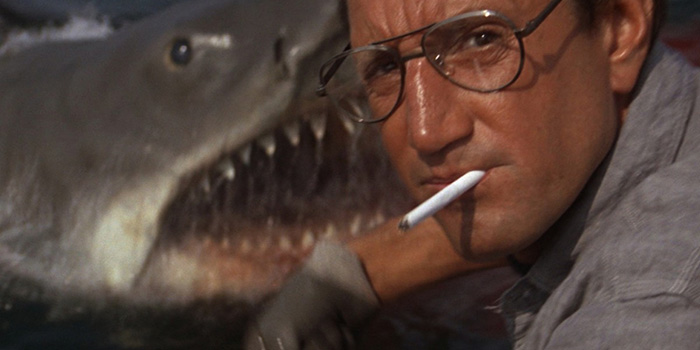

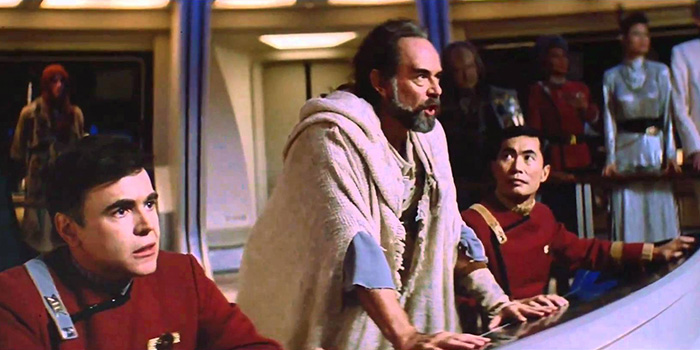

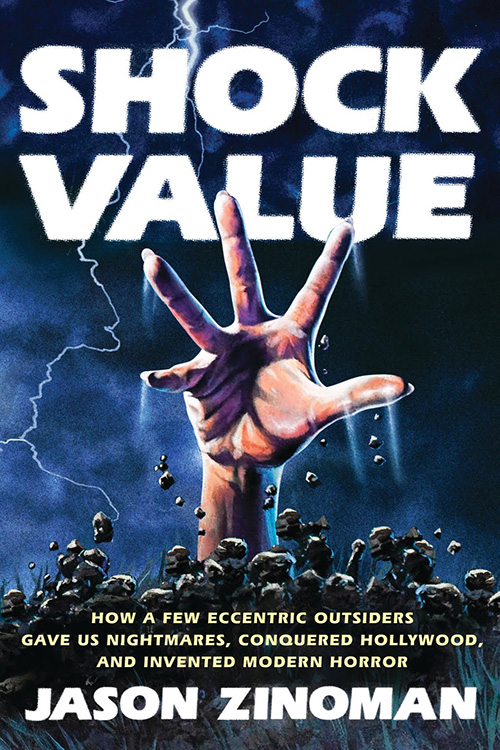
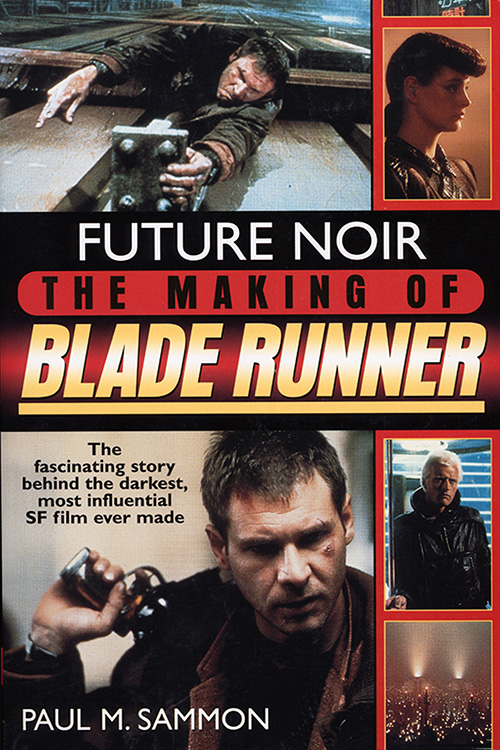
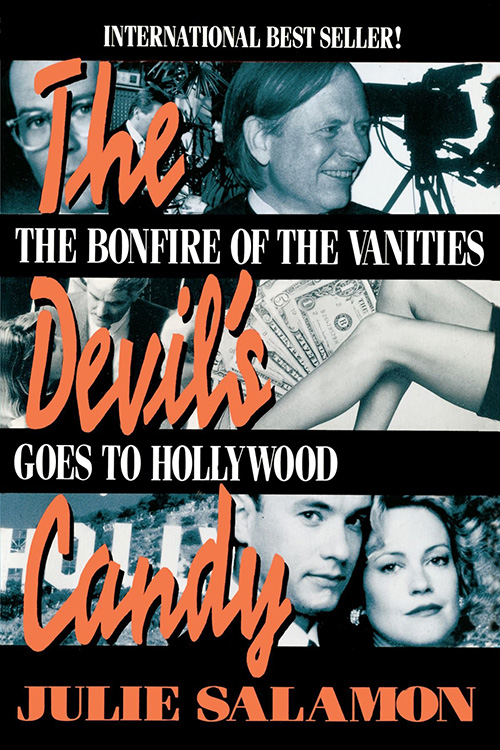

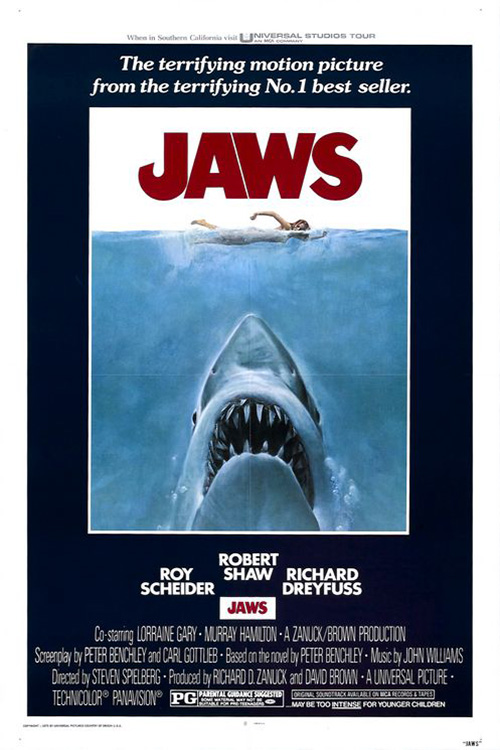


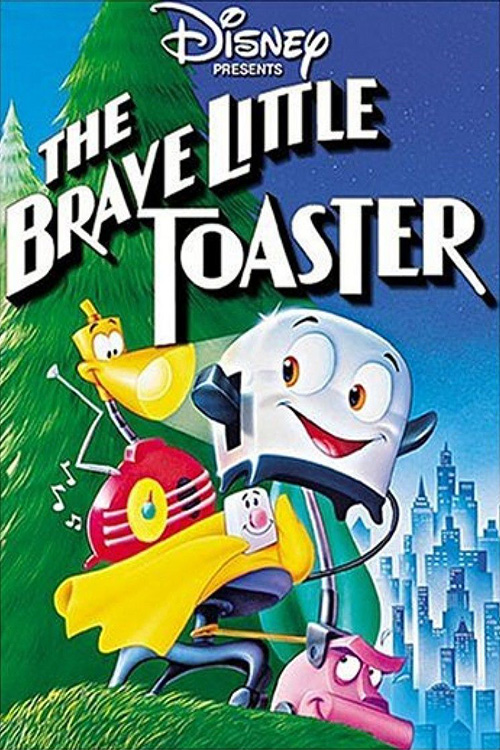

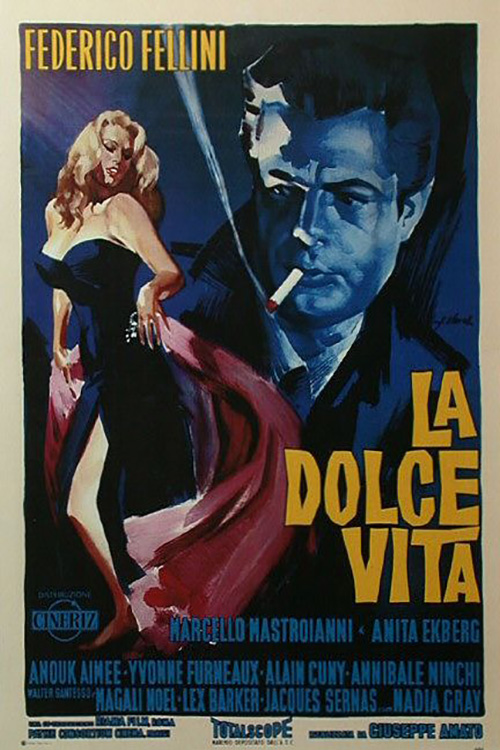

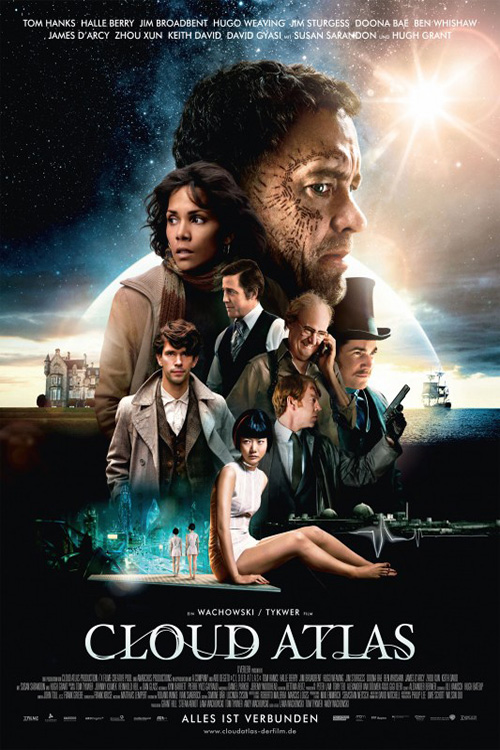












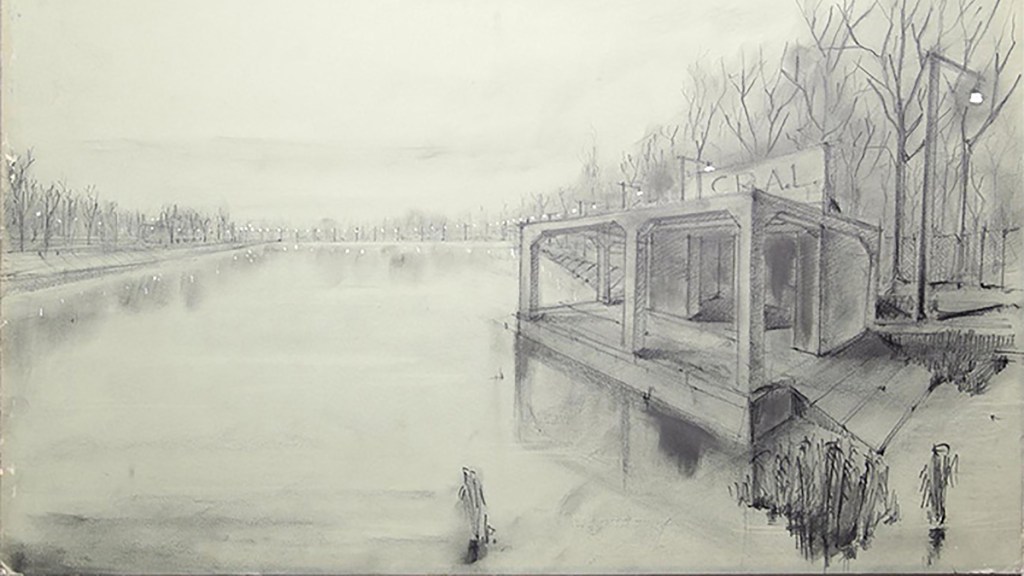


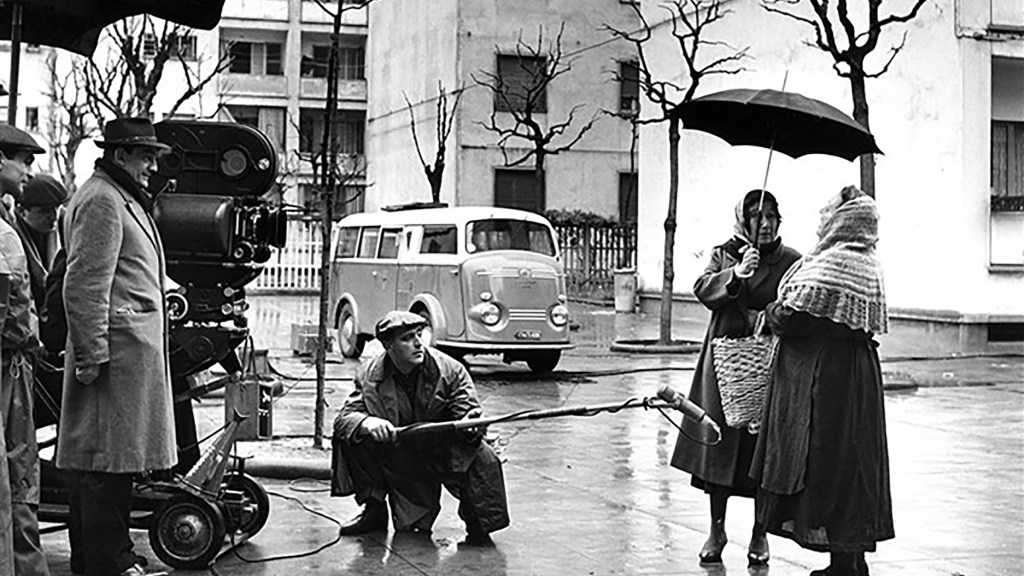


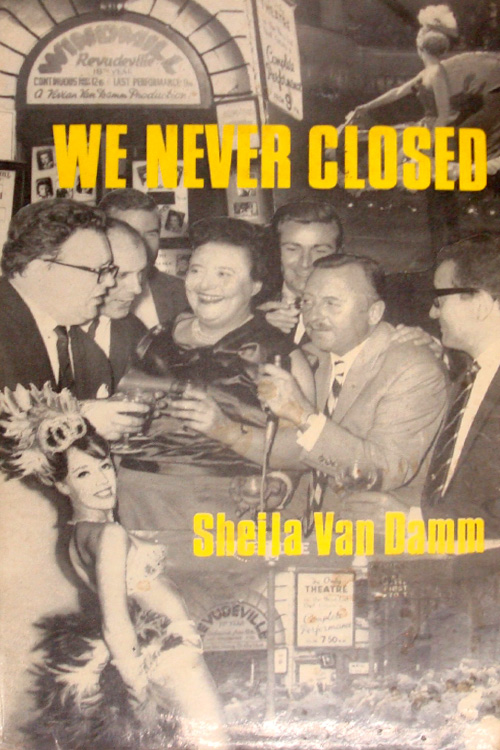
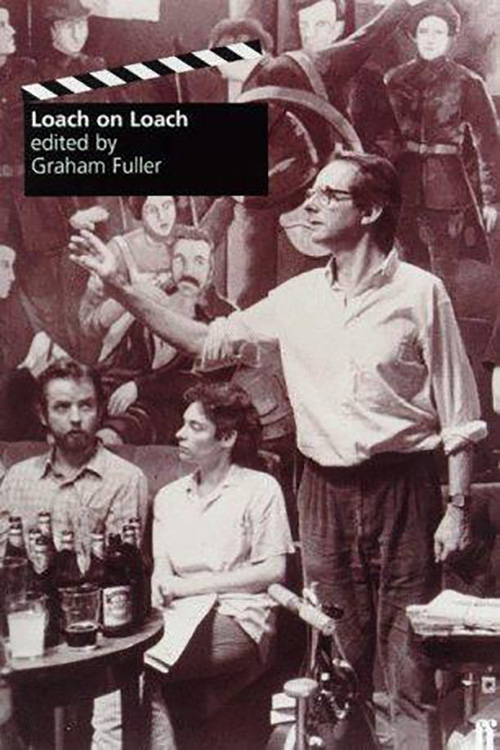

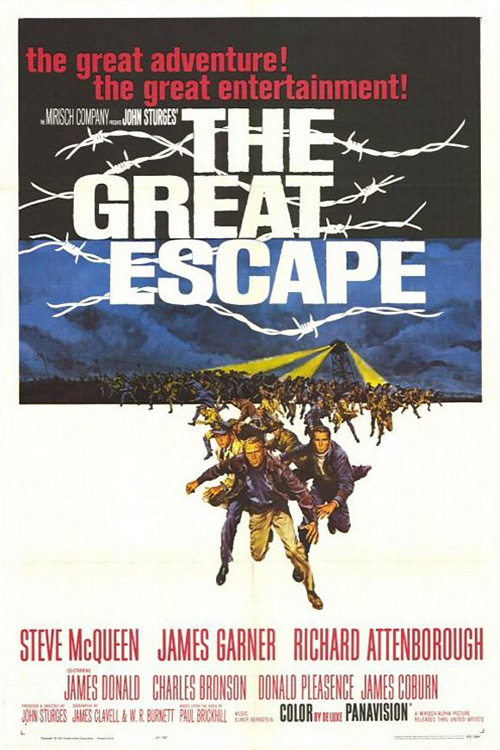
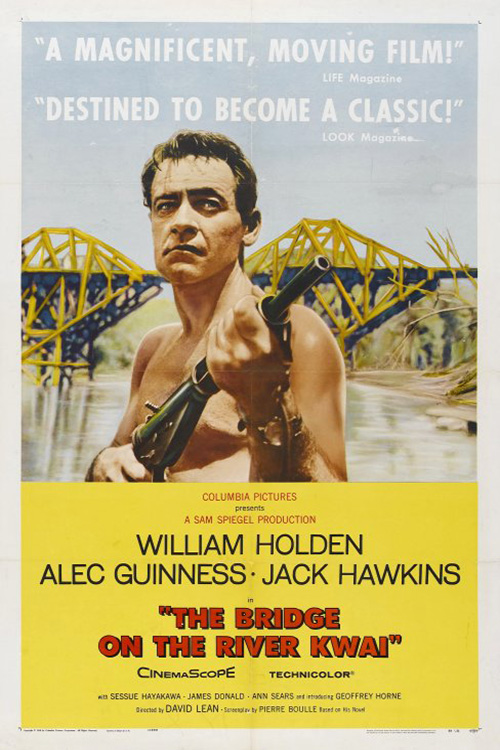
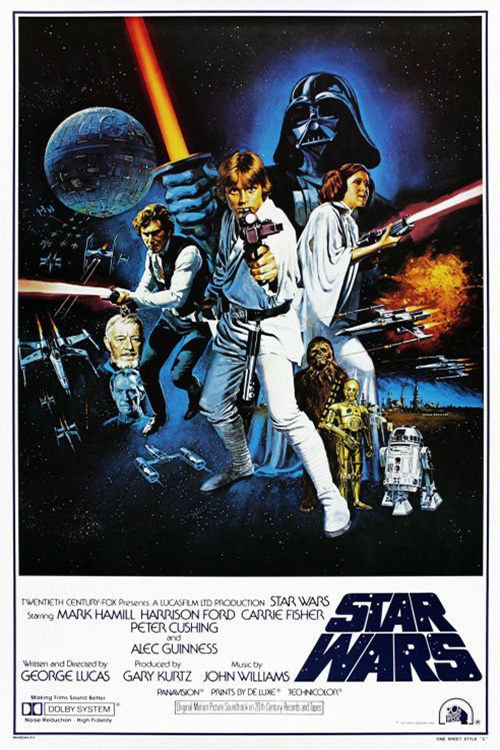
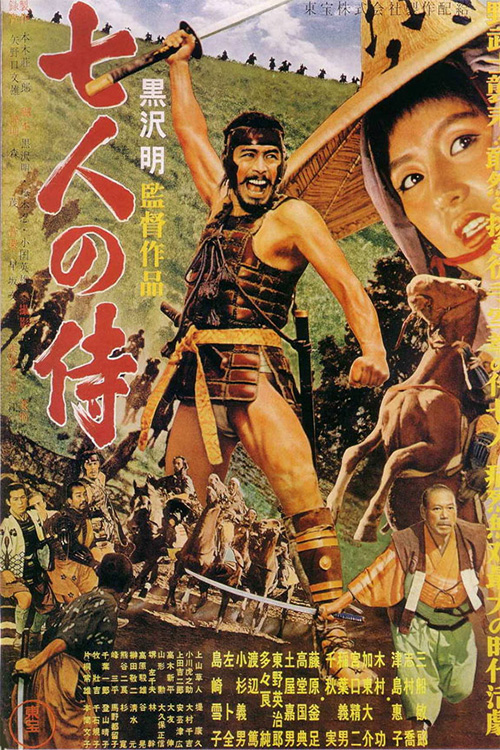

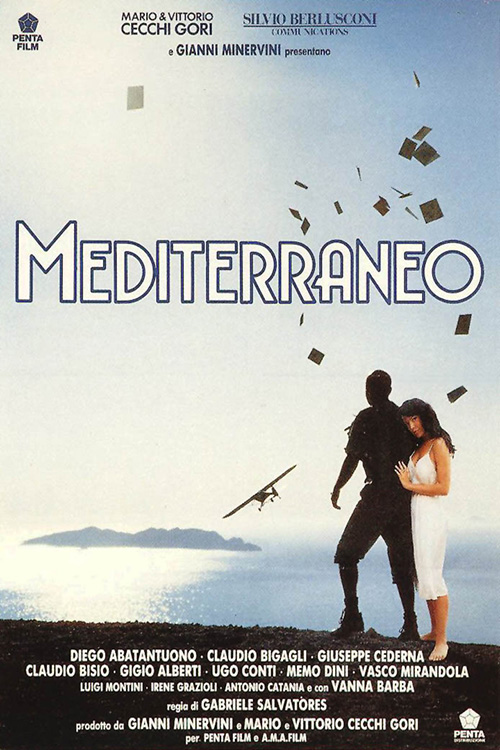
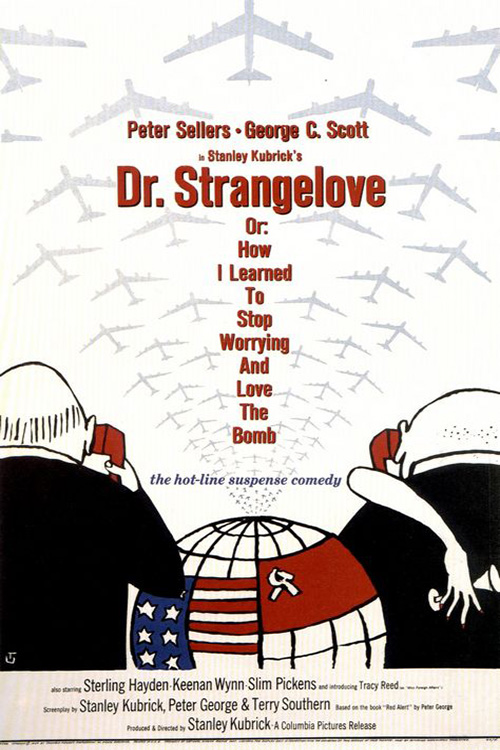






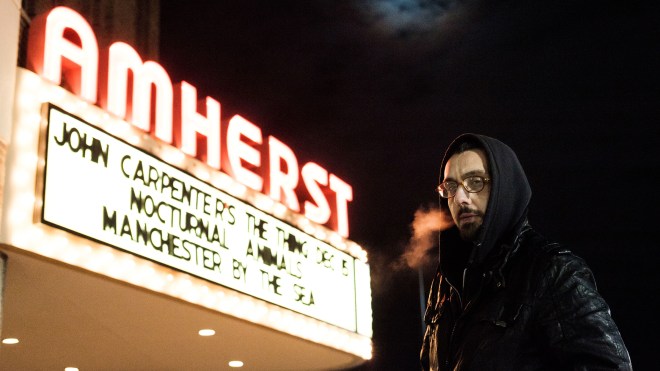



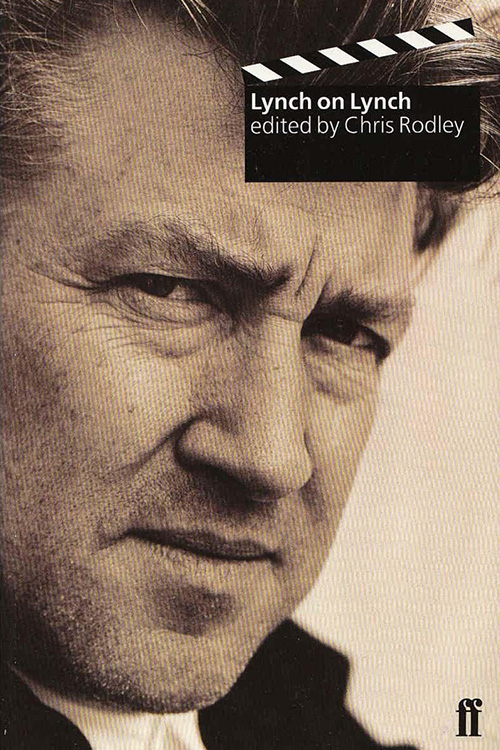
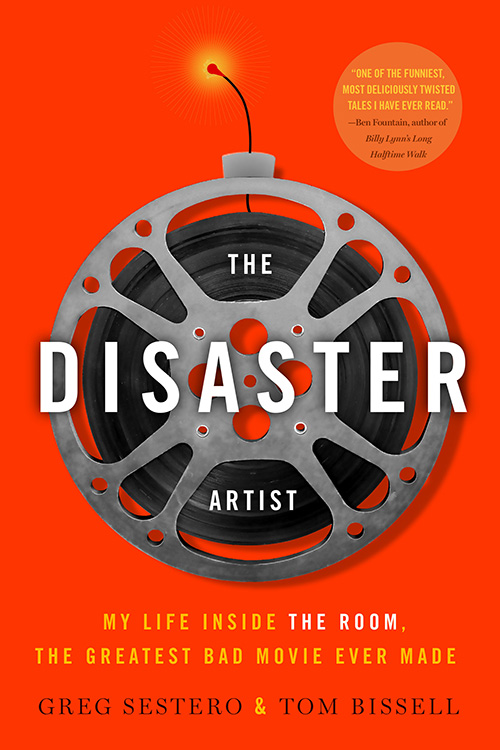
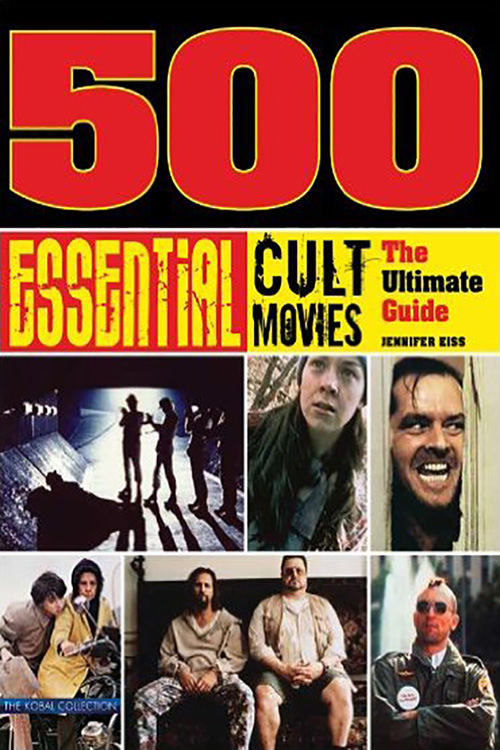


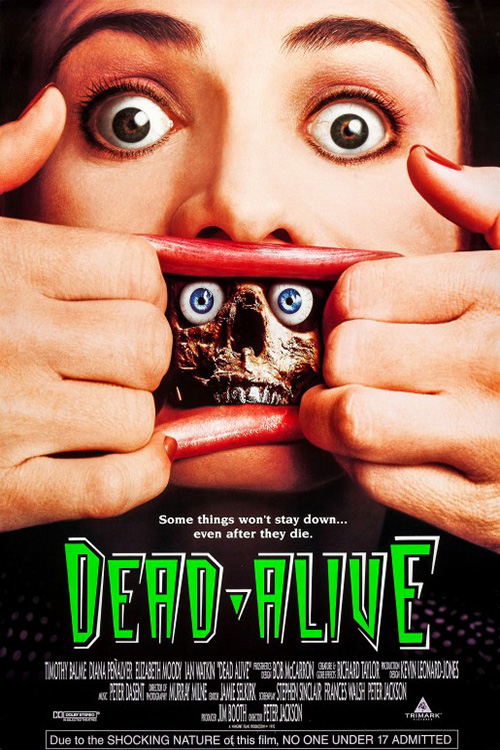

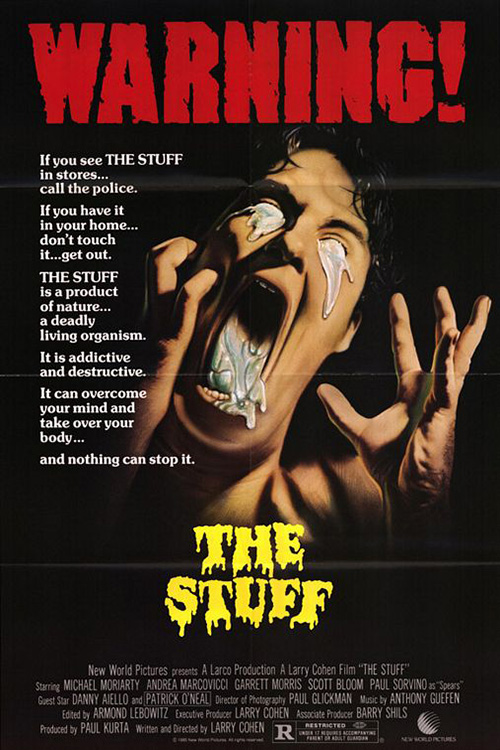
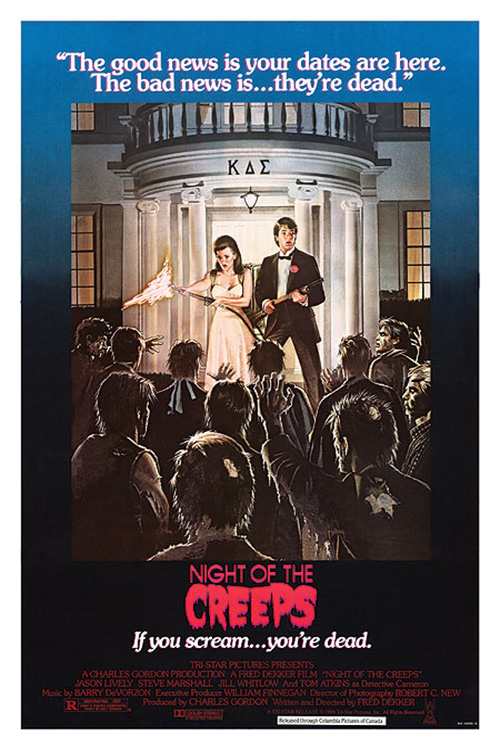
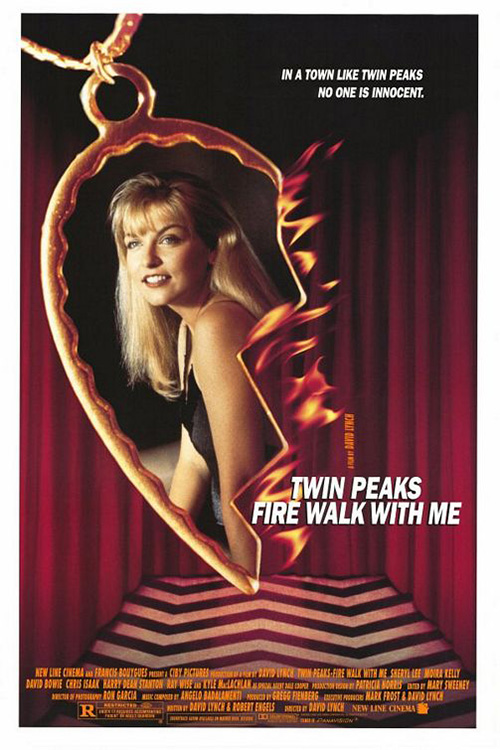


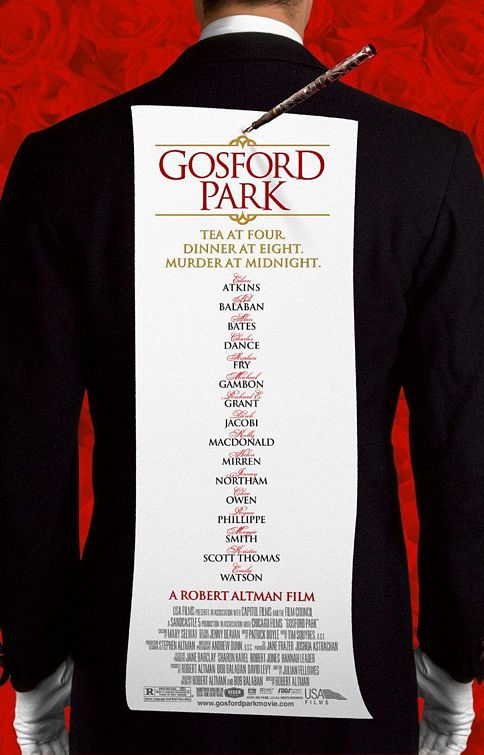
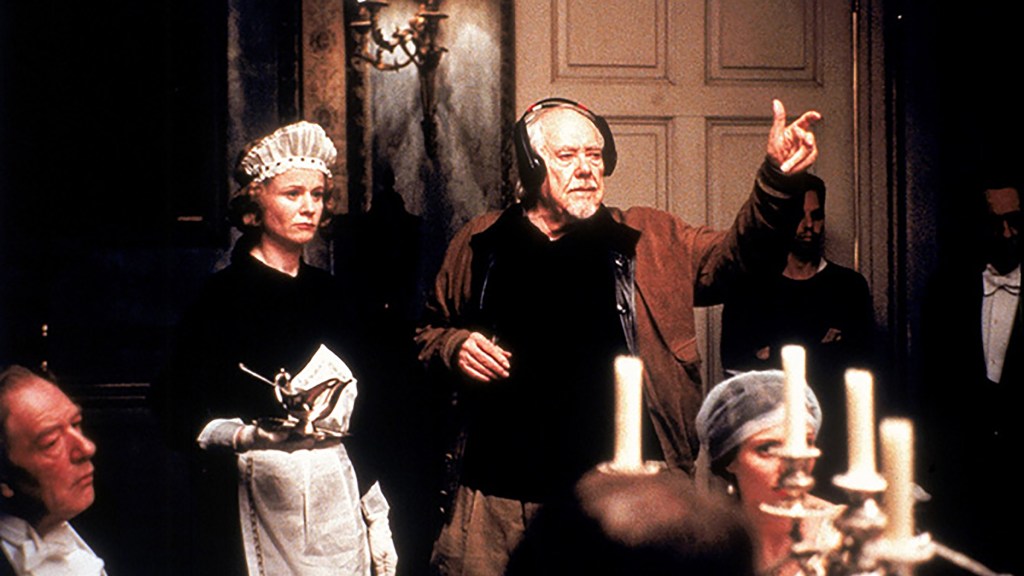


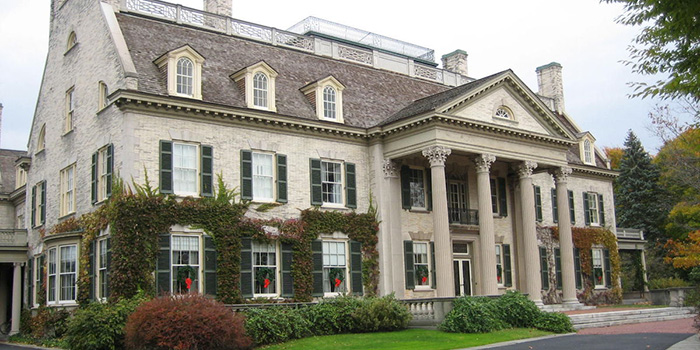
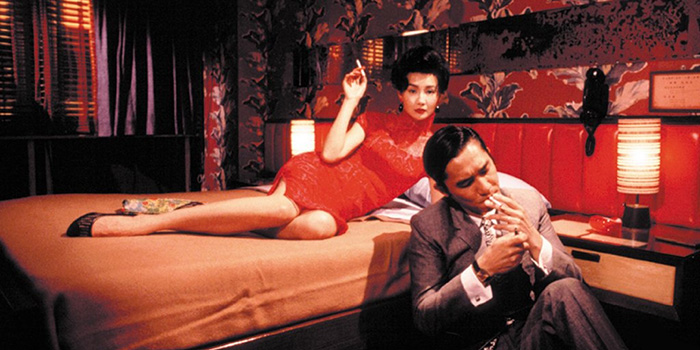
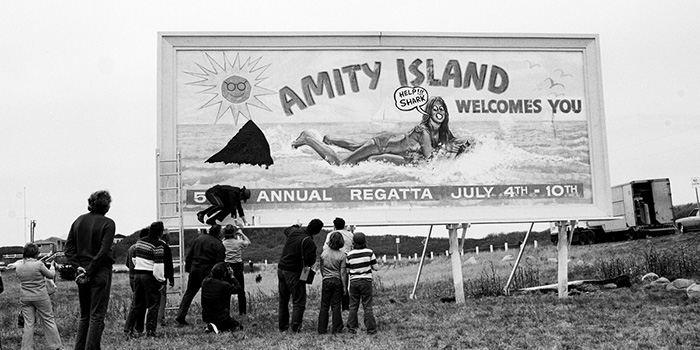

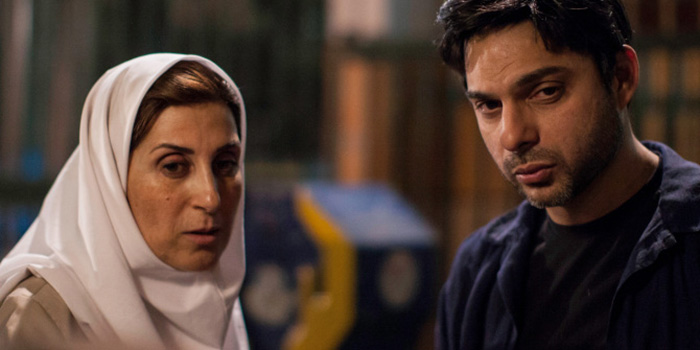
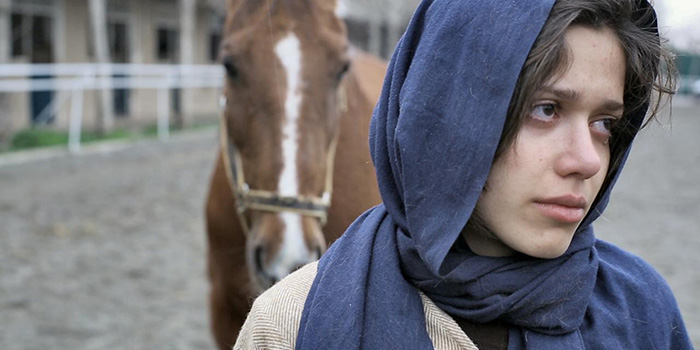










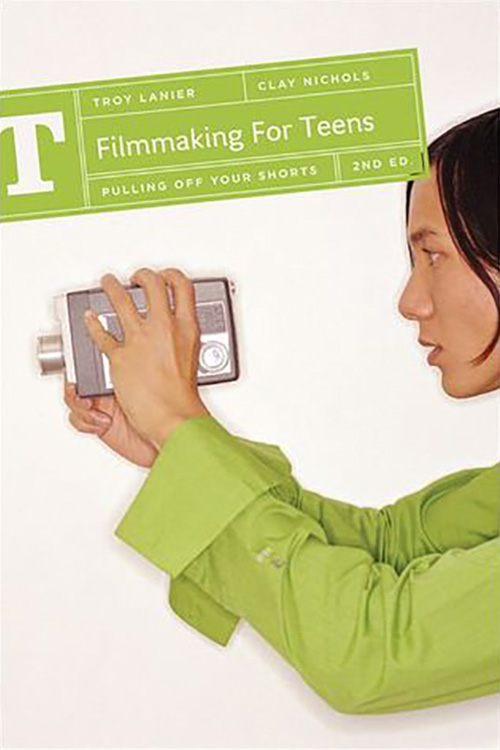




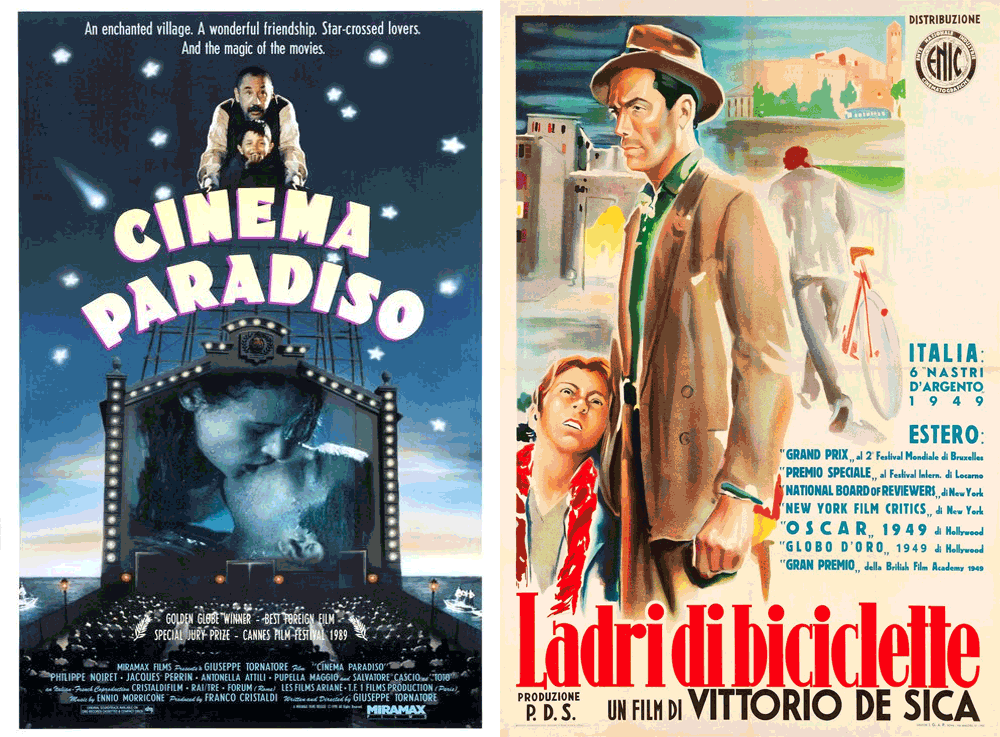
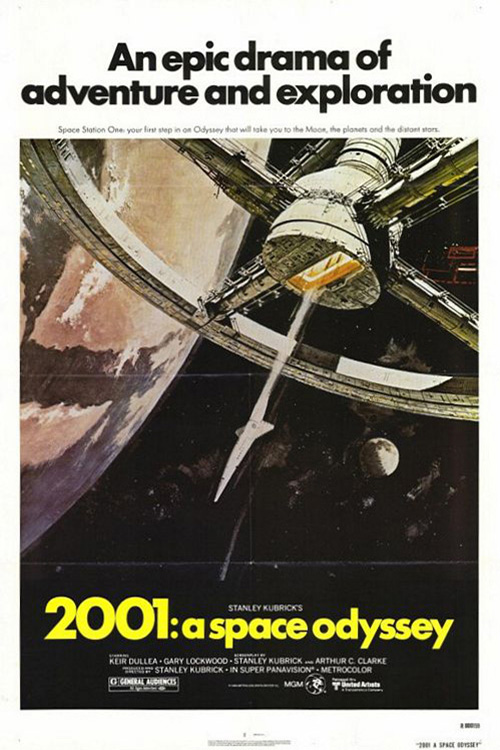
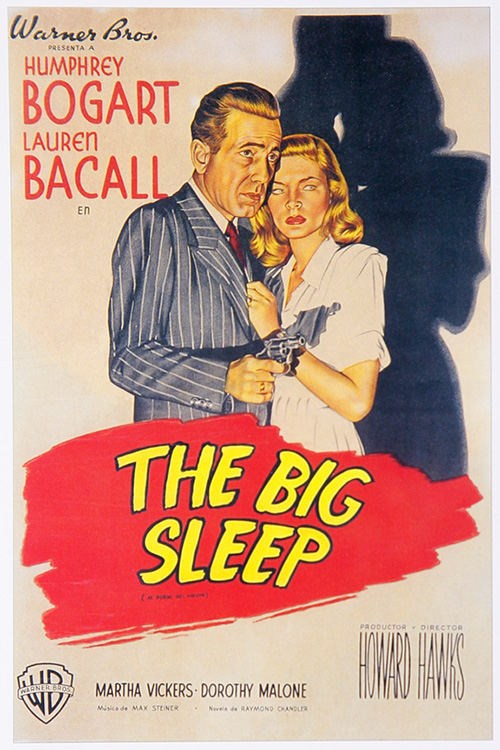
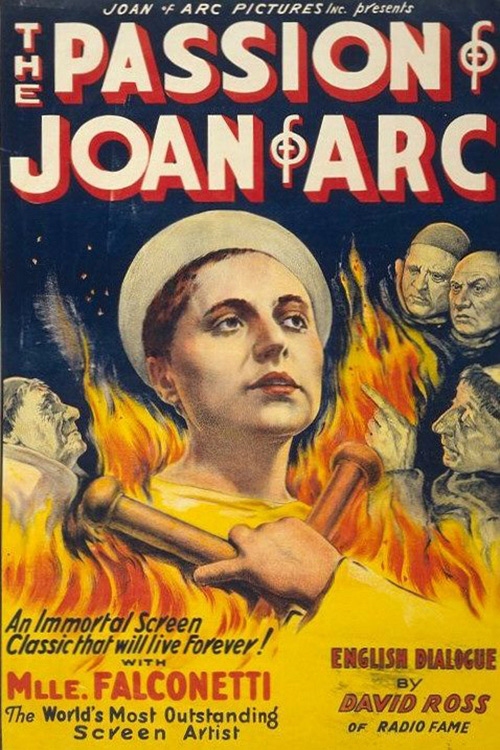


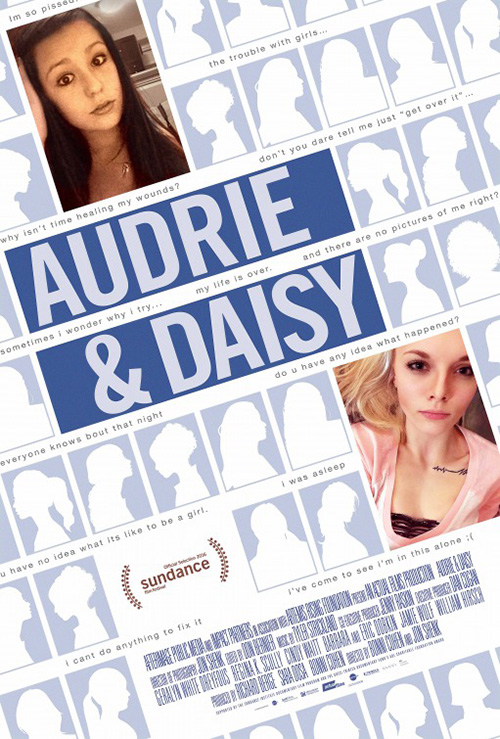
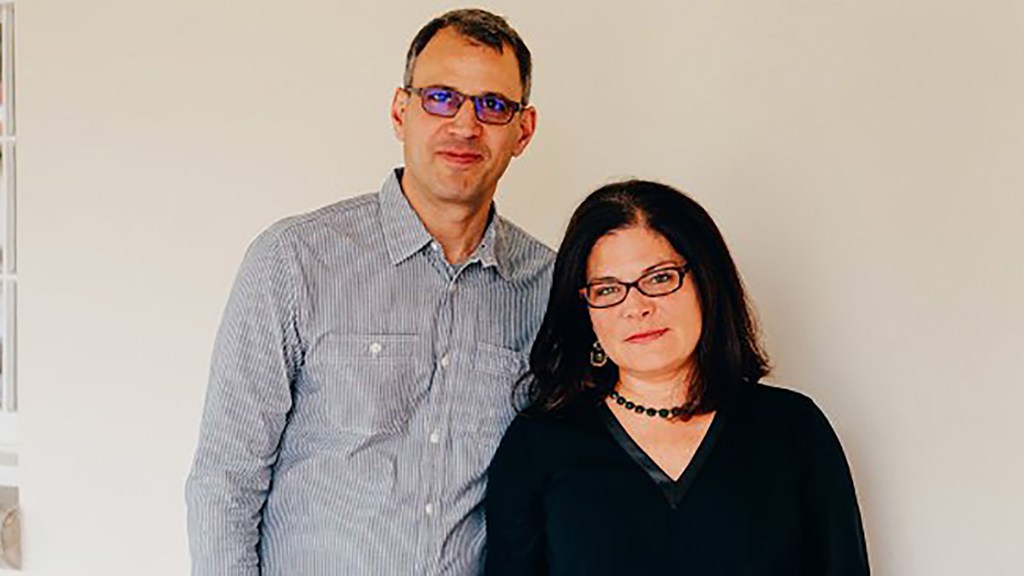
 Cultivate Cinema Circle