Extras: Stop in early for FREE Breadhive baked goods while supplies last!
Deal: Bring your ticket stubs and join us at The Black Sheep after the show for 2 for 1 drink specials
Event Sponsors:
Venue Information:
420 Connecticut St, Buffalo, NY 14213
Synopsis
Courtesy of press kit:
In Do Not Resist, Craig Atkinson (cinematographer – Detropia) makes a dazzling directorial debut with jaw dropping access. From the riots in Ferguson to disagreements on Capitol Hill, whether he is following a heavily armored SWAT team as they issue a no-call warrant or sitting in on a meeting during which the town council of Concord, New Hampshire votes to utilize a US Homeland Security grant to purchase a tank, Atkinson delivers a unique and powerful image of the stories and characters surrounding an issue that has billions of dollars — and lives — hanging in the balance. Using footage shot over two years, in 11 states, Do Not Resist reveals a rare and surprising look into the increasingly disturbing realities of American police culture.
From Tribeca by Deborah Rudolph:
Do Not Resist is an urgent and powerful exploration of the rapid militarization of the police in the United States. Opening on startling on-the-scene footage in Ferguson, Missouri, the film then broadens its scope to present scenes from across the country—a conference presentation where the value of high-end weapons technologies is presented to potential police buyers, a community that has just received its very own military-grade tank, and a SWAT team arriving at a home to execute a warrant. The cumulative effect of these vignettes paints a startling picture of the direction our local law enforcement is headed.
Craig Atkinson filmed his directorial debut over two years and in 11 states. Through keen and thoughtful observances, Atkinson deftly presents the characters and stories that comprise this pressing issue. The result reveals a rare and surprising look into the increasingly disturbing realities of American police culture.
Tidbits:
Tribeca Film Festival – 2016 – Winner: Best Documentary Feature (U.S. Narrative Competition)
Director Statement
Courtesy of press kit:
In April 2013, I watched the police response in the days following the Boston Marathon bombing in awe. I had never associated the vehicles, weapons and tactics used by officers after the attack with domestic police work. I grew up with the War on Drugs era of policing: My father was an officer for 29 years in a city bordering Detroit and became a member of SWAT when his city formed a team in 1989. What I wasn’t familiar with, since my father’s retirement from the force in 2002, was the effect the War on Terror had on police work. Making this film was an attempt to understand what had changed.
Knowing that interviews with experts would do little to communicate the on-the-ground reality of American policing, we instead set out to give the viewer a direct experience. We attended police conventions throughout the country and started conversations with SWAT officers at equipment expos and a seemingly endless cascade of happy hours, offering the only thing we could: an authentic portrayal of whatever we filmed together. On more than one occasion, we were on our way to the airport, camera in hand, only to receive a phone call from our contact in the police department instructing us not to come. Our access seemed to be directly tied to the amount of negative press the police were getting at that time. It became increasingly difficult to get access after the events in Ferguson, and there were many times we thought we would have to stop production altogether. The urgency of the situation, however, motivated us to continue.
We noticed a trend in early 2014 of police departments being solicited by technology companies offering new tools to help alleviate dwindling operating budgets and loss of personnel. One technology provider we filmed with offered the same IBM platform the NSA uses to collect web communications to police departments, for as little as $1,000 per year. Throughout 2014 and 2015, we watched as departments throughout the county adapted the technologies without any guidelines or policy directives governing their use. At times, the companies would make the chief of police sign a nondisclosure agreement preventing them from telling their communities they even had the technologies. The mantra we would continue to hear was that the police couldn’t let terrorists know the tools they were using to intercept their plots. The problem is, in three years of filming police, there was never an opportunity to use the equipment on domestic terrorism. Instead, the military surplus equipment and surveillance technology were used on a day-to-day basis to serve search warrants, almost always for drugs.
In hindsight it’s not hard to understand how we arrived at the current state of policing in America. Since 9/11, the federal government has given police departments more than $40 billion in equipment with no stipulations on how it should be deployed or any reporting requirements. Additionally, the federal government created a loophole that allowed police departments to keep the majority of the money and property seized during search warrants to supplement their operating revenue. If a police department makes a portion of their operating revenue from ticketing citizens or seizing their assets, then police officers become de facto tax collectors. We met many officers who said they didn’t sign up for that.
Everyone wants to know what my father thinks of the film, and in all honesty, I think it pains him. It’s hard to watch the profession you dedicated your life to evolve into something completely unrecognizable. During the 13 years my father was on SWAT from 1989-2002, his team conducted 29 search warrants total. Compare that to today, when departments of a similar size we filmed conducted more than 200 a year.
As we begin to share the film, the overwhelming response from audiences has been shock and disbelief. I can say that we were just as shocked while filming the material. Going in, we had no idea what we were going to find. We kept thinking we were creating opportunities to film with departments that would show the full spectrum of the SWAT experience, but time and time again, we found ourselves inside homes searching for things that we never found. It’s my hope that both community members and officers working hard to challenge the culture of policing within their departments use this film to illustrate the dire need for change.
Filmography:
Conditioned Response (2017) (short)
Do Not Resist (2016)
Exposed
How police officers across America have been armed like the military.
The Pentagon transfer of armored vehicles to small community police forces.
Extraordinary access to multiple search warrant raids as they’re happening.
Exposes how local police force behaves on a live drug raid.
Testimony by the Department of Homeland Security and the Department of Defense at a Senate hearing on police use of military equipment.
Police training seminars with the number one trainer of all US military and law enforcement.
The top down messaging from the federal government to local law enforcement leaders.
Adaptation of surveillance technology once reserved for the highest levels of government being used within local police departments.
Predictive policing tools reminiscent of Minority Report being introduced into policing.
Links
Here is a curated selection of links shared on our Facebook page for additional insight/information:
6/27/16 – “Do Not Resist opens with footage of the 2014 protests in Ferguson, Missouri, events made famous by their media ubiquity, but never seen quite like this. Craig Atkinson’s documentary features an on-the-ground perspective of the riots that, despite the chaos, has an immediate intimacy. The protestors are seen mostly in closeups, emerging from the shadows and surrounded by the unseen mayhem of the crowds. As the movie pivots from these moments to other incidents in which military force has been used on a local scale, Do Not Resist maintains a frightening contrast between the mechanically oppressive nature of law enforcement and its targets, leaving the impression of humanity getting steamrolled by unregulated oppression.” Eric Kohn, IndieWire – link
7/8/16 – “Many documentarians aim for timely subjects, but few recent movies have hit a nerve so deeply as Do Not Resist by Craig Atkinson.” Daniel Eagan, Film Journal International – link
7/10/16 – “A timely film if there ever was one, and winner of the Best Documentary Feature at this year’s Tribeca Film Festival, Do Not Resist takes us on a visceral journey through the sweat and fear – and teargas-stung eyes – of those who do, in fact, resist, while also offering the police a chance to have their say.” Christopher Llewellyn Reed, Hammer to Nail – link
7/21/16 – “My father was a police officer for 29 years…he dedicated his heart and soul to the profession and to what he thought he was doing, and they did a really good job, and what he’s observing on-screen, in the film, is his profession evolve into something that he could never personally identify with or ever want to be a part of.” Craig Atkinson, director of Do Not Resist, Hammer to Nail interview – link
7/25/16 – Do Not Resist by Craig Atkinson just took home the prize for Best Documentary Film at Indy Film Fest! – link
10/7/16 – Craig Atkinson’s award winning Do Not Resist is WNYC’s Documentary of the Week! – link
10/16/16 – “An eye-opening new documentary exposes the warrior culture pervading U.S. law enforcement” The Intercept – link
12/14/16 – Was CCC alum Do Not Resist blacklisted by Netflix? Director Craig Atkinson speaks with Business Insider about the deal that fell apart – link
Please join us for a special evening with director Doug Block. We will be screening his documentary The Kids Grow Up [2010] followed by a brief Q&A afterwards with the filmmaker.
Screening Date: Thursday, July 21st, 2016 | 7:00pm
In his internationally acclaimed documentary 51 Birch Street, Doug Block examined his parents’ seemingly ordinary 54-year marriage and uncovered a universal story about the mystery of family. The Kids Grow Up sees Block turns his lens on his family once more, this time from his own vantage point as a father, to tell a larger story about modern-day parenthood and marriage.
Lucy Block is Doug’s only child and, like many involved camcorder-era dads, he videotaped frequently with her as she grew up, capturing their close bantering relationship on camera in the process. An established documentary filmmaker, Block long mulled incorporating the footage into a longitudinal look at the parenting experience. It’s only when Lucy turns 17, however, and is a year away from leaving home for college, that his focus turns to the emotionally fraught period when children separate from their parents and parents must separate from their children. The Kids Grow Up is Block’s intimate and moving account of his year of learning to let go.
It turns out to be a turbulent time of transition for the entire family. Doug’s stepson Josh (14 years Lucy’s elder) has a child, making Doug and his wife Marjorie first-time grandparents. Marjorie endures a severe episode of clinical depression, her first in 13 years, then fully recovers. Lucy has her first serious romantic relationship, only to grapple with whether or not to break it off before leaving for college. And Doug’s fixation on Lucy’s departure masks a deeper anxiety about aging and the looming empty nest.
Moving seamlessly between past, present and the fast-approaching future, we see Lucy blossom from precocious kid to serious and self-possessed young woman over the course of the film. Along the way, the eternal father-daughter struggle for control plays out through the camera with warmth and humor (and occasional irritation). Marjorie candidly informs Doug that his “buddy-buddy” relationship with Lucy signifies a larger unwillingness to grow up. Meanwhile, Doug’s ongoing effort to come to peace with his aging, rigidly authoritarian father, contrasted with Josh’s eagerness to be a stay-at-home dad, illustrates just how far notions of fatherhood have shifted over the generations.
Told from Block’s engaging first-person perspective, The Kids Grow Up breathes fresh insight into the wonderful and daunting relationship between parent and child, as well as the highs and lows of long-term marriage. As Doug struggles, often less than gracefully, with letting go of his daughter, it becomes apparent that The Kids Grow Up is not just Lucy’s coming of age story but very much her father’s as well.
Tidbits:
Amsterdam International Documentary Film Festival – 2009
Director Statement
Courtesy of the press kit:
Many years ago, when I set out to become a proverbial “big-time” movie director, the last thing I expected was that my greatest filmmaking success until now would result from an intensely personal documentary about my relatively ordinary family.
51 Birch Street (released in 2006) was a film I never intended to make. I mean, who in their right mind would actually plan to make a documentary about their parents’ marriage? Certainly not me, at least until a series of shocking discoveries in the wake of my mother’s unexpected death caused me to reevaluate every assumption I had about marriage and family. In the process, I realized I had accidentally tapped into a story that would resonate with audiences throughout the world.
In stark contrast, The Kids Grow Up was a film that percolated in the back recesses of my brain for a long time. My daughter Lucy has always had a natural camera presence, and I couldn’t help but think there was a funny and fascinating documentary to be made about parenting over the long haul from a father’s perspective. The only problem was that I could never quite get a handle on what form such a film might take. It never seemed enough to simply see a little girl grow up on camera.
As the years (and other film projects) flew by, and a total of about 50 hours of footage accumulated, it remained a subject in search of a story. Which was fine by me. I was perfectly happy to have captured bits and pieces of my only child’s life, and a loose chronicle of our close and loving relationship, if only for posterity.
Then Lucy turned 17, and one morning it hit me that there was only one year left before she would leave the nest for college. In that moment, anticipating and dreading the emotion-packed moment of goodbye that parenthood inevitably leads to, I suddenly envisioned The Kids Grow Up almost fully formed. It would no longer be just a light and humorous look at a father-daughter relationship playing out through my camera over time. Lurking underneath was a more bittersweet story about a baby boomer parent struggling with aging and loss and learning how to let go. Eventually, the context broadened to include three generations of fathers, illustrating how exponentially more involved dads have become in their children’s lives. (With the film premiering on HBO on Father’s Day, I’m particularly happy to have the spotlight focused on that larger cultural context.)
It’s extremely challenging to make personal documentaries, and The Kids Grow Up was, if anything, even more daunting than 51 Birch Street. As the film makes clear, Lucy had a healthy amount of ambivalence about being filmed at certain moments, and I tried to be as sensitive to her feelings as possible. My rule of thumb was to begin shooting only when she was okay with it and to turn the camera off whenever she told me to. Still, Lucy is emotionally vulnerable in several scenes and, when it comes to your child, your parental instinct is to protect. Lucy was the first to see different cuts of the film and was given multiple opportunities to pull the plug on it if she felt it would adversely impact her life (fortunately, she didn’t). The only way I could make The Kids Grow Up was to be a father first and filmmaker second, although, as the film shows, I certainly tried my best to be both at the same time.
My wife Marjorie is very exposed in the film, as well, and not just because the looming empty nest cast a degree of anxiety over our marriage. She is shown, and on one occasion briefly interviewed, in the midst of a serious depressive episode that at times left her unable to get out of bed. Even knowing she would want me to, I wrestled internally for two months before I was able to point a camera in her direction in that condition.
Marjorie has always been open about her history of depression, and especially appreciates that the film will help de-stigmatize mental illness by depicting someone who suffers a depressive episode and then recovers fully without making a big fuss about it.
And so I’ve made another very personal film about my family, one that I hope will stand alone from 51 Birch Street and, at the same time, work as a companion piece. Having produced a number of personal documentaries, as well as having made three of my own (and in the middle of making yet another), I fully understand the pitfalls involved. However, the more I’ve travelled with these films around the world, the more I’ve come to realize that there’s nothing more powerful or affecting than authentically sharing who we are as human beings with one another. I’m proud and grateful that my wife and daughter feel the same way, and that they trusted I would present their lives and experiences on film in an authentic and, hopefully, entertaining way.
Finally, one regrettable aspect of making first-person docs is that people often come away from them with the misconception that I create them by myself. Happily, I had a number of extraordinarily talented collaborators who made the film infinitely better and the process so much more enjoyable. To composer H. Scott Salinas, associate producer Gabriel Sedgwick, editor Maeve O’Boyle and, particularly, my producing partner Lori Cheatle, I give my heartfelt thanks and everlasting appreciation.
DOUG BLOCK (Director, producer, camera) is a New York-based filmmaker whose work includes some of the most acclaimed feature documentaries of the past two decades.
Doug’s previous film, 51 Birch Street, was named one of the 10 Best Films of the Year by the New York Times, The Chicago Sun-Times and the Ebert & Roeper Show, and it was selected as one of the outstanding documentaries of the year by the National Board of Review, the Boston Society of Film Critics and Rolling Stone Magazine. The film garnered numerous awards, including Best Overall Program at the 2008 Banff Television Awards. 51 Birch Street screened at dozens of international film festivals, followed by a 9-month U.S. theatrical release. It aired on HBO, ZDF/Arte, Channel Four and many other stations worldwide.
Doug’s first film, The Heck With Hollywood! screened at over two dozen international film festivals before being released theatrically in the U.S. by Original Cinema. The film was broadcast on PBS and Bravo in the U.S., and throughout the world. His second feature was the Emmy-nominated film Home Page, a look at the early days of online culture. Called “Groundbreaking” by Roger Ebert, the film screened at the Sundance and Rotterdam Festivals and was broadcast on HBO, IFC and in Europe after a theatrical release.
His credits as producer include: Silverlake Life (Sundance Grand Jury Prize, Peabody, Prix Italia), Jupiter’s Wife (Sundance Special Jury Award, Emmy), Paternal Instinct (Best Feature Film – NY Gay & Lesbian Film Festival), A Walk Into the Sea: Danny Williams and the Warhol Factory (top doc prizes at the Berlin and Tribeca film festivals) and The Edge of Dreaming, which aired on POV earlier this year. He is currently executive producer of the 2011 Sundance award-winner Resurrect Dead: The Mystery of the Toynbee Tiles.
Doug is also the founder and co-host of The D-Word, a popular international online discussion forum for documentary professionals.
Filmography:
The Children Next Door (2012) (short)
The Kids Grow Up (2009)
51 Birch Street (2005)
Home Page (1998)
The Heck with Hollywood! (1991)
Links
Here is a curated selection of links shared on our Facebook page for additional insight/information:
6/17/16 – “Remarkable … a chronicle of ordinary life that is partly a scrapbook, partly a memoir and, most movingly, an essay on the passage of time and the mysterious connection between parents and children.” A. O. Scott, The New York Times – link
7/10/16 – “Nakedly personal … profoundly universal.” Eric Hynes, Village Voice – link
7/11/16 – “Block intercuts the elliptical flashbacks with contemporary footage of Lucy’s life, roaming candidly through her final moments at home with an anxious, bittersweet tenderness. His features are infused with a powerful, at times emotionally profound nostalgia intrinsic to these cinematic time capsules.” Daniel Loria on The Kids Grow Up, IndieWire – link
7/13/16 – “Intimate, funny, deeply affecting; The Kids Grow Up exemplifies personal filmmaking at its most truthful and absorbing. It’s wonderful.” Ann Hornaday, Washington Post – link
7/18/16 – “Powerful … funny … irresistible.” Andrew O’Hehir on The Kids Grow Up for Salon – link
8/15/16 – Rule #1: Don’t make it all about you (even though, of course, it’s all about you)… – link
Local Media Coverage:
7/19/16 – Jordan M. Smith interviews Doug Block in the July 20th, 2016 issue of The Public – link
7/19/16 – Christopher Schobert interviews Doug Block online at Buffalo.com – link
Four years after Breathless, Jean-Luc Godard reimagined the gangster film even more radically with Band of Outsiders (Bande à part). In it, two restless young men (Sami Frey and Claude Brasseur) enlist the object of both of their fancies (Anna Karina) to help them commit a robbery—in her own home. This audacious and wildly entertaining French New Wave gem is at once sentimental and insouciant, effervescently romantic and melancholy, and it features some of Godard’s most memorable set pieces, including the headlong race through the Louvre and the unshakably cool Madison dance sequence.
Tidbits:
Locarno International Film Festival – 1964
Director Bio
“A story should have a beginning, a middle, and an end… but not necessarily in that order.”
A pioneer of the French new wave, Jean-Luc Godard has had an incalculable effect on modern cinema that refuses to wane. Before directing, Godard was an ethnology student and a critic for Cahiers du cinéma, and his approach to filmmaking reflects his interest in how cinematic form intertwines with social reality. His groundbreaking debut feature, Breathless—his first and last mainstream success—is, of course, essential Godard: its strategy of merging high (Mozart) and low (American crime thrillers) culture has been mimicked by generations of filmmakers. As the sixties progressed, Godard’s output became increasingly radical, both aesthetically (A Woman Is a Woman, Contempt, Band of Outsiders) and politically (Masculin féminin, Pierrot le fou), until by 1968 he had forsworn commercial cinema altogether, forming a leftist filmmaking collective (the Dziga Vertov Group) and making such films as Tout va bien. Today Godard remains our greatest lyricist on historical trauma, religion, and the legacy of cinema.
Filmography:
Film Socialisme (2010)
Our Music (2004)
In Praise of Love (2001)
De L’Origine du XXIe Siecle (2000)
Histoire(s) du cinema (two chapters) (1997)
For Ever Mozart (1996)
Jlg/Jlg (1995)
2 X 50 Years of French Cinema (1995)
The Children Play Russian (1994)
Helas Pour Moi (1993)
Contre l’oubli (1992)
Germany Year 90 Nine Zero (1991)
Nouvelle Vague (1990)
Aria (1988)
King Lear (1987)
Soigne ta droite (1987)
The Rise and Fall of a Small Film Company (1986)
Hail Mary (1985)
(“Je-Vous-Salue-Marie”) Détective (1985)
Passion (1983)
First Name: Carmen (1983)
Every Man For Himself (1980)
Ici et ailleurs (1976)
Comment ca va? (1975)
Numero Deux (1975)
A Letter to Jane (1972)
Tout va bien (1972)
One American Movie/1 A.M. (1971)
Vladimir et Rosa (1971)
Pravda (1970)
Le gai savoir (1970)
Wind From the East (1970)
Two or Three Things I Know About Her (1970)
Sympathy for the Devil (1 + 1) (1969)
The Oldest Profession “Anticipation” (1968)
Far From Vietnam (1968)
Six in Paris “Montparnasse-Levallois” (1968)
Pierrot le fou (1968)
La Chinoise (1968)
Weekend (1968)
Les carabiniers (1968)
Le petit soldat (1967)
Masculine Feminine (1966)
Band of Outsiders (1966)
Made in U.S.A. (1966)
Alphaville (1965)
The Married Woman (1965)
A Woman Is a Woman (1964)
Contempt (1964)
Reportage sur Orly (1964)
Seven Capital Sins “Laziness” (1963)
My Life To Live (1963)
Ro.Go.Pa.G. “Il Nouvo Mondo” (1963)
Breathless (1961)
Operation Concrete (1954)
Links
Here is a curated selection of links shared on our Facebook page for additional insight/information:
6/15/16 – “It’s as if a French poet took an ordinary banal American crime novel and told it to us in terms of the romance and beauty he read between the lines.” Pauline Kael, The New Republic – link
6/29/16 – “French New Wave filmmaker Jean-Luc Godard reimagines the gangster film in Band of Outsiders. The film, which Godard has referred to as “Alice in Wonderland meets Franz Kafka,” deals with the dissonance between fantasy and reality. The characters live in a wonderland of gangster films and romantic literature, but when they commit a crime like one they saw in the movies, the consequences are real. Godard uses nostalgia as a device, placing his characters in dreamlike scenes and then cutting the air with metafilmic self-awareness.” Meghan Gilligan, ScreenPrism – link
6/30/16 – “That narration [in Band of Outsiders by Jean-Luc Godard] is somewhat akin to the way James Joyce aimed to ennoble human experience in his novel Ulysses, heightening it through a diversity of prose styles while essentially chronicling a regular day in the life of a group of otherwise humdrum characters. Godard adds another layer to Joyce’s artistic vision, however, with his encyclopedic cinephilia, with cheeky references ranging from Fritz Lang’s obscure 1950 noir House By the River to Jacques Demy’s The Umbrellas of Cherbourg (a musical number from the latter is heard over a café loudspeaker).” Kenji Fujishima, Movie Mezzanine – link
7/7/16 – Three reasons to watch Band of Outsiders from Criterion:
Please join us for a FREE one-day screening of Jan Ole Gerster’s A Coffee In Berlin [Oh Boy] [2012], the final film of our Public Espresso themed trilogy about coffee and Constructivism.
Screening Date: Saturday, June 25th, 2016 | 1:00pm
Jan Ole Gerster’s wry and vibrant feature debut A Coffee in Berlin, which swept the 2013 German Oscar Awards, paints a day in the life of Niko, a twenty-something college dropout going nowhere fast. Niko lives for the moment as he drifts through the streets of Berlin, curiously observing everyone around him and oblivious to his growing status as an outsider. Then on one fateful day, through a series of absurdly amusing encounters, everything changes: his girlfriend rebuffs him, his father cuts off his allowance, and a strange psychiatrist dubiously confirms his ’emotional imbalance’. Meanwhile, a former classmate insists she bears no hard feelings toward him for his grade-school taunts when she was “Roly Poly Julia,” but it becomes increasingly apparent that she has unfinished business with him. Unable to ignore the consequences of his passivity any longer, Niko finally concludes that he has to engage with life. Shot in timeless black and white and enriched with a snappy jazz soundtrack, this slacker dramedy is a love letter to Berlin and the Generation Y experience.
Tidbits:
AFI Fest – 2012
Berlin International Film Festival – 2013
German Film Awards – 2013 – Winner: Film Award in Gold – Outstanding Feature Film, Winner: Film Award in Gold – Best Performance by an Actor in a Leading Role, Winner: Film Award in Gold – Best Performance by an Actor in a Supporting Role, Winner: Film Award in Gold – Best Direction, Winner: Film Award in Gold – Best Screenplay, Winner: Film Award in Gold – Best Film Score, Nominee: Film Award in Gold – Best Performance by an Actress in a Supporting Role & Nominee: Film Award in Gold – Best Editing
Director Interview
Courtesy of press notes:
Before we talk about the movie that is, I want to ask about the movie that wasn’t, because this sprung from an abandoned project …
Well, there have been many ambitious scripts, and parts of the script I was working on are in the film. The original script made me feel like a fraud, so I stopped working on that and did nothing for a couple of years … I call this the research. And yeah, wrote this script in two weeks and for the first time it felt good to work on something like that! People gave me good feedback on it, and I got confident.
When people make debut features about aimless young people, it’s usually assumed that it’s in some way semi-autobiographical …
As I said I had to research it, it is a little bit autobiographical. It is personally, but not necessarily private. It’s inspired by a period I went through.
Were there any particular instances that were pulled from your life, or would you say it’s a kind of autobiographically inspired fiction?
That’s a nice way of putting it. No, for example, I was thinking about the conversations I had with my dad about future job situations and how a lot of young men—at one point in their life, when they’re stuck in the process—need to have this sort of conversation. A lot people identify with that scene more than I ever thought. This is definitely inspired by something personal.
Since you wrote it so quickly, did you do any other drafts?
Yes, I think there were two other drafts because the first draft was too long and my producer asked me to make it a bit shorter and I didn’t really know where to start … so I changed the size of the letters, which gave me 10 pages … then the producer figured it out, so I made a third draft, a real draft, and kicked out a few scenes.
Were there sequences of Niko meeting characters or encounters that ended up being dropped?
Yup, there were a couple of scenes. One scene I shot but had to lose during editing, and others I kicked out at an earlier point in the screenplay. Let me think, there was a scene where he meets a priest from Africa; they have a conversation about Bono from U2 and talk about music, and it was fun, but it just wasn’t leading anywhere.
Was that something you shot?
No, we shot a scene with a little boy after Niko walks through the forest. He comes to the lake and sees a little boy fishing, and they have a conversation about fishing and it was too much of a metaphor—these two boys, traveling back in time with this innocent kid, then the father joins them, and it was too much, so I had to cut it.
Seems like many of the people Niko encounters are doubles for him?
Yeah, I always saw him as this dark something that gets more and more visible by the encounters with other people that put a light on him. Every character makes something of his character understandable …
Did the character of Niko come first, or did the idea of the structure or the other characters?
Both came at the same time. I thought it was challenging and appealing to have this passive character and portray him through encounters with others. You can’t really tell what came first. I think these types of characters always fascinated me, so I always had him in mind and the idea of some sort of a road movie that never leaves Berlin, really. It’s a road movie of someone who has to walk because he lost his license. So yeah, this is how it started, with a vague idea of this passive young man that was inspired by many characters that I always loved in films and literature.
Could you give some examples of characters you love in film and literature?
Benjamin Braddock of The Graduate is someone I identified with as a teenager, and still do in a way. Not because I had an affair with a much older woman, but because of his relationship to the world he’s living in.
How long was your shoot?
21 days.
Why black and white?
It was black and white in my head from the first page. I think I needed some kind of abstraction from the neighborhood that I know very well from real life, especially because the film is about everyday life and normal conversations. I kind of felt like it needed this distance that at the same time expresses or describes the distance that the character feels from the world.
Lit specifically for black and white?
We did a lot of tests to figure out which colors turns out to be a shade of gray. That was actually my working title: 50 Shades of Gray! But you’re right, we tested the black and white, back and forth. I think we considered 60mm until the very end, and then when we knew what our budget would be like, because we were trying to get more money, we decided to shoot digital.
What is your method when it comes to working with and shooting actors?
Actually I shot a lot; I was a little bit embarrassed when I went to editing. But it was always the same situation. We had Tom on set, and everyday someone else came in. Because every scene was like a short movie, my feeling was always like, “we only have him for one day, so let’s try this with this shot.” I hope to shoot more economically in the future.
Would you shoot the characters in blocks or would you do a character a day?
Most of the actors agreed to perform in this film for free, and said they had this one day where they could shoot it and come to my set …
Did you rehearse with them beforehand?
We rehearsed a little bit. There were a few actors that were into rehearsing. Usually I don’t really make them rehearse, because sometimes my experience has been that it’s not a good idea to rehearse forever. I was very happy with my ensemble, with my cast. Almost everyone in the picture I wanted to have, and I was very confident I was going to get good performances. For example, the neighbor character is a friend of mine, and I had no doubt that he would deliver a great performance.
Was it always part of the design to have Niko going through a downward structure through the film?
I don’t know, I enjoyed writing these scenes, I enjoyed torturing this character, it was fun to write. I tried to make the movie darker and darker, I think also the tonality of the scenes, especially the one with the old man in the bar, is different from what the film is like in the beginning …
When you were writing the film, did you have specific places in mind? Or were they more general locations, then you found where you wanted to shoot?
Well I don’t go to golf courses, for example, so I had no golf course in mind. For me, they all look the same; some are more beautiful, some…I don’t know. But there were a few locations I had in mind: for example, that theater and the restaurant where they meet Julia for the first time. When we did location scouting with the cinematographer in Berlin, we tried to find places that we kind of like but are about to disappear because the city is constantly changing. It’s becoming cleaner and slicker every day …
Is his apartment over in East Berlin?
No, this apartment was not an easy location to find. Because we wanted it to be a place where obviously no one is living, you know he just moved in. But the worst thing about a black and white film is just clean white walls. We looked for that empty apartment forever. I thought that would be the easiest location to find …
Did you have a neighborhood in mind?
Okay, so the apartment is actually put together from three different locations. There’s the living room in one location, then the bathroom (when he’s in the shower) in a different location (the same location as his backyard where he sees the neighbor playing foosball against himself), and there’s his living room and the view out of his window—which is my place.
How did you keep it straight? Did you have to draw out a floor plan?
I was thinking about that. I think, yeah, we had some sort of floor plan, but we ignored it.
Was the role written with Tom Schilling in mind?
Tom is a very close old friend of mine. We share the same taste in music and films and talk a lot about our projects. At one point I gave him the screenplay of Oh Boy for his opinion, though I didn’t have him in mind when I was writing it because he looked very young and it was important that Niko was in his late twenties. But Tom gave it his best shot to age as fast as he could … drinking in the morning, smoking, became a father, didn’t sleep very much…something changed and he became more mature, and then he wrote me a handwritten five-page letter about how he understood the character, how he loved the screenplay. So he convinced me, and I’m happy for that every day.
Did you work on the film alone with Tom before working with other actors?
We talked a lot about the script, but we didn’t rehearse a lot. We did a few rehearsals, but not every scene with every actor. The psychological test, for example, we rehearsed. I rehearsed with the neighbor. I didn’t rehearse with the old man because he’s a very well known German actor. I’m a big fan, so I asked his agent to give him the script and his first response was, “he’s not shooting anymore student films, he had some terrible experiences and he’s through with student films.” But thank god the agent made him read it and give it a try.
Where did that scene with the old man in the bar come from?
It’s pretty close to something I experienced in a bar a few months after I moved to Berlin. There was a very drunk old man sitting next to me talking about the war. I didn’t have encounters like this where I came from, so for me it described the city very well—this ultramodern new Berlin where you can still experience the ghost of history everywhere. And the fact that some people really experienced what went on and are still around stuck with me. It was one of the first scenes that made it into the script.
You’re playing this history off of modern day life, which seems totally different. What does that interest stem from, wanting to counterpoise these two worlds?
Moving to Berlin made me think about the past and what it’s like being German. These days I don’t think about it too much anymore, but when I was in my early 20s I had some experience. I was traveling to foreign countries and had experiences that make me think about what it’s like being German, what it means. I had this awareness and interest in how Germans deal with it these days. So the scenes you see in the film aren’t necessarily about the past, but how the past is still part of the present and somehow still part of our everyday life. I’ve tried to find scenes that express that the past is still everywhere, in a way, and I thought the best way to show it was this Nazi film folklore. Somehow, the whole industry is obsessed with making films about that time, but for some reason I don’t like them or they aren’t good and I was wondering what the problem was making really truthful films like that, why they always turn out to be the same kind of film. I don’t know … I found it very appealing trying to express what I felt at that time by having that scene in the script.
Do you think this generation is spoiled?
I think not, I don’t like generalizations. I meet great young people; they have jobs, dreams, and they’re happy. But I meet a lot of people as well who are unhappy, spoiled, and kind of scared about the future.
They say this will be the first generation that will be poorer than their parents; do you think they have a good reason to be scared?
That’s what the experts say, yes. I know a lot of people who have this kind of financial backup in a way. I don’t know anyone who lies to their parents about that money. Having all the freedom and all the opportunities to find yourself, whatever that means, turn out to be a jail for a lot of people.
Do you think that encounter with the old man provides Niko with a kind of motivation? Is the implication that there’s a sense of purpose in his life after that moment?
Yeah, I’ve always seen the scene, besides the strong subject, as an encounter with someone like Niko who dies alone, having never really found a way to deal with his life. So I’ve always seen this scene as a wake-up call for him.
Do you think the film within a film is kind of a double for the movie?
I was seriously thinking about making that my next film. For lack of a better idea.
At what point did the decision to use jaunty jazzy music come in?
That’s a long story. I started the editing and I had singer-songwriter music in mind. I never thought about working with classical, traditional film composers. I always wanted to make a score with musicians. Maybe I liked the idea that the music could be a character of its own.
Were you going to have songs about the characters, like commentary?
Not really. You should have told me two years ago; that would have been the best idea! Unfortunately we don’t really have a German Paul Simon, so I never found a singer-songwriter I was happy with. The singer-songwriter music I worked with in editing made the film very heavy. Then I asked a friend of mine—Sheryl McNeal from South Africa, who lives in Berlin and has a band called The Reader—to give it a try, because she plays piano. At that point, I was already trying jazz but the temp tracks were all unaffordable, blue note jazz kind of stuff. So Sheryl played around on the piano, and at that point I was already in love with jazz as the right music for the film, because it has the irony I was looking for and the melancholy that is never too heavy in one direction or the other. Besides that, I liked that it gives the film some kind of a timeless feel. Sheryl wrote a few pieces that I liked a lot, but she felt very uncomfortable with the jazz moments. She was very good at scoring the solo piano sequences with Niko, the moments that describe his inner mood, feelings and character. Every time it was more about the city, the craziness of everyday life, the jazz parts, she was very unhappy and so was I—because she’s not a jazz musician.
So I tried to find jazz musicians, but in Berlin the techno scene is huge, not jazz. And I was a little concerned I wouldn’t find a band with old school groove to it, you know. We were in the process of mixing the film and the rough cut was already getting invited to festivals. We still had no score, but they were announcing our premiere. In desperation, I went to a bar in the middle of the night. You can solve many problems in your life by going to a bar in the middle of the night, that’s what I experienced at least. And there was a band playing, one guy on piano and the other on trumpet, and I don’t know if I was slightly drunk, but they sounded like Chet Baker. I was like, “Wow, these kids can groove” and gave them a DVD of my film. They invited me to their rehearsal room, where they jammed to the film and hit every cut. They had never done film music before, but they totally got the idea of editing and composing to cuts. I felt so relieved, you can’t imagine, it was a lucky break.
Director Bio
Courtesy of press notes:
Following his civil service, including training as a paramedic, Jan Ole Gerster completed an internship at X Filme Creative Pool GmbH, where he worked as Wolfgang Becker’s personal assistant and coordinator during the preparation, filming, editing and postproduction of Good Bye, Lenin! In 2003 Jan Ole Gerster began his studies in directing and screenwriting at the German Film and Television Academy in Berlin.
From 2003 to 2009, he completed several projects, including the documentary The Making of Good Bye, Lenin! and wrote the script for Sick House, part of the short film series GERMANY 09-13 SHORT FILMS ON THE STATE OF THE NATION (which also featured directors Tom Tykwer, Wolfgang Becker, Fatih Akin and Dani Levy, amongst others). A Coffee In Berlin (titled Oh Boy in Germany) is Gerster’s feature film debut.
Filmography:
Lara (2019)
A Coffee in Berlin (2012)
Der Schmerz geht, der Film bleibt (2004)
Links
Here is a curated selection of links shared on our Facebook page for additional insight/information:
3/31/16 – “You know there’s a thing—since I was in high school, I read a book called The Art Spirit by Robert Henri, and in it he talks about this art spirit that transformed itself into the art life for me. Coffee is part of the art life. I don’t know quite how it works, but it makes you feel really good and it serves the creative process. It goes hand in hand with painting for sure.” David Lynch on coffee and creativity – link
4/3/16 – What are your favorite scenes centered around coffee? – link
6/4/16 – “The CCC turns one year old this month with a lineup highlighted by the great Werner Herzog. The Fitzcarraldo and Aguirre, the Wrath of God director is also a fascinating documentary filmmaker, and his latest looks to be no exception. Lo and Behold, Reveries of the Connected World by Werner Herzog, a study of our interconnecting online lives, has its Buffalo premiere at 7 p.m. on June 13 at the North Park Theatre (1428 Hertel Ave.). The month also includes Mark Cousins’ Atomic: Living in Dread and Promise – Free Film Screening, a documentary about the nuclear age, at 8 p.m. on June 8 at Burning Books (420 Connecticut St.). And Jan Ole Gerster’s charming narrative feature A Coffee In Berlin screens at 1 p.m. on June 25 at the Mason O. Damon Auditorium at the Buffalo & Erie Central Library (1 Lafayette Sq.).” Christopher Schobert, Buffalo Spree magazine – link
6/16/16 – “With themes reminiscent of Frances Ha, down to its being filmed in black-and-white, A Coffee In Berlin presents a day or so in the life of Niko, as he careens from one absurd interaction to another, clearly floundering, but still not seeing that it is up to him to create the life he wants. Not tomorrow, but right now.” Sheila O’Malley, RogerEbert.com – link
6/22/16 – “Imagine if, instead of Titanic taking the day, Good Will Hunting had swept the Oscars the year both films were nominated. That’s basically what happened in Germany when Jan-Ole Gerster’s low-budget Oh Boy beat Cloud Atlas at the Lolas last year. Here was a modest, black-and-white debut coming out of nowhere to win six of the country’s top film prizes, and to see the film is to understand why: Renamed A Coffee In Berlin for its long-overdue, Music Box-backed U.S. release, this day-in-the-life indie says something profound about an entire generation simply by watching a feckless young man try to figure it out.” Peter Debruge, Variety – link
Society depends on the Internet for nearly everything but rarely do we step back and recognize its endless intricacies and unsettling omnipotence. From the brilliant mind of Werner Herzog comes his newest vehicle for exploration, a playful yet chilling examination of our rapidly interconnecting online lives.
Herzog documents a treasure trove of interviews of strange and beguiling individuals—ranging from Internet pioneers to victims of wireless radiation, whose anecdotes and reflections weave together a complex portrait of our brave new world. Herzog describes the Internet as “one of the biggest revolutions we as humans are experiencing,” and yet he tempers this enthusiasm with horror stories from victims of online harassment and Internet addiction.
For all of its detailed analysis, this documentary also wrestles with profound and intangible questions regarding the Internet’s future. Will it dream, as humans do, of its own existence? Can it discover the fundamentals of morality, or perhaps one day understand the meaning of love? Or will it soon cause us—if it hasn’t already—more harm than good?
Tidbits:
Sundance Film Festival – 2016
BFI London Film Festival – 2016
Director Bio
“It is my duty to direct because the films might be the inner chronicle of what we are, and we have to articulate ourselves. Otherwise we would be cows in the field.”
courtesy of filmmakers’ website and Encyclopœdia Britannica:
Werner Herzog was born September 5, 1942, in Munich, Germany. With Rainer Werner Fassbinder and Volker Schlöndorff, Herzog led the influential postwar West German cinema movement. During his youth, Herzog studied history, literature, and music in Munich and at the University of Pittsburgh and traveled extensively in Mexico, Great Britain, Greece, and Sudan. Herakles (1962) was an early short, and Lebenszeichen (1967; Signs of Life) was his first feature film. He became known for working with small budgets and for writing and producing his own motion pictures. Herzog’s films, usually set in distinct and unfamiliar landscapes, are imbued with mysticism.
In Auch Zwerge haben klein angefangen (1970; Even Dwarfs Started Small), the microcosm of a barren island inhabited by dwarfs stands for a larger reality, and in Fata Morgana (1971), a documentary on the Sahara, the desert acquires an eerie life of its own. One of Herzog’s best-known films, Aguirre, der Zorn Gottes (1972; Aguirre, the Wrath of God), follows a band of Spanish explorers into unmapped territory, recording their gradual mental and physical self-destruction.
Jeder für sich und Gott gegen alle (1975; Every Man for Himself and God Against All or The Mystery of Kaspar Hauser) is a retelling of the Kaspar Hauser legend. Herzog’s most realistic film, Stroszek (1977), is a bittersweet tale of isolation concerning a German immigrant who, with his two misfit companions, finds the dairy lands of Wisconsin to be lonelier and bleaker than the slums of Berlin. Herzog’s other films include Herz aus Glas (1977; Heart of Glass), Nosferatu: Phantom der Nacht (1979; Nosferatu the Vampyre, a version of Bram Stoker’s Dracula that is an homage to F.W. Murnau’s film of the same name), Woyzeck (1979), Fitzcarraldo (1982), and Schrei aus Stein (1991; Scream of Stone).
Later in his career Herzog focused primarily on documentaries, including Glocken aus der Tiefe (1995; Bells from the Deep), which examines religious beliefs among Russians, and Grizzly Man (2005), an account of Timothy Treadwell, an American who studied and lived among grizzly bears in Alaska but was mauled to death along with his girlfriend. Little Dieter Needs to Fly (1997) centres on a German American pilot shot down in the jungle during the Vietnam War; the story inspired Herzog’s narrative film Rescue Dawn (2007). Among his later documentaries are Encounters at the End of the World (2007), which highlights the beauty of Antarctica; Cave of Forgotten Dreams (2010), which explores in 3-D the prehistoric paintings at the Chauvet cave in France; and Into the Abyss (2011), a sombre examination of a Texas murder case.
Herzog’s other narrative films include Bad Lieutenant: Port of Call New Orleans (2009), a drama about a police officer (played by Nicolas Cage) struggling with drug and gambling addictions, My Son, My Son, what Have Ye Done (2009) and Queen of the Desert (2014) with Nicole Kidman, James Franco and Damian Lewis. Herzog’s films are characterized by a surreal and subtly exotic quality, and he is hailed as one of the most innovative contemporary directors. He often employs controversial techniques to elicit the desired performances from his actors: he ordered that the entire cast be hypnotized for Heart of Glass, forced the cast of Aguirre, the Wrath of God to endure the arduous environment of South American rainforests, and required his actors to haul a 300-ton ship over a mountain for Fitzcarraldo. Herzog’s subject matter has often led to such offbeat casting choices as dwarfs in Auch Zwerge haben klein angefangen and Bruno S., a lifelong inmate of prisons and mental institutions, in The Mystery of Kaspar Hauser and Stroszek. His volatile love-hate relationship with the brilliant but emotionally unstable actor Klaus Kinski resulted in some of the best work from both men, and both are best known for the films on which they collaborated. Herzog celebrated their partnership with the well-received documentary film Mein liebster Feind (1999; My Best Fiend). In addition, Herzog occasionally took acting jobs himself, with notable roles including a stern father in the experimental drama Julien Donkey-Boy (1999) and a criminal mastermind in the big-budget action movie Jack Reacher (2012).
Lo and Behold, Reveries of the Connected World (2016)
Into the Inferno (2016)
Queen of the Desert (2015)
Into the Abyss (2011)
Cave of Forgotten Dreams (2010)
Happy People: A Year in the Taiga (2010)
My Son, My Son, What Have Ye Done (2009)
Bad Lieutenant: Port of Call New Orleans (2009)
Encounters at the End of the World (2007)
Rescue Dawn (2006)
The Wild Blue Yonder (2005)
Grizzly Man (2005)
The White Diamond (2004)
Wheel of Time (2003)
Invincible (2001)
My Best Fiend (1999)
Wings of Hope (1998)
Little Dieter Needs to Fly (1997)
Gesualdo: Death for Five Voices (1995)
The Transformation of the World into Music (1994)
Bells from the Deep (1993)
Lessons of Darkness (1992)
Scream of Stone (1991)
Jag Mandir (1991)
Echoes from a Sombre Empire (1990)
Herdsmen of the Sun (1989)
Cobra Verde (1987)
The Dark Glow of the Mountains (1985)
Where the Green Ants Dream (1984)
Ballad of the Little Soldier (1984)
Fitzcarraldo (1982)
Huie’s Sermon (1981)
God’s Angry Man (1981)
Woyzeck (1979)
Nosferatu the Vampyre (1979)
Stroszek (1977)
Heart of Glass (1976)
How Much Wood Would a Woodchuck Chuck (1976)
The Enigma of Kaspar Hauser (1974)
The Great Ecstasy of Woodcarver Steiner (1974)
Aguirre, the Wrath of God (1972)
Handicapped Future (1971)
Land of Silence and Darkness (1971)
Fata Morgana (1971)
Even Dwarfs Started Small (1970)
The Flying Doctors of East Africa (1969)
Signs of Life (1968)
Links
Here is a curated selection of links shared on our Facebook page for additional insight/information:
5/22/16 – It turns out that despite Herzog’s aversion to new technology, the legendary filmmaker has signed on to teach a 20 lesson online class on every aspect of filmmaking. Enroll at the link.
6/4/16 – “The CCC turns one year old this month with a lineup highlighted by the great Werner Herzog. The Fitzcarraldo and Aguirre, the Wrath of God director is also a fascinating documentary filmmaker, and his latest looks to be no exception. Lo and Behold, Reveries of the Connected World by Werner Herzog, a study of our interconnecting online lives, has its Buffalo premiere at 7 p.m. on June 13 at the North Park Theatre (1428 Hertel Ave.). The month also includes Mark Cousins’ Atomic: Living in Dread and Promise – Free Film Screening, a documentary about the nuclear age, at 8 p.m. on June 8 at Burning Books (420 Connecticut St.). And Jan Ole Gerster’s charming narrative feature A Coffee In Berlin screens at 1 p.m. on June 25 at the Mason O. Damon Auditorium at the Buffalo & Erie Central Library (1 Lafayette Sq.).” Christopher Schobert, Buffalo Spree magazine – link
6/13/16 – Werner Herzog on “The Ecstatic Truth” he seeks within his own filmmaking:
7/12/16 – Magnolia Pictures has released a monolithic new poster for Herzog’s Lo and Behold, Reveries of the Connected World – link
70 years ago this month the bombing of Hiroshima showed the appalling destructive power of the atomic bomb. Mark Cousins’ bold new documentary looks at death in the atomic age, but life too. Using only archive film and a new musical score by the band Mogwai, Atomic shows us an impressionistic kaleidoscope of our nuclear times: protest marches, Cold War sabre rattling, Chernobyl and Fukishima, but also the sublime beauty of the atomic world, and how X Rays and MRI scans have improved human lives. The nuclear age has been a nightmare, but dreamlike too.
Tidbits:
Amsterdam International Documentary Film Festival – 2015
Göteborg Film Festival – 2016
Director Bio
“Painting = Seeing + Thinking.”
Courtesy of the I am Belfast press kit:
Mark Cousins is an Northern Irish filmmaker, writer and curator living and working in Scotland. In the early 1990s he became director of the Edinburgh International Film Festival. He has made films for TV about neo-Nazism, Ian Hamilton Finlay and the Cinema of Iran.
His 2004 book The Story of the Film, was published in Europe, America, China, Mexico, Brazil and Taiwan. The Times said of it “by some distance the best book we have read on cinema.” Cousins adapted the book into a 930-minute film, The Story of Film: An Odyssey (“The place from which all future revisionism should begin” – New York Times). Michael Moore gave it the Stanley Kubrick Award at his Traverse City Film Festival. It won a Peabody in 2014.
Next Cousins wrote, directed and filmed his first feature documentary, The First Movie, about kids in Kurdish Iraq. It won the Prix Italia. His other feature films include What Is This Film Called Love?, Here Be Dragons, A Story of Children and Film, which was in the Official Selection in Cannes, Life May Be, co-directed with Iranian filmmaker Mania Akbari, and 6 Desires, an adaptation of DH Lawrence’s book Sea and Sardinia. He is currently making Stockholm My Love, a symphony starring Neneh Cherry, and directing the archive film Atomic, a collaboration with the band Mogwai.
Photograph: Gareth Cattermole/Getty Images
Filmography:
The Storms of Jeremy Thomas (2021)
The Story of Film: A New Generation (2021)
The Story of Looking (2021)
Storm in My Heart (2019)
Women Make Film: A New Road Movie Through Cinema (2018)
The Eyes of Orson Welles (2018)
Stockholm, My Love (2016)
Atomic: Living in Dread and Promise (2015)
I Am Belfast (2015)
6 Desires: DH Lawrence and Sardinia (2014)
The Film That Buys the Cinema (2014)
Life May Be (2014)
Here Be Dragons (2013)
A Story of Children and Film (2013)
What Is This Film Called Love? (2012)
60 Seconds of Solitude in Year Zero (2011)
The Story of Film: An Odyssey (2011)
The First Movie (2009)
The New Ten Commandments (2008)
Cinema Iran (2005)
I Know Where I’m Going! Revisited (1994)
The Psychology of Neo-Nazism: Another Journey by Train to Auschwitz (1993)
Links
Here is a curated selection of links shared on our Facebook page for additional insight/information:
6/3/16 – We will proudly be sending all donations given at next week’s Atomic: Living in Dread and Promise screening at Burning Books to the MPS Society for MPS disease support, research and awareness. If you’d like to find out more or would like to donate directly, click here.
6/4/16 – “The CCC turns one year old this month with a lineup highlighted by the great Werner Herzog. The Fitzcarraldo and Aguirre, the Wrath of God director is also a fascinating documentary filmmaker, and his latest looks to be no exception. Lo and Behold, Reveries of the Connected World by Werner Herzog, a study of our interconnecting online lives, has its Buffalo premiere at 7 p.m. on June 13 at the North Park Theatre (1428 Hertel Ave.). The month also includes Mark Cousins’ Atomic: Living in Dread and Promise – Free Film Screening, a documentary about the nuclear age, at 8 p.m. on June 8 at Burning Books (420 Connecticut St.). And Jan Ole Gerster’s charming narrative feature A Coffee In Berlin screens at 1 p.m. on June 25 at the Mason O. Damon Auditorium at the Buffalo & Erie Central Library (1 Lafayette Sq.).” Christopher Schobert, Buffalo Spree magazine – link
6/7/16 – “[Mark Cousins’ Atomic: Living in Dread and Promise] may be the most important thing Mogwai have ever been involved in and not only do they create a piece of work that matches their usual level of beauty, but also their most surreal and disturbing music to date.” Simon Tucker, Louder Than War – link
3/24/17 – Cultivate Cinema Circle alum Mark Cousins wrote a letter to the late Ingmar Bergman, ten years after his death. – link
Jacques Demy followed up The Umbrellas of Cherbourg with another musical about missed connections and second chances, this one a more effervescent confection. Twins Delphine and Solange, a dance instructor and a music teacher (played by real-life sisters Catherine Deneuve and Françoise Dorléac), long for big-city life; when a fair comes through their quiet port town, so does the possibility of escape. With its jazzy Michel Legrand score, pastel paradise of costumes, and divine supporting cast (George Chakiris, Grover Dale, Danielle Darrieux, Michel Piccoli, and Gene Kelly), The Young Girls of Rochefort is a tribute to Hollywood optimism from sixties French cinema’s preeminent dreamer.
Tidbits:
Academy Awards – 1969 – Nominee: Best Music, Score of a Musical Picture (Original or Adaptation)
Jacques Demy’s first feature film, Lola, is among the early distinguished products of the New Wave and is dedicated to Max Ophüls. These two facts in conjunction define its particular character. It proved to be the first in a series of loosely interlinked films (the intertextuality is rather more than a charming gimmick, relating as it does to certain thematic preoccupations already established in Lola itself); arguably, it remains the richest and most satisfying work so far in Demy’s erratic, frustrating, but also somewhat underrated career.
The name and character of Lola (Anouk Aim?e) herself can be traced to two previous celebrated female protagonists: the Lola Montés of Max Ophüls’s film of that name, and the Lola-Lola (Marlene Dietrich) of von Sternberg’s The Blue Angel, to which Demy pays homage in a number performed by Aimée in a top hat. The explicit philosophy of Lola Montés (“For me, life is movement”) is enacted in Demy’s film by the constant comings and goings, arrivals and departures, and intricate intercrossings of the characters. Ophüls’s work has often been linked to concepts of fate; at the same time the auteurs of the early New Wave were preoccupied with establishing Freedom—as a metaphysical principle, to be enacted in their professional methodology. The tension between fate and freedom is there throughout Demy’s work. Lola‘s credit sequence alternates the improvisatory freedom of jazz with the slow movement of Beethoven’s 7th Symphony. The latter musical work is explicitly associated with destiny in the form of the huge white American car that brings back Michel, Lola’s lover and father of her child, who, like his predecessors in innumerable folk songs, has left her for seven years to make his fortune. No film is more intricately and obsessively patterned, with all the characters interlinked: the middle-aged woman used to be Lola (or someone like her), her teenage daughter may become Lola (or someone like her). Yet neither resembles Lola as she is in the film: everyone is different, yet everyone is interchangeable.
Two subsequent Demy films relate closely to Lola. In Les Parapluies de Cherbourg, Roland, Lola’s rejected lover, recounts his brief liaison with Lola to the visual accompaniment of a flashback to the arcade that was one of their meeting-places. In addition, Lola herself reappears in The Model Shop. Two other films are bound in to the series as well. Les Demoiselles de Rochefort is linked by means of a certain cheating on the part of Demy—Lola has been found murdered and dismembered in a laundry basket, but the corpse is a different Lola. Especially poignant, as the series continues, is the treatment of the abrupt, unpredictable, seemingly fortuitous happy ending. At the end of Lola, Lola drives off with Michel and their child (as Roland of Parapluies, discarded and embittered, departs on his diamond-smuggling trip to South Africa). At the conclusion of Le Baie des Anges—a film that, at the time, revealed no connection with Lola—Jackie (Jeanne Moreau), a compulsive gambler, manages to leave the casino to follow her lover before she knows the result of her bet: two happy endings which are exhilarating precisely because they are so arbitrary. Then, several films later, in Model Shop, Lola recounts how her great love Michel abandoned her to run off with a compulsive gambler called Jackie. Thus both happy endings are reversed in a single blow.
It is not so much that Demy doesn’t believe in happy endings: he simply doesn’t believe in permanent ones (as “life is movement”). The ambivalent, bittersweet “feel” of Demy is perhaps best summed up in the end of Les Parapluies de Cherbourg, where the lovers, now both married to others, accidentally meet, implicitly acknowledge their love, and return with acceptance to the relationships to which they are committed.
Outside the Lola series, Demy’s touch has been uncertain. His two fairy-tale films, Peau d’ane and The Pied Piper, unfortunately tend to confirm the common judgment that he is more a decorator than a creator. But he should not be discounted. A Room in Town, a return to the Lola mode if not to the Lola characters, was favorably received.
Demy’s final two credits, Parking and Three Places for the 26th, are musicals that disappointed in that they were unable to capture the spark of his earlier work. Agnes Varda, his wife of almost three decades, then directed a film about Demy titled Jacquot de Nantes, which was released a year after his death. The film is a poignant, straight-from-the-heart record of the measure of a man’s life, with Varda shifting between interviews with Demy (tenderly shot in extreme close-up), sequences from his films, and a narrative that details the youth of Demy in Nantes during the 1940s and relates how he cultivated a love of the movies. The film works best, however, as a beautiful and poignantly composed love letter. Its essence is summed up in one of its opening shots: the camera pans the content of a watercolor, focusing first on a nude woman, then on a nude man, and finally on their interlocking hands.
Jacquot de Nantes is obviously a very personal film. But it was not meant to be a tribute; rather, it was conceived and filmed when Demy was still alive. “Jacques would speak about his childhood, which he loved,” Varda explained at a New York Film Festival press conference. “His memories were very vivid. I told him, ‘Why don’t you write about them?’ So he did, and he let me read the pages. The more he wrote the more he remembered—even the names of the children who sat next to him in school. Most children do not know what they want to do when they grow up. But Jacques did, from the time he was 12. He had an incredible will. So I said, ‘This [material] would make a good film.’ I wrote the script, and I tried to capture the spirit of Jacques and his family, and the way people spoke and acted in [the 1940s]. We shot the film in the exact [locations] in which he grew up. I also filmed an interview with him. It’s just Jacques speaking about his childhood. It’s not a documentary about Jacques Demy. It’s just him saying, ‘Yes, this is true. This is my life.'”
“He saw most of the final [version]. When Jacques ‘went away,’ I had to finish the film. It was difficult, but that’s the only thing I know. I think the film makes Jacques very alive.”
Demy was the subject of two follow-ups to Jacquot de Nantes, also directed by Varda: The Young Girls Turn 25, a sentimental reminiscence of the filming of The Young Girls of Rochefort and The World of Jacques Demy, an intensely intimate documentary-biography which includes clips from his films and interviews with those who worked with and respected him.
– ROBIN WOOD and ROB EDELMAN
Filmography:
La Table tournante (1988)
Trois places pour le 26 (1988)
Parking (1985)
Une chambre en ville (1982)
Lady Oscar (1979)
A Slightly Pregnant Man (1973)
The Pied Piper (1972)
Donkey Skin (1970)
Model Shop (1969)
The Young Girls of Rochefort (1968)
Bay of the Angels (1964)
The Umbrellas of Cherbourg (1964)
Lola (1962)
Le Bel Indifferent (1957)
Links
Here is a curated selection of links shared on our Facebook page for additional insight/information:
6/3/16 – “Given the extraordinary lift Gene Kelly gives the movie, it’s hardly surprising that Jacques Demy wanted him from the outset, though he had to wait two years before Kelly was free of other commitments. Indeed, Kelly brings to the movie the kind of boundless elation musicals exist to produce, as do Chakiris and Dale, the other two American dancers featured, though to a lesser extent. Indeed, it’s the combination of this spirit with the soul of the French cast that gives The Young Girls of Rochefort its distinctive flavor. Like the pairing of Jean Seberg with Jean-Paul Belmondo in Godard’s Breathless, or the mating of a David Goodis plot with Charles Aznavour’s mug in Truffaut’s Shoot the Piano Player, this combination provides the kind of combustion that powered the French New Wave and the general reinvention of movie energy in the 1960s. Godard and Truffaut may have watered the roots, but it was Demy who produced this relatively late blooming flower, combining the virtues of the Hollywood musical with French poetic realism to produce these fresh, colorful petals.” Jonathan Rosenbaum, Chicago Reader – link
6/4/16 – “Cahiers Du Cinéma described the film as ‘the first true French musical… the most ambitious film ever undertaken, not because Demy is attempting something apart from the traditions of French cinema, but because he is in the process of creating a tradition’.” Rodney F. Hill, Senses of Cinema – link
Tickets:Free and Open to the Public | $5.00 Suggested Donation
Extras: Stop in early for FREE Breadhive granola while supplies last!
Spring 2016 Season Sponsor:
Event Sponsors:
Venue Information:
387 Franklin Street, Buffalo, NY 14202
Synopsis
Courtesy of press kit:
A cinematic essay in defense of remembering, The Royal Road offers up a primer on the Spanish colonization of California and the Mexican American War alongside intimate reflections on nostalgia, butch identity and Alfred Hitchcock’s Vertigo — all against a contemplative backdrop of 16mm urban California landscapes, and featuring a voiceover cameo by Tony Kushner.
I strive in my films to achieve a combination of essayistic personal reflection, romanticized fictional narrative, the sharing of lesser-known histories — all against a backdrop of carefully composed urban landscape images. In 2005, the San Francisco Film Critics Circle presented me with the Marlon Riggs Award “for courage and vision in Bay Area filmmaking” for my first experimental feature documentary, The Joy of Life. I strive to be worthy of this distinction in all my work, and my conception of The Royal Road is nothing if not courageous and visionary.
Deceptively simple California urban landscapes serve as the framework for the film’s lyrically written voiceover which combines rigorous historical research with a stream-of-consciousness personal monologue and relates these seemingly disparate stories from an intimate, colloquial perspective to tell a one-of-a-kind California tale. Shot on 16mm film and contemplatively crafted of long takes, The Royal Road is a film about landscapes and desire, memory and history – and the stories we tell.
Tidbits:
Sundance Film Festival – 2015
Director Statement
Courtesy of press kit:
I’ve always found it challenging to adequately characterize in words the complex nature of my filmmaking. I can describe the ostensible topics (in this case an array of interests ranging from the Mexican American War to the production of Hitchcock’s Vertigo) but of equal, if not greater, importance is the style and cinematic strategy of the storytelling. My simple photographic compositions and the lengthy duration of my shots are crucial components of this vision (in my favorite review of The Joy of Life, The Village Voice called the film: “thrillingly minimalist.”) My dedication to the analog medium of 16mm film is a significant aspect of my creative aesthetic in achieving the experience I seek to create for my audiences. Through mostly wide and very static long takes, my films preserve a record of California’s rapidly changing urban landscape. With great affection, and an understated sense of civic pride, I aspire to make the mundane heroic and to give viewers a way of seeing that they can take out into the world when they leave the theater. Perceptually and spiritually, my work challenges viewers to slow down and pay attention to the moment and to the world around them, drawing attention to the beauty of what might–at first glance–appear mundane, but is in fact a rich tapestry of architecture, light and shadow, and ephemeral history. For me, the joy of my films is found in the poetry of the static image — in the experience of time passing on film, undistracted by plot, actors, dialogue and other narrative conventions. An internal drama is evoked in the sensitivities of each viewer who is open to the subtleties of these mundane shots that are almost bereft of movement and sound.
Director Bio
“I take much joy in bringing historical representations of marginal groups to contemporary audiences. Film is such a powerful medium, and it is a unique pleasure to see ourselves represented.”
Courtesy of press kit:
Jenni Olson is one of the world’s leading experts on LGBT cinema history and is currently VP of e-commerce at WolfeVideo.com. Her debut feature film, The Joy of Life world premiered at the 2005 Sundance Film Festival and went on to play a pivotal role in renewing debate about the need for a suicide barrier on the Golden Gate Bridge, as well as earning the 2005 Outfest Award for Outstanding Artistic Achievement and the 2005 NewFest Award for Best U.S. Screenplay. Jenni’s most recent short film, 575 Castro St. premiered at Sundance and the Berlin Panorama in 2009. Commissioned for the release of Gus Van Sant’s Milk, the film can still be seen online at the Milk website, on the Sundance YouTube Screening Room page, and in a permanent installation at 575 Castro Street (home of the Human Rights Campaign Action Center & Store).
In 1995 Jenni was one of the founders of PlanetOut.com where she established the massive queer film industry resource, PopcornQ and pioneered the first online showcase for LGBT short films (the PlanetOut Online Cinema). More recently she co-founded the first global LGBT streaming movie platform, WolfeOnDemand.com. She is on many advisory boards including the Outfest/UCLA Legacy Project for LGBT Film Preservation, and Canyon Cinema. She is also on the board of the San Francisco Jewish Film Festival and is very proud to be the co-founder of the legendary Queer Brunch at Sundance. She frequently serves as an advisor to filmmakers and is currently a consultant on Deb Shoval’s new lesbian feature, AWOL (now in pre-production).
As a film collector and archivist Jenni’s historical movie trailer programs (including the ever-popular: Homo Promo, which is now available on DVD) have been shown at film festivals around the world, as have her many short films and videos. In addition to her vast curatorial experience (including stints at the Minneapolis/St. Paul and San Francisco LGBT Film Festivals) Jenni has written extensively about LGBT film since 1985 for publications too numerous to mention. Her wildly entertaining coffee table tome, The Queer Movie Poster Book was a 2005 Lambda Literary Award nominee. Materials from Jenni’s personal archive of rare LGBT film prints have been utilized in dozens of films including such acclaimed documentaries as Stonewall Uprising and I Am Divine. She can be seen in several documentary films offering her perspectives on LGBT cinema history, most recently in the IFC documentary, Fabulous! The Story of Queer Cinema. She is also featured in the documentary, Vito a film portrait of Vito Russo (author of The Celluloid Closet and one of her most significant mentors).
Photo Credit: Lydia Markus
Filmography:
30/30 Vision: 3 Decades of Strand Releasing (2019)
The Royal Road (2015)
The Joy of Life (2005)
Bride of Trailer Camp (2001)
Afro Promo (1997)
Trailers Schmailers (1997)
Trailer Camp (1995)
Neo Homo Promo (1994)
Homo Promo (1991)
Links
Here is a curated selection of links shared on our Facebook page for additional insight/information:
3/23/16 – Jenni Olson talks preservation, pining and the art of pretend in the making of her literary film essay with Sam Fragoso at Fandor – link
5/12/16 – “Suffused with melancholy, longing, and chagrin, Jenni Olson’s supple cine-essay The Royal Road is, above all, a film against forgetting. In its densely packed but fleet 64 minutes, this discursive documentary considers topics as disparate as the Spanish colonization of California, the Mexican-American War, Vertigo (and other celluloid touchstones), and the director’s own “lifelong pursuit of women.” As personal as it is political, Olson’s meditative project offers a profound lesson on intimacy and history — and the ways in which both are distorted and remade by memory.” Melissa Anderson, Village Voice – link
5/13/16 – Courtesy of Jenni Olson: “A nice little interview from my recent screening of The Royal Road at my alma mater — the University of Minnesota” – link
5/22/16 – “So the film is a sort of butch reply to Ross McElwee’s classic Sherman’s March (1986 film), in which the project of documenting the traces left by General Sherman’s devastating advance in the South at the end of the Civil War becomes a convenient way for the filmmaker to record his meetings with women (also mostly unavailable). I want people to like me. To fall in love with me. Simply because it makes me feel better. I’m always searching for the thing that will make me feel better. And so often that thing is a girl. This could have been said by McElwee; the radical difference is that’s is written and delivered, years after the fact, by a butch filmmaker keenly aware that lesbian desire is still underrepresented in film, and who takes her cue from other female experimental filmmakers (Su Friedrich for the obsessive shooting and collection of footage; Trinh T. Minh-ha and Chantal Akerman for the long takes; all of them for their project to subvert the tropes of mainstream filmmaking) rather than vérité documentary.” Bérénice Reynaud, Senses of Cinema – link
5/25/16 – “Containing gorgeous landscape photography and shot on 16mm by cinematographer Sophie Constatinou, Jenni Olson’s essay film The Royal Road mixes documentary with personal narrative and an experimental impulse. Like nearly every good model in its genre, this is a digressive, associative work that is driven by reflection — in this case, on history, romantic desire, the landscape, nostalgia, and even the lives of libertines. Olson’s big subject here is California’s colonial past; the film’s title is a translation of El Camino Real, the highway that stretches from Sonoma in northern California to San Diego in the south. In Olson’s words, “Practically everything [in California] has a Spanish name. San Francisco. Los Angeles. And yet people tend to be either unaware of or not deeply aware of the fact that this all did belong to Mexico for a long time and was forcibly taken in a war that was very clearly not an honorable war.” Girish Shambu – link
7/22/16 – The Royal Road hits DVD/VOD courtesy of Wolfe Video on September 6th, 2016 – link
10/10/16 – Jenni Olson shares her Landscape Cinema Starter Kit at MUBI – link
Please join us for a FREE one-day screening of Dziga Vertov’s Man with a Movie Camera [Chelovek s kino-apparatom] [1929], the second film of our Public Espresso themed trilogy about coffee and Constructivism.
Dziga Vertov’s Man With A Movie Camera is considered one of the most innovative and influential films of the silent era. Startlingly modern, this film utilizes a groundbreaking style of rapid editing and incorporates innumerable other cinematic effects to create a work of amazing power and energy.
After his work on The Commissar Vanishes, a multi-media art event of 1999, composer Michael Nyman (The Ogre, The Piano) continued researching the period of extraordinary creativity that followed the Russian Revolution. This artistic inquiry resulted in the celebrated score for Man With A Movie Camera, performed by the Michael Nyman Band on May 17, 2002 at London’s Royal Festival Hall.
This dawn-to-dusk view fo the Soviet Union offers a montage of urban Russian life, showing the people of the city at work and at play, and the machines that endlessly whirl to keep the metropolis alive. It was Vertov’s first full-length film, and it employs all the cinematic techniques at the director’s disposal — dissolves, split-screens, slow-motion, and freeze-frames — to produce a work that is exhilarating and intellectually brilliant.
Tidbits:
Locarno International Film Festival – 1967
Berlin International Film Festival – 1985
BFI London Film Festival – 2010
Director Bio
“I am eye. I am a mechanical eye. I, a machine, am showing you a world, the likes of which only I can see.”
Dziga Vertov, pseudonym of Denis Arkadyevich Kaufman (born Jan. 2, 1896 [Dec. 21, 1895, Old Style], Belostok, Russia—died Feb. 12, 1954, Moscow, Russia, U.S.S.R.), Soviet motion-picture director whose kino-glaz (“film-eye”) theory—that the camera is an instrument, much like the human eye, that is best used to explore the actual happenings of real life—had an international impact on the development of documentaries and cinema realism during the 1920s. He attempted to create a unique language of the cinema, free from theatrical influence and artificial studio staging.
As a newsreel cameraman during the Russian Civil War, Vertov filmed events that were the basis for such factual films as Godovshchina revolyutsii (1919; The Anniversary of the October Revolution) and Boi pod Tsaritsynom (1920; Battle of Tsaritsyn). At age 22 he was the director of a government cinema department. The following year he formed the Kinoki (the Film-Eye Group), which subsequently issued a series of manifestos against theatricalism in films and in support of Vertov’s film-eye theory. In 1922 the group, led by Vertov, initiated a weekly newsreel called Kino-pravda (“Film Truth”) that creatively integrated newly filmed factual material and older news footage.
The subject matter of Vertov’s later feature films is life itself; form and technique are preeminent. Vertov experimented with slow motion, camera angles, enlarged close-ups, and crosscutting for comparisons; he attached the camera to locomotives, motorcycles, and other moving objects; and he held shots on the screen for varying lengths of time, a technique that contributes to the rhythmic flow of his films. Outstanding among Vertov’s pictures are Shagay, Sovyet! (1925; Stride, Soviet!), Shestaya chast mira (1926; A Sixth of the World), Odinnadtsatyi (1928; The Eleventh), Chelovek s kinoapparatom (1928; The Man with a Movie Camera), Simfoniya Donbassa (1930; Symphony of the Donbass), and Tri pesni o Lenine (1934; Three Songs of Lenin). Vertov later became a director in the Soviet Union’s Central Documentary Film Studio. His work and his theories became basic to the rediscovery of cinéma vérité, or documentary realism, in the 1960s.
Filmography:
Novosti dnya (1954)
Klyatva molodykh (1944)
V gorakh Ala-Tau (1944)
Kazakhstan – frontu! (1942)
Blood for Blood, Death for Death (1941)
V rayone vysoty A (1941)
Tri geroini (1938)
Lullaby (1937)
Pamyati Sergo Ordzhonikidze (1937)
Three Songs About Lenin (1934)
Enthusiasm (1930)
Zvukovaya sbornaya programma No 2 (1930)
Man with a Movie Camera (1929)
The Eleventh Year (1928)
Forward, Soviet! (1926)
The Sixth Part of the World (1926)
Kino-Eye (1924)
Istoriya grazhdanskoy voyny (1922)
The Battle of Tsaritsyne (1920)
Godovchina revoljutsii (1919)
Kino-nedelya (1919)
Le Proces Mironov (1919)
Links
Here is a curated selection of links shared on our Facebook page for additional insight/information:
4/8/16 – Thanks to Google Books, you can read Vlada Petrić’s Constructivism in Film for free – link
5/2/16 – Man with a Movie Camera was voted #1 in Sight & Sound‘s recent poll of the Greatest Documentaries of All Time! – link
5/9/16 – A thorough primer on the Soviet filmmaker behind the doc classic Man with a Movie Camera thanks to Senses of Cinema – link
5/11/16 – “More than 85 years after its release in 1929, it is difficult to watch Dziga Vertov’s most famous film, Man with a Movie Camera, without being bowled over – by its energy, its dynamism, and its visually playful nature.” Ben Nicholson, BFI – link
5/16/16 – “If you want to know exactly what cinema can do, catch this silent masterpiece recently voted the best doc of all time” Tom Huddleston, Time Out London – link
5/17/17 – “Most movies strive for what John Ford called “invisible editing” — edits that are at the service of the storytelling, and do not call attention to themselves. Even with a shock cut in a horror film, we are focused on the subject of the shot, not the shot itself. Considered as a visual object, Man with a Movie Camera deconstructs this process. It assembles itself in plain view. It is about itself, and folds into and out of itself like origami.” Roger Ebert – link
“Belfast the City, is like a fascinating character in a book or a film, full of contradictions. It’s tragic because of the war but also warm and very human.”
— Mark Cousins
I Am Belfast is a unique film about a notorious city, Northern Ireland’s capital. Opening with filmmaker Mark Cousins saying that he met a 10,000 year old woman who claims she is the city itself. She becomes our unpredictable guide. At first she shows us fun things — the way people talk, visual surprises. But then her story deepens. She turns the clock back, unafraid of tragedy. She’s good at forgotten, shocking detail. It’s like she’s remembered everything, with x-ray vision.
With the evocative imagery of cinematographer Christopher Doyle, and a haunting new score by David Holmes, Cousins moves beyond the conventional portrayal of Belfast in the movies — as thriller, or hard man place — and shows, instead, the women and the dream life of Belfast. Magic realist with gritty truths and some flights of fantasy, Mark Cousins’ film is influenced by Soviet cinema, popular song, and the storytelling of his grandmothers, and grandmothers everywhere.
“Letter to My Eight and a Half Year Old Self”, by Mark Cousins
You are in Belfast. It is 1974. The city is a war zone, dead and locked up at night. You are living in that house on the Crumlin Road. You do not know it yet but in two years time, a bomb in that street will destroy it. Don’t worry, you will all be evacuated and, as a result, you will start a new life on a housing estate in a town called Antrim.
There will be lots of Belfast people there – tens of thousands, in fact, but Antrim will have no cinema. You will see movies on TV – BBC2. You are about to fall in love with two directors – Alfred Hitchcock and Orson Welles. In Belfast in three years time you will see a film called Jaws, but it is one by Welles – Touch of Evil – that will change your life. It will make you fall in love with the drug of cinema, the feeling it gives you.
How will cinema change your life? It will stop the world feeling scary. You will discover a quietude in cinemas, in the dark, before the lights go down. In a letter to her son, who is the same age as you are, an actress named Tilda Swinton called this feeling “ecstatic removal”. My friend Tony McKibbin says that in life people should protect their nervous systems. Looking back, I can see that you were a nervy wee boy in the 70s so maybe you went into the Odeon on Great Victoria Street to protect yourself in the way Tony describes. But protect isn’t quite the right word. You will find, as you grow up and become a man, that release is what you will feel in cinemas, the sense that your nervous system, which is usually defended, in the ready position, stops shrinking and opens out like a flower.
To what will it open out in the coming years of your life? Tilda tells her son that he will discover “the promised land of freedom”, and that’s what you will find too. You will feel imaginative fireworks explode in your head, so unfettered is cinema. You will feel the rush to tears at the beauty of Claudia Cardinale in Once Upon a Time in the West but then, later, you will realise, with life changing consequences, that it was only partially her that brought those tears. It was also, inconceivably, impossibly, ridiculously, the exalted sweep of the film’s image up into the air, over the railway station and further still to reveal a frontier town being born.
You will run like a sprinter with this realisation that form, camera moves, what Daniel Frampton romantically calls the thinking of the film, moves you and sustains you. You will come to find, as a teenager and in your early twenties, that you need cinema, the way you need to dance, to remind you of the bodily and mental liberties that existence affords you.
This sprint, this dance, this love will become your life. And here’s something you could never guess, living where you are, in working class Belfast, a planet away from Hollywood: you will earn your living in cinema, close to its contours. Are you shocked? I’d expect so. You’ll discover that documentary films – in which the director is really co-director, with life itself – suit your sense of not wanting to be in full control, and you’ll make some daring ones. You’ll write and talk about films in newspapers and on TV but, soon, you’ll find that you have made a vow to yourself not to be part of the marketing of mainstream cinema, so you will sprint some more and find that suddenly you are amongst the films of people with names like Weeresethakul, Tsuchimoto, Kiarostami, Sokurov, Dumont, Almodovar, Chahine, Farrokzhad, Mambety, Imamura, Kotting, Bill Douglas, Jarman and Malick. By the time you realise this, you will be miles from anywhere. You will feel lonely there – so letters like Tilda’s will mean a lot – but dead happy too, alert, paying attention, as John Sayles would say, astonished, as Jean Cocteau exhorted.
Then something else will happen. You will notice that most of the world is talking about a James Bond film called Casino Banal. You will go and see it and find it cheesy and boring. You will get angry at such things. You will start to write about the fact that invigorating movies get squashed, or outrun, by steroid-boosted cookie cutter ones. Tilda talked about her work as being an act of resistance. Your work will feel like that. As a passionate, decentred, curious critic, you will try to articulate an opposition to the dead contrivance of dominant cinema, in the way Terry Eagleton suggests in The Function of Criticism.
So movies will do something to you and, eventually, you will begin to do something back to them. But what, for now, at the age you are now, do I wish for you? I wish you had more film books at hand than Halliwell’s. I wish the world of cinema would open up faster for you. You found your way to Iran and its cinema, the work of Ghatak and Dutt, Gerima and Muratova, all on your own. But, tying Tilda’s thoughts and mine together, I wish for this: something called the 8 ½ Foundation. A trust, based in Scotland perhaps, where Tilda and I live, which would make 20 films available for free on DVD to children around the world, on their 8 ½ th birthday, their movie day. These films would be the best, most imaginative, movies of all time – directed by Miyazaki, Norman McLaren, Buster Keaton and Michael Powell, films with titles like Pelle Alone in the World, The Red Balloon and The Singing Ringing Tree. They would be available subtitled in 50 languages. The foundation would be funded by film studios around the world, to enrich the culture in which they operate, a gesture of optimism about their medium.
8 ½ is the perfect age to fall in love with cinema. It was the name of a great film. I found out only last year, in the dark, when someone recognized my voice at a firework display, that the Indian family who ran the Curzon cinema in Belfast in 1974 – which is now, for you – ran spectacular Indian movies in the morning back then, before the doors opened. They are running them now, as I write. Isn’t that remarkable? The 8 ½ Foundation could be remarkable.
You lucky thing. You are about to discover your passion.
Mark
Director Bio
“Painting = Seeing + Thinking.”
Courtesy of the press kit:
Mark Cousins is an Northern Irish filmmaker, writer and curator living and working in Scotland. In the early 1990s he became director of the Edinburgh International Film Festival. He has made films for TV about neo-Nazism, Ian Hamilton Finlay and the Cinema of Iran.
His 2004 book The Story of the Film, was published in Europe, America, China, Mexico, Brazil and Taiwan. The Times said of it “by some distance the best book we have read on cinema.” Cousins adapted the book into a 930-minute film, The Story of Film: An Odyssey (“The place from which all future revisionism should begin” – New York Times). Michael Moore gave it the Stanley Kubrick Award at his Traverse City Film Festival. It won a Peabody in 2014.
Next Cousins wrote, directed and filmed his first feature documentary, The First Movie, about kids in Kurdish Iraq. It won the Prix Italia. His other feature films include What Is This Film Called Love?, Here Be Dragons, A Story of Children and Film, which was in the Official Selection in Cannes, Life May Be, co-directed with Iranian filmmaker Mania Akbari, and 6 Desires, an adaptation of DH Lawrence’s book Sea and Sardinia. He is currently making Stockholm My Love, a symphony starring Neneh Cherry, and directing the archive film Atomic, a collaboration with the band Mogwai.
Photograph: Gareth Cattermole/Getty Images
Filmography:
The Storms of Jeremy Thomas (2021)
The Story of Film: A New Generation (2021)
The Story of Looking (2021)
Storm in My Heart (2019)
Women Make Film: A New Road Movie Through Cinema (2018)
The Eyes of Orson Welles (2018)
Stockholm, My Love (2016)
Atomic: Living in Dread and Promise (2015)
I Am Belfast (2015)
6 Desires: DH Lawrence and Sardinia (2014)
The Film That Buys the Cinema (2014)
Life May Be (2014)
Here Be Dragons (2013)
A Story of Children and Film (2013)
What Is This Film Called Love? (2012)
60 Seconds of Solitude in Year Zero (2011)
The Story of Film: An Odyssey (2011)
The First Movie (2009)
The New Ten Commandments (2008)
Cinema Iran (2005)
I Know Where I’m Going! Revisited (1994)
The Psychology of Neo-Nazism: Another Journey by Train to Auschwitz (1993)
Links
Here is a curated selection of links shared on our Facebook page for additional insight/information:
4/4/16 – “I wanted to look at a familiar place in a non-familiar way. Other places are not as alive: people don’t drink as much, or talk as much. Polanski once spoke of life having ‘great amplitude’ and I think that’s true of Belfast. It’s a great city to study human truth: you have warmth and tragedy all in the one place. Emotions are exposed, not hidden; there’s no such thing as a stiff upper lip. We are a melodrama all to ourselves.” Mark Cousins, director of I Am Belfast, The Irish Times – link
4/7/16 – From Mark Cousins: My Guardian article on Belfast and film – link
4/18/16 – Back in 2012, Mark Cousins’ The Story of Film opened the 6th annual Buffalo International Film Festival at the screening room cinema cafe! – link
4/19/16 – “Mark Cousins has created a meditative tribute to his hometown of Belfast in the ‘city symphony’ tradition that stretches from Dziga Vertov’s Man With a Movie Camera to Terence Davies’s Of Time and the City. It’s musing, free-associating and visually inventive, with wonderful images from cinematographer Christopher Doyle. Like all of Cousins’s documentary film-making and criticism, it refuses easy cynicism in favour of unashamedly heartfelt human sympathy.” Peter Bradshaw, The Guardian – link
4/26/16 – The Essay Film: A Manifesto by Mark Cousins –
In the last two years I have made three essay films – What is This Film Called Love?, A Story of Children and Film, and Here be Dragons. In the next year, I will make two more – I am Belfast and Stockholm My Love.
In making these, and watching many more – by Anand Patwardhan and Agnes Varda, for example – and after reading Philip Lopate’s book on the essay, I started to make a mental list of the elements of, and the principles behind, essay films. This list is a kind of manifesto.
1 – A fiction film is a bubble. An essay film bursts it. 2 – An essay film takes an idea for a walk. 3 – Essay films are visual thinking. 4 – Essay films reverse film production: the images come first, the script, last. 5 – Filming an essay is gathering, like a carpenter gathers wood. 6 – A fiction film is a car, an essay film is a bike; it can nip up an alleyway, you can feel the wind in its hair. 7 – A road movie has outer movement, an essay film has inner movement. 8 – An essay film is the opposite of fly on the wall. 9 – An essay film can go anywhere, and should. 10 – Two essay films should be made every year. Why? Because, after F for Fake, Orson Welles said this to Henry Jaglom during lunch at Ma Maison: “I could have made an essay film – two of ‘em a year, you see. On different subjects. Various variations of that form.” 11 – Commentary is to the essay film, what dance is to the musical. 12 – All essay films would be improved by a clip of Dietrich (see Marcel Ophuls). 13 – An essay film cannot create the atmosphere of Wilder’s Sunset Boulevard; A fiction film cannot explain that atmosphere. 14 – Even Hollywood makes essay films – look at DW Griffith’s Intolerance. 15 -Essay films are what Astruc dreamt of. 16 – Digital had made Astruc’s dream come true.
3/24/17 – Cultivate Cinema Circle alum Mark Cousins wrote a letter to the late Ingmar Bergman, ten years after his death. – link
4/28/17 –
Average cinema screen is abt 500 x size of average TV screen, 3000 x size of a tablet + 12000 x that of a smartphone. #BiggerThanLife
4/27/16 – “I Am Belfast looks at the home city of film essayist Mark Cousins, best known in the US for his 15-part series The Story of Film. Mixing leftover footage from other projects and archival clips with new footage by the brilliant cinematographer Christopher Doyle, the film is a poetic look at the past and present of a city much older than the recent troubles for which it is best known. Filled with gorgeous images, it’s a blessing that I Am Belfast – 2016 will be screened (if only once, this Thursday at 9:55pm) at the North Park Theatre.” M. Faust, The Public – link













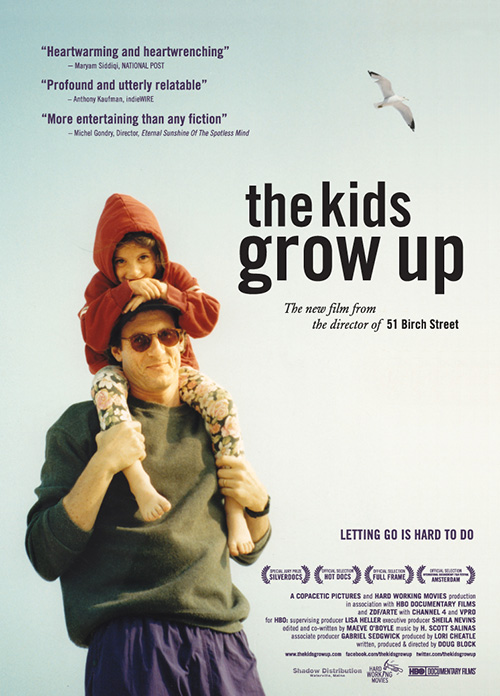
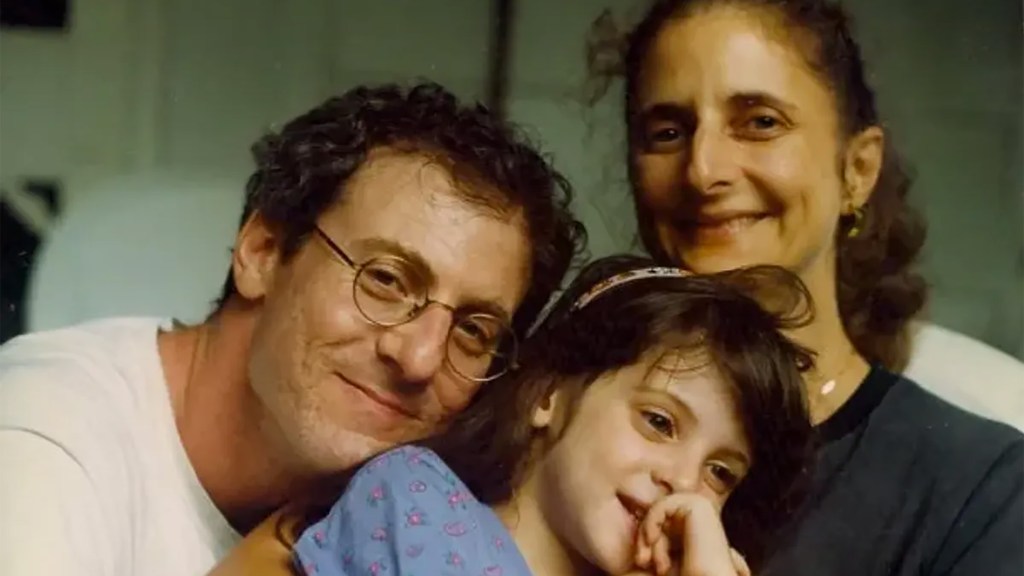



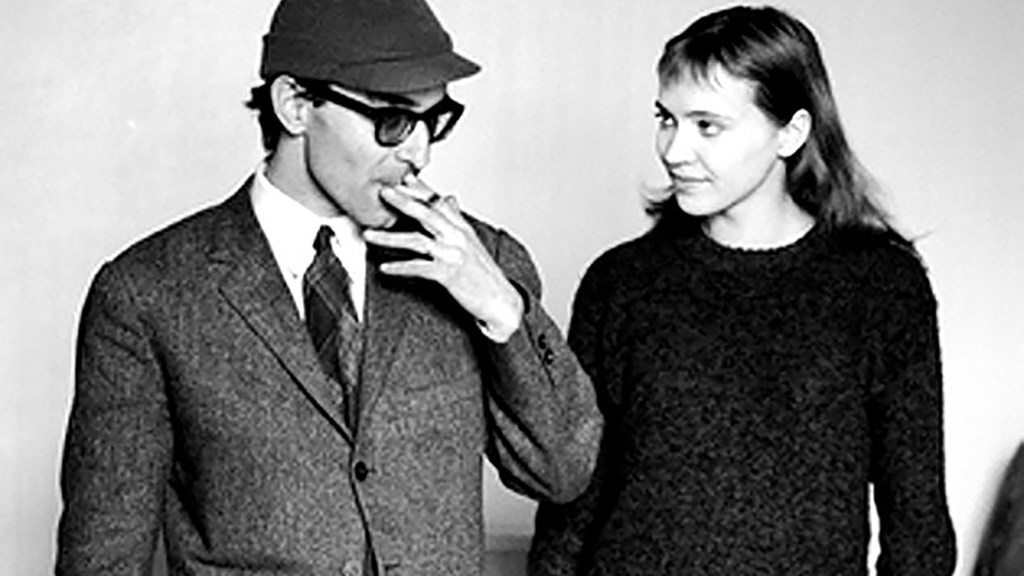


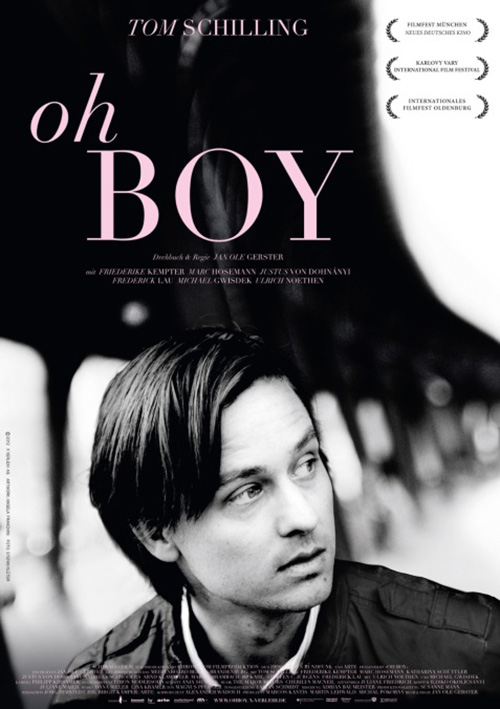
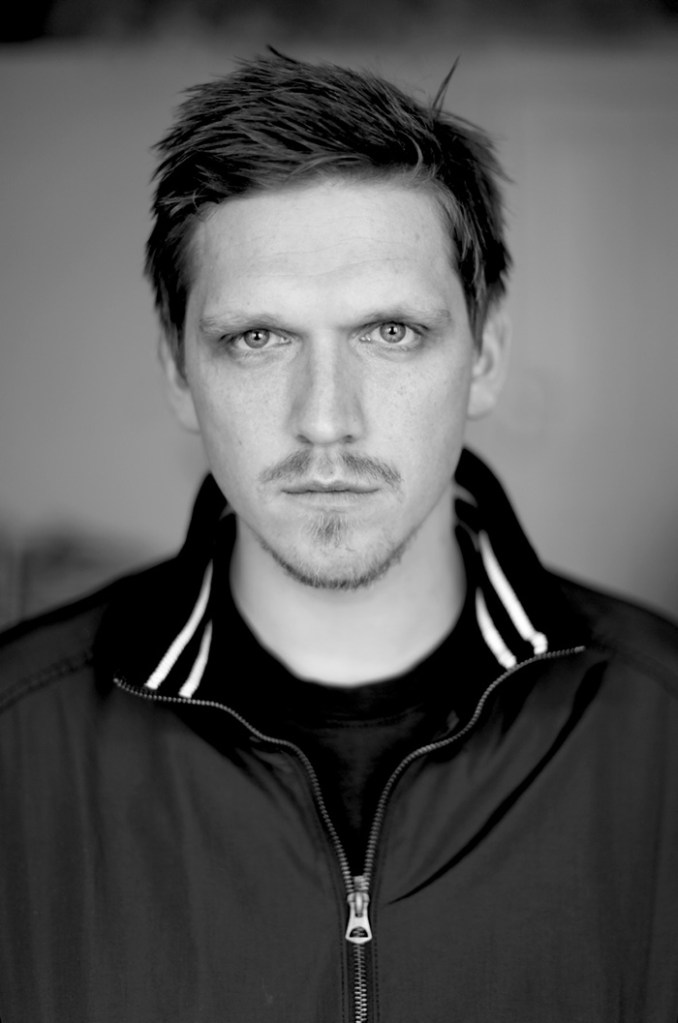

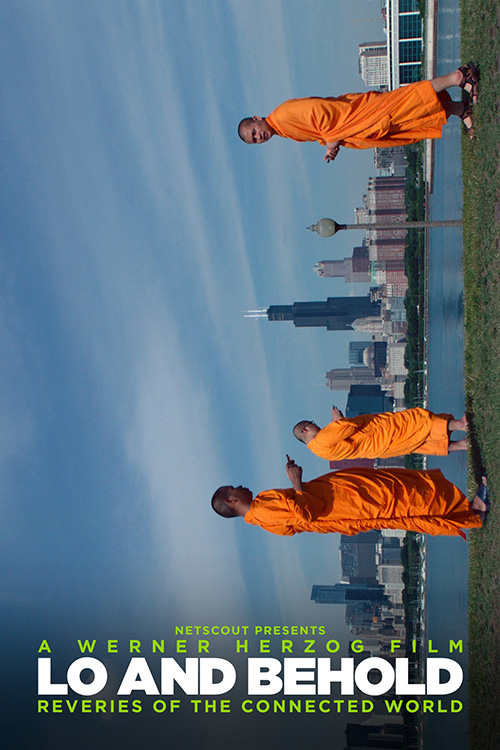
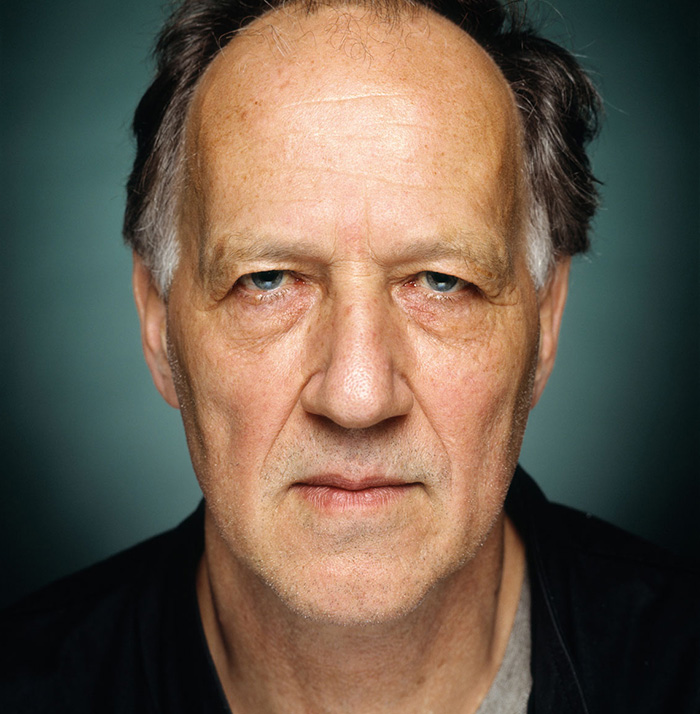

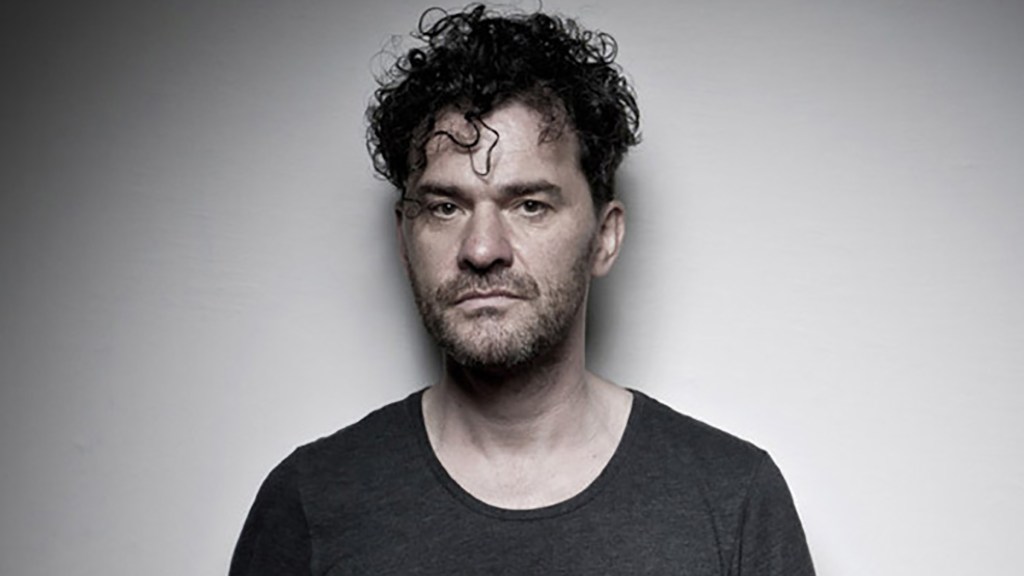
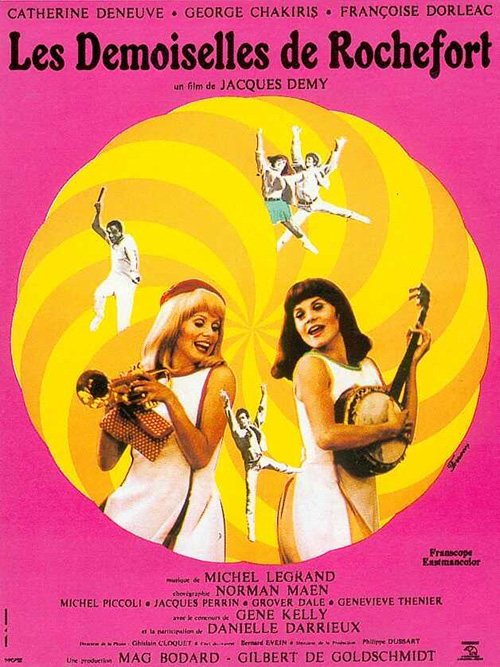


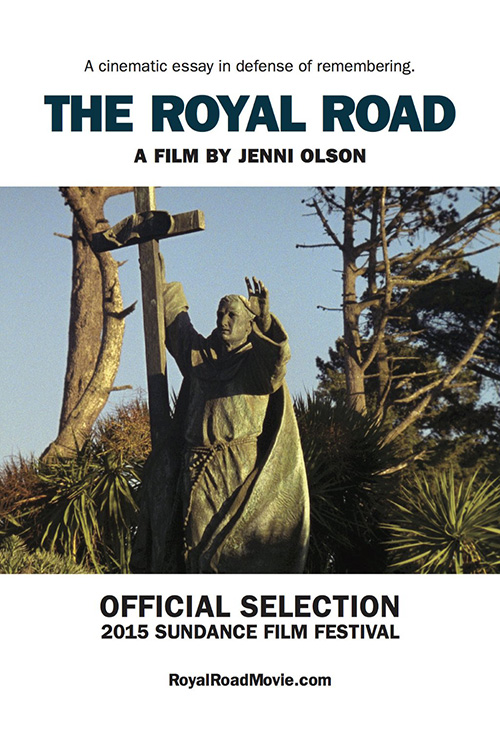

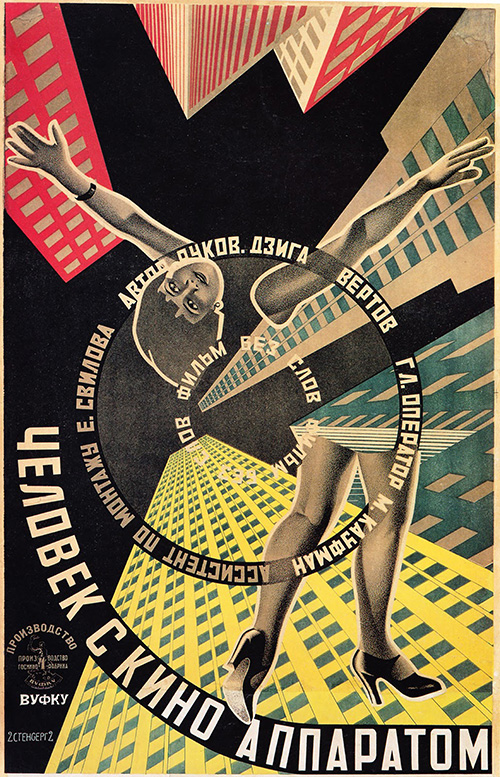
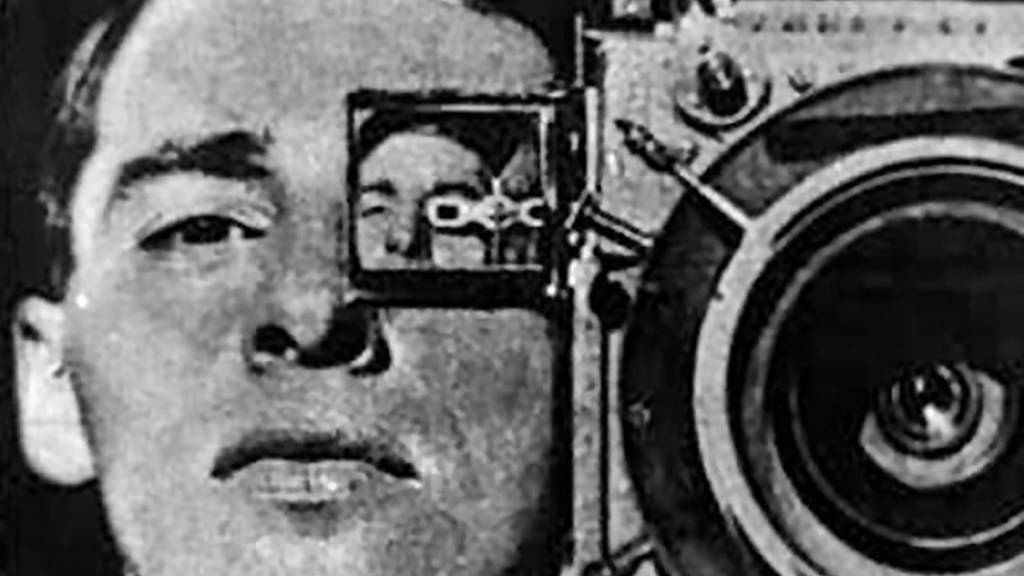
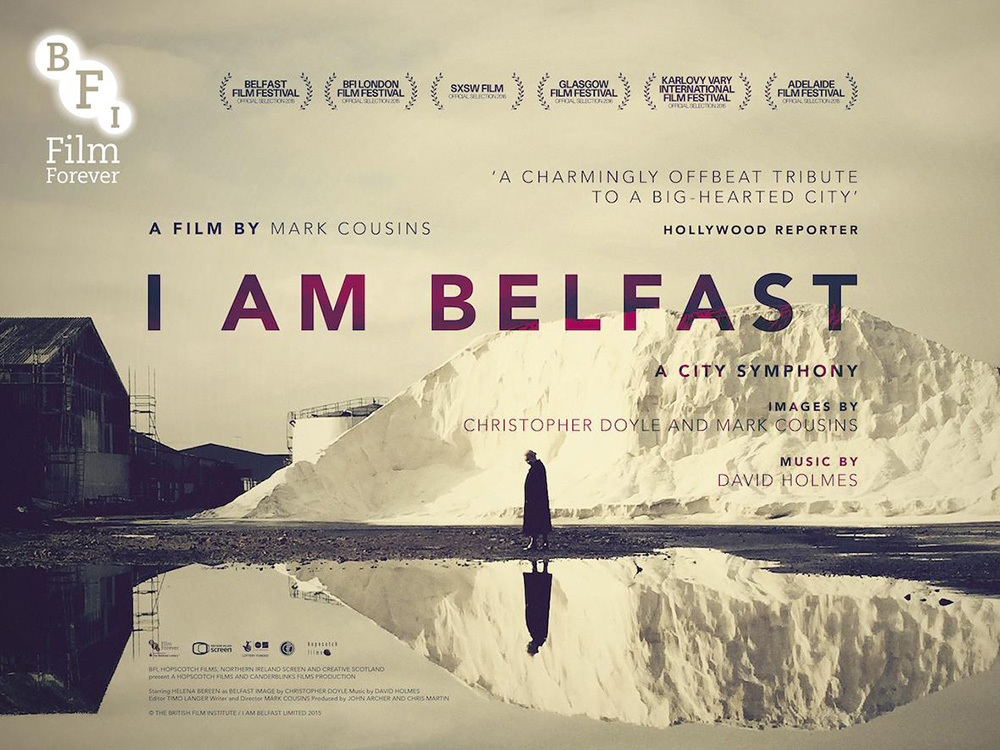

 Cultivate Cinema Circle