A Film About Coffee – April 16th, 2016

A Film About Coffee [2014]


Please join us for a FREE one-day screening of Brandon Loper’s A Film About Coffee [2014], the first film of our Public Espresso themed trilogy about coffee and Constructivism.


Spring 2016 Season Sponsor:

Event Sponsors:
Venue Information:

1 Lafayette Square, Buffalo, NY 14203
(please use Clinton St entrance for Mason O. Damon Auditorium)


Synopsis

Courtesy of the film’s website:

A Film About Coffee is a love letter to, and meditation on, specialty coffee. It examines what it takes, and what it means, for coffee to be defined as “specialty.” The film whisks audiences on a trip around the world, from farms in Honduras and Rwanda to coffee shops in Tokyo, Portland, Seattle, San Francisco and New York. Through the eyes and experiences of farmers and baristas, the film offers a unique overview of all the elements—the processes, preferences and preparations; traditions old and new—that come together to create the best cups. This is a film that bridges gaps both intellectual and geographical, evoking flavor and pleasure, and providing both as well.

“No matter the quality of your cup, people who love coffee, love it. Coffee is about people, and people are what I’m interested in ultimately.”

Brandon Loper, Director

Director Interview

Conducted by Matt Viser of the Boston Globe:

Describe your coffee routine. Where do you frequent, what do you like?

I have a young child, so I get up early. The first thing I want, and my wife requests, is coffee. I’m the designated barista in the house. I have the Baratza Virtuoso grinder, which I love. I used the Hario hand grinder for two years, until I could justify spending several hundred dollars on a grinder. I love it. I use that grinder and I usually try to have very fresh coffee at home. I try to be strategic about when I try and make sure it’s within five days. This morning I had a coffee from Saint Frank.

I almost exclusively do V-60 with the white paper filter. I measure everything out. Usually I make two baby cups. My ratio is 24 grams to 380 grams of water for this coffee. We have little Heath Ceramics mugs.

That’s around 7.

Usually after I take my daughter to day care I’ll come back and make a full cup for myself. That’s cup two.

After lunchtime I’ll go somewhere. Usually Saint Frank or Four Barrel or Ritual.

What’s your order?

Usually a pour-over. I went through a phase of getting a cappuccino and a cookie. But I tried to cut back on the cookie. My favorite is a competition cappuccino, which is a single shot instead of two shots. So I’ll do a single shot cappuccino and the espresso on the side. The single shot cappuccino is so good.

When you’re buying, what time? And do the baristas know you?

I still go a lot in the morning. I’ll almost always do the cup at 7 at home. If I’m going into the office I’ll go by Saint Frank on the way to work. I know all the baristas. At Four Barrel they have a pour-over bar. I know the guy who runs that. They try to make me not pay but I always insist.

How do you take it (milk, sugar)?

Just black. And I let it cool down a bit.

Iced or hot?

Almost always hot. On a rare day I’ll go iced latte or iced café tonic situation.

Alone or with company?

Almost always with company. Whether it’s just a barista working there or I’m picking up to be with someone. I really value having coffee with someone. I appreciate that time. If I’m meeting a friend or coworker I try to make it revolve around coffee. I’m one of those people who likes that. I like sharing that with people.

Where do you drink it? Seated or on the go?

Usually the first two cups I’m in motion, whether getting my daughter ready for day care or getting ready myself. I’m taking a sip. The second cup is the same way. Usually it’s in my van heading to the office. But the afternoon cup usually I’m sitting down. I’m meeting a friend for coffee or settled in.

Any simultaneous noncaffeinated stimulation (newspaper, radio, cigarettes, etc.)?

I guess if I’m driving I’ll listen to NPR. So it’s the news and coffee. But at home its “Sesame Street” and a very nice single origin pour-over. In the afternoon it’s my computer or in a meeting.

What time will you drink your last cup?

I try to drink it by 3 or so. Sometimes it’s way sooner. But last night I had a cup at almost 6 o’clock because I knew I had a bunch of stuff to do. I had to stay open till midnight so I said I’ll let it slide this time. But usually I try to have it by 3, the latest 4.

What’s your stance on decaf?

You know, I maybe have one cup of decaf coffee a year. I rarely drink it. And that would be if I’m at dinner and it’s late, like 9 or 10, but I want coffee with dessert. But almost never.

When and why did you start drinking coffee?

I started drinking coffee in college. It probably wasn’t until my senior year of college. I was, I think, 21. I liked this girl who drank a ton of coffee but just regular Dunkin’ Donuts or Folgers and she doused it with hazelnut creamer. I started drinking because she did. I wanted to impress her. It was this sugar explosion. Then one of my friends, we were at a truck stop in Mississippi. He dared me to drink it black. So I drank it. And then from that day on I have always drank it black. It made me realize I could do it.

I wasn’t even thinking about taste. It was like drinking beer. You drink it for the effects. Now you can appreciate it.

Is your wife still drinking the sweet stuff, or did you bring her along?

She will drink the coffee I make in the mornings. But when we went home for the holidays, every day my wife would want a peppermint mocha [at Starbucks]. They do a blond roast pour-over, which is what I got. It’s not good but its not horrendous either.

Describe the most memorable cup of coffee you’ve ever had.

My most memorable, probably, was an Ethiopian natural coffee from a place called Misty Valley. It was roasted by Blue Bottle. I think it was in ’08. I was currently writing a coffee and wine blog that is so bad I won’t give you the Web address. It was a place to journal my thoughts. I started writing it, and then I was writing this is good, this is fun to drink. And then I had this coffee. It was like the blueberry explosion. I loved it. So I bought a bag. It took me several years to figure out what it was.


Links

Here is a curated selection of links shared on our Facebook page for additional insight/information:

  • 3/31/16 – “You know there’s a thing—since I was in high school, I read a book called The Art Spirit by Robert Henri, and in it he talks about this art spirit that transformed itself into the art life for me. Coffee is part of the art life. I don’t know quite how it works, but it makes you feel really good and it serves the creative process. It goes hand in hand with painting for sure.” David Lynch on coffee and creativity – link
  • 4/3/16 – What are your favorite scenes centered around coffee? – link

The Vanquishing of the Witch Baba Yaga – March 25th, 2016

The Vanquishing of the Witch Baba Yaga [2014]


Please join us for a special screening event of Jessica Oreck’s The Vanquishing of the Witch Baba Yaga [2014]. The director will be in attendance to introduce the film and participate in a Q&A.

  • Screening Date: Friday, March 25th, 2016 | 7:00pm
  • Venue: Squeaky Wheel Film & Media Arts Center
  • Specifications: 2014 / 73 minutes / Polish & Russian with English subtitles / Color
  • Director(s): Jessica Oreck
  • Print: Supplied by Myriapod Productions
  • Tickets: $7.00 General Admission / FREE for Squeaky Members
  • Extras: Stop in early for FREE Breadhive granola while supplies last!

Event Sponsors:

Venue Information:

Market Arcade Complex (first floor) 617 Main Street, Buffalo, NY 14203


Synopsis

Courtesy of Myriapod Productions:

Within a dense forest there lingers a sense of sinister foreboding, remnants of a nearly forgotten story, where the fairy tales of childhood persist within the subconscious. For generations of Slavic peoples, this fear manifested itself in the form of the mythical witch Baba Yaga — to roam too near her hut perched on chicken legs was to risk being roasted for her dinner.

In spite of this culturally ingrained dread, the turbulence of war, famine, and destruction that stains the pages of Eastern European history led to the witch’s figurative vanquishing. Refugees fled to her woods for shelter, nourishment and sanctuary, and in so doing, reshaped an entire culture’s perception of nature.

This transition was slow and unconscious, and is best told through the stories of the region — the memories of those who experienced periods of warfare first-hand as well as the recollections that have passed generation to generation. To bring these stories to life, we have merged countless accounts into a single, unified narrative — an animated fairy tale that gathers history, folklore, and memory into one.

This fairy tale is intertwined with an anthropological exploration of modern day, post-conflict Eastern Europe. Combining these elements, The Vanquishing is about more than a single moment in history. It is about the accumulation of history, the accumulation of repetitive action, the retelling of stories retold, the retention of belief, and the unconscious osmosis of ideas. It is a study of collective memory and the sociology of fear, imagination and survival.

Tidbits:

  • True/False Film Festival – 2014
  • BFI London Film Festival – 2014
  • AFI Fest – 2014

Director Bio

“It’s hard to remember how the animation came about; so much of my work is intuitive, so much of it I don’t remember actually writing, I don’t remember editing, it just sort of happens. I do my best work when I’m sort of slightly asleep and I can channel this other entity, that has nothing to do with me, that wants to make this film.”

Courtesy of Myriapod Productions:

Jessica Oreck makes projects large and small that instill a sense of wonder and invite viewers to question their relationship with the natural world. Jessica’s award-winning first feature-length documentary Beetle Queen Conquers Tokyo, played theatrically around the world and aired on PBS’s Independent Lens series in 2011. Her latest film Aatsinki: The Story of Arctic Cowboys is in the middle of a nationwide theatrical tour. She is currently in production on several short animated projects, including the recently released web series, Mysteries of Vernacular.

Jessica considers her second home the American Museum of Natural History, where she has worked as an animal keeper and educator periodically since 2006.

Filmography:

  • Memoirs of Vegetation (2020)
  • One Man Dies a Million Times (2019)
  • The Vanquishing of the Witch Baba Yaga (2014)
  • Aatsinki: The Story of Arctic Cowboys (2013)
  • Beetle Queen Conquers Tokyo (2009)

Links

Here is a curated selection of links shared on our Facebook page for additional insight/information:

  • 3/8/16 – Celebrate ‪#‎InternationalWomensDay‬ by diving into filmmaker Jessica Oreck’s Mysteries of the Vernacular project – link
  • 3/17/16 – “Jessica Oreck’s The Vanquishing of the Witch Baba Yaga is a staggeringly polymorphous documentary that often suggests a collaboration between Carlos Reygadas, Godfrey Reggio, and Apichatpong Weerasethakul. Part meditative nature film, part urban observational, part fairy tale, these seemingly disparate parts consistently juxtapose throughout to form not just an evocative mood piece, but a larger, discursive work that achieves something resembling Sergei Eisenstein’s concept of dialectical montage.” Clayton Dillard, Slant Magazinelink
  • 3/23/16 – “I love this film. I’m really proud of it. To me, it is the best film I’ve made so far and I’ve realized it’s not for everyone, as none of my films are, but I do think it’s my strongest work to date, so I’m very proud of it, but distribution and outreach are so deeply against my nature.” Jessica Oreck, Director of The Vanquishing of the Witch Baba Yaga, IONCINEMA interview – link
  • 3/24/16 – “Folklore, mythology, art, religion – they are all ways we hand ideas across generations. I think a lot of my work is tied to both the conscious and the unconscious build up of culture and social norms through storytelling, through ritual, through habit. I always want people to think about the things we take for granted, the things we think are innate – about ourselves, about our societies, about the tools we use, the language we speak. I want audiences to take a step back and appreciate all the invisible hands that have molded us into what we are. But there are lots of other facets too! I never just want there to be one answer.” Artvoice‘s Jordan Canahai spoke with director Jessica Oreck about her film The Vanquishing of the Witch Baba Yagalink

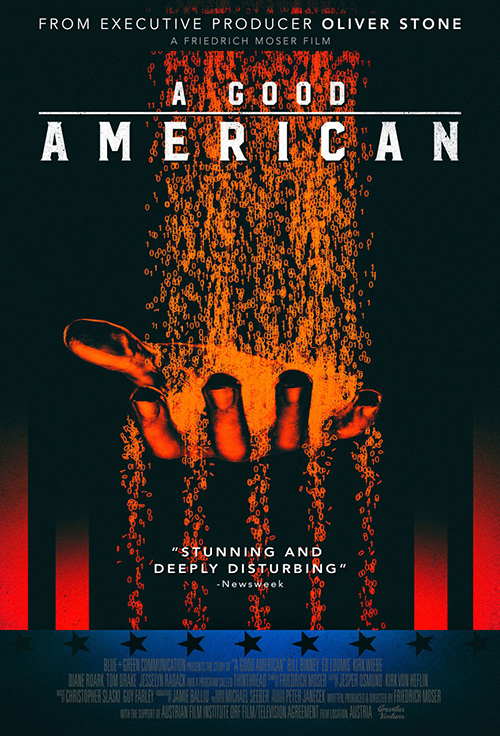
A Good American – March 16th, 2016

A Good American [2016]


Please join us for a special one-night event screening of Friedrich Moser’s A Good American [2016]. A Buffalo Premiere!

  • Screening Date: Wednesday, March 16th, 2016 | 8:00pm
  • Venue: Burning Books
  • Specifications: 2016 / 110 minutes / English / Color
  • Director(s): Friedrich Moser
  • Print: Supplied by Long Shot Factory
  • Tickets: Free and Open to the Public
  • Extras: Stop in early for FREE Breadhive granola while supplies last!
  • Deal: Bring your ticket stubs and join us at The Black Sheep after the show for 2 for 1 drink specials

Event Sponsors:

Venue Information:

420 Connecticut St, Buffalo, NY 14213


Synopsis

Courtesy of Faceboook:

A Good American tells the story of the best code-breaker the USA ever had and how he and a small team within NSA created a surveillance tool that could pick up any electronic signal on earth, filter it for targets and render results in real-time while keeping the privacy as demanded by the US constitution. The tool was perfect – except for one thing: it was way too cheap. Therefor NSA leadership, which had fallen into the hands of industry, dumped it – three weeks prior to 9/11. Now guess what…

Tidbits:

  • DOC NYC – 2015

Director Bio

courtesy of blue+green:

Friedrich Moser holds a university degree (MA) in history and German studies from the University of Salzburg / Austria.

Friedrich started his professional career as a TV journalist and editor in Bolzano-Bozen / Italy. In 2001 he founded blue+green communication. He has made over 20 documentaries in the past years, most of them as producer / director / DoP. In 2008 he attended successfully the Documentary Campus, the European Masterschool for non-fiction filmmaking.

Friedrich’s professional career also includes lecturing on history and documentaries at the University of Vienna / Department of Economic and Social History, as well as teaching video production at the Secondary School for Commercial Graphics in Bressanone-Brixen / Italy.

Friedrich lives in Vienna/Austria and in Bressanone-Brixen / Italy.

Filmography:

  • How to Build a Truth Engine (2021)
  • Money Bots (2020)
  • BEER! A Love Story (2019)
  • The Maze (2017)
  • A Good American (2016)
  • The Brussels Business (2012)

Links

Here is a curated selection of links shared on our Facebook page for additional insight/information:

  • 3/8/16 – Buffalo’s alt-publication Artvoice focuses their cover story on A Good Americanlink
  • 3/9/16 – Need a primer on William Binney (subject of our upcoming film A Good American)? Start with The Program, a The New York Times Op-Docs short on the former NSA technical director by the Oscar winning director/Pultizer Prize winning journalist Laura Poitras – link
  • 3/14/16 – “With the ferociously intelligent and committed Binney at its centre, the film is a fascinating, sometimes jaw-dropping account of gifted individuals thwarted by self-serving superiors, with tragic results. […] In a tragic way, the latest atrocity makes the documentary A Good American even more timely. […] For many it will make upsetting viewing.” Friedrich Moser interviewed at Indiewire – link
  • 3/15/16 – From Buffalo critic M. Faust online at The Public: “A Good American – Should our security agencies have known in advance about the attacks of 9/11? That’s the question that will bring most viewers to this new documentary (playing in Buffalo ahead of most anyplace else in the US), but they’ll walk away with a deeper disrespect for the NSA, which is presented here as so corrupted by greed and arrogance as to be worthless. The center of the film is former analyst William Binney, who developed in the 1990s the ability to predict events using metadata. But because the intelligence agencies couldn’t make enough money from his system, ThinThread, they jettisoned his work in favor of a much more expensive program that eventually proved useless. It’s damning stuff, if you can take it at face value: director Friedrich Moser’s approach is slow and deliberative but also emotionally manipulative and one-sided. Still, he presents a case that demands to be addressed. Sponsored by Cultivate Cinema, the screening is free and open to the public.”

Olmo and the Seagull – March 1st, 2016

Olmo and the Seagull [2015]


Please join us for a special one-night event, Buffalo-premiere screening of Petra Costa and Lea Glob’s Olmo and the Seagull [2015]. A Buffalo Premiere!

  • Screening Date: Tuesday, March 1st, 2016 | 8:00pm
  • Venue: Canisius College Science Hall
  • Specifications: 2015 / 87 minutes / Multiple with English subtitles / Color
  • Director(s): Petra Costa & Lea Glob
  • Print: Supplied by Busca Vida Filmes
  • Tickets: Free and Open to the Public
  • Deals: Stop in early for FREE Breadhive granola while supplies last!


Event Sponsors:

Venue Information:

2001 Main Street (Between Delavan & Jefferson), Buffalo NY 14208


Synopsis

Courtesy of press kit:

A journey through the labyrinth of a woman’s mind, Olmo and the Seagull tells the story of Olivia, a free-spirited stage actress preparing for a starring role in a theatrical production of Chekhov’s The Seagull. As the play starts to take shape, Olivia and her boyfriend, Serge, whom she first met on the stage of the Theatre du Soleil, discover she is pregnant.

Initially, she thinks she can have it all, until an unexpected setback threatens her pregnancy and brings her life to a standstill. Olivia’s desire for freedom and success clashes with the limits imposed by her own body and the baby growing inside her. The months of her pregnancy unfold as a rite of passage, forcing the actress to confront her deepest fears. She looks in the mirror and sees both female characters of The Seagull – Arkadina, the aging actress, and Nina, the actress who falls into madness – as unsettling reflections of herself.

The film takes a further twist when what appears to be acted is revealed as life itself. This portrait of the creative process invites us to question what is real, what is imagined, and what we celebrate and sacrifice in life.

Tidbits:

  • Locarno International Film Festival – 2015 – Winner: Junior Jury Award – Filmmakers of the Present

Directors Statements

Petra Costa:

In our film we sought to examine the things we celebrate and sacrifice in life. Our objective was always to inhabit the border of fiction and reality. Inside: a small apartment. Outside: a theater. A real couple, in a relationship of ten years. An actor, an actress. A real belly, a fictional narrative.

My interest in cinema began with the theater. In my teenage years the Theatre du Soleil was a source of inspiration. Later, when I started working in cinema, I longed to create a film with actors improvising in free-form and developing a story collectively. I found that too often fictional films I saw were constrained by the form, and so entangled in it, that they lost the subtleties of life itself. In November 2011, the Theatre du Soleil was touring in Brazil. There, I met Olivia and Serge, two actors in the company. We began a dialogue and decided to make a film together.

A few months later I was invited by CPH:DOX (DOX:LAB) to co-direct a film with the Danish filmmaker Lea Glob. After a week finding our common ground, we understood that we wanted to make a film where we would use a fictional structure to look into the life of a real person. The idea was to construct frameworks and situations that would allow our characters to investigate their memories, desires, regrets, habits, and secrets. We were particularly interested in the female subject, a day in the life of a woman carrying out ordinary tasks. How many unnamable and innumerable thoughts can inhabit one’s mind? How are fragments and intimations of eternity scattered throughout one day?

Immediately, I thought of Olivia and Serge. For the past ten years, they were creating theater based on improvisation, and thus, would be the perfect artists to share in this investigation.

Additionally, thanks to the generosity with which they shared so many intimate moments of their lives, shooting within documentary parameters allowed us to see those real moments of connection that existed inside the couple’s partnership.

Lea’s talents of observational filmmaking and my orientation towards improvisation allowed the film to move into territories that it would have never otherwise reached. In all stages, from shooting to editing, the work of the entire team was imbued with the spirit of a theatre troupe, where many of the ideas came to life through collaboration.

Olmo and the Seagull is in many ways also a continuation of the investigations I have been carrying out in my previous films. To a great extent, I approach my films as an archeology of affections, trying to reach into the deep levels of impalpable emotions. For example, my previous film Elena tells the story of three women from different generations going through the rite of passage from adolescence to adulthood – my mother, myself, and my sister Elena who tragically committed suicide at the age of twenty. The image which united them was that of Ophelia, from Shakespeare’s Hamlet. It was interesting for me to learn that Chekhov wrote The Seagull as an echo of Hamlet, where Nina would represent an Ophelia who does not commit suicide – a seagull that is attracted to the water, but instead of drowning in it, flies over it. Similarly, if Elena, both as the real person and the fictional character in the film, had survived her own drowning, her next challenge would have been to make sense of all that might have followed: aging, the survival of her art, the loss and maintenance of love in a relationship, and perhaps motherhood.

One of the things we are trying to do with Olmo and the Seagull is to relieve a tension I’ve always felt between the fact that every single human was brought into being by a pregnant woman and the reality that there is almost no interesting cinematic portrayals of the psychological processes a mother goes through during this period of life. Why are the only complex representations of pregnancy in horror films, such as Rosemary’s Baby? Similarly striking is the fact that there are so few critical examinations of how our society deals with the relationship between a woman’s commitments as a mother and as a professional.

While Elena explored the process of finding and grounding oneself in the world – becoming a being, an adult, a woman – through Olmo and the Seagull my hope was to investigate the process of letting go of that being, and to a certain extent, making room for something else to be born, whether that be a baby or a new version of the self, be it rooted as ‘olmo’ (elm tree in Italian) or migratory as a ‘seagull’.


Lea Glob:

In Olmo and the Seagull we investigate the beauty of acting as a way to come to terms with the real. When Serge first told us the story of how he and Olivia fell in love on stage, we knew that our film would feed from this rich space between the imagination and reality that figured in this couple’s life. Serge told us how Olivia, in the middle of a scene about the liberation of Kabul, in front of a full audience, would tease him by sending another actress across the stage to deliver him love messages. For these two characters, the stage is itself a part of their actual, personal story.

My entry into cinema began with Meeting My Father Kasper Højat, a story that grew out of my own personal experience. My father disappeared when I was two years old, never to be heard from again. Then, when I was eighteen, I was notified that he had hanged himself in a prison cell.

In the film I lead the audience through a highly intimate detective journey, as I try to reconstruct my father’s identity. I lay out my father’s pipe, gloves and photos to the viewer as though I were pinning them up onto a bulletin board of sorts, sifting through all the clues. The film relies on classic fictional devices – reconstructions of certain scenes, a narrator, humor, emotional distance, the consideration of a weighty subject – but at the same time the form never lets go of its documentary aspect. I move between chaos, spontaneous emotions, and, eventually, a kind of synthesis and crystallization.

Here, we opted to use, as a sort of baseline structure, formalistic constraints on the lives of our characters: our aim was to structure and order what seemed like spontaneously shot documentary footage. We entered an area with known contours and an established storyline, but it was also an opportunity for us to push past that and to explore new territory.

It was poignant for me to be able to play with the tensions between acting versus being, because it was the question Olivia herself faced in her life, never more poignantly than during her pregnancy. Engaging in this process with Petra, Olivia and Serge helped enrich my approach to documentary-filmmaking immensely.

Throughout the entire process of making this film, the actors, production team, and directors jointly entered this blurry space between the real and the imagined. As a collaboration between genres, cultures and personalities, this film became an intense interrogation of questions of form and storytelling.

A pregnancy is a very real transformation of a woman’s body and mind. To watch and create a film with such generous actors, who were open and giving in such a crucial moment of their lives, has been a continual inspiration. Their generosity has brought me in touch with a deeply felt desire to look at the very basic things in life and to dare to embrace the ordinary. Our film opens with the life of Olivia, as she is about to leave the stage (albeit temporarily) to start a family. This resonated with me, naturally. I am thirty-three years old, an age when a woman has to decide whether or not to start a family, and how. This personal connection has driven me to look even more closely at the drama that unfolds in the film.

photo by Pamela Pianezza / Picture This !


Director Bios

“Gosto de ter meu espaço, então gosto da ideia de um casamento com bastante liberdade para ir e vir, de criar coisas em outros lugares. Preciso da solidão para criar.”

Petra Costa’s (Director) first feature Elena (2012), premiered at IDFA and won several prizes in festivals worldwide. It was the most watched documentary in Brazil in 2013 and in 2014 was released theatrically in the United States. Executive Produced by Fernando Meirelles and Tim Robbins, Elena unfolds as a mixture of fever dream and psychological thriller. It tells the story of two sisters – and as one searches for the other their identities begin to blur. The film was called “a cinematic dream” by the New York Times, “haunting and unforgettable” by the Hollywood Reporter and was defined as a “masterful debut that takes nonfiction where it seldom wants to go – away from the comforting embrace of fact and into a realm of expressionistic possibility” by Indiewire.

Petra started her training in theater in Brazil at the age of fourteen and later went to the Dramatic Arts School at the University of São Paulo. She then went on to study Anthropology at Barnard College, Columbia University. She completed her masters in Social Psychology at the London School of Economics focusing her studies on the concept of trauma. Currently pursuing her PhD at the European Graduate School, Petra is also writing a feature fiction film entitled Strange Fruit.

Filmography:

  • The Edge of Democracy (2019)
  • Olmo & the Seagull (2015)
  • Elena (2012)
  • Don Quixote of Bethlehem (2005)

Lea Glob (Director) graduated from the National Film School of Denmark in 2011 with her well received short film Meeting My Father Kasper Højat, an autobiographical interpretation of the director’s personal encounter with her long lost father. The film is an almost archaeological investigation of the father’s identity, seen through the directors imagination, as she goes through the boxes of objects left behind of the father. Among other acknowledgments, the film was nominated for the National Danish Film Award and for The Robert Awards, and won a Golden Panda for most innovative documentary film at the Chinese Shiuan TV Festival.

Since then, Lea has received the main award at Nordic Talents for the development of the documentary project Human Female Sexuality, a highly visual film and transmedia project, which investigates the (often contradictory) inner life and imagery of female sexuality.

Lea Glob works both as a filmmaker and Director of Photography and has received the “Real Talent Award” given by the Danish Film Directors. Based in Copenhagen, Lea also works and teaches as part of the Artistic” Research program at The National Film School.

Filmography:

  • Lykketoft og de lejlighedsvist Forenede Nationer (2017)
  • Venus (2016)
  • Olmo & the Seagull (2015)

Links

Here is a curated selection of links shared on our Facebook page for additional insight/information:

  • 2/26/16 – “For in her second feature, Costa, assisted by co-director Lea Gob, turn your gaze to a deeply feminine universe, but also universal, starting from the of pregnancy Italian actress Olivia Corsini and her relationship with her husband Serge Nicolai to analyze not only the insecurity aroused by the experience, but the existential and professional doubts experienced by the protagonist. In the process, the filmmaker also explores the nature of representation and the border between art and reality as – as if all that were not enough – build a challenging and fascinating narrative structure.” Pablo Villaça, Cinema em Cenalink
  • 3/1/16 – Courtesy of Petra Costa’s Twitter (@petracostal): Thoughtful interview at #FilmmakerMagazine on #OlmoAndTheSeagull. Those that make ideas simmer and sprout… – link

Almost Holy – February 24th, 2016

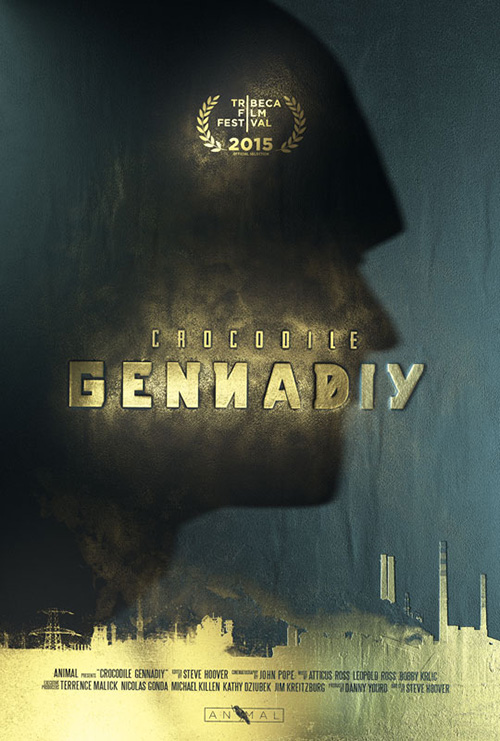
Almost Holy [2016]


Please join us for a special one-night event screening of Steve Hoover’s Almost Holy [2016]—formerly Crocodile Gennadiy. A Buffalo Premiere!

  • Screening Date: Wednesday, February 24th, 2016 | 7:00pm
  • Venue: Burning Books
  • Specifications: 2016 / 100 minutes / English / Color
  • Director(s): Steve Hoover
  • Print: Supplied by The Orchard
  • Tickets: Free and Open to the Public
  • Extras: Stop in early for FREE Breadhive granola while supplies last!
  • Deal: Bring your ticket stubs and join us at The Black Sheep after the show for 2 for 1 drink specials

Event Sponsors:

Venue Information:

420 Connecticut St, Buffalo, NY 14213


Synopsis

Courtesy of press kit:

Gennadiy Mokhnenko has made a name for himself by forcibly abducting homeless drug-addicted kids from the streets of Mariupol, Ukraine. As his country leans towards a European Union inclusion, hopes of continued post-Soviet revitalization seem possible. In the meantime, Gennadiy’s center has evolved into a more nebulous institution.

Tidbits:

  • Tribeca Film Festival – 2015
  • Hawaii International Film Festival – 2015 – Winner: Documentary Feature (Halekulani Golden Orchid Award)

Director Note

I wanted Crocodile Gennadiy to have the characteristics of a narrative film, for the story to be told through the use of vérité scenes and natural dialogue. I developed a strategy with my crew to accomplish this goal, which informed our decisions and reactions to unforeseeable circumstances in the field. Our crew believes that content is more important than cinematics, but we’re passionate about filming with proficiency.

The journey of this film began in 2012 when some of my co-workers were commissioned to do a promotional video in Ukraine. While in Mariupol, they met Gennadiy Mokhnenko and spent a few days with him. After listening to his stories and witnessing his amorphous work, they returned with enthusiasm and proposed doing a feature length non-fiction film on Gennadiy. I wasn’t interested in the idea until they shared raw footage with me and further explained some of the context. I was struck by the character of Gennadiy.

Once in Ukraine, we encountered many challenges, the most obvious being that we don’t speak Russian. With the exception of the main subject’s broken English, almost all of the dialogue was Russian. While shooting, we relied heavily on a translator, observation and the main subjects limited explanations of events. We had four cameras, two of them were constantly rolling. We committed to filming everything we possibly could, which made for a difficult but rewarding post process.

My life has changed radically throughout the making of this film. Formerly, I was Christian, or I at least identified as one, but I no longer am. There’s a lot to the story. I was raised in a religiously apathetic, broken, Catholic family. I converted to a nondenominational church in college. To me, faith was a solution to the existential confusion I found myself in after a long, overindulgence in psychotropic drugs, which spanned my adolescence. As a teenager, I was obsessed with hallucinating and the drugs were boundless. The faith eventually helped me to pull myself together, giving me guidance, discipline and a moral framework, all of which I didn’t really have beforehand.It also dispelled an attraction I had to heroin. I had never used heroin, but I was always seduced by the idea and a step away from it, along with several friends who came to die from overdoses. My college roommate at the time was dealing and coaxing me with free dope. He has since overdosed and died.

Gennadiy’s former work with drug addled street kids in Ukraine struck a chord with my darker past. Had I been born in Mariupol, Gennadiy would have had me by the collar. I found deeper interest however, not in the kids I empathized with, but in a character I didn’t understand. The story could have gone in many different directions.

Eventually, I found myself standing in a van while our crew was being attacked by an angry Pro-Russian mob in Ukraine. I was both terrified and calm. I knew that if we made it out of the situation, my life would change – this time in a different way. Up until that point, for several years I had resisted coming to terms with the fact that my beliefs had changed. My cultural liberalism didn’t align with the faith, no matter how hard I tried to squeeze it in. I had grown weary of the behavior and practices of the church that I was a part of and increasingly uncomfortable with the social pressures that some of the members were asserting on me.

The van broke through the mob and after a short car chase, I found myself resolute. I would embrace my worldview and move on. I spent the remainder of the year, mostly alone with the edit. Working on the edit of the film was a means of catharsis for me.

Though the making of this film had a distinctive effect on my life personally, this is definitely not a call to action film; if anything, it’s more of a portrait. It is something to look at, reflect on and discuss. In light of current events, I hope it gives people a reason to research the conflict in Ukraine. Although this film isn’t designed to be a political tool, it has obvious relevance to the turmoil between The EU, Russia and Ukraine and offers some context. After the recent fall of Debaltseve, Mariupol is rumored to be the next target for the Pro-Russian forces. The film could develop additional relevance as the conflict progresses.

While the film was in development, I was told by different establishments that there was some controversy surrounding the film. Some felt the portrayal of Gennadiy was too objective and people wanted to know “how the director felt about him.” Some liked Gennadiy, while others were disapproving. I believe Gennadiy is confounding, so I wasn’t comfortable telling people how to think and feel about him. I wanted to show the complicated nature of this character and the world he lives in.


Director Bio

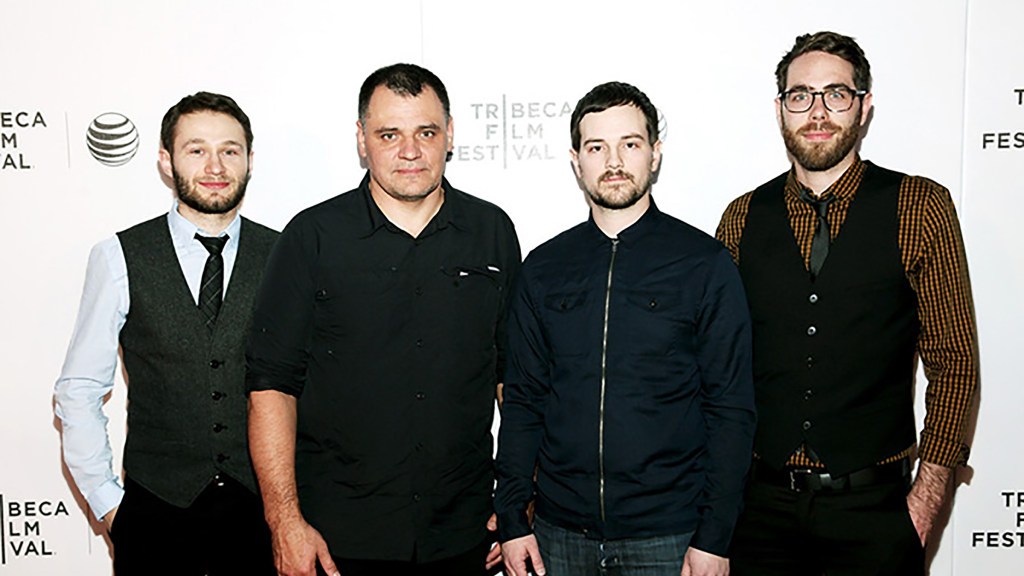
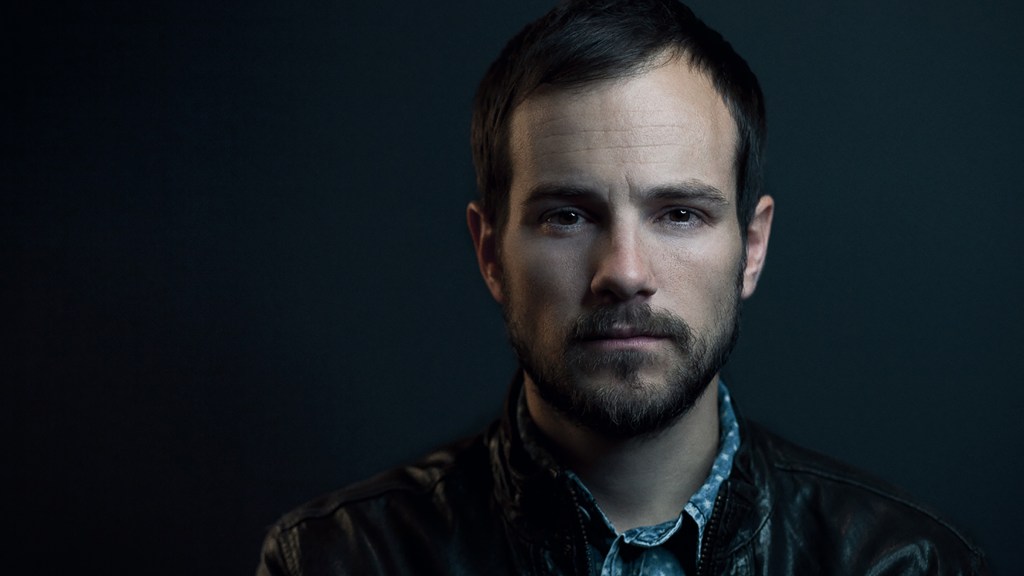
Steve Hoover made his feature film directorial debut in 2013 with Blood Brother, which won both Audience and Grand Jury Award at Sundance 2013. Also that year, he had co-directed an award-winning documentary short film entitled Seven Days. Crocodile Gennadiy will be Steve’s second feature. Hoover has also had a successful career in commercial campaigns. Currently, he is a commercial director at Animal.

Filmography:

  • Almost Holy (2016)
  • Blood Brother (2013)

Links

Here is a curated selection of links shared on our Facebook page for additional insight/information:

  • 1/26/16 – “In Almost Holy [formally Crocodile Gennadiy], what begins as an astounding, morally murky portrait of a man subverting inert government organizations to rescue abused children morphs into a something more akin to a unraveling sketch of a man clutching his overflowing family, bracing for the waves of political unrest that are guaranteed to turn his life upside down.” Jordan M. Smith, IONCINEMA.com – link
  • 2/10/16 – This happened to the production crew while finishing production on Almost Holy [formally Crocodile Gennadiy], in Mariupol, Ukraine on March 15, 2014. – link
  • 2/23/16 – Earlier this month Almost Holy [formally Crocodile Gennadiy] was named the Best Documentary at the Social Impact Media Awards (SIMA)! – link
  • 3/16/16 – CCC alum Almost Holy has finally been re-christened with its new title as well as new release date of May 20th, 2016 – link
  • 7/15/16 – The soundtrack for Almost Holy will be available from Sacred Bones on August 19th, 2016 – link

Local Media Coverage:

  • 2/18/16 – Jordan Canahai review published online at Artvoicelink
  • 2/23/16 – M. Faust review in The Publiclink

Abe Lincoln in Illinois – February 14th, 2016

Abe Lincoln in Illinois [1940]


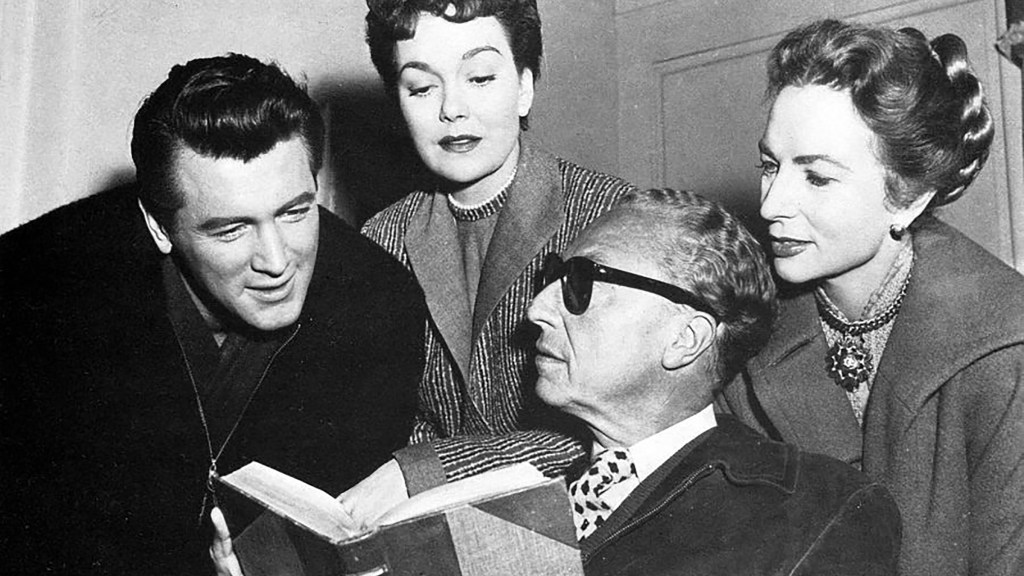
Please join us Presidents’ Day Weekend for John Cromwell’s classic Abe Lincoln in Illinois [1940] on the big screen.

  • Screening Date: Sunday, February 14th, 2016 | 11:30am
  • Venue: North Park Theatre
  • Specifications: 1940 / 110 minutes / English / Black & White
  • Director(s): John Cromwell
  • Print: Supplied by Warner Bros.
  • Tickets: $7.50 general admission; $7.00 seniors

Event Sponsors:

Venue Information:

1428 Hertel Ave, Buffalo, NY 14216


Synopsis

Courtesy of Warner Bros.:

Among the most masterful matchups of actor and role in screen history is this stirring film of Robert E. Sherwood’s beloved play taking a thoroughly human look at the early years of our 16th President, with all his frailties and strength of character.

Best Actor Oscar nominee Raymond Massey (who originated the role on stage) wonderfully plays the future Great Emancipator in a chronicle of his backwoods childhood through his first romance with Ann Rutledge (Mary Howard) to his phenomenal rise to President Elect, besting the great orator Stephen Douglas (Gene Lockhart).

Ruth Gordon also does memorable work as driven, ambitious Mary Todd Lincoln, whose vision of Abe’s leadership destiny will not be denied by anyone – including her often reticent husband. There’s also no denying the enduring emotional power of this simple, magnificent movie.

Tidbits:

  • Academy Awards – 1941 – Nominee: Best Actor in a Leading Role & Nominee: Best Cinematography, Black-and-White

Director Bio

“In jail, everyone recognises my face.”

Courtesy of Britannica.com:

John Cromwell, original name Elwood Dager Cromwell (born December 23, 1887, Toledo, Ohio, U.S.—died September 26, 1979, Santa Barbara, California), American actor and director of stage and screen who, during a career that spanned more than 70 years, helmed a number of classic movies, including Of Human Bondage (1934), Abe Lincoln in Illinois (1940), and Anna and the King of Siam (1946).

Cromwell’s own personal golden age began in 1937 with the classic The Prisoner of Zenda for Selznick. The swashbuckler was based on Anthony Hope’s novel, and it starred Ronald Colman and Douglas Fairbanks, Jr. Cromwell then directed Algiers (1938), a remake of French director Julien Duvivier’s classic Pépé le Moko. If not quite at the level of the original, it was still a fine production, starring Charles Boyer and the Austrian actress Hedy Lamarr in her American screen debut. The tearjerker Made for Each Other starred James Stewart and Carole Lombard, while In Name Only (both 1939) was virtually a companion piece, with Lombard as a widow who falls in love with an unhappily married man (Cary Grant). Abe Lincoln in Illinois (1940) was based on the Pulitzer Prize-winning play by Robert E. Sherwood. The moving drama featured an Academy Award-nominated performance by Raymond Massey as the future president; Ruth Gordon was Mary Todd Lincoln, and Cromwell played John Brown. Victory (1940), from Joseph Conrad’s novel, was somewhat less successful, although March was excellent as the island loner who is forced to fight for his life.

So Ends Our Night (1941) starred March again, this time in a fine thriller about a German trying to escape his homeland as Nazi agents pursue him, and Son of Fury (1942) was one of Tyrone Power’s best costume pictures; Gene Tierney supplied the love interest and George Sanders the villainy. Cromwell then was reunited with Selznick for his prestigious Since You Went Away (1944), a lengthy but engrossing rendering of a family’s trials and tribulations during the war years. A critical and commercial success, it received a number of Oscar nominations, including a nod for best picture. The Enchanted Cottage (1945) was much more modest, a love story with fantasy elements that starred Dorothy McGuire and Robert Young.

Cromwell served as president of the Screen Directors Guild (later Directors Guild of America) from 1944 to 1946. During the latter year he made Anna and the King of Siam, an elaborate production of the real-life story of a British governess (Dunne) who dares to challenge the ruler of Siam (Rex Harrison). Although highly praised, Cromwell’s film was almost completely overshadowed by Walter Lang’s 1956 musical remake, The King and I. Dead Reckoning (1947) was a change of pace for Cromwell. The film noir starred Humphrey Bogart as a war hero who is betrayed by a femme fatale (Lizabeth Scott).

Cromwell had gone more than 10 years without a misfire, an incredible streak that even the greatest directors would be hard pressed to match, but Night Song (1947), with Dana Andrews as a blind pianist, ended his run. He rebounded in 1950 with Caged, one of the best (and most harrowing) of the women’s prison pictures; Eleanor Parker was cast against type as the new inmate who must learn the ropes.

Returning to RKO, Cromwell made The Company She Keeps (1951), with Scott as a parole officer and Jane Greer as an ex-convict, both of whom have set their sights on a newspaper columnist (Dennis O’Keefe). Later in 1951 he directed The Racket, which was based on the play that had helped launch his Hollywood career. However, Cromwell left the production before the film wrapped, and Nicholas Ray was among several directors who oversaw some of the later scenes.

Amid the House Un-American Activities Committee’s Hollywood witchhunts, Cromwell’s career soured. Howard Hughes accused him of being a communist, and although the charge was false, Cromwell was blacklisted. Unable to work in motion pictures, he returned to the stage, where he had occasionally performed between directing assignments. In 1952 he appeared with Fonda in the Broadway production of Point of No Return, for which he won a Tony Award.

In 1958 Cromwell was removed from the blacklist, and that year he directed The Goddess, writer Paddy Chayefsky’s dissection of the Marilyn Monroe phenomenon, with Kim Stanley as a troubled actress. The Scavengers (1959) was his last Hollywood film, and in 1961 he ended his film-directing career with A Matter of Morals, a low-budget drama made in Sweden. Cromwell continued to act on the stage, however, and late in life he returned to the screen in two Robert Altman films, 3 Women (1977) and A Wedding (1978). In 1960 Cromwell was honoured with a star on the Hollywood Walk of Fame. His son James Cromwell was a noted actor.

— Michael Benson

Filmography:

  • A Matter of Morals (1961)
  • The Scavengers (1959)
  • The Goddess (1958)
  • The Racket (1951)
  • The Company She Keeps (1951)
  • Caged (1950)
  • Night Song (1948)
  • Dead Reckoning (1947)
  • Anna and the King of Siam (1946)
  • The Enchanted Cottage (1945)
  • Since You Went Away (1944)
  • Son of Fury (1942)
  • So Ends Our Night (1941)
  • Victory (1941)
  • Abe Lincoln in Illinois (1940)
  • Made for Each Other (1939)
  • In Name Only (1939)
  • The Adventures of Marco Polo (1938)
  • Algiers (1938)
  • The Prisoner of Zenda (1937)
  • Banjo on My Knee (1936)
  • Little Lord Fauntleroy (1936)
  • To Mary—With Love (1936)
  • Village Tale (1935)
  • Jalna (1935)
  • I Dream Too Much (1935)
  • Spitfire (1934)
  • This Man Is Mine (1934)
  • The Fountain (1934)
  • Of Human Bondage (1934)
  • Ann Vickers (1933)
  • The Silver Cord (1933)
  • Sweepings (1933)
  • Double Harness (1933)
  • The World and the Flesh (1932)
  • Rich Man’s Folly (1931)
  • The Vice Squad (1931)
  • Scandal Sheet (1931)
  • Unfaithful (1931)
  • Seven Days Leave (1930) (Co-Director)
  • Tom Sawyer (1930)
  • Street of Chance (1930)
  • The Texan (1930)
  • For the Defense (1930)
  • Close Harmony (1929)
  • The Dance of Life (1929)
  • The Mighty (1929)

Links

Here is a curated selection of links shared on our Facebook page for additional insight/information:

  • 2/10/16 – Which is your favorite cinematic Lincoln? – link
The Better Angels – February 13th, 2016

The Better Angels [2014]


Please join us Presidents’ Day Weekend for the Buffalo premiere of director A.J. Edwards’ The Better Angels [2014].

  • Screening Date: Saturday, February 13th, 2016 | 11:30am
  • Venue: North Park Theatre
  • Specifications: 2014 / 95 minutes / English / Black & White
  • Director(s): A.J. Edwards
  • Print: Supplied by Amplify Releasing
  • Tickets: $7.50 general admission; $7.00 seniors

Event Sponsors:

Venue Information:

1428 Hertel Ave, Buffalo, NY 14216


Synopsis

Courtesy of Amplify Releasing:

At an isolated log cabin in the harsh wilderness of Indiana circa 1817, the rhythms of love, tragedy, and the daily hardships of life on the developing frontier shaped one of our nation’s greatest heroes: Abraham Lincoln. Using glorious black and white cinematography to conjure an America where the land was raw, The Better Angels sheds new light on the formative years of the future president and the two women who molded him into one of the most revered men in American history. Based on 19th-century interviews with Lincoln’s family members, The Better Angels is a beautiful, insightful, and brilliantly composed feature debut from producer Terrence Malick’s longtime protégé, A.J. Edwards.

Tidbits:

  • Berlin International Film Festival – 2014
  • Sundance Film Festival – 2014

History

Courtesy of film’s website:

Abraham Lincoln’s youth in Indiana occurred during a period known as the Second Great Awakening, a time of enormous growth in several Christian sects especially the Methodists and Baptists, who preached a gospel of individual freedom and a personal connection with God. This movement started in the 1790s and gained notice in 1801 when 20,000 people attend a four-day revival meeting at Cane Ridge, Kentucky. At outdoor revivals and camp meetings throughout the country and especially along the frontier, traveling preachers encouraged public confession of sins and an emotional conversion that could include wailing, singing, speaking in tongues, shaking and falling motionless on the ground.

The Awakening was a period when utopian communities and new religions were established such as the Latter-Day Saints or Mormons, the Millerites, and the Harmonists, a communal society that settled in Indiana in 1814 just sixty miles from Lincoln’s home in Pigeon Creek. Other Christian sects expanded dramatically such as the Shakers, a highly successful network of communities known for their crafts but also their distinctive forms of worship that included singing and dancing with great intensity.

Less extreme but equally influential were the efforts of ministers like Lyman Beecher of Cincinnati whose children included Henry Ward Beecher and Harriet Beecher Stowe, author of Uncle Tom’s Cabin. There is a direct connection between the evangelical efforts of religious leaders and the large number of reform movements that flourished during this time including the abolition of slavery, temperance, prison reform, and women’s suffrage. The leaders of these causes combined their religious passion with political activism. Although Abraham Lincoln never formally joined a church, he came of age morally and politically during this time of social and cultural transformation in American life.

The powerful influence of religious faith is evident throughout The Better Angels. Lincoln’s mother, Nancy, is described as “a believer.” After her death, Abraham writes to a preacher to come to the Indiana frontier and give her “a proper burial.” The Lincoln family prays at mealtime and Lincoln recites the Lord’s Prayer with his classmates at school. At home he teaches himself to read the Bible and Pilgrim’s Progress. His father is given the “honor” of building a new church and Lincoln is seen there lighting candles. Most important, he attends a service and hears the preacher’s sermon that encourages “Christian benevolence” and reminds the congregation that the person who “supports the cause of some, promotes the good of all.” These scenes suggest the way Lincoln’s childhood experience of religion shaped the man he was to become.


Pivotal Moments:

  • 1815—US victory in the Battle of New Orleans, last battle of the War of 1812
  • 1816—Lincoln family moves to Pigeon Creek, Perry County (later Spencer County—1818) Indiana
  • 1816—Indiana admitted as the 19th state; bans slavery, and promotes education
  • 1817—Abraham Lincoln shoots and kills a wild turkey and vows never to hunt again
  • 1817—James Monroe inaugurated as fifth U.S. president
  • 1818—October 5, Lincoln’s mother, Nancy Hanks Lincoln, dies
  • 1819—Spain cedes Florida to U.S.
  • 1819—December 2,Thomas Lincoln marries Sarah Bush Johnston in Kentucky, returns to Pigeon Creek
  • 1820—Missouri Compromise sets boundary where slavery will be permitted
  • 1820—Thomas Lincoln helps build Pigeon Creek Baptist Church
  • 1822—Denmark Vesey rebellion in Charleston; Vesey and 34 co-conspirators hanged
  • 1823—Monroe Doctrine declares that European colonization of New World will not be permitted
  • 1820-24—Abraham Lincoln attends school at various intervals not more than a year total
  • 1825—John Quincy Adams inaugurated at sixth U.S. president
  • 1825—Erie Canal completed
  • 1828—Sarah Lincoln, sister, dies in childbirth
  • 1828—Abraham Lincoln travels to New Orleans; sees a slave auction for the first time
  • 1828—Baltimore and Ohio Railroad construction begins
  • 1828—Chesapeake and Ohio Canal construction begins
  • 1830—Lincoln family moves to Illinois
  • 1830—Indian Removal Act
  • 1831—Abe Lincoln takes his second trip to New Orleans; resettles in New Salem, Illinois away from his family
  • 1831—Nat Turner slave rebellion in Virginia
  • 1831—William Lloyd Garrison published The Liberator, abolitionist newspaper

Director Bio

Courtesy of Amplify Releasing:

A.J. Edwards was born in Walnut Creek, CA and raised in San Antonio, TX. In 2004, he was co-cinematographer on the documentary, The Making of the New World as well as co-editor of the Terrence Malick film, The New World. Edwards has since worked with Malick as 2nd unit director and co-editor on several other features, including Palme d’Or winner The Tree of Life, starring Brad Pitt and Sean Penn, To the Wonder starring Ben Affleck, Rachel McAdams, and Javier Bardem, and Knight of Cups starring Christian Bale, Cate Blanchett, and Natalie Portman. On The Tree of Life, Edwards was also integral in the development of the project, assisting in the casting of the major players, namely, three young boys. This was achieved through an exhaustive, nationwide search that resulted in tremendous success. The naturalism of the unknown boys brought great authenticity and believability to the historical drama.

Filmography:

  • Age Out (2019)
  • The Better Angels (2014)

Links

Here is a curated selection of links shared on our Facebook page for additional insight/information:

  • 2/3/16 – Be sure to check out Jordan M. Smith’s interview with A.J. Edwards, director of The Better Angels (2015), as well as editor of To The Wonder and the forthcoming Knight Of Cups! – link
  • 2/5/16 – “Thanks to its indelible image-making and dedication to what could be termed lyrical realism, The Better Angels (2015) notably succeeds in creating a vivid impression of the physical and familial circumstances that crucially shaped [Lincoln’s] heart and mind.” Todd McCarthy, The Hollywood Reporterlink
  • 2/11/16 – Speaking of Terrence Malick, how do you feel about all the comparisons and all the mentions of his name in relation to your project? “I’m very flattered by them. For a filmmaker to be compared to him is like a first-time author being compared to James Joyce. I think some of them are a little surprising because of what a master and a legend he is, but at the same time I hope the film has its own voice, its own legs to stand on. The uniqueness of the picture relies on the subject matter itself, and I think there are many new ideas, which Mr. Malick hasn’t explored in his material.” A.J. Edwards, Indiewirelink
  • 2/11/16 – “Hypnotic….mesmerizing….The idea is to let the film wash over you, to embrace this unique opportunity to vicariously identify with an exceptional man at a stage before greatness set in, yet signs of certain special qualities were already evident.” Peter Debruge, Varietylink

How to Change the World – January 27th, 2016

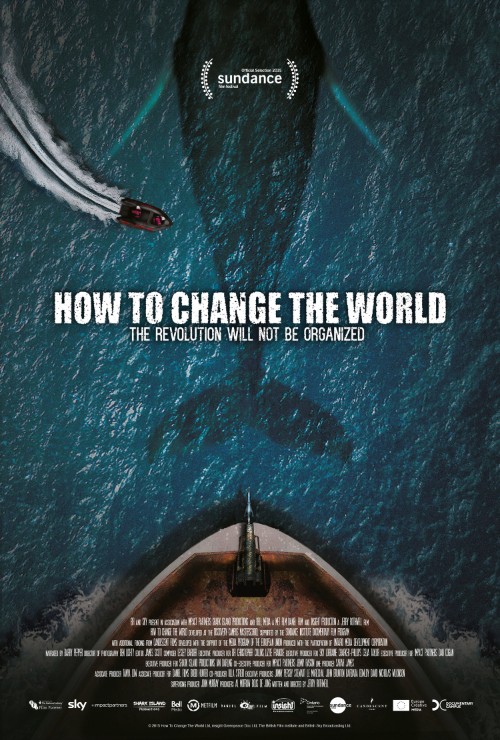
How to Change the World [2015]


Please join us for a special one-night event screening of Jerry Rothwell’s How to Change the World [2015]. A Buffalo Premiere!

  • Screening Date: Wednesday, January 27th, 2016 | 7:00pm
  • Venue: Burning Books
  • Specifications: 2015 / 110 minutes / English / Color
  • Director(s): Jerry Rothwell
  • Print: Supplied by Picturehouse Entertainment
  • Tickets: Free and Open to the Public
  • Extras: Stop in early for FREE Breadhive granola while supplies last!
  • Deal: Bring your ticket stubs and join us at The Black Sheep after the show for 2 for 1 drink specials

Event Sponsors:

Venue Information:

420 Connecticut St, Buffalo, NY 14213


Synopsis

Courtesy of press kit:

How to Change the World chronicles the adventures of an eclectic group of young pioneers – Canadian hippie journalists, photographers, musicians, scientists, and American draft dodgers – who set out to stop Richard Nixon’s atomic bomb tests in Amchitka, Alaska, and end up creating the worldwide green movement.

Greenpeace was founded on tight knit, passionate friendships forged in Vancouver in the early 1970s. Together they pioneered a template for environmental activism which mixed daring iconic feats and worldwide media: placing small rubber inflatables between harpooners and whales, blocking ice-breaking sealing ships with their bodies, spraying the pelts of baby seals with dye to make them valueless in the fur market. The group had a prescient understanding of the power of media, knowing that the advent of global mass communications meant that the image had become a more effective tool for change than the strike or the demonstration. But by the summer of 1977, Greenpeace Vancouver was suing Greenpeace San Francisco and the organization had become a victim of its own anarchic roots – saddled with large debts and frequent in-fighting.

How to Change the World draws on interviews with the key players and hitherto unseen archive footage, which brings these extraordinary characters and their intense, sometimes eccentric and often dangerous world alive. Somehow the group transcended the contradictions of its members to undertake some of the most courageous and significant environmental protests in history.

The film spans the period from the first expedition to enter the nuclear test zone in 1971 through the first whale and seal campaigns, and ends in 1979, when, victims of their own success, the founders gave away their central role to create Greenpeace International. At its heart is Bob Hunter, a charismatic journalist who somehow managed to bind together the ‘mystics and the mechanics’ into a group with a single purpose, often at huge cost to himself. The story is framed by his first person narrative, drawn from his writings and journals about the group, voiced alongside animations based on his early comics.

How to Change the World is an intimate portrait of the group’s original members and of activism itself—idealism vs. pragmatism, principle vs. compromise. They agreed that a handful of people could change the world; they just couldn’t always agree on how to do it.

Tidbits:

  • Sundance Film Festival – 2015 – Winner: World Cinema – Documentary (Editing Award)
  • International Documentary Association – 2015 – Winner: Pare Lorentz Award

Director’s Note

In the vaults of the Greenpeace archives in Amsterdam lie over a thousand silver cans of 16mm film, many unopened since the 1970s, which hold the record of a unique attempt to effect global change.

In Vancouver, amidst the cultural ferment of the late 1960s, a small group of friends set out to shift the way people think about the place of humans in nature. Today’s Greenpeace, with its 41 national offices around the globe and 2.7 million members, had its origins in the activities of a handful of ‘mystics and mechanics’ in one small city forty years ago.

What drew me to the story of the Greenpeace founders is that it is the story of all nascent groups. The men and women who came together in those early years were an eclectic gang whose different skills contributed to a group that combined scientific rigour and engineering savvy with beliefs in the I-ching and Native American prophecies. Some were in it for the politics, some for the science, some just for the adventure. But like a band with an unexpected hit song that catapults them to global fame, the media success of their first anti-whaling campaign forced them into a maelstrom, which at times threatened to destroy everything they had accomplished.

Greenpeace’s founders didn’t set out to create an international organisation, but they found one building up around them. The group of once like-minded friends gradually found themselves pulled in different directions by power struggles and interpersonal conflicts that turned colleagues into rivals ‘How can we save the planet’, wrote Bob Hunter, their reluctant leader, ‘if we cannot save ourselves?’ Success started to depend not only on what they did – but on how they worked with each other.

The group had a prescient understanding of the power of media, knowing that capturing the perfect image was the most powerful weapon of all. But their footage richly evokes not only the dramatic actions they undertook, but their friendships and conflicts, dilemmas and decisions – a sometimes crazy mix of psychedelia and politics, science and theatre. In Bob Hunter they found the perfect chronicler of their adventures – a novelist, comic book artist and gonzo journalist equipped with a comic eye and a searing honesty about his own and his group’s failings. Bob’s writings are the backbone of How To Change The World – giving a personal, intimate portrait of events and people.

The Greenpeace founders’ reflections on their own past speak to us about dilemmas, not only of environmentalism, but of all movements for change, and also of the dilemmas of growing up and growing older: the tension between youthful idealism, ego and courage on the one hand, and maturity, pragmatism and political manoeuvring on the other.

At a time when we need to engage with environmental and wider political problems on a global scale, hopefully this story of one small group of people can get us thinking not only about how we act individually but in partnership with each other.


Director Bio

Jerry Rothwell (Director) is a documentary filmmaker whose work includes the award-winning feature documentaries, Donor Unknown (More 4/Arte/CBC/PBS/VPRO) about a sperm donor and his many offspring which premiered at Tribeca FF and was nominated for a Grierson Award; Town of Runners (PBS/Arte/RHK/ITVS/KINOSMITH) was released theatrically in the UK by Dogwoof and also premiered at Tribeca Film Festival. Heavy Load (IFC/ITVS/BBC), about a group of people with learning disabilities who form a punk band, and Deep Water (Pathe/IFC/FilmFour/UK Film Council co-directed with Louise Osmond), about Donald Crowhurst’s ill-fated voyage in the 1968 round the world yacht race winner of Best Cinema Documentary at The Rome Film Festival and winner of a Grierson Award for best Cinema Documentary. In 2012 Jerry won a prestigious Royal Television Award for his directing work on Donor Unknown and Town of Runners. His next film will be Sour Grapes for Netflix and Arte co-directed with Reuben Atlas. At Met Film Production, he has Executive Produced and worked as an editor on numerous feature docs including Dylan Williams’ Men Who Swim and Sarah Gavron’s The Village At The End Of The World. http://www.jerryrothwell.com

Filmography:

  • The Reason I Jump (2020)
  • The School in the Cloud (2018)
  • Sour Grapes (2016)
  • How to Change the World (2015)
  • Town of Runners (2012)
  • Donor Unknown (2010)
  • Heavy Load (2008)
  • Deep Water (2006)

Links

Here is a curated selection of links shared on our Facebook page for additional insight/information:

  • 12/21/15 – “Lessons in Activism” by Bo Franklin at VICElink
  • 1/13/16 – “Whatever your politics, this documentary about the founders of Greenpeace is essential viewing.” Rupert Hawksley, The Telegraphlink
  • 1/24/16 – Congratulations to director Jerry Rothwell on How To Change The World‘s nomination for Best Theatrical Documentary at the Canadian Screen Awards! – link
  • 6/4/16 – At @welovedocs, Cultivate Cinema Circle alum How to Change the World is the Doc of the Month. Read Influence Film Club interview with dir Jerry Rothwell – link

Days of Heaven – January 25th, 2016

Days of Heaven [1978]


Please join us for a one-night event screening of Terrence Malick’s masterpiece Days of Heaven [1978] on the big screen.

  • Screening Date: Monday, January 25th, 2016 | 9:45pm
  • Venue: North Park Theatre
  • Specifications: 1978 / 94 minutes / English / Color
  • Director(s): Terrence Malick
  • Print: Supplied by Paramount Pictures
  • Tickets: $9.50 general admission at the door

Event Sponsors:

Venue Information:

1428 Hertel Ave, Buffalo, NY 14216


Synopsis

Courtesy of The Criterion Collection:

One-of-a-kind filmmaker-philosopher Terrence Malick has created some of the most visually arresting films of the twentieth century, and his glorious period tragedy Days of Heaven, featuring Oscar-winning cinematography by Nestor Almendros, stands out among them. In 1910, a Chicago steelworker (Richard Gere) accidentally kills his supervisor, and he, his girlfriend (Brooke Adams), and his little sister (Linda Manz) flee to the Texas panhandle, where they find work harvesting wheat in the fields of a stoic farmer (Sam Shepard). A love triangle, a swarm of locusts, a hellish fire—Malick captures it all with dreamlike authenticity, creating a timeless American idyll that is also a gritty evocation of turn-of-the-century labor.

Tidbits:

  • National Board of Review – 1978 – Winner: Best Film & Winner: Top Ten Films
  • Cannes Film Festival – 1979 – Winner: Best Director
  • Academy Awards – 1979 – Winner: Best Cinematography, Nominee: Best Costume Design, Nominee: Best Sound & Nominee: Best Music, Original Score
  • Writers Guild of America – 1979 – Nominee: Best Drama Written Directly for the Screen (Screen)
  • Golden Globes (USA) – 1979 – Nominee: Best Motion Picture – Drama & Nominee: Best Director – Motion Picture

Director Bio

“When people express what is most important to them, it often comes out in cliches. That doesn’t make them laughable; it’s something tender about them. As though in struggling to reach what’s most personal about them they could only come up with what’s most public.”

Courtesy of Biography.com:

Terrence Malick was born on November 20, 1943 in Ottawa, Illinois. After graduating from Harvard and studying abroad as a Rhodes Scholar, Malick enrolled at the American Film Institute’s Center for Advanced Studies. His debut film as director, Badlands, was critically acclaimed and established his reputation as a careful visual craftsmen whose work captured the splendor of nature. His other films include The Thin Red Line and The Tree of Life.

Early Life

A brilliant yet somewhat mysterious filmmaker, Terrence Malick has received extensive praise for his innovative and imaginative movies, but he himself stays away from the media spotlight. Born in Ottawa, Illinois, on November 20, 1943, Malick grew up in Texas and Oklahoma. His father worked as an executive in the oil industry. As a young man, Malick was a bright student. He graduated from Harvard University in 1966 with a degree in philosophy. He went to continue his studies abroad as a Rhodes scholar, attending Magdalen College in Oxford, England.

Malick worked as a freelance journalist and as a philosophy professor before discovering his interest in film. In 1969, he enrolled at the American Film Institute’s Center for Advanced Studies in Los Angeles, California. Malick made his first film—a short entitled Landon Mills—as a student there.

Film Career

To support himself while he studied his craft, Malick worked as a screenwriter. He reportedly worked on the script for 1971’s Drive, He Said, but his first major screenplay credit came the following year with Pocket Money. Malick wrote this western comedy, which was based on the J.P.S. Brown novel Jim Kane.

In 1973, Malick made an impressive debut as a feature film director and screenwriter with the crime drama Badlands. The critically acclaimed film, starring Sissy Spacek and Martin Sheen, was based in part on the murders committed by Caril Ann Fugate and Charles Starkweather in the late 1950s. Audiences would have to wait five years for Malick’s next project Days of Heaven.

Days of Heaven stars Richard Gere, Brooke Adams and Sam Shepard. The trio’s characters are involved in a love triangle, and the film is largely set on a Texas farm in the early 20th century. With its rich and compelling visuals, it is no wonder that critic Roger Ebert described it as “one of the most beautiful films ever made.” Malick earned much praise for the film and even picked up a Best Director award at the Cannes Film Festival.

Unfortunately, movie audiences were less enthusiastic about Days of Heaven, and the film did poorly at the box office. Moving to France, Malick retreated from filmmaking for nearly two decades after this disappointment. He made an impressive return with the war drama The Thin Red Line in 1998. This adaptation of a James Jones novel featured Jim Caviezel, Sean Penn and Nick Nolte, and Malick used his trademark impressionistic style to tell this tale. For his work, he received two Academy Award nominations—one for his screenplay and the other for directing.

Malick went on to tackle early American history with 2005’s The New World, exploring the lives of Pocahontas and Captain John Smith. Starring Q’orianka Kilcher, Colin Farrell and Christian Bale, the film received warm reviews.

Recent Projects

With 2011’s The Tree of Life, Malick delivered a fascinating cinematic experience. Much of the film centers on a Texas family in the 1950s. In the film, Brad Pitt plays the father and Jessica Chastain plays the mother; their characters have very different ideologies, and their son, Jack, is caught between these clashing and contradictory philosophies. This very human story is mixed with an exploration of larger themes. As Justin Chang described it in Variety, Tree of Life is “a transfixing odyssey through time and memory that melds a young boy’s 1950s upbringing with a magisterial rumination on the earth’s origins.” While some derided the project for being too pretentious or abstract, the movie won the Palme d’Or Award at the Cannes Film Festival. Malick also picked up his second Academy Award nomination for best director for the project.

Following Tree of Life, Malick began working on a number of new projects. His romantic drama To the Wonder with Ben Affleck and Rachel McAdams debuted at several film festivals in 2012, receiving mixed reviews. Around the same time, he completed filming on another drama with Christian Bale and Natalie Portman, Knight of Cups. Additionally, tackling a more philosophical project, Malick worked with Brad Pitt and Emma Thompson on the film Voyage of Time.

Photo by Edie Baskin

Filmography:

  • The Way of the Wind (2021)
  • A Hidden Life (2019)
  • Song to Song (2017)
  • Voyage of Time: Life’s Journey (2016)
  • Knight of Cups (2015)
  • To the Wonder (2012)
  • The Tree of Life (2011)
  • The New World (2005)
  • The Thin Red Line (1998)
  • Days of Heaven (1978)
  • Badlands (1973)
  • Lanton Mills (1969) (Short)

Links

Here is a curated selection of links shared on our Facebook page for additional insight/information:

  • 1/10/16 – Fandor supercut entitled “The Magic Hour” – link
  • 1/12/16 – Terrence Malick has been experimenting with the voiceover since his first feature, Badlands. With Days of Heaven, he began to perfect it. Kevin B Lee & Scott Tobias at The Dissolvelink
  • 1/14/16 – “Bresson’s ‘Notes on Cinematography’ will then prove to be the impetus that will cause Malick to scrap a dialogue-burdened version of Days of Heaven with dull performances and begin work on voiceover experiments with actress Linda Manz. Malick’s newfound Bressonian tutelage would allow him to focus on faces, bodies, and the world revealed between shots and sequences.” Reno Lauro, MUBI’s Notebook – link
  • 1/15/16 – “I say this often when I write about Terrence Malick movies, but it bears repeating: Their chief value, I think, is in simply reminding us that our lives take place in the larger context of nature and the transcendent. And it isn’t just the gesture itself that’s important, but Malick’s ability to supply image after breathtaking image of humans communing with, and sometimes resisting, the natural world. There are shots in Days of Heaven so gorgeous that they put in a lump in my throat, and it made me appreciate how far Malick goes out onto the ledge with this and his subsequent efforts. These movies have to be that beautiful, or they would collapse.” Scott Tobias, The Dissolvelink
  • 1/17/16 – “Malick is a true poet of the ephemeral: the epiphanies that structure his films, beginning with Days of Heaven, are ones that flare up suddenly and die away just as quickly, with the uttering of a single line (like “She loved the farmer”), the flight of a bird or the launching of a plane, the flickering of a candle or the passing of a wind over the grass. Nothing is ever insisted upon or lingered on in his films; that is why they reveal subtly different arrangements of event, mood, and meaning each time we see them.” Adrian Martin, The Criterion Collection – link
  • 1/19/16 – Is Days of Heaven the most beautiful film ever made? “There is no answer to this just yet, but it assists a rich argument about where the cinema is going, and I think it all began on the gorgeous prairies of Days of Heaven.” David Thomson, The Guardianlink
  • 1/20/16 – Matt Zoller Seitz’s insightful visual essay on Malick’s Days of Heaven, made in collaboration with the Moving Image Museum – link
  • 1/20/16 – “While reactions to Days of Heaven were mixed, the film still had its champions, and even won the Best Director award at the Cannes Film Festival (It was also nominated for the Palme d’Or, but lost to both The Tin Drum and Apocalypse Now, which were both worthy films of the title). You’d expect a director who still had a unanimously agreed-upon masterpiece and a more divisive but still fairly well-regarded art-film under his belt to make more movies after that. But that didn’t happen.” Christopher Runyon, Movie Mezzaninelink
  • 1/21/16 – What would have happened to Terrence Malick’s career had John Travolta actually played the lead in Days of Heaven? – link
  • 1/22/16 – “As much as I love watching Days of Heaven, I dread having to write about it. The experience of seeing Terrence Malick’s masterpiece invariably leaves me awestruck and overwhelmed, and gushing is not criticism. So much has been written about Malick and his movies, much of it effusive and insightful, that anything else one has to say seems little more than an affirmative echo. It’s always a shock to discover that Days of Heaven runs a mere 94 minutes; its scale is so impossibly vast, its perspective so breathtakingly cosmic, that wrapping your arms around it seems a fool’s errand. But if Malick’s movie tells us anything, it’s to be humble in the face of the monumental.” Elbert Ventura, Museum of the Moving Image’s “Reverse Shot” – link
  • 1/24/16 – The Buffalo News‘ Jeff Simon on Days of Heaven via Facebook: “Days of Heaven” is one of the great films of the past 50 years and should only be seen on a large screen. – link

All That Heaven Allows / Far From Heaven – January 9th, 2016

Heaven Double Feature


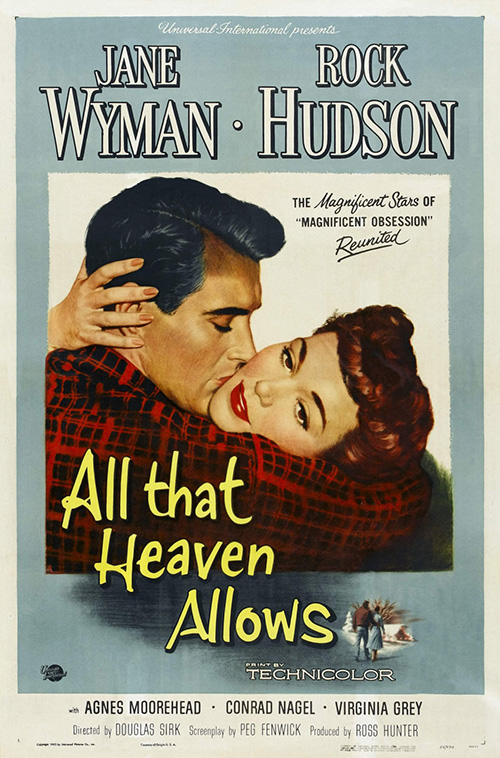
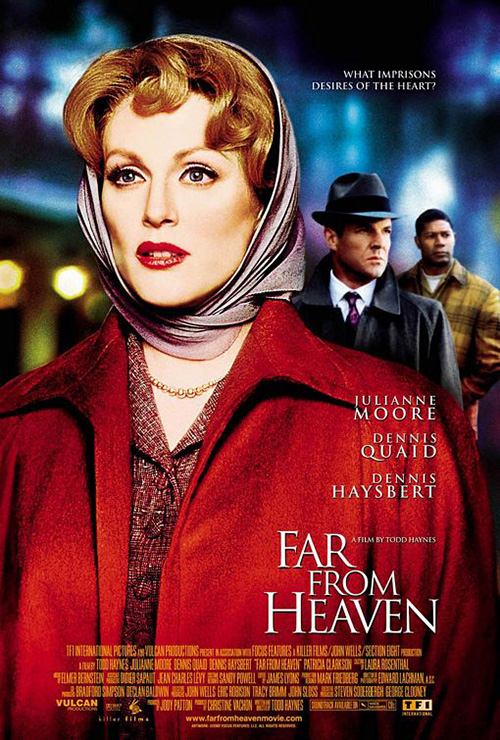
Please join us for a FREE double feature screening event of Douglas Sirk’s All That Heaven Allows [1955] and Todd Haynes’ Far From Heaven [2002]. Stop by for one or both!

All That Heaven Allows


Far From Heaven

  • Screening Date: Saturday, January 9th, 2016 | 3:00pm
  • Venue: The Mason O. Damon Auditorium at Buffalo Central Library
  • Specifications: 2002 / 107 minutes / English / Color
  • Director(s): Todd Haynes
  • Print: Supplied by Focus Features c/o Movie Licensing USA
  • Tickets: Free and Open to the Public
  • Deal: Stop in early for a FREE Breadhive soft pretzel while supplies last!

Event Sponsors:

Venue Information:

1 Lafayette Square, Buffalo, NY 14203
(please use Clinton St entrance for Mason O. Damon Auditorium)


All That Heaven Allows


Courtesy of The Criterion Collection:

This heartbreakingly beautiful indictment of 1950s American mores by Douglas Sirk follows the blossoming love between a well-off widow (Jane Wyman) and her handsome and earthy younger gardener (Rock Hudson). When their romance prompts the scorn of her children and country club friends, she must decide whether to pursue her own happiness or carry on a lonely, hemmed-in existence for the sake of the approval of others. With the help of ace cinematographer Russell Metty, Sirk imbues nearly every shot with a vivid and distinct emotional tenor. A profoundly felt film about class and conformity in small-town America, All That Heaven Allows is a pinnacle of expressionistic Hollywood melodrama.

Tidbits:

  • National Film Preservation Board – 1995 – National Film Registry

Douglas Sirk

“If I can say one thing for my pictures, it is a certain craftsmanship. A thought which has gone into every angle. There is nothing there without an optical reason.”

Biography courtesy of Turner Classic Movies:

Best known for his Hollywood melodramas of the 1950s, Douglas Sirk first achieved success in post-WWI Germany, as a theater director. Under the name Claus Detlef Sierck, he directed for the stage from 1922 to 1937, emphasizing the work of such classic playwrights as Moliere, Ibsen, Shaw and Shakespeare. In 1934 he was hired by UFA, which released his first feature film, ‘T was een April/It Was in April, in 1935. Despite his great success, Sirk left Germany in 1937 because of his opposition to the policies of the Third Reich. After a brief stay in France and Holland, where he worked on several scripts and produced two films, Sirk was invited to America to remake Zu Neuen Ufern/To New Shores (1937), one of his most successful German films featuring the great star Zarah Leander.

In Hollywood, after several years of aborted projects, Sirk directed his first American feature, Hitler’s Madman (1943). His early work in Hollywood remains largely undistinguished, although Sirk devotees insist that, like his later, more important films, it contains ironic critiques of American culture. Lured (1947) and Sleep, My Love (1948) stand out in this period as atypical but competent thrillers.

Sirk’s great period was during his association with Universal-International studios, beginning in 1951 and continuing until his retirement from filmmaking in 1959, and particularly with producers Albert Zugsmith and Ross Hunter. The series of melodramas he made for Universal struck a responsive chord with audiences; among the best-remembered are Magnificent Obsession (1954), All That Heaven Allows (1956), Written on the Wind (1956), A Time to Love and a Time to Die (1958) and Imitation of Life (1959). During its release, Imitation of Life became Universal’s most commercially successful picture. Yet it also proved to be Sirk’s last film: either because of ill health, a distaste for American culture or both, Sirk retired from filmmaking and returned to Europe, living in Switzerland and Germany until his death.

Largely considered merely a director of competent melodramas by critics in North America, Sirk’s career was redefined by British criticism in the early 1970s. He became the subject of essays in theoretical film journals such as Screen and was given a retrospective at the 1972 Edinburgh Film Festival, along with an accompanying critical anthology. Such Sirk remarks as, “The angles are a director’s thoughts. The lighting is his philosophy” endeared him to a new generation of film critics viewing Sirk as a socially conscious artist who criticized Eisenhower America from within mainstream filmmaking.

Sirk’s style hinges on a highly developed sense of irony, employing subtle parody, cliche and stylization. At one time Sirk was seen as a filmmaker who simply employed conventional Hollywood rhetoric, but his style is now regarded as a form of Brechtian distancing that drew the viewer’s attention to the methods and purposes of Hollywood illusionism. The world of Sirk’s melodramas is extremely lavish and artificial, the colors of walls, cars, costumes and flowers harmonizing into a constructed aesthetic unity, providing a comment on the oppressive world of the American bourgeoisie. The false lake, a studio interior in “Written on the Wind”, for example, is presented as “obviously” false, an editorial comment on the self-deceptive, romanticized imagination that Marylee Hadley (Dorothy Malone) brings to the past. Sirk is renowned for his thematic use of mirrors, shadows and glass, as in the opening shot of Imitation of Life: behind the credits, chunks of glass, supposedly diamonds, slowly fill the frame from top to bottom, an ironic comment, like the film’s very title, about the nature of its own appeal. Later, more obviously political filmmakers like Rainer Werner Fassbinder have been influenced by Sirk’s American melodramas, which have been offered as models of ideological critique that may also pass as simple entertainment.

Filmography:

  • Imitation of Life (1959)
  • A Time to Love and a Time to Die (1958)
  • The Tarnished Angels (1958)
  • Written on the Wind (1957)
  • Battle Hymn (1957)
  • Interlude (1957)
  • All That Heaven Allows (1956)
  • There’s Always Tomorrow (1956)
  • Captain Lightfoot (1955)
  • Magnificent Obsession (1954)
  • Sign of the Pagan (1954)
  • Taza, Son of Cochise (1954)
  • Take Me to Town (1953)
  • All I Desire (1953)
  • No Room for the Groom (1952)
  • Meet Me at the Fair (1952)
  • Has Anybody Seen My Gal (1952)
  • Weekend with Father (1951)
  • Thunder on the Hill (1951)
  • The First Legion (1951)
  • The Lady Pays Off (1951)
  • Mystery Submarine (1950)
  • Slightly French (1949)
  • Shockproof (1949)
  • Sleep, My Love (1948)
  • Lured (1947)
  • A Scandal in Paris (1946)
  • Summer Storm (1944)
  • Hitler’s Madman (1943)
  • Boefje (1939)
  • Zu Neuen Ufern (1937)
  • La Habanera (1937)
  • La Chanson du Souvenir (1936)
  • Schlussakkord (1936)
  • Das Hofkonzert (1936)
  • ‘T was een April (1935)
  • Stutzen der Gesellschaft (1935)
  • April, April (1935)
  • Das Madchen vom Moorhof (1935)

Far From Heaven


Courtesy of Focus Features:

Far from Heaven marks the second teaming of leading lady Julianne Moore with writer/director Todd Haynes and producer Christine Vachon, following the trio’s collaboration on the acclaimed 1995 drama Safe. At the 2002 Venice International Film Festival, Far from Heaven was honored with the Coppa Volpi Award for Best Actress (Julianne Moore) and the Individual Contribution Award (given to cinematographer Edward Lachman).

Far from Heaven tells the story of a privileged housewife in 1950s America, and is inspired by the great Hollywood dramas of that era. Haynes lovingly depicts the gorgeous and placid surfaces of mid-century suburban family life, even as his story breaks them open to reveal a repressed world of limitless emotions and life-shattering desires that cross the boundaries of racial and sexual tolerance with tragic results.

It is the fall of 1957. The Whitakers, the very picture of a suburban family, make their home in Hartford, Connecticut. Their daily existences are characterized by carefully observed family etiquette, social events, and an overall desire to keep up with the Joneses. Cathy Whitaker (Julianne Moore) is the homemaker, wife and mother. Frank Whitaker (Dennis Quaid) is the breadwinner, husband and father. They have two pre-teen children, a boy and a girl. As the story unfolds before us, Cathy’s pristine world is transformed. Her interactions with her gardener, Raymond Deagan (Dennis Haysbert); her best friend, Eleanor Fine (Patricia Clarkson); and her maid, Sybil (Viola Davis), reflect the upheavals in her life. Cathy is faced with choices that spur gossip within the community and change several lives forever.

A Focus Features and Vulcan Productions presentation of a Killer Films/John Wells/Section Eight production. A Film by Todd Haynes. Julianne Moore, Dennis Quaid, Dennis Haysbert. Far from Heaven. Co-Starring Patricia Clarkson, Viola Davis. Casting by Laura Rosenthal. Music by Elmer Bernstein. Costume Designer, Sandy Powell. Edited by James Lyons. Production Designer, Mark Friedberg. Director of Photography, Edward Lachman, A.S.C. Co-Producers, Bradford Simpson, Declan Baldwin. Executive Producers, John Wells, Eric Robison, John Sloss. Executive Producers, Steven Soderbergh, George Clooney. Produced by Jody Patton. Produced by Christine Vachon. Written and Directed by Todd Haynes.

Tidbits:

  • Venice Film Festival – 2002 – Winner: Best Actress, Winner: Outstanding Individual Contribution, Honorable Mention: SIGNIS Award, Winner: Volpi Cup & Winner: Golden Osella
  • National Board of Review – 2002 – Winner: Best Actress, Winner: Top Ten Films
  • Academy Awards – 2003 – Nominee: Best Writing, Original Screenplay, Nominee: Best Actress in a Leading Role, Nominee: Best Cinematography & Nominee: Best Music, Original Score
  • Independent Spirit Awards – 2003 – Winner: Best Feature, Winner: Best Director, Winner: Best Supporting Male, Winner: Best Female Lead & Winner: Best Cinematography
  • Writers Guild of America – 2003 – Nominee: Best Original Screenplay
  • Screen Actors Guild Awards – 2003 – Nominee: Best Female Actor in a Leading Role & Nominee: Best Male Actor in a Supporting Role
  • Golden Globes (USA) – 2003 – Nominee: Best Performance by an Actress in a Motion Picture: Drama, Nominee: Best Performance by an Actor in a Supporting Role in a Motion Picture, Nominee: Best Screenplay: Motion Picture & Nominee: Best Original Score: Motion Picture

Todd Haynes

“I’ve always felt more politically comfortable making films that demonstrated problems and didn’t tell you how to solve them, but made you feel enough for the subjects who were hurt by these problems…”

Biography courtesy of Encyclopedia Britannica:

Born January 2, 1961, Los Angeles, California, U.S., Todd Haynes is an American screenwriter and director known for films that examine fame, sexuality, and the lives of people on the periphery of mainstream society.

Haynes graduated from Brown University in 1985 with a B.A. in art and semiotics. In 1987 he earned attention for Superstar: The Karen Carpenter Story, a short film he wrote and directed that focused on singer Karen Carpenter’s battle with, and subsequent death from, anorexia nervosa. The film was noted for its postmodern approach, mixing news footage and documentary-style interviews with reenactments of scenes from Carpenter’s life—staged with Barbie dolls playing the roles of Carpenter and her brother, Richard. It was pulled from distribution, however, when Richard Carpenter sued Haynes for illegal use of music by his and Karen’s band, the Carpenters.

For his first full-length film, Poison (1991), Haynes intertwined three narratives inspired by the writings of Jean Genet. The film proved controversial, not simply because it explored sexual themes, including a story line about a gay man in prison, but because it received National Endowment for the Arts (NEA) funding at a time when the agency was under attack from conservative groups for using public funds to support sexually explicit works. Haynes won further recognition for Safe (1995), a subtly unsettling depiction of a suburban woman (played by Julianne Moore) who believes she has become allergic to her environment. It was followed by Velvet Goldmine (1998), a multifaceted treatment of celebrity in the glam-rock era.

In Far from Heaven (2002), Haynes re-created the style of a Douglas Sirk melodrama to tell the tale of a seemingly perfect married couple in 1950s suburbia whose relationship is afflicted when the husband (Dennis Quaid) reveals to his wife (Moore) that he has been struggling with homosexuality. The film enjoyed substantial acclaim; Haynes was nominated for an Academy Award for best original screenplay, and he received best director awards from several critics’ groups. His next film was I’m Not There (2007), an unorthodox biography of American singer-songwriter Bob Dylan, in which various actors (including Christian Bale, Cate Blanchett, Richard Gere, and Heath Ledger) played characters representing Dylan at different stages of his life. Haynes later cowrote and directed the HBO miniseries Mildred Pierce (2011), based on James M. Cain’s novel of the same name and starring Kate Winslet as the beleaguered title character, a divorced mother in 1930s Los Angeles.

In 2015 Haynes released Carol, an adaptation of Patricia Highsmith’s novel The Price of Salt. The critically acclaimed drama is set in the 1950s, and it centres on the romantic relationship between a female store clerk (Rooney Mara) and an older married woman (Blanchett).

Filmography:

  • The Velvet Underground (2021)
  • Dark Waters (2019)
  • Wonderstruck (2017)
  • Carol (2015)
  • I’m Not There (2007)
  • Far from Heaven (2002)
  • Velvet Goldmine (1998)
  • Safe (1995)
  • Dottie Gets Spanked (1993)
  • Poison (1991)
  • Superstar: The Karen Carpenter Story (1987) (Short)

Links

Here is a curated selection of links shared on our Facebook page for additional insight/information:

  • 12/11/15 – All That Pastiche Allows:
  • 12/11/15 – “…the color comes into play before Ron is even a major part of her life, when Cary opts to wear a low-cut red dress for her “date” with Harvey, the pleasant old guy who either can’t acknowledge or can’t handle that her still-vibrant sexuality hasn’t died along with her late husband. Sirk isn’t afraid to embrace these visual symbols in full—Ron the gardener knows a hothouse flower when he sees one—and it’s striking, the degree to which color clarifies and intensifies the melodrama.” Scott Tobias on All That Heaven Allows, The Dissolvelink
  • 12/28/15 – “Far from Heaven doesn’t remake the Sirk movies in question so much as direct their mirrored surfaces at each other—transposing signs, exposing subtexts, renewing resonances. As in All That Heaven Allows, a middle-class heroine scandalizes her community by getting too friendly with her gardener. But Haynes’s ill-fated pair, Cathy (Safe (1995 film) star Julianne Moore) and Raymond (Dennis Haysbert), face a taboo more virulent than the age and class differences that keep the earlier film’s Jane Wyman and Rock Hudson apart: Cathy is white, Raymond black.” Dennis Lim, Village Voicelink
  • 12/31/15 – Need a primer on Douglas Sirk? Dig into this excellent retrospective feature and interview on and with the master of melodrama in Film Comment magazine from back in 1978. – link
  • 1/5/16 – “Sirk’s visual music eluded his critics even as it transcended Hollywood conventions, deepening the melodrama’s cultural and psychological dimensions by hyperbolizing its very mechanics. At their best, his films move beyond naturalism toward what Godard lovingly called ‘delirium’—where raw, even pathological emotions find their stylistic match. No longer at the “far side of paradise” where the late Andrew Sarris placed him in The American Cinema (1968), Sirk is unquestionably one of Hollywood’s greatest filmmakers.” Tony Pipolo in Artforum just two weeks ago! – link
  • 1/6/16 – “Wyman never telegraphs “repressed” with flutters and stammers, as so many do when playing uptight suburbanites. Any good actor knows a drunk scene is about showing the inebriated fighting their symptoms, and Wyman knows that Cary treats her emotions the same way. They’re giveaways, to be concealed as carefully as you’d try to avoid a stagger after one round too many.” – Farran Smith Nehme on All That Heaven Allowslink
  • 1/7/16 – “I feel that Far from Heaven may be one of the biggest, most experimental mainstream films of all time. Do you think it’s fair to call it experimental?” Anthony Kaufman interviewing Todd Haynes, indieWIRElink
  • 1/31/16 – Following up the Film Society of Lincoln Center’s season celebrating the work of Douglas Sirk, the expressive filmmaker behind CCC alum All That Heaven Allows, Film Comment magazine produced an hour long podcast discussing the master melodramatist’s work. – link
  • 10/30/16 – CCC alum All That Heaven Allows by Douglas Sirk gets a personal history via Noel Bjorndahl over at Film Alert 101link