Cléo from 5 to 7 – September 23rd, 2015

Cléo from 5 to 7 [1962]


Please join us for the first screening of our Agnès Varda series with a one-night event showing of Cleo from 5 to 7 [Cléo de 5 à 7] [1962].

  • Screening Date: Wednesday, September 23rd, 2015 | 8:00pm
  • Venue: Canisius College Science Hall
  • Specifications: 1962 / 90 minutes / French with English subtitles / Black & White
  • Director(s): Agnès Varda
  • Print: Supplied by Janus Films / Criterion Collection
  • Tickets: Free and Open to the Public
  • Deals: Stop in early for FREE Breadhive granola while supplies last!


Summer 2015 Season Sponsor:

Event Sponsors:

Venue Information:

2001 Main Street (Between Delavan & Jefferson), Buffalo NY 14208


Synopsis

Courtesy of The Criterion Collection:

Agnès Varda eloquently captures Paris in the sixties with this real-time portrait of a singer (Corinne Marchand) set adrift in the city as she awaits test results of a biopsy. A chronicle of the minutes of one woman’s life, Cléo from 5 to 7 is a spirited mix of vivid vérité and melodrama, featuring a score by Michel Legrand (The Umbrellas of Cherbourg) and cameos by Jean-Luc Godard and Anna Karina.

Tidbits:

  • Cannes Film Festival – 1962

Director Bio

“I’m not interested in seeing a film just made by a woman – not unless she is looking for new images.”

The only female director of the French New Wave, Agnès Varda has been called both the movement’s mother and its grandmother. The fact that some have felt the need to assign her a specifically feminine role, and the confusion over how to characterize that role, speak to just how unique her place in this hallowed cinematic movement—defined by such decidedly masculine artists as Jean-Luc Godard and François Truffaut—is. Varda not only made films during the nouvelle vague, she helped inspire it. Her self-funded debut, the fiction-documentary hybrid 1956’s La Pointe Courte is often considered the unofficial first New Wave film; when she made it, she had no professional cinema training (her early work included painting, sculpting, and photojournalism). Though not widely seen, the film got her commissions to make several documentaries in the late fifties. In 1962, she released the seminal nouvelle vague film Cléo from 5 to 7; a bold character study that avoids psychologizing, it announced her official arrival. Over the coming decades, Varda became a force in art cinema, conceiving many of her films as political and feminist statements, and using a radical objectivity to create her unforgettable characters. She describes her style as cinécriture (writing on film), and it can be seen in formally audacious fictions like Le bonheur and Vagabond as well as more ragged and revealing autobiographical documentaries like The Gleaners and I and The Beaches of Agnès.

Filmography:

  • Faces Places (2017)
  • The Beaches of Agnes (2008)
  • Cinevardaphoto (2005)
  • The Gleaners and I (2000)
  • The Universe of Jacques Demy (1995)
  • One Hundred and One Nights (1995)
  • The Young Girls Turn 25 (1993)
  • Jacquot (1991)
  • Le Petit Amour (1988)
  • Jane B. par Agnes V. (1988)
  • Vagabond (1985)
  • Mur Murs (1981)
  • Documenteur (1981)
  • One Sings, the Other Doesn’t (1977)
  • Les créatures (1969)
  • Lions Love (1969)
  • Far From Vietnam (1968)
  • Le Bonheur (1966)
  • Cleo From 5 to 7 (1962)
  • La Pointe Courte (1954)

Links

Here is a curated selection of links shared on our Facebook page for additional insight/information:

  • 8/31/15 – Today via The Criterion Collection: “Just a casual courtyard chat between Agnès Varda and Guillaume-en-Égypte” – link
  • 9/2/15 – Need an Agnès Varda primer prior to our upcoming series on the grandmother of the French New Wave at Canisius College this fall? Helen Carter’s summery overview in Senses of Cinema serves as a perfect introduction! – link
  • 9/3/15 – Wonderful interview w/ Agnès Varda on her home on the rue Daguerre, Paris via Sight & Soundlink
  • 9/11/15 – “One of the most provocative aspects of Cléo from 5 to 7, at least for modern audiences accustomed to more prickly feminist statements (Baise-moi and the works of Catherine Breillat come immediately to mind), are the unresolved hints of feminism that are sometimes countered with anachronistically traditional gender politics. Hardcore feminists are likely to be alienated by the final chapter, in which Varda seems to be making the case that a reliable guy (here, Antoine) is really all Cléo needs to make right in her world. The ending is actually much trickier than that, but it’s certainly food for thought that the Legrand songs that Cléo earlier derided as misguided attempts to mold her persona also happen to underscore her emotional epiphanies in the park.” Eric Henderson, Slant Magazinelink
  • 9/18/15 – “It is easy to hail Varda as a pioneer of feminist cinema––a label she resists––but Cléo from 5 to 7 was, way before its time, already a complex “postfeminist” portrait of a woman. Cléo is, after all, no idealized archetype.” Adrian Martin, “Cléo from 5 to 7: Passionate Time” – link
  • 9/21/15 – “One of the most provocative aspects of Cleo from 5 to 7, at least for modern audiences accustomed to more prickly feminist statements (Baise-moi and the works of Catherine Breillat come immediately to mind), are the unresolved hints of feminism that are sometimes countered with anachronistically traditional gender politics. Hardcore feminists are likely to be alienated by the final chapter, in which Varda seems to be making the case that a reliable guy (here, Antoine) is really all Cléo needs to make right in her world. The ending is actually much trickier than that, but it’s certainly food for thought that the Legrand songs that Cléo earlier derided as misguided attempts to mold her persona also happen to underscore her emotional epiphanies in the park.” ★★★★ Eric Henderson, Slant Magazinelink
  • 9/21/15 – “The Cultivate Cinema Circle has become a cinephile must-attend in only a few months, screening such classics as Jean-Luc Godard’s Contempt and Satyajit Ray’s The Apu Trilogy. For its fall season, Cultivate has chosen to honor French New Wave icon Agnès Varda, a wonderfully fitting figure for a season-long focus.” Christopher Schobert, The Buffalo Newslink
  • 9/22/15 – Did you know the brilliant feminist film journal cléo was named after Agnès Varda’s eponymous cinematic work Cléo from 5 to 7? – link
  • 9/24/15 – Great news! Two Agnès Varda rarities – Jane B. and Kung-Fu Master – are headed for a US re-release thanks to Cinelicious Pics! – link
  • 10/6/15 – Agnès Varda shares credit for making an impact on feminist cinema in Kelly Gallagher’s riot grrrl infused THE HERSTORY OF THE FEMALE FILMMAKER! – link
  • 10/9/15 – Via The Criterion Collection today: “Agnès Varda keeps popping up in the most unexpected places. The indefatigable eighty-seven-year-old filmmaker stopped by our offices this week, along with her daughter, Rosalie, to say hello and fill us in on what she’s been up to. We’re happy to report that this legend of the French New Wave—and beyond—shows no signs of slowing down.” – link
  • 10/10/15 – “At a time when audiences are hungry for a diversity of stories on screen, we’ve compiled a list of recent films directed by women that everyone should see, as well as a selection of older titles which continue to inspire us” Leah Meyerhoff, founder of Film Fataleslink
  • 10/12/15 – Violet Lucca speaks with Agnès Varda back in 2011 for Film Comment. – link
  • 10/18/15 – At 87, Agnès Varda continues to make the news with a new video essay by Kevin B. Lee on her work found over at Fandorlink

Contempt – August 27th, 2015

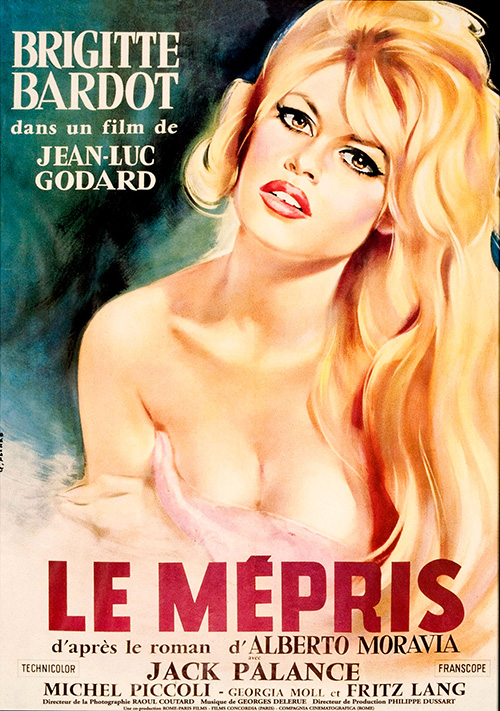
Contempt [Le Mepris] [1963]


Please join us for a one-night special screening event of the 50th anniversary restoration of Jean-Luc Godard’s masterpiece Contempt [1963].

  • Screening Date: Thursday, August 27th, 2015 | 9:30pm
  • Venue: North Park Theatre
  • Specifications: 1963 / 102 minutes / French with subtitles / Color
  • Director(s): Jean-Luc Godard
  • Print: Supplied by Rialto Pictures
  • Tickets: $10.50 online; $9.50 at the door
  • Deal: Discounted drinks available after the screening at Més Que with your ticket

Summer 2015 Season Sponsor:

Event Sponsors:

Venue Information:

1428 Hertel Ave, Buffalo, NY 14216


Synopsis

Courtesy of The Criterion Collection:

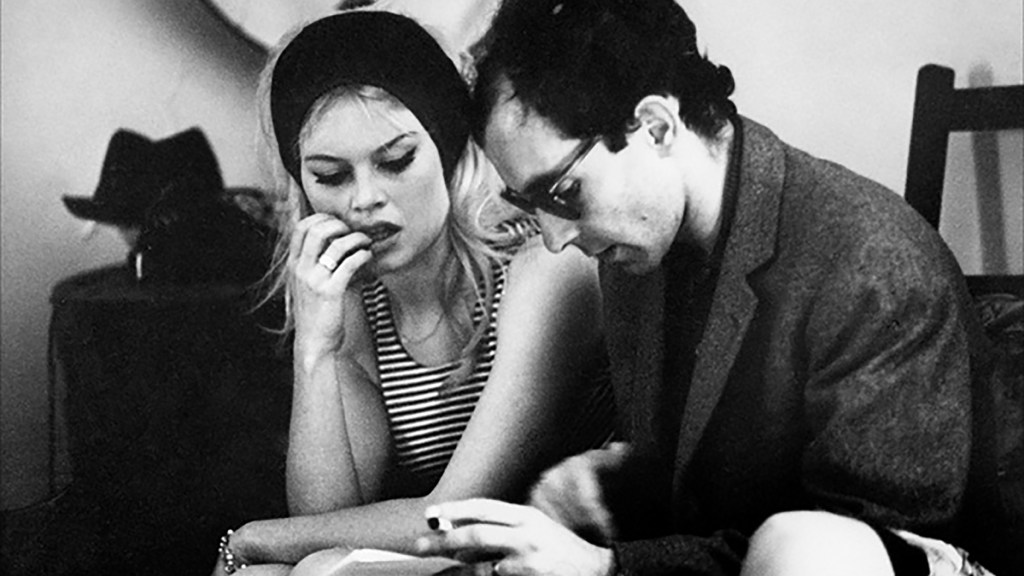
Jean-Luc Godard’s subversive foray into commercial filmmaking is a star-studded Cinemascope epic. Contempt [Le Mépris] stars Michel Piccoli as a screenwriter torn between the demands of a proud European director (played by legendary director Fritz Lang), a crude and arrogant American producer (Jack Palance), and his disillusioned wife, Camille (Brigitte Bardot), as he attempts to doctor the script for a new film version of The Odyssey. Contempt is a brilliant study of marital breakdown, artistic compromise, and the cinematic process based on Italian novel A Ghost at Noon by Alberto Moravia.

Tidbits:

  • Viennale – 2012

Director Bio

“A story should have a beginning, a middle, and an end… but not necessarily in that order.”

Courtesy of The Criterion Collection:

A pioneer of the French new wave, Jean-Luc Godard has had an incalculable effect on modern cinema that refuses to wane. Before directing, Godard was an ethnology student and a critic for Cahiers du cinéma, and his approach to filmmaking reflects his interest in how cinematic form intertwines with social reality. His groundbreaking debut feature, Breathless—his first and last mainstream success—is, of course, essential Godard: its strategy of merging high (Mozart) and low (American crime thrillers) culture has been mimicked by generations of filmmakers. As the sixties progressed, Godard’s output became increasingly radical, both aesthetically (A Woman Is a Woman, Contempt, Band of Outsiders) and politically (Masculin féminin, Pierrot le fou), until by 1968 he had forsworn commercial cinema altogether, forming a leftist filmmaking collective (the Dziga Vertov Group) and making such films as Tout va bien. Today Godard remains our greatest lyricist on historical trauma, religion, and the legacy of cinema.

Filmography:

  • Film Socialisme (2010)
  • Our Music (2004)
  • In Praise of Love (2001)
  • De L’Origine du XXIe Siecle (2000)
  • Histoire(s) du cinema (two chapters) (1997)
  • For Ever Mozart (1996)
  • Jlg/Jlg (1995)
  • 2 X 50 Years of French Cinema (1995)
  • The Children Play Russian (1994)
  • Helas Pour Moi (1993)
  • Contre l’oubli (1992)
  • Germany Year 90 Nine Zero (1991)
  • Nouvelle Vague (1990)
  • Aria (1988)
  • King Lear (1987)
  • Soigne ta droite (1987)
  • The Rise and Fall of a Small Film Company (1986)
  • Hail Mary (1985)
  • (“Je-Vous-Salue-Marie”) Détective (1985)
  • Passion (1983)
  • First Name: Carmen (1983)
  • Every Man For Himself (1980)
  • Ici et ailleurs (1976)
  • Comment ca va? (1975)
  • Numero Deux (1975)
  • A Letter to Jane (1972)
  • Tout va bien (1972)
  • One American Movie/1 A.M. (1971)
  • Vladimir et Rosa (1971)
  • Pravda (1970)
  • Le gai savoir (1970)
  • Wind From the East (1970)
  • Two or Three Things I Know About Her (1970)
  • Sympathy for the Devil (1 + 1) (1969)
  • The Oldest Profession “Anticipation” (1968)
  • Far From Vietnam (1968)
  • Six in Paris “Montparnasse-Levallois” (1968)
  • Pierrot le fou (1968)
  • La Chinoise (1968)
  • Weekend (1968)
  • Les carabiniers (1968)
  • Le petit soldat (1967)
  • Masculine Feminine (1966)
  • Band of Outsiders (1966)
  • Made in U.S.A. (1966)
  • Alphaville (1965)
  • The Married Woman (1965)
  • A Woman Is a Woman (1964)
  • Contempt (1964)
  • Reportage sur Orly (1964)
  • Seven Capital Sins “Laziness” (1963)
  • My Life To Live (1963)
  • Ro.Go.Pa.G. “Il Nouvo Mondo” (1963)
  • Breathless (1961)
  • Operation Concrete (1954)

Links

Here is a curated selection of links shared on our Facebook page for additional insight/information:

  • 8/11/15 – Prior to our screening of Jean-Luc Godard’s Contempt at North Park Theatre on August 27th, read Philip Lopate’s essay on the film from his excellent book of personal film criticism Totally, Tenderly, Tragically! – link
  • 8/26/15 – “Scorsese’s on record as labeling Contempt as one of the best movies about moviemaking going, and it is that. But though the film’s very first shot turns the/a camera literally on the audience, what’s really at stake here is not movies, but romantic love. Or, more specifically: the idea of romantic love as it has been mediated by the complicity between audiences and the motion picture industry.” Eric Hynes & Jeff Reichert, Reverse Shotlink
  • 1/19/16 – The BFI asked Steve McQueen (director of 12 Years a Slave) and Peter Strickland (director of The Duke of Burgundy) for their thoughts on CCC alum Le Mepris (Contempt)link

An Evening with Stephen Broomer – August 25th, 2015

An Evening with Stephen Broomer


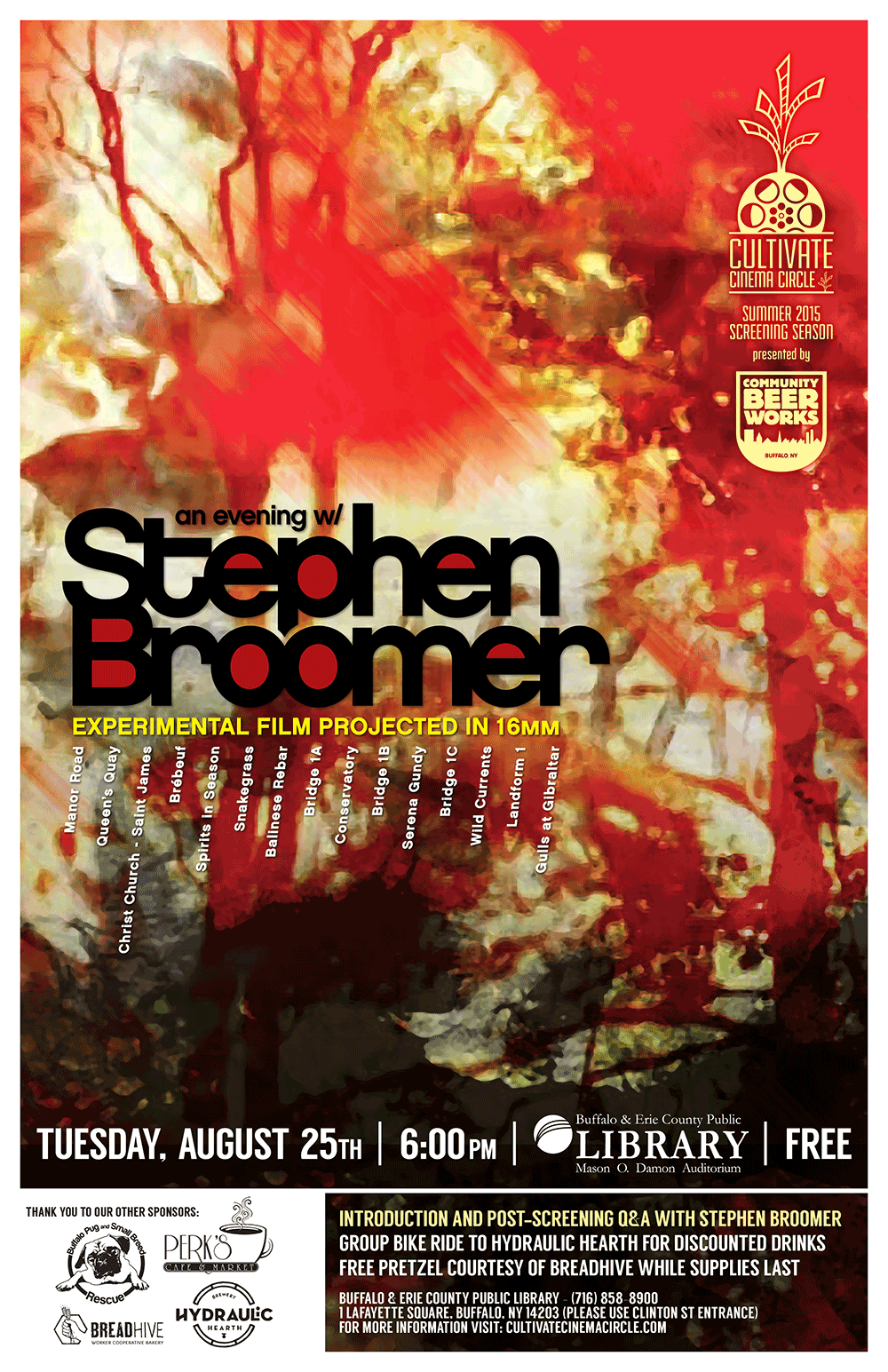
Please join us for a one-night screening event of eighteen experimental short films by Stephen Broomer projected in 16mm. The director will attend to introduce his films and conduct a post-screening Q&A.

  • Screening Date: Tuesday, August 25th, 2015 / 6:00pm
  • Venue: The Mason O. Damon Auditorium at Buffalo Central Library
  • Specifications: 2010-2014 / ~70 minutes / silent and sound / Black & White and Color
  • Director(s): Stephen Broomer
  • Print: 16mm prints supplied by the artist
  • Tickets: Free and Open to the Public
  • Deal: Stop in early for a FREE Breadhive soft pretzel while supplies last!
  • Extra: Cyclists are welcome to join Cultivate Cinema Circle and GO Bike Buffalo for a group ride to Hydraulic Hearth afterwards for discounted drinks with proof of admission. Here is the map:

Summer 2015 Season Sponsor:

Event Sponsors:

Venue Information:

1 Lafayette Square, Buffalo, NY 14203
(please use Clinton St entrance for Mason O. Damon Auditorium)


Schedule

Reel 1: The Spirits Series (29 minutes)

  • Christ Church – Saint James [2011] (7 minutes) – colour/sound
  • Brébeuf [2012] (10 minutes) – colour/sound
  • Spirits in Season [2013] (12 minutes) – colour/sound

Reel 2: Shorts (41 minutes)

  • Manor Road [2010] (3.5 minutes) – colour/silent
  • Queen’s Quay [2012] (1 minute) – colour/sound
  • Bridge 1A [2015] (1.5 minutes) – colour/silent
  • Memory Worked by Mirrors [2011] (2.5 minutes) – b&w/silent
  • Balinese Rebar [2011] (3.5 minutes) – colour/sound
  • Wastewater [2014] (1 minute) – colour/sound
  • Conservatory [2013] (3.5 minutes) – colour/silent
  • Snakegrass [2012] (1 minute) – colour/sound
  • Bridge 1B [2015] (1.5 minutes) – colour/silent
  • Serena Gundy [2014] (3.5 minutes) – b&w/silent
  • Wild Currents [2015] (6.5 minutes) – colour/sound
  • Landform 1 [2015] (3 minutes) – colour/silent
  • Bridge 1C [2015] (1 minute) – colour/silent
  • Order of Ideas at the Leslie Street Spit [2012] (3.5 minutes) – colour/sound
  • Gulls at Gibraltar [2015] (3.5 minutes) – b&w/silent

The Transformable Moment

The moment is an indefinite measure of time into which almost all experience falls. It is the conclusive present and it permeates all written past. It forms in our vision and consciousness. History enters as the moment fleeting, but the moment, in and out of time, the present moment, is our epiphany, when eternity reaches into our time and into us. Eternity carves its expression into us. It comes to us to build.

Film has allowed the artist to tame the moment, to record and possess it, to suspend it in a representation that pretends to permanence. The moment, as inscribed on film, becomes an elastic interval. In this raw form, it opens onto the many possibilities for further creation, be they achieved by distortion and obscurity, by the heightened clarity that comes in the movement study, by the divergent gestures of alternating patterns, and by other operations played on the visual field. Our mastery over the moment and its contents invites us deeper inside the instant and eternity. That moment of insight, formed in the improvisatory gesture or tempered and realized by later contemplation, might be transformed to damn out old motions, to make them new; to give polyrhythmic integrity to both moment and memory itself; to reach for the essential energy of experience. Transformations reveal a composition as a field of individual and endlessly renewed meanings and energies. But the epiphany is rare and ultimate.

Every moment possesses the power to transform itself. In its stagnant chronology, its fixed coordinate, it changes. By memory and by history, time transforms itself. We use film to alter the moment, to cradle the moment, to annihilate the moment, or at least its impression, and by these operations, the image bears out the mystical associations of consciousness. The transformable moment is the moment turning into both its opposite and its other, and meaning arises in the gap between opposition and otherness. By this transformation, the moment departs from the assurances of memory and becomes a breathing passage.

— Stephen Broomer

Filmography:

  • Fat Chance (2021)
  • Phantom Ride (2019)
  • Fountains Of Paris (2018) (Short)
  • Residence Inn (2017) (Short)
  • Mills (2016) (Short)
  • Carousel Study (2016) (Short)
  • The Bow and the Cloud (2016) (Short)
  • Variations on a Theme by Michael Snow (2015) (Short)
  • Wild Currents (2015) (Short)
  • Gulls at Gibraltar (2015) (Short)
  • Landform 1 (2015) (Short)
  • Dominion (2014) (Short)
  • Wastewater (2014) (Short)
  • Jenny Haniver (2014) (Short)
  • Serena Gundy (2014) (Short)
  • The Season Word (2014) (Short)
  • Zerah’s Gift (2013) (Short)
  • Pepper’s Ghost (2013) (Short)
  • Conservatory (2013) (Short)
  • Spirits in Season (2013) (Short)
  • Queen’s Quay (2013) (Short)
  • Christ Church – Saint James (2010) (Short)

Links

Here is a curated selection of links shared on our Facebook page for additional insight/information:

  • 8/10/15 – We will be hosting filmmaker Stephen Broomer to present a series of his experimental films on 16mm at the Buffalo & Erie County Public Library – Central Library’s Mason O. Damon Auditorium for FREE! Prior to the event be sure to read this excellent interview in Incite Journal with Mr. Broomer by Clint Enns. – link
  • 8/13/15 – If you’re unfamiliar with the filmmaker Stephen Broomer, who will be here on August 25th to present a series of 16mm experimental films, here is a short titled Wastewater which he produced last year. – link
  • 12/18/15 – Cultivate Cinema Circle alum Stephen Broomer has been included in this new limited edition compilation DVD of experimental works! His film Spirits in Season, which we screened earlier this year in among the excellent works included in this set. – link
  • 10/30/16 – Stephen Broomer, friend and alum of CCC, has launched Black Zero, a new multimedia publisher specializing in historical works of experimental cinema with an emphasis on Canadian underground filmmaking of the 1960s, ‘70s and ‘80s! – link

Cobain: Montage of Heck – August 20th, 2015

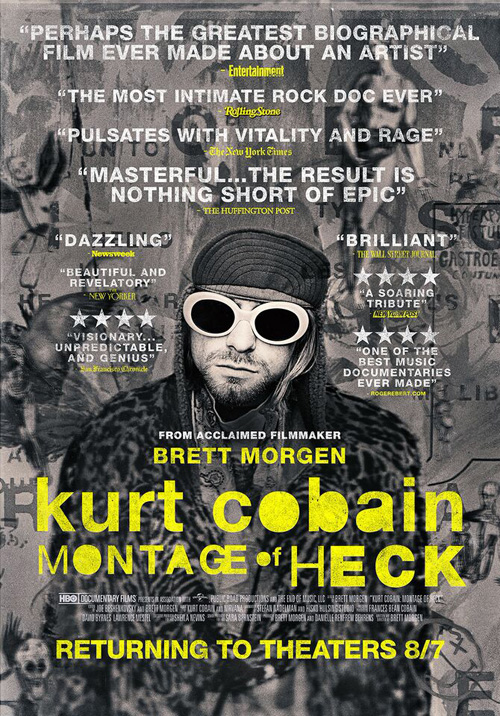
Cobain: Montage of Heck [2015]


Please join us for a one-night special screening event of Brett Morgan’s documentary Cobain: Montage of Heck [2015].

  • Screening Date: Thursday, August 20th, 2015 | 9:30pm
  • Venue: North Park Theatre
  • Specifications: 2015 / 145 minutes / English / Color
  • Director(s): Brett Morgen
  • Print: Supplied by HBO Documentaries
  • Tickets: $10.50 online; $9.50 at the door
  • Deal: Discounted drinks available after the screening at Més Que with your ticket

Summer 2015 Season Sponsor:

Event Sponsors:

Venue Information:

1428 Hertel Ave, Buffalo, NY 14216


Synopsis

Courtesy of HBO Documentaries:

Kurt Cobain, legendary lead singer, guitarist and songwriter of Nirvana, “the flagship band of Generation X,” remains an object of reverence and fascination for music fans around the world. His story is told for the first time in KURT COBAIN: MONTAGE OF HECK, a fully authorized feature documentary co-produced by HBO Documentary Films and Universal Pictures International Entertainment Content Group.

Brett Morgen, the Oscar®-nominated filmmaker behind such acclaimed documentaries as the HBO presentations “Crossfire Hurricane,” which celebrated the 50th anniversary of the Rolling Stones, and “The Kid Stays in the Picture,” is writer, director and producer of KURT COBAIN: MONTAGE OF HECK. Visual artist Frances Bean Cobain, Cobain’s daughter, is executive producer.

KURT COBAIN: MONTAGE OF HECK explores the indelible record of a life lived on the fine edge between madness and genius, painting a searing and unforgettable portrait of the iconic musician as it mirrors his quicksilver mind. Using Cobain’s own words and images, this intimate look at an elusive and conflicted artist marks the first documentary to be made with the cooperation of his family.

Morgen weaves together moving first-person testimony from Cobain’s mother and sister; his widow, Courtney Love; former girlfriend Tracy Marander; ex-bandmate Krist Novoselic and others with Cobain’s own words, providing an unflinching tribute to a contentious and contradictory talent, who is still revered by millions around the world 20 years after his tragic death.

Given unprecedented access to Cobain’s personal and family archives by the late rocker’s estate, Morgen uncovered a wealth of new material that documents the emotional rollercoaster of his personal life and celebrates his uncompromising creative spirit, including the inspiration for the film’s title, a circa-1988 “sound collage” he titled “Montage of Heck.” Recorded by Cobain on a four-track cassette recorder, it’s a free-form mash-up of song bites, manipulated radio recordings, elements of demos and disparate sounds created or recorded by Cobain.

Using Cobain’s artwork, photography, journals and family photographs as inspiration, the filmmakers have produced original animation to illustrate important moments in his life. Also featured are dozens of Nirvana songs and performances, as well as previously unheard Cobain originals.

“I’m extremely grateful to Courtney Love and Frances Bean Cobain for granting me unfettered access to Kurt’s possessions,” says Morgen. “There were over 200 hours of unreleased music and audio, a vast array of art projects, countless hours of home movies and over 4,000 pages of writings, which together provided a new perspective on an influential and prolific artist who rarely revealed himself to the media.”

In 1991, Seattle-based rockers Nirvana released their breakout hit, “Smells Like Teen Spirit,” taking the music world by storm with a sound that came to represent the youth of the decade. Kurt Cobain became one of the dominant voices of the era, producing songs that were an unlikely combination of nihilism and jubilation. In April 1994, Nirvana fans around the world were devastated by the news of Cobain’s suicide at age 27.

Eight years in the making, KURT COBAIN: MONTAGE OF HECK chronicles the life of the legendary musician through a lifetime’s worth of work. As a child in rural Aberdeen, Wash., Cobain was clearly gifted, as well as hypersensitive, hyperactive and relentlessly perfectionistic. With seemingly boundless creative drive, he began writing, drawing and making music at an early age.

Idealized by his mother and belittled by his father, Cobain discovered punk rock as a troubled teen. “A friend of mine… made me a couple of compilation tapes,” he remembers in an audiotaped interview. “I was completely blown away. They expressed the way I felt socially and politically. It was the anger that I felt, the alienation. And I realized that this is what I’ve always wanted to do.”

Cobain dropped out of high school shortly before graduation and worked as a janitor while trying to find an outlet for his artistic energy and emotional turmoil. “He was searching for whatever made him feel like he wasn’t alone and that he wasn’t so different,” remembers his sister, Kim Cobain.

By the time Cobain, bass player Krist Novoselic and drummer Dave Grohl were leading the northwest rock circuit, the seeds of his destruction had already taken root. Long prone to depression, Cobain began experimenting with heroin and was soon addicted. As his fame grew, so did his appetite for drugs and his self-destructive behavior.

“It’s a superficial label to put on a band that they’re going to become the next big thing without us really wanting to do it,” Cobain told a reporter at the time. “We’re prepared to destroy our careers if that happens.”
Cobain’s marriage to controversial fellow musician Courtney Love followed. Coming from a broken home and blended family, Cobain’s lifelong dream was to create the family he felt he missed out on throughout his difficult childhood. The pair made an attempt at domesticity after the birth of their only child, Frances Bean, but drama followed them everywhere they went.

Throughout his life, Cobain continued creating almost compulsively, producing work both poetic and disturbing, often manifestations of his violent dreams and fantasies. He was, in his mother’s words, on a collision course with the world.

“You see his art,” says Novoselic. “A lot of those messages are as plain as day.”

Finally, tormented by his addiction, his inexplicable but excruciating physical ailments and his own unquiet mind, Cobain was unable to escape the troubles that had haunted him since childhood, and took his own life.

KURT COBAIN: MONTAGE OF HECK had its world premiere at the 2015 Sundance Film Festival.

HBO Documentary Films and Universal Pictures International Entertainment Content Group in association with Public Road productions and The End of Music present KURT COBAIN: MONTAGE OF HECK. A film by Brett Morgen. Written and directed by Brett Morgen; produced by Brett Morgen and Danielle Renfrew Behrens; executive produced by Frances Bean Cobain, Larry Mestel, David Byrnes; co-executive producer, Dave Morrison; edited by Joe Beshenkovsky and Brett Morgen; sound design by Cameron Frankley and Kurt Cobain. For HBO: senior producer, Sara Bernstein; executive producer, Sheila Nevins.

Tidbits:

  • Indiewire Critics’ Poll – 2015 – Nominee: Best Documentary
  • Writers Guild of America – 2016 – Nominee: Best Documentary Screenplay (Screen)
  • International Documentary Association – 2015 – Winner: Best Editing (Creative Recognition Award)

Director Bio

Dubbed the “mad scientist” of documentary film, Brett Morgen has been writing, directing, and producing groundbreaking documentary films for the past fifteen years.

Morgen received a BA in Mythology and American History at Hampshire College in 1992 and an MFA in film from NYU in 1999. His NYU thesis film, On the Ropes (1999), premiered at the 1999 Sundance Film Festival, where it received the Special Jury award. The film won several awards and honors, including the 1999 DGA Award for Outstanding Directorial Achievement in Documentary, the 1999 IDA Award for Best Documentary, and an Academy Award nomination for Best Documentary.

In 2002, Focus Features released Morgen’s second movie, The Kid Stays In the Picture, which he adapted from Robert Evan’s memoirs of the same name. The film premiered at the 2002 Sundance Film Festival, and was an official selection at the 2002 Cannes Film Festival. The New York Times called the film “one of the funniest films of the year” and it was named one of the best films of the year by over fifty publications, including Entertainment Weekly. It was also named Best Documentary of 2002 by the Boston, Washington DC, and Seattle Film Critics.

In 2007, Morgen wrote, produced, and directed Chicago 10, one of the first feature-length animated documentary films. Selected as the Opening Night film of the 2007 Sundance Film Festival, Chicago 10 was released theatrically by Roadhouse Attractions. The film was the recipient of several awards and nominations, among them nominations for the Emmy, WGA, and ACE Awards.

That same year, Morgen created and served as Executive Producer on the award-winning series Nimrod Nation, an eight-part television documentary that had its first public screening at the 2007 Sundance Film Festival. Nimrod Nation was named one of the Best TV series of the year by The Los Angeles Times, and in 2008, the series was awarded the Peabody Award for its honest and unflinching portrait of small-town America.

In 2010, Morgen directed June 17, 1994 as part of ESPN’s acclaimed 30 for 30 series. Morgen’s film, which examined the infamous OJ Simpson Bronco chase, was recently named by Rolling Stone as the single best film released in the 30 for 30 series. The film received a Peabody Award and several Emmy nominations, including a nomination for Best Documentary.

In 2012, Morgen wrote and directed the critically acclaimed Rolling Stones documentary, Crossfire Hurricane. The film, which has been screened in nearly every country around the world, was the recipient of four Primetime Emmy Nominations, including Best Documentary.

In 2015, Universal Pictures International will be bringing Morgen’s latest film, Kurt Cobain: Montage of Heck, to cinemas around the world. Following its global release, the film will be broadcast on HBO in the United States. Morgen has been developing the movie for eight years and is serving as the film’s writer, director, producer, and editor.

In addition to his documentary work, Morgen has been directing commercials at Anonymous Content since 2000, where he has directed over 200 spots for some of the biggest brands in the world.

Filmography:

  • Jane (2017)
  • Cobain: Montage of Heck (2015)
  • Crossfire Hurricane (2012)
  • Truth in Motion: The US Ski Team’s Road to Vancouver (2010) (TV Movie)
  • Chicago 10 (2007)
  • The Sweet Science (2003) (TV Movie)
  • The Kid Stays in the Picture (2002)
  • On the Ropes (1999)
  • Ollie’s Army (1996)
  • Too Far from Norm (1987) (Short)

Links

Here is a curated selection of links shared on our Facebook page for additional insight/information:

  • 8/7/15 – “Watching Montage of Heck feels like being a teen-ager in the eighties or nineties: making mixtapes, making weird collages, scrawling dreams in a spiral notebook, going to shows where bands play in front of projections of, say, slaughterhouse footage. When paired with Cobain’s music, the effect can be thrilling, and a poignant reflection on time.” Sarah Larson, The New Yorkerlink
  • 8/7/15 – “The idea was not to tear him down, nor was it to put him on a pedestal. It was just simply to look him in the eye.” director Brett Morgen. Check out this wonderful interview with the filmmaker by NPR! – link
  • 8/11/15 – “The definitive Cobain documentary. There is nowhere else to go from here.” Justin Gerber, Consequence of Soundlink
  • 8/14/15 – “The fact that his concerns were so ordinary just makes his trajectory all the more extraordinary.” Spencer Kornhaber, The Atlanticlink
  • 8/15/15 – Following our screening of Cobain: Montage of Heck this Thursday at North Park Theatre, listen to this 45 minute conversation with director Brett Morgen on The Close-up from Film Society of Lincoln Center. – link
  • 8/18/15 – “The problem with most biopics is that they try to hit all the beats you see in Wikipedia, you can’t cover everything. That’s what books are for. I think my films are documentaries in the sense that they arrive at a truth. But the word ‘document’ is actually antithetical to art and cinema.” director Brett Morgen, The New York Timeslink
  • 8/20/15 – “Don’t miss your chance to catch one of 2015′s best films.” buffaBLOGlink
  • 12/26/15 – Nonfics lists Cultivate Cinema Circle alums The Look of Silence and Kurt Cobain: Montage of Heck among the year’s best documentaries! – link

Bikes vs Cars – August 4th, 2015

Bikes vs. Cars [2015]


Please join us for a one-night screening event of Fredrik Gertten’s latest documentary Bikes vs Cars [2015]. The director will attend to introduce the film and conduct a post-screening Q&A.

  • Screening Date: Tuesday, August 4th, 2015 | 6:00pm
  • Venue: The Mason O. Damon Auditorium at Buffalo Central Library
  • Specifications: 2015 / 90 minutes / English and others with subtitles / Color
  • Director(s): Fredrik Gertten
  • Print: Supplied by WG Film
  • Tickets: $5.00 at the door / CASH ONLY (ATM available across the street at Hotel Lafayette)
  • Deal: Stop in early for a FREE Breadhive soft pretzel while supplies last!
  • Extra: Cyclists are welcome to join Cultivate Cinema Circle and GO Bike Buffalo for a group ride to Hydraulic Hearth afterwards for discounted drinks with proof of admission. Here is the map:

Summer 2015 Season Sponsor:

Event Sponsors:

Venue Information:

1 Lafayette Square, Buffalo, NY 14203
(please use Clinton St entrance for Mason O. Damon Auditorium)


Synopsis

Courtesy of Bikes vs Cars:

The bicycle, an amazing tool for change. Activists and cities all over the world are moving towards a new system. But will the economic powers allow it? Bikes vs Cars, a new film project from BANANAS!* and Big Boys Gone Bananas!* director Fredrik Gertten, looks into and investigates the daily global drama in traffic around the world.

Climate change and never-ending gridlocks frustrate people more than ever. Instead of whining, people in cities around the world take on the bicycle as a Do It Yourself solution. Road rage and poor city planning creates daily death amongst the bicyclists. And now they demand safe lanes.

It’s an uneven fight. Activists and politicians that work for change are facing a multi-billion dollar car, oil and construction industry that use all their means to keep society car dependent. We know that the world needs radical changes to save the climate and the environment, but the car industry is selling more cars than ever. Today there are one billion cars in the world. By 2020, that number will double.

The film will follow the individuals around the world that are fighting to create change. We meet Aline at Sao Paulo’s Ciclofaxia, the weekly Sunday ride where one lane of Paulista Avenue is opened for bikes only. Aline is an inspirational person in the city’s bicycle movement, who tries to focus on the positive aspects of being a cyclist. But that can be difficult in a city where one bicyclist is killed every four days. And in Toronto, where mayor Rob Ford strips away the city’s bike lanes in his battle to win the “war on cars,” we watch as members of the Urban Repair Squad infiltrate the streets at night, using spray paint and stencils to replace them.

From bike activists in Sao Paulo and Los Angeles, fighting for safe bike lanes, to the City of Copenhagen, where forty percent commute by bike daily, Bikes vs Cars will look at both the struggle for bicyclists in a society dominated by cars, and the revolutionary changes that could take place if more cities moved away from car-centric models.


Director’s Note

Born in a city where the bike is the natural choice for going from one place to another, I’ve travelled the world wondering why there are so few bicycles. Now, the car model as we know it has reached an extreme level with constant gridlock and millions of productive hours lost. Frustration is growing and cities need to look into new models.

The new urban biking is pushing this development. It’s a growing movement, which I’ve now seen around the world. People who simply put a sign on their bike saying “ONE LESS CAR.” A Do-It-Yourself attitude towards a global crisis.

It’s a positive message. If all cities adopted the model of Copenhagen, where forty percent commute within the city on bikes, it would be a radical change for the world. Something you can measure in health, pollution, oil usage.

And now the conflict. The car industry is in the center of our economic system. For the car owners and commuters that have become so invested in their lifestyle, it will be painful to change. It’s a conflict that interests me, and that is why I’ve decided to take on this project. A project of passion.

— Fredrik Gertten

Filmography:

  • Jozi Gold (2019)
  • Push (2019)
  • Becoming Zlatan … (2015)
  • Bikes vs Cars (2015)
  • Big Boys Gone Bananas!* (2011)
  • Bananas!* (2009)
  • The Socialist, the Architect and the Twisted Tower (2005)
  • An Ordinary Family (2005)
  • Vägen tillbaka – Blådårar 2 (2002)
  • Bye Bye Malmö (2002)
  • The Death of a Working Man’s Newspaper (2000)
  • Gå på vatten (2000)
  • Blådårar – Om kärleken till ett fotbollslag (1998)

Links

Here is a curated selection of links shared on our Facebook page for additional insight/information:

  • 7/7/15 – Story from Fredrik Gertten in Swedish paper Dagens Nyheter. “Motorism has become a disease” Worth google translating! – link
  • 7/22/15 – Via GO Bike Buffalo: “Cities are becoming far better places because they are less car-dependent. The six most walkable cities in the US are 38 per cent wealthier, they have a higher GDP than the rest.” Peter Newman, Curtin University – link
  • 7/29/15 – Prior to making BIKES vs CARS, Fredrik Gertten directed this short on the development of future bicycle safety! – link
  • 7/29/15 – “Fredrik Gertten’s quietly powerful eco-documentary, serves as a perfect summation of its gentle, yet direct, tone: ‘You own a car, not the street. The street belongs to all of us. This is not a war. It’s a city'”. Greg Hill-Turner, The Next Projectionlink
  • 8/4/15 – Did you know director Fredrik Gertten has also been involved in the creation of this biking app that “gives us a communication tool to influence friends and those in power to make cities more bike-friendly”? Download it today for free! – link
  • 8/5/15 – Congrats to director Fredrik Gertten, as BIKES vs CARS has just been picked up for US distribution by Kino Lorber! – link
  • 8/7/15 – Just before crossing the border to Buffalo for our screening of BIKES vs CARS at the Buffalo & Erie County Public Library – Central Library, director Fredrik Gertten spoke with VICE about his new film! – link
  • 10/12/15 – Congrats to Cultivate Cinema Circle alum Fredrik Gertten on being awarded the Grand Prize at the Cinemambiente Torino Environmental Film Festival for BIKES vs CARS last night! – link
  • 12/06/15 – Months after our NYS Premiere of BIKES vs CARS, the film has finally reached theaters and just received a lovely review in the Los Angeles Times:
    “Director Fredrik Gertten has put in the time to capture how these cities’ unique scenarios unfold to mount a compelling case against the powerful automotive, oil and construction lobbies. Florencia Di Concilio’s lush orchestral score is icing on the cake.” – link
  • 12/16/15 – BIKES vs CARS is now available to stream online via VOD:

Mommy – July 23rd, 2015

Mommy [2014]


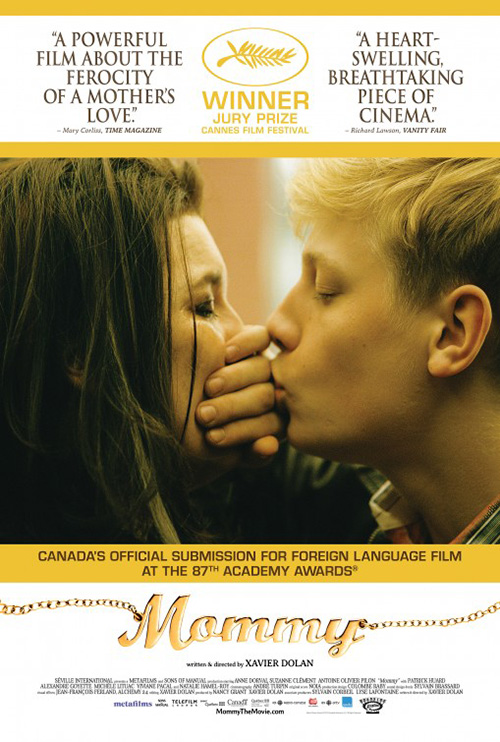
Please join us for a FREE one-night screening event of Mommy [2014]: Canada’s official selection for Foreign Language Film at the 87th Academy Awards and winner of the Jury Prize at the 2014 Cannes Film Festival.

  • Screening Date: Thursday, July 23rd, 2015 | 7:00pm
  • Venue: The Mason O. Damon Auditorium at Buffalo Central Library
  • Specifications: 2014 / 139 minutes / French with subtitles / Color
  • Director(s): Xavier Dolan
  • Print: Supplied by Roadside Attractions c/o Movie Licensing USA
  • Tickets: Free and Open to the Public
  • Deal: Stop in early for a FREE Breadhive soft pretzel while supplies last!

Summer 2015 Season Sponsor:

Event Sponsors:

Venue Information:

1 Lafayette Square, Buffalo, NY 14203
(please use Clinton St entrance for Mason O. Damon Auditorium)


Synopsis

Courtesy of Roadside Attractions:

A passionate widowed single mom (Anne Dorval) finds herself burdened with the full-time custody of her unpredictable 15-year-old ADHD son (Antoine Olivier Pilon). As they struggle to make ends meet, Kyla (Suzanne Clément), the peculiar new neighbor across the street, offers her help. Together, they strive for a new sense of balance.

Tidbits:

  • Cannes Film Festival – 2014 – Winner: Jury Prize
  • Independent Spirit Awards – 2015 – Nominee: Best International Film
  • Indiewire Critics’ Poll – 2014 – Nominee: Best Lead Actress
  • César Awards – 2015 – Winner: Best Foreign Film
  • Toronto Film Critics Association Awards – 2014 – Nominee: Rogers Award – Best Canadian Film

Director Note

“Being on set as a kid and hearing about sex stories and hearing people swear… it’s a very specific atmosphere.”

Since my first film, I’ve talked a lot about love.

I’ve talked about teenage hood, sequestration and transsexualism. I’ve talked about Jackson Pollock and the 90s, about alienation and homophobia. Boarding schools and the very French-Canadian word “special”, milking the cows, Stendhal’s crystallization and the Stockholm syndrome. I’ve talked some pretty salty slang and I’ve talked dirty too. I’ve talked in English, every once in a while, and I’ve talked through my hat one too many times.

Cause that’s the thing when you “talk” about things, I guess, is that there is always this almost unavoidable risk of talking shit. Which is why I always decided to stick to what I knew, or what was -more or less – close to my skin. Subjects I thought I thoroughly or sufficiently knew because I knew my own difference or the suburb I was brought up in. Or because I knew how vast my fear of others was, and still is. Because I knew the lies we tell ourselves when we live in secret, or the useless love we stubbornly give to time thieves. These are things I’ve come close enough to to actually want to talk about them.

But should there be one, just one subject I’d know more than any other, one that would unconditionally inspire me, and that I love above all, it certainly would be my mother. And when I say my mother, I think I mean THE mother at large, the figure she represents.

Because it’s her I always come back to. It’s her I want to see winning the battle, her I want to invent problems to so she can have the credit of solving them all, her through whom I ask myself questions, her I want to hear shout out loud when we didn’t say a thing. It’s her I want to be right when we were wrong, it’s her, no matter what, who’ll have the last word.

Back in the days of I Killed My Mother, I felt like I wanted to punish my mom. Only five years have passed ever since, and I believe that, through Mommy, I’m now seeking her revenge. Don’t ask.

— Xavier Dolan, May 2014

Filmography:

  • Matthias & Maxime (2019)
  • The Death and Life of John F. Donovan (2018)
  • Mommy (2014)
  • Tom à la Ferme (2013)
  • Laurence Anyways (2012)
  • Heartbeats (2010)
  • I Killed My Mother (2009)

Using 1:1 Aspect Ratio

After having shot a music video in 1:1 last year, it dawned on me that this ratio translated a somewhat unique emotion and sincerity.

The perfect square framed faces with such simplicity, and seemed like the ideal structure for “portrait” shots. No distraction, no affectations are possible in such constricted space. The character is our main subject, inescapably at the center of our attention. Our eyes cannot miss him, her.

1:1 is, besides, the ratio of album covers and CD’s, all of these jackets that have imprinted in our imaginations over time. The Die & Steve Mix 4ever being a leitmotif for us, the use of 1:1 found an additional echo. It is also, to be frank, my DP André Turpin’s favorite ratio which he had, apparently, dreamed of using his entire life without ever daring to do so (he’s also a director, and directed the extremely enjoyable Zigrail, Middle-East road trip shot in black and white and featuring some brutal early John Zorn!).

After having now spent a year with him busting my balls at just about every shot, regretting our infamous ratio, I’ve learned two things : André loves cinemascope and I, for one, have absolutely no regrets in this matter.

— Xavier Dolan, May 2014


Links

Here is a curated selection of links shared on our Facebook page for additional insight/information:

  • 7/5/15 – “Directing prodigy Xavier Dolan has made his best film yet, a shocking, wildly inventive black comedy about a single mother bringing up a troubled teenager” Peter Bradshaw, The Guardianlink
  • 7/13/15 – For those unacquainted with the young Canadian prodigy Xavier Dolan, the filmmaker behind our upcoming FREE screening of Mommy on 7/23, this is a brilliant primer on his brazen stylistic tendencies published by The Seventh Art. – link
  • 7/17/15 – A quintuplet of gorgeous Korean posters for Xavier Dolan’s Mommylink
  • 7/20/15 – After catching our FREE screening of Xavier Dolan’s Mommy this coming Thursday at Buffalo & Erie County Public Library – Central Library’s Mason O. Damon Auditorium we highly recommend you take a listen to this hour long conversation with the youthful filmmaker on Film Society of Lincoln Center’s The Close-Up podcast! – link
  • 7/21/15 – Buffalo.com’s Christopher Schobert says Mommy is “undoubtedly a memorable experience featuring a stunning performance from Anne Dorval”! – link

An Evening with Stephen Broomer

website-header

2010-2014 / ~62 minutes / silent and sound / B&W and Color
Directed by: Stephen Broomer
16mm prints supplied by the artist

Tuesday, August 25th, 2015
6:00pm
at The Mason O. Damon Auditorium at Buffalo Central Library

Please join us for a one-night screening event of fifteen experimental short films by Stephen Broomer projected in 16mm. The director will be in attendance to introduce his films and conduct a post-screening Q&A.

Cyclists are also welcome to join Cultivate Cinema Circle for a group ride to Hydraulic Hearth afterwards for discounted drinks with your ticket. Attendees are welcome by car and foot too. Here is the map:


Stop in early to be sure to score a FREE soft pretzel from Breadhive Cooperative Bakery!

Summer 2015 Season Sponsor: Community Beer Works
Event Sponsors: Buffalo Pug & Small Breed Rescue; Perk’s Cafe and Market; BreadHive Cooperative Bakery & Hydraulic Hearth
Ticket Information: FREE


Schedule is as follows:
Manor Road (3.5 minutes) – silent
Queen’s Quay (1 minute) – sound
Christ Church – Saint James (7 minutes) – sound
Brébeuf (10 minutes) – sound
Spirits in Season (12 minutes) – sound
Snakegrass (1 minute) – sound
Balinese Rebar (3.5 minutes) – sound
Bridge 1A (1.5 minutes) – silent
Conservatory (3.5 minutes) – silent
Bridge 1B (1.5 minutes) – silent
Serena Gundy (3.5 minutes) – silent
Bridge 1C (1 minute) – silent
Wild Currents (6.5 minutes) – sound
Landform 1 (3 minutes) – silent
Gulls at Gibraltar (3.5 minutes) – silent


website-header

The Transformable Moment
by Stephen Broomer

The moment is an indefinite measure of time into which almost all experience falls. It is the conclusive present and it permeates all written past. It forms in our vision and consciousness. History enters as the moment fleeting, but the moment, in and out of time, the present moment, is our epiphany, when eternity reaches into our time and into us. Eternity carves its expression into us. It comes to us to build.

Film has allowed the artist to tame the moment, to record and possess it, to suspend it in a representation that pretends to permanence. The moment, as inscribed on film, becomes an elastic interval. In this raw form, it opens onto the many possibilities for further creation, be they achieved by distortion and obscurity, by the heightened clarity that comes in the movement study, by the divergent gestures of alternating patterns, and by other operations played on the visual field. Our mastery over the moment and its contents invites us deeper inside the instant and eternity. That moment of insight, formed in the improvisatory gesture or tempered and realized by later contemplation, might be transformed to damn out old motions, to make them new; to give polyrhythmic integrity to both moment and memory itself; to reach for the essential energy of experience. Transformations reveal a composition as a field of individual and endlessly renewed meanings and energies. But the epiphany is rare and ultimate.

Every moment possesses the power to transform itself. In its stagnant chronology, its fixed coordinate, it changes. By memory and by history, time transforms itself. We use film to alter the moment, to cradle the moment, to annihilate the moment, or at least its impression, and by these operations, the image bears out the mystical associations of consciousness. The transformable moment is the moment turning into both its opposite and its other, and meaning arises in the gap between opposition and otherness. By this transformation, the moment departs from the assurances of memory and becomes a breathing passage.

The Terminator – July 9th, 2015

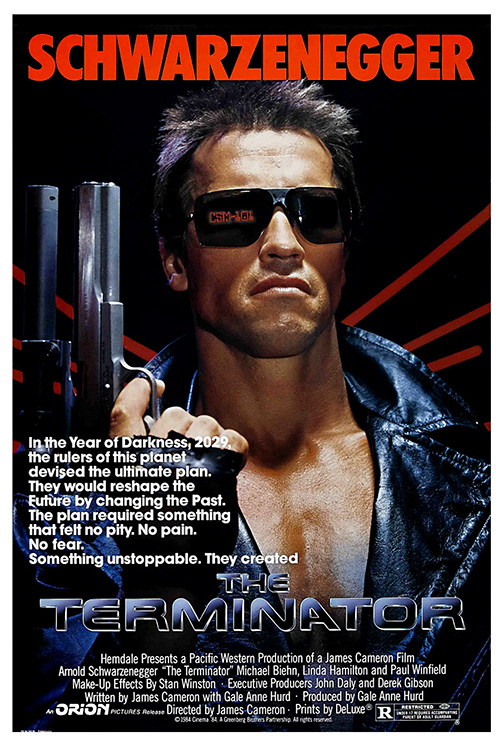
The Terminator [1984]


Please join us for a FREE one-night screening event of The Terminator [1984]: the movie that ignited a franchise returning to theaters with its fifth installment Terminator Genisys.


Summer 2015 Season Sponsor:

Event Sponsors:

Venue Information:

1 Lafayette Square, Buffalo, NY 14203
(please use Clinton St entrance for Mason O. Damon Auditorium)


Synopsis

In the year 2029, the ruling super-computer, Skynet, sends an indestructible cyborg (Arnold Schwarzenegger) back in time to 1984 to kill Sarah Connor (Linda Hamilton) before she can fulfill her destiny and save mankind.

The Terminator is a 1984 American science fiction action film directed by James Cameron, written by Cameron and the film’s producer Gale Anne Hurd, and starring Arnold Schwarzenegger, Michael Biehn, and Linda Hamilton. It was filmed in Los Angeles, produced by Hemdale Film Corporation and distributed by Orion Pictures. Schwarzenegger plays the Terminator, a cyborg assassin sent back in time from the year 2029 to 1984 to kill Sarah Connor, played by Hamilton, whose son will one day become a savior against machines in a post-apocalyptic future. Biehn plays Kyle Reese, a soldier from the future sent back in time to protect Sarah.

Though not expected to be either a commercial or critical success, The Terminator topped the American box office for two weeks and helped launch the film career of Cameron and consolidate that of Schwarzenegger. In 2008, The Terminator was selected by the Library of Congress for preservation in the American National Film Registry, being deemed “culturally, historically, or aesthetically significant”.

The film’s success led to four sequels: Terminator 2: Judgment Day [1991], Terminator 3: Rise of the Machines [2003], Terminator Salvation [2009], and Terminator Genisys [2015], with a planned two more films to follow.

Tidbits:

  • National Film Preservation Board – 2008 – National Film Registry

Director Bio

“People call me a perfectionist, but I’m not. I’m a rightist. I do something until it’s right, and then I move on to the next thing.”

courtesy of Biography.com:

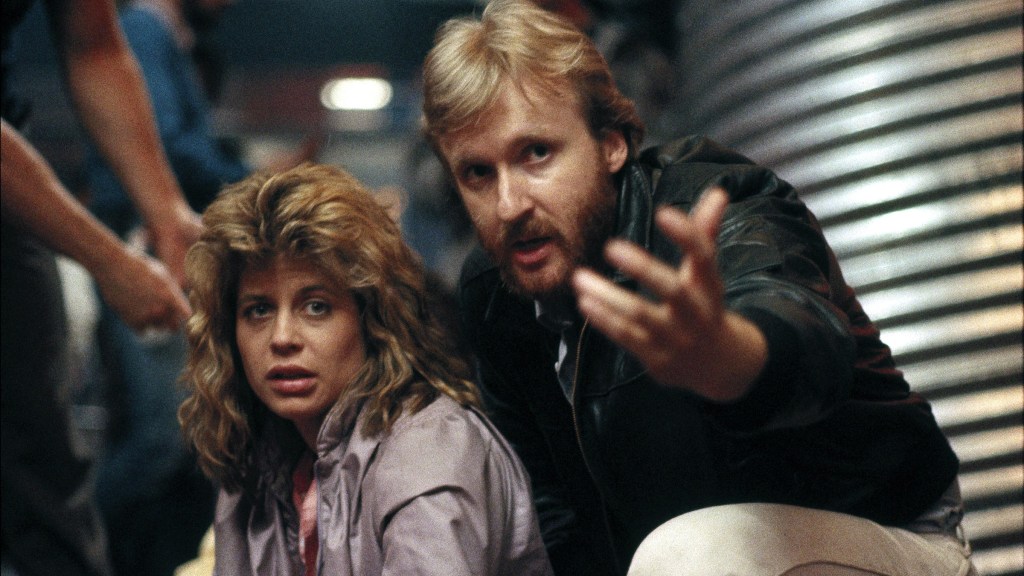
James Cameron is a critically acclaimed film director known for some of the biggest box-office hits of all time. A science-fiction fan as a child, he went on to produce and direct films including The Terminator, Aliens and Avatar. He has received numerous Academy Awards and nominations for his often large-scale, expensive productions. His most noted work, 1997’s Titanic, became the first film to earn more than $1 billion and landed 14 Academy Award nominations. Cameron took home three Oscars himself for the project: Best Director, Best Film Editing and Best Picture.

Early Career

James Cameron was born on August 16, 1954, in Kapuskasing, Ontario, Canada. A science-fiction fan as a child, he grew up to become one of the most visionary filmmakers in Hollywood. He initially pursued physics as a student at California State University, Fullerton, but he left to follow his cinematic dreams. Working as a truck driver, Cameron would pull off the road to work on screenplays.

In 1978, Cameron made his first film, a science-fiction short called Xenogenesis. The film helped him get a job with New World Pictures, a company run by famed B-movie director Roger Corman. At New World, Cameron worked in number of different roles, from art director on Battle Beyond the Stars (1980) to director on Piranha II: The Spawning (1981).

Major Films

Cameron’s fortunes took a major upturn in 1984, when he wrote and directed The Terminator (1984). The movie told the gripping science-fiction tale of a robot from the future (played by Arnold Schwarzenegger) who travels to the present day to hunt down the leader of the resistance in a yet-to-occur battle between humans and machines. The film became a critical and commercial hit and helped Cameron land his next project, the sequel to Ridley Scott’s Alien (1979), which featured Sigourney Weaver as a female action hero in space. Aliens (1986) received several Academy Award nominations, including one for Weaver for Best Actress.

With The Abyss (1989), however, Cameron experienced a number of disappointments. The shoot for the film was grueling. Much of it was filmed in a huge underwater set, which took its toll on the cast and crew. After its release, critics and moviegoers were not impressed with the story of scuba divers who encounter aliens while recovering a U.S. Navy submarine. However, the film’s visual effects were stunning and earned an Academy Award.

Working with his third wife, Kathryn Bigelow, Cameron helped produce her 1991 action flick, Point Break (1991). The couple’s two-year relationship ended around the same time. But Cameron returned to form that year with another box-office hit, Terminator 2: Judgment Day. The film earned more than $200 million and broke new ground with its impressive visual effects. Several years later he later he would marry one of the film’s stars, Linda Hamilton.

Titanic

Mixing marital issues and espionage, Cameron wrote and directed True Lies (1994), starring Jamie Lee Curtis and Arnold Schwarzenegger. The film made it to No. 1 at the box office, grossed more than $378 million worldwide and received an Oscar nod for its visual effects. Cameron then began a massive undertaking with his story Titanic, a movie about star-crossed lovers (played by Leonardo DiCaprio and Kate Winslet) trapped aboard the doomed Titanic ocean liner. To re-create one of the greatest disasters at sea in history, Cameron had a special studio built in Mexico, which featured a 17-million-gallon water tank and 775-foot replica of the Titanic.

The film cost nearly $200 million to make and was plagued with problems and delays, and many in the industry expected the film to tank just like its namesake. But Cameron proved the skeptics wrong. Opening in December 1997, the film received critical raves and strong ticket sales. Titanic eventually became the first film to earn more than $1 billion and landed 14 Academy Award nominations. For his work on the film, Cameron took home three Oscars—for Best Director, Best Film Editing and Best Picture. In 1999, he divorced Linda Hamilton, and in 2000 he married actress Suzy Amis, who appeared in Titanic.

Continuing to be fascinated by the Titanic story, Cameron worked with his brother, Mike, to create new technology to film the undersea wreck of the infamous vessel. The result was the 3-D IMAX documentary Ghosts of the Abyss (2003). Two more documentaries followed in 2005: Volcanoes of the Deep and Aliens of the Deep.

Avatar

Again revolutionizing the world of special effects, Cameron returned to making feature films with 2009’s Avatar. The film explores the conflict between American forces and the native population on another planet. In the film, Sam Worthington plays an American soldier who switches sides to help the Na’vi people, and falls in love with one of them (played by Zoe Saldana).

Avatar quickly surpassed Titanic at the box office. It also earned Cameron a number of accolades, including Golden Globe wins for Best Director and Best Motion Picture – Drama. For the Academy Awards, Avatar was nominated in nine categories, including Best Picture and Best Director. But Cameron lost out on some of the night’s biggest prizes to his ex-wife Kathryn Bigelow, who won Best Director and Best Picture for The Hurt Locker.

The success of Avatar has led Cameron to develop three sequels to the box-office hit, with Avatar 2 currently slated for a December 2017 release.

Filmography:

  • Avatar 5 (2027)
  • Avatar 4 (2025)
  • Avatar 3 (2023)
  • Avatar 2 (2021)
  • Avatar (2009)
  • Aliens of The Deep (2005)
  • Ghosts of the Abyss (2003)
  • Titanic (1997)
  • True Lies (1994)
  • Terminator 2: Judgment Day (1991)
  • The Abyss (1989)
  • Aliens (1986)
  • The Terminator (1984)
  • Piranha II: The Spawning (1981)

Links

Here is a curated selection of links shared on our Facebook page for additional insight/information:

  • 6/26/15 – “Gritty, clever, breathlessly paced, and dynamic despite the dark shadow of doom cast over the story, this sci-fi thriller remains one of the defining American films genre or otherwise of the 1980s.” Sean Axmaker, Turner Classic Movies: TCM – link
  • 7/7/15 – Charting the career of Arnold Schwarzenegger, one action blockbuster at a time! – link
  • 7/8/15 – Which Terminator is better? Criticwire debates. – link