Please join us for a one-night screening event of Fredrik Gertten’s latest documentary Bikes vs Cars [2015]. The director will be in attendance to introduce the film and conduct a post-screening Q&A.
Ticket Information: $5.00 at the door / CASH ONLY
ATM available across the street at Hotel Lafayette
Cyclists are also welcome to join Cultivate Cinema Circle and GO Bike Buffalo for a group ride to Hydraulic Hearth afterwards for discounted drinks with proof of your ride down. Here is the map:
Stop in early to be sure to score a FREE soft pretzel from Breadhive Cooperative Bakery!
The bicycle, an amazing tool for change. Activists and cities all over the world are moving towards a new system. But will the economic powers allow it? Bikes vs Cars, a new film project from BANANAS!* and Big Boys Gone Bananas!* director Fredrik Gertten, looks into and investigates the daily global drama in traffic around the world.
Climate change and never-ending gridlocks frustrate people more than ever. Instead of whining, people in cities around the world take on the bicycle as a Do It Yourself solution. Road rage and poor city planning creates daily death amongst the bicyclists. And now they demand safe lanes.
It’s an uneven fight. Activists and politicians that work for change are facing a multi-billion dollar car, oil and construction industry that use all their means to keep society car dependent. We know that the world needs radical changes to save the climate and the environment, but the car industry is selling more cars than ever. Today there are one billion cars in the world. By 2020, that number will double.
The film will follow the individuals around the world that are fighting to create change. We meet Aline at Sao Paulo’s Ciclofaxia, the weekly Sunday ride where one lane of Paulista Avenue is opened for bikes only. Aline is an inspirational person in the city’s bicycle movement, who tries to focus on the positive aspects of being a cyclist. But that can be difficult in a city where one bicyclist is killed every four days. And in Toronto, where mayor Rob Ford strips away the city’s bike lanes in his battle to win the “war on cars,” we watch as members of the Urban Repair Squad infiltrate the streets at night, using spray paint and stencils to replace them.
From bike activists in Sao Paulo and Los Angeles, fighting for safe bike lanes, to the City of Copenhagen, where forty percent commute by bike daily, Bikes vs Cars will look at both the struggle for bicyclists in a society dominated by cars, and the revolutionary changes that could take place if more cities moved away from car-centric models.
Director’s Note:
Born in a city where the bike is the natural choice for going from one place to another, I’ve travelled the world wondering why there are so few bicycles. Now, the car model as we know it has reached an extreme level with constant gridlock and millions of productive hours lost. Frustration is growing and cities need to look into new models.
The new urban biking is pushing this development. It’s a growing movement, which I’ve now seen around the world. People who simply put a sign on their bike saying “ONE LESS CAR.” A Do-It-Yourself attitude towards a global crisis.
It’s a positive message. If all cities adopted the model of Copenhagen, where forty percent commute within the city on bikes, it would be a radical change for the world. Something you can measure in health, pollution, oil usage.
And now the conflict. The car industry is in the center of our economic system. For the car owners and commuters that have become so invested in their lifestyle, it will be painful to change. It’s a conflict that interests me, and that is why I’ve decided to take on this project. A project of passion.
North Park Theatre will be hosting our August screening of Contempt‘s 50th Anniversary Restoration on August 27th. Here’s our new poster to mark the occasion.
Please join us for a FREE one-night screening event of legendary Russian auteur Aleksei German’s final film—an adaptation of science fiction novel Hard to Be a God [Трудно быть богом] [2014].
Screening Date: Thursday, June 25th, 2015 | 7:00pm
A group of research scientists has been sent to the planet Arkanar, living under an oppressed regime in a period equivalent to earth’s Middle Ages. The local population is suffering a ban issued on anyone who knows how to read and write. The scientists must refrain from influencing political and historical events on Arkanar. They must work incognito, and they must remain neutral. Don Rumata, recognized by the locals as a sort of futuristic god, tries to save the local intelligentsia from their punishment. He cannot avoid taking the stance: “What would you do in God’s place?”
Adapted from the 1960s cult sci-fi novel “Hard to Be a God” by Arkady and Boris Strugatsky.
Hard To Be a God is a project that Russian director Aleksei German had been considering since the mid-1960s. German tried to make it as his debut film as early as 1964. Instead, he made Trial on the Road in respect to Lenfilm, the historic production company for which the director worked throughout his career. The project was later approved by Goskino, the State agency responsible for organizing filmmaking in the Soviet Union, but in 1968, after the uprising in Prague, the authorization was revoked for ideological reasons. Twenty years later the director returned to the project, but decided instead to make a film that would take him a long time to complete, Khrustalyov, My Car! Ten years later, after stating “I am not interested in anything but the possibility of building a world, an entire civilization from scratch”, German committed his efforts to Hard to be a God. The film was shot between the autumn of 2000 and August 2006: it even involved the construction of castles near Prague and on the sets at Lenfilm; the shooting took so long that some of the actors died of old age; the post-production phase took over five years. German died on February 21st, 2013; the film was completed by his wife and closest collaborator, Svetlana Karmalita, and by their son Aleksei A. German.
Tidbits:
Indiewire Critics’ Poll – 2015 – Nominee: Best Cinematography
Director Bio
“We had introduced new technical things that other filmmakers arrived at years later. Of course, all these things get older. Of course, it’s a tragedy. The cinema is a constantly developing kind of art form. It gets old very quickly.”
Aleksei Yuryevich German was born in Leningrad in 1938. His father, Yuri P. German, the famous, award-winning “humanistic” Soviet writer, a friend of director Vsevolod Emilevich Meyerhold, convinced him to enroll in the Faculty of Theatre Directing in Leningrad. After graduating, German collaborated with Georgy Tovstonogov, a key figure in Soviet theatre in the 1950s and 60s. In 1964, the director began to work with Lenfilm, the oldest “studio” in the Soviet Union, which became the cradle of auteur filmmaking. In 1967, he made his first film with Grigori L. Aronov, Sedmoy sputnik [The Seventh Companion].
In 1971, German finished Proverka na dorogach or Operacija “S novym godom” [Trial on the Road], inspired by a novel written by his father. The film, set during World War II, was immediately forbidden with the excuse that it distorted historical facts: it was not released until 1985. In 1977, the director made Dvadtsat dney bez voyny [Twenty Days Without War], inspired by the novel by Konstantin Simonov, the famous party loyal writer who defended the film before the leaders of the Central Committee and ensured its distribution. In 1984, German again worked on one of his father’s novels and made his most famous film, Moy drug Ivan Lapshin [My Friend Ivan Lapshin], set in the early 1930s. German’s portrayal of Soviet history irritated the Party and the film was immediately withdrawn from movie theatres. To survive, German wrote screenplays together with his wife Svetlana Karmalita, under her name alone.
German’s parabola of life and creation was fraught with events that were as tough as they were dramatic, and which reduced his opportunities to personally develop his own projects. During the longest period of his inactivity as a director, in 1988 German and his companion in life and work Svetlana Karmalita did however create and direct the Studio for debut works and experimental films at Lenfilm, a structure to develop debut works by new directors which produced eight feature-length films, as well as shorts and animated films.
With the advent of the 1990s and the new political situation, German worked on Khrustalyov, My Car!, released in 1998, after being presented in competition at the Cannes Film Festival. In that film, German came to the conclusion that after the horrors of the Stalin era, art was no longer possible in its previous form. In 2000, the director, finally recognized as one of the great masters of Russian filmmaking, and honoured with many awards, began to work on the epic project of Hard To Be a God, inspired by the famous eponymous novel by the Strugatsky brothers, which took thirteen years of hard work. In this work, German portrayed an entire civilization onscreen, reviewing the history of humanity with ruthless precision and enormous compassion.
Aleksei German died on February 21st, 2013. The film Hard To Be a God was completed by Svetlana Karmalita and by their son Aleksei A. German.
Filmography:
Hard to Be a God (2014)
Khrustalyov, My Car! (1998)
Trial on the Road (1986)
My Friend Ivan Lapshin (1985)
Twenty Days Without War (1977)
The Seventh Companion (1968)
Links
Here is a curated selection of links shared on our Facebook page for additional insight/information:
6/7/15 – After Hard to Be a God‘s debut at Festival internazionale del film di Roma, film critic Olaf Möller was awestruck. From his review of German’s final film in Cinema Scope: “It is 170 minutes long, black and white, beautiful, brilliant, and like a message from a different time—past or future, who knows … Hard to Be a God is a monstrous and strikingly Russian Orthodox huis clos, convinced that change will come but miserably resigned to the fact that nothing can be done to speed that escape from suffering. Which is to say that German not only still believes, but knows that above all we are frail and weak, even in our bravery. Neither God nor nature really wonders, let alone cares, about our hopes and desires—they simply, irrespectively deliver what will come. Fuck you, mankind, and be happy for what you’ve been given. Quite a final statement.” – link
6/19/15 – “This is visionary cinema of truly loopy, uncompromised grandeur” Neil Young, indieWIRE – link
6/21/15 – “After submitting oneself to German’s final film—and it is indeed a process of submission, far more than a conventional viewing experience—it is difficult to refrain from entertaining a rather morbid thought: This is the kind of film that kills its maker….This is as tactile and visceral as cinema gets…” Michael Sicinski, Museum of the Moving Image’s Reverse Shot – link
6/25/15 – “Not only an unforgettable individual masterpiece but probably one of the capital-G Great Films” Glenn Kenny, RogerEbert.com – link
12/13/15 – Fandor posted a video essay attesting to why Cultivate Cinema Circle alum Hard to Be a God might be the best film of 2015 – link
1/8/16 – Artvoice‘s Jordan Canahai has named his Top 10 films of 2015, including two Cultivate Cinema Circle alums among the ranks: HARD TO BE A GOD & THE LOOK OF SILENCE! – link
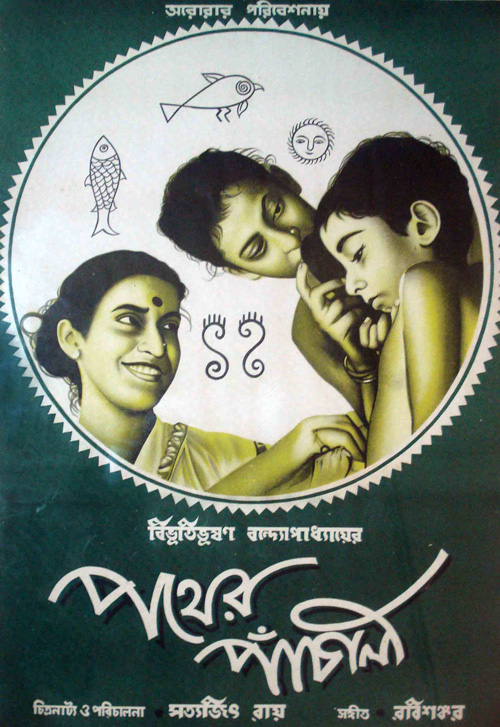
Please join us for a one-night screening event of the first film from Satyajit Ray’s famed Apu Trilogy, Pather Panchali (Song of the Little Road) [1955]. We are honored to also have the author of “The New Cinephilia” Girish Shambu in attendance to introduce the film.
Screening Date: Thursday, June 18th, 2015 | 9:30pm
The release in 1955 of Satyajit Ray’s debut, Pather Panchali, introduced to the world an eloquent and important new cinematic voice. A depiction of rural Bengali life in a style inspired by Italian neorealism, this naturalistic but poetic evocation of a number of years in the life of a family introduces us to both little Apu and, just as essentially, the women who will help shape him: his independent older sister, Durga; his harried mother, Sarbajaya, who, with her husband often away, must hold the family together; and his kindly and mischievous elderly “auntie,“ Indir—vivid, multifaceted characters all. With resplendent photography informed by its young protagonist’s perpetual sense of discovery, the Cannes-awarded Pather Panchali is an immersive cinematic experience and a film of elemental power.
Tidbits:
Cannes Film Festival – 1956 – Winner: Best Human Document 1956 | Special Mention: OCIC Award 1995 | Directors’ Fortnight
Berlin International Film Festival – 1957 – Winner: Selznick Golden Laurel for Best Film
National Board of Review – 1958 – Winner: Best Foreign Film | Winner: Top Foreign Films
New York Film Festival – 1959 – Winner: Best Foreign Film
Vancouver International Film Festival – 1958 – Winner: Best Film
Restoration
In 1992, the Academy of Motion Picture Arts and Sciences presented an honorary lifetime achievement Oscar to director Satyajit Ray. When sourcing material from Ray’s films for the Academy Awards ceremony, telecast producers were dismayed by the poor condition of the existing prints. The following year, after Ray’s death, a project was initiated to restore many of Ray’s films, including those in The Apu Trilogy.
In 1993, several of the filmmaker’s original negatives were shipped to Henderson’s Film Laboratories in London. In July, a massive nitrate fire at the lab spread to the film vaults, destroying more than twenty-five original negatives of important British classics—and burning several Ray films, including the original negatives of The Apu Trilogy. Any ashes, fragments, or film cans that could be identified as belonging to Ray’s films were sent to the Academy Film Archive, but the trilogy negatives were deemed unprintable—there were no technologies available at the time that were capable of fully restoring such badly damaged film elements.
When the Criterion Collection began working on this restoration with the Academy Film Archive in 2013, the negatives were in storage and hadn’t been seen in twenty years. Many portions were indeed burned to ash, and what remained was startlingly fragile, thanks to deterioration and the heat and contaminants the elements had been exposed to. Head and tail leaders were often missing from reels. Yet significant portions survived, from which high-quality images might be rendered.
No commercial laboratory would handle this material, so it was entrusted to L’Immagine Ritrovata in Bologna, one of the world’s premier restoration facilities. There, technicians successfully rehydrated the brittle film using a special solution (one part glycerol, one part acetone, three parts water). Scanning tests determined that pin-registered wet-gate scans yielded the best results. Technicians then set about physically repairing the elements. This meant almost a thousand hours of meticulous hand labor, which even included rebuilding the perforation holes on the sides of the film and removing melted tape and glue. Using fine-grain masters and duplicate negatives preserved by Janus Films, the Academy, the Harvard Film Archive, and the British Film Institute, the technicians found excellent replacements for the unusable or missing sections of the original negatives. In the end, 40 percent of Pather Panchali and over 60 percent of Aparajito were restored directly from the original negatives. The two surviving reels of Apur Sansar were too damaged to be used in the restoration, so all of that film was restored from a fine-grain master and a duplicate negative.
Over the course of nearly six months of steady work, the Criterion Collection restoration lab handled the digital restoration, including eliminating dirt, debris, warps, and cracks. Emphasis was placed on retaining the look and character of the original material, preferring when necessary to leave damage rather than overprocess digital images that might lose the grain and feel of film.
All in all, the restoration of The Apu Trilogy has been years in the making. The return of these films to theaters marks a triumph for the archivists and members of the preservation community who had the foresight and faith to protect these vital treasures of world cinema—even when all seemed lost.
New 4K restorations made by the Criterion Collection in collaboration with the Academy Film Archive at the Academy of Motion Picture Arts and Sciences
10 Apu Facts
1 Satyajit Ray worked a twenty-hour-a-day schedule to complete the editing of Pather Panchali in time for its premiere at New York’s Museum of Modern Art on May 3, 1955, in a print without subtitles. The New York opening of this restoration falls sixty years, almost to the day, after that premiere.
2Pather Panchali was such a smash in New York that it played for eight months at the Fifth Avenue Playhouse in 1958.
3Aparajito won the Golden Lion at the Venice Film Festival, making it the only sequel to have ever won the grand prize at one of the world’s three major festivals (Berlin, Cannes, and Venice).
4 Matt Groening, creator of The Simpsons, is a big fan of The Apu Trilogy, and he named the show’s convenience store owner Apu Nahasapeemapetilon after its protagonist.
5 Ray started out as a graphic designer and book illustrator, and his creations included woodcut art for a children’s edition of Bibhutibhusan Banerjee’s novel Pather Panchali. As a filmmaker, he designed all of his own publicity materials, and usually his opening credits.
6 In 1951, while Ray was trying to raise money for Pather Panchali, he drew thirtyone pages of storyboards for a documentary about Indian classical musician Ravi Shankar. The film was never made, though the storyboards have been preserved by the Satyajit Ray Society.
7 Cinematographer Subrata Mitra was only twenty-one years old when he began work on Pather Panchali, and had never handled a movie camera before.
8 Ray and Mitra pioneered the use of bounced light. For Aparajito, they had to build a studio set that would replicate the living conditions of Apu’s family in Varanasi (then known as Benares), a structure that had a central courtyard and a skylight opening at the top, and that was essentially without shadows. Mitra came up with the idea to stretch a sheet of cloth above the studio-built courtyard and bounce artificial light from below, creating more depth and natural-looking shadows in the courtyard space.
9 Chunibala Devi, who plays “Auntie” in Pather Panchali, was a stage actor at the turn of the century, worked in silent cinema, and then retired from entertainment. She was about eighty years old when Ray met her, and aside from being one of the few actors who received a small salary, she also required a daily dose of opium.
10Apur Sansar was the first film Ray made with actors Soumitra Chatterjee and Sharmila Tagore, who would become major stars. Each went on to appear in many more Ray films.
Director Bio
“What is attempted in these films is of course a synthesis. But it can be seen by someone who has his feet in both cultures. Someone who will bring to bear on the films involvement and detachment in equal measure.”
Satyajit Ray was an only child, born in 1921 into a creative, intellectual family of Brahmos—members of a Christian-influenced Hindu movement—in Kolkata. His grandfather, Upendrakishore Ray, was a renowned writer, composer, and children’s magazine founder, and his father, Sukumar Ray, was a writer and illustrator, a household name for his nonsense verse. Satyajit had an unsurprising early facility with the arts, both musical and visual. His father died when he was not yet three, and he lived with his mother and an uncle in the southern part of Kolkata, where he taught himself to read Western classical music and discovered Hollywood movies.
After finishing college, beginning in 1940, Ray studied art for two and a half years in Santiniketan, at the university founded by the great Bengali intellectual, writer, and artist Rabindranath Tagore, who would become one of the most important influences in his life. Returning to Kolkata, Ray found work as a graphic artist at a British-run advertising agency and a Bengali-run publishing house, and cofounded the Calcutta Film Society, where he and other film lovers watched mostly European and Hollywood movies and engaged in lengthy addas (coffeehouse conversations) about what was missing from Indian cinema, which was still primarily a Bollywood landscape. While working full-time, Ray began writing screenplays on the side, for his own enjoyment and occasionally for pay, deepening his understanding of cinematic storytelling.
In 1949, Ray met the great French director Jean Renoir, who was location scouting in Kolkata for The River. When Renoir asked if he had a film idea of his own, Ray described the story of Pather Panchali, a novel by Bibhutibhusan Banerjee for which Ray had once designed woodcut illustrations and that struck him as being highly cinematic in nature. Renoir encouraged Ray’s love of film and his pursuit of the project.
In 1950, Ray and his wife, Bijoya, moved to England, where he would work at his advertising agency’s London office. During those six months, the couple saw ninety-nine films, including Vittorio De Sica’s recent neorealist masterpiece Bicycle Thieves. It was this film that had the strongest impact on Ray, as it led him to the discovery that one could make a film with nonprofessionals, on location, largely outdoors, and on a shoestring budget. In late 1950, on the boat back to Kolkata, he wrote a first treatment for Pather Panchali.
In 1955, after three years of shooting and editing that was intermittent due to a lack of financing, Ray completed his debut film, which, after legendary screenings in New York and Cannes, officially put him on the map during the golden age of art-house cinema; with Pather Panchali, Ray took his place alongside Ingmar Bergman, Federico Fellini, and Akira Kurosawa as one of the most important international filmmakers. He went on to close out the 1950s with a string of masterpieces, including the two films that rounded out The Apu Trilogy, Aparajito (1956) and Apur Sansar (1959), and The Music Room (1958).
Over the course of his thirty-six-year career, Ray would direct twenty-eight features. He also designed posters and composed musical scores for many of his own films. He won awards at the world’s major film festivals, including Cannes, Venice, and Berlin. In 1992, thanks to a campaign led by several Hollywood heavyweights, including Martin Scorsese and Francis Ford Coppola, the Academy of Motion Picture Arts and Sciences awarded him an honorary lifetime achievement Oscar, which he accepted from a hospital bed in Kolkata, where he had been admitted for a heart condition. Less than a month later, Ray died at the age of seventy. His work remains an inspiration to filmmakers around the world.
Filmography:
The Stranger (1991)
Shakha Proshaka (1990)
An Enemy of the People (1989)
The Home and the World (1984)
Sadgati (1982)
The Elephant God (1979)
The Chess Players (1977)
The Masses’ Music (1976)
The Middleman (1976)
Ashani Sanket (1973)
Simbaddha (1972)
The Adversary (1971)
Days and Nights in the Forest (1969)
The Big City (1967)
Kanchenjungha (1966)
The Coward (1965)
The Lonely Wife (1965)
Two Daughters (1963)
The Music Room (1963)
Devi (1962)
The Expedition (1962)
Three Daughters: Monihara (1961)
Three Daughters: The Postmaster (1961)
Three Daughters: Samapti (1961)
The World Of Apu (1959)
Aparajito (1956)
Pather Panchali (1955)
Links
Here is a curated selection of links shared on our Facebook page for additional insight/information:
5/31/15 – How film restorers brought The Apu Trilogy back to life via A.V. Club – link
6/1/15 – Bilal Qureshi speaks about Satyajit Ray’s Pather Panchali, the Apu Trilogy and the incredible story behind its new restoration on NPR All Things Considered! – link
6/8/15 – I thought I’d share Richard Brody’s wonderful chronicling of the miraculous The Apu Trilogy restoration from The New Yorker! – link
6/9/15 – “To live without seeing the films of the Indian director Satyajit Ray, said Akira Kurosawa in 1975, ‘means existing in the world without seeing the sun or the moon,’…In that same 1975 speech, Kurosawa marveled at the plenitude of the cinematic minicosmos Ray created in The Apu Trilogy: ‘People are born, live out their lives, and accept their deaths.’ Don’t accept yours until you’ve seen these sublime restorations of the Apu movies on the big screen.” – link
6/15/15 – In 1993, a nitrate explosion in a London film lab severely damaged The Apu Trilogy‘s original negatives. Thursday night’s PRISTINE new restoration of Pather Panchali pulls largely from these original negatives, treated and miraculously restored by The Criterion Collection. – link
6/16/15 – Published just last week: “Ray, who received a lifetime achievement Oscar soon before he died in 1992, never enjoyed great commercial success. But he remains incredibly relevant. Martin Scorsese has said Ray’s influence on him was “incalculable.” In a speech at the Smithsonian in 2002, Mr. Scorsese said that watching the first movie of the trilogy, Pather Panchali, which is set in a small Bengali village, helped him interpret the Lower East Side, where he grew up and which he described as a little Italian village.” Vikas Bajaj, The New York Times – link
6/17/15 – “One of the most important works of world cinema…” Jordan Hoffman, The Guardian – link
6/18/15 – “I love his movies…His (Ray’s) first films are quiet and gentle and very humane” Wes Anderson via The A.V. Club – link
9/20/15 – “I watched The Apu Trilogy recently over a period of three nights, and found my thoughts returning to it during the days. It is about a time, place and culture far removed from our own, and yet it connects directly and deeply with our human feelings. It is like a prayer, affirming that this is what the cinema can be, no matter how far in our cynicism we may stray.” Roger Ebert, 2001 – link
11/19/15 – Having Girish Shambu in attendance to introduce the Apu Trilogy at the North Park Theatre was an honor. Now you can read his new essay on the series over at The Criterion Collection – link
11/23/15 – We stumbled upon this wonderful archive of classic Satyajit Ray posters & wanted to share! – link
5/14/17 – Did you know Satyajit Ray’s Pather Panchali is one of Wes Anderson’s greatest influences for The Darjeeling Limited? – link
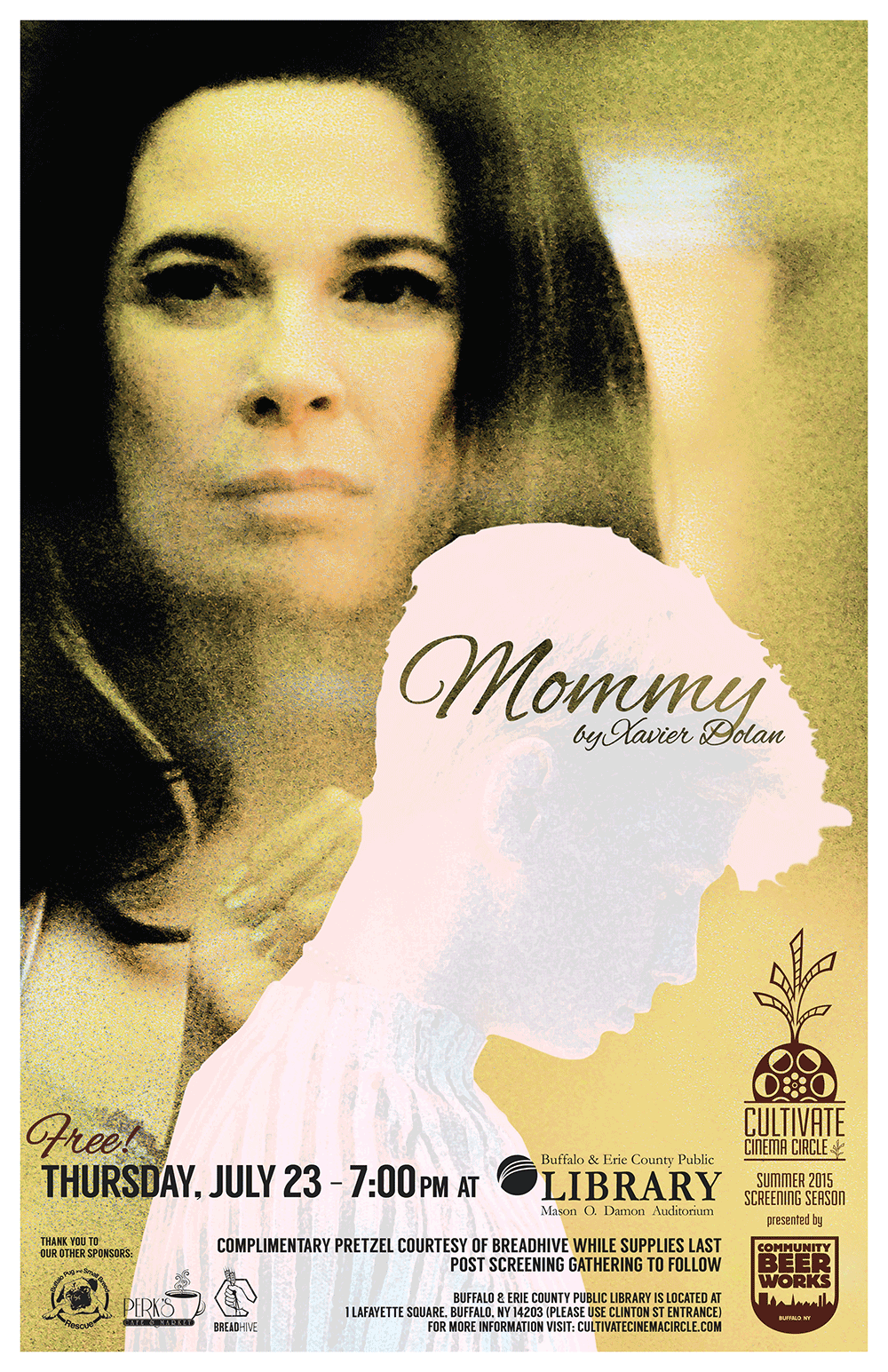
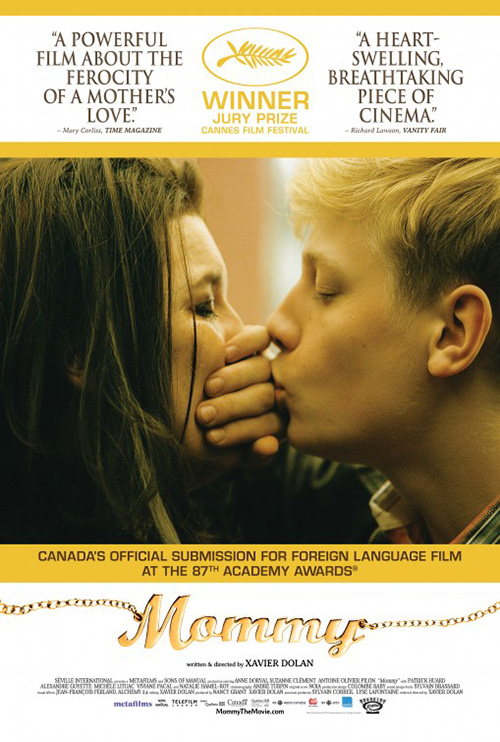
July 2015 continues with a FREE screening of Xavier Dolan’s 2014 Cannes Jury Prize-winning film Mommy at the Mason O. Damon Auditorium at the Buffalo Central Library. Here’s our poster to mark the occasion.
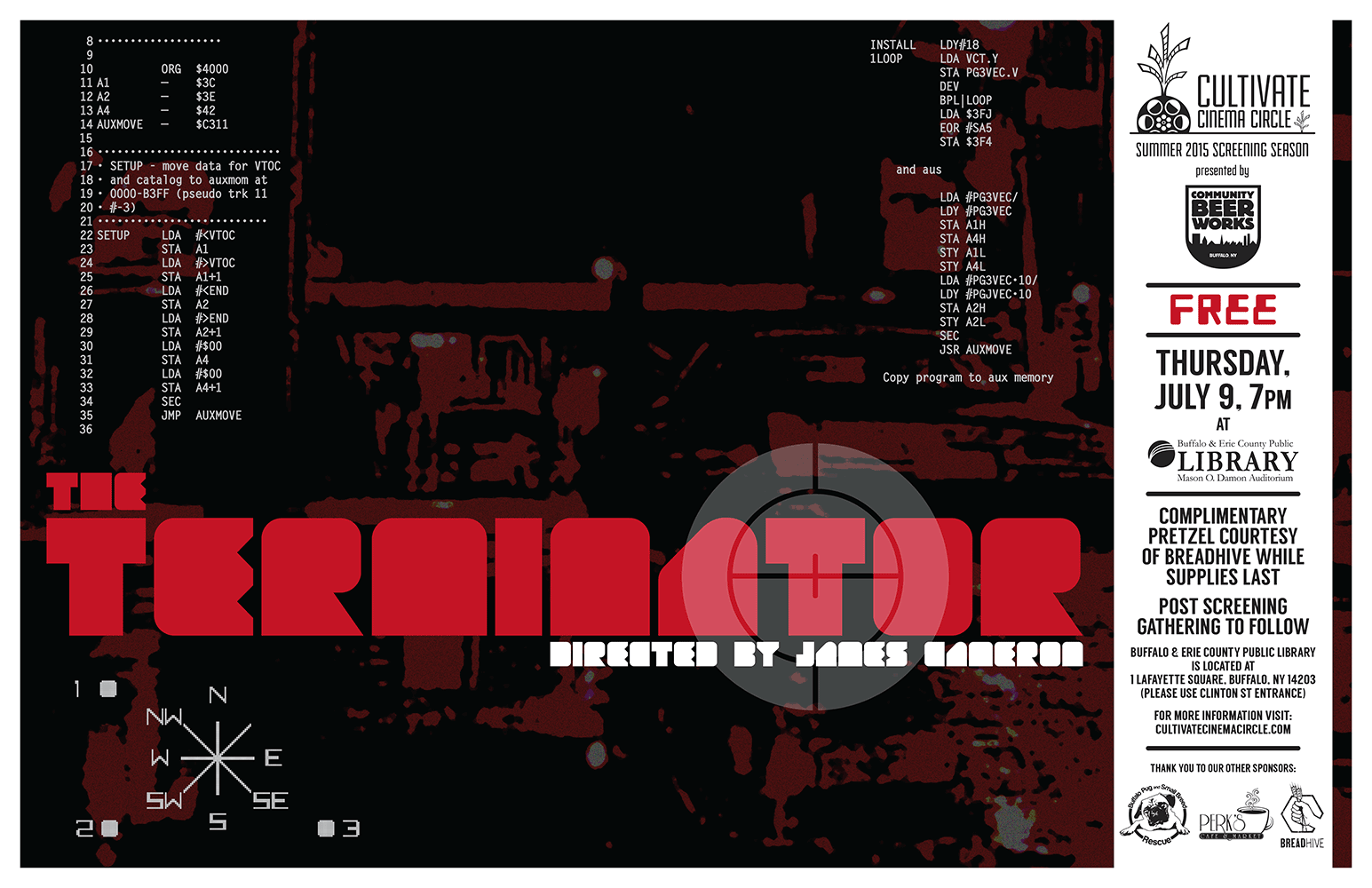
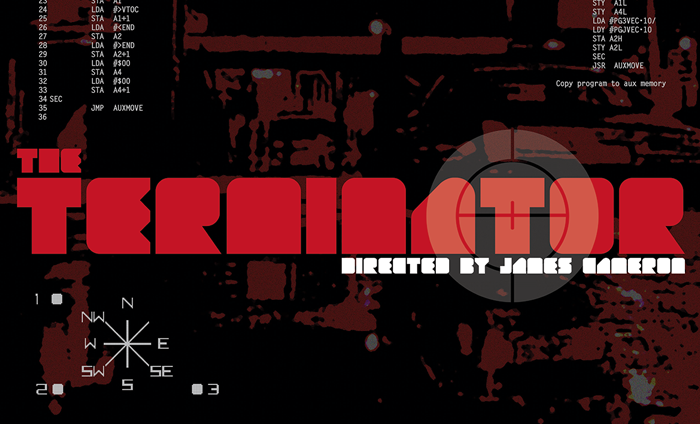
July 2015 kicks off with a FREE screening of the 1984 sci-fi classic The Terminator at the Mason O. Damon Auditorium at the Buffalo Central Library. Here’s our poster to mark the occasion.
Jean-Luc Godard’s subversive foray into commercial filmmaking is a star-studded Cinemascope epic. Contempt [Le Mépris] stars Michel Piccoli as a screenwriter torn between the demands of a proud European director (played by legendary director Fritz Lang), a crude and arrogant American producer (Jack Palance), and his disillusioned wife, Camille (Brigitte Bardot), as he attempts to doctor the script for a new film version of The Odyssey. Contempt is a brilliant study of marital breakdown, artistic compromise, and the cinematic process based on Italian novel A Ghost at Noon by Alberto Moravia.
Please join us for a FREE one-night screening event of Mommy [2014]: Canada’s official selection for Foreign Language Film at the 87th Academy Awards and winner of the Jury Prize at the 2014 Cannes Film Festival.
Stop in early to be sure to score a FREE soft pretzel Breadhive Cooperative Bakery!
A passionate widowed single mom (Anne Dorval) finds herself burdened with the full-time custody of her unpredictable 15-year-old ADHD son (Antoine Olivier Pilon). As they struggle to make ends meet, Kyla (Suzanne Clément), the peculiar new neighbor across the street, offers her help. Together, they strive for a new sense of balance.
DIRECTOR’S NOTE:
Since my first film, I’ve talked a lot about love.
I’ve talked about teenage hood, sequestration and transsexualism. I’ve talked about Jackson Pollock and the 90s, about alienation and homophobia. Boarding schools and the very French-Canadian word “special”, milking the cows, Stendhal’s crystallization and the Stockholm syndrome. I’ve talked some pretty salty slang and I’ve talked dirty too. I’ve talked in English, every once in a while, and I’ve talked through my hat one too many times.
Cause that’s the thing when you “talk” about things, I guess, is that there is always this almost unavoidable risk of talking shit. Which is why I always decided to stick to what I knew, or what was -more or less – close to my skin. Subjects I thought I thoroughly or sufficiently knew because I knew my own difference or the suburb I was brought up in. Or because I knew how vast my fear of others was, and still is. Because I knew the lies we tell ourselves when we live in secret, or the useless love we stubbornly give to time thieves. These are things I’ve come close enough to to actually want to talk about them.
But should there be one, just one subject I’d know more than any other, one that would unconditionally inspire me, and that I love above all, it certainly would be my mother. And when I say my mother, I think I mean THE mother at large, the figure she represents.
Because it’s her I always come back to. It’s her I want to see winning the battle, her I want to invent problems to so she can have the credit of solving them all, her through whom I ask myself questions, her I want to hear shout out loud when we didn’t say a thing. It’s her I want to be right when we were wrong, it’s her, no matter what, who’ll have the last word.
Back in the days of I Killed My Mother, I felt like I wanted to punish my mom. Only five years have passed ever since, and I believe that, through Mommy, I’m now seeking her revenge. Don’t ask.
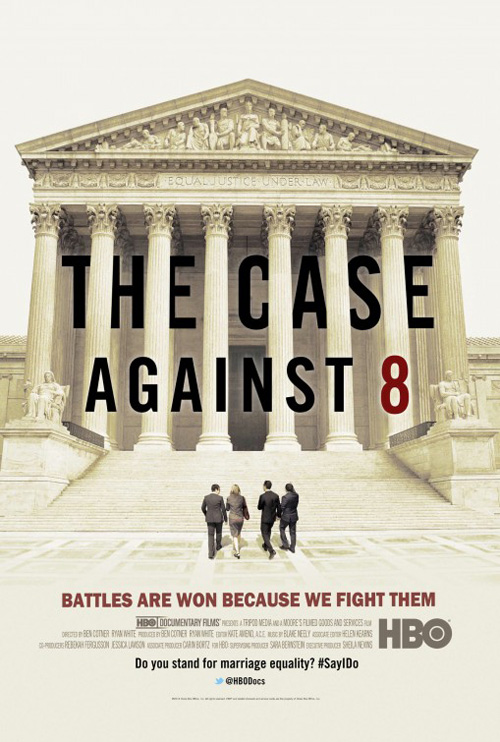
Come join us for a one-night screening event of The Case Against 8 [2014] with promotional assistance from the Pride Center of Western New York during Pride Week June 1st – 7th, 2015.
The riveting documentary THE CASE AGAINST 8 takes an in-depth look at the historic federal lawsuit filed in an effort to overturn Prop 8, California’s discriminatory ban on same-sex marriage. Shooting over five years, with exclusive behind-the-scenes footage of the powerhouse legal team of David Boies and Ted Olson and the four plaintiffs in the suit, directors and producers Ben Cotner and Ryan White (“Good Ol’ Freda,” “Pelada”) have created a powerful emotional account of the journey that took the fight for marriage equality all the way to the U.S. Supreme Court.
A crowd-pleaser on the festival circuit, THE CASE AGAINST 8 won the 2014 Sundance Film Festival Directing Award in the U.S. Documentary category and the SXSW Audience Award in the Festival Favorites category.
“Ben and I grew up as LGBT youth admiring those who led our movement, especially the leaders of the marriage equality cause who devoted their lives to this issue,” notes filmmaker Ryan White. “Those individuals paved the way for this case and for this moment, which we were able to capture on film.”
In May 2008, the California Supreme Court legalized marriage for same-sex couples in the state. Some 18,000 couples were married in the next few months, but the backlash was swift. Six months later, a coalition of conservative forces placed a proposition on the November statewide ballot that defined marriage as exclusively between a man and a woman. After a fiercely contested campaign that drew national attention, the controversial initiative known as Prop 8 passed with 52% of the vote, resulting in an amendment to the state constitution banning marriage for same-sex couples.
Stunned by the passage of Prop 8, activist Chad Griffin and his colleagues decided they needed to act immediately and formed the American Foundation for Equal Rights. A chance meeting pointed Griffin to an unexpected ally: Ted Olson, lead counsel for the Republicans in the critical 2000 Bush v. Gore Supreme Court decision and solicitor general under President George W. Bush, was interested in taking on the case. In contrast to many of his conservative colleagues, Olson believed in the right to marry for all loving couples.
THE CASE AGAINST 8 follows lawyers and plaintiffs from confidential war-room strategy sessions to last-minute trial preparation. From the Federal District Court in San Francisco to the 9th Circuit Court of Appeals and finally to the Supreme Court, Olson, Boies and their associates masterfully build a case with testimony from an army of experts, finally effecting a stunning last-minute reversal that Olson calls the “Perry Mason moment”: an admission from an opposition witness that changes the course of the trial.
Paul and Jeff were among the first same-sex couples to be married in California in 2013. Paul explains, “The right to get married is, to me, a civil right…so by accepting a domestic partnership, we’d also accept being second-class citizens. And that was unacceptable to us.”
Ted Olson proudly calls the Prop 8 suit “the most important case I have ever worked on.” Today, the fight continues: As of May 23, 2014, 19 states and the District of Columbia have legalized marriage for same-sex couples, while 31 states explicitly ban it. Lawsuits challenging the bans are in progress across the country and marriage equality has become one of the most visible and important civil rights issues debated today.
Director and producer Ben Cotner has served as an executive for ten years at Paramount Pictures and Open Road Films, where he most recently oversaw acquisitions and production. He has worked on such films as “An Inconvenient Truth,” “American Teen,” “Mad Hot Ballroom,” “A Haunted House,” “Side Effects,” “The Grey” and “End of Watch.”
Director and producer Ryan White is also the director and producer of “Good Ol’ Freda,” which tells the story of Freda Kelly, the Beatles’ longtime secretary, and “Pelada,” a journey around the world through the lens of pickup soccer. White’s other credits include “Capitol Crimes” and “9/11: For the Record” on PBS; “Dead Wrong: Inside an Intelligence Meltdown” on CNN; and “Country Boys” on PBS’ “Frontline.”
THE CASE AGAINST 8 is directed and produced by Ben Cotner and Ryan White; editor, Kate Amend, A.C.E.; music by Blake Neely; associate editor, Helen Kearns; co-producers, Rebekah Fergusson and Jessica Lawson; associate producer, Carin Bortz. For HBO: supervising producer, Sara Bernstein; executive producer, Sheila Nevins.
Tidbits:
Sundance Film Festival – 2014 – Winner: Documentary (Directing Award)
SXSW Film Festival – 2014 – Winner: Festival Favorites (Audience Award)
HBO You seem to have had incredible access. How were you able to tell this story from the inside?
BEN COTNER We initially found out that the lawsuit was going to be filed around May 2009. We approached the American Foundation for Equal Rights, who gave us permission to meet with Ted Olsen and David Boies, as well as the plaintiffs involved in the case. We said to them, “On the outside chance that this becomes something really important, can we film this for archival purposes and maybe someday make a documentary out of it?” They were gracious enough to let us film behind the scenes, and as the case snowballed we were right there alongside them. We had already been embedded with them for four years by the time we got to the Supreme Court.
HBO At what point did you realize the magnitude of the story you were telling?
RYAN WHITE We worked on the movie for three years without even knowing if it would become a finished film. If the case didn’t end up before the Supreme Court, I don’t know if someone like HBO would have come on board, and the film definitely wouldn’t have had the epic third act that it does now. In December 2012, when the Supreme Court said it would hear the case, that’s when we went into hyperdrive.
HBO The lawyers really seemed to open their doors to you.
BEN COTNER We spent a lot of time getting to know these people and trying to blend into the background. We wanted to be as unobtrusive as possible to their process. We’d slip in and out of rooms, sometimes in the middle of meetings. People got so used to us being there that eventually we were just allowed to be part of that process.
HBO Was it the same way with the plaintiffs?
RYAN WHITE The plaintiffs were a little bit different. With the lawyers we were just asking to film their work lives, but with them it was their personal lives. It was definitely a process of making them feel comfortable with the fact that we would be following them. By year five we were doing a lot more following than in year one. They didn’t sign up to be celebrities or stars of a documentary, so we were incredibly grateful with the access they and their families gave us. That’s the heart of our narrative.
HBO How were Kris, Sandy, Jeff and Paul selected as the plaintiffs?
BEN COTNER The American Foundation for Equal Rights spent a lot of time trying to find couples that were appropriate. Because same-sex marriage had been legal in California for several months in 2008, most of the people who were ready to get married at that point in their lives had already done so. So it was a bit of a challenge to find two couples who were not married but were looking to be. They met with a lot of people and wanted to find some who would also be good spokespeople in the press, and would do well on the stand. We’re incredibly glad they picked Kris and Sandy and Jeff and Paul, since hearing them speak on the witness stand was one of the most moving days of our lives.
HBO Were you surprised by the difference between the prep and the witness testimony?
RYAN WHITE We show some of the plaintiff prep in the film for maybe five to 10 minutes, but that process went on for many grueling days. Each plaintiff had to go through it individually, having every moment of their life scrutinized under a microscope. You can imagine how uncomfortable that would be. But then it was powerful to watch that preparation translate to the witness stand. The moment in the film with Kris Perry reading her testimony — that wasn’t what they had prepared for. All those personal genuine feelings came out organically on the stand. Nothing we saw in the conference rooms matched that power.
HBO And you were in the courtroom with them.
BEN COTNER We were there, but we weren’t able to film it. Early on, District Chief Judge Walker had decided he wanted this case to be part of a trial program for broadcasting trials that had an effect on the wider public. That decision was made, and the proponents of Prop 8 appealed that decision all the way to the Supreme Court. On the first day of trial, the court issued a ruling that blocked the broadcast of the trial. The only way to experience it was to be in the courtroom, which is part of what made it so important to us to convey to people through this film what was happening in there.
HBO Was it a challenge to make conference calls and legal rulings into something that was filmable?
RYAN WHITE Filming the legal process definitely isn’t the most cinematic thing you can pick. We shot 600 hours of footage, and many of those hours are probably really boring stretches when we’re just rolling a camera in a conference room, since we didn’t know when an important phone call was going to come in or when a ruling might come down. On the flip side, by keeping the cameras on we were able to capture a lot of the exciting parts of the legal process, especially in a case like this with so many twists and turns. That was something we worked on in the editing room, to keep the legal process exciting for an audience of lawyers, but also for a general audience that’s not intimately familiar with the law.
BEN COTNER No one expected this case to go on for this long and to have this many ups and downs. It really did become a legal thriller. We wanted to capture that feeling that everyone was on pins and needles for years not knowing what would happen.
HBO You mention the legal thriller aspect of the film. What type of movie did you feel like you were making?
BEN COTNER The legal thriller aspect is definitely what drew us to the case to begin with, but as we went on we realized that it’s a love story, and a very joyous one. These guys are also really funny — we were lucky that it had a lot of comedic elements, a lot of romantic elements, and all on that legal thriller background. We loved playing with and mixing those genres.
HBO What was the message you were trying to impart with the film’s ending?
RYAN WHITE Obviously, the end of the film was very celebratory. You’ve gone on this journey with these two couples and their families, and you watch them achieve what they worked so hard to do for five years. But the film’s very last card explains what the situation is in the rest of the country. We see the end as quite bittersweet. In some ways, we’re hoping that people who live in the 31 states where same-sex marriage is still illegal can watch what happened with Proposition 8 and what those two couples did, and find inspiration. We’re seeing that all over now, and in every one of those states there are lawsuits pending.
HBO How does it feel to put this film in front of a national audience?
RYAN WHITE It’s the most exciting thing ever. It’s been really great to do the festival circuit the last six months, and we’ve been able to take the film to lots of places in the trenches in the fight for marriage equality. But to now to take it to this level, we’re incredibly humbled that so many people are going to see this film. We hope that it reaches all types of people — obviously we would love an LGBT audience –but we’re hoping straight people, religious people, people from all over the country with all types of backgrounds will watch the story of these four people.
HBO The supporters of Proposition 8 have some extremely smart and capable lawyers, and yet, in the film, every one of their arguments falls flat.
BEN COTNER They had very credible lawyers, and they put out as much evidence as they could. But we saw several of their expert witnesses drop out of the case. When they did depositions, their facts just weren’t passing muster. You saw people like David Blankenhorn, who was a principal witness for the other side, come out after the case and say that he has changed his mind on the issue. When you strip away the political slogans and the religious arguments, there really is no rational reason for discrimination like this.
HBO How would you like people to come back and look at this film?
RYAN WHITE The marriage equality movement didn’t begin with Proposition 8. It began decades before that with people who dedicated their lives to the cause. There were a lot of stories before Prop 8, and there will be a lot after. We hope that we told one chapter of this story and that we told it well and in a way that moves people.
Links
Here is a curated selection of links shared on our Facebook page for additional insight/information:
5/9/15 – LA Times‘s Kenneth Turan says The Case Against 8 is “emotional and analytical by turn…a thoroughly engaging documentary that draws back the curtain on one aspect of perhaps the most contentious legal battle of recent years, the fight for marriage equality that went all the way to the U.S. Supreme Court.” – link
5/13/15 – It was announced today that directors Ben Cotner and Ryan White and producer Jessica Lawson were awarded the 2015 Silver Gavel Award by the American Bar Association for their film The Case Against 8 for its “outstanding efforts to foster the American public’s understanding of law and legal institutions”! – link
5/18/15 – In the Village Voice, Alan Scherstuhl calls The Case Against 8 “the best kind of popular history, a film that trembles with tears and hope…” – link
5/26/15 – At the New York Times, Tom Roston outlines the long road for The Case Against 8, which screens at North Park Theatre next week thanks to our generous sponsors Community Beer Works and Public espresso + coffee! – link
5/27/15 – Prep for our screening of The Case Against 8 next Thursday at North Park Theatre with an Interactive Timeline of the Fight for Gay Rights by TIME! – link
5/21/17 – Did you know Ryan White (the director behind The Case Against 8 – the first film we ever screened) has a new seven part crime documentary on Netflix called The Keepers?
“Netflix’s new true-crime doc, The Keepers, isn’t Making a Murderer. It’s far more haunting.” Alex Abad-Santos, Vox – link
Please join us for a FREE one-night screening event of The Terminator [1984]: the movie that ignited a franchise once more in theaters with its fifth installment Terminator Genisys.
Stop in early to be sure to score a FREE soft pretzel Breadhive Cooperative Bakery!
In the year 2029, the ruling super-computer, Skynet, sends an indestructible cyborg (Arnold Schwarzenegger) back in time to 1984 to kill Sarah Connor (Linda Hamilton) before she can fulfill her destiny and save mankind.
The Terminator is a 1984 American science fiction action film directed by James Cameron, written by Cameron and the film’s producer Gale Anne Hurd, and starring Arnold Schwarzenegger, Michael Biehn, and Linda Hamilton. It was filmed in Los Angeles, produced by Hemdale Film Corporation and distributed by Orion Pictures. Schwarzenegger plays the Terminator, a cyborg assassin sent back in time from the year 2029 to 1984 to kill Sarah Connor, played by Hamilton, whose son will one day become a savior against machines in a post-apocalyptic future. Biehn plays Kyle Reese, a soldier from the future sent back in time to protect Sarah.
Though not expected to be either a commercial or critical success, The Terminator topped the American box office for two weeks and helped launch the film career of Cameron and consolidate that of Schwarzenegger. In 2008, The Terminator was selected by the Library of Congress for preservation in the American National Film Registry, being deemed “culturally, historically, or aesthetically significant”.
The film’s success led to four sequels: Terminator 2: Judgment Day [1991], Terminator 3: Rise of the Machines [2003], Terminator Salvation [2009], and Terminator Genisys [2015], with a planned two more films to follow.

 Synopsis courtesy of Bikes vs Cars:















 Synopsis courtesy of
 Synopsis courtesy of Roadside Attractions:


 In the year 2029, the ruling super-computer, Skynet, sends an indestructible cyborg (Arnold Schwarzenegger) back in time to 1984 to kill Sarah Connor (Linda Hamilton) before she can fulfill her destiny and save mankind.
 Cultivate Cinema Circle