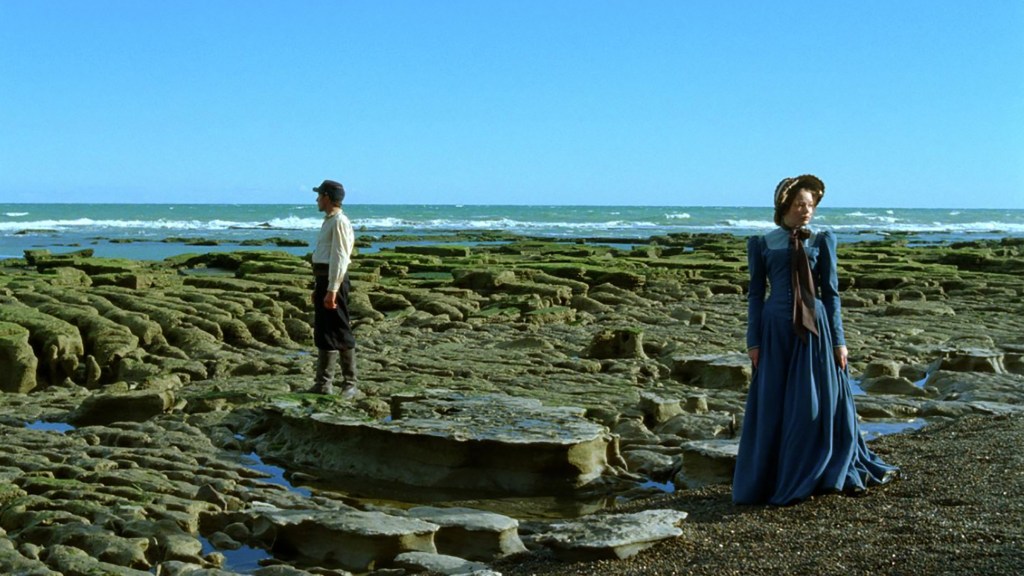
Dishonored – November 20th, 2021

Dishonored [1931]


Please join Cultivate Cinema Circle as we screen Josef von Sternberg and Marlene Dietrich’s film Dishonored [1931].


Event Sponsors:

Venue Information:

Downtown Central Library Auditorium
1 Lafayette Square, Buffalo, NY 14203
(Enter from Clinton Street between Oak and Washington Streets)
716-858-8900 • www.BuffaloLib.org
COVID protocol will be followed.


Synopsis

Marlene Dietrich as an Austrian spy in a bizarre World War I story, notable for Josef von Sternberg’s stylish direction. Colonel: Victor McLaglen. Von Hindau: Warner Oland. Lieutenant: Barry Norton. Secret Service Head: Gustav von Seyffertitz. Kovrin: Lew Cody. Interesting cast.

Tidbits:

  • National Board of Review – 1931 – Top Ten Films

Actor Bio

This image has an empty alt attribute; its file name is marlenedietrich-1024x576.jpg

“I had no desire to be an film actress, to always play somebody else, to be always beautiful with somebody constantly straightening out your every eyelash. It was always a big bother to me.”

Courtesy of TCM:

Arguably one of the most beautiful women ever to grace the silver screen, actress Marlene Dietrich utilized her cat-shaped eyes, high cheekbones, and halo of blonde curls to capture the imagination of fans both male and female. At once alluring and sexy, Dietrich projected a curious androgyny by casting off societal mores and sometimes dressing as man, wearing trousers, vests and ties. She received her start in her native Germany working as a chorus girl and later performer in silent films, where she caught the attention of director Josef von Sternberg, who became both mentor and lover. It was von Sternberg who introduced Dietrich to America in “Morocco” (1930), a bold and rather scandalous debut that featured the actress dressed in a man’s tuxedo and kissing another woman. She went on to star in a number of hit movies with von Sternberg, including “Shanghai Express” (1932) and “The Scarlett Empress” (1934), before the two broke off their professional and personal relationship. Though one of the highest paid actresses of her day, Dietrich nonetheless made a series of flops like “Angel” (1937) and “Knight Without Armor” (1937) that tagged her as box office poison. Meanwhile, she became actively involved in selling war bonds and performing for the troops during World War II. Dietrich’s film career wound down in the 1950s following noted performances in “Witness for the Prosecution” (1957), “Touch of Evil” (1958) and “Judgment at Nuremberg” (1961). During this time, she found second life as a stage performer who sold-out houses the world over. But a series of injuries suffered in the mid-1970s forced her retirement while raising charges that she was battling alcoholism. Though she remained in seclusion for the rest of her days, Dietrich left behind a legacy as an alluring screen goddess whose sensual, yet mysterious persona embodied the true definition of movie star.

Born on Dec. 27, 1901 in Schöneberg, Germany, Dietrich was raised with her sister, Elizabeth, in Berlin and Dressau by her father, Louis, a policeman, and her mother, Wilhelmina, a jeweler’s daughter. After her father’s death in 1907, her mother remarried his best friend, Edouard von Losch, who later died on the battlefield in World War I. As a child, Dietrich showed promise as a violinist, attending the Hochschule fur Musik following her attendance in all-girls schools for her primary education. But her dreams of becoming a concert violinist were cut short after she suffered a wrist injury. Luckily she was also interested in theater and dance, which led to auditioning for famed stage impresario Max Reinhardt’s school in Berlin, though she failed to earn a place on her first try. Eventually, Dietrich was accepted, but in the meantime she made her stage debut as a chorus girl in 1921. The following year, she made her first film, “So Sind die Manner” (“The Little Napoleon”) and landed her first lead, opposite William Dieterle in his directorial debut, “Der Mensche am Wege” (“Man by the Roadside”) (1923). It was while working on “Tragödie der Liebe” (“Love Tragedy”) (1923) that Dietrich met actor Rudolf Sieberwhich, whom she married later that year. The two had their only child, Maria Sieberwhich – who later changed her name to Maria Riva – in 1924.

Dietrich continued to appear in German films, including the Alexander Korda-directed “Eine DuBarry von Heute” (“A Modern Dubarry”) (1926) and “Madame Wunscht keine Kinder” (“Madame Wants No Children”) (1926). But despite being married, Dietrich engaged in a seemingly endless string of affairs with both men and women throughout her life. One of the earliest and most beneficial was with Austrian filmmaker, Josef von Sternberg, who had established himself in Hollywood and returned to Germany at the suggestion of actor Emil Jannings to make the country’s first sound feature, “Der Blaue Engel” (“The Blue Angel”) (1929). Casting the lead role of the sexy cabaret star Lola Lola, who could drive men to the most extreme humiliations in the name of love, proved to be a challenge for von Sternberg until he met Dietrich. If ever an actress and a role were right for one another, this was it. But her screen test failed to impress those working for the director, who dismissed her as commonplace. With the cameras rolling, however, there was nothing common about Dietrich, which von Sternberg recognized immediately and prompted a multi-film collaboration that brought out the best in both actress and director. Meanwhile, “Die Blaue Engel” was an international success and led Paramount Pictures to offer Dietrich a contract in the hopes the actress would be their answer to MGM’s great import, Greta Garbo. By the spring of 1930, she arrived in Hollywood.

The first U.S. film between Dietrich and von Sternberg was “Morocco” (1930), a bold debut that featured the actress as cabaret singer Amy Jolly, an independent woman who dressed as a man, locked lips with a woman and referred to her leading man (Gary Cooper) as her girlfriend. Showcasing the actress’ smoldering charisma, made more striking by von Sternberg’s dark-shadowed lighting that brought out her simultaneously alluring and androgynous qualities, “Morocco” was a hit for the studio, netting some $2 million in revenue while firmly establishing Dietrich as an overnight star. The role also earned the actress her only Academy Award nomination of her career. Over the next five years, director and star worked together on what may have been one of the more intriguing collaborations of the Golden Age. Each of their films was manufactured in the studio, despite being set in foreign lands. Von Sternberg, however, used light and shadow to paint visual poetry and conjure an image of a leading lady that was at once alluring and scathing. Whether it was playing a spy dressed in black leather in “Dishonored” (1931) or the glamorous lady of the evening in “Shanghai Express” (1932) or Russian monarch Catherine the Great in “The Scarlett Empress” (1934), Dietrich projected an ineffable allure that turned her into one of the biggest stars of her day. Cultivating a dual appeal, her sultry come-hither eyes basked in heavy makeup and shadow drew in the men, while her penchant for wearing more masculine clothes, including slacks, blazers and ties, made her a hit with women itching for liberation of that kind.

With “The Devil Is a Woman” (1935), a controversial box office flop criticized for its apparent denigration of Spanish people, Dietrich and von Sternberg worked together for the last time. Meanwhile, the delightful Ernst Lubitsch-directed romantic comedy “Desire” (1936) proved a hit and solidified her status as the highest-paid actress in Hollywood before fellow Paramount contract player Carole Lombard usurped her a year later. Dietrich made a smooth segue into her first Technicolor movie, “The Garden of Allah” (1937), a romantic melodrama starring Charles Boyer and produced by David O. Selznick. But her next couple of films, “Angel” (1937) and the notoriously expensive flop “Knight without Armor” (1937), earned the tag of box office poison and led Paramount to buy out the remainder of her contract. Defying the pundits, Dietrich roared back with one of her best performances as the saloon entertainer Frenchy who winkingly crowed “See What the Boys in the Back Room Will Have” in the James Stewart Western, “Destry Rides Again” (1939). But it would be Dietrich’s last brush with her former glamorous glory, which waned in the years prior to World War II despite the actress continuing to make movies. By this time, Dietrich was prolifically engaged in many affairs with famous men and women. Among the many conquests she indulged in over the years were the likes of Gary Cooper, John Wayne, German cabaret singer Margo Lion, George Bernard Shaw, female speedboat racer Marion Carstairs, Yul Brynner, Cuban writer Mercedes de Acosta and President John F. Kennedy. While some affairs lasted decades, others were perfunctory. But almost all were committed while she remained married to Sieberwhich, though the two were long separated by the time of his death in 1976.

Though on top once again, Dietrich – who was put under contract by Universal – made a number of lackluster films, including “Seven Sinners” (1940) and “Pittsburgh” (1942) opposite John Wayne, “Manpower” (1941) with Edward G. Robinson, and “The Lady is Willing” (1942), screwball comedy starring Fred MacMurray. But while her career was flagging, Dietrich was actively involved on the home front with the war effort. A virulent anti-Nazi – reportedly she was disgusted to learn that Adolf Hitler considered her his favorite actress – Dietrich went above and beyond the call of duty, becoming one of the first celebrities to raise war bonds – she went on to sell more than any other star – while going on extended USO tours in 1944-45. Meanwhile, she participated in a series of propaganda broadcasts for the radio that were meant to demoralize enemy troops. When all was done and told, few could point to another celebrity outside of Bob Hope who did more for the boys at war. In 1947, Dietrich was awarded the Presidential Medal of Freedom for her efforts, which she considered to be her proudest moment. Following the war, she co-starred opposite Jean Gabin in the unspectacular French crime film “Martin Roumagnac” (1946) before turning in an amusing turn as a gypsy in “Golden Earrings” (1946).

Dietrich went on to deliver an underappreciated performance as a wisecracking and cynical ex-Nazi chanteuse in the Billy Wilder-directed comedy “A Foreign Affair” (1948), one of the director’s more forgotten films. Although she was still a star, Dietrich had become known as “the world’s most glamorous grandmother” after her daughter Maria Riva gave birth. Hollywood has never quite known what to do with actresses of a certain age, particularly those whose careers were based on their looks. Unlike her former rival Garbo, who retired in 1941, Dietrich continued to work despite her reputation as difficult. Still commanding hefty paychecks, she appeared in a variety of projects, most notably Alfred Hitchcock’s “Stage Fright” (1950) and Fritz Lang’s “Rancho Notorious” (1952). But when Tinseltown failed to provide consistent work, Dietrich turned to the concert stage, spending four years in the mid-‘50s on tour in venues as diverse as Las Vegas hotels and London nightclubs. In fact, her primary source of income came from a long string of stage performances that she continued well into the 1970s, with every increasingly limited onscreen appearances. Her act – which was honed with composer Burt Bacharach – consisted of some of her popular songs, which were sung while wearing elegant gowns, while for the second half of her performance, she would wear a top hat and tails, and sing songs often associated with men.

Despite being a stage sensation, Dietrich appeared sporadically on screen, becoming one of the many performers who made cameo appearances in the Oscar-winning Best Picture “Around the World in 80 Days” (1956). But her film work was questionable at best, as demonstrated with the rather unimpressive Italian comedy-drama, “The Monte Carlo Story” (1957). Dietrich did offer a nice turn as the stylish title character in “Witness for the Prosecution” (1957), a courtroom drama directed by Billy Wilder that was widely considered one of his best films. She was also terrific in a small role as the fortune-telling brothel madam who advises corrupt cop Hank Quinlan (Orson Welles) that his future was all used up in the director’s film noir classic “Touch of Evil” (1958). Meanwhile, director Stanley Kramer tapped her to portray the widow of a German officer in another superb courtroom drama, “Judgment at Nuremberg” (1961), which marked the end of a mini-resurgence that offered audiences a last glimpse of the actress in top form. Aside from a cameo appearance as herself in the Audrey Hepburn romantic comedy, “Paris When It Sizzles” (1964), Dietrich failed to grace the screen again until her final appearances in the German-made romance “Just a Gigolo” (1978).

For much of the 1960s and 1970s, Dietrich headlined concert performances around the world, playing everywhere from Moscow to Jerusalem, where she broke the social taboo of singing songs in German while in Israel. In 1960, her tour of Germany met with some derision from her former countrymen who felt that Dietrich had betrayed them during the war. Later in the decade, she enjoyed a spectacular run on Broadway in 1967 and even earned a Special Tony Award for her performance the following year. The show was later recreated for the television special “Marlene Dietrich: I Wish You Love” (CBS, 1973). It was during this time that her health began to deteriorate, exacerbated by increased use of alcohol and painkillers to ease the pain caused by injury. In 1973, Dietrich required skin grafts after falling off the stage in Washington, D.C., while the following year she fractured her leg. During a performance in Australia in 1975, Dietrich fell off the stage and broke her leg, forcing her to retire. Meanwhile, in 1984, Maximilian Schell – who starred with Dietrich in “Judgment at Nuremberg” – made the fascinating documentary “Marlene,” in which the actress refused to be photographed, though she consented to recorded interviews. By this time, she was living in virtual seclusion in the Paris apartment where she died on May 6, 1992 at the age of 90.

Filmography:

  • Entertaining the Troops (1989)
  • Going Hollywood: The War Years (1988)
  • Marlene (1984)
  • Just a Gigolo (1978)
  • Paris When It Sizzles (1964)
  • Black Fox (1962)
  • Judgment at Nuremberg (1961)
  • Touch of Evil (1958)
  • The Monte Carlo Story (1957)
  • Witness for the Prosecution (1957)
  • Around the World in 80 Days (1956)
  • Rancho Notorious (1952)
  • No Highway in the Sky (1951)
  • Stage Fright (1950)
  • Jigsaw (1949)
  • A Foreign Affair (1948)
  • Golden Earrings (1947)
  • Martin Roumagnac (1946)
  • Kismet (1944)
  • Follow the Boys (1944)
  • The Lady Is Willing (1942)
  • Pittsburgh (1942)
  • The Spoilers (1942)
  • Manpower (1941)
  • The Flame of New Orleans (1941)
  • Seven Sinners (1940)
  • Destry Rides Again (1939)
  • Knight Without Armor (1937)
  • Angel (1937)
  • Desire (1936)
  • The Garden of Allah (1936)
  • I Loved a Soldier (1936)
  • The Devil Is a Woman (1935)
  • The Scarlet Empress (1934)
  • The Song of Songs (1933)
  • Shanghai Express (1932)
  • Blonde Venus (1932)
  • Dishonored (1931)
  • Morocco (1930)
  • The Blue Angel (1930)
  • Das Schiff der Verlorenen Menschen (1929)
  • Die Frau Nach der Man Sich Sehnt (1929)
  • Prinzessin Olala (1928)
  • Ich kusse ihre Hand, Madame (1928)
  • Cafe Electric (1927)
  • Manon Lescaut (1926)
  • Madame Wunscht keine Kinder (1926)
  • The Joyless Street (1925)
  • Der Mensch Am Wege (1923)
  • Tragodie der Liebe (1923)

Director Bio

“I care nothing about the story, only how it is photographed and presented.”

Courtesy of TCM:

Once considered one of Hollywood’s premier directors during the 1930s, Josef von Sternberg was mainly remembered for his seven films with German actress Marlene Dietrich. But his main contributions were actually to the language of film, particularly his handling of lighting and mise-en-scene. Von Sternberg was first and foremost a master cinematographer whose expressionistic use of light and dark created stunning visuals onscreen that took on a life of their own. He made his mark as a director during the silent era with “The Salvation Hunters” (1925), “Underworld” (1927) and “The Last Command” (1928). Following the failure of “Thunderbolt” (1929), von Sternberg went back to Germany and cast the then-unknown Marlene Dietrich in “The Blue Angel” (1930), which he shot concurrently in English and in his native tongue. The film turned Dietrich into an international star, and with the exotic actress as his muse, rejuvenated his Hollywood career. Von Sternberg directed Dietrich in six more films, most notably “Morocco” (1930), “Blonde Venus” (1932), “The Shanghai Express” (1932) and “The Scarlett Empress” (1934). But once “The Devil is a Woman” (1935) failed at the box office, von Sternberg’s collaboration with Dietrich was over. While he directed a few more films like “Crime and Punishment” (1935) and “The Shanghai Gesture” (1941), von Sternberg’s career diminished. Despite the rather quiet end to his days as a director, von Sternberg’s influence and reputation as the ultimate Svengali remained consequential for generations of filmmakers.

Born on May 29, 1894 in Vienna, Austria, von Sternberg was raised by his father, Moses, a former soldier in the Austrian-Hungarian army who made his way to America was his son was three, and his mother, Serafin. In 1901, his father sent for the family after obtaining work and von Sternberg lived for a time in New York, before going back to Vienna. In 1908, he returned to the States, this time for good, and grew up on Long Island, where he worked as an apprentice at his aunt’s millinery store and as a stock clerk for a lace store. After dropping out of Jamaica High School, von Sternberg found work cleaning and repairing movie prints at the World Film Company in Fort Lee, NJ, where he rose to chief assistant to the director general. He went on to help make training films for the U.S. Army Signal Corps before earning his first credit as an assistant director on “The Mystery of the Yellow Ribbon” (1919), directed by Emile Chautard. In 1923, he moved to Hollywood and was the assistant director on “By Divine Right” (1923), before marking his debut as a director on “The Salvation Hunters” (1925), a successful picture widely considered to be America’s first true independent film.

After joining Paramount Pictures as an assistant director, von Sternberg returned to directing his own films, making pictures like “Exquisite Sinner” (1926), “Underworld” (1927) and “The Last Command” (1928), which starred the great German actor Emil Jannings. It was Jannings who recommended that von Sternberg return to Europe to direct the film version of Heinrich Mann’s “The Blue Angel” (1930). Casting the lead role of the sexy cabaret star Lola Lola, who could drive men to the most extreme humiliations in the name of love, proved to be a challenge for von Sternberg until he met Marlene Dietrich. If ever an actress and a role were right for one another, this was it. But her screen test failed to impress those working for the director, who dismissed her as commonplace. With the cameras rolling, however, there was nothing common about Dietrich – particularly when she sang “Falling in Love Again” to a smitten Jannings – which von Sternberg recognized immediately and which prompted a multi-film collaboration that brought out the best in both actress and director. Though some would claim he would later exert too much of a Svengali-like influence over both her film roles and her personal life. Meanwhile, “Die Blaue Engel” was an international success and helped rejuvenate von Sternberg’s Hollywood career, which faltered after the failure of “Thunderbolt” (1929).

The first U.S. film between von Sternberg and Dietrich was “Morocco” (1930), a bold debut that featured her as cabaret singer Amy Jolly, an independent woman who dressed as a man, locked lips with a woman and referred to her leading man (Gary Cooper) as her girlfriend. Showcasing the actress’ smoldering charisma, made more striking by von Sternberg’s dark-shadowed lighting that brought out her simultaneously alluring and androgynous qualities, “Morocco” was a hit for the studio, netting some $2 million in revenue. Over the next five years, director and star worked together on what may have been one of the more intriguing collaborations of the Golden Age. Each of their films was manufactured in the studio, despite being set in foreign lands. Von Sternberg, however, used light and shadow to paint visual poetry and conjure an image of a leading lady that was at once beautiful and scathing. Whether casting his actress as a spy dressed in black leather in “Dishonored” (1931) or the glamorous lady of the evening in “Shanghai Express” (1932) or Russian monarch Catherine the Great in “The Scarlett Empress” (1934), von Sternberg shaped Dietrich’s ineffable allure that turned her into one of the biggest stars of her day. But with “The Devil Is a Woman” (1935), a controversial box office flop criticized for its apparent denigration of Spanish people, von Sternberg and Dietrich worked together for the last time.

During his post-Dietrich era, von Sternberg directed a handful of projects before his career went into permanent decline. He directed an adaptation of Fyodor Dostoevsky’s “Crime and Punishment” (1935) before launching an attempt to helm “I, Claudius” in 1937, which remained unfinished due to problems with financial backers. After “Sergeant Madden” (1939), starring Wallace Beery, he directed “The Shanghai Gesture” (1941), a delightfully dark film noir of suspense and exoticism in which Gene Tierney, Ona Munson, and Victor Mature together assume the Dietrich persona in this exploration of the denizens of a lurid Shanghai gambling house. It would be another 11 years before he directed his next film, “Macao” (1952), a financial disaster that turned out to be the last he made for Hollywood. He went on to help the Japanese-made war film, “The Saga of Anatahan” (1952), a poetic study of Japanese soldiers isolated on an island at the end of WWII, which the director later cited as his favorite work. Meanwhile, he was one of several directors to work on Howard Hughes’ “Jet Pilot” (1957), which starred John Wayne and took four painful years to make. In 1959, von Sternberg began teaching film courses at the University of California, Los Angeles, where two of his students turned out to be Jim Morrison and Ray Manzarek of The Doors. Manzarek later cited von Sternberg as the greatest influence on the band and their music. He left his post at UCLA in 1963 and died six years later on Dec. 22, 1969 of a heart attack. He was 75 years old.

Filmography:

  • The Epic That Never Was (I, Claudius) (1965)
  • Jet Pilot (1957)
  • Macao (1952)
  • Anatahan (1952)
  • The Shanghai Gesture (1942)
  • I Take This Woman (1940)
  • Sergeant Madden (1939)
  • I, Claudius (1937)
  • The King Steps Out (1936)
  • Crime and Punishment (1935)
  • The Devil Is a Woman (1935)
  • The Scarlet Empress (1934)
  • Shanghai Express (1932)
  • Blonde Venus (1932)
  • Dishonored (1931)
  • An American Tragedy (1931)
  • Morocco (1930)
  • The Blue Angel (1930)
  • Thunderbolt (1929)
  • The Case of Lena Smith (1929)
  • The Dragnet (1928)
  • The Docks of New York (1928)
  • The Last Command (1928)
  • Underworld (1927)
  • A Woman of the Sea (1926)
  • The Exquisite Sinner (1926)
  • The Masked Bride (1925)
  • Salvation Hunters (1925)

Links

Here is a curated selection of links for additional insight/information:

  • Cultivate Cinema Circle info-sheet – link
  • “The rise of the great movie stars is almost always a story of collaboration with great directors. The film career of Marlene Dietrich burst into enduring prominence in 1930, with Josef von Sternberg’s The Blue Angel, and they made six more films together, including Dishonored, from 1931, in which Dietrich’s onscreen persona became refined to a degree of breathtaking precision, and expanded to a historical—even a philosophical—scope. Dishonored, set during the First World War, is a story of danger and death; it’s a war film in which the crucial battles are psychological ones that are fought in back rooms. Dietrich plays a spy, or, rather, a prostitute who becomes a spy—Agent X-27, to be specific; she boldly and slyly uses her powers of seduction to expose enemy spies and extract their secrets. It’s also a sort of musical, in which Dietrich deploys the music-hall artistry that’s essential to The Blue Angel and gives it a deliriously political angle.” – Richard Brody, The New Yorker [2017] – link
  • “Film is a collaborative medium, or so people say, unless by ‘people’ we mean Josef von Sternberg. To become a director is, more often than not, to reveal yourself as a control freak, but von Sternberg was the original micromanager, and his arrogance was legendary. Even long after his career was over, he was reluctant to discuss colleagues. Screenwriter Jules Furthman was responsible for much of the script of Shanghai Express, but von Sternberg always maintained that the entire treatment was one page written by story creator Harry Hervey. Von Sternberg biographer John Baxter cites the gifted Paramount art director Hans Dreier as a major stylistic influence, taking the director from a realistic approach to the “veiled sensuality” he would develop over the course of his career—and adds drily, ‘It goes without saying that [Dreier] receives no mention in Fun in a Chinese Laundry,’ von Sternberg’s notoriously cranky memoir…As von Sternberg’s vision grew and expanded, so did Dreier’s, to include things like the vast courtyard in which X-27 breathes her last in Dishonored. Its walls are so tall they seem to belong to Mad King Ludwig’s castle, and the bricks are also enormous and sculpted, the better to contrast with the slender beauty facing the firing squad.” – Farran Smith Nehme, Current [2018] – link

Morocco – November 6th, 2021

Morocco [1930]


Please join Cultivate Cinema Circle as we screen Josef von Sternberg and Marlene Dietrich’s Oscar nominated (Best Actress, Director, Cinematography & Art Direction) film Morocco [1930].


Event Sponsors:

Venue Information:

Downtown Central Library Auditorium
1 Lafayette Square, Buffalo, NY 14203
(Enter from Clinton Street between Oak and Washington Streets)
716-858-8900 • www.BuffaloLib.org
COVID protocol will be followed.


Synopsis

Romance between a legionnaire and a trollop. Marlene Dietrich, Gary Cooper, Adolphe Menjou, Ulrich Haupt, Juliette Compton.

Tidbits:

  • Academy Awards – 1931 – Nominee: Best Actress in a Leading Role, Best Director, Best Cinematography & Best Art Direction
  • National Board of Review – 1930 – Top Ten Films
  • National Film Preservation Board – 1992 – National Film Registry

Actor Bio

“I had no desire to be an film actress, to always play somebody else, to be always beautiful with somebody constantly straightening out your every eyelash. It was always a big bother to me.”

Courtesy of TCM:

Arguably one of the most beautiful women ever to grace the silver screen, actress Marlene Dietrich utilized her cat-shaped eyes, high cheekbones, and halo of blonde curls to capture the imagination of fans both male and female. At once alluring and sexy, Dietrich projected a curious androgyny by casting off societal mores and sometimes dressing as man, wearing trousers, vests and ties. She received her start in her native Germany working as a chorus girl and later performer in silent films, where she caught the attention of director Josef von Sternberg, who became both mentor and lover. It was von Sternberg who introduced Dietrich to America in “Morocco” (1930), a bold and rather scandalous debut that featured the actress dressed in a man’s tuxedo and kissing another woman. She went on to star in a number of hit movies with von Sternberg, including “Shanghai Express” (1932) and “The Scarlett Empress” (1934), before the two broke off their professional and personal relationship. Though one of the highest paid actresses of her day, Dietrich nonetheless made a series of flops like “Angel” (1937) and “Knight Without Armor” (1937) that tagged her as box office poison. Meanwhile, she became actively involved in selling war bonds and performing for the troops during World War II. Dietrich’s film career wound down in the 1950s following noted performances in “Witness for the Prosecution” (1957), “Touch of Evil” (1958) and “Judgment at Nuremberg” (1961). During this time, she found second life as a stage performer who sold-out houses the world over. But a series of injuries suffered in the mid-1970s forced her retirement while raising charges that she was battling alcoholism. Though she remained in seclusion for the rest of her days, Dietrich left behind a legacy as an alluring screen goddess whose sensual, yet mysterious persona embodied the true definition of movie star.

Born on Dec. 27, 1901 in Schöneberg, Germany, Dietrich was raised with her sister, Elizabeth, in Berlin and Dressau by her father, Louis, a policeman, and her mother, Wilhelmina, a jeweler’s daughter. After her father’s death in 1907, her mother remarried his best friend, Edouard von Losch, who later died on the battlefield in World War I. As a child, Dietrich showed promise as a violinist, attending the Hochschule fur Musik following her attendance in all-girls schools for her primary education. But her dreams of becoming a concert violinist were cut short after she suffered a wrist injury. Luckily she was also interested in theater and dance, which led to auditioning for famed stage impresario Max Reinhardt’s school in Berlin, though she failed to earn a place on her first try. Eventually, Dietrich was accepted, but in the meantime she made her stage debut as a chorus girl in 1921. The following year, she made her first film, “So Sind die Manner” (“The Little Napoleon”) and landed her first lead, opposite William Dieterle in his directorial debut, “Der Mensche am Wege” (“Man by the Roadside”) (1923). It was while working on “Tragödie der Liebe” (“Love Tragedy”) (1923) that Dietrich met actor Rudolf Sieberwhich, whom she married later that year. The two had their only child, Maria Sieberwhich – who later changed her name to Maria Riva – in 1924.

Dietrich continued to appear in German films, including the Alexander Korda-directed “Eine DuBarry von Heute” (“A Modern Dubarry”) (1926) and “Madame Wunscht keine Kinder” (“Madame Wants No Children”) (1926). But despite being married, Dietrich engaged in a seemingly endless string of affairs with both men and women throughout her life. One of the earliest and most beneficial was with Austrian filmmaker, Josef von Sternberg, who had established himself in Hollywood and returned to Germany at the suggestion of actor Emil Jannings to make the country’s first sound feature, “Der Blaue Engel” (“The Blue Angel”) (1929). Casting the lead role of the sexy cabaret star Lola Lola, who could drive men to the most extreme humiliations in the name of love, proved to be a challenge for von Sternberg until he met Dietrich. If ever an actress and a role were right for one another, this was it. But her screen test failed to impress those working for the director, who dismissed her as commonplace. With the cameras rolling, however, there was nothing common about Dietrich, which von Sternberg recognized immediately and prompted a multi-film collaboration that brought out the best in both actress and director. Meanwhile, “Die Blaue Engel” was an international success and led Paramount Pictures to offer Dietrich a contract in the hopes the actress would be their answer to MGM’s great import, Greta Garbo. By the spring of 1930, she arrived in Hollywood.

The first U.S. film between Dietrich and von Sternberg was “Morocco” (1930), a bold debut that featured the actress as cabaret singer Amy Jolly, an independent woman who dressed as a man, locked lips with a woman and referred to her leading man (Gary Cooper) as her girlfriend. Showcasing the actress’ smoldering charisma, made more striking by von Sternberg’s dark-shadowed lighting that brought out her simultaneously alluring and androgynous qualities, “Morocco” was a hit for the studio, netting some $2 million in revenue while firmly establishing Dietrich as an overnight star. The role also earned the actress her only Academy Award nomination of her career. Over the next five years, director and star worked together on what may have been one of the more intriguing collaborations of the Golden Age. Each of their films was manufactured in the studio, despite being set in foreign lands. Von Sternberg, however, used light and shadow to paint visual poetry and conjure an image of a leading lady that was at once alluring and scathing. Whether it was playing a spy dressed in black leather in “Dishonored” (1931) or the glamorous lady of the evening in “Shanghai Express” (1932) or Russian monarch Catherine the Great in “The Scarlett Empress” (1934), Dietrich projected an ineffable allure that turned her into one of the biggest stars of her day. Cultivating a dual appeal, her sultry come-hither eyes basked in heavy makeup and shadow drew in the men, while her penchant for wearing more masculine clothes, including slacks, blazers and ties, made her a hit with women itching for liberation of that kind.

With “The Devil Is a Woman” (1935), a controversial box office flop criticized for its apparent denigration of Spanish people, Dietrich and von Sternberg worked together for the last time. Meanwhile, the delightful Ernst Lubitsch-directed romantic comedy “Desire” (1936) proved a hit and solidified her status as the highest-paid actress in Hollywood before fellow Paramount contract player Carole Lombard usurped her a year later. Dietrich made a smooth segue into her first Technicolor movie, “The Garden of Allah” (1937), a romantic melodrama starring Charles Boyer and produced by David O. Selznick. But her next couple of films, “Angel” (1937) and the notoriously expensive flop “Knight without Armor” (1937), earned the tag of box office poison and led Paramount to buy out the remainder of her contract. Defying the pundits, Dietrich roared back with one of her best performances as the saloon entertainer Frenchy who winkingly crowed “See What the Boys in the Back Room Will Have” in the James Stewart Western, “Destry Rides Again” (1939). But it would be Dietrich’s last brush with her former glamorous glory, which waned in the years prior to World War II despite the actress continuing to make movies. By this time, Dietrich was prolifically engaged in many affairs with famous men and women. Among the many conquests she indulged in over the years were the likes of Gary Cooper, John Wayne, German cabaret singer Margo Lion, George Bernard Shaw, female speedboat racer Marion Carstairs, Yul Brynner, Cuban writer Mercedes de Acosta and President John F. Kennedy. While some affairs lasted decades, others were perfunctory. But almost all were committed while she remained married to Sieberwhich, though the two were long separated by the time of his death in 1976.

Though on top once again, Dietrich – who was put under contract by Universal – made a number of lackluster films, including “Seven Sinners” (1940) and “Pittsburgh” (1942) opposite John Wayne, “Manpower” (1941) with Edward G. Robinson, and “The Lady is Willing” (1942), screwball comedy starring Fred MacMurray. But while her career was flagging, Dietrich was actively involved on the home front with the war effort. A virulent anti-Nazi – reportedly she was disgusted to learn that Adolf Hitler considered her his favorite actress – Dietrich went above and beyond the call of duty, becoming one of the first celebrities to raise war bonds – she went on to sell more than any other star – while going on extended USO tours in 1944-45. Meanwhile, she participated in a series of propaganda broadcasts for the radio that were meant to demoralize enemy troops. When all was done and told, few could point to another celebrity outside of Bob Hope who did more for the boys at war. In 1947, Dietrich was awarded the Presidential Medal of Freedom for her efforts, which she considered to be her proudest moment. Following the war, she co-starred opposite Jean Gabin in the unspectacular French crime film “Martin Roumagnac” (1946) before turning in an amusing turn as a gypsy in “Golden Earrings” (1946).

Dietrich went on to deliver an underappreciated performance as a wisecracking and cynical ex-Nazi chanteuse in the Billy Wilder-directed comedy “A Foreign Affair” (1948), one of the director’s more forgotten films. Although she was still a star, Dietrich had become known as “the world’s most glamorous grandmother” after her daughter Maria Riva gave birth. Hollywood has never quite known what to do with actresses of a certain age, particularly those whose careers were based on their looks. Unlike her former rival Garbo, who retired in 1941, Dietrich continued to work despite her reputation as difficult. Still commanding hefty paychecks, she appeared in a variety of projects, most notably Alfred Hitchcock’s “Stage Fright” (1950) and Fritz Lang’s “Rancho Notorious” (1952). But when Tinseltown failed to provide consistent work, Dietrich turned to the concert stage, spending four years in the mid-‘50s on tour in venues as diverse as Las Vegas hotels and London nightclubs. In fact, her primary source of income came from a long string of stage performances that she continued well into the 1970s, with every increasingly limited onscreen appearances. Her act – which was honed with composer Burt Bacharach – consisted of some of her popular songs, which were sung while wearing elegant gowns, while for the second half of her performance, she would wear a top hat and tails, and sing songs often associated with men.

Despite being a stage sensation, Dietrich appeared sporadically on screen, becoming one of the many performers who made cameo appearances in the Oscar-winning Best Picture “Around the World in 80 Days” (1956). But her film work was questionable at best, as demonstrated with the rather unimpressive Italian comedy-drama, “The Monte Carlo Story” (1957). Dietrich did offer a nice turn as the stylish title character in “Witness for the Prosecution” (1957), a courtroom drama directed by Billy Wilder that was widely considered one of his best films. She was also terrific in a small role as the fortune-telling brothel madam who advises corrupt cop Hank Quinlan (Orson Welles) that his future was all used up in the director’s film noir classic “Touch of Evil” (1958). Meanwhile, director Stanley Kramer tapped her to portray the widow of a German officer in another superb courtroom drama, “Judgment at Nuremberg” (1961), which marked the end of a mini-resurgence that offered audiences a last glimpse of the actress in top form. Aside from a cameo appearance as herself in the Audrey Hepburn romantic comedy, “Paris When It Sizzles” (1964), Dietrich failed to grace the screen again until her final appearances in the German-made romance “Just a Gigolo” (1978).

For much of the 1960s and 1970s, Dietrich headlined concert performances around the world, playing everywhere from Moscow to Jerusalem, where she broke the social taboo of singing songs in German while in Israel. In 1960, her tour of Germany met with some derision from her former countrymen who felt that Dietrich had betrayed them during the war. Later in the decade, she enjoyed a spectacular run on Broadway in 1967 and even earned a Special Tony Award for her performance the following year. The show was later recreated for the television special “Marlene Dietrich: I Wish You Love” (CBS, 1973). It was during this time that her health began to deteriorate, exacerbated by increased use of alcohol and painkillers to ease the pain caused by injury. In 1973, Dietrich required skin grafts after falling off the stage in Washington, D.C., while the following year she fractured her leg. During a performance in Australia in 1975, Dietrich fell off the stage and broke her leg, forcing her to retire. Meanwhile, in 1984, Maximilian Schell – who starred with Dietrich in “Judgment at Nuremberg” – made the fascinating documentary “Marlene,” in which the actress refused to be photographed, though she consented to recorded interviews. By this time, she was living in virtual seclusion in the Paris apartment where she died on May 6, 1992 at the age of 90.

Filmography:

  • Entertaining the Troops (1989)
  • Going Hollywood: The War Years (1988)
  • Marlene (1984)
  • Just a Gigolo (1978)
  • Paris When It Sizzles (1964)
  • Black Fox (1962)
  • Judgment at Nuremberg (1961)
  • Touch of Evil (1958)
  • The Monte Carlo Story (1957)
  • Witness for the Prosecution (1957)
  • Around the World in 80 Days (1956)
  • Rancho Notorious (1952)
  • No Highway in the Sky (1951)
  • Stage Fright (1950)
  • Jigsaw (1949)
  • A Foreign Affair (1948)
  • Golden Earrings (1947)
  • Martin Roumagnac (1946)
  • Kismet (1944)
  • Follow the Boys (1944)
  • The Lady Is Willing (1942)
  • Pittsburgh (1942)
  • The Spoilers (1942)
  • Manpower (1941)
  • The Flame of New Orleans (1941)
  • Seven Sinners (1940)
  • Destry Rides Again (1939)
  • Knight Without Armor (1937)
  • Angel (1937)
  • Desire (1936)
  • The Garden of Allah (1936)
  • I Loved a Soldier (1936)
  • The Devil Is a Woman (1935)
  • The Scarlet Empress (1934)
  • The Song of Songs (1933)
  • Shanghai Express (1932)
  • Blonde Venus (1932)
  • Dishonored (1931)
  • Morocco (1930)
  • The Blue Angel (1930)
  • Das Schiff der Verlorenen Menschen (1929)
  • Die Frau Nach der Man Sich Sehnt (1929)
  • Prinzessin Olala (1928)
  • Ich kusse ihre Hand, Madame (1928)
  • Cafe Electric (1927)
  • Manon Lescaut (1926)
  • Madame Wunscht keine Kinder (1926)
  • The Joyless Street (1925)
  • Der Mensch Am Wege (1923)
  • Tragodie der Liebe (1923)

Director Bio

“I care nothing about the story, only how it is photographed and presented.”

Courtesy of TCM:

Once considered one of Hollywood’s premier directors during the 1930s, Josef von Sternberg was mainly remembered for his seven films with German actress Marlene Dietrich. But his main contributions were actually to the language of film, particularly his handling of lighting and mise-en-scene. Von Sternberg was first and foremost a master cinematographer whose expressionistic use of light and dark created stunning visuals onscreen that took on a life of their own. He made his mark as a director during the silent era with “The Salvation Hunters” (1925), “Underworld” (1927) and “The Last Command” (1928). Following the failure of “Thunderbolt” (1929), von Sternberg went back to Germany and cast the then-unknown Marlene Dietrich in “The Blue Angel” (1930), which he shot concurrently in English and in his native tongue. The film turned Dietrich into an international star, and with the exotic actress as his muse, rejuvenated his Hollywood career. Von Sternberg directed Dietrich in six more films, most notably “Morocco” (1930), “Blonde Venus” (1932), “The Shanghai Express” (1932) and “The Scarlett Empress” (1934). But once “The Devil is a Woman” (1935) failed at the box office, von Sternberg’s collaboration with Dietrich was over. While he directed a few more films like “Crime and Punishment” (1935) and “The Shanghai Gesture” (1941), von Sternberg’s career diminished. Despite the rather quiet end to his days as a director, von Sternberg’s influence and reputation as the ultimate Svengali remained consequential for generations of filmmakers.

Born on May 29, 1894 in Vienna, Austria, von Sternberg was raised by his father, Moses, a former soldier in the Austrian-Hungarian army who made his way to America was his son was three, and his mother, Serafin. In 1901, his father sent for the family after obtaining work and von Sternberg lived for a time in New York, before going back to Vienna. In 1908, he returned to the States, this time for good, and grew up on Long Island, where he worked as an apprentice at his aunt’s millinery store and as a stock clerk for a lace store. After dropping out of Jamaica High School, von Sternberg found work cleaning and repairing movie prints at the World Film Company in Fort Lee, NJ, where he rose to chief assistant to the director general. He went on to help make training films for the U.S. Army Signal Corps before earning his first credit as an assistant director on “The Mystery of the Yellow Ribbon” (1919), directed by Emile Chautard. In 1923, he moved to Hollywood and was the assistant director on “By Divine Right” (1923), before marking his debut as a director on “The Salvation Hunters” (1925), a successful picture widely considered to be America’s first true independent film.

After joining Paramount Pictures as an assistant director, von Sternberg returned to directing his own films, making pictures like “Exquisite Sinner” (1926), “Underworld” (1927) and “The Last Command” (1928), which starred the great German actor Emil Jannings. It was Jannings who recommended that von Sternberg return to Europe to direct the film version of Heinrich Mann’s “The Blue Angel” (1930). Casting the lead role of the sexy cabaret star Lola Lola, who could drive men to the most extreme humiliations in the name of love, proved to be a challenge for von Sternberg until he met Marlene Dietrich. If ever an actress and a role were right for one another, this was it. But her screen test failed to impress those working for the director, who dismissed her as commonplace. With the cameras rolling, however, there was nothing common about Dietrich – particularly when she sang “Falling in Love Again” to a smitten Jannings – which von Sternberg recognized immediately and which prompted a multi-film collaboration that brought out the best in both actress and director. Though some would claim he would later exert too much of a Svengali-like influence over both her film roles and her personal life. Meanwhile, “Die Blaue Engel” was an international success and helped rejuvenate von Sternberg’s Hollywood career, which faltered after the failure of “Thunderbolt” (1929).

The first U.S. film between von Sternberg and Dietrich was “Morocco” (1930), a bold debut that featured her as cabaret singer Amy Jolly, an independent woman who dressed as a man, locked lips with a woman and referred to her leading man (Gary Cooper) as her girlfriend. Showcasing the actress’ smoldering charisma, made more striking by von Sternberg’s dark-shadowed lighting that brought out her simultaneously alluring and androgynous qualities, “Morocco” was a hit for the studio, netting some $2 million in revenue. Over the next five years, director and star worked together on what may have been one of the more intriguing collaborations of the Golden Age. Each of their films was manufactured in the studio, despite being set in foreign lands. Von Sternberg, however, used light and shadow to paint visual poetry and conjure an image of a leading lady that was at once beautiful and scathing. Whether casting his actress as a spy dressed in black leather in “Dishonored” (1931) or the glamorous lady of the evening in “Shanghai Express” (1932) or Russian monarch Catherine the Great in “The Scarlett Empress” (1934), von Sternberg shaped Dietrich’s ineffable allure that turned her into one of the biggest stars of her day. But with “The Devil Is a Woman” (1935), a controversial box office flop criticized for its apparent denigration of Spanish people, von Sternberg and Dietrich worked together for the last time.

During his post-Dietrich era, von Sternberg directed a handful of projects before his career went into permanent decline. He directed an adaptation of Fyodor Dostoevsky’s “Crime and Punishment” (1935) before launching an attempt to helm “I, Claudius” in 1937, which remained unfinished due to problems with financial backers. After “Sergeant Madden” (1939), starring Wallace Beery, he directed “The Shanghai Gesture” (1941), a delightfully dark film noir of suspense and exoticism in which Gene Tierney, Ona Munson, and Victor Mature together assume the Dietrich persona in this exploration of the denizens of a lurid Shanghai gambling house. It would be another 11 years before he directed his next film, “Macao” (1952), a financial disaster that turned out to be the last he made for Hollywood. He went on to help the Japanese-made war film, “The Saga of Anatahan” (1952), a poetic study of Japanese soldiers isolated on an island at the end of WWII, which the director later cited as his favorite work. Meanwhile, he was one of several directors to work on Howard Hughes’ “Jet Pilot” (1957), which starred John Wayne and took four painful years to make. In 1959, von Sternberg began teaching film courses at the University of California, Los Angeles, where two of his students turned out to be Jim Morrison and Ray Manzarek of The Doors. Manzarek later cited von Sternberg as the greatest influence on the band and their music. He left his post at UCLA in 1963 and died six years later on Dec. 22, 1969 of a heart attack. He was 75 years old.

Filmography:

  • The Epic That Never Was (I, Claudius) (1965)
  • Jet Pilot (1957)
  • Macao (1952)
  • Anatahan (1952)
  • The Shanghai Gesture (1942)
  • I Take This Woman (1940)
  • Sergeant Madden (1939)
  • I, Claudius (1937)
  • The King Steps Out (1936)
  • Crime and Punishment (1935)
  • The Devil Is a Woman (1935)
  • The Scarlet Empress (1934)
  • Shanghai Express (1932)
  • Blonde Venus (1932)
  • Dishonored (1931)
  • An American Tragedy (1931)
  • Morocco (1930)
  • The Blue Angel (1930)
  • Thunderbolt (1929)
  • The Case of Lena Smith (1929)
  • The Dragnet (1928)
  • The Docks of New York (1928)
  • The Last Command (1928)
  • Underworld (1927)
  • A Woman of the Sea (1926)
  • The Exquisite Sinner (1926)
  • The Masked Bride (1925)
  • Salvation Hunters (1925)

Links

Here is a curated selection of links for additional insight/information:

  • Cultivate Cinema Circle info-sheet – link
  • “Sternberg proved that consistency of style is ultimately more convincing than documentary certification. Morocco is the product of a period when movies could still create their own mystique, and if Sternberg’s sets look less real today, his characters ring even more true … he never sacrifices the contemplative aspect of his compositions for easy effects of parody and pathos.” — Andrew Sarris, The Films of Josef von Sternberg [1966]
  • “The Von Sternberg/Dietrich heroine is the object of male desire, but she is not the passive object of a controlling look. Dietrich looks back. She seems to question her objectification, as in the scenes where her response to her on-screen audiences offers a self-referential comment on the relationship of the spectatorial gaze to the spectacle of female exhibitionism. Possession of the performer through the gaze is really nonpossession. In Morocco, Amy Jolly wanders through the nightclub audience; a man attempts to hold her by her clothing. She stops, stares at him, then pulls away. A similar sequence of events occurs in Blonde Venus. The female subverts the power of the male gaze.” – Gaylyn Studlar, Journal of Film and Video [1985] – link
  • If there is a scene in Morocco which everyone remembers, it is the one where Amy first appears before the rowdy patrons of Lo Tinto’s cabaret, the crucible of Morocco. Insolently she confronts them in a man’s clothing and quells their uproar. She sings of love and tears, death and dreams. In a magical moment she takes a flower from a pretty young woman, kisses her full on the lips, then strolls mannishly away. She is simultaneously provocative, alluring and inviolable. This early scene, and others in which von Sternberg makes ironic play with society’s muddled distinctions between sexuality, sensuality and sex roles, are essential for a positive interpretation of the film’s conclusion.” – John Flaus, Senses of Cinema [2014] – link

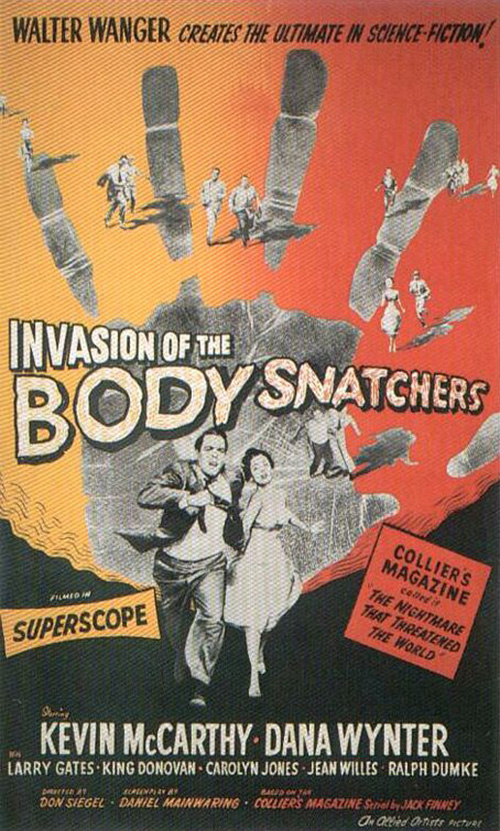
Invasion of the Body Snatchers – October 23rd, 2021

Invasion of the Body Snatchers [1956]


Please join Cultivate Cinema Circle as we screen Don Siegel’s film Invasion of the Body Snatchers [1956].


Event Sponsors:

Venue Information:

Downtown Central Library Auditorium
1 Lafayette Square, Buffalo, NY 14203
(Enter from Clinton Street between Oak and Washington Streets)
716-858-8900 • www.BuffaloLib.org
COVID protocol will be followed.


Synopsis

Extraterrestrial invaders mimic the likeness of humans in an insidious plot to take over Earth. When a doctor discovers pods containing creatures that can assume the physical appearance of anyone they choose, he attempts to destroy them.

Tidbits:

  • National Film Preservation Board – 1994 – National Film Registry

Director Bio

Courtesy of TCM:

The montage department at Warner Bros. gave producer-director Don Siegel the necessary tools to impart his signature economical, action-driven style that made films like “Riot on Cell Block 11” (1954), “Invasion of the Body Snatcher” (1955), “The Killers” (1964), “Dirty Harry” (1971) and “Charley Varrick” (1973) such high water marks in the crime and thriller genres. Though Siegel disavowed any notable style, his films were earmarked by their brisk pace, uncompromising violence, and heroes that frequently followed the same moral path as their villains. Siegel’s strongest pictures were in collaboration with “Harry” star Clint Eastwood, whose own prominence was boosted by his work with the director in “Coogan’s Bluff” (1968) and “Escape from Alcatraz” (1979), among others. There was no denying that Siegel’s four-decade career generated some of the most enjoyable and mature crime dramas to come from Hollywood.

Born in Chicago, IL on Oct. 26, 1912, Don Siegel came from a musical family that included a violinist father. As a young man, Siegel initially trained to be a stage actor. After graduating from Jesus College in Cambridge, England, he began working in the Warner Bros. film library in 1934. Siegel quickly graduated to assistant editor and later assistant head of the insert department before taking control of the studio’s montage department. There, he composed some of the most striking montages for features, including the opening sequence in “Casablanca” (1942), “Now, Voyager” (1942) and “Action in the North Atlantic” (1943). His experience there led to work as a second unit and assistant director on films like “Sergeant York” (1941) and “To Have and Have Not” (1943). Both experiences would prove invaluable to his subsequent career as a director; the montage work taught him to plan his shots with meticulous care, which would in turn allow him greater control over the finished product by limiting the amount of footage available for producers to re-edit his films. The limited time, budget and access to performers afforded to second unit directors taught Siegel the importance of working quickly and accurately, both of which would be hallmarks of his subsequent directorial style.

Features were Siegel’s ultimate goal, but Warner chief Jack Warner refused to let him out of his contract for fear that they would lose his distinctive montage. Warner eventually consented to let Siegel direct a pair of short films; the first, “Star in the Night” (1945), was a modern Western that presented a 20th century take on the Biblical story of Christmas, while “Hitler Lives” (1946) incorporated wartime footage of Nazi leaders with dramatized scenes to underscore its message of vigilance towards postwar Germany and Nazi sympathizers in the United States. Though Siegel was not credited for the latter project, both films won the Academy Award for Best Live Action Short Film. “Hitler” would also serve as the seed of a lingering debate in regard to Siegel’s political stance, with some viewing it as a strongly conservative picture, while others taking its message as virulently anti-totalitarianism. Regardless of their themes, both films signaled that Siegel was ready to tackle features, and in 1946, he ended his 14-year relationship with Warner Bros. to freelance as a director for various studios.

Siegel’s first directorial effort was “The Verdict” (1946), an offbeat mystery featuring the fabled screen duo of Peter Lorre and Sydney Greenstreet. Soon after, he began to craft his signature style through a series of dramas and thrillers, most notably “Night Unto Night” (1949), a unusual feature about the romance between a man (Ronald Reagan) stricken with epilepsy and a woman (Siegel’s wife, actress Vivica Lindfors) contemplating suicide after her divorce. Though Siegel would deny any sense of an individual style, recurrent themes and elements would begin to surface in his work in the late 1940s and early 1950s. Pictures like “The Big Steal” (1949), “Riot in Cell Block 11” (1954) and “Private Hell 36” (1954) were briskly paced, violent affairs, with restless camerawork following his characters rather than dictating their movement. Such an approach lent a realistic feel which heighted the drama and action that were inherent to his films.

Siegel’s editing background also brought a burst of energy to his action scenes; fistfights, car chases and shootouts were delivered in brief but intense explosions of tension and release. Siegel’s heroes also reflected his economical, no-nonsense approach; Robert Mitchum’s Army lieutenant in “Big Steal” and Neville Brand’s inmate in “Cell Block 11” (1954) were tough, single-minded men whose sole purpose in life was to stand by their own personal codes of honor. They avoided the standard societal codes, operating under their own rules, and frequently broke traditional movie tenets in their pursuit of their desires, whether financial, personal or otherwise. Often times, there was very little separating his heroes from his villains. Such an approach endeared Siegel to noir fans, as well as serious students of American cinema like Francois Truffaut, who was an unabashed admirer. For his part, Siegel described himself as a “whore” who simply worked for the profit, and indeed, for every great effort during the 1950s and beyond, there were minor, forgettable efforts like “Hound-Dog Man” (1959), a frivolous, fictionalized biopic of Elvis Presley with Fabian in the lead, and countless television episodes, including “The Doctor” (NBC, 1952-53) and two of the weakest stories on “The Twilight Zone” (CBS, 1959-1964).

Despite the erratic nature of Siegel’s career, he turned out some exceptional films in the late ’50s and 1960s that became favorites for crime and thriller enthusiasts and scholars alike. “Crime in the Streets” (1956) was a gritty urban drama with James Whitmore as a social worker attempting to turn street punks John Cassavetes and Sal Mineo away from a life of crime, while “The Lineup” (1958) afforded character actor Eli Wallach a rare lead as a psychopathic gangster who tracked down and killed tourists who had become unwitting drug mules. He was also adept at war pictures, like the Steve McQueen vehicle “Hell is For Heroes” (1962) and Westerns like “Flaming Star” (1960), which gave Elvis Presley one of his best screen roles as a half-Native American caught between his adopted white family and warring tribes. Siegel also made one of the greatest science fiction films of the 20th century, “Invasion of the Body Snatchers” (1956), which depicted the takeover of a small California town by extraterrestrials with the ability to duplicate humans through giant plant-like pods. The film was the center of considerable debate over its allegiance or opposition to the anti-Communist witch hunts of the period, with both sides swearing Siegel’s fealty to their side. For his part, Siegel would later comment that the pods represented the front office at Hollywood studios. In 1959, he made his debut as producer-director on “Edge of Eternity” (1959), and would oversee nine more films during his lengthy career.

Save for “The Killers” (1964), a savage gangster picture with Lee Marvin as an amoral killer and Ronald Reagan in his final screen role as a cruel mob boss, Siegel worked in television for most of the mid-1960s before returning to features with “Madigan” (1968), a downbeat police drama about a New York detective (Richard Widmark) on the trail of a killer who eluded him during a routine bust. The film was particularly trying for the director, who clashed frequently with producer Frank Rosenberg. However, his next film, “Coogan’s Bluff” (1968), marked the beginning of a career revival, as well as a long personal and professional collaboration with its star, Clint Eastwood. At the time, Eastwood was riding the wave of popularity from his Italian westerns with Sergio Leone, and had returned to the United States in search of quality projects. A fan of Siegel’s earlier work, he tapped the older man to direct “Bluff,” a crime drama with Western overtones about an Arizona sheriff (Eastwood) who pursued a psychotic criminal (Don Stroud) through New York.

The new actor/director team soon followed their first hit with “Two Mules for Sister Sara” (1970), a Western with Shirley MacLaine as a prostitute posing as a nun and Eastwood as the drifter who aids her against Mexican soldiers, and “The Beguiled” (1971), a Gothic period piece about a wounded Union soldier (Eastwood) who, after being rescued by the teacher and students at an female boarding school, received a brutal come-uppance after attempting to seduce them. The picture was marked by negative reactions to Eastwood’s weak character and a perceived notion of misogyny, an idea bolstered in part by Siegel’s comment about the film’s depiction of women’s “basic desire to castrate men.” However, the controversy it generated was nothing when compared to the firestorm of criticism that followed their next collaboration, “Dirty Harry” (1971).

A violent crime thriller about a trigger-happy San Francisco detective (Eastwood) whose investigative methods were not dissimilar to the sadistic sniper (Andrew Robinson) he pursued, “Harry” became an iconic role for Eastwood, and one of Siegel’s biggest career hits, but the film was dogged as a right-wing fantasy that celebrated police brutality and fascist responses to violence. Siegel distanced himself from the debate, which actually incurred protests at screenings, though several critics saw the film as an implication of viewers’ own violent urges and knee-jerk responses to acts of brutality. Harry Callahan would return for several more movie adventures, though Siegel would not direct any of them. He would, however, serve as a strong influence on the directorial career of Eastwood, whose own terse cinematic style and focus on the moral ambiguity of his characters reflected Siegel’s worldview.

Siegel’s output slowed in the years following “Harry.” He had been in the movie business for over four decades, and had enjoyed a career that most directors would find envious. He would direct and producer a handful of films in the 1970s, most of which turned a profit and enjoyed respectable box office returns. The cult favorite “Charley Varrick” (1973) starred Walter Matthau as a cagey bank robber who runs afoul of mobsters, and featured one of the most unique chase scenes in film history, with Matthau in a plane pursued by relentless killer Joe Don Baker in a car. “The Shootist” (1976) was an unsentimental Western about an aging gunfighter (John Wayne, in his final screen role) whose attempt to retire was challenged by a vicious criminal (Richard Boone). And “Escape from Alcatraz” (1979) was a tense prison film about the real-life escape from the maximum-security prison by inmate Frank Morris (Eastwood). Though a hit, the picture ended the long relationship between Eastwood and Siegel when the latter took over the production of the film from his star.

In addition to his directing career, Siegel acted in minor roles in several films. He made cameos in many of his own projects, including an elevator passenger in “Coogan’s Bluff” and a pedestrian in “Dirty Harry.” Eastwood cast him in a minor part as a bartender in “Play Misty for Me” (1971), while Philip Kaufman brought him aboard the remake of “Invasion of the Body Snatchers” (1978) as the driver of the cab who struck Kevin McCarthy, the star of Siegel’s version. Siegel would direct two more films, “Rough Cut” (1980) and “Jinxed!” (1982) before retiring in the 1980s. The former was a minor hit for Burt Reynolds as a jewel thief, while the latter was a disastrous comedy for Bette Midler as a Vegas lounge singer who fell for an unlucky card dealer (Ken Wahl). Both stars opened loathed each other during filming, and Midler also clashed with Siegel, who suffered a heart attack during production. The film’s sole positive note was the brief revival it afforded Sam Peckinpah, who was hired by Siegel as second unit director on the film, and as a result, received a final turn as director on “The Osterman Weekend” (1983) before his death. On April 20, 1991, Siegel died from cancer in Nipomo, CA. His body of work underwent several re-evaluations in the years that followed his passing, with his own autobiography, A Siegel Film, published posthumously in 1993, serving as the final word on many of his projects. In 1992, Eastwood dedicated his Oscar-winning Western “Unforgiven” to the two men whose work had the greatest impact on his career: Sergio Leone and Don Siegel.

Filmography:

  • Jinxed! (1982)
  • Rough Cut (1980)
  • Escape From Alcatraz (1979)
  • Telefon (1977)
  • The Shootist (1976)
  • The Black Windmill (1974)
  • Charley Varrick (1973)
  • Dirty Harry (1971)
  • The Beguiled (1971)
  • Two Mules for Sister Sara (1970)
  • Madigan (1968)
  • Coogan’s Bluff (1968)
  • The Killers (1964)
  • Hell Is for Heroes (1962)
  • Flaming Star (1960)
  • Edge of Eternity (1959)
  • Hound-Dog Man (1959)
  • The Lineup (1958)
  • The Gun Runners (1958)
  • Spanish Affair (1958)
  • Baby Face Nelson (1957)
  • Invasion of the Body Snatchers (1956)
  • Crime in the Streets (1956)
  • An Annapolis Story (1955)
  • Riot in Cell Block 11 (1954)
  • Private Hell 36 (1954)
  • No Time for Flowers (1953)
  • Count the Hours (1953)
  • China Venture (1953)
  • The Duel at Silver Creek (1952)
  • Night unto Night (1949)
  • The Big Steal (1949)
  • The Verdict (1946)

Links

Here is a curated selection of links for additional insight/information:

  • Cultivate Cinema Circle info-sheet – link
  • “One of the films that has generated the most heated and long-running debates about its political intentions, in Siegel’s oeuvre and in cinema at large, is Invasion of the Body Snatchers…As in much first-class science fiction, the narrative insinuates its potential to be read as a metaphor for issues rooted in contemporary civilisation. To interpret this metaphor has proved an irresistible challenge for swathes of critics and audiences…Perhaps the most useful analysis has been provided by Tracy Knight, who argues that the most captivating fictions, Invasion of the Body Snatchers amongst them, have ‘’Rorschach plots’, fictional inkblots that playfully interact with us and our beliefs. Their ambiguity invites us to project our own interests and biases upon the story in order to wrest meaning from their tantalising lack of explicitness’. The idea of a ‘Rorschach plot’ is of far greater importance in understanding this film, and Siegel’s wider oeuvre, than pinning down the truth of one interpretation over another.” – Deborah Allison, Senses of Cinema (2004) – link
  • “We conclude…by reflecting on what it means that Invasion’s us-versus-them scenario—in Miles’s terms, ‘They’re after all of us!’—is undermined in so many ways. Unlike films whose Others are distinct, like the Rhedosaurus in Eugène Lourié’s The Beast from 20,000 Fathoms (1953) or the gigantic ants in Gordon Douglas’s Them! (1954), Siegel’s aliens are both human and posthuman, us and them, all at once. That’s why we can have multiple, opposing allegorical readings at the same time. Because film analysis is not a question of choosing the correct interpretation but discovering how a film is complex enough to make them all possible—and reveling in what Finney’s Miles calls a story that is ‘full of loose ends and unanswered questions.'” – Rashna Wadia Richards, The Cine-Files (2015) – link
  • “Based on Jack Finney’s novel, Don Siegel’s original black-and-white thriller about aliens taking over unsuspecting humans was a parable of Cold War paranoia. It teases out a pervasive feeling (stoked by right wing propaganda) that the Russians weren’t just coming to take over the United States and grind capitalism into dust, but were already living among unsuspecting patriots, absorbing more of them by the hour.” – Matt Zoller Seitz, RogerEbert.com (2018) – link

Them! – October 9th, 2021

Them! [1954]


Please join Cultivate Cinema Circle as we screen Gordon Douglas’ Oscar nominated (Best Effects, Special Effects) film Them! [1954].


Event Sponsors:

Venue Information:

Downtown Central Library Auditorium
1 Lafayette Square, Buffalo, NY 14203
(Enter from Clinton Street between Oak and Washington Streets)
716-858-8900 • www.BuffaloLib.org
COVID protocol will be followed.


Synopsis

In this film, a girl is found wandering in the desert in a state of complete shock. When she finally revives, she can scream out only one word: “Them!” As it turns out, “Them” are giant ants, a by-product of the radiation attending the atomic bomb tests of the era.

Tidbits:

  • Academy Awards – 1955 – Nominee for Best Effects, Special Effects

Director Bio

Courtesy of TCM:

Before he was a well-respected film director, Gordon Douglas was a lowly teenage production intern whose go-getter attitude convinced his boss, famed media mogul Hal Roach, to cast him in the youthfully mischievous short-film series “Our Gang.” Already too old to join the central Little Rascals, he was instead given a succession of bit parts. In short order, he gleaned a thorough enough sense of the series’ ins and outs to take on writing and directing roles, eventually emerging as “Gang”‘s most dedicated (and prosperous) overseer, even going so far as to follow the eternally celebrated franchise when it moved to MGM. He ultimately realized, however, that he much preferred the homespun stylings of Roach’s studio, and he returned there, sans Rascals, to find further success as the director of such freewheeling comedies as the gleefully daft Laurel and Hardy adventure “Saps at Sea” (1940). A skilled features director by the time Hal Roach Studios folded altogether, he found a new permanent residence at Warner Bros. in 1950. Over the course of the following three decades, Douglas spread his wings as a multi-genre filmmaker, directing the quintessential atomic-age creeper “Them!” before making a distinct move toward savvier, more sophisticated projects such as the hard-edged detective dramas “They Call Me MISTER Tibbs!” and the forthrightly titled “The Detective.” He retired from the business in 1977 and died of cancer years later at the age of 85.

Filmography:

  • Viva Knievel! (1977)
  • Nevada Smith (1975)
  • Slaughter 2 (1973)
  • Slaughter’s Big Rip-Off (1973)
  • Skullduggery (1970)
  • Barquero (1970)
  • They Call Me MISTER Tibbs (1970)
  • The Detective (1968)
  • Lady in Cement (1968)
  • In Like Flint (1967)
  • Chuka (1967)
  • Tony Rome (1967)
  • Stagecoach (1966)
  • Way … Way Out (1966)
  • Sylvia (1965)
  • Harlow (1965)
  • Rio Conchos (1964)
  • Robin and the 7 Hoods (1964)
  • Call Me Bwana (1963)
  • Follow That Dream (1962)
  • Gold of the Seven Saints (1961)
  • Claudelle Inglish (1961)
  • The Sins of Rachel Cade (1961)
  • Up Periscope (1959)
  • Yellowstone Kelly (1959)
  • The Fiend Who Walked the West (1958)
  • Fort Dobbs (1958)
  • Bombers B-52 (1957)
  • The Big Land (1957)
  • Santiago (1956)
  • The McConnell Story (1955)
  • Sincerely Yours (1955)
  • Them! (1954)
  • Young at Heart (1954)
  • The Eddie Cantor Story (1954)
  • She’s Back on Broadway (1953)
  • So This Is Love (1953)
  • The Charge at Feather River (1953)
  • The Iron Mistress (1952)
  • Mara Maru (1952)
  • Come Fill the Cup (1951)
  • I Was a Communist for the F.B.I. (1951)
  • The Great Missouri Raid (1951)
  • Only the Valiant (1951)
  • Rogues of Sherwood Forest (1950)
  • Kiss Tomorrow Goodbye (1950)
  • The Nevadan (1950)
  • Between Midnight and Dawn (1950)
  • Fortunes of Captain Blood (1950)
  • The Doolins of Oklahoma (1949)
  • Mr. Soft Touch (1949)
  • Walk a Crooked Mile (1948)
  • The Black Arrow (1948)
  • If You Knew Susie (1948)
  • San Quentin (1946)
  • Dick Tracy vs. Cueball (1946)
  • Zombies on Broadway (1945)
  • First Yank into Tokyo (1945)
  • The Falcon in Hollywood (1944)
  • A Night of Adventure (1944)
  • Gildersleeve’s Ghost (1944)
  • Girl Rush (1944)
  • Gildersleeve on Broadway (1943)
  • Gildersleeve’s Bad Day (1943)
  • The Great Gildersleeve (1942)
  • The Devil with Hitler (1942)
  • Broadway Limited (1941)
  • Niagara Falls (1941)
  • Saps at Sea (1940)
  • Zenobia (1939)
  • General Spanky (1936)

Links

Here is a curated selection of links for additional insight/information:

  • Cultivate Cinema Circle info-sheet – link
  • “Dr. Edmund Gwenn’s final, slightly doleful but strictly scientific observation in “Them!” indicates that when man entered the atomic age he opened new worlds and that ‘nobody can predict’ what he will find in them. The Warner Brothers, fearlessly flouting this augury, have come up with one ominous view of a terrifyingly new world in the thriller that was exposed at the Paramount yesterday, and it is definitely a chiller.The awesome fact is that the Warner Brothers have planted ants on our planet—giant nine to twelve-footers, with mandibles like the tusks on a mammoth, and keening like all the banshees in a fevered imagination. There’s no point in making for the hills, though. It’s fascinating to watch.Since it is difficult to assign specific credit, suffice it to say that the combination of three writers, director Gordon Douglas, producer David Weisbart and a cooperative cast have helped make the proceedings tense, absorbing and, surprisingly enough, somewhat convincing. Perhaps it is the film’s unadorned and seemingly factual approach which is its top attribute.” – A.H. Weiler, The New York Times (1954) – link
  • “By far the best of the ’50s cycle of ‘creature features’, Them! and its story of a nest of giant radioactive ants (the result of an atomic test in the New Mexico desert) retains a good part of its power today. All the prime ingredients of the total mobilisation movie are here: massed darkened troops move through the eerie storm drains of Los Angeles, biblical prophecy is intermixed with gloomy speculation about the effect of radioactivity. Almost semi-documentary in approach, the formula is handled with more subtlety than usual, and the special effects are frequently superb.” – David Pirie, Time Out Film Guidelink
  • “…women are scary. And sexy, too, just like the bomb itself. In Paranoia, the Bomb, and 1950s Science Fiction Films, Cynthia Hendershot has written persuasively about the eroticization of nuclear power. ‘In postwar bomb fantasies,’ she argues, ‘sexuality becomes a means of containing the fear of the limits of meaning.’…In Them!, the monstrous fertility of the queen ants threatens to topple a social order dominated by men. (Joan Weldon’s gutsy scientist may be a babe, but she spends the entire movie chastely in her father’s shadow.) Hendershot proposes that, in a paranoiac worldview, the forces for purification and progress are constantly at war with those of contamination and degeneracy. Since at least Victorian times, matriarchal societies implied a backward step in evolution. So gendered 1950s sci-fi monsters take fears of Darwinist decline, run them through a nuclear power generator, and serve them up to a viewing public already worried about—and fiercely protective of—its civilization. The effect becomes one of diffuse suspicion. Who exactly are the enemies poised to dismantle the American dream? Women? Soviets? Heedless scientists? Somehow all three converge in images of irradiated, unknowable creatures eager to reproduce throughout the United States.” – Katy Waldman, Slate (2013) – link

Forbidden Planet – September 25th, 2021

Forbidden Planet [1956]


Please join Cultivate Cinema Circle as we screen Fred M. Wilcox’s Oscar nominated (Best Effects, Special Effects) film Forbidden Planet [1956].


Event Sponsors:

Venue Information:

Downtown Central Library Auditorium
1 Lafayette Square, Buffalo, NY 14203
(Enter from Clinton Street between Oak and Washington Streets)
716-858-8900 • www.BuffaloLib.org
COVID protocol will be followed.


Synopsis
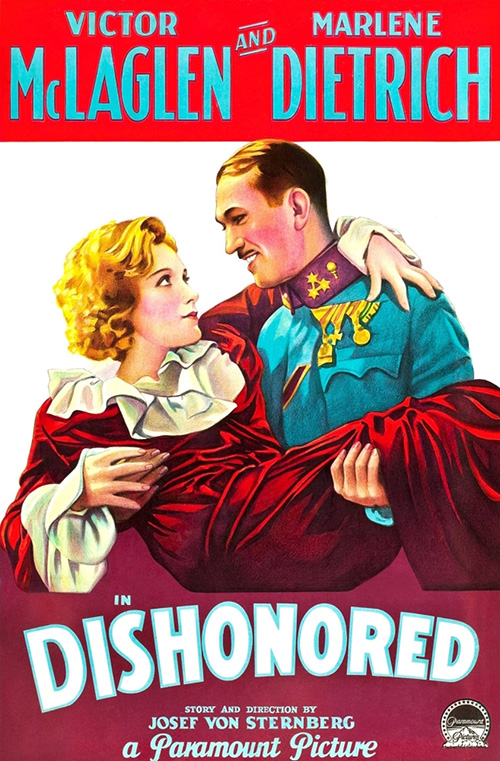
A rocket ship lands on a distant planet to investigate the disappearance of settlers, and the crew discovers a scientist, his daughter and a highly intelligent robot named Robby.

Tidbits:

  • Academy Awards – 1957 – Nominee for Best Effects, Special Effects
  • National Film Preservation Board – 2013 – National Film Registry

Director Bio

Courtesy of TCM:

Fred M Wilcox enjoyed success as a director over the course of his Hollywood career, owed mainly to a vast supply of imagination and a fierce attention to detail. In 1926, he was hired by MGM as a publicist. M Wilcox received his start directing films, including work on the drama “Lassie Come Home” (1943) with Roddy McDowall, the adventure “Courage of Lassie” (1946) with Elizabeth Taylor and the Edmund Gwenn drama “Hills of Home” (1948). Shortly thereafter, he received directorial credit for the Jeanette MacDonald musical comedy “Three Daring Daughters” (1948), the fantastical drama “The Secret Garden” (1949) with Margaret O’Brien and the drama “Shadow in the Sky” (1952) with Ralph Meeker. He also appeared in the drama “Tennessee Champ” (1954) with Shelley Winters. in the forties and the sixtiesLater in his career, M Wilcox directed “I Passed For White” (1960). M Wilcox passed away in September 1964 at the age of 57.

Filmography:

  • I Passed for White (1960)
  • Forbidden Planet (1956)
  • Tennessee Champ (1954)
  • Code Two (1953)
  • Shadow in the Sky (1952)
  • The Secret Garden (1949)
  • Hills of Home (1948)
  • Three Daring Daughters (1948)
  • Courage of Lassie (1946)
  • Lassie Come Home (1943)
  • Joaquin Murrieta (1938) – short film

Links

Here is a curated selection of links for additional insight/information:

  • Cultivate Cinema Circle info-sheet – link
  • “Fasten your seat belts, fellows. Get those space helmets clamped to your heads and hang on tight, because we’re taking off this morning on a wonderful trip to outer space. We are guiding you to “Forbidden Planet,” which is appropriately at the Globe. And we suggest you extend an invitation to Mom and Dad to go along.For this fanciful interstellar planet, which has been dreamed up at Metro-Goldwyn-Mayer and put on the screen in Eastman color and properly spacious CinemaScope, is the gaudiest layout of gadgets this side of a Florida hotel. It offers some of the most amusing creatures conceived since the Keystone cops.Best of the lot is Robby, a phenomenal mechanical man who can do more things in his small body than a roomful of business machines. He can make dresses, brew bourbon whisky, perform feats of Herculean strength and speak 187 languages, which emerged through a neon-lighted grille.” – Bosley Crowther, The New York Times (1956) – link
  • “An engaging 1956 science fiction gloss of Shakespeare’s Tempest, with a ship full of American astronauts landing on a mysterious planet where Walter Pidgeon and his miniskirted daughter, Anne Francis, guard the remains of a lost civilization. Even as the SF cliches fall fast and heavy, this is great to look at, thanks to the sumptuous MGM sets and the fine animation and matte work by Walt Disney Studios.” – Dave Kehr, Chicago Reader (2012) – link
  • “The film does show its age in its pervasive sexism. There are no women in the C-57D crew. Aware that his crew of “competitively selected super-perfect physical specimens” haven’t seen a woman for 378 days, Adams is concerned that they might behave improperly (for Motion Pictures Production Code versions of improperly). He has good reason to worry about his men, but not about Altaira, who is unimpressed with crewman Farman’s kissing prowess. [Farman and Altaira kiss] Altaira: Is that all there is to it? Farman: Well, you’ve sort of got to stick with it. Altaira: Just once more, do you mind? Farman: Not at all. [They kiss] Altaira: There must be something seriously the matter with me…because I haven’t noticed the least bit of stimulation. It’s probably a mercy that Farman is killed by the guardian soon after. Egregious 1950s sexism aside, Forbidden Planet works as pure entertainment. It’s a great whodunnit. It even hews to a classic mystery trope: the film drops clues here and there, clues that will lead to the reader (or viewer, in this case) saying at the end ‘well d’oh, I should have known.’ No surprise that the movie is widely held to be a SF film classic.” – James Davis Nicoll, Tor (2020) – link

The Feeling of Being Watched – December 11th, 2019

The Feeling of Being Watched [2018]


Please join Cultivate Cinema Circle as we screen Assia Boundaoui’s The Feeling of Being Watched [2018].

  • Screening Date: Wednesday, December 11th, 2019 | 7:00pm
  • Venue: Burning Books
  • Specifications: 2018 / 86 minutes / English / Color
  • Director(s): Assia Boundaoui
  • Print: Supplied by POV
  • Tickets: Free and Open to the Public
  • Extras: Stop in early for FREE Breadhive baked goods while supplies last!

Event Sponsors:

Venue Information:

420 Connecticut St, Buffalo, NY 14213


Synopsis

Courtesy of press kit:

In the Arab-American neighborhood outside of Chicago where journalist and filmmaker Assia Boundaoui grew up, most of her neighbors think they have been under surveillance for over a decade. While investigating their experiences, Assia uncovers tens of thousands of pages of FBI documents that prove her hometown was the subject of one of the largest counter terrorism investigations ever conducted in the U.S. before 9/11, code-named “Operation Vulgar Betrayal.”

With unprecedented access, The Feeling of Being Watched weaves the personal and the political as it follows the filmmaker’s examination of why her community—including her own family—fell under blanket government surveillance. Assia struggles to disrupt the government secrecy shrouding what happened and takes the FBI to federal court to compel them to make the records they collected about her community public. In the process, she confronts long-hidden truths about the FBI’s relationship to her community.

The Feeling of Being Watched follows Assia as she pieces together this secret FBI operation, while grappling with the effects of a lifetime of surveillance on herself and her family.

Tidbits:

  • Tribeca Film Festival – 2018

Director’s Statement

Courtesy of press kit:

The Feeling of Being Watched takes a vérité and personal journey storytelling approach while artistically exploring how perspective functions in cinema. Throughout the film, the lens of surveillance is used as a metaphor for the various ways my community, and by extension Muslim-American communities across the country, have been “seen.” By cinematically weaving the personal and the political — often polarized versions of the same story — I hope to capture a profound truth about the “War on Terror”: its impact on our sense of self, our ability to create and connect, our right to dissent, and the impact it’s having on our collective democracy.

The German philosopher Hegel wrote that, “seeing comes before words,” and in his writing insists on the impossibility of existence without recognition from the other. Surveillance is in its essence a way of seeing without recognizing, and its harmful effects are profound. Unwarranted surveillance transforms communities into places where neighbors distrust each other, people censor themselves, and everyone lives with an unhealthy dose of fear and paranoia. While surveillance is preconditioned on a great physical distance from the object of its gaze, this film gets intimately closer with the subjects of surveillance who have for so long been seen from afar. I hope this film will serve as a catalyst for radical change that is based on equality, mutual recognition and a way of seeing that is reciprocal.

Throughout The Feeling of Being Watched I use journalistic tools to investigate a complex political issue that is at the same time deeply personal to me. I believe strongly in the public’s right to know. I believe that our ability to hold government accountable is only as strong as our ability to compel government transparency. In this time of great political turbulence in the U.S., I stand committed to creating art that speaks truth to power and is rooted firmly in the principle of the public’s right to hold its government accountable. I hope that this film will herald a cultural shift in public awareness on issues of government surveillance and national security and contribute meaningfully to ending U.S. government policies that allow the unwarranted profiling of communities of color in America.


Director Bio

Courtesy of website:

Assia Boundaoui is an Algerian-American journalist and filmmaker based in Chicago. She has reported for the BBC, NPR, PRI, Al Jazeera, VICE, and CNN. Her debut short film about hijabi hair salons for the HBO LENNY documentary series premiered at the 2018 Sundance Film Festival. Her feature length debut The Feeling of Being Watched, a documentary investigating a decade of FBI surveillance in Assia’s Muslim-American community, had its world premiere at the 2018 Tribeca Film Festival. She is currently a fellow with the Co-Creation Studio at the MIT Open Documentary Lab, where she is iterating her most recent work, the Inverse Surveillance Project. Assia has a Masters degree in journalism from New York University and is fluent in Arabic.

Filmography:

  • The Feeling of Being Watched (2018)

Links

Here is a curated selection of links shared on our Facebook page for additional insight/information:

  • 12/08/19 – “Equal parts angry and anxious, Boundaoui’s smart, unsettling documentary functions both as a real-world conspiracy thriller and a personal reflection on the psychological strain of being made to feel an outsider in one’s own home.” Guy Lodge, Variety – link

Bisbee ’17 – November 13th, 2019

Bisbee ’17 [2018]


Please join Cultivate Cinema Circle as we screen Robert Greene’s Bisbee ’17 [2018].

  • Screening Date: Wednesday, November 13th, 2019 | 7:00pm
  • Venue: Burning Books
  • Specifications: 2018 / 112 minutes / English / Color
  • Director(s): Robert Greene
  • Print: Supplied by POV
  • Tickets: Free and Open to the Public
  • Extras: Stop in early for FREE Breadhive baked goods while supplies last!

Event Sponsors:

Venue Information:

420 Connecticut St, Buffalo, NY 14213


Synopsis

Courtesy of website:

Bisbee ’17 is a nonfiction feature film by award-winning filmmaker Robert Greene set in Bisbee, Arizona, an eccentric old mining town just miles away from both Tombstone and the Mexican border.

Radically combining collaborative documentary, western and musical elements, the film follows several members of the close knit community as they attempt to reckon with their town’s darkest hour. In 1917, nearly two-thousand immigrant miners, on strike for better wages and safer working conditions, were violently rounded up by their armed neighbors, herded onto cattle cars, shipped to the middle of the New Mexican desert and left there to die. This long-buried and largely forgotten event came to be known as the Bisbee Deportation.

The film documents locals as they play characters and stage dramatic scenes from the controversial story, culminating in a large scale recreation of the deportation itself on the exact day of its 100th anniversary. These dramatized scenes are based on subjective versions of the story and offer conflicting views of the event, underscoring the difficulty of collective memory, while confronting the current political predicaments of immigration, unionization, environmental damage and corporate corruption with direct, haunting messages about solidarity and struggle.

Tidbits:

  • Sundance Film Festival – 2018
  • International Documentary Association – 2018 – Winner: Creative Recognition Award – Best Music
  • Gotham Awards – 2018 – Nominee: Best Documentary & Gotham Independent Film Award – Best Documentary

Director Statement

Courtesy of POV:

I’ve been going to Bisbee, Arizona since 2003, when my mother-in-law bought an old cabin in the eccentric former mining town near the border. I immediately fell in love with the place. My partner was born in Tucson and we have roots in the area, but nothing prepared me for this strange, magical, truly haunted enclave – and the secret history buried there. Since then, I’ve been dreaming of making a film that captures the unique and troubled spirit of Bisbee. The centennial of the Bisbee Deportation – a tragedy where 1200 striking miners, many of them immigrants, were marched out of town at gunpoint and loaded unto cattle cars – gave us the opportunity. Maybe it was just a matter of time before I made the Bisbee film – my first ever feature film idea back when I initially came to town was to “re-stage the deportation with the locals.” So after five feature documentaries, many of which use performance to try to create new ways of seeing and understanding, it was finally time to make the movie I’d been dreaming of.

The Bisbee Deportation is one of countless untold tales of radicalism and oppression in American history and I knew I wanted to tell the story when I first heard it in 2003. But we had relatively little idea when we started pre-production in the summer of 2016 just how relevant the story would become. As the calendar turned to the summer of 2017, with the centennial approaching, labor rights under unprecedented attack and a humanitarian crisis gathering on the U.S.-Mexico border, a sense of urgency began to set in for all of us. The desire for the community to tell this story was palpable and we filmmakers were providing the stage. They knew what we knew: the images that we were creating together would matter. Bisbee, in many ways, is a microcosm of the country and understanding the depth of what happened in the old company town is a way to grasp where we are today as nation, how deeply ingrained American mythologies are used to divide us, and what calamities await if we don’t heed the lessons of our history.

Our first mission, then, was to document the emotional awakening the town was experiencing as the centennial of the deportation approached. Then we began working with everyone from descendants of deportees to company families to create scenes that helped facilitate a kind of truth and reconciliation by way of layered performance. In my last several films, I’ve pushed further and further into the possibilities of collaborative, performative documentary filmmaking, where subjects and filmmakers work together to stage semi-constructed scenes that help the viewer imagine the internal lives of real people. With Bisbee ’17, we’ve pushed this idea significantly forward. What we see is a working through of story and history and mythology as non-actors engage in “roles” that relate to their real lives and this collective trauma. The historical, the political, and the personal all become entwined as locals play dress up, portraying ghosts of a buried past. It all leads to a surprisingly cathartic and emotional place, where the collective performance of a town playing itself reveals both divisions and connections between people. Should we bury the past forever or should we work together to exorcise our demons? One white guy who played one of the vigilantes declares at the end of the large-scale recreation, “this is like the largest group therapy session ever.” A Mexican-American man who had played a deportee saw things a little differently. “You guys were good,” he said to a friend playing a deporter, “maybe too good.”


Director Bio

PARK CITY, UT – JANUARY 24: Writer/director Robert Greene from the film “Kate Plays Christine” poses for a portrait during the WireImage Portrait Studio hosted by Eddie Bauer at Village at The Lift on January 24, 2016 in Park City, Utah. (Photo by Jeff Vespa/WireImage)

“Stories make order and help us understand the awful noise.”

Courtesy of POV:

Robert Greene’s latest award-winning film Bisbee ‘17premiered at the 2018 Sundance Film Festival. His previous film Kate Plays Christine won a Jury Award for Writing at Sundance 2016. Robert’s documentaries include the Gotham Awards-nominated Actress, Fake It So Real and the Gotham Awards-nominated Kati With An I. Robert was an inaugural Sundance Art of Nonfiction fellow in 2015 and is a three-time nominee for Best Director at the Cinema Eye Honors. The Independent named Robert one of their 10 Filmmakers to Watch in 2014 and he received the 2014 Vanguard Artist Award from the San Francisco DocFest. His first documentary, Owning The Weather, was screened at the COP15 Climate Change Conference in Copenhagen. Robert has edited over a dozen features, including Her Smell (2018), Golden Exits (2017), Queen of Earth (2015) and Listen Up Philip (2014) by Alex Ross Perry, Amanda Rose Wilder’s award winning Approaching The Elephant (2014), Charles Poekel’s Spirit Awards-nominated Christmas, Again (2015) and Douglas Tirola’s Hey Bartender(2013). He has been a Sundance Edit Lab Advisor and was on the U.S. Documentary Jury for Sundance 2017. Robert writes for outlets such as Sight & Sound and serves as the Filmmaker-in-Chief for the Murray Center for Documentary Journalism at the University of Missouri.

Filmography:

  • Procession (2021)
  • Bisbee ’17 (2018)
  • Kate Plays Christine (2016)
  • Actress (2014)
  • Fake It So Real (2011)
  • Kati with an I (2010)
  • Owning the Weather (2009)

Links

Here is a curated selection of links shared on our Facebook page for additional insight/information:

  • 11/11/19 – “The story of Bisbee will never be taught in schools, the faces of the deported won’t be printed on t-shirts, and socialists will never get a parade for trying to make sure wages are fair and conditions safe for every worker. There may never be justice for the victims of American trauma, but Greene has told one story no viewer could ever forget.” Scout Tafoya, MUBI’s Notebook – link

Knock Down the House – October 9th, 2019

Knock Down the House [2019]


Please join Cultivate Cinema Circle as we screen Rachel Lears’ Knock Down the House [2019].

  • Screening Date: Wednesday, October 9th, 2019 | 7:00pm
  • Venue: Burning Books
  • Specifications: 2019 / 86 minutes / English / Color
  • Director(s): Rachel Lears
  • Print: Supplied by Netflix
  • Tickets: Free and Open to the Public
  • Extras: Stop in early for FREE Breadhive baked goods while supplies last!

Event Sponsors:

Venue Information:

420 Connecticut St, Buffalo, NY 14213


Synopsis

Courtesy of website:

When tragedy struck her family in the midst of the financial crisis, Bronx-born Alexandria Ocasio-Cortez had to work double shifts in a restaurant to save her home from foreclosure. After losing a loved one to a preventable medical condition, Amy Vilela didn’t know what to do with the anger she felt about America’s broken health care system. Cori Bush was drawn into the streets when the police shooting of an unarmed black man brought protests and tanks into her neighborhood. Paula Jean Swearengin was fed up with watching her friends and family suffer and die from the environmental effects of the coal industry.

At a moment of historic volatility in American politics, these four women decide to fight back, setting themselves on a journey that will change their lives and their country forever. Without political experience or corporate money, they build a movement of insurgent candidates challenging powerful incumbents in Congress. Their efforts result in a legendary upset.

Tidbits:

  • Sundance Film Festival – 2019 – Winner: Audience Award (U.S. Documentary Competition)
  • SXSW Film Festival – 2019

Artist’s Statement

Courtesy of Jubilee Films:

I fell in love with the art of documentary film because it synthesizes just about everything I care about at once. It allows me to channel early passions for analog photography and music into the improvisatory compositions of vérité digital cinematography, in which I now have over a decade of experience. Observational shooting to me is about being able to walk into any situation, gauge what the story is, and get a full range of coverage to tell the story visually in the edit, while simultaneously capturing the most emotionally charged moments and compelling images that the scene affords. It’s about movement: knowing when to gracefully guide the eye from one face or detail to the next, and when to stay still. And it’s also about listening, in order to navigate complex and sometimes sensitive interpersonal dynamics, to capture the cinematic textures of conversations and the sonic environment, and to know when to let sound guide the camera’s movement. While I am comfortable using a variety of lenses, setting up tracking shots, and lighting rooms for either naturalistic or stylized effect, I’m deeply committed to vérité cinematography as a uniquely intimate, gritty and authentic art form.

As a director and producer, I love seeking out untold stories of personal transformation that touch upon larger social and political themes. My doctoral background in cultural anthropology encourages me to find beauty, depth, drama, and hope in ordinary people and everyday experiences, and to remain attentive to the ethics of working with subjects. I also enjoy thinking creatively about audiences, distribution and impact from the early stages of production on. Whether the project is a theatrical feature or a short for the web, my goal is to craft emotionally powerful stories in entertaining, thought-provoking, and beautiful ways.


Director Bio

Courtesy of Jubilee Films:

Rachel’s most recent feature documentary, Knock Down the House, follows four working-class women challenging political machines across the US, and will premiere at Sundance Film Festival 2019. Her last feature, The Hand That Feeds (co-directed with Robin Blotnick) was nominated for an Emmy in 2017, broadcast on PBS, and won awards and recognition at Full Frame, DOC NYC, AFI Docs, and numerous other festivals on the 2014-15 circuit. Her video art collaborations with artist Saya Woolfalk have screened at numerous galleries and museums worldwide since 2008. Rachel was a 2013 Sundance Creative Producing Fellow and holds a PhD in Cultural Anthropology and a graduate certificate in Culture and Media from NYU. She’s also the mother of a two-year-old son.

Filmography:

  • Knock Down the House (2019)
  • The Hand That Feeds (2014)
  • Aves de paso (2009)
  • The Woman in the Eye (2006) (short)
  • Big Fish/Small Fry: Urban Angling in New York (2005) (short)

Jauja – September 19th, 2019

Jauja [2014]


Please join Cultivate Cinema Circle and Hallwalls Contemporary Arts Center as we present a year-long series entitled Post-Colonialisms: World Cinema and Human Consequence. We finish with Lisandro Alonso’s critically-acclaimed Jauja [2014].

  • Screening Date: Thursday, September 19th, 2019 | 8:00pm
  • Venue: Hallwalls Contemporary Arts Center
  • Specifications: 2014 / 109 minutes / Spanish/Danish with English subtitles / Color
  • Director(s): Lisandro Alonso
  • Print: Supplied by The Cinema Guild
  • Tickets: $8 general, $6 students & seniors, $5 members

Event Sponsors:

Venue Information:

341 Delaware Ave, Buffalo, NY 14202


Synopsis

Courtesy of press kit:

An astonishingly beautiful Western starring Viggo Mortensen, Jauja (pronounced how-ha) begins in a remote outpost in Patagonia during the “Conquest of the Desert” in the late 1800s. Captain Gunnar Dinesen has come from Denmark with his fifteen year-old daughter to take an engineering job with the Argentine army. Being the only female in the area, Ingeborg creates quite a stir among the men. She falls in love with a young soldier, and one night they run away together. When Dinesen realizes what has happened, he decides to venture into enemy territory, against his men’s wishes, to find the young couple. Featuring a superb performance from Mortensen, Jauja is the story of a man’s desperate search for his daughter, a solitary quest that takes him to a place beyond time, where the past vanishes and the future has no meaning.

The Legend:
The Ancient Ones said that ‘Jauja’ was a fabled city of riches and happiness. Many expeditions tried to find this place. With time, the legend grew disproportionately. People were undoubtedly exaggerating, as they usually do. The only thing that is known for certain is that all who tried to find this earthly paradise got lost on the way.

Tidbits:

  • Cannes Film Festival – 2014 – Winner: Un Certain Regard
  • Toronto International Film Festival – 2014
  • New York Film Festival – 2014
  • AFI Fest – 2014

Director/Producer Statement

Courtesy of press kit:

Director Statement:

A few years back I received an email telling me that a close friend had been assassinated in a land far away from her place of birth. She loved to write and to talk about films, a bit too much at times. In any case, I was strongly disturbed and shocked by what had happened to her and I began to think of this story. Following her advice, I have devoted more space to words here, and to my own desires. Oddly enough, I feel that this film has come to me and taken its unreal form as a way of helping me to grasp the world and the time we live in, how we vanish in order to inexplicably return, in utterly mysterious ways.


Producer Statement:

When my friend from Boedo, the Argentine poet Fabián Casas, told me in 2011 that he was going to collaborate on a movie project with Lisandro Alonso, I was intrigued. I’d briefly spoken with Lisandro in Toronto a few years earlier, and was familiar with his work, having especially liked “Los muertos”. When we met again, on the set of Ana Piterbarg’s “Todos tenemos un plan”, he told me he wanted to shoot a story set in the 19th century on the Argentine frontier. He said he wanted me to play a Dane who is in the country with his fifteen year-old daughter, working for the military during its genocidal war against the aboriginal population.

It took a lot of patience and hard work by a relatively small but fiercely loyal crew to complete Lisandro Alonso’s “Jauja”, and this collaborative experience has been one of the most satisfying I’ve ever been involved in. We have ended up with a movie that is as Danish as it is Argentine; not an easy thing to do! Fabián and I both admire Lisandro’s creative impulses, and have striven to live up to his philosophy of story-telling in our work on “Jauja”. Lisandro’s is a process that constantly seeks distillation, gently but stubbornly insisting on the intrinsic, essential truth of any given moment. It is one thing to want to achieve this sort of “clean” aesthetic, and another to be able to convey it with grace and originality. Directors like Lisandro, who can truly move us with the subtlety and unmistakable authenticity of their story-telling, do not come along very often. I am proud to have been witness to an important creative step forward for this director, and part of the team that produced what surely will be one of the most special viewing experiences at this year’s Cannes Film Festival.


Director Bio

“If tomorrow I have to quit filmmaking, I will. I’m not going to sell my house for a project, that’s for sure. If I have to go back and work on my family’s farm, fine. I don’t have any problem with it. But I would cry a lot.”

Courtesy of Festival Scope:

Born in Buenos Aires in 1975, Lisandro Alonso studied at the Universidad del Cine (FUC)and co-directed in 1995 with Catriel Vildosola his first short film DOS EN LA VERDERA (1995). After working as assistant sound engineer in many short films and a few features and as assistant director of Nicolas Sarquis for his film SOBRE LA TIERRA, he made his first feature film, LA LIBERTAD (2001), which was screened at Cannes (Un Certain Regard). In 2003, he founded 4L, a production company based in Buenos Aires, to produce his own films. LOS MUERTOS (2004), FANTASMA (2006) and his latest feature film JAUJA (2014) were also invited to Cannes.

Filmography:

  • Jauja (2014)
  • Sin título (Carta para Serra) (2011) (Short)
  • Lechuza (2009) (Short)
  • Liverpool (2008)
  • Fantasma (2006)
  • Los Muertos (2004)
  • Freedom (2001)
  • Dos en la vereda (1995) (Short)

Links

Here is a curated selection of links shared on our Facebook page for additional insight/information:

  • 9/11/19 – “Lisandro Alonso’s Jauja should be seen on a big screen or not at all” Ben Sachs, Chicago Reader – link
  • 9/18/19 – “There’s a scene in The Knick where characters are blown away watching The Big Swallow in a kinetoscope. That’s what I feel like watching Jauja—like I’m looking through a window into some mythic realm so unfamiliar it’s spooky. The corners are rounded, the colors are yellowed, the exotic landscape is hiding all kinds of secrets.” Brandon Nowalk, The A.V. Club – link

Embrace of the Serpent – August 15th, 2019

Embrace of the Serpent [2015]


Please join Cultivate Cinema Circle and Hallwalls Contemporary Arts Center as we present a year-long series entitled Post-Colonialisms: World Cinema and Human Consequence. We continue with Ciro Guerra’s Oscar-nominated Embrace of the Serpent [2015].

  • Screening Date: Thursday, August 15th, 2019 | 7:00pm
  • Venue: Hallwalls Contemporary Arts Center
  • Specifications: 2015 / 125 minutes / Spanish with English subtitles / Black and White & Color
  • Director(s): Ciro Guerra
  • Print: Supplied by Oscilloscope
  • Tickets: $8 general, $6 students & seniors, $5 members

Event Sponsors:

Venue Information:

341 Delaware Ave, Buffalo, NY 14202


Synopsis

Courtesy of press kit:

At once blistering and poetic, the ravages of colonialism cast a dark shadow over the South American landscape in Embrace of the Serpent, the third feature by Ciro Guerra. Filmed in stunning black-and-white, Serpent centers on Karamakate, an Amazonian shaman and the last survivor of his people, and the two scientists who, over the course of 40 years, build a friendship with him. The film was inspired by the real-life journals of two explorers (Theodor Koch-Grünberg and Richard Evans Schultes) who traveled through the Colombian Amazon during the last century in search of the sacred and difficult-to-find psychedelic Yakruna plant.

Tidbits:

  • Cannes Film Festival – 2015 – Winner: C.I.C.A.E. Award (Directors’ Fortnight)
  • Toronto International Film Festival – 2015
  • AFI Fest – 2015
  • Sundance Film Festival – 2016 – Winner: Alfred P. Sloan Feature Film Prize
  • Independent Spirit Awards – 2016 – Nominee: Best International Film
  • Academy Awards – 2016 – Nominee: Best Foreign Language Film of the Year

Director Statement

Courtesy of press kit:

Whenever I looked at a map of my country,
I was overwhelmed by great uncertainty.
Half of it was an unknown territory, a green sea, of which I knew nothing.
The Amazon, that unfathomable land, which we foolishly reduce to simple concepts. Coke, drugs, Indians, rivers, war.
Is there really nothing more out there?
Is there not a culture, a history?
Is there not a soul that transcends?
The explorers taught me otherwise.
Those men who left everything, who risked everything, to tell us about a world
we could not imagine.
Those who made first contact,
During one of the most vicious
holocausts man has ever seen.
Can man, through science and art, transcend brutality? Some men did.
The explorers have told their story.
The natives haven’t.
This is it.
A land the size of a whole continent, yet untold. Unseen by our own cinema.
That Amazon is lost now.
In the cinema, it can live again.


Director Bio

“Losing all the preconceptions that I had about storytelling, about the world, you know, and learning to see the world from a different perspective. It sounds romantic, but it’s not an easy process at all.”

Courtesy of press kit:

Ciro Guerra was born on Río de Oro (Cesar, Colombia) in 1981 and studied film and television at the National University of Colombia. At the age of 21, after directing four multi-award-winning short films, he wrote and directed LA SOMBRA DEL CAMINANTE (THE WANDERING SHADOWS), his feature directorial debut, which won awards at the San Sebastian, Toulouse, Mar de Plata, Trieste, Havana, Quito, Cartagena, Santiago, and Warsaw film festivals, and was selected for 60 more, including Tribeca, Locarno, Seoul, Pesaro, Seattle, Hamburg, Kolkata, Rio de Janeiro, Istanbul, and Guadalajara.

His second feature film, LOS VIAJES DEL VIENTO (THE WIND JOURNEYS), was part of the Official Selection – Un Certain Regard of the Cannes Film Festival in 2009. It was released in 17 countries and selected by 90 festivals, including Toronto, Rotterdam, San Sebastián, Hong Kong, Jerusalem, and London, receiving different awards in Cannes, Santa Bárbara, Málaga, Santiago, Bogotá, and Cartagena. It was recently selected in a national critic’s poll as one of the 10 most important Colombian films.

All of Guerra’s feature films to date have been chosen to represent Colombia in the Academy Awards®.

Filmography:

  • Waiting for the Barbarians (2019)
  • Birds of Passage (2018)
  • Embrace of the Serpent (2015)
  • The Wind Journeys (2009)
  • Wandering Shadows (2004)

Links

Here is a curated selection of links shared on our Facebook page for additional insight/information:

  • 8/11/19 – “What Ciro Guerra has thus accomplished with Embrace of the Serpent is not only a creative re-contextualization that redresses the shameful practices of a national history, but also a mode of storytelling that communicates in compelling, humanistic terms.” Michael Guillén, Cineaste – link