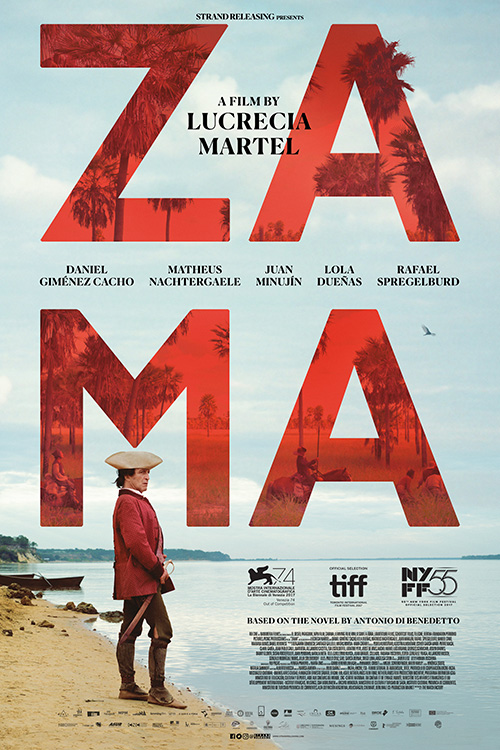
Please join Cultivate Cinema Circle and Hallwalls Contemporary Arts Center as we present a year-long series entitled Post-Colonialisms: World Cinema and Human Consequence. We begin with Lucrecia Martel’s critically-acclaimed Zama [2017].
Screening Date: Thursday, February 7th, 2019 | 7:00pm
Tickets:$8 general, $6 students & seniors, $5 members
Event Sponsors:
Venue Information:
341 Delaware Ave, Buffalo, NY 14202
Synopsis
Courtesy of press kit:
Zama, an officer of the Spanish Crown born in South America, waits for a letter from the King granting him a transfer from the town in which he is stagnating, to a better place. His situation is delicate. He must ensure that nothing overshadows his transfer. He is forced to accept submissively every task entrusted to him by successive Governors who come and go as he stays behind. The years go by and the letter from the King never arrives. When Zama notices everything is lost, he joins a party of soldiers that go after a dangerous bandit.
Tidbits:
Venice Film Festival – 2017 – Out of Competition
New York Film Festival – 2017
Director Statement
Courtesy of press kit:
I wish to move towards the past with the same irreverence we have when moving towards the future. Not trying to document pertinent utensils and facts, because Zama contains no historicist pretensions. But rather trying to submerge in a world that still today is vast, with animals, plants, and barely comprehensible women and men. A world that was devastated before it was ever encountered, and that therefore remains in delirium. The past in our continent is blurred and confused. We made it this way so we don’t think about the ownership of land, the spoils on which the Latin American abyss is founded, entangling the genesis of our own identity. As soon as we begin to peer into the past, we feel ashamed. Zama plunges deep into the time of mortal men, in this short existence that has been allowed to us, across which we slide anxious to love, trampling exactly that which could be loved, postponing the meaning of life as if the day that matters the most is the one that isn’t here yet, rather than today. And yet, the same world that seems determined to destroy us becomes our own salvation: when asked if we want to live more, we always say yes.
Director Bio
“From the very beginning, even when I’m writing, I think a lot about the sound. Many elements of my work in cinema come from oral storytelling and oral tradition. I think about sound and the rhythm of the sound.”
Courtesy of press kit:
Born in Argentina, filmmaker Lucrecia Martel has positioned her work in the international film community. ZAMA (2017) is her fourth feature film after writing and directing LA MUJER SIN CABEZA (2008, The Headless Woman), LA NIÑA SANTA (2004, The Holy Girl) and LA CIÉNAGA (2001, The Swamp). Her films have been acclaimed at the most important film festivals: Cannes, Berlin, Venice, Toronto, New York, Sundance and Rotterdam, amongst others. Retrospectives of her work have been widely exhibited in film festivals and prestigious institutions such as Harvard, Berkeley or the London Tate Museum. She has taken part in the official juries of Berlin, Cannes, Venice, Sundance and Rotterdam, and has dictated masterclasses around the world.
Filmography:
Zama (2017)
La mujer sin cabeza [The Headless Woman] (2008)
La niña santa [The Holy Girl] (2004)
La ciénaga [The Swamp] (2001)
Links
Here is a curated selection of links shared on our Facebook page for additional insight/information:
1/14/19 – “Beautiful, hypnotic, mysterious and elliptical, Zama is a story about a man at odds with a world that he struggles to dominate, which becomes a lacerating, often surprisingly comic evisceration of colonialism and patriarchy.” Manohla Dargis, The New York Times – link
2/7/19 – “CCC’s year-long series titled “Post-Colonialisms: World Cinema and Human Consequence” begins this month with Lucrecia Martel’s universally praised Zama. The stunning historical drama about a Spanish officer in South America is hypnotic, unsettling, and profoundly unforgettable. It is a another gem from Martel, the director of 2008’s The Headless Woman.” Buffalo Spree magazine – link
2/7/19 – “It’s not often that a hefty, literary-sourced masterpiece feels breezily paced, but Zama is, miraculously, that, too. It’s the year’s best, and a film we’ll be still be catching up to and marveling over decades from now.” Reverse Shot – link
Extras: Stop in early for FREE Breadhive baked goods while supplies last!
Event Sponsors:
Venue Information:
420 Connecticut St, Buffalo, NY 14213
Synopsis
Courtesy of press kit:
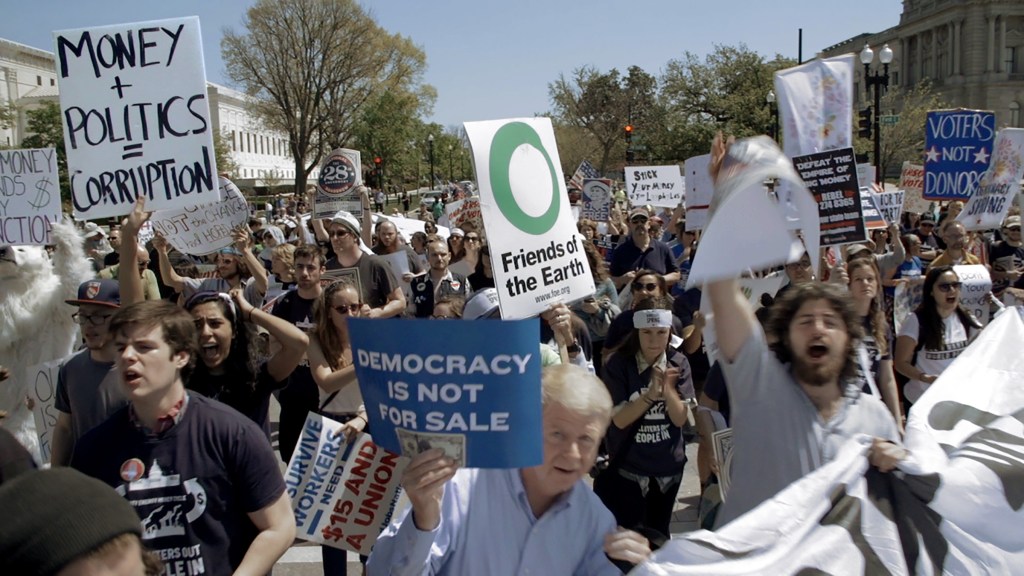
Dark Money, a political thriller, examines one of the greatest present threats to American democracy: the influence of untraceable corporate money on our elections and elected officials. The film takes viewers to Montana—a frontline in the fight to preserve fair elections nationwide—to follow an intrepid local journalist working to expose the real-life impacts of the US Supreme Court’s Citizens United decision. Through this gripping story, Dark Money uncovers the shocking and vital truth of how American elections are bought and sold. This Sundance award-winning documentary is directed/produced by Kimberly Reed (Prodigal Sons) and produced by Katy Chevigny (E-Team).
Tidbits:
Sundance Film Festival – 2018
International Documentary Association – 2018 – Nominee: Best Feature
Director Statement
Courtesy of press kit:
When I heard about the Supreme Court’s Citizens United decision on the radio in 2010, I froze in the middle of my apartment. Like many Americans, I found the ideas that corporations are people and money is speech to be ludicrous. But worse than that was the easily foreseeable outcome that political power would be controlled by fewer and fewer, richer and richer people. And I knew that I was not alone. Approximately 80% of Americans have consistently disapproved of this decision. [CBS Poll, 2016]
For a few years, I didn’t quite know what to do about my frustration with our crippled campaign finance system. As a filmmaker, my first impulse was to make a documentary about it.
When I heard my home state of Montana would be the only state to fight back against Citizens United in the U.S. Supreme Court, everything changed. I knew I could tell a compelling story of campaign finance through the eyes of real people. I grabbed the best camera I could get and started filming.
The only way to really understand how the dark money shell game works is to follow the nonprofit corporations over multiple election cycles as they pop up, disintegrate, reconstitute, and wreak havoc once again. It usually takes journalists years to uncover the damage that dark money causes, and by that time it is too late.
I played this game of Whack-A-Mole over three election cycles in what became the perfect environment to tell the campaign finance story. Montana was not only the first and hardest hit with dark money but also the state that fought back the hardest with grassroots citizen outrage. Dark Money puts a human face to that fight.
Told through the lives of real people, our film makes a concerted effort to share stories from both sides of the aisle. It was important to me to remind folks that campaign spending is not just a liberal or conservative issue; and it affects all Americans, not just Montanans, regardless of ideology.
The role money plays in our politics has never been more crucial. Or timely. Dark money contributions increased a stunning 60-fold in 2012 (the first election after Citizens United) and spending for the 2018 campaigns has already far outpaced that of 2016. And, as we have seen with recent breaking news, the spending is getting more sophisticated, more insidious, and harder to track.
I am excited our film is being released in the midst of the 2018 election cycle. Campaign spending is the most fundamental political problem facing our democracy, and I believe our film comes at a critical time to help solve some of those problems, educate viewers, and inspire citizens to “follow the money” all the way to the campaign finance reform Americans consistently say they want.
Director Bio
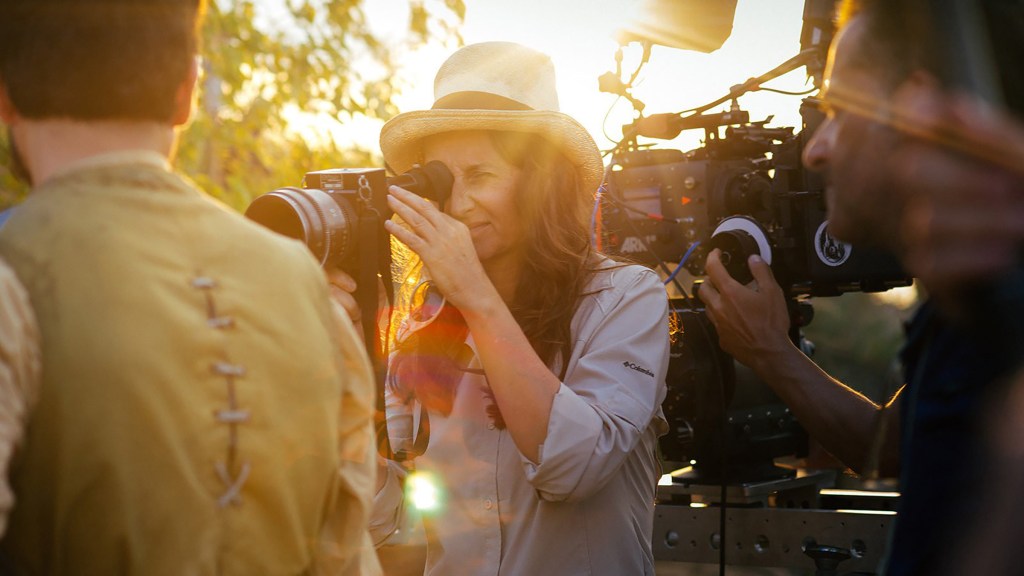
Photo by Claire Jones.
“I think journalists and documentary makers need to work together to keep each other honest. There are ways that documentary makers can tell a bigger, broader, moving story, because that’s the power of cinema.”
Courtesy of press kit:
Kimberly Reed’s work has been featured on the Oprah Winfrey Show, CNN, NPR, The Moth, and in Details Magazine. One of Filmmaker Magazine’s “25 New Faces of Independent Film,” she directed/produced Prodigal Sons, a “whiplash doc that heralds an exciting talent” (SF Weekly). Prodigal Sons (First Run Features, Sundance Channel) premiered at Telluride, landed on many Best of the Year lists, screened at more than 100 film festivals, and garnered 14 Audience and Jury awards, including the FIPRESCI Prize. Ms. Reed was recognized as one of OUT Magazine’s “Out 100,” and as Towleroad’s “Best LGBT Character of the Film Year.” She also produced/edited/wrote Paul Goodman Changed My Life (Zeitgeist Films) and produced The Death and Life of Marsha P. Johnson (Netflix). With a background in journalism, her work in broader artistic fields has also been acclaimed. She was published in the NY Times bestselling “The Moth – 50 True Stories,” and has co-authored three operas, including As One, the most frequently produced American opera in decades.
Filmography:
Dark Money (2018)
Prodigal Sons (2008)
Links
Here is a curated selection of links shared on our Facebook page for additional insight/information:
12/04/18 – “One of the most expert dissections ever conducted of the subterranean tentacles quietly strangling U.S. democracy” Jon Schwarz, The Intercept – link
Please join Cultivate Cinema Circle and Hallwalls Contemporary Arts Center as we showcase the debut features of some of today’s modern visionary filmmakers with a year-long series dubbed Women Direct. Our last selection is Julie Dash’s Daughters of the Dust [1991] with an introduction by artist / poet Annette Daniels Taylor.
Screening Date: Thursday, November 8th, 2018 | 7:00pm
Tickets:$8 general, $6 students & seniors, $5 members
Event Sponsors:
Venue Information:
341 Delaware Ave, Buffalo, NY 14202
Synopsis
Courtesy of Cohen Media Group:
At the dawn of the 20th century, a multi-generational family in the Gullah community on the Sea Islands off of South Carolina – former West African slaves who adopted many of their ancestors’ Yoruba traditions – struggle to maintain their cultural heritage and folklore while contemplating a migration to the mainland, even further from their roots.
Cohen Media Group is proud to present the 25th anniversary restoration of director Julie Dash’s landmark film Daughters of the Dust. The first wide release by a black female filmmaker, Daughters of the Dust was met with wild critical acclaim and rapturous audience response when it initially opened in 1991. Casting a long legacy, Daughters of the Dust still resonates today, most recently as a major in influence on Beyonce’s video album Lemonade. Restored (in conjunction with UCLA) for the first time with proper color grading overseen by cinematographer AJ Jafa, audiences will finally see the film exactly as Julie Dash intended.
Tidbits:
Sundance Film Festival – 1991 – Winner: Cinematography Award (Dramatic Competition)
Toronto International Film Festival – 1991
National Film Preservation Board – 2004 – National Film Registry
DAUGHTERS OF THE DUST is the cinema of images and ideas.
Images play a major role in the complex process that shapes our identity. When images of African-American women are depicted on the screen by someone outside of our culturem it is a projection of that filmmaker’s mind — not an expression of our reality. The films that I make are from a Black aesthetic and from an African-American woman’s reality. I make the kinds of films that I’ve always wanted to see.
My films are about women at pivotal moments in their lives; enigmatic women who are juggling complex psyches; who speak to one another in fractured sentences, yet communicate completely through familiar gestures and stances; women who remind me of my old neighborhood and the women who raised me.
My approach to the writing and directing of this film has been to evoke ancient sensibilities, to challenge the conventional formats of representing Black women in the genre of historical drama.
Bio:
Julie Dash was born and raised in New York City. She is an independent filmmaker who has received wide recognition for her work; Ms. Dash tours nationally and internationally with her films. Prints of her films, ILLUSIONS and FOUR WOMEN have been permanently archived at Indiana University and at Clark College in Atlanta. She is currently working on a series of films depicting Black women in the United States from the turn of the century to the year 2000 A.D.
Ms. Dash has a 1991/92 Fulbright Fellowship to London to collaborate on a screenplay with Maureen Blackwood of Sankofa. In 1989, she won a Rockefeller Intercultural Film Fellowship. In 1981, she was the recipient of a prestigious John Simon Guggenheim Memorial Foundation Fellowship for her work in film. She just completed fer first feature length film, DAUGHTERS OF THE DUST, for an American Playhouse theatrical release in 1992. DAUGHTERS OF THE DUST won the first prize award in cinematography, for dramatic film, at the 1991 Sundance Film Festival in Utah.
Her critically acclaimed short film, ILLUSIONS, has won the 1989 Jury Prize for the Best Film of The Decade, awarded by the Black Filmmaker Foundation. ILLUSIONS was nominated for a 1988 Cable ACE Award in Art Direction, and was the season opener of “Likely Stories,” The Learning Channel’s new series showcasing fictional works by independent filmmakers. In 1985, she was a recipient of the Black American Cinema Society award for ILLUSIONS.
In 1986, she relocated to Atlanta, Georgia from Los Angeles. Ms. Dash had been selected by the Academy of Motion Picture Arts and Sciences to work as a directing apprentice, in Atlanta, on “Leader Of The Band”. Later, she began working with the Atlanta-based National Black Women’s Health Project on a six-part media presentation on adolescent pregnancy.
In 1985, 1983, and 1981, she was the recipient of an Individual Artist Grant from the National Endowment for the Arts. In 1981, she was awarded an Independent Filmmaker’s Grant from the American Film Institute (AFI).
From 1978 to 1980, Ms. Dash worked for the Motion Picture Association of America (MPAA), in Los Angeles, as a member of the Classifications and Rating Administration. One of six voting board members, she made daily decisions that vitally affected the fortunes of more than 350 movies made each of those years; she screened all film for distribution in the United States to apply a G, PG, R or X rating. On several occasions during her three-year tenure with the Ratings board, she travelled to Pinewood Studios in London on special assignment screenings.
On two of these MPAA European assignments, Ms. Dash was able to attend and participate in the Cannes International Film Festival in France. At the 1980 festival, she co-sponsored a screening of short films by Black Americans in the Marche du Cinema. This screening led directly to the historic retrospective of Afro-American cinema held in October 1980 at FNAC in Paris at the Forum Les Halles.
In February of 1982, she travelled with a delegation of Black American independent filmmakers to attend a film festival sponsored by the National Film Theater of London and the British Commonwealth Institute. This festival occasioned the historical meeting of Black American independent filmmakers with their British counterparts.
In March of 1982, Ms. Dash, along with two other participants from the British tour, was invited to attend the Festival Against Racism in Amiens, France.
During the summer of 1983, two of her films toured throughout forty African countries in the Black Filmmaker Foundation’s “American Films: A Touring Exhibition”. This tour marked the first time that an African audience was exposed to the works of Black American independent filmmakers.
Julie began studying film production in 1969, at the Studio Museum of Harlem, in New York. Later as an undergraduate at The City College of New York, she majored in psychology until she was accepted into the film studies program at The Leonard Davis Center for the Performing Arts, in the David Picker Film Institute. Before graduation, she wrote and produced a promotional documentary for the New York Urban Coalition, WORKING MODELS OF SUCCESS (1974).
With a B.A. in Film Production, Ms. Dash relocated to Los Angeles to attend the Center for Advanced Film Studies at the American Film Institute. At AFI, she studied under several distinguished filmmakers, including William Friedkin, Jan Kadar, and Slavko Vorkapich.
Influenced by Vorkapich’s lectures on Kinesthetic responses in cinema, she conceived and directed FOUR WOMEN (1978), an experimental dance film that received a Gold Medal for Women In Film at the 1978 Miami International Film Festival. During her two-year fellowship at AFI, she completed ENEMY OF THE SUN, a feature length screenplay.
Ms. Dash directed DIARY OF AN AFRICAN NUN (1977), as a graduate film student at the University of California, Los Angeles. DIARY OF AN AFRICAN NUN, an adpatation of a short story written by Alice Walker, was screened at the Los Angeles Film Exposition (FLIMEX) and gained her a Director’s Guild Award for a student film.
Her most publicized and critically examined work, ILLUSIONS (1983), a drama set in 1942, completes the first segment of her series about Black women in the United States. Clyde Taylor writes in Freedomways magazine, “Black independents (film) have passed through several conceptual periods in which one doctrine or style was dominant now they seem to be moving towards greater diversity. An important harbinger of this mellowing out is Julie Dash’s remarkable ILLUSIONS, which, like recent developments in architecture and jazz, is post-modernist in its historical eclecticism. Dash’s refreshing challenge is to assume that her audiences can think and bring to their viewing of her work some knowledge of cinema. Set in a Hollywood studio during World War II, when commercial film production was at its most propagandistic, ILLUSIONS plays inventively on themes of cultural, sexual, and racial domination. While its touch is light and entertaining, it offers the most searing revelation in any medium of the expropriation of Black popular culture by the U.S. mass culture industry …”.
Filmography:
Travel Notes of a Geechee Girl (2017)
The Rosa Parks Story (2002)
Love Song (2000)
Incognito (1999)
Funny Valentines (1999)
Daughters of the Dust (1991)
Working Models of Success (1973)
Links
Here is a curated selection of links shared on our Facebook page for additional insight/information:
10/24/18 – “Julie Dash Made a Movie. Then Hollywood Shut Her Out.” Cara Buckley, New York Times – link
11/7/18 – “Film can be that balm of Gilead. Film can be that prescription for many ills of the world…You don’t need to fight wars anymore; just create a series of films that move & motivate & resonate with people & you could change a situation” – Julie Dash, Vogue – link
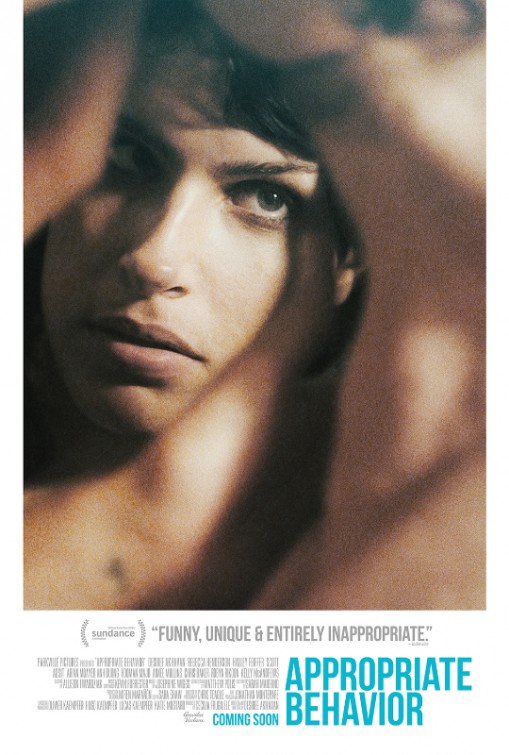
Please join Cultivate Cinema Circle and Hallwalls Contemporary Arts Center as we showcase the debut features of some of today’s modern visionary filmmakers with a year-long series dubbed Women Direct. Our sixth selection is Desiree Akhavan’s Appropriate Behavior [2015] with an introduction by local film programmer Caitlin Coder.
Screening Date: Wednesday, September 19th, 2018 | 7:00pm
Tickets:$8 general, $6 students & seniors, $5 members
Event Sponsors:
Venue Information:
341 Delaware Ave, Buffalo, NY 14202
Synopsis
Courtesy of press notes:
For Shirin (Desiree Akhavan), being part of a perfect Persian family isn’t easy. Acceptance eludes her from all sides: her family doesn’t know she’s bisexual, and her ex-girlfriend, Maxine (Rebecca Henderson), can’t understand why she doesn’t tell them. Even the six-year-old boys in her moviemaking class are too ADD to focus on her for more than a second. Following a family announcement of her brother’s betrothal to a parentally approved Iranian prize catch, Shirin embarks on a private rebellion involving a series of pansexual escapades, while trying to decipher what went wrong with Maxine.
Written and directed by Akhavan, APPROPRIATE BEHAVIOR introduces a gray area to the coming-out narrative; in an Iranian-American family, sharing information about one’s sexuality isn’t always the right approach to liberation. With her priceless deadpan delivery, Akhavan’s portrayal of Shirin is the film’s true revelation—a woman caught between self-doubt and self-possession, trapped in a web of family mores and societal expectations, with all their accompanying—and often hilarious—complexities.
Written by Kim Yutani
Tidbits:
Sundance Film Festival – 2014
Independent Spirit Awards – 2015 – Nominee: Best First Screenplay
Gotham Awards – 2015 – Nominee: Bingham Ray Breakthrough Director Award
Director Statement/Bio
Photo: WARNAND/EPA/REX/Shutterstock
“I’m a director and a writer, and I’m used to having my way. I’m not used to being a vessel for other people.”
Courtesy of press notes:
Statement:
I’ve been in development for APPROPRIATE BEHAVIOR since I was 10. As a latch-key child of immigrants, it was around that age that I started realizing what a freak of nature I was. Even though I had the perspective, wit and desires of a normal person, these qualities were somehow mismatched to the circumstances I was born to (female/ Iranian-American/bisexual). I knew if I wanted to see reflections of myself in mainstream culture I’d have to do it myself.
The film is inspired by my experience facing life after my first serious relationship with a woman. Not only was I heartbroken, but also experiencing the most uncomfortable phase of the coming out process: the time that follows after you’ve made the big announcement. Your family has no idea of how to process the information and you can’t look them in the eye without wondering if they’re imagining you having gay sex now that they know that you’re capable of it. I decided I wanted to make a film that touched on the themes that were ruling my life, but without the classic film cliches: no huge break-through hugging-through-our-tears coming out scene, no clear cut definitions of good and bad, no taking itself too seriously and sex scenes that were honest and true to dating and fucking as I know it.
I chose to star in the film because it would have been disingenuous to have hired a better looking version of me. The film is so clearly a response to my life and my desires, I wanted to put it all on the line. Though it is not autobiographical and the exact events in the film have not taken place, the emotions are true to life, only I evoked them in scenarios that were convenient for the sake of a 90 minute comedy. I was very much influenced by ANNIE HALL and it was that film that inspired the film’s structure, which dances back and forth between past and the present.
I’m beginning to notice the terms “Women’s Film” and “Gay Film” are seen as dirty words. “Iranian film” is a bit better- more highbrow, but still a chore. The “Iranian Film” is the DVD that arrives and holds up the flow of your Netflix queue for about a month. The one you keep promising to watch on Sunday night, but instead find yourself glued to MISERY, which happens to be on TV that night. I wanted to make a film that didn’t feel like “taking your medicine.” It’s a comedy, but beneath the surface we’ve set out to communicate something very real about the complexity of being openly bisexual, the subtle rivalry and love between siblings and the crushing expectations that come along with being the child of immigrants.
Bio:
Iranian-American filmmaker Desiree Akhavan is the co-creator and star of the critically acclaimed web series THE SLOPE, a comedy that follows a pair of superficial, homophobic lesbians in love. Her first feature, APPROPRIATE BEHAVIOR, premiered at the 2014 Sundance Film Festival. Desiree was featured as one of Filmmaker Magazine’s “25 New Faces of Independent Film” and will appear on the next season of GIRLS. She has a BA from Smith College and an MFA from NYU’s Grad Film Program.
Filmography:
The Miseducation of Cameron Post (2018)
Appropriate Behavior (2015)
Nose Job (2010) (short)
Links
Here is a curated selection of links shared on our Facebook page for additional insight/information:
1/28/18 – Congratulations to Desiree Akhavan, writer/director/star of Appropriate Behavior, who last night won the 2018 Sundance Film Festival Grand Jury Prize for her new film The Miseducation of Cameron Post! – link
3/7/18 – “Categorisation is also an issue that affected Desiree Akhavan, writer, director and star of 2015’s Appropriate Behaviour, and the US Grand Jury Prize-winning The Miseducation of Cameron Post, at this year’s Sundance. Even though Appropriate Behaviour is a dramedy exploring female sexuality and identity, and therefore well within the sphere of suitable material for a woman director, the reception of Akhavan’s film can be seen as indicative of a tendency to situate women in relation to other women filmmakers, to compare and label them, instating something like a ‘one at a time’ rule. Appropriate Behaviour offers a candid portrait of sex and relationships and following Akhavan’s guest-role in Girls, the press repeatedly referred to her as ‘the next Lena Dunham’.” – link
9/2/18 – “Appropriate Behavior is sort of like Annie Hall if Woody Allen were a bisexual Persian girl living in Park Slope.” David Ehrlich, Film.com – link
Please join Cultivate Cinema Circle and Hallwalls Contemporary Arts Center as we present a special one-night screening of Viktor Jakovleski’s Brimstone & Glory [2017]. This event is a collaboration with POV, PBS’ award-winning nonfiction film series.
Screening Date: Thursday, August 23rd, 2018 | 7:00pm
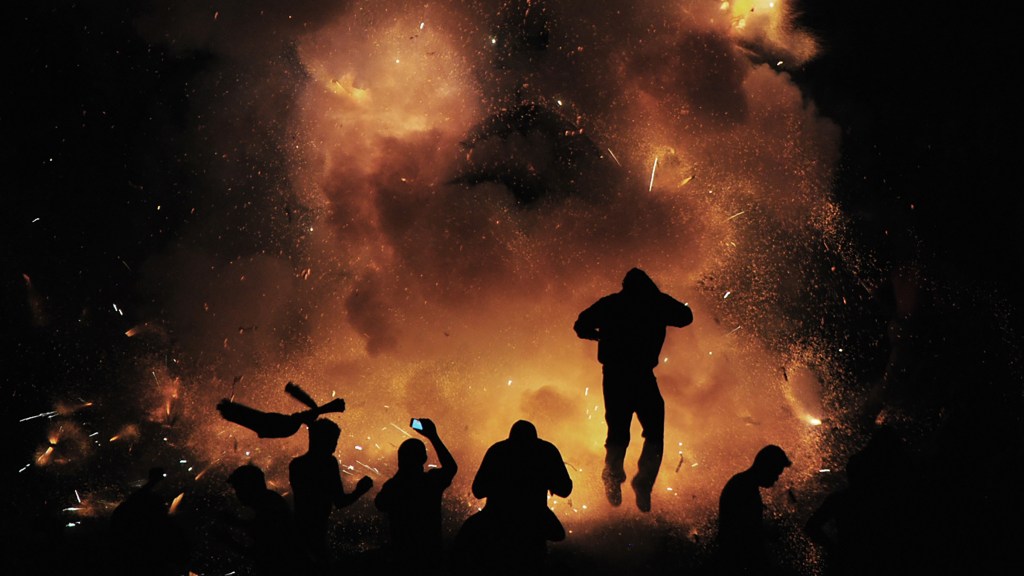
The National Pyrotechnic Festival in Tultepec, Mexico, is a site of festivity unlike any other in the world. In celebration of San Juan de Dios, patron saint of firework makers, conflagrant revelry engulfs the town for ten days. Artisans show off their technical virtuosity, up-and-comers create their own rowdy, lofi combustibles, and dozens of teams build larger-than-life papier-mâché bulls to parade into the town square, adorned with fireworks that blow up in all directions. More than three quarters of Tultepec’s residents work in pyrotechnics, making the festival more than revelry for revelry’s sake. It is a celebration that anchors a way of life built around a generations old, homegrown business of making fireworks by hand. For the people of Tultepec, the National Pyrotechnic Festival is explosive celebration, unrestrained delight and real peril. Plunging headlong into the fire, Brimstone & Glory honors the spirit of Tultepec’s community and celebrates celebration itself.
Edited by Affonso Gonçalves and scored by Dan Romer and Benh Zeitlin, the creative team of Beasts of the Southern Wild.
Tidbits:
National Board of Review – 2017 – Winner: Top 5 Documentary
International Documentary Association – 2017 – Winner: Best Music (Creative Recognition Award)
Director Statement
Courtesy of press kit:
I strive to bring to cinema a kind of transporting sense of adventure. Through new images, colors, and sounds, the goal is to explore fresh and vital worlds with thrilling abandon. In Brimstone & Glory we went on a voyage to capture the world of Tultepec, Mexico, its prodigious pyrotechnicians, their fireworks, and the fiestas thrown in their honor. Our aim was to create an experiential rollercoaster ride through the explosions, fire, and smoke.
Not long ago, I fell in love with the writing of Mexican Nobel Prize winner Octavio Paz. It was his Labyrinth of Solitude with its passage “The Day Of The Dead” that inspired me to explore the incredible phenomenon of the Mexican fiesta and the lengths people go to reach the zenith of joyful expression. Paz writes, “All are possessed by violence and frenzy. Their souls explode like the colors and voices and emotions… The fiesta is a cosmic experiment in disorder, reuniting contradictory elements and principles in order to bring about renascence of life.” It was also at this time that I learned of Tultepec from a Berlin-based artist who had visited the fireworks festival with his cousin, a pyrotechnician. The artist took photographs that he would later turn into paintings. Seeing these extraordinary images and hearing the outsized tales of his exploits made it impossible for me to resist visiting. The visual and aural experience of the festival was something beyond comprehension. It was visceral and all-consuming, intense and freeing.
Using a combination of shooting styles—from in-the-fray handheld photography, to filming 1,500 frames per second with the high-speed Phantom, to slapping down GoPros to capture dynamic, as-yet-unseen vantage points—we seek to offer a viewing experience that most closely represents the feeling of being there. From the pyrotechnicians handcrafting fireworks to the townspeople dancing in showers of sparks, we use cinematic language to articulate how risk and danger are inseparable from acts of extreme revelry, and how such celebration is something fundamentally human.
Director Bio
Courtesy of press kit:
Viktor Jakovleski is a Berlin-based filmmaker. He has directed and produced videos for internationally renowned electronic musicians and produced the German feature film Lenalove, which was released in selected German cinemas in September 2016.
Viktor spent four years making Brimstone & Glory, returning to the annual festival in Tultepec, Mexico, three times. In the final shoot in 2016, he was struck by one of the festival’s iconic “bulls” and was severely injured.
Viktor’s next project centers around Berlin artist Julius von Bismarck and his dangerous expedition to the Catatumbo Delta at Lake Maracaibo, Venezuela, the area with highest occurrence of natural lightning strikes in the world, to examine and ultimately catch lightning by shooting rockets into storm clouds.
In 2015, Viktor was chosen as one of 25 “New Faces of Independent Film” by Filmmaker Magazine.
He served as contributing director to the documentary 11/4/08 (2010), which premiered at SXSW, and co-produced and assistant directed Benh Zeitlin’s award winning film Glory at Sea! (2008). He also attended the producing program at the German Film and Television Academy Berlin (DFFB) and for several years worked at Studio Babelsberg.
Filmography:
Brimstone & Glory (2017)
Angst (2006) (short)
Links
Here is a curated selection of links shared on our Facebook page for additional insight/information:
8/16/18 – “In his feature debut, Viktor Jakovleski has achieved that rare feat for a documentary and created a film culled from reality that makes you question whether you’re still in your theater seat.” Arlin Golden, Film Inquiry – link
8/23/18 – “Pushes cinema to places it’s never been before.” Stephen Saito, The Moveable Fest – link
Buffalo is full of people helping to cultivate cinema and we want to celebrate those involved. The Cultivators is a new monthly feature in which we highlight individuals who are integral to the presentation, promotion and production of film here in the queen city.
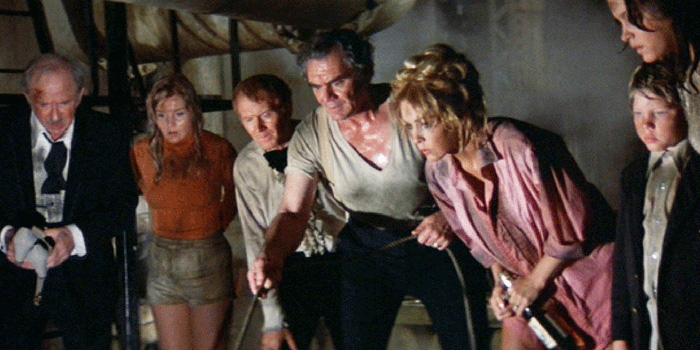
I was just pulled in by the magic of the big screen experience. As a kid, seeing The Poseidon Adventure at the theater just pulled me in and got me hooked on the excitement of going to the movies. The cinema felt like it was a neighborhood portal to take you to other places, and it was something I knew I always wanted to be involved with. Working for General Cinema for years only increased my interest and helped with opening my own theater.
What is your favorite movie related memory?
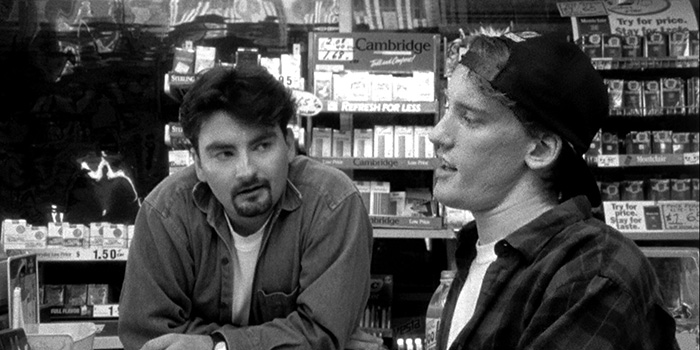
My first movie theater trips as a child still hold an impact. A couple movie premieres that I was able to attend (Clerks, Jackie Brown) and my first trips to the Toronto International Film Festival still seem magical. Also, after first opening The Screening Room and selling out a screening of It’s a Wonderful Life (when it was showing on TV at the exact same time) reinforced my belief that there is still a need/desire for the theatrical experience.
How did you end up in Buffalo?
Born and raised in Buffalo, almost took a position in California a couple times, but something about the city and people kept me here.
What do you want to see more of in Buffalo?
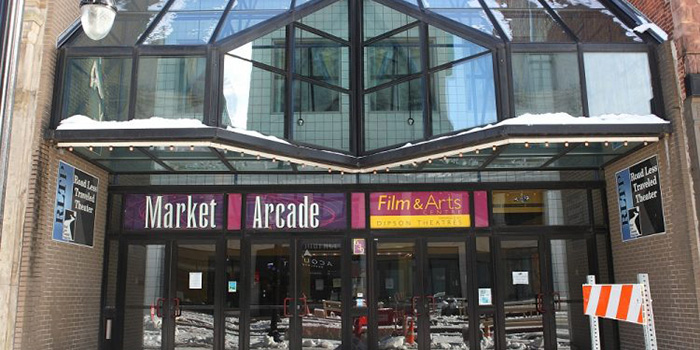
In terms of cinema, the fact that I really cannot think of much is a testament to how far Buffalo has come. From Dipson to the North Park to Hamburg Palace, there are some great theater options beyond the chains. There are numerous film festivals and emerging film series that really offer a lot for movie-going in Buffalo. In addition there is a thriving movie-making scene of indie and major productions that seems to be happening nonstop. Hopefully the Market Arcade cinema will finally re-open and provide a good mix of programming in the downtown area.
What are your essential film books?
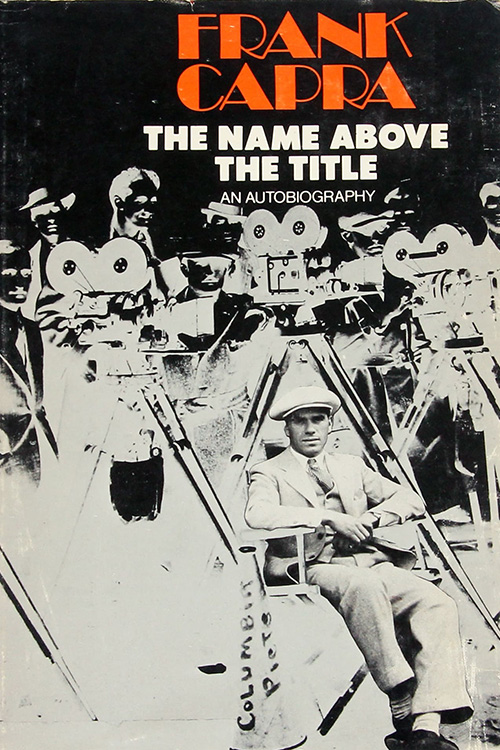
Frank Capra: The Name Above the Title by Frank Capra
Easy Riders, Raging Bulls by Peter Biskind
All I Need to Know About Filmmaking I Learned from The Toxic Avenger by Lloyd Kaufman and James Gunn
Hitchcock/Truffaut by Francois Truffaut
TOP TEN FILMS
I have a huge list of “greatest movies,” but 10 of the movies that are favorites and I could watch over and over are here in alphabetical order:
After Hours [1985], directed by Martin Scorsese
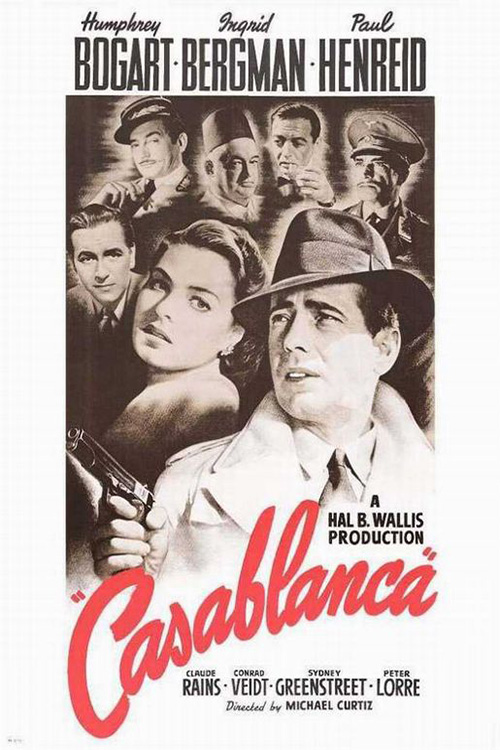
Casablanca [1942], directed by Michael Curtiz
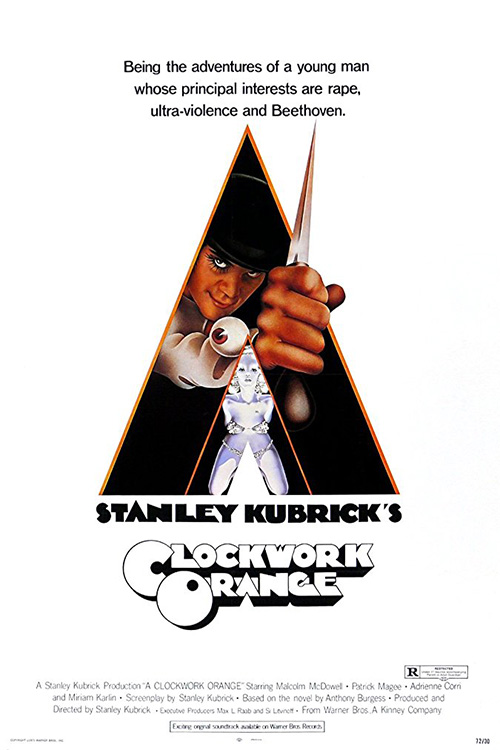
A Clockwork Orange [1971], directed by Stanley Kubrick
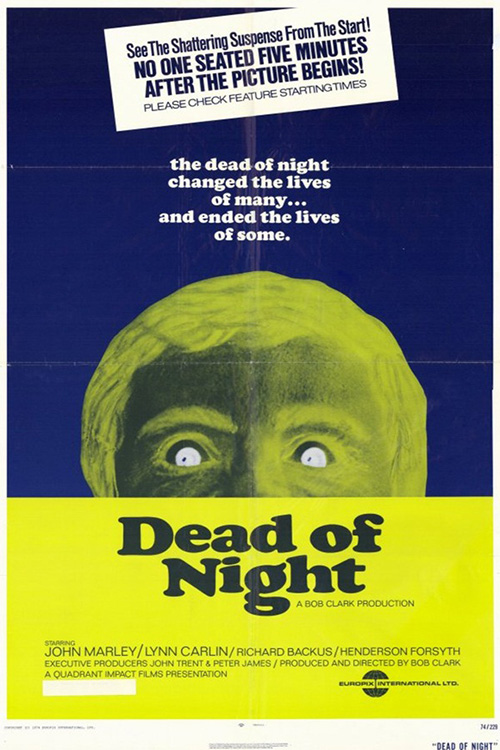
Dead of Night [1974], directed by Bob Clark
The Godfather [1972], directed by Francis Ford Coppola
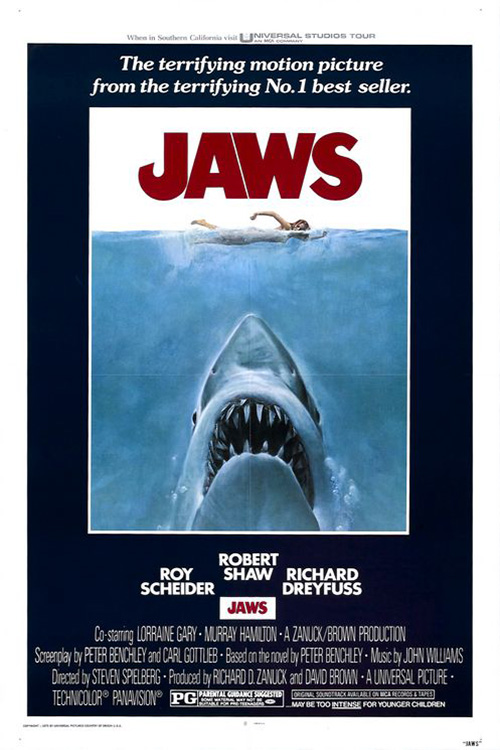
Jaws [1975], directed by Steven Spielberg
Psycho [1960], directed by Alfred Hitchcock
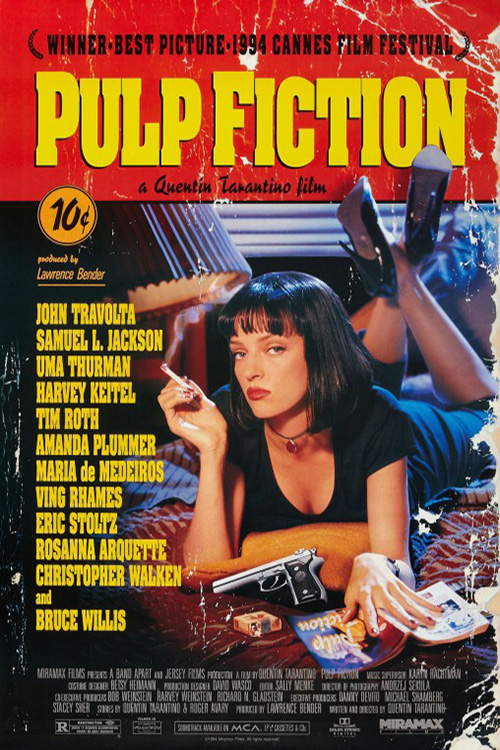
Pulp Fiction [1994], directed by Quentin Tarantino
The Third Man [1949], directed by Carol Reed
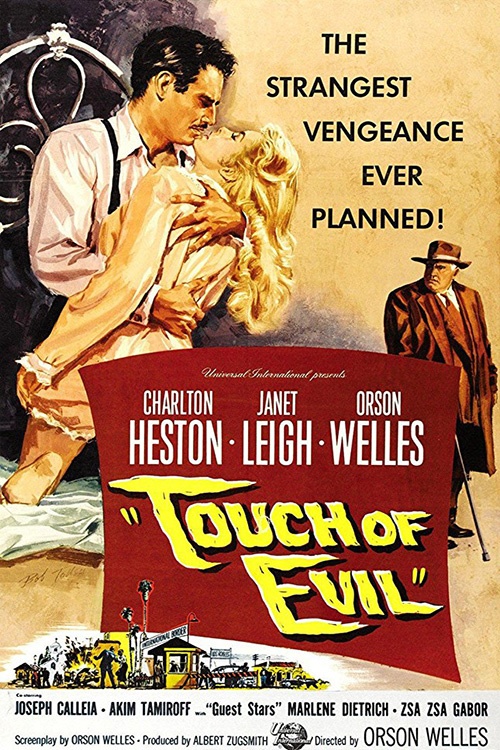
Touch of Evil [1958], directed by Orson Welles
Film stills from left to right, top to bottom are The Poseidon Adventure, General Cinema University 8, Clerks, TIFF, It’s a Wonderful Life, North Park Theatre, Hamburg Palace, Market Arcade.
Please join Cultivate Cinema Circle and Hallwalls Contemporary Arts Center as we showcase the debut features of some of today’s modern visionary filmmakers with a year-long series dubbed Women Direct. Our fifth selection is Sofia Coppola’s The Virgin Suicides [2000] with an introduction by Nichols High School’s Classic Movie Night curator Andrea Mancuso.
Screening Date: Thursday, July 19th, 2018 | 7:00pm
On the surface the Lisbons appear to be a normal 1970s family living in a middle-class Michigan suburb. Mr. Lisbon is a quirky math teacher, his wife is a strictly religious mother of five attractive teenage daughters who catch the eyes of the neighborhood boys. However, when 13-year-old Cecilia commits suicide, the family spirals downward into a creepy state of isolation and the remaining girls are quarantined from social interaction (particularly from the opposite sex) by their zealously protective mother. But the strategy backfires, their seclusion makes the girls even more intriguing to the obsessed boys who will go to absurd lengths for a taste of the forbidden fruit.
Tidbits:
Cannes Film Festival – 1999 – Directors’ Fortnight
Sundance Film Festival – 2000
Director Bio
Photo: WARNAND/EPA/REX/Shutterstock
“Perhaps it makes sense that a woman whose earliest memory was on the set of Apocalypse Now would grow up to direct a dark fable about five adolescent girls who unapologetically and unceremoniously kill themselves…”
Courtesy of The Beguiled‘s press notes:
Sofia Coppola grew up in Northern California. After doing costume design on two feature films, she studied Fine Art at California Institute of the Arts.
She then wrote and directed the short film Lick the Star (which world-premiered at the Venice International Film Festival), followed by the feature The Virgin Suicides. Ms. Coppola wrote the screenplay for the latter film, adapting it from Pulitzer Prize winner Jeffrey Eugenides’ novel of the same name. The movie starred Kirsten Dunst, Josh Hartnett, James Woods, and Kathleen Turner. A world premiere at the Cannes International Film Festival, The Virgin Suicides subsequently earned her the MTV Movie Award for Best New Filmmaker.
Ms. Coppola’s next film, Lost in Translation, was her first with Focus Features, and screened at the Toronto, Venice, and Telluride Film Festivals. The movie brought her the Academy Award for Best Original Screenplay as well as Academy Award nominations for Best Director and Best Picture (in her capacity as producer). Lost in Translation stars Bill Murray and Scarlett Johansson won BAFTA Awards for Best Actor and Best Actress, respectively, among many other honors that the cast and crew received worldwide.
Her third feature as writer/director, Marie Antoinette, was based in part on Antonia Fraser’s biography Marie Antoinette: The Journey, and world-premiered at the Cannes International Film Festival. The movie, which Ms. Coppola also produced, starred Kirsten Dunst in the title role. The film’s costume designer, Milena Canonero, won an Academy Award for her work on the picture.
She then wrote and directed and produced Somewhere, her second movie with Focus Features. The movie starred Stephen Dorff and Elle Fanning, who received a Critics’ Choice Award nomination for her performance. In its world premiere at the 2010 Venice International Film Festival, Somewhere won the Festival’s top prize, the Golden Lion Award for Best Picture. Ms. Coppola was honored with a Special Filmmaking Achievement Award from the National Board of Review.
Her next feature as writer/director/producer was The Bling Ring, which she based on Nancy Jo Sales’ Vanity Fair article “The Suspect Wore Louboutins.” The movie world-premiered at the Cannes International Film Festival, and Ms. Coppola was honored at Women In Film’s Lucy Awards with its Dorothy Arzner Award for Directing.
In 2015, she co-wrote, executive-produced, and directed the hourlong holiday special A Very Murray Christmas, which received Emmy Award nominations for Outstanding Television Movie and Outstanding Music Direction. The show’s star, Bill Murray, was nominated for a Screen Actors Guild Award; and Ms. Coppola was nominated for a Directors Guild of America Award for her work on the project.
Filmography:
On the Rocks (2020)
The Beguiled (2017)
La Traviata (2017)
A Very Murray Christmas (2015)
The Bling Ring (2013)
Somewhere (2010)
Marie Antoinette (2006)
Lost in Translation (2003)
The Virgin Suicides (1999)
Links
Here is a curated selection of links shared on our Facebook page for additional insight/information:
7/3/18 – “Who would’ve guessed, when The Virgin Suicides was released in 1999, that director Sofia Coppola would wind up as one of cinema’s most unique, insightful, and important voices? Her adaptation of Jeffrey Eugenides’s novel about five doomed sisters living in 1970s Michigan is one of the strongest debuts in film history.” Christopher Schobert, Buffalo Spree magazine – link
7/5/18 – “It remains Sofia Coppola’s finest film—the perfect melding of sound and vision, teen passion and inexplicable tragedy, and plenty of 70s sartorial flair.” Elizabeth Sankey, Noisey – link
7/17/18 – “I grew up with a lot of men. It was me and nine boys, once you count all my brothers and cousins. My dad, Francis Ford Coppola, was a macho film-maker and his friends were all of that ilk, so I think I really clung to femininity and a kind of girly aesthetic.” Sofia Coppola, The Guardian – link
Please join Cultivate Cinema Circle and Hallwalls Contemporary Arts Center as we celebrate the work of Olivier Assayas. Our second selection is a one-night screening of the brand new restoration of Irma Vep [1996].
Screening Date: Thursday, June 21st, 2018 | 7:00pm
Luminous Hong Kong star Maggie Cheung (as herself) is summoned to Paris by director René Vidal (Jean-Pierre Léaud) to play the lead in an insane undertaking—a silent remake of Louis Feuillade’s 1916 serial Les vampires. And she’s constantly left behind rather than catered to amidst the chaos of warring personalities on the set: the witchy production coordinator (Dominique Faysse), a loud-mouthed TV reporter (Antoine Basler) with an anti-art film bias and the mysteriously and aggressively intrusive Mireille (Bulle Ogier), among others, all of whom flit across the screen like phantoms. Olivier Assayas’s dizzying, poetic and exhilarating microcosm of modern life was written, shot, edited and mixed in record time (five months), and the sense of breathless speed fueled the finished product. Assayas put his constraints to work for him to create a film that is absolutely up-to-the-minute and liberating, a direct, free-form address to its audience. At the center of it all is the human ballast that keeps Irma Vep on course: the confused but tender relationship between Maggie and Zoë (Nathalie Richard, in the film’s standout performance). Irma Vep is very funny, although the laughs tend to catch in your throat because this is no cozy love letter to filmmaking, like Day for Night of Living in Oblivion, as the film’s final tortured, mindbending images demonstrate.
Written by Kent Jones
Tidbits:
Cannes Film Festival – 1996
Toronto International Film Festival – 1996
New York Film Festival – 1996
Director Bio
“With Irma Vep, all of a sudden I decided that it was okay to mix genre, to mix cultures, and that movies sometimes could be experiments, that within the format of modern cinema, within the format of narrative, you could experiment by mixing elements.”
Courtesy of Festival Scope:
Olivier Assayas (born January 25, 1955) is a French film director and screenwriter. He made his debut in 1986, after directing some short films and writing for the influential film magazine Cahiers du cinéma. Assayas’s father was French director/screenwriter Jacques Rémy (1910–1981). He started his career in the industry by helping him and ghostwrote episodes for TV shows his father was working on when his health failed. Assayas’s film COLD WATER was screened in the Un Certain Regard section at the 1994 Cannes Film Festival. His biggest hit to date has been IRMA VEP, starring Hong Kong star Maggie Cheung, which is a tribute both to French director Louis Feuillade and to Hong Kong cinema. While working at Cahiers du cinéma, Assayas wrote lovingly about European film directors he admired but also about Asian directors. One of his latest films is a documentary about Taiwanese filmmaker Hou Hsiao-Hsien. He married Hong Kong movie actress Maggie Cheung in 1998. They divorced in 2001, but their relationship remained amicable, and in 2004 Cheung made her award-winning movie CLEAN with him. He then married actress-director Mia Hansen-Løve. They met when Hansen-Løve, seventeen at the time, starred in Assayas’s 1998 feature LATE AUGUST, EARLY SEPTEMBER. He directed and co-wrote the acclaimed 2010 French television miniseries CARLOS, about the life of the terrorist Ilich Ramírez Sánchez. The actor Édgar Ramírez won the César Award for Most Promising Actor in 2011 for his performance as Carlos. In April 2011, it was announced that he would be a member of the jury for the main competition at the 2011 Cannes Film Festival. His 2012 film, SOMETHING IN THE AIR, was selected to compete for the Golden Lion at the 69th Venice IFF. Assayas won the Osella for Best Screenplay at Venice. His next two film, CLOUDS OF SILS MARIA (2013) and PERSONAL SHOPPER (2016) both played in the official competition at Cannes.
Filmography:
Wasp Network (2019)
Non-Fiction (2018)
Personal Shopper (2016)
Clouds of Sils Maria (2014)
Something in the Air (2012)
Carlos (2010)
Summer Hours (2008)
Eldorado (2008)
Stockhausen/Preljocaj Dialogue (2007)
Boarding Gate (2007)
Noise (2006)
Paris, je t’aime (2006) (segment “Quartier des Enfants Rouges”)
Clean (2004)
Demonlover (2002)
Les Destinées (2000)
Late August, Early September (1998)
Irma Vep (1996)
Cold Water (1994)
A New Life (1993)
Paris Awakens (1991)
Winter’s Child (1989)
Disorder (1986)
Links
Here is a curated selection of links shared on our Facebook page for additional insight/information:
5/17/18 – “Olivier Assayas likes to ping-pong between high-nicotine grunge and family tapestries, with erratic results, but his trippily unique Irma Vep (1996) remains a perfect, hilarious, hand-held torrent of rock-n-roll movie-ness, satirizing the chaotic life of “art film” production even as it embodies it, with Maggie Cheung as herself, wading into a post-post-nouvelle vague landscape where classical cinephilia is openly sixty-nining with The New.” Michael Atkinson, The L Magazine – link
6/19/18 – The always articulate Jonathan Rosenbaum on Olivier Assayas and his deconstructed filmmaking masterwork Irma Vep – link
6/21/18 – Karen Wilson on Irma Vep via Reverse Shot: “…in Irma Vep as ‘herself’ Cheung could confront her status as an action heroine, comment critically on her nation’s cinema, and finally, exhibit some serious acting chops.” – link
Please join Cultivate Cinema Circle and Hallwalls Contemporary Arts Center as we celebrate the work of Olivier Assayas. Our first selection is a one-night screening of the brand new restoration of Cold Water [L’eau froide] [1994]. We are honored to also announce the return of “The New Cinephilia” author and LOLA Journal co-editor Girish Shambu to introduce the film.
Christine and Gilles fall in love in the cultural-economic no-man’s land of suburban Paris, where the present is bleak and the future worse. Gilles’ father dominates him and “protects” him from adulthood; Chrstine’s parents are divorced and she is the battlefield between them. The two shoplift some records and, when Christine is caught, her father has her institutionalized for “emotional disturbance.” Released after a day of valium and counseling, she decides at a party to visit a friend in the country and wants Gilles to come with her. He must decide whether he is ready to grow up.
The film is set in 1972, but little has changed: recently, French youth staged massive protests about the lack of possibilities after school. But L’eau froide is about more than social malaise. Director Olivier Assayas, who has had many films shown in this Festival, takes a tough, confrontational, far-from-optimistic approach. Given the temptations—teen love, dysfunctional families—Assayas steadfastly avoids sentimentality and melodrama, instead engaging our emotions with a clear-headed approach to the material.
He keeps focus on Christine and Gilles (the two leads are astonishingly good), his constantly moving camera capturing every detail of their background. Indeed, that moving, often hand-held camera imparts a good deal of the emotional instability of the protagonists. The sound track has been as carefully created as the images, with music kept at a minimum until the party—when the young couple believes escape is possible—and then rock music of the period floods the screen.
Assayas has consistently produced work of great emotional power with a minimum of artifice. Last year’s Une nouvelle vie immediately comes to mind, but L’eau froide is, in many ways, a more courageous film, if only in its ability to chronicle unflinchingly the reality of both his own generation and the desolation of contemporary suburban youth culture. This is an important film from a major young director.
Written by Dimitri Eipides
Tidbits:
Cannes Film Festival – 1994
Toronto International Film Festival – 1994
New York Film Festival – 1994
International Film Festival Rotterdam – 1995 – Special Mention: FIPRESCI Prize
Director Bio
“With Irma Vep, all of a sudden I decided that it was okay to mix genre, to mix cultures, and that movies sometimes could be experiments, that within the format of modern cinema, within the format of narrative, you could experiment by mixing elements.”
Courtesy of Festival Scope:
Olivier Assayas (born January 25, 1955) is a French film director and screenwriter. He made his debut in 1986, after directing some short films and writing for the influential film magazine Cahiers du cinéma. Assayas’s father was French director/screenwriter Jacques Rémy (1910–1981). He started his career in the industry by helping him and ghostwrote episodes for TV shows his father was working on when his health failed. Assayas’s film COLD WATER was screened in the Un Certain Regard section at the 1994 Cannes Film Festival. His biggest hit to date has been IRMA VEP, starring Hong Kong star Maggie Cheung, which is a tribute both to French director Louis Feuillade and to Hong Kong cinema. While working at Cahiers du cinéma, Assayas wrote lovingly about European film directors he admired but also about Asian directors. One of his latest films is a documentary about Taiwanese filmmaker Hou Hsiao-Hsien. He married Hong Kong movie actress Maggie Cheung in 1998. They divorced in 2001, but their relationship remained amicable, and in 2004 Cheung made her award-winning movie CLEAN with him. He then married actress-director Mia Hansen-Løve. They met when Hansen-Løve, seventeen at the time, starred in Assayas’s 1998 feature LATE AUGUST, EARLY SEPTEMBER. He directed and co-wrote the acclaimed 2010 French television miniseries CARLOS, about the life of the terrorist Ilich Ramírez Sánchez. The actor Édgar Ramírez won the César Award for Most Promising Actor in 2011 for his performance as Carlos. In April 2011, it was announced that he would be a member of the jury for the main competition at the 2011 Cannes Film Festival. His 2012 film, SOMETHING IN THE AIR, was selected to compete for the Golden Lion at the 69th Venice IFF. Assayas won the Osella for Best Screenplay at Venice. His next two film, CLOUDS OF SILS MARIA (2013) and PERSONAL SHOPPER (2016) both played in the official competition at Cannes.
Filmography:
Wasp Network (2019)
Non-Fiction (2018)
Personal Shopper (2016)
Clouds of Sils Maria (2014)
Something in the Air (2012)
Carlos (2010)
Summer Hours (2008)
Eldorado (2008)
Stockhausen/Preljocaj Dialogue (2007)
Boarding Gate (2007)
Noise (2006)
Paris, je t’aime (2006) (segment “Quartier des Enfants Rouges”)
Clean (2004)
Demonlover (2002)
Les Destinées (2000)
Late August, Early September (1998)
Irma Vep (1996)
Cold Water (1994)
A New Life (1993)
Paris Awakens (1991)
Winter’s Child (1989)
Disorder (1986)
Links
Here is a curated selection of links shared on our Facebook page for additional insight/information:
5/17/18 – “The beautiful and heartbreaking plot culminates in a party at and around a country house, and Assayas’s sustained treatment of this event—the raging bonfire, the dope, the music and dancing—truly catches you by the throat. The drifting, circling handheld camera of Irma Vep is equally in evidence here, moving among characters with the nervous energy of a moth, showing us their isolation as well as their moments of union. One of the key French films of the 90s.” Jonathan Rosenbaum, The Chicago Reader – link
6/3/18 – “…in his own films Assayas — absent any Pollyanna-ish optimism — allows room for movement, change, spontaneity, moment-to-moment invention. Invoking the most famous lyric of ‘Me and Bobby McGee’ — which Assayas pointedly replays over the closing credits of Cold Water — Michael Koresky notes that “‘Freedom is just another word for nothing left to lose’ might provide the basis for Assayas’ cinema.”” – Girish Shambu, TIFF – link
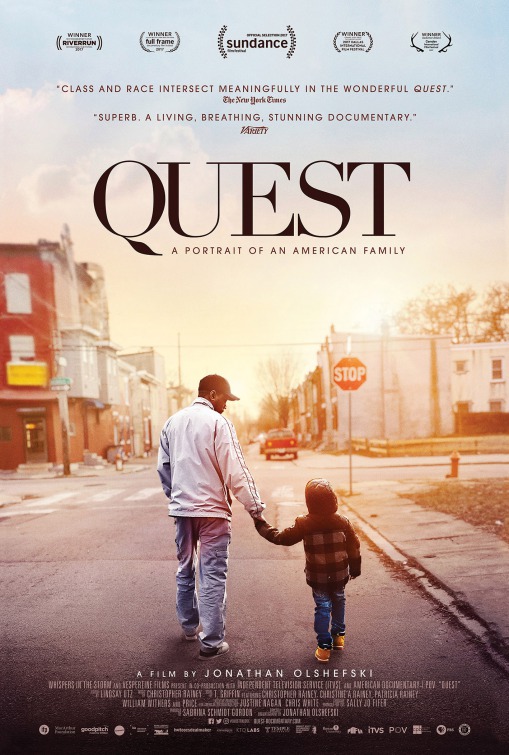
Please join us for a special screening of Jonathan Olshefski’s acclaimed documentary Quest [2017]. This event is a collaboration with POV, PBS’ award-winning nonfiction film series.
Screening Date: Wednesday, March 23rd, 2018 | 7:00pm
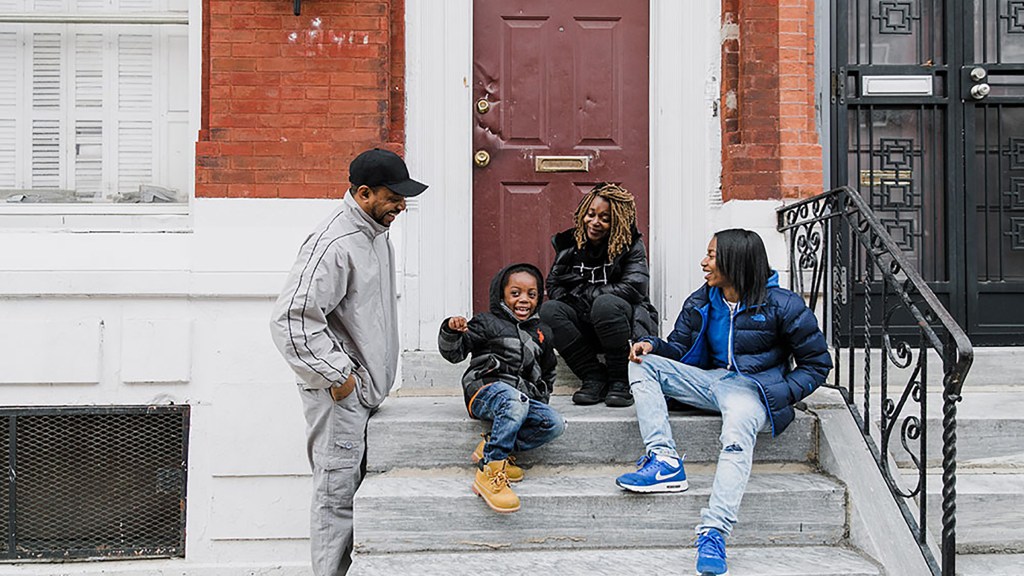
Filmed with vérité intimacy for nearly a decade, Quest is the moving portrait of the Rainey family living in North Philadelphia. Beginning at the dawn of the Obama presidency, Christopher “Quest” Rainey, and his wife, Christine’a “Ma Quest” raise a family while nurturing a community of hip hop artists in their home music studio. It’s a safe space where all are welcome, but this creative sanctuary can’t always shield them from the strife that grips their neighborhood. Epic in scope, Quest is a vivid illumination of race and class in America, and a testament to love, healing and hope.
World Premiere: U.S. Documentary Competition at the 2017 Sundance Film Festival
Tidbits:
Sundance Film Festival – 2017
Independent Spirit Awards – 2018 – Winner: Jeep Truer Than Fiction Award
Independent Spirit Awards – 2018 – Nominee: Jeep Truer Than Fiction Award & Best Documentary
Director Statement
Courtesy of press kit:
This film started off as a chance encounter while I was teaching a photography class in North Philadelphia a few blocks away from the Raineys’ home/music studio. It is a reflection of a relationship. It mirrors the friendship that I have developed with the Rainey family and their community over the last ten years. That friendship is the most precious thing to me—the film and all that comes from it is a bonus.
I came to Philadelphia in 2000 after growing up in Pittsburgh. Pittsburgh is a relatively diverse town and is pretty integrated. I went to elementary school in the ‘80s and ‘90s and old school hip hop was just a part of the culture I was immersed in, even though I liked oldies at the time. Many of my classmates, my bus drivers and the recess ladies wore the gear and sang the songs. I loved so many of them and thus was imprinted positively by that world. When I came to Philly to go to Temple University I fell in love with the city, but recognized that many of its communities we really struggling. I was surprised by how segregated it was with its stark barriers between communities of different races and ethnicities. It was a contrast to my experience in Pittsburgh. I had a deep desire to see healing and connection across these artificial barriers and after graduation was searching for opportunities to make that happen. At the time, I was making experimental films and getting into photography of interesting spaces (abandoned warehouses and buildings etc.), but did not see any correlation between my art and my desire for connection. I had no interest in documentary.
When I first met Chris and Christine’a Rainey (Quest and Ma Quest), I was working construction and making art on the side. When I learned about Quest’s balancing of the studio and the paper delivery route I saw myself. I could relate to the juggle of the passion project and the day job. We began a photo essay project that would convey that dynamic, which lead to me sleeping in their studio in order to be up and ready to join the paper route at 3am. After spending so much time with the Raineys and their community, I quickly realized that the essential story was not the studio and the paper route, but the family and their community. I also began to realize the limits of still photography and want to find another medium that would better reflect the complexity and points of view of my subjects. This lead to the decision to make my first documentary film.
Over the years I have often been asked, “What right do you have, as a white man, to make a film about a Black community?” I don’t know if I am the one to answer that question. I made the film and I stand by my choices, but I don’t think I have any inherent right and I am very aware of the long history of privileged filmmakers going into communities that are not their own to take stories and craft them for other audiences outside of the community. This can be an incredibly destructive process and marginalize the place and its people, especially when it is a place that was already marginalized.
Stories are incredibly powerful. Who tells them, how they are told, and who they are told to is important.
I will say that I did make this film for North Philadelphia and places like it. My original vision for the film was to use it to promote the Raineys’ studio to share their message of hope and community and to bring the film to different neighborhoods around Philly and maybe even go to other cities with the Raineys and their artists. I could have never dreamed it would show in Sundance when making it, but my hope is that this experience enhances our ability to create a context around the film so that North Philly benefits from it. I believe that a story well-told and brought to a place in a compassionate way can build bridges and strengthen community.
Films surely reflect the voice of the director, but my goal as a director is not to just push my own personal feelings, but to reflect a respect and honor for my subjects and accurately reflect and amplify their perspectives and feelings. My only agenda is to provide viewer the opportunity to connect to these really incredible individuals and share the love that I have for them. That is what I want the viewer to take away. These are people whose voices should be heard.
Director Bio
Courtesy of POV:
Jonathan Olshefski is an artist and documentary filmmaker. In 2017, he was named one of the “25 New Faces of Independent Film” by Filmmaker Magazine, and was listed in The New York Times as one of “The 9 New Directors You Need to Watch.” Quest is his debut feature documentary and premiered in competition at the 2017 Sundance Film Festival. Olshefski strives to tell intimate and nuanced stories that honor his subjects’ complexity. He has an M.F.A. in film and media arts from Temple University and is an associate professor of radio, TV and film at Rowan University. He lives in Philadelphia with his wife and two sons.
Filmography:
Quest (2017)
Links
Here is a curated selection of links shared on our Facebook page for additional insight/information:
4/22/18 – “Quest speaks volumes about working-class life and the necessity of community, parenting, perseverance, speaking out, speaking up, hope.” David Fear, Rolling Stone – link
5/23/18 – “Devoid of any political posturing or editorial agenda, Quest is a jarring and gentle testament to the powers of family and individual kindness.” Duane Byrge, The Hollywood Reporter – link
5/24/18 – A solid post-watch listen with Terry Gross – link




































 Cultivate Cinema Circle