Please join us for a special screening of Ramon Zürcher’s Das merkwürdige Kätzchen [The Strange Little Cat] [2014] at Squeaky Wheel Film & Media Arts Center.
Screening Date: Wednesday, November 1st, 2017 | 7:00pm
Tickets:$7.00 General Admission / $5.00 for Squeaky Members
Event Sponsors:
Venue Information:
Market Arcade Complex (first floor) 617 Main Street, Buffalo, NY 14203
Synopsis
Courtesy of press kit:
It is a Saturday in autumn, and Karin and Simon are visiting their parents and youngest sister Clara. This family gathering provides the occasion for a dinner together, at which other relatives appear over the course of the day. While the family members animate the apartment’s space with their conversations, everyday activities and cooking preparations, the cat and dog range through the various rooms. They too become a central element in this quotidian familial dance that repeatedly manifests stylized elements, disrupting any naturalistic mode of presentation. In this way, adjoining spaces open up between family drama, fairy tale and the psychological study of a mother.
Tidbits:
Berlin International Film Festival – 2013
Toronto International Film Festival – 2013
AFI Fest – 2013
Director Bio / Note / Interview
Courtesy of press kit:
From 2002 to 2005, he attended Bern University of the Arts (HKB), completing an art degree with a focus on video. In 2005, he received the Kiefer Hablitzel Award for Visual Arts for his video work. Since 2006, he has studied directing at the German Film and Television Academy Berlin (dffb). The Strange Little Cat is his first feature-length film.
Director’s Note:
The Strange Little Cat plays out for the most part in the enclosed area of a family apartment. In this model space, I want to create a condensed universe in which the “thrownness” of an absurd existence glimmers from behind everyday actions and conversations; in which the difficulty of communicating experiences and feelings continually renews the characters’ isolation from one another. The characters are repeatedly compelled to act, simply in order to fill the emptiness of their surroundings. Fleeting moments of mutual understanding, recognition and deep intimacy flicker and reoccur throughout. In these moments, the apartment‘s pulsing emptiness is stilled, and the scream of the space’s silence recedes. This cycle continues until the mundane choreography of everyday life comes to a halt, and the day comes to an end.
Interview:(conducted by Cécile Tollu-Polonowski)
The Strange Little Cat is your first feature-length film. Can you tell us something about its origins?
The project was initiated in the context of a dffb seminar with director Béla Tarr. We had various Kafka texts to choose from, and I opted for The Metamorphosis. The idea was to adapt the literary source very freely, without constraints, to look at the text and see what kind of cinematic universe might emerge. With “The Metamorphosis”, I found myself interested in the juxtaposition of a non-social space (the bedroom, where the insect is located), and a social space (the kitchen). This contrast between the vibrantly animated space of the kitchen and the static space in which characters sleep, where they escape from life (and are allowed to be asocial, so to speak), as well as the presence of animals and the work with a family ensemble were elements of the text that attracted me. I also knew I wanted to do a chamber drama. In other respects, the film ultimately has little to do with Kafka‘s novella. It would be absurd to speak of this as a film adaptation.
I’ve tried a number of things in my recent short films that I revisited here in The Strange Little Cat: a real-time choreography with hardly any temporal jumps, a static camera in contrast to a lively, dynamic staging. However, I had no desire to think in the mode of a short film. Rather, I wanted to make a feature film, particularly as I’ve often had the feeling of creating cinematic sketches with my previous short pieces.
How did you write the screenplay?
I had a collection of ideas in a sketchbook that I imagined would be good for a movie. The first image that interested me during the script’s development consisted of a character sleeping in a room, a cat that scratches on the outside of the closed door, and a mother who watches the cat and lets it continue scratching. I found it interesting enough to use this situation as a basis for further thinking, and as an associative stimulus for the development of additional scenes. In this way a whole web of moments, relationships between spaces, and characters developed. It was like playing billiards: You hit one ball, which knocks against other balls, and these in turn scatter and bump against each other… A network of ideas was set into motion, and gradually a model of the apartment took shape in my mind.
Before I came to Berlin, I painted as a part of my art studies. Even then, it was important to me to avoid settling on a theme for a new painting from the start, for fear of becoming a slave to the idea, or of feeling obligated to commit to it. I simply paint and see what I discover in the brushstrokes, see what develops. Something similar happens to me when writing. It‘s like improvised painting with physical actions, dialogue and sounds. A little like automatic writing. Specific themes only came up little by little. The child-mother theme for instance, then to a certain extent the story of a mother who maybe isn‘t a mother in the classic sense.
After about five months of script development I had a 40-page treatment, which I rewrote into the first draft of a script (170 pages) that still had to be cut down considerably.
I also find that The Strange Little Cat is like an audiovisual sculpture. The film came together additively at first, by collecting and fitting together a wealth of material that could afterwards be sculpted more extensively.
Were the illustrated monologues and still-life montage sequences in the script from the beginning?
Yes. I wanted from the beginning to work with illustrated monologues. I find moments in which characters digress into monologues or into the exact description of a past situation interesting. I also like breaks in which the speaker abruptly leaves the level of the image and we enter into the memory-picture being depicted, so to speak. The character continues to speak, so the language to a certain extent breaks away from the body and generates a memoryspace. The memory-pictures are like “alien shots” in the film, breaking up the chamber drama and the apartment space.
From a formal perspective, the montage sequences with the various still lives were like punctuation marks, used to separate chapters from one another and to bring the objects previously associated with the characters‘ actions into the spotlight, almost as if in a museum. The fascinating thing is that the objects in a certain sense take on emotional resonance because they were associated with an action. In this way, the objects almost become characters. In a classic story, there is a rigorous system of significance and values: This character or some object is important, another less so. Although the viewer doesn‘t regard the objects as being particularly important while watching, they are given an unusual level of significance.
Did much change during the shooting and editing processes?
No, in fact. The film remained quite close to the script. A few pieces of dialogue are improvised. The improvised moments have a nice liveliness in what is otherwise a rather austere space. It was important to me that a choreography emerge out of movement and animation, creating a contrast to the stasis. Unlike the other characters, the mother was always presented rather statically. The other characters are considerably more lively, particularly Clara, the young daughter, who is loud even to the point of screaming. Clara is a body of life, while the mother is rather a body of stasis, tending almost towards death. It was important to me to show this liveliness vividly, presenting a contrast to the mother.
How was the choreography developed? How did you work with the animals?
While I was writing, I had the ideal apartment in my head, and knew how the ideal floor plan was laid out – for instance, where the coffee machine and the sideboard were located. I also knew how characters should move through the space, and how their physical actions should take place. So I had a choreography in mind. Since the real apartment didn‘t correspond completely to this imaginary model apartment, the actions had to be adapted to the real apartment, and the apartment to the actions.
An economical, in a certain sense even simple editing style was very important to me. The actions needed to be carefully planned in order to make a static camera and a low cut frequency possible. The actions were adapted to the edit. One consequence of this was that off-camera events were registered quite strongly, which I quite like. As with the memory-pictures, the scene breaks away from the characters as a result of the off-camera voices and sounds, so that things are taking place unseen.
The points at which the cat and the moth were embedded in this choreography were also set. But you can‘t direct a cat. We always waited until the cat jumped to where it needed to be. The animals forced us to back off from the strict shooting rhythm. It was almost a meditative experience, waiting for the cat to jump onto the table.
How was the collaboration with the cinematographer?
Alex and I had already worked together on a short film, and I‘m glad we made The Strange Little Cat together as well. We‘re very similar, in that it reassures us to make decisions on the scenes as accurately as possible in advance. In this regard, Alex is very precise and focused on specifics. I have a strong need for a static camera, in order to be able to accurately determine the composition of the images and the division of the on- and off-camera action.
Before shooting, we divided the script into shots from beginning to end. If this process showed that something in the text didn‘t work (because it would have resulted in too many cuts, for example), I revised the script. The rhythm of the edits thus in a way co-wrote the screenplay.
Many small details point to an incredible tension in this family. The characters are intimate, but don’t listen to one another. Can you comment on this?
The mother is the character that displays the most passive aggression. For example, she interrupts communication with the use of the loudly droning, nearly screaming mixer. Now and then, it’s as if a pressure cooker suddenly explodes and a surge of violence is released. The film portrays a kind of relay-race of small humiliations and violent acts. Through writing, the mother has come to be the queen of this particular realm. She impresses her psyche on other characters and on the space.
Speech in The Strange Little Cat often wanders off into monologues. Someone being spoken to fails to take up an offer of dialogue, and the speaker notes that no dialogue is taking place. Language is no longer a means of connection; instead, it is perverted, isolating the characters further. They’re locked in their own lives, but have the intense desire to communicate, to share their experience and experiences with others. But they lack a medium enabling them to accomplish this. Language no longer functions.
How did you happen upon the music? Did you always intend to have a musical motif?
A few musical ideas were described in the script, but not all. I originally wanted to use as little music as possible, because for me speech and sounds are the abstract music of the film medium. During the edit, I wanted cello music at certain points. The assistant director, Nicole Schink, suggested the piece that was ultimately used in the film. At the beginning I thought it was too emotional, too dramatic for the film, and for this reason insincere. But I gradually found both courage and pleasure in rendering emotions through music, by using it consciously. I‘m no longer concerned that it might produce false emotions. The music has become very important for the film.
And the title?
It suggested itself to me at the beginning, and simply stuck. I like that it conveys something naive, fairy-tale-like, even romantic. It reminds me of titles like “Peter Schlemihl‘s Miraculous Story”. It‘s also a title that raises certain questions, and is even a bit vexing. Beyond this, I simply loved this title.
Filmography:
The Girl and the Spider (2021)
The Strange Little Cat (2014)
Gestern hat sich meine Freundin ein Fahrrad gekauft (2011) (Short)
Passanten (2010) (Short)
Reinhardtstraße (2009) (Short)
Heute mag ich dieses Lied (2007) (Short)
Links
Here is a curated selection of links shared on our Facebook page for additional insight/information:
10/25/17 – “…a beautiful, mysterious, beguiling cinematic doodle, and an absolute master class in mise-en-scène, unfolding in odd, fragmented frames and precisely choreographed movement within those frames.” Scott Tobias, The Dissolve – link
10/30/17 – “At once the scariest and funniest film of its year despite being neither a horror film nor an outright comedy, The Strange Little Cat by Ramon Zürcher is a compressed formal experiment that boasts some of the most evocative use of off-screen sound space this side of Bresson or Kiarostami.” Jake Cole, Movie Mezzanine – link
Please join Cultivate Cinema Circle and Hallwalls Contemporary Arts Center as we present a one-night screening of the late Jonathan Demme’s Beloved [1998] in conjunction with Pulitzer Prize-winning author Toni Morrison’s visit to Buffalo for Just Buffalo Literary Center’s 2017/18 season of BABEL.
Screening Date: Tuesday, October 24th, 2017 | 7:00pm
With the startling, engrossing film Beloved, director Jonathan Demme returns to the big screen following his Academy Award™-winning work on The Silence of the Lambs and the emotionally powerful Philadelphia. Academy Award™ nominee Oprah Winfrey stars with Danny Glover, Thandie Newton, Kimberly Elise, and Beah Richards in this compelling story adapted from the Pulitzer Prize-winning novel by Nobel Laureate Toni Morrison. Beloved translates to the screen with its daring intact, immersing viewers in the haunting, haunted landscape of its story.
Oprah Winfrey, for whom Beloved is the ultimate labor of love, appears in her first starring feature film role since earning an Oscar® nomination for Best Supporting Actress in The Color Purple, with a performance of undeniable fearlessness. Winfrey optioned the rights to Beloved upon its publication and nurtured the project for nearly a decade, personally shepherding it to its current incarnation as one of the most anticipated motion picture events of the year.
Winfrey stars as Sethe, a woman of elemental grace and unspoken mystery. A figure of fierce determination, Sethe is a runaway slave struggling to carve out a simple existence with her children in rural Ohio, 1873. She is hindered, however, by the painful legacy of her former life, and the desperate measures to which she is driven to keep herself and her family from returning to it.
Danny Glover stars as Paul D, an old friend who comes to visit Sethe and whose understanding is tested by her household’s shattering secrets. Kimberly Elise portrays Sethe’s daughter, Denver, an embattled young woman who must free herself from the crippling grasp of her mother’s choices. And Thandie Newton is Beloved. As Beloved grows to dominate Sethe’s family, her devastating presence threatens to destroy the delicate balance of Sethe and Denver’s existence.
Beloved is a Touchstone Pictures presentation of a Harpo Films/Clinica Estetico Production. The director is Jonathan Demme, working from a screenplay by Akosua Busia and Richard LaGravenese and Adam Brooks, based on the Toni Morrison novel. The film is produced by Edward Saxon, Jonathan Demme, Gary Goetzman, Oprah Winfrey, and Kate Forte. Ron Bozman serves as executive producer. The film is distributed by Buena Vista Pictures Distribution.
The experience of reading Beloved moved Oprah Winfrey, she says, in a way she had never felt before. “Beloved is about what slavery did to people. It’s about how it drove people mad, forced people to make choices no human being should have to make, and what happens as a result of making those choices. It’s about the death of self, the birth of self, and finding ways to make yourself whole.”
There was a real-life model for Sethe, the novel’s leading character. Toni Morrison had been inspired by the story of a woman named Margaret Garner, a Kentucky slave who escaped with her children to Cincinnati, Ohio, which is also Morrison’s birthplace.
Unbeknownst to Winfrey, in December of 1996, Kate Forte, head of Harpo Films/producer, sent the script to Jonathan Demme and his partner Edward Saxon at their production company, Clinica Estetico.
Demme says, “I took some scripts home with me over Christmas vacation, and Beloved was at the top of the pile. I read it and just fell in love with the script.” For the director, to be given the chance to make such a powerful and unforgettable story was “a dream come true.”
Jonathan Demme realized that a cinematic work must define its own vision, saying, “Even as we were all determined to honor Ms. Morrison’s novel to the deepest degree possible, we also understood that the movie had to achieve a life all its own. We knew that we didn’t want to fall into the reverential trap of just kind of worshipping at the altar of a book we revered and adored. Any adaptation must aspire to taking flight and creating its own identity.”
Tidbits:
Academy Awards – 1999 – Nominee: Best Costume Design
In early 1997, shortly after Jonathan Demme had agreed to direct Beloved, he and producer Edward Saxon began to assemble their team of behind-the-scenes personnel. Longtime collaborator Kristi Zea (Philadelphia, The Silence of the Lambs, and Married to the Mob) signed on as production designer and also served as film’s second unit director.
According to Zea, their first priority was to secure a location that would work for the film’s time frame, which ranges from 1855 to 1873.
Their search took them to eight states before they discovered the ideal spot 45 minutes south of Philadelphia, in Maryland. The Fair Hill Natural Resource, a wooded area of more than 5,000 acres that had once served as hunting grounds for the wealthy Dupont family, was where they built Sethe’s Bluestone Road house. Zea looked to historical research and the novel for its design, saying, “A lot of clues are in the book for the look and feeling of the house.”
The early challenges in finding a location were quickly forgotten, says Demme. “Once you do find the spot, it’s inevitably going to be an extraordinary, breathtaking place to work. It’s been arduous finding the right places, and then it’s a source of great joy to actually be there filming.” Principal photography began on June 25, 1997.
The commitment to detail was evidenced in every facet of the production. While filming, the filmmakers faced a particular challenge in mounting the flashback scenes that are interspersed throughout the story.
Demme, director of photography Tak Fujimoto, and production designer Kristi Zea explored several possibilities using different kinds of film stock. Fujimoto is one of Demme’s most frequent collaborators, having shot eight films for the director.
For the 1855 flashback scenes, Fujimoto used a reversal film stock originally created by Kodak for news reporting’s quick turnaround needs. “To our eye today, it’s a very grainy stock, but it had the quality we were looking for,” says Fujimoto. “The colors are very saturated, but we overexposed the film to wash it out, and added a sepia tone to give an older look to it.”
For the 1865 scenes, Fujimoto used a regular film stock which was digitally de-saturated during post-production.
Fujimoto describes his approach to the film’s lighting design. “I rely a lot on the production design. Early on, they had decided on the main house’s design, where the ceilings are very, very low, so all the lighting was dictated by the physical nature of the set. All the lighting was very low to the ground and shadowy. The wardrobe department helped out a lot by keeping the clothes in darker, warmer earth tones.”
All the painstaking detail work served to inspire the director and actors. For actor Thandie Newton, it felt that “all the departments involved just seemed to have a perfect understanding, and the attention to detail on every level. I felt I was in the midst of great artists, and it’s not every day that you feel that on a film set.”
With her incredible string of lyrical, imaginative, and adventurous modern classics Toni Morrison lays claim to being one of America’s best novelists. Race issues are at the heart of many of Morrison’s most enduring novels, from the ways that white concepts of beauty affect a girl’s self image in The Bluest Eye to themes of segregation in Sulu and slavery in her signature work Beloved. Through it all, Morrison relates her tales with lyrical eloquence and spellbinding mystery.
Born Chloe Anthony Wofford, Morrison’s unique approach to writing stems from a childhood spent steeped in folklore and mythology. Her family reveled in sharing these often tales, and their commingling of the fantastic and the natural would become a key element in her work when she began penning original tales of her own.
The other majorly influential factor in her writing was the racism she experienced firsthand in, as Jet magazine described it, the “mixed and sometimes hostile neighborhood” of Lorain, Ohio. When Morrison was only a toddler, her home was set afire by racists while her family was still inside of it. During times such as these, she found strength in her father, who instilled in her a great sense of dignity. This pride in her cultural background would heavily influence her debut novel.
In The Bluest Eye, an eleven-year old black girl named Pecola prays every night for blue eyes, seeing them as the epitome of feminine beauty. She believes these eyes, symbolizing commonly held white concepts of attractiveness, would put an end to her familial woes, an end to her father’s excessive drinking and her brother’s meandering. They would give her self-esteem and purpose. The Bluest Eye is the first of Toni Morrison’s cries for racial pride and it is an auspicious debut told with an eerie poeticism.
Morrison next tackled segregation in Sulu, which chronicles the friendship between two women who, much like the author, grew up in a small, segregated village in Ohio. Song of Solomon followed. Arguably her first bona fide classic and certainly her most lyrical work, Song of Solomon breathed with the mythology of Morrison’s youth, a veritable modern folktale pivoting on an eccentric whimsically named Milkman Dead who spends his life trying to fly. This is one of Morrison’s most breathtaking, most accomplished and fully dimensional novels, a story of powerful convictions told in an unmistakably original manner.
In Song of Solomon, Morrison created a distinct world where the supernatural commingles comfortably with the mundane, a setting that would reappear in her masterpiece, Beloved. Beloved is a ghost story quite unlike any other, a tale of guilt and love and the horrendous legacy of slavery. Taking place not long after the end of the Civil War, Beloved finds Sethe, a former slave, being haunted by the daughter she murdered to save the child from being sold into slavery. It is a gut wrenching story that is buoyed by its fantastical plot device and the sheer beauty of Morrison’s prose.
Beloved so moved Morrison’s literary peers that forty-eight of them signed an open letter published in the New York Times demanding she be recognizing for this major effort. Subsequently, the book won her a Pulitzer Prize. A year after publishing her next novel Jazz in 1992, she would become the very first African American to win the Nobel Prize for Literature.
Towards the end of the century, Morrison’s work became increasingly eclectic. She not only published another finely crafted, incendiary novel in Paradise, which systematically tracks the genesis of an act of mob violence, but she also published her first children’s book The Big Box. In 2003, she published Love, her first novel in five years, a complex meditation on family and the way one man fuels the obsessions of several women. The following year she assembled a collection of photographs of school children taken during the era of segregation. What makes Remember: The Journey to School Integration so particularly haunting is that Morrison chose to compose dialogue imagining what the subjects of each photo may have been thinking. In 2008, Morrison published A Mercy.
That imagination, that willingness to take chances, to examine history through a fresh perspective, is such an integral part of Morrison’s craft. She is as vital as any contemporary artist, and her stories may focus on the black American experience, but the eloquence, imaginativeness, and meaningfulness of her writing leaps high over any racial boundaries.
Director Bio
“I only work with actors who take full responsibility for their characters.”
An incredibly energetic, optimistic and versatile director of character-driven films, Jonathan Demme emerged from the crucible of B-moviemaking at Roger Corman’s New World Pictures in the early 1970s to become one of Hollywood’s most critically admired filmmakers. Though he cut his teeth on a few cheapie action flicks like “Caged Heat” (1974) and “Crazy Mama” (1975), Demme tapped into the influence of foreign filmmakers like Francois Truffaut to use sly humor and an oddball style to explore human nature in fiercely intimate films like “Citizen’s Band” (1977), “Melvin and Howard” (1980) and the troubled “Swing Shift” (1984). Though mainly interested in fictional storytelling, Demme also carved out a career in non-fiction filmmaking, including the critically acclaimed “Stop Making Sense” (1984), a rock documentary featuring Talking Heads that was widely considered to be one of the best examples of the genre. But Demme reserved his finest work for his most mainstream fare, particularly “The Silence of the Lambs” (1991), which became one of only three films to win Academy Awards in all five major Oscar categories and cemented his reputation as being one of the most versatile and accomplished filmmakers of his day. Following the equally high profile AIDS story “Philadelphia” (1993) and Oprah Winfrey-starring Toni Morrison adaptation “Beloved” (1998), Demme returned to his quirkier roots with a series of documentaries focusing on rocker Neil Young, a remake of the conspiracy thriller “The Manchurian Candidate” (2008) and the small-scale indie “Rachel Getting Married” (2008). When Jonathan Demme died of complications from esophageal cancer on April 26, 2017, peers and fans across the globe mourned the loss of one of the most eclectic and unique filmmakers of his generation.
Born on Feb. 22, 1944 in Baldwin, NY, Demme was raised by his father, Robert, a public relations executive for the Fontainebleau Hotel in Miami, FL, and his mother, Carol, an actress. After his parents moved to Florida, Demme began carving out a career as a veterinarian by working at a local vet cleaning cages and caring for the animals. But when he was unable to master the most basic concepts of chemistry at the University of Florida, Demme gave up his dream of becoming a veterinarian and began writing film reviews for the college’s newspaper, The Alligator. After writing a rave review of “Zulu” (1964), his father arranged an introduction to the film’s producer Joseph E Levine, who was charmed by Demme’s enthusiastic thumbs up and immediately hired him to write press releases. Demme moved to New York, where he spent the next two years as a movie publicist for United Artists and Embassy Pictures. It was during this time that he met and befriended French director François Truffaut, who was in New York promoting “The Bride Wore Black” (1968). Truffaut recognized the young publicist’s affection for film and planted the directing seed into Demme’s mind.
In 1968, Demme left the publicist business and moved to London, where he continued writing reviews, only this time for the music business, which ironically helped to open the door on his feature film career. Hired by producers Paul Maslansky and Irwin Allen to create the music for “Eyewitness/Sudden Terror” (1970), Demme worked with British rock groups Van Der Graaf Generator and Kaleidoscope as the score’s music coordinator. It was during this time that he came to the attention of low-budget impresario Roger Corman. At the producer’s invitation, Demme relocated to Los Angeles to write screenplays for the recently-formed New World Pictures, completing his first script, “Angels Hard as They Come” (1971), with friend Joe Viola. Demme graduated to second unit director on “The Hot Box” (1972) before making his full-fledged directorial debut with the tongue-in-cheek “Caged Heat” (1974), a fairly typical women’s prison flick in which the director inserted a socially-conscious secondary plot about the medical exploitation of prisoners. Demme helmed two more pictures for Corman, “Crazy Mama” (1975), a rich crime comedy about a wild woman (Cloris Leachman) on an absurdist crime spree from California to Arkansas, and “Fighting Mad” (1976), starring Peter Fonda as a man driven to violence by a ruthless landowner who wants to take over his farm.
After “Fighting Mad,” Demme left the comfortable confines of New World Pictures to make movies on his own. He beat out several directors to helm “Citizen’s Band” (1977), an adventurous comedy which wavered between glorifying, lampooning and seriously questioning the implications of the CB radio craze of the era. Retitled “Handle with Care,” the movie was a series of mundane, whimsical and disturbing vignettes that featured a gang of loony CB operators which bombed at the box office despite good reviews, leaving Demme scrounging for work. After making “Last Embrace” (1979), an accomplished thriller in the Hitchcockian mold, Demme continued his exploration of the American condition in “Melvin and Howard” (1980), a laidback but revealing account of an unlikely encounter between a working-class everyman, Melvin Dummar (Paul LeMat), and eccentric billionaire Howard Hughes (Jason Robards), whom Dummar claimed named him sole heir to his fortune. Named Best Picture by the National Society of Film Critics, this satiric, tolerant look at the American class structure also won Demme the New York Film Critics’ Best Director award, as well as Oscars for co-star Mary Steenburgen and writer Bo Goldman. But once again, Demme failed to ignite the box office.
For his next film, “Swing Shift” (1984), Demme envisioned a probing look at women factory workers during World War II (his grandmother had worked on the assembly line making fighter planes.) But the film’s executive producer and female lead, Goldie Hawn, saw a star vehicle instead. Hating the director’s cut emphasizing female camaraderie and endurance in the face of domineering male employers, Hawn presented the director with 28 pages of new material, which he half-heartedly shot. As soon as the picture had been through two previews in its original form, Hawn decided to re-cut the film on her own, playing up the script’s romantic angle. Demme and his editor Craig McKay quit the project rather than insert the new scenes. Though its critical and commercial failure vindicated him in a way, the pain of the experience lingered for well over a year. New Yorker critic Pauline Kael – who originally gave “Swing Shift” a negative review – later said, “I saw his cut on videotape, and thought it was wonderful.”
During the early stages of editing “Swing Shift,” Demme had attended a Talking Heads concert in Los Angeles and had been blown away by their performance. He sold the band’s leader David Byrne on his vision of honoring the excitement of the live performance by avoiding tricky shots, flashy editing techniques, and anything that would constitute a digression from the performance itself, like cutaways to the audience. Compiled from three concerts in December 1983, “Stop Making Sense” (1984) was a joyously energetic, yet downtown-cool showcase which helped propel Talking Heads to mainstream stardom. Demme also directed several rock videos for other bands, including an acclaimed clip for New Order’s “Perfect Kiss” that consisted primarily of extreme close-ups of the band members’ faces and hands as they performed the song.
Demme’s eclectic musical taste also informed the lively “Something Wild” (1986), a screwball comedy that takes a surprising turn into thriller territory. “Something Wild” was Demme’s contribution to the disaffected yuppie genre, which had already yielded Albert Brooks’ “Lost in America” (1985) and John Landis’ “Into the Night” (1985), in which Demme had appeared in a cameo role. The film’s hip urban sensibility seemed a change for Demme, as did the return to violence largely unseen since his early days with Corman. But the film was actually consistent with the director’s examination of self-determination that had begun with the women prisoners of “Caged Heat” and continued with the munitions workers of “Swing Shift.” His concern with the heroic struggle of the central female character who fights to establish herself against unyielding patriarchal attitudes helped contribute to his reputation as a feminist filmmaker.
Demme showed his mettle with another artful and subtle performance film, “Swimming to Cambodia” (1987), featuring celebrated monologist Spalding Gray. He next spoofed the Mafia in “Married to the Mob” (1988), another dark comedy more garishly colored and cheerful than “Something Wild.” Dean Stockwell’s comic turn as Mafioso Tony ‘The Tiger’ Russo and the right-on performance of Michelle Pfeiffer in the lead role were standouts among a formidable cast boasting Matthew Modine, Mercedes Ruehl, Alec Baldwin and frequent Demme player Charles Napier.
Demme’s career finally reached full fruition both critically and commercially with “The Silence of the Lambs” (1991), adapted from the novel by Thomas Harris. Despite the grisly nature of the story, Demme resisted the possibilities for exploitation and instead fashioned a compelling and impressively sensitive psychological drama with a courageous, independent female protagonist. He also elicited landmark performances from both Jodie Foster and Anthony Hopkins. Following in the footsteps of “It Happened One Night” (1934) and “One Flew Over the Cuckoo’s Nest” (1975), “Silence of the Lambs” went on to win the five top Academy Awards – Best Picture, Best Actor, Best Actress, Best Director and Best Adapted Screenplay – an immense accomplishment for what was essentially a big-budget horror film.
Often associated with progressive causes, Demme lent his talents to projects that reflected his political concerns such as “Haiti Dreams of Democracy” (1988), which he co-wrote, co-produced, and co-directed. He also helmed and appeared in “Cousin Bobby” (1992), a documentary about his relative, the Reverend Robert Castle, a radical, Harlem-based clergyman. Though many viewed the director’s decision to film “Philadelphia” (1993) as a mea culpa in response to the charges of homophobia in “The Silence of the Lambs,” Demme had actually been working on the project with screenwriter Ron Nyswaner as early as 1988. Nonetheless, the moving courtroom drama was a landmark in mainstream Hollywood history. “Philadelphia” provided an attention-getting and Oscar-winning role for Tom Hanks as the afflicted gay lawyer who loses his job when he becomes symptomatic from AIDS. Despite some acclaim, the film was criticized for lacking the strong character development and sense of the unexpected that characterized Demme’s best work.
In the 1990s, Demme, like his mentor Corman, increasingly concentrated on producing, beginning with George Armitage’s “Miami Blues” (1990). He upped his output considerably after 1993, producing 10 pictures in five years. He returned to the director’s chair for the film version of Toni Morrison’s Pulitzer Prize-winning “Beloved” (1998), reinforcing the novel’s best insights with a startling breadth of vision. Demme had been looking for a project that addressed race relations for a long time and “Beloved” fit that bill with its story about the disfiguring effects of slavery and its aftermath. As a reflection of his lifelong passion for rock ‘n’ roll, he also helmed “Storefront Hitchcock” (1998), a concert film featuring legendary cult figure Robyn Hitchcock.
After a lengthy hiatus away from the camera, Demme returned to helm “The Truth About Charlie” (2002), a remake of one of his favorite films, “Charade” (1963), starring Cary Grant and Audrey Hepburn and directed by the legendary Stanley Donen. Essentially casting the central locale of Paris as a third lead character, Demme reunited with some longtime collaborators such as Tak Fujimoto and paid tribute to the influences of the French New Wave that long guided his sensibility. The film was poorly received by both critics and audiences, which failed to stop Demme from choosing another remake of a classic film, 1962 conspiracy thriller “The Manchurian Candidate.” Demme’s 2004 spin featured a carefully tweaked screenplay with some new surprises and dimensions, and a masterful cast: Denzel Washington, Meryl Streep, Liev Schreiber and Kimberly Elise.
Returning to documentary films, Demme directed “The Agronomist” (2002), a profile of Haitian radio journalist and human rights activist Jean Dominique, who spent his lifetime campaigning to reform the oppressed nation until his assassination in 2000. Demme next delivered the rock documentary, “Neil Young: Heart of Gold” (2005), which depicted the famed singer-songwriter during two special performances at Nashville’s Ryman Auditorium commemorating the release of his acclaimed 2005 album, Prairie Wind. For his third consecutive documentary, Demme turned to politics with “Jimmy Carter: Man from Plains” (2007), an experimental look at the former president during his book tour promoting Palestine: Peace Not Apartheid, which featured speeches on how to achieve peace in the Middle East. After four years, Demme went back to feature filmmaking with “Rachel Getting Married” (2008), a dramatic comedy about the troubled black sheep of a family (Anne Hathaway) returning home for her sister’s wedding, which touches off long-simmering tensions. Demme earned Independent Spirit Award nominations for Best Director and Best Feature. Demme next united with Young for two more documentaries, the concert film “Neil Young Trunk Show” (2009) and the cinema-vérité “Neil Young Journeys” (2011). Moving back to television for the first time in decades, Demme directed two episodes each of the acclaimed comedy-drama “Enlightened” (HBO 2011-13) and crime drama “The Killing” (AMC/Netflix 2011-14) and an hour-long drama, “Line of Sight” (AMC 2014). The concert film “Kenny Chesney: Unstaged” (2012) continued his music-related work. In 2013, Demme filmed Wallace Shawn’s adaptation of the Henrik Ibsen play “A Master Builder.” Demme returned to the big screen with “Ricki and the Flash” (2015), a comedy-drama about a struggling rocker (Meryl Streep) who reconnects with the suburban family she had abandoned at the outset of her career. It was followed by another concert film, “Justin Timberlake + the Tennessee Kids” (2016), showcasing the pop-R&B singer in Las Vegas during the final show of his 2014 tour. Returning to television, Demme shot an episode of Gina Prince-Bythewood’s 10-part procedural drama “Shots Fired” (Fox 2017). Jonathan Demme died of complications from esophageal cancer on April 26, 2017.
Filmography:
Ricki and the Flash (2015)
Fear of Falling (2013)
A Master Builder (2013)
I’m Carolyn Parker: The Good, the Mad, and the Beautiful (2012)
Neil Young Journeys (2012)
Rachel Getting Married (2008)
Neil Young Trunk Show: Scenes From a Concert (2008)
Jimmy Carter Man from Plains (2007)
Neil Young: Heart of Gold (2006)
The Manchurian Candidate (2004)
The Agronomist (2003)
The Truth About Charlie (2002)
Beloved (1998)
Storefront Hitchcock (1998)
Subway Stories: Tales From the Underground (1997) (“Subway Car From Hell”)
Philadelphia (1993)
Cousin Bobby (1992)
The Silence Of The Lambs (1991)
Married To The Mob (1988)
Haiti Dreams of Democracy (1988)
Swimming to Cambodia (1987)
Something Wild (1986)
Perfect Kiss (1985)
Stop Making Sense (1984)
Swing Shift (1984)
Melvin and Howard (1980)
Last Embrace (1979)
Citizens Band (1977)
Crazy Mama (1976)
Fighting Mad (1976)
Caged Heat (1974)
Links
Here is a curated selection of links shared on our Facebook page for additional insight/information:
10/20/17 – Before we screen Jonathan Demme’s adaptation of Toni Morrison’s Beloved at Hallwalls on Tuesday, listen to Peter Labuza’s Demme tribute at The Cinephiliacs – link
10/22/17 – Director Jonathan Demme discussing Beloved on Charlie Rose back in 1998 following the film’s release.
10/23/17 – “Something rare: a brave film about the emotional toll of slavery, the anguish of memory and the cruel divisions that still sear African American lives.” Edward Guthmann, San Francisco Chronicle – link
10/24/17 – Kimberly Elise, who played Denver in Beloved, shares memories of the film.
10/24/17 – “Jonathan Demme would not be everyone’s choice to direct a woman-centred movie about slavery.” The Guardian – link
Buffalo is full of people helping to cultivate cinema and we want to celebrate those involved. The Cultivators is a new monthly feature in which we highlight individuals who are integral to the presentation, promotion and production of film here in the queen city.
My mother raised me alone and didn’t drive, so I was a child of television. When we lived in Dunkirk we would walk to the Regent to see movies. I watched everything the Sunday Afternoon Movie showed: Tarzan films, Don Knotts comedies, Ray Harryhausen films. Then Channel 29 came along with Sci-Fi Theater and Channel 2 had a 4pm weekday movie, which showed a lot of gangster films.
I have an uncle who’s been in distribution all his life and I visited him in Washington D.C. and New York City during summers. He would take me to double features every night.
What is your favorite movie related memory?
It’s hard to choose just one. My uncle took me to my first midnight movies: The Rocky Horror Picture Show, Slaughterhouse Five, and George Romero’s Martin (during its original run) among them.
I remember Slaughterhouse Five being a particularly interesting experience because the theater had a small screen and foldout chairs without risers and I had no idea what the movie was—going in or even halfway through it. I was around 12 and there was a sense with all three of these films that I was seeing something taboo. I love that sense of adventure, which is something my film festival partner Chris Sciol and I bring to our event.
How did you end up in Buffalo?
I’ve lived in New York State my entire life, more than half of it in Western New York. I grew up in Fredonia and moved to New York City to attend the School of Visual Arts where I studied filmmaking. I lived there for 21 years, during which I made three feature films and managed several movie theaters—including the Angelika Film Center and the Paris—and several video stores—including Kim’s Video and Two Boots Video. My first role as a film programmer was at Two Boots Den of Cin, a screening room in the basement of a video store/pizzeria.
My wife and I moved to Buffalo in 2003 to buy an affordable house and start a family. During our time here I’ve made several films, worked as a manager for Dipson Theatres, had 14 books published, and founded two different film festivals: Buffalo Screams Horror Film Festival and now Buffalo Dreams Fantastic Film Festival.
What do you want to see more of in Buffalo?
More bodies in seats for our festival, less artistic discrimination, and more down time between area festivals. Buffalo has a nice mixture of sports enthusiasts and arts supporters and the support for festivals is finally catching up to the interest in other arts.
Ten years ago the Jewish Film Festival was the only festival I remember in the area. Now there are more than I count and most of them are crowded into the fall, which is bad for everyone. This year one festival moved from April to September, another moved from August to September, a five-in-one festival launched in September, and now another is starting in November on the weekend Buffalo Dreams starts.
It’s great diversity for cinema lovers and good for filmmakers, but frustrating for all of us trying to distinguish ourselves. People only have so many brain cells to keep track of which festival is when and where and what films are screening at them with only so much time to devote to seeing specialized fare. Most of the festivals have distinct identities and missions, but making the differences clear to the audience is a challenge.
We run in early November every year, and place an emphasis on genre films—action, horror, sci-fi—but show family films, docs, and foreign films as well.
What are your essential film books?
Easy Riders, Raging Bulls by Peter Biskind
When the Shooting Stops… the Cutting Begins: A Film Editor’s Story by Ralph Rosenblum and Robert Karen Ph.D.
The Jaws Log by Carl Gottlieb
The Devil’s Candy: The Anatomy of a Hollywood Fiasco by Julie Salamon
Cult Films by Will Dodson
Incredibly Strange Films by V. Vale and Jim Morton
Screenplay: The Foundations of Screenwriting by Syd Field
Adventures in the Screen Trade: A Personal View of Hollywood and Screenwriting by William Goldman
The Dark Side of Genius: The Life of Alfred Hitchcock by Donald Spoto
You’ll Never Eat Lunch in This Town Again by Julia Phillips
TOP TEN FILMS
I’m a big fan of 70s films of all genres and have a wide range of tastes, which is reflected in the Buffalo Dreams programming. My Top Ten therefore changes every day of the week. But today (in alphabetical order) they are:
Billy Jack [1971], directed by Tom Laughlin
Goodfellas [1990], directed by Martin Scorsese
The Graduate [1967], directed by Mike Nichols
It’s a Wonderful Life [1946], directed by Frank Capra
Kiss Me Deadly [1955], directed by Robert Aldrich
Little Murders [1971], directed by Alan Arkin
The Maltese Falcon [1941], directed by John Huston
Planet of the Apes [1968], directed by Franklin J. Schaffner
Taxi Driver [1976], directed by Martin Scorsese
Three Days of the Condor [1975], directed by Sydney Pollack
Film stills from left to right, top to bottom are Tarzan the Ape Man, Don Knotts, Ray Harryhausen, Rocky Horror Picture Show, Slaughterhouse Five, Martin, Two Boots Video (photo from Wall Street Journal), Lynne with Ryan Bellgardt and Josh McKamie (the filmmakers of Army of Frankensteins), and the Angelika.
Please join us for a special screening of Kirsten Johnson’s Cameraperson [2016] at Squeaky Wheel Film & Media Arts Center. This event is a collaboration with POV, PBS’ award-winning nonfiction film series.
Screening Date: Wednesday, October 4th, 2017 | 7:00pm
A boxing match in Brooklyn; life in postwar Bosnia and Herzegovina; the daily routine of a Nigerian midwife; an intimate family moment at home: these scenes and others are woven into Cameraperson, a tapestry of footage captured over the twenty-five-year career of documentary cinematographer Kirsten Johnson. Through a series of episodic juxtapositions, Johnson explores the relationships between image makers and their subjects, the tension between the objectivity and intervention of the camera, and the complex interaction of unfiltered reality and crafted narrative. A work that combines documentary, autobiography, and ethical inquiry, Cameraperson is both a moving glimpse into one filmmaker’s personal journey and a thoughtful examination of what it means to train a camera on the world.
Tidbits:
Sundance Film Festival – 2016
SXSW Film Festival – 2016
National Board of Review – 2016 – Winner: Freedom of Expression Award
CPH:DOX – 2017
Independent Spirit Awards – 2017 – Nominee: Best Documentary
Director Statement
courtesy of press kit:
The joys of being a documentary cameraperson are endless and obvious: I get to share profound intimacy with the people I film, pursue remarkable stories, be at the center of events as they unfold, travel, collaborate, and see my work engage with the world. I experience physical freedom and the chance for artistic expression and discovery every time I hold a camera. No wonder I’ve been doing it for twenty-five years and love my life.
And yet, the dilemmas I face while holding my camera are formidable. There are the concrete challenges I must meet in the moment—how to frame, find focus, choose what direction to follow. The other troubles are implicit, and often unseen by audiences:
The people I film are in immediate and often desperate need, but I can offer them little to no material assistance.
I can and will leave a place I film—whether a war or a refugee camp—while the people I film cannot.
I traffic in hope without the ability to know what will happen in the future.
I ask for trust, cooperation, and permission without knowing where the filming experience will lead the subject.
I shift the balance of power by my very presence, and act on behalf of one side or another in a conflict.
My work requires trust, intimacy, and total attention. It often feels like a friendship or family—both to myself and the people I film—but it is something different.
I know little about how the images I shoot will be used in the future, and cannot control their distribution or use.
My work can change the way my subject is perceived by the people who surround him or her and can impact the subject’s reputation or safety for years into the future.
I follow stories the director I work for does not need and/or does not want me to follow.
I fail to see or follow stories the director hopes I will follow.
I’ve been aware of these dimensions for most of my career, as is the case for most documentarians, and I have often discussed them with colleagues. What I didn’t know until recently was how much the accumulation of these dilemmas would begin to affect me.
And what I didn’t anticipate when this film began just five years ago was how many people in the world would be using their cell phones as cameras, communicating instantaneously, and seeing images from every part of the globe. Surveillance, political repression, censorship, and the possibility of worldwide distribution of images filmed by any individual on the planet have an effect on all of us and our relation to filming in shifting and unprecedented ways.
In making Cameraperson, my team and I decided to rely as much as possible on the evidence of my experience that is contained within the footage I shot. We know this fragmentary portrait is incomplete and are interested in the way it reveals how stories are constructed. Our hope is to convey the feeling of immediacy that comes with finding oneself in new territory with a camera, as well as to give the audience a sense of how the joys and dilemmas a cameraperson must juggle accumulate over time.
Like the film, this note is an invitation to you, and an acknowledgment of how complex it is to film and be filmed.
Photo: Getty Images
Director Bio
Cinematographer Kirsten Johnson in Manhattan on Aug. 29, 2016. Johnson directed the documentary “Cameraperson” as her visual memoir, consisting of footage from over 20 films she worked on in her 25-year career. (Samira Bouaou/Epoch Times)
“I’m only ever trying to build something that will be relevant in the current conversation and clearly there were elements of that conversation that I had not addressed, specifically, do we represent other people if our images of them might put them in danger? That is a border-crossing question because talking about an abortion in one culture can have different consequences in another culture.”
Courtesy of press kit:
Kirsten Johnson (director/producer/cinematographer) has worked as a documentary cinematographer and director, and has committed herself to recording human-rights issues and fostering visual creativity. She has been the principal cinematographer on more than forty feature-length documentaries, and she has been credited on numerous others.
After graduating from Brown University in 1987 with a degree in fine arts and literature, Johnson traveled to Senegal to study with acclaimed filmmakers Djibril Diop Mambéty and Ousmane Sembène. The experience inspired her to apply to La Fémis, France’s national film school, where she studied cinematography.
Following her graduation from La Fémis, Johnson served as cameraperson on a number of highly acclaimed and award-winning documentaries, including Fahrenheit 9/11 (2004), This Film Is Not Yet Rated (2006), Pray the Devil Back to Hell (2008), and The Invisible War (2012).
Johnson has had a long-standing collaboration with Oscar-winning filmmaker Laura Poitras; she was the cinematographer on The Oath (2010) and Citizenfour (2014) and shot the upcoming film Risk. Additionally, she shot footage that appeared in Poitras’s visual-arts exhibition on surveillance, Laura Poitras: Astro Noise, which opened at the Whitney Museum in the winter of 2016.
When not filming, Johnson teaches a graduate course in visual thinking at NYU’s Arthur L. Carter Journalism Institute and a course on cinematography at the School of Visual Arts, and, working with the Arab Fund for Arts and Culture, she often leads workshops for young camerapeople and documentarians in countries such as Egypt, Syria, Lebanon, and Saudi Arabia.
Filmography:
Dick Johnson Is Dead (2020)
Cameraperson (2016)
Deadline (2004)
Innocent Until Proven Guilty (1999)
Links
Here is a curated selection of links shared on our Facebook page for additional insight/information:
9/15/17 – “Cameraperson testifies to a world in which it would be clear to see that we’re all connected, if only we took the time to look at one another with reverence and simply listen.” Ann Hornaday, Washington Post – link
9/21/17 – “No film has more eloquently revealed the provisional, flawed, hopeful, expansive, manipulative, righteous human endeavour called documentary filmmaking. Johnson lays everything on the line to articulate that troubling and continuously replenishing thing about making nonfiction films that all of we filmmakers feel but can’t quite say ourselves.” Robert Greene, Sight & Sound – link
10/2/17 – “The camera is not just a tool, it speaks for us, it writes for us, and it’s also part of us. Cinematographer Kirsten Johnson continues the ongoing interrogation of the power of the camera in her new film, Cameraperson. A labor of love of the highest order.” Michael Koresky, Film Comment – link
10/3/17 – “Johnson’s extraordinary and poetic film accomplishes for documentary cinematography what Christian Frei’s War Photographer (2001) did for photojournalism, illuminating the complex ethical, philosophical, and political stakes behind a craft that remains mostly concealed from the lay consumer of images.” Lauren Du Graf, Los Angeles Review of Books – link
10/5/17 – Some solid writing from Charlie Lyne to help mull this beautiful film over at Filmmaker magazine: “The Six Fonts of Cameraperson” – link
10/30/17 – Kirsten Johnson reflects on Cameraperson one year after its release via Salon – link
Buffalo is full of people helping to cultivate cinema and we want to celebrate those involved. The Cultivators is a new monthly feature in which we highlight individuals who are integral to the presentation, promotion and production of film here in the queen city.
I don’t remember a time when I wasn’t interested in movies. My earliest memories all revolve around watching films with my family; classics with my mom and Grandma Ruberto (she always watched them in the dark) and old monster, B-movies and disaster films with dad. When they were on late he would let me sneak out of bed—my mother always caught us. Dad taught me you could enjoy any movie, even the bad ones, and that has shaped me as a film lover.
What is your favorite movie related memory?
Our family—the nephews, dad etc.—had a long-standing tradition of going to the midnight showing on opening night for movies including all The Lord of the Rings films. We were dorks, but there is something oddly life-affirming about leaving a movie theater energized at 3 a.m.
My favorite movie theater memory was being so engrossed in James Cameron’s Aliens that when they said “Can’t be, that’s inside the room,” I looked up at the movie theater’s ceiling for the aliens in unison with Sigourney Weaver doing the same in the movie. It was freaky.
How did you end up in Buffalo?
I was born and raised in South Buffalo. I never realized it was weird that we lived there but weren’t Irish until I grew up.
What do you want to see more of in Buffalo?
Just five years ago I would have begged for more movie options that aren’t first-run Hollywood films (classic, independent, specialty, retro movie nights, etc.). That’s happening now, but we need more support for events like these screenings and for local bands, plays, etc. A thriving arts scene makes Buffalo a better place to live.
What are your essential film books?
Our Movie Heritage by Tom McGreevey and Joanne L. Yeck. A very good book about film history and preservation.
The Hammer Story: The Authorised History of Hammer Films by Marcus Hearn and Alan Barnes. A comprehensive history of this great studio disguised as a coffee table book.
Hitchcock/Truffaut by Francois Truffaut. (Simon & Schuster). So much of what is commonly known about Alfred Hitchcock today first came to light in the 50 hours of interview between the master and French director/film critic Francois Truffaut.
TOP TEN FILMS
Here are 10 movies I watch every time they’re on TV—and I own a copy, too. (In alphabetical order.)
Mysterious Island [1961], directed by Cy Endfield
Giant bees, creatures by Ray Harryhausen, Captain Nemo and music by Bernard Hermann—it has everything.
Near Dark [1987], directed by Kathryn Bigelow
This atmospheric and bloody vampire western has my favorite final line in any movie.
Picnic [1955], directed by Joshua Logan
I get pulled into 1950s Kansas every time where I can hang out with Kim Novak and William Holden.
Pride & Prejudice [2005], directed by Joe Wright
I hope I don’t have to give up my Colin Firth fan club card for admitting this is my favorite adaptation of the novel.
Random Harvest [1942], directed by Mervyn LeRoy
I wish every time I saw this it was the first time so I could be still shocked at the big reveal.
Remember the Night [1940], directed by Mitchell Leisen
Sentimental and old-fashioned, it’s my favorite Christmas movie.
Star Wars: Episode IV – A New Hope [1977], directed by George Lucas
Empire Strikes Back is the best and Rogue One the bravest, but this is the true original.
Tarantula [1955], directed by Jack Arnold
My favorite giant creature movie.
Thor: The Dark World [2013], directed by Alan Taylor
It’s just a lot of fun—with a special nod to Tom Hiddleston as Loki.
You’ve Got Mail [1988], directed by Nora Ephron
I don’t care if it’s already outdated, it’s wonderful. There’s not a character or actor wasted. We miss you Nora.
Film stills from left to right, top to bottom are Lord of the Rings and Aliens.
Please join us for a special screening of Feras Fayyad’s Sundance Grand Jury Documentary prize-winning film Last Men in Aleppo [2017]. This event is a collaboration with POV, PBS’ award-winning nonfiction film series.
Screening Date: Wednesday, August 30th, 2017 | 7:00pm
The year is 2015. Syria’s brutal civil war has been ravaging the country since the government responded with force to civil protests during the Arab Spring in 2011. Regime, Kurdish, ISIS and rebel forces all occupy various parts of the city of Aleppo in northwestern Syria. A volunteer group called the White Helmets provides emergency services to traumatized residents in the rebel-occupied areas of the city. A crucial part of their efforts is rescuing survivors: After air attacks reduce buildings to rubble, the men of the White Helmets dig through the debris and pull survivors to safety. They are nothing short of heroes.
The White Helmets are the subject of Last Men in Aleppo, the searing documentary directed by Feras Fayyad that won the World Documentary Grand Jury Prize at the 2017 Sundance Film Festival.
Captured with incredible intimacy and urgency, Last Men in Aleppo shows the White Helmets at work in the wake of bombing raids. The film provides exceptional access. Volunteers wear microphones for the filming, and viewers can hear them as they share information, give directions and pray. When they learn of a raid, they speed through chaotic streets full of rubble. They dig through piles of concrete and metal, sometimes using construction equipment, other times their bare hands.
The viewing is often visceral and difficult. Fayyad’s cameras are unflinching as they document the extraction of dead bodies, including those of children. Survivors are badly injured and covered in blood. There is grim talk of body parts, of how many survived and how many died. “I’m 100 percent sure we will find his head on the roof,” a White Helmet says of a victim at the site of a bombing.
In these painful moments, the men of the White Helmets reveal their resilience and bravery in the face of daily carnage. In addition to showing the men at work, Last Men in Aleppo follows a few of them as they go about their daily lives. One, Khaled, is the father of young children. In a heartbreaking scene, he takes his little girl to a pharmacist, who examines her hands and declares she is not getting adequate nutrition.
The documentary also follows Mahmoud, a young man who performs his work as a White Helmet with grave precision. With other White Helmets, Mahmoud and his brother Ahmed race to the scene of a missile attack on a car, now in flames. They begin trying to put out the fire so they can extract the bodies, but another air strike hits, and the men scatter.
In yet another searing moment, Mahmoud is troubled when he visits with young children he has rescued. “Was my head stuck in the rubble when you got me out?” a young boy asks Mahmoud. “I can’t do a visit like this again,” Mahmoud says later. “It’s so difficult.”
As the volunteers monitor the news and perform their arduous work, they contemplate the future. There is talk of escaping to Turkey, to Germany. Midway through the film, a friend asks Mahmoud about his dreams. “I dream that my brother will be safe,” Mahmoud says. “What are your dreams?” The friend replies, “To live a stable and secure life.”
“This film is a story about hope, and it is an attempt to study our humanity and shared responsibility when faced with mindless, irrational killing,” said Fayyad. “I saw this with the White Helmets, whose heroism did not discriminate between civilians and aggressors. Covering their efforts also allows us to show the world the devastating toll of the Syrian civil war. The White Helmets’ rescue efforts cannot be a permanent solution to this crisis. It is our hope that this film motivates people to stop this tragedy altogether, begin peace talks in Syria and help those civilians out of these disaster zones.”
“War brings out the worst in human beings, but it also brings out the best in us. The White Helmets are a living example of that. I hope this film will compel audiences abroad to follow that example.”
Tidbits:
Sundance Film Festival – 2017 – Winner: Grand Jury Prize (World Cinema – Documentary)
CPH:DOX – 2017 – Winner: DOX:AWARD
International Documentary Association – 2017 – Winner: Courage Under Fire Award
Academy Awards – 2018 – Nominee: Best Documentary Feature
Independent Spirit Awards – 2018 – Nominee: Best Documentary
I’m here to share a story made of blood and tears. I am here because I believe in the ability of film to bring justice to Syria.
The peaceful Syrian uprising of 2011 developed into an armed conflict once the ruling regime of Bashar Al-Assad chose to respond with military force. The war in Syria gradually transformed into a dark hole that began destroying the civilian population, and the line between right and wrong became blurred. Officials in all factions were exhibiting Machiavellian behavior, meaning they were compromising principles and ethics in their efforts to achieve their goals. Civilians were glad to put their trust and confidence in the one group that distinguished itself from the rest. I’m talking about those providing civil defense, the group known in the international community as the White Helmets.
In March 2011, I was twice held by members of Assad’s intelligence services after I made a film about freedom of speech. In a secret prison, I saw humanitarian workers held alongside artists and journalists; I witnessed men, women and children being tortured to death.
In 2013, I began to develop the idea for this film as I followed Raed Saleh, who later became the leader of the White Helmets. He was organizing ordinary people into a volunteer brigade that would deal with the massive air strikes that hit their streets and homes; I accompanied them to places just after bombs had fallen. They saved the lives of hundreds of children and families. Soon they were targeted directly by the regime and by Russian drone strikes. Many died, leaving their families with no means of support. Yet the people I was filming only grew more determined to continue their work to save victims. I was astonished by their ability to turn loss into motivation to continue searching for life under the rubble.
This made me think about how to convey the nature of this war, as seen through the eyes of these people. I wanted to explore their inner psychological worlds to understand the struggles that they lived through. A film would offer a chance to demonstrate how repulsive the war in Syria was and to raise questions regarding the value and dignity of human life. It could also shine a light on the role of international law in the prosecution of war criminals and how important it is to hold them accountable for their involvement in fostering extremism, terrorism and mass killings.
This film also speaks to the power of using art and documentary filmmaking to illustrate the absurdity of war. One moment stayed with me: Khaled, our main subject, extends his hand to save a victim trapped under debris. The image looks exactly like Michelangelo’s fresco of the creation of Adam on the ceiling of the Sistine Chapel, which shows God and Adam reaching their hands toward each other. It is a moment that illustrates the value of the human touch, and a cry for closer examination of the horror of war and any situation that requires us to take control of our lives. The film provides a pathway to discussing these issues, so that we might broach the subjects of isolationism and nationalist, political and religious extremism.
Our heroes save all victims, even those who have caused the deaths of their fellow White Helmets. This film is a tool for achieving forgiveness and overcoming vengeance, and I don’t think it’s too grandiose to say that this film can assist in our search for the meaning of life. It can inspire audiences to look closely at the gift of giving one’s life so that another may live. Hopefully, through the film the White Helmets will earn the recognition they deserve. And, of course, I am hopeful that when people are given a clear-eyed view of the Syrian civil war, they will be motivated to take action to stop this ongoing tragedy by seeking peace in Syria and helping the people who are asking for help.
War brings out the worst in human beings, but it also brings out the best in us. The White Helmets are a living example of that. Last Men in Aleppo is their story.
Feras Fayyad is an award-winning filmmaker who has worked as a film editor and cinematographer on several documentary and narrative films. He has participated in international film festivals and received recognition for his work with contemporary Syrian issues and political transformation in the Arab world.
Filmography:
The Cave (2019)
Last Men in Aleppo (2017)
Wide Shot-Close Shot (2013)
Windows (2013)
Links
Here is a curated selection of links shared on our Facebook page for additional insight/information:
Feel free to check out POV’s Community Engagement & Education Discussion Guide here – link
8/9/17 – “An unforgettable and essential documentary about something that demands to be seen, even if it can never hope to be understood.” David Ehrlich, IndieWire – link
8/29/17 – Director Feras Fayyad shares his top ten favorite films – link
2/18/18 – “The producer and subject of (CCC alum) Last Men in Aleppo won’t be in attendance at the upcoming 90th Academy Awards when their film competes for best feature documentary on March 4, as the Syrian government has refused to expedite the travel visa process for producer Kareem Abeed and White Helmets founding member Mahmoud Al-Hattar, who is featured in the film. The move comes as a blow to the team behind the doc, which marks the first Syrian-produced and -directed film nominated for an Oscar.” – link
2/26/18 – Last Men In Aleppo, a CCC alum and current Oscar nominee, has been the target of a Russian smear campaign since its release…
“In the Russian media, Mr. Fayyad has been accused of being a Western-funded propagandist whose film is a thinly disguised ‘Al-Qaeda promotional vehicle.’ And, in what might catch members of the academy’s documentary branch by surprise, the film’s Oscar nomination was, according to Russia Insider, clear evidence that ‘the Hollywood celebrity industry is now an integral part of the U.S. state’s propaganda machine.'” – link
Buffalo is full of people helping to cultivate cinema and we want to celebrate those involved. The Cultivators is a new monthly feature in which we highlight individuals who are integral to the presentation, promotion and production of film here in the queen city.
My father was a home movie-maker. My first film for my collection was at age 6 when I received a Laurel & Hardy comedy short to run with our regular home movies. The fever never went away.
What is your favorite movie related memory?
Saturday matinees at our local theaters. Grew up on 1960’s movies as well comedy and cartoon festivals there.
How did you end up in Buffalo?
I moved here in 1991 for several reasons and when the Syracuse Cinephile Society retired their 35-year run of holding the festival, I purchased the equipment and moved it to the Buffalo-Niagara area.
What do you want to see more of in Buffalo?
Parking spaces and shorter red lights!
What are your essential film books?
Books written by William K. Everson, Autobiographies, Filmography reference books, books by film-makers such as Frank Capra, etc.
TOP TEN FILMS
It’s very difficult to narrow down a list of ten, but the below are among my favorites with many worthy choices for that ten spot.
Casablanca [1942], directed by Michael Curtiz
The General [1927], directed by Clyde Bruckman & Buster Keaton
Patton [1970], directed by Franklin J. Schaffner
King Kong [1933], directed by Merian C. Cooper & Ernest B. Schoedsack
The Quiet Man [1952], directed by John Ford
Way Out West [1937], directed by James W. Horne
Rio Bravo [1959], directed by Howard Hawks
Orfeu Negro [Black Orpheus] [1959], directed by Marcel Camus
It’s a Wonderful Life [1946], directed by Frank Capra
Images from left to right, top to bottom are Laurel and Hardy, William K. Everton and Marilyn Monroe, and Frank Capra.
Please join Cultivate Cinema Circle and Hallwalls Contemporary Arts Center as we celebrate the work of Charles Burnett. Our second selection is a one-night screening of Bless Their Little Hearts [1984], written by Burnett and directed by Billy Woodberry. The film was named to the National Registry of the Library of Congress in 2013.
Screening Date: Thursday, July 20th, 2017 | 7:30pm
Bless Their Little Hearts, a landmark of American independent cinema will open Wednesday, May 17 for exclusive theatrical engagements at IFC Center. Named to the National Film Registry at the Library of Congress, the films represent a high-water mark from the “L.A. Rebellion,” a group of African-American filmmakers who came out of UCLA in the 1960s-1980s that also included Haile Gerima (Sankofa) and Julie Dash (Daughters of the Dust). Director Billy Woodberry will appear in person for post-screening Q&As on the opening night of the engagement.
Billy Woodberry’s Bless Their Little Hearts (1983), written and shot by Burnett and starring Killer of Sheep’s Kaycee Moore, chronicles the devastating toll that joblessness takes on a married couple and their children. Added to the National Film Registry in 2013, “Part of the vibrant New Wave of independent African-American filmmakers to emerge in the 1970s and 1980s, Billy Woodberry became a key figure in the movement known as the L.A. Rebellion. Woodberry crafted his UCLA thesis film, “Bless Their Little Hearts,” which was theatrically released in 1984. The film features a script and cinematography by Charles Burnett. This spare, emotionally resonant portrait of family life during times of struggle blends grinding, daily-life sadness with scenes of deft humor. Jim Ridley of the “Village Voice” aptly summed up the film’s understated-but- real virtues: “Its poetry lies in the exaltation of ordinary detail.”
Tidbits:
Berlin International Film Festival – 1984 – Winner: Interfilm Award – Otto Dibelius Film Award (Forum of New Cinema)
Berlin International Film Festival – 1984 – Honorable Mention: OCIC Award (Forum of New Cinema)
Toronto International Film Festival – 1984
National Film Preservation Board – 2013 – National Film Registry
Restoration
Bless Their Little Hearts represents the closure and pinnacle of a neorealist strand within what’s now described as the L.A. Rebellion, which dates to Charles Burnett’s Several Friends (1969). Billy Woodberry’s film chronicles the devastating effects of underemployment on a family in the same Los Angeles community depicted in Killer of Sheep (1977), and it pays witness to the ravages of time in the short years since its predecessor. Nate Hardman and Kaycee Moore deliver gutwrenching performances as the couple whose family is torn apart by events beyond their control. If salvation remains, it’s in the sensitive depiction of everyday life, which persists throughout.
By 1978, when Bless’ production began, Burnett, then 34, was already an elder statesman and mentor to many within the UCLA film community, and it was he who encouraged Woodberry to pursue a feature-length work. In a telling act of trust, Burnett offered the newcomer a startlingly intimate 70-page original scenario and also shot the film. He furthermore connected Woodberry with his cast of friends and relatives, many of whom had appeared in Killer of Sheep, solidifying the two films’ connections.
Yet critically, he then held back further instruction, leaving Woodberry to develop the material, direct and edit. As Woodberry reveals, “He would deliberately restrain himself from giving me the solution to things.” The first-time feature director delivered brilliantly, and the result is an ensemble work that represents the cumulative visions of Woodberry, Burnett and their excellent cast.
Whereas Burnett’s original scenario placed emphasis on the spiritual crisis of Hardman’s Charlie Banks, the then-married Woodberry, alongside Moore and Hardman, further developed the domestic relationships within the film and articulated the depiction of a family struggling to stay alive in a world of rapidly vanishing prospects.
In retrospect, the film’s ending can be seen as a spiritual goodbye not just for Banks, but for Burnett, who would move away from his neorealist work with his next film, the classic To Sleep With Anger (1990); for Woodberry, who moved into documentary; and for Hardman, who left cinema shortly after. The film remains an unforgettable landmark in American cinema.
Restoration by UCLA Film & Television Archive.
Restored by Ross Lipman in consultation with Billy Woodberry
35mm Picture Restoration by The Stanford Theater Film Laboratory and Fotokem
Restored from the original 16mm b/w negative A/B rolls and the original 16mm optical soundtrack
With funding by The National Film Preservation Foundation and The Packard Humanities Institute
Sound Restoration by Audio Mechanics
Sound Transfers by NT Picture and Sound
Special Thanks: Charles Burnett, Allyson Field, Sean Hewitt, Jan-Christopher Horak, Shawn Jones, John Polito, Jacqueline Stewart, Dave Tucker, Danielle Faye, Todd Wiener
Digital restoration (cleanup, stabilization, de-flicker) by Re-Kino, Warsaw, Poland. DCP by DI Factory, Warsaw.
Born in Dallas in 1948, Billy Woodberry is one of the founders of the L.A. Rebellion film movement.
I was born in a big county hospital — Parkland… They were thinking of maybe knocking it down, but they decided to preserve it. So I’m glad. And when I was born, we lived in North Dallas on Roseland and that’s important to me because shortly after, I think, we moved to a big housing project on the far, south side of town, the end of the street corner. So I actually grew up there, but I kind of imagined what it would have been like if I would have stayed in North Dallas with my original people, you know? (Laughs) North Dallas is an old part of town. The first high school was in that part of town, my mother’s from that — when she came to Dallas, she lived in that part of town. It was a smaller kind of place in a sort of important part of the city, and the black part of the city… My mother was maybe 16, 17, so she couldn’t manage to work and have me … so she took me to her grandparents — her father’s parents — in East Texas … when I was maybe nine months old or something like that… I spent the first six years there on a farm in the country. I joined them later when it was time to go to school… In the first grade, I went to the school in the country with all of the kids I knew and my cousins and took the bus. I was fine with it, but my mother was not hearing that, so I had to come [back] to the city. Every summer I went [back to the country]. I knew that world and because they were older and from a different generation, I knew those people, and I knew my great aunt, who was a bit older than them. And I remember when they got social security … I remember when they got electricity, when we got a television and the mystery about that, like what happens if it storms and the TV is on [and] this kind of stuff. So I remember a lot of things that others, even people my age, don’t know.
Then I went to Dallas in the second grade and I lived in my big housing project and that was a notorious part of town, the tough part of town. That project was new and you can’t think of it like now; now I joke, I tell my cousins and my friends, all those people you’re trying to run away from in the projects, they’ve got their own TV show (laughs). But it’s a different thing, because when we lived in there it was young families, right off, making their way, and they weren’t always like the poorest people, and they were ambitious people, and that was a transition for them until they could manage… So I lived there for nine years and then we moved — I think nine — well, I was going into the eighth grade and we moved to upper South Dallas because my uncle had a nice place and he died, and so my aunt inherited it. We spent a year there and then we moved across the river to a place called Oak Cliff.
In Black Film Review, (Volume 1, No. 4), Woodberry said about his childhood living on that small farm, “I think I absorbed the stories, the sensibilities, the sounds of that generation, born not so long ago after the end of slavery and Reconstruction.”
At Lincoln High School in Oak Cliff, Woodberry played football and saw movies down the street at the Lincoln as well as the Forest Avenue Theater — the latter now owned by Erykah Badu. He had offers from black colleges (Morgan State in Baltimore being one of them), but he decided to go west to California and went first to Santa Barbara City College.
Santa Barbara used to be a kind of weigh station for the Black Panthers because it was a very pleasant interlude before you entered Los Angeles County, where you encountered a very different police response than you did even in the Bay Area, so they liked that respite…They could kind of walk around and relax and be admired by young students, so I got to see that… My real heroes were the SNCC [Student Nonviolent Coordinating Committee] people, many of whom I didn’t know until later, but I knew it from reading about them because those campaigns to raise support for the work in the South. And the Berkeley people; I didn’t know Berkeley or go to Berkeley until the 70s. I just knew their work and the people that passed through. And I picked that stuff up… I connected with that once I decided that, you know what, I really do want to finish school and see where that goes.
[After graduation] I went home, I got married, I didn’t want to stay there, so I stayed there for a total of two months, and I came to California March 1970. And I landed at my friend and his roommate’s house and I slept in his room on the floor and… She would wait. I would get a place, I would get things going. So I needed to get a job, I needed to see about school, and I probably accomplished all of it by summer with my friends. I got a job in a factory in Vernon. It’s a lithography plant. They printed all the album covers if you remember that phenomenon… My wife came. She was here for some months, then she was gonna have a baby. She was pregnant. She wanted to be back in her place, so in about six months, she moved back to have her baby and I stayed and I did a summer program at Cal State, which I didn’t have to do, but I’m actually incredibly happy… that I did it. Most of the people went to school at night because they worked during the day. And those guys, they had a kind of third-world consciousness because of the politics of the Panthers and the Chicano Moratorium… and they knew that these groups need to know each other and they need to cooperate and respect each other, so they gave you the history and they gave you the analysis and the sociology and all of that, relating to that, and you got exposed to it and it became a part of your thing. There’s no conflict, competition, and that kind of thing. You were interested in the other people and the issues, so very helpful, very useful things about how to study and how to organize your time and you direct yourself and how to ask for help if you need it and how to get support financially and otherwise — to do what you needed to do.
Woodberry continued his studies and Cal State Los Angeles, becoming a serious student as well as looking outside of his course work to grow intellectually. It was the time of the black consciousness movement, the black arts movement and he saw the large increase of black students at the top UC campuses post-1968.
It was exciting and it was easy to be excited about it and to be stimulated by it. So [in] 1972, I decide I want my degree. I found a receptive and hospitable and stimulating department in Pan-African studies, so I did my B.A. in African-American history and studies. In between graduating and the fall, I took a summer course in Latin American studies… there was this political scientist named Donald Bray who was a political scientist… That summer, Bray did a class on Cuba, but it was a class that was partly through film. And we saw all of the Cuban documentary films and the History Of A Battle [Historia de una batalla by Manuel Octavio Gómez]— the film about the literacy campaign and the brigadistas, the young ones who go in the countryside, volunteer with sleeping bags, and they wanted to teach every peasant how to at least how to read and write their name. It was a whole campaign. So you got to see all of [these] kind[s] of films. I found it really exciting and, along with starting to try to understand issues of history and political economy and philosophy and political organization and commitment, what it meant – I was excited by that… That was a part of the way that I was sort of taken with film.
My teachers, Harding and Bray, they knew I had a growing interest in that, and they mentioned to me — I had learned about UCLA Film School, but it was not something that I was committed to or sure I could. I was very tentative, but they knew I was interested, so one time, Paul Offredi, this Brazilian pedagogue, was meeting up at La Paz, the center and retreat for the United Farm Workers. This was 1970 — early 72. And they asked me would I like to go to see him because they knew I was [interested] and they said you can meet a guy, a Brazilian guy, who studies at UCLA — Mario DeSilva. He was in graduate school at UCLA. I said, “Sure.” I went, I didn’t wear warm enough clothes, I didn’t realize how cold it got. We took a van, I met him, I talked with him, I spent time with him, I went up, I saw Paul Offredi in an act with the farm workers and César Chávez, and I came back, and Mario told me, “Sure, make the application, you can do that and I will take you around.” Then, I made the application, they wrote me wonderful letters.
I was teaching myself as a part of learning about — wanting to learn about — film. And the other thing is I had made an 8mm film in my history of jazz and blues class for a guy I really love. He went to school here, did his Ph.D. in anthropology. His name was Lance Williams and he’s a real Los Angeles guy, he went to Mt. Carmel High School, he went to Cal State L.A., he came here, he knew a lot about jazz and music. He had been tutored by Quincy Jones and all those people. He’s a nice, brilliant, Catholic boy, you know what I mean? And really smart and [a] good teacher. I made this film based on a song by John Lee Hooker, “Whiskey and Women.” It was just a free-form kind of little film I made on Super 8, but I made it myself and edited in the camera. So I must’ve been interested, and he still talks about that. I made the first film in his class. [Now lost.]
I came over to visit before I got in, I think, with Mario and my then girlfriend because I had gotten a divorce and I had a new girlfriend… I came for his thesis screening. That’s where I met Charles Burnett. He was playing with a yo-yo (laughs) and being unassuming, not really showing you who he was, but Mario told me that, “that’s the guy you want to know and that’s the guy you [want to] really check out because he doesn’t do all the yapping and the posturing that the others [do], but I’m telling you, his is the real deal. I’ve worked with him, I’ve been in Watts with him. I know. He’s the real guy.” Now it took two years of something before we became friends, three almost. That was how I met him, though.
Going to UCLA was not the only film education Woodberry received. He remembers a bookstore/café named the Long March where he watched The Mother by Vsevolod Pudovkin, Sergei Eisenstein’s Old and New, and G. W. Pabst’s version of the Threepenny Opera. It was also a golden age of repertory cinemas in Los Angeles — Woodberry remembers seeing a retrospective of Jean-Luc Godard movies at the Vanguard. At the Vagabond, (programmed by William Moritz an important historian of animation and experimental films) Woodberry saw Glauber Rocha’s Antonio das Mortes. His first date with the woman that became his second wife, was at the Los Angeles County Museum of Art to see Brazilian films. They also would take the bus down to the Fox Venice Theater where one Saturday they saw Bernardo Bertolucci’s The Conformist and Godard’s Tout va Bien.
It’s good to see, for me to remember, that part of my film culture was formed in the context of the cultural and political world of the time and not just in the classroom.
That’s not to dismiss at all the importance of UCLA.
This was a wonderful, wonderful place because it was a world where you were inundated with film, with the talk about it, the smell of it, the young people getting their hands on equipment for the first time… and you had the requirements that you do three film history sections, that you do two seminars, and so you were able to… see all kinds of films that I might avoid… If I have to do the history of silent film, I can’t avoid it. And the fact [is] that I’m interested in it and I will buy books and read books about it. I don’t know [if] that’s everybody’s temperament or experience, but for me, it was… It’s interesting, too, that a number of my friends, including Geoffrey Gilmore, who’s at Tribeca now, but was [for] years at Sundance and did his studies here in film theory, film studies, film history, and others. A number of those people, we’ve remained friends since school because I’m genuinely interested in what they do and what they think about.
I remember the first discussion me and Charles [Burnett] had was: Pudovkin or Eisenstein? (laughs) He says, Pudovkin, because he’s more humanist. As I learned about his things, how he acquired his interest, his taste and over the years we’ve shared those things, and I really admire, and I was enriched by learning what his interests were and what informed what he did.
In Black Film Review, (Volume 1, No. 4, 1984), Woodberry added, “It was a very fertile time for the film school. Haile Gerima was there, Larry Clark was there, Charles Burnett was there. They were ahead of me and beginning to make their films. So it was a very dynamic and fertile environment…They organized screenings in the evenings. There were constant debates and arguments. And they were all very hard working and set the standards…In that environment, I think one could do less, but only with a lot of discomfort; you didn’t have many excuses for not striving to say something more. We all felt the dearth of images, of films that expressed what we thought, what we knew.”
About his own first attempts to make film, in that same magazine, Woodberry noted, “I was exposed to films that had a social dimension…In sort of a backwards way, from these films, I started to search for films that somehow demonstrated a possibility of expressing my concern with social and political issues. At a certain point, I wanted to make films. To try.” His first student film is now lost, but his next short film, The Pocketbook exists and it’s a small masterpiece.
With a small grant from the American Film Institute, Woodberry attempted the very ambitious Bless Their Little Hearts in 1979. But in that year, he had to stop for six months. Over the next three years, he was able to shoot approximately four-fifths of the film. Woodberry received his MFA from UCLA in 1982. It had taken a while to get through school since he had to make money to support himself and to produce Bless Their Little Hearts. In September of 1983, he had the film’s first screening at the Independent Feature Market in New York. The film is now considered a pioneering and essential work of the L.A. Rebellion — influenced by Italian neo-realism and the work of Third Cinema filmmakers. Bless Their Little Hearts was awarded an OCIC and Ecumenical Jury awards at the Berlin International Film Festival and was added to the National Film Registry of the Library of Congress in 2013. For some years after graduation, Woodberry taught at the UCLA School of Theater, Film and Television.
Currently, Woodberry is a permanent faculty member of the School of Film/Video and the School of Art at the California Institute of the Arts, where he has taught since 1989. Over the years, Woodberry has also been an established video and multimedia installation artist, his works appearing at the Viennale, DocLisboa, Amiens International Film Festival, Camera Austria Symposium, Harvard Film Archive, Human Rights Watch Film Festival and Museum of Modern Art.
Woodberry’s film portrait of black beat poet Bob Kaufman, And When I Die, I Won’t Stay Dead (2015) was the opening film of MoMA’s Doc Fortnight in 2016. It was a film long in the making:
“I’ve been researching him for about twelve, fourteen years. I knew about him before, since the seventies, from people who introduced me to his books. I always had his books, and I was impressed, but I didn’t know so much at the time. And then in 1986, I went to the City Lights bookstore and saw this magazine, Poetry Flash, and the cover [story] was about his death. At the time, I thought, “Maybe I should make a short movie about him. A kind of tribute.” But when I looked at it, I couldn’t figure out how to do it. I didn’t really grasp the tragic dimensions of his life. I was too naive — I didn’t know enough about life, enough about tragedy, enough about much. So I put it aside. In the early aughts, I took it up again. I spent six or seven years researching it, another four or five years shooting it, and I spent two years editing it.” — Interview by Danny King, Village Voice, February 19, 2016.
The film premiered at the 53rd Viennale, Vienna International Film Festival (2015), and has been featured at festivals nationally and internationally, including the 13th Doclisboa, Documentary International Film Festival – International Competition, Lisbon (2015); 45th International Film Festival Rotterdam – Signatures, (2016); 59th San Francisco International Film Festival (2016); Courtisane Film Festival, Ghent (2016); and The Flaherty Film Seminar, New York (2016).
“And When I Die, I Won’t Stay Dead — title lifted from a line in one of Kaufman’s poems — is director Woodberry’s inspired, moving meditation on Kaufman’s work and legacy. A seamless marriage of director and subject, the film is not only scored by but also moves to the rhythms of jazz and is itself a kind of poetry. Fans of Woodberry’s masterful 1984 film Bless Their Little Hearts (selected for preservation in the National Film Registry) won’t be surprised at the taut intelligence and rich artfulness of And When I Die, in which the director upends many bio-doc conventions. He opens the film by dropping the viewer into Kaufman’s narrative at its boiling point – after he has already made waves and a name for himself in San Francisco’s fecund poetry scene of the mid-twentieth century.” -For CraveOnline, Ernest Hardy, 2016
Woodberry’s short documentary, Marseille Après La Guerre (2016), is a portrait of dock workers in post-WWII Marseille, many of whom were of African descent, and pays homage to Senegalese film director, Ousmane Sembéne:
“These photographs [that make up the short] were found in the collection of the National Maritime Union, in their archives at the NYU library. They are views and photographs of the docks of Marseilles after the Second World War. The film is also a kind of tribute to Ousmane Sembène, the Senegalese writer and filmmaker because, in ’47, he made his way back to France after serving in the war. He went back to Marseilles, where he worked and lived as a dockworker and joined the CGT [General Confederation of Labor]. So it’s a tribute to him, and a tribute those dock people, and to Marseilles at the time. It’s also a tribute to a group of young musicians who kind of reclaimed this heritage. They were very responsive to a book by Claude McKay, a Jamaican writer who lived in the United States. He wrote a book in Marseilles called Banjo, about life in the old ports of Marseilles. It’s quite a book. These young musicians — they said if their band was a book, it would be called Banjo. I liked their music, so we used it. So it’s a way of promoting my affection for Sembène and for that world and also for finding that material.” — Interview by Danny King, Village Voice, February 19, 2016.
Marseille Après La Guerre received acclaim after its screenings at the Roy and Edna Disney Theater CalArts’ Downtown Center for Contemporary Arts, Los Angeles (2016), Courtisane Film Festival, Gent (2016), and Instituto Moreira Salles, Rio de Janeiro (2016).
Woodberry’s films have been screened at the Cannes and Berlin Film Festivals, Viennale, Rotterdam, the Museum of Modern Art (MoMA), Harvard Film Archive, Camera Austria Symposium, Human Rights Watch Film Festival, Tate Modern, and Centre Pompidou.
He has also appeared in Charles Burnett’s When It Rains (1995) and provided narration for Thom Andersen’s Red Hollywood (1996) and James Benning’s Four Corners (1998).
In March 0f 2017, Woodberry was the recipient of a Guggenheim Fellows for “individuals who have already demonstrated exceptional capacity for productive scholarship or exceptional creative ability in the arts.”
Main Interview Courtesy of UCLA Film and Television Archive. Completed on: Thursday, June 24, 2010; July 6, 2010. Interviewee: Billy Woodberry (BW). Interviewers: Jacqueline Stewart, Dr. Allyson Field, and Robyn Charles. Transcribers: Kelly Lake, Michael Kmet.
Filmography:
A Story from Africa (2019) (Short)
And when I die, I won’t stay dead (2015)
Bless Their Little Hearts (1983)
The Pocketbook (1980) (Short)
Writer Bio
“The impetus was the whole Civil Rights Movement and we felt we had a responsibility to reflect reality, tell the truth about the black community. To help, however we can, to march the social movement forward.”
Born in Vicksburg, Mississippi on April 13, 1944, Charles Burnett moved with his family to Los Angeles at an early age. He describes Watts, the community he grew up in, as having a strong mythical connection with the South thanks to the many Southern transplants who settled there — an atmosphere that has informed much of Burnett’s work. He attended John C. Fremont High School, where he ran track. As a member of the electronics club, Burnett befriended fellow electronics enthusiast and secretly aspiring actor Charles Bracy (The Million Dollar Rip-off, 1976), who would later work on and act in a number of Burnett’s films, including Killer of Sheep. Burnett and Bracy graduated in the same class and both went on to study as electricians at Los Angeles City College. Bracy left school early to take a full-time job and Burnett soon lost interest with the idea of being a professional electrician. “They were very strange people,” Burnett says of his electrician-to-be peers, “They told awful jokes. They were dull people. Didn’t want that. I was always interested in photography and looked into being a cinematographer and started taking creative writing at UCLA.”
Burnett decided to pursue a Master of Fine Arts in filmmaking at UCLA, where he was greatly influenced by his professors Basil Wright, the English documentary filmmaker famous for Night Mail and Song of Ceylon, and Elyseo Taylor, creator of the Ethno-Communications program and professor of Third World cinema. Burnett cites Jean Renoir, Satyajit Ray, Federico Fellini and Sidney Lumet as other important cinematic influences.
Burnett worked and studied at UCLA alongside Julie Dash, Haile Gerima, Billy Woodbury, Larry Clark, and Jamaa Fanaka (then known as Walter Gordon). He describes the UCLA film school as an “anti-Hollywood” environment with a “kind of anarchistic flavor to it.” The UCLA filmmakers shared a disdain for the Blaxploitation vogue of the day and a propensity toward filmmaking that was “relevant or extremely well done, original.” Clyde Taylor of New York University would later label this group of radical black film contemporaries the “L.A. Rebellion.” Although there was no conscious impetus among these filmmakers to declare themselves part of a “rebellion,” there was much camaraderie and exchange of ideas and labor between them. Burnett was the cinematographer for Gerima’s Bush Mama (1979), worked crew and camera and edited Dash’s Illusions (1982) and was the screenwriter and cinematographer for Woodbury’s Bless Their Little Hearts (1984).
Burnett and his contemporaries took their time at UCLA, staying in the program as long as they could in order to take advantage of the free film equipment and making film after film. Burnett made a number of seminal films at this time, the most notably his thesis film and first feature, Killer of Sheep. The precursor to Killer of Sheep, Several Friends (1969), was originally planned as a feature but ended up a short. Several Friends was a series of loose, documentary-style vignettes sketching the lives of a handful of characters, mostly played by amateurs (Burnett’s friends) living in Watts. Much of the film’s theme and aesthetic (and many of its actors) ended up in Killer of Sheep.
Several Friends is included in Milestone’s DVD release of Killer of Sheep, along with another student short The Horse (1973), the critically acclaimed short When It Rains (1995), his portrait of a family in post-Katrina New Orleans, Quiet as Kept, and both original release and the director’s cut of Burnett’s second feature, a long-neglected landmark of independent cinema, My Brother’s Wedding (1984).
My Brother’s Wedding began production in 1983. Burnett wrote, directed and produced this low budget independent film that examines the family connections and personal obligations facing Pierce, a young man trying to keep his best friend from going back to jail while dealing with his older brother’s approaching marriage into a bourgeois black family. My Brother’s Wedding uses both comedy and tragedy to explore the way that class figures into the American black experience. Burnett submitted a rough cut of the film to its producers, who against his wishes, accepted it as the final cut. The unfinished film was shown at the New Directors/New Films festival to mixed reviews, discouraging distributors and tragically relegating the film to relative obscurity.
In 1990, Burnett wrote and directed the haunting, malicious, and darkly funny family drama, To Sleep With Anger. Danny Glover, parlaying his recent stardom in Lethal Weapon to get funding, co-produced and starred in this critically lauded film as Harry, a charming, mischievous, and possibly supernatural Southern family friend. As he insinuates himself into the home of a prosperous black family, Harry, like another snaky charmer, threatens to spoil their domestic paradise. Burnett received acclaim in America and abroad for the film. In 1991, To Sleep With Anger won Independent Spirit Awards for Best Director and Best Screenplay for Burnett and Best Actor for Glover. The Library of Congress later selected this film (in addition to Killer of Sheep) for its prestigious National Film Registry. The National Society of Film Critics honored Burnett for best screenplay for To Sleep With Anger, making him the first black filmmaker to win in this category in the group’s 25-year history. While the Los Angeles Times reported that Burnett’s movie reminded viewers of Anton Chekov, Time magazine wrote: “If Spike Lee’s films are the equivalent of rap music — urgent, explosive, profane, then Burnett’s movie is good, old urban blues.” The film also received a Special Jury Recognition Award at the 1990 Sundance Film Festival and a Special Award from the Los Angeles Film Critics Association. Both Burnett and Glover were nominated for New York Film Critics Circle Awards.
Burnett’s next film, The Glass Shield, (1994, starring Lori Petty, Michael Boatman and Ice Cube) was a police drama based on a true story of corruption and racism within the Los Angeles police force. While the film went over well with critics, it was not a commercial success. Terrence Rafferty explains: “[The Glass Shield is] a thoughtful, lucid moral drama with a deeply conflicted hero and no gunplay whatsoever. Miramax’s fabled marketing department tried to sell it as a hood movie, dumping it in a few urban theaters with the support of miniscule ads whose most prominent feature was the glowering face of Ice Cube (who has a small role in the picture).”
Burnett followed this feature with the short, When It Rains (1995), which was chosen as one of the ten best films of 1990s by the Chicago Reader’s Jonathan Rosenbaum. Rosenbaum went on to choose Killer of Sheep and To Sleep with Anger as two of the Top 100 American Films as Alternate to the American Film Institute Top 100.
Working with movie stars James Earl Jones and Lynn Redgrave, Burnett directed the surreal interracial romantic comedy The Annihilation of Fish (1999), which won awards at the Newport Beach, Sarasota, and Worldfest Houston Film Festivals.
Burnett traveled to Africa to make Namibia: The Struggle for Liberation (2007), a powerful, epic biography of Sam Nujoma, the leader of the South West Africa People’s Movement and the nation’s first president. Based on Nujoma’s memoirs, the film stars Carl Lumbly and Danny Glover.
Throughout his career, Burnett has also embraced the documentary form — many of his earliest film efforts walk the line between fiction and nonfiction cinema. He directed the 1991 documentary about U.S. immigration, America Becoming; Dr. Endesha Ida Mae Holland (1998), a portrait of a civil rights activist, playwright, and teacher; and Nat Turner: A Troublesome Property (2003) about the leader of an important slave rebellion.
Burnett made his television debut directing his acclaimed 1996 Disney Channel film, Nightjohn. Based on the Gary Paulsen’s novel, the film tells the story of a slave’s risky attempt to teach an orphaned slave girl to read and write. New Yorker film critic Terrence Rafferty called Nightjohn the “best American movie of 1996.” The TV film received a 1997 Special Citation Award from the National Society of Film Critics “for a film whose exceptional quality and origin challenge strictures of the movie marketplace.”
Burnett’s television work also includes the 1998 ABC two-part mini-series Oprah Winfrey Presents: The Wedding, starring Halle Barry and Lynn Whitfield; Selma, Lord, Selma (1999), about the infamous 1965 “Bloody Sunday” civil rights march across the Edmund Pettus Bridge; a film about Negro League Baseball, Finding Buck McHenry (2000); Relative Stranger (2009), a drama about a painful family reunion; and Warming By the Devil’s Fire (2003), an episode in Martin Scorsese’s six-part documentary The Blues for PBS. Burnett also worked on the PBS miniseries American Family: The Journey of Dreams, which debuted in 2002.
In 1997, the Film Society of Lincoln Center and the Human Rights Watch International Film Festival honored Burnett with a retrospective, Witnessing For Everyday Heroes, presented at New York’s Walter Reade Theater of Lincoln Center. Burnett has been awarded grants from the Guggenheim Foundation, the Rockefeller Foundation, the National Endowment for the Arts, and the J. P. Getty Foundation, as well as a John D. and Catherine T. MacArthur Fellowship (a.k.a. “the genius grant”).
Burnett is also the winner of the American Film Institute’s Maya Deren Award, and one of the very few people ever to be honored with Howard University’s Paul Robeson Award for achievement in cinema. The Chicago Tribune has called him “one of America’s very best filmmakers” and the New York Times named him “the nation’s least-known great filmmaker and most gifted black director.” Burnett has even had a day named after him — in 1997, the mayor of Seattle declared February 20 to be Charles Burnett Day.
Burnett has been cited as a major influence by many current artists, musicians, writers, and filmmakers, including Barry Jenkins, Sherman Alexie, Lance Hammer, Matthew David Wilder, Bill Jennings. David Gordon Green, Nelson Kim, Kahlil Joseph, Ava DuVernay, Lynne Ramsay, Monona Wali, Mos Def, Pamela J. Peters, and hip hop duo Shabazz Palaces.
Burnett’s next feature film project, Tanner’s Song, pays homage from Bobby Kimball — original lead signer of the Grammy Award-winning band, Toto — to the wise man who mentored him. Danny Glover has expressed interest in playing the role of Tanner.
Charles Burnett lives Los Angeles. He is the father of two sons, Jonathan and Steven, and the grandfather of Malia and Leila Burnett.
“I don’t think I’m capable of answering problems that have been here for many years. But I think the best I can do is present them in a way where one wants to solve these problems.”
Filmography:
After the LockDown: Black in LA (2021)
Power to Heal: Medicare and the Civil Rights Revolution (2018)
Relative Stranger (2009)
Namibia: The Struggle for Liberation (2007)
For Reel? (2003)
Nat Turner: A Troublesome Property (2003)
Finding Buck McHenry (2000)
The Annihilation of Fish (1999)
The Wedding (1998)
The Final Insult (1997)
Documenta X – Die Filme (1997)
Nightjohn (1996)
The Glass Shield (1994)
America Becoming (1991)
To Sleep with Anger (1990)
My Brother’s Wedding (1983)
Killer of Sheep (1978)
Links
Here is a curated selection of links shared on our Facebook page for additional insight/information:
6/21/17 – “Forms, with Killer of Sheep, a landmark diptych about work as the crucible of the American character either in its abundance or its absence.” Jim Ridley, Village Voice – link
7/17/17 – “Burnett and Woodberry are two of the crucial figures in the L.A. Rebellion, a group of black filmmakers, centered around U.C.L.A. in the nineteen-seventies and early eighties, whose films have enduringly marked the history of cinema.” Richard Brody, The New Yorker – link
Buffalo is full of people helping to cultivate cinema and we want to celebrate those involved. The Cultivators is a new monthly feature in which we highlight individuals who are integral to the presentation, promotion and production of film here in the queen city.
As compared to reality? No contest. Or so it seemed at the time, anyway.
As a kid I was fascinated by monster movies. There was always the unspoken promise that, if you could just sit through all the tedious plot and bad acting, you would be rewarded with the sight of something you could never otherwise have imagined. At least for a few seconds before the hero disposed of it.
This was before VHS or cable TV, so the only way to see them was every Friday night at 11:30 on WKBW’S Fright Night program, which showed all the classic Universal monster movies. It was also a treat any time the local theaters—the Bailey or the Genesee—brought in any Hammer movie, or at least one with Vincent Price.
From there it wasn’t much of a stretch out to other kinds of film. It helped that popular cinema seemed to be maturing just at the same time I was (late 1960s/early 70s).
What is your favorite movie related memory?
I went to law school at Boston University. The reason I am not a lawyer today is that I spent more time going to the movies than I did studying. At the time (still pre-VHS), the Boston area had several repertory theaters, places that showed a different double feature every day. We never had anything like that in Buffalo—there were a few attempts, but they never caught on. It was an irresistible way to check out all kinds of films I had read about but had never been able to see, as well as movies I had never heard of but which had been selected by knowledgeable film professionals.
How did you end up in Buffalo?
I had the sense to be born here. I left a few times to work in New York and south Florida (a spell with the National Enquirer when they were planning to publish a video magazine), but I’ve always come back.
What do you want to see more of in Buffalo?
More opportunities for communal film viewing. Of course, that would require a regular audience willing to go out to see movies, which is always a problem. I’ve always hoped that boutique operations like the Screening Room would catch on, but people have so many choices available in their living rooms that it’s hard to get them to brush their teeth, put on their shoes and venture out in public.
Sometimes I look at old newspaper ads and fantasize how it must have been to live in a time when there were theaters in every neighborhood and everyone went out to the movies at least a few times a week. Of course, people also smoked in theaters then, the seats weren’t very comfortable, all of the sound came out of one speaker behind the screen and decent projection was a matter of luck. Now we have movie theaters with comfortable recliner seating that provide blinding images and gut-churning sound, all to show you comic book movies.
What are your essential film books?
Reading about movies is like dancing about architecture.
TOP TEN FILMS
I once got polled for a book asking, What 10 movies would you take to a desert island? I thought about it for a week, then told them that if I couldn’t take 20 movies I wasn’t going. And I was much younger then: in the intervening years I have discovered so many more films to add to the list.
To answer your question I spent a few minutes compiling a “first cut” list. It soon got to be impossible. How could I have only one Billy Wilder film and not most of the others? Any given Preston Sturges movie is wonderful, but so much better when you’ve spent a week watching all of them.
For what it’s worth, here’s as far as I got with the list before tossing up my hands in despair:
Film stills from left to right, top to bottom are Frankenstein, Vincent Price and Linda Hayden from Madhouse, and The Screening Room.
Please join Cultivate Cinema Circle and Hallwalls Contemporary Arts Center as we celebrate the work of Charles Burnett. First up is a one-night screening of the 40th anniversary restoration of Killer of Sheep [1978].
Writer/Director Charles Burnett submitted his first feature, Killer of Sheep, as his thesis for his MFA in film at UCLA. The film was shot on location near his family’s home in Watts in a series of weekends on a shoestring budget of less than $10,000, most of which was grant money.
With a mostly amateur cast (consisting of Burnett’s friends and acquaintances), much handheld camera work, episodic narrative and gritty documentary-style cinematography, Killer of Sheep has been compared by film critics and scholars to Italian neorealist films like Vittorio De Sica’s The Bicycle Thief and Roberto Rossellini’s Paisan. However, Burnett cites Basil Wright’s Song of Ceylon and Night Mail and Jean Renoir’s The Southerner as his main influences.
In 1981, Killer of Sheep received the Critic’s Award at the Berlin International Film Festival. In 1990, the Library of Congress declared it a national treasure and placed it among the first 50 films entered in the National Film Registry for its historical significance. In 2002, the National Society of Film Critics selected the film as one of the 100 Essential Films of all time.
2017 marks the 40th anniversary of this landmark film and Milestone is celebrating with a worldwide tour of this classic film along with Billy Woodberry’s Bless Their Little Hearts with script and cinematography by Charles Burnett!
Tidbits:
Berlin International Film Festival – 1981 – Winner: Critics’ Award & FIPRESCI Prize (Forum of New Cinema)
Toronto International Film Festival – 1981
AFI Fest – 1990
National Film Preservation Board – 1990 – National Film Registry
Context
Clyde Taylor of New York University coined the phrase, “The L.A. Rebellion” as a term to refer to the group of young black politically-minded artists trading ideas and labor at the UCLA Film School in the 1970‘s. Though Charles Burnett has insisted in several interviews that he and his fellow filmmakers did not in fact consider themselves part of a “rebellion” or “movement” as such, and that it was merely a radical time in American history, he describes the atmosphere at UCLA as one of camaraderie in radical thought. He called UCLA an “anti-Hollywood” environment with a “kind of anarchistic flavor to it” in which one “had to come up with something relevant or extremely well done, original.”
Other directors at UCLA at this time were Julie Dash (Daughters of the Dust, 1991), Haile Gerima (Sankofa, 1993), Billy Woodbury (Bless Their Little Hearts, 1984), and Larry Clark (Passing Through, 1977). Burnett himself was the cinematographer for Gerima‘s Bush Mama (1979), worked crew and camera and edited Dash‘s Illusions (1982) and wrote the script and shot Woodbury‘s Bless Their Little Hearts. Another notable figure is UCLA professor Elyseo Taylor, who started the school’s Ethno-Communications department, a program focused on the study and production of films by people of color.
Many of the films that were being made at the time by this peer group have been compared by film critics and scholars to Italian neorealist films of the 1940‘s, the Third World cinema of the ’60s and ‘70s, and the Iranian New Wave of the 90’s. A major thematic thread that runs through many of the films is a critical response to White Hollywood and Blaxploitation. “We needed the spectrum,” says Burnett, “the full range of the black experience.”
Restoration
UCLA has long been considered a leader in the preservation of classic Hollywood cinema, but increasingly in recent years they’ve also been preserving the very best of American independent cinema. At technical level Killer of Sheep demanded immediate attention, as it was already deteriorating when we received the material in 2000. The original 16mm A/B rolls as well as the magnetic soundtrack master suffered from vinegar syndrome, putting the film on a ticking clock.
Killer of Sheep had previously existed only in rough 16mm copies, and the 35mm blow-up restoration better renders the beautiful quality of Charles’ lovely in-the-street cinematography. One of the genuine privileges of doing this work at UCLA is that we’re able to apply the best technical resources in LA to a small, low-budget production that would never otherwise benefit from such treatment. But despite the access to high-end resources, we made great efforts to preserve exactly the rough quality of the original, so as not to alter the work. Especially careful attention was given to image contrast and tonality, to carefully bring out the best aspects of the original negative. We’re indebted to Film Technology Company for their excellent lab work. We also, with the help of John Polito of Audio Mechanics, conducted close and judicious work on the “verite-like” soundtrack, which was often recorded by the many kids who appear in the film.
— Ross Lipman, preservationist at UCLA Film & Television Archive, has been responsible for the restoration of the films of John Cassavetes, John Sayles, and Kenneth Anger. He is the director of Milestone’s release, Notfilm.
Milestone’s 2017 release is based on the digital restoration by Modern Videofilm.
Director Bio
“The impetus was the whole Civil Rights Movement and we felt we had a responsibility to reflect reality, tell the truth about the black community. To help, however we can, to march the social movement forward.”
Born in Vicksburg, Mississippi on April 13, 1944, Charles Burnett moved with his family to Los Angeles at an early age. He describes Watts, the community he grew up in, as having a strong mythical connection with the South thanks to the many Southern transplants who settled there — an atmosphere that has informed much of Burnett’s work. He attended John C. Fremont High School, where he ran track. As a member of the electronics club, Burnett befriended fellow electronics enthusiast and secretly aspiring actor Charles Bracy (The Million Dollar Rip-off, 1976), who would later work on and act in a number of Burnett’s films, including Killer of Sheep. Burnett and Bracy graduated in the same class and both went on to study as electricians at Los Angeles City College. Bracy left school early to take a full-time job and Burnett soon lost interest with the idea of being a professional electrician. “They were very strange people,” Burnett says of his electrician-to-be peers, “They told awful jokes. They were dull people. Didn’t want that. I was always interested in photography and looked into being a cinematographer and started taking creative writing at UCLA.”
Burnett decided to pursue a Master of Fine Arts in filmmaking at UCLA, where he was greatly influenced by his professors Basil Wright, the English documentary filmmaker famous for Night Mail and Song of Ceylon, and Elyseo Taylor, creator of the Ethno-Communications program and professor of Third World cinema. Burnett cites Jean Renoir, Satyajit Ray, Federico Fellini and Sidney Lumet as other important cinematic influences.
Burnett worked and studied at UCLA alongside Julie Dash, Haile Gerima, Billy Woodbury, Larry Clark, and Jamaa Fanaka (then known as Walter Gordon). He describes the UCLA film school as an “anti-Hollywood” environment with a “kind of anarchistic flavor to it.” The UCLA filmmakers shared a disdain for the Blaxploitation vogue of the day and a propensity toward filmmaking that was “relevant or extremely well done, original.” Clyde Taylor of New York University would later label this group of radical black film contemporaries the “L.A. Rebellion.” Although there was no conscious impetus among these filmmakers to declare themselves part of a “rebellion,” there was much camaraderie and exchange of ideas and labor between them. Burnett was the cinematographer for Gerima’s Bush Mama (1979), worked crew and camera and edited Dash’s Illusions (1982) and was the screenwriter and cinematographer for Woodbury’s Bless Their Little Hearts (1984).
Burnett and his contemporaries took their time at UCLA, staying in the program as long as they could in order to take advantage of the free film equipment and making film after film. Burnett made a number of seminal films at this time, the most notably his thesis film and first feature, Killer of Sheep. The precursor to Killer of Sheep, Several Friends (1969), was originally planned as a feature but ended up a short. Several Friends was a series of loose, documentary-style vignettes sketching the lives of a handful of characters, mostly played by amateurs (Burnett’s friends) living in Watts. Much of the film’s theme and aesthetic (and many of its actors) ended up in Killer of Sheep.
Several Friends is included in Milestone’s DVD release of Killer of Sheep, along with another student short The Horse (1973), the critically acclaimed short When It Rains (1995), his portrait of a family in post-Katrina New Orleans, Quiet as Kept, and both original release and the director’s cut of Burnett’s second feature, a long-neglected landmark of independent cinema, My Brother’s Wedding (1984).
My Brother’s Wedding began production in 1983. Burnett wrote, directed and produced this low budget independent film that examines the family connections and personal obligations facing Pierce, a young man trying to keep his best friend from going back to jail while dealing with his older brother’s approaching marriage into a bourgeois black family. My Brother’s Wedding uses both comedy and tragedy to explore the way that class figures into the American black experience. Burnett submitted a rough cut of the film to its producers, who against his wishes, accepted it as the final cut. The unfinished film was shown at the New Directors/New Films festival to mixed reviews, discouraging distributors and tragically relegating the film to relative obscurity.
In 1990, Burnett wrote and directed the haunting, malicious, and darkly funny family drama, To Sleep With Anger. Danny Glover, parlaying his recent stardom in Lethal Weapon to get funding, co-produced and starred in this critically lauded film as Harry, a charming, mischievous, and possibly supernatural Southern family friend. As he insinuates himself into the home of a prosperous black family, Harry, like another snaky charmer, threatens to spoil their domestic paradise. Burnett received acclaim in America and abroad for the film. In 1991, To Sleep With Anger won Independent Spirit Awards for Best Director and Best Screenplay for Burnett and Best Actor for Glover. The Library of Congress later selected this film (in addition to Killer of Sheep) for its prestigious National Film Registry. The National Society of Film Critics honored Burnett for best screenplay for To Sleep With Anger, making him the first black filmmaker to win in this category in the group’s 25-year history. While the Los Angeles Times reported that Burnett’s movie reminded viewers of Anton Chekov, Time magazine wrote: “If Spike Lee’s films are the equivalent of rap music — urgent, explosive, profane, then Burnett’s movie is good, old urban blues.” The film also received a Special Jury Recognition Award at the 1990 Sundance Film Festival and a Special Award from the Los Angeles Film Critics Association. Both Burnett and Glover were nominated for New York Film Critics Circle Awards.
Burnett’s next film, The Glass Shield, (1994, starring Lori Petty, Michael Boatman and Ice Cube) was a police drama based on a true story of corruption and racism within the Los Angeles police force. While the film went over well with critics, it was not a commercial success. Terrence Rafferty explains: “[The Glass Shield is] a thoughtful, lucid moral drama with a deeply conflicted hero and no gunplay whatsoever. Miramax’s fabled marketing department tried to sell it as a hood movie, dumping it in a few urban theaters with the support of miniscule ads whose most prominent feature was the glowering face of Ice Cube (who has a small role in the picture).”
Burnett followed this feature with the short, When It Rains (1995), which was chosen as one of the ten best films of 1990s by the Chicago Reader’s Jonathan Rosenbaum. Rosenbaum went on to choose Killer of Sheep and To Sleep with Anger as two of the Top 100 American Films as Alternate to the American Film Institute Top 100.
Working with movie stars James Earl Jones and Lynn Redgrave, Burnett directed the surreal interracial romantic comedy The Annihilation of Fish (1999), which won awards at the Newport Beach, Sarasota, and Worldfest Houston Film Festivals.
Burnett traveled to Africa to make Namibia: The Struggle for Liberation (2007), a powerful, epic biography of Sam Nujoma, the leader of the South West Africa People’s Movement and the nation’s first president. Based on Nujoma’s memoirs, the film stars Carl Lumbly and Danny Glover.
Throughout his career, Burnett has also embraced the documentary form — many of his earliest film efforts walk the line between fiction and nonfiction cinema. He directed the 1991 documentary about U.S. immigration, America Becoming; Dr. Endesha Ida Mae Holland (1998), a portrait of a civil rights activist, playwright, and teacher; and Nat Turner: A Troublesome Property (2003) about the leader of an important slave rebellion.
Burnett made his television debut directing his acclaimed 1996 Disney Channel film, Nightjohn. Based on the Gary Paulsen’s novel, the film tells the story of a slave’s risky attempt to teach an orphaned slave girl to read and write. New Yorker film critic Terrence Rafferty called Nightjohn the “best American movie of 1996.” The TV film received a 1997 Special Citation Award from the National Society of Film Critics “for a film whose exceptional quality and origin challenge strictures of the movie marketplace.”
Burnett’s television work also includes the 1998 ABC two-part mini-series Oprah Winfrey Presents: The Wedding, starring Halle Barry and Lynn Whitfield; Selma, Lord, Selma (1999), about the infamous 1965 “Bloody Sunday” civil rights march across the Edmund Pettus Bridge; a film about Negro League Baseball, Finding Buck McHenry (2000); Relative Stranger (2009), a drama about a painful family reunion; and Warming By the Devil’s Fire (2003), an episode in Martin Scorsese’s six-part documentary The Blues for PBS. Burnett also worked on the PBS miniseries American Family: The Journey of Dreams, which debuted in 2002.
In 1997, the Film Society of Lincoln Center and the Human Rights Watch International Film Festival honored Burnett with a retrospective, Witnessing For Everyday Heroes, presented at New York’s Walter Reade Theater of Lincoln Center. Burnett has been awarded grants from the Guggenheim Foundation, the Rockefeller Foundation, the National Endowment for the Arts, and the J. P. Getty Foundation, as well as a John D. and Catherine T. MacArthur Fellowship (a.k.a. “the genius grant”).
Burnett is also the winner of the American Film Institute’s Maya Deren Award, and one of the very few people ever to be honored with Howard University’s Paul Robeson Award for achievement in cinema. The Chicago Tribune has called him “one of America’s very best filmmakers” and the New York Times named him “the nation’s least-known great filmmaker and most gifted black director.” Burnett has even had a day named after him — in 1997, the mayor of Seattle declared February 20 to be Charles Burnett Day.
Burnett has been cited as a major influence by many current artists, musicians, writers, and filmmakers, including Barry Jenkins, Sherman Alexie, Lance Hammer, Matthew David Wilder, Bill Jennings. David Gordon Green, Nelson Kim, Kahlil Joseph, Ava DuVernay, Lynne Ramsay, Monona Wali, Mos Def, Pamela J. Peters, and hip hop duo Shabazz Palaces.
Burnett’s next feature film project, Tanner’s Song, pays homage from Bobby Kimball — original lead signer of the Grammy Award-winning band, Toto — to the wise man who mentored him. Danny Glover has expressed interest in playing the role of Tanner.
Charles Burnett lives Los Angeles. He is the father of two sons, Jonathan and Steven, and the grandfather of Malia and Leila Burnett.
“I don’t think I’m capable of answering problems that have been here for many years. But I think the best I can do is present them in a way where one wants to solve these problems.”
Filmography:
After the LockDown: Black in LA (2021)
Power to Heal: Medicare and the Civil Rights Revolution (2018)
Relative Stranger (2009)
Namibia: The Struggle for Liberation (2007)
For Reel? (2003)
Nat Turner: A Troublesome Property (2003)
Finding Buck McHenry (2000)
The Annihilation of Fish (1999)
The Wedding (1998)
The Final Insult (1997)
Documenta X – Die Filme (1997)
Nightjohn (1996)
The Glass Shield (1994)
America Becoming (1991)
To Sleep with Anger (1990)
My Brother’s Wedding (1983)
Killer of Sheep (1978)
Links
Here is a curated selection of links shared on our Facebook page for additional insight/information:
6/21/17 – “Killer of Sheep, largely hidden from view for three decades, is an American masterpiece, independent to the bone.” Manohla Dargis, The New York Times – link
7/7/17 – In Cristina Álvarez López and Adrian Martin’s visual essay AGAINST THE REAL, they argue for the expressive nature of Killer of Sheep by Charles Burnett and Lynne Ramsey’s Ratcatcher, rather than the neorealist rap that these films usually glean from critics.
7/12/17 – Back in 2015, the BBC named Killer of Sheep by Charles Burnett the 26th Greatest American Film of All Time (just above Pulp Fiction & Raging Bull)! – link
7/17/17 – “Burnett and Woodberry are two of the crucial figures in the L.A. Rebellion, a group of black filmmakers, centered around U.C.L.A. in the nineteen-seventies and early eighties, whose films have enduringly marked the history of cinema.” Richard Brody, The New Yorker – link








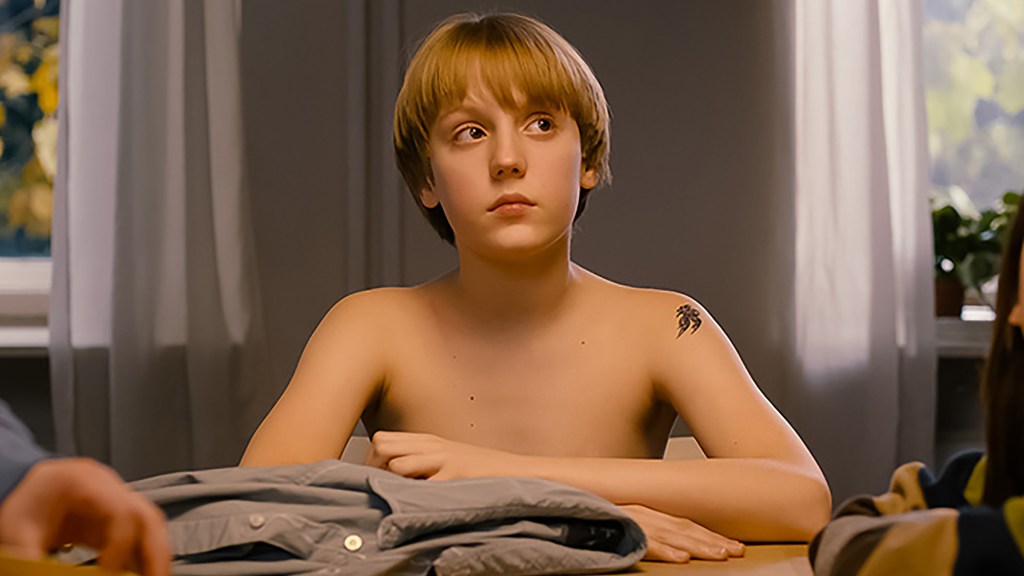








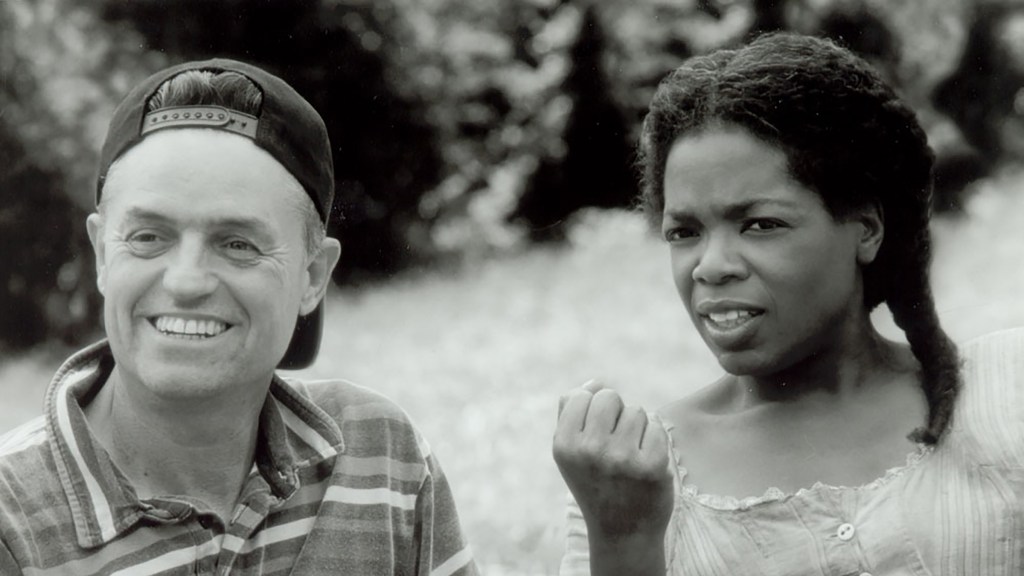


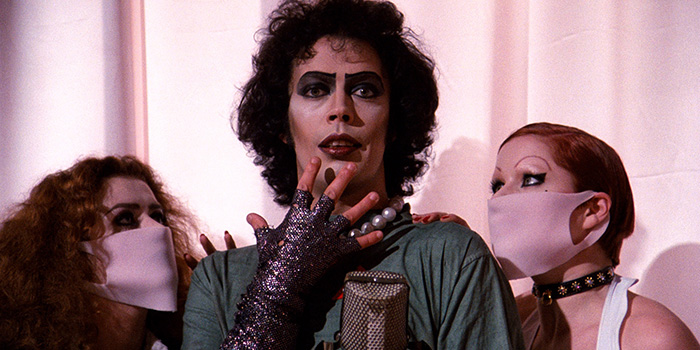


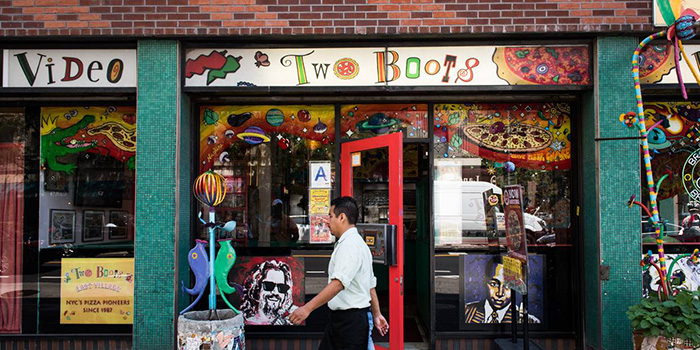


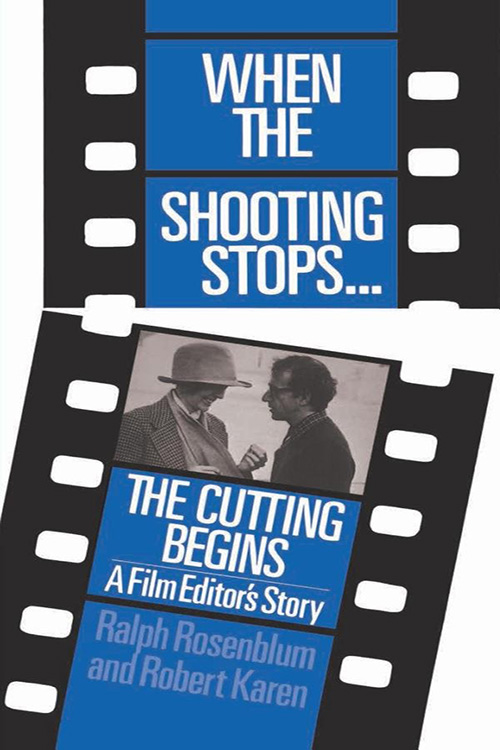

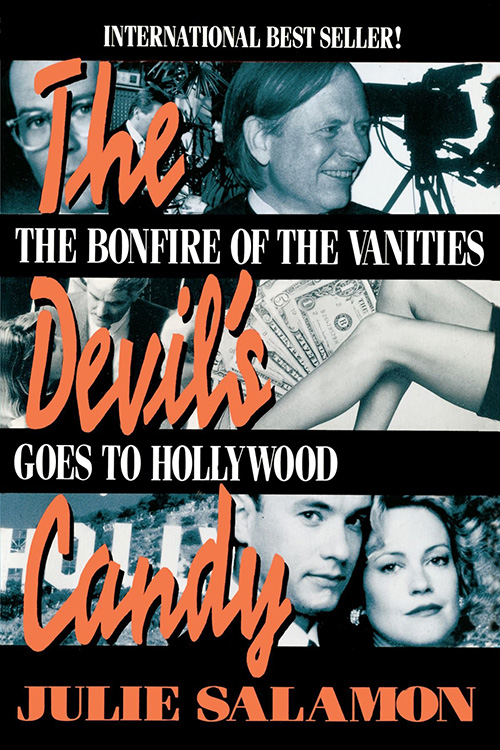

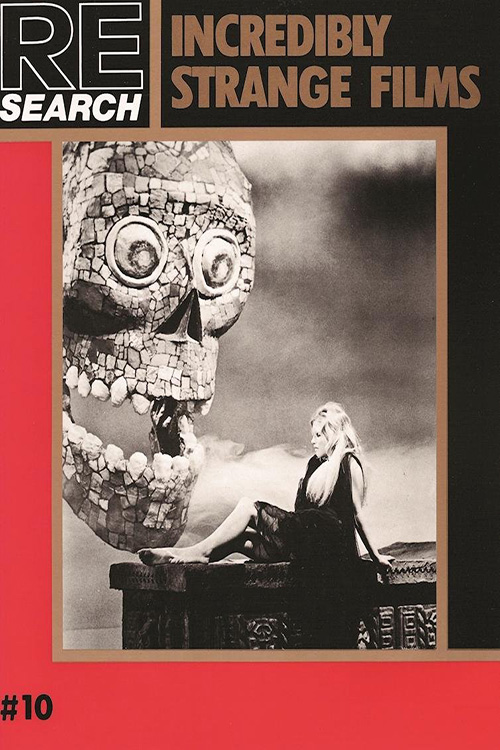


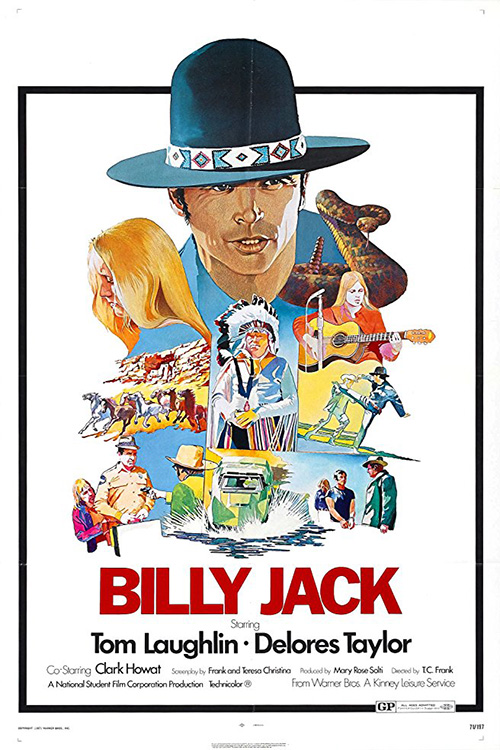
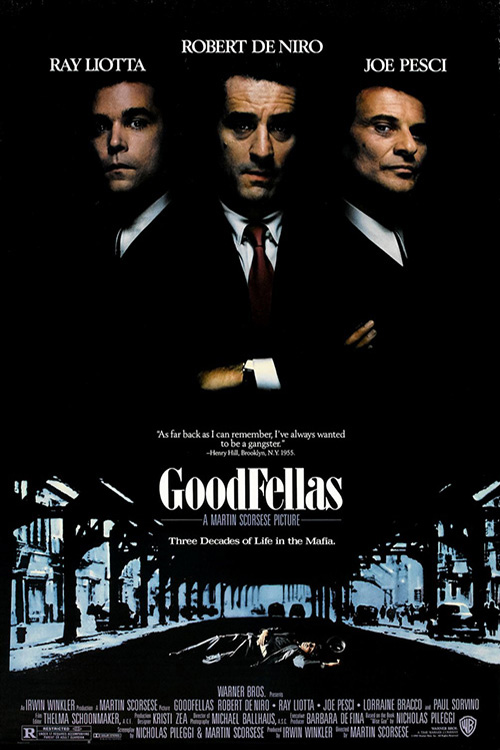


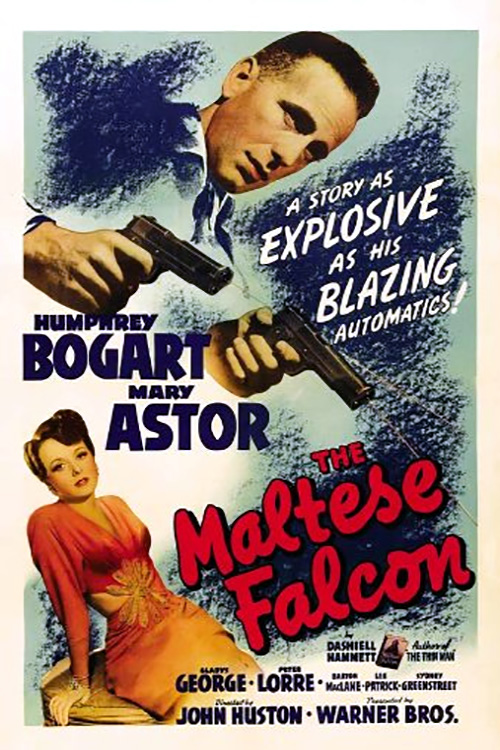



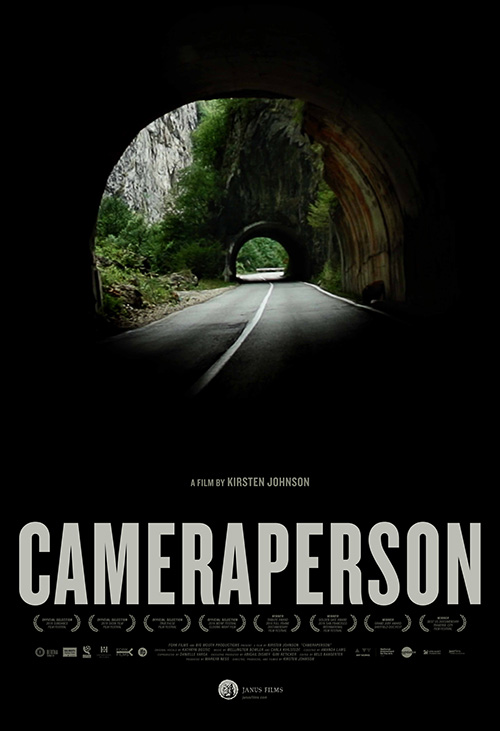


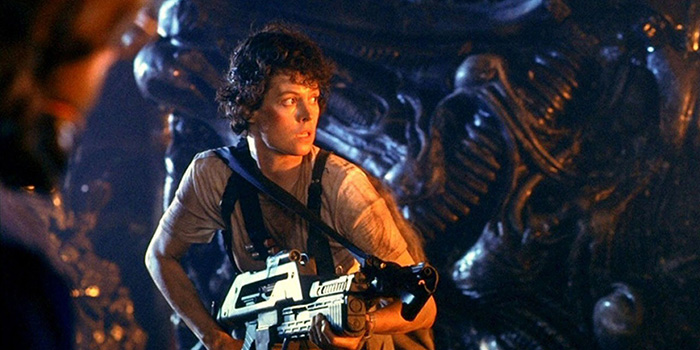


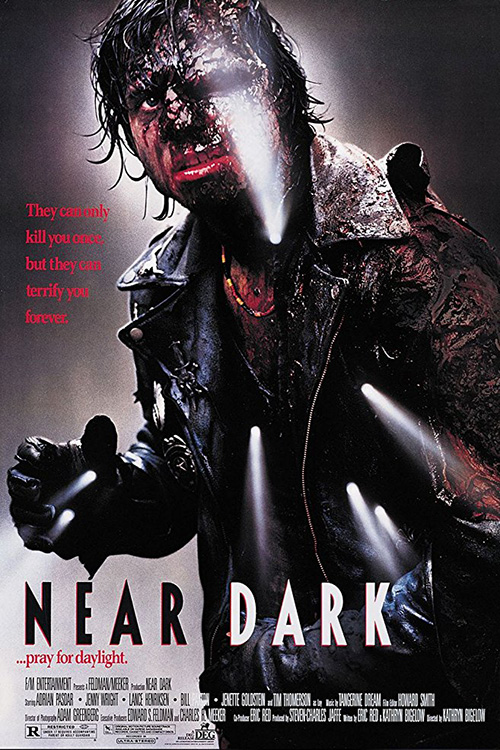

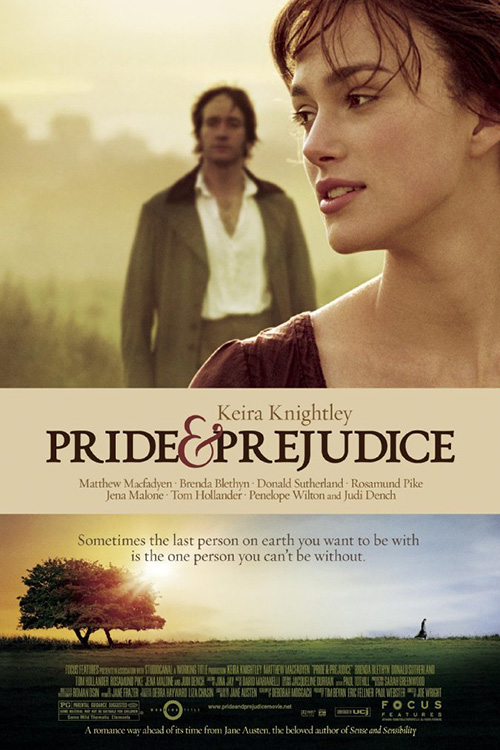
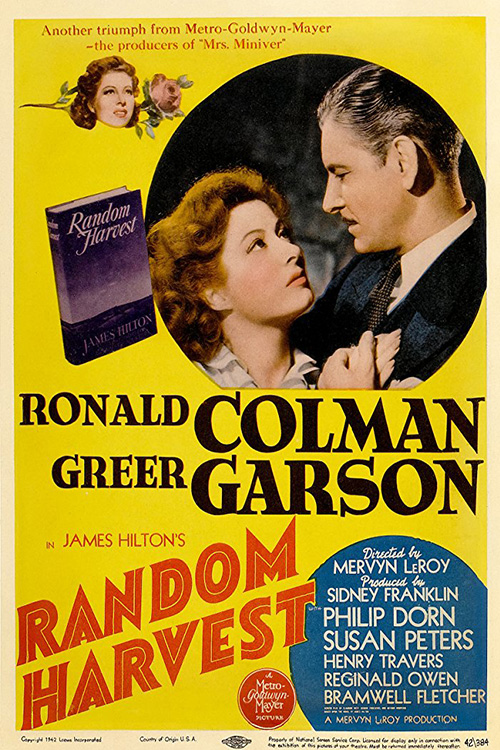

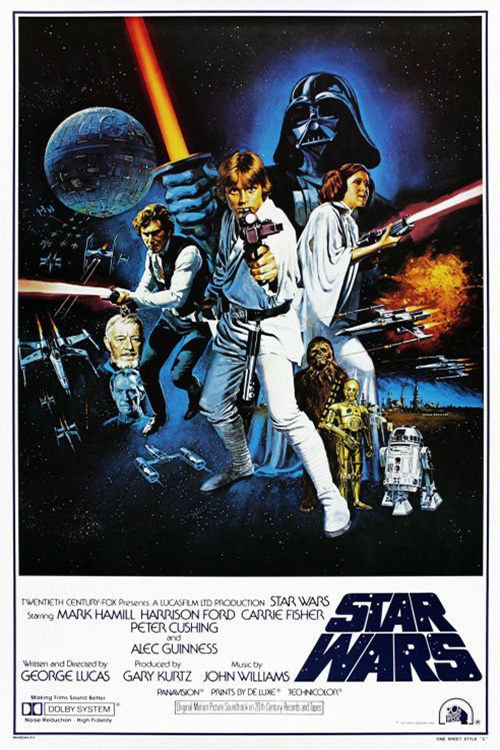
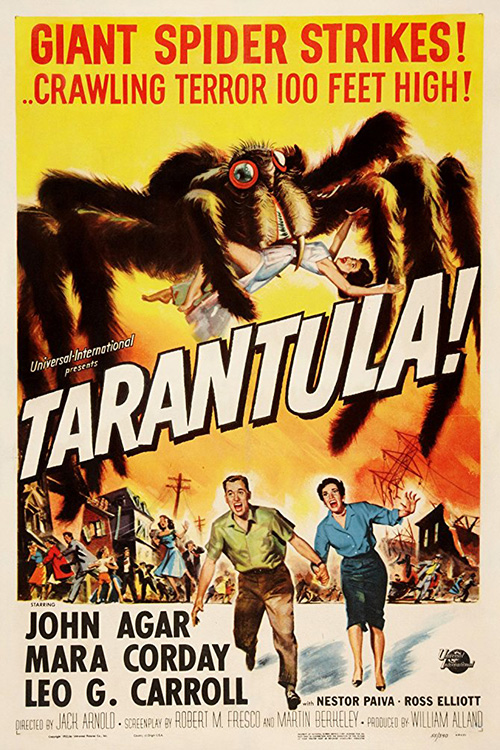



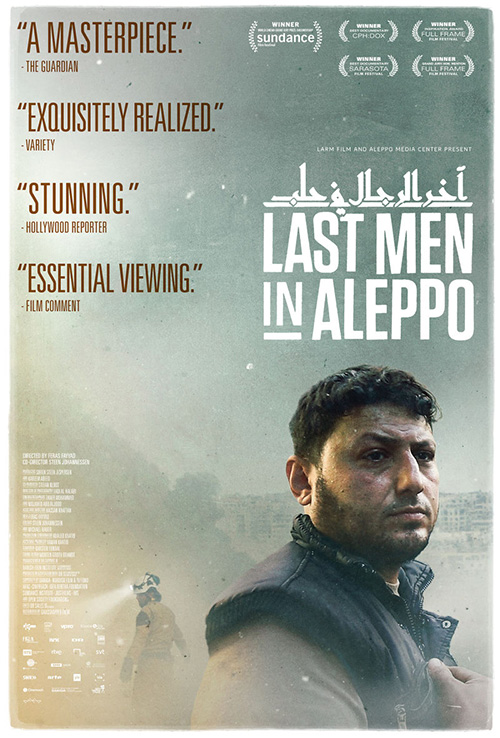


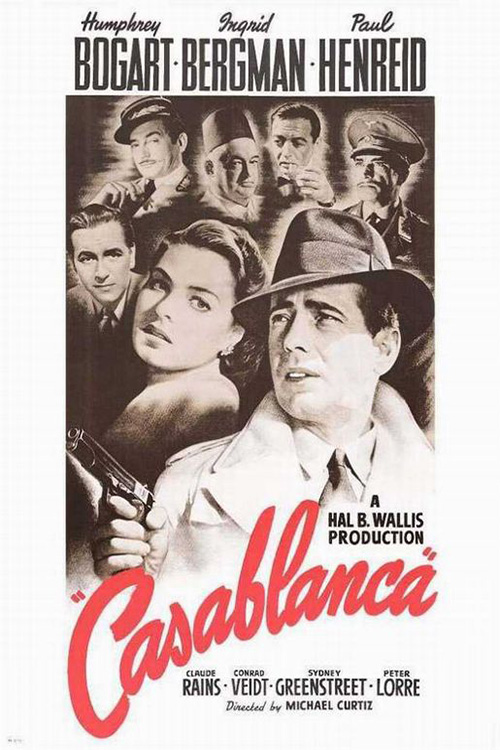
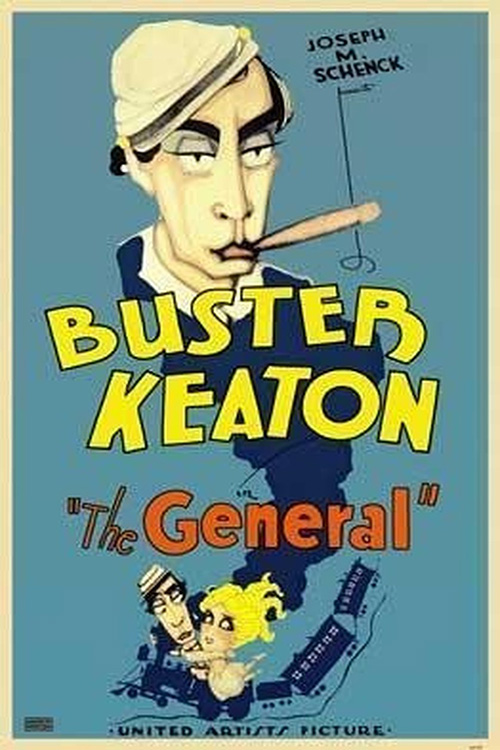
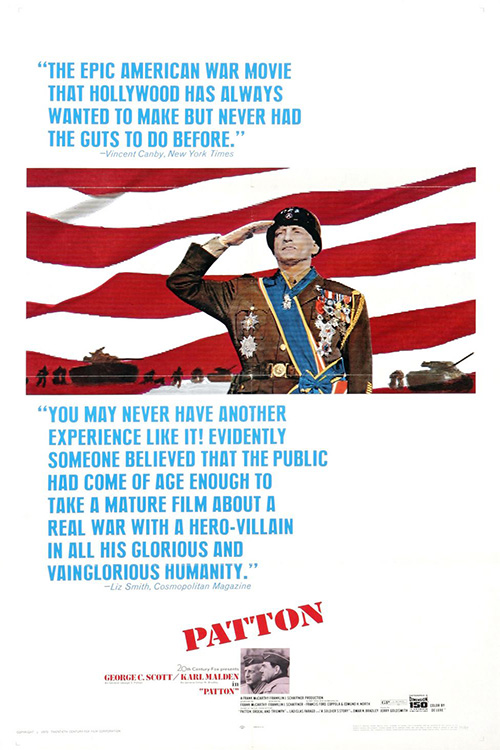
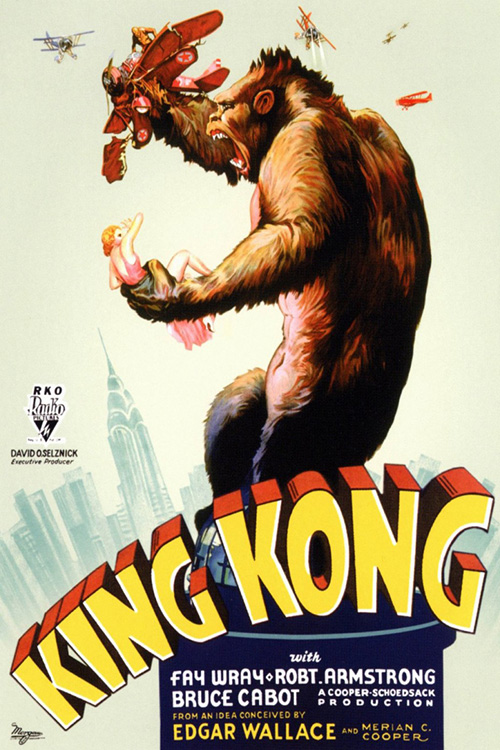


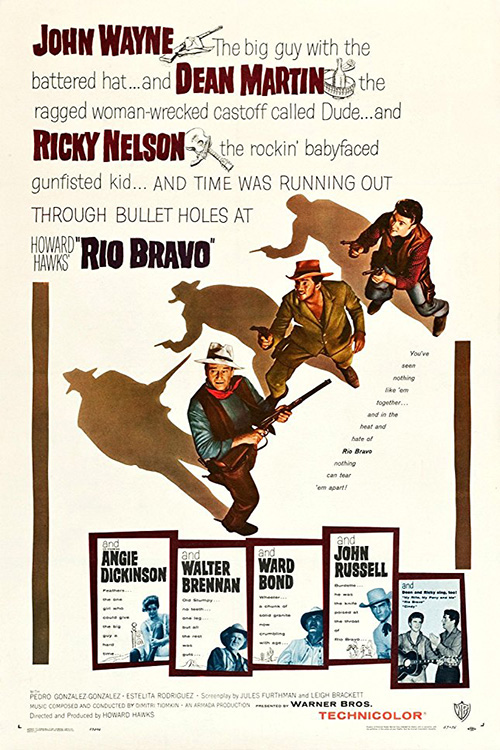


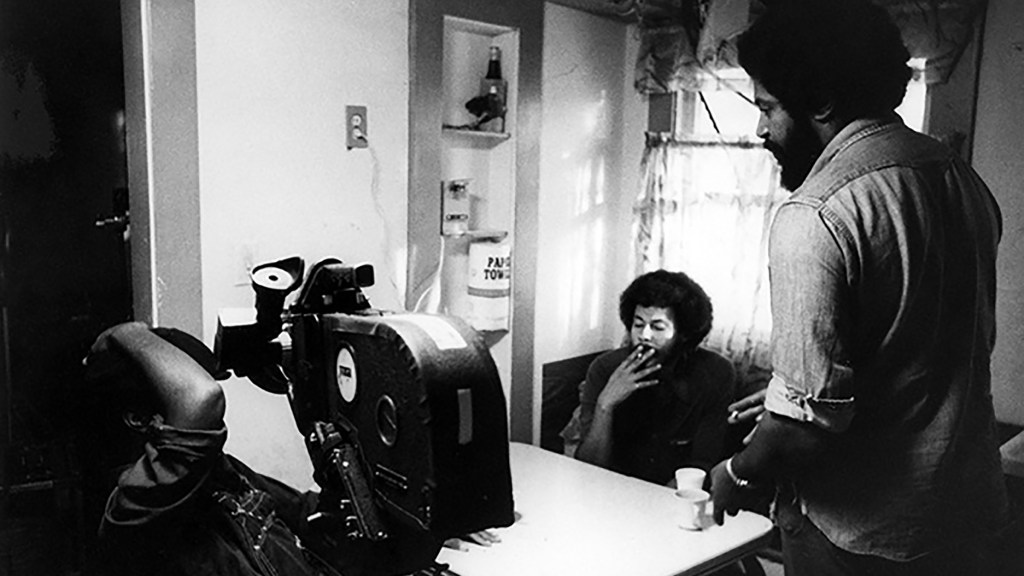








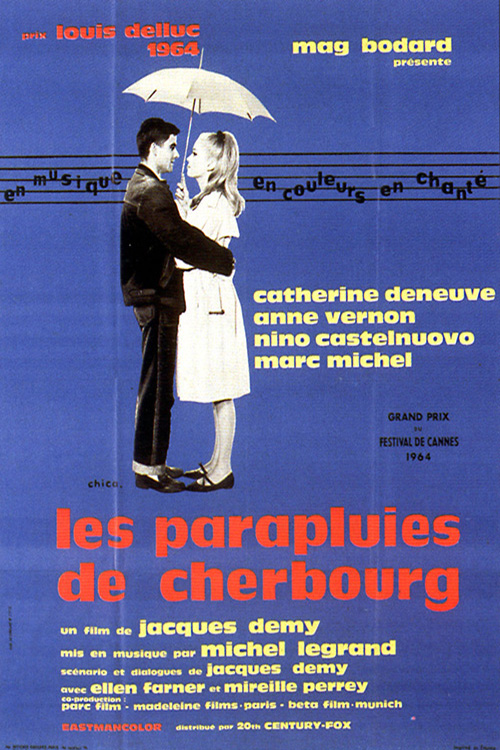
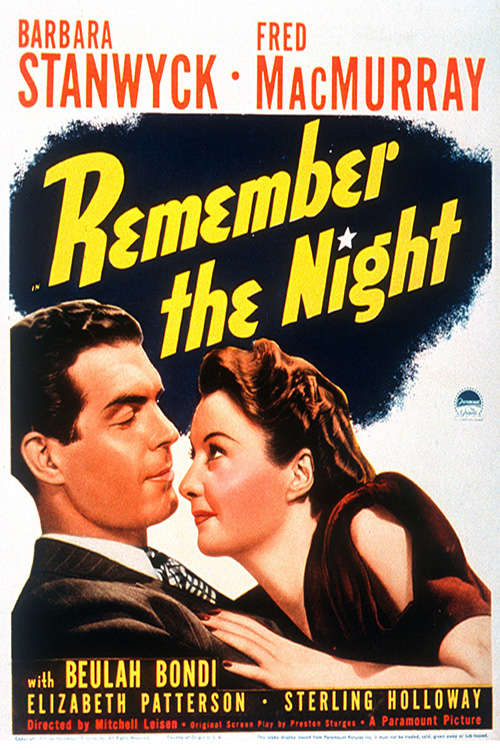


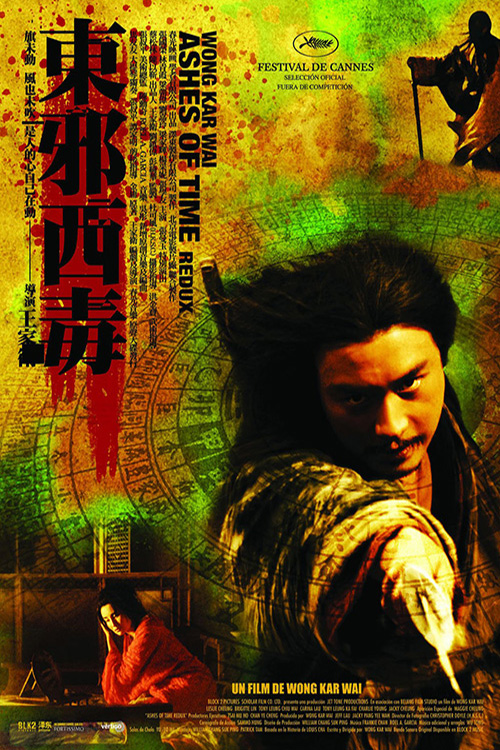












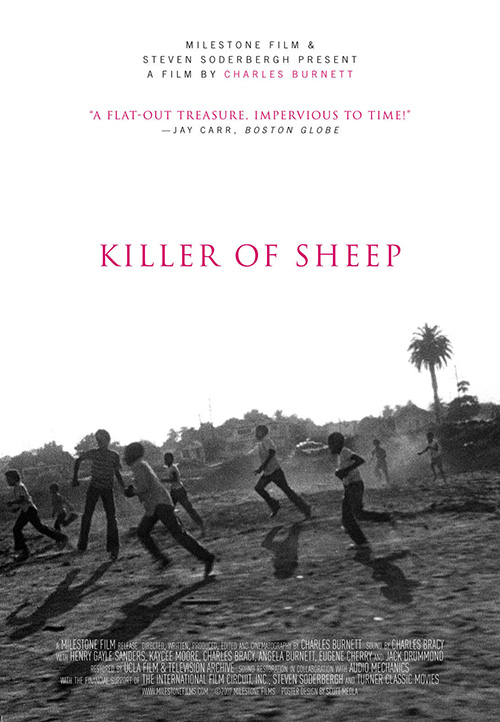


 Cultivate Cinema Circle