American Promise – June 28th, 2017

American Promise [2013]


Please join us for a special screening of Joe Brewster & Michele Stephenson’s documentary American Promise [2013]. This event is a collaboration with POV, PBS’ award-winning nonfiction film series.

  • Screening Date: Wednesday, June 28th, 2017 | 7:00pm
  • Venue: Burning Books
  • Specifications: 2013 / 135 minutes / English / Color
  • Director(s): Joe Brewster & Michele Stephenson
  • Print: Supplied by POV
  • Tickets: Free and Open to the Public
  • Extras: Stop in early for FREE Breadhive baked goods while supplies last!
  • Deal: Bring your ticket stubs and join us at The Black Sheep after the show for 2 for 1 drink specials

Event Sponsors:

Venue Information:

420 Connecticut St, Buffalo, NY 14213


Synopsis

Courtesy of POV:

American Promise is an intimate and provocative account, recorded over 12 years, of the experiences of two middle-class African-American boys who entered a very prestigious–and historically white–private school on Manhattan’s Upper East Side. The Dalton School had made a commitment to recruit students of color, and five-year-old best friends Idris Brewster and Oluwaseun (Seun) Summers of Brooklyn were two of the gifted children who were admitted. The boys were placed in a demanding environment that provided new opportunities and challenges, if little reflection of their cultural identities.

Idris’ parents, Joe, a Harvard- and Stanford-trained psychiatrist, and Michèle, a Columbia Law School graduate and filmmaker, decided to film the boys’ progress starting in 1999. They and members of the large Summers family soon found themselves struggling not only with kids’ typical growing pains and the kinds of racial issues one might expect, but also with surprising class, gender and generational gaps. American Promise, which traces the boys’ journey from kindergarten through high school graduation, finds the greatest challenge for the families–and perhaps the country–is to close the black male educational achievement gap, which has been called “the civil rights crusade of the 21st century.”

The Dalton School, which provides classes from kindergarten through high school, is a launching pad for success, but also a high-pressure learning environment for all its students. Joe and Michèle, along with Seun’s parents, Tony, a systems engineer for CBS, and Stacey, a nursing care manager for elder health, have worked hard to build their careers despite early disadvantages and are united in their drive to have their sons succeed at school and in life. But there are differences in outlook. Michèle, with Latino-Haitian roots, has some hesitation about sending Idris to private school, where she is afraid he will lose touch with his heritage, while Stacey, who hails from Trinidad, wants Seun to learn something she admits she hasn’t–how to be comfortable around white people. While both fathers have high expectations for their sons, Joe is particularly demanding, while Tony tends to be more forgiving of Seun’s ups and downs.

Idris and Seun are bright, playful boys. Idris is outgoing, while Seun is a bit shy. At school, the boys begin to see the differences between themselves and their classmates. The very young Seun is found trying to brush the color out of his gums because, as he explains, some people say that “black is ugly.” Idris, an enthusiastic basketball player at school and in the neighborhood, finds that the way he is comfortable speaking at home and in school is mocked by other black kids as “talking white.” As puberty looms, Idris feels a distinct disadvantage when he is turned down for dates and suspects that race must be the reason. He asks his parents an innocent, heartbreaking question: “Isn’t it better if I were white?” Along with getting good (and not so good) grades, both boys begin to have emotional and academic problems that confound parents and teachers alike.

Seun’s father, Tony, sheds a humorous light on the situation when he recalls being the only black kid in an all-white class. When the class learned the story of Harriet Tubman, the students turned around and looked at him in unison. At a meeting, the African-American parents of Dalton sixth graders find that their boys are being tracked into special tutoring programs, which may, inadvertently, reinforce some of the root causes of the black male achievement gap.

It soon becomes clear that the situation with Idris, Seun and the others is not as straightforward as simply reflecting the disparities between blacks and whites in America. African-American girls at Dalton and in similar educational settings regularly outperform their male peers, a gender disparity that baffles parents and teachers. Certainly the boys spend a lot of energy on sports, upon which their parents place great emphasis. Idris, nursing dreams of a basketball career–improbable, given his modest height–experiences wins and losses on the school court. Seun is diagnosed with dyslexia and Idris with ADHD, conditions that are widespread among American children and adolescents of all backgrounds.

Both boys struggle with the weight of parental and school expectations, as any kid would, though for Idris and Seun, the weight might be even heavier. American Promise is especially revelatory in showing how the fight to succeed hits home in these two black families. The parents are often frustrated by what they see as their sons’ relative lack of drive, compared to their own experiences.

The boys’ paths then diverge. Upon graduating middle school, Seun leaves Dalton to attend the mostly black Benjamin Banneker Academy, a public high school in Brooklyn, where he thrives, traveling to West Africa with his school’s Africa Tours Club and setting his sights on a career in graphic design (to his parents’ consternation). Idris stays at Dalton through high school, but is disappointed when he doesn’t get into Stanford, his dad’s alma mater. Now dating a girl he adores, he is accepted into Occidental College in California and exuberantly comes to see that what seemed a setback is just another challenge to overcome. Even Joe, the Stanford and Harvard graduate who admits that he has at times been too hard on Idris, accepts that there are roads to success that don’t run straight through the Ivy League. Seun gets into the State University of New York, Fredonia, where he will study graphic arts, and his parents, too, realize there are many paths to success and happiness.

The ins and outs of familial relationships, as parents push for success and boys struggle to find their own identities, plus the challenges and tragedies that life brings, such as Stacey’s colon cancer and the accidental death of Seun’s beloved younger brother, form much of the drama of American Promise. At stake, beyond the challenges of being white or black in America, is the meaning of success in our country. “All American families want to give their children the opportunity to succeed. But the truth is, opportunity is just the first step, particularly for families raising black boys,” says co-director and co-producer Michèle Stephenson. “We hope American Promise shines a light on these issues.”

“Our goal is to empower boys, their parents and educators to pursue educational opportunities, especially to help close the black male achievement gap,” adds her husband and filmmaking partner, Joe Brewster.

Tidbits:

  • Sundance Film Festival – 2013 – Winner: Special Jury Award (US Documentary Competition) & Winner: Documentary (Special Jury Prize)
  • New York Film Festival – 2013

Interview

Courtesy of POV:

POV: For those who haven’t seen the film, can you give us a description of the story and how you got started?

Michèle Stephenson: American Promise is a coming of age story about two young African American boys who’s lives we chronicle from kindergarten through high school graduation. It’s a coming of age story where we see them grow and go through different struggles having to do with education, family, and parenting. The interesting twist about this film is that the filmmakers are also the parents and that’s us, so there’s a particular lens on the experience that we chronicle. It sheds light on some of the particularities and issues that African American boys face specifically around education.

POV: Give us an overview of who the main characters of the film are.

Joe Brewster: When we began the process of making American Promise we decided to invite as many families as possible in our son’s kindergarten class at The Dalton School, a rigorous independent school on the Upper East Side of Manhattan. We had five families agree to participate. Over the next few years three dropped out so we were left with our family and our son’s friend in nursery school’s family, the Summers.

Stephenson: I think what was part of the impetus for the film had to do with some of the reasons why we actually entered into this school. We were public school educated parents, but we had been to some of the top Ivy League institutions in our graduate and undergraduate studies and realized, being first generation graduates of a university, what kind of opportunity an education from a rigorous private school could provide because they were our colleagues. When we searched for a place in New York City and came upon the Dalton School, we realized it was an opportunity we couldn’t say no to for our son because of what we thought would be the best education possible. What happened at that time was, upon entering that environment, the school was invested in diversifying its student body and we were part of that experiment. For us, the natural response as filmmakers and documentarians coming into that process was to turn on the camera.

POV: So tell us about the Dalton School as it is a very particular place. Can you describe the environment the kids are in and how it differs from regular public schools?

Stephenson: The Dalton School and others like it that are part of this college preparatory, private school system around the country, but mostly concentrated in urban areas, are really where the elite are educated. It’s about power and being prepared to be a critical thinker in order to have access to that power. They are where our leaders are educated. We came to that, informed in that specific way and looking to guarantee some of the upward mobility that we had started for our family. Dalton is part of that. Some institutions shy away from it but I think that school in particular decided it was their responsibility, as an institution that shapes leaders, to create a school environment reflective of the global society that those students would be entering.

POV: Was it always your intention to chronicle the subjects entire education or was that something that evolved as you went along?

Brewster: Many things evolved over the 14 years of making American Promise but our initial intention was to shoot from kindergarten to graduation.

Stephenson: What it would end up as we weren’t sure but we knew that we had faith in the longitudinal approach and what that could provide as story and drama.

POV: In terms of working with an institution like Dalton, how did you get access to the school and make them comfortable in revealing some of the challenges they face?

Brewster: I think if we had gone into the school and explained the project as it ultimately became, we would have had great difficulty getting this project started. What happened is we came in; we caught them off-guard and we were parents. They were excited about this diversity initiative; we were excited; we had a little bitty camera and began the process all a little naive. The stakes were elevated over the next two or three years and then the serious questions began.

Stephenson: We had a relationship with the head of the middle school who really asking questions about the retention rate of African American boys in middle school for these institutions and was very open about how to resolve this. That particular person was really an advocate for us in continuing the story in spite of the dangers and also understanding that we were invested in telling a complicated story and not a “gotcha,” journalistic approach.

POV: You both refer to issues that African American families, particularly African American young boys face in these situations. What are some of those issues and how do you see them manifest themselves in the film?

Brewster: We point often to something called implicit bias. And that is an unconscious racism. These are feelings, projections, perceptions that you have about these boys that are based on 300 years of perceptions, many of them inaccurate. When we are faced with those perceptions there’s a great deal of anxiety that fills the room. For example, that science may be difficult for them or the academic challenge of an independent school may be over our head. And so there’s a sense of anxiety and shame and it makes it hard to perform. We realized over time that we had to face that directly.

Stephenson: Once these boys hit middle school, there are issues around perception that they’re no longer little boys and sometimes seen as a threat. The suspension happens more frequently. Teachers will you know call us for every small incident that happens, which creates greater anxiety from our perspective as well in terms of how they are being perceived and then trying to figure out if it or real or not; is it based on perception or not? Whole issues that come up in interactions with the institution, the teachers and, in some cases, with other families and other students. So there’s that particular interaction within the school. In light of the fact that you know you picked this school to kind of save your child from perceptions that are outside, you want it to be a safe space, but then you realize that the same perceptions are perpetuated inside. You realize that there’s work that has to be done because in many cases these teachers have not really had much interaction with African American boys.

Brewster: So our son struggled in a sense in acclimating culturally to that Dalton environment but to our chagrin he also struggled in the Brooklyn environment. Here is a boy who has to acclimate in two distinct cultural environments. For us, it’s like learning two or three languages. What we like to say is that, over time, he’s able to master these two cultural environments and that we are hoping that makes him a better man and better able to negotiate his future here.

POV: You have 800 hours of footage. How do you take that volume of material and then shape it into a narrative?

Brewster: It was a little overwhelming so we brought in three great verité editors. We made a decision that we would cut every single piece of footage into verité scenes. We basically gave our editors a couple of instructions, that we wanted this to be a film which we as parents wanted our sons to be perceived for who they really were. We also suggested that they shouldn’t protect us in doing that. I don’t know about the first, but the latter they kept to.

POV: How did it feel for you to make the decision to integrate yourselves into the story more? Also, stepping back now, to see yourselves become characters, essentially.

Brewster: Well it’s particularly painful for me as I wear multiple hats, but my first hat is father. My first job is to make sure my son grows up, that he’s emotionally healthy and that he has some level of academic skills. I think I accomplished that but I’m unable to show you that completely in the film. It’s painful as filmmakers when a critic who has no idea of what went on is chastising you for your child-rearing capabilities. About six or seven years into the project, when I became aware of the numbers affecting African American boys and families, we spoke to about a 150 families around the country in making the film and writing the book. At that point I thought the mission was important. We have shown this film to a number of families and, in tears, they tell us how important this is for validating their experience. Was it worth the pain, the shame and the criticism? I think, at this point, it is a resounding yes. Ask us next week (laughs).

POV: You talk about the numbers around specific issues facing African American young boys. Give us some examples of the things you discovered along the way.

Brewster: That they are are the most criticized and punished subgroup in American society and that does not begin at 16, it begins at 4. We met parents who did not understand, given the resources their child had, why they struggled as much as they did. Even when you look at, and this is what is most shocking, upper middle class parents that gap seems to increase as they go up in income.

Stephenson: Essentially, how well students do is how well we do as a nation. The two are interlinked and intertwined. If we really want to compete at a level that makes sense to maintain, not only our status but our community and our values in this country, we have to take care of all of our children.

Brewster: We are certainly excited about the possibility of change. We know how to educate these boys. We know how to reduce the gap. We have to expect more and hug more. That is our message.

POV: Does the gap appear equally in the public school system vs. the independent school system or do you see differences in how those two systems function?

Brewster: It is everywhere. What we like to say is that many people want to look at this film and ask what the independent schools are doing but when they leave the the independent schools they are going to have to face similar perceptions; a lack of expectations in the criminal justice system, the healthcare system, the banking system. Becoming aware of the issues in this one environment is just a tool to look at American society as a whole.

Stephenson: I think what this film helps shed light on is, when you take away the issue of resources there are things that still perpetuate the gap; there are things that still perpetuate the fact that performances are not the same. The thing that still exists is the unconscious racism. It is the implicit bias that these students face and have to deal with. This permeates whatever the socio-economic class that the communities comes from.

POV: In terms of talking to white families or the side that carries that implicit bias with it, are you having those dialogues too?

Brewster: Let me go back and explain that implicit bias impacts all Americans. The stereotypes that I may be less likely to accept because I am African American I am still impacted by them, although may be in other ways. For example, not asking my son to study as much because I may think it is difficult. It is important that everyone get involved in this discussion because it is not possible to make the big changes without everyone owning some part of the problem.

Stephenson: In telling the story the way it is told the film is an attempt at piercing through stereotypes and assumptions that maybe a majority of audiences have about what a black middle class family is or what these boys are like. It plays that initial role in challenging assumptions and biases that exist. I like to think that is what filmmaking is about. That is why we do what we do. I think Ralph Ellison says “every story is a minority story”. Every particular story is particular, whether it is African American or relating to someone who lives by the Louisiana Bayou, it is about how we as filmmakers use that particularity to tell a story that has a resonance. That is our task and i think that is the first step in attacking these implicit biases. That is why storytelling is so powerful. By seeing these boys come of age, the impact of that longitudinal growth beats any kind of racial assumptions anyone could have. You no longer see them as black but as human beings and boys who are fully grown and complex in their own way. We like to think that when people leave the theater will think twice when they walk down the street and see boys who look like Idris and Seun.

Brewster: Some people will see race; some people will se class but everyone will see boys growing up over time who are African American, trustworthy, efficient and who are like you. That is the real accomplishment.


Directors Bio

Courtesy of POV:

A graduate of McGill University and Columbia Law School, Michèle Stephenson (Producer/Director) uses her background in critical studies, race and human rights to inform her documentary work. Her Panamanian and Haitian heritage has also fueled her passion to tackle stories on communities of color and human rights. An early pioneer in the Web 2.0 revolution, Stephenson used video and the Internet to structure human rights campaigns and train people from around the globe in video Internet advocacy. Her work has appeared on PBS, Showtime, MTV and other outlets. Stephenson’s honors include the Silverdocs Diversity Award and the Henry Hampton Award for Excellence in Film and Digital Media.

Joe Brewster (Producer/Director) and his partner, Michèle Stephenson, have produced and directed award-winning feature documentaries and narrative films. Brewster is a Harvard- and Stanford-educated psychiatrist who specializes in organizational analysis, the use of psychoanalytical principals to understand and improve organizations. He moved to New York City in 1985 to pursue media studies in the service of social change. In 1992, Brewster sold his first screenplay to the Jackson/McHenry group under the Warner Bros. imprint. In 1996, he wrote and directed The Keeper, which was an official selection in the dramatic narrative competition section of the Sundance Film Festival and garnered numerous national and international awards, including an Independent Spirit Award nomination.

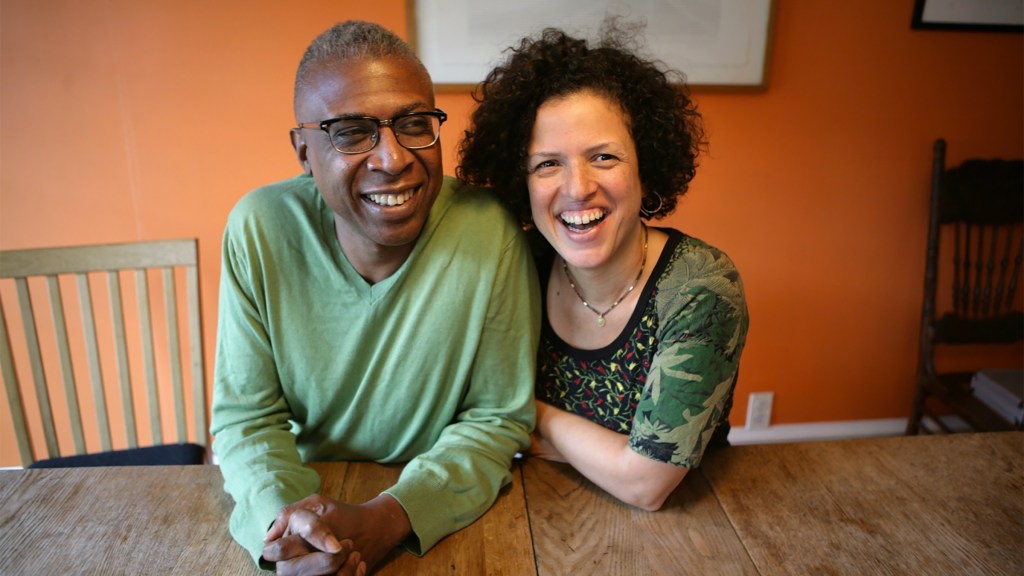
photo by Orrie King

Filmography:

  • American Promise (2013)
  • Slaying Goliath (2008)

Links

Here is a curated selection of links shared on our Facebook page for additional insight/information:

  • Feel free to check out POV’s Community Engagement & Education Discussion Guide here – link
  • 5/30/17 – “A moving document of what it means to be a minority in an exclusive, high-performing school.” Duane Byrge, The Hollywood Reporterlink

Jerichow – June 7th, 2017

Jerichow [2009]


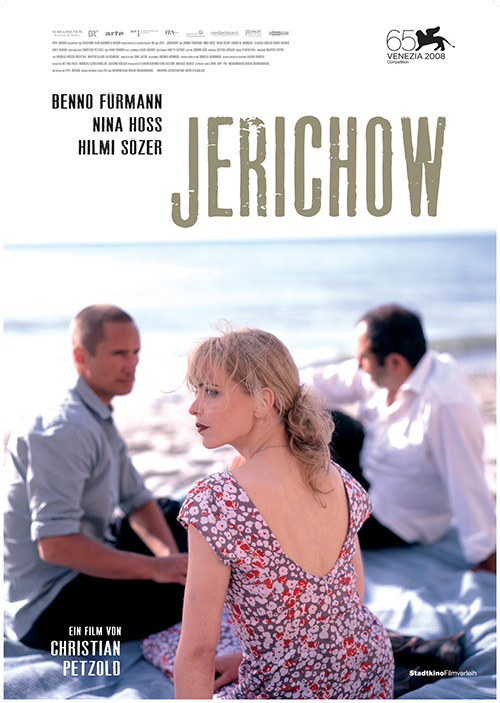
Please join us for a special screening of Christian Petzold’s Jerichow [2009] as part of our look at the director’s early work pre-Barbara and Phoenix.

  • Screening Date: Wednesday, June 7th, 2017 | 7:00pm
  • Venue: Squeaky Wheel Film & Media Arts Center
  • Specifications: 2009 / 93 minutes / German / Color
  • Director(s): Christian Petzold
  • Print: Supplied by Goethe Institut
  • Tickets: $7.00 General Admission / FREE for Squeaky Members

Event Sponsors:

Venue Information:

Market Arcade Complex (first floor) 617 Main Street, Buffalo, NY 14203


Synopsis

Courtesy of filmportal.de:

Three people who have lost their way are brought together by fateful coincidence. Thomas, a young, strong, taciturn former soldier, dishonourably discharged from the army. Ali, still affable, despite the blows life has dealt him, is a Turkish businessman in Germany who will do all he can to avoid being taken for a ride by his snack-bar lessees. Laura is a woman with a past. She is beautiful but has become somewhat insufferable in her marriage to Ali.

Thomas, Ali and Laura hide themselves and their secrets from one another. They are searching for security as much as love. They are dependent on one another, but the price of fulfilling their desires is betrayal.

Christian Petzold’s Jerichow tells the tale of a love triangle, where time and again desires break down into a different, deeper dream. On the country roads of north eastern Germany, in the woods of this vast region and on the cliffs soaring above the sea, a drama unfolds that lends a bold new meaning to a classic cinematic constellation.

Between guilt and freedom, passion and cool calculation lie desires which, once fulfilled, could be mistaken for a curse.

Tidbits:

  • Toronto International Film Festival – 2008
  • Venice Film Festival – 2008
  • Berlin International Film Festival – 2009

Director Bio

“I always like it when people play something, when they believe that they have to play the role of father or daughter, but then they lose control over the staging. Those are the best moments.”

Courtesy of Goethe Institut:

By Thilo Wydra (Translated by Kevin White)

A latent vacuum emanates from Christian Petzold’s world of pictures. The often overpowering effect can be consistently attributed to the formal structure and visual approach that is a recurring theme in all of his films. Starting with his first TV movie, Pilotinnen (lit. Female Pilots, 1995), Hans Fromm has been responsible for the camera work delivering clear, strict, sober and clinical photography. Petzold’s films are defined by his ability to distill them down to their essentials, their core.

GROWING UP IN “LIMBO GERMANY”

The director, who is often labeled as part of the so-called Berlin school, was born in 1960 in Hilden, North Rhine-Westphalia, and grew up in the neighboring town of Haan. Petzold refers to life in the microcosm of these two small towns between Düsseldorf and Solingen as a life in “limbo Germany”, in the deepest, most bourgeois province. In other words, nowhere. This “purgatory” is easily transferred to any part of the country, from region to region, state to state. It is an intermediate realm between life and death where people and ghosts exist in equal numbers, as in his film Ghosts (2005).

Christian Petzold left this limbo at the age of 20 after finishing his high school degree and civil service. He has been living in Berlin since the beginning of the 1980s. After completing a course of study in dramatics and German at the Free University he went on to get a degree at the dffb (a school for film and television) between 1988 and 1994. Pilotinnen was his film debut as well as his graduate thesis project. Petzold describes his inspiration to become a filmmaker like this: “The book Mr. Hitchcock, How did You do that? (Truffaut/Hitchcock 1966/1982) and the horrible suburban sprawl devoid of cinema, markets and ideas – the idea was to create images of those things.”

ROOTS IN THE FILM ARCHIVES

Before he was able to make the jump from the TV to the big screen, his debut work was followed by two further films made for television, Cuba Libre (1996) and Die Beischlafdiebin (1998). Petzold’s cinema film debut was The State I am In (2000), after which he was invited to Venice for the film festival and also won best feature film at the German Film Awards in 2001. It is a film about a terrorist couple and their daughter, played by Julia Hummer, who also narrates. The story links the past, the RAF (a former terrorist organization) and “Germany in Autumn” (a film about RAF events in 1977), with today, German reality and the pressures of the present day. Portraying the ghost of terror and the spirit of modernity, the director’s film debut has come to represent the foundation of Petzold’s cinematic cosmos.

His television film Something to Remind Me (2001) and the feature film Wolfsburg (2003), set in the partially very “artificial” city of the same name, closely followed one another and are his first two works with actress Nina Hoss (b. 1975). Both of these films clearly show the filmmakers influences for the first time, including the works of Michelangelo Antonioni, Howard Hawks, Rainer Werner Fassbinder and, not least, the great Alfred Hitchcock. The latter’s masterpiece, Vertigo (1958), in which James Stewart, in a phantasmagoria of effects, is hired to investigate and recreate a ghost of the past, the blonde Kim Novak – it may well be the cinematographic godfather par excellence of many a Petzold film.

Petzold describes his cinematic provenance as follows: “My roots are in the film archives in Cologne and Düsseldorf and in the film clubs of Solingen and Wuppertal. And of course in WDR’s channel 3 programming. That is where my role models come from: Hawks, Anthony Mann, Hitchcock, Renoir…” Just as Hans Fromm has done all of the camera work for Petzold’s films to date, Harun Farocki, one of his professors at the dffb, has been the co-author for many of the director’s screenplays, all of which have been original works by the auteur filmmaker himself. It is very similar to how Fassbinder works: with longstanding colleagues, his so-called film family. Editor Bettina Böhler is another example along with actress Nina Hoss, both of whom are vital members of the clan – the director and his muses. The team made five films after his ethereal psychothriller Something to Remind Me and they are not finished yet.

THE DISPARITY OF CINEMA AND TELEVISION FILMS

Feature films with that lineup were Yella (2007) and Jericho (2008) – both with Nina Hoss – while TV movies included Dreileben – Somewhat better than Death (2011) one part of a trilogy consisting of three separate made-for-TV films, each independent but loosely connected with one another and each from a different director: Dominik Graf, Christoph Hochhäusler, Christian Petzold. It was an unusual, large-scale television liaison that was met with a controversial reception.

“The feature film used to be something special on TV. Friday evening on ARD: Der internationale Film with beautiful music by John Barry from the film Petulia (1968). These days only the private stations use the mainstream American material for prime time. Television tells its own stories. Cinema hasn’t been international on television for a while now,” says Petzold about the disparity of cinema and television films.

Barbara (Silver Bear, Berlinale 2012; Silver Lola, German Film Award 2012) is one of these kaleidoscopes of the intermediate realm and its inhabitants. Set in the DDR, Petzold’s 11th film is about Barbara (Nina Hoss), a doctor who puts in a request for a trip outside of East Germany and is subsequently banished to the countryside up on the Baltic Sea. It is basically the end of the world but in the small-town hospital she meets a doctor, Andre (Ronald Zehrfeld), who is her new boss. She soon becomes unsettled by the foreign sense of closeness between them. Primarily a love story, Barbara is one of Petzold’s most powerful films to date, not to mention one of his most emotional. Like many of the characters in his films, the protagonist here is also homeless, uprooted, she is outwardly and inwardly driven, a completely estranged person. The ghost of suspicion is everywhere here. Nobody trusts anyone when everyone could be a spy for the state. It is life in the pressure cooker, where love must takes unusual twists and turns. But as realistic and at the same time colorfully poetic as Barbara’s existence may appear, this film also lives in that haunting intermediate realm so effectively created by auteur filmmaker Christian Petzold.

Photo by Harry Schnitger

Filmography:

  • Undine (2020)
  • Transit (2018)
  • Phoenix (2014)
  • Barbara (2012)
  • Jerichow (2008)
  • Yella (2007)
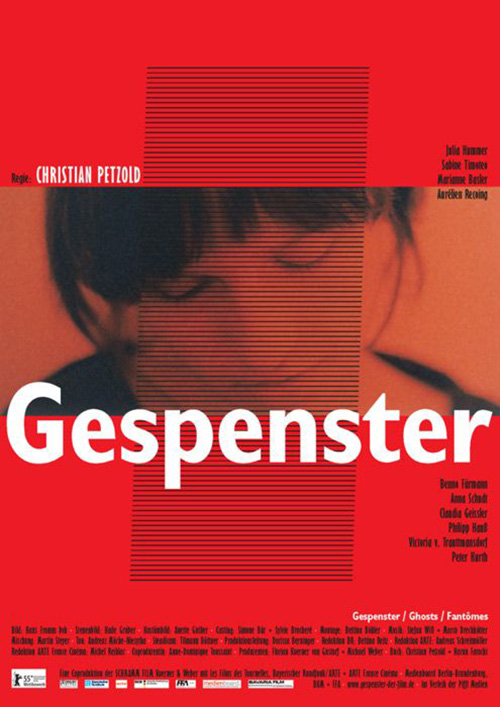
  • Gespenster [Ghost] (2005)
  • Wolfsburg (2000)
  • Something to Remind Me (2001)
  • The State I Am In (2000)
  • The Sex Thief (1998)
  • Cuba Libre (1996)
  • Pilots (1995)

Links

Here is a curated selection of links shared on our Facebook page for additional insight/information:

  • 2/18/17 – “Petzold is also regarded as the ground-breaking and most important of the group of filmmakers known as the Berlin School, which some have dubbed a ‘German New Wave.’ Although celebrated at international film festivals throughout Europe, his films are still relatively unknown in the Anglophone world, where German cinema is better known for the Nazi-era historical dramas that Petzold and the Berlin School have generally disdained.” Senses of Cinema – link
  • 2/19/17 – Dennis Lim looks at Christian Petzold and the Berlin School filmmakers in The New York Timeslink
  • 2/22/17 – New Petzold already in the pipeline! “Paula Beer, who won the best newcomer award at Venice last year for Francois Ozon’s Frantz, and Franz Rogowski (Tiger Girl) lead the cast on the film, which will begin a 40-day shoot in Marseilles from mid-May.” – link
  • 2/28/17 – These 70s era photos of Christian Petzold and his teacher and collaborator Harun Farocki are incredible!
  • 6/6/17 – “The Cinema of Identification gets on my nerves” – Christian Petzold interview at Cineaste. – link

Welcome to F.L. – May 24th, 2017

Welcome to F.L. [2015]


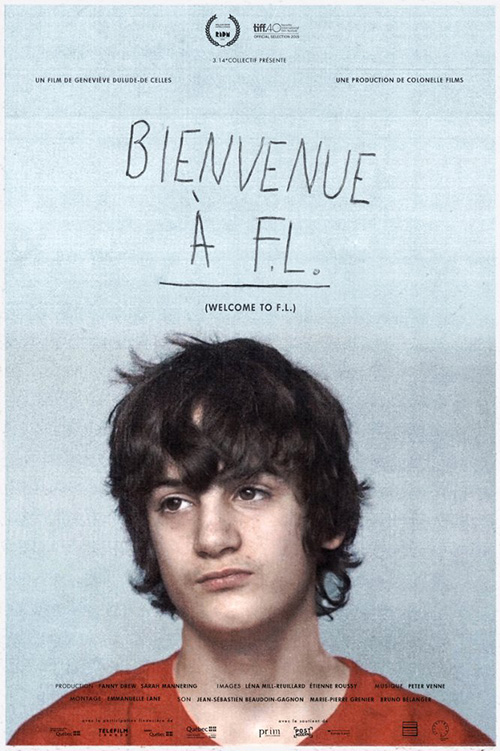
Please join us for a special screening of Geneviève Dulude-De Celles’s documentary Bienvenue à F.L. [Welcome to F.L.] [2015].

  • Screening Date: Wednesday, May 24th, 2017 | 7:00pm
  • Venue: Burning Books
  • Specifications: 2015 / 75 minutes / French with subtitles / Color
  • Director(s): Geneviève Dulude-De Celles
  • Print: Supplied by the filmmaker
  • Tickets: Free and Open to the Public
  • Extras: Stop in early for FREE Breadhive baked goods while supplies last!
  • Deal: Bring your ticket stubs and join us at The Black Sheep after the show for 2 for 1 drink specials

Event Sponsors:

Venue Information:

420 Connecticut St, Buffalo, NY 14213


Synopsis

Courtesy of website:

Welcome to F.L. portrays a community of teenagers within their enclosed high school’s world. They come from Sorel-Tracy, a small town in Quebec, and they dare to take the floor to question their environment, identity and other subjects related to their teenage years. As they speak, they learn to define themselves, inside and outside the school’s boundaries, entering slowly into the challenges of adulthood. They expose their refreshing point of view with humour, philosophy and courage.


Director Bio

Courtesy of website:

Geneviève studied photography at Concordia University and completed a Bachelor and a Master`s Degree in cinema at UQAM. In 2011, she traveled around the world to direct short documentaries for a television show called “La course Évasion autour du monde”. In 2014, Geneviève wrote and directed the short film La coupe (The Cut), winner of the Grand Jury Award for Best International Short at Sundance Film Festival. The film then traveled in several prestigious festivals around the world, winning a few awards along the way.

Genevieve will present her first feature documentary Welcome to F.L., at the Toronto International Film Festival at the fall 2015. She is currently working on writing two feature films, in addition of wearing the development producer’s hat within her young production company Colonelle films.

Filmography:

  • A Colony (2018)
  • Welcome to F.L. (2015)

Links

Here is a curated selection of links shared on our Facebook page for additional insight/information:

  • 5/15/17 – “With an open heart, a quiet mind, and an eye for the nuances ingrained in the high school experience, Welcome to F.L. gives these teens a chance to convey honestly how it feels to be of Generation Z and wields beautiful, poignant results about coming of age in today’s byzantine world.” Jordan M. Smith, IONCINEMA.com – link

Yella – May 10th, 2017

Yella [2007]


Please join us for a special screening of Christian Petzold’s Yella [2007] as part of our look at the director’s early work pre-Barbara and Phoenix.

  • Screening Date: Wednesday, May 10th, 2017 | 7:00pm
  • Venue: Squeaky Wheel Film & Media Arts Center
  • Specifications: 2007 / 89 minutes / German / Color
  • Director(s): Christian Petzold
  • Print: Supplied by Goethe Institut
  • Tickets: $7.00 General Admission / FREE for Squeaky Members

Event Sponsors:

Venue Information:

Market Arcade Complex (first floor) 617 Main Street, Buffalo, NY 14203


Synopsis

Courtesy of filmportal.de:

Yella has decided to leave her small town in eastern Germany for a promising job and a new life on the other side of the Elbe, leaving behind a failed marriage and broken dreams. In Hanover, Yella meets Philipp, a young executive at an equity firm, who gives her a job as his assistant. Although she has no knowledge of the world of venture capital, steel-and-glass offices and discretely-lit hotel lobbies, Yella soon discovers she has a knack with ruthless businessmen. Negotiations become a thrilling game of quick wits in which Yella′s looks and icy demeanour are major assets. Yella sees a potential future with Philipp. He is serious, determined, and his goals could become shared projects. It seems ambitious Yella could finally get everything she has ever wanted.

But strange voices and sounds are plaguing Yella – truths from her past coming back to haunt her. She begins to worry that her new life could be too good to be true. She′s determined to keep her eyes open – because those who sleep could well experience a rude awakening.

Tidbits:

  • Berlin International Film Festival – 2007 – Winner: Silver Bear for Best Actress & Femina-Film-Prize

Director Bio

“I always like it when people play something, when they believe that they have to play the role of father or daughter, but then they lose control over the staging. Those are the best moments.”

Courtesy of Goethe Institut:

By Thilo Wydra (Translated by Kevin White)

A latent vacuum emanates from Christian Petzold’s world of pictures. The often overpowering effect can be consistently attributed to the formal structure and visual approach that is a recurring theme in all of his films. Starting with his first TV movie, Pilotinnen (lit. Female Pilots, 1995), Hans Fromm has been responsible for the camera work delivering clear, strict, sober and clinical photography. Petzold’s films are defined by his ability to distill them down to their essentials, their core.

GROWING UP IN “LIMBO GERMANY”

The director, who is often labeled as part of the so-called Berlin school, was born in 1960 in Hilden, North Rhine-Westphalia, and grew up in the neighboring town of Haan. Petzold refers to life in the microcosm of these two small towns between Düsseldorf and Solingen as a life in “limbo Germany”, in the deepest, most bourgeois province. In other words, nowhere. This “purgatory” is easily transferred to any part of the country, from region to region, state to state. It is an intermediate realm between life and death where people and ghosts exist in equal numbers, as in his film Ghosts (2005).

Christian Petzold left this limbo at the age of 20 after finishing his high school degree and civil service. He has been living in Berlin since the beginning of the 1980s. After completing a course of study in dramatics and German at the Free University he went on to get a degree at the dffb (a school for film and television) between 1988 and 1994. Pilotinnen was his film debut as well as his graduate thesis project. Petzold describes his inspiration to become a filmmaker like this: “The book Mr. Hitchcock, How did You do that? (Truffaut/Hitchcock 1966/1982) and the horrible suburban sprawl devoid of cinema, markets and ideas – the idea was to create images of those things.”

ROOTS IN THE FILM ARCHIVES

Before he was able to make the jump from the TV to the big screen, his debut work was followed by two further films made for television, Cuba Libre (1996) and Die Beischlafdiebin (1998). Petzold’s cinema film debut was The State I am In (2000), after which he was invited to Venice for the film festival and also won best feature film at the German Film Awards in 2001. It is a film about a terrorist couple and their daughter, played by Julia Hummer, who also narrates. The story links the past, the RAF (a former terrorist organization) and “Germany in Autumn” (a film about RAF events in 1977), with today, German reality and the pressures of the present day. Portraying the ghost of terror and the spirit of modernity, the director’s film debut has come to represent the foundation of Petzold’s cinematic cosmos.

His television film Something to Remind Me (2001) and the feature film Wolfsburg (2003), set in the partially very “artificial” city of the same name, closely followed one another and are his first two works with actress Nina Hoss (b. 1975). Both of these films clearly show the filmmakers influences for the first time, including the works of Michelangelo Antonioni, Howard Hawks, Rainer Werner Fassbinder and, not least, the great Alfred Hitchcock. The latter’s masterpiece, Vertigo (1958), in which James Stewart, in a phantasmagoria of effects, is hired to investigate and recreate a ghost of the past, the blonde Kim Novak – it may well be the cinematographic godfather par excellence of many a Petzold film.

Petzold describes his cinematic provenance as follows: “My roots are in the film archives in Cologne and Düsseldorf and in the film clubs of Solingen and Wuppertal. And of course in WDR’s channel 3 programming. That is where my role models come from: Hawks, Anthony Mann, Hitchcock, Renoir…” Just as Hans Fromm has done all of the camera work for Petzold’s films to date, Harun Farocki, one of his professors at the dffb, has been the co-author for many of the director’s screenplays, all of which have been original works by the auteur filmmaker himself. It is very similar to how Fassbinder works: with longstanding colleagues, his so-called film family. Editor Bettina Böhler is another example along with actress Nina Hoss, both of whom are vital members of the clan – the director and his muses. The team made five films after his ethereal psychothriller Something to Remind Me and they are not finished yet.

THE DISPARITY OF CINEMA AND TELEVISION FILMS

Feature films with that lineup were Yella (2007) and Jericho (2008) – both with Nina Hoss – while TV movies included Dreileben – Somewhat better than Death (2011) one part of a trilogy consisting of three separate made-for-TV films, each independent but loosely connected with one another and each from a different director: Dominik Graf, Christoph Hochhäusler, Christian Petzold. It was an unusual, large-scale television liaison that was met with a controversial reception.

“The feature film used to be something special on TV. Friday evening on ARD: Der internationale Film with beautiful music by John Barry from the film Petulia (1968). These days only the private stations use the mainstream American material for prime time. Television tells its own stories. Cinema hasn’t been international on television for a while now,” says Petzold about the disparity of cinema and television films.

Barbara (Silver Bear, Berlinale 2012; Silver Lola, German Film Award 2012) is one of these kaleidoscopes of the intermediate realm and its inhabitants. Set in the DDR, Petzold’s 11th film is about Barbara (Nina Hoss), a doctor who puts in a request for a trip outside of East Germany and is subsequently banished to the countryside up on the Baltic Sea. It is basically the end of the world but in the small-town hospital she meets a doctor, Andre (Ronald Zehrfeld), who is her new boss. She soon becomes unsettled by the foreign sense of closeness between them. Primarily a love story, Barbara is one of Petzold’s most powerful films to date, not to mention one of his most emotional. Like many of the characters in his films, the protagonist here is also homeless, uprooted, she is outwardly and inwardly driven, a completely estranged person. The ghost of suspicion is everywhere here. Nobody trusts anyone when everyone could be a spy for the state. It is life in the pressure cooker, where love must takes unusual twists and turns. But as realistic and at the same time colorfully poetic as Barbara’s existence may appear, this film also lives in that haunting intermediate realm so effectively created by auteur filmmaker Christian Petzold.

Photo by Harry Schnitger

Filmography:

  • Undine (2020)
  • Transit (2018)
  • Phoenix (2014)
  • Barbara (2012)
  • Jerichow (2008)
  • Yella (2007)
  • Gespenster [Ghost] (2005)
  • Wolfsburg (2000)
  • Something to Remind Me (2001)
  • The State I Am In (2000)
  • The Sex Thief (1998)
  • Cuba Libre (1996)
  • Pilots (1995)

Links

Here is a curated selection of links shared on our Facebook page for additional insight/information:

  • 2/18/17 – “Petzold is also regarded as the ground-breaking and most important of the group of filmmakers known as the Berlin School, which some have dubbed a ‘German New Wave.’ Although celebrated at international film festivals throughout Europe, his films are still relatively unknown in the Anglophone world, where German cinema is better known for the Nazi-era historical dramas that Petzold and the Berlin School have generally disdained.” Senses of Cinema – link
  • 2/19/17 – Dennis Lim looks at Christian Petzold and the Berlin School filmmakers in The New York Timeslink
  • 2/21/17 – “Are these movies about the state of post-reunification Germany, or the state of their heroines’ inner lives? Are they tough, sharpened studies in the uses and abuses of power, like the films of Petzold’s first two cinematic influences—Hitchcock and Lang—or are they defined more by their brief-but-central moments of tenderness and mutual understanding?” Max Nelson, Film Commentlink
  • 2/22/17 – New Petzold already in the pipeline! “Paula Beer, who won the best newcomer award at Venice last year for Francois Ozon’s Frantz, and Franz Rogowski (Tiger Girl) lead the cast on the film, which will begin a 40-day shoot in Marseilles from mid-May.” – link
  • 2/28/17 – These 70s era photos of Christian Petzold and his teacher and collaborator Harun Farocki are incredible!
  • 5/4/17 – “Is Yella a political ghost story? An allegory of German reunification? A young woman from the East’s dream of life in the West? It’s all of these and more. As a vision of the contemporary world, it’s perhaps best described in the words of Walter Benjamin, the great German critic whose insights resonate throughout the film: ‘the sensation of the entirely new, of the absolutely modern, is a form of becoming as oneiric as the eternal return itself.'” Chris Darke, Film Commentlink
  • 5/8/17 – “An enigmatic thriller. The kind of movie that tantalizes the mind.” Stephen Holden, The New York Timeslink
  • 6/6/17 – “The Cinema of Identification gets on my nerves” – Christian Petzold interview at Cineaste. – link

Meg Knowles

Buffalo is full of people helping to cultivate cinema and we want to celebrate those involved. The Cultivators is a new monthly feature in which we highlight individuals who are integral to the presentation, promotion and production of film here in the queen city.

Photo by Michael Niman.

THE CULTIVATORS #012

MEG KNOWLES

Curator – Beyond Boundaries Film & Discussion Series | Artist – documentary & experimental media | Associate Professor, Communication Department – Buffalo State College
Website: knowleme.wixsite.com / Twitter: @MegKnowles

QUESTIONS & ANSWERS

What got you interested in movies?

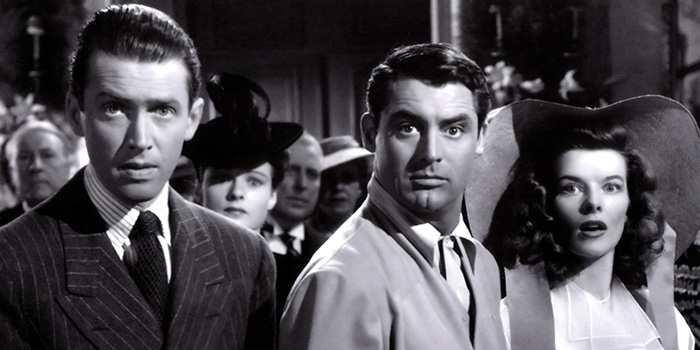
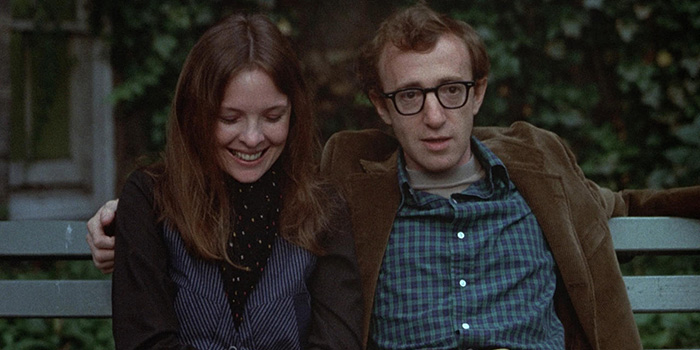
Although my family didn’t go to the movies a lot when I was a child, my father liked to watch old black and white movies late at night on television. He got me started watching films like The Philadelphia Story and All About Eve. Later, I worked with my high school English / Film teacher as a projectionist at the local Drive-In showing second run films like Annie Hall. He taught an inspiring course on the Auteur Theory in film, focused largely on the films of Jean Renoir and John Ford.

I made my first film in high school with a 3/4″ portapak video camera—it was a creative interpretation of an Emily Dickinson poem.


What is your favorite movie related memory?

In college—in the time just before VCRs—the only way to see films outside of the local movie theater was watching the films programmed on campus. The screenings of both current and older movies were big weekend events, but the films would arrive in heavy 35 millimeter cases earlier in the week.

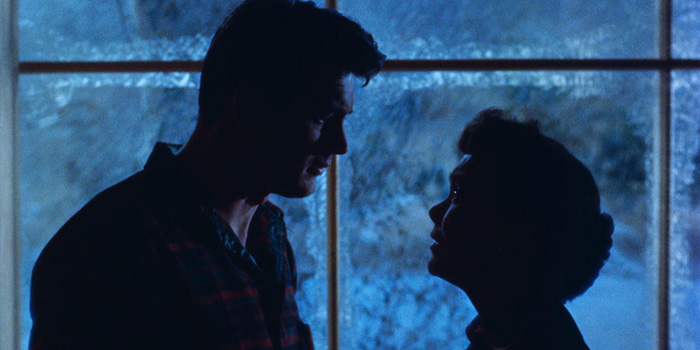
I had friends who wrote film reviews for the school paper and they would hold secret preview screening parties, privately projecting the films for a handful people. It felt exciting and glamorous to go to a private screening of a hard-to-find cheesy classic film like Giant or All That Heaven Allows.


How did you end up in Buffalo?

I’m from Buffalo. I worked in New York as a talent agent for a number of years after college, but returned to Buffalo around 1990 to study documentary filmmaking at UB Media Study, where my mother was the assistant to the chair.


What do you want to see more of in Buffalo?

I’m pretty happy with Buffalo, but I suppose I would like to see movie theaters like the Alamo Drafthouse in Austin, Texas that serve food and drinks and have interesting curated series and performances with films (like a memorable foleyed version of The Wizard of Oz).

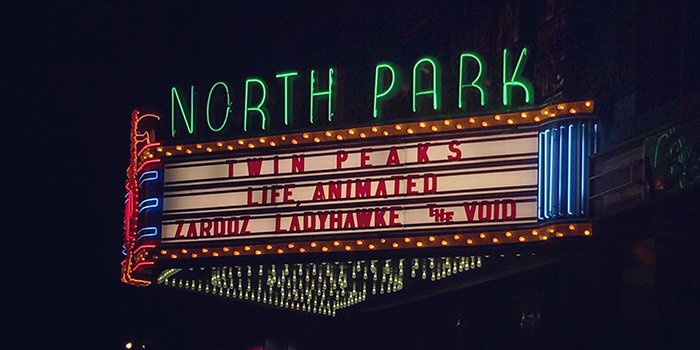
The North Park has been getting close to that over the past couple of years with its weekend special screenings. I feel that’s something that will really get people out to the theaters again.


What are your essential film books?

  • Walter Murch – In the Blink of an Eye
  • Eric Rabiger – Directing the Documentary
  • Michel Chion – Audio Vision
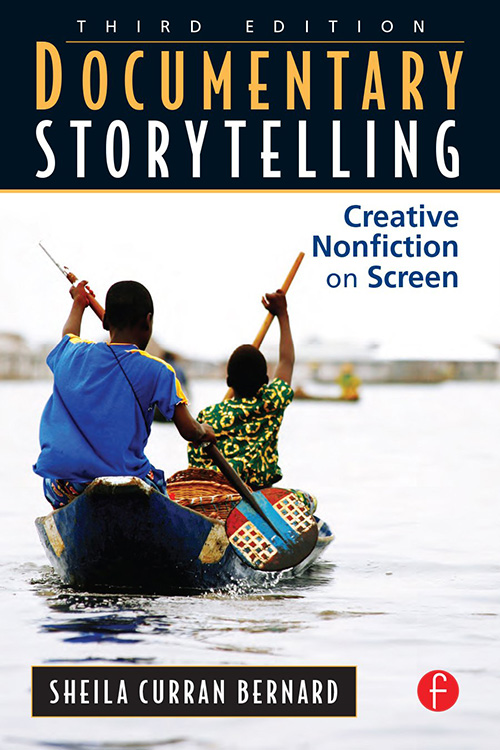
  • Sheila Curran Bernard – Documentary Storytelling
  • Bill Nichols – Blurred Boundaries
TOP TEN FILMS

I don’t usually do favorite lists! Here are 10 narratives and 10 docs (in alphabetical order):

Narrative

  • Amour [2012], directed by Michael Haneke
  • Days of Heaven [1978], directed by Terrence Malick
  • Election [1999], directed by Alexander Payne
  • Gosford Park [2001], directed by Robert Altman
  • Groundhog Day [1993], directed by Harold Ramis
  • Local Hero [1983], directed by Bill Forsyth
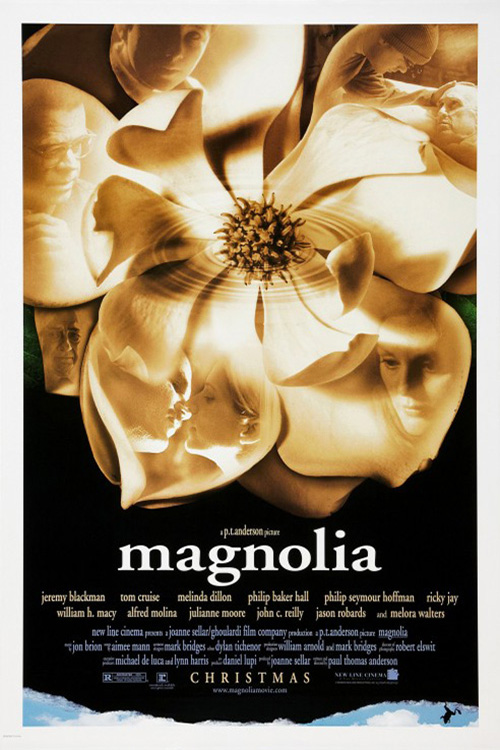
  • Magnolia [1999], directed by Paul Thomas Anderson
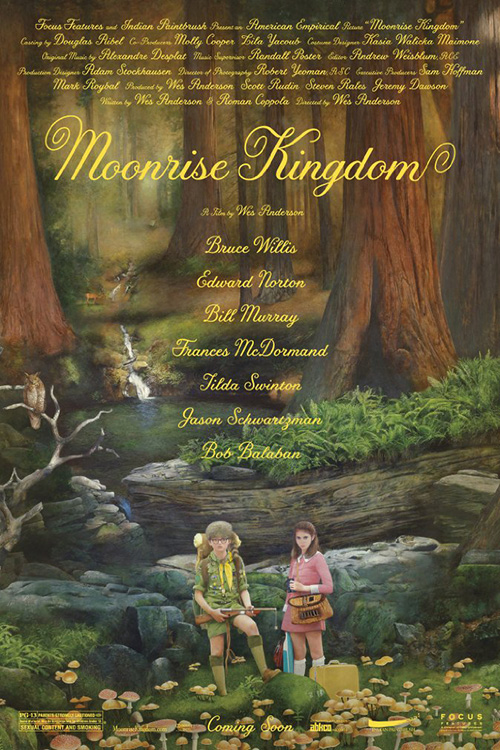
  • Moonrise Kingdom [2012], directed by Wes Anderson
  • Run Lola Run [1998], directed by Tom Tykwer
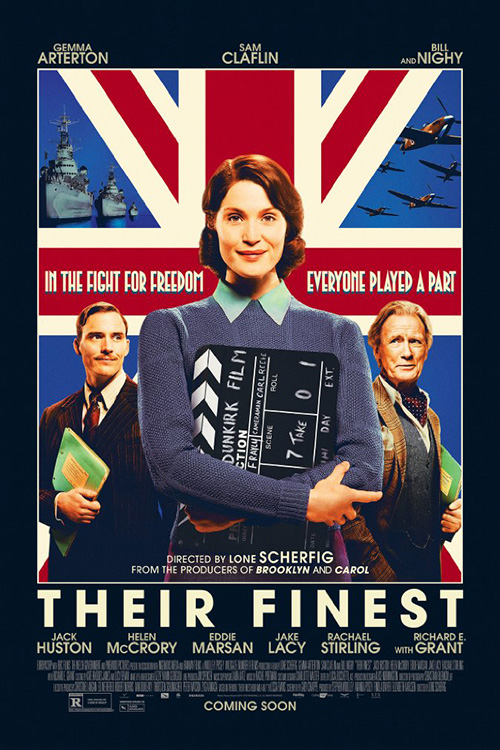
  • Their Finest [2017], directed by Lone Scherfig

Documentary

  • The Act of Killing [2012], directed by Joshua Oppenheimer
  • Capturing the Friedmans [2003], directed by Andrew Jarecki
  • Exit Through the Gift Shop [2010], directed by Banksy
  • Happy Mother’s Day [1963], directed by Joyce Chopra & Richard Leacock
  • The Imposter [2012], directed by Bart Layton
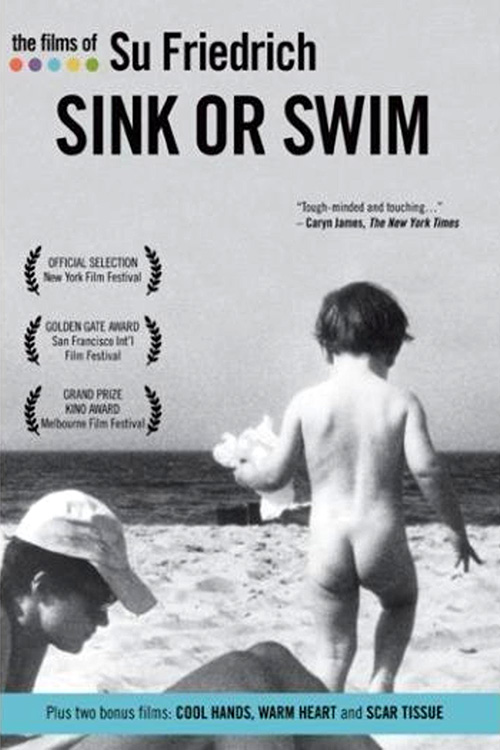
  • Sink or Swim [1990], directed by Su Friedrich
  • Streetwise [1984], directed by Martin Bell
  • The Thin Blue Line [1988], directed by Errol Morris
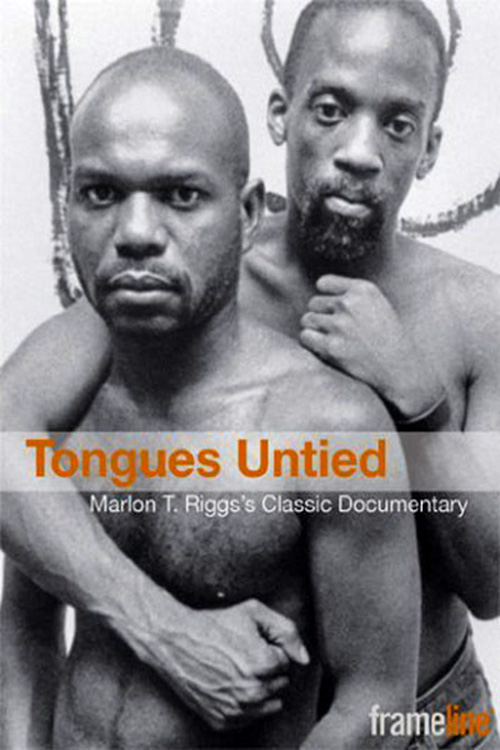
  • Tongues Untied [1989], directed by Marlon Riggs
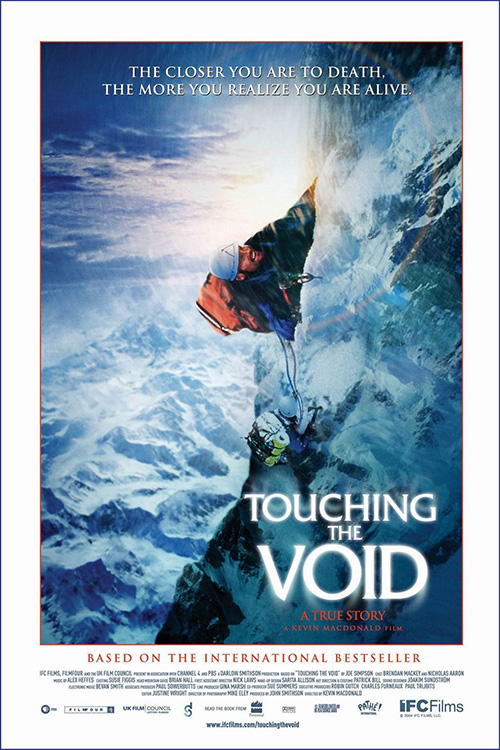
  • Touching the Void [2003], directed by Kevin Macdonald

Film stills from left to right, top to bottom are The Philadelphia Story, All About Eve, Annie Hall, Giant, All That Heaven Allows, The Wizard of Oz and North Park Theatre’s repertory marquee.

Contemporary Color – May 2nd, 2017

Contemporary Color [2016]


Please join us for the Buffalo premiere screening of the Ross Brothers’ latest documentary Contemporary Color [2017], produced by David Byrne.

  • Screening Date: Tuesday, May 2nd, 2017 | 7:00pm
  • Venue: North Park Theatre
  • Specifications: 2017 / 97 minutes / English / Color
  • Director(s): Bill Ross IV & Turner Ross
  • Print: Supplied by Oscilloscope
  • Tickets: $10.50 general admission at the door

Event Sponsors:

Venue Information:

1428 Hertel Ave, Buffalo, NY 14216


Synopsis

Courtesy of website:

Contemporary Color is a performance event and now a major motion picture inspired by the phenomenon of color guard, colloquilally known as “the sport of the arts”—conceived by David Byrne, co-commissioned by Brooklyn Academy of Music and Toronto’s Luminato Festival, and with support from WGI Sport of the Arts. Ten 20-40 person teams from the US and Canada will perform at Brooklyn’s Barclays Center and Toronto’s Air Canada Centre, alongside an extraordinary array of musical talent—performing together live.

In David Byrne’s words:

Color guards are, well, high school (and college-level) “dance” groups who perform during half time at football games, and then compete amongst themselves later in the school year—usually in their school gymnasiums. They are, in my way of looking at them, a sophisticated folk art form that flies under the official cultural radar. They never get reviewed in the culture pages of the papers and most New Yorkers, I would wager, have never even heard or seen them (unless the New Yorkers grew up in one of the hundreds of towns where this culture thrives and evolves). I think it’s a wonderful, peculiar, under-appreciated and very creative artform and that deserves to be seen and experienced—in a slightly different context, by a wider public.

But how? The interesting thing about color guard is that the community is very insular, and I thought, “Wouldn’t it be kind of great to ask some friends to collaborate with the team’s creative folks to create original music for these guys?” That idea blossomed into the event that is now being commissioned by BAM and Luminato Festival—Contemporary Color is a performance event, where the result of a year-long musical collaboration between 10 color guard teams and 10 composers will be presented live at the Air Canada Centre and Barclay’s Center in June 2015.

The performances will mimic the energy and granduer of the color guard World Championships that take place in Dayton, OH every April—but without the competitive aspect. Instead, the exhibition event will put these amazing teams on the stages of two premiere North American venues, to perform their programs alongside a live performance of the original score by the composers themselves—and accompanied by a live band. Elaborate costumes, professional athleticism combined with modern dance, and rock starsin their element—all culminating in the biggest glitter cannon show of your life.

Our primary goal is to enhance an already extremely compelling experience, and bring it to a brand new audience in two of the world’s most visible cultural centers. My experience with this Sport of the Arts, and those of my colleagues, has been so inspiring and amazing that we feel compelled to share it with as many people as possible. Luckily, we’ve found some other folks that agree.

Tidbits:

  • Tribeca Film Festival – 2016 – Winner: Best Cinematography (Documentary) & Best Editing (Documentary)
  • CPH:DOX – 2017

Directors Statement

Courtesy of presskit:

The marquees of the concert film canon include one of history’s most indelible, Stop Making Sense, the content of which was composed by our collaborator, David Byrne. With his and so many other extraordinary examples within that genre, we had no interest in retreading known ground. What we needed was an event as wild and alive and multi-versed as Contemporary Color in order to create something unique, something that could deviate away from the predictable. And so our pitch to David and his team was one we thought they might not accept: a kinetic portrait more akin to the Muppet Show or Wrestlemania – a show in which anything, anywhere could happen at any time – something that elevated the everyman and eschewed celebrity. But they accepted. The result was one of the most positive and inclusive experiences of our lives – a true collaboration on all levels with an epic team of all stripe, from the folks behind the scenes to the people behind the cameras, from the folks on the floor to those on stage and up to the rafters. We all learned from each other, collectively creating something we were proud of, and had a wonderful time doing it – together. We weren’t sure what color guard had in store for us, and it may well be our audience doesn’t yet know it, but we hope they’ll find, as we did, something vibrantly beautiful and emotional, poetically powerful and entirely unforeseen. Contemporary Color is a kaleidoscopic portrait of a celebration, of an event, of an artform, of musicality and humanity and movement – of a transcendent moment in America.


Directors Bio

Photo by Henny Garfunkel

As brothers, we have worked together on everything for the past twenty-eight years. We have lived and created together for all of our lives. As adults, we moved to Los Angeles and began work in the film industry, honing our skills and crafting our roles as a unit. Five years ago we started off on an adventure to make our own films, free of the constrictions of commercial work. We are now producing our third independent documentary feature together. We conceive, scout, produce, shoot and edit all of our own work.

Courtesy of press kit:

The Ross Brothers are a documentary filmmaking team whose works have been featured at museums and festivals throughout the world, including the Museum of Modern Art, New York; the Centre Pompidou, Paris; and the British Film Institute, London. Their work has been supported by the Sundance Institute, the Rooftop Filmmaker’s Fund, Cinereach, The San Francisco Film Society, and the late Roger Ebert. Their first feature film, 45365, was the winner of the 2009 SXSW Grand Jury Prize for Best Documentary Feature and the Independent Spirit Truer Than Fiction Award. They went on to receive numerous accolades, including nominations for Editing, Cinematography, and Debut Feature at the Cinema Eye Honors; the film was also broadcast as part of PBS’ Independent Lens. Their second feature, Tchoupitoulas, had its world premiere at SXSW in 2012 and premiered internationally at CPH:DOX, where it won Special Mention. It went on to receive awards at the Ashland Independent Film Festival (Best Documentary), the Dallas International Film Festival (Grand Jury Prize), and HotDocs (Emerging Artist Award). In 2015, they premiered Western at the Sundance Film Festival where it was presented the Jury Award for Verite Filmmaking. Western went on to receive a number of notable awards, including the SXSW Louis Black Lonestar Award, The AIFF Les Blank Award for Best Feature Length Documentary, and the San Francisco International Film Festival Golden Gate Award, among others. Their latest project, Contemporary Color, premiered as the Opening Film of the World Documentary Competition at the 2016 Tribeca Film Festival, where it also took the top prizes for Cinematography and Editing.

Filmography:

  • Second Star to the Right and Straight on ‘Til Morning (2021)
  • Bloody Nose, Empty Pockets (2020)
  • Contemporary Color (2016)
  • Western (2015)
  • Tchoupitoulas (2012)
  • 45365 (2009)

Links

Here is a curated selection of links shared on our Facebook page for additional insight/information:

  • 4/25/17 – The Ross Brothers spoke at length about their experience directing Contemporary Color on the True/False Film Fest Podcast – link
  • 4/27/17 – “A gift to audiences everywhere, a spectacular kinetic pinwheel of a movie that whisks us away from big issues to celebrate an exceptional creative collaboration.” Peter Debruge, Varietylink

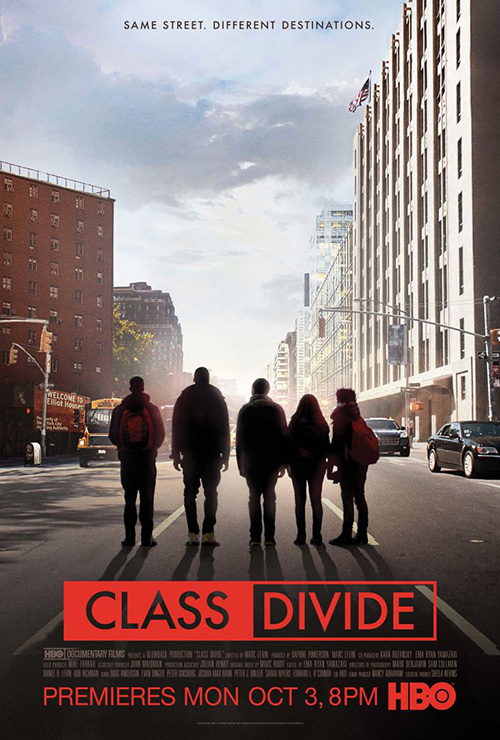
Class Divide – April 26th, 2017

Class Divide [2016]


Please join us for a special screening of Marc Levin’s documentary Class Divide [2016].

  • Screening Date: Wednesday, April 26th, 2017 | 7:00pm
  • Venue: Burning Books
  • Specifications: 2016 / 74 minutes / English / Color
  • Director(s): Marc Levin
  • Print: Supplied by the filmmaker
  • Tickets: Free and Open to the Public
  • Extras: Stop in early for FREE Breadhive baked goods while supplies last!
  • Deal: Bring your ticket stubs and join us at The Black Sheep after the show for 2 for 1 drink specials

Event Sponsors:
Venue Information:

420 Connecticut St, Buffalo, NY 14213


Synopsis

Courtesy of HBO Films:

The thought-provoking documentary Class Divide is a timely look at the widening divide between the “haves” and “have nots.” Young people on both sides of the gap offer unique and honest insights that challenge common perceptions about inequality today.

In the final part of their trilogy about economic forces affecting ordinary people, director Marc Levin and producer Daphne Pinkerson (HBO’s Schmatta: Rags to Riches to Rags and Hard Times: Lost on Long Island) explore the effects of hyper-gentrification and rising economic disparity in one New York City neighborhood, which can be seen as a microcosm of the socioeconomic imbalances across the country, and the world. The film bears witness to the profound effects of gentrification and stagnant class mobility on young people who share a West Chelsea community — yet live in very different worlds — as they try to navigate this rapidly changing landscape.

At the intersection of West 26th Street and 10th Avenue in New York City, two communities are separated by much more than a boulevard. On one side are Avenues: The World School, an elite, state-of-the art private school with a $40,000-plus annual price tag, and multimillion-dollar luxury condos. On the other are the Elliott-Chelsea public-housing projects, home to thousands of underemployed and underserved residents mostly living below the poverty line.

Eight-year-old Rosa looks out from the housing projects to the other side of the street, where the children of privilege question how they landed on top. “My family is poor because we live in the projects,” she says. “I don’t have what I want, necessarily, but I do have people that I love.”

The for-profit Avenues: The World School, which opened in 2012, aims “to prepare children for international life.” This private school attracts children from New York’s 1% at an annual cost of more than $40,000. “In this neighborhood, I don’t think I can name five people who make over $40,000,” says Elliott-Chelsea resident Hyisheem. For a community with an unemployment rate of 50%, where an average family of four’s yearly income is roughly half the school’s tuition for a single student, living across from Avenues can be “like a tease and a smack in the face.”

Avenues is just one example of the way the neighborhood has been dramatically transformed. The High Line, a once-abandoned elevated railroad track, was reborn and turned into a wildly popular public park in 2009. Attracting five million people a year, The High Line has transformed a once-gritty area into the hottest neighborhood in NYC’s high-end real-estate market. “Every building is trying to outdo each other,” explains Community Board Committee co-chair Joe Restuccia.

However, many buyers in this current wave of gentrification seem to have no desire to integrate into the established lower-income community. Almost 40% of high-end residences have been sold to foreign or anonymous clients, and the average rent for Chelsea apartments has risen almost ten times faster than Manhattan as a whole, ousting many who can’t afford to keep up. “I just don’t understand why the old can’t be with the new,” says Yasmin Rodriguez, a lifelong West Chelsea resident and parent who is rapidly being priced out of her own neighborhood. “I have so much history here.”

Young people on both sides of the street struggle with the juxtaposition of “haves” and “have nots” and what those designations mean for their uncertain futures. On one side, the kids who live in Elliott-Chelsea housing bear witness to rising inequality, and the complex and intersecting issues of public education, affordable housing, immigration and employment opportunities that affect their lives.

While Avenues students seem to have it made, some worry they will never match their parents’ achievements, while being acutely aware that their status wasn’t earned. Avenues student Yasemin says, “Most people work hard,” but also acknowledges the obvious, asking, “Did you have that privilege awarded at birth, or did you not?” Across the street, many feel that Avenues is excluding the community by failing to accept scholarship students from public housing. “It’s not racism, it’s classism,” argues Hyisheem. “It’s the fact that you don’t have what they have.”

After meeting Elliott-Chelsea resident Juwan, Yasemin is inspired to create “115 Steps,” a photo and audio project featuring kids from both sides of the street. When Avenues opens its doors to Rosa and others for a tour, the hope in their faces is undeniable. The school’s decision to accept its first student from Elliott-Chelsea public housing speaks to a willingness to confront the imbalance between rich and poor in their own backyard, and is a hopeful sign that with continued conversation between students and community leaders, change can be embraced, yet managed in a way that preserves what makes New York City so unique: a mix of all kinds of humanity.

The High Line is a “place where everybody, regardless of background, regardless of income, can come together,” explains its co-founder, Joshua David. For kids on both sides of the street, this philosophy will be tested in a neighborhood where hyper-gentrification has brought two communities into close proximity, but with greater disparity than ever before.

Class Divide was directed by Marc Levin; producers, Daphne Pinkerson and Marc Levin; co-producers, Kara Rozansky and Ema Ryan Yamazaki. For HBO: senior producer, Nancy Abraham; executive producer, Sheila Nevins.

Tidbits:

  • Tribeca Film Festival – 2016

Director Interview

Courtesy of HBO Films:

HBO: Why did this feel like an appropriate topic for the third part of your documentary trilogy?

Marc Levin: My documentary film partner, Daphne Pinkerson, and I had made Schmatta: Rags to Riches to Rags on the rise and fall of the garment industry and then Hard Times: Lost on Long Island about the crash of 2008, and we were looking for the next subject. Schmatta profiled a generation of city factory workers who finally made enough money to send their children to college to become white-collar professionals and Hard Times followed this next generation to the suburbs. So the final film would show how only a small percentage of them would thrive in a world of growing inequality.

We were contemplating this one day while sitting on the High Line [in Chelsea, New York City] at the lookout point over 26th Street and 10th Avenue, where the architects had preserved an old billboard frame as an art installation. We were looking through the empty frame, and realized on one side was the renovated building housing the city’s newest elite private school; “Avenues: the World School” and on the other side were the projects — two sides of the street, two totally different worlds. Meanwhile, tourists were snapping photos, posing in the frame and waving to families and friends in Beijing, Rio, Paris and Sidney. Did they have any idea what was behind them? Then it hit us, what you see is all in how it’s framed. After all our searching we realized this was our starting point, right here in our own neighborhood.

HBO: What was it like filming there?

Marc Levin: I have lived in Chelsea for 40 years, so in a way I am one of the so-called “urban pioneers” who started to change this neighborhood from a manufacturing and flower district to a residential neighborhood. I have also had a studio on West 26th Street for 17 years. That building is part of the gentrification that has pushed rents to such exorbitant levels that, when my lease ends in two years, I honestly don’t know if I can still afford to keep my company in Chelsea. The point is, we see what’s happening, the hyper development, the gentrification, the displacement of long time businesses and residents, the income inequality — we see it from multiple perspectives. Looking out my window, I see an army of cranes, like huge mechanical insects reaching for the sky, as they begin construction of the largest private urban development project in U.S. history, Hudson Yards. Depending on the frame, you see the good, the bad and the ugly.

HBO: Does this story go beyond New York City?

Marc Levin: This film is a microcosm of what’s happening in cities across this country, and for that matter, across the globe. Major metropolitan areas all over the world are becoming gilded cages and investment opportunities for the global elite. The human mix, which is the fundamental ingredient in a vibrant city’s energy and magic, is being threatened.

HBO: What were the major challenges of making the film?

Marc Levin: It’s always a challenge to make a film about a major global trend in a new way that no one has ever done before. We researched a number of cities and towns all across the United States: We looked at the housing crash in Florida and the rapid gentrification by techies in San Francisco. But once we settled on the location, it was a great experience to dig so deeply into our own neighborhood. Everyone in Chelsea was feeling the effects of gentrification so it wasn’t difficult to start the conversation. Of course, there were some higher income parents who felt nothing good could come of looking at the rich and poor in the same film, and they declined to participate. But in the end, everyone involved felt they had become part of a movement to close the gap.

HBO: Why did you decide to tell the story through children?

Marc Levin: We didn’t start out with the focus on young people. Their perspectives emerged as the most refreshing and surprising way into the story. We told Sheila Nevins and Nancy Abraham at HBO Documentary Films what we were discovering, and that is when Sheila said to make them the focus of the film. It was fascinating to get a glimpse into the thinking of the next generation, and how they are grappling with these major trends.

HBO: What surprised you most about the kids?

Marc Levin: I think what was most surprising — especially to the young people themselves on both sides of the street — is that they had far more in common than not.

HBO: What do you think will be their major struggle growing up? What does the film tells us about the future?

Marc Levin: If we keep on this track there will be no middle class in the future. The kids in this neighborhood, no matter which side of the street they’re on, see and feel the rapid change all around them. How or if they choose to keep pace will be their major challenge.

HBO: What is the tone of the film?

Marc Levin: The film reveals the anxiety about the future on both sides of the street. And the final quote is certainly a cautionary statement. But I would say that the film is ultimately optimistic about our capacity to shift course, and revelatory about how to do it.


Director Bio

“There is always reason to hope. These kids embody that hope. Along with climate change, economic justice and inequality will be their generation’s great challenge.”

Courtesy of Blowback Productions:

Marc Levin is an award winning independent filmmaker who brings narrative and verite techniques together in his feature films, television series and documentaries. Among the many honors for his work, he has won the Grand Jury Prize at the Sundance Film Festival, the Camera D’Or at Cannes Film Festival, three National Emmys and four duPont-Columbia Awards.

His dramatic feature film, Slam, received international recognition for its seamless blending of the real world with a narrative flow. Hollywood Reporter wrote, “Brace yourself for a slam-dunk of a movie, in an in-your-face cinema verite-style that makes Godard’s Breathless seem like a cartoon.” Slam won the Grand Jury Prize at the Sundance Film Festival and the Camera D’Or at Cannes in 1998.

Levin’s “Brick City”, a groundbreaking docu-series about the city of Newark, followed Mayor Cory Booker and the people on the frontlines of a city struggling to change. Executive produced with long-time colleague Mark Benjamin and Academy Award-winner Forest Whitaker, the five-hour series aired its first season on the Sundance Channel in September 2009. It won the 2010 Peabody Award and was nominated for an Emmy for Exceptional Merit in Nonfiction Filmmaking, as well as a 2010 Golden Eagle Cine Award and an NAACP Image Award. The second season premiered on January 30, 2011. TV Guide wrote, “’Brick City’ plays like a verité version of ‘The Wire’, one of TV’s finest series ever. It is the ultimate reality show.”

“Street Time”, a television series produced by Columbia / Tristar for Showtime, received critical acclaim for its authenticity and verite style. Levin executive produced the series and directed ten episodes. The show stars Rob Morrow, Scott Cohen, Erica Alexander and Terrence Howard. The Los Angeles Times called it “some of the most seductive television ever: vivid, distinctive, explosive storytelling . . .”

Levin’s documentary feature, Godfathers and Sons, was part of the highly regarded Martin Scorsese PBS series, “The Blues”. Scorsese recruited an international team of directors with both feature and documentary experience: Charles Burnett, Clint Eastwood, Mike Figgis, Richard Pierce and Wim Wenders. Variety called Levin’s show “the crown jewel in the Scorsese series.”

In the late nineties, Levin created a hip-hop trilogy beginning with Slam, a searing prison drama, which starred Saul Williams, Sonja Sohn and Bonz Malone. Whiteboys, a black comedy about white kids who want to be black rappers, starred Danny Hoch, Dash Mihok, Mark Webber and Piper Perabo. Brooklyn Babylon, a fable inspired by the “Song of Songs,” starred Tariq Trotter and Bonz Malone, and featured music by the legendary Grammy winners The Roots.

In Twilight Los Angeles, an adaptation of Anna Deavere Smith’s one-woman show, Levin fused a Broadway play with a documentary look at the LA riots. Twilight Los Angeles premiered at the Sundance 2000 Film Festival and was selected as the opening film of the International Human Rights Film Festival at Lincoln Center.

In 1992 Levin directed Oscar nominee Robert Downey, Jr. in The Last Party, a gonzo look at the Presidential campaign, weaving together the personal and the political fortunes of Downey and Bill Clinton.

Levin and his documentary film partner, Daphne Pinkerson, have a twenty-year working relationship with HBO. Their most recent film, Hard Times: Lost on Long Island, about white-collar professionals hit by the Great Recession, premiered on HBO in July 2012. It won the Audience Award for Best Documentary Film at the Hamptons International Film Festival and was nominated for a News and Documentary Emmy for Outstanding Business and Economic Reporting – Long Form. The Baltimore Sun wrote, “One of the most important hours of TV that the medium will offer this year.”

TRIANGLE: Remembering the Fire, commemorating the 100th anniversary of the Triangle shirtwaist fire of 1911, won a dupont-Columbia Award in 2011. SCHMATTA: Rags to Riches to Rags, a feature documentary exploring the rise and fall of New York’s fabled Garment Center as a microcosm for the economic shocks that have changed our lives, aired in October 2009. Heir to an Execution, a documentary feature following Ivy Meeropol’s journey on the 50th anniversary of the execution of her grandparents, Julius and Ethel Rosenberg, was in competition at the Sundance film festival and aired on HBO in 2004. During the 1990’s, they produced a number of films for HBO’s “AMERICA UNDERCOVER” series, including Mob Stories, Prisoners of the War on Drugs, Execution Machine: Texas Death Row, Soldiers in the Army of God, and Gladiator Days. Thug Life in D.C. won the 1999 National Emmy for Outstanding Non-Fiction Special. Gang War: Bangin’ in Little Rock won theCableACE Award for Best Documentary Special of 1994. The sequel, Back in the Hood, premiered on HBO ten years later.

For HBO Sports, Levin produced and directed “Prayer for a Perfect Season”, on the top high school basketball team in the country. It premiered in the Fall of 2011.

In 1997, Levin was awarded the duPont-Columbia award for CIA: America’s Secret Warriors, a three-part series that aired on the Discovery Channel.

Levin has also produced and directed a number of television specials for one of America’s most respected journalists, Bill Moyers. In 1988 he won a national Emmy award as a producer/editor of Moyers’ Secret Government – The Constitution in Crisis. The Home Front with Bill Moyers, which he produced and directed, was honored with the duPont-Columbia Gold Baton Award.

He and his father, Al Levin, teamed up on Portrait of an American Zealot, which was made part of the Museum of Modern Art’s permanent film collection.

Levin made his on-camera debut in Protocols of Zion, his street-level look at the rise of anti-Semitism since 9/11 and the renewed popularity of the anti-Semitic text, The Protocols of the Elders of Zion. The film premiered at the Sundance Film Festival and was released theatrically in the fall of 2005 and on HBO the spring of 2006.

Mr. Untouchable, the story of the original Black Godfather, Harlem heroin kingpin, Nicky Barnes, was released in theatres in 2007. It tells the true-life story of a real American Gangster from the point of view of law enforcement, associates, and Nicky Barnes, appearing for the first time in over a quarter century.”It makes American Gangster look like a fairy tale,” declared E!.

Levin has also assumed the role of Executive Producer on a number of projects. In 2008 he was Executive Producer alongside Beyoncé Knowles on Cadillac Records, the Chess Records story starring Jeffrey Wright, Adrian Brody, and Beyoncé. In the same year he Exec Produced the indie feature documentary Captured, the story of artist activist Clayton Patterson, the man who video-taped the 1988 Tompkins Square Park riot and who has dedicated his life to documenting the final era of raw creativity and lawlessness in New York City’s Lower East Side, a neighborhood famed for art, music and revolutionary minds. Levin Exec Produced a follow-up feature in 2010, Dirty Old Town, directed by his son, Daniel B. Levin, and Jenner Furst.

Levin and Benjamin have partnered in Brick City TV to continue their docu-series work this year with three projects. BET’s Second Coming? Will Black America Decide 2012 was part of the Network’s election campaign coverage and won the 2013 Walter Cronkite Award for Excellence in Television Political Journalism.

“Jersey Strong”, a 10-part docu-soap set in Newark, New Jersey, premiered September 2013 on Participant Media’s new cable network, Pivot.

Most recently, they have partnered with Robert Redford to make CHICAGOLAND, an 8-hour docu-series for CNN, which is currently in production.

Levin also periodically directed episodes of the classic TV series, “Law and Order”.

photo by Buck Ennis

Filmography:

  • Stockton on My Mind (2020)
  • One Nation Under Stress (2019)
  • Chasing the Thunder (2018)
  • Rikers (2016)
  • Class Divide (2016)
  • Freeway: Crack in the System (2015)
  • Hard Times: Lost on Long Island (2012)
  • Prayer for a Perfect Season (2011)
  • Schmatta: Rags to Riches to Rags (2009)
  • Mr. Untouchable (2007)
  • Protocols of Zion (2005)
  • Back in the Hood: Gang War 2 (2004)
  • Gladiator Days: Anatomy of a Prison Murder (2002)
  • Brooklyn Babylon (2001)
  • The Kennedy Center Presents: Speak Truth to Power (2000)
  • Soldiers in the Army of God (2000)
  • Twilight: Los Angeles (2000)
  • Whiteboyz (1999)
  • Thug Life in D.C. (1998)
  • Slam (1998)
  • The Execution Machine: Texas Death Row (1997)
  • CIA: America’s Secret Warriors (1997)
  • Prisoners of the War on Drugs (1996)
  • Gang War: Bangin’ in Little Rock (1994)
  • Mob Stories (1993)
  • The Last Party (1993)
  • The Home Front (1991)
  • Blowback (1991)

Links

Here is a curated selection of links shared on our Facebook page for additional insight/information:

  • Download this Educators Guide from REACT to FILM for suggestions about how to discuss the issues raised in the film in the classroom. – link
  • 4/13/17 – “What Class Divide does exceptionally well is capture the sense of change at warp speed. In their bones, the public-housing kids know that it’s only a matter of time before they’re forced to leave. There’s simply too much hunger for development to withstand. And if that happens, it will come as quickly as the other shifts the neighborhood has endured: in a New York minute.” Daniel M. Gold, The New York Timeslink

Ekrem Serdar

Buffalo is full of people helping to cultivate cinema and we want to celebrate those involved. The Cultivators is a new monthly feature in which we highlight individuals who are integral to the presentation, promotion and production of film here in the queen city.

THE CULTIVATORS #011

EKREM SERDAR

Media Arts Curator – Squeaky Wheel Film & Media Art Center

QUESTIONS & ANSWERS

What got you interested in movies?

I travelled around a lot as a kid, so moving images were generally a kind of solace, from Super Mario Bros. 3 to Star Wars or Rossellini films. There were naturally junctions where someone’s influence mattered greatly and which led me on paths I wouldn’t have taken otherwise.

I don’t care much for the word “movies.” It’s a fine shorthand, but I don’t find it a useful word to talk about the scope of the art. “The pictures” or “flicks” are both a bit more encompassing actually, though obviously goofy.


What is your favorite movie related memory?

The time I saw Jeanne Liotta’s Observando El Cielo (2007) at the New York Film Festival was one of the most hypnotic experiences I had in a theater. I try to show it with some regularity, I love that film.

The time I screened Anthony McCall’s Line Describing a Cone (1973) in Istanbul was also pretty special. The film is supposed to be projected in a foggy/hazy room, while the audience is invited to walk around the room—there are no chairs. If it was projected without fog, we would literally just see a thin white circle slowly being drawn on a black backdrop. With the fog however, there’s this gorgeous cone formed by the beams of light, and you get this wonderfully instructive and inspiring work on the possibilities of the very machinery of cinema.

So I was really excited to show it in Istanbul, where it had never been shown before as far as I know. I lugged a 16mm projector over to Turkey, found the proper electrical converters for it, and a fog machine. We had a packed audience. We got the fog machine running, but kept it on just a little too long. It became so thick that no one could see each other! The main door opened to the outside world and there were huge pillows of fog coming out every time it opened to this residential neighborhood; I was worried the neighbors were going to call on us or that we would get busted by the Fire Department.

Someone also said, while “touching” the beams of light, that it was like petting a kitten, which is probably one of the cutest things I ever heard.


How did you end up in Buffalo?

I ended up in Buffalo twice: first in 2001 to study at UB and then when I started my current position. I love this gnarly town.


What do you want to see more of in Buffalo?

More resistance and proper recognition of what a Buffalo “renaissance” actually means, who it leaves out, and what we can do about it. There’s a lot of great people fighting to make sure it’s right and I think there’s still time to make it a bit less violent and a bit more equitable than what has happened to other towns that boomed. Putting together the words “boom” and “Buffalo” might seem hilarious to some, but I do believe that any and every city is doomed to have $10 hot dogs with feta cheese on top. But we can still do some things about it.

Other than that, Buffalo should do what it wants. One of my main goals being at Squeaky is to be here for any artists in the region that want to work together. We have gear, we can teach you how to use that gear, you can show what you make with that gear, and perhaps even take it beyond Buffalo. If I can help that’s great. We’re a community center, so I am interested in challenging the idea of curator as gatekeeper and really earning the word community.


What are your essential film books?

Film as a Subversive Art by Amos Vogel is currently the main film guide that I’m trying to watch everything mentioned within. There’s still quite a bit to go.

Hollis Frampton’s collection of writings, most recently released under the title On the Camera Arts and Consecutive Matters, remains the most foundational.

My next three purchases that I’m excited about are:

  • On the Eve of the Future: Selected Writings on Film by Annette Michelson
  • After Uniqueness: A History of Film and Video Art in Circulation by Erika Balsom
  • Fantasia of Color in Early Cinema by Giovanna Fossati, Tom Gunning, Jonathon Rosen, Joshua Yumibe.
TOP TEN FILMS

I find limited value in top tens, finding them to be more political exercises than anything else. Vertigo doesn’t need me talking about it and I don’t need to talk about how Vertigo is great. So perhaps in addition to [my first two slots], a better list might be what films I buy—which aren’t many (maybe 2 or 3 a year)—and which I determine based on if I will watch them at least once a year. Thus, not including Kung Fu:

  1. The Internet [2011-2014]
    • These are somewhat arbitrary dates, however they correspond with a number of significant state-sanctioned murders, unrest, and protests around the world from Trayvon Martin to the Gezi Protests, the Arab Spring, Brazil, Ferguson, and on and on. This also came along with an absolutely vital discourse that was spread online through memes, gifs, and videos that I think has shaped a lot of our thinking.

      Consider that Super 8mm home movies were mostly available to the middle class in the Western world and the ability to make home movies was even more limited in poorer countries. Now we are at this exciting moment where large swaths of the world populace have more access to certain technologies and are able to represent themselves (in very specific contexts and ways) instead of relying on a third party. While there are many arguments and aspects to the ubiquity of video and technology and its implications, this shift of power is tremendously important and powerful.

  2. The films of Yuen Woo-ping
    • I’m a huge Yuen Woo-ping fan and I’ve been going through his filmography—not only his directorial efforts, but also films on which he was the action choreographer on. In the US, he’s mostly known as the choreographer of films like The Matrix (1999), Crouching Tiger, Hidden Dragon (2000), and the Kill Bill films.

      But he’s also the guy who discovered Jackie Chan with Drunken Master (1978), Donnie Yen with Shaolin Drunkard (1983) and gave folks like Sammo Hung and Michelle Yeoh some of their earliest and best roles. Both Yuen and Jackie Chan were huge fans of Buster Keaton and their work is really the beginning of the kind of physical kung-fu comedy that I watch whenever I just need a break.

      Woo-ping’s amazing choreography is not only limited to how the actors move, but also how the camera moves. Consider that the 60s and 70s saw the wide-spread adoption, and sometimes abuse, of the zoom lens. It’s considered goofy and used mostly as a stylistic marker nowadays in Wes Anderson movies, etc, but also something that’s influenced newer iterations of fighting games like Street Fighter. I find it to be a terrific technology to document dance. You can follow a movement without cutting while emphasizing and focusing on smaller movements and moving to larger gestures, which requires precision from the actors on the screen, but also choreography from the cinematographer and the production crew as well. Those zooms, when done well, evoke a dance both in front and off the screen that can be very visceral and pleasurable. I understand why it elicits laughter, but I find it much more elegant than the shaky-cam cutting of The Raid: Redemption, etc. While Woo-ping’s style has moved with the times, it’s terrific too to see elements of his choreography through his body of work—a certain combination of moves from say Magnificent Butcher (1979) popping up in Iron Monkey (1993) and so on.

      Woo-ping comes from a family of Kung Fu cinema artists. In his early films, his father, Yuen Siu-Tien, acted as the mythical/historical character Beggar So (who inspired Ol’ Dirty Bastard’s name.) Once Siu-Tien died in 1979, Woo-ping filmed a very charming scene honoring his father in The Miracle Fighters (1982). Remember too that Woo-ping is one of eleven children, six of whom are in the Kung Fu industry, known as the Yuen clan. There’s a fascinating lineage there and once I’m done going through Woo-ping’s films I’ll be watching the work of his siblings too.

      My favorite film of Woo-ping’s is probably Dreadnaught (1981). I also watch Crouching Tiger, Hidden Dragon at least three times a year.

  3. The Thing [1982], directed by John Carpenter
  4. Zui hao de shi guang [Three Times] [2005], directed by Hsiao-Hsien Hou
  5. Jeanne Dielman, 23, quai du commerce, 1080 Bruxelles [1976], directed by Chantal Akerman
  6. Born in Flames [1983], directed by Lizzie Borden
  7. Yol [1982], directed by Serif Gören & Yilmaz Güney
  8. Sud sanaeha [Blissfully Yours] [2002], directed by Apichatpong Weerasethakul
  9. Kumonosu-jô [Throne of Blood] [1957], directed by Akira Kurosawa
  10. 69 [1968], directed by Robert Breer
    • This one is aspirational. One day I will buy a 16mm print of this.

Film stills from left to right, top to bottom are Super Mario Bros. 3, Star Wars: Episode IV – A New Hope, Ingrid Bergman and Roberto Rossellini, Observando El Cielo, Line Describing a Cone, and the interior of Squeak Wheel.

Ghosts – April 5th, 2017

Ghosts [2005]


Please join us for a special screening of Christian Petzold’s Ghosts [Gespenster] [2005] as part of our look at the director’s early work pre-Barbara and Phoenix.

  • Screening Date: April 5th, 2017 | 7:00pm
  • Venue: Squeaky Wheel Film & Media Arts Center
  • Specifications: 2005 / 85 minutes / German / Color
  • Director(s): Christian Petzold
  • Print: Supplied by Goethe Institut
  • Tickets: $7.00 General Admission / FREE for Squeaky Members

Event Sponsors:

Venue Information:

Market Arcade Complex (first floor) 617 Main Street, Buffalo, NY 14203


Synopsis

Courtesy of filmportal.de:

A man travels from Paris to Berlin in search of his wife. He finds her in a psychiatric hospital in Spandau and takes her back to Paris. Every year, the wife makes the journey to Berlin, desperately searching for her daughter who was abducted in 1989 at the age of three. She was never found. The wife meets a young vagabond named Nina. A drifter who doesn′t seem to have a home of her own, Nina roams about the city with Toni, taking the world as it comes, stealing whatever she can, here and there. The wife is convinced that Nina is her lost daughter.

“Ghosts are the spirits of those who refuse to believe they′re dead. Ghosts haunt the realms in between life and death, hoping that love will help them to regain life. These are the ghosts that are the subject of this film.” – Christian Petzold

Tidbits:

  • Berlin International Film Festival – 2005

Director Bio

“I always like it when people play something, when they believe that they have to play the role of father or daughter, but then they lose control over the staging. Those are the best moments.”

Courtesy of Goethe Institut:

By Thilo Wydra (Translated by Kevin White)

A latent vacuum emanates from Christian Petzold’s world of pictures. The often overpowering effect can be consistently attributed to the formal structure and visual approach that is a recurring theme in all of his films. Starting with his first TV movie, Pilotinnen (lit. Female Pilots, 1995), Hans Fromm has been responsible for the camera work delivering clear, strict, sober and clinical photography. Petzold’s films are defined by his ability to distill them down to their essentials, their core.

GROWING UP IN “LIMBO GERMANY”

The director, who is often labeled as part of the so-called Berlin school, was born in 1960 in Hilden, North Rhine-Westphalia, and grew up in the neighboring town of Haan. Petzold refers to life in the microcosm of these two small towns between Düsseldorf and Solingen as a life in “limbo Germany”, in the deepest, most bourgeois province. In other words, nowhere. This “purgatory” is easily transferred to any part of the country, from region to region, state to state. It is an intermediate realm between life and death where people and ghosts exist in equal numbers, as in his film Ghosts (2005).

Christian Petzold left this limbo at the age of 20 after finishing his high school degree and civil service. He has been living in Berlin since the beginning of the 1980s. After completing a course of study in dramatics and German at the Free University he went on to get a degree at the dffb (a school for film and television) between 1988 and 1994. Pilotinnen was his film debut as well as his graduate thesis project. Petzold describes his inspiration to become a filmmaker like this: “The book Mr. Hitchcock, How did You do that? (Truffaut/Hitchcock 1966/1982) and the horrible suburban sprawl devoid of cinema, markets and ideas – the idea was to create images of those things.”

ROOTS IN THE FILM ARCHIVES

Before he was able to make the jump from the TV to the big screen, his debut work was followed by two further films made for television, Cuba Libre (1996) and Die Beischlafdiebin (1998). Petzold’s cinema film debut was The State I am In (2000), after which he was invited to Venice for the film festival and also won best feature film at the German Film Awards in 2001. It is a film about a terrorist couple and their daughter, played by Julia Hummer, who also narrates. The story links the past, the RAF (a former terrorist organization) and “Germany in Autumn” (a film about RAF events in 1977), with today, German reality and the pressures of the present day. Portraying the ghost of terror and the spirit of modernity, the director’s film debut has come to represent the foundation of Petzold’s cinematic cosmos.

His television film Something to Remind Me (2001) and the feature film Wolfsburg (2003), set in the partially very “artificial” city of the same name, closely followed one another and are his first two works with actress Nina Hoss (b. 1975). Both of these films clearly show the filmmakers influences for the first time, including the works of Michelangelo Antonioni, Howard Hawks, Rainer Werner Fassbinder and, not least, the great Alfred Hitchcock. The latter’s masterpiece, Vertigo (1958), in which James Stewart, in a phantasmagoria of effects, is hired to investigate and recreate a ghost of the past, the blonde Kim Novak – it may well be the cinematographic godfather par excellence of many a Petzold film.

Petzold describes his cinematic provenance as follows: “My roots are in the film archives in Cologne and Düsseldorf and in the film clubs of Solingen and Wuppertal. And of course in WDR’s channel 3 programming. That is where my role models come from: Hawks, Anthony Mann, Hitchcock, Renoir…” Just as Hans Fromm has done all of the camera work for Petzold’s films to date, Harun Farocki, one of his professors at the dffb, has been the co-author for many of the director’s screenplays, all of which have been original works by the auteur filmmaker himself. It is very similar to how Fassbinder works: with longstanding colleagues, his so-called film family. Editor Bettina Böhler is another example along with actress Nina Hoss, both of whom are vital members of the clan – the director and his muses. The team made five films after his ethereal psychothriller Something to Remind Me and they are not finished yet.

THE DISPARITY OF CINEMA AND TELEVISION FILMS

Feature films with that lineup were Yella (2007) and Jericho (2008) – both with Nina Hoss – while TV movies included Dreileben – Somewhat better than Death (2011) one part of a trilogy consisting of three separate made-for-TV films, each independent but loosely connected with one another and each from a different director: Dominik Graf, Christoph Hochhäusler, Christian Petzold. It was an unusual, large-scale television liaison that was met with a controversial reception.

“The feature film used to be something special on TV. Friday evening on ARD: Der internationale Film with beautiful music by John Barry from the film Petulia (1968). These days only the private stations use the mainstream American material for prime time. Television tells its own stories. Cinema hasn’t been international on television for a while now,” says Petzold about the disparity of cinema and television films.

Barbara (Silver Bear, Berlinale 2012; Silver Lola, German Film Award 2012) is one of these kaleidoscopes of the intermediate realm and its inhabitants. Set in the DDR, Petzold’s 11th film is about Barbara (Nina Hoss), a doctor who puts in a request for a trip outside of East Germany and is subsequently banished to the countryside up on the Baltic Sea. It is basically the end of the world but in the small-town hospital she meets a doctor, Andre (Ronald Zehrfeld), who is her new boss. She soon becomes unsettled by the foreign sense of closeness between them. Primarily a love story, Barbara is one of Petzold’s most powerful films to date, not to mention one of his most emotional. Like many of the characters in his films, the protagonist here is also homeless, uprooted, she is outwardly and inwardly driven, a completely estranged person. The ghost of suspicion is everywhere here. Nobody trusts anyone when everyone could be a spy for the state. It is life in the pressure cooker, where love must takes unusual twists and turns. But as realistic and at the same time colorfully poetic as Barbara’s existence may appear, this film also lives in that haunting intermediate realm so effectively created by auteur filmmaker Christian Petzold.

Photo by Harry Schnitger

Filmography:

  • Undine (2020)
  • Transit (2018)
  • Phoenix (2014)
  • Barbara (2012)
  • Jerichow (2008)
  • Yella (2007)
  • Gespenster [Ghost] (2005)
  • Wolfsburg (2000)
  • Something to Remind Me (2001)
  • The State I Am In (2000)
  • The Sex Thief (1998)
  • Cuba Libre (1996)
  • Pilots (1995)

Links

Here is a curated selection of links shared on our Facebook page for additional insight/information:

  • 2/18/17 – “Petzold is also regarded as the ground-breaking and most important of the group of filmmakers known as the Berlin School, which some have dubbed a ‘German New Wave.’ Although celebrated at international film festivals throughout Europe, his films are still relatively unknown in the Anglophone world, where German cinema is better known for the Nazi-era historical dramas that Petzold and the Berlin School have generally disdained.” Senses of Cinema – link
  • 2/19/17 – Dennis Lim looks at Christian Petzold and the Berlin School filmmakers in The New York Timeslink
  • 2/21/17 – “Are these movies about the state of post-reunification Germany, or the state of their heroines’ inner lives? Are they tough, sharpened studies in the uses and abuses of power, like the films of Petzold’s first two cinematic influences—Hitchcock and Lang—or are they defined more by their brief-but-central moments of tenderness and mutual understanding?” Max Nelson, Film Commentlink
  • 2/22/17 – New Petzold already in the pipeline! “Paula Beer, who won the best newcomer award at Venice last year for Francois Ozon’s Frantz, and Franz Rogowski (Tiger Girl) lead the cast on the film, which will begin a 40-day shoot in Marseilles from mid-May.” – link
  • 2/27/17 – Meet the mesmerizing Julia Hummer, star of both of Christian Petzold’s first two theatrical features. Lasse Ole Hempel, Goethe-Institut – link
  • 2/28/17 – These 70s era photos of Christian Petzold and his teacher and collaborator Harun Farocki are incredible!
  • 3/22/17 – You may want to check out the Ghost‘s website, as its bursting with interviews, director’s notes, stills and more! – link
  • 3/27/17 – “Ghosts are the spirits of those who refuse to believe they′re dead. Ghosts haunt the realms in between life and death, hoping that love will help them to regain life. These are the ghosts that are the subject of this film.” – Christian Petzold
  • 6/6/17 – “The Cinema of Identification gets on my nerves” – Christian Petzold interview at Cineaste. – link

The State I Am In – March 1st, 2017

The State I Am In [2001]


Please join us for a special screening of Christian Petzold’s The State I Am In [Die innere Sicherheit] [2001] as part of our look at the director’s early work pre-Barbara and Phoenix.

  • Screening Date: March 1st, 2017 | 7:00pm
  • Venue: Squeaky Wheel Film & Media Arts Center
  • Specifications: 2001 / 106 minutes / German / Color
  • Director(s): Christian Petzold
  • Print: Supplied by Goethe Institut
  • Tickets: $7.00 General Admission / FREE for Squeaky Members

Event Sponsors:

Venue Information:
Market Arcade Complex (first floor) 617 Main Street, Buffalo, NY 14203


Synopsis

Courtesy of filmportal.de:

For 15 years now, the parents have been leading an underground existence, hiding among the anonymous tourists on the beaches of Portugal. They have broken a taboo: they have conceived a daughter. A girl who has never swapped clothes with her friends, never skipped classes in school, camped out at lakes, got drunk and broken off with her boyfriend in ice-cream parlours. A girl who is alone.

The parents are just about to establish some sort of legal identity for themselves in Brazil, when a slight negligence causes everything to fall apart around them. And again they are on the run, which brings them back to Germany. Meanwhile, their daughter has fallen in love. A love which will lead to a tragedy and destroy the family.

Tidbits:

  • Venice Film Festival – 2001
  • Berlin International Film Festival – 2001

Director Bio

“I always like it when people play something, when they believe that they have to play the role of father or daughter, but then they lose control over the staging. Those are the best moments.”

Courtesy of Goethe Institut:

By Thilo Wydra (Translated by Kevin White)

A latent vacuum emanates from Christian Petzold’s world of pictures. The often overpowering effect can be consistently attributed to the formal structure and visual approach that is a recurring theme in all of his films. Starting with his first TV movie, Pilotinnen (lit. Female Pilots, 1995), Hans Fromm has been responsible for the camera work delivering clear, strict, sober and clinical photography. Petzold’s films are defined by his ability to distill them down to their essentials, their core.

GROWING UP IN “LIMBO GERMANY”

The director, who is often labeled as part of the so-called Berlin school, was born in 1960 in Hilden, North Rhine-Westphalia, and grew up in the neighboring town of Haan. Petzold refers to life in the microcosm of these two small towns between Düsseldorf and Solingen as a life in “limbo Germany”, in the deepest, most bourgeois province. In other words, nowhere. This “purgatory” is easily transferred to any part of the country, from region to region, state to state. It is an intermediate realm between life and death where people and ghosts exist in equal numbers, as in his film Ghosts (2005).

Christian Petzold left this limbo at the age of 20 after finishing his high school degree and civil service. He has been living in Berlin since the beginning of the 1980s. After completing a course of study in dramatics and German at the Free University he went on to get a degree at the dffb (a school for film and television) between 1988 and 1994. Pilotinnen was his film debut as well as his graduate thesis project. Petzold describes his inspiration to become a filmmaker like this: “The book Mr. Hitchcock, How did You do that? (Truffaut/Hitchcock 1966/1982) and the horrible suburban sprawl devoid of cinema, markets and ideas – the idea was to create images of those things.”

ROOTS IN THE FILM ARCHIVES

Before he was able to make the jump from the TV to the big screen, his debut work was followed by two further films made for television, Cuba Libre (1996) and Die Beischlafdiebin (1998). Petzold’s cinema film debut was The State I am In (2000), after which he was invited to Venice for the film festival and also won best feature film at the German Film Awards in 2001. It is a film about a terrorist couple and their daughter, played by Julia Hummer, who also narrates. The story links the past, the RAF (a former terrorist organization) and “Germany in Autumn” (a film about RAF events in 1977), with today, German reality and the pressures of the present day. Portraying the ghost of terror and the spirit of modernity, the director’s film debut has come to represent the foundation of Petzold’s cinematic cosmos.

His television film Something to Remind Me (2001) and the feature film Wolfsburg (2003), set in the partially very “artificial” city of the same name, closely followed one another and are his first two works with actress Nina Hoss (b. 1975). Both of these films clearly show the filmmakers influences for the first time, including the works of Michelangelo Antonioni, Howard Hawks, Rainer Werner Fassbinder and, not least, the great Alfred Hitchcock. The latter’s masterpiece, Vertigo (1958), in which James Stewart, in a phantasmagoria of effects, is hired to investigate and recreate a ghost of the past, the blonde Kim Novak – it may well be the cinematographic godfather par excellence of many a Petzold film.

Petzold describes his cinematic provenance as follows: “My roots are in the film archives in Cologne and Düsseldorf and in the film clubs of Solingen and Wuppertal. And of course in WDR’s channel 3 programming. That is where my role models come from: Hawks, Anthony Mann, Hitchcock, Renoir…” Just as Hans Fromm has done all of the camera work for Petzold’s films to date, Harun Farocki, one of his professors at the dffb, has been the co-author for many of the director’s screenplays, all of which have been original works by the auteur filmmaker himself. It is very similar to how Fassbinder works: with longstanding colleagues, his so-called film family. Editor Bettina Böhler is another example along with actress Nina Hoss, both of whom are vital members of the clan – the director and his muses. The team made five films after his ethereal psychothriller Something to Remind Me and they are not finished yet.

THE DISPARITY OF CINEMA AND TELEVISION FILMS

Feature films with that lineup were Yella (2007) and Jericho (2008) – both with Nina Hoss – while TV movies included Dreileben – Somewhat better than Death (2011) one part of a trilogy consisting of three separate made-for-TV films, each independent but loosely connected with one another and each from a different director: Dominik Graf, Christoph Hochhäusler, Christian Petzold. It was an unusual, large-scale television liaison that was met with a controversial reception.

“The feature film used to be something special on TV. Friday evening on ARD: Der internationale Film with beautiful music by John Barry from the film Petulia (1968). These days only the private stations use the mainstream American material for prime time. Television tells its own stories. Cinema hasn’t been international on television for a while now,” says Petzold about the disparity of cinema and television films.

Barbara (Silver Bear, Berlinale 2012; Silver Lola, German Film Award 2012) is one of these kaleidoscopes of the intermediate realm and its inhabitants. Set in the DDR, Petzold’s 11th film is about Barbara (Nina Hoss), a doctor who puts in a request for a trip outside of East Germany and is subsequently banished to the countryside up on the Baltic Sea. It is basically the end of the world but in the small-town hospital she meets a doctor, Andre (Ronald Zehrfeld), who is her new boss. She soon becomes unsettled by the foreign sense of closeness between them. Primarily a love story, Barbara is one of Petzold’s most powerful films to date, not to mention one of his most emotional. Like many of the characters in his films, the protagonist here is also homeless, uprooted, she is outwardly and inwardly driven, a completely estranged person. The ghost of suspicion is everywhere here. Nobody trusts anyone when everyone could be a spy for the state. It is life in the pressure cooker, where love must takes unusual twists and turns. But as realistic and at the same time colorfully poetic as Barbara’s existence may appear, this film also lives in that haunting intermediate realm so effectively created by auteur filmmaker Christian Petzold.

Photo by Harry Schnitger

Filmography:

  • Undine (2020)
  • Transit (2018)
  • Phoenix (2014)
  • Barbara (2012)
  • Jerichow (2008)
  • Yella (2007)
  • Gespenster [Ghost] (2005)
  • Wolfsburg (2000)
  • Something to Remind Me (2001)
  • The State I Am In (2000)
  • The Sex Thief (1998)
  • Cuba Libre (1996)
  • Pilots (1995)

Links

Here is a curated selection of links shared on our Facebook page for additional insight/information:

  • 2/13/17 – “Subtle, tense and intelligent, writer/director Petzold’s film (The State I Am In) traces the life on the run of a family of German terrorists – Clara, Hans and their daughter Jeanne, a girl gifted in languages, as well she might be, given the countries where she’s gone underground.” Time Out Londonlink
  • 2/18/17 – “Petzold is also regarded as the ground-breaking and most important of the group of filmmakers known as the Berlin School, which some have dubbed a ‘German New Wave.’ Although celebrated at international film festivals throughout Europe, his films are still relatively unknown in the Anglophone world, where German cinema is better known for the Nazi-era historical dramas that Petzold and the Berlin School have generally disdained.” Senses of Cinema – link
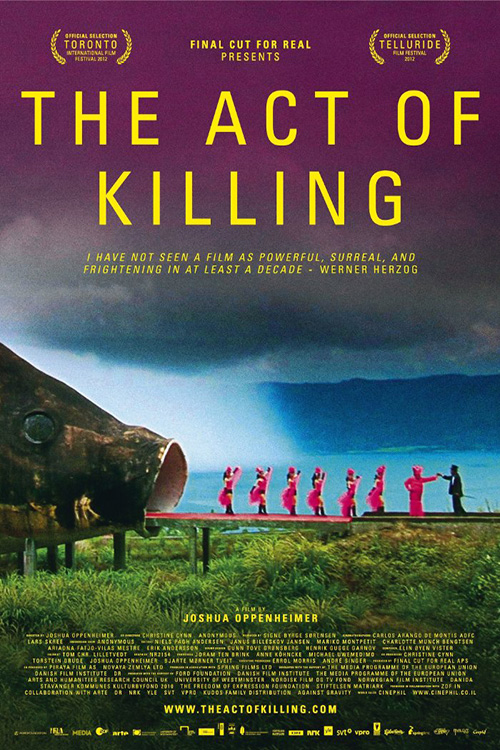
  • 2/19/17 – Dennis Lim looks at Christian Petzold and the Berlin School filmmakers in The New York Timeslink
  • 2/21/17 – “Are these movies about the state of post-reunification Germany, or the state of their heroines’ inner lives? Are they tough, sharpened studies in the uses and abuses of power, like the films of Petzold’s first two cinematic influences—Hitchcock and Lang—or are they defined more by their brief-but-central moments of tenderness and mutual understanding?” Max Nelson, Film Commentlink
  • 2/22/17 – New Petzold already in the pipeline! “Paula Beer, who won the best newcomer award at Venice last year for Francois Ozon’s Frantz, and Franz Rogowski (Tiger Girl) lead the cast on the film, which will begin a 40-day shoot in Marseilles from mid-May.” – link
  • 2/27/17 – Meet the mesmerizing Julia Hummer, star of both of Christian Petzold’s first two theatrical features. Lasse Ole Hempel, Goethe-Institut – link
  • 2/28/17 – These 70s era photos of Christian Petzold and his teacher and collaborator Harun Farocki are incredible!
  • 6/6/17 – “The Cinema of Identification gets on my nerves” – Christian Petzold interview at Cineaste. – link