An Evening with Stephen Broomer – August 25th, 2015

An Evening with Stephen Broomer


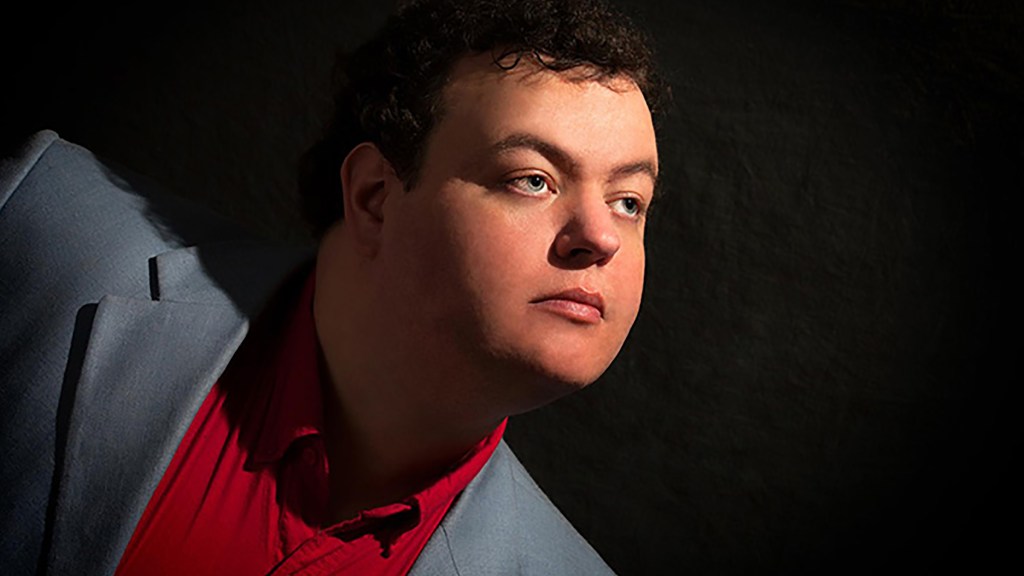
Please join us for a one-night screening event of eighteen experimental short films by Stephen Broomer projected in 16mm. The director will attend to introduce his films and conduct a post-screening Q&A.

  • Screening Date: Tuesday, August 25th, 2015 / 6:00pm
  • Venue: The Mason O. Damon Auditorium at Buffalo Central Library
  • Specifications: 2010-2014 / ~70 minutes / silent and sound / Black & White and Color
  • Director(s): Stephen Broomer
  • Print: 16mm prints supplied by the artist
  • Tickets: Free and Open to the Public
  • Deal: Stop in early for a FREE Breadhive soft pretzel while supplies last!
  • Extra: Cyclists are welcome to join Cultivate Cinema Circle and GO Bike Buffalo for a group ride to Hydraulic Hearth afterwards for discounted drinks with proof of admission. Here is the map:

Summer 2015 Season Sponsor:

Event Sponsors:

Venue Information:

1 Lafayette Square, Buffalo, NY 14203
(please use Clinton St entrance for Mason O. Damon Auditorium)


Schedule

Reel 1: The Spirits Series (29 minutes)

  • Christ Church – Saint James [2011] (7 minutes) – colour/sound
  • Brébeuf [2012] (10 minutes) – colour/sound
  • Spirits in Season [2013] (12 minutes) – colour/sound

Reel 2: Shorts (41 minutes)

  • Manor Road [2010] (3.5 minutes) – colour/silent
  • Queen’s Quay [2012] (1 minute) – colour/sound
  • Bridge 1A [2015] (1.5 minutes) – colour/silent
  • Memory Worked by Mirrors [2011] (2.5 minutes) – b&w/silent
  • Balinese Rebar [2011] (3.5 minutes) – colour/sound
  • Wastewater [2014] (1 minute) – colour/sound
  • Conservatory [2013] (3.5 minutes) – colour/silent
  • Snakegrass [2012] (1 minute) – colour/sound
  • Bridge 1B [2015] (1.5 minutes) – colour/silent
  • Serena Gundy [2014] (3.5 minutes) – b&w/silent
  • Wild Currents [2015] (6.5 minutes) – colour/sound
  • Landform 1 [2015] (3 minutes) – colour/silent
  • Bridge 1C [2015] (1 minute) – colour/silent
  • Order of Ideas at the Leslie Street Spit [2012] (3.5 minutes) – colour/sound
  • Gulls at Gibraltar [2015] (3.5 minutes) – b&w/silent

The Transformable Moment

The moment is an indefinite measure of time into which almost all experience falls. It is the conclusive present and it permeates all written past. It forms in our vision and consciousness. History enters as the moment fleeting, but the moment, in and out of time, the present moment, is our epiphany, when eternity reaches into our time and into us. Eternity carves its expression into us. It comes to us to build.

Film has allowed the artist to tame the moment, to record and possess it, to suspend it in a representation that pretends to permanence. The moment, as inscribed on film, becomes an elastic interval. In this raw form, it opens onto the many possibilities for further creation, be they achieved by distortion and obscurity, by the heightened clarity that comes in the movement study, by the divergent gestures of alternating patterns, and by other operations played on the visual field. Our mastery over the moment and its contents invites us deeper inside the instant and eternity. That moment of insight, formed in the improvisatory gesture or tempered and realized by later contemplation, might be transformed to damn out old motions, to make them new; to give polyrhythmic integrity to both moment and memory itself; to reach for the essential energy of experience. Transformations reveal a composition as a field of individual and endlessly renewed meanings and energies. But the epiphany is rare and ultimate.

Every moment possesses the power to transform itself. In its stagnant chronology, its fixed coordinate, it changes. By memory and by history, time transforms itself. We use film to alter the moment, to cradle the moment, to annihilate the moment, or at least its impression, and by these operations, the image bears out the mystical associations of consciousness. The transformable moment is the moment turning into both its opposite and its other, and meaning arises in the gap between opposition and otherness. By this transformation, the moment departs from the assurances of memory and becomes a breathing passage.

— Stephen Broomer

Filmography:

  • Fat Chance (2021)
  • Phantom Ride (2019)
  • Fountains Of Paris (2018) (Short)
  • Residence Inn (2017) (Short)
  • Mills (2016) (Short)
  • Carousel Study (2016) (Short)
  • The Bow and the Cloud (2016) (Short)
  • Variations on a Theme by Michael Snow (2015) (Short)
  • Wild Currents (2015) (Short)
  • Gulls at Gibraltar (2015) (Short)
  • Landform 1 (2015) (Short)
  • Dominion (2014) (Short)
  • Wastewater (2014) (Short)
  • Jenny Haniver (2014) (Short)
  • Serena Gundy (2014) (Short)
  • The Season Word (2014) (Short)
  • Zerah’s Gift (2013) (Short)
  • Pepper’s Ghost (2013) (Short)
  • Conservatory (2013) (Short)
  • Spirits in Season (2013) (Short)
  • Queen’s Quay (2013) (Short)
  • Christ Church – Saint James (2010) (Short)

Links

Here is a curated selection of links shared on our Facebook page for additional insight/information:

  • 8/10/15 – We will be hosting filmmaker Stephen Broomer to present a series of his experimental films on 16mm at the Buffalo & Erie County Public Library – Central Library’s Mason O. Damon Auditorium for FREE! Prior to the event be sure to read this excellent interview in Incite Journal with Mr. Broomer by Clint Enns. – link
  • 8/13/15 – If you’re unfamiliar with the filmmaker Stephen Broomer, who will be here on August 25th to present a series of 16mm experimental films, here is a short titled Wastewater which he produced last year. – link
  • 12/18/15 – Cultivate Cinema Circle alum Stephen Broomer has been included in this new limited edition compilation DVD of experimental works! His film Spirits in Season, which we screened earlier this year in among the excellent works included in this set. – link
  • 10/30/16 – Stephen Broomer, friend and alum of CCC, has launched Black Zero, a new multimedia publisher specializing in historical works of experimental cinema with an emphasis on Canadian underground filmmaking of the 1960s, ‘70s and ‘80s! – link

Bikes vs Cars – August 4th, 2015

Bikes vs. Cars [2015]


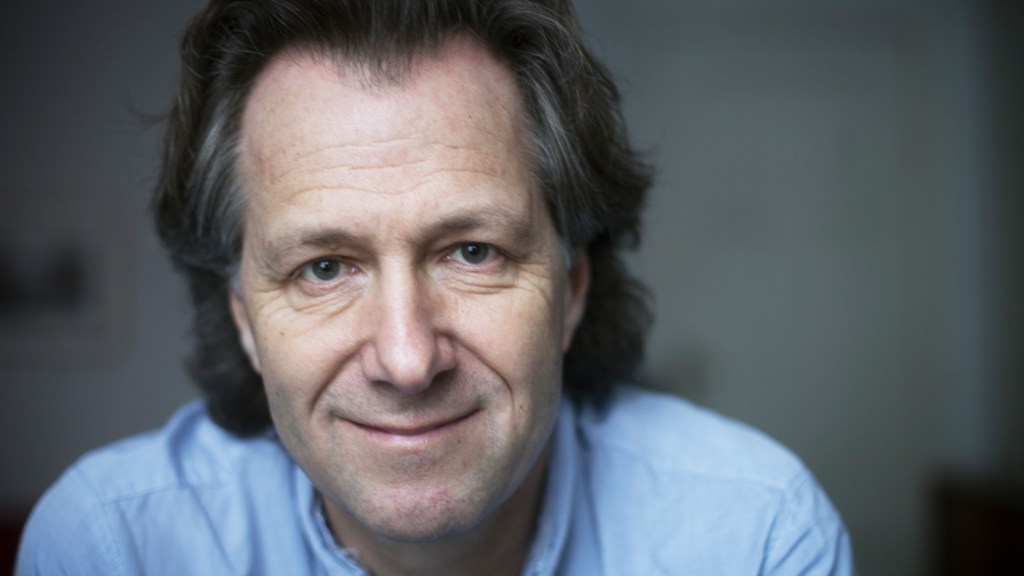
Please join us for a one-night screening event of Fredrik Gertten’s latest documentary Bikes vs Cars [2015]. The director will attend to introduce the film and conduct a post-screening Q&A.

  • Screening Date: Tuesday, August 4th, 2015 | 6:00pm
  • Venue: The Mason O. Damon Auditorium at Buffalo Central Library
  • Specifications: 2015 / 90 minutes / English and others with subtitles / Color
  • Director(s): Fredrik Gertten
  • Print: Supplied by WG Film
  • Tickets: $5.00 at the door / CASH ONLY (ATM available across the street at Hotel Lafayette)
  • Deal: Stop in early for a FREE Breadhive soft pretzel while supplies last!
  • Extra: Cyclists are welcome to join Cultivate Cinema Circle and GO Bike Buffalo for a group ride to Hydraulic Hearth afterwards for discounted drinks with proof of admission. Here is the map:

Summer 2015 Season Sponsor:

Event Sponsors:

Venue Information:

1 Lafayette Square, Buffalo, NY 14203
(please use Clinton St entrance for Mason O. Damon Auditorium)


Synopsis

Courtesy of Bikes vs Cars:

The bicycle, an amazing tool for change. Activists and cities all over the world are moving towards a new system. But will the economic powers allow it? Bikes vs Cars, a new film project from BANANAS!* and Big Boys Gone Bananas!* director Fredrik Gertten, looks into and investigates the daily global drama in traffic around the world.

Climate change and never-ending gridlocks frustrate people more than ever. Instead of whining, people in cities around the world take on the bicycle as a Do It Yourself solution. Road rage and poor city planning creates daily death amongst the bicyclists. And now they demand safe lanes.

It’s an uneven fight. Activists and politicians that work for change are facing a multi-billion dollar car, oil and construction industry that use all their means to keep society car dependent. We know that the world needs radical changes to save the climate and the environment, but the car industry is selling more cars than ever. Today there are one billion cars in the world. By 2020, that number will double.

The film will follow the individuals around the world that are fighting to create change. We meet Aline at Sao Paulo’s Ciclofaxia, the weekly Sunday ride where one lane of Paulista Avenue is opened for bikes only. Aline is an inspirational person in the city’s bicycle movement, who tries to focus on the positive aspects of being a cyclist. But that can be difficult in a city where one bicyclist is killed every four days. And in Toronto, where mayor Rob Ford strips away the city’s bike lanes in his battle to win the “war on cars,” we watch as members of the Urban Repair Squad infiltrate the streets at night, using spray paint and stencils to replace them.

From bike activists in Sao Paulo and Los Angeles, fighting for safe bike lanes, to the City of Copenhagen, where forty percent commute by bike daily, Bikes vs Cars will look at both the struggle for bicyclists in a society dominated by cars, and the revolutionary changes that could take place if more cities moved away from car-centric models.


Director’s Note

Born in a city where the bike is the natural choice for going from one place to another, I’ve travelled the world wondering why there are so few bicycles. Now, the car model as we know it has reached an extreme level with constant gridlock and millions of productive hours lost. Frustration is growing and cities need to look into new models.

The new urban biking is pushing this development. It’s a growing movement, which I’ve now seen around the world. People who simply put a sign on their bike saying “ONE LESS CAR.” A Do-It-Yourself attitude towards a global crisis.

It’s a positive message. If all cities adopted the model of Copenhagen, where forty percent commute within the city on bikes, it would be a radical change for the world. Something you can measure in health, pollution, oil usage.

And now the conflict. The car industry is in the center of our economic system. For the car owners and commuters that have become so invested in their lifestyle, it will be painful to change. It’s a conflict that interests me, and that is why I’ve decided to take on this project. A project of passion.

— Fredrik Gertten

Filmography:

  • Jozi Gold (2019)
  • Push (2019)
  • Becoming Zlatan … (2015)
  • Bikes vs Cars (2015)
  • Big Boys Gone Bananas!* (2011)
  • Bananas!* (2009)
  • The Socialist, the Architect and the Twisted Tower (2005)
  • An Ordinary Family (2005)
  • Vägen tillbaka – Blådårar 2 (2002)
  • Bye Bye Malmö (2002)
  • The Death of a Working Man’s Newspaper (2000)
  • Gå på vatten (2000)
  • Blådårar – Om kärleken till ett fotbollslag (1998)

Links

Here is a curated selection of links shared on our Facebook page for additional insight/information:

  • 7/7/15 – Story from Fredrik Gertten in Swedish paper Dagens Nyheter. “Motorism has become a disease” Worth google translating! – link
  • 7/22/15 – Via GO Bike Buffalo: “Cities are becoming far better places because they are less car-dependent. The six most walkable cities in the US are 38 per cent wealthier, they have a higher GDP than the rest.” Peter Newman, Curtin University – link
  • 7/29/15 – Prior to making BIKES vs CARS, Fredrik Gertten directed this short on the development of future bicycle safety! – link
  • 7/29/15 – “Fredrik Gertten’s quietly powerful eco-documentary, serves as a perfect summation of its gentle, yet direct, tone: ‘You own a car, not the street. The street belongs to all of us. This is not a war. It’s a city'”. Greg Hill-Turner, The Next Projectionlink
  • 8/4/15 – Did you know director Fredrik Gertten has also been involved in the creation of this biking app that “gives us a communication tool to influence friends and those in power to make cities more bike-friendly”? Download it today for free! – link
  • 8/5/15 – Congrats to director Fredrik Gertten, as BIKES vs CARS has just been picked up for US distribution by Kino Lorber! – link
  • 8/7/15 – Just before crossing the border to Buffalo for our screening of BIKES vs CARS at the Buffalo & Erie County Public Library – Central Library, director Fredrik Gertten spoke with VICE about his new film! – link
  • 10/12/15 – Congrats to Cultivate Cinema Circle alum Fredrik Gertten on being awarded the Grand Prize at the Cinemambiente Torino Environmental Film Festival for BIKES vs CARS last night! – link
  • 12/06/15 – Months after our NYS Premiere of BIKES vs CARS, the film has finally reached theaters and just received a lovely review in the Los Angeles Times:
    “Director Fredrik Gertten has put in the time to capture how these cities’ unique scenarios unfold to mount a compelling case against the powerful automotive, oil and construction lobbies. Florencia Di Concilio’s lush orchestral score is icing on the cake.” – link
  • 12/16/15 – BIKES vs CARS is now available to stream online via VOD:

Mommy – July 23rd, 2015

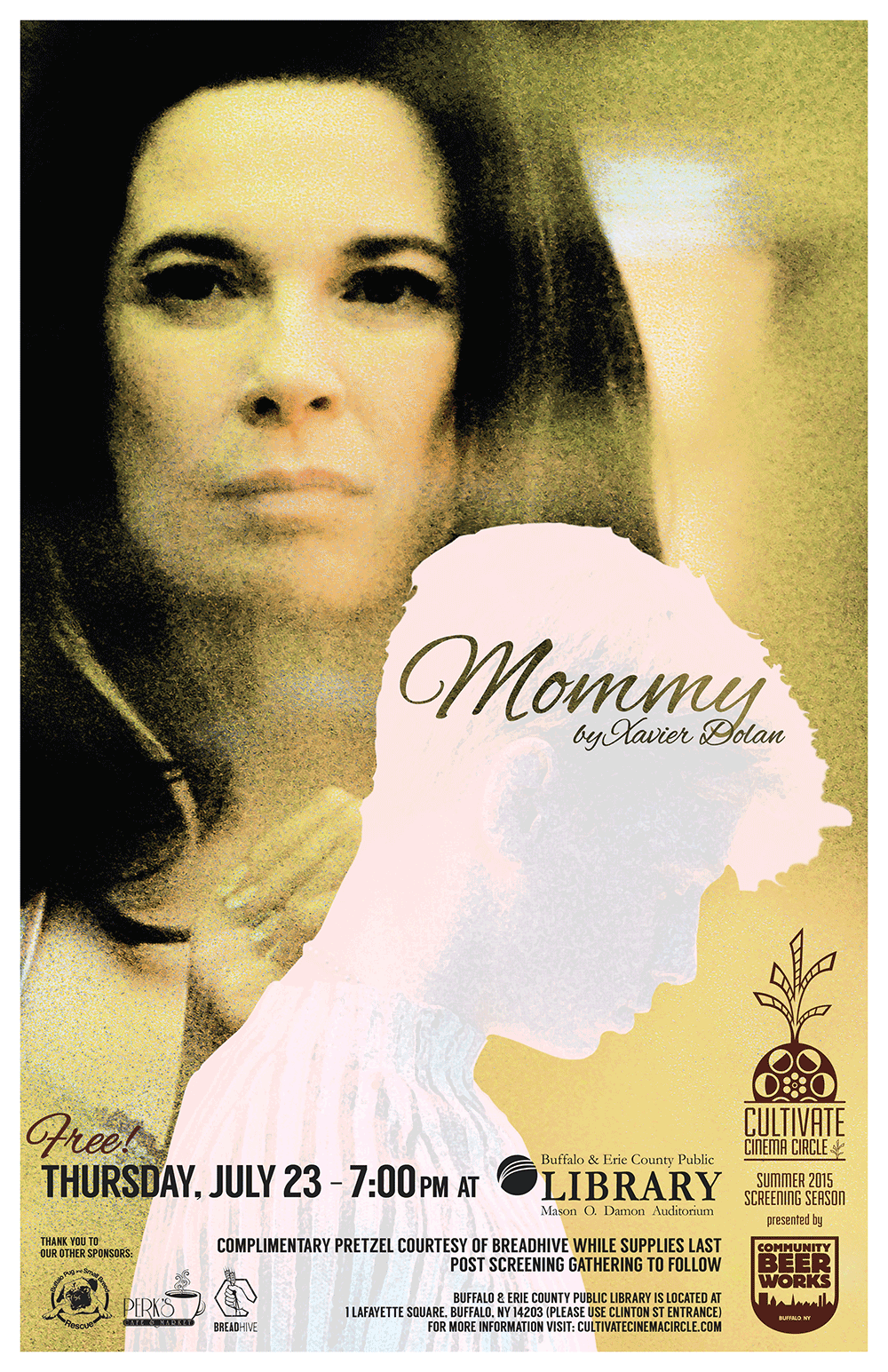
Mommy [2014]


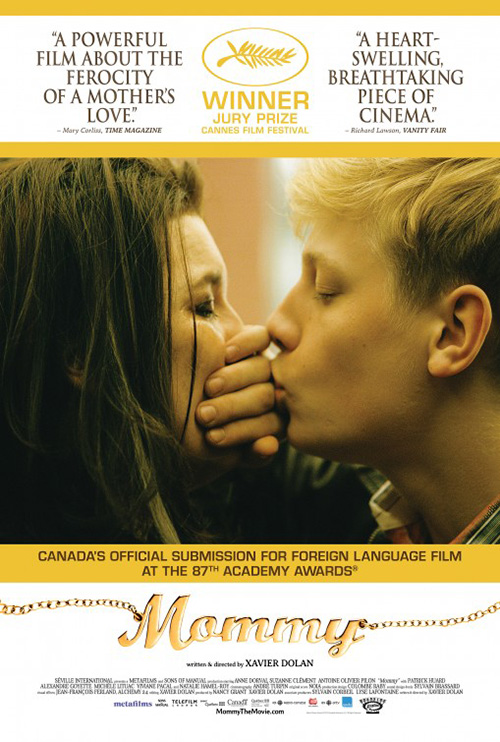
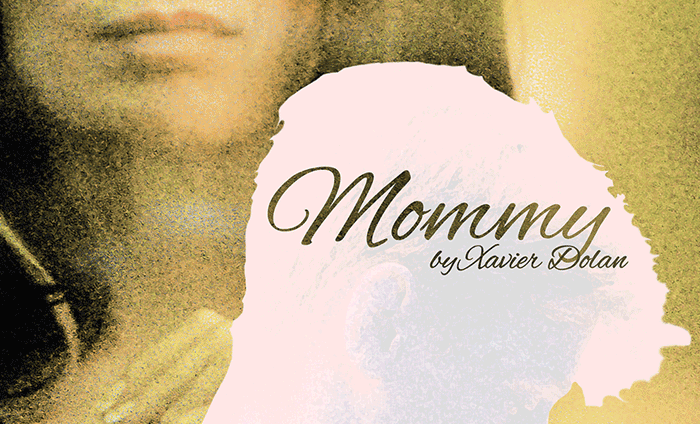
Please join us for a FREE one-night screening event of Mommy [2014]: Canada’s official selection for Foreign Language Film at the 87th Academy Awards and winner of the Jury Prize at the 2014 Cannes Film Festival.

  • Screening Date: Thursday, July 23rd, 2015 | 7:00pm
  • Venue: The Mason O. Damon Auditorium at Buffalo Central Library
  • Specifications: 2014 / 139 minutes / French with subtitles / Color
  • Director(s): Xavier Dolan
  • Print: Supplied by Roadside Attractions c/o Movie Licensing USA
  • Tickets: Free and Open to the Public
  • Deal: Stop in early for a FREE Breadhive soft pretzel while supplies last!

Summer 2015 Season Sponsor:

Event Sponsors:

Venue Information:

1 Lafayette Square, Buffalo, NY 14203
(please use Clinton St entrance for Mason O. Damon Auditorium)


Synopsis

Courtesy of Roadside Attractions:

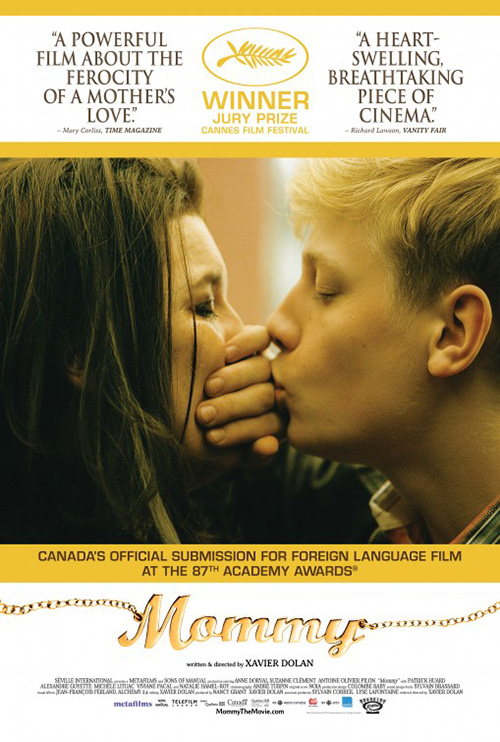
A passionate widowed single mom (Anne Dorval) finds herself burdened with the full-time custody of her unpredictable 15-year-old ADHD son (Antoine Olivier Pilon). As they struggle to make ends meet, Kyla (Suzanne Clément), the peculiar new neighbor across the street, offers her help. Together, they strive for a new sense of balance.

Tidbits:

  • Cannes Film Festival – 2014 – Winner: Jury Prize
  • Independent Spirit Awards – 2015 – Nominee: Best International Film
  • Indiewire Critics’ Poll – 2014 – Nominee: Best Lead Actress
  • César Awards – 2015 – Winner: Best Foreign Film
  • Toronto Film Critics Association Awards – 2014 – Nominee: Rogers Award – Best Canadian Film

Director Note

“Being on set as a kid and hearing about sex stories and hearing people swear… it’s a very specific atmosphere.”

Since my first film, I’ve talked a lot about love.

I’ve talked about teenage hood, sequestration and transsexualism. I’ve talked about Jackson Pollock and the 90s, about alienation and homophobia. Boarding schools and the very French-Canadian word “special”, milking the cows, Stendhal’s crystallization and the Stockholm syndrome. I’ve talked some pretty salty slang and I’ve talked dirty too. I’ve talked in English, every once in a while, and I’ve talked through my hat one too many times.

Cause that’s the thing when you “talk” about things, I guess, is that there is always this almost unavoidable risk of talking shit. Which is why I always decided to stick to what I knew, or what was -more or less – close to my skin. Subjects I thought I thoroughly or sufficiently knew because I knew my own difference or the suburb I was brought up in. Or because I knew how vast my fear of others was, and still is. Because I knew the lies we tell ourselves when we live in secret, or the useless love we stubbornly give to time thieves. These are things I’ve come close enough to to actually want to talk about them.

But should there be one, just one subject I’d know more than any other, one that would unconditionally inspire me, and that I love above all, it certainly would be my mother. And when I say my mother, I think I mean THE mother at large, the figure she represents.

Because it’s her I always come back to. It’s her I want to see winning the battle, her I want to invent problems to so she can have the credit of solving them all, her through whom I ask myself questions, her I want to hear shout out loud when we didn’t say a thing. It’s her I want to be right when we were wrong, it’s her, no matter what, who’ll have the last word.

Back in the days of I Killed My Mother, I felt like I wanted to punish my mom. Only five years have passed ever since, and I believe that, through Mommy, I’m now seeking her revenge. Don’t ask.

— Xavier Dolan, May 2014

Filmography:

  • Matthias & Maxime (2019)
  • The Death and Life of John F. Donovan (2018)
  • Mommy (2014)
  • Tom à la Ferme (2013)
  • Laurence Anyways (2012)
  • Heartbeats (2010)
  • I Killed My Mother (2009)

Using 1:1 Aspect Ratio

After having shot a music video in 1:1 last year, it dawned on me that this ratio translated a somewhat unique emotion and sincerity.

The perfect square framed faces with such simplicity, and seemed like the ideal structure for “portrait” shots. No distraction, no affectations are possible in such constricted space. The character is our main subject, inescapably at the center of our attention. Our eyes cannot miss him, her.

1:1 is, besides, the ratio of album covers and CD’s, all of these jackets that have imprinted in our imaginations over time. The Die & Steve Mix 4ever being a leitmotif for us, the use of 1:1 found an additional echo. It is also, to be frank, my DP André Turpin’s favorite ratio which he had, apparently, dreamed of using his entire life without ever daring to do so (he’s also a director, and directed the extremely enjoyable Zigrail, Middle-East road trip shot in black and white and featuring some brutal early John Zorn!).

After having now spent a year with him busting my balls at just about every shot, regretting our infamous ratio, I’ve learned two things : André loves cinemascope and I, for one, have absolutely no regrets in this matter.

— Xavier Dolan, May 2014


Links

Here is a curated selection of links shared on our Facebook page for additional insight/information:

  • 7/5/15 – “Directing prodigy Xavier Dolan has made his best film yet, a shocking, wildly inventive black comedy about a single mother bringing up a troubled teenager” Peter Bradshaw, The Guardianlink
  • 7/13/15 – For those unacquainted with the young Canadian prodigy Xavier Dolan, the filmmaker behind our upcoming FREE screening of Mommy on 7/23, this is a brilliant primer on his brazen stylistic tendencies published by The Seventh Art. – link
  • 7/17/15 – A quintuplet of gorgeous Korean posters for Xavier Dolan’s Mommylink
  • 7/20/15 – After catching our FREE screening of Xavier Dolan’s Mommy this coming Thursday at Buffalo & Erie County Public Library – Central Library’s Mason O. Damon Auditorium we highly recommend you take a listen to this hour long conversation with the youthful filmmaker on Film Society of Lincoln Center’s The Close-Up podcast! – link
  • 7/21/15 – Buffalo.com’s Christopher Schobert says Mommy is “undoubtedly a memorable experience featuring a stunning performance from Anne Dorval”! – link

The Terminator – July 9th, 2015

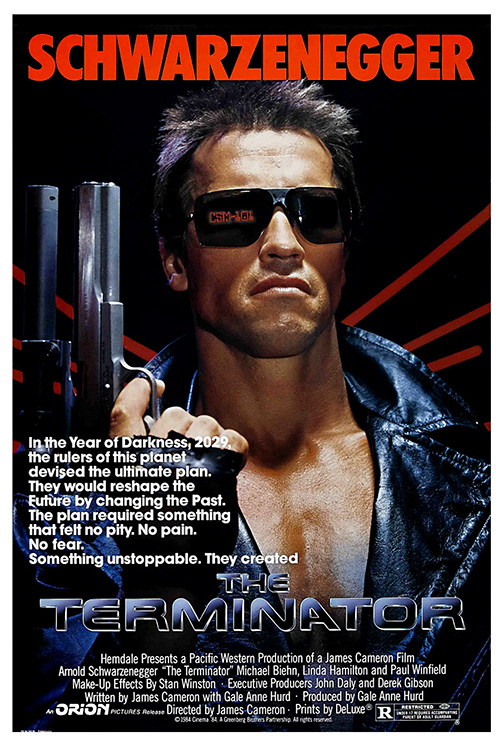
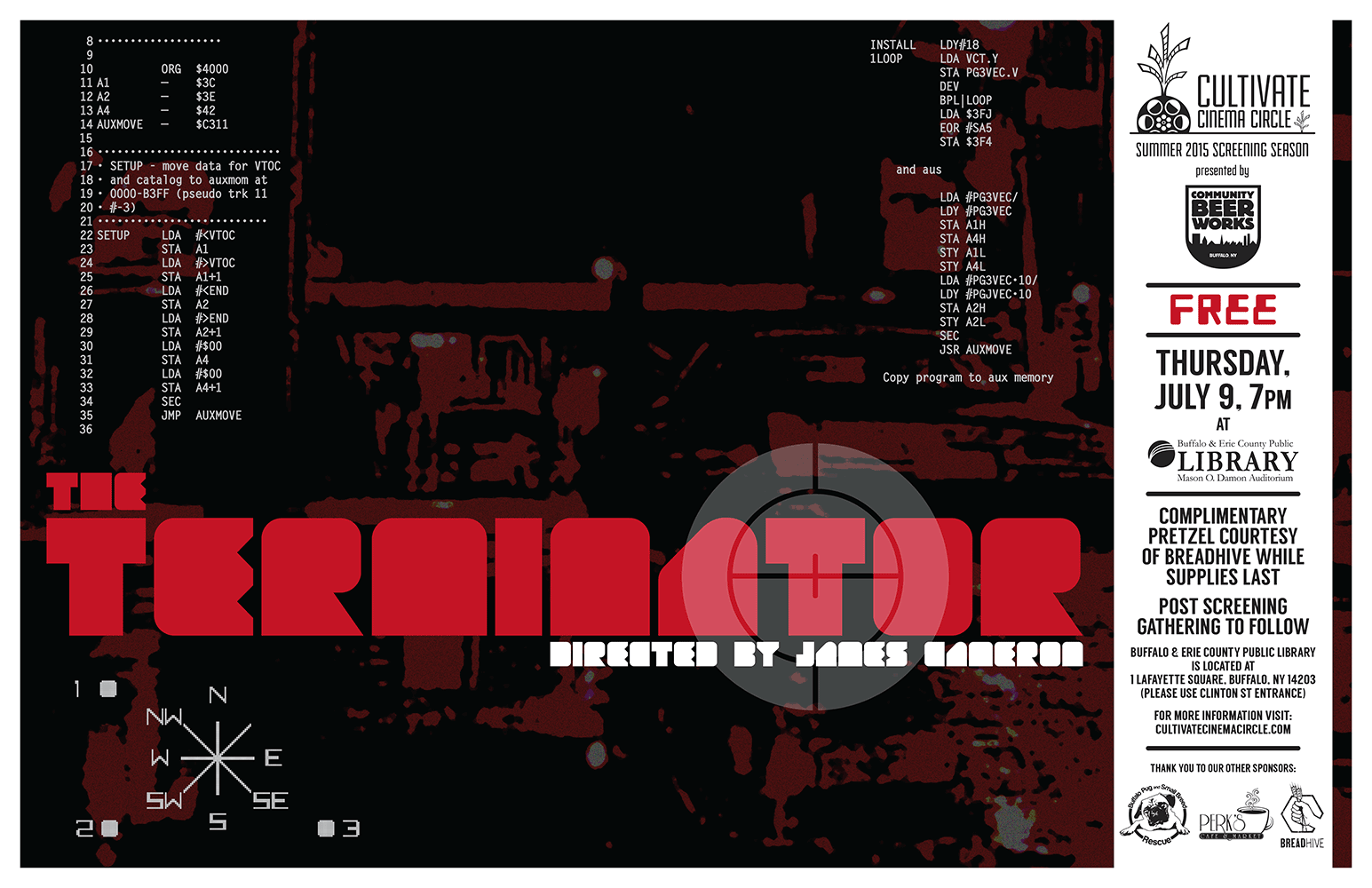
The Terminator [1984]


Please join us for a FREE one-night screening event of The Terminator [1984]: the movie that ignited a franchise returning to theaters with its fifth installment Terminator Genisys.


Summer 2015 Season Sponsor:

Event Sponsors:

Venue Information:

1 Lafayette Square, Buffalo, NY 14203
(please use Clinton St entrance for Mason O. Damon Auditorium)


Synopsis

In the year 2029, the ruling super-computer, Skynet, sends an indestructible cyborg (Arnold Schwarzenegger) back in time to 1984 to kill Sarah Connor (Linda Hamilton) before she can fulfill her destiny and save mankind.

The Terminator is a 1984 American science fiction action film directed by James Cameron, written by Cameron and the film’s producer Gale Anne Hurd, and starring Arnold Schwarzenegger, Michael Biehn, and Linda Hamilton. It was filmed in Los Angeles, produced by Hemdale Film Corporation and distributed by Orion Pictures. Schwarzenegger plays the Terminator, a cyborg assassin sent back in time from the year 2029 to 1984 to kill Sarah Connor, played by Hamilton, whose son will one day become a savior against machines in a post-apocalyptic future. Biehn plays Kyle Reese, a soldier from the future sent back in time to protect Sarah.

Though not expected to be either a commercial or critical success, The Terminator topped the American box office for two weeks and helped launch the film career of Cameron and consolidate that of Schwarzenegger. In 2008, The Terminator was selected by the Library of Congress for preservation in the American National Film Registry, being deemed “culturally, historically, or aesthetically significant”.

The film’s success led to four sequels: Terminator 2: Judgment Day [1991], Terminator 3: Rise of the Machines [2003], Terminator Salvation [2009], and Terminator Genisys [2015], with a planned two more films to follow.

Tidbits:

  • National Film Preservation Board – 2008 – National Film Registry

Director Bio

“People call me a perfectionist, but I’m not. I’m a rightist. I do something until it’s right, and then I move on to the next thing.”

courtesy of Biography.com:

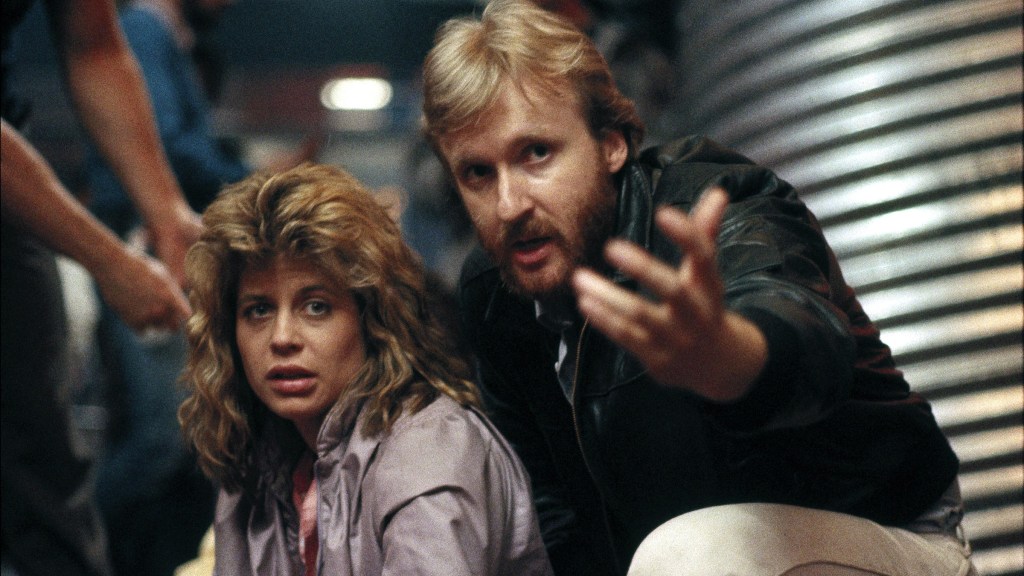
James Cameron is a critically acclaimed film director known for some of the biggest box-office hits of all time. A science-fiction fan as a child, he went on to produce and direct films including The Terminator, Aliens and Avatar. He has received numerous Academy Awards and nominations for his often large-scale, expensive productions. His most noted work, 1997’s Titanic, became the first film to earn more than $1 billion and landed 14 Academy Award nominations. Cameron took home three Oscars himself for the project: Best Director, Best Film Editing and Best Picture.

Early Career

James Cameron was born on August 16, 1954, in Kapuskasing, Ontario, Canada. A science-fiction fan as a child, he grew up to become one of the most visionary filmmakers in Hollywood. He initially pursued physics as a student at California State University, Fullerton, but he left to follow his cinematic dreams. Working as a truck driver, Cameron would pull off the road to work on screenplays.

In 1978, Cameron made his first film, a science-fiction short called Xenogenesis. The film helped him get a job with New World Pictures, a company run by famed B-movie director Roger Corman. At New World, Cameron worked in number of different roles, from art director on Battle Beyond the Stars (1980) to director on Piranha II: The Spawning (1981).

Major Films

Cameron’s fortunes took a major upturn in 1984, when he wrote and directed The Terminator (1984). The movie told the gripping science-fiction tale of a robot from the future (played by Arnold Schwarzenegger) who travels to the present day to hunt down the leader of the resistance in a yet-to-occur battle between humans and machines. The film became a critical and commercial hit and helped Cameron land his next project, the sequel to Ridley Scott’s Alien (1979), which featured Sigourney Weaver as a female action hero in space. Aliens (1986) received several Academy Award nominations, including one for Weaver for Best Actress.

With The Abyss (1989), however, Cameron experienced a number of disappointments. The shoot for the film was grueling. Much of it was filmed in a huge underwater set, which took its toll on the cast and crew. After its release, critics and moviegoers were not impressed with the story of scuba divers who encounter aliens while recovering a U.S. Navy submarine. However, the film’s visual effects were stunning and earned an Academy Award.

Working with his third wife, Kathryn Bigelow, Cameron helped produce her 1991 action flick, Point Break (1991). The couple’s two-year relationship ended around the same time. But Cameron returned to form that year with another box-office hit, Terminator 2: Judgment Day. The film earned more than $200 million and broke new ground with its impressive visual effects. Several years later he later he would marry one of the film’s stars, Linda Hamilton.

Titanic

Mixing marital issues and espionage, Cameron wrote and directed True Lies (1994), starring Jamie Lee Curtis and Arnold Schwarzenegger. The film made it to No. 1 at the box office, grossed more than $378 million worldwide and received an Oscar nod for its visual effects. Cameron then began a massive undertaking with his story Titanic, a movie about star-crossed lovers (played by Leonardo DiCaprio and Kate Winslet) trapped aboard the doomed Titanic ocean liner. To re-create one of the greatest disasters at sea in history, Cameron had a special studio built in Mexico, which featured a 17-million-gallon water tank and 775-foot replica of the Titanic.

The film cost nearly $200 million to make and was plagued with problems and delays, and many in the industry expected the film to tank just like its namesake. But Cameron proved the skeptics wrong. Opening in December 1997, the film received critical raves and strong ticket sales. Titanic eventually became the first film to earn more than $1 billion and landed 14 Academy Award nominations. For his work on the film, Cameron took home three Oscars—for Best Director, Best Film Editing and Best Picture. In 1999, he divorced Linda Hamilton, and in 2000 he married actress Suzy Amis, who appeared in Titanic.

Continuing to be fascinated by the Titanic story, Cameron worked with his brother, Mike, to create new technology to film the undersea wreck of the infamous vessel. The result was the 3-D IMAX documentary Ghosts of the Abyss (2003). Two more documentaries followed in 2005: Volcanoes of the Deep and Aliens of the Deep.

Avatar

Again revolutionizing the world of special effects, Cameron returned to making feature films with 2009’s Avatar. The film explores the conflict between American forces and the native population on another planet. In the film, Sam Worthington plays an American soldier who switches sides to help the Na’vi people, and falls in love with one of them (played by Zoe Saldana).

Avatar quickly surpassed Titanic at the box office. It also earned Cameron a number of accolades, including Golden Globe wins for Best Director and Best Motion Picture – Drama. For the Academy Awards, Avatar was nominated in nine categories, including Best Picture and Best Director. But Cameron lost out on some of the night’s biggest prizes to his ex-wife Kathryn Bigelow, who won Best Director and Best Picture for The Hurt Locker.

The success of Avatar has led Cameron to develop three sequels to the box-office hit, with Avatar 2 currently slated for a December 2017 release.

Filmography:

  • Avatar 5 (2027)
  • Avatar 4 (2025)
  • Avatar 3 (2023)
  • Avatar 2 (2021)
  • Avatar (2009)
  • Aliens of The Deep (2005)
  • Ghosts of the Abyss (2003)
  • Titanic (1997)
  • True Lies (1994)
  • Terminator 2: Judgment Day (1991)
  • The Abyss (1989)
  • Aliens (1986)
  • The Terminator (1984)
  • Piranha II: The Spawning (1981)

Links

Here is a curated selection of links shared on our Facebook page for additional insight/information:

  • 6/26/15 – “Gritty, clever, breathlessly paced, and dynamic despite the dark shadow of doom cast over the story, this sci-fi thriller remains one of the defining American films genre or otherwise of the 1980s.” Sean Axmaker, Turner Classic Movies: TCM – link
  • 7/7/15 – Charting the career of Arnold Schwarzenegger, one action blockbuster at a time! – link
  • 7/8/15 – Which Terminator is better? Criticwire debates. – link

Hard to Be a God – June 25th, 2015

Hard to Be a God [2014]


Please join us for a FREE one-night screening event of legendary Russian auteur Aleksei German’s final film—an adaptation of science fiction novel Hard to Be a God [Трудно быть богом] [2014].

  • Screening Date: Thursday, June 25th, 2015 | 7:00pm
  • Venue: The Mason O. Damon Auditorium at Buffalo Central Library
  • Specifications: 2014 / 170 minutes / Russian with subtitles / Black & White
  • Director(s): Aleksei German
  • Print: Supplied by Kino Lorber
  • Tickets: Free and Open to the Public
  • Deal: Stop in early for a FREE Breadhive soft pretzel while supplies last!
  • Giveaway: Hard to Be a God DVD courtesy of Kino Lorber

Summer 2015 Season Sponsor:

Event Sponsors:

Venue Information:
1 Lafayette Square, Buffalo, NY 14203
(please use Clinton St entrance for Mason O. Damon Auditorium)


Synopsis

courtesy of Kino Lorber:

A group of research scientists has been sent to the planet Arkanar, living under an oppressed regime in a period equivalent to earth’s Middle Ages. The local population is suffering a ban issued on anyone who knows how to read and write. The scientists must refrain from influencing political and historical events on Arkanar. They must work incognito, and they must remain neutral. Don Rumata, recognized by the locals as a sort of futuristic god, tries to save the local intelligentsia from their punishment. He cannot avoid taking the stance: “What would you do in God’s place?”

Adapted from the 1960s cult sci-fi novel “Hard to Be a God” by Arkady and Boris Strugatsky.

Hard To Be a God is a project that Russian director Aleksei German had been considering since the mid-1960s. German tried to make it as his debut film as early as 1964. Instead, he made Trial on the Road in respect to Lenfilm, the historic production company for which the director worked throughout his career. The project was later approved by Goskino, the State agency responsible for organizing filmmaking in the Soviet Union, but in 1968, after the uprising in Prague, the authorization was revoked for ideological reasons. Twenty years later the director returned to the project, but decided instead to make a film that would take him a long time to complete, Khrustalyov, My Car! Ten years later, after stating “I am not interested in anything but the possibility of building a world, an entire civilization from scratch”, German committed his efforts to Hard to be a God. The film was shot between the autumn of 2000 and August 2006: it even involved the construction of castles near Prague and on the sets at Lenfilm; the shooting took so long that some of the actors died of old age; the post-production phase took over five years. German died on February 21st, 2013; the film was completed by his wife and closest collaborator, Svetlana Karmalita, and by their son Aleksei A. German.

Tidbits:

  • Indiewire Critics’ Poll – 2015 – Nominee: Best Cinematography

Director Bio

“We had introduced new technical things that other filmmakers arrived at years later. Of course, all these things get older. Of course, it’s a tragedy. The cinema is a constantly developing kind of art form. It gets old very quickly.”

Aleksei Yuryevich German was born in Leningrad in 1938. His father, Yuri P. German, the famous, award-winning “humanistic” Soviet writer, a friend of director Vsevolod Emilevich Meyerhold, convinced him to enroll in the Faculty of Theatre Directing in Leningrad. After graduating, German collaborated with Georgy Tovstonogov, a key figure in Soviet theatre in the 1950s and 60s. In 1964, the director began to work with Lenfilm, the oldest “studio” in the Soviet Union, which became the cradle of auteur filmmaking. In 1967, he made his first film with Grigori L. Aronov, Sedmoy sputnik [The Seventh Companion].

In 1971, German finished Proverka na dorogach or Operacija “S novym godom” [Trial on the Road], inspired by a novel written by his father. The film, set during World War II, was immediately forbidden with the excuse that it distorted historical facts: it was not released until 1985. In 1977, the director made Dvadtsat dney bez voyny [Twenty Days Without War], inspired by the novel by Konstantin Simonov, the famous party loyal writer who defended the film before the leaders of the Central Committee and ensured its distribution. In 1984, German again worked on one of his father’s novels and made his most famous film, Moy drug Ivan Lapshin [My Friend Ivan Lapshin], set in the early 1930s. German’s portrayal of Soviet history irritated the Party and the film was immediately withdrawn from movie theatres. To survive, German wrote screenplays together with his wife Svetlana Karmalita, under her name alone.

German’s parabola of life and creation was fraught with events that were as tough as they were dramatic, and which reduced his opportunities to personally develop his own projects. During the longest period of his inactivity as a director, in 1988 German and his companion in life and work Svetlana Karmalita did however create and direct the Studio for debut works and experimental films at Lenfilm, a structure to develop debut works by new directors which produced eight feature-length films, as well as shorts and animated films.

With the advent of the 1990s and the new political situation, German worked on Khrustalyov, My Car!, released in 1998, after being presented in competition at the Cannes Film Festival. In that film, German came to the conclusion that after the horrors of the Stalin era, art was no longer possible in its previous form. In 2000, the director, finally recognized as one of the great masters of Russian filmmaking, and honoured with many awards, began to work on the epic project of Hard To Be a God, inspired by the famous eponymous novel by the Strugatsky brothers, which took thirteen years of hard work. In this work, German portrayed an entire civilization onscreen, reviewing the history of humanity with ruthless precision and enormous compassion.

Aleksei German died on February 21st, 2013. The film Hard To Be a God was completed by Svetlana Karmalita and by their son Aleksei A. German.

Filmography:

  • Hard to Be a God (2014)
  • Khrustalyov, My Car! (1998)
  • Trial on the Road (1986)
  • My Friend Ivan Lapshin (1985)
  • Twenty Days Without War (1977)
  • The Seventh Companion (1968)

Links

Here is a curated selection of links shared on our Facebook page for additional insight/information:

  • 6/7/15 – After Hard to Be a God‘s debut at Festival internazionale del film di Roma, film critic Olaf Möller was awestruck. From his review of German’s final film in Cinema Scope: “It is 170 minutes long, black and white, beautiful, brilliant, and like a message from a different time—past or future, who knows … Hard to Be a God is a monstrous and strikingly Russian Orthodox huis clos, convinced that change will come but miserably resigned to the fact that nothing can be done to speed that escape from suffering. Which is to say that German not only still believes, but knows that above all we are frail and weak, even in our bravery. Neither God nor nature really wonders, let alone cares, about our hopes and desires—they simply, irrespectively deliver what will come. Fuck you, mankind, and be happy for what you’ve been given. Quite a final statement.” – link
  • 6/19/15 – “This is visionary cinema of truly loopy, uncompromised grandeur” Neil Young, indieWIRElink
  • 6/21/15 – “After submitting oneself to German’s final film—and it is indeed a process of submission, far more than a conventional viewing experience—it is difficult to refrain from entertaining a rather morbid thought: This is the kind of film that kills its maker….This is as tactile and visceral as cinema gets…” Michael Sicinski, Museum of the Moving Image’s Reverse Shotlink
  • 6/25/15 – “Not only an unforgettable individual masterpiece but probably one of the capital-G Great Films” Glenn Kenny, RogerEbert.com – link
  • 12/13/15 – Fandor posted a video essay attesting to why Cultivate Cinema Circle alum Hard to Be a God might be the best film of 2015 – link
  • 1/8/16 – Artvoice‘s Jordan Canahai has named his Top 10 films of 2015, including two Cultivate Cinema Circle alums among the ranks: HARD TO BE A GOD & THE LOOK OF SILENCE! – link

Mommy

website-header

2014 / 139 minutes / French with subtitles / Color
Directed by: Xavier Dolan
Print supplied by: Roadside Attractions c/o Movie Licensing USA

Thursday, July 23rd, 2015
7:00pm
at The Mason O. Damon Auditorium at Buffalo Central Library

Please join us for a FREE one-night screening event of Mommy [2014]: Canada’s official selection for Foreign Language Film at the 87th Academy Awards and winner of the Jury Prize at the 2014 Cannes Film Festival.

Stop in early to be sure to score a FREE soft pretzel Breadhive Cooperative Bakery!

Summer 2015 Season Sponsor: Community Beer Works
Event Sponsors: Buffalo Pug & Small Breed Rescue; Perk’s Cafe and Market & BreadHive Cooperative Bakery
Ticket Information: FREE


Synopsis courtesy of Roadside Attractions:
A passionate widowed single mom (Anne Dorval) finds herself burdened with the full-time custody of her unpredictable 15-year-old ADHD son (Antoine Olivier Pilon). As they struggle to make ends meet, Kyla (Suzanne Clément), the peculiar new neighbor across the street, offers her help. Together, they strive for a new sense of balance.

DIRECTOR’S NOTE:

Since my first film, I’ve talked a lot about love.

I’ve talked about teenage hood, sequestration and transsexualism. I’ve talked about Jackson Pollock and the 90s, about alienation and homophobia. Boarding schools and the very French-Canadian word “special”, milking the cows, Stendhal’s crystallization and the Stockholm syndrome. I’ve talked some pretty salty slang and I’ve talked dirty too. I’ve talked in English, every once in a while, and I’ve talked through my hat one too many times.

Cause that’s the thing when you “talk” about things, I guess, is that there is always this almost unavoidable risk of talking shit. Which is why I always decided to stick to what I knew, or what was -more or less – close to my skin. Subjects I thought I thoroughly or sufficiently knew because I knew my own difference or the suburb I was brought up in. Or because I knew how vast my fear of others was, and still is. Because I knew the lies we tell ourselves when we live in secret, or the useless love we stubbornly give to time thieves. These are things I’ve come close enough to to actually want to talk about them.

But should there be one, just one subject I’d know more than any other, one that would unconditionally inspire me, and that I love above all, it certainly would be my mother. And when I say my mother, I think I mean THE mother at large, the figure she represents.

Because it’s her I always come back to. It’s her I want to see winning the battle, her I want to invent problems to so she can have the credit of solving them all, her through whom I ask myself questions, her I want to hear shout out loud when we didn’t say a thing. It’s her I want to be right when we were wrong, it’s her, no matter what, who’ll have the last word.

Back in the days of I Killed My Mother, I felt like I wanted to punish my mom. Only five years have passed ever since, and I believe that, through Mommy, I’m now seeking her revenge. Don’t ask.

— Xavier Dolan, May 2014

The Terminator

website-header

1984 / 105 minutes / English / Color
Directed by: James Cameron
Print supplied by: Metro-Goldwyn-Mayer, Inc. c/o Movie Licensing USA

Thursday, July 9th, 2015
7:00pm
at The Mason O. Damon Auditorium at Buffalo Central Library

Please join us for a FREE one-night screening event of The Terminator [1984]: the movie that ignited a franchise once more in theaters with its fifth installment Terminator Genisys.

Stop in early to be sure to score a FREE soft pretzel Breadhive Cooperative Bakery!

Summer 2015 Season Sponsor: Community Beer Works
Event Sponsors: Buffalo Pug & Small Breed Rescue; Perk’s Cafe and Market & BreadHive Cooperative Bakery
Ticket Information: FREE


In the year 2029, the ruling super-computer, Skynet, sends an indestructible cyborg (Arnold Schwarzenegger) back in time to 1984 to kill Sarah Connor (Linda Hamilton) before she can fulfill her destiny and save mankind.

The Terminator is a 1984 American science fiction action film directed by James Cameron, written by Cameron and the film’s producer Gale Anne Hurd, and starring Arnold Schwarzenegger, Michael Biehn, and Linda Hamilton. It was filmed in Los Angeles, produced by Hemdale Film Corporation and distributed by Orion Pictures. Schwarzenegger plays the Terminator, a cyborg assassin sent back in time from the year 2029 to 1984 to kill Sarah Connor, played by Hamilton, whose son will one day become a savior against machines in a post-apocalyptic future. Biehn plays Kyle Reese, a soldier from the future sent back in time to protect Sarah.

Though not expected to be either a commercial or critical success, The Terminator topped the American box office for two weeks and helped launch the film career of Cameron and consolidate that of Schwarzenegger. In 2008, The Terminator was selected by the Library of Congress for preservation in the American National Film Registry, being deemed “culturally, historically, or aesthetically significant”.

The film’s success led to four sequels: Terminator 2: Judgment Day [1991], Terminator 3: Rise of the Machines [2003], Terminator Salvation [2009], and Terminator Genisys [2015], with a planned two more films to follow.