Extras: Stop in early for FREE Breadhive baked goods while supplies last!
Event Sponsors:
Venue Information:
420 Connecticut St, Buffalo, NY 14213
Synopsis
Courtesy of press kit:
In the Arab-American neighborhood outside of Chicago where journalist and filmmaker Assia Boundaoui grew up, most of her neighbors think they have been under surveillance for over a decade. While investigating their experiences, Assia uncovers tens of thousands of pages of FBI documents that prove her hometown was the subject of one of the largest counter terrorism investigations ever conducted in the U.S. before 9/11, code-named “Operation Vulgar Betrayal.”
With unprecedented access, The Feeling of Being Watched weaves the personal and the political as it follows the filmmaker’s examination of why her community—including her own family—fell under blanket government surveillance. Assia struggles to disrupt the government secrecy shrouding what happened and takes the FBI to federal court to compel them to make the records they collected about her community public. In the process, she confronts long-hidden truths about the FBI’s relationship to her community.
The Feeling of Being Watched follows Assia as she pieces together this secret FBI operation, while grappling with the effects of a lifetime of surveillance on herself and her family.
Tidbits:
Tribeca Film Festival – 2018
Director’s Statement
Courtesy of press kit:
The Feeling of Being Watched takes a vérité and personal journey storytelling approach while artistically exploring how perspective functions in cinema. Throughout the film, the lens of surveillance is used as a metaphor for the various ways my community, and by extension Muslim-American communities across the country, have been “seen.” By cinematically weaving the personal and the political — often polarized versions of the same story — I hope to capture a profound truth about the “War on Terror”: its impact on our sense of self, our ability to create and connect, our right to dissent, and the impact it’s having on our collective democracy.
The German philosopher Hegel wrote that, “seeing comes before words,” and in his writing insists on the impossibility of existence without recognition from the other. Surveillance is in its essence a way of seeing without recognizing, and its harmful effects are profound. Unwarranted surveillance transforms communities into places where neighbors distrust each other, people censor themselves, and everyone lives with an unhealthy dose of fear and paranoia. While surveillance is preconditioned on a great physical distance from the object of its gaze, this film gets intimately closer with the subjects of surveillance who have for so long been seen from afar. I hope this film will serve as a catalyst for radical change that is based on equality, mutual recognition and a way of seeing that is reciprocal.
Throughout The Feeling of Being Watched I use journalistic tools to investigate a complex political issue that is at the same time deeply personal to me. I believe strongly in the public’s right to know. I believe that our ability to hold government accountable is only as strong as our ability to compel government transparency. In this time of great political turbulence in the U.S., I stand committed to creating art that speaks truth to power and is rooted firmly in the principle of the public’s right to hold its government accountable. I hope that this film will herald a cultural shift in public awareness on issues of government surveillance and national security and contribute meaningfully to ending U.S. government policies that allow the unwarranted profiling of communities of color in America.
Assia Boundaoui is an Algerian-American journalist and filmmaker based in Chicago. She has reported for the BBC, NPR, PRI, Al Jazeera, VICE, and CNN. Her debut short film about hijabi hair salons for the HBO LENNY documentary series premiered at the 2018 Sundance Film Festival. Her feature length debut The Feeling of Being Watched, a documentary investigating a decade of FBI surveillance in Assia’s Muslim-American community, had its world premiere at the 2018 Tribeca Film Festival. She is currently a fellow with the Co-Creation Studio at the MIT Open Documentary Lab, where she is iterating her most recent work, the Inverse Surveillance Project. Assia has a Masters degree in journalism from New York University and is fluent in Arabic.
Filmography:
The Feeling of Being Watched (2018)
Links
Here is a curated selection of links shared on our Facebook page for additional insight/information:
12/08/19 – “Equal parts angry and anxious, Boundaoui’s smart, unsettling documentary functions both as a real-world conspiracy thriller and a personal reflection on the psychological strain of being made to feel an outsider in one’s own home.” Guy Lodge, Variety – link
Bisbee ’17 is a nonfiction feature film by award-winning filmmaker Robert Greene set in Bisbee, Arizona, an eccentric old mining town just miles away from both Tombstone and the Mexican border.
Radically combining collaborative documentary, western and musical elements, the film follows several members of the close knit community as they attempt to reckon with their town’s darkest hour. In 1917, nearly two-thousand immigrant miners, on strike for better wages and safer working conditions, were violently rounded up by their armed neighbors, herded onto cattle cars, shipped to the middle of the New Mexican desert and left there to die. This long-buried and largely forgotten event came to be known as the Bisbee Deportation.
The film documents locals as they play characters and stage dramatic scenes from the controversial story, culminating in a large scale recreation of the deportation itself on the exact day of its 100th anniversary. These dramatized scenes are based on subjective versions of the story and offer conflicting views of the event, underscoring the difficulty of collective memory, while confronting the current political predicaments of immigration, unionization, environmental damage and corporate corruption with direct, haunting messages about solidarity and struggle.
Tidbits:
Sundance Film Festival – 2018
International Documentary Association – 2018 – Winner: Creative Recognition Award – Best Music
Gotham Awards – 2018 – Nominee: Best Documentary & Gotham Independent Film Award – Best Documentary
I’ve been going to Bisbee, Arizona since 2003, when my mother-in-law bought an old cabin in the eccentric former mining town near the border. I immediately fell in love with the place. My partner was born in Tucson and we have roots in the area, but nothing prepared me for this strange, magical, truly haunted enclave – and the secret history buried there. Since then, I’ve been dreaming of making a film that captures the unique and troubled spirit of Bisbee. The centennial of the Bisbee Deportation – a tragedy where 1200 striking miners, many of them immigrants, were marched out of town at gunpoint and loaded unto cattle cars – gave us the opportunity. Maybe it was just a matter of time before I made the Bisbee film – my first ever feature film idea back when I initially came to town was to “re-stage the deportation with the locals.” So after five feature documentaries, many of which use performance to try to create new ways of seeing and understanding, it was finally time to make the movie I’d been dreaming of.
The Bisbee Deportation is one of countless untold tales of radicalism and oppression in American history and I knew I wanted to tell the story when I first heard it in 2003. But we had relatively little idea when we started pre-production in the summer of 2016 just how relevant the story would become. As the calendar turned to the summer of 2017, with the centennial approaching, labor rights under unprecedented attack and a humanitarian crisis gathering on the U.S.-Mexico border, a sense of urgency began to set in for all of us. The desire for the community to tell this story was palpable and we filmmakers were providing the stage. They knew what we knew: the images that we were creating together would matter. Bisbee, in many ways, is a microcosm of the country and understanding the depth of what happened in the old company town is a way to grasp where we are today as nation, how deeply ingrained American mythologies are used to divide us, and what calamities await if we don’t heed the lessons of our history.
Our first mission, then, was to document the emotional awakening the town was experiencing as the centennial of the deportation approached. Then we began working with everyone from descendants of deportees to company families to create scenes that helped facilitate a kind of truth and reconciliation by way of layered performance. In my last several films, I’ve pushed further and further into the possibilities of collaborative, performative documentary filmmaking, where subjects and filmmakers work together to stage semi-constructed scenes that help the viewer imagine the internal lives of real people. With Bisbee ’17, we’ve pushed this idea significantly forward. What we see is a working through of story and history and mythology as non-actors engage in “roles” that relate to their real lives and this collective trauma. The historical, the political, and the personal all become entwined as locals play dress up, portraying ghosts of a buried past. It all leads to a surprisingly cathartic and emotional place, where the collective performance of a town playing itself reveals both divisions and connections between people. Should we bury the past forever or should we work together to exorcise our demons? One white guy who played one of the vigilantes declares at the end of the large-scale recreation, “this is like the largest group therapy session ever.” A Mexican-American man who had played a deportee saw things a little differently. “You guys were good,” he said to a friend playing a deporter, “maybe too good.”
Director Bio
PARK CITY, UT – JANUARY 24: Writer/director Robert Greene from the film “Kate Plays Christine” poses for a portrait during the WireImage Portrait Studio hosted by Eddie Bauer at Village at The Lift on January 24, 2016 in Park City, Utah. (Photo by Jeff Vespa/WireImage)
“Stories make order and help us understand the awful noise.”
Robert Greene’s latest award-winning film Bisbee ‘17premiered at the 2018 Sundance Film Festival. His previous film Kate Plays Christine won a Jury Award for Writing at Sundance 2016. Robert’s documentaries include the Gotham Awards-nominated Actress, Fake It So Real and the Gotham Awards-nominated Kati With An I. Robert was an inaugural Sundance Art of Nonfiction fellow in 2015 and is a three-time nominee for Best Director at the Cinema Eye Honors. The Independent named Robert one of their 10 Filmmakers to Watch in 2014 and he received the 2014 Vanguard Artist Award from the San Francisco DocFest. His first documentary, OwningThe Weather, was screened at the COP15 Climate Change Conference in Copenhagen. Robert has edited over a dozen features, including Her Smell (2018), Golden Exits (2017), Queen of Earth (2015) and Listen Up Philip (2014) by Alex Ross Perry, Amanda Rose Wilder’s award winning Approaching The Elephant (2014), Charles Poekel’s Spirit Awards-nominated Christmas, Again (2015) and Douglas Tirola’s Hey Bartender(2013). He has been a Sundance Edit Lab Advisor and was on the U.S. Documentary Jury for Sundance 2017. Robert writes for outlets such as Sight & Sound and serves as the Filmmaker-in-Chief for the Murray Center for Documentary Journalism at the University of Missouri.
Filmography:
Procession (2021)
Bisbee ’17 (2018)
Kate Plays Christine (2016)
Actress (2014)
Fake It So Real (2011)
Kati with an I (2010)
Owning the Weather (2009)
Links
Here is a curated selection of links shared on our Facebook page for additional insight/information:
11/11/19 – “The story of Bisbee will never be taught in schools, the faces of the deported won’t be printed on t-shirts, and socialists will never get a parade for trying to make sure wages are fair and conditions safe for every worker. There may never be justice for the victims of American trauma, but Greene has told one story no viewer could ever forget.” Scout Tafoya, MUBI’s Notebook – link
When tragedy struck her family in the midst of the financial crisis, Bronx-born Alexandria Ocasio-Cortez had to work double shifts in a restaurant to save her home from foreclosure. After losing a loved one to a preventable medical condition, Amy Vilela didn’t know what to do with the anger she felt about America’s broken health care system. Cori Bush was drawn into the streets when the police shooting of an unarmed black man brought protests and tanks into her neighborhood. Paula Jean Swearengin was fed up with watching her friends and family suffer and die from the environmental effects of the coal industry.
At a moment of historic volatility in American politics, these four women decide to fight back, setting themselves on a journey that will change their lives and their country forever. Without political experience or corporate money, they build a movement of insurgent candidates challenging powerful incumbents in Congress. Their efforts result in a legendary upset.
Tidbits:
Sundance Film Festival – 2019 – Winner: Audience Award (U.S. Documentary Competition)
I fell in love with the art of documentary film because it synthesizes just about everything I care about at once. It allows me to channel early passions for analog photography and music into the improvisatory compositions of vérité digital cinematography, in which I now have over a decade of experience. Observational shooting to me is about being able to walk into any situation, gauge what the story is, and get a full range of coverage to tell the story visually in the edit, while simultaneously capturing the most emotionally charged moments and compelling images that the scene affords. It’s about movement: knowing when to gracefully guide the eye from one face or detail to the next, and when to stay still. And it’s also about listening, in order to navigate complex and sometimes sensitive interpersonal dynamics, to capture the cinematic textures of conversations and the sonic environment, and to know when to let sound guide the camera’s movement. While I am comfortable using a variety of lenses, setting up tracking shots, and lighting rooms for either naturalistic or stylized effect, I’m deeply committed to vérité cinematography as a uniquely intimate, gritty and authentic art form.
As a director and producer, I love seeking out untold stories of personal transformation that touch upon larger social and political themes. My doctoral background in cultural anthropology encourages me to find beauty, depth, drama, and hope in ordinary people and everyday experiences, and to remain attentive to the ethics of working with subjects. I also enjoy thinking creatively about audiences, distribution and impact from the early stages of production on. Whether the project is a theatrical feature or a short for the web, my goal is to craft emotionally powerful stories in entertaining, thought-provoking, and beautiful ways.
Rachel’s most recent feature documentary, Knock Down the House, follows four working-class women challenging political machines across the US, and will premiere at Sundance Film Festival 2019. Her last feature, The Hand That Feeds (co-directed with Robin Blotnick) was nominated for an Emmy in 2017, broadcast on PBS, and won awards and recognition at Full Frame, DOC NYC, AFI Docs, and numerous other festivals on the 2014-15 circuit. Her video art collaborations with artist Saya Woolfalk have screened at numerous galleries and museums worldwide since 2008. Rachel was a 2013 Sundance Creative Producing Fellow and holds a PhD in Cultural Anthropology and a graduate certificate in Culture and Media from NYU. She’s also the mother of a two-year-old son.
Filmography:
Knock Down the House (2019)
The Hand That Feeds (2014)
Aves de paso (2009)
The Woman in the Eye (2006) (short)
Big Fish/Small Fry: Urban Angling in New York (2005) (short)
Extras: Stop in early for FREE Breadhive baked goods while supplies last!
Event Sponsors:
Venue Information:
420 Connecticut St, Buffalo, NY 14213
Synopsis
Courtesy of press kit:
Welcome to Rockford, Illinois, in the heart of Rust-Belt America, home to debut filmmaker Bing Liu. With over 12 years of footage, Bing discovers connections between two of his skateboarder friends’ volatile upbringings and the complexities of modern-day masculinity. As the film unfolds, Bing captures 23-year-old Zack’s tumultuous relationship with his girlfriend deteriorate after the birth of their son and 17-year-old Keire struggling with his racial identity as he faces new responsibilities following the death of his father. While navigating a difficult relationship between his camera and his friends, Bing weaves a story of generational forgiveness while exploring the precarious gap between childhood and adulthood.
Minding The Gap won the U.S. Documentary Special Jury Award for Breakthrough Filmmaking at the 2018 Sundance Film Festival, and is executive produced by Oscar-nominated documentarian Steve James (The Interrupters, Hoop Dreams). Bing Liu, who developed the film through Chicago’s Kartemquin Films, also serves as producer alongside Diane Quon, and as editor alongside Joshua Altman. Hulu and Magnolia Films will release the film on August 17, 2018 ahead of a POV broadcast in 2019.
Tidbits:
Sundance Film Festival – 2018 – Winner: U.S. Documentary Special Jury Award for Breakthrough Filmmaking
National Board of Review – 2018 – Winner: Top 5 Documentaries
Gotham Awards – 2018 – Nominee: Best Documentary
Independent Spirit Awards – 2019 – Winner: Truer Than Fiction Award
Independent Spirit Awards – 2019 – Nominee: Best Documentary
Academy Awards – 2019 – Nominee: Best Documentary Feature
Director Statement
Courtesy of press kit:
Minding the Gap started as a survey film about skateboarders’ relationships with their fathers and snowballed into a verite story exploring something much more personal.
I was 8 years old when my single mother took a job in Rockford, Illinois, an old factory city two hours west of Chicago. She soon remarried and had a child with an abusive man, remaining with him for 17 years. At age 13 I began skateboarding to escape my house and slowly discovered, after many bruises, broken bones and hard-earned tricks, that I’d regained a sense of control over my body. Perhaps more importantly, I found myself in a group of outcasts much happier in the streets than at home. We spent countless hours together, making our own version of family and, through skate videos, our own version of reality.
Heading into my 20’s, I moved to Chicago and began studying to become an English teacher. After graduating, I worked in the camera department in the cinematographer’s guild and was making short docs on the side—I felt like I’d escaped a dark chapter of my life and didn’t have to look back. But I couldn’t ignore that many of my peers were falling prey to drug addictions, jail sentences, or worse. I was still making skate videos and was experimenting with the form; I had made a skate doc called Look At Me about why skate videographers and photographers struggle with what they do.
While making Look At Me, I discovered a pattern of absent, distant, and abusive father-figures in the skate community—something that affected mental health, relationships, and parenting styles. I decided that’d be the focus of my next project.
After a couple years of interviews with skateboarders from around the country, I brought my new project into a fellowship with Kartemquin Films, where I was introduced to verite style documentaries like Hoop Dreams and Stevie. It was eye-opening. I switched gears from the high-concept survey film I’d envisioned and decided to tell a character-driven verite story.
I continued to film with several skateboarders from St. Louis, Phoenix, Portland, and many other places, trying to figure out which characters to follow. And as I cut rough cut after rough cut, there was one interview that kept sticking out: a 16-year-old African-American boy from my hometown of Rockford named Keire. He’d never talked about his parents before and, when we did our first interview, was fidgeting with the sleeves of his sweater. When he told me about his abusive father, I felt my chest tighten. “Did you cry?” I asked. “Wouldn’t you?” he shot back. “I did cry,” I said. We sat in silence, neither of us daring to attempt a joke.
Over the next four years, I reluctantly weaned other characters out of the film and kept returning to Rockford to continue following Keire as well a charismatic 23-year-old named Zack, who was about to become a father himself. Over time, as I got guidance from my EP Gordon Quinn and from the Kartemquin community in feedback screenings, I also drew inspiration from the films that resonated with me in my adolescence: Gummo, Waking Life, Kids, Slacker—stories that made my chaotic childhood meaningful with their representations of growing up in an uncertain world that somehow left room for hope.
As I had even more feedback screenings, which is how I eventually met my co-producer Diane Quon, people were intrigued at how close I was to the subjects and themes of the film without actually being in it. With their encouragement, I began experimenting with weaving myself in the film, which I struggled with because I didn’t want the project to feel too navel-gazing or self-indulgent.
But then everything changed when (spoiler alert) I find out one of the main characters has become abusive. The heart of the film, which had been exploring how skateboarders deal with masculinity and child abuse , suddenly became much more immediate and personal; I began to have trouble sleeping and started seeing a therapist. Eventually, I realized that I had to become an active and vulnerable participant for a more honest story.
In the course of completing the film, I realized that Zack, Keire and I were all harboring toxic experiences buried under the weight of years of not processing the past, and we all chose our own ways of dealing with that pressure. The film has given me a sense of clarity about myself and how, while there’s no one-size-fits-all solution, some ways of coping aren’t sustainable.
What’s clear to me from doing this project is that violence and its sprawling web of effects are perpetuated in large part because these issues remain behind closed doors, both literally and figuratively. My hope is that the characters who open doors in Minding the Gap will inspire young people struggling with something similar—that they will survive their situation, live to tell their story, and create a meaningful life for themselves.
Director Bio
Courtesy of press kit:
Bing is a Chicago-based director and cinematographer who Variety Magazine listed as one of 10 documentary filmmakers to watch. His 2018 critically acclaimed documentary Minding the Gap has earned a total of 28 award recognitions since its world premiere at the 2018 Sundance Film Festival, where it took home the Special Jury Award for Breakthrough Filmmaking. He is also a segment director on America To Me, a 10-hour documentary series examining racial inequities in America’s education system, set to premiere on Starz. Bing was a member of the International Cinematographers Guild for seven years, working alongside master directors of photography including John Toll, Matthew Libatique, and Wally Pfister. Bing is a 2017 Film Independent Fellow and Garrett Scott Development Grant recipient and has a B.A. in Literature from the University of Illinois at Chicago.
Filmography:
All These Sons (2021)
Minding the Gap (2018)
Nuoc (2010) (short)
Links
Here is a curated selection of links shared on our Facebook page for additional insight/information:
2/24/19 – Last night MINDING THE GAP director Bing Liu won the Truer Than Fiction Award at the Film Independent Spirit Awards!
3/5/19 – “The film is impressive in many ways, but Liu’s balancing act of subjective and objective perspectives is astonishing… Part memoir, part social problem film, Minding The Gap is a treasure of a documentary.” Christopher Campbell, Thrillist – link
3/5/19 – “There isn’t a word of explicit politics in the film, but Liu’s confrontation with abuse and trauma as a way of confronting its unconscious legacy, of changing one’s own behavior and improving one’s own life and the lives of one’s own family and friends, is an essentially and crucially political act.” Richard Brody, The New Yorker – link
3/6/19 – “I tried to offer an opinion beyond ‘masterful’—and it really is—I couldn’t put words together. The film had destroyed me. Part of me felt guilty, since several of the characters in Minding the Gap experienced trauma much worse than my own. But Bing Liu had given me an unlikely gift. In the weeks that followed, I watched the film several more times. I shared the full extent of my humiliations and shame with my wife. And for the first time, I told my therapist, euphemistically, then openly, the tears welling in my eyes. The jealousy had faded. In its place, I found only gratitude.” David Michael, The Paris Review – link
4/16/19 – Congrats to CCC alum Minding The Gap on today’s Peabody Award win! – link
Extras: Stop in early for FREE Breadhive baked goods while supplies last!
Event Sponsors:
Venue Information:
420 Connecticut St, Buffalo, NY 14213
Synopsis
Courtesy of press kit:
Dark Money, a political thriller, examines one of the greatest present threats to American democracy: the influence of untraceable corporate money on our elections and elected officials. The film takes viewers to Montana—a frontline in the fight to preserve fair elections nationwide—to follow an intrepid local journalist working to expose the real-life impacts of the US Supreme Court’s Citizens United decision. Through this gripping story, Dark Money uncovers the shocking and vital truth of how American elections are bought and sold. This Sundance award-winning documentary is directed/produced by Kimberly Reed (Prodigal Sons) and produced by Katy Chevigny (E-Team).
Tidbits:
Sundance Film Festival – 2018
International Documentary Association – 2018 – Nominee: Best Feature
Director Statement
Courtesy of press kit:
When I heard about the Supreme Court’s Citizens United decision on the radio in 2010, I froze in the middle of my apartment. Like many Americans, I found the ideas that corporations are people and money is speech to be ludicrous. But worse than that was the easily foreseeable outcome that political power would be controlled by fewer and fewer, richer and richer people. And I knew that I was not alone. Approximately 80% of Americans have consistently disapproved of this decision. [CBS Poll, 2016]
For a few years, I didn’t quite know what to do about my frustration with our crippled campaign finance system. As a filmmaker, my first impulse was to make a documentary about it.
When I heard my home state of Montana would be the only state to fight back against Citizens United in the U.S. Supreme Court, everything changed. I knew I could tell a compelling story of campaign finance through the eyes of real people. I grabbed the best camera I could get and started filming.
The only way to really understand how the dark money shell game works is to follow the nonprofit corporations over multiple election cycles as they pop up, disintegrate, reconstitute, and wreak havoc once again. It usually takes journalists years to uncover the damage that dark money causes, and by that time it is too late.
I played this game of Whack-A-Mole over three election cycles in what became the perfect environment to tell the campaign finance story. Montana was not only the first and hardest hit with dark money but also the state that fought back the hardest with grassroots citizen outrage. Dark Money puts a human face to that fight.
Told through the lives of real people, our film makes a concerted effort to share stories from both sides of the aisle. It was important to me to remind folks that campaign spending is not just a liberal or conservative issue; and it affects all Americans, not just Montanans, regardless of ideology.
The role money plays in our politics has never been more crucial. Or timely. Dark money contributions increased a stunning 60-fold in 2012 (the first election after Citizens United) and spending for the 2018 campaigns has already far outpaced that of 2016. And, as we have seen with recent breaking news, the spending is getting more sophisticated, more insidious, and harder to track.
I am excited our film is being released in the midst of the 2018 election cycle. Campaign spending is the most fundamental political problem facing our democracy, and I believe our film comes at a critical time to help solve some of those problems, educate viewers, and inspire citizens to “follow the money” all the way to the campaign finance reform Americans consistently say they want.
Director Bio
Photo by Claire Jones.
“I think journalists and documentary makers need to work together to keep each other honest. There are ways that documentary makers can tell a bigger, broader, moving story, because that’s the power of cinema.”
Courtesy of press kit:
Kimberly Reed’s work has been featured on the Oprah Winfrey Show, CNN, NPR, The Moth, and in Details Magazine. One of Filmmaker Magazine’s “25 New Faces of Independent Film,” she directed/produced Prodigal Sons, a “whiplash doc that heralds an exciting talent” (SF Weekly). Prodigal Sons (First Run Features, Sundance Channel) premiered at Telluride, landed on many Best of the Year lists, screened at more than 100 film festivals, and garnered 14 Audience and Jury awards, including the FIPRESCI Prize. Ms. Reed was recognized as one of OUT Magazine’s “Out 100,” and as Towleroad’s “Best LGBT Character of the Film Year.” She also produced/edited/wrote Paul Goodman Changed My Life (Zeitgeist Films) and produced The Death and Life of Marsha P. Johnson (Netflix). With a background in journalism, her work in broader artistic fields has also been acclaimed. She was published in the NY Times bestselling “The Moth – 50 True Stories,” and has co-authored three operas, including As One, the most frequently produced American opera in decades.
Filmography:
Dark Money (2018)
Prodigal Sons (2008)
Links
Here is a curated selection of links shared on our Facebook page for additional insight/information:
12/04/18 – “One of the most expert dissections ever conducted of the subterranean tentacles quietly strangling U.S. democracy” Jon Schwarz, The Intercept – link
Please join us for a special screening of Jonathan Olshefski’s acclaimed documentary Quest [2017]. This event is a collaboration with POV, PBS’ award-winning nonfiction film series.
Screening Date: Wednesday, March 23rd, 2018 | 7:00pm
Filmed with vérité intimacy for nearly a decade, Quest is the moving portrait of the Rainey family living in North Philadelphia. Beginning at the dawn of the Obama presidency, Christopher “Quest” Rainey, and his wife, Christine’a “Ma Quest” raise a family while nurturing a community of hip hop artists in their home music studio. It’s a safe space where all are welcome, but this creative sanctuary can’t always shield them from the strife that grips their neighborhood. Epic in scope, Quest is a vivid illumination of race and class in America, and a testament to love, healing and hope.
World Premiere: U.S. Documentary Competition at the 2017 Sundance Film Festival
Tidbits:
Sundance Film Festival – 2017
Independent Spirit Awards – 2018 – Winner: Jeep Truer Than Fiction Award
Independent Spirit Awards – 2018 – Nominee: Jeep Truer Than Fiction Award & Best Documentary
Director Statement
Courtesy of press kit:
This film started off as a chance encounter while I was teaching a photography class in North Philadelphia a few blocks away from the Raineys’ home/music studio. It is a reflection of a relationship. It mirrors the friendship that I have developed with the Rainey family and their community over the last ten years. That friendship is the most precious thing to me—the film and all that comes from it is a bonus.
I came to Philadelphia in 2000 after growing up in Pittsburgh. Pittsburgh is a relatively diverse town and is pretty integrated. I went to elementary school in the ‘80s and ‘90s and old school hip hop was just a part of the culture I was immersed in, even though I liked oldies at the time. Many of my classmates, my bus drivers and the recess ladies wore the gear and sang the songs. I loved so many of them and thus was imprinted positively by that world. When I came to Philly to go to Temple University I fell in love with the city, but recognized that many of its communities we really struggling. I was surprised by how segregated it was with its stark barriers between communities of different races and ethnicities. It was a contrast to my experience in Pittsburgh. I had a deep desire to see healing and connection across these artificial barriers and after graduation was searching for opportunities to make that happen. At the time, I was making experimental films and getting into photography of interesting spaces (abandoned warehouses and buildings etc.), but did not see any correlation between my art and my desire for connection. I had no interest in documentary.
When I first met Chris and Christine’a Rainey (Quest and Ma Quest), I was working construction and making art on the side. When I learned about Quest’s balancing of the studio and the paper delivery route I saw myself. I could relate to the juggle of the passion project and the day job. We began a photo essay project that would convey that dynamic, which lead to me sleeping in their studio in order to be up and ready to join the paper route at 3am. After spending so much time with the Raineys and their community, I quickly realized that the essential story was not the studio and the paper route, but the family and their community. I also began to realize the limits of still photography and want to find another medium that would better reflect the complexity and points of view of my subjects. This lead to the decision to make my first documentary film.
Over the years I have often been asked, “What right do you have, as a white man, to make a film about a Black community?” I don’t know if I am the one to answer that question. I made the film and I stand by my choices, but I don’t think I have any inherent right and I am very aware of the long history of privileged filmmakers going into communities that are not their own to take stories and craft them for other audiences outside of the community. This can be an incredibly destructive process and marginalize the place and its people, especially when it is a place that was already marginalized.
Stories are incredibly powerful. Who tells them, how they are told, and who they are told to is important.
I will say that I did make this film for North Philadelphia and places like it. My original vision for the film was to use it to promote the Raineys’ studio to share their message of hope and community and to bring the film to different neighborhoods around Philly and maybe even go to other cities with the Raineys and their artists. I could have never dreamed it would show in Sundance when making it, but my hope is that this experience enhances our ability to create a context around the film so that North Philly benefits from it. I believe that a story well-told and brought to a place in a compassionate way can build bridges and strengthen community.
Films surely reflect the voice of the director, but my goal as a director is not to just push my own personal feelings, but to reflect a respect and honor for my subjects and accurately reflect and amplify their perspectives and feelings. My only agenda is to provide viewer the opportunity to connect to these really incredible individuals and share the love that I have for them. That is what I want the viewer to take away. These are people whose voices should be heard.
Director Bio
Courtesy of POV:
Jonathan Olshefski is an artist and documentary filmmaker. In 2017, he was named one of the “25 New Faces of Independent Film” by Filmmaker Magazine, and was listed in The New York Times as one of “The 9 New Directors You Need to Watch.” Quest is his debut feature documentary and premiered in competition at the 2017 Sundance Film Festival. Olshefski strives to tell intimate and nuanced stories that honor his subjects’ complexity. He has an M.F.A. in film and media arts from Temple University and is an associate professor of radio, TV and film at Rowan University. He lives in Philadelphia with his wife and two sons.
Filmography:
Quest (2017)
Links
Here is a curated selection of links shared on our Facebook page for additional insight/information:
4/22/18 – “Quest speaks volumes about working-class life and the necessity of community, parenting, perseverance, speaking out, speaking up, hope.” David Fear, Rolling Stone – link
5/23/18 – “Devoid of any political posturing or editorial agenda, Quest is a jarring and gentle testament to the powers of family and individual kindness.” Duane Byrge, The Hollywood Reporter – link
5/24/18 – A solid post-watch listen with Terry Gross – link
Extras: Stop in early for FREE Breadhive baked goods while supplies last!
Event Sponsors:
Venue Information:
420 Connecticut St, Buffalo, NY 14213
Synopsis
Courtesy of press notes:
Strong Island chronicles the arc of a family across history, geography and tragedy – from the racial segregation of the Jim Crow South to the promise of New York City; from the presumed safety of middle class suburbs, to the maelstrom of an unexpected, violent death. It is the story of the Ford family: Barbara Dunmore, William Ford and their three children and how their lives were shaped by the enduring shadow of race in America. A deeply intimate and meditative film, Strong Island asks what one can do when the grief of loss is entwined with historical injustice, and how one grapples with the complicity of silence, which can bind a family in an imitation of life, and a nation with a false sense of justice.
In April 1992, on Long Island NY, William Jr., the Ford’s eldest child, a black 24 year-old teacher, confronted Tom Datre Jr., an auto body shop owner about the quality of a car repair. The interaction turned deadly when Mark Reilly, a white 19 year-old mechanic on the premises, shot Ford once in the chest, killing him. Although Ford was unarmed, he soon became the prime suspect in his own murder. When an all-white Grand Jury decided that no crime had been committed, the killer returned to his life, and the Ford family retreated into a devastated silence that persisted for decades.
Made over the course of ten years, Strong Island is an inquiry into the muted implosion of the Ford family after William’s murder, and a sense-making of the still unanswered questions that surrounded it. Bringing together family archives, domestic tableaux, penetrating conversations with friends and family, and interviews with prosecutors and police, filmmaker Yance Ford creates a revelation of loss, fear and accountability. And though Strong Island indicts the US judicial system and social structures of blackness, and draws a direct line from them to William Jr.’s death and the atomization of the Ford family, the film is not ultimately concerned with finding closure in these institutions. Instead, it seeks truths within the process of filmmaking itself and suggests that justice can be found through a reclamation of narrative from history; through owning and telling the story of a loved one.
Tidbits:
Berlin International Film Festival – 2017
Sundance Film Festival – 2017 – Winner: Special Jury Prize (Documentary)
International Documentary Association – 2017 – Nominee: Best Feature
Gotham Awards – 2017 – Winner: Best Documentary
Academy Awards – 2018 – Nominee: Best Documentary Feature
Director Notes
Photo by Simon Luethi
Courtesy of press notes:
Background
On the night that riots engulfed South Central Los Angeles, I sat in my college dorm room transfixed by the televised images, silent and awake. On April 29, 1992 four LAPD Officers were acquitted of the most serious criminal charges from their beating of Rodney King. The Defense made the argument that the videotape did not represent reality, that the jury could not believe their eyes, that “something else” had happened to justify the beating.
Twenty-two days before, my older brother had been shot and killed by a 19 year-old white man who claimed he fired in self-defense. William, who was unarmed, was described as “the nicest guy in the world, but then something would happen, something would come over him” and the police pursued a line of inquiry designed to characterize William as a menace.
This is what blackness means in America: that what you see is not actually what you are seeing. Blackness is a visual disturbance. You are visible and invisible all at once if you are black. You are rage and you are danger if you are black. Most importantly, blackness must be contained.
My parents were grade-school sweethearts who became middle-class strivers. For 38 years they lived the American Dream: three kids, two jobs, two cars, and the split-ranch they called home. Until their first born son was murdered. Sitting there watching the riots, I resented the choice that my parents had made – to contain their rage – a choice they felt they had to make to keep me and my sister safe from retribution by the killer’s associates. It was an act of love, but in the end, that choice did not keep us safe. My sister and I lost ourselves in a world frozen in time, and the people we could have been are unknown to us. The Dream had become a nightmare. In order to live, I had to try to understand it. I realized I did not need permission to tell this story. I needed courage.
About the film
When I first began this film my goals were simple – uncover why my brother’s murder went unpunished and look at what injustice lived out over time had done to my family. Beginning with intimate conversations with my mother about why she and my father did not do more after William was killed, I moved on to the Detective for the Suffolk County Police Department and former Assistant District Attorneys who investigated the case, asking for any bit of information they could remember – any fact they could share. I learned that when a Grand Jury declines to press charges and the accused goes home, the official record is permanently sealed. The only document available to me was William’s autopsy report. Then there was the day my mother gave me William’s diary, and my line of inquiry shifted. I began to learn more about who my brother was and what he wanted for his life, in his own words. In these pages was a William I had never known. In order to make the film, I had to stop keeping secrets, stop keeping William’s secrets and open the door. And I realized that because it was now going to be a different kind of investigation, I had to draw on every creative resource I had and assemble a gifted creative team that included my DoP, editor, producer, coproducer and composers.
Strong Island is mindful in its construction, from the choice of each frame to the length of each shot- the film is meant to be an immersive experience: exposing you to what you know exists but hopefully have never experienced. I try to offer a pacing and a style that returns the very thing that is stolen from us each day – our ability to reflect – and offer it back. While the narrative of Strong Island is an investigation that unfolds in layers, the formal aesthetic balances the tension between reserved observation and intense intimacy. The formal interior shooting style and photographic composition of images help establish that William is both there and gone. If the content is fraught, it is held within a stable constant frame, reflecting the simultaneous dynamic of suspense and suspension. We are both safe and trapped in these rooms. This home. This world. This is how we live in a family that has suffered through tragedy. It is as a close as I can take you.
Many films have told the dark, unsettling lesson about the elusive meaning of ‘justice’. Most people leave these films at a considerable distance from the characters. The door into an intimate and challenging knowledge is rarely if ever opened, rarely if ever offered as a possible place of engagement. But how else can we interrogate our fear? How else comprehend the relationship between loss and history. How else, change.
Filmography:
Strong Island (2017)
Links
Here is a curated selection of links shared on our Facebook page for additional insight/information:
2/7/18 – “If my nomination can help in any way to advance the issues of trans equality and protection of LGBT people under the law, I am as humbled by that as I am by the nomination.” – Yance Ford
2/16/18 – “We often hear about the need for ‘closure,’ but when the very fact of systemic racism helps set a killer free, what would that closure even look like? And then, there is the question of how that racism, and the anger it provokes on a daily basis, may have been a factor in shaping William as a personality. In a manner unlike any documentary since Capturing the Friedmans, Strong Island continues to unfold with increasing layers of complexity over its running time.” Michael Sicinski – link
2/18/18 – “Black, queer, and transgender: Ford stands at the intersection of America’s most marginalized groups — and he is so much more than the sum of his parts. Throughout the 10-year process of making Strong Island, Ford transformed painful personal tragedy into art as he inched towards the deeply personal decision to medically transition. “Strong Island” deals with masculinity, race, and class, but it is not directly about gender identity and queerness, at least not on the surface.” Jude Dry, IndieWire – link
2/24/18 – “I have been gender nonconforming my entire life. One of the things I discovered last year was my brother knew that I was gay, and he had told all of my friends, “Listen Yance is gay, and off limits. I’m taking Yance to everything, prom, this thing, that thing.” It reaffirms that my brother saw me for who I was. I can with this nomination remind people that trans people in general and trans people of color in particular are subject to violence at higher rates than most any other group. There was just an article about how trans women feel targeted by the N.Y.P.D., and were assumed to be engaged in sex work. If my nomination helps people at all think about the transgender folks in their lives, in their communities, and treating them as humans and equals deserving of protection, I’m happy.” Yance Ford, director of Strong Island – link
Please join us for a special screening of Feras Fayyad’s Sundance Grand Jury Documentary prize-winning film Last Men in Aleppo [2017]. This event is a collaboration with POV, PBS’ award-winning nonfiction film series.
Screening Date: Wednesday, August 30th, 2017 | 7:00pm
The year is 2015. Syria’s brutal civil war has been ravaging the country since the government responded with force to civil protests during the Arab Spring in 2011. Regime, Kurdish, ISIS and rebel forces all occupy various parts of the city of Aleppo in northwestern Syria. A volunteer group called the White Helmets provides emergency services to traumatized residents in the rebel-occupied areas of the city. A crucial part of their efforts is rescuing survivors: After air attacks reduce buildings to rubble, the men of the White Helmets dig through the debris and pull survivors to safety. They are nothing short of heroes.
The White Helmets are the subject of Last Men in Aleppo, the searing documentary directed by Feras Fayyad that won the World Documentary Grand Jury Prize at the 2017 Sundance Film Festival.
Captured with incredible intimacy and urgency, Last Men in Aleppo shows the White Helmets at work in the wake of bombing raids. The film provides exceptional access. Volunteers wear microphones for the filming, and viewers can hear them as they share information, give directions and pray. When they learn of a raid, they speed through chaotic streets full of rubble. They dig through piles of concrete and metal, sometimes using construction equipment, other times their bare hands.
The viewing is often visceral and difficult. Fayyad’s cameras are unflinching as they document the extraction of dead bodies, including those of children. Survivors are badly injured and covered in blood. There is grim talk of body parts, of how many survived and how many died. “I’m 100 percent sure we will find his head on the roof,” a White Helmet says of a victim at the site of a bombing.
In these painful moments, the men of the White Helmets reveal their resilience and bravery in the face of daily carnage. In addition to showing the men at work, Last Men in Aleppo follows a few of them as they go about their daily lives. One, Khaled, is the father of young children. In a heartbreaking scene, he takes his little girl to a pharmacist, who examines her hands and declares she is not getting adequate nutrition.
The documentary also follows Mahmoud, a young man who performs his work as a White Helmet with grave precision. With other White Helmets, Mahmoud and his brother Ahmed race to the scene of a missile attack on a car, now in flames. They begin trying to put out the fire so they can extract the bodies, but another air strike hits, and the men scatter.
In yet another searing moment, Mahmoud is troubled when he visits with young children he has rescued. “Was my head stuck in the rubble when you got me out?” a young boy asks Mahmoud. “I can’t do a visit like this again,” Mahmoud says later. “It’s so difficult.”
As the volunteers monitor the news and perform their arduous work, they contemplate the future. There is talk of escaping to Turkey, to Germany. Midway through the film, a friend asks Mahmoud about his dreams. “I dream that my brother will be safe,” Mahmoud says. “What are your dreams?” The friend replies, “To live a stable and secure life.”
“This film is a story about hope, and it is an attempt to study our humanity and shared responsibility when faced with mindless, irrational killing,” said Fayyad. “I saw this with the White Helmets, whose heroism did not discriminate between civilians and aggressors. Covering their efforts also allows us to show the world the devastating toll of the Syrian civil war. The White Helmets’ rescue efforts cannot be a permanent solution to this crisis. It is our hope that this film motivates people to stop this tragedy altogether, begin peace talks in Syria and help those civilians out of these disaster zones.”
“War brings out the worst in human beings, but it also brings out the best in us. The White Helmets are a living example of that. I hope this film will compel audiences abroad to follow that example.”
Tidbits:
Sundance Film Festival – 2017 – Winner: Grand Jury Prize (World Cinema – Documentary)
CPH:DOX – 2017 – Winner: DOX:AWARD
International Documentary Association – 2017 – Winner: Courage Under Fire Award
Academy Awards – 2018 – Nominee: Best Documentary Feature
Independent Spirit Awards – 2018 – Nominee: Best Documentary
I’m here to share a story made of blood and tears. I am here because I believe in the ability of film to bring justice to Syria.
The peaceful Syrian uprising of 2011 developed into an armed conflict once the ruling regime of Bashar Al-Assad chose to respond with military force. The war in Syria gradually transformed into a dark hole that began destroying the civilian population, and the line between right and wrong became blurred. Officials in all factions were exhibiting Machiavellian behavior, meaning they were compromising principles and ethics in their efforts to achieve their goals. Civilians were glad to put their trust and confidence in the one group that distinguished itself from the rest. I’m talking about those providing civil defense, the group known in the international community as the White Helmets.
In March 2011, I was twice held by members of Assad’s intelligence services after I made a film about freedom of speech. In a secret prison, I saw humanitarian workers held alongside artists and journalists; I witnessed men, women and children being tortured to death.
In 2013, I began to develop the idea for this film as I followed Raed Saleh, who later became the leader of the White Helmets. He was organizing ordinary people into a volunteer brigade that would deal with the massive air strikes that hit their streets and homes; I accompanied them to places just after bombs had fallen. They saved the lives of hundreds of children and families. Soon they were targeted directly by the regime and by Russian drone strikes. Many died, leaving their families with no means of support. Yet the people I was filming only grew more determined to continue their work to save victims. I was astonished by their ability to turn loss into motivation to continue searching for life under the rubble.
This made me think about how to convey the nature of this war, as seen through the eyes of these people. I wanted to explore their inner psychological worlds to understand the struggles that they lived through. A film would offer a chance to demonstrate how repulsive the war in Syria was and to raise questions regarding the value and dignity of human life. It could also shine a light on the role of international law in the prosecution of war criminals and how important it is to hold them accountable for their involvement in fostering extremism, terrorism and mass killings.
This film also speaks to the power of using art and documentary filmmaking to illustrate the absurdity of war. One moment stayed with me: Khaled, our main subject, extends his hand to save a victim trapped under debris. The image looks exactly like Michelangelo’s fresco of the creation of Adam on the ceiling of the Sistine Chapel, which shows God and Adam reaching their hands toward each other. It is a moment that illustrates the value of the human touch, and a cry for closer examination of the horror of war and any situation that requires us to take control of our lives. The film provides a pathway to discussing these issues, so that we might broach the subjects of isolationism and nationalist, political and religious extremism.
Our heroes save all victims, even those who have caused the deaths of their fellow White Helmets. This film is a tool for achieving forgiveness and overcoming vengeance, and I don’t think it’s too grandiose to say that this film can assist in our search for the meaning of life. It can inspire audiences to look closely at the gift of giving one’s life so that another may live. Hopefully, through the film the White Helmets will earn the recognition they deserve. And, of course, I am hopeful that when people are given a clear-eyed view of the Syrian civil war, they will be motivated to take action to stop this ongoing tragedy by seeking peace in Syria and helping the people who are asking for help.
War brings out the worst in human beings, but it also brings out the best in us. The White Helmets are a living example of that. Last Men in Aleppo is their story.
Feras Fayyad is an award-winning filmmaker who has worked as a film editor and cinematographer on several documentary and narrative films. He has participated in international film festivals and received recognition for his work with contemporary Syrian issues and political transformation in the Arab world.
Filmography:
The Cave (2019)
Last Men in Aleppo (2017)
Wide Shot-Close Shot (2013)
Windows (2013)
Links
Here is a curated selection of links shared on our Facebook page for additional insight/information:
Feel free to check out POV’s Community Engagement & Education Discussion Guide here – link
8/9/17 – “An unforgettable and essential documentary about something that demands to be seen, even if it can never hope to be understood.” David Ehrlich, IndieWire – link
8/29/17 – Director Feras Fayyad shares his top ten favorite films – link
2/18/18 – “The producer and subject of (CCC alum) Last Men in Aleppo won’t be in attendance at the upcoming 90th Academy Awards when their film competes for best feature documentary on March 4, as the Syrian government has refused to expedite the travel visa process for producer Kareem Abeed and White Helmets founding member Mahmoud Al-Hattar, who is featured in the film. The move comes as a blow to the team behind the doc, which marks the first Syrian-produced and -directed film nominated for an Oscar.” – link
2/26/18 – Last Men In Aleppo, a CCC alum and current Oscar nominee, has been the target of a Russian smear campaign since its release…
“In the Russian media, Mr. Fayyad has been accused of being a Western-funded propagandist whose film is a thinly disguised ‘Al-Qaeda promotional vehicle.’ And, in what might catch members of the academy’s documentary branch by surprise, the film’s Oscar nomination was, according to Russia Insider, clear evidence that ‘the Hollywood celebrity industry is now an integral part of the U.S. state’s propaganda machine.'” – link
Please join us for a special screening of Joe Brewster & Michele Stephenson’s documentary American Promise [2013]. This event is a collaboration with POV, PBS’ award-winning nonfiction film series.
Screening Date: Wednesday, June 28th, 2017 | 7:00pm
American Promise is an intimate and provocative account, recorded over 12 years, of the experiences of two middle-class African-American boys who entered a very prestigious–and historically white–private school on Manhattan’s Upper East Side. The Dalton School had made a commitment to recruit students of color, and five-year-old best friends Idris Brewster and Oluwaseun (Seun) Summers of Brooklyn were two of the gifted children who were admitted. The boys were placed in a demanding environment that provided new opportunities and challenges, if little reflection of their cultural identities.
Idris’ parents, Joe, a Harvard- and Stanford-trained psychiatrist, and Michèle, a Columbia Law School graduate and filmmaker, decided to film the boys’ progress starting in 1999. They and members of the large Summers family soon found themselves struggling not only with kids’ typical growing pains and the kinds of racial issues one might expect, but also with surprising class, gender and generational gaps. American Promise, which traces the boys’ journey from kindergarten through high school graduation, finds the greatest challenge for the families–and perhaps the country–is to close the black male educational achievement gap, which has been called “the civil rights crusade of the 21st century.”
The Dalton School, which provides classes from kindergarten through high school, is a launching pad for success, but also a high-pressure learning environment for all its students. Joe and Michèle, along with Seun’s parents, Tony, a systems engineer for CBS, and Stacey, a nursing care manager for elder health, have worked hard to build their careers despite early disadvantages and are united in their drive to have their sons succeed at school and in life. But there are differences in outlook. Michèle, with Latino-Haitian roots, has some hesitation about sending Idris to private school, where she is afraid he will lose touch with his heritage, while Stacey, who hails from Trinidad, wants Seun to learn something she admits she hasn’t–how to be comfortable around white people. While both fathers have high expectations for their sons, Joe is particularly demanding, while Tony tends to be more forgiving of Seun’s ups and downs.
Idris and Seun are bright, playful boys. Idris is outgoing, while Seun is a bit shy. At school, the boys begin to see the differences between themselves and their classmates. The very young Seun is found trying to brush the color out of his gums because, as he explains, some people say that “black is ugly.” Idris, an enthusiastic basketball player at school and in the neighborhood, finds that the way he is comfortable speaking at home and in school is mocked by other black kids as “talking white.” As puberty looms, Idris feels a distinct disadvantage when he is turned down for dates and suspects that race must be the reason. He asks his parents an innocent, heartbreaking question: “Isn’t it better if I were white?” Along with getting good (and not so good) grades, both boys begin to have emotional and academic problems that confound parents and teachers alike.
Seun’s father, Tony, sheds a humorous light on the situation when he recalls being the only black kid in an all-white class. When the class learned the story of Harriet Tubman, the students turned around and looked at him in unison. At a meeting, the African-American parents of Dalton sixth graders find that their boys are being tracked into special tutoring programs, which may, inadvertently, reinforce some of the root causes of the black male achievement gap.
It soon becomes clear that the situation with Idris, Seun and the others is not as straightforward as simply reflecting the disparities between blacks and whites in America. African-American girls at Dalton and in similar educational settings regularly outperform their male peers, a gender disparity that baffles parents and teachers. Certainly the boys spend a lot of energy on sports, upon which their parents place great emphasis. Idris, nursing dreams of a basketball career–improbable, given his modest height–experiences wins and losses on the school court. Seun is diagnosed with dyslexia and Idris with ADHD, conditions that are widespread among American children and adolescents of all backgrounds.
Both boys struggle with the weight of parental and school expectations, as any kid would, though for Idris and Seun, the weight might be even heavier. American Promise is especially revelatory in showing how the fight to succeed hits home in these two black families. The parents are often frustrated by what they see as their sons’ relative lack of drive, compared to their own experiences.
The boys’ paths then diverge. Upon graduating middle school, Seun leaves Dalton to attend the mostly black Benjamin Banneker Academy, a public high school in Brooklyn, where he thrives, traveling to West Africa with his school’s Africa Tours Club and setting his sights on a career in graphic design (to his parents’ consternation). Idris stays at Dalton through high school, but is disappointed when he doesn’t get into Stanford, his dad’s alma mater. Now dating a girl he adores, he is accepted into Occidental College in California and exuberantly comes to see that what seemed a setback is just another challenge to overcome. Even Joe, the Stanford and Harvard graduate who admits that he has at times been too hard on Idris, accepts that there are roads to success that don’t run straight through the Ivy League. Seun gets into the State University of New York, Fredonia, where he will study graphic arts, and his parents, too, realize there are many paths to success and happiness.
The ins and outs of familial relationships, as parents push for success and boys struggle to find their own identities, plus the challenges and tragedies that life brings, such as Stacey’s colon cancer and the accidental death of Seun’s beloved younger brother, form much of the drama of American Promise. At stake, beyond the challenges of being white or black in America, is the meaning of success in our country. “All American families want to give their children the opportunity to succeed. But the truth is, opportunity is just the first step, particularly for families raising black boys,” says co-director and co-producer Michèle Stephenson. “We hope American Promise shines a light on these issues.”
“Our goal is to empower boys, their parents and educators to pursue educational opportunities, especially to help close the black male achievement gap,” adds her husband and filmmaking partner, Joe Brewster.
Tidbits:
Sundance Film Festival – 2013 – Winner: Special Jury Award (US Documentary Competition) & Winner: Documentary (Special Jury Prize)
POV: For those who haven’t seen the film, can you give us a description of the story and how you got started?
Michèle Stephenson: American Promise is a coming of age story about two young African American boys who’s lives we chronicle from kindergarten through high school graduation. It’s a coming of age story where we see them grow and go through different struggles having to do with education, family, and parenting. The interesting twist about this film is that the filmmakers are also the parents and that’s us, so there’s a particular lens on the experience that we chronicle. It sheds light on some of the particularities and issues that African American boys face specifically around education.
POV: Give us an overview of who the main characters of the film are.
Joe Brewster: When we began the process of making American Promise we decided to invite as many families as possible in our son’s kindergarten class at The Dalton School, a rigorous independent school on the Upper East Side of Manhattan. We had five families agree to participate. Over the next few years three dropped out so we were left with our family and our son’s friend in nursery school’s family, the Summers.
Stephenson: I think what was part of the impetus for the film had to do with some of the reasons why we actually entered into this school. We were public school educated parents, but we had been to some of the top Ivy League institutions in our graduate and undergraduate studies and realized, being first generation graduates of a university, what kind of opportunity an education from a rigorous private school could provide because they were our colleagues. When we searched for a place in New York City and came upon the Dalton School, we realized it was an opportunity we couldn’t say no to for our son because of what we thought would be the best education possible. What happened at that time was, upon entering that environment, the school was invested in diversifying its student body and we were part of that experiment. For us, the natural response as filmmakers and documentarians coming into that process was to turn on the camera.
POV: So tell us about the Dalton School as it is a very particular place. Can you describe the environment the kids are in and how it differs from regular public schools?
Stephenson: The Dalton School and others like it that are part of this college preparatory, private school system around the country, but mostly concentrated in urban areas, are really where the elite are educated. It’s about power and being prepared to be a critical thinker in order to have access to that power. They are where our leaders are educated. We came to that, informed in that specific way and looking to guarantee some of the upward mobility that we had started for our family. Dalton is part of that. Some institutions shy away from it but I think that school in particular decided it was their responsibility, as an institution that shapes leaders, to create a school environment reflective of the global society that those students would be entering.
POV: Was it always your intention to chronicle the subjects entire education or was that something that evolved as you went along?
Brewster: Many things evolved over the 14 years of making American Promise but our initial intention was to shoot from kindergarten to graduation.
Stephenson: What it would end up as we weren’t sure but we knew that we had faith in the longitudinal approach and what that could provide as story and drama.
POV: In terms of working with an institution like Dalton, how did you get access to the school and make them comfortable in revealing some of the challenges they face?
Brewster: I think if we had gone into the school and explained the project as it ultimately became, we would have had great difficulty getting this project started. What happened is we came in; we caught them off-guard and we were parents. They were excited about this diversity initiative; we were excited; we had a little bitty camera and began the process all a little naive. The stakes were elevated over the next two or three years and then the serious questions began.
Stephenson: We had a relationship with the head of the middle school who really asking questions about the retention rate of African American boys in middle school for these institutions and was very open about how to resolve this. That particular person was really an advocate for us in continuing the story in spite of the dangers and also understanding that we were invested in telling a complicated story and not a “gotcha,” journalistic approach.
POV: You both refer to issues that African American families, particularly African American young boys face in these situations. What are some of those issues and how do you see them manifest themselves in the film?
Brewster: We point often to something called implicit bias. And that is an unconscious racism. These are feelings, projections, perceptions that you have about these boys that are based on 300 years of perceptions, many of them inaccurate. When we are faced with those perceptions there’s a great deal of anxiety that fills the room. For example, that science may be difficult for them or the academic challenge of an independent school may be over our head. And so there’s a sense of anxiety and shame and it makes it hard to perform. We realized over time that we had to face that directly.
Stephenson: Once these boys hit middle school, there are issues around perception that they’re no longer little boys and sometimes seen as a threat. The suspension happens more frequently. Teachers will you know call us for every small incident that happens, which creates greater anxiety from our perspective as well in terms of how they are being perceived and then trying to figure out if it or real or not; is it based on perception or not? Whole issues that come up in interactions with the institution, the teachers and, in some cases, with other families and other students. So there’s that particular interaction within the school. In light of the fact that you know you picked this school to kind of save your child from perceptions that are outside, you want it to be a safe space, but then you realize that the same perceptions are perpetuated inside. You realize that there’s work that has to be done because in many cases these teachers have not really had much interaction with African American boys.
Brewster: So our son struggled in a sense in acclimating culturally to that Dalton environment but to our chagrin he also struggled in the Brooklyn environment. Here is a boy who has to acclimate in two distinct cultural environments. For us, it’s like learning two or three languages. What we like to say is that, over time, he’s able to master these two cultural environments and that we are hoping that makes him a better man and better able to negotiate his future here.
POV: You have 800 hours of footage. How do you take that volume of material and then shape it into a narrative?
Brewster: It was a little overwhelming so we brought in three great verité editors. We made a decision that we would cut every single piece of footage into verité scenes. We basically gave our editors a couple of instructions, that we wanted this to be a film which we as parents wanted our sons to be perceived for who they really were. We also suggested that they shouldn’t protect us in doing that. I don’t know about the first, but the latter they kept to.
POV: How did it feel for you to make the decision to integrate yourselves into the story more? Also, stepping back now, to see yourselves become characters, essentially.
Brewster: Well it’s particularly painful for me as I wear multiple hats, but my first hat is father. My first job is to make sure my son grows up, that he’s emotionally healthy and that he has some level of academic skills. I think I accomplished that but I’m unable to show you that completely in the film. It’s painful as filmmakers when a critic who has no idea of what went on is chastising you for your child-rearing capabilities. About six or seven years into the project, when I became aware of the numbers affecting African American boys and families, we spoke to about a 150 families around the country in making the film and writing the book. At that point I thought the mission was important. We have shown this film to a number of families and, in tears, they tell us how important this is for validating their experience. Was it worth the pain, the shame and the criticism? I think, at this point, it is a resounding yes. Ask us next week (laughs).
POV: You talk about the numbers around specific issues facing African American young boys. Give us some examples of the things you discovered along the way.
Brewster: That they are are the most criticized and punished subgroup in American society and that does not begin at 16, it begins at 4. We met parents who did not understand, given the resources their child had, why they struggled as much as they did. Even when you look at, and this is what is most shocking, upper middle class parents that gap seems to increase as they go up in income.
Stephenson: Essentially, how well students do is how well we do as a nation. The two are interlinked and intertwined. If we really want to compete at a level that makes sense to maintain, not only our status but our community and our values in this country, we have to take care of all of our children.
Brewster: We are certainly excited about the possibility of change. We know how to educate these boys. We know how to reduce the gap. We have to expect more and hug more. That is our message.
POV: Does the gap appear equally in the public school system vs. the independent school system or do you see differences in how those two systems function?
Brewster: It is everywhere. What we like to say is that many people want to look at this film and ask what the independent schools are doing but when they leave the the independent schools they are going to have to face similar perceptions; a lack of expectations in the criminal justice system, the healthcare system, the banking system. Becoming aware of the issues in this one environment is just a tool to look at American society as a whole.
Stephenson: I think what this film helps shed light on is, when you take away the issue of resources there are things that still perpetuate the gap; there are things that still perpetuate the fact that performances are not the same. The thing that still exists is the unconscious racism. It is the implicit bias that these students face and have to deal with. This permeates whatever the socio-economic class that the communities comes from.
POV: In terms of talking to white families or the side that carries that implicit bias with it, are you having those dialogues too?
Brewster: Let me go back and explain that implicit bias impacts all Americans. The stereotypes that I may be less likely to accept because I am African American I am still impacted by them, although may be in other ways. For example, not asking my son to study as much because I may think it is difficult. It is important that everyone get involved in this discussion because it is not possible to make the big changes without everyone owning some part of the problem.
Stephenson: In telling the story the way it is told the film is an attempt at piercing through stereotypes and assumptions that maybe a majority of audiences have about what a black middle class family is or what these boys are like. It plays that initial role in challenging assumptions and biases that exist. I like to think that is what filmmaking is about. That is why we do what we do. I think Ralph Ellison says “every story is a minority story”. Every particular story is particular, whether it is African American or relating to someone who lives by the Louisiana Bayou, it is about how we as filmmakers use that particularity to tell a story that has a resonance. That is our task and i think that is the first step in attacking these implicit biases. That is why storytelling is so powerful. By seeing these boys come of age, the impact of that longitudinal growth beats any kind of racial assumptions anyone could have. You no longer see them as black but as human beings and boys who are fully grown and complex in their own way. We like to think that when people leave the theater will think twice when they walk down the street and see boys who look like Idris and Seun.
Brewster: Some people will see race; some people will se class but everyone will see boys growing up over time who are African American, trustworthy, efficient and who are like you. That is the real accomplishment.
A graduate of McGill University and Columbia Law School, Michèle Stephenson (Producer/Director) uses her background in critical studies, race and human rights to inform her documentary work. Her Panamanian and Haitian heritage has also fueled her passion to tackle stories on communities of color and human rights. An early pioneer in the Web 2.0 revolution, Stephenson used video and the Internet to structure human rights campaigns and train people from around the globe in video Internet advocacy. Her work has appeared on PBS, Showtime, MTV and other outlets. Stephenson’s honors include the Silverdocs Diversity Award and the Henry Hampton Award for Excellence in Film and Digital Media.
Joe Brewster (Producer/Director) and his partner, Michèle Stephenson, have produced and directed award-winning feature documentaries and narrative films. Brewster is a Harvard- and Stanford-educated psychiatrist who specializes in organizational analysis, the use of psychoanalytical principals to understand and improve organizations. He moved to New York City in 1985 to pursue media studies in the service of social change. In 1992, Brewster sold his first screenplay to the Jackson/McHenry group under the Warner Bros. imprint. In 1996, he wrote and directed The Keeper, which was an official selection in the dramatic narrative competition section of the Sundance Film Festival and garnered numerous national and international awards, including an Independent Spirit Award nomination.
photo by Orrie King
Filmography:
American Promise (2013)
Slaying Goliath (2008)
Links
Here is a curated selection of links shared on our Facebook page for additional insight/information:
Feel free to check out POV’s Community Engagement & Education Discussion Guide here – link
5/30/17 – “A moving document of what it means to be a minority in an exclusive, high-performing school.” Duane Byrge, The Hollywood Reporter – link
Welcome to F.L. portrays a community of teenagers within their enclosed high school’s world. They come from Sorel-Tracy, a small town in Quebec, and they dare to take the floor to question their environment, identity and other subjects related to their teenage years. As they speak, they learn to define themselves, inside and outside the school’s boundaries, entering slowly into the challenges of adulthood. They expose their refreshing point of view with humour, philosophy and courage.
Geneviève studied photography at Concordia University and completed a Bachelor and a Master`s Degree in cinema at UQAM. In 2011, she traveled around the world to direct short documentaries for a television show called “La course Évasion autour du monde”. In 2014, Geneviève wrote and directed the short film La coupe (The Cut), winner of the Grand Jury Award for Best International Short at Sundance Film Festival. The film then traveled in several prestigious festivals around the world, winning a few awards along the way.
Genevieve will present her first feature documentary Welcome to F.L., at the Toronto International Film Festival at the fall 2015. She is currently working on writing two feature films, in addition of wearing the development producer’s hat within her young production company Colonelle films.
Filmography:
A Colony (2018)
Welcome to F.L. (2015)
Links
Here is a curated selection of links shared on our Facebook page for additional insight/information:
5/15/17 – “With an open heart, a quiet mind, and an eye for the nuances ingrained in the high school experience, Welcome to F.L. gives these teens a chance to convey honestly how it feels to be of Generation Z and wields beautiful, poignant results about coming of age in today’s byzantine world.” Jordan M. Smith, IONCINEMA.com – link






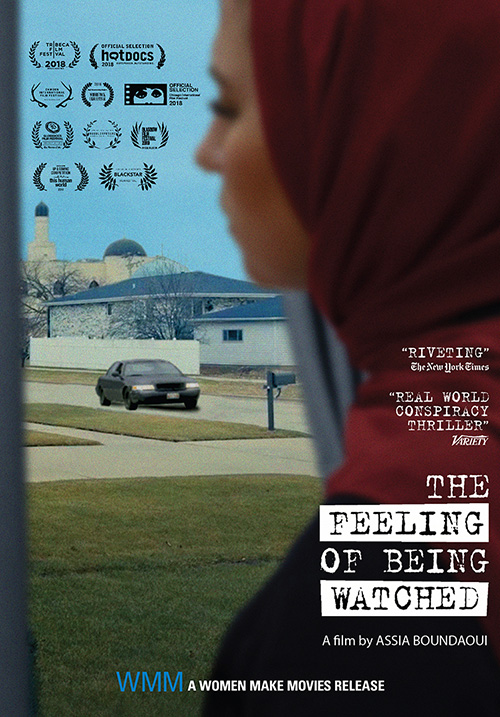
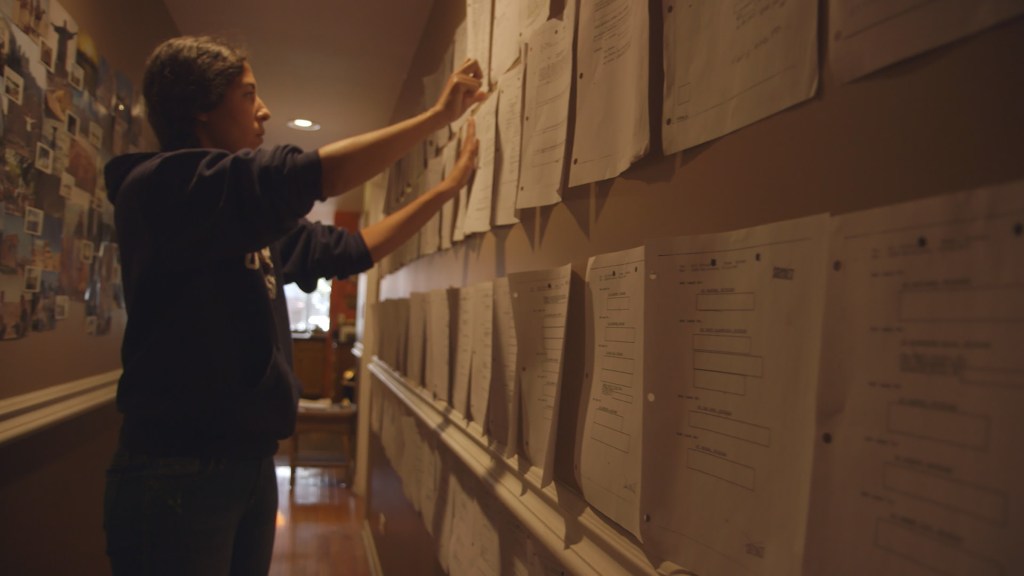
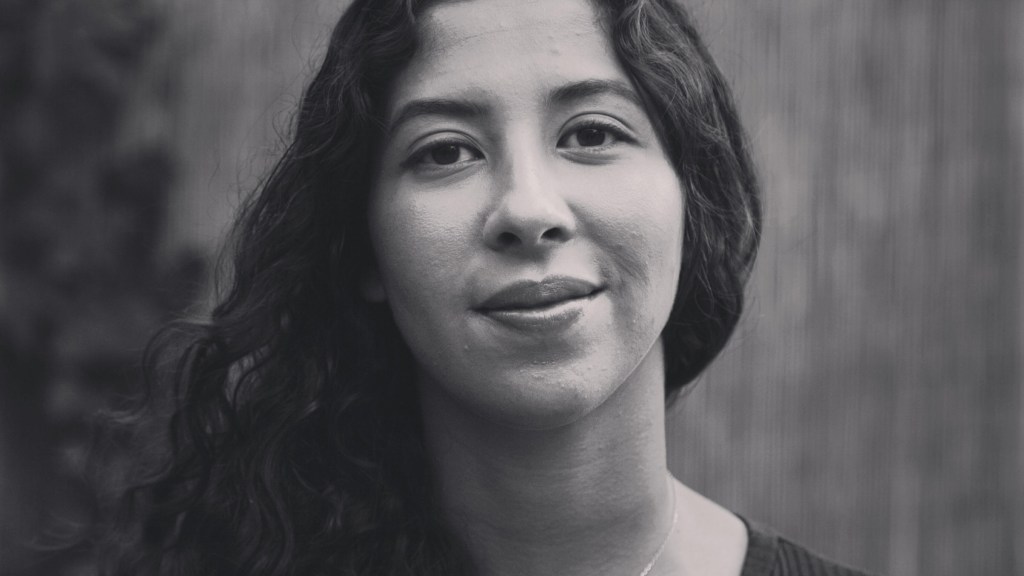


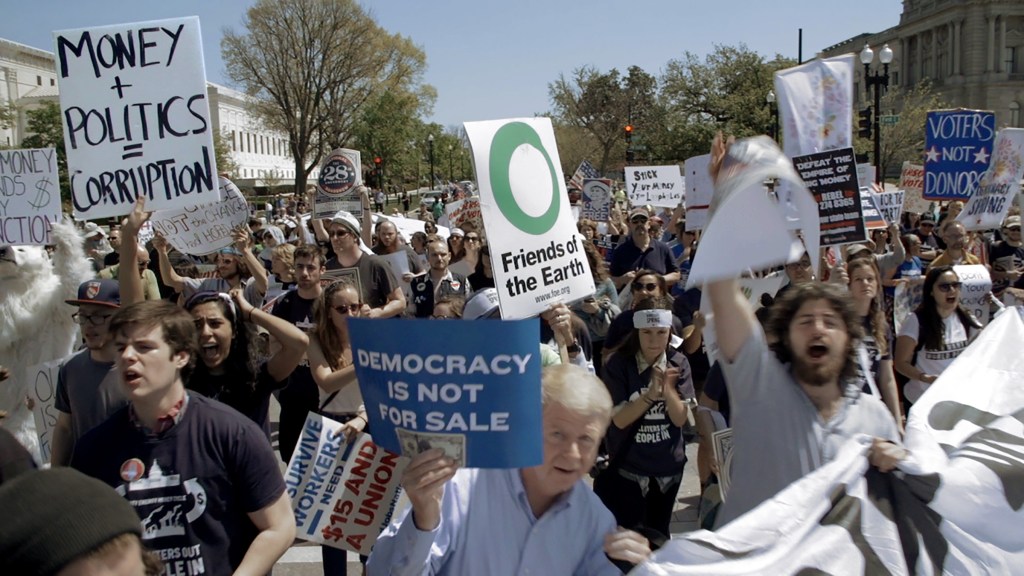

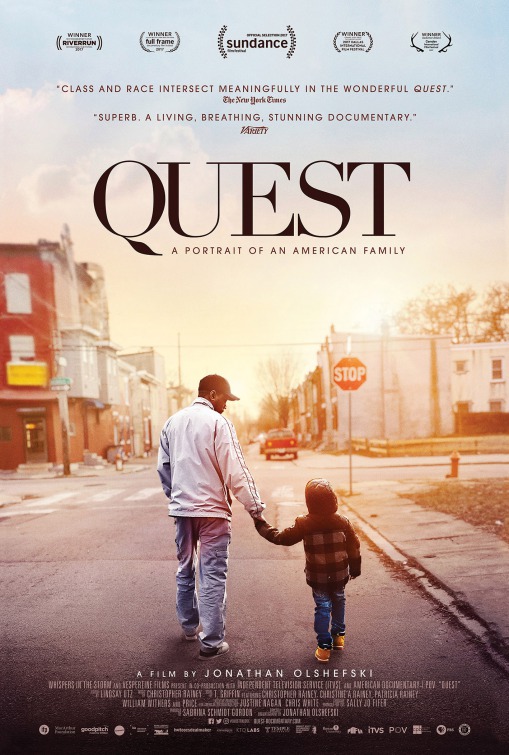
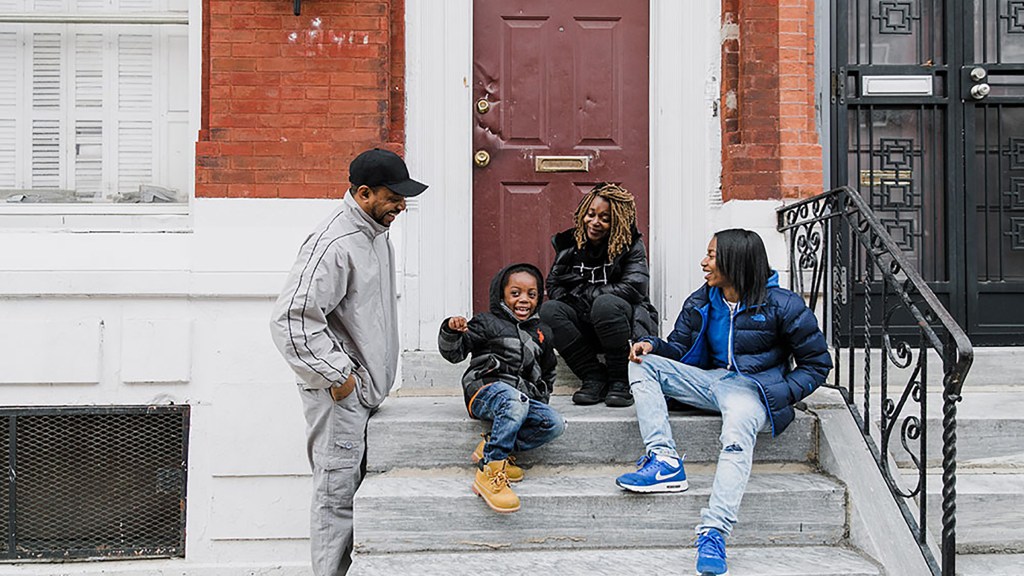





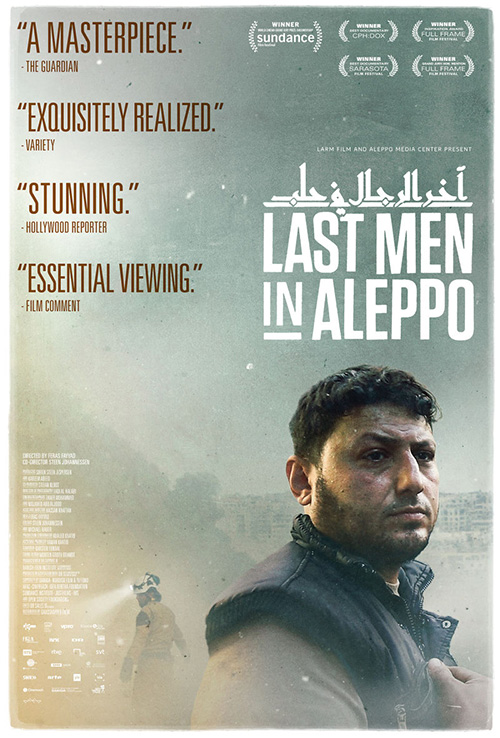


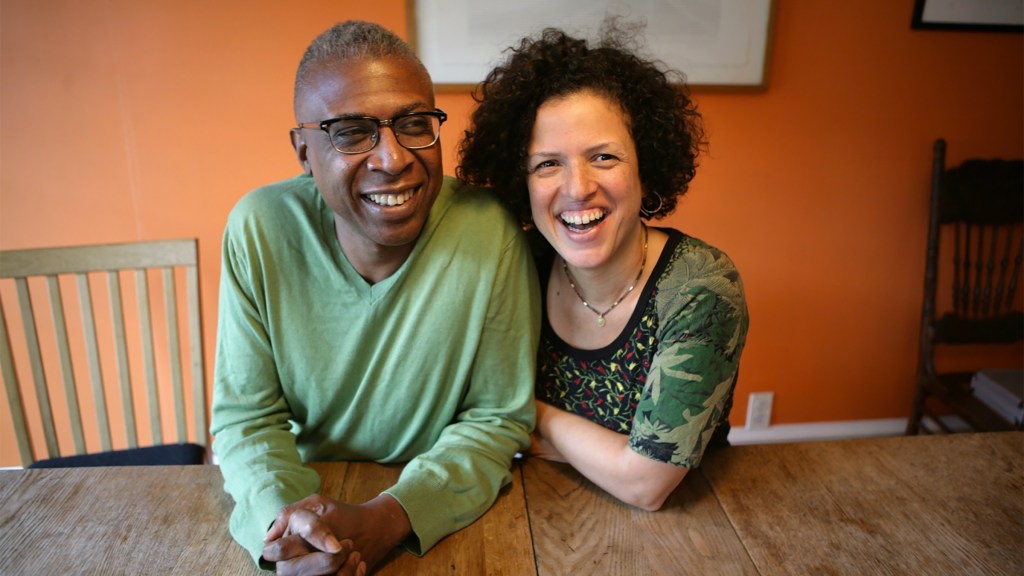

 Cultivate Cinema Circle