Class Divide – April 26th, 2017

Class Divide [2016]


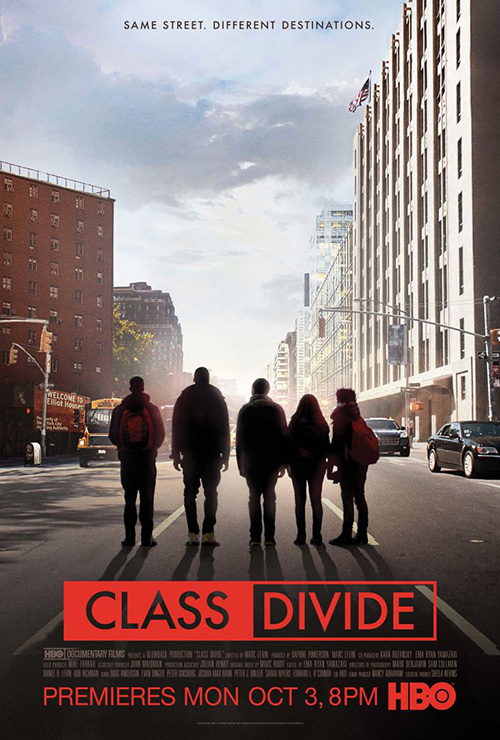
Please join us for a special screening of Marc Levin’s documentary Class Divide [2016].

  • Screening Date: Wednesday, April 26th, 2017 | 7:00pm
  • Venue: Burning Books
  • Specifications: 2016 / 74 minutes / English / Color
  • Director(s): Marc Levin
  • Print: Supplied by the filmmaker
  • Tickets: Free and Open to the Public
  • Extras: Stop in early for FREE Breadhive baked goods while supplies last!
  • Deal: Bring your ticket stubs and join us at The Black Sheep after the show for 2 for 1 drink specials

Event Sponsors:

Venue Information:

420 Connecticut St, Buffalo, NY 14213


Synopsis

Courtesy of HBO Films:

The thought-provoking documentary Class Divide is a timely look at the widening divide between the “haves” and “have nots.” Young people on both sides of the gap offer unique and honest insights that challenge common perceptions about inequality today.

In the final part of their trilogy about economic forces affecting ordinary people, director Marc Levin and producer Daphne Pinkerson (HBO’s Schmatta: Rags to Riches to Rags and Hard Times: Lost on Long Island) explore the effects of hyper-gentrification and rising economic disparity in one New York City neighborhood, which can be seen as a microcosm of the socioeconomic imbalances across the country, and the world. The film bears witness to the profound effects of gentrification and stagnant class mobility on young people who share a West Chelsea community — yet live in very different worlds — as they try to navigate this rapidly changing landscape.

At the intersection of West 26th Street and 10th Avenue in New York City, two communities are separated by much more than a boulevard. On one side are Avenues: The World School, an elite, state-of-the art private school with a $40,000-plus annual price tag, and multimillion-dollar luxury condos. On the other are the Elliott-Chelsea public-housing projects, home to thousands of underemployed and underserved residents mostly living below the poverty line.

Eight-year-old Rosa looks out from the housing projects to the other side of the street, where the children of privilege question how they landed on top. “My family is poor because we live in the projects,” she says. “I don’t have what I want, necessarily, but I do have people that I love.”

The for-profit Avenues: The World School, which opened in 2012, aims “to prepare children for international life.” This private school attracts children from New York’s 1% at an annual cost of more than $40,000. “In this neighborhood, I don’t think I can name five people who make over $40,000,” says Elliott-Chelsea resident Hyisheem. For a community with an unemployment rate of 50%, where an average family of four’s yearly income is roughly half the school’s tuition for a single student, living across from Avenues can be “like a tease and a smack in the face.”

Avenues is just one example of the way the neighborhood has been dramatically transformed. The High Line, a once-abandoned elevated railroad track, was reborn and turned into a wildly popular public park in 2009. Attracting five million people a year, The High Line has transformed a once-gritty area into the hottest neighborhood in NYC’s high-end real-estate market. “Every building is trying to outdo each other,” explains Community Board Committee co-chair Joe Restuccia.

However, many buyers in this current wave of gentrification seem to have no desire to integrate into the established lower-income community. Almost 40% of high-end residences have been sold to foreign or anonymous clients, and the average rent for Chelsea apartments has risen almost ten times faster than Manhattan as a whole, ousting many who can’t afford to keep up. “I just don’t understand why the old can’t be with the new,” says Yasmin Rodriguez, a lifelong West Chelsea resident and parent who is rapidly being priced out of her own neighborhood. “I have so much history here.”

Young people on both sides of the street struggle with the juxtaposition of “haves” and “have nots” and what those designations mean for their uncertain futures. On one side, the kids who live in Elliott-Chelsea housing bear witness to rising inequality, and the complex and intersecting issues of public education, affordable housing, immigration and employment opportunities that affect their lives.

While Avenues students seem to have it made, some worry they will never match their parents’ achievements, while being acutely aware that their status wasn’t earned. Avenues student Yasemin says, “Most people work hard,” but also acknowledges the obvious, asking, “Did you have that privilege awarded at birth, or did you not?” Across the street, many feel that Avenues is excluding the community by failing to accept scholarship students from public housing. “It’s not racism, it’s classism,” argues Hyisheem. “It’s the fact that you don’t have what they have.”

After meeting Elliott-Chelsea resident Juwan, Yasemin is inspired to create “115 Steps,” a photo and audio project featuring kids from both sides of the street. When Avenues opens its doors to Rosa and others for a tour, the hope in their faces is undeniable. The school’s decision to accept its first student from Elliott-Chelsea public housing speaks to a willingness to confront the imbalance between rich and poor in their own backyard, and is a hopeful sign that with continued conversation between students and community leaders, change can be embraced, yet managed in a way that preserves what makes New York City so unique: a mix of all kinds of humanity.

The High Line is a “place where everybody, regardless of background, regardless of income, can come together,” explains its co-founder, Joshua David. For kids on both sides of the street, this philosophy will be tested in a neighborhood where hyper-gentrification has brought two communities into close proximity, but with greater disparity than ever before.

Class Divide was directed by Marc Levin; producers, Daphne Pinkerson and Marc Levin; co-producers, Kara Rozansky and Ema Ryan Yamazaki. For HBO: senior producer, Nancy Abraham; executive producer, Sheila Nevins.

Tidbits:

  • Tribeca Film Festival – 2016

Director Interview

Courtesy of HBO Films:

HBO: Why did this feel like an appropriate topic for the third part of your documentary trilogy?

Marc Levin: My documentary film partner, Daphne Pinkerson, and I had made Schmatta: Rags to Riches to Rags on the rise and fall of the garment industry and then Hard Times: Lost on Long Island about the crash of 2008, and we were looking for the next subject. Schmatta profiled a generation of city factory workers who finally made enough money to send their children to college to become white-collar professionals and Hard Times followed this next generation to the suburbs. So the final film would show how only a small percentage of them would thrive in a world of growing inequality.

We were contemplating this one day while sitting on the High Line [in Chelsea, New York City] at the lookout point over 26th Street and 10th Avenue, where the architects had preserved an old billboard frame as an art installation. We were looking through the empty frame, and realized on one side was the renovated building housing the city’s newest elite private school; “Avenues: the World School” and on the other side were the projects — two sides of the street, two totally different worlds. Meanwhile, tourists were snapping photos, posing in the frame and waving to families and friends in Beijing, Rio, Paris and Sidney. Did they have any idea what was behind them? Then it hit us, what you see is all in how it’s framed. After all our searching we realized this was our starting point, right here in our own neighborhood.

HBO: What was it like filming there?

Marc Levin: I have lived in Chelsea for 40 years, so in a way I am one of the so-called “urban pioneers” who started to change this neighborhood from a manufacturing and flower district to a residential neighborhood. I have also had a studio on West 26th Street for 17 years. That building is part of the gentrification that has pushed rents to such exorbitant levels that, when my lease ends in two years, I honestly don’t know if I can still afford to keep my company in Chelsea. The point is, we see what’s happening, the hyper development, the gentrification, the displacement of long time businesses and residents, the income inequality — we see it from multiple perspectives. Looking out my window, I see an army of cranes, like huge mechanical insects reaching for the sky, as they begin construction of the largest private urban development project in U.S. history, Hudson Yards. Depending on the frame, you see the good, the bad and the ugly.

HBO: Does this story go beyond New York City?

Marc Levin: This film is a microcosm of what’s happening in cities across this country, and for that matter, across the globe. Major metropolitan areas all over the world are becoming gilded cages and investment opportunities for the global elite. The human mix, which is the fundamental ingredient in a vibrant city’s energy and magic, is being threatened.

HBO: What were the major challenges of making the film?

Marc Levin: It’s always a challenge to make a film about a major global trend in a new way that no one has ever done before. We researched a number of cities and towns all across the United States: We looked at the housing crash in Florida and the rapid gentrification by techies in San Francisco. But once we settled on the location, it was a great experience to dig so deeply into our own neighborhood. Everyone in Chelsea was feeling the effects of gentrification so it wasn’t difficult to start the conversation. Of course, there were some higher income parents who felt nothing good could come of looking at the rich and poor in the same film, and they declined to participate. But in the end, everyone involved felt they had become part of a movement to close the gap.

HBO: Why did you decide to tell the story through children?

Marc Levin: We didn’t start out with the focus on young people. Their perspectives emerged as the most refreshing and surprising way into the story. We told Sheila Nevins and Nancy Abraham at HBO Documentary Films what we were discovering, and that is when Sheila said to make them the focus of the film. It was fascinating to get a glimpse into the thinking of the next generation, and how they are grappling with these major trends.

HBO: What surprised you most about the kids?

Marc Levin: I think what was most surprising — especially to the young people themselves on both sides of the street — is that they had far more in common than not.

HBO: What do you think will be their major struggle growing up? What does the film tells us about the future?

Marc Levin: If we keep on this track there will be no middle class in the future. The kids in this neighborhood, no matter which side of the street they’re on, see and feel the rapid change all around them. How or if they choose to keep pace will be their major challenge.

HBO: What is the tone of the film?

Marc Levin: The film reveals the anxiety about the future on both sides of the street. And the final quote is certainly a cautionary statement. But I would say that the film is ultimately optimistic about our capacity to shift course, and revelatory about how to do it.


Director Bio

“There is always reason to hope. These kids embody that hope. Along with climate change, economic justice and inequality will be their generation’s great challenge.”

Courtesy of Blowback Productions:

Marc Levin is an award winning independent filmmaker who brings narrative and verite techniques together in his feature films, television series and documentaries. Among the many honors for his work, he has won the Grand Jury Prize at the Sundance Film Festival, the Camera D’Or at Cannes Film Festival, three National Emmys and four duPont-Columbia Awards.

His dramatic feature film, Slam, received international recognition for its seamless blending of the real world with a narrative flow. Hollywood Reporter wrote, “Brace yourself for a slam-dunk of a movie, in an in-your-face cinema verite-style that makes Godard’s Breathless seem like a cartoon.” Slam won the Grand Jury Prize at the Sundance Film Festival and the Camera D’Or at Cannes in 1998.

Levin’s “Brick City”, a groundbreaking docu-series about the city of Newark, followed Mayor Cory Booker and the people on the frontlines of a city struggling to change. Executive produced with long-time colleague Mark Benjamin and Academy Award-winner Forest Whitaker, the five-hour series aired its first season on the Sundance Channel in September 2009. It won the 2010 Peabody Award and was nominated for an Emmy for Exceptional Merit in Nonfiction Filmmaking, as well as a 2010 Golden Eagle Cine Award and an NAACP Image Award. The second season premiered on January 30, 2011. TV Guide wrote, “’Brick City’ plays like a verité version of ‘The Wire’, one of TV’s finest series ever. It is the ultimate reality show.”

“Street Time”, a television series produced by Columbia / Tristar for Showtime, received critical acclaim for its authenticity and verite style. Levin executive produced the series and directed ten episodes. The show stars Rob Morrow, Scott Cohen, Erica Alexander and Terrence Howard. The Los Angeles Times called it “some of the most seductive television ever: vivid, distinctive, explosive storytelling . . .”

Levin’s documentary feature, Godfathers and Sons, was part of the highly regarded Martin Scorsese PBS series, “The Blues”. Scorsese recruited an international team of directors with both feature and documentary experience: Charles Burnett, Clint Eastwood, Mike Figgis, Richard Pierce and Wim Wenders. Variety called Levin’s show “the crown jewel in the Scorsese series.”

In the late nineties, Levin created a hip-hop trilogy beginning with Slam, a searing prison drama, which starred Saul Williams, Sonja Sohn and Bonz Malone. Whiteboys, a black comedy about white kids who want to be black rappers, starred Danny Hoch, Dash Mihok, Mark Webber and Piper Perabo. Brooklyn Babylon, a fable inspired by the “Song of Songs,” starred Tariq Trotter and Bonz Malone, and featured music by the legendary Grammy winners The Roots.

In Twilight Los Angeles, an adaptation of Anna Deavere Smith’s one-woman show, Levin fused a Broadway play with a documentary look at the LA riots. Twilight Los Angeles premiered at the Sundance 2000 Film Festival and was selected as the opening film of the International Human Rights Film Festival at Lincoln Center.

In 1992 Levin directed Oscar nominee Robert Downey, Jr. in The Last Party, a gonzo look at the Presidential campaign, weaving together the personal and the political fortunes of Downey and Bill Clinton.

Levin and his documentary film partner, Daphne Pinkerson, have a twenty-year working relationship with HBO. Their most recent film, Hard Times: Lost on Long Island, about white-collar professionals hit by the Great Recession, premiered on HBO in July 2012. It won the Audience Award for Best Documentary Film at the Hamptons International Film Festival and was nominated for a News and Documentary Emmy for Outstanding Business and Economic Reporting – Long Form. The Baltimore Sun wrote, “One of the most important hours of TV that the medium will offer this year.”

TRIANGLE: Remembering the Fire, commemorating the 100th anniversary of the Triangle shirtwaist fire of 1911, won a dupont-Columbia Award in 2011. SCHMATTA: Rags to Riches to Rags, a feature documentary exploring the rise and fall of New York’s fabled Garment Center as a microcosm for the economic shocks that have changed our lives, aired in October 2009. Heir to an Execution, a documentary feature following Ivy Meeropol’s journey on the 50th anniversary of the execution of her grandparents, Julius and Ethel Rosenberg, was in competition at the Sundance film festival and aired on HBO in 2004. During the 1990’s, they produced a number of films for HBO’s “AMERICA UNDERCOVER” series, including Mob Stories, Prisoners of the War on Drugs, Execution Machine: Texas Death Row, Soldiers in the Army of God, and Gladiator Days. Thug Life in D.C. won the 1999 National Emmy for Outstanding Non-Fiction Special. Gang War: Bangin’ in Little Rock won theCableACE Award for Best Documentary Special of 1994. The sequel, Back in the Hood, premiered on HBO ten years later.

For HBO Sports, Levin produced and directed “Prayer for a Perfect Season”, on the top high school basketball team in the country. It premiered in the Fall of 2011.

In 1997, Levin was awarded the duPont-Columbia award for CIA: America’s Secret Warriors, a three-part series that aired on the Discovery Channel.

Levin has also produced and directed a number of television specials for one of America’s most respected journalists, Bill Moyers. In 1988 he won a national Emmy award as a producer/editor of Moyers’ Secret Government – The Constitution in Crisis. The Home Front with Bill Moyers, which he produced and directed, was honored with the duPont-Columbia Gold Baton Award.

He and his father, Al Levin, teamed up on Portrait of an American Zealot, which was made part of the Museum of Modern Art’s permanent film collection.

Levin made his on-camera debut in Protocols of Zion, his street-level look at the rise of anti-Semitism since 9/11 and the renewed popularity of the anti-Semitic text, The Protocols of the Elders of Zion. The film premiered at the Sundance Film Festival and was released theatrically in the fall of 2005 and on HBO the spring of 2006.

Mr. Untouchable, the story of the original Black Godfather, Harlem heroin kingpin, Nicky Barnes, was released in theatres in 2007. It tells the true-life story of a real American Gangster from the point of view of law enforcement, associates, and Nicky Barnes, appearing for the first time in over a quarter century.”It makes American Gangster look like a fairy tale,” declared E!.

Levin has also assumed the role of Executive Producer on a number of projects. In 2008 he was Executive Producer alongside Beyoncé Knowles on Cadillac Records, the Chess Records story starring Jeffrey Wright, Adrian Brody, and Beyoncé. In the same year he Exec Produced the indie feature documentary Captured, the story of artist activist Clayton Patterson, the man who video-taped the 1988 Tompkins Square Park riot and who has dedicated his life to documenting the final era of raw creativity and lawlessness in New York City’s Lower East Side, a neighborhood famed for art, music and revolutionary minds. Levin Exec Produced a follow-up feature in 2010, Dirty Old Town, directed by his son, Daniel B. Levin, and Jenner Furst.

Levin and Benjamin have partnered in Brick City TV to continue their docu-series work this year with three projects. BET’s Second Coming? Will Black America Decide 2012 was part of the Network’s election campaign coverage and won the 2013 Walter Cronkite Award for Excellence in Television Political Journalism.

“Jersey Strong”, a 10-part docu-soap set in Newark, New Jersey, premiered September 2013 on Participant Media’s new cable network, Pivot.

Most recently, they have partnered with Robert Redford to make CHICAGOLAND, an 8-hour docu-series for CNN, which is currently in production.

Levin also periodically directed episodes of the classic TV series, “Law and Order”.

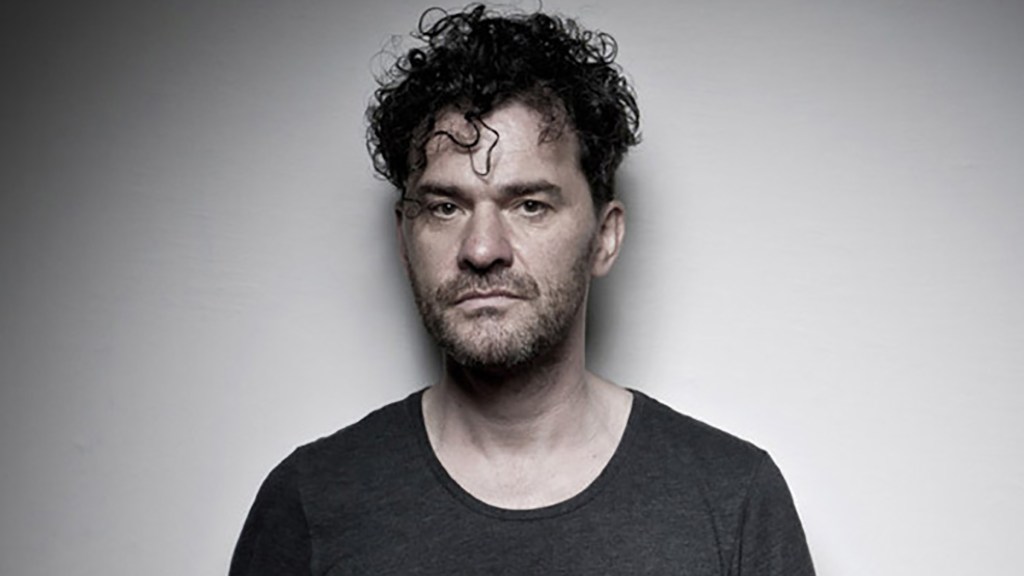
photo by Buck Ennis

Filmography:

  • Stockton on My Mind (2020)
  • One Nation Under Stress (2019)
  • Chasing the Thunder (2018)
  • Rikers (2016)
  • Class Divide (2016)
  • Freeway: Crack in the System (2015)
  • Hard Times: Lost on Long Island (2012)
  • Prayer for a Perfect Season (2011)
  • Schmatta: Rags to Riches to Rags (2009)
  • Mr. Untouchable (2007)
  • Protocols of Zion (2005)
  • Back in the Hood: Gang War 2 (2004)
  • Gladiator Days: Anatomy of a Prison Murder (2002)
  • Brooklyn Babylon (2001)
  • The Kennedy Center Presents: Speak Truth to Power (2000)
  • Soldiers in the Army of God (2000)
  • Twilight: Los Angeles (2000)
  • Whiteboyz (1999)
  • Thug Life in D.C. (1998)
  • Slam (1998)
  • The Execution Machine: Texas Death Row (1997)
  • CIA: America’s Secret Warriors (1997)
  • Prisoners of the War on Drugs (1996)
  • Gang War: Bangin’ in Little Rock (1994)
  • Mob Stories (1993)
  • The Last Party (1993)
  • The Home Front (1991)
  • Blowback (1991)

Links

Here is a curated selection of links shared on our Facebook page for additional insight/information:

  • Download this Educators Guide from REACT to FILM for suggestions about how to discuss the issues raised in the film in the classroom. – link
  • 4/13/17 – “What Class Divide does exceptionally well is capture the sense of change at warp speed. In their bones, the public-housing kids know that it’s only a matter of time before they’re forced to leave. There’s simply too much hunger for development to withstand. And if that happens, it will come as quickly as the other shifts the neighborhood has endured: in a New York minute.” Daniel M. Gold, The New York Timeslink

Hooligan Sparrow – January 25th, 2017

Hooligan Sparrow [2016]


Please join us for a special screening of Nanfu Wang’s Oscar short-listed documentary Hooligan Sparrow [2016]. This event is a collaboration with POV, PBS’ award-winning nonfiction film series.

  • Screening Date: Wednesday, January 25th, 2017 | 7:00pm
  • Venue: Burning Books
  • Specifications: 2016 / 84 minutes / Mandarin with subtitles / Color
  • Director(s): Nanfu Wang
  • Print: Supplied by POV
  • Tickets: Free and Open to the Public
  • Extras: Stop in early for FREE Breadhive baked goods while supplies last!
  • Deal: Bring your ticket stubs and join us at The Black Sheep after the show for 2 for 1 drink specials

Event Sponsors:

Venue Information:

420 Connecticut St, Buffalo, NY 14213


Synopsis

Courtesy of website:

The danger is palpable as intrepid young filmmaker Nanfu Wang follows maverick activist Ye Haiyan (a.k.a Hooligan Sparrow) and her band of colleagues to Hainan Province in southern China, to protest the case of six elementary school girls who were sexually abused by their principal. Marked as enemies of the state, the activists are under constant government surveillance and faced interrogation, harassment, and imprisonment. Sparrow, who gained notoriety with her advocacy work for sex workers’ rights, continues to champion girls’ and women’s rights and arms herself with the power and reach of social media.

Filmmaker Wang becomes a target along with Sparrow, as she faces destroyed cameras and intimidation. Yet she bravely and tenaciously keeps shooting, guerrilla-style, with secret recording devices and hidden-camera glasses, and in the process, she exposes a startling number of undercover security agents on the streets. Eventually, through smuggling footage out of the country, Wang is able tell the story of her journey with the extraordinary revolutionary Sparrow, her fellow activists, and their seemingly impossible battle for human rights.

Hooligan Sparrow is Nanfu Wang’s feature debut. It’s executive produced by Andy Cohen, Executive Producer for Ai Weiwei: Never Sorry (Special Jury Prize, Sundance 2012) and Alison Klayman, Director/Producer of Ai Weiwei: Never Sorry; co-written by Mark Monroe, an award-winning documentary filmmaker and six-time Sundance veteran: The Cove (Winner, Best Documentary 2010 Academy Awards & Best Documentary Script, W.G.A. 2010); with original score by Nathan Halpern, Rich Hill (Grand Jury Prize, 2015), and graphics by Garry Waller, Watchers of the Sky (Special Jury Prize, Sundance 2014).

Tidbits:

  • Sundance Film Festival – 2016
  • Independent Spirit Awards – 2017 – Nominee: Truer Than Fiction Award

Director Statement

Courtesy of publicist:

I first heard about Ye Haiyan (who is known more widely by her nickname, Hooligan Sparrow, in China) a few years ago when I read an article online about a Chinese woman who was offering to work as a sex worker – for free. I’ve lived in China most of my life, and I’ve always been interested in issues related to sex workers’ rights, so I was curious to learn more about this woman and what motivated her. Sparrow had a long history of advocating for women’s rights in China, and her offer of free sex in the Ten Yuan Brothel stemmed from a desire to expose the terrible working conditions in the brothel and also the desperate lives of the migrant workers who visited them.

As I researched Sparrow, I learned that like me, she came from a poor farming village with limited access to education. I appreciated her respect for people whom Chinese society rejected, and I shared her desire to understand their lives more deeply. I reached out to her via e-mail in early 2013 to see if she’d be willing to let me film her as part of a larger video project about sex workers in China. She replied, “When you’re in China, we’ll talk.”

On May 14th, 2013, I returned to China from the U.S where I had lived for two years at the time. When I landed and got a hold of her, she was in the midst of preparing for a public protest with a number of other activists. Two government officials in southern China had taken six schoolgirls to a hotel for a night, and the local government seemed poised to hand down a perfunctory sentence. Sparrow and her fellow activists wanted justice to be served for the girls and their families, so they planned to stage a public demonstration denouncing the government and the officials, a move that could land all of them in prison.

The chain of events I witnessed in the months that followed the protest shocked me. I’ve never had illusions about fairness in China’s justice system or the accountability of its government. But I never expected to see ordinary people turn on their neighbors who were fighting for their rights. I never expected to be attacked by screaming mobs just for filming on the street. I never expected to be interrogated by national security agents, and that my family and friends would be harassed and threatened by secret police.

But this is the China I saw.


Director Bio

Courtesy of publicist:

Nanfu Wang is an independent filmmaker based in New York City. Her feature debut Hooligan Sparrow premiered at Sundance Film Festival in 2016. Wang was born in a remote farming village in Jiangxi Province, China. After losing her father at the age of 12, Wang was forced to forgo formal education and take whatever work she could to support her family. Unable to afford high school, she studied at a vocational school until she secured work as a teacher at a primary school at the age of 16, teaching herself English during her spare time.

After several years of working, Wang was admitted to a university’s Continuing Education Program, where she studied English literature. At the age of 22, she was awarded a full fellowship to attend a graduate program in English Language and Literature at Shanghai University. Realizing that she wanted to help tell the stories of people who came from backgrounds like hers, Wang decided to pursue graduate film studies, first in the journalism school at Ohio University and later at New York University’s documentary program. Wang holds three master degrees from New York University, Ohio University, and Shanghai University.

Since completing her studies, Wang has produced short films that have been distributed on many platforms and translated into several languages. Her work often features the stories of marginalized or mistreated people. Wang continues to seek out and tell the stories of people who have been ignored by their societies. Wang is a recipient of the Sundance Documentary Fund and Bertha Britdoc Journalism Fund, and a Sundance and IFP supported filmmaker.

Filmography:

  • In the Same Breath (2021)
  • One Child Nation (2019)
  • I Am Another You (2017)
  • Hooligan Sparrow (2016)

Links

Here is a curated selection of links shared on our Facebook page for additional insight/information:

  • Feel free to check out POV’s Community Engagement & Education Discussion Guide here – link
  • 12/20/16 – “Hooligan Sparrow is a vital reminder of the importance of artistic and journalistic freedom, and that telling certain stories can be an inherently perilous proposition.” Katie Walsh, The Playlistlink
  • 12/21/16 – Both Hooligan Sparrow and CCC alum Audrie & Daisy turned up in Tom Roston’s top docs of 2016 list! – link
  • 1/4/17 – “A whistleblowing documentary made with fearless guerrilla cunning …” Owen Gleiberman, Varietylink
  • 1/5/17 – Feng: “Multiple people were arrested and detained in the course of the documentary, including Ye Haiyan and other activists. Do you feel responsible for bringing attention to them?”
  • Wang: “I have had that conversation with the activists from the day I started filming. They all agreed more exposure could potentially protect them more. That’s how I felt too. Every move the government does is watched by the entire world.”
  • NPR’s Emily Feng speaks with Hooligan Sparrow director Nanfu Wang – link
  • 1/15/17 – “Looking back on her summer of living dangerously, she [Hooligan Sparrow director Nanfu Wang] muses, ‘It was scary but from a documentary filmmaking standpoint, I’m grateful things happened the way they did. If I ended up making a story exactly the same as I imagined it at the start, that would be very boring. For me, this is the charm of documentary filmmaking.'” – link
  • 1/18/17 – “Chinese Feminist ‘Hooligan Sparrow’ Faces Eviction by Beijing Authorities” Radio Free Asia – link
  • 1/21/17 – Last week at the tenth annual documentary centered Cinema Eye Honors, the prize for Outstanding Debut Feature went to Oscar shortlister Hooligan Sparrow by Nanfu Wang! – link
  • 1/23/17 – China Film Insider conducted a new extensive interview with director Nanfu Wang about Hooligan Sparrow and exposing sexual abuse in China – link
  • 3/12/17 – This weekend, Nanfu Wang (director of CCC alum Hooligan Sparrow)’s new film I Am Another You debuts in competition at SXSW. No Film School listed it as one of the 10 Most Aniticipated Movies at SXSW 2017! – link
  • 4/18/17 – Congrats to CCC alums Audrie and Daisy & Hooligan Sparrow, both of whom were honored at the Peabody Awards! – link

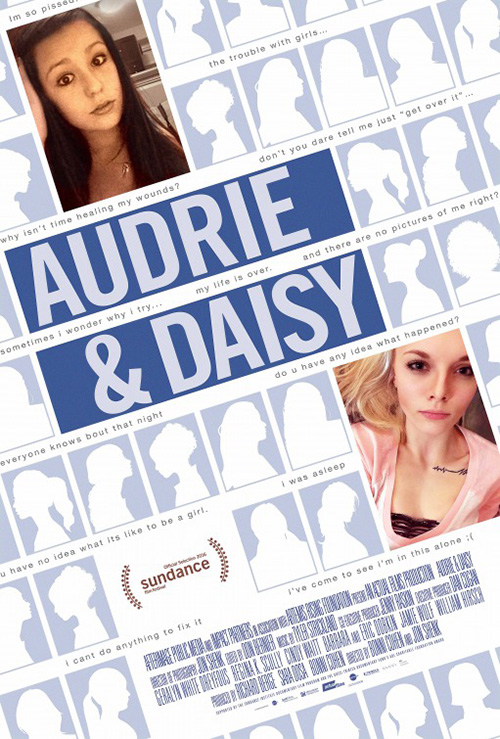
Audrie & Daisy – October 12th, 2016

Audrie & Daisy [2016]


Please join us for a special screening of Bonni Cohen and Jon Shenk’s Sundance-nominated documentary Audrie & Daisy [2016].

  • Screening Date: Wednesday, October 12th, 2016 | 7:00pm
  • Venue: Burning Books
  • Specifications: 2016 / 95 minutes / English / Color
  • Director(s): Bonni Cohen & Jon Shenk
  • Print: Supplied by film.sprout
  • Tickets: Free and Open to the Public
  • Extras: Stop in early for FREE Breadhive baked goods while supplies last!
  • Deal: Bring your ticket stubs and join us at The Black Sheep after the show for 2 for 1 drink specials

Event Sponsors:
Venue Information:

420 Connecticut St, Buffalo, NY 14213


Synopsis

Courtesy of website:

Audrie & Daisy is an urgent real-life drama that examines the ripple effects on families, friends, schools and communities when two underage young women find that sexual assault crimes against them have been caught on camera. From acclaimed filmmakers Bonni Cohen and Jon Shenk (The Island President, The Rape of Europa), Audrie & Daisy — which made its world premiere at the 2016 Sundance Film Festival — takes a hard look at American’s teenagers who are coming of age in this new world of social media bullying, spun wildly out of control.

Tidbits:

  • Sundance Film Festival – 2016

Directors Statement

Courtesy of film’s website:

As directors and parents of teenagers, we are struck by the frequency of sexual assaults in high schools across the country and have been even more shocked by the pictures and videos, posted online – almost as trophies – by teens that have committed these crimes. This has become the new public square of shame for our adolescents. Unfortunately, the story of drunken high school parties and sexual assault is not new. But today, the events of the night are recorded on smartphones and disseminated to an entire community and, sometimes, the nation. Such was the case for Audrie Pott and Daisy Coleman, two teenage girls, living thousands of miles apart but experiencing the same shame from their communities. While the subject matter is dark, we are inspired by these stories to make a film that captures these truths but can also help audiences digest the complexities of the world teenagers live in today.

As we began our research, the Steubenville, Ohio High School rape case was underway. At the time, there was wide criticism directed at national news outlets for their lack of focus on the victim and perceived sympathy for the perpetrators. As more cases have come to light since then, this damaging attitude – stemming from what many refer to as pervasive “rape culture” in American society – has remained largely in tact. However, journalists need stories and stories require characters. As is the norm in underage rape cases, in Steubenville, the survivor chose (understandably) to maintain her anonymity as a “Jane Doe.” We decided then that a genuinely emotional, meaningful film about teenage sexual assault required the affirmative on- camera participation of the survivor. Our main subjects, Daisy Coleman and Audrie Pott, involuntarily lost their anonymity when rumors, insults and photos about their assaults circulated around school and on social media. Identified by name and subjected to online character assassination, Daisy decided with great courage to speak out publicly. Audrie’s parents chose to go public with their daughter’s story after the unspeakable tragedy of Audrie’s suicide, as well. Thus, using their deeply personal – and, now public – stories as a starting point, we launched into production of our film.


Directors Bio

Courtesy of Actual Films:

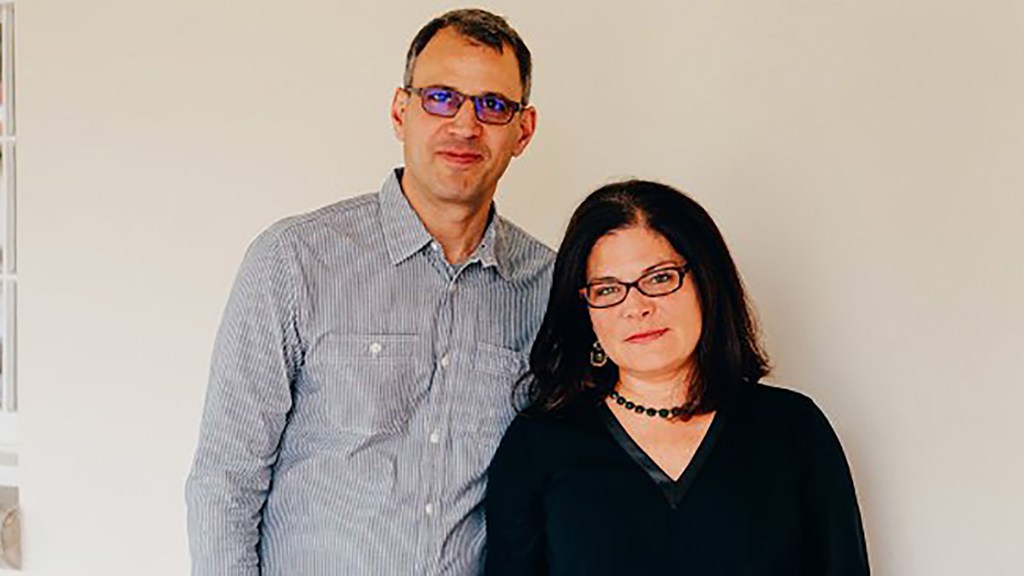
Bonni Cohen started Actual Films in 1998 with her partner and husband, Jon Shenk. Bonni recently produced The Island President (2011), for which she was nominated for Theatrical Documentary Producer of the Year by the Producers Guild of America. The film premiered at the Telluride Film Festival, received the Audience Award at the Toronto International Film Festival, and won the Pare Lorentz Award from the International Documentary Association. She co-directed and produced Inside Guantanamo for National Geographic which went on to be nominated for a best documentary Emmy in 2009. Bonni co-directed and produced The Rape of Europa, a feature-length documentary for primetime PBS which was nominated for two Emmys and short-listed for the Academy Awards. The film is an adaptation of Lynn Nicholas’ National Book Award winning history of the same name.

Bonni also just produced Wonders Are Many, a film by Jon Else about the making of the John Adams’ opera, Doctor Atomic. It had its premiere at the 2008 Sundance Film Festival and had its’ national television broadcast on PBS’ Independent Lens series. She also produced and directed a number of films for a PBS series about social entrepreneurs called The New Heroes, broadcasting in June, 2005. In 2004, Bonni co-produced a film about Afghanistan’s constitutional process for PBS’ Wide Angle series. She also produced and directed a one-hour special for national PBS entitled The Nobel: Visions of Our Century, an analysis of 100 years of the Nobel prize told from the perspectives of 11 different Nobel laureates. For the BBC Correspondent series, she directed and produced Eye of the Storm, an intimate, vérité portrait of United Nations Secretary General Kofi Annan that follows his diplomatic efforts from Baghdad to Nigeria to New York. Eye of the Storm has been shown around the world in over 125 countries.. In addition to Actual Films, Bonni is the co-founder of the Catapult Film Fund with Lisa Kleiner Chanoff. The fund gives away development grants to documentary films. Before coming to documentary film, Bonni worked as a journalist for Reuters Television and was based in London and Jerusalem. She lives in San Francisco with her husband Jon and their children Abe and Anabel.

Bonni earned a Masters degree in Documentary Film from Stanford University and a BA in International Relations from Tufts University.

Filmography:

  • Athlete A (2020)
  • An Inconvenient Sequel: Truth to Power (2017)
  • Audrie & Daisy (2016)
  • The Rape of Europa (2006)
  • Kofi Annan: Eye of the Storm (1998)

Jon Shenk is an Emmy-winning documentary filmmaker, cinematographer, and new member of the Academy Motion Pictures, Arts, and Sciences. His features include The Island President (2012), Lost Boys of Sudan (2004), and The Beginning (1999). His films have won The Independent Spirit Award and Best Documentary at Toronto, and have made the Oscar short-list. His work as a director of photography includes the Academy Award-winning, Smile Pinki.

The Island President tells the dramatic story of Maldivian President Mohamed Nasheed’s quest to save his country from climate change. The film won the Best Documentary/People’s Choice Award at The Toronto International Film Festival, The Sundance Sustainability Award, and the IDA Pare Lorenz Award in 2012.

Blame Somebody Else (2007) is the story about the murder of twelve Nepalese men who were trafficked and murdered during the Iraq war. The film, made for PBS, won the an Emmy for Outstanding Feature Story.

Lost Boys of Sudan (2004) follows two young refugees of Sudan’s civil war through their first year in America. The received the Independent Spirit Award, and aired on PBS/POV.

He co-directed and photographed Democracy Afghan Style (2004), a PBS/ITVS/Arte film about the post-war constitutional process in Afghanistan. In 2005, he directed and photographed segments for The New Heroes (PBS). He also directed and photographed The Beginning (1999), a chronicle of George Lucas’s complex creative process during the making of Star Wars: Episode I that was said to be “the best behind-the-scenes documentary ever made.” Shenk has produced and photographed dozens of documentaries for PBS, the BBC, A&E, Bravo, CBS, NBC, and National Geographic.

He earned his Masters in Documentary Filmmaking from Stanford University in 1995 and his B.A. from Yale in 1991.

Filmography:

  • Athlete A (2020)
  • An Inconvenient Sequel: Truth to Power (2017)
  • Audrie & Daisy (2016)
  • The Island President (2011)
  • Lost Boys of Sudan (2003)

Links

Here is a curated selection of links shared on our Facebook page for additional insight/information:

  • 9/9/16 – Featurette about Tori Amos’ involvement in writing “Flicker” for Audrie & Daisy:
  • 9/26/16 – “We really were kind of fighting hard artistically and aesthetically against how some of these anonymity ideas sort of come across in film, and we didn’t want like a big, black box over them, and we didn’t want to cast them in a shadow which criminalizes their look more than we wanted to do. And we really wanted to keep them as human as possible and let them be in the film anonymous but with human quality.” Bonni Cohen, co-director of Audrie & Daisy, NPR All Things Considered – link
  • 9/29/16 – “The documentary has the potential to transform the way the viewer might think about rape. It underlines the violence of the act, the lack of empathy or remorse among the perpetrators, who are capable of awful things behind closed doors. It is no longer “just a rape”. It is a horrifying, brutal act of control that has devastating effects on victims and survivors.” Rachael Revesz, The Independentlink
  • 10/07/16 – “The film hit me to the core. I found myself walking a thought through, a thought I hadn’t really given proper attention to, despite my motherhood and constant interaction with the community of sexual-assault survivors. By that I mean the filmmakers helped me confront what is happening to 12-, 13-, 14-year-olds by their peers and their communities. It’s the same old mechanisms of shaming and bullying, but amplified by digital footage, social media and moral attrition.” Tori Amos on Audrie & Daisy, Los Angeles Timeslink
  • 10/09/16 – Hammer to Nail spoke w/ filmmakers behind Audrie & Daisylink
  • 12/18/16 – Cultivate Cinema Circle alum Audrie & Daisy has been nominated by the Women Film Critics Circle for Best Documentary By or About Women! – link
  • 12/21/16 – Both Hooligan Sparrow and CCC alum Audrie & Daisy turned up in Tom Roston’s top docs of 2016 list! – link
  • 4/18/17 – Congrats to CCC alums Audrie and Daisy & Hooligan Sparrow, both of whom were honored at the Peabody Awards! – link

How to Let Go of the World: and Love All the Things Climate Can’t Change – August 24th, 2016

How to Let Go of the World: and Love All the Things Climate Can’t Change [2016]


Please join us for a special screening of Josh Fox’s Sundance favorite documentary How to Let Go of the World: and Love All the Things Climate Can’t Change [2016].

  • Screening Date: Wednesday, August 24th, 2016 | 8:00pm
  • Venue: Burning Books
  • Specifications: 2016 / 125 minutes / English / Color
  • Director(s): Josh Fox
  • Print: Supplied by ro*co films
  • Tickets: Free and Open to the Public
  • Extras: Stop in early for FREE Breadhive baked goods while supplies last!
  • Deal: Bring your ticket stubs and join us at The Black Sheep after the show for 2 for 1 drink specials

Event Sponsors:

Venue Information:

420 Connecticut St, Buffalo, NY 14213


Synopsis

Courtesy of film’s website:

In How to Let Go of the World and Love All The Things Climate Can’t Change, Oscar Nominated director Josh Fox (Gasland) continues in his deeply personal style, investigating climate change – the greatest threat our world has ever known. Traveling to 12 countries on 6 continents, the film acknowledges that it may be too late to stop some of the worst consequences and asks, what is it that climate change can’t destroy? What is so deep within us that no calamity can take it away?

Tidbits:

  • Sundance Film Festival – 2016

Director Bio

Courtesy of Sundance:

Josh Fox is best known as the writer/director of Gasland and Gasland Part II. Gasland was nominated for the 2011 Academy Award for Best Documentary Feature, and won the 2011 Emmy Award for Outstanding Directing for Nonfiction Programming and the 2010 Sundance Film Festival Special Jury Prize (Documentary). Fox is the recipient of the 2010 LennonOno Grant for Peace and has toured to over 350 cities worldwide in support of the global anti-fracking movement.

Filmography:

  • The Truth Has Changed (2021)
  • Awake: A Dream from Standing Rock (2017)
  • How to Let Go of the World: and Love All the Things Climate Can’t Change (2016)
  • DIVEST! the Climate Movement on Tour (2016)
  • Gasland Part II (2013)
  • Gasland (2010)
  • Memorial Day (2008)

Links

Here is a curated selection of links shared on our Facebook page for additional insight/information:

  • 6/24/16 – Too many inspiring nuggets of wisdom in this interview with Josh Fox to pick 1. A must-read (courtesy of TakePart) – link
  • 6/27/16 – “It’s more of an action adventure movie than your typical climate change film” Josh Fox live on the Brian Lehrer Show – link
  • 7/29/16 – “A one-word assessment of this documentary: Tough. As in, tough to watch. Tough to consider. Tough to ignore.” Ken Jaworowski, The New York Timeslink
  • 8/9/16 – “‘We are not drowning, we are fighting!’ This was where the protest tipped out of the symbolic and into something actual. This was the fight. This was how you stop a wave from crashing and destroying your home, pulling your family out to sea. This was how you do it.” Josh Fox, Democracy Now!link
  • 8/25/16 – Once you’ve seen the film, the director himself has some suggestions as to what you can do. – link

Do Not Resist – July 27th, 2016

Do Not Resist [2016]


Please join us for a special screening of Craig Atkinson’s Tribeca-winning documentary Do Not Resist [2016].

  • Screening Date: Wednesday, July 27th, 2016 | 8:00pm
  • Venue: Burning Books
  • Specifications: 2016 / 75 minutes / English / Color
  • Director(s): Craig Atkinson
  • Print: Supplied by Vanish Films
  • Tickets: Free and Open to the Public
  • Extras: Stop in early for FREE Breadhive baked goods while supplies last!
  • Deal: Bring your ticket stubs and join us at The Black Sheep after the show for 2 for 1 drink specials

Event Sponsors:

Venue Information:

420 Connecticut St, Buffalo, NY 14213


Synopsis

Courtesy of press kit:

In Do Not Resist, Craig Atkinson (cinematographer – Detropia) makes a dazzling directorial debut with jaw dropping access. From the riots in Ferguson to disagreements on Capitol Hill, whether he is following a heavily armored SWAT team as they issue a no-call warrant or sitting in on a meeting during which the town council of Concord, New Hampshire votes to utilize a US Homeland Security grant to purchase a tank, Atkinson delivers a unique and powerful image of the stories and characters surrounding an issue that has billions of dollars — and lives — hanging in the balance. Using footage shot over two years, in 11 states, Do Not Resist reveals a rare and surprising look into the increasingly disturbing realities of American police culture.

From Tribeca by Deborah Rudolph:

Do Not Resist is an urgent and powerful exploration of the rapid militarization of the police in the United States. Opening on startling on-the-scene footage in Ferguson, Missouri, the film then broadens its scope to present scenes from across the country—a conference presentation where the value of high-end weapons technologies is presented to potential police buyers, a community that has just received its very own military-grade tank, and a SWAT team arriving at a home to execute a warrant. The cumulative effect of these vignettes paints a startling picture of the direction our local law enforcement is headed.

Craig Atkinson filmed his directorial debut over two years and in 11 states. Through keen and thoughtful observances, Atkinson deftly presents the characters and stories that comprise this pressing issue. The result reveals a rare and surprising look into the increasingly disturbing realities of American police culture.

Tidbits:

  • Tribeca Film Festival – 2016 – Winner: Best Documentary Feature (U.S. Narrative Competition)

Director Statement

Courtesy of press kit:

In April 2013, I watched the police response in the days following the Boston Marathon bombing in awe. I had never associated the vehicles, weapons and tactics used by officers after the attack with domestic police work. I grew up with the War on Drugs era of policing: My father was an officer for 29 years in a city bordering Detroit and became a member of SWAT when his city formed a team in 1989. What I wasn’t familiar with, since my father’s retirement from the force in 2002, was the effect the War on Terror had on police work. Making this film was an attempt to understand what had changed.

Knowing that interviews with experts would do little to communicate the on-the-ground reality of American policing, we instead set out to give the viewer a direct experience. We attended police conventions throughout the country and started conversations with SWAT officers at equipment expos and a seemingly endless cascade of happy hours, offering the only thing we could: an authentic portrayal of whatever we filmed together. On more than one occasion, we were on our way to the airport, camera in hand, only to receive a phone call from our contact in the police department instructing us not to come. Our access seemed to be directly tied to the amount of negative press the police were getting at that time. It became increasingly difficult to get access after the events in Ferguson, and there were many times we thought we would have to stop production altogether. The urgency of the situation, however, motivated us to continue.

We noticed a trend in early 2014 of police departments being solicited by technology companies offering new tools to help alleviate dwindling operating budgets and loss of personnel. One technology provider we filmed with offered the same IBM platform the NSA uses to collect web communications to police departments, for as little as $1,000 per year. Throughout 2014 and 2015, we watched as departments throughout the county adapted the technologies without any guidelines or policy directives governing their use. At times, the companies would make the chief of police sign a nondisclosure agreement preventing them from telling their communities they even had the technologies. The mantra we would continue to hear was that the police couldn’t let terrorists know the tools they were using to intercept their plots. The problem is, in three years of filming police, there was never an opportunity to use the equipment on domestic terrorism. Instead, the military surplus equipment and surveillance technology were used on a day-to-day basis to serve search warrants, almost always for drugs.

In hindsight it’s not hard to understand how we arrived at the current state of policing in America. Since 9/11, the federal government has given police departments more than $40 billion in equipment with no stipulations on how it should be deployed or any reporting requirements. Additionally, the federal government created a loophole that allowed police departments to keep the majority of the money and property seized during search warrants to supplement their operating revenue. If a police department makes a portion of their operating revenue from ticketing citizens or seizing their assets, then police officers become de facto tax collectors. We met many officers who said they didn’t sign up for that.

Everyone wants to know what my father thinks of the film, and in all honesty, I think it pains him. It’s hard to watch the profession you dedicated your life to evolve into something completely unrecognizable. During the 13 years my father was on SWAT from 1989-2002, his team conducted 29 search warrants total. Compare that to today, when departments of a similar size we filmed conducted more than 200 a year.

As we begin to share the film, the overwhelming response from audiences has been shock and disbelief. I can say that we were just as shocked while filming the material. Going in, we had no idea what we were going to find. We kept thinking we were creating opportunities to film with departments that would show the full spectrum of the SWAT experience, but time and time again, we found ourselves inside homes searching for things that we never found. It’s my hope that both community members and officers working hard to challenge the culture of policing within their departments use this film to illustrate the dire need for change.

Filmography:

  • Conditioned Response (2017) (short)
  • Do Not Resist (2016)

Exposed

  • How police officers across America have been armed like the military.
  • The Pentagon transfer of armored vehicles to small community police forces.
  • Extraordinary access to multiple search warrant raids as they’re happening.
  • Exposes how local police force behaves on a live drug raid.
  • Testimony by the Department of Homeland Security and the Department of Defense at a Senate hearing on police use of military equipment.
  • Police training seminars with the number one trainer of all US military and law enforcement.
  • The top down messaging from the federal government to local law enforcement leaders.
  • Adaptation of surveillance technology once reserved for the highest levels of government being used within local police departments.
  • Predictive policing tools reminiscent of Minority Report being introduced into policing.

Links

Here is a curated selection of links shared on our Facebook page for additional insight/information:

  • 6/27/16 – “Do Not Resist opens with footage of the 2014 protests in Ferguson, Missouri, events made famous by their media ubiquity, but never seen quite like this. Craig Atkinson’s documentary features an on-the-ground perspective of the riots that, despite the chaos, has an immediate intimacy. The protestors are seen mostly in closeups, emerging from the shadows and surrounded by the unseen mayhem of the crowds. As the movie pivots from these moments to other incidents in which military force has been used on a local scale, Do Not Resist maintains a frightening contrast between the mechanically oppressive nature of law enforcement and its targets, leaving the impression of humanity getting steamrolled by unregulated oppression.” Eric Kohn, IndieWirelink
  • 7/8/16 – “Many documentarians aim for timely subjects, but few recent movies have hit a nerve so deeply as Do Not Resist by Craig Atkinson.” Daniel Eagan, Film Journal Internationallink
  • 7/10/16 – “A timely film if there ever was one, and winner of the Best Documentary Feature at this year’s Tribeca Film Festival, Do Not Resist takes us on a visceral journey through the sweat and fear – and teargas-stung eyes – of those who do, in fact, resist, while also offering the police a chance to have their say.” Christopher Llewellyn Reed, Hammer to Naillink
  • 7/21/16 – “My father was a police officer for 29 years…he dedicated his heart and soul to the profession and to what he thought he was doing, and they did a really good job, and what he’s observing on-screen, in the film, is his profession evolve into something that he could never personally identify with or ever want to be a part of.” Craig Atkinson, director of Do Not Resist, Hammer to Nail interview – link
  • 7/25/16 – Do Not Resist by Craig Atkinson just took home the prize for Best Documentary Film at Indy Film Fest! – link
  • 10/7/16 – Craig Atkinson’s award winning Do Not Resist is WNYC’s Documentary of the Week! – link
  • 10/16/16 – “An eye-opening new documentary exposes the warrior culture pervading U.S. law enforcement” The Interceptlink
  • 12/14/16 – Was CCC alum Do Not Resist blacklisted by Netflix? Director Craig Atkinson speaks with Business Insider about the deal that fell apart – link

Atomic: Living in Dread and Promise – June 8th, 2016

Atomic: Living in Dread and Promise [2015]


Please join us for a special screening of Mark Cousins’ festival favorite documentary Atomic: Living in Dread and Promise [2015].

  • Screening Date: Wednesday, June 8th, 2016 | 8:00pm
  • Venue: Burning Books
  • Specifications: 2015 / 72 minutes / English / Color
  • Director(s): Mark Cousins
  • Print: Supplied by Hopscotch Films
  • Tickets: Free and Open to the Public
  • Extras: Stop in early for FREE Breadhive baked goods while supplies last!
  • Deal: Bring your ticket stubs and join us at The Black Sheep after the show for 2 for 1 drink specials

Spring 2016 Season Sponsor:

Event Sponsors:

Venue Information:

420 Connecticut St, Buffalo, NY 14213


Synopsis

Courtesy of Hopscotch Films:

70 years ago this month the bombing of Hiroshima showed the appalling destructive power of the atomic bomb. Mark Cousins’ bold new documentary looks at death in the atomic age, but life too. Using only archive film and a new musical score by the band Mogwai, Atomic shows us an impressionistic kaleidoscope of our nuclear times: protest marches, Cold War sabre rattling, Chernobyl and Fukishima, but also the sublime beauty of the atomic world, and how X Rays and MRI scans have improved human lives. The nuclear age has been a nightmare, but dreamlike too.

Tidbits:

  • Amsterdam International Documentary Film Festival – 2015
  • Göteborg Film Festival – 2016

Director Bio

“Painting = Seeing + Thinking.”

Courtesy of the I am Belfast press kit:

Mark Cousins is an Northern Irish filmmaker, writer and curator living and working in Scotland. In the early 1990s he became director of the Edinburgh International Film Festival. He has made films for TV about neo-Nazism, Ian Hamilton Finlay and the Cinema of Iran.

His 2004 book The Story of the Film, was published in Europe, America, China, Mexico, Brazil and Taiwan. The Times said of it “by some distance the best book we have read on cinema.” Cousins adapted the book into a 930-minute film, The Story of Film: An Odyssey (“The place from which all future revisionism should begin” – New York Times). Michael Moore gave it the Stanley Kubrick Award at his Traverse City Film Festival. It won a Peabody in 2014.

Next Cousins wrote, directed and filmed his first feature documentary, The First Movie, about kids in Kurdish Iraq. It won the Prix Italia. His other feature films include What Is This Film Called Love?, Here Be Dragons, A Story of Children and Film, which was in the Official Selection in Cannes, Life May Be, co-directed with Iranian filmmaker Mania Akbari, and 6 Desires, an adaptation of DH Lawrence’s book Sea and Sardinia. He is currently making Stockholm My Love, a symphony starring Neneh Cherry, and directing the archive film Atomic, a collaboration with the band Mogwai.

Photograph: Gareth Cattermole/Getty Images

Filmography:

  • The Storms of Jeremy Thomas (2021)
  • The Story of Film: A New Generation (2021)
  • The Story of Looking (2021)
  • Storm in My Heart (2019)
  • Women Make Film: A New Road Movie Through Cinema (2018)
  • The Eyes of Orson Welles (2018)
  • Stockholm, My Love (2016)
  • Atomic: Living in Dread and Promise (2015)
  • I Am Belfast (2015)
  • 6 Desires: DH Lawrence and Sardinia (2014)
  • The Film That Buys the Cinema (2014)
  • Life May Be (2014)
  • Here Be Dragons (2013)
  • A Story of Children and Film (2013)
  • What Is This Film Called Love? (2012)
  • 60 Seconds of Solitude in Year Zero (2011)
  • The Story of Film: An Odyssey (2011)
  • The First Movie (2009)
  • The New Ten Commandments (2008)
  • Cinema Iran (2005)
  • I Know Where I’m Going! Revisited (1994)
  • The Psychology of Neo-Nazism: Another Journey by Train to Auschwitz (1993)

Links

Here is a curated selection of links shared on our Facebook page for additional insight/information:

  • 6/3/16 – We will proudly be sending all donations given at next week’s Atomic: Living in Dread and Promise screening at Burning Books to the MPS Society for MPS disease support, research and awareness. If you’d like to find out more or would like to donate directly, click here.
  • 6/4/16 – “The CCC turns one year old this month with a lineup highlighted by the great Werner Herzog. The Fitzcarraldo and Aguirre, the Wrath of God director is also a fascinating documentary filmmaker, and his latest looks to be no exception. Lo and Behold, Reveries of the Connected World by Werner Herzog, a study of our interconnecting online lives, has its Buffalo premiere at 7 p.m. on June 13 at the North Park Theatre (1428 Hertel Ave.). The month also includes Mark Cousins’ Atomic: Living in Dread and Promise – Free Film Screening, a documentary about the nuclear age, at 8 p.m. on June 8 at Burning Books (420 Connecticut St.). And Jan Ole Gerster’s charming narrative feature A Coffee In Berlin screens at 1 p.m. on June 25 at the Mason O. Damon Auditorium at the Buffalo & Erie Central Library (1 Lafayette Sq.).” Christopher Schobert, Buffalo Spree magazine – link
  • 6/7/16 – “[Mark Cousins’ Atomic: Living in Dread and Promise] may be the most important thing Mogwai have ever been involved in and not only do they create a piece of work that matches their usual level of beauty, but also their most surreal and disturbing music to date.” Simon Tucker, Louder Than Warlink
  • 3/24/17 – Cultivate Cinema Circle alum Mark Cousins wrote a letter to the late Ingmar Bergman, ten years after his death. – link

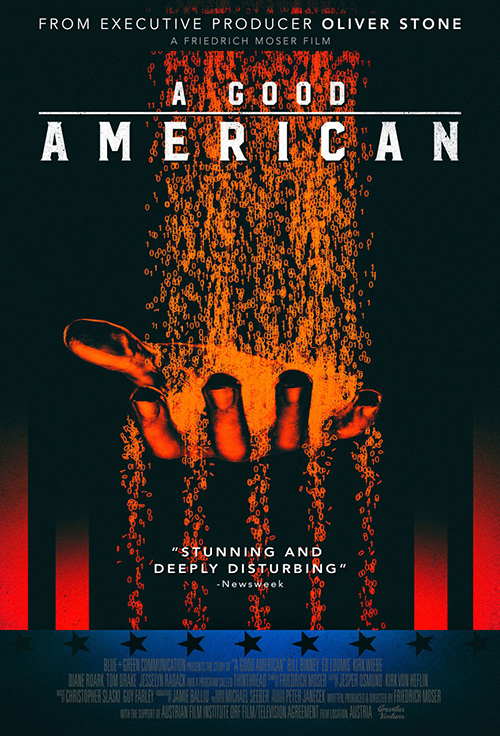
A Good American – March 16th, 2016

A Good American [2016]


Please join us for a special one-night event screening of Friedrich Moser’s A Good American [2016]. A Buffalo Premiere!

  • Screening Date: Wednesday, March 16th, 2016 | 8:00pm
  • Venue: Burning Books
  • Specifications: 2016 / 110 minutes / English / Color
  • Director(s): Friedrich Moser
  • Print: Supplied by Long Shot Factory
  • Tickets: Free and Open to the Public
  • Extras: Stop in early for FREE Breadhive granola while supplies last!
  • Deal: Bring your ticket stubs and join us at The Black Sheep after the show for 2 for 1 drink specials

Event Sponsors:

Venue Information:

420 Connecticut St, Buffalo, NY 14213


Synopsis

Courtesy of Faceboook:

A Good American tells the story of the best code-breaker the USA ever had and how he and a small team within NSA created a surveillance tool that could pick up any electronic signal on earth, filter it for targets and render results in real-time while keeping the privacy as demanded by the US constitution. The tool was perfect – except for one thing: it was way too cheap. Therefor NSA leadership, which had fallen into the hands of industry, dumped it – three weeks prior to 9/11. Now guess what…

Tidbits:

  • DOC NYC – 2015

Director Bio

courtesy of blue+green:

Friedrich Moser holds a university degree (MA) in history and German studies from the University of Salzburg / Austria.

Friedrich started his professional career as a TV journalist and editor in Bolzano-Bozen / Italy. In 2001 he founded blue+green communication. He has made over 20 documentaries in the past years, most of them as producer / director / DoP. In 2008 he attended successfully the Documentary Campus, the European Masterschool for non-fiction filmmaking.

Friedrich’s professional career also includes lecturing on history and documentaries at the University of Vienna / Department of Economic and Social History, as well as teaching video production at the Secondary School for Commercial Graphics in Bressanone-Brixen / Italy.

Friedrich lives in Vienna/Austria and in Bressanone-Brixen / Italy.

Filmography:

  • How to Build a Truth Engine (2021)
  • Money Bots (2020)
  • BEER! A Love Story (2019)
  • The Maze (2017)
  • A Good American (2016)
  • The Brussels Business (2012)

Links

Here is a curated selection of links shared on our Facebook page for additional insight/information:

  • 3/8/16 – Buffalo’s alt-publication Artvoice focuses their cover story on A Good Americanlink
  • 3/9/16 – Need a primer on William Binney (subject of our upcoming film A Good American)? Start with The Program, a The New York Times Op-Docs short on the former NSA technical director by the Oscar winning director/Pultizer Prize winning journalist Laura Poitras – link
  • 3/14/16 – “With the ferociously intelligent and committed Binney at its centre, the film is a fascinating, sometimes jaw-dropping account of gifted individuals thwarted by self-serving superiors, with tragic results. […] In a tragic way, the latest atrocity makes the documentary A Good American even more timely. […] For many it will make upsetting viewing.” Friedrich Moser interviewed at Indiewire – link
  • 3/15/16 – From Buffalo critic M. Faust online at The Public: “A Good American – Should our security agencies have known in advance about the attacks of 9/11? That’s the question that will bring most viewers to this new documentary (playing in Buffalo ahead of most anyplace else in the US), but they’ll walk away with a deeper disrespect for the NSA, which is presented here as so corrupted by greed and arrogance as to be worthless. The center of the film is former analyst William Binney, who developed in the 1990s the ability to predict events using metadata. But because the intelligence agencies couldn’t make enough money from his system, ThinThread, they jettisoned his work in favor of a much more expensive program that eventually proved useless. It’s damning stuff, if you can take it at face value: director Friedrich Moser’s approach is slow and deliberative but also emotionally manipulative and one-sided. Still, he presents a case that demands to be addressed. Sponsored by Cultivate Cinema, the screening is free and open to the public.”

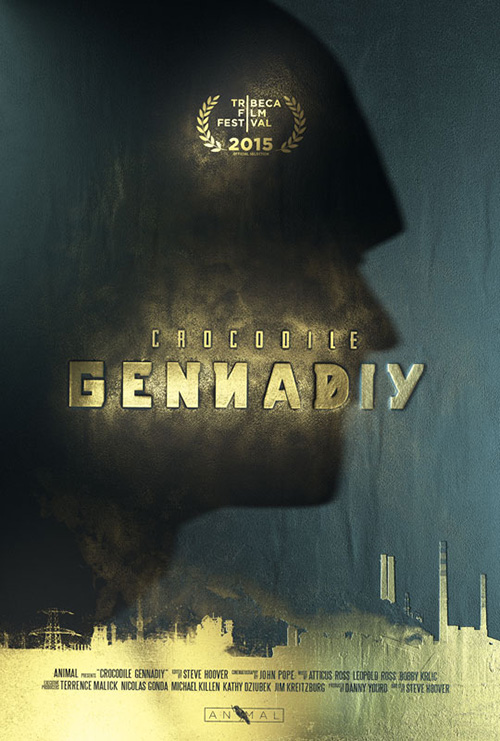
Almost Holy – February 24th, 2016

Almost Holy [2016]


Please join us for a special one-night event screening of Steve Hoover’s Almost Holy [2016]—formerly Crocodile Gennadiy. A Buffalo Premiere!

  • Screening Date: Wednesday, February 24th, 2016 | 7:00pm
  • Venue: Burning Books
  • Specifications: 2016 / 100 minutes / English / Color
  • Director(s): Steve Hoover
  • Print: Supplied by The Orchard
  • Tickets: Free and Open to the Public
  • Extras: Stop in early for FREE Breadhive granola while supplies last!
  • Deal: Bring your ticket stubs and join us at The Black Sheep after the show for 2 for 1 drink specials

Event Sponsors:

Venue Information:
420 Connecticut St, Buffalo, NY 14213


Synopsis

Courtesy of press kit:

Gennadiy Mokhnenko has made a name for himself by forcibly abducting homeless drug-addicted kids from the streets of Mariupol, Ukraine. As his country leans towards a European Union inclusion, hopes of continued post-Soviet revitalization seem possible. In the meantime, Gennadiy’s center has evolved into a more nebulous institution.

Tidbits:

  • Tribeca Film Festival – 2015
  • Hawaii International Film Festival – 2015 – Winner: Documentary Feature (Halekulani Golden Orchid Award)

Director Note

I wanted Crocodile Gennadiy to have the characteristics of a narrative film, for the story to be told through the use of vérité scenes and natural dialogue. I developed a strategy with my crew to accomplish this goal, which informed our decisions and reactions to unforeseeable circumstances in the field. Our crew believes that content is more important than cinematics, but we’re passionate about filming with proficiency.

The journey of this film began in 2012 when some of my co-workers were commissioned to do a promotional video in Ukraine. While in Mariupol, they met Gennadiy Mokhnenko and spent a few days with him. After listening to his stories and witnessing his amorphous work, they returned with enthusiasm and proposed doing a feature length non-fiction film on Gennadiy. I wasn’t interested in the idea until they shared raw footage with me and further explained some of the context. I was struck by the character of Gennadiy.

Once in Ukraine, we encountered many challenges, the most obvious being that we don’t speak Russian. With the exception of the main subject’s broken English, almost all of the dialogue was Russian. While shooting, we relied heavily on a translator, observation and the main subjects limited explanations of events. We had four cameras, two of them were constantly rolling. We committed to filming everything we possibly could, which made for a difficult but rewarding post process.

My life has changed radically throughout the making of this film. Formerly, I was Christian, or I at least identified as one, but I no longer am. There’s a lot to the story. I was raised in a religiously apathetic, broken, Catholic family. I converted to a nondenominational church in college. To me, faith was a solution to the existential confusion I found myself in after a long, overindulgence in psychotropic drugs, which spanned my adolescence. As a teenager, I was obsessed with hallucinating and the drugs were boundless. The faith eventually helped me to pull myself together, giving me guidance, discipline and a moral framework, all of which I didn’t really have beforehand.It also dispelled an attraction I had to heroin. I had never used heroin, but I was always seduced by the idea and a step away from it, along with several friends who came to die from overdoses. My college roommate at the time was dealing and coaxing me with free dope. He has since overdosed and died.

Gennadiy’s former work with drug addled street kids in Ukraine struck a chord with my darker past. Had I been born in Mariupol, Gennadiy would have had me by the collar. I found deeper interest however, not in the kids I empathized with, but in a character I didn’t understand. The story could have gone in many different directions.

Eventually, I found myself standing in a van while our crew was being attacked by an angry Pro-Russian mob in Ukraine. I was both terrified and calm. I knew that if we made it out of the situation, my life would change – this time in a different way. Up until that point, for several years I had resisted coming to terms with the fact that my beliefs had changed. My cultural liberalism didn’t align with the faith, no matter how hard I tried to squeeze it in. I had grown weary of the behavior and practices of the church that I was a part of and increasingly uncomfortable with the social pressures that some of the members were asserting on me.

The van broke through the mob and after a short car chase, I found myself resolute. I would embrace my worldview and move on. I spent the remainder of the year, mostly alone with the edit. Working on the edit of the film was a means of catharsis for me.

Though the making of this film had a distinctive effect on my life personally, this is definitely not a call to action film; if anything, it’s more of a portrait. It is something to look at, reflect on and discuss. In light of current events, I hope it gives people a reason to research the conflict in Ukraine. Although this film isn’t designed to be a political tool, it has obvious relevance to the turmoil between The EU, Russia and Ukraine and offers some context. After the recent fall of Debaltseve, Mariupol is rumored to be the next target for the Pro-Russian forces. The film could develop additional relevance as the conflict progresses.

While the film was in development, I was told by different establishments that there was some controversy surrounding the film. Some felt the portrayal of Gennadiy was too objective and people wanted to know “how the director felt about him.” Some liked Gennadiy, while others were disapproving. I believe Gennadiy is confounding, so I wasn’t comfortable telling people how to think and feel about him. I wanted to show the complicated nature of this character and the world he lives in.


Director Bio

Steve Hoover made his feature film directorial debut in 2013 with Blood Brother, which won both Audience and Grand Jury Award at Sundance 2013. Also that year, he had co-directed an award-winning documentary short film entitled Seven Days. Crocodile Gennadiy will be Steve’s second feature. Hoover has also had a successful career in commercial campaigns. Currently, he is a commercial director at Animal.

Filmography:

  • Almost Holy (2016)
  • Blood Brother (2013)

Links

Here is a curated selection of links shared on our Facebook page for additional insight/information:

  • 1/26/16 – “In Almost Holy [formally Crocodile Gennadiy], what begins as an astounding, morally murky portrait of a man subverting inert government organizations to rescue abused children morphs into a something more akin to a unraveling sketch of a man clutching his overflowing family, bracing for the waves of political unrest that are guaranteed to turn his life upside down.” Jordan M. Smith, IONCINEMA.com – link
  • 2/10/16 – This happened to the production crew while finishing production on Almost Holy [formally Crocodile Gennadiy], in Mariupol, Ukraine on March 15, 2014. – link
  • 2/23/16 – Earlier this month Almost Holy [formally Crocodile Gennadiy] was named the Best Documentary at the Social Impact Media Awards (SIMA)! – link
  • 3/16/16 – CCC alum Almost Holy has finally been re-christened with its new title as well as new release date of May 20th, 2016 – link
  • 7/15/16 – The soundtrack for Almost Holy will be available from Sacred Bones on August 19th, 2016 – link

Local Media Coverage:

  • 2/18/16 – Jordan Canahai review published online at Artvoicelink
  • 2/23/16 – M. Faust review in The Publiclink

How to Change the World – January 27th, 2016

How to Change the World [2015]


Please join us for a special one-night event screening of Jerry Rothwell’s How to Change the World [2015]. A Buffalo Premiere!

  • Screening Date: Wednesday, January 27th, 2016 | 7:00pm
  • Venue: Burning Books
  • Specifications: 2015 / 110 minutes / English / Color
  • Director(s): Jerry Rothwell
  • Print: Supplied by Picturehouse Entertainment
  • Tickets: Free and Open to the Public
  • Extras: Stop in early for FREE Breadhive granola while supplies last!
  • Deal: Bring your ticket stubs and join us at The Black Sheep after the show for 2 for 1 drink specials

Event Sponsors:

Venue Information:

420 Connecticut St, Buffalo, NY 14213


Synopsis
Courtesy of press kit:

How to Change the World chronicles the adventures of an eclectic group of young pioneers – Canadian hippie journalists, photographers, musicians, scientists, and American draft dodgers – who set out to stop Richard Nixon’s atomic bomb tests in Amchitka, Alaska, and end up creating the worldwide green movement.

Greenpeace was founded on tight knit, passionate friendships forged in Vancouver in the early 1970s. Together they pioneered a template for environmental activism which mixed daring iconic feats and worldwide media: placing small rubber inflatables between harpooners and whales, blocking ice-breaking sealing ships with their bodies, spraying the pelts of baby seals with dye to make them valueless in the fur market. The group had a prescient understanding of the power of media, knowing that the advent of global mass communications meant that the image had become a more effective tool for change than the strike or the demonstration. But by the summer of 1977, Greenpeace Vancouver was suing Greenpeace San Francisco and the organization had become a victim of its own anarchic roots – saddled with large debts and frequent in-fighting.

How to Change the World draws on interviews with the key players and hitherto unseen archive footage, which brings these extraordinary characters and their intense, sometimes eccentric and often dangerous world alive. Somehow the group transcended the contradictions of its members to undertake some of the most courageous and significant environmental protests in history.

The film spans the period from the first expedition to enter the nuclear test zone in 1971 through the first whale and seal campaigns, and ends in 1979, when, victims of their own success, the founders gave away their central role to create Greenpeace International. At its heart is Bob Hunter, a charismatic journalist who somehow managed to bind together the ‘mystics and the mechanics’ into a group with a single purpose, often at huge cost to himself. The story is framed by his first person narrative, drawn from his writings and journals about the group, voiced alongside animations based on his early comics.

How to Change the World is an intimate portrait of the group’s original members and of activism itself—idealism vs. pragmatism, principle vs. compromise. They agreed that a handful of people could change the world; they just couldn’t always agree on how to do it.

Tidbits:

  • Sundance Film Festival – 2015 – Winner: World Cinema – Documentary (Editing Award)
  • International Documentary Association – 2015 – Winner: Pare Lorentz Award

Director’s Note

In the vaults of the Greenpeace archives in Amsterdam lie over a thousand silver cans of 16mm film, many unopened since the 1970s, which hold the record of a unique attempt to effect global change.

In Vancouver, amidst the cultural ferment of the late 1960s, a small group of friends set out to shift the way people think about the place of humans in nature. Today’s Greenpeace, with its 41 national offices around the globe and 2.7 million members, had its origins in the activities of a handful of ‘mystics and mechanics’ in one small city forty years ago.

What drew me to the story of the Greenpeace founders is that it is the story of all nascent groups. The men and women who came together in those early years were an eclectic gang whose different skills contributed to a group that combined scientific rigour and engineering savvy with beliefs in the I-ching and Native American prophecies. Some were in it for the politics, some for the science, some just for the adventure. But like a band with an unexpected hit song that catapults them to global fame, the media success of their first anti-whaling campaign forced them into a maelstrom, which at times threatened to destroy everything they had accomplished.

Greenpeace’s founders didn’t set out to create an international organisation, but they found one building up around them. The group of once like-minded friends gradually found themselves pulled in different directions by power struggles and interpersonal conflicts that turned colleagues into rivals ‘How can we save the planet’, wrote Bob Hunter, their reluctant leader, ‘if we cannot save ourselves?’ Success started to depend not only on what they did – but on how they worked with each other.

The group had a prescient understanding of the power of media, knowing that capturing the perfect image was the most powerful weapon of all. But their footage richly evokes not only the dramatic actions they undertook, but their friendships and conflicts, dilemmas and decisions – a sometimes crazy mix of psychedelia and politics, science and theatre. In Bob Hunter they found the perfect chronicler of their adventures – a novelist, comic book artist and gonzo journalist equipped with a comic eye and a searing honesty about his own and his group’s failings. Bob’s writings are the backbone of How To Change The World – giving a personal, intimate portrait of events and people.

The Greenpeace founders’ reflections on their own past speak to us about dilemmas, not only of environmentalism, but of all movements for change, and also of the dilemmas of growing up and growing older: the tension between youthful idealism, ego and courage on the one hand, and maturity, pragmatism and political manoeuvring on the other.

At a time when we need to engage with environmental and wider political problems on a global scale, hopefully this story of one small group of people can get us thinking not only about how we act individually but in partnership with each other.


Director Bio

Jerry Rothwell (Director) is a documentary filmmaker whose work includes the award-winning feature documentaries, Donor Unknown (More 4/Arte/CBC/PBS/VPRO) about a sperm donor and his many offspring which premiered at Tribeca FF and was nominated for a Grierson Award; Town of Runners (PBS/Arte/RHK/ITVS/KINOSMITH) was released theatrically in the UK by Dogwoof and also premiered at Tribeca Film Festival. Heavy Load (IFC/ITVS/BBC), about a group of people with learning disabilities who form a punk band, and Deep Water (Pathe/IFC/FilmFour/UK Film Council co-directed with Louise Osmond), about Donald Crowhurst’s ill-fated voyage in the 1968 round the world yacht race winner of Best Cinema Documentary at The Rome Film Festival and winner of a Grierson Award for best Cinema Documentary. In 2012 Jerry won a prestigious Royal Television Award for his directing work on Donor Unknown and Town of Runners. His next film will be Sour Grapes for Netflix and Arte co-directed with Reuben Atlas. At Met Film Production, he has Executive Produced and worked as an editor on numerous feature docs including Dylan Williams’ Men Who Swim and Sarah Gavron’s The Village At The End Of The World. http://www.jerryrothwell.com

Filmography:

  • The Reason I Jump (2020)
  • The School in the Cloud (2018)
  • Sour Grapes (2016)
  • How to Change the World (2015)
  • Town of Runners (2012)
  • Donor Unknown (2010)
  • Heavy Load (2008)
  • Deep Water (2006)

Links

Here is a curated selection of links shared on our Facebook page for additional insight/information:

  • 12/21/15 – “Lessons in Activism” by Bo Franklin at VICElink
  • 1/13/16 – “Whatever your politics, this documentary about the founders of Greenpeace is essential viewing.” Rupert Hawksley, The Telegraphlink
  • 1/24/16 – Congratulations to director Jerry Rothwell on How To Change The World‘s nomination for Best Theatrical Documentary at the Canadian Screen Awards! – link
  • 6/4/16 – At @welovedocs, Cultivate Cinema Circle alum How to Change the World is the Doc of the Month. Read Influence Film Club interview with dir Jerry Rothwell – link