Olmo and the Seagull – March 1st, 2016

Olmo and the Seagull [2015]


Please join us for a special one-night event, Buffalo-premiere screening of Petra Costa and Lea Glob’s Olmo and the Seagull [2015]. A Buffalo Premiere!

  • Screening Date: Tuesday, March 1st, 2016 | 8:00pm
  • Venue: Canisius College Science Hall
  • Specifications: 2015 / 87 minutes / Multiple with English subtitles / Color
  • Director(s): Petra Costa & Lea Glob
  • Print: Supplied by Busca Vida Filmes
  • Tickets: Free and Open to the Public
  • Deals: Stop in early for FREE Breadhive granola while supplies last!


Event Sponsors:

Venue Information:

2001 Main Street (Between Delavan & Jefferson), Buffalo NY 14208


Synopsis

Courtesy of press kit:

A journey through the labyrinth of a woman’s mind, Olmo and the Seagull tells the story of Olivia, a free-spirited stage actress preparing for a starring role in a theatrical production of Chekhov’s The Seagull. As the play starts to take shape, Olivia and her boyfriend, Serge, whom she first met on the stage of the Theatre du Soleil, discover she is pregnant.

Initially, she thinks she can have it all, until an unexpected setback threatens her pregnancy and brings her life to a standstill. Olivia’s desire for freedom and success clashes with the limits imposed by her own body and the baby growing inside her. The months of her pregnancy unfold as a rite of passage, forcing the actress to confront her deepest fears. She looks in the mirror and sees both female characters of The Seagull – Arkadina, the aging actress, and Nina, the actress who falls into madness – as unsettling reflections of herself.

The film takes a further twist when what appears to be acted is revealed as life itself. This portrait of the creative process invites us to question what is real, what is imagined, and what we celebrate and sacrifice in life.

Tidbits:

  • Locarno International Film Festival – 2015 – Winner: Junior Jury Award – Filmmakers of the Present

Directors Statements

Petra Costa:

In our film we sought to examine the things we celebrate and sacrifice in life. Our objective was always to inhabit the border of fiction and reality. Inside: a small apartment. Outside: a theater. A real couple, in a relationship of ten years. An actor, an actress. A real belly, a fictional narrative.

My interest in cinema began with the theater. In my teenage years the Theatre du Soleil was a source of inspiration. Later, when I started working in cinema, I longed to create a film with actors improvising in free-form and developing a story collectively. I found that too often fictional films I saw were constrained by the form, and so entangled in it, that they lost the subtleties of life itself. In November 2011, the Theatre du Soleil was touring in Brazil. There, I met Olivia and Serge, two actors in the company. We began a dialogue and decided to make a film together.

A few months later I was invited by CPH:DOX (DOX:LAB) to co-direct a film with the Danish filmmaker Lea Glob. After a week finding our common ground, we understood that we wanted to make a film where we would use a fictional structure to look into the life of a real person. The idea was to construct frameworks and situations that would allow our characters to investigate their memories, desires, regrets, habits, and secrets. We were particularly interested in the female subject, a day in the life of a woman carrying out ordinary tasks. How many unnamable and innumerable thoughts can inhabit one’s mind? How are fragments and intimations of eternity scattered throughout one day?

Immediately, I thought of Olivia and Serge. For the past ten years, they were creating theater based on improvisation, and thus, would be the perfect artists to share in this investigation.

Additionally, thanks to the generosity with which they shared so many intimate moments of their lives, shooting within documentary parameters allowed us to see those real moments of connection that existed inside the couple’s partnership.

Lea’s talents of observational filmmaking and my orientation towards improvisation allowed the film to move into territories that it would have never otherwise reached. In all stages, from shooting to editing, the work of the entire team was imbued with the spirit of a theatre troupe, where many of the ideas came to life through collaboration.

Olmo and the Seagull is in many ways also a continuation of the investigations I have been carrying out in my previous films. To a great extent, I approach my films as an archeology of affections, trying to reach into the deep levels of impalpable emotions. For example, my previous film Elena tells the story of three women from different generations going through the rite of passage from adolescence to adulthood – my mother, myself, and my sister Elena who tragically committed suicide at the age of twenty. The image which united them was that of Ophelia, from Shakespeare’s Hamlet. It was interesting for me to learn that Chekhov wrote The Seagull as an echo of Hamlet, where Nina would represent an Ophelia who does not commit suicide – a seagull that is attracted to the water, but instead of drowning in it, flies over it. Similarly, if Elena, both as the real person and the fictional character in the film, had survived her own drowning, her next challenge would have been to make sense of all that might have followed: aging, the survival of her art, the loss and maintenance of love in a relationship, and perhaps motherhood.

One of the things we are trying to do with Olmo and the Seagull is to relieve a tension I’ve always felt between the fact that every single human was brought into being by a pregnant woman and the reality that there is almost no interesting cinematic portrayals of the psychological processes a mother goes through during this period of life. Why are the only complex representations of pregnancy in horror films, such as Rosemary’s Baby? Similarly striking is the fact that there are so few critical examinations of how our society deals with the relationship between a woman’s commitments as a mother and as a professional.

While Elena explored the process of finding and grounding oneself in the world – becoming a being, an adult, a woman – through Olmo and the Seagull my hope was to investigate the process of letting go of that being, and to a certain extent, making room for something else to be born, whether that be a baby or a new version of the self, be it rooted as ‘olmo’ (elm tree in Italian) or migratory as a ‘seagull’.


Lea Glob:

In Olmo and the Seagull we investigate the beauty of acting as a way to come to terms with the real. When Serge first told us the story of how he and Olivia fell in love on stage, we knew that our film would feed from this rich space between the imagination and reality that figured in this couple’s life. Serge told us how Olivia, in the middle of a scene about the liberation of Kabul, in front of a full audience, would tease him by sending another actress across the stage to deliver him love messages. For these two characters, the stage is itself a part of their actual, personal story.

My entry into cinema began with Meeting My Father Kasper Højat, a story that grew out of my own personal experience. My father disappeared when I was two years old, never to be heard from again. Then, when I was eighteen, I was notified that he had hanged himself in a prison cell.

In the film I lead the audience through a highly intimate detective journey, as I try to reconstruct my father’s identity. I lay out my father’s pipe, gloves and photos to the viewer as though I were pinning them up onto a bulletin board of sorts, sifting through all the clues. The film relies on classic fictional devices – reconstructions of certain scenes, a narrator, humor, emotional distance, the consideration of a weighty subject – but at the same time the form never lets go of its documentary aspect. I move between chaos, spontaneous emotions, and, eventually, a kind of synthesis and crystallization.

Here, we opted to use, as a sort of baseline structure, formalistic constraints on the lives of our characters: our aim was to structure and order what seemed like spontaneously shot documentary footage. We entered an area with known contours and an established storyline, but it was also an opportunity for us to push past that and to explore new territory.

It was poignant for me to be able to play with the tensions between acting versus being, because it was the question Olivia herself faced in her life, never more poignantly than during her pregnancy. Engaging in this process with Petra, Olivia and Serge helped enrich my approach to documentary-filmmaking immensely.

Throughout the entire process of making this film, the actors, production team, and directors jointly entered this blurry space between the real and the imagined. As a collaboration between genres, cultures and personalities, this film became an intense interrogation of questions of form and storytelling.

A pregnancy is a very real transformation of a woman’s body and mind. To watch and create a film with such generous actors, who were open and giving in such a crucial moment of their lives, has been a continual inspiration. Their generosity has brought me in touch with a deeply felt desire to look at the very basic things in life and to dare to embrace the ordinary. Our film opens with the life of Olivia, as she is about to leave the stage (albeit temporarily) to start a family. This resonated with me, naturally. I am thirty-three years old, an age when a woman has to decide whether or not to start a family, and how. This personal connection has driven me to look even more closely at the drama that unfolds in the film.

photo by Pamela Pianezza / Picture This !


Director Bios

“Gosto de ter meu espaço, então gosto da ideia de um casamento com bastante liberdade para ir e vir, de criar coisas em outros lugares. Preciso da solidão para criar.”

Petra Costa’s (Director) first feature Elena (2012), premiered at IDFA and won several prizes in festivals worldwide. It was the most watched documentary in Brazil in 2013 and in 2014 was released theatrically in the United States. Executive Produced by Fernando Meirelles and Tim Robbins, Elena unfolds as a mixture of fever dream and psychological thriller. It tells the story of two sisters – and as one searches for the other their identities begin to blur. The film was called “a cinematic dream” by the New York Times, “haunting and unforgettable” by the Hollywood Reporter and was defined as a “masterful debut that takes nonfiction where it seldom wants to go – away from the comforting embrace of fact and into a realm of expressionistic possibility” by Indiewire.

Petra started her training in theater in Brazil at the age of fourteen and later went to the Dramatic Arts School at the University of São Paulo. She then went on to study Anthropology at Barnard College, Columbia University. She completed her masters in Social Psychology at the London School of Economics focusing her studies on the concept of trauma. Currently pursuing her PhD at the European Graduate School, Petra is also writing a feature fiction film entitled Strange Fruit.

Filmography:

  • The Edge of Democracy (2019)
  • Olmo & the Seagull (2015)
  • Elena (2012)
  • Don Quixote of Bethlehem (2005)

Lea Glob (Director) graduated from the National Film School of Denmark in 2011 with her well received short film Meeting My Father Kasper Højat, an autobiographical interpretation of the director’s personal encounter with her long lost father. The film is an almost archaeological investigation of the father’s identity, seen through the directors imagination, as she goes through the boxes of objects left behind of the father. Among other acknowledgments, the film was nominated for the National Danish Film Award and for The Robert Awards, and won a Golden Panda for most innovative documentary film at the Chinese Shiuan TV Festival.

Since then, Lea has received the main award at Nordic Talents for the development of the documentary project Human Female Sexuality, a highly visual film and transmedia project, which investigates the (often contradictory) inner life and imagery of female sexuality.

Lea Glob works both as a filmmaker and Director of Photography and has received the “Real Talent Award” given by the Danish Film Directors. Based in Copenhagen, Lea also works and teaches as part of the Artistic” Research program at The National Film School.

Filmography:

  • Lykketoft og de lejlighedsvist Forenede Nationer (2017)
  • Venus (2016)
  • Olmo & the Seagull (2015)

Links

Here is a curated selection of links shared on our Facebook page for additional insight/information:

  • 2/26/16 – “For in her second feature, Costa, assisted by co-director Lea Gob, turn your gaze to a deeply feminine universe, but also universal, starting from the of pregnancy Italian actress Olivia Corsini and her relationship with her husband Serge Nicolai to analyze not only the insecurity aroused by the experience, but the existential and professional doubts experienced by the protagonist. In the process, the filmmaker also explores the nature of representation and the border between art and reality as – as if all that were not enough – build a challenging and fascinating narrative structure.” Pablo Villaça, Cinema em Cenalink
  • 3/1/16 – Courtesy of Petra Costa’s Twitter (@petracostal): Thoughtful interview at #FilmmakerMagazine on #OlmoAndTheSeagull. Those that make ideas simmer and sprout… – link

The Gleaners and I – November 18th, 2015

The Gleaners and I [2000]


Please join us for the fifth and final screening of our Agnès Varda series with a one-night event showing of The Gleaners and I [Les glaneurs et la glaneuse] [2000].

  • Screening Date: Wednesday, November 18th, 2015 | 7:00pm
  • Venue: Canisius College Science Hall
  • Specifications: 2000 / 82 minutes / French with English subtitles / Color
  • Director(s): Agnès Varda
  • Print: Supplied by Zeitgeist Films
  • Tickets: Free and Open to the Public
  • Deals: Stop in early for FREE Breadhive granola while supplies last!
  • Giveaway: Thanks to the University of Illinois Press, we’ll be giving away a copy of Kelley Conway’s new entry in the Contemporary Film Directors series, Agnès Varda, at this screening!


Event Sponsors:

Venue Information:

2001 Main Street (Between Delavan & Jefferson), Buffalo NY 14208


Synopsis

Courtesy of Zeitgeist Films:

Agnès Varda, Grande Dame of the French New Wave, made 2000’s most acclaimed non-fiction film-a self-described “wandering-road documentary.” Beginning with the famous Jean-François Millet painting of women gathering wheat left over from a harvest, she focuses her ever-seeking eye on gleaners: those who scour already-reaped fields for the odd potato or turnip. Her investigation leads us from forgotten corners of the French countryside to off-hours at the green markets of Paris, following those who insist on finding a use for that which society has cast off, whether out of necessity or activism. Varda’s own ruminations on her life as a filmmaker (a gleaner of sorts) give her a connection to her subjects that creates a touching human portrait that the L.A. Weekly deemed “a protest film that’s part social critique, part travelogue, but always an unsentimental celebration of human resilience.”

Tidbits:

  • Cannes Film Festival – 2000
  • Toronto International Film Festival – 2000
  • New York Film Festival – 2000
  • Viennale – 2000 – Winner: Standard Readers’ Jury Prize
  • Village Voice Film Poll – 2001 – Winner: Best Documentary

Director Bio

“I’m not interested in seeing a film just made by a woman – not unless she is looking for new images.”

The only female director of the French New Wave, Agnès Varda has been called both the movement’s mother and its grandmother. The fact that some have felt the need to assign her a specifically feminine role, and the confusion over how to characterize that role, speak to just how unique her place in this hallowed cinematic movement—defined by such decidedly masculine artists as Jean-Luc Godard and François Truffaut—is. Varda not only made films during the nouvelle vague, she helped inspire it. Her self-funded debut, the fiction-documentary hybrid 1956’s La Pointe Courte is often considered the unofficial first New Wave film; when she made it, she had no professional cinema training (her early work included painting, sculpting, and photojournalism). Though not widely seen, the film got her commissions to make several documentaries in the late fifties. In 1962, she released the seminal nouvelle vague film Cléo from 5 to 7; a bold character study that avoids psychologizing, it announced her official arrival. Over the coming decades, Varda became a force in art cinema, conceiving many of her films as political and feminist statements, and using a radical objectivity to create her unforgettable characters. She describes her style as cinécriture (writing on film), and it can be seen in formally audacious fictions like Le bonheur and Vagabond as well as more ragged and revealing autobiographical documentaries like The Gleaners and I and The Beaches of Agnès.

Filmography:

  • Faces Places (2017)
  • The Beaches of Agnes (2008)
  • Cinevardaphoto (2005)
  • The Gleaners and I (2000)
  • The Universe of Jacques Demy (1995)
  • One Hundred and One Nights (1995)
  • The Young Girls Turn 25 (1993)
  • Jacquot (1991)
  • Le Petit Amour (1988)
  • Jane B. par Agnes V. (1988)
  • Vagabond (1985)
  • Mur Murs (1981)
  • Documenteur (1981)
  • One Sings, the Other Doesn’t (1977)
  • Les créatures (1969)
  • Lions Love (1969)
  • Far From Vietnam (1968)
  • Le Bonheur (1966)
  • Cleo From 5 to 7 (1962)
  • La Pointe Courte (1954)

Links

Here is a curated selection of links shared on our Facebook page for additional insight/information:

  • 8/31/15 – Today via The Criterion Collection: “Just a casual courtyard chat between Agnès Varda and Guillaume-en-Égypte” – link
  • 9/2/15 – Need an Agnès Varda primer prior to our upcoming series on the grandmother of the French New Wave at Canisius College this fall? Helen Carter’s summery overview in Senses of Cinema serves as a perfect introduction! – link
  • 9/3/15 – Wonderful interview w/ Agnès Varda on her home on the rue Daguerre, Paris via Sight & Soundlink
  • 9/24/15 – Great news! Two Agnès Varda rarities – Jane B. and Kung-Fu Master – are headed for a US re-release thanks to Cinelicious Pics! – link
  • 9/29/15 – Agnès Varda on Coming to California – link
  • 10/6/15 – Agnès Varda shares credit for making an impact on feminist cinema in Kelly Gallagher’s riot grrrl infused THE HERSTORY OF THE FEMALE FILMMAKER! – link
  • 10/9/15 – Via The Criterion Collection today: “Agnès Varda keeps popping up in the most unexpected places. The indefatigable eighty-seven-year-old filmmaker stopped by our offices this week, along with her daughter, Rosalie, to say hello and fill us in on what she’s been up to. We’re happy to report that this legend of the French New Wave—and beyond—shows no signs of slowing down.” – link
  • 10/12/15 – Violet Lucca speaks with Agnès Varda back in 2011 for Film Comment. – link
  • 10/18/15 – At 87, Agnès Varda continues to make the news with a new video essay by Kevin B. Lee on her work found over at Fandorlink
  • 10/29/15 – “Varda may be a critically neglected filmmaker, and her work may be economically marginal in relation to the global entertainment industry. But does that give her the right to compare herself to those who are literally starving and homeless? The answer, perhaps, is that we’ve missed the point if we consider creative achievement and practical survival to be entirely separate. Less fancifully than at first appears, Varda’s notion of herself as a “gleaner” suggests the real continuity between superficially different forms of human resourcefulness – both those hailed as art, and those rarely hailed at all.” Jake Wilson, Senses of Cinemalink
  • 11/6/15 – The Gleaners and I isn’t a scolding treatise about the shamefulness of waste, but a celebratory jig inspired by the pleasures of squeezing every last, sweet drop from a grape harvest, or giving a tossed-off bit of plastic tubing new life in a 3-D painting. At the same time, Agnès Varda tints every frame of The Gleaners and I with a kind of joyous mournfulness: When you realize life is slipping by you, you want to hold on to every scrap.” Stephanie Zacharek, Salonlink
  • 11/12/15 – “In many respects, The Gleaners and I is a fitting culmination of the projects, ideas and experiments Varda committed herself to over the course of her career. If, as Amy Taubin has astutely pointed out, Varda’s work can be viewed as “portraits of people and places,” then The Gleaners and I serves as a kind of a gallery exhibit of precisely observed miniatures and cameo portraits (which is unsurprising considering Varda’s more recent focus on installation work).” Jesse Ataide, Fandor’s Keyframe – link
  • 11/17/15 – In Sight & Sound‘s recent poll of the Greatest Documentaries of All Time, Agnès Varda’s The Gleaners and I was voted #8! – link
  • 11/27/15 – David Bordwell, one of the most impacting and prolific film theorists, has published some thoughts on Kelley Conway’s new book on Agnès Varda! – link

The Beaches of Agnès – November 4th, 2015

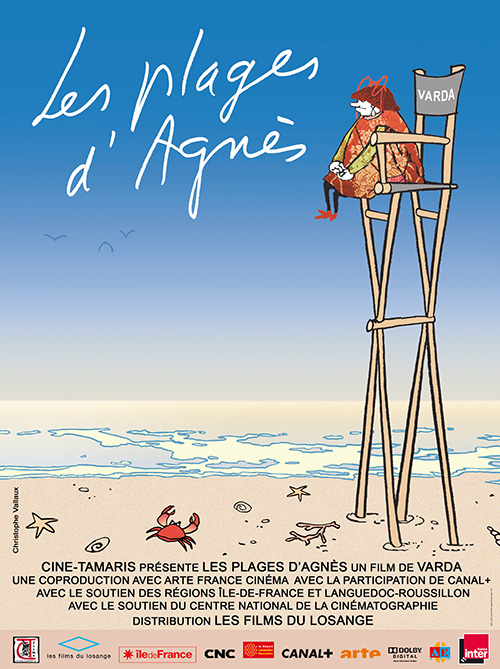
The Beaches of Agnès [2008]


Please join us for the fourth screening of our Agnès Varda series with a one-night event showing of The Beaches of Agnès [Les plages d’Agnès] [2008].

  • Screening Date: Wednesday, November 4th, 2015 | 7:00pm
  • Venue: Canisius College Science Hall
  • Specifications: 2008 / 110 minutes / French with English subtitles / Color
  • Director(s): Agnès Varda
  • Print: Supplied by The Cinema Guild
  • Tickets: Free and Open to the Public
  • Deals: Stop in early for FREE Breadhive granola while supplies last!


Event Sponsors:

Venue Information:

2001 Main Street (Between Delavan & Jefferson), Buffalo NY 14208


Synopsis

Courtesy of The Cinema Guild:

A reflection on art, life and the movies, The Beaches of Agnès is a magnificent film from the great Agnès Varda, director of Cleo from 5 to 7 and The Gleaners and I, a richly cinematic self portrait that touches on everything from the feminist movement and the Black Panthers to the films of husband Jacques Demy and the birth of the French New Wave.

When one thinks of the major figures of postwar cinema, the name Agnès Varda immediately springs to mind. Her body of work in both fiction and documentary is defined by a wealth of innovation and imagination. Irrepressible and enquiring, she is a force of nature, and even at eighty shows no signs of slowing down. Her new film is a reminder that there are few artists capable of such eloquence in cinema.

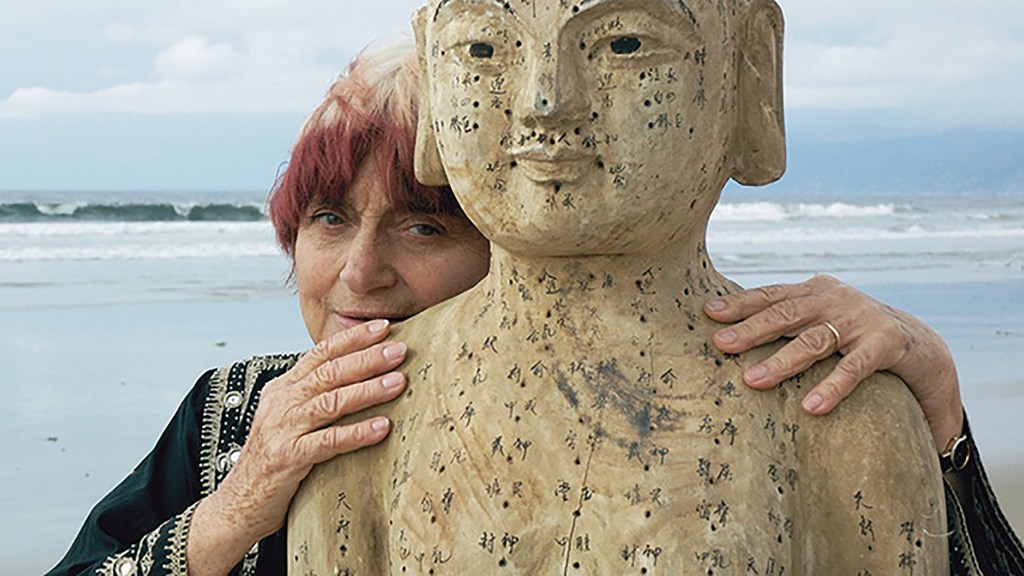
Varda takes beaches as her point of departure. Though she was not born near the ocean, she would travel to the seaside every Easter and summer during her childhood, and her memories of these trips act as a springboard for the film’s meditation on her early life. She recalls her wartime exile to the coastal village of Sète as a period of endless fun and life jackets. While a young adult, Varda began her career as a photographer before raising a family with her husband, Jacques Demy (best known for The Umbrellas of Cherbourg) and eventually turning to filmmaking. Returning to Sète over a decade after the end of the war, she used the locale and its fishermen as the backdrop for her remarkable first feature film, La Pointe Courte.

Varda weaves photographs, vintage footage, film clips, and present-day sequences into a memorable voyage through her life, during which she confronts the joy of creation and the pain of personal loss, death and aging. It is a singular trip played out against the exciting context of the postwar explosion of cultural expression in France. She knew everyone: her colleagues in the French New Wave, the Black Panthers in California and even Jim Morrison, who would visit when in Paris. Idiosyncratic, engaging and deeply moving, The Beaches of Agnès is a journey through an extraordinary artistic life.

Tidbits:

  • Venice Film Festival – 2008
  • Toronto International Film Festival – 2008
  • Directors Guild of America – 2010 – Nominee: Outstanding Directorial Achievement in Documentary
  • César Awards – 2009 – Winner: Best Documentary Film

Director Bio

“I’m not interested in seeing a film just made by a woman – not unless she is looking for new images.”

The only female director of the French New Wave, Agnès Varda has been called both the movement’s mother and its grandmother. The fact that some have felt the need to assign her a specifically feminine role, and the confusion over how to characterize that role, speak to just how unique her place in this hallowed cinematic movement—defined by such decidedly masculine artists as Jean-Luc Godard and François Truffaut—is. Varda not only made films during the nouvelle vague, she helped inspire it. Her self-funded debut, the fiction-documentary hybrid 1956’s La Pointe Courte is often considered the unofficial first New Wave film; when she made it, she had no professional cinema training (her early work included painting, sculpting, and photojournalism). Though not widely seen, the film got her commissions to make several documentaries in the late fifties. In 1962, she released the seminal nouvelle vague film Cléo from 5 to 7; a bold character study that avoids psychologizing, it announced her official arrival. Over the coming decades, Varda became a force in art cinema, conceiving many of her films as political and feminist statements, and using a radical objectivity to create her unforgettable characters. She describes her style as cinécriture (writing on film), and it can be seen in formally audacious fictions like Le bonheur and Vagabond as well as more ragged and revealing autobiographical documentaries like The Gleaners and I and The Beaches of Agnès.

Filmography:

  • Faces Places (2017)
  • The Beaches of Agnes (2008)
  • Cinevardaphoto (2005)
  • The Gleaners and I (2000)
  • The Universe of Jacques Demy (1995)
  • One Hundred and One Nights (1995)
  • The Young Girls Turn 25 (1993)
  • Jacquot (1991)
  • Le Petit Amour (1988)
  • Jane B. par Agnes V. (1988)
  • Vagabond (1985)
  • Mur Murs (1981)
  • Documenteur (1981)
  • One Sings, the Other Doesn’t (1977)
  • Les créatures (1969)
  • Lions Love (1969)
  • Far From Vietnam (1968)
  • Le Bonheur (1966)
  • Cleo From 5 to 7 (1962)
  • La Pointe Courte (1954)

Links

Here is a curated selection of links shared on our Facebook page for additional insight/information:

  • 8/31/15 – Today via The Criterion Collection: “Just a casual courtyard chat between Agnès Varda and Guillaume-en-Égypte” – link
  • 9/2/15 – Need an Agnès Varda primer prior to our upcoming series on the grandmother of the French New Wave at Canisius College this fall? Helen Carter’s summery overview in Senses of Cinema serves as a perfect introduction! – link
  • 9/3/15 – Wonderful interview w/ Agnès Varda on her home on the rue Daguerre, Paris via Sight & Soundlink
  • 9/24/15 – Great news! Two Agnès Varda rarities – Jane B. and Kung-Fu Master – are headed for a US re-release thanks to Cinelicious Pics! – link
  • 9/29/15 – Agnès Varda on Coming to California – link
  • 10/6/15 – Agnès Varda shares credit for making an impact on feminist cinema in Kelly Gallagher’s riot grrrl infused THE HERSTORY OF THE FEMALE FILMMAKER! – link
  • 10/9/15 – Via The Criterion Collection today: “Agnès Varda keeps popping up in the most unexpected places. The indefatigable eighty-seven-year-old filmmaker stopped by our offices this week, along with her daughter, Rosalie, to say hello and fill us in on what she’s been up to. We’re happy to report that this legend of the French New Wave—and beyond—shows no signs of slowing down.” – link
  • 10/12/15 – Violet Lucca speaks with Agnès Varda back in 2011 for Film Comment. – link
  • 10/16/15 – “From the beaches of Belgium to the beaches of Noirmoutier, Varda recycles her life story through recuperated photographs and film stock, narration and installation. Looking directly at the camera, Varda tells us that her life is about loving Jacques Demy, painting, family, puzzles, and loving Jacques Demy: motifs throughout the film, which provide a loose, meandering structure, an associative technique not unlike turning the pages of a family scrapbook and pausing to linger on a detail that sparks a memory, and then going off in a different direction. Press material for the film described it as an “auto-bio-filmo-puzzlo self-portrait.”” Maryann De Julio, Senses of Cinemalink
  • 10/17/15 – “This film is more than a self-portrait—it’s a crowning artistic glory.” Richard Brody on The Beaches of Agnès, The New Yorkerlink
  • 10/18/15 – At 87, Agnès Varda continues to make the news with a new video essay by Kevin B. Lee on her work found over at Fandorlink
  • 10/28/15 – “Whether largely fiction (Cleo from 5 to 7) or largely documentary (Jacquot de Nantes and The Gleaners and I) or balanced between the two (Vagabond), Agnès Varda’s greatest films have been portraits of people and places—faces and landscapes inseparable from one another. “If we open people up, we would find a landscape. If we open me up, we would find beaches,” she says at the beginning of The Beaches of Agnès, her lovely autobiographical documentary, one of the most popular and critically lauded movies of her career.” Amy Taubin – link
  • 10/31/15 – “The Beaches of Agnès is her most recent film, and a cinematic self-portrait. She carries us from beach to beach, introducing us to the people who made her, both literally (her family) and metaphorically (her colleagues and the art that inspired her). Poetic logic and daydreams are all over the film, as they are in every one of her films; it’s just that this film is about her. So here, as the protagonist/filmmaker, she is, as she’s said before, “the other than me” and via a travelogue through beaches, clips from her films, photographs she took and whimsical dialogues with those people who have influenced her, we can piece together the puzzle of her life and career.” Sara Scheiron, International Documentary Association in an interview with Agnès Varda – link
  • 11/3/15 – An interview with Agnès Varda about The Beaches of Agnès on PBS’s POV! – link

Vagabond – October 21st, 2015

Vagabond [1985]


Please join us for the third screening of our Agnès Varda series with a one-night event showing of Vagabond [Sans toit ni loi] [1985].

  • Screening Date: Wednesday, October 21st, 2015 | 8:00pm
  • Venue: Canisius College Science Hall
  • Specifications: 1985 / 105 minutes / French with English subtitles / Color
  • Director(s): Agnès Varda
  • Print: Supplied by Janus Films / Criterion Collection
  • Tickets: Free and Open to the Public
  • Deals: Stop in early for FREE Breadhive granola while supplies last!


Event Sponsors:

Venue Information:

2001 Main Street (Between Delavan & Jefferson), Buffalo NY 14208


Synopsis

Courtesy of Criterion Collection:

Sandrine Bonnaire won the Best Actress César for her portrayal of the defiant young drifter Mona, found frozen to death in a ditch at the beginning of Vagabond. Agnès Varda pieces together Mona’s story through flashbacks told by those who encountered her (played by a largely nonprofessional cast), producing a splintered portrait of an enigmatic woman. With its sparse, poetic imagery, Vagabond [Sans toit ni loi] is a stunner, and won Varda the top prize at the Venice Film Festival.

Tidbits:

  • Venice Film Festival – 1985 – Winner: Golden Lion, Winner: FIPRESCI Prize & Winner: OCIC Award
  • César Awards – 1986 – Winner: Best Actress, Nominee: Best Film, Nominee: Best Supporting Actress & Nominee: Best Director

Director Bio

“I’m not interested in seeing a film just made by a woman – not unless she is looking for new images.”

The only female director of the French New Wave, Agnès Varda has been called both the movement’s mother and its grandmother. The fact that some have felt the need to assign her a specifically feminine role, and the confusion over how to characterize that role, speak to just how unique her place in this hallowed cinematic movement—defined by such decidedly masculine artists as Jean-Luc Godard and François Truffaut—is. Varda not only made films during the nouvelle vague, she helped inspire it. Her self-funded debut, the fiction-documentary hybrid 1956’s La Pointe Courte is often considered the unofficial first New Wave film; when she made it, she had no professional cinema training (her early work included painting, sculpting, and photojournalism). Though not widely seen, the film got her commissions to make several documentaries in the late fifties. In 1962, she released the seminal nouvelle vague film Cléo from 5 to 7; a bold character study that avoids psychologizing, it announced her official arrival. Over the coming decades, Varda became a force in art cinema, conceiving many of her films as political and feminist statements, and using a radical objectivity to create her unforgettable characters. She describes her style as cinécriture (writing on film), and it can be seen in formally audacious fictions like Le bonheur and Vagabond as well as more ragged and revealing autobiographical documentaries like The Gleaners and I and The Beaches of Agnès.

Filmography:

  • Faces Places (2017)
  • The Beaches of Agnes (2008)
  • Cinevardaphoto (2005)
  • The Gleaners and I (2000)
  • The Universe of Jacques Demy (1995)
  • One Hundred and One Nights (1995)
  • The Young Girls Turn 25 (1993)
  • Jacquot (1991)
  • Le Petit Amour (1988)
  • Jane B. par Agnes V. (1988)
  • Vagabond (1985)
  • Mur Murs (1981)
  • Documenteur (1981)
  • One Sings, the Other Doesn’t (1977)
  • Les créatures (1969)
  • Lions Love (1969)
  • Far From Vietnam (1968)
  • Le Bonheur (1966)
  • Cleo From 5 to 7 (1962)
  • La Pointe Courte (1954)

Links

Here is a curated selection of links shared on our Facebook page for additional insight/information:

  • 8/31/15 – Today via The Criterion Collection: “Just a casual courtyard chat between Agnès Varda and Guillaume-en-Égypte” – link
  • 9/2/15 – Need an Agnès Varda primer prior to our upcoming series on the grandmother of the French New Wave at Canisius College this fall? Helen Carter’s summery overview in Senses of Cinema serves as a perfect introduction! – link
  • 9/3/15 – Wonderful interview w/ Agnès Varda on her home on the rue Daguerre, Paris via Sight & Soundlink
  • 9/24/15 – Great news! Two Agnès Varda rarities – Jane B. and Kung-Fu Master – are headed for a US re-release thanks to Cinelicious Pics! – link
  • 9/29/15 – Agnès Varda on Coming to California – link
  • 10/1/15 – “The investigative structure of the film is an attempt to reconstruct the final days of Mona’s life through what Varda describes as “pieces of a jigsaw puzzle that is inevitably incomplete” and reveals more about the people who talk about her than about Mona herself, who remains ungraspable (the film’s working title was “À saisir,” a term that means both “to seize” a property and “to understand” or “to grasp” something).” Chris Darke on Agnès Varda’s Vagabondlink
  • 10/6/15 – Agnès Varda shares credit for making an impact on feminist cinema in Kelly Gallagher’s riot grrrl infused THE HERSTORY OF THE FEMALE FILMMAKER! – link
  • 10/9/15 – Via The Criterion Collection today: “Agnès Varda keeps popping up in the most unexpected places. The indefatigable eighty-seven-year-old filmmaker stopped by our offices this week, along with her daughter, Rosalie, to say hello and fill us in on what she’s been up to. We’re happy to report that this legend of the French New Wave—and beyond—shows no signs of slowing down.” – link
  • 10/12/15 – Violet Lucca speaks with Agnès Varda back in 2011 for Film Comment. – link
  • 10/13/15 – “In contemporary North America, female homelessness remains largely an invisible phenomenon. Out of sight, women are also proverbially out of mind, which silently suggests that economic and sociological constraints don’t affect women in the same radical manner as men; that women aren’t displaced, forced to relocate for work, or faced with precarious housing. Two films—with twenty years between them—that directly engage with these issues are Vagabond (Agnès Varda, 1985) and Wendy and Lucy (Kelly Reichardt, 2008).” Tina Hassannia, cléolink
  • 10/16/15 – “Vagabond has been called Agnès Varda’s Ulysses, and with good reason. The comparison with James Joyce’s era-defining epic novel extends well beyond a recognizable similarity between the two artists. Both writer and filmmaker occupy vanguard positions in the history of their respective forms, each bringing an experimental vitality to his and her work that affirms the social dimension of art. Just as Joyce attempted to describe contemporary consciousness by reworking the Homeric foundation of modern culture, so does Varda model her simple tale-—of a woman’s place in today’s complex and unresponsive world—on that seminal document of modernist cinema, Orson Welles’ Citizen Kane.” Sandy Flitterman-Lewis on Vagabondlink
  • 10/18/15 – At 87, Agnès Varda continues to make the news with a new video essay by Kevin B. Lee on her work found over at Fandorlink
  • 10/21/15 – “In Mona, Varda created a young woman she describes as “the incarnation of the great NO!” A feral female I’ve never seen before either in film or literature: refusing the basic tools of civilization, refusing to be seductive or seduced, refusing responsibility or continuity, totally unprepared for tenderness. Mona is an unforgettable heroine, a walking affront to society. Where can Varda possibly go from there?” Lynne Littman Littman on Vagabond, International Documentary Association – link
  • 10/23/15 – “There is no expert witness who has some objective perspective. Rather, the film multiplies perspectives. It invites, even demands, the viewer’s own testimony from her own perspective, a testimony that can vary as much as those represented in the film. The viewer is drawn into the film as a third party in every relationship. Since the characters often speak directly to the camera, the viewer is put into the position of the documentarian, analyst, or confessor, who bears witness in the sense of listening to the testimony of others.” Kelly Oliver, Subjectivity Without Subjects: From Abject Fathers to Desiring Motherslink

Mur murs – October 7th, 2015

Mur murs [1981]


Please join us for the second screening of our Agnès Varda series with a one-night event showing of Mur murs [1981].

  • Screening Date: Wednesday, October 7th, 2015 | 8:00pm
  • Venue: Canisius College Science Hall
  • Specifications: 1981 / 80 minutes / French with English subtitles / Color
  • Director(s): Agnès Varda
  • Print: Supplied by Janus Films / Criterion Collection
  • Tickets: Free and Open to the Public
  • Deals: Stop in early for FREE Breadhive granola while supplies last!


Event Sponsors:

Venue Information:

2001 Main Street (Between Delavan & Jefferson), Buffalo NY 14208


Synopsis

Courtesy of Criterion Collection:

After returning to Los Angeles from France in 1979, Agnès Varda created this kaleidoscopic documentary about the striking murals that decorate the city. Bursting with color and vitality, Mur murs is as much an invigorating study of community and diversity as it is an essential catalog of unusual public art.

Tidbits:

  • Cannes Film Festival – 1981
  • New York Film Festival – 1981
  • Toronto International Film Festival – 1981

Director Bio

“I’m not interested in seeing a film just made by a woman – not unless she is looking for new images.”

The only female director of the French New Wave, Agnès Varda has been called both the movement’s mother and its grandmother. The fact that some have felt the need to assign her a specifically feminine role, and the confusion over how to characterize that role, speak to just how unique her place in this hallowed cinematic movement—defined by such decidedly masculine artists as Jean-Luc Godard and François Truffaut—is. Varda not only made films during the nouvelle vague, she helped inspire it. Her self-funded debut, the fiction-documentary hybrid 1956’s La Pointe Courte is often considered the unofficial first New Wave film; when she made it, she had no professional cinema training (her early work included painting, sculpting, and photojournalism). Though not widely seen, the film got her commissions to make several documentaries in the late fifties. In 1962, she released the seminal nouvelle vague film Cléo from 5 to 7; a bold character study that avoids psychologizing, it announced her official arrival. Over the coming decades, Varda became a force in art cinema, conceiving many of her films as political and feminist statements, and using a radical objectivity to create her unforgettable characters. She describes her style as cinécriture (writing on film), and it can be seen in formally audacious fictions like Le bonheur and Vagabond as well as more ragged and revealing autobiographical documentaries like The Gleaners and I and The Beaches of Agnès.

Filmography:

  • Faces Places (2017)
  • The Beaches of Agnes (2008)
  • Cinevardaphoto (2005)
  • The Gleaners and I (2000)
  • The Universe of Jacques Demy (1995)
  • One Hundred and One Nights (1995)
  • The Young Girls Turn 25 (1993)
  • Jacquot (1991)
  • Le Petit Amour (1988)
  • Jane B. par Agnes V. (1988)
  • Vagabond (1985)
  • Mur Murs (1981)
  • Documenteur (1981)
  • One Sings, the Other Doesn’t (1977)
  • Les créatures (1969)
  • Lions Love (1969)
  • Far From Vietnam (1968)
  • Le Bonheur (1966)
  • Cleo From 5 to 7 (1962)
  • La Pointe Courte (1954)

Links

Here is a curated selection of links shared on our Facebook page for additional insight/information:

  • 8/31/15 – Today via The Criterion Collection: “Just a casual courtyard chat between Agnès Varda and Guillaume-en-Égypte” – link
  • 9/2/15 – Need an Agnès Varda primer prior to our upcoming series on the grandmother of the French New Wave at Canisius College this fall? Helen Carter’s summery overview in Senses of Cinema serves as a perfect introduction! – link
  • 9/3/15 – Wonderful interview w/ Agnès Varda on her home on the rue Daguerre, Paris via Sight & Soundlink
  • 9/17/15 – “Unlike the prominently situated billboards that plaster the freeways with crass messages to WANT, DEMAND, and more importantly BUY, these public artworks offer a fascinating counter-movement to this commercial blare, and this was how they first caught French director Agnès Varda’s attention during her time in the city.” Mallory Andrews, MUBI’s Notebook – link
  • 9/24/15 – Great news! Two Agnès Varda rarities – Jane B. and Kung-Fu Master – are headed for a US re-release thanks to Cinelicious Pics! – link
  • 9/28/15 – “Agnès Varda: The Punk-Spirited Grand-Mère Terrible” via An Other magazine – link
  • 9/29/15 – Agnès Varda on Coming to California – link
  • 9/30/15 – “A largely observational compendium of L.A. county street art, graffiti, and the large-scale murals peppering architecture from Venice Beach to the farthest reach of the inner city, the film plays at once as a geographical topography of a city in transition and a meditation on artistic expression and its sociological outgrowth.” Jordan Cronk on Mur Murs, Slant Magazinelink
  • 10/5/15 – “Whereas Documenteur yields few explanations, Mur Murs incessantly pursues them. A mural is never just a painted wall in Mur Murs but a picture with a story, the outside of a particular inside. Varda is not content with the adage that Los Angeles is a city of surfaces; at each stop on her tour of the city, she peels back a facade to reveal what lies beneath, creating in effect a Los Angeles travelogue turned inside out.” Sasha Archibald, East of Borneolink
  • 10/6/15 – Agnès Varda shares credit for making an impact on feminist cinema in Kelly Gallagher’s riot grrrl infused THE HERSTORY OF THE FEMALE FILMMAKER! – link
  • 10/9/15 – Via The Criterion Collection today: “Agnès Varda keeps popping up in the most unexpected places. The indefatigable eighty-seven-year-old filmmaker stopped by our offices this week, along with her daughter, Rosalie, to say hello and fill us in on what she’s been up to. We’re happy to report that this legend of the French New Wave—and beyond—shows no signs of slowing down.” – link
  • 10/12/15 – Violet Lucca speaks with Agnès Varda back in 2011 for Film Comment. – link
  • 10/18/15 – At 87, Agnès Varda continues to make the news with a new video essay by Kevin B. Lee on her work found over at Fandorlink

Cléo from 5 to 7 – September 23rd, 2015

Cléo from 5 to 7 [1962]


Please join us for the first screening of our Agnès Varda series with a one-night event showing of Cleo from 5 to 7 [Cléo de 5 à 7] [1962].

  • Screening Date: Wednesday, September 23rd, 2015 | 8:00pm
  • Venue: Canisius College Science Hall
  • Specifications: 1962 / 90 minutes / French with English subtitles / Black & White
  • Director(s): Agnès Varda
  • Print: Supplied by Janus Films / Criterion Collection
  • Tickets: Free and Open to the Public
  • Deals: Stop in early for FREE Breadhive granola while supplies last!


Summer 2015 Season Sponsor:

Event Sponsors:

Venue Information:

2001 Main Street (Between Delavan & Jefferson), Buffalo NY 14208


Synopsis

Courtesy of The Criterion Collection:

Agnès Varda eloquently captures Paris in the sixties with this real-time portrait of a singer (Corinne Marchand) set adrift in the city as she awaits test results of a biopsy. A chronicle of the minutes of one woman’s life, Cléo from 5 to 7 is a spirited mix of vivid vérité and melodrama, featuring a score by Michel Legrand (The Umbrellas of Cherbourg) and cameos by Jean-Luc Godard and Anna Karina.

Tidbits:

  • Cannes Film Festival – 1962

Director Bio

“I’m not interested in seeing a film just made by a woman – not unless she is looking for new images.”

The only female director of the French New Wave, Agnès Varda has been called both the movement’s mother and its grandmother. The fact that some have felt the need to assign her a specifically feminine role, and the confusion over how to characterize that role, speak to just how unique her place in this hallowed cinematic movement—defined by such decidedly masculine artists as Jean-Luc Godard and François Truffaut—is. Varda not only made films during the nouvelle vague, she helped inspire it. Her self-funded debut, the fiction-documentary hybrid 1956’s La Pointe Courte is often considered the unofficial first New Wave film; when she made it, she had no professional cinema training (her early work included painting, sculpting, and photojournalism). Though not widely seen, the film got her commissions to make several documentaries in the late fifties. In 1962, she released the seminal nouvelle vague film Cléo from 5 to 7; a bold character study that avoids psychologizing, it announced her official arrival. Over the coming decades, Varda became a force in art cinema, conceiving many of her films as political and feminist statements, and using a radical objectivity to create her unforgettable characters. She describes her style as cinécriture (writing on film), and it can be seen in formally audacious fictions like Le bonheur and Vagabond as well as more ragged and revealing autobiographical documentaries like The Gleaners and I and The Beaches of Agnès.

Filmography:

  • Faces Places (2017)
  • The Beaches of Agnes (2008)
  • Cinevardaphoto (2005)
  • The Gleaners and I (2000)
  • The Universe of Jacques Demy (1995)
  • One Hundred and One Nights (1995)
  • The Young Girls Turn 25 (1993)
  • Jacquot (1991)
  • Le Petit Amour (1988)
  • Jane B. par Agnes V. (1988)
  • Vagabond (1985)
  • Mur Murs (1981)
  • Documenteur (1981)
  • One Sings, the Other Doesn’t (1977)
  • Les créatures (1969)
  • Lions Love (1969)
  • Far From Vietnam (1968)
  • Le Bonheur (1966)
  • Cleo From 5 to 7 (1962)
  • La Pointe Courte (1954)

Links

Here is a curated selection of links shared on our Facebook page for additional insight/information:

  • 8/31/15 – Today via The Criterion Collection: “Just a casual courtyard chat between Agnès Varda and Guillaume-en-Égypte” – link
  • 9/2/15 – Need an Agnès Varda primer prior to our upcoming series on the grandmother of the French New Wave at Canisius College this fall? Helen Carter’s summery overview in Senses of Cinema serves as a perfect introduction! – link
  • 9/3/15 – Wonderful interview w/ Agnès Varda on her home on the rue Daguerre, Paris via Sight & Soundlink
  • 9/11/15 – “One of the most provocative aspects of Cléo from 5 to 7, at least for modern audiences accustomed to more prickly feminist statements (Baise-moi and the works of Catherine Breillat come immediately to mind), are the unresolved hints of feminism that are sometimes countered with anachronistically traditional gender politics. Hardcore feminists are likely to be alienated by the final chapter, in which Varda seems to be making the case that a reliable guy (here, Antoine) is really all Cléo needs to make right in her world. The ending is actually much trickier than that, but it’s certainly food for thought that the Legrand songs that Cléo earlier derided as misguided attempts to mold her persona also happen to underscore her emotional epiphanies in the park.” Eric Henderson, Slant Magazinelink
  • 9/18/15 – “It is easy to hail Varda as a pioneer of feminist cinema––a label she resists––but Cléo from 5 to 7 was, way before its time, already a complex “postfeminist” portrait of a woman. Cléo is, after all, no idealized archetype.” Adrian Martin, “Cléo from 5 to 7: Passionate Time” – link
  • 9/21/15 – “One of the most provocative aspects of Cleo from 5 to 7, at least for modern audiences accustomed to more prickly feminist statements (Baise-moi and the works of Catherine Breillat come immediately to mind), are the unresolved hints of feminism that are sometimes countered with anachronistically traditional gender politics. Hardcore feminists are likely to be alienated by the final chapter, in which Varda seems to be making the case that a reliable guy (here, Antoine) is really all Cléo needs to make right in her world. The ending is actually much trickier than that, but it’s certainly food for thought that the Legrand songs that Cléo earlier derided as misguided attempts to mold her persona also happen to underscore her emotional epiphanies in the park.” ★★★★ Eric Henderson, Slant Magazinelink
  • 9/21/15 – “The Cultivate Cinema Circle has become a cinephile must-attend in only a few months, screening such classics as Jean-Luc Godard’s Contempt and Satyajit Ray’s The Apu Trilogy. For its fall season, Cultivate has chosen to honor French New Wave icon Agnès Varda, a wonderfully fitting figure for a season-long focus.” Christopher Schobert, The Buffalo Newslink
  • 9/22/15 – Did you know the brilliant feminist film journal cléo was named after Agnès Varda’s eponymous cinematic work Cléo from 5 to 7? – link
  • 9/24/15 – Great news! Two Agnès Varda rarities – Jane B. and Kung-Fu Master – are headed for a US re-release thanks to Cinelicious Pics! – link
  • 10/6/15 – Agnès Varda shares credit for making an impact on feminist cinema in Kelly Gallagher’s riot grrrl infused THE HERSTORY OF THE FEMALE FILMMAKER! – link
  • 10/9/15 – Via The Criterion Collection today: “Agnès Varda keeps popping up in the most unexpected places. The indefatigable eighty-seven-year-old filmmaker stopped by our offices this week, along with her daughter, Rosalie, to say hello and fill us in on what she’s been up to. We’re happy to report that this legend of the French New Wave—and beyond—shows no signs of slowing down.” – link
  • 10/10/15 – “At a time when audiences are hungry for a diversity of stories on screen, we’ve compiled a list of recent films directed by women that everyone should see, as well as a selection of older titles which continue to inspire us” Leah Meyerhoff, founder of Film Fataleslink
  • 10/12/15 – Violet Lucca speaks with Agnès Varda back in 2011 for Film Comment. – link
  • 10/18/15 – At 87, Agnès Varda continues to make the news with a new video essay by Kevin B. Lee on her work found over at Fandorlink