Gosford Park – December 1st, 2016

Gosford Park [2001]


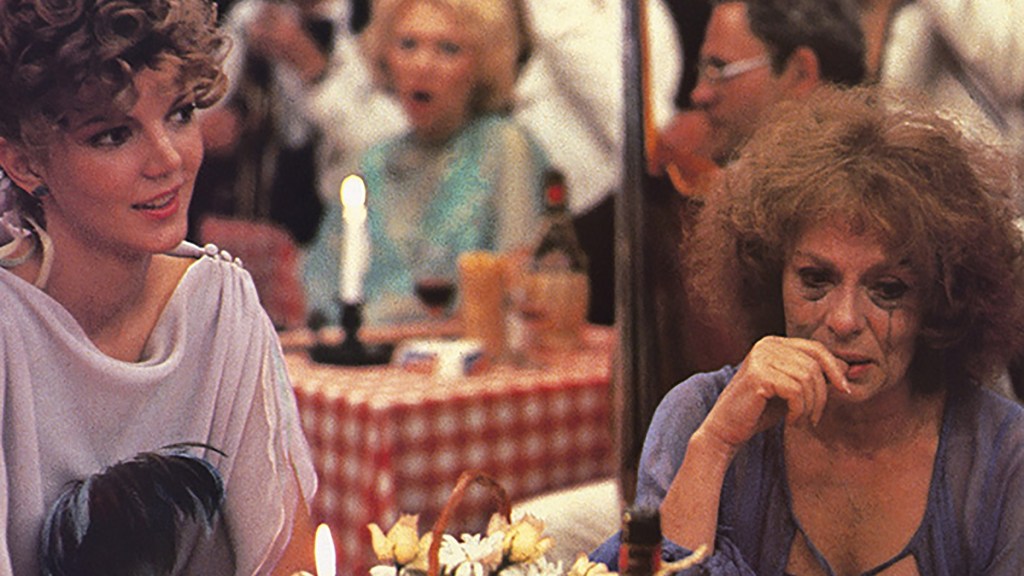
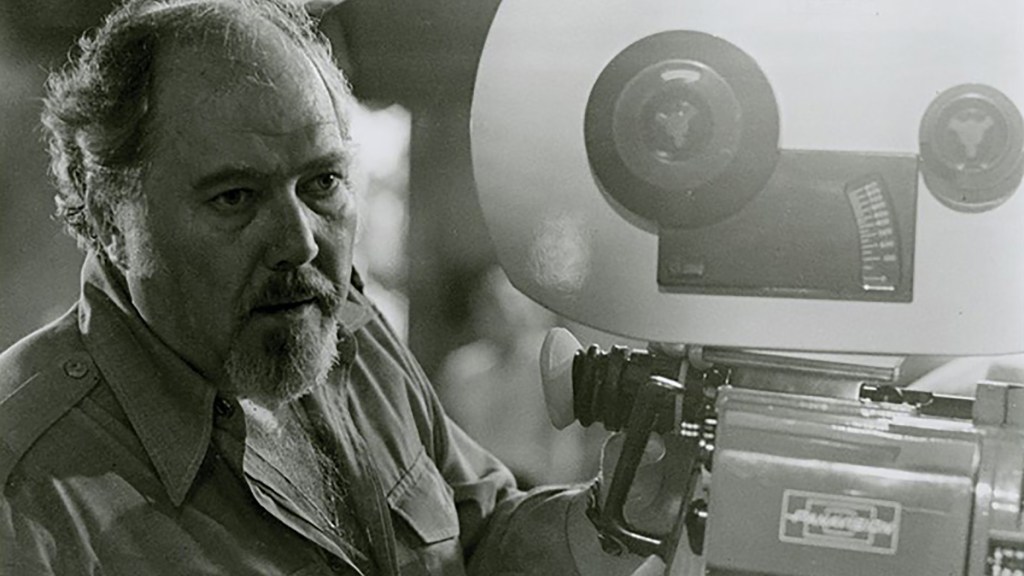
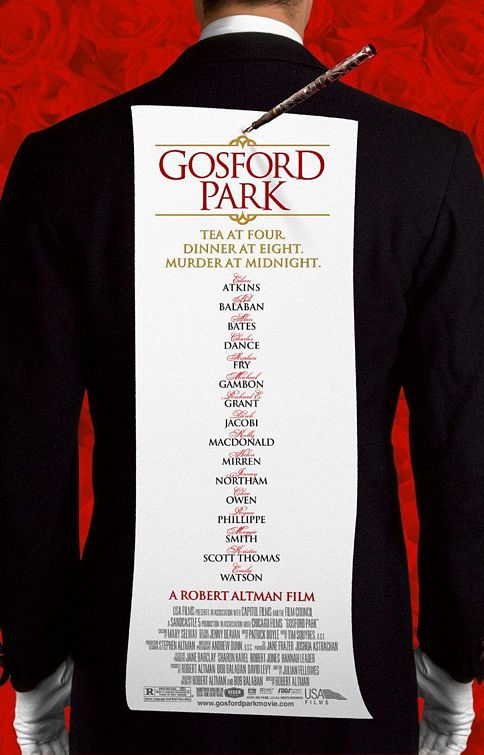
Please join us for a special screening of Robert Altman’s Gosford Park [2001].

  • Screening Date: Thursday, December 1st, 2016 | 7:00pm
  • Venue: Dipson Theatres Amherst
  • Specifications: 2001 / 131 minutes / English / Color
  • Director(s): Robert Altman
  • Print: Supplied by Focus Features
  • Tickets: $9.50 general admission at the door

Event Sponsors:

Venue Information:

3500 Main Street, Buffalo, NY 14226


Synopsis

Courtesy of USA Films press kit:

Robert Altman, one of America’s most distinctive filmmakers, journeys to England for the first time to create a unique film mosaic with an outstanding ensemble cast.

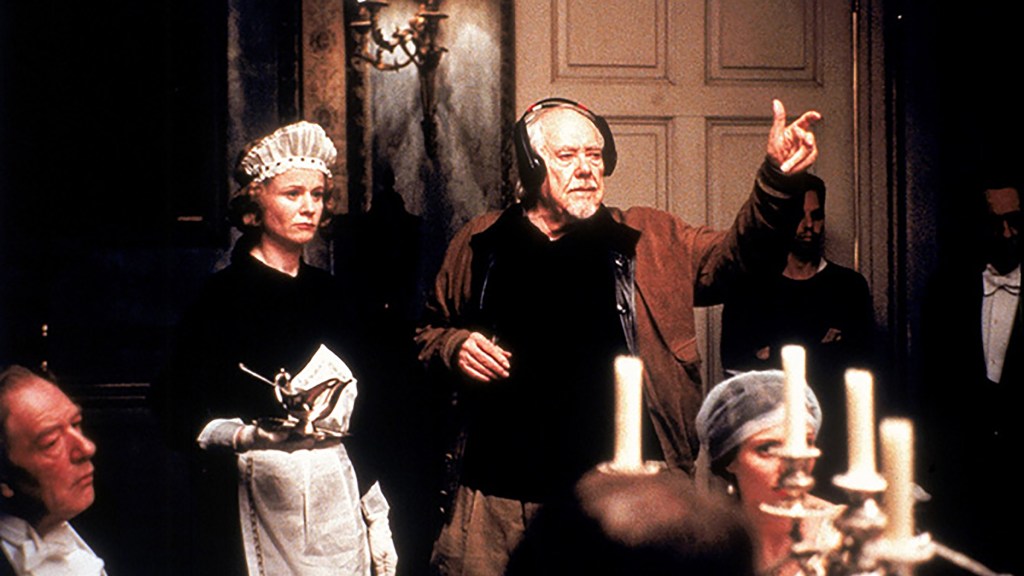
It is November, 1932. Gosford Park is the magnificent country estate to which Sir William McCordle and his wife, Lady Sylvia, gather relations and friends for a shooting party. They have invited an eclectic group including a countess, a World War I hero, the British matinee idol Ivor Novello and an American film producer who makes Charlie Chan movies. As the guests assemble in the gilded drawing rooms above, their personal maids and valets swell the ranks of the house servants in the teeming kitchens and corridors below-stairs.

But all is not as it seems: neither amongst the bejewelled guests lunching and dining at their considerable leisure, nor in the attic bedrooms and stark work stations where the servants labor for the comfort of their employers. Part comedy of manners and part mystery, the film is finally a moving portrait of events that bridge generations, class, sex, tragic personal history — and culminate in a murder. (Or is it two murders … ?)

Ultimately revealing the intricate relations of the above and below-stairs worlds with great clarity, Gosford Park illuminates a society and way of life quickly coming to an end.

Tidbits:

  • Berlin International Film Festival – 2002
  • Academy Awards – 2002 – Winner: Best Writing, Screenplay Written Directly for the Screen
  • Academy Awards – 2002 – Nominee: Best Picture, Best Actress in a Supporting Role, Best Actress in a Supporting Role, Best Director, Best Art Direction-Set Decoration & Best Costume Design
  • Writers Guild of America – 2002 – Winner: Best Screenplay Written Directly for the Screen (Screen)
  • Screen Actors Guild Awards – 2002 – Winner: Outstanding Performance by a Female Actor in a Supporting Role & Outstanding Performance by the Cast of a Theatrical Motion Picture
  • Golden Globes – 2002 – Winner: Best Director – Motion Picture
  • Golden Globes – 2002 – Nominee: Best Motion Picture – Comedy or Musical, Best Performance by an Actress in a Supporting Role in a Motion Picture, Best Performance by an Actress in a Supporting Role in a Motion Picture & Best Screenplay – Motion Picture

Gerald Peary Interview

Courtesy of geraldpeary.com:

The Museum of Fine Arts program promised only brief words from filmmaker Robert Altman, 76, when he appeared last month for a sneak of Gosford Park, his murder mystery with an all-star British cast set at a palatial English estate before World War II. But Altman was so revved up by the screening, that he spoke long into the night:

“I refer to this film as Ten Little Indians meets Rules of the Game. Except for two American actors, it’s an English film. The cast were on the set all the time, people like Alan Bates, who didn’t have a thing to say in most scenes and was in the background. They were all paid the same thing. They accepted the deal or they didn’t. They’re used to acting in ensembles. Nobody wanted to misbehave. Even Maggie Smith, who has a funny reputation, was delightful. I can’t imagine that of an American cast today.

“A period piece like this usually is so proper, everyone talks so carefully, every shot is so precise. I went back to a style of twenty-five years ago of The Long Goodbye, in which I used cameras almost always in motion, moving arbitrarily. Audiences are trained too much by television, where you can get a beer and come back and nothing has changed. I want an audience that’s alert. The British accents? You don’t have to understand all the words, unless you are one of those people sitting with a TV dinner who needs to know everything.

“Bob Balaban came to me two-and-a-half years ago and asked if there was something we could develop together. I said, ‘I’ve never done a who-done-it. People come to an English house for the weekend.’ Some who watch the movie say, ‘I knew from the beginning who did it. You didn’t hide it very well.’ I say,’If you figured it out, that’s OK. I wasn’t trying to make a mystery.’ We’re not going to sit around for 2 1/2 hours to discover the plot, I’m bored with plots. And I’m not interested that anyone pay for the crime. That’s not what I care about. Less than 50% of murderers in the world are caught. What purpose would it serve?”

“I haven’t seen Rules of the Game for twenty years but it did inspire me [with the upstairs people and the below-stairs people.] Julian Fellowes, the screenwriter, is one of those upstairs people. His wife is a Lady-in-Waiting for the Countess of Kent. He was on the set all the time, tapping on my shoulder. As an American in England, I wanted it right. The social structure of below-stairs people is more complicated and structured that upstairs people, who don’t know any different than their behavior. The maid will be in the room, and they pay no notice. It could be a dog.”

The next morning at his hotel, Altman was just as talkative and immensely affable, but maybe he’d OD’d on the tea-and-crumpets milieu of Gosford Park. For a time, we had coffee and talked sports, about the dismaying collapse of the Sox. Said Altman, “In August, I thought they’re going to make it this year. I’m a Red Sox fan, and they are the only team I root for.” But what about being a native of Kansas City? “I always thought the Royals were flat.”

OK, Gosford Park. I wondered if he had any special affection for the old-fashioned detective genre. “No, I just have to have a point of view, a reference. It’s a classic situation: all suspects under one roof. I’ve never read Agatha Christie. Her Ten Little Indians? I don’t think so. The Hardy Boys? I didn’t read that kind of book. As a kid I read Spengler’s Decline of the West. I saw Sherlock Holmes in the movies. I don’t know if I could read it. But the genre has been copied, xeroxed, reprinted many ways. You dig out the information in your brain.”

His filmic research for the movie? “I watched the 1934 film, Charlie Chan in London, made for about $12, in which there isn’t one shot of London but there’s a country home with stables, a butler, a groom. We ran it, I didn’t get anything out of it. Still, there’s always the bumbling inspector like in Chan movies. I tried to set up a Charlie Chan parallel with Stephen Fry’s Inspector Thompson.”

I mentioned that Thompson moves about like Monsieur Hulot, the comic creation of France’s Jacques Tati. “You got it!” Altman responded happily. “You and Paul Thomas Anderson are the only ones. I just love Tati’s works. They are subtle but broad. Broadly subtle.”

The name of the movie? “Julian’s original title was The Other Side of the Tapestry. I thought that was awkward. He started looking through books and came up with Gosford Park. Nobody liked it, everyone fought me on it. But when you make a picture using a name, that’s its name. It’s not a gripping title. But then M*A*S*H wasn’t either.”


Director Bio

“Filmmaking is a chance to live many lifetimes.”

Courtesy of The Criterion Collection:

Few directors in recent American film history have gone through as many career ups and downs as Robert Altman did. Following years of television work, the rambunctious midwesterner set out on his own as a feature film director in the late 1950s, but didn’t find his first major success until 1970, with the antiauthoritarian war comedy M*A*S*H. Hoping for another hit just like it, studios hired him in the years that followed, most often receiving difficult, caustic, and subversive revisionist genre films. After the success of 1975’s panoramic American satire Nashville, Altman once again delved into projects that were more challenging, especially the astonishing, complex, Bergman-influenced 3 Women. Thereafter, Altman was out of Hollywood’s good graces, though in the eighties, a decade widely considered his fallow period, he came through with the inventive theater-to-film Nixon monologue Secret Honor and the TV miniseries political satire Tanner ’88. The double punch of The Player and the hugely influential ensemble piece Short Cuts brought him back into the spotlight, and he continued to be prolific in his output into 2006, when his last film, A Prairie Home Companion, was released months before his death at the age of eighty-one.

Filmography:

  • A Prairie Home Companion (2006)
  • The Company (2003)
  • Gosford Park (2001)
  • Dr. T and the Women (2000)
  • Cookie’s Fortune (1999)
  • The Gingerbread Man (1998)
  • Kansas City (1996)
  • Ready to Wear (1994)
  • Short Cuts (1993)
  • The Player (1992)
  • Vincent & Theo (1990)
  • The Caine Mutiny Court-Martial (1988)
  • Aria (1988)
  • O.C. And Stiggs (1987)
  • Beyond Therapy (1987)
  • Fool For Love (1985)
  • Secret Honor (1984)
  • Streamers (1983)
  • Come Back to the 5 & Dime, Jimmy Dean, Jimmy Dean (1982)
  • Popeye (1980)
  • Health (1980)
  • A Perfect Couple (1979)
  • Quintet (1979)
  • A Wedding (1978)
  • 3 Women (1977)
  • Nashville (1975)
  • Thieves Like Us (1974)
  • California Split (1974)
  • The Long Goodbye (1973)
  • images (1972)
  • McCabe & Mrs. Miller (1971)
  • M*A*S*H (1970)
  • Brewster McCloud (1970)
  • That Cold Day in the Park (1969)
  • Countdown (1968)
  • The James Dean Story (1957)
  • The Delinquents (1957)

Links

Here is a curated selection of links shared on our Facebook page for additional insight/information:

  • 10/29/16 – Need a beginner’s guide to the work of Robert Altman? Look no further than Noel Murray’s in-depth intro over at The A.V. Club! – link
  • 10/30/16 – “The undeniable brilliance of Altman’s cinema is most closely tied to a simple point made in each of his greatest works: the tapestry of overlapping lives is richer than overproduced spectacle. Witness Nashville, The Player, Short Cuts, or Gosford Park: each film lets characters complicate events by their unique personality traits rather than showcases special-effects technicians and pyrotechnics.” Garrett Chaffin-Quiray (501 Movie Directors, 2007) – link
  • 11/01/16 – “Robert Altman was one of the boldest, most versatile filmmakers of the late 20th century. He’s influenced generations of directors with his warm portraits of humanity in flux, his deft handling of ensemble casts and willingness to experiment with sound, storytelling and subject matter.” Owen Williams & Phil De Semlyen, Empire Magazinelink
  • 11/14/16 – “Twelve years after the release of Gosford Park—one of director Robert Altman’s biggest hits—the film seems more relevant than ever, both for how it fits into Altman’s filmography and for how it presages one of today’s most popular TV series. Screenwriter Julian Fellowes won an Academy Award for Gosford Park, and would go on to create the wildly successful and very similar BBC drama ‘Downton Abbey’.” Noel Murray, The Dissolvelink
  • 11/22/16 – On Friday (11/25/16), in honor of the 10th anniversary of his death, the BFI published Geoff Andrew’s must read intro to the wild and woolly world of director Robert Altman. – link
  • 11/27/16 – “Gosford Park is the kind of generous, sardonic, deeply layered movie that Altman has made his own. As a director he has never been willing to settle for plot; he is much more interested in character and situation, and likes to assemble unusual people in peculiar situations and stir the pot. Here he is, like Prospero, serenely the master of his art.” Roger Ebert – link
  • 11/28/16 – “Critical consensus about any movie is impossible, but judging from end-of-the-year polls, Gosford Park by Robert Altman is widely recognized as a masterpiece.” Jonathan Rosenbaum, Chicago Reader – link
  • 11/29/16 – Must read for Robert Altman fans – Stephen Lemons’ gushing career overview for Salon – link

The Player – November 3rd, 2016

The Player [1992]


Please join us for a special screening of Robert Altman’s The Player [1992].

  • Screening Date: Thursday, November 3rd, 2016 | 7:00pm
  • Venue: Dipson Theatres Amherst
  • Specifications: 1992 / 124 minutes / English / Color
  • Director(s): Robert Altman
  • Print: Supplied by Janus Films
  • Tickets: $9.50 general admission at the door

Event Sponsors:

Venue Information:

3500 Main Street, Buffalo, NY 14226


Synopsis

Courtesy of the 1992 San Francisco International Film Festival:

Robert Altman (MASH, Nashville, Vincent & Theo) seems born to direct this savage satire on behind-the-scenes Hollywood movie-making. Tim Robbins plays Griffin Mill, a senior vice president at a major Hollywood studio (the studio’s motto: “Movies—Now More Than Ever!”). He spends his days passing judgment on fawning writers and directors pitching their script ideas (of course, Julia Roberts or Bruce Willis is always very interested in the project), taking power lunches, and worrying that he’s about to be ousted by flavor-of-the-month producer Leonard Levy (Peter Gallagher). Mill is also being stalked by a screenwriter he snubbed months before. When he accidentally kills the suspected stalker, his life begins to unravel. Or does it?

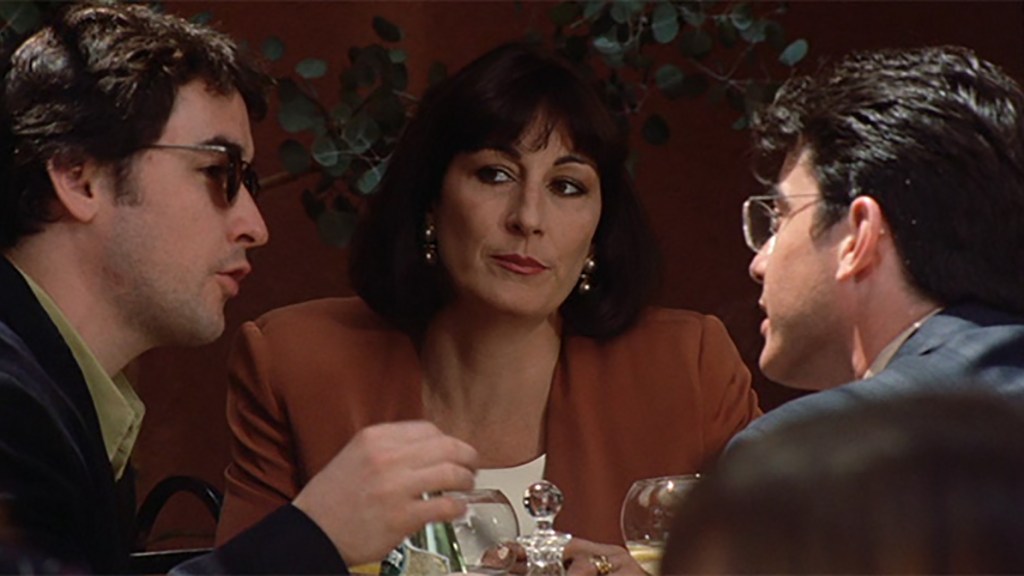
Filled with real-life stars both playing and satirizing themselves (Cher, Anjelica Huston, Burt Reynolds, Lily Tomlin and many others), The Player is the ultimate insider’s look by a couple of disgruntled insiders. Altman and screenwriter Michael Tolkin (who directed last fall’s controversial The Rapture) wield a razor-sharp blade, hacking their way through Hollywood with a feral relish, presenting a world of hilarious nastiness, where no movie concept is too stupid (anyone for The Graduate II?), no principle precious enough to uphold, and murder is just another career move. You’ll never look at a Hollywood production quite the same way again.

— Tod Booth

Tidbits:

  • Cannes Film Festival – 1992 – Winner: Best Actor & Best Director
  • Academy Awards – 1993 – Nominee: Best Director, Best Writing, Screenplay Based on Material Previously Produced or Published & Best Film Editing

Roger Ebert Interview

Courtesy of rogerebert.com:

There is the temptation to write this article from the obvious angle, which is that Robert Altman, the perennial Hollywood maverick and outsider, has skewered the establishment with his savage new comedy named The Player. There would be some truth there.

Altman has never been a happy camper, and The Player shows Hollywood in the 1990s with an unforgiving clarity. All of the insider books you’ve read–the Julia Phillips autobiography, the exposes about David Begelman and Heaven’s Gate and Bonfire and even Michael Milkin — were the words. This is the music.

But there are wheels within wheels, and Altman the outsider is also Altman the industry survivor, who has made most of his films for big studios, who has worked with the top stars (Paul Newman, Warren Beatty, Cher, Robin Williams), and who was as happy as a clam when 20th Century-Fox rented him a yacht at the Cannes Film Festival.

“The reason I’m not exempt from the criticisms in my film,” Altman himself says, “is that I’m a player, too.”

He knows how the game is played. And that is why he has made the most knowledgeable, cynical and unforgiving film about the movie industry since Sunset Boulevard. That is also why his film is funny, suspenseful and entertaining. “Message pictures” close in a week in Hollywood; no matter what you want to say, you’d better make people want to pay money to hear you say it.

Altman’s movie chronicles some time in the life of an upper-level studio executive, played by Tim Robbins (Bull Durham) as a completely self-absorbed cynic who knows no religion except for studio politics. During the course of the film, Robbins finds his job is threatened, he murders a writer, and he engages in corporate infighting, more or less in that order of importance. His character is surrounded by dozens of other players, and Altman has filled the movie with dozens of famous cameo appearances.

Will the movie be too “inside?” Not a chance. In an age when the papers print the box office totals every Monday, when Entertainment Tonight is a daily trade report, when Entertainment Weekly and Premiere read like Variety, the real question is, what took Hollywood so long to make The Player? Moviegoers have been ready for this film for years. “More people can tell you when a picture is over budget,” Altman says, “than can tell you who the director is.”

For Altman, the film’s reception has been sweet revenge. He owned the town in the 1970s, with hits like M*A*S*H and McCabe and Mrs. Miller and Nashville. Then he made a string of movies that were not box office hits, although he winces in pain when he hears Popeye (1980) included in any list of his flops. “That movie made a lot of money,” he says. “It was a hit. Repeat. A hit. It ushered in all of the comic book movies.”

But Popeye was perceived as a flop, and after a decade of big-budget films with big stars, Altman spent the 1980s making small-budget films with small stars, or big stars who were working for scale. Some of them were great films: Secret Honor, for example, with Philip Baker Hall in a one-man performance as Richard Nixon, or Fool for Love, based on the Sam Shepard play. But Altman remained in exile, nursing his projects in Paris and New York, unwanted and increasingly uneasy in Hollywood.

And now comes The Player, based on a novel and screenplay by Michael Tolkin, a writer whose portrait of the way Hollywood treats writers is no doubt based on his own bitter ruminations in the dark of the night.

“At first,” Altman told me, “I thought the movie was a metaphor for Hollywood. Then I realized that Hollywood is a metaphor for the situation in our culture today. Greed is our ruling principal, and Hollywood is just a convenient example of it. Before the movie had even opened anywhere, I’d already received more mail on it than any other movie I’ve ever made. People in the banking business think it’s about banking. People in the newspaper business think it’s about newspapers.”

We were talking one afternoon in his suite at one of those exclusive hotels that overlook Beverly Hills. He seemed a little like a guy who had spent ten years losing his shirt in Vegas, and had just broken the bank.

“I think what happened is, we struck a nerve. The movie is like a march, and everyone wants to join in. It’s like a march on Washington. It stands for the savings and loan debacle, for the Reagan-Bush administration. It’s like we held up a sign saying, ‘Throw the bastards out!'”

When he put out a call for movie stars to come and play themselves, Altman said, “they turned up, 65 of them, with no paranoia, and they all knew exactly what they wanted to say. They were mad. When Burt Reynolds sits in the restaurant and calls everyone an a——, do you think he doesn’t mean it?”

Reynolds may even have been including Altman. “I’m as guilty as anybody else,” he said. “I’m a part of this system I’m satirizing. I play the game, too. I have this ridiculous reputation of being an outsider and a rebel. I don’t know anyone who’s been treated better than I have. John Ford, Howard Hawks…who’s had a better career than I have?”

The fly in the ointment (or, as Altman prefers, “the hair in the butter”) is that Hollywood is still not ready to finance the movies he wants to make. “They see this one, and they say, great! Terrific! What do you want to do? And then, without pausing, they tell me what they want me to do. And when I say, I have this project here–actually, it’s a film based on a group of stories by Raymond Carver–they don’t want to do it. Nothing has changed.”

The problem, Altman said, is that The Player is all too accurate, and what corporate Hollywood thinks about these days is the bottom line. “Two studio heads came right out and said so. Joe Roth at Fox and Brandon Tartikoff at Paramount, both said they were only interested in making pictures that made a lot of money, and don’t have a downside to them. Great. Except they ought to listen to Einstein, who said the train is moving, but so is the station. Their philosophy leads to an endless attempt to make last year’s big hit. What an audience really wants to see is something they’ve never seen before. They respond to The Player because they haven’t seen it before, and they smell the truth in it. It happened with Easy Rider, with MASH, with Close Encounters, with Star Wars. The pictures that really make it, got made by accident.”

Altman twisted the top off a diet soda and settled back and his eyes twinkled. No one looks more avuncular and more conspiratorial at the same time.

“I’ll let you in on something,” he said. “I think the room at the top is empty. There are all these guys in Hollywood who are just below the top, and they take the information, and send it up to the empty room, and it comes back just the same as when they sent it up. There’s not even a bad guy up there. So he can’t even make a good mistake.” What would you do, if you ran a studio?

Altman laughed. “I would never run a studio,” he said. “But when I pick a project, I go by hunches. I use all of the information I can take in, through my sense, my skin, my eyesight, hearing. And when I make that decision, it’s the way I bet on a horse. If everybody at the races bet according to the form, there wouldn’t be any races. And if they keep doing the same thing in Hollywood, there ain’t gonna be any movies.”


Director Bio

“Filmmaking is a chance to live many lifetimes.”

Courtesy of The Criterion Collection:

Few directors in recent American film history have gone through as many career ups and downs as Robert Altman did. Following years of television work, the rambunctious midwesterner set out on his own as a feature film director in the late 1950s, but didn’t find his first major success until 1970, with the antiauthoritarian war comedy M*A*S*H. Hoping for another hit just like it, studios hired him in the years that followed, most often receiving difficult, caustic, and subversive revisionist genre films. After the success of 1975’s panoramic American satire Nashville, Altman once again delved into projects that were more challenging, especially the astonishing, complex, Bergman-influenced 3 Women. Thereafter, Altman was out of Hollywood’s good graces, though in the eighties, a decade widely considered his fallow period, he came through with the inventive theater-to-film Nixon monologue Secret Honor and the TV miniseries political satire Tanner ’88. The double punch of The Player and the hugely influential ensemble piece Short Cuts brought him back into the spotlight, and he continued to be prolific in his output into 2006, when his last film, A Prairie Home Companion, was released months before his death at the age of eighty-one.

Filmography:

  • A Prairie Home Companion (2006)
  • The Company (2003)
  • Gosford Park (2001)
  • Dr. T and the Women (2000)
  • Cookie’s Fortune (1999)
  • The Gingerbread Man (1998)
  • Kansas City (1996)
  • Ready to Wear (1994)
  • Short Cuts (1993)
  • The Player (1992)
  • Vincent & Theo (1990)
  • The Caine Mutiny Court-Martial (1988)
  • Aria (1988)
  • O.C. And Stiggs (1987)
  • Beyond Therapy (1987)
  • Fool For Love (1985)
  • Secret Honor (1984)
  • Streamers (1983)
  • Come Back to the 5 & Dime, Jimmy Dean, Jimmy Dean (1982)
  • Popeye (1980)
  • Health (1980)
  • A Perfect Couple (1979)
  • Quintet (1979)
  • A Wedding (1978)
  • 3 Women (1977)
  • Nashville (1975)
  • Thieves Like Us (1974)
  • California Split (1974)
  • The Long Goodbye (1973)
  • images (1972)
  • McCabe & Mrs. Miller (1971)
  • M*A*S*H (1970)
  • Brewster McCloud (1970)
  • That Cold Day in the Park (1969)
  • Countdown (1968)
  • The James Dean Story (1957)
  • The Delinquents (1957)

A Wedding – October 6th, 2016

A Wedding [1978]


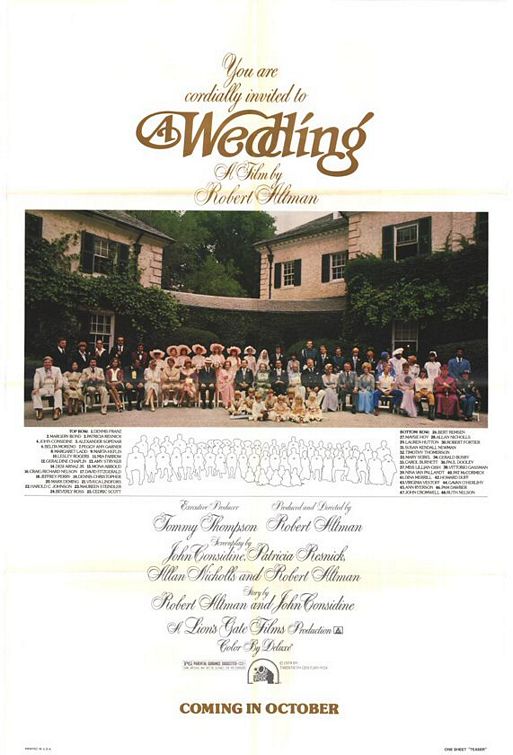
Please join us for a special screening of Robert Altman’s A Wedding [1978], newly restored in 4K by Twentieth Century Fox.

  • Screening Date: Thursday, October 6th, 2016 | 7:00pm
  • Venue: Dipson Theatres Amherst
  • Specifications: 1978 / 125 minutes / English / Color
  • Director(s): Robert Altman
  • Print: Supplied by Twentieth Century Fox Film Corporation
  • Tickets: $9.50 general admission at the door

Event Sponsors:

Venue Information:

3500 Main Street, Buffalo, NY 14226


Synopsis

Courtesy of 1978 program notes, one and two:

A Wedding. The wedding day of a girl from a new-rich Southern family and a boy from an old-money middlewestern matriarchy is the subject of Robert Altman’s most explosively funny film. But like Renoir’s The Rules of the Game, the tone is both comic and tragic, farcical and melodramatic: in short, like life as we know it (but as we hardly ever see it on the screen) in all its squalor and magnificence.

[It’s] a small-scale Nashville — the setting is a society wedding, not a whole town, but there is the same panoramic view, episodic structure and wry comment on American foibles. In a star-studded cast, Carol Burnett shines as the bride’s mother who enjoys a brief flirtation with a wedding guest, Geraldine Chaplin as the wedding organizer and veteran director John Cromwell as the bumbling bishop performing the ceremony.

Tidbits:

  • New York Film Festival – 1978
  • San Sebastián International Film Festival – 1978 – Winner: Best Actress
  • BAFTA Awards – 1979 – Nominee: Best Direction & Best Screenplay
  • Writers Guild of America – 1979 – Nominee: Best Comedy Written Directly for the Screen
  • César Awards – 1979 – Nominee: Best Foreign Film
  • Golden Globes – 1979 – Nominee: Best Actress in a Supporting Role – Motion Picture

Roger Ebert Interview

Courtesy of rogerebert.com:

CANNES, France — Yes, it was very pleasant. We sat on the stern of Robert Altman’s rented yacht in the Cannes harbor, and looked across at the city and the flags and the hills. There was a scotch and soda with lots of ice, and an efficient young man dressed all in white who came on quiet shoes to fill the glasses when it was necessary.

Altman wore a knit sport shirt with the legend of the Chicago Bears over the left pocket: A souvenir, no doubt, from his trips to Chicago to scout locations for A Wedding. He was in a benign mood, and it was a day to savor.

The night before, his film 3 Women had played as an official entry in the Cannes festival, and had received a genuinely warm standing ovation, the most enthusiastic of the festival. Because his M*A*S*H had won the Grand Prix in 1970, Altman could have shown this film out of competition. But he wasn’t having any: “If you don’t want to be in competition,” he was saying, “that means you’re either too arrogant, or too scared. So you might lose? I’ve lost before; there’s nothing wrong with losing.”

He was, as it turned out, only being halfway prophetic: Three days later the jury would award the Grand Prix to an Italian film, giving 3 Women the best actress award for Shelley Duvall’s performance. But on this afternoon it was still possible to speculate about the grand prize, with the boat rocking gently and nothing on he immediate horizon except, of course, the necessity to be in Chicago in June to begin a $4 million movie with 48 actors, most of whom would be on the set every day for two months.

“I’d be back supervising the preparation,” Altman said, “except I’m lazy. Also, my staff knows what I want better than I do. If I’m there, they feel like they have to check with me, and that only slows them down.” Lauren Hutton drifted down from the upper deck. She’ll play a wedding photographer making a 16-mm documentary film-within-a-film in A Wedding, and Altman’s counting on her character to help keep the other characters straight.

“With 48 people at the wedding party, we have to be sure the audience can tell them apart. The bridesmaids will all be dressed the same, for example. So Lauren will be armed with a book of Polaroids of everybody, as a guide for herself, and we can fall back on her confusion when we think the audience might be confused.”

Fresh drinks arrived. Altman sipped his and found it good. His wife, Kathryn, returning from a tour of the yacht harbor, walked up the gangplank and said she had some calls to make. Altman sipped again. “It’s lovely sitting on this yacht,” he said after a moment. “Beats any hotel in town.”

The boat is called Pakcha? I asked.

“Yeah,” said Altman. “Outta South Hampton. It’s been around the world twice. Got its name in one of those South Sea Islands.

Pakcha is a Pacific dialect word for ‘traveling while businessman.'” He shrugged, as if to say, how can I deny it? He sipped his drink again, and I asked if that story was really true about how he got the idea for A Wedding.

“Yeah, that’s how it came about, all right. We were shooting 3 Women out in the desert, and it was a really hot day and we were in a hotel room that was like a furnace, and I wasn’t feeling too well on account of having felt too well the night before, and this girl was down from L.A. to do some in-depth gossip and asked me what my next movie was going to be. At that moment, I didn’t even feel like doing this movie, so I told her I was gonna shoot a wedding next. A wedding? Yeah, a wedding.

“So a few moments later my production assistant comes up and she says, ‘Bob, did you hear yourself just then?’ Yeah, I say, I did. ‘That’s not a bad idea, is it? She says. Not a bad idea at all, I say; and that night we started on the outline.” 3 Women itself had an equally unlikely genesis, Altman recalled: “I dreamed it. I dreamed of the desert, and these three women, and I remember every once in a while I’d dream that I was waking up and sending out people to scout locations and cast the thing. And when I woke up in the morning, it was like I’d done the picture. What’s more, I liked it. So, what the hell, I decided to do it.”

The movie is about…well, it’s about whatever you think it’s about. Two of the women, the main characters, seem to undergo a mysterious personality transfer in the film’s center, and then they fuse with the third woman to form a new personality altogether.

Some viewers have found it to be an Altman statement on women’s liberation, but he doesn’t see it that way: “For women’s lib or against? Don’t ask me. If I sat here and said the film was about X, Y and Z, that restricts the audience to finding the film within my boundaries. I want them to go outside to bring themselves to the film. What they find there will be at least as interesting as what I did…

“And I kept on discovering things in the film right up to the final edit. The film begins, for example, with Sissy Spacek wandering in out of the desert and meeting Shelley Duvall and getting the job in the rehabilitation center. And when I was looking at the end of the film during the editing process, it occurred to me that when you see that final exterior shot of the house, and the dialog asks the Sissy Spacek character to get the sewing basket — well, she could just walk right out of the house and go to California and walk in at the beginning of the movie, and it would be perfectly circular and even make sense that way. But that’s only one way to read it.”

Altman said he’s constantly amazed by the things he reads about his films in reviews. “Sometimes,” he said, “I think the critics take their lead from the statements directors themselves make about their films. There was an astonishing review in Newsweek by Jack Kroll, for example, of Fellini’s Casanova. It made no sense at all, in terms of the film itself. But then I read something Fellini had said about the film, and I think Kroll was simply finding in the film what Fellini said he put there.

“With 3 Women, now, a lot of the reviews go on and on about the supposed Jungian implications of the relationships. If you ask me to give a child’s simplified difference between Jung and Freud, I couldn’t. It’s just a field I know nothing about. But the name of Jung turns up in the production notes that were written for the press kit, and there you are.”

The problem, he said, is that people insist on getting everything straight. On having movies make sense, and on being provided with a key for unlocking complex movies.

“It’s the weirdest thing. We’re willing to accept anything, absolutely anything, in real life. But we demand order from our fantasies. Instead of just going along with them and saying, yeah, that’s right, it’s a fantasy and it doesn’t make sense. Once you figure out a fantasy, it may be more satisfying but it’s less fun.”

For reasons having something to do with that, he said, he likes to take chances on his films: “Every film should be different, and get into a different area, and have its own look. I’d hate to start repeating myself. I have this thing I call a fear quotient. The more afraid I am, going in, the better the picture is likely to be.” A pause.

“And on that basis, A Wedding is going to be my best picture yet. “I like to allow for accidents, for happy occurrences and mistakes. That’s why I don’t plan too carefully, and whey we’re going to use two cameras and shoot 500,000 feet of film on A Wedding. Sometimes you don’t know yourself what’s going to work. I think a problem with some of the younger directors, who were all but raised on film, is that their film grammar has become too rigid. Their work is inspired more by other films than by life.

“That happened to Godard, and to Friedkin it may be happening. To Bogdanovich without any doubt. He has all these millions of dollars and all these great technicians, and he tells them what he wants and they give it to him. Problem is, maybe when he gets it, it turns out he didn’t really want it after all, but he’s stuck with it.”

Altman has rarely had budgets large enough to afford such freedom, if freedom’s the word. Although he’s had only one smash hit, M*A*S*H, he keeps working and remains prolific because his films are budgeted reasonably and brought in on time. 3 Women, for example, is a challenging film that may not find enormous audiences, but at $1.6 million it will likely turn a profit.

“I made a deal with the studio,” he said, “if we go over budget, I pay the difference. If we stay under, I keep the change. On that one, we came in about $100,000 under budget, which certainly wasn’t enough to meet much of the overhead of keeping this whole organization going…but then of course you hope the film goes into profit.”

He always makes a film believing it will be enormously profitable, he said: “When I’m finished, I can’t see any way that millions of people won’t want to see what I’ve done. With The Long Goodbye, for example, we thought we had a monster hit on our hands. With Nashville, my second biggest grossing film, we did have a hit, but it was oversold. Paramount was so convinced they were going through the sky on that film that they spent so damned much money promoting it that they may never break even. It grossed $16 million, which was very good considering its budget, but they thought it would top $40 million, and they were wrong.”

But, of course, A Wedding, will be a monster hit? “I really hope so. If things work out the way I anticipate they will, it will certainly be my funniest film. I mean really funny. But then funny things happen every day.”

The man in white came on quiet shoes, and there was another scotch and soda where the old one had been. Altman obviously had a funny example in mind. “I had this lady interviewer following me around,” he said. “More of that in-depth crap. She was convinced that life with Altman was a never-ending round of orgies and excess. She was even snooping around in my hotel bathroom, for Christ’s sake, and she found this jar of funny white powder in the medicine cabinet. Aha! she thinks. Cocaine! So she snorts some. Unfortunately, what she didn’t know was that I’m allergic to commercial toothpaste because the dentine in it makes me break out in a rash. So my wife mixes up baking soda and salt for me, and — poor girl.”

He lifted his glass and mutely toasted her, and Cannes, and whatever.

photos courtesy of Splendor Films.


Director Bio

“Filmmaking is a chance to live many lifetimes.”

Courtesy of The Criterion Collection:

Few directors in recent American film history have gone through as many career ups and downs as Robert Altman did. Following years of television work, the rambunctious midwesterner set out on his own as a feature film director in the late 1950s, but didn’t find his first major success until 1970, with the antiauthoritarian war comedy M*A*S*H. Hoping for another hit just like it, studios hired him in the years that followed, most often receiving difficult, caustic, and subversive revisionist genre films. After the success of 1975’s panoramic American satire Nashville, Altman once again delved into projects that were more challenging, especially the astonishing, complex, Bergman-influenced 3 Women. Thereafter, Altman was out of Hollywood’s good graces, though in the eighties, a decade widely considered his fallow period, he came through with the inventive theater-to-film Nixon monologue Secret Honor and the TV miniseries political satire Tanner ’88. The double punch of The Player and the hugely influential ensemble piece Short Cuts brought him back into the spotlight, and he continued to be prolific in his output into 2006, when his last film, A Prairie Home Companion, was released months before his death at the age of eighty-one.

Filmography:

  • A Prairie Home Companion (2006)
  • The Company (2003)
  • Gosford Park (2001)
  • Dr. T and the Women (2000)
  • Cookie’s Fortune (1999)
  • The Gingerbread Man (1998)
  • Kansas City (1996)
  • Ready to Wear (1994)
  • Short Cuts (1993)
  • The Player (1992)
  • Vincent & Theo (1990)
  • The Caine Mutiny Court-Martial (1988)
  • Aria (1988)
  • O.C. And Stiggs (1987)
  • Beyond Therapy (1987)
  • Fool For Love (1985)
  • Secret Honor (1984)
  • Streamers (1983)
  • Come Back to the 5 & Dime, Jimmy Dean, Jimmy Dean (1982)
  • Popeye (1980)
  • Health (1980)
  • A Perfect Couple (1979)
  • Quintet (1979)
  • A Wedding (1978)
  • 3 Women (1977)
  • Nashville (1975)
  • Thieves Like Us (1974)
  • California Split (1974)
  • The Long Goodbye (1973)
  • images (1972)
  • McCabe & Mrs. Miller (1971)
  • M*A*S*H (1970)
  • Brewster McCloud (1970)
  • That Cold Day in the Park (1969)
  • Countdown (1968)
  • The James Dean Story (1957)
  • The Delinquents (1957)

Links

Here is a curated selection of links shared on our Facebook page for additional insight/information:

  • 9/20/16 – “The staging of the action is as exhilarating as ever, and there are glorious moments in the twisted, kaleidoscopic narrative.”
    Geoff Andrew, Time Out New York
  • 9/30/16 – Guess who Robert Altman and 20th Century Fox have invited to A Wedding? – 1978 TV Trailer
  • 10/06/16 – Not a pull quote to be found, but a solid critical look at A Wedding by Jonathan Rosenbaum none-the-less – link
  • 10/29/16 – Need a beginner’s guide to the work of Robert Altman? Look no further than Noel Murray’s in-depth intro over at The A.V. Club! – link
  • 11/22/16 – On Friday (11/25/16), in honor of the 10th anniversary of his death, the BFI published Geoff Andrew’s must read intro to the wild and woolly world of director Robert Altman. – link
  • 11/29/16 – Must read for Robert Altman fans – Stephen Lemons’ gushing career overview for Salon – link

Dragon Inn – September 1st, 2016

Dragon Inn [1967]


Please join us for a special screening of King Hu’s Dragon Inn [Long men kezhan] [1967], newly restored in 4K by Janus Films.

  • Screening Date: Thursday, September 1st, 2016 | 7:00pm
  • Venue: Dipson Theatres Amherst
  • Specifications: 1967 / 111 minutes / Mandarin with subtitles / Color
  • Director(s): King Hu
  • Print: Supplied by Janus Films
  • Tickets: $9.50 general admission at the door

Event Sponsors:

Venue Information:

3500 Main Street, Buffalo, NY 14226


Synopsis

Courtesy of Janus Films:

The Chinese wuxia (martial arts) picture was never the same after King Hu’s legendary Dragon Inn. During the Ming dynasty, the emperor’s minister of defense is framed by a powerful court eunuch and then executed; his children are pursued by secret police. In the ensuing chase, a mysterious group of strangers begin to gather at the remote Dragon Gate Inn, where paths (and swords) will cross. This thrilling milestone of film history returns to the screen in a new, beautifully restored 4K digital transfer, created from the original camera negative.

Trivia:

  • During the Ming dynasty, there were many eunuchs in the emperor’s court. They were considered reliable officials and nonthreatening to the royal bloodlines, as they could not marry and start dynasties of their own. They often gained large swaths of political and military power as a result.
  • Director King Hu was a talented calligrapher, and he painted Dragon Inn’s opening credits himself.
  • Many filmmakers have paid tribute, directly or indirectly, to Dragon Inn. In Tsai Ming-liang’s Goodbye, Dragon Inn, Hu’s film is playing as the last feature to ever screen at the historic Taipei Cinema. Dragon Inn actors Shi Jun and Miao Tien both appear in the audience. The camera work, choreography, and special effects of Dragon Inn have had a clear aesthetic influence on such modern-day entries in the martial arts genre as Ang Lee’s Crouching Tiger, Hidden Dragon and Zhang Yimou’s Hero and House of Flying Daggers. Quentin Tarantino’s The Hateful Eight has many plot similarities with Dragon Inn.
  • Bai Ying, who memorably plays the eunuch in the film, would go on to play the eunuch in Teddy Yip’s entertaining Shaw Brothers film The Eunuch.
  • Hu encouraged his martial arts choreographers to draw from the alternately fluid and rhythmic movements of Chinese opera. Rather than resorting to fast or slow motion, footage printed backward, animation, or other early special-effects techniques, the filmmaker relied as much as possible on the actual skills of his performers and on the magic of editing.

Restoration:

King Hu’s Dragon Inn was restored in 4K by the Chinese Taipei Film Archive and L’Immagine Ritrovata from the 35 mm original camera negative, which, fortunately, was still in relatively good condition. The primary focus of the restoration was correcting the main issues affecting the negative: flicker, dirt, scratches, splice marks, and a generally unstable image. As there was no vintage print available to be used as a color reference, notes on color timing held by the Film Archive proved to be key. The monaural soundtrack was likewise restored from the original sound negative, with distortion and cross modulation corrected using digital tools.

Tidbits:

  • Golden Horse Film Festival – 1968 – Winner: Best Screenplay & 2nd place: Best Feature Film

Shaw Bros to Dragon Inn

Though he would become the most influential director of wuxia movies in history, King Hu, born Hu Jinquan in Beijing, came to movies accidentally. An aficionado of Peking opera, comic books, and martial arts novels, Hu first became involved in the world of filmmaking when an acquaintance recommended him for a set decorating job at Hong Kong’s Great Wall Studio in the early fifties. Soon enough, Hu found himself acting in films as well. In 1958, he joined Shaw Brothers, Hong Kong’s premier martial arts film studio; founded in 1924, the studio had by this point become an action film empire, knocking out one fighting film after another with regularity and ease.

Though Hu started out as an actor at Shaw Brothers, his contract gave him the option of becoming a director. After cutting his teeth as an assistant director on such classics as Li Han-hsiang’s musical romance The Love Eterne (1963), he made his directorial debut in 1965 with the patriotic, anti-Japanese war film Sons of the Good Earth, in which he also starred. It was his third directorial effort, Come Drink with Me (1966), however, that proved revolutionary. Not only was this Hu’s first wuxia film, it was also a newly propulsive and realistically violent example of the genre, and it so captivated audiences that it revitalized the form, giving the generally artificial-looking, candy-colored Shaw Brothers productions an aesthetic shot in the arm.

Hu’s style, pioneered in Come Drink with Me, wasn’t just surface grittiness. He imbued his action with a compositional depth and maturity; focused intently on the physicality of his performers, rather than relying on special effects; used the camera as a balletic partner to the actors; sculpted his fight scenes keenly through editing rather than letting them play out in single takes; cast women in stronger, more central roles than the studio had before; and conveyed a palpable sense of Buddhist precepts.

For all these reasons, Come Drink with Me was a revelatory wuxia film, and the foundational work for Hu’s subsequent masterpieces Dragon Inn (1967) and A Touch of Zen (1971). But Shaw Brothers wasn’t impressed with this new brand of wuxia, and his relationship with studio head Run Run Shaw became frayed. With his newfound success and artistic confidence, however, Hu could write his own ticket, and after Come Drink with Me, the director left Shaw Brothers to make his own films independently in Taiwan, which had a smaller, more flexible and open-minded film industry.

The innovative Dragon Inn, produced with Sha Rongfeng for their short-lived partnership in the Union Film Company, set the template for nearly all wuxia films to come. A Ming dynasty—era tale of political exile and violent intrigue set in wide-open Taiwan exteriors, the film, with its aesthetic control and spiritual core, was evidence that the genre had broken decisively from its pulp past.


Wuxia

Although in the West most often applied to film, the term wuxia—literally “martial [wu] hero [xia]”—in fact refers to a genre of Chinese fiction that is represented in every medium, from literature to opera to, of course, movies. Dating back to 300 BCE in its protean form, the wuxia narrative traditionally follows a hero from the lower class without official affiliation who pursues righteousness and/or revenge while adhering to a code of chivalrous behavior. Brought to mass popularity in the early part of the twentieth century via a series of post-Confucian novels, wuxia soon spread to film with the appearance of Burning of the Red Lotus Temple, a now lost serial adapted from the novel The Tale of the Extraordinary Swordsman that was released between 1928 and 1931. Banned by the government in the thirties due to their subversive and supernatural elements, wuxia films returned to the screen in the fifties, taking the traditional narrative form while also borrowing elements—such as careful choreography—from Chinese opera. Following a strict formula, wuxia films—though always period pieces—can be said to have become fully modern in the 1960s, with the formation of the Shaw Brothers studio and the advanced direction of filmmakers such as King Hu. The commercial success of Hu’s Come Drink with Me (produced for Shaw) and Dragon Inn (produced independently) kicked off a wave of wuxia titles, which were frequently exported to the U.S. as reedited, dubbed action films during the martial arts craze of the first half of the seventies. Though the genre wavered in popularity in the succeeding decades, it returned to international prominence in 2000 with Ang Lee’s Crouching Tiger, Hidden Dragon, which is heavily indebted to Hu’s classics of the sixties and seventies.


Director Bio

“The audience is the camera. I don’t want the audience to sit and watch, I want it to move.”

Courtesy of Janus Films:

Born in Beijing in 1932, King Hu moved to Hong Kong at the age of eighteen and started work as an illustrator for film advertisements. In 1954, he made his acting debut in the film Humiliation for Sale, and in 1958, through director Li Han-hsiang, he joined the Shaw Brothers studio as an actor, screenwriter, and assistant director. In 1963, Hu was first assistant director for Li on the film The Love Eterne, and the following year he made his directorial debut with The Story of Sue San. In 1966, Hu released his first wuxia film, Come Drink with Me, which was a major factor in the rise of the genre.

Dragon Inn (1967) was a blockbuster, setting box-office records in Taiwan, Korea, and the Philippines, and proved to have a broad and lasting influence. Its follow-up would not hit screens until 1971, after three years of filming. A Touch of Zen took the Technical Grand Prize award at the Cannes Film Festival in 1975, propelling Hu onto the world stage, and its bamboo forest duel became a classic scene and an indelible contribution to cinema.

Hu’s 1981 film The Juvenizer—entirely self-funded and self-shot—was his first comedy, and his only work set in the present. After The Wheel of Life (1983), Hu stepped out of the limelight until 1990’s The Swordsman, for which he made a comeback at the request of the younger wuxia director Tsui Hark. Hu was involved in the costuming, styling, and set design for the film, including setting up a massive set in Xitou, Taiwan. In 1992, he received a lifetime achievement award from the Hong Kong Film Directors’ Guild. The following year saw the release of what turned out to be his final film, Painted Skin. In 1997, while about to begin work on a film about the Chinese immigrant workers who built the transcontinental railroads of America, Hu died while undergoing heart surgery.

Filmography (selected):

  • 《畫皮之陰陽法王》 Painted Skin (1993)
  • 《笑傲江湖》 The Swordsman (1990)
  • 《大輪迴》 The Wheel of Life (1983)
  • 《天下第一》 All the King’s Men (1983)
  • 《終身大事》 The Juvenizer (1981)
  • 《山中傳奇》 Legend of the Mountain (1979)
  • 《空山靈雨》 Raining in the Mountain (1979)
  • 《忠烈圖》 The Valiant Ones (1975)
  • 《迎春閣之風波》 The Fate of Lee Khan (1973)
  • 《俠女》 A Touch of Zen (1971)
  • 《喜怒哀樂》第二段『怒》Anger (1970) (part of the omnibus film Four Moods)
  • 《龍門客棧》 Dragon Inn (1967)
  • 《大醉俠》 Come Drink with Me (1966)
  • 《大地兒女》 Sons of the Good Earth (1965)
  • 《玉堂春》 The Story of Sue San (1964)

Links

Here is a curated selection of links shared on our Facebook page for additional insight/information:

  • 7/30/16 – “All Hail King Hu” by Straw Cats Theater
  • 8/27/16 – Did you know Tsai Ming-liang’s Goodbye, Dragon Inn centers around King Hu’s Dragon Inn? – link
  • 8/28/16 – “Considered by many to be the architect of wuxia cinema, King Hu was to martial arts was John Ford was to the western.” James Marsh, Screen Anarchylink
  • 9/1/16 – “Warning: There’s a very real danger that after you watch the dazzling 4K restoration of this 1967 Taiwanese martial-arts classic, you’ll never again be able to champion scratchy grindhouse prints with cheesy dubs.” Luke Y. Thompson, Village Voicelink

A Touch of Zen – August 4th, 2016

A Touch of Zen [1971]


Please join us for a special screening of King Hu’s A Touch of Zen [Xia nü] [1971], newly restored in 4K by Janus Films.

  • Screening Date: Thursday, August 4th, 2016 | 7:00pm
  • Venue: Dipson Theatres Amherst
  • Specifications: 1971 / 200 minutes / Mandarin with subtitles / Color
  • Director(s): King Hu
  • Print: Supplied by Janus Films
  • Tickets: $9.50 general admission at the door

Event Sponsors:

Venue Information:
3500 Main Street, Buffalo, NY 14226


Synopsis

Courtesy of Janus Films:

In director King Hu’s grandest work, the noblewoman Yang (Hsu Feng), a fugitive hiding in a small village, must escape into the wilderness with a shy scholar and two aides. There, the quartet face a massive group of fighters, and are joined by a band of Buddhist monks who are surprisingly skilled in the art of battle. Janus Films is proud to present the original, uncut version of this classic in a sparkling new 4K restoration.

Trivia:

  • Production of A Touch of Zen began in 1967 but was not completed until 1969. Against director King Hu’s wishes, producers demanded that the film be exhibited in two parts (in 1970 and 1971) in Taiwan, where it languished at the box office. The famous bamboo-forest fight climax of the first part was reprised at the beginning of the second. Without Hu, the producers then recut the film into a two-hour version and rereleased it to theaters, where it performed no better. In 1973, Hu regained control of the film and recut it according to his original intentions: as a single three-hour film. That version premiered at the Cannes Film Festival in 1975.
  • Hu stated that the Ming Dynasty was a period “when Western influences first reached China,” and that he conceived his films as critiques of the unjustified killings depicted in such Western movies as the James Bond franchise, where the hero indiscriminately guns down faceless enemies.
  • A Touch of Zen was the first Chinese film to win an award at Cannes, where it took home the Technical Grand Prize in 1975.
  • Unusual for the wuxia genre, the first fight sequence does not occur until almost an hour into the film.
  • A Touch of Zen was inspired by “The Magnanimous Girl,” from Pu Songling’s ghost-story anthology Strange Stories from a Chinese Studio. The anthology consists of roughly 500 stories and has inspired many films, including Li Han-hsiang’s The Enchanting Shadow, Tsui Hark’s A Chinese Ghost Story, and Gordon Chan’s Painted Skin.
  • Hu had a full village constructed for the opening half of the film, and then left it alone for nine months to give it a weathered look.

Restoration:

King Hu’s A Touch of Zen was restored in 4K by the Taiwan Film Institute and L’Immagine Ritrovata from the 35 mm original camera negative. The negative was generally in good preservation condition, with very light shrinkage. The most serious problems were several tears that needed to be repaired. The film was not particularly warped or unstable, but it was covered in stains and colored spots of various sizes, and full of splices, so the lab used a dust removal filter and went frame by frame to eliminate unwanted artifacts. The removal of splice marks was a heavy task: a movie with fast editing, A Touch of Zen is full of close splices. This work was done by manually reconstructing the damaged parts of frames with interpolation tools, adjusting for luminance and grain. During the color-correction process, the 4K resolution allowed the lab to achieve a deep definition and richness. As there was no vintage positive element available to use as a reference for color restoration, a 1992 print preserved at the Taiwan Film Institute was consulted. Research results on Dragon Inn provided by the TFI and the lab’s previous restoration experience on that film also helped the lab execute the color correction of A Touch of Zen, which was shot by the same director and film crew.

Tidbits:

  • Cannes Film Festival – 1975 – Winner: Technical Grand Prize
  • New York Film Festival – 1976
  • Toronto International Film Festival – 1977

A Touch of Freedom

After a long stint at Hong Kong’s historic Shaw Brothers studio, which specialized in martial arts pictures, King Hu had decided to strike out on his own. His 1966 Shaw production Come Drink with Me had been an enormous commercial and artistic triumph for him but had proved too radical—in the realistic violence of its carefully orchestrated action—for the studio. So he had left Hong Kong for Taiwan, where he made his first major independent success, 1967’s Dragon Inn, with producer Sha Rongfeng, for their short-lived studio the Union Film Company.

Hu’s next film would prove even more ambitious. A Touch of Zen (1971) is the kind of gargantuan production that only an artist high on newfound freedoms would dream of making. A three-hour production with a richly woven plot, structural complexity, and dazzling visual experimentation, A Touch of Zen is the director’s grandest vision.

Starting as a story about a fugitive noblewoman (played by Hsu Feng, in one of the strong female roles typical of the director) hiding out in a village after she and her family were marked for extermination by the corrupt Ming dynasty government, the film builds into a spiritual action epic about the uneasy coexistence of violence and Buddhist principles. With its mystical beauty, exquisite photography, and moving, ambiguous depiction of faith, A Touch of Zen is a work of metaphysical genius, Hu’s clearest statement of faith and ultimate visual expression of the seemingly unfilmable concepts of Zen Buddhism. It is especially renowned for its radically disjunctive editing and dexterous camera movements during fight scenes. Here more than ever, one can feel the influence of the Chinese opera on Hu’s action cinema. It wholly reflects his ideas about the relationship between film and viewer; as he once said, “The audience is the camera. I don’t want the audience to sit and watch, I want it to move.”

With its three-hour-plus running time, A Touch of Zen offers many characters and plot strands, and it was, in fact, originally released in two parts. The first half, which climaxes with the most famous action sequence of Hu’s career—a gravity-defying, startlingly edited battle set in a bamboo forest—was released in 1970, while the second half was released in 1971. The two parts were subsequently combined into one title for international audiences, as Hu originally intended, and it has mostly been presented this way ever since.

A Touch of Zen was the first wuxia film to make a mark on the Western art-cinema world, screening to acclaim at the 1975 Cannes Film Festival and winning the Technical Grand Prize (awarded for “superior technique”) there. Just as Pather Panchali had brought Indian cinema to an international audience at Cannes twenty years earlier, A Touch of Zen was the breakthrough for a particular strand of Eastern cinema, convincing an audience that had previously been skeptical, or at least disinterested, of the artistic value and singular beauty of the best martial arts moviemaking.

Despite the film’s success at Cannes, however, it was an expensive disappointment domestically, which made it difficult for Hu to raise money for future projects—certainly for anything on such a scale. After 1975, Hu would focus on Buddhist- or supernatural-themed dramas. Though he continued to work in Taiwan, the movies being made by the ascendant daring filmmakers of the Taiwanese New Wave marked his work as dated. Nevertheless, Hu, who died in 1997 after complications following heart surgery, remains among the most influential filmmakers of all time, inspiring directors from Wong Kar-wai and Zhang Yimou to Tsui Hark and Tsai Ming-liang.


Wuxia

Although in the West most often applied to film, the term wuxia—literally “martial [wu] hero [xia]”—in fact refers to a genre of Chinese fiction that is represented in every medium, from literature to opera to, of course, movies. Dating back to 300 BCE in its protean form, the wuxia narrative traditionally follows a hero from the lower class without official affiliation who pursues righteousness and/or revenge while adhering to a code of chivalrous behavior. Brought to mass popularity in the early part of the twentieth century via a series of post-Confucian novels, wuxia soon spread to film with the appearance of Burning of the Red Lotus Temple, a now lost serial adapted from the novel The Tale of the Extraordinary Swordsman that was released between 1928 and 1931. Banned by the government in the thirties due to their subversive and supernatural elements, wuxia films returned to the screen in the fifties, taking the traditional narrative form while also borrowing elements—such as careful choreography—from Chinese opera. Following a strict formula, wuxia films—though always period pieces—can be said to have become fully modern in the 1960s, with the formation of the Shaw Brothers studio and the advanced direction of filmmakers such as King Hu. The commercial success of Hu’s Come Drink with Me (produced for Shaw) and Dragon Inn (produced independently) kicked off a wave of wuxia titles, which were frequently exported to the U.S. as reedited, dubbed action films during the martial arts craze of the first half of the seventies. Though the genre wavered in popularity in the succeeding decades, it returned to international prominence in 2000 with Ang Lee’s Crouching Tiger, Hidden Dragon, which is heavily indebted to Hu’s classics of the sixties and seventies.


Director Bio

“The audience is the camera. I don’t want the audience to sit and watch, I want it to move.”

Courtesy of Janus Films:

Born in Beijing in 1932, King Hu moved to Hong Kong at the age of eighteen and started work as an illustrator for film advertisements. In 1954, he made his acting debut in the film Humiliation for Sale, and in 1958, through director Li Han-hsiang, he joined the Shaw Brothers studio as an actor, screenwriter, and assistant director. In 1963, Hu was first assistant director for Li on the film The Love Eterne, and the following year he made his directorial debut with The Story of Sue San. In 1966, Hu released his first wuxia film, Come Drink with Me, which was a major factor in the rise of the genre.

Dragon Inn (1967) was a blockbuster, setting box-office records in Taiwan, Korea, and the Philippines, and proved to have a broad and lasting influence. Its follow-up would not hit screens until 1971, after three years of filming. A Touch of Zen took the Technical Grand Prize award at the Cannes Film Festival in 1975, propelling Hu onto the world stage, and its bamboo forest duel became a classic scene and an indelible contribution to cinema.

Hu’s 1981 film The Juvenizer—entirely self-funded and self-shot—was his first comedy, and his only work set in the present. After The Wheel of Life (1983), Hu stepped out of the limelight until 1990’s The Swordsman, for which he made a comeback at the request of the younger wuxia director Tsui Hark. Hu was involved in the costuming, styling, and set design for the film, including setting up a massive set in Xitou, Taiwan. In 1992, he received a lifetime achievement award from the Hong Kong Film Directors’ Guild. The following year saw the release of what turned out to be his final film, Painted Skin. In 1997, while about to begin work on a film about the Chinese immigrant workers who built the transcontinental railroads of America, Hu died while undergoing heart surgery.

Filmography (selected):

  • 《畫皮之陰陽法王》 Painted Skin (1993)
  • 《笑傲江湖》 The Swordsman (1990)
  • 《大輪迴》 The Wheel of Life (1983)
  • 《天下第一》 All the King’s Men (1983)
  • 《終身大事》 The Juvenizer (1981)
  • 《山中傳奇》 Legend of the Mountain (1979)
  • 《空山靈雨》 Raining in the Mountain (1979)
  • 《忠烈圖》 The Valiant Ones (1975)
  • 《迎春閣之風波》 The Fate of Lee Khan (1973)
  • 《俠女》 A Touch of Zen (1971)
  • 《喜怒哀樂》第二段『怒》Anger (1970) (part of the omnibus film Four Moods)
  • 《龍門客棧》 Dragon Inn (1967)
  • 《大醉俠》 Come Drink with Me (1966)
  • 《大地兒女》 Sons of the Good Earth (1965)
  • 《玉堂春》 The Story of Sue San (1964)

Links

Here is a curated selection of links shared on our Facebook page for additional insight/information:

  • 7/15/16 – Based in a centuries-old genre of Chinese literature, the wuxia martial arts movie takes place in a world of swords, sorcery, chivalry and romance. Here are 10 of its jaw-dropping milestones. – link
  • 7/22/16 – Over on the Criterion Collection’s Current, read King Hu’s 1975 Cannes press notes for A Touch of Zenlink
  • 7/23/16 – “The Asian martial arts film is central to the history of cinema as an art. Not long ago, that statement would have been regarded as reckless. Now video games showcase martial arts, and fantasy adventure films boast dragons and flying swordsmen. More deeply, the tradition running from 1920s Japanese and Chinese swordplay films and continuing through the postwar work of Akira Kurosawa and Hong Kong directors has explored powerful approaches to film aesthetics—the way movies are staged and cut, the way sound enhances bursts of movement. In this collective exploration, no filmmaker has been more distinctive and exhilarating than King Hu.” David Bordwell – link
  • 7/30/16 – “All Hail King Hu” by Straw Cats Theater
  • 8/3/16 – Based in a centuries-old genre of Chinese literature, the wuxia martial arts movie takes place in a world of swords, sorcery, chivalry and romance. Here are 10 of its jaw-dropping milestones – link
  • 8/11/16 – A Touch of Zen finds the art in the martial arts at Pop Matterslink

Band of Outsiders – July 7th, 2016

Band of Outsiders [1964]


Please join us for a special screening of Jean-Luc Godard’s Band of Outsiders [Bande à part] [1964], newly restored by Rialto Pictures.

  • Screening Date: Thursday, July 7th, 2016 | 7:00pm
  • Venue: Dipson Theatres Amherst
  • Specifications: 1964 / 95 minutes / French with subtitles / Black & White
  • Director(s): Jean-Luc Godard
  • Print: Supplied by Rialto Pictures
  • Tickets: $9.50 general admission at the door. Online purchases are active here.

Event Sponsors:

Venue Information:

3500 Main Street, Buffalo, NY 14226


Synopsis
Courtesy of The Criterion Collection:

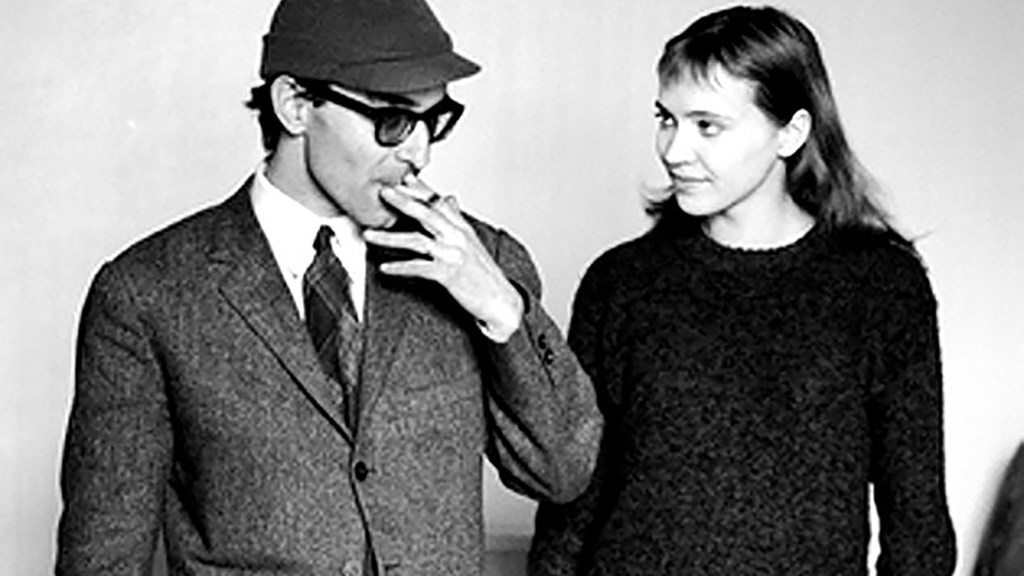
Four years after Breathless, Jean-Luc Godard reimagined the gangster film even more radically with Band of Outsiders (Bande à part). In it, two restless young men (Sami Frey and Claude Brasseur) enlist the object of both of their fancies (Anna Karina) to help them commit a robbery—in her own home. This audacious and wildly entertaining French New Wave gem is at once sentimental and insouciant, effervescently romantic and melancholy, and it features some of Godard’s most memorable set pieces, including the headlong race through the Louvre and the unshakably cool Madison dance sequence.

Tidbits:

  • Locarno International Film Festival – 1964

Director Bio

“A story should have a beginning, a middle, and an end… but not necessarily in that order.”

Courtesy of The Criterion Collection:

A pioneer of the French new wave, Jean-Luc Godard has had an incalculable effect on modern cinema that refuses to wane. Before directing, Godard was an ethnology student and a critic for Cahiers du cinéma, and his approach to filmmaking reflects his interest in how cinematic form intertwines with social reality. His groundbreaking debut feature, Breathless—his first and last mainstream success—is, of course, essential Godard: its strategy of merging high (Mozart) and low (American crime thrillers) culture has been mimicked by generations of filmmakers. As the sixties progressed, Godard’s output became increasingly radical, both aesthetically (A Woman Is a Woman, Contempt, Band of Outsiders) and politically (Masculin féminin, Pierrot le fou), until by 1968 he had forsworn commercial cinema altogether, forming a leftist filmmaking collective (the Dziga Vertov Group) and making such films as Tout va bien. Today Godard remains our greatest lyricist on historical trauma, religion, and the legacy of cinema.

Filmography:

  • Film Socialisme (2010)
  • Our Music (2004)
  • In Praise of Love (2001)
  • De L’Origine du XXIe Siecle (2000)
  • Histoire(s) du cinema (two chapters) (1997)
  • For Ever Mozart (1996)
  • Jlg/Jlg (1995)
  • 2 X 50 Years of French Cinema (1995)
  • The Children Play Russian (1994)
  • Helas Pour Moi (1993)
  • Contre l’oubli (1992)
  • Germany Year 90 Nine Zero (1991)
  • Nouvelle Vague (1990)
  • Aria (1988)
  • King Lear (1987)
  • Soigne ta droite (1987)
  • The Rise and Fall of a Small Film Company (1986)
  • Hail Mary (1985)
  • (“Je-Vous-Salue-Marie”) Détective (1985)
  • Passion (1983)
  • First Name: Carmen (1983)
  • Every Man For Himself (1980)
  • Ici et ailleurs (1976)
  • Comment ca va? (1975)
  • Numero Deux (1975)
  • A Letter to Jane (1972)
  • Tout va bien (1972)
  • One American Movie/1 A.M. (1971)
  • Vladimir et Rosa (1971)
  • Pravda (1970)
  • Le gai savoir (1970)
  • Wind From the East (1970)
  • Two or Three Things I Know About Her (1970)
  • Sympathy for the Devil (1 + 1) (1969)
  • The Oldest Profession “Anticipation” (1968)
  • Far From Vietnam (1968)
  • Six in Paris “Montparnasse-Levallois” (1968)
  • Pierrot le fou (1968)
  • La Chinoise (1968)
  • Weekend (1968)
  • Les carabiniers (1968)
  • Le petit soldat (1967)
  • Masculine Feminine (1966)
  • Band of Outsiders (1966)
  • Made in U.S.A. (1966)
  • Alphaville (1965)
  • The Married Woman (1965)
  • A Woman Is a Woman (1964)
  • Contempt (1964)
  • Reportage sur Orly (1964)
  • Seven Capital Sins “Laziness” (1963)
  • My Life To Live (1963)
  • Ro.Go.Pa.G. “Il Nouvo Mondo” (1963)
  • Breathless (1961)
  • Operation Concrete (1954)

Links

Here is a curated selection of links shared on our Facebook page for additional insight/information:

  • 6/15/16 – “It’s as if a French poet took an ordinary banal American crime novel and told it to us in terms of the romance and beauty he read between the lines.” Pauline Kael, The New Republiclink
  • 6/29/16 – “French New Wave filmmaker Jean-Luc Godard reimagines the gangster film in Band of Outsiders. The film, which Godard has referred to as “Alice in Wonderland meets Franz Kafka,” deals with the dissonance between fantasy and reality. The characters live in a wonderland of gangster films and romantic literature, but when they commit a crime like one they saw in the movies, the consequences are real. Godard uses nostalgia as a device, placing his characters in dreamlike scenes and then cutting the air with metafilmic self-awareness.” Meghan Gilligan, ScreenPrismlink
  • 6/30/16 – “That narration [in Band of Outsiders by Jean-Luc Godard] is somewhat akin to the way James Joyce aimed to ennoble human experience in his novel Ulysses, heightening it through a diversity of prose styles while essentially chronicling a regular day in the life of a group of otherwise humdrum characters. Godard adds another layer to Joyce’s artistic vision, however, with his encyclopedic cinephilia, with cheeky references ranging from Fritz Lang’s obscure 1950 noir House By the River to Jacques Demy’s The Umbrellas of Cherbourg (a musical number from the latter is heard over a café loudspeaker).” Kenji Fujishima, Movie Mezzanine – link
  • 7/7/16 – Three reasons to watch Band of Outsiders from Criterion: