Jauja – September 19th, 2019

Jauja [2014]


Please join Cultivate Cinema Circle and Hallwalls Contemporary Arts Center as we present a year-long series entitled Post-Colonialisms: World Cinema and Human Consequence. We finish with Lisandro Alonso’s critically-acclaimed Jauja [2014].

  • Screening Date: Thursday, September 19th, 2019 | 8:00pm
  • Venue: Hallwalls Contemporary Arts Center
  • Specifications: 2014 / 109 minutes / Spanish/Danish with English subtitles / Color
  • Director(s): Lisandro Alonso
  • Print: Supplied by The Cinema Guild
  • Tickets: $8 general, $6 students & seniors, $5 members

Event Sponsors:

Venue Information:

341 Delaware Ave, Buffalo, NY 14202


Synopsis

Courtesy of press kit:

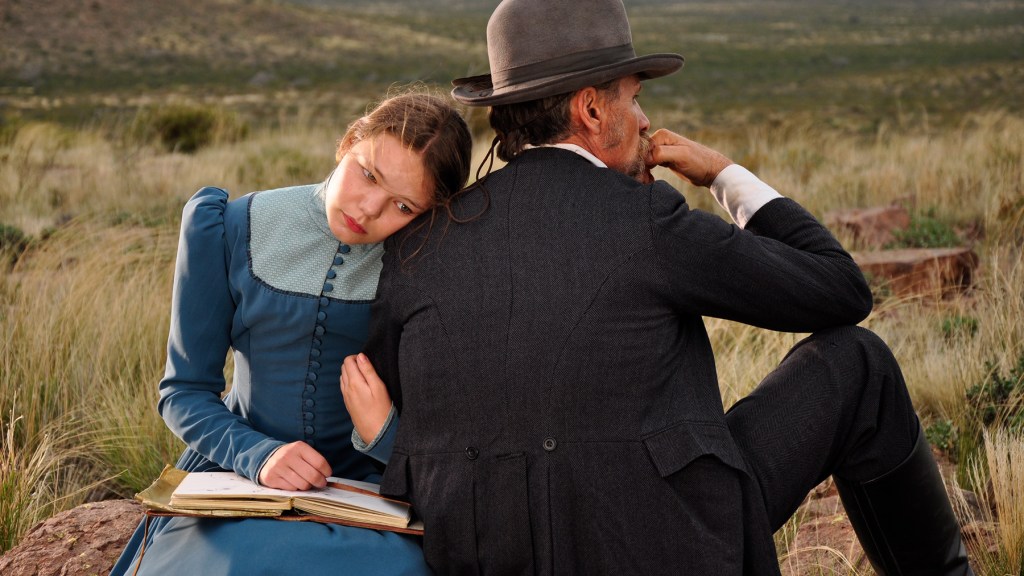
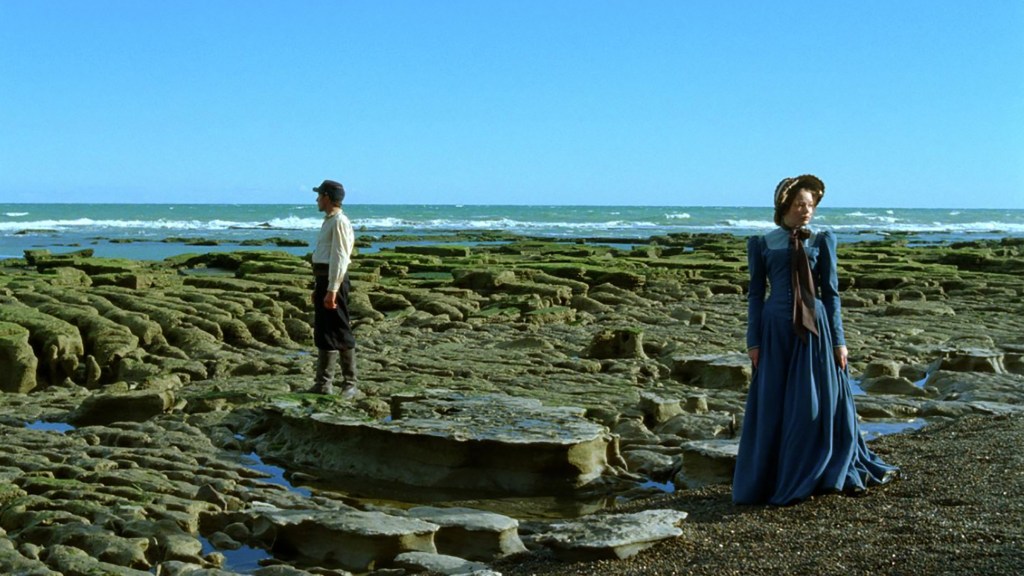
An astonishingly beautiful Western starring Viggo Mortensen, Jauja (pronounced how-ha) begins in a remote outpost in Patagonia during the “Conquest of the Desert” in the late 1800s. Captain Gunnar Dinesen has come from Denmark with his fifteen year-old daughter to take an engineering job with the Argentine army. Being the only female in the area, Ingeborg creates quite a stir among the men. She falls in love with a young soldier, and one night they run away together. When Dinesen realizes what has happened, he decides to venture into enemy territory, against his men’s wishes, to find the young couple. Featuring a superb performance from Mortensen, Jauja is the story of a man’s desperate search for his daughter, a solitary quest that takes him to a place beyond time, where the past vanishes and the future has no meaning.

The Legend:
The Ancient Ones said that ‘Jauja’ was a fabled city of riches and happiness. Many expeditions tried to find this place. With time, the legend grew disproportionately. People were undoubtedly exaggerating, as they usually do. The only thing that is known for certain is that all who tried to find this earthly paradise got lost on the way.

Tidbits:

  • Cannes Film Festival – 2014 – Winner: Un Certain Regard
  • Toronto International Film Festival – 2014
  • New York Film Festival – 2014
  • AFI Fest – 2014

Director/Producer Statement

Courtesy of press kit:

Director Statement:

A few years back I received an email telling me that a close friend had been assassinated in a land far away from her place of birth. She loved to write and to talk about films, a bit too much at times. In any case, I was strongly disturbed and shocked by what had happened to her and I began to think of this story. Following her advice, I have devoted more space to words here, and to my own desires. Oddly enough, I feel that this film has come to me and taken its unreal form as a way of helping me to grasp the world and the time we live in, how we vanish in order to inexplicably return, in utterly mysterious ways.


Producer Statement:

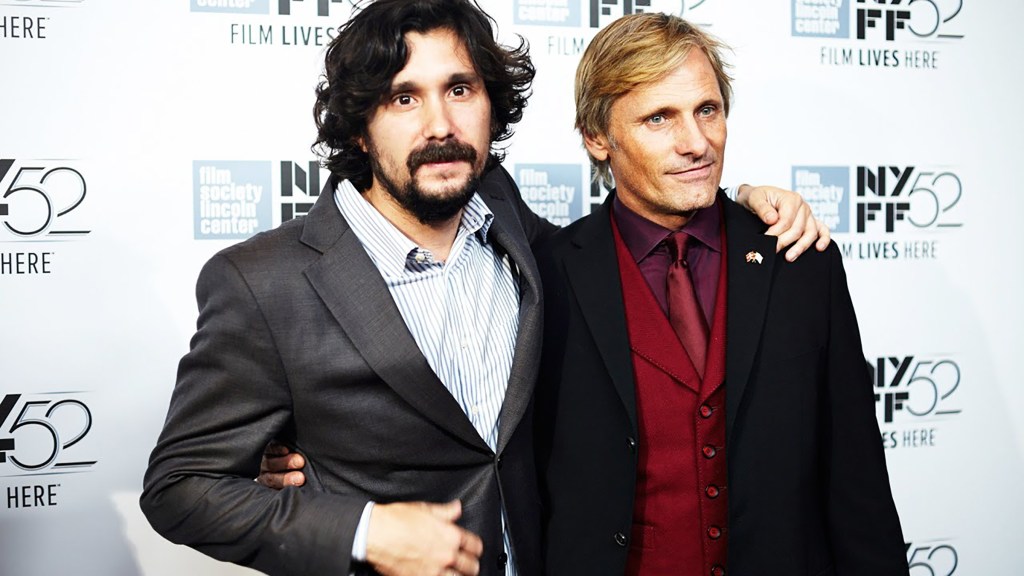
When my friend from Boedo, the Argentine poet Fabián Casas, told me in 2011 that he was going to collaborate on a movie project with Lisandro Alonso, I was intrigued. I’d briefly spoken with Lisandro in Toronto a few years earlier, and was familiar with his work, having especially liked “Los muertos”. When we met again, on the set of Ana Piterbarg’s “Todos tenemos un plan”, he told me he wanted to shoot a story set in the 19th century on the Argentine frontier. He said he wanted me to play a Dane who is in the country with his fifteen year-old daughter, working for the military during its genocidal war against the aboriginal population.

It took a lot of patience and hard work by a relatively small but fiercely loyal crew to complete Lisandro Alonso’s “Jauja”, and this collaborative experience has been one of the most satisfying I’ve ever been involved in. We have ended up with a movie that is as Danish as it is Argentine; not an easy thing to do! Fabián and I both admire Lisandro’s creative impulses, and have striven to live up to his philosophy of story-telling in our work on “Jauja”. Lisandro’s is a process that constantly seeks distillation, gently but stubbornly insisting on the intrinsic, essential truth of any given moment. It is one thing to want to achieve this sort of “clean” aesthetic, and another to be able to convey it with grace and originality. Directors like Lisandro, who can truly move us with the subtlety and unmistakable authenticity of their story-telling, do not come along very often. I am proud to have been witness to an important creative step forward for this director, and part of the team that produced what surely will be one of the most special viewing experiences at this year’s Cannes Film Festival.


Director Bio

“If tomorrow I have to quit filmmaking, I will. I’m not going to sell my house for a project, that’s for sure. If I have to go back and work on my family’s farm, fine. I don’t have any problem with it. But I would cry a lot.”

Courtesy of Festival Scope:

Born in Buenos Aires in 1975, Lisandro Alonso studied at the Universidad del Cine (FUC)and co-directed in 1995 with Catriel Vildosola his first short film DOS EN LA VERDERA (1995). After working as assistant sound engineer in many short films and a few features and as assistant director of Nicolas Sarquis for his film SOBRE LA TIERRA, he made his first feature film, LA LIBERTAD (2001), which was screened at Cannes (Un Certain Regard). In 2003, he founded 4L, a production company based in Buenos Aires, to produce his own films. LOS MUERTOS (2004), FANTASMA (2006) and his latest feature film JAUJA (2014) were also invited to Cannes.

Filmography:

  • Jauja (2014)
  • Sin título (Carta para Serra) (2011) (Short)
  • Lechuza (2009) (Short)
  • Liverpool (2008)
  • Fantasma (2006)
  • Los Muertos (2004)
  • Freedom (2001)
  • Dos en la vereda (1995) (Short)

Links

Here is a curated selection of links shared on our Facebook page for additional insight/information:

  • 9/11/19 – “Lisandro Alonso’s Jauja should be seen on a big screen or not at all” Ben Sachs, Chicago Reader – link
  • 9/18/19 – “There’s a scene in The Knick where characters are blown away watching The Big Swallow in a kinetoscope. That’s what I feel like watching Jauja—like I’m looking through a window into some mythic realm so unfamiliar it’s spooky. The corners are rounded, the colors are yellowed, the exotic landscape is hiding all kinds of secrets.” Brandon Nowalk, The A.V. Club – link

Embrace of the Serpent – August 15th, 2019

Embrace of the Serpent [2015]


Please join Cultivate Cinema Circle and Hallwalls Contemporary Arts Center as we present a year-long series entitled Post-Colonialisms: World Cinema and Human Consequence. We continue with Ciro Guerra’s Oscar-nominated Embrace of the Serpent [2015].

  • Screening Date: Thursday, August 15th, 2019 | 7:00pm
  • Venue: Hallwalls Contemporary Arts Center
  • Specifications: 2015 / 125 minutes / Spanish with English subtitles / Black and White & Color
  • Director(s): Ciro Guerra
  • Print: Supplied by Oscilloscope
  • Tickets: $8 general, $6 students & seniors, $5 members

Event Sponsors:

Venue Information:

341 Delaware Ave, Buffalo, NY 14202


Synopsis

Courtesy of press kit:

At once blistering and poetic, the ravages of colonialism cast a dark shadow over the South American landscape in Embrace of the Serpent, the third feature by Ciro Guerra. Filmed in stunning black-and-white, Serpent centers on Karamakate, an Amazonian shaman and the last survivor of his people, and the two scientists who, over the course of 40 years, build a friendship with him. The film was inspired by the real-life journals of two explorers (Theodor Koch-Grünberg and Richard Evans Schultes) who traveled through the Colombian Amazon during the last century in search of the sacred and difficult-to-find psychedelic Yakruna plant.

Tidbits:

  • Cannes Film Festival – 2015 – Winner: C.I.C.A.E. Award (Directors’ Fortnight)
  • Toronto International Film Festival – 2015
  • AFI Fest – 2015
  • Sundance Film Festival – 2016 – Winner: Alfred P. Sloan Feature Film Prize
  • Independent Spirit Awards – 2016 – Nominee: Best International Film
  • Academy Awards – 2016 – Nominee: Best Foreign Language Film of the Year

Director Statement

Courtesy of press kit:

Whenever I looked at a map of my country,
I was overwhelmed by great uncertainty.
Half of it was an unknown territory, a green sea, of which I knew nothing.
The Amazon, that unfathomable land, which we foolishly reduce to simple concepts. Coke, drugs, Indians, rivers, war.
Is there really nothing more out there?
Is there not a culture, a history?
Is there not a soul that transcends?
The explorers taught me otherwise.
Those men who left everything, who risked everything, to tell us about a world
we could not imagine.
Those who made first contact,
During one of the most vicious
holocausts man has ever seen.
Can man, through science and art, transcend brutality? Some men did.
The explorers have told their story.
The natives haven’t.
This is it.
A land the size of a whole continent, yet untold. Unseen by our own cinema.
That Amazon is lost now.
In the cinema, it can live again.


Director Bio

“Losing all the preconceptions that I had about storytelling, about the world, you know, and learning to see the world from a different perspective. It sounds romantic, but it’s not an easy process at all.”

Courtesy of press kit:

Ciro Guerra was born on Río de Oro (Cesar, Colombia) in 1981 and studied film and television at the National University of Colombia. At the age of 21, after directing four multi-award-winning short films, he wrote and directed LA SOMBRA DEL CAMINANTE (THE WANDERING SHADOWS), his feature directorial debut, which won awards at the San Sebastian, Toulouse, Mar de Plata, Trieste, Havana, Quito, Cartagena, Santiago, and Warsaw film festivals, and was selected for 60 more, including Tribeca, Locarno, Seoul, Pesaro, Seattle, Hamburg, Kolkata, Rio de Janeiro, Istanbul, and Guadalajara.

His second feature film, LOS VIAJES DEL VIENTO (THE WIND JOURNEYS), was part of the Official Selection – Un Certain Regard of the Cannes Film Festival in 2009. It was released in 17 countries and selected by 90 festivals, including Toronto, Rotterdam, San Sebastián, Hong Kong, Jerusalem, and London, receiving different awards in Cannes, Santa Bárbara, Málaga, Santiago, Bogotá, and Cartagena. It was recently selected in a national critic’s poll as one of the 10 most important Colombian films.

All of Guerra’s feature films to date have been chosen to represent Colombia in the Academy Awards®.

Filmography:

  • Waiting for the Barbarians (2019)
  • Birds of Passage (2018)
  • Embrace of the Serpent (2015)
  • The Wind Journeys (2009)
  • Wandering Shadows (2004)

Links

Here is a curated selection of links shared on our Facebook page for additional insight/information:

  • 8/11/19 – “What Ciro Guerra has thus accomplished with Embrace of the Serpent is not only a creative re-contextualization that redresses the shameful practices of a national history, but also a mode of storytelling that communicates in compelling, humanistic terms.” Michael Guillén, Cineaste – link

White Material – July 18th, 2019

White Material [2010]


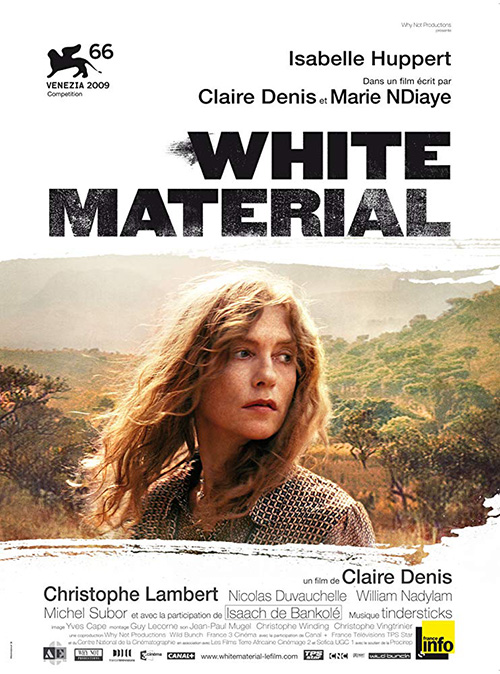
Please join Cultivate Cinema Circle and Hallwalls Contemporary Arts Center as we present a year-long series entitled Post-Colonialisms: World Cinema and Human Consequence. We continue with Claire Denis’ critically-acclaimed White Material [2010].

  • Screening Date: Thursday, July 18th, 2019 | 7:00pm
  • Venue: Hallwalls Contemporary Arts Center
  • Specifications: 2010 / 106 minutes / French with English subtitles / Color
  • Director(s): Claire Denis
  • Print: Supplied by Swank Films
  • Tickets: $8 general, $6 students & seniors, $5 members

Event Sponsors:

Venue Information:

341 Delaware Ave, Buffalo, NY 14202


Synopsis

Courtesy of press kit:

“No more smirking. We’re stopping the bullshit right now and staying put.”

The regular army is preparing to re-establish order in the country. To clean up. To eliminate the rebel officer also known as The Boxer and rid the countryside of roving child soldiers.

All the expatriates have gone home, getting out before things turn nasty.

Of the Vials – coffee planters who have lived here for two generations – Maria stands firm. She’s not about to give in to rumors or abandon her harvest at the first sound of gunfire.

Just like her father-in-law and her ex-husband who is also the father of her son (a little too much of a slacker in her opinion) she is convinced that Cherif, mayor of the neighboring town, will protect them. If she asks him, he will save the plantation. He has a personal guard, a private militia of tough guys, heavily armed and well trained.

Tidbits:

  • Venice Film Festival – 2009
  • Toronto International Film Festival – 2009
  • New York Film Festival – 2009
  • National Board of Review – 2010 – Winner: NBR Award

Director Statement

Courtesy of press kit:

Had I burdened it with all the intentions I wanted, this film would have sunk like an overladen container ship. Luckily, at every stage – from the writing with Marie, to the location scouting, to the shoot –
at every stage we jettisoned them.

It remains, nonetheless, the conduit of a primitive, visceral obsession – fortitude struggling against lassitude, against slackness.

I’d like to dedicate this film to Sony Labou Tansi for his novels, his plays, for the Rocado Zulu Theatre Company, for his struggle against rotten luck.

He said, “We didn’t invent the wheel. We handled that which is found only in the great works of poetry – the sap of the world.” (Les Yeux du Volcan)


Director Bio

“Even if it’s the dream of a voyage, I think it was very important for me that the film offer the two sides of the globe.”

Courtesy of The European Graduate School:

Claire Denis (b. 1948) is a Paris-based filmmaker and one of the major artistic voices of contemporary French cinema. After studying economics, Claire Denis enrolled in the Institut des hautes études cinématographiques (now École nationale supérieure des métiers de l’image et du son) where she graduated in 1971. At the beginning of her film career, she worked as an assistant director to Dušan Makavejev, Costa Gavras, Jacques Rivette, Jim Jarmusch, and Wim Wenders.

Denis has developed a highly individualistic style, favoring visual and sound elements over dialogue, and her editing technique has been compared to jazz improvisation for its rhythmic quality. She refuses to conform to narratives and structures of classical cinema, nor to psychological realism and scenic continuity, thus often blurring the border between dreams and reality. Her films are often based on non-subjective memories and intertextual references to literature and other films. In terms of subject matter, Denis’s films show a deep affection and solidarity with marginalized characters usually absent from mainstream cinema (immigrants, exiles, alienated individuals, sexual transgressives), simultaneously questioning prejudices of the dominant white European culture and its myth of progress. One of the main components of her films is the accompanying music. Her distinctive use of pop songs and musical themes is a result of frequent collaborations with the pianist and composer Abdullah Ibrahi and with the British band Tindersticks. Claire Denis is also considered to be one of the representatives of the “New French Extremity,” a term coined by James Quandt to designate transgressive films made by French directors at the turn of the twenty-first century.

Born in Paris, Claire Denis spent her childhood and formative years traveling across Africa due to her father’s career as a colonial administrator and his interest in teaching his children about the importance of geography. This experience formed the basis for her interest in national identity and the legacy of French colonialism, which was translated into her first film Chocolat (1988), a non-biographical account of post-colonialism. The film begins with a white French woman in her late twenties named France who is returning to Cameroon to visit her childhood home. During a car ride with two strangers, Mungo Park and his son, the film flashes back to her childhood in the colonial outpost. Here, we are introduced to Protée, a local domestic worker patiently serving the needs of France’s parents and their ill-mannered guests. The film relies on visual rather than verbal elements to explain interracial tensions and conflicts and to illustrate the intermingling of power relations and desire. The interactions between members of the household are charged with sexual longing, yet the complicity of their relations is revealed to be based on an inferiorization of the local inhabitants. The film ends with Mungo’s failed attempt to read the future from France’s palm, which is too scarred by burns, and with his refusal to have a drink with her following the pattern of interracial relations established in the flashback. With this ending, Claire Denis seems to suggest that not much has changed in post-colonial Cameroon.

After her debut, Claire Denis made a documentary about the first French tour of the Cameroon band Les Têtes Brulées, entitled Man No Run (1989). She continued to explore post-colonial attitudes in her next feature, S’en fout la mort / No Fear, No Die (1990). This claustrophobic and grainy film tells the story of two men, one from Benin and one from the Caribbean, living on the margins of French society. They become involved in an illegal cock-fighting ring, and the experience depicted is one of cultural displacement and racial conflict. Denis explored these themes further in J’ai Pas Sommeil / I Can’t Sleep (1994), portraying the cultural and familial tensions affecting several immigrants in Paris while the city is in the grip of a serial killer.

In one of her most successful films to date, Nénette et Boni / Nenette and Boni (1996), Denis deepens her dissection of family relations. The film is a coming-of-age drama about a lovelorn brother and his pregnant teenage sister recovering from their mother’s suicide. Claire Denis’s international breakthrough came with her next film, Beau Travail / Good Work (1999), based loosely on Herman Melville’s novella Billy Budd, Sailor. The story focuses on a group of French legionnaires stationed in Djibouti and observes the rituals of male bonding and codes of repression as displayed in this homosocial, militarized environment. At the center of the film is the extremely antagonistic, and at the same time erotic, relationship between a sergeant, Galoup, and a new recruit, Gilles. The film’s sensual focus is clearly fixed upon the male body as well as its movements and gestures, and many critics underlined Claire Denis’s talent in replacing Melville’s verbosity with a silence that speaks more than words.

In 2001, Claire Denis shocked Cannes audiences with Trouble Every Day, an exploration of the violent poetics of desire, featuring Vincent Gallo and Beatrice Dalle as carriers of a blood-hungry virus released by erotic stimulation. The plot follows a young American couple on honeymoon in Paris, where the husband takes part in a secret experiment by an unorthodox doctor. Although considered to be the film in which Denis came closest to making a horror film, it simultaneously blurred the lines between high and low genres. The scenes of sexual cannibalism examine our society’s violence of desire as well as our anxieties about science and its ethics.

With Vendredi soir / Friday Night (2002), Denis tells the story of an intimate relationship between two strangers who meet during a public transportation strike. A man and a woman engage in a passionate one-night stand, during which the communication between the two occurs through a mere glance. The result is a sensual, ravishing visual experience told through a series of non-voyeuristic images of their bodies.

L’Intrus / The Intruder (2004) was nominated for a Golden Lion at the 2004 Venice Film Festival and represents, according to many, Denis’s most mysterious and invigorating work. The film takes inspiration from the works of Robert Louis Stevenson, Paul Gauguin’s paintings, and a memoir by French philosopher Jean-Luc Nancy, from whom she borrowed the title and the motif of a heart transplant. The story follows an enigmatic man in his late sixties as he travels across the South Seas in an attempt to find a son he has never met—and a new heart. The result is a poetic, dreamlike experience as this “heartless” man and his new acquaintance, an equally mysterious Russian woman, search for signs of home amidst the borderlands inhabited by aliens and natives, intruders and guests.

According to Claire Denis, the inspiration for her film 35 rhums / 35 Shots of Rum (2008) came from her mother’s relationship with her Brazilian father, while on a formal level it represents a homage to the Japanese director Yasujiro Ozu. The story focuses on a widowed father and his grown-up daughter who is supposed to be starting a life and family of her own. The film seems to be in flux, relying mostly on faces and bodies to depict feelings that are impossible to verbalize. Its focus is on the integrity of a small family unit of two surrounded by a network of outsiders trying to break in. At the crucial moment, the resolution comes with the daughter’s decision to act instead of remaining a passive participant in the flow of life.

Returning to Cameroon, Matériel Blanc / White Material (2009), is Denis’s film scripted by the novelist Marie NDiaye. It depicts the members of a white family in present-day Cameroon, surrounded by unrest and rebellion, who are trying to save their coffee plantation while seemingly blind to the new power constellation established in the outside world. Denis’s most recent film, Les Salauds (2013), a “neo-noir” that, through dense and atmospheric fragments, follows a ship captain’s (Vincent Lindon) return to Paris to unravel the tragedy of his brother-in-law’s suicide, and take revenge. The film’s depth is palpable all the while maintaining its surfaces, and surface tension, in order to find its cracks. Denis has also recently filmed a few film shorts, To the Devil (2011) and Voilà l’enchaînement (2014), and, as one of seventy renowned film directors, contributed a documentary short on the future of cinema to the documentary Venice 70: Future Reloaded (2013).

Filmography:

  • High Life (2018)
  • Let the Sunshine In (2017)
  • The Breidjing Camp (2015)
  • Venice 70: Future Reloaded (2013)
  • Bastards (2013)
  • White Material (2009)
  • 35 Shots of Rum (2008)
  • Toward Mathilde (2005)
  • The Intruder (2004)
  • Ten Minutes Older: The Cello (2002) (segment “Vers Nancy”)
  • Friday Night (2002)
  • Trouble Every Day (2001)
  • Beau travail (1999)
  • Nénette et Boni (1996)
  • À propos de Nice, la suite (1995) (segment “Nice, Very Nice”)
  • I Can’t Sleep (1994)
  • Figaro Story (1992) (segment “Keep It for Yourself”)
  • Lest We Forget (1991) (segment “Pour Ushari Ahmed Mahmoud, Soudan”)
  • S’en fout la mort (1990)
  • Man No Run (1989)
  • Chocolat (1988)

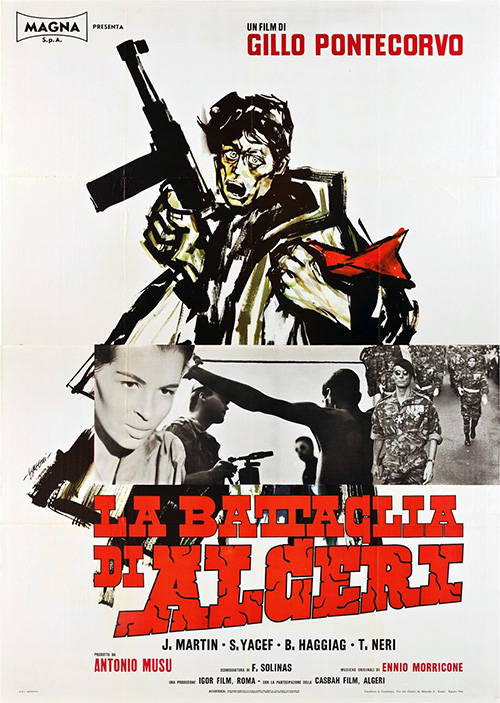
The Battle of Algiers – May 16th, 2019

The Battle of Algiers [1966]


Please join Cultivate Cinema Circle and Hallwalls Contemporary Arts Center as we present a year-long series entitled Post-Colonialisms: World Cinema and Human Consequence. We continue with Gillo Pontecorvo’s Oscar-nominated The Battle of Algiers [1966].

  • Screening Date: Thursday, May 16th, 2019 | 7:00pm
  • Venue: Hallwalls Contemporary Arts Center
  • Specifications: 1966 / 121 minutes / French/Arabic with English subtitles / Black and White
  • Director(s): Gillo Pontecorvo
  • Print: Supplied by Janus Films
  • Tickets: $8 general, $6 students & seniors, $5 members

Event Sponsors:

Venue Information:

341 Delaware Ave, Buffalo, NY 14202


Synopsis

Courtesy of Criterion:

One of the most influential political films in history, The Battle of Algiers, by Gillo Pontecorvo, vividly re-creates a key year in the tumultuous Algerian struggle for independence from the occupying French in the 1950s. As violence escalates on both sides, children shoot soldiers at point-blank range, women plant bombs in cafés, and French soldiers resort to torture to break the will of the insurgents. Shot on the streets of Algiers in documentary style, the film is a case study in modern warfare, with its terrorist attacks and the brutal techniques used to combat them. Pontecorvo’s tour de force has astonishing relevance today.

Tidbits:

  • Venice Film Festival – 1966 – Winner: Award of the City of Venice & Golden Lion
  • Academy Awards – 1967 – Nominee: Best Foreign Language Film, Best Director & Best Writing, Story and Screenplay – Written Directly for the Screen
  • New York Film Festival – 1967

Director Bio

“It’s true I make one film every eight or nine years. I am like an impotent man, who can make love only to a woman who is completely right for him. I can only make a movie in which I am totally in love. If you had the list of films I’ve refused – The Mission, Bethune, etc., you’d have a telephone book.”

Courtesy of Britannica:

An Italian filmmaker (born Nov. 19, 1919, Pisa, Italy—died Oct. 12, 2006, Rome, Italy), gained international acclaim for La battaglia di Algeri (1966; The Battle of Algiers), a stark black-and-white feature in which he portrayed the fight for Algerian independence from France with gritty documentary-style realism. The film was hailed as a cinematic masterpiece and received the Golden Lion at the 1966 Venice Film Festival, as well as three Academy Award nominations, including best director and best foreign-language film. The movie’s controversial content, however, kept it from being distributed in France until 1971. Pontecorvo’s relatively low output included La grande strada azzurra (1957; The Wide Blue Road, 2001) and the Oscar-nominated Kapò (1959). He also made several documentaries.

Filmography:

  • Firenze, il nostro domani (2003)
  • Another World Is Possible (2001)
  • Return to Algiers (1992)
  • 12 registi per 12 città (1989) (segment “Udine”)
  • Farewell to Enrico Berlinguer (1984)
  • Ogro (1979)
  • Burn! (1969)
  • The Battle of Algiers (1966)
  • Kapo (1960)
  • La grande strada azzurra (1957)
  • Die Windrose (1957) (segment “Giovanna”)
  • Cani dietro le sbarre (1955)

Links

Here is a curated selection of links shared on our Facebook page for additional insight/information:

  • 5/6/19 – “Based on the eponymous campaign during the Algerian war, The Battle of Algiers is perhaps best known for its technical aspects, which have been rarely, if ever imitated: the almost universal use of non-actors; the hand-held, documentary-style aesthetic, so convincing that the film ran in America with a disclaimer that “not one foot” of actual war footage was used. But none of this would be nearly as powerful without the tense directorial prowess and incredible vision of Pontecorvo, who fashioned a political portrait of urban warfare so even-handed and influential that it was an inspiration for both 60’s radical groups and Pentagon officials pre-Iraq. The Battle of Algiers is an always-relevant political film, but more than that, it is one of the great works of fiction-as-documentary.” Ryan Swen, Brooklyn Magazine – link
  • 5/14/19 – “It’s one of the best movies about revolutionary and anticolonial activism ever made, convincing, balanced, passionate, and compulsively watchable as storytelling.” Jonathan Rosenbaum, The Chicago Reader – link
  • 5/16/19 – “Though Pontecorvo’s sympathies ultimately lie with the Algerians, he powerfully registers the loss of innocent life on both sides, refusing to trivialize war’s casualties for the sake of a radical polemic. Truth transcends all other values in THE BATTLE OF ALGIERS, and it’s a testament to Pontecorvo’s talent that the controversy that has always swirled around the film rarely has anything to do with its accuracy.” Scott Tobias, The A.V. Club – link

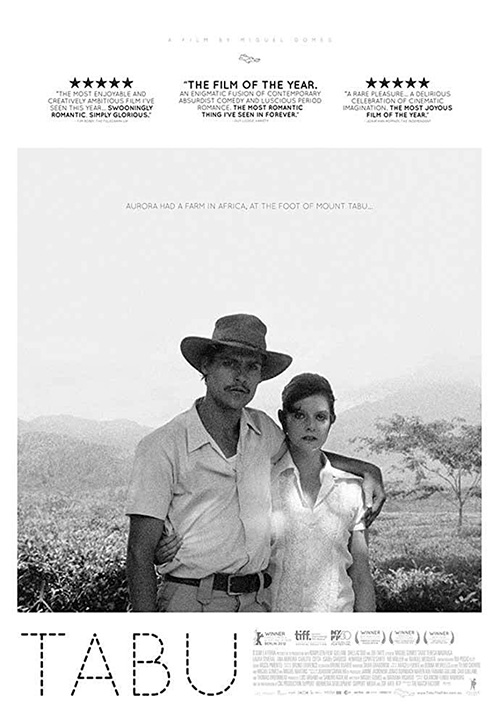
Tabu – April 11, 2019

Tabu [2012]


Please join Cultivate Cinema Circle and Hallwalls Contemporary Arts Center as we present a year-long series entitled Post-Colonialisms: World Cinema and Human Consequence. We continue with Miguel Gomes’s critically-acclaimed Tabu [2012].

  • Screening Date: Thursday, April 11th, 2019 | 7:00pm
  • Venue: Hallwalls Contemporary Arts Center
  • Specifications: 2012 / 118 minutes / Portuguese with English subtitles / Black and White
  • Director(s): Miguel Gomes
  • Print: Supplied by Kino Lorber
  • Tickets: $8 general, $6 students & seniors, $5 members

Event Sponsors:

Venue Information:

341 Delaware Ave, Buffalo, NY 14202


Synopsis

Courtesy of website:

Acclaimed director Miguel Gomes returns with a sumptuous, eccentric two-part tale centered on Aurora, shown first as an impulsive, cantankerous elderly woman in present-day Lisbon. When Aurora is hospitalized, she sends her neighbor, Pilar, to pass word of her grave condition to Gian Luca, a man of which no one has ever heard her speak. Pilar’s quest to fulfill her friend’s wish transports us to Africa fifty years earlier, before the start of the Portuguese Colonial War. We see Aurora again, this time as the gorgeous, smoldering wife of a wealthy young farmer, involved in a forbidden love affair with Gian Luca, her husband’s best friend. Their moving, poetic tale is conveyed through the older Gian Luca’s suave voiceover, combined with the lush, melodious sounds of its heady, tropical setting, peppered with a soundtrack of Phil Spector songs.

Tidbits:

  • Berlin International Film Festival – 2012 – Winner: FIPRESCI Prize
  • Toronto International Film Festival – 2012
  • New York Film Festival – 2012
  • AFI Fest – 2012

Director Bio

“Cinema is a game.”

Courtesy of Arabian Nights press kit:

Miguel Gomes was born in Lisbon in 1972. He studied cinema and worked as film critic for the Portuguese press until the year 2000.

Miguel has directed several short films and made his first feature The Face You Deserve in 2000. Our beloved Month of August (2008) and Tabu (2012) came to confirm his success and international recognition. Tabu was released at Berlinale’s Competition, where it won the Alfred Bauer and FIPRESCI award; the movie was sold to over 50 countries and won dozens of awards.

Retrospectives of Miguel’s work have been programmed at the Viennale, the BAFICI, the Torino Film Festival, in Germany and in the USA. Redemption, his most recent short film, premiered in 2013 at Venice Film Festival.

Filmography:

  • The Tsugua Diaries (2021)
  • Savagery (2020)
  • Arabian Nights: Volume 3 – The Enchanted One (2015)
  • Arabian Nights: Volume 2 – The Desolate One (2015)
  • Arabian Nights: Volume 1 – The Restless One (2015)
  • Tabu (2012)
  • Our Beloved Month of August (2008)
  • The Face You Deserve (2004)

Links

Here is a curated selection of links shared on our Facebook page for additional insight/information:

  • 4/8/19 – “Truly a time-machine, Tabu does feel like something new (unlike say, last year’s big winner, The Artist). Even, or rather, especially on repeated viewings. Gomes’s movie is so ingenuous, well-executed, and filled with unexpected cinematic pleasures that it’s restorative—a movie to reconfirm your faith in the motion picture medium.” J. Hoberman, Artinfo – link
  • 4/10/19 – “…the thing about Tabu is that it is colonialism of the Out of Africa kind of colonialism, it’s the colonialism if the white people who are self-centered—or white material—who themselves who seem to define colonialism from movies. So they’re staging it, you’re staging it, and then finally there’s the letter, which is the final moment, which is also staging it. So there are all these layers of it being projected. And it being the memories of the dead woman.” David Phelps, MUBI – link

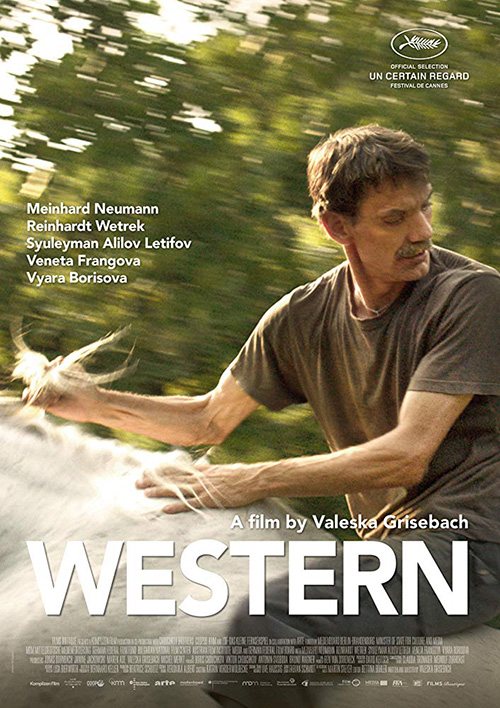
Western – March 14th, 2019

Western [2017]


Please join Cultivate Cinema Circle and Hallwalls Contemporary Arts Center as we present a year-long series entitled Post-Colonialisms: World Cinema and Human Consequence. We continue with Valeska Grisebach’s critically-acclaimed Western [2017].

  • Screening Date: Thursday, March 14th, 2019 | 7:00pm
  • Venue: Hallwalls Contemporary Arts Center
  • Specifications: 2017 / 121 minutes / German with English subtitles / Color
  • Director(s): Valeska Grisebach
  • Print: Supplied by The Cinema Guild
  • Tickets: $8 general, $6 students & seniors, $5 members

Event Sponsors:

Venue Information:

341 Delaware Ave, Buffalo, NY 14202


Synopsis

Courtesy of press kit:

An intense, slow-burning thriller, Western follows a group of German construction workers installing a hydroelectric plant in remote rural Bulgaria. The foreign land awakens the men’s sense of adventure, but tensions mount when Meinhard, the strong, silent newcomer to the group, starts mixing with the local villagers. The two sides speak different languages and share a troubled history. Can they learn to trust each other—or is the stage being set for a showdown?

With sweeping cinematography and tightly modulated pacing, Western tells a universal story of masculinity and xenophobia on the contemporary frontier of Eastern Europe. Drawing remarkably nuanced performances from a cast of non-professionals, Valeska Grisebach uses the trappings of the western genre to poke and prod at current anxieties about borders and our relationships with our neighbors.

Tidbits:

  • Cannes Film Festival – 2017 – Un Certain Regard
  • Venice Film Festival – 2017
  • New York Film Festival – 2017
  • AFI Fest – 2017

Director Bio

“Research can feel very adventurous, and at the same time, because you meet many different people, it creates this community. For me, this is the most beautiful part of filmmaking. Research is the ground that the film is standing on, and for me filmmaking is really about getting in contact with somebody, something, the world.”

Courtesy of website:

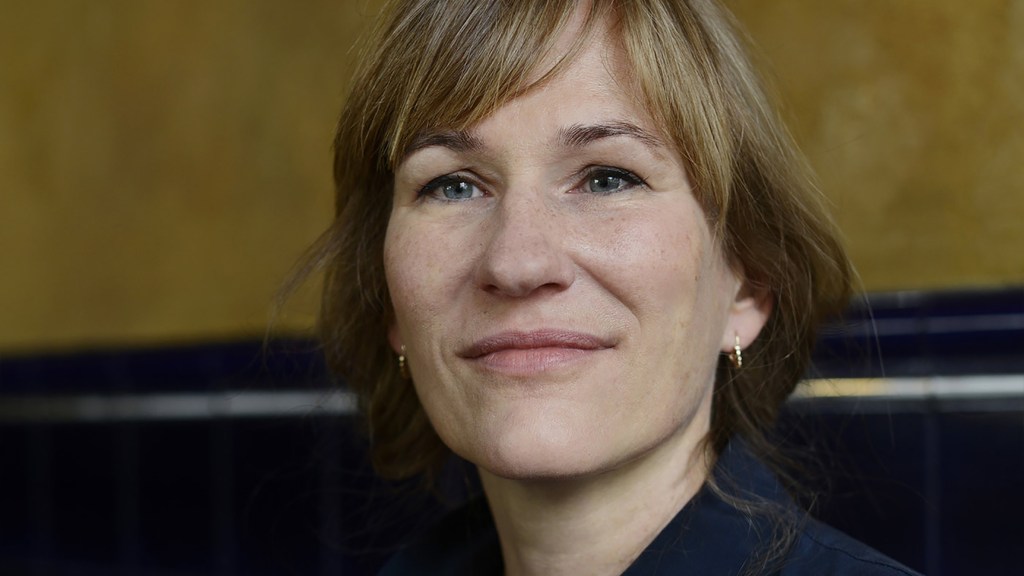
Valeska Grisebach’s directorial debut, Be My Star (2001), earned a FIPRESCI Prize special mention at the Toronto International Film Festival and won the Torino Film Festival’s main prize. Her second feature film, Longing (2006), received many awards at international festivals, including the Special Jury Award in Buenos Aires, the Grand Prix of Asturias at the Gijón International Film Festival, and the Special Jury Award at the Warsaw International Film Festival. Her latest, Western (2017), made its world premiere in the Un Certain Regard section of the 2017 Cannes Film Festival and has received awards from several international festivals.

Filmography:

  • Western (2017)
  • Longing (2006)
  • Be My Star (2001)

Links

Here is a curated selection of links shared on our Facebook page for additional insight/information:

  • 3/11/19 – #5: “Western is a compassionately unsparing dissection of masculinity and the dynamics of all-male groups by a woman filmmaker. Its relationship to the western genre is multifaceted, from the wildly majestic landscapes to the ambivalent, sometimes hostile and sometimes tenderly curious relationships between outsiders and natives, arrogant modernity and traditional community.” Imogen Sara Smith, Film Comment magazine – link
  • 3/13/19 – “One of the films of the year has arrived – maybe the best of the year – a work of unmatched subtlety, complexity and artistry.” Peter Bradshaw, The Guardian – link

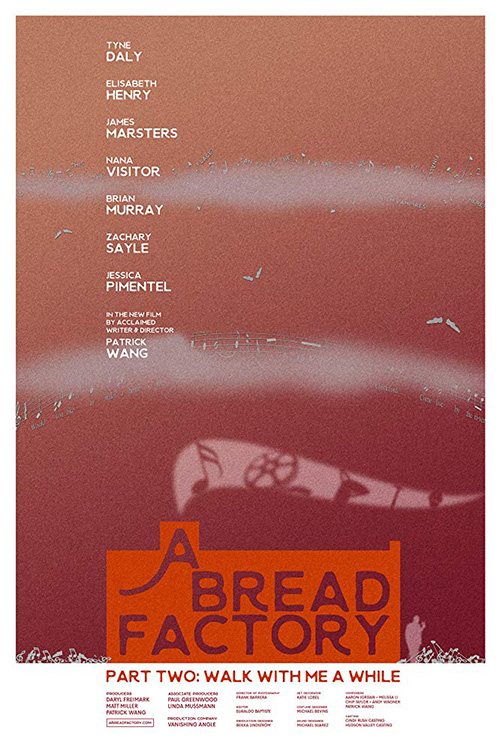
A Bread Factory, Parts One and Two – February 23rd, 2019

A Bread Factory, Parts One and Two [2018]


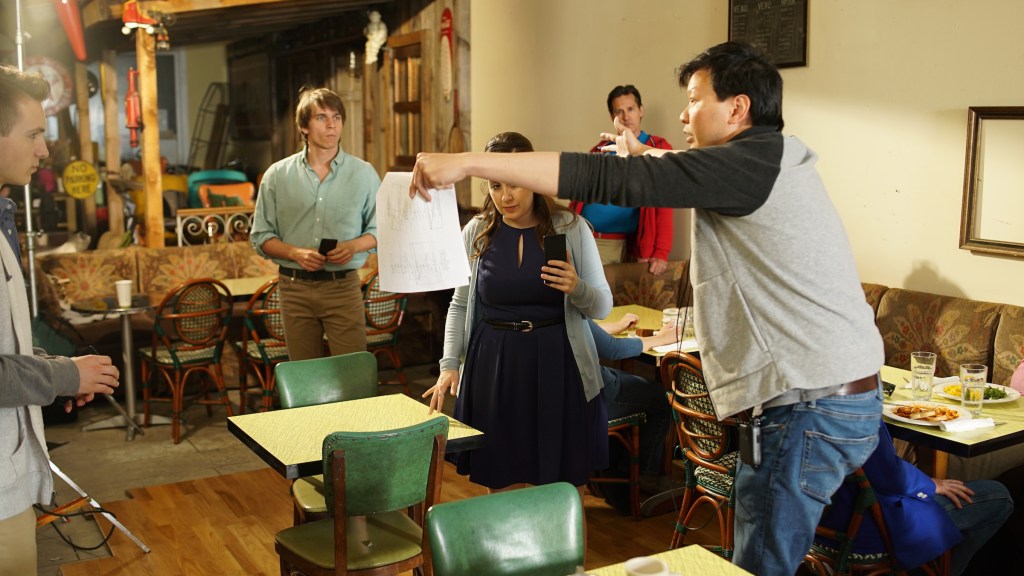
Please join Cultivate Cinema Circle and Hallwalls Contemporary Arts Center as we screen both parts of Patrick Wang’s latest film A Bread Factory [2018]. We’ll be screening Part One at 3:00pm and Part Two at 7:00pm so attendees can grab dinner off-site during the hour-long intermission.

  • Screening Date: NEW DATE – Saturday, February 23rd, 2019 | 3:00pm & 7:00pm
  • Venue: Hallwalls Contemporary Arts Center
  • Specifications: 2018 / 122 minutes & 120 minutes / English / Color
  • Director(s): Patrick Wang
  • Print: Supplied by the filmmaker
  • Tickets: $8 general, $6 students & seniors, $5 members
  • Deal: Use the code CCC19 to get an exclusive 15% off your Torn Space Theater ticket purchase for their adaptation.

Event Sponsors:

Venue Information:

341 Delaware Ave, Buffalo, NY 14202


Synopsis

Courtesy of press kit:

PART ONE:

Forty years ago, Dorothea and Greta moved to the town of Checkford and bought an abandoned bread factory. They transformed it into an arts space. Here they host movies, plays, dance, exhibits. All types of artists visit. It’s where civic groups and immigrant communities can meet, where there are after school programs for children.

Now a celebrity couple—performance artists from China—have come to Checkford. They’ve constructed a huge building, the FEEL Institute, down the street. It is a strange sight for a small town.

Dorothea and Greta learn about a new proposal to give all the funding from the school system for their children’s arts programs to the FEEL Institute. Without this funding, the Bread Factory would not survive. They quickly rally the community to save their space. The commercial forces behind the FEEL Institute fight also, bringing a young movie star to town to help make their case. The school board meeting turns into a circus where the fate of the Bread Factory hangs in the balance.

PART TWO:

Checkford hasn’t been the same since the school board meeting. Mysteriously, the reporter who runs the local newspaper disappears. Bizarre tourists start to show up, then come mysterious tech start-up workers. With all the new people, real estate is booming.

Amidst all these distractions, Dorothea and Greta try to continue their work. They are rehearsing a production of HECUBA by Euripides. On the day they open the play, Dorothea gets the news that the Bread Factory will lose an essential piece of their funding.

The beautiful opening night performance of HECUBA plays to a tiny audience. Brokenhearted, Dorothea and Greta must decide whether to give up their work at the Bread Factory because their community and support has disappeared, or to continue in their struggle to build community through art.

Tidbits:

  • Independent Spirit Awards – 2019 – Nominee: John Cassavetes Award & Best Supporting Female

Director Statement

Courtesy of press kit:

I have made two films, and they feel like training to have the tools I need to face this new project: a pair of films that looks at the state of art, community and commerce in our lives. This is no small thing. Arguably, it is the soul of everything.

The question of commerce is not new to me. I trained and worked as an economist for many years. But I thought like an old world economist, those who were called worldly philosophers. They were as likely to write treatises on empathy as on trade; they saw all these strands crossing in the same social fabric. It is this complex social fabric that interests me, and to study it, I pull at different threads in my own life.

My introduction into the arts took place in theaters, mostly under the tutelage of women. Women were my directors, my teachers. In the way my first film let me reflect on father figures, this film has given me the opportunity to think back on mother figures. Those golden days were marked by twin loves: my newfound love for dramatic art, and the generous love I received from my mentors.

These warm memories help me face colder contemporary forces. Laughter helps also. In the past, I’ve experimented with different forms of dramatic expression, and now it is exciting to use a wide range of comedy: behavioral, physical, visual, situational, verbal. Comedies often confine themselves to a narrow set of tools and conventions within a single film. Not doing so can quickly become a confused mess. However, a careful mixture of styles can be a unique way of shaping the rhythm of a film, injecting it with the excitement of unpredictability. To me this feels new but natural.

Weaving multitudes into coherence is the recurring task of these films that take place in a small town bursting with characters, plots and ideas. I was frequently on the lookout for aesthetic organizing principles that could gather multiple strands into braids. For example, early on I thought I was writing a musical. But when I tried writing musical scenes, I struggled with the strong stylistic change that comes when characters suddenly start singing. What the song added never seemed to be worth the jolt it created. Then it occurred to me to align the jarring change of characters singing with the jarring changes happening to the town. So all the new tourists coming to town sing, and this bursting into song interrupts the lives of the locals the same way it interrupts the style of the film. It is also performative in the way many contemporary communications are performative. The musical form then becomes a perfect tool for expressing what is happening in the story. The idea then starts to elaborate, and I think of the idea of a chorus of real estate brokers. I give them the most alluring music, singing the siren song of real estate, seducing you with the dream life you wish you could buy.

All the changes that occur in this small town are counterbalanced by a very old anchor: the classical Greek play “Hecuba” by Euripides. This beautiful and deeply humane poetry appears throughout the movies. It is an old echo to the contemporary pains of the characters. I have very particular views of how classical verse drama can be performed in our time. It has been a passion of mine on stage, and it was tremendously exciting to film it.

The two-film form doesn’t sound particularly extraordinary at first, but then you realize how few films have been designed in this format. These movies aren’t just sequels, they intentionally use the two-film form to house a dramatic and aesthetic structure that can’t fit elsewhere. These films are about loss. The first film looks at loss using a more traditional dramatic structure: there is a defined fight to protect something. The second film is about a more subtle, disturbing type of loss: when things slip away because we are not paying attention. It therefore has a slipperier dramatic structure that requires the groundwork of the first film before the audience is prepared to accept it. There is a lot of talk these days of serialized drama, but that talk is almost all confined to television. I believe this is a missed opportunity as film can approach the form asking the most bold, dense and existential questions.


Director Bio

“I think a lot about an emotional experience from the perspective of the characters. I think of it from the perspective of the viewer. Those targets of the emotional experience and the emotional space will in effect create this mood. Mood is often the byproduct of other things going on.”

Courtesy of website:

Patrick Wang (director) was born in Texas, the son of Taiwanese immigrants. He graduated from MIT with a degree in economics and music and theater arts. He has studied game theory, health policy, and income inequality at the Federal Reserve, the Harvard School for Public Health, and other organizations. He is author of the books The Monologue Plays and Post Script, an interactive book about the making of The Grief of Others. His first film In the Family was hailed “an indie masterpiece” by Roger Ebert. His second film, The Grief of Others, premiered to critical acclaim at SXSW and Cannes. He was named one of the “25 New Faces of Independent Film” by Filmmaker Magazine, and the New York Times remarked, “This is a career to keep an eye on.”

Filmography:

  • A Bread Factory, Part One (2018)
  • A Bread Factory, Part Two (2018)
  • The Grief of Others (2015)
  • In the Family (2011)

Links

Here is a curated selection of links shared on our Facebook page for additional insight/information:

  • 12/27/18 – “A Bread Factory is an idealistic statement about the importance of art in everyday life. It’s about how a scene from a play or a line from a poem can cast a new light on your problems or dreams, maybe put a whole new frame around your life, your community, and the culture and nation that helped shape you.” Matt Zoller Seitz, ROGEREBERT.com – link
  • 1/10/19 – “Shortly after Christmas, back in Chicago, I caught up with a two-part, four-hour masterpiece, A Bread Factory by Patrick Wang — too late to include it in any of my end-of-year lists, where it clearly deserves to belong” Jonathan Rosenbaum – link
  • 1/14/19 – “Wang is a singular artist, but he taps into a rich tradition. The focus on the workings of an American institution may remind some of the expansive comedies of Robert Altman or the documentaries of Frederick Wiseman. But also, the blurring of the line between performance and reality, the embrace of an intimate theatricality, recalls the work of Jacques Rivette. These are cinematic giants, and this director may be on his way to joining them.” Bilge Ebiri, The New York Times – link

The Killing of a Chinese Bookie – February 18th, 2019

The Killing of a Chinese Bookie [1976]


Please join Cultivate Cinema Circle and Hallwalls Contemporary Arts Center as we screen John Cassavetes’ 1978 director’s cut of The Killing of a Chinese Bookie [1976] in conjunction with Torn Space Theater’s own theatrical staging of an original adaptation of the film. (Torn Space Theater’s production runs Thursdays, Fridays, & Saturdays, February 15th – March 9th as well as Sunday, March 10. Tickets and production details here.) Torn Space Artistic Director Dan Shanahan will be on-hand to introduce the film.

  • Screening Date: Monday, February 18th, 2019 | 7:00pm
  • Venue: Hallwalls Contemporary Arts Center
  • Specifications: 1976 / 108 minutes (re-release cut) / English / Color
  • Director(s): John Cassavetes
  • Print: Supplied by Westchester Films
  • Tickets: $8 general, $6 students & seniors, $5 members
  • Deal: Use the code CCC19 to get an exclusive 15% off your Torn Space Theater ticket purchase for their adaptation.

Event Sponsors:

Venue Information:

341 Delaware Ave, Buffalo, NY 14202


Synopsis

Courtesy of press kit:

John Cassavetes explores new worlds in his brilliant career with this new film The Killing of Chinese Bookie. Cassvetes’ protagonist, Cosmo Vitelli, portrayed by Ben Gazzara, the star of the Broadway theatre and films now at the peak of artistic maturity, goes on a journey through the night—but unlike Ulysses, Gazzara’s Cosmo streaks through the night-life of Los Angeles’ gambling world, strip joints, abandoned warehouses, Chinatown’s luxurious exotic restaurants, crooked streets and blind alleys, committing acts of violence and love. Although this is America of the 70s, it is also Berlin, Korea, Saigon, Paris, London, Estoril, Buenos Aires, Acapulco … it is a parable of our own time and space and a man’s struggle to exist in it. He is no lily white hero—but today’s “everyman” who will even murder to keep the pressure out of his life.

Cosmo worships this world—his club The Crazy Horse West is his world—the sensuous colors, the sounds, the bodies, tits and asses of his girls, and he wants the world to adore and worship them too.

His constellation of the stars is the steel-domed roof of his club. The spotlights of amber, violet, blues, playing on the bodies of his nudies, glazing the audience in the dark, capturing quick colored takes of humanity calling for “booze, beer, run and cokes … a hamburger … bring on the girls … take it off.” A thin pointed beam of light hitting a rotating, mirrored ball of a man made moon spinning off darting comets in the dark of Sunset Strip. But like his coming death, he refuses to acknowledge his friends’ identities. Fringe characters, pinky rings, White-on-White set up specialists surround his life with danger.

In the daytime he takes his three girls in the sparkling, dark, rental limousine that American dreams of, filled with stereophonic sound and perfumed champagne. By day he smiles and laughs and emulates the rich token dreams that substitute for “Advertised America.” Like most of us would like to be, he is a human melodrama, creating his own romantic image … reaching dead ends in love and kindness he climbs over them into his nightmare world. It is easy to mistake Cosmo as a cult hero figure for his stumbling aggressive charm is a marvelous disguise for the real gangster.

–Sam Shaw


Director Bio

“My films are expressive of a culture that has had the possibility of attaining material fulfillment while at the same time finding itself unable to accomplish the simple business of conducting human lives. We have been sold a bill of goods as a substitute for life. What is needed is reassurance in human emotions; a re-evaluation of our emotional capacities.”

Courtesy of PBS:

John Cassavetes was born in New York City on December 9th, 1929. After graduating from high school, he attended Mohawk College and Colgate University before graduating from the New York Academy of Dramatic Arts in 1950. Throughout the early 1950s he worked as an actor in films including FOURTEEN HOURS (1951) and TAXI (1953). By the late 1950s he had made a name for himself, with roles in a number of movies including 1958’s SADDLE THE WIND. His big break came with a regular role on the television series “Johnny Staccato” between 1959 and 1960.

Financing his first film with the money he had made in television, Cassavetes embarked on his directorial debut. Working from only a skeleton script, SHADOWS was an experiment in improvisational acting and directing. A low-budget sixteen millimeter production with a jazz soundtrack by Charles Mingus, the film appealed to an audience longing for less mediated art forms.

Winning five awards from the Venice Film Festival, Cassavetes found himself suddenly in the position of making higher-budget films within the studio system. In 1961 he made TOO LATE BLUES followed in 1962 by A CHILD IS WAITING, but neither had the excitement or improvisational energy of SHADOWS. Resentful of studio interference in his work, Cassavetes went back to acting, appearing in a number of films including THE KILLERS (1964), THE DIRTY DOZEN (1967), and ROSEMARY’S BABY (1968). By 1968, however, Cassavetes returned to directing, this time working independently.

FACES, a film about the difficulties in a suburban marriage, continued in the vein of SHADOWS, with a loosely drawn script and cinematography that worked in response to the improvised method of the actors. Though some found the work tedious (unscripted scenes going on far longer than Hollywood would have allowed), many realized in Cassavetes the possibility for more genuine and moving moments. After FACES, Cassavetes embarked on HUSBANDS, in which he starred with Peter Falk and Ben Gazzara. The film centered around three friends dealing with life and mortality after the death of a mutual friend.

Though neither FACES nor HUSBANDS were very popular with the mainstream moviegoing audience, both were pivotal in the integration of cinema verité traditions in future Hollywood films. This crossover of the experimental and popular was clear in Cassavetes most successful film. Though A WOMAN UNDER THE INFLUENCE (1974) was produced with a complete script, it retained much of the intuitive and spontaneous acting of Cassavetes’ earlier films. Staring Gena Rowlands and Peter Falk, the film investigated the mental illness of a woman and the disintegration of her marriage. Financed independently by the cast and crew, A WOMAN UNDER THE INFLUENCE was a popular and critical success.

Throughout the late 1970s and into the 1980s, Cassavetes continued to work as both an actor and director. He directed THE KILLING OF A CHINESE BOOKIE (1976), OPENING NIGHT (1977), and the 1980 film GLORIA which again starred Gena Rowlands, and which many believe was one of her finest performances. By the time of his death in 1989, Cassavetes had directed twelve films, creating a body of work that addressed serious topics and paved the way for a more vibrant American cinema.

Filmography:

  • Big Trouble (1985)
  • Love Streams (1984)
  • Gloria (1980)
  • Opening Night (1977)
  • The Killing of a Chinese Bookie (1976)
  • A Woman Under the Influence (1974)
  • Minnie and Moskowitz (1971)
  • Husbands (1970)
  • Faces (1968)
  • A Child Is Waiting (1963)
  • Too Late Blues (1962)
  • A Pair of Boots (1962)
  • Shadows (1959)

Links

Here is a curated selection of links shared on our Facebook page for additional insight/information:

  • 2/17/19 – “In John Cassavetes’s personal cinema, the director was always trying to break away from the formulas of Hollywood narrative, in order to uncover some fugitive truth about the way people behave. At the same time, he took seriously his responsibilities as a form-giving artist, starting with a careful script (however improvised in appearance). Nowhere was the tension between Cassavetes’s linear and digressive, driven and entropic tendencies more sharply fought out than in THE KILLING OF A CHINESE BOOKIE (1976), one of his most fascinating achievements.” Phillip Lopate – link
  • 2/18/19 – “A post-noir masterpiece.” Jonathan Rosenbaum, The Chicago Reader – link

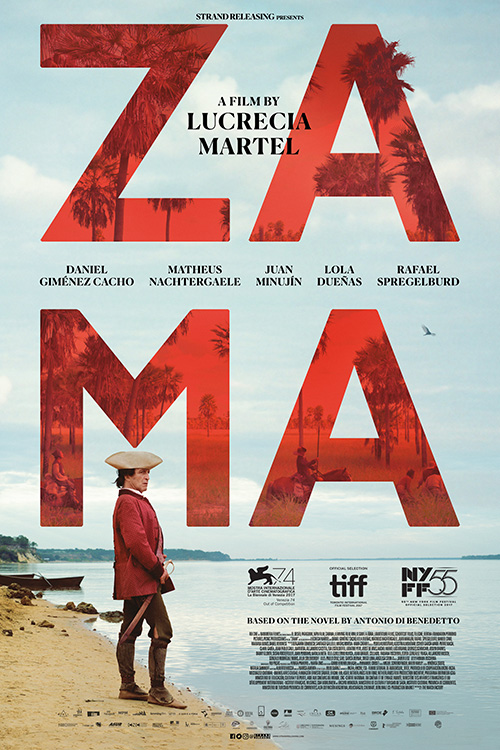
Zama – February 7th, 2019

Zama [2017]


Please join Cultivate Cinema Circle and Hallwalls Contemporary Arts Center as we present a year-long series entitled Post-Colonialisms: World Cinema and Human Consequence. We begin with Lucrecia Martel’s critically-acclaimed Zama [2017].

  • Screening Date: Thursday, February 7th, 2019 | 7:00pm
  • Venue: Hallwalls Contemporary Arts Center
  • Specifications: 2017 / 115 minutes / Spanish with English subtitles / Color
  • Director(s): Lucrecia Martel
  • Print: Supplied by Strand Releasing
  • Tickets: $8 general, $6 students & seniors, $5 members

Event Sponsors:

Venue Information:

341 Delaware Ave, Buffalo, NY 14202


Synopsis

Courtesy of press kit:

Zama, an officer of the Spanish Crown born in South America, waits for a letter from the King granting him a transfer from the town in which he is stagnating, to a better place. His situation is delicate. He must ensure that nothing overshadows his transfer. He is forced to accept submissively every task entrusted to him by successive Governors who come and go as he stays behind. The years go by and the letter from the King never arrives. When Zama notices everything is lost, he joins a party of soldiers that go after a dangerous bandit.

Tidbits:

  • Venice Film Festival – 2017 – Out of Competition
  • New York Film Festival – 2017

Director Statement

Courtesy of press kit:

I wish to move towards the past with the same irreverence we have when moving towards the future. Not trying to document pertinent utensils and facts, because Zama contains no historicist pretensions. But rather trying to submerge in a world that still today is vast, with animals, plants, and barely comprehensible women and men. A world that was devastated before it was ever encountered, and that therefore remains in delirium. The past in our continent is blurred and confused. We made it this way so we don’t think about the ownership of land, the spoils on which the Latin American abyss is founded, entangling the genesis of our own identity. As soon as we begin to peer into the past, we feel ashamed. Zama plunges deep into the time of mortal men, in this short existence that has been allowed to us, across which we slide anxious to love, trampling exactly that which could be loved, postponing the meaning of life as if the day that matters the most is the one that isn’t here yet, rather than today. And yet, the same world that seems determined to destroy us becomes our own salvation: when asked if we want to live more, we always say yes.


Director Bio

“From the very beginning, even when I’m writing, I think a lot about the sound. Many elements of my work in cinema come from oral storytelling and oral tradition. I think about sound and the rhythm of the sound.”

Courtesy of press kit:

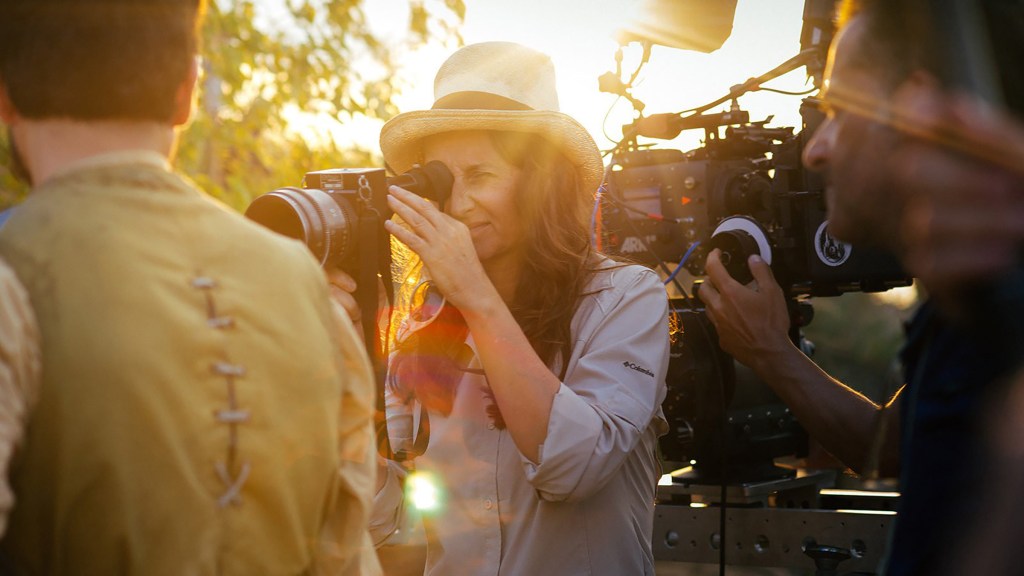
Born in Argentina, filmmaker Lucrecia Martel has positioned her work in the international film community. ZAMA (2017) is her fourth feature film after writing and directing LA MUJER SIN CABEZA (2008, The Headless Woman), LA NIÑA SANTA (2004, The Holy Girl) and LA CIÉNAGA (2001, The Swamp). Her films have been acclaimed at the most important film festivals: Cannes, Berlin, Venice, Toronto, New York, Sundance and Rotterdam, amongst others. Retrospectives of her work have been widely exhibited in film festivals and prestigious institutions such as Harvard, Berkeley or the London Tate Museum. She has taken part in the official juries of Berlin, Cannes, Venice, Sundance and Rotterdam, and has dictated masterclasses around the world.

Filmography:

  • Zama (2017)
  • La mujer sin cabeza [The Headless Woman] (2008)
  • La niña santa [The Holy Girl] (2004)
  • La ciénaga [The Swamp] (2001)

Links

Here is a curated selection of links shared on our Facebook page for additional insight/information:

  • 1/14/19 – “Beautiful, hypnotic, mysterious and elliptical, Zama is a story about a man at odds with a world that he struggles to dominate, which becomes a lacerating, often surprisingly comic evisceration of colonialism and patriarchy.” Manohla Dargis, The New York Times – link
  • 2/7/19 – “CCC’s year-long series titled “Post-Colonialisms: World Cinema and Human Consequence” begins this month with Lucrecia Martel’s universally praised Zama. The stunning historical drama about a Spanish officer in South America is hypnotic, unsettling, and profoundly unforgettable. It is a another gem from Martel, the director of 2008’s The Headless Woman.” Buffalo Spree magazine – link
  • 2/7/19 – “It’s not often that a hefty, literary-sourced masterpiece feels breezily paced, but Zama is, miraculously, that, too. It’s the year’s best, and a film we’ll be still be catching up to and marveling over decades from now.” Reverse Shot – link

Daughters of the Dust – November 8th, 2018

Daughters of the Dust [1991]


Please join Cultivate Cinema Circle and Hallwalls Contemporary Arts Center as we showcase the debut features of some of today’s modern visionary filmmakers with a year-long series dubbed Women Direct. Our last selection is Julie Dash’s Daughters of the Dust [1991] with an introduction by artist / poet Annette Daniels Taylor.

  • Screening Date: Thursday, November 8th, 2018 | 7:00pm
  • Venue: Hallwalls Contemporary Arts Center
  • Specifications: 1991 / 112 minutes / English / Color
  • Director(s): Julie Dash
  • Print: Supplied by Cohen Film Collection
  • Tickets: $8 general, $6 students & seniors, $5 members

Event Sponsors:

Venue Information:

341 Delaware Ave, Buffalo, NY 14202


Synopsis

Courtesy of Cohen Media Group:

At the dawn of the 20th century, a multi-generational family in the Gullah community on the Sea Islands off of South Carolina – former West African slaves who adopted many of their ancestors’ Yoruba traditions – struggle to maintain their cultural heritage and folklore while contemplating a migration to the mainland, even further from their roots.

Cohen Media Group is proud to present the 25th anniversary restoration of director Julie Dash’s landmark film Daughters of the Dust. The first wide release by a black female filmmaker, Daughters of the Dust was met with wild critical acclaim and rapturous audience response when it initially opened in 1991. Casting a long legacy, Daughters of the Dust still resonates today, most recently as a major in influence on Beyonce’s video album Lemonade. Restored (in conjunction with UCLA) for the first time with proper color grading overseen by cinematographer AJ Jafa, audiences will finally see the film exactly as Julie Dash intended.

Tidbits:

  • Sundance Film Festival – 1991 – Winner: Cinematography Award (Dramatic Competition)
  • Toronto International Film Festival – 1991
  • National Film Preservation Board – 2004 – National Film Registry

Director Statement/Bio

Courtesy of press kit:

Statement:

DAUGHTERS OF THE DUST is the cinema of images and ideas.

Images play a major role in the complex process that shapes our identity. When images of African-American women are depicted on the screen by someone outside of our culturem it is a projection of that filmmaker’s mind — not an expression of our reality. The films that I make are from a Black aesthetic and from an African-American woman’s reality. I make the kinds of films that I’ve always wanted to see.

My films are about women at pivotal moments in their lives; enigmatic women who are juggling complex psyches; who speak to one another in fractured sentences, yet communicate completely through familiar gestures and stances; women who remind me of my old neighborhood and the women who raised me.

My approach to the writing and directing of this film has been to evoke ancient sensibilities, to challenge the conventional formats of representing Black women in the genre of historical drama.

Bio:

Julie Dash was born and raised in New York City. She is an independent filmmaker who has received wide recognition for her work; Ms. Dash tours nationally and internationally with her films. Prints of her films, ILLUSIONS and FOUR WOMEN have been permanently archived at Indiana University and at Clark College in Atlanta. She is currently working on a series of films depicting Black women in the United States from the turn of the century to the year 2000 A.D.

Ms. Dash has a 1991/92 Fulbright Fellowship to London to collaborate on a screenplay with Maureen Blackwood of Sankofa. In 1989, she won a Rockefeller Intercultural Film Fellowship. In 1981, she was the recipient of a prestigious John Simon Guggenheim Memorial Foundation Fellowship for her work in film. She just completed fer first feature length film, DAUGHTERS OF THE DUST, for an American Playhouse theatrical release in 1992. DAUGHTERS OF THE DUST won the first prize award in cinematography, for dramatic film, at the 1991 Sundance Film Festival in Utah.

Her critically acclaimed short film, ILLUSIONS, has won the 1989 Jury Prize for the Best Film of The Decade, awarded by the Black Filmmaker Foundation. ILLUSIONS was nominated for a 1988 Cable ACE Award in Art Direction, and was the season opener of “Likely Stories,” The Learning Channel’s new series showcasing fictional works by independent filmmakers. In 1985, she was a recipient of the Black American Cinema Society award for ILLUSIONS.

In 1986, she relocated to Atlanta, Georgia from Los Angeles. Ms. Dash had been selected by the Academy of Motion Picture Arts and Sciences to work as a directing apprentice, in Atlanta, on “Leader Of The Band”. Later, she began working with the Atlanta-based National Black Women’s Health Project on a six-part media presentation on adolescent pregnancy.

In 1985, 1983, and 1981, she was the recipient of an Individual Artist Grant from the National Endowment for the Arts. In 1981, she was awarded an Independent Filmmaker’s Grant from the American Film Institute (AFI).

From 1978 to 1980, Ms. Dash worked for the Motion Picture Association of America (MPAA), in Los Angeles, as a member of the Classifications and Rating Administration. One of six voting board members, she made daily decisions that vitally affected the fortunes of more than 350 movies made each of those years; she screened all film for distribution in the United States to apply a G, PG, R or X rating. On several occasions during her three-year tenure with the Ratings board, she travelled to Pinewood Studios in London on special assignment screenings.

On two of these MPAA European assignments, Ms. Dash was able to attend and participate in the Cannes International Film Festival in France. At the 1980 festival, she co-sponsored a screening of short films by Black Americans in the Marche du Cinema. This screening led directly to the historic retrospective of Afro-American cinema held in October 1980 at FNAC in Paris at the Forum Les Halles.

In February of 1982, she travelled with a delegation of Black American independent filmmakers to attend a film festival sponsored by the National Film Theater of London and the British Commonwealth Institute. This festival occasioned the historical meeting of Black American independent filmmakers with their British counterparts.

In March of 1982, Ms. Dash, along with two other participants from the British tour, was invited to attend the Festival Against Racism in Amiens, France.

During the summer of 1983, two of her films toured throughout forty African countries in the Black Filmmaker Foundation’s “American Films: A Touring Exhibition”. This tour marked the first time that an African audience was exposed to the works of Black American independent filmmakers.

Julie began studying film production in 1969, at the Studio Museum of Harlem, in New York. Later as an undergraduate at The City College of New York, she majored in psychology until she was accepted into the film studies program at The Leonard Davis Center for the Performing Arts, in the David Picker Film Institute. Before graduation, she wrote and produced a promotional documentary for the New York Urban Coalition, WORKING MODELS OF SUCCESS (1974).

With a B.A. in Film Production, Ms. Dash relocated to Los Angeles to attend the Center for Advanced Film Studies at the American Film Institute. At AFI, she studied under several distinguished filmmakers, including William Friedkin, Jan Kadar, and Slavko Vorkapich.

Influenced by Vorkapich’s lectures on Kinesthetic responses in cinema, she conceived and directed FOUR WOMEN (1978), an experimental dance film that received a Gold Medal for Women In Film at the 1978 Miami International Film Festival. During her two-year fellowship at AFI, she completed ENEMY OF THE SUN, a feature length screenplay.

Ms. Dash directed DIARY OF AN AFRICAN NUN (1977), as a graduate film student at the University of California, Los Angeles. DIARY OF AN AFRICAN NUN, an adpatation of a short story written by Alice Walker, was screened at the Los Angeles Film Exposition (FLIMEX) and gained her a Director’s Guild Award for a student film.

Her most publicized and critically examined work, ILLUSIONS (1983), a drama set in 1942, completes the first segment of her series about Black women in the United States. Clyde Taylor writes in Freedomways magazine, “Black independents (film) have passed through several conceptual periods in which one doctrine or style was dominant now they seem to be moving towards greater diversity. An important harbinger of this mellowing out is Julie Dash’s remarkable ILLUSIONS, which, like recent developments in architecture and jazz, is post-modernist in its historical eclecticism. Dash’s refreshing challenge is to assume that her audiences can think and bring to their viewing of her work some knowledge of cinema. Set in a Hollywood studio during World War II, when commercial film production was at its most propagandistic, ILLUSIONS plays inventively on themes of cultural, sexual, and racial domination. While its touch is light and entertaining, it offers the most searing revelation in any medium of the expropriation of Black popular culture by the U.S. mass culture industry …”.

Filmography:

  • Travel Notes of a Geechee Girl (2017)
  • The Rosa Parks Story (2002)
  • Love Song (2000)
  • Incognito (1999)
  • Funny Valentines (1999)
  • Daughters of the Dust (1991)
  • Working Models of Success (1973)

Links

Here is a curated selection of links shared on our Facebook page for additional insight/information:

  • 10/24/18 – “Julie Dash Made a Movie. Then Hollywood Shut Her Out.” Cara Buckley, New York Times – link
  • 11/7/18 – “Film can be that balm of Gilead. Film can be that prescription for many ills of the world…You don’t need to fight wars anymore; just create a series of films that move & motivate & resonate with people & you could change a situation” – Julie Dash, Vogue – link