Please join Cultivate Cinema Circle and Hallwalls Contemporary Arts Center as we showcase the debut features of some of today’s modern visionary filmmakers with a year-long series dubbed Women Direct. Our sixth selection is Desiree Akhavan’s Appropriate Behavior [2015] with an introduction by local film programmer Caitlin Coder.
Screening Date: Wednesday, September 19th, 2018 | 7:00pm
Tickets:$8 general, $6 students & seniors, $5 members
Event Sponsors:
Venue Information:
341 Delaware Ave, Buffalo, NY 14202
Synopsis
Courtesy of press notes:
For Shirin (Desiree Akhavan), being part of a perfect Persian family isn’t easy. Acceptance eludes her from all sides: her family doesn’t know she’s bisexual, and her ex-girlfriend, Maxine (Rebecca Henderson), can’t understand why she doesn’t tell them. Even the six-year-old boys in her moviemaking class are too ADD to focus on her for more than a second. Following a family announcement of her brother’s betrothal to a parentally approved Iranian prize catch, Shirin embarks on a private rebellion involving a series of pansexual escapades, while trying to decipher what went wrong with Maxine.
Written and directed by Akhavan, APPROPRIATE BEHAVIOR introduces a gray area to the coming-out narrative; in an Iranian-American family, sharing information about one’s sexuality isn’t always the right approach to liberation. With her priceless deadpan delivery, Akhavan’s portrayal of Shirin is the film’s true revelation—a woman caught between self-doubt and self-possession, trapped in a web of family mores and societal expectations, with all their accompanying—and often hilarious—complexities.
Written by Kim Yutani
Tidbits:
Sundance Film Festival – 2014
Independent Spirit Awards – 2015 – Nominee: Best First Screenplay
Gotham Awards – 2015 – Nominee: Bingham Ray Breakthrough Director Award
Director Statement/Bio
Photo: WARNAND/EPA/REX/Shutterstock
“I’m a director and a writer, and I’m used to having my way. I’m not used to being a vessel for other people.”
Courtesy of press notes:
Statement:
I’ve been in development for APPROPRIATE BEHAVIOR since I was 10. As a latch-key child of immigrants, it was around that age that I started realizing what a freak of nature I was. Even though I had the perspective, wit and desires of a normal person, these qualities were somehow mismatched to the circumstances I was born to (female/ Iranian-American/bisexual). I knew if I wanted to see reflections of myself in mainstream culture I’d have to do it myself.
The film is inspired by my experience facing life after my first serious relationship with a woman. Not only was I heartbroken, but also experiencing the most uncomfortable phase of the coming out process: the time that follows after you’ve made the big announcement. Your family has no idea of how to process the information and you can’t look them in the eye without wondering if they’re imagining you having gay sex now that they know that you’re capable of it. I decided I wanted to make a film that touched on the themes that were ruling my life, but without the classic film cliches: no huge break-through hugging-through-our-tears coming out scene, no clear cut definitions of good and bad, no taking itself too seriously and sex scenes that were honest and true to dating and fucking as I know it.
I chose to star in the film because it would have been disingenuous to have hired a better looking version of me. The film is so clearly a response to my life and my desires, I wanted to put it all on the line. Though it is not autobiographical and the exact events in the film have not taken place, the emotions are true to life, only I evoked them in scenarios that were convenient for the sake of a 90 minute comedy. I was very much influenced by ANNIE HALL and it was that film that inspired the film’s structure, which dances back and forth between past and the present.
I’m beginning to notice the terms “Women’s Film” and “Gay Film” are seen as dirty words. “Iranian film” is a bit better- more highbrow, but still a chore. The “Iranian Film” is the DVD that arrives and holds up the flow of your Netflix queue for about a month. The one you keep promising to watch on Sunday night, but instead find yourself glued to MISERY, which happens to be on TV that night. I wanted to make a film that didn’t feel like “taking your medicine.” It’s a comedy, but beneath the surface we’ve set out to communicate something very real about the complexity of being openly bisexual, the subtle rivalry and love between siblings and the crushing expectations that come along with being the child of immigrants.
Bio:
Iranian-American filmmaker Desiree Akhavan is the co-creator and star of the critically acclaimed web series THE SLOPE, a comedy that follows a pair of superficial, homophobic lesbians in love. Her first feature, APPROPRIATE BEHAVIOR, premiered at the 2014 Sundance Film Festival. Desiree was featured as one of Filmmaker Magazine’s “25 New Faces of Independent Film” and will appear on the next season of GIRLS. She has a BA from Smith College and an MFA from NYU’s Grad Film Program.
Filmography:
The Miseducation of Cameron Post (2018)
Appropriate Behavior (2015)
Nose Job (2010) (short)
Links
Here is a curated selection of links shared on our Facebook page for additional insight/information:
1/28/18 – Congratulations to Desiree Akhavan, writer/director/star of Appropriate Behavior, who last night won the 2018 Sundance Film Festival Grand Jury Prize for her new film The Miseducation of Cameron Post! – link
3/7/18 – “Categorisation is also an issue that affected Desiree Akhavan, writer, director and star of 2015’s Appropriate Behaviour, and the US Grand Jury Prize-winning The Miseducation of Cameron Post, at this year’s Sundance. Even though Appropriate Behaviour is a dramedy exploring female sexuality and identity, and therefore well within the sphere of suitable material for a woman director, the reception of Akhavan’s film can be seen as indicative of a tendency to situate women in relation to other women filmmakers, to compare and label them, instating something like a ‘one at a time’ rule. Appropriate Behaviour offers a candid portrait of sex and relationships and following Akhavan’s guest-role in Girls, the press repeatedly referred to her as ‘the next Lena Dunham’.” – link
9/2/18 – “Appropriate Behavior is sort of like Annie Hall if Woody Allen were a bisexual Persian girl living in Park Slope.” David Ehrlich, Film.com – link
Please join Cultivate Cinema Circle and Hallwalls Contemporary Arts Center as we present a special one-night screening of Viktor Jakovleski’s Brimstone & Glory [2017]. This event is a collaboration with POV, PBS’ award-winning nonfiction film series.
Screening Date: Thursday, August 23rd, 2018 | 7:00pm
The National Pyrotechnic Festival in Tultepec, Mexico, is a site of festivity unlike any other in the world. In celebration of San Juan de Dios, patron saint of firework makers, conflagrant revelry engulfs the town for ten days. Artisans show off their technical virtuosity, up-and-comers create their own rowdy, lofi combustibles, and dozens of teams build larger-than-life papier-mâché bulls to parade into the town square, adorned with fireworks that blow up in all directions. More than three quarters of Tultepec’s residents work in pyrotechnics, making the festival more than revelry for revelry’s sake. It is a celebration that anchors a way of life built around a generations old, homegrown business of making fireworks by hand. For the people of Tultepec, the National Pyrotechnic Festival is explosive celebration, unrestrained delight and real peril. Plunging headlong into the fire, Brimstone & Glory honors the spirit of Tultepec’s community and celebrates celebration itself.
Edited by Affonso Gonçalves and scored by Dan Romer and Benh Zeitlin, the creative team of Beasts of the Southern Wild.
Tidbits:
National Board of Review – 2017 – Winner: Top 5 Documentary
International Documentary Association – 2017 – Winner: Best Music (Creative Recognition Award)
Director Statement
Courtesy of press kit:
I strive to bring to cinema a kind of transporting sense of adventure. Through new images, colors, and sounds, the goal is to explore fresh and vital worlds with thrilling abandon. In Brimstone & Glory we went on a voyage to capture the world of Tultepec, Mexico, its prodigious pyrotechnicians, their fireworks, and the fiestas thrown in their honor. Our aim was to create an experiential rollercoaster ride through the explosions, fire, and smoke.
Not long ago, I fell in love with the writing of Mexican Nobel Prize winner Octavio Paz. It was his Labyrinth of Solitude with its passage “The Day Of The Dead” that inspired me to explore the incredible phenomenon of the Mexican fiesta and the lengths people go to reach the zenith of joyful expression. Paz writes, “All are possessed by violence and frenzy. Their souls explode like the colors and voices and emotions… The fiesta is a cosmic experiment in disorder, reuniting contradictory elements and principles in order to bring about renascence of life.” It was also at this time that I learned of Tultepec from a Berlin-based artist who had visited the fireworks festival with his cousin, a pyrotechnician. The artist took photographs that he would later turn into paintings. Seeing these extraordinary images and hearing the outsized tales of his exploits made it impossible for me to resist visiting. The visual and aural experience of the festival was something beyond comprehension. It was visceral and all-consuming, intense and freeing.
Using a combination of shooting styles—from in-the-fray handheld photography, to filming 1,500 frames per second with the high-speed Phantom, to slapping down GoPros to capture dynamic, as-yet-unseen vantage points—we seek to offer a viewing experience that most closely represents the feeling of being there. From the pyrotechnicians handcrafting fireworks to the townspeople dancing in showers of sparks, we use cinematic language to articulate how risk and danger are inseparable from acts of extreme revelry, and how such celebration is something fundamentally human.
Director Bio
Courtesy of press kit:
Viktor Jakovleski is a Berlin-based filmmaker. He has directed and produced videos for internationally renowned electronic musicians and produced the German feature film Lenalove, which was released in selected German cinemas in September 2016.
Viktor spent four years making Brimstone & Glory, returning to the annual festival in Tultepec, Mexico, three times. In the final shoot in 2016, he was struck by one of the festival’s iconic “bulls” and was severely injured.
Viktor’s next project centers around Berlin artist Julius von Bismarck and his dangerous expedition to the Catatumbo Delta at Lake Maracaibo, Venezuela, the area with highest occurrence of natural lightning strikes in the world, to examine and ultimately catch lightning by shooting rockets into storm clouds.
In 2015, Viktor was chosen as one of 25 “New Faces of Independent Film” by Filmmaker Magazine.
He served as contributing director to the documentary 11/4/08 (2010), which premiered at SXSW, and co-produced and assistant directed Benh Zeitlin’s award winning film Glory at Sea! (2008). He also attended the producing program at the German Film and Television Academy Berlin (DFFB) and for several years worked at Studio Babelsberg.
Filmography:
Brimstone & Glory (2017)
Angst (2006) (short)
Links
Here is a curated selection of links shared on our Facebook page for additional insight/information:
8/16/18 – “In his feature debut, Viktor Jakovleski has achieved that rare feat for a documentary and created a film culled from reality that makes you question whether you’re still in your theater seat.” Arlin Golden, Film Inquiry – link
8/23/18 – “Pushes cinema to places it’s never been before.” Stephen Saito, The Moveable Fest – link
Please join Cultivate Cinema Circle and Hallwalls Contemporary Arts Center as we showcase the debut features of some of today’s modern visionary filmmakers with a year-long series dubbed Women Direct. Our fifth selection is Sofia Coppola’s The Virgin Suicides [2000] with an introduction by Nichols High School’s Classic Movie Night curator Andrea Mancuso.
Screening Date: Thursday, July 19th, 2018 | 7:00pm
On the surface the Lisbons appear to be a normal 1970s family living in a middle-class Michigan suburb. Mr. Lisbon is a quirky math teacher, his wife is a strictly religious mother of five attractive teenage daughters who catch the eyes of the neighborhood boys. However, when 13-year-old Cecilia commits suicide, the family spirals downward into a creepy state of isolation and the remaining girls are quarantined from social interaction (particularly from the opposite sex) by their zealously protective mother. But the strategy backfires, their seclusion makes the girls even more intriguing to the obsessed boys who will go to absurd lengths for a taste of the forbidden fruit.
Tidbits:
Cannes Film Festival – 1999 – Directors’ Fortnight
Sundance Film Festival – 2000
Director Bio
Photo: WARNAND/EPA/REX/Shutterstock
“Perhaps it makes sense that a woman whose earliest memory was on the set of Apocalypse Now would grow up to direct a dark fable about five adolescent girls who unapologetically and unceremoniously kill themselves…”
Courtesy of The Beguiled‘s press notes:
Sofia Coppola grew up in Northern California. After doing costume design on two feature films, she studied Fine Art at California Institute of the Arts.
She then wrote and directed the short film Lick the Star (which world-premiered at the Venice International Film Festival), followed by the feature The Virgin Suicides. Ms. Coppola wrote the screenplay for the latter film, adapting it from Pulitzer Prize winner Jeffrey Eugenides’ novel of the same name. The movie starred Kirsten Dunst, Josh Hartnett, James Woods, and Kathleen Turner. A world premiere at the Cannes International Film Festival, The Virgin Suicides subsequently earned her the MTV Movie Award for Best New Filmmaker.
Ms. Coppola’s next film, Lost in Translation, was her first with Focus Features, and screened at the Toronto, Venice, and Telluride Film Festivals. The movie brought her the Academy Award for Best Original Screenplay as well as Academy Award nominations for Best Director and Best Picture (in her capacity as producer). Lost in Translation stars Bill Murray and Scarlett Johansson won BAFTA Awards for Best Actor and Best Actress, respectively, among many other honors that the cast and crew received worldwide.
Her third feature as writer/director, Marie Antoinette, was based in part on Antonia Fraser’s biography Marie Antoinette: The Journey, and world-premiered at the Cannes International Film Festival. The movie, which Ms. Coppola also produced, starred Kirsten Dunst in the title role. The film’s costume designer, Milena Canonero, won an Academy Award for her work on the picture.
She then wrote and directed and produced Somewhere, her second movie with Focus Features. The movie starred Stephen Dorff and Elle Fanning, who received a Critics’ Choice Award nomination for her performance. In its world premiere at the 2010 Venice International Film Festival, Somewhere won the Festival’s top prize, the Golden Lion Award for Best Picture. Ms. Coppola was honored with a Special Filmmaking Achievement Award from the National Board of Review.
Her next feature as writer/director/producer was The Bling Ring, which she based on Nancy Jo Sales’ Vanity Fair article “The Suspect Wore Louboutins.” The movie world-premiered at the Cannes International Film Festival, and Ms. Coppola was honored at Women In Film’s Lucy Awards with its Dorothy Arzner Award for Directing.
In 2015, she co-wrote, executive-produced, and directed the hourlong holiday special A Very Murray Christmas, which received Emmy Award nominations for Outstanding Television Movie and Outstanding Music Direction. The show’s star, Bill Murray, was nominated for a Screen Actors Guild Award; and Ms. Coppola was nominated for a Directors Guild of America Award for her work on the project.
Filmography:
On the Rocks (2020)
The Beguiled (2017)
La Traviata (2017)
A Very Murray Christmas (2015)
The Bling Ring (2013)
Somewhere (2010)
Marie Antoinette (2006)
Lost in Translation (2003)
The Virgin Suicides (1999)
Links
Here is a curated selection of links shared on our Facebook page for additional insight/information:
7/3/18 – “Who would’ve guessed, when The Virgin Suicides was released in 1999, that director Sofia Coppola would wind up as one of cinema’s most unique, insightful, and important voices? Her adaptation of Jeffrey Eugenides’s novel about five doomed sisters living in 1970s Michigan is one of the strongest debuts in film history.” Christopher Schobert, Buffalo Spree magazine – link
7/5/18 – “It remains Sofia Coppola’s finest film—the perfect melding of sound and vision, teen passion and inexplicable tragedy, and plenty of 70s sartorial flair.” Elizabeth Sankey, Noisey – link
7/17/18 – “I grew up with a lot of men. It was me and nine boys, once you count all my brothers and cousins. My dad, Francis Ford Coppola, was a macho film-maker and his friends were all of that ilk, so I think I really clung to femininity and a kind of girly aesthetic.” Sofia Coppola, The Guardian – link
Please join Cultivate Cinema Circle and Hallwalls Contemporary Arts Center as we celebrate the work of Olivier Assayas. Our second selection is a one-night screening of the brand new restoration of Irma Vep [1996].
Screening Date: Thursday, June 21st, 2018 | 7:00pm
Luminous Hong Kong star Maggie Cheung (as herself) is summoned to Paris by director René Vidal (Jean-Pierre Léaud) to play the lead in an insane undertaking—a silent remake of Louis Feuillade’s 1916 serial Les vampires. And she’s constantly left behind rather than catered to amidst the chaos of warring personalities on the set: the witchy production coordinator (Dominique Faysse), a loud-mouthed TV reporter (Antoine Basler) with an anti-art film bias and the mysteriously and aggressively intrusive Mireille (Bulle Ogier), among others, all of whom flit across the screen like phantoms. Olivier Assayas’s dizzying, poetic and exhilarating microcosm of modern life was written, shot, edited and mixed in record time (five months), and the sense of breathless speed fueled the finished product. Assayas put his constraints to work for him to create a film that is absolutely up-to-the-minute and liberating, a direct, free-form address to its audience. At the center of it all is the human ballast that keeps Irma Vep on course: the confused but tender relationship between Maggie and Zoë (Nathalie Richard, in the film’s standout performance). Irma Vep is very funny, although the laughs tend to catch in your throat because this is no cozy love letter to filmmaking, like Day for Night of Living in Oblivion, as the film’s final tortured, mindbending images demonstrate.
Written by Kent Jones
Tidbits:
Cannes Film Festival – 1996
Toronto International Film Festival – 1996
New York Film Festival – 1996
Director Bio
“With Irma Vep, all of a sudden I decided that it was okay to mix genre, to mix cultures, and that movies sometimes could be experiments, that within the format of modern cinema, within the format of narrative, you could experiment by mixing elements.”
Courtesy of Festival Scope:
Olivier Assayas (born January 25, 1955) is a French film director and screenwriter. He made his debut in 1986, after directing some short films and writing for the influential film magazine Cahiers du cinéma. Assayas’s father was French director/screenwriter Jacques Rémy (1910–1981). He started his career in the industry by helping him and ghostwrote episodes for TV shows his father was working on when his health failed. Assayas’s film COLD WATER was screened in the Un Certain Regard section at the 1994 Cannes Film Festival. His biggest hit to date has been IRMA VEP, starring Hong Kong star Maggie Cheung, which is a tribute both to French director Louis Feuillade and to Hong Kong cinema. While working at Cahiers du cinéma, Assayas wrote lovingly about European film directors he admired but also about Asian directors. One of his latest films is a documentary about Taiwanese filmmaker Hou Hsiao-Hsien. He married Hong Kong movie actress Maggie Cheung in 1998. They divorced in 2001, but their relationship remained amicable, and in 2004 Cheung made her award-winning movie CLEAN with him. He then married actress-director Mia Hansen-Løve. They met when Hansen-Løve, seventeen at the time, starred in Assayas’s 1998 feature LATE AUGUST, EARLY SEPTEMBER. He directed and co-wrote the acclaimed 2010 French television miniseries CARLOS, about the life of the terrorist Ilich Ramírez Sánchez. The actor Édgar Ramírez won the César Award for Most Promising Actor in 2011 for his performance as Carlos. In April 2011, it was announced that he would be a member of the jury for the main competition at the 2011 Cannes Film Festival. His 2012 film, SOMETHING IN THE AIR, was selected to compete for the Golden Lion at the 69th Venice IFF. Assayas won the Osella for Best Screenplay at Venice. His next two film, CLOUDS OF SILS MARIA (2013) and PERSONAL SHOPPER (2016) both played in the official competition at Cannes.
Filmography:
Wasp Network (2019)
Non-Fiction (2018)
Personal Shopper (2016)
Clouds of Sils Maria (2014)
Something in the Air (2012)
Carlos (2010)
Summer Hours (2008)
Eldorado (2008)
Stockhausen/Preljocaj Dialogue (2007)
Boarding Gate (2007)
Noise (2006)
Paris, je t’aime (2006) (segment “Quartier des Enfants Rouges”)
Clean (2004)
Demonlover (2002)
Les Destinées (2000)
Late August, Early September (1998)
Irma Vep (1996)
Cold Water (1994)
A New Life (1993)
Paris Awakens (1991)
Winter’s Child (1989)
Disorder (1986)
Links
Here is a curated selection of links shared on our Facebook page for additional insight/information:
5/17/18 – “Olivier Assayas likes to ping-pong between high-nicotine grunge and family tapestries, with erratic results, but his trippily unique Irma Vep (1996) remains a perfect, hilarious, hand-held torrent of rock-n-roll movie-ness, satirizing the chaotic life of “art film” production even as it embodies it, with Maggie Cheung as herself, wading into a post-post-nouvelle vague landscape where classical cinephilia is openly sixty-nining with The New.” Michael Atkinson, The L Magazine – link
6/19/18 – The always articulate Jonathan Rosenbaum on Olivier Assayas and his deconstructed filmmaking masterwork Irma Vep – link
6/21/18 – Karen Wilson on Irma Vep via Reverse Shot: “…in Irma Vep as ‘herself’ Cheung could confront her status as an action heroine, comment critically on her nation’s cinema, and finally, exhibit some serious acting chops.” – link
Please join Cultivate Cinema Circle and Hallwalls Contemporary Arts Center as we celebrate the work of Olivier Assayas. Our first selection is a one-night screening of the brand new restoration of Cold Water [L’eau froide] [1994]. We are honored to also announce the return of “The New Cinephilia” author and LOLA Journal co-editor Girish Shambu to introduce the film.
Christine and Gilles fall in love in the cultural-economic no-man’s land of suburban Paris, where the present is bleak and the future worse. Gilles’ father dominates him and “protects” him from adulthood; Chrstine’s parents are divorced and she is the battlefield between them. The two shoplift some records and, when Christine is caught, her father has her institutionalized for “emotional disturbance.” Released after a day of valium and counseling, she decides at a party to visit a friend in the country and wants Gilles to come with her. He must decide whether he is ready to grow up.
The film is set in 1972, but little has changed: recently, French youth staged massive protests about the lack of possibilities after school. But L’eau froide is about more than social malaise. Director Olivier Assayas, who has had many films shown in this Festival, takes a tough, confrontational, far-from-optimistic approach. Given the temptations—teen love, dysfunctional families—Assayas steadfastly avoids sentimentality and melodrama, instead engaging our emotions with a clear-headed approach to the material.
He keeps focus on Christine and Gilles (the two leads are astonishingly good), his constantly moving camera capturing every detail of their background. Indeed, that moving, often hand-held camera imparts a good deal of the emotional instability of the protagonists. The sound track has been as carefully created as the images, with music kept at a minimum until the party—when the young couple believes escape is possible—and then rock music of the period floods the screen.
Assayas has consistently produced work of great emotional power with a minimum of artifice. Last year’s Une nouvelle vie immediately comes to mind, but L’eau froide is, in many ways, a more courageous film, if only in its ability to chronicle unflinchingly the reality of both his own generation and the desolation of contemporary suburban youth culture. This is an important film from a major young director.
Written by Dimitri Eipides
Tidbits:
Cannes Film Festival – 1994
Toronto International Film Festival – 1994
New York Film Festival – 1994
International Film Festival Rotterdam – 1995 – Special Mention: FIPRESCI Prize
Director Bio
“With Irma Vep, all of a sudden I decided that it was okay to mix genre, to mix cultures, and that movies sometimes could be experiments, that within the format of modern cinema, within the format of narrative, you could experiment by mixing elements.”
Courtesy of Festival Scope:
Olivier Assayas (born January 25, 1955) is a French film director and screenwriter. He made his debut in 1986, after directing some short films and writing for the influential film magazine Cahiers du cinéma. Assayas’s father was French director/screenwriter Jacques Rémy (1910–1981). He started his career in the industry by helping him and ghostwrote episodes for TV shows his father was working on when his health failed. Assayas’s film COLD WATER was screened in the Un Certain Regard section at the 1994 Cannes Film Festival. His biggest hit to date has been IRMA VEP, starring Hong Kong star Maggie Cheung, which is a tribute both to French director Louis Feuillade and to Hong Kong cinema. While working at Cahiers du cinéma, Assayas wrote lovingly about European film directors he admired but also about Asian directors. One of his latest films is a documentary about Taiwanese filmmaker Hou Hsiao-Hsien. He married Hong Kong movie actress Maggie Cheung in 1998. They divorced in 2001, but their relationship remained amicable, and in 2004 Cheung made her award-winning movie CLEAN with him. He then married actress-director Mia Hansen-Løve. They met when Hansen-Løve, seventeen at the time, starred in Assayas’s 1998 feature LATE AUGUST, EARLY SEPTEMBER. He directed and co-wrote the acclaimed 2010 French television miniseries CARLOS, about the life of the terrorist Ilich Ramírez Sánchez. The actor Édgar Ramírez won the César Award for Most Promising Actor in 2011 for his performance as Carlos. In April 2011, it was announced that he would be a member of the jury for the main competition at the 2011 Cannes Film Festival. His 2012 film, SOMETHING IN THE AIR, was selected to compete for the Golden Lion at the 69th Venice IFF. Assayas won the Osella for Best Screenplay at Venice. His next two film, CLOUDS OF SILS MARIA (2013) and PERSONAL SHOPPER (2016) both played in the official competition at Cannes.
Filmography:
Wasp Network (2019)
Non-Fiction (2018)
Personal Shopper (2016)
Clouds of Sils Maria (2014)
Something in the Air (2012)
Carlos (2010)
Summer Hours (2008)
Eldorado (2008)
Stockhausen/Preljocaj Dialogue (2007)
Boarding Gate (2007)
Noise (2006)
Paris, je t’aime (2006) (segment “Quartier des Enfants Rouges”)
Clean (2004)
Demonlover (2002)
Les Destinées (2000)
Late August, Early September (1998)
Irma Vep (1996)
Cold Water (1994)
A New Life (1993)
Paris Awakens (1991)
Winter’s Child (1989)
Disorder (1986)
Links
Here is a curated selection of links shared on our Facebook page for additional insight/information:
5/17/18 – “The beautiful and heartbreaking plot culminates in a party at and around a country house, and Assayas’s sustained treatment of this event—the raging bonfire, the dope, the music and dancing—truly catches you by the throat. The drifting, circling handheld camera of Irma Vep is equally in evidence here, moving among characters with the nervous energy of a moth, showing us their isolation as well as their moments of union. One of the key French films of the 90s.” Jonathan Rosenbaum, The Chicago Reader – link
6/3/18 – “…in his own films Assayas — absent any Pollyanna-ish optimism — allows room for movement, change, spontaneity, moment-to-moment invention. Invoking the most famous lyric of ‘Me and Bobby McGee’ — which Assayas pointedly replays over the closing credits of Cold Water — Michael Koresky notes that “‘Freedom is just another word for nothing left to lose’ might provide the basis for Assayas’ cinema.”” – Girish Shambu, TIFF – link
Please join Cultivate Cinema Circle and Hallwalls Contemporary Arts Center as we showcase the debut features of some of today’s modern visionary filmmakers with a year-long series dubbed Women Direct. Our fourth selection is Lucrecia Martel’s La Ciénaga [2001] with an introduction by Riverrun Global Film Series curator Tanya Shilina-Conte.
Tickets:$8 general, $6 students & seniors, $5 members
Event Sponsors:
Venue Information:
341 Delaware Ave, Buffalo, NY 14202
Synopsis
Courtesy of Criterion Collection:
The release of Lucrecia Martel’s La Ciénaga heralded the arrival of an astonishingly vital and original voice in Argentine cinema. With a radical and disturbing take on narrative, beautiful cinematography, and a highly sophisticated use of on- and offscreen sound, Martel turns her tale of a dissolute bourgeois extended family, whiling away the hours of one sweaty, sticky summer, into a cinematic marvel. This visceral take on class, nature, sexuality, and the ways that political turmoil and social stagnation can manifest in human relationships is a drama of extraordinary tactility, and one of the great contemporary film debuts.
Tidbits:
Berlin International Film Festival – 2001 – Winner: Alfred Bauer Award
Toronto International Film Festival – 2001
New York Film Festival – 2001
Director Bio
Photo: LA NACION
“From the very beginning, even when I’m writing, I think a lot about the sound. Many elements of my work in cinema come from oral storytelling and oral tradition. I think about sound and the rhythm of the sound.”
Courtesy of Zama‘s press notes:
Born in Argentina, filmmaker Lucrecia Martel has positioned her work in the international film community. ZAMA (2017) is her fourth feature film after writing and directing LA MUJER SIN CABEZA (2008, The Headless Woman), LA NIÑA SANTA (2004, The Holy Girl) and LA CIÉNAGA (2001, The Swamp). Her films have been acclaimed at the most important film festivals: Cannes, Berlin, Venice, Toronto, New York, Sundance and Rotterdam, amongst others. Retrospectives of her work have been widely exhibited in film festivals and prestigious institutions such as Harvard, Berkeley or the London Tate Museum. She has taken part in the official juries of Berlin, Cannes, Venice, Sundance and Rotterdam, and has dictated masterclasses around the world.
Filmography:
Zama (2017)
La mujer sin cabeza [The Headless Woman] (2008)
La niña santa [The Holy Girl] (2004)
La ciénaga [The Swamp] (2001)
Links
Here is a curated selection of links shared on our Facebook page for additional insight/information:
4/15/18 – “With only three features (The Holy Girl and The Headless Woman are her follow ups), Martel quickly established herself as one of the most radical narrative filmmakers working today. If you only watch the first four minutes of her debut work, a darkly comic vision of a bourgeoisie family, it is immediately apparent how brazenly exciting her methods are, creating her own cinematic language to teach us how and what to watch.” Peter Labuza, The Film Stage – link
4/16/18 – “When the Argentine filmmaker Lucrecia Martel expresses admiration for those directors who challenge reality, she could be talking about herself. Although known mainly to cinephiles, Ms. Martel is considered by many to be her nation’s, or even Latin America’s, pre-eminent filmmaker. In an essay about her first feature, La Ciénaga (The Swamp), the Argentine film scholar David Oubiña praised ‘a body of work that from the beginning, has radiated a rare perfection.’” J. Hoberman, New York Times – link
4/18/18 – “I’ll never forget first seeing Lucrecia Martel’s La Ciénaga at the New York Film Festival in 2001. It was one of the most assured first features I’d ever seen, a complex, atmosphere-drenched portrait of a middle-class family barely hanging on during a torpid summer. The film marked the emergence of a fully formed artistic sensibility, and remains one of this century’s defining films.” Dennis Lim, Film Society of Lincoln Center – link
5/9/18 – “As Lucrecia Martel demonstrates in La Ciénaga (The Swamp), there is more twisted banal horror and caustic humour to be discovered in the forms of personal narrative than found within the boundaries of the horror genre itself.” Gwendolyn Audrey Foster, Senses of Cinema – link
Please join Cultivate Cinema Circle and Hallwalls Contemporary Arts Center as we showcase the debut features of some of today’s modern visionary filmmakers with a year-long series dubbed Women Direct. Our third selection is Anna Rose Holmer’s The Fits [2016] with an introduction by Buffalo International Film Festival director Tilke Hill.
Screening Date: Thursday, April 12th, 2018 | 7:00pm
Tickets:$8 general, $6 students & seniors, $5 members
Deal: We will also be raffling off two limited edition screen prints of The Fits‘ poster courtesy of Oscilloscope Laboratories.
Event Sponsors:
Venue Information:
341 Delaware Ave, Buffalo, NY 14202
Synopsis
Courtesy of press notes:
Toni trains as a boxer with her brother at a community center in Cincinnati’s West End, but becomes fascinated by the dance team that also practices there. Enamored by their strength and confidence, Toni eventually joins the group, eagerly absorbing routines, mastering drills, and even piercing her own ears to fit in. As she discovers the joys of dance and of female camaraderie, she grapples with her individual identity amid her newly defined social sphere.
Shortly after Toni joins the team, the captain faints during practice. By the end of the week, most of the girls on the team suffer from episodes of fainting, swooning, moaning, and shaking in a seemingly uncontrollable catharsis. Soon, however, the girls on the team embrace these mysterious spasms, transforming them into a rite of passage. Toni fears “the fits” but is equally afraid of losing her place just as she’s found her footing. Caught between her need for control and her desire for acceptance, Toni must decide how far she will go to embody her new ideals.
Tidbits:
Venice Film Festival – 2015
Sundance Film Festival – 2016
Gotham Awards – 2016 – Nominee: Tribute Award, Bingham Ray Breakthrough Director Award & Breakthrough Actor
National Board of Review – 2016 – Winner: Breakthrough Performance – Female & Top Ten Independent Films
Independent Spirit Awards – 2017 – Nominee: Someone to Watch Award & Best First Feature
Director Statement/Bio
Courtesy of press notes:
Director Statement:
We collaborated with Queen City Boxing Club and the Q-Kidz Dance Team to cast real teenagers from the West End of Cincinnati. Working with young athletes allowed us to focus on the physicality and nuanced movements we needed to tell the story from beginning to end. Casting all of the girls from the same real-life dance team meant that we could emphasize the authentic sisterhood and collective memory-making that young women experience when they bond on a team. We filmed The Fits in an immersive environment, living on location and inviting the young cast to see themselves not just as performers, but as co-authors of the characters on screen.
At its heart, The Fits is a meditation on movement as seen from the perspective of adolescent girls. The film explores the particularly young female phenomenon of mass hysteria, also known as mass psychogenic illness. The rapid spread of symptoms affects members of a cohesive group whereby physical ills have no corresponding organic cause. The Fits juxtaposes the precise, powerful, and intentional movements of drill with subconscious, spontaneous, and uncontrolled movements of collective hysterics.
I directed The Fits as a dance film, considering the movements of the actors and camera to be choreography in each scene. From stand battles to obsessive workouts, from the way Toni carries her body down the hallway to the freedom in Beezy’s play, we approached storytelling from the physical performance first. Through these movements, we explored our thematic questions:
What are the indications of belonging to a group and how do those markers develop? How do girls use their bodies as a mode of communication? What is the self? Is the body separate from the self? Is identity a performance? How does one differentiate between self and other? Is it possible to truly betray one’s self?
Director Bio:
Anna Rose Holmer was listed as one of Filmmaker Magazine’s “25 New Faces of Independent Film 2015.” Her narrative directorial debut, THE FITS (Venice International Film Festival 2015), is a selection of the Venice Biennale College 2014/2015 and the Sundance Institute Editing Intensive Fellowship. She recently produced Jody Lee Lipes’s BALLET 422 (Tribeca Film Festival 2014, Magnolia Pictures) and Mike Plunkett’s SALERO (IDFA 2015). With filmmaker Matt Wolf, Anna co-directed and produced A BALLET IN SNEAKERS: JEROME ROBBINS AND OPUS JAZZ, a companion documentary to NY Export: Opus Jazz, (SXSW 2010 Emerging Visions Audience Award) which aired on the PBS Great Performances/Dance in America Series. Anna’s first documentary feature, TWELVE WAYS TO SUNDAY, was one of ten films to participate in IFP’s 2009 Documentary Filmmaker Lab and premiered with Rooftop Films in 2010.
Filmography:
The Fits (2016)
Twelve Ways to Sunday (2015)
Links
Here is a curated selection of links shared on our Facebook page for additional insight/information:
3/18/18 – “First-time writer-director Anna Rose Holmer crafts a meticulous mood of psychological isolation and beguiling mystery through her metaphorical tale, which exhibits less interest in traditional dramatic conventions than in situating viewers in its protagonist’s particular headspace…this immensely promising debut suggests a bright future for its maker.” Nick Schager, Variety – link
3/26/18 – DP Paul Yee on The Fits, Achieving Close Eyelines and Getting an Unexpected Steadicam Bump. Matt Mulcahey, Filmmaker Magazine – link
3/28/18 – “I started in camera, and the numbers are worse in camera. It is top of the pyramid, all the way down. It is everywhere you look in the industry and in our representation in government. This is not unique to cinema, and if you look at the numbers for women of color, it is even worse. I am very aware of the numbers and data. It is depressing. Our film was very gender balanced, with female heads of departments. I look at filmmakers like Ava Duvernay who is making progress in leaps and bounds, in terms of who she is hiring. Awareness is one step. The ultimate privilege is to be able to create and fail, and that these failures are representative of you, not an entire group’s ability to create work. We are far from that.” Anna Rose Holmer, director of The Fits – link
Please join Cultivate Cinema Circle and Hallwalls Contemporary Arts Center as we showcase the debut features of some of today’s modern visionary filmmakers with a year-long series dubbed Women Direct. Our second selection is Dee Rees’ Pariah [2011] with an introduction by Beyond Boundaries Film & Discussion Series curator Ruth Goldman.
Screening Date: Thursday, February 8th, 2018 | 7:00pm
A world premiere at the 2011 Sundance Film Festival, the contemporary drama Pariah is the feature-length expansion of writer/director Dee Rees’ award-winning 2007 short film Pariah. Spike Lee is among the feature’s executive producers. At Sundance, cinematographer Bradford Young was honored with the [U.S. Dramatic Competition] Excellence in Cinematography Award.
Adepero Oduye, who had earlier starred in the short film, portrays Alike (pronounced ah-lee-kay), a 17-year-old African-American woman who lives with her parents Audrey and Arthur (Kim Wayans and Charles Parnell) and younger sister Sharonda (Sahra Mellesse) in Brooklyn’s Fort Greene neighborhood. She has a flair for poetry, and is a good student at her local high school.
Alike is quietly but firmly embracing her identity as a lesbian. With the sometimes boisterous support of her best friend, out lesbian Laura (Pernell Walker), Alike is especially eager to find a girlfriend. At home, her parents’ marriage is strained and there is further tension in the household whenever Alike’s development becomes a topic of discussion. Pressed by her mother into making the acquaintance of a colleague’s daughter, Bina (Aasha Davis), Alike finds Bina to be unexpectedly refreshing to socialize with.
Wondering how much she can confide in her family, Alike strives to get through adolescence with grace, humor, and tenacity – sometimes succeeding, sometimes not, but always moving forward.
Tidbits:
Sundance Film Festival – 2011 – Winner: Dramatic (Cinematography Award) & Cinematography Award (U.S. Dramatic Competition)
Toronto International Film Festival – 2011
National Board of Review – 2011 – Winner: Freedom of Expression Award
Gotham Awards – 2011 – Winner: Breakthrough Director
Independent Spirit Awards – 2012 – Winner: John Cassavetes Award
Independent Spirit Awards – 2012 – Nominee: Best Female Lead
Q: There was originally your short film entitled Pariah. How did you conceive of the idea, and how did you decide to expand it into the feature Pariah?
Dee Rees: Actually, it all started out as a feature. I wrote the first draft of the feature script in the summer of 2005, as I was going through my own coming-out process. I’m originally from Nashville, Tennessee. Being in New York, I was kind of amazed to see these young women who were teenagers and totally out and proud. Even if I had figured out my sexuality at that age, I don’t know that I would have had the courage to be that person, and that’s how the idea for the film came.
I was interning on Spike Lee’s Inside Man, and on lunch breaks and during some of the downtime, I would write the feature script in longhand in notebooks. At the time, I was also finishing NYU’s Graduate Film program and I needed a thesis. So I took the first act from the feature script, and shot it as a short. But the feature has always been the original vision.
Q: Can you elaborate on the title a little, since it has never varied?
DR: Well, each of the main characters is a “pariah.” They all have their fears, desires, strengths and weaknesses, and isolations. One thing I definitely worked on in the writing was showing the characters’ struggles to connect, and their worlds away from their families – where there are attitudes and expectations that they might not know how to handle.
Q: Is Alike’s story at all in line with your own coming-out story?
DR: It’s semi-autobiographical. As I was coming into my sexuality, I started to become comfortable with who I was. But I didn’t know how to express that. Alike struggles in the same way. In going out to clubs – and by the way, I’m totally not a club person – it felt very binary; it seemed like you had to check a box, butch or femme. And I’m neither one of those things. I struggled with myself; how should I be in this world? Should I wear baggy jeans and baseball caps? Or should I wear a skirt? None of those identities is really me, and I finally came to the conclusion that I can just be myself and don’t have to fit into any category. I don’t have to put on any personae; I can just continue to be who I am. And that’s what Alike comes to realize in her journey.
Q: So Pariah does encapsulate your personal story.
DR: Yes, it’s all mixed in there although a lot of specific things are fictional. The characters are fictional, but some of the experiences and feelings that Alike is going through are the same. Much was coming from my own experience of this new world opening up to me. Nekisa, in fact, took me to my first gay club and this explicit song was playing. I walked in and went, “Oh my God, I’m going to hell. This is it, my mom’s right.” I was in awe of that type of space. I’d never been in a place like that before. So some of the awe and some of the anxiety the lead character feels were things I experienced when I was coming out, coming into this world.
The principal conflicts are also similar; parental conflict is something that I really went through, although it is dramatized differently for Alike. When I came out, my parents weren’t very accepting. At first my mom said, “Oh, you’re in film school, this artsy thing, whatever, it’s a phase.” When they realized I was serious and that it wasn’t a phase, both my parents came in and staged an intervention. For a few months, they sent e-mails and cards and letters and Bible verses to make me think and change. It got to the point where I told them, “Don’t communicate with me if that’s what it’s going to be about, because my sexuality is not an option and it’s not a choice.” We eventually started talking again, and things are better.
Q: You mentioned Bible verses. What was your spiritual upbringing like?
DR: I’m Christian. I was raised in a Methodist church, and I still believe in God. My spirituality was another thing that I struggled with early on. Because I initially wondered, “Is this going to be okay? Does God still love me?” On a real basic level, I struggled with that and it was painful. But later as I grew, I came to the acceptance and peace of mind that God does love me and I’m okay as I am. So that’s one element, a layer, of this film in addition to the love story and the search for identity. If anything, it’s my spirituality that got me through the past six years. My spirituality and spiritual practice have actually gotten stronger than they were before going through this.
Q: Did you draw inspiration from other artists?
DR: Yes, Alice Walker has been my biggest influence as an artist, and I’m also inspired by writers from the Harlem Renaissance; and especially the writings of Audre Lorde – her work Zami, in particular. When I read her story, I felt that I wasn’t alone and it gave me hope for my own journey. I always loved to write, and in learning about screenwriting and film, I knew I wanted to bring characters to life in that medium.
In specific preparation for shooting Pariah, I was inspired by the documentary Paris is Burning by Jennie Livingston for the tone of the film, and I also used it as a reference to help educate the actors about this world of the characters they were entering.
Q: Nekisa, how did you get into producing?
Nekisa Cooper: I met Dee while she was working with me at Colgate-Palmolive – her former life. She left the company to go to NYU’s film school. When she came to me and a couple of friends and told us she was going to film school, we said, “What? You’re leaving the security of this space to become a starving artist?” I didn’t really get it but I remained friends with her, and wound up helping with her second-year film, Orange Bow. After that experience, I thought, “Wow, this is what I do for toothbrushes and toothpaste, but this ‘product’ is something I can be more passionate about.” So I told Dee, “I don’t really know what this producing thing is, but I enjoyed working with you and I would love to support you in whatever you’re doing next.” It turned out to be Pariah, and I had a very personal connection to the story. I remembered being like Alike before coming out – a chameleon – one way with my family, and other ways with other people in my life. So I quit my job, took three months off, and produced the short film – mostly to figure out whether producing was really something I wanted to do long-term. It was a huge learning curve, but pretty awesome. It was the perfect intersection of my strengths from previous work as a basketball coach and as a businesswoman.
Q: How did the feature finally come together?
DR: When the short started hitting the festival circuit in early 2007, we got a call from Rachel Chanoff at the Sundance Institute. She’d seen the short and asked if we had a feature that she should consider. I said, “Heck yeah,” ran back and polished up the feature script in two weeks, and got in. So we got to workshop it at the Sundance Screenwriters’ Lab in 2007, and then came back again in 2008 for the Directors’ Lab.
The Directors’ Lab was great because we got to bring in Adepero Oduye, who’s always played Alike, and Aasha Davis, who plays her love interest. We were able to workshop that relationship, and some of the more difficult elements of the story, in a creative safe space. The whole Lab experience was a life-changing thing for me – as an artist and person. Nekisa then did the first Sundance Producers’ Lab in 2008, which was the icing on the cake – one which really had lots of time to bake, and is I think the better for that.
NC: It did take a long time for things to come together. Strategically, we thought that developing the film through the Sundance Institute gave the project a certain pedigree which would open doors to reach private equity investors. Based on the success of the short, we’d gotten a lot of interest from production companies wanting to know more about Dee and more about our thoughts for the feature. While on the festival circuit with the short film, we had the na”ive idea that someone would just hand us the money to make the feature. We put a lot of thought and planning into assembling a package that people would invest in, but fundraising was incredibly difficult. It became apparent that people thought the script was really good and edgy, but a bit “small” and “specific.” That’s what people would say in terms of funding the actual feature.
So there was a very quick awakening to reality; we had submitted to a ton of people, but now just about everybody had seen the script and turned the movie down. We knew right then that private equity would be the way to go. We were able to attach Spike Lee as our executive producer because he had been an advisor to Dee on her feature documentary Eventual Salvation – and had given feedback on the Pariah script over the years.
We built a list of people through our network, wrote a business plan, and went into battle. We really leveraged the independent film community to find advocates who believed in us, believed in the story – the Sundance Institute, the Tribeca Institute, the Independent Feature Project, and Film Independent. Those advocates introduced us to other people who were either connected to money people or were money people themselves.
DR: Nekisa shook every financing tree she could think of. She is so resourceful, and it was a lonely business for her at times.
NC: But it was important to me to that I bear the burden without Dee or anybody else knowing about it. That made it stressful for me, but I felt that carrying the stress on my own was necessary so there could be an environment created where Dee and our crew could work and vibe.
Going into shooting, we still weren’t fully financed and the financing didn’t fall into place until 30 minutes before the shoot wrapped. It was literally a weekly, and sometimes daily, cash flow exercise. That made it stressful for me, but I felt that carrying the stress on my own was necessary so there could be an environment created where Dee and our crew could work and vibe. I was exhausted by the end, but so happy with the way it worked out.
Q: You filmed on location in Fort Greene, Brooklyn –
NC: It’s a neighborhood that we’re familiar with; we’d lived there for seven years, so we accessed our community connections. We were able to centralize and take advantage of being in Fort Greene. We worked with a local real estate agent, and she found us an amazing brownstone location where we filmed all of the homes’ interiors for Pariah. When you don’t have money, you need to spend a lot more time in pre-production, and we did. So the production ran efficiently.
Q: Dee, beyond making the most of the real-life locations, what was your approach to visualizing the story?
DR: [Cinematographer] Bradford Young had filmed Pariah and other works of mine; he will add meaning to every shot. He and I collaborate from the heart to tell the story better, while maintaining a constant creative flow.
For over three years, we discussed and developed the language we wanted to use on Pariah, and as with Pariah we were shooting on 35-millimeter film. In closer angles on the characters, the camera is handheld so it becomes more kinetic and personal and “breathes” with them. For wider angles, the camera is more omniscient and moves more subtly on dolly-mounted shots. Whether handheld or mounted, the camera is always moving with fluidity and motivated by the action that’s occurring in the scene. This is particularly true for the coverage on Alike, which consists of a lot of “peeking” or “eavesdropping” camera movements behind or between objects with long lenses that further enhance the sense of her being secretive and hiding.
Alike is a chameleon, and all of the camera movement and production design around her serves to heighten that. We used lighting in such a way that Alike is “painted” with whatever colors are predominating at the moment in her environment. In the nightclub, she’s “purple;” on the bus, she’s “green;” in the bathroom, she’s “orange,” et cetera. She’s only “white” towards the end; she’s “sunlight” in the final scene of the film.
In contrast, Laura is a proud peacock and although her world is also a little subterranean, she is in natural light a lot and is far more colorful; purple, blue, and fuchsia in the nightclub environment and lighter, freer colors like periwinkle and lavender in the home environment that she has made for herself. Laura’s wardrobe has much brighter, flashier hues than Alike’s, including blues, greens, and pinks. That underlines her basic spiritual freedom and independence.
Q: In addition to these visuals, the music in Pariah is also varied and plays an integral role in the storytelling. Can you speak to how that worked?
DR: The music plays an important role in the film as it heightens the voice of each character. Alike is acoustic soul, Bina is punk, Laura is hip-hop. As Alike is coming into herself and struggling to find her own “voice,” we see and hear the different styles of music clash and intertwine. In the end, Alike’s voice becomes a singular and rich melding of all those different styles.
NC: We are so proud to feature a number of incredible independent music artists, from Sparlha Swa – whose music serves as the voice of Alike – and Tamar-kali to Honeychild Coleman – whose punk/rock music echoes Bina’s voice – to MBK Entertainment, who provided us with all of Laura’s hip-hop.
Q: What has always made Adepero ideal to play Alike?
DR: Back in 2006, she showed up on the very first day of auditions for the short film. She came in wearing her little brother’s clothes, and was completely focused. It was like she had walked out of my pages.
She is brave, and has these beautiful qualities of innocence and vulnerability. That’s all at Alike’s core. Also, as a first-generation Nigerian immigrant who has grown up in New York City, Adepero has experienced being an outsider and the struggle to try to define her identity. Adepero is very specific in her craft.
Q: Overall, what was the biggest challenge during the actual filming?
DR: It was an 18-day shoot with 1 pick-up day. Everybody, no matter what their crew title, went above and beyond to make it happen.
NC: For the biggest challenge, I’d like to add, “the money.”
Q: Did you personally invest in Pariah?
NC: Yes. We sold the apartment we owned in Fort Greene. We put everything that we are into making the film.
Q: And now audiences can see it in theaters –
DR: And now we can give back to everyone who sacrificed and believed in us, and believed in the story and its being beneficial to people.
Q: On that note, who do you hope to reach with Pariah?
DR: I think questioning and affirming your identity is a universal theme, and I definitely want gay teens to connect with the film and see that it’s OK to be them.
Q: What about those close to these teens?
DR: I want parents and people who may not be open to better understand that they should allow their children to be who they are. Just think about how important relationships are; once they’re fractured or damaged, it’s hard to get them back. Everyone has someone in their life that has gone through this; just be more accepting of them. Love them unconditionally.
NC: In terms of changing hearts and minds, we joke about how it’s possible one-popcorn-bucket-at-a-time. But we do want to open people’s minds and expose them to a world they haven’t seen before. Pariah might not change people’s minds, but it will at least get them talking.
I was raised Catholic. My parents don’t accept that I’m gay, but they love me. I guess that’s as good as it gets, because we never have arguments. But we also never talk about it. I’ve been out to them since 2002 and it’s still a really scary prospect to think about sitting down and watching Pariah with them. That’s the intersection, of fear and hope, where this movie sits. We want Pariah to give people the courage to discuss coming out.
Director Bio
“It’s a failure of imagination if you can only write what you know – we have to be able to imagine different worlds.”
Courtesy of Mudbound‘s press notes:
Writer/Director Dee Rees is an alumna of New York University’s graduate film program and a Sundance Screenwriting & Directing Lab Fellow.
Dee’s Emmy-Award winning HBO film Bessie (2015) starred Queen Latifah as the legendary American Blues singer and was nominated for a total of twelve Emmy Awards, including Dee’s individual nominations for Outstanding Writing and Outstanding Directing For A Limited Series, Movie or Dramatic Special. Bessie was also nominated for four Critics’ Choice Awards and Dee was the recipient of the 2016 Director’s Guild of America Award for Outstanding Directorial Achievement in Movies for Television and Miniseries as well as the NAACP Image Award for Outstanding Directing in a Television Movie.
Dee’s debut feature film Pariah starring Adepero Oduye and Kim Wayans premiered at the 2011 Sundance Film Festival where it was honored with the festival’s U.S. Dramatic Competition “Excellence in Cinematography” Award and was later released by Focus Features. Pariah went on to win numerous awards including the John Cassavetes Award at the Independent Spirit Awards (2011), the Gotham Award for Best Breakthrough Director (2011), Outstanding Film–Limited Release at the GLAAD Media Awards (2012) and it received seven NAACP Image Award nominations including Outstanding Motion Picture, Outstanding Directing and Outstanding Writing and won the award for Outstanding Independent Motion Picture.” Pariah also earned Dee a spot on New York Times’ 10 Directors to Watch list in 2013.
Previously, Dee was selected as a 2008 Tribeca Institute/Renew Media Arts Fellow and appeared on Filmmaker Magazine’s 25 New Faces of Independent Film that same year. She is a 2011 United States Artists Fellow and her notable residencies include Yaddo and The MacDowell Colony.
Dee Rees was born and raised in Nashville, Tennessee and currently resides in New York.
Filmography:
The Last Thing He Wanted (2020)
Mudbound (2018)
Bessie (2015)
Pariah (2011)
Colonial Gods (2009) (Short)
Eventual Salvation (2008)
Pariah (2007) (Short)
Orange Bow (2005) (Short)
Links
Here is a curated selection of links shared on our Facebook page for additional insight/information:
1/14/18 – “While it shows heartbreak and emotional brutality, there’s much beauty and even joy too, Rees revealing a wide spectrum of queer black female experience with bracing honesty. To paraphrase one of Alike’s poems, Pariah is a film that the light shines out of. It’s one of a kind.” Grace Barber-Plentie, British Film Institute – link
1/24/18 – Dee Rees, writer/director of Pariah, made history yesterday as the first black woman to be nominated for an Oscar by The Academy for Best Adapted Screenplay for her new film Mudbound! – link
2/5/18 – Presented by actress Kim Wayans, star of Pariah, writer/director Dee Rees was awarded the 2017 Sundance Institute Vanguard Award which celebrates emerging artists with creative independence. Her acceptance speech is a must watch. – link
“…It has been 13 years since I came out. It has been 432 hours since the demagogue banned transgender citizens from serving in the military. It has been 44 days since the Muslim travel ban took effect, and that the bulk of black and brown immigrants who, solely on the basis of their sheer existence, have effectively been criminalized.
And it has been 191,625 days since the first arrival of European immigrants, whose criminal acts of theft, rape, subjugation, and genocide systematically destroyed and continue to destroy this country and the many nations that lived here first.
So you see, our position in the universe is elastic. It’s hard to know exactly where we are, impossible to measure progress, except in relation to what happened just before…”
2/11/18 – Dee Rees speaks about Pariah:
10/25/18 – “The opening scene of PARIAH was inspired by my first experience going to a lesbian club. It’s about shock, and attraction, and repulsion, and feeling guilty and exhilarated.” – link
Please join Cultivate Cinema Circle and Hallwalls Contemporary Arts Center as we showcase the debut features of some of today’s modern visionary filmmakers with a year-long series dubbed Women Direct. Kelly Reichardt’s River of Grass [1995] kicks things off with an introduction by Beyond Boundaries Film & Discussion Series curator Meg Knowles.
Screening Date: Thursday, January 11th, 2018 | 7:00pm
Tickets:$8 general, $6 students & seniors, $5 members
Deal: We will be giving away two copies of Kelly Reichardt by Katherine Fusco & Nicole Seymour courtesy of University of Illinois Press.
Event Sponsors:
Venue Information:
341 Delaware Ave, Buffalo, NY 14202
Synopsis
Courtesy of press notes:
River of Grass, Kelly Reichardt’s darkly funny debut feature, brought the writer/director back to the setting of her adolescence, the suburban landscape of southern Florida, where she grew up with her detective father and narcotics agent mother. Shot on 16mm, the story follows the misadventures of disaffected house-wife “Cozy,” played by Lisa Bowman, and the aimless layabout “Lee,” played by up-andcomer Larry Fessenden, who also acted as a producer and the film’s editor. Described by Reichardt as “a road movie without the road, a love story without the love, and a crime story without the crime,” River of Grass introduces viewers to a director already in command of her craft and defining her signature style.
Thirty-year-old Cozy lives in the middle of nowhere. Her one-story house sits on a soggy acre in Florida’s Broward County — a nondescript stretch of land sandwiched between Miami and the Everglades that boasts a shopping mall every fifteen miles. Cozy’s a daydreamer of the highest order, endlessly fantasizing that some nice couple will drive up in a big station wagon and take her kids away, that she’ll start a new life.
Cozy’s Dad is a detective with the Dade County/Miami police department. Distracted and in his mid-fifties, Ryder spends his nights on the job and his days drinking gin in jazz clubs. Lately, he’s been drinking a bit more since he seems to have misplaced his gun (again) and has landed a stiff suspension until its recovery. Unfortunately for Ryder, an aimless, enigmatic loser named Lee Ray Harold has already found it.
Worlds collide when Cozy, following an uncontrollable urge to get out of the house, meets up with Lee who is packing his new toy (Ryder’s gun) and following his own uncontrollable urge — to drink. Cozy and Lee soon find themselves embarking on a night of serious beer drinking and backyard pool hopping, which is cut short when Cozy accidentally fires the gun and apparently kills one of Lee’s old high school teachers. Instead of taking their cue and hitting the road, like any good outlaw couple would, Cozy and Lee shack up in a Miami motel to try to figure out how to raise gas money for their escape.
What follows is an escapade of misdirection and wrong turns, while Cozy and Lee try to go on the lam and revel in what they consider the outlaw life — without ever getting it right. Lee botches a convenience store robbery, they try to sell an old record collection in the age of compact discs, they find themselves short a quarter for the highway toll as they attempt to leave town and, in the end, they find out that they didn’t even commit the crime they are running from.
What’s left is a love story without the love, a murder mystery without a murder and a road movie that never makes it onto the road. Kelly Reichardt’s debut feature is a quickwitted take on the classic B road movie. She describes her characters as “the lackluster outlaws of the TV generation who have plenty of renegade role models but not the wiles to live up to them.” Playing off the clichéd elements of the genre, River of Grass ultimately illustrates how real life just ain’t like it is in the movies.
Restoration:
This new 2K DCP (Digital Cinema Package) of River of Grass has been restored from the original 16mm negative elements. During the restoration process at labs in Los Angeles, an interpositive film element was made at Fotokem from the original A/B negatives. The interpositive was then scanned in 2K at Modern VideoFilm for digital restoration and color correction. Deluxe Audio Services, working from an approved print made from the original negative elements, transferred the optical track into digital files for the sound clean-up and restoration. Digital protection tape elements LTO5 and HDCAM SR, along with the interpositive preservation film element will be archived at UCLA in their state of the art facility for generations to come.
This restoration was made possible by our generous partners Sundance, UCLA Film and Television Archive, TIFF, and hundreds of Kickstarter backers.
Tidbits:
Berlin International Film Festival – 1994
Sundance Film Festival – 1994
Independent Spirit Awards – 1996 – Nominee: Best First Feature, Best First Screenplay, Best Debut Performance & Someone to Watch Award
Director Bio
“I like working in a really private way. I mean, we got as far as a cut of [Old Joy] without speaking to any kind of lawyer or anything. We got into Sundance before we thought we should form a company. Aside from a lot of sound work and stuff still to go, it was all very private, and that’s a dream for me.”
Courtesy of press notes:
American landscapes and narratives of the road are themes that run throughout Kelly Reichardt’s five feature films: RIVER OF GRASS (Strand Releasing, 1994), OLD JOY (Kino International, 2006), WENDY AND LUCY (Oscilloscope Pictures, 2008), MEEK’S CUTOFF (Oscilloscope Pictures, 2010), and NIGHT MOVES (Cinedigm, 2013); and the short narrative ODE (1999).
Grants: United States Artists Fellowship, Guggenheim Fellowship, Anonymous Was a Woman Award, Renew Media Fellowship.
Screenings: Whitney Biennial (2012), Film Forum, Cannes Film Festival in “un certain regard,” Venice International Film Festival, Sundance Film Festival, Berlin International Film Festival, Toronto International Film Festival, International Film Festival Rotterdam, BFI London Film Festival.
Retrospectives: Anthology Film Archives, Pacific Film Archive, Museum of the Moving Image, Walker Art Center, American Cinematheque Los Angeles.
She has taught at School of Visual Arts, Columbia University, New York University, and is currently an artist-in-residence at Bard College.
RIVER OF GRASS marks the third collaboration between Kelly Reichardt and Oscilloscope. Previously Oscilloscope released WENDY AND LUCY and MEEK’S CUTOFF, both to great acclaim. Oscilloscope is looking forward to a fourth collaboration and will next be following Kelly wherever she may lead them (hopefully to the grocery store to get some snacks).
Filmography:
Owl (2019) (Short)
First Cow (2020)
Certain Women (2016)
Night Moves (2013)
Meek’s Cutoff (2010)
Travis (2009) (Video short)
Wendy and Lucy (2008)
Old Joy (2006)
Then a Year (2001) (Short)
Ode (1999)
River of Grass (1994)
Links
Here is a curated selection of links shared on our Facebook page for additional insight/information:
12/7/17 – “Kelly Reichardt might be the most important independent American filmmaker working right now. Over six features, she has built a body of work that stands in sharp contrast to the prefab stories and festival-friendly satisfactions of much of what passes for independent cinema today. Reichardt’s movies are immersive, even gripping, and they often reflect (albeit sometimes obliquely) the social and political issues of their day.” Bilge Ebiri, The Village Voice – link
1/1/18 – “Reichardt defines River of Grass as, ‘a road movie without the road, a love story without the love, and a crime story without the crime.’ It’s also a window into what her career would become and a brave example of what female characters can be. Like the Everglades, River of Grass is a movie beautiful in its brazen strangeness.” Elena Sheppard, HelloGiggles – link
1/4/18 – “Reconstructing the classic cinematic narrative of film, Kelly Reichardt presents everyday lives while actively questioning why we accept reality as it is.” Illnois Press – link
We’re giving away Kelly Reichardt (written by Katherine Fusco and Nicole Seymour) at our January 11, 2018 screening of River of Grass.
1/5/18 – “Her movies, from River of Grass to Night Moves, are not mere idiosyncratic curiosities. Reichardt’s preoccupations are emphatically, though not exclusively, American ones: ennui in the land of sunshine; the juvenility-responsibility tradeoff; the monetary cost of freedom; the obdurate reality of westward expansion; the prohibitive cost of true radicalism and criminality. (Certain Women may add post-feminist struggle to the list.) She nests these concerns in an unobtrusive, tacit existentialism whereby people keep making the same missteps because they are, irreducibly and inexorably, human and quietly desperate. As mordantly Beckettian as that may sound, it marks Reichardt as an artist of her time. This unassumingly brilliant filmmaker illuminates the sense and flavor of this disconsolate epoch in all its unheroic vexation.” Jonathan Stevenson, Brooklyn Magazine – link
Please join Cultivate Cinema Circle and Hallwalls Contemporary Arts Center as we present a one-night screening of the late Jonathan Demme’s Beloved [1998] in conjunction with Pulitzer Prize-winning author Toni Morrison’s visit to Buffalo for Just Buffalo Literary Center’s 2017/18 season of BABEL.
Screening Date: Tuesday, October 24th, 2017 | 7:00pm
With the startling, engrossing film Beloved, director Jonathan Demme returns to the big screen following his Academy Award™-winning work on The Silence of the Lambs and the emotionally powerful Philadelphia. Academy Award™ nominee Oprah Winfrey stars with Danny Glover, Thandie Newton, Kimberly Elise, and Beah Richards in this compelling story adapted from the Pulitzer Prize-winning novel by Nobel Laureate Toni Morrison. Beloved translates to the screen with its daring intact, immersing viewers in the haunting, haunted landscape of its story.
Oprah Winfrey, for whom Beloved is the ultimate labor of love, appears in her first starring feature film role since earning an Oscar® nomination for Best Supporting Actress in The Color Purple, with a performance of undeniable fearlessness. Winfrey optioned the rights to Beloved upon its publication and nurtured the project for nearly a decade, personally shepherding it to its current incarnation as one of the most anticipated motion picture events of the year.
Winfrey stars as Sethe, a woman of elemental grace and unspoken mystery. A figure of fierce determination, Sethe is a runaway slave struggling to carve out a simple existence with her children in rural Ohio, 1873. She is hindered, however, by the painful legacy of her former life, and the desperate measures to which she is driven to keep herself and her family from returning to it.
Danny Glover stars as Paul D, an old friend who comes to visit Sethe and whose understanding is tested by her household’s shattering secrets. Kimberly Elise portrays Sethe’s daughter, Denver, an embattled young woman who must free herself from the crippling grasp of her mother’s choices. And Thandie Newton is Beloved. As Beloved grows to dominate Sethe’s family, her devastating presence threatens to destroy the delicate balance of Sethe and Denver’s existence.
Beloved is a Touchstone Pictures presentation of a Harpo Films/Clinica Estetico Production. The director is Jonathan Demme, working from a screenplay by Akosua Busia and Richard LaGravenese and Adam Brooks, based on the Toni Morrison novel. The film is produced by Edward Saxon, Jonathan Demme, Gary Goetzman, Oprah Winfrey, and Kate Forte. Ron Bozman serves as executive producer. The film is distributed by Buena Vista Pictures Distribution.
The experience of reading Beloved moved Oprah Winfrey, she says, in a way she had never felt before. “Beloved is about what slavery did to people. It’s about how it drove people mad, forced people to make choices no human being should have to make, and what happens as a result of making those choices. It’s about the death of self, the birth of self, and finding ways to make yourself whole.”
There was a real-life model for Sethe, the novel’s leading character. Toni Morrison had been inspired by the story of a woman named Margaret Garner, a Kentucky slave who escaped with her children to Cincinnati, Ohio, which is also Morrison’s birthplace.
Unbeknownst to Winfrey, in December of 1996, Kate Forte, head of Harpo Films/producer, sent the script to Jonathan Demme and his partner Edward Saxon at their production company, Clinica Estetico.
Demme says, “I took some scripts home with me over Christmas vacation, and Beloved was at the top of the pile. I read it and just fell in love with the script.” For the director, to be given the chance to make such a powerful and unforgettable story was “a dream come true.”
Jonathan Demme realized that a cinematic work must define its own vision, saying, “Even as we were all determined to honor Ms. Morrison’s novel to the deepest degree possible, we also understood that the movie had to achieve a life all its own. We knew that we didn’t want to fall into the reverential trap of just kind of worshipping at the altar of a book we revered and adored. Any adaptation must aspire to taking flight and creating its own identity.”
Tidbits:
Academy Awards – 1999 – Nominee: Best Costume Design
In early 1997, shortly after Jonathan Demme had agreed to direct Beloved, he and producer Edward Saxon began to assemble their team of behind-the-scenes personnel. Longtime collaborator Kristi Zea (Philadelphia, The Silence of the Lambs, and Married to the Mob) signed on as production designer and also served as film’s second unit director.
According to Zea, their first priority was to secure a location that would work for the film’s time frame, which ranges from 1855 to 1873.
Their search took them to eight states before they discovered the ideal spot 45 minutes south of Philadelphia, in Maryland. The Fair Hill Natural Resource, a wooded area of more than 5,000 acres that had once served as hunting grounds for the wealthy Dupont family, was where they built Sethe’s Bluestone Road house. Zea looked to historical research and the novel for its design, saying, “A lot of clues are in the book for the look and feeling of the house.”
The early challenges in finding a location were quickly forgotten, says Demme. “Once you do find the spot, it’s inevitably going to be an extraordinary, breathtaking place to work. It’s been arduous finding the right places, and then it’s a source of great joy to actually be there filming.” Principal photography began on June 25, 1997.
The commitment to detail was evidenced in every facet of the production. While filming, the filmmakers faced a particular challenge in mounting the flashback scenes that are interspersed throughout the story.
Demme, director of photography Tak Fujimoto, and production designer Kristi Zea explored several possibilities using different kinds of film stock. Fujimoto is one of Demme’s most frequent collaborators, having shot eight films for the director.
For the 1855 flashback scenes, Fujimoto used a reversal film stock originally created by Kodak for news reporting’s quick turnaround needs. “To our eye today, it’s a very grainy stock, but it had the quality we were looking for,” says Fujimoto. “The colors are very saturated, but we overexposed the film to wash it out, and added a sepia tone to give an older look to it.”
For the 1865 scenes, Fujimoto used a regular film stock which was digitally de-saturated during post-production.
Fujimoto describes his approach to the film’s lighting design. “I rely a lot on the production design. Early on, they had decided on the main house’s design, where the ceilings are very, very low, so all the lighting was dictated by the physical nature of the set. All the lighting was very low to the ground and shadowy. The wardrobe department helped out a lot by keeping the clothes in darker, warmer earth tones.”
All the painstaking detail work served to inspire the director and actors. For actor Thandie Newton, it felt that “all the departments involved just seemed to have a perfect understanding, and the attention to detail on every level. I felt I was in the midst of great artists, and it’s not every day that you feel that on a film set.”
With her incredible string of lyrical, imaginative, and adventurous modern classics Toni Morrison lays claim to being one of America’s best novelists. Race issues are at the heart of many of Morrison’s most enduring novels, from the ways that white concepts of beauty affect a girl’s self image in The Bluest Eye to themes of segregation in Sulu and slavery in her signature work Beloved. Through it all, Morrison relates her tales with lyrical eloquence and spellbinding mystery.
Born Chloe Anthony Wofford, Morrison’s unique approach to writing stems from a childhood spent steeped in folklore and mythology. Her family reveled in sharing these often tales, and their commingling of the fantastic and the natural would become a key element in her work when she began penning original tales of her own.
The other majorly influential factor in her writing was the racism she experienced firsthand in, as Jet magazine described it, the “mixed and sometimes hostile neighborhood” of Lorain, Ohio. When Morrison was only a toddler, her home was set afire by racists while her family was still inside of it. During times such as these, she found strength in her father, who instilled in her a great sense of dignity. This pride in her cultural background would heavily influence her debut novel.
In The Bluest Eye, an eleven-year old black girl named Pecola prays every night for blue eyes, seeing them as the epitome of feminine beauty. She believes these eyes, symbolizing commonly held white concepts of attractiveness, would put an end to her familial woes, an end to her father’s excessive drinking and her brother’s meandering. They would give her self-esteem and purpose. The Bluest Eye is the first of Toni Morrison’s cries for racial pride and it is an auspicious debut told with an eerie poeticism.
Morrison next tackled segregation in Sulu, which chronicles the friendship between two women who, much like the author, grew up in a small, segregated village in Ohio. Song of Solomon followed. Arguably her first bona fide classic and certainly her most lyrical work, Song of Solomon breathed with the mythology of Morrison’s youth, a veritable modern folktale pivoting on an eccentric whimsically named Milkman Dead who spends his life trying to fly. This is one of Morrison’s most breathtaking, most accomplished and fully dimensional novels, a story of powerful convictions told in an unmistakably original manner.
In Song of Solomon, Morrison created a distinct world where the supernatural commingles comfortably with the mundane, a setting that would reappear in her masterpiece, Beloved. Beloved is a ghost story quite unlike any other, a tale of guilt and love and the horrendous legacy of slavery. Taking place not long after the end of the Civil War, Beloved finds Sethe, a former slave, being haunted by the daughter she murdered to save the child from being sold into slavery. It is a gut wrenching story that is buoyed by its fantastical plot device and the sheer beauty of Morrison’s prose.
Beloved so moved Morrison’s literary peers that forty-eight of them signed an open letter published in the New York Times demanding she be recognizing for this major effort. Subsequently, the book won her a Pulitzer Prize. A year after publishing her next novel Jazz in 1992, she would become the very first African American to win the Nobel Prize for Literature.
Towards the end of the century, Morrison’s work became increasingly eclectic. She not only published another finely crafted, incendiary novel in Paradise, which systematically tracks the genesis of an act of mob violence, but she also published her first children’s book The Big Box. In 2003, she published Love, her first novel in five years, a complex meditation on family and the way one man fuels the obsessions of several women. The following year she assembled a collection of photographs of school children taken during the era of segregation. What makes Remember: The Journey to School Integration so particularly haunting is that Morrison chose to compose dialogue imagining what the subjects of each photo may have been thinking. In 2008, Morrison published A Mercy.
That imagination, that willingness to take chances, to examine history through a fresh perspective, is such an integral part of Morrison’s craft. She is as vital as any contemporary artist, and her stories may focus on the black American experience, but the eloquence, imaginativeness, and meaningfulness of her writing leaps high over any racial boundaries.
Director Bio
“I only work with actors who take full responsibility for their characters.”
An incredibly energetic, optimistic and versatile director of character-driven films, Jonathan Demme emerged from the crucible of B-moviemaking at Roger Corman’s New World Pictures in the early 1970s to become one of Hollywood’s most critically admired filmmakers. Though he cut his teeth on a few cheapie action flicks like “Caged Heat” (1974) and “Crazy Mama” (1975), Demme tapped into the influence of foreign filmmakers like Francois Truffaut to use sly humor and an oddball style to explore human nature in fiercely intimate films like “Citizen’s Band” (1977), “Melvin and Howard” (1980) and the troubled “Swing Shift” (1984). Though mainly interested in fictional storytelling, Demme also carved out a career in non-fiction filmmaking, including the critically acclaimed “Stop Making Sense” (1984), a rock documentary featuring Talking Heads that was widely considered to be one of the best examples of the genre. But Demme reserved his finest work for his most mainstream fare, particularly “The Silence of the Lambs” (1991), which became one of only three films to win Academy Awards in all five major Oscar categories and cemented his reputation as being one of the most versatile and accomplished filmmakers of his day. Following the equally high profile AIDS story “Philadelphia” (1993) and Oprah Winfrey-starring Toni Morrison adaptation “Beloved” (1998), Demme returned to his quirkier roots with a series of documentaries focusing on rocker Neil Young, a remake of the conspiracy thriller “The Manchurian Candidate” (2008) and the small-scale indie “Rachel Getting Married” (2008). When Jonathan Demme died of complications from esophageal cancer on April 26, 2017, peers and fans across the globe mourned the loss of one of the most eclectic and unique filmmakers of his generation.
Born on Feb. 22, 1944 in Baldwin, NY, Demme was raised by his father, Robert, a public relations executive for the Fontainebleau Hotel in Miami, FL, and his mother, Carol, an actress. After his parents moved to Florida, Demme began carving out a career as a veterinarian by working at a local vet cleaning cages and caring for the animals. But when he was unable to master the most basic concepts of chemistry at the University of Florida, Demme gave up his dream of becoming a veterinarian and began writing film reviews for the college’s newspaper, The Alligator. After writing a rave review of “Zulu” (1964), his father arranged an introduction to the film’s producer Joseph E Levine, who was charmed by Demme’s enthusiastic thumbs up and immediately hired him to write press releases. Demme moved to New York, where he spent the next two years as a movie publicist for United Artists and Embassy Pictures. It was during this time that he met and befriended French director François Truffaut, who was in New York promoting “The Bride Wore Black” (1968). Truffaut recognized the young publicist’s affection for film and planted the directing seed into Demme’s mind.
In 1968, Demme left the publicist business and moved to London, where he continued writing reviews, only this time for the music business, which ironically helped to open the door on his feature film career. Hired by producers Paul Maslansky and Irwin Allen to create the music for “Eyewitness/Sudden Terror” (1970), Demme worked with British rock groups Van Der Graaf Generator and Kaleidoscope as the score’s music coordinator. It was during this time that he came to the attention of low-budget impresario Roger Corman. At the producer’s invitation, Demme relocated to Los Angeles to write screenplays for the recently-formed New World Pictures, completing his first script, “Angels Hard as They Come” (1971), with friend Joe Viola. Demme graduated to second unit director on “The Hot Box” (1972) before making his full-fledged directorial debut with the tongue-in-cheek “Caged Heat” (1974), a fairly typical women’s prison flick in which the director inserted a socially-conscious secondary plot about the medical exploitation of prisoners. Demme helmed two more pictures for Corman, “Crazy Mama” (1975), a rich crime comedy about a wild woman (Cloris Leachman) on an absurdist crime spree from California to Arkansas, and “Fighting Mad” (1976), starring Peter Fonda as a man driven to violence by a ruthless landowner who wants to take over his farm.
After “Fighting Mad,” Demme left the comfortable confines of New World Pictures to make movies on his own. He beat out several directors to helm “Citizen’s Band” (1977), an adventurous comedy which wavered between glorifying, lampooning and seriously questioning the implications of the CB radio craze of the era. Retitled “Handle with Care,” the movie was a series of mundane, whimsical and disturbing vignettes that featured a gang of loony CB operators which bombed at the box office despite good reviews, leaving Demme scrounging for work. After making “Last Embrace” (1979), an accomplished thriller in the Hitchcockian mold, Demme continued his exploration of the American condition in “Melvin and Howard” (1980), a laidback but revealing account of an unlikely encounter between a working-class everyman, Melvin Dummar (Paul LeMat), and eccentric billionaire Howard Hughes (Jason Robards), whom Dummar claimed named him sole heir to his fortune. Named Best Picture by the National Society of Film Critics, this satiric, tolerant look at the American class structure also won Demme the New York Film Critics’ Best Director award, as well as Oscars for co-star Mary Steenburgen and writer Bo Goldman. But once again, Demme failed to ignite the box office.
For his next film, “Swing Shift” (1984), Demme envisioned a probing look at women factory workers during World War II (his grandmother had worked on the assembly line making fighter planes.) But the film’s executive producer and female lead, Goldie Hawn, saw a star vehicle instead. Hating the director’s cut emphasizing female camaraderie and endurance in the face of domineering male employers, Hawn presented the director with 28 pages of new material, which he half-heartedly shot. As soon as the picture had been through two previews in its original form, Hawn decided to re-cut the film on her own, playing up the script’s romantic angle. Demme and his editor Craig McKay quit the project rather than insert the new scenes. Though its critical and commercial failure vindicated him in a way, the pain of the experience lingered for well over a year. New Yorker critic Pauline Kael – who originally gave “Swing Shift” a negative review – later said, “I saw his cut on videotape, and thought it was wonderful.”
During the early stages of editing “Swing Shift,” Demme had attended a Talking Heads concert in Los Angeles and had been blown away by their performance. He sold the band’s leader David Byrne on his vision of honoring the excitement of the live performance by avoiding tricky shots, flashy editing techniques, and anything that would constitute a digression from the performance itself, like cutaways to the audience. Compiled from three concerts in December 1983, “Stop Making Sense” (1984) was a joyously energetic, yet downtown-cool showcase which helped propel Talking Heads to mainstream stardom. Demme also directed several rock videos for other bands, including an acclaimed clip for New Order’s “Perfect Kiss” that consisted primarily of extreme close-ups of the band members’ faces and hands as they performed the song.
Demme’s eclectic musical taste also informed the lively “Something Wild” (1986), a screwball comedy that takes a surprising turn into thriller territory. “Something Wild” was Demme’s contribution to the disaffected yuppie genre, which had already yielded Albert Brooks’ “Lost in America” (1985) and John Landis’ “Into the Night” (1985), in which Demme had appeared in a cameo role. The film’s hip urban sensibility seemed a change for Demme, as did the return to violence largely unseen since his early days with Corman. But the film was actually consistent with the director’s examination of self-determination that had begun with the women prisoners of “Caged Heat” and continued with the munitions workers of “Swing Shift.” His concern with the heroic struggle of the central female character who fights to establish herself against unyielding patriarchal attitudes helped contribute to his reputation as a feminist filmmaker.
Demme showed his mettle with another artful and subtle performance film, “Swimming to Cambodia” (1987), featuring celebrated monologist Spalding Gray. He next spoofed the Mafia in “Married to the Mob” (1988), another dark comedy more garishly colored and cheerful than “Something Wild.” Dean Stockwell’s comic turn as Mafioso Tony ‘The Tiger’ Russo and the right-on performance of Michelle Pfeiffer in the lead role were standouts among a formidable cast boasting Matthew Modine, Mercedes Ruehl, Alec Baldwin and frequent Demme player Charles Napier.
Demme’s career finally reached full fruition both critically and commercially with “The Silence of the Lambs” (1991), adapted from the novel by Thomas Harris. Despite the grisly nature of the story, Demme resisted the possibilities for exploitation and instead fashioned a compelling and impressively sensitive psychological drama with a courageous, independent female protagonist. He also elicited landmark performances from both Jodie Foster and Anthony Hopkins. Following in the footsteps of “It Happened One Night” (1934) and “One Flew Over the Cuckoo’s Nest” (1975), “Silence of the Lambs” went on to win the five top Academy Awards – Best Picture, Best Actor, Best Actress, Best Director and Best Adapted Screenplay – an immense accomplishment for what was essentially a big-budget horror film.
Often associated with progressive causes, Demme lent his talents to projects that reflected his political concerns such as “Haiti Dreams of Democracy” (1988), which he co-wrote, co-produced, and co-directed. He also helmed and appeared in “Cousin Bobby” (1992), a documentary about his relative, the Reverend Robert Castle, a radical, Harlem-based clergyman. Though many viewed the director’s decision to film “Philadelphia” (1993) as a mea culpa in response to the charges of homophobia in “The Silence of the Lambs,” Demme had actually been working on the project with screenwriter Ron Nyswaner as early as 1988. Nonetheless, the moving courtroom drama was a landmark in mainstream Hollywood history. “Philadelphia” provided an attention-getting and Oscar-winning role for Tom Hanks as the afflicted gay lawyer who loses his job when he becomes symptomatic from AIDS. Despite some acclaim, the film was criticized for lacking the strong character development and sense of the unexpected that characterized Demme’s best work.
In the 1990s, Demme, like his mentor Corman, increasingly concentrated on producing, beginning with George Armitage’s “Miami Blues” (1990). He upped his output considerably after 1993, producing 10 pictures in five years. He returned to the director’s chair for the film version of Toni Morrison’s Pulitzer Prize-winning “Beloved” (1998), reinforcing the novel’s best insights with a startling breadth of vision. Demme had been looking for a project that addressed race relations for a long time and “Beloved” fit that bill with its story about the disfiguring effects of slavery and its aftermath. As a reflection of his lifelong passion for rock ‘n’ roll, he also helmed “Storefront Hitchcock” (1998), a concert film featuring legendary cult figure Robyn Hitchcock.
After a lengthy hiatus away from the camera, Demme returned to helm “The Truth About Charlie” (2002), a remake of one of his favorite films, “Charade” (1963), starring Cary Grant and Audrey Hepburn and directed by the legendary Stanley Donen. Essentially casting the central locale of Paris as a third lead character, Demme reunited with some longtime collaborators such as Tak Fujimoto and paid tribute to the influences of the French New Wave that long guided his sensibility. The film was poorly received by both critics and audiences, which failed to stop Demme from choosing another remake of a classic film, 1962 conspiracy thriller “The Manchurian Candidate.” Demme’s 2004 spin featured a carefully tweaked screenplay with some new surprises and dimensions, and a masterful cast: Denzel Washington, Meryl Streep, Liev Schreiber and Kimberly Elise.
Returning to documentary films, Demme directed “The Agronomist” (2002), a profile of Haitian radio journalist and human rights activist Jean Dominique, who spent his lifetime campaigning to reform the oppressed nation until his assassination in 2000. Demme next delivered the rock documentary, “Neil Young: Heart of Gold” (2005), which depicted the famed singer-songwriter during two special performances at Nashville’s Ryman Auditorium commemorating the release of his acclaimed 2005 album, Prairie Wind. For his third consecutive documentary, Demme turned to politics with “Jimmy Carter: Man from Plains” (2007), an experimental look at the former president during his book tour promoting Palestine: Peace Not Apartheid, which featured speeches on how to achieve peace in the Middle East. After four years, Demme went back to feature filmmaking with “Rachel Getting Married” (2008), a dramatic comedy about the troubled black sheep of a family (Anne Hathaway) returning home for her sister’s wedding, which touches off long-simmering tensions. Demme earned Independent Spirit Award nominations for Best Director and Best Feature. Demme next united with Young for two more documentaries, the concert film “Neil Young Trunk Show” (2009) and the cinema-vérité “Neil Young Journeys” (2011). Moving back to television for the first time in decades, Demme directed two episodes each of the acclaimed comedy-drama “Enlightened” (HBO 2011-13) and crime drama “The Killing” (AMC/Netflix 2011-14) and an hour-long drama, “Line of Sight” (AMC 2014). The concert film “Kenny Chesney: Unstaged” (2012) continued his music-related work. In 2013, Demme filmed Wallace Shawn’s adaptation of the Henrik Ibsen play “A Master Builder.” Demme returned to the big screen with “Ricki and the Flash” (2015), a comedy-drama about a struggling rocker (Meryl Streep) who reconnects with the suburban family she had abandoned at the outset of her career. It was followed by another concert film, “Justin Timberlake + the Tennessee Kids” (2016), showcasing the pop-R&B singer in Las Vegas during the final show of his 2014 tour. Returning to television, Demme shot an episode of Gina Prince-Bythewood’s 10-part procedural drama “Shots Fired” (Fox 2017). Jonathan Demme died of complications from esophageal cancer on April 26, 2017.
Filmography:
Ricki and the Flash (2015)
Fear of Falling (2013)
A Master Builder (2013)
I’m Carolyn Parker: The Good, the Mad, and the Beautiful (2012)
Neil Young Journeys (2012)
Rachel Getting Married (2008)
Neil Young Trunk Show: Scenes From a Concert (2008)
Jimmy Carter Man from Plains (2007)
Neil Young: Heart of Gold (2006)
The Manchurian Candidate (2004)
The Agronomist (2003)
The Truth About Charlie (2002)
Beloved (1998)
Storefront Hitchcock (1998)
Subway Stories: Tales From the Underground (1997) (“Subway Car From Hell”)
Philadelphia (1993)
Cousin Bobby (1992)
The Silence Of The Lambs (1991)
Married To The Mob (1988)
Haiti Dreams of Democracy (1988)
Swimming to Cambodia (1987)
Something Wild (1986)
Perfect Kiss (1985)
Stop Making Sense (1984)
Swing Shift (1984)
Melvin and Howard (1980)
Last Embrace (1979)
Citizens Band (1977)
Crazy Mama (1976)
Fighting Mad (1976)
Caged Heat (1974)
Links
Here is a curated selection of links shared on our Facebook page for additional insight/information:
10/20/17 – Before we screen Jonathan Demme’s adaptation of Toni Morrison’s Beloved at Hallwalls on Tuesday, listen to Peter Labuza’s Demme tribute at The Cinephiliacs – link
10/22/17 – Director Jonathan Demme discussing Beloved on Charlie Rose back in 1998 following the film’s release.
10/23/17 – “Something rare: a brave film about the emotional toll of slavery, the anguish of memory and the cruel divisions that still sear African American lives.” Edward Guthmann, San Francisco Chronicle – link
10/24/17 – Kimberly Elise, who played Denver in Beloved, shares memories of the film.
10/24/17 – “Jonathan Demme would not be everyone’s choice to direct a woman-centred movie about slavery.” The Guardian – link












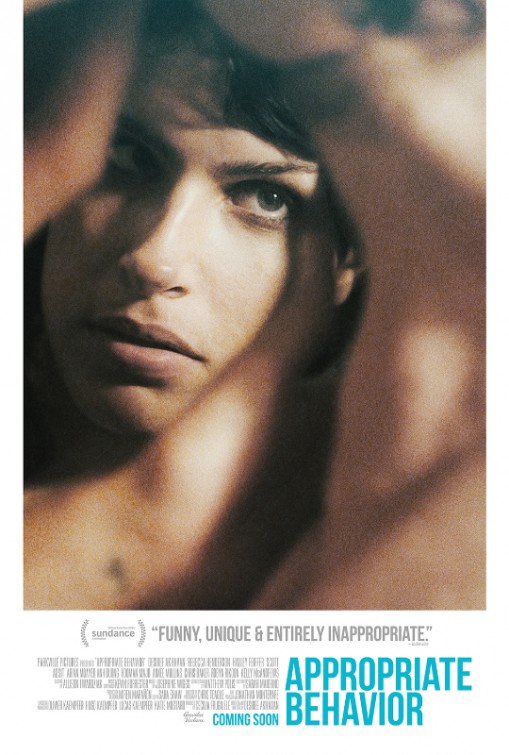
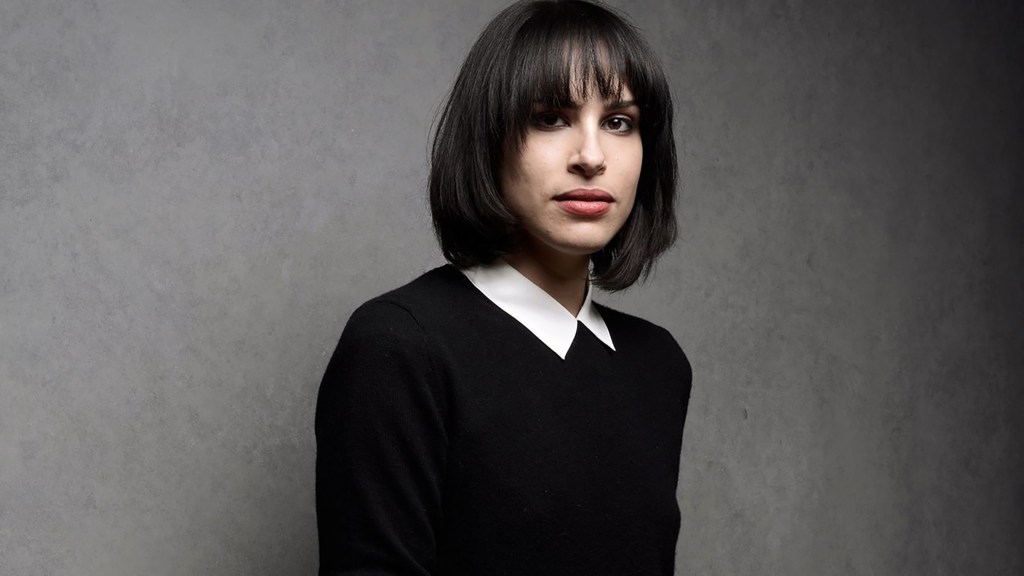





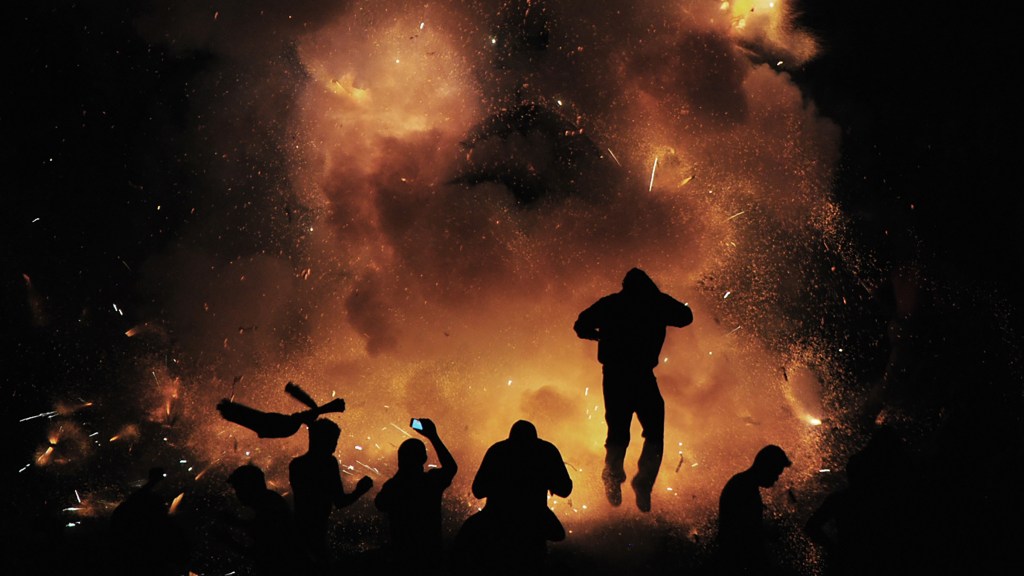


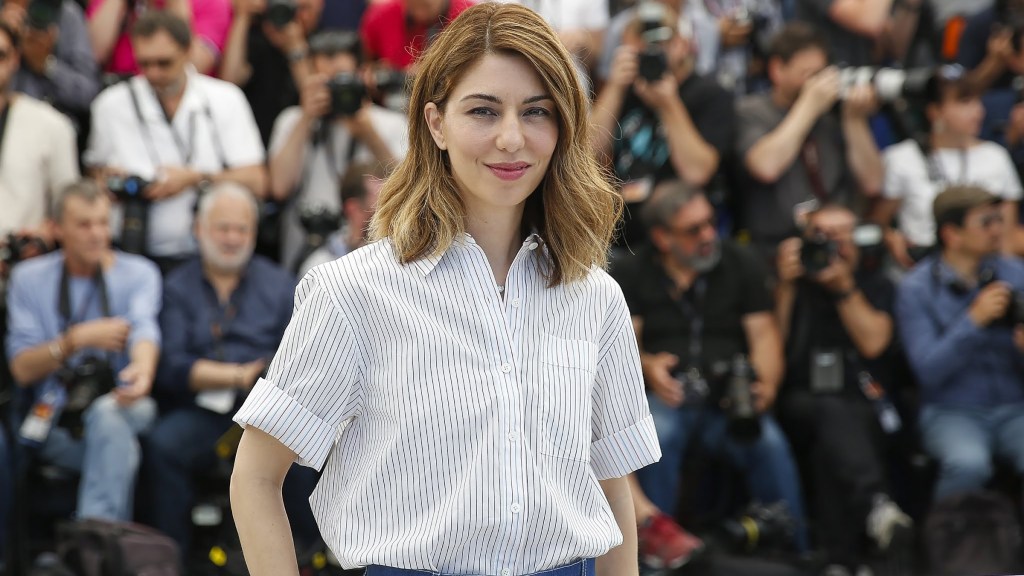





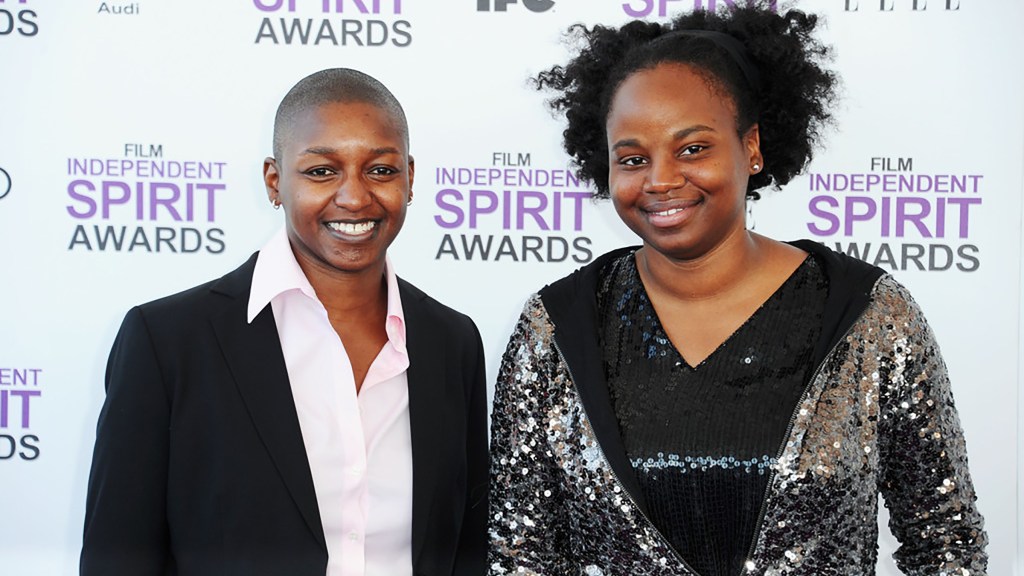


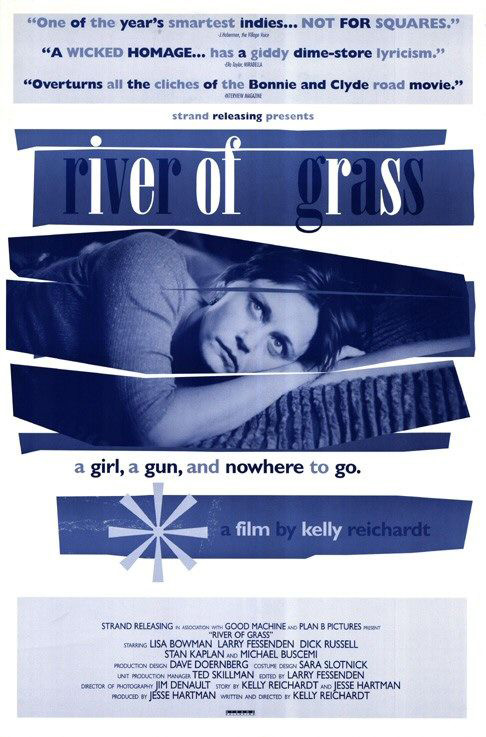


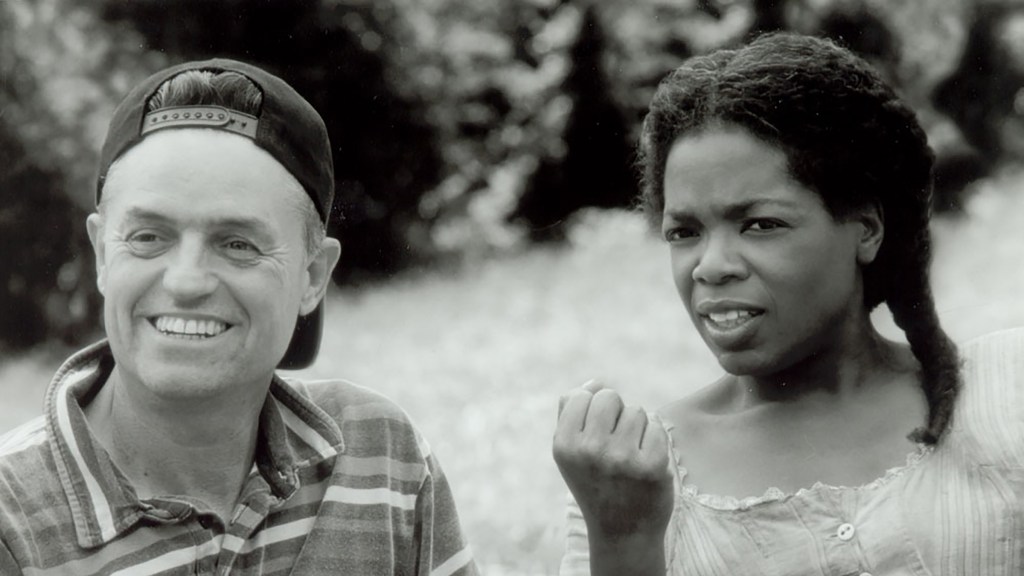
 Cultivate Cinema Circle