Bless Their Little Hearts – July 20th, 2017

Bless Their Little Hearts [1984]


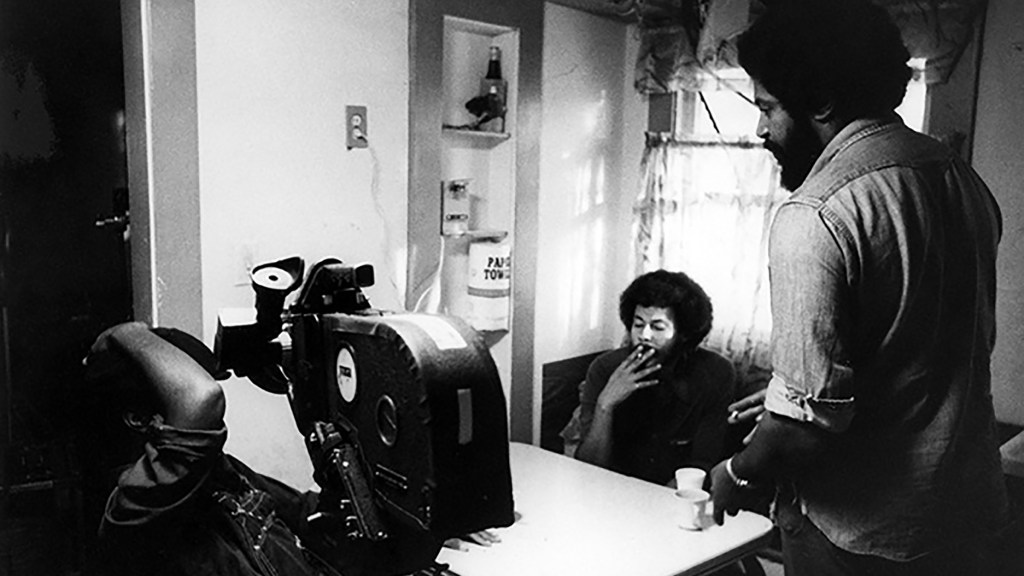
Please join Cultivate Cinema Circle and Hallwalls Contemporary Arts Center as we celebrate the work of Charles Burnett. Our second selection is a one-night screening of Bless Their Little Hearts [1984], written by Burnett and directed by Billy Woodberry. The film was named to the National Registry of the Library of Congress in 2013.

  • Screening Date: Thursday, July 20th, 2017 | 7:30pm
  • Venue: Hallwalls Contemporary Arts Center
  • Specifications: 1984 / 80 minutes / English / Black & White
  • Director(s): Billy Woodberry
  • Print: Supplied by Milestone Films
  • Tickets: $8 general, $6 students & seniors, $5 members

Event Sponsors:

Venue Information:

341 Delaware Ave, Buffalo, NY 14202


Synopsis

Courtesy of the film’s website:

Bless Their Little Hearts, a landmark of American independent cinema will open Wednesday, May 17 for exclusive theatrical engagements at IFC Center. Named to the National Film Registry at the Library of Congress, the films represent a high-water mark from the “L.A. Rebellion,” a group of African-American filmmakers who came out of UCLA in the 1960s-1980s that also included Haile Gerima (Sankofa) and Julie Dash (Daughters of the Dust). Director Billy Woodberry will appear in person for post-screening Q&As on the opening night of the engagement.

Billy Woodberry’s Bless Their Little Hearts (1983), written and shot by Burnett and starring Killer of Sheep’s Kaycee Moore, chronicles the devastating toll that joblessness takes on a married couple and their children. Added to the National Film Registry in 2013, “Part of the vibrant New Wave of independent African-American filmmakers to emerge in the 1970s and 1980s, Billy Woodberry became a key figure in the movement known as the L.A. Rebellion. Woodberry crafted his UCLA thesis film, “Bless Their Little Hearts,” which was theatrically released in 1984. The film features a script and cinematography by Charles Burnett. This spare, emotionally resonant portrait of family life during times of struggle blends grinding, daily-life sadness with scenes of deft humor. Jim Ridley of the “Village Voice” aptly summed up the film’s understated-but- real virtues: “Its poetry lies in the exaltation of ordinary detail.”

Tidbits:

  • Berlin International Film Festival – 1984 – Winner: Interfilm Award – Otto Dibelius Film Award (Forum of New Cinema)
  • Berlin International Film Festival – 1984 – Honorable Mention: OCIC Award (Forum of New Cinema)
  • Toronto International Film Festival – 1984
  • National Film Preservation Board – 2013 – National Film Registry

Restoration

Bless Their Little Hearts represents the closure and pinnacle of a neorealist strand within what’s now described as the L.A. Rebellion, which dates to Charles Burnett’s Several Friends (1969). Billy Woodberry’s film chronicles the devastating effects of underemployment on a family in the same Los Angeles community depicted in Killer of Sheep (1977), and it pays witness to the ravages of time in the short years since its predecessor. Nate Hardman and Kaycee Moore deliver gutwrenching performances as the couple whose family is torn apart by events beyond their control. If salvation remains, it’s in the sensitive depiction of everyday life, which persists throughout.

By 1978, when Bless’ production began, Burnett, then 34, was already an elder statesman and mentor to many within the UCLA film community, and it was he who encouraged Woodberry to pursue a feature-length work. In a telling act of trust, Burnett offered the newcomer a startlingly intimate 70-page original scenario and also shot the film. He furthermore connected Woodberry with his cast of friends and relatives, many of whom had appeared in Killer of Sheep, solidifying the two films’ connections.

Yet critically, he then held back further instruction, leaving Woodberry to develop the material, direct and edit. As Woodberry reveals, “He would deliberately restrain himself from giving me the solution to things.” The first-time feature director delivered brilliantly, and the result is an ensemble work that represents the cumulative visions of Woodberry, Burnett and their excellent cast.

Whereas Burnett’s original scenario placed emphasis on the spiritual crisis of Hardman’s Charlie Banks, the then-married Woodberry, alongside Moore and Hardman, further developed the domestic relationships within the film and articulated the depiction of a family struggling to stay alive in a world of rapidly vanishing prospects.

In retrospect, the film’s ending can be seen as a spiritual goodbye not just for Banks, but for Burnett, who would move away from his neorealist work with his next film, the classic To Sleep With Anger (1990); for Woodberry, who moved into documentary; and for Hardman, who left cinema shortly after. The film remains an unforgettable landmark in American cinema.


  • Restoration by UCLA Film & Television Archive.
  • Restored by Ross Lipman in consultation with Billy Woodberry
  • 35mm Picture Restoration by The Stanford Theater Film Laboratory and Fotokem
  • Restored from the original 16mm b/w negative A/B rolls and the original 16mm optical soundtrack
  • With funding by The National Film Preservation Foundation and The Packard Humanities Institute
  • Sound Restoration by Audio Mechanics
  • Sound Transfers by NT Picture and Sound
  • Special Thanks: Charles Burnett, Allyson Field, Sean Hewitt, Jan-Christopher Horak, Shawn Jones, John Polito, Jacqueline Stewart, Dave Tucker, Danielle Faye, Todd Wiener
  • Digital restoration (cleanup, stabilization, de-flicker) by Re-Kino, Warsaw, Poland. DCP by DI Factory, Warsaw.
  • Funding by Milestone Film & Video

Director Bio

Courtesy of film’s website:

Born in Dallas in 1948, Billy Woodberry is one of the founders of the L.A. Rebellion film movement.

I was born in a big county hospital — Parkland… They were thinking of maybe knocking it down, but they decided to preserve it. So I’m glad. And when I was born, we lived in North Dallas on Roseland and that’s important to me because shortly after, I think, we moved to a big housing project on the far, south side of town, the end of the street corner. So I actually grew up there, but I kind of imagined what it would have been like if I would have stayed in North Dallas with my original people, you know? (Laughs) North Dallas is an old part of town. The first high school was in that part of town, my mother’s from that — when she came to Dallas, she lived in that part of town. It was a smaller kind of place in a sort of important part of the city, and the black part of the city… My mother was maybe 16, 17, so she couldn’t manage to work and have me … so she took me to her grandparents — her father’s parents — in East Texas … when I was maybe nine months old or something like that… I spent the first six years there on a farm in the country. I joined them later when it was time to go to school… In the first grade, I went to the school in the country with all of the kids I knew and my cousins and took the bus. I was fine with it, but my mother was not hearing that, so I had to come [back] to the city. Every summer I went [back to the country]. I knew that world and because they were older and from a different generation, I knew those people, and I knew my great aunt, who was a bit older than them. And I remember when they got social security … I remember when they got electricity, when we got a television and the mystery about that, like what happens if it storms and the TV is on [and] this kind of stuff. So I remember a lot of things that others, even people my age, don’t know.

Then I went to Dallas in the second grade and I lived in my big housing project and that was a notorious part of town, the tough part of town. That project was new and you can’t think of it like now; now I joke, I tell my cousins and my friends, all those people you’re trying to run away from in the projects, they’ve got their own TV show (laughs). But it’s a different thing, because when we lived in there it was young families, right off, making their way, and they weren’t always like the poorest people, and they were ambitious people, and that was a transition for them until they could manage… So I lived there for nine years and then we moved — I think nine — well, I was going into the eighth grade and we moved to upper South Dallas because my uncle had a nice place and he died, and so my aunt inherited it. We spent a year there and then we moved across the river to a place called Oak Cliff.

In Black Film Review, (Volume 1, No. 4), Woodberry said about his childhood living on that small farm, “I think I absorbed the stories, the sensibilities, the sounds of that generation, born not so long ago after the end of slavery and Reconstruction.”

At Lincoln High School in Oak Cliff, Woodberry played football and saw movies down the street at the Lincoln as well as the Forest Avenue Theater — the latter now owned by Erykah Badu. He had offers from black colleges (Morgan State in Baltimore being one of them), but he decided to go west to California and went first to Santa Barbara City College.

Santa Barbara used to be a kind of weigh station for the Black Panthers because it was a very pleasant interlude before you entered Los Angeles County, where you encountered a very different police response than you did even in the Bay Area, so they liked that respite…They could kind of walk around and relax and be admired by young students, so I got to see that… My real heroes were the SNCC [Student Nonviolent Coordinating Committee] people, many of whom I didn’t know until later, but I knew it from reading about them because those campaigns to raise support for the work in the South. And the Berkeley people; I didn’t know Berkeley or go to Berkeley until the 70s. I just knew their work and the people that passed through. And I picked that stuff up… I connected with that once I decided that, you know what, I really do want to finish school and see where that goes.

[After graduation] I went home, I got married, I didn’t want to stay there, so I stayed there for a total of two months, and I came to California March 1970. And I landed at my friend and his roommate’s house and I slept in his room on the floor and… She would wait. I would get a place, I would get things going. So I needed to get a job, I needed to see about school, and I probably accomplished all of it by summer with my friends. I got a job in a factory in Vernon. It’s a lithography plant. They printed all the album covers if you remember that phenomenon… My wife came. She was here for some months, then she was gonna have a baby. She was pregnant. She wanted to be back in her place, so in about six months, she moved back to have her baby and I stayed and I did a summer program at Cal State, which I didn’t have to do, but I’m actually incredibly happy… that I did it. Most of the people went to school at night because they worked during the day. And those guys, they had a kind of third-world consciousness because of the politics of the Panthers and the Chicano Moratorium… and they knew that these groups need to know each other and they need to cooperate and respect each other, so they gave you the history and they gave you the analysis and the sociology and all of that, relating to that, and you got exposed to it and it became a part of your thing. There’s no conflict, competition, and that kind of thing. You were interested in the other people and the issues, so very helpful, very useful things about how to study and how to organize your time and you direct yourself and how to ask for help if you need it and how to get support financially and otherwise — to do what you needed to do.

Woodberry continued his studies and Cal State Los Angeles, becoming a serious student as well as looking outside of his course work to grow intellectually. It was the time of the black consciousness movement, the black arts movement and he saw the large increase of black students at the top UC campuses post-1968.

It was exciting and it was easy to be excited about it and to be stimulated by it. So [in] 1972, I decide I want my degree. I found a receptive and hospitable and stimulating department in Pan-African studies, so I did my B.A. in African-American history and studies. In between graduating and the fall, I took a summer course in Latin American studies… there was this political scientist named Donald Bray who was a political scientist… That summer, Bray did a class on Cuba, but it was a class that was partly through film. And we saw all of the Cuban documentary films and the History Of A Battle [Historia de una batalla by Manuel Octavio Gómez]— the film about the literacy campaign and the brigadistas, the young ones who go in the countryside, volunteer with sleeping bags, and they wanted to teach every peasant how to at least how to read and write their name. It was a whole campaign. So you got to see all of [these] kind[s] of films. I found it really exciting and, along with starting to try to understand issues of history and political economy and philosophy and political organization and commitment, what it meant – I was excited by that… That was a part of the way that I was sort of taken with film.

My teachers, Harding and Bray, they knew I had a growing interest in that, and they mentioned to me — I had learned about UCLA Film School, but it was not something that I was committed to or sure I could. I was very tentative, but they knew I was interested, so one time, Paul Offredi, this Brazilian pedagogue, was meeting up at La Paz, the center and retreat for the United Farm Workers. This was 1970 — early 72. And they asked me would I like to go to see him because they knew I was [interested] and they said you can meet a guy, a Brazilian guy, who studies at UCLA — Mario DeSilva. He was in graduate school at UCLA. I said, “Sure.” I went, I didn’t wear warm enough clothes, I didn’t realize how cold it got. We took a van, I met him, I talked with him, I spent time with him, I went up, I saw Paul Offredi in an act with the farm workers and César Chávez, and I came back, and Mario told me, “Sure, make the application, you can do that and I will take you around.” Then, I made the application, they wrote me wonderful letters.

I was teaching myself as a part of learning about — wanting to learn about — film. And the other thing is I had made an 8mm film in my history of jazz and blues class for a guy I really love. He went to school here, did his Ph.D. in anthropology. His name was Lance Williams and he’s a real Los Angeles guy, he went to Mt. Carmel High School, he went to Cal State L.A., he came here, he knew a lot about jazz and music. He had been tutored by Quincy Jones and all those people. He’s a nice, brilliant, Catholic boy, you know what I mean? And really smart and [a] good teacher. I made this film based on a song by John Lee Hooker, “Whiskey and Women.” It was just a free-form kind of little film I made on Super 8, but I made it myself and edited in the camera. So I must’ve been interested, and he still talks about that. I made the first film in his class. [Now lost.]

I came over to visit before I got in, I think, with Mario and my then girlfriend because I had gotten a divorce and I had a new girlfriend… I came for his thesis screening. That’s where I met Charles Burnett. He was playing with a yo-yo (laughs) and being unassuming, not really showing you who he was, but Mario told me that, “that’s the guy you want to know and that’s the guy you [want to] really check out because he doesn’t do all the yapping and the posturing that the others [do], but I’m telling you, his is the real deal. I’ve worked with him, I’ve been in Watts with him. I know. He’s the real guy.” Now it took two years of something before we became friends, three almost. That was how I met him, though.

Going to UCLA was not the only film education Woodberry received. He remembers a bookstore/café named the Long March where he watched The Mother by Vsevolod Pudovkin, Sergei Eisenstein’s Old and New, and G. W. Pabst’s version of the Threepenny Opera. It was also a golden age of repertory cinemas in Los Angeles — Woodberry remembers seeing a retrospective of Jean-Luc Godard movies at the Vanguard. At the Vagabond, (programmed by William Moritz an important historian of animation and experimental films) Woodberry saw Glauber Rocha’s Antonio das Mortes. His first date with the woman that became his second wife, was at the Los Angeles County Museum of Art to see Brazilian films. They also would take the bus down to the Fox Venice Theater where one Saturday they saw Bernardo Bertolucci’s The Conformist and Godard’s Tout va Bien.

It’s good to see, for me to remember, that part of my film culture was formed in the context of the cultural and political world of the time and not just in the classroom.

That’s not to dismiss at all the importance of UCLA.

This was a wonderful, wonderful place because it was a world where you were inundated with film, with the talk about it, the smell of it, the young people getting their hands on equipment for the first time… and you had the requirements that you do three film history sections, that you do two seminars, and so you were able to… see all kinds of films that I might avoid… If I have to do the history of silent film, I can’t avoid it. And the fact [is] that I’m interested in it and I will buy books and read books about it. I don’t know [if] that’s everybody’s temperament or experience, but for me, it was… It’s interesting, too, that a number of my friends, including Geoffrey Gilmore, who’s at Tribeca now, but was [for] years at Sundance and did his studies here in film theory, film studies, film history, and others. A number of those people, we’ve remained friends since school because I’m genuinely interested in what they do and what they think about.

I remember the first discussion me and Charles [Burnett] had was: Pudovkin or Eisenstein? (laughs) He says, Pudovkin, because he’s more humanist. As I learned about his things, how he acquired his interest, his taste and over the years we’ve shared those things, and I really admire, and I was enriched by learning what his interests were and what informed what he did.

In Black Film Review, (Volume 1, No. 4, 1984), Woodberry added, “It was a very fertile time for the film school. Haile Gerima was there, Larry Clark was there, Charles Burnett was there. They were ahead of me and beginning to make their films. So it was a very dynamic and fertile environment…They organized screenings in the evenings. There were constant debates and arguments. And they were all very hard working and set the standards…In that environment, I think one could do less, but only with a lot of discomfort; you didn’t have many excuses for not striving to say something more. We all felt the dearth of images, of films that expressed what we thought, what we knew.”

About his own first attempts to make film, in that same magazine, Woodberry noted, “I was exposed to films that had a social dimension…In sort of a backwards way, from these films, I started to search for films that somehow demonstrated a possibility of expressing my concern with social and political issues. At a certain point, I wanted to make films. To try.” His first student film is now lost, but his next short film, The Pocketbook exists and it’s a small masterpiece.

With a small grant from the American Film Institute, Woodberry attempted the very ambitious Bless Their Little Hearts in 1979. But in that year, he had to stop for six months. Over the next three years, he was able to shoot approximately four-fifths of the film. Woodberry received his MFA from UCLA in 1982. It had taken a while to get through school since he had to make money to support himself and to produce Bless Their Little Hearts. In September of 1983, he had the film’s first screening at the Independent Feature Market in New York. The film is now considered a pioneering and essential work of the L.A. Rebellion — influenced by Italian neo-realism and the work of Third Cinema filmmakers. Bless Their Little Hearts was awarded an OCIC and Ecumenical Jury awards at the Berlin International Film Festival and was added to the National Film Registry of the Library of Congress in 2013. For some years after graduation, Woodberry taught at the UCLA School of Theater, Film and Television.

Currently, Woodberry is a permanent faculty member
 of the School of Film/Video and the School of Art at the California Institute of the Arts, where he has taught since 1989. Over the years, Woodberry has also been an established video and multimedia installation artist, his works appearing at the Viennale, DocLisboa, Amiens International Film Festival, Camera Austria Symposium, Harvard Film Archive, Human Rights Watch Film Festival and Museum of Modern Art.

Woodberry’s film portrait of black beat poet Bob Kaufman, And When I Die, I Won’t Stay Dead (2015) was the opening film of MoMA’s Doc Fortnight in 2016. It was a film long in the making:

“I’ve been researching him for about twelve, fourteen years. I knew about him before, since the seventies, from people who introduced me to his books. I always had his books, and I was impressed, but I didn’t know so much at the time. And then in 1986, I went to the City Lights bookstore and saw this magazine, Poetry Flash, and the cover [story] was about his death. At the time, I thought, “Maybe I should make a short movie about him. A kind of tribute.” But when I looked at it, I couldn’t figure out how to do it. I didn’t really grasp the tragic dimensions of his life. I was too naive — I didn’t know enough about life, enough about tragedy, enough about much. So I put it aside. In the early aughts, I took it up again. I spent six or seven years researching it, another four or five years shooting it, and I spent two years editing it.” — Interview by Danny King, Village Voice, February 19, 2016.

The film premiered at the 53rd Viennale, Vienna International Film Festival (2015), and has been featured at festivals nationally and internationally, including the 13th Doclisboa, Documentary International Film Festival – International Competition, Lisbon (2015); 45th International Film Festival Rotterdam – Signatures, (2016); 59th San Francisco International Film Festival (2016); Courtisane Film Festival, Ghent (2016); and The Flaherty Film Seminar, New York (2016).

And When I Die, I Won’t Stay Dead — title lifted from a line in one of Kaufman’s poems — is director Woodberry’s inspired, moving meditation on Kaufman’s work and legacy. A seamless marriage of director and subject, the film is not only scored by but also moves to the rhythms of jazz and is itself a kind of poetry. Fans of Woodberry’s masterful 1984 film Bless Their Little Hearts (selected for preservation in the National Film Registry) won’t be surprised at the taut intelligence and rich artfulness of And When I Die, in which the director upends many bio-doc conventions. He opens the film by dropping the viewer into Kaufman’s narrative at its boiling point – after he has already made waves and a name for himself in San Francisco’s fecund poetry scene of the mid-twentieth century.” -For CraveOnline, Ernest Hardy, 2016

Woodberry’s short documentary, Marseille Après La Guerre (2016), is a portrait of dock workers in post-WWII Marseille, many of whom were of African descent, and pays homage to Senegalese film director, Ousmane Sembéne:

“These photographs [that make up the short] were found in the collection of the National Maritime Union, in their archives at the NYU library. They are views and photographs of the docks of Marseilles after the Second World War. The film is also a kind of tribute to Ousmane Sembène, the Senegalese writer and filmmaker because, in ’47, he made his way back to France after serving in the war. He went back to Marseilles, where he worked and lived as a dockworker and joined the CGT [General Confederation of Labor]. So it’s a tribute to him, and a tribute those dock people, and to Marseilles at the time. It’s also a tribute to a group of young musicians who kind of reclaimed this heritage. They were very responsive to a book by Claude McKay, a Jamaican writer who lived in the United States. He wrote a book in Marseilles called Banjo, about life in the old ports of Marseilles. It’s quite a book. These young musicians — they said if their band was a book, it would be called Banjo. I liked their music, so we used it. So it’s a way of promoting my affection for Sembène and for that world and also for finding that material.” — Interview by Danny King, Village Voice, February 19, 2016.

Marseille Après La Guerre received acclaim after its screenings at the Roy and Edna Disney Theater CalArts’ Downtown Center for Contemporary Arts, Los Angeles (2016), Courtisane Film Festival, Gent (2016), and Instituto Moreira Salles, Rio de Janeiro (2016).

Woodberry’s films have been screened at the Cannes and Berlin Film Festivals, Viennale, Rotterdam, the Museum 
of Modern Art (MoMA), Harvard Film Archive, Camera Austria Symposium, Human Rights Watch Film Festival, Tate Modern, and Centre Pompidou.

He has also appeared in Charles Burnett’s When It Rains (1995) and provided narration for Thom Andersen’s Red Hollywood (1996) and James Benning’s
 Four Corners (1998).

In March 0f 2017, Woodberry was the recipient of a Guggenheim Fellows for “individuals who have already demonstrated exceptional capacity for productive scholarship or exceptional creative ability in the arts.”


Main Interview Courtesy of UCLA Film and Television Archive. Completed on: Thursday, June 24, 2010; July 6, 2010. Interviewee: Billy Woodberry (BW). Interviewers: Jacqueline Stewart, Dr. Allyson Field, and Robyn Charles. Transcribers: Kelly Lake, Michael Kmet.

Filmography:

  • A Story from Africa (2019) (Short)
  • And when I die, I won’t stay dead (2015)
  • Bless Their Little Hearts (1983)
  • The Pocketbook (1980) (Short)

Writer Bio

“The impetus was the whole Civil Rights Movement and we felt we had a responsibility to reflect reality, tell the truth about the black community. To help, however we can, to march the social movement forward.”

Courtesy of film’s website:

Born in Vicksburg, Mississippi on April 13, 1944, Charles Burnett moved with his family to Los Angeles at an early age. He describes Watts, the community he grew up in, as having a strong mythical connection with the South thanks to the many Southern transplants who settled there — an atmosphere that has informed much of Burnett’s work. He attended John C. Fremont High School, where he ran track. As a member of the electronics club, Burnett befriended fellow electronics enthusiast and secretly aspiring actor Charles Bracy (The Million Dollar Rip-off, 1976), who would later work on and act in a number of Burnett’s films, including Killer of Sheep. Burnett and Bracy graduated in the same class and both went on to study as electricians at Los Angeles City College. Bracy left school early to take a full-time job and Burnett soon lost interest with the idea of being a professional electrician. “They were very strange people,” Burnett says of his electrician-to-be peers, “They told awful jokes. They were dull people. Didn’t want that. I was always interested in photography and looked into being a cinematographer and started taking creative writing at UCLA.”

Burnett decided to pursue a Master of Fine Arts in filmmaking at UCLA, where he was greatly influenced by his professors Basil Wright, the English documentary filmmaker famous for Night Mail and Song of Ceylon, and Elyseo Taylor, creator of the Ethno-Communications program and professor of Third World cinema. Burnett cites Jean Renoir, Satyajit Ray, Federico Fellini and Sidney Lumet as other important cinematic influences.

Burnett worked and studied at UCLA alongside Julie Dash, Haile Gerima, Billy Woodbury, Larry Clark, and Jamaa Fanaka (then known as Walter Gordon). He describes the UCLA film school as an “anti-Hollywood” environment with a “kind of anarchistic flavor to it.” The UCLA filmmakers shared a disdain for the Blaxploitation vogue of the day and a propensity toward filmmaking that was “relevant or extremely well done, original.” Clyde Taylor of New York University would later label this group of radical black film contemporaries the “L.A. Rebellion.” Although there was no conscious impetus among these filmmakers to declare themselves part of a “rebellion,” there was much camaraderie and exchange of ideas and labor between them. Burnett was the cinematographer for Gerima’s Bush Mama (1979), worked crew and camera and edited Dash’s Illusions (1982) and was the screenwriter and cinematographer for Woodbury’s Bless Their Little Hearts (1984).

Burnett and his contemporaries took their time at UCLA, staying in the program as long as they could in order to take advantage of the free film equipment and making film after film. Burnett made a number of seminal films at this time, the most notably his thesis film and first feature, Killer of Sheep. The precursor to Killer of SheepSeveral Friends (1969), was originally planned as a feature but ended up a short. Several Friends was a series of loose, documentary-style vignettes sketching the lives of a handful of characters, mostly played by amateurs (Burnett’s friends) living in Watts. Much of the film’s theme and aesthetic (and many of its actors) ended up in Killer of Sheep.

Several Friends is included in Milestone’s DVD release of Killer of Sheep, along with another student short The Horse (1973), the critically acclaimed short When It Rains (1995), his portrait of a family in post-Katrina New Orleans, Quiet as Kept, and both original release and the director’s cut of Burnett’s second feature, a long-neglected landmark of independent cinema, My Brother’s Wedding (1984).

My Brother’s Wedding began production in 1983. Burnett wrote, directed and produced this low budget independent film that examines the family connections and personal obligations facing Pierce, a young man trying to keep his best friend from going back to jail while dealing with his older brother’s approaching marriage into a bourgeois black family. My Brother’s Wedding uses both comedy and tragedy to explore the way that class figures into the American black experience. Burnett submitted a rough cut of the film to its producers, who against his wishes, accepted it as the final cut. The unfinished film was shown at the New Directors/New Films festival to mixed reviews, discouraging distributors and tragically relegating the film to relative obscurity.

In 1990, Burnett wrote and directed the haunting, malicious, and darkly funny family drama, To Sleep With Anger. Danny Glover, parlaying his recent stardom in Lethal Weapon to get funding, co-produced and starred in this critically lauded film as Harry, a charming, mischievous, and possibly supernatural Southern family friend. As he insinuates himself into the home of a prosperous black family, Harry, like another snaky charmer, threatens to spoil their domestic paradise. Burnett received acclaim in America and abroad for the film. In 1991, To Sleep With Anger won Independent Spirit Awards for Best Director and Best Screenplay for Burnett and Best Actor for Glover. The Library of Congress later selected this film (in addition to Killer of Sheep) for its prestigious National Film Registry. The National Society of Film Critics honored Burnett for best screenplay for To Sleep With Anger, making him the first black filmmaker to win in this category in the group’s 25-year history. While the Los Angeles Times reported that Burnett’s movie reminded viewers of Anton Chekov, Time magazine wrote: “If Spike Lee’s films are the equivalent of rap music — urgent, explosive, profane, then Burnett’s movie is good, old urban blues.” The film also received a Special Jury Recognition Award at the 1990 Sundance Film Festival and a Special Award from the Los Angeles Film Critics Association. Both Burnett and Glover were nominated for New York Film Critics Circle Awards.

Burnett’s next film, The Glass Shield, (1994, starring Lori Petty, Michael Boatman and Ice Cube) was a police drama based on a true story of corruption and racism within the Los Angeles police force. While the film went over well with critics, it was not a commercial success. Terrence Rafferty explains: “[The Glass Shield is] a thoughtful, lucid moral drama with a deeply conflicted hero and no gunplay whatsoever. Miramax’s fabled marketing department tried to sell it as a hood movie, dumping it in a few urban theaters with the support of miniscule ads whose most prominent feature was the glowering face of Ice Cube (who has a small role in the picture).”

Burnett followed this feature with the short, When It Rains (1995), which was chosen as one of the ten best films of 1990s by the Chicago Reader’s Jonathan Rosenbaum. Rosenbaum went on to choose Killer of Sheep and To Sleep with Anger as two of the Top 100 American Films as Alternate to the American Film Institute Top 100.

Working with movie stars James Earl Jones and Lynn Redgrave, Burnett directed the surreal interracial romantic comedy The Annihilation of Fish (1999), which won awards at the Newport Beach, Sarasota, and Worldfest Houston Film Festivals.

Burnett traveled to Africa to make Namibia: The Struggle for Liberation (2007), a powerful, epic biography of Sam Nujoma, the leader of the South West Africa People’s Movement and the nation’s first president. Based on Nujoma’s memoirs, the film stars Carl Lumbly and Danny Glover.

Throughout his career, Burnett has also embraced the documentary form — many of his earliest film efforts walk the line between fiction and nonfiction cinema. He directed the 1991 documentary about U.S. immigration, America Becoming; Dr. Endesha Ida Mae Holland (1998), a portrait of a civil rights activist, playwright, and teacher; and Nat Turner: A Troublesome Property (2003) about the leader of an important slave rebellion.

Burnett made his television debut directing his acclaimed 1996 Disney Channel film, Nightjohn. Based on the Gary Paulsen’s novel, the film tells the story of a slave’s risky attempt to teach an orphaned slave girl to read and write. New Yorker film critic Terrence Rafferty called Nightjohn the “best American movie of 1996.” The TV film received a 1997 Special Citation Award from the National Society of Film Critics “for a film whose exceptional quality and origin challenge strictures of the movie marketplace.”

Burnett’s television work also includes the 1998 ABC two-part mini-series Oprah Winfrey Presents: The Wedding, starring Halle Barry and Lynn Whitfield; Selma, Lord, Selma (1999), about the infamous 1965 “Bloody Sunday” civil rights march across the Edmund Pettus Bridge; a film about Negro League Baseball, Finding Buck McHenry (2000); Relative Stranger (2009), a drama about a painful family reunion; and Warming By the Devil’s Fire (2003), an episode in Martin Scorsese’s six-part documentary The Blues for PBS. Burnett also worked on the PBS miniseries American Family: The Journey of Dreams, which debuted in 2002.

In 1997, the Film Society of Lincoln Center and the Human Rights Watch International Film Festival honored Burnett with a retrospective, Witnessing For Everyday Heroes, presented at New York’s Walter Reade Theater of Lincoln Center. Burnett has been awarded grants from the Guggenheim Foundation, the Rockefeller Foundation, the National Endowment for the Arts, and the J. P. Getty Foundation, as well as a John D. and Catherine T. MacArthur Fellowship (a.k.a. “the genius grant”).

Burnett is also the winner of the American Film Institute’s Maya Deren Award, and one of the very few people ever to be honored with Howard University’s Paul Robeson Award for achievement in cinema. The Chicago Tribune has called him “one of America’s very best filmmakers” and the New York Times named him “the nation’s least-known great filmmaker and most gifted black director.” Burnett has even had a day named after him — in 1997, the mayor of Seattle declared February 20 to be Charles Burnett Day.

Burnett has been cited as a major influence by many current artists, musicians, writers, and filmmakers, including Barry Jenkins, Sherman Alexie, Lance Hammer, Matthew David Wilder, Bill Jennings. David Gordon Green, Nelson Kim, Kahlil Joseph, Ava DuVernay, Lynne Ramsay, Monona Wali, Mos Def, Pamela J. Peters, and hip hop duo Shabazz Palaces.

Burnett’s next feature film project, Tanner’s Song, pays homage from Bobby Kimball — original lead signer of the Grammy Award-winning band, Toto — to the wise man who mentored him. Danny Glover has expressed interest in playing the role of Tanner.

Charles Burnett lives Los Angeles. He is the father of two sons, Jonathan and Steven, and the grandfather of Malia and Leila Burnett.

“I don’t think I’m capable of answering problems that have been here for many years. But I think the best I can do is present them in a way where one wants to solve these problems.”

Filmography:

  • After the LockDown: Black in LA (2021)
  • Power to Heal: Medicare and the Civil Rights Revolution (2018)
  • Relative Stranger (2009)
  • Namibia: The Struggle for Liberation (2007)
  • For Reel? (2003)
  • Nat Turner: A Troublesome Property (2003)
  • Finding Buck McHenry (2000)
  • The Annihilation of Fish (1999)
  • The Wedding (1998)
  • The Final Insult (1997)
  • Documenta X – Die Filme (1997)
  • Nightjohn (1996)
  • The Glass Shield (1994)
  • America Becoming (1991)
  • To Sleep with Anger (1990)
  • My Brother’s Wedding (1983)
  • Killer of Sheep (1978)

Links

Here is a curated selection of links shared on our Facebook page for additional insight/information:

  • 6/21/17 – “Forms, with Killer of Sheep, a landmark diptych about work as the crucible of the American character either in its abundance or its absence.” Jim Ridley, Village Voicelink
  • 7/17/17 – “Burnett and Woodberry are two of the crucial figures in the L.A. Rebellion, a group of black filmmakers, centered around U.C.L.A. in the nineteen-seventies and early eighties, whose films have enduringly marked the history of cinema.” Richard Brody, The New Yorkerlink

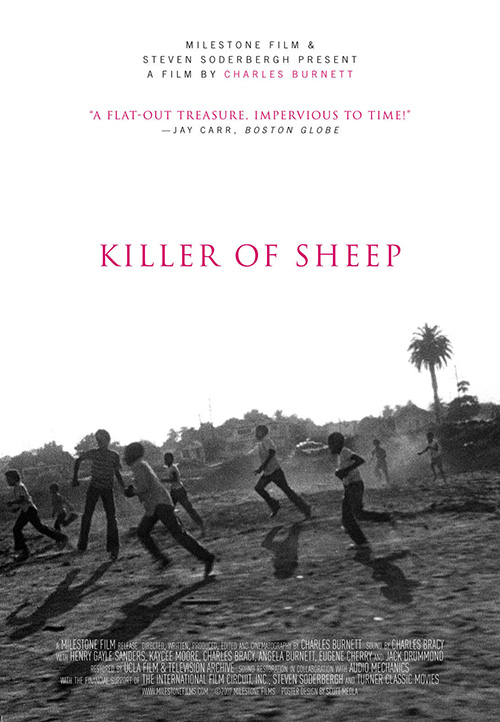
Killer of Sheep – July 18th, 2017

Killer of Sheep [1978]


Please join Cultivate Cinema Circle and Hallwalls Contemporary Arts Center as we celebrate the work of Charles Burnett. First up is a one-night screening of the 40th anniversary restoration of Killer of Sheep [1978].

  • Screening Date: Tuesday, July 18th, 2017 | 7:30pm
  • Venue: Hallwalls Contemporary Arts Center
  • Specifications: 1978 / 80 minutes / English / Black & White
  • Director(s): Charles Burnett
  • Print: Supplied by Milestone Films
  • Tickets: $8 general, $6 students & seniors, $5 members

Event Sponsors:

Venue Information:

341 Delaware Ave, Buffalo, NY 14202


Synopsis

Courtesy of the film’s website:

Writer/Director Charles Burnett submitted his first feature, Killer of Sheep, as his thesis for his MFA in film at UCLA. The film was shot on location near his family’s home in Watts in a series of weekends on a shoestring budget of less than $10,000, most of which was grant money.

With a mostly amateur cast (consisting of Burnett’s friends and acquaintances), much handheld camera work, episodic narrative and gritty documentary-style cinematography, Killer of Sheep has been compared by film critics and scholars to Italian neorealist films like Vittorio De Sica’s The Bicycle Thief and Roberto Rossellini’s Paisan. However, Burnett cites Basil Wright’s Song of Ceylon and Night Mail and Jean Renoir’s The Southerner as his main influences.

In 1981, Killer of Sheep received the Critic’s Award at the Berlin International Film Festival. In 1990, the Library of Congress declared it a national treasure and placed it among the first 50 films entered in the National Film Registry for its historical significance. In 2002, the National Society of Film Critics selected the film as one of the 100 Essential Films of all time.

2017 marks the 40th anniversary of this landmark film and Milestone is celebrating with a worldwide tour of this classic film along with Billy Woodberry’s Bless Their Little Hearts with script and cinematography by Charles Burnett!

Tidbits:

  • Berlin International Film Festival – 1981 – Winner: Critics’ Award & FIPRESCI Prize (Forum of New Cinema)
  • Toronto International Film Festival – 1981
  • AFI Fest – 1990
  • National Film Preservation Board – 1990 – National Film Registry

Context

Clyde Taylor of New York University coined the phrase, “The L.A. Rebellion” as a term to refer to the group of young black politically-minded artists trading ideas and labor at the UCLA Film School in the 1970‘s. Though Charles Burnett has insisted in several interviews that he and his fellow filmmakers did not in fact consider themselves part of a “rebellion” or “movement” as such, and that it was merely a radical time in American history, he describes the atmosphere at UCLA as one of camaraderie in radical thought. He called UCLA an “anti-Hollywood” environment with a “kind of anarchistic flavor to it” in which one “had to come up with something relevant or extremely well done, original.”

Other directors at UCLA at this time were Julie Dash (Daughters of the Dust, 1991), Haile Gerima (Sankofa, 1993), Billy Woodbury (Bless Their Little Hearts, 1984), and Larry Clark (Passing Through, 1977). Burnett himself was the cinematographer for Gerima‘s Bush Mama (1979), worked crew and camera and edited Dash‘s Illusions (1982) and wrote the script and shot Woodbury‘s Bless Their Little Hearts. Another notable figure is UCLA professor Elyseo Taylor, who started the school’s Ethno-Communications department, a program focused on the study and production of films by people of color.

Many of the films that were being made at the time by this peer group have been compared by film critics and scholars to Italian neorealist films of the 1940‘s, the Third World cinema of the ’60s and ‘70s, and the Iranian New Wave of the 90’s. A major thematic thread that runs through many of the films is a critical response to White Hollywood and Blaxploitation. “We needed the spectrum,” says Burnett, “the full range of the black experience.”


Restoration

UCLA has long been considered a leader in the preservation of classic Hollywood cinema, but increasingly in recent years they’ve also been preserving the very best of American independent cinema. At technical level Killer of Sheep demanded immediate attention, as it was already deteriorating when we received the material in 2000. The original 16mm A/B rolls as well as the magnetic soundtrack master suffered from vinegar syndrome, putting the film on a ticking clock.

Killer of Sheep had previously existed only in rough 16mm copies, and the 35mm blow-up restoration better renders the beautiful quality of Charles’ lovely in-the-street cinematography. One of the genuine privileges of doing this work at UCLA is that we’re able to apply the best technical resources in LA to a small, low-budget production that would never otherwise benefit from such treatment. But despite the access to high-end resources, we made great efforts to preserve exactly the rough quality of the original, so as not to alter the work. Especially careful attention was given to image contrast and tonality, to carefully bring out the best aspects of the original negative. We’re indebted to Film Technology Company for their excellent lab work. We also, with the help of John Polito of Audio Mechanics, conducted close and judicious work on the “verite-like” soundtrack, which was often recorded by the many kids who appear in the film.

— Ross Lipman, preservationist at UCLA Film & Television Archive, has been responsible for the restoration of the films of John Cassavetes, John Sayles, and Kenneth Anger. He is the director of Milestone’s release, Notfilm.

Milestone’s 2017 release is based on the digital restoration by Modern Videofilm.


Director Bio

“The impetus was the whole Civil Rights Movement and we felt we had a responsibility to reflect reality, tell the truth about the black community. To help, however we can, to march the social movement forward.”

Courtesy of film’s website:

Born in Vicksburg, Mississippi on April 13, 1944, Charles Burnett moved with his family to Los Angeles at an early age. He describes Watts, the community he grew up in, as having a strong mythical connection with the South thanks to the many Southern transplants who settled there — an atmosphere that has informed much of Burnett’s work. He attended John C. Fremont High School, where he ran track. As a member of the electronics club, Burnett befriended fellow electronics enthusiast and secretly aspiring actor Charles Bracy (The Million Dollar Rip-off, 1976), who would later work on and act in a number of Burnett’s films, including Killer of Sheep. Burnett and Bracy graduated in the same class and both went on to study as electricians at Los Angeles City College. Bracy left school early to take a full-time job and Burnett soon lost interest with the idea of being a professional electrician. “They were very strange people,” Burnett says of his electrician-to-be peers, “They told awful jokes. They were dull people. Didn’t want that. I was always interested in photography and looked into being a cinematographer and started taking creative writing at UCLA.”

Burnett decided to pursue a Master of Fine Arts in filmmaking at UCLA, where he was greatly influenced by his professors Basil Wright, the English documentary filmmaker famous for Night Mail and Song of Ceylon, and Elyseo Taylor, creator of the Ethno-Communications program and professor of Third World cinema. Burnett cites Jean Renoir, Satyajit Ray, Federico Fellini and Sidney Lumet as other important cinematic influences.

Burnett worked and studied at UCLA alongside Julie Dash, Haile Gerima, Billy Woodbury, Larry Clark, and Jamaa Fanaka (then known as Walter Gordon). He describes the UCLA film school as an “anti-Hollywood” environment with a “kind of anarchistic flavor to it.” The UCLA filmmakers shared a disdain for the Blaxploitation vogue of the day and a propensity toward filmmaking that was “relevant or extremely well done, original.” Clyde Taylor of New York University would later label this group of radical black film contemporaries the “L.A. Rebellion.” Although there was no conscious impetus among these filmmakers to declare themselves part of a “rebellion,” there was much camaraderie and exchange of ideas and labor between them. Burnett was the cinematographer for Gerima’s Bush Mama (1979), worked crew and camera and edited Dash’s Illusions (1982) and was the screenwriter and cinematographer for Woodbury’s Bless Their Little Hearts (1984).

Burnett and his contemporaries took their time at UCLA, staying in the program as long as they could in order to take advantage of the free film equipment and making film after film. Burnett made a number of seminal films at this time, the most notably his thesis film and first feature, Killer of Sheep. The precursor to Killer of SheepSeveral Friends (1969), was originally planned as a feature but ended up a short. Several Friends was a series of loose, documentary-style vignettes sketching the lives of a handful of characters, mostly played by amateurs (Burnett’s friends) living in Watts. Much of the film’s theme and aesthetic (and many of its actors) ended up in Killer of Sheep.

Several Friends is included in Milestone’s DVD release of Killer of Sheep, along with another student short The Horse (1973), the critically acclaimed short When It Rains (1995), his portrait of a family in post-Katrina New Orleans, Quiet as Kept, and both original release and the director’s cut of Burnett’s second feature, a long-neglected landmark of independent cinema, My Brother’s Wedding (1984).

My Brother’s Wedding began production in 1983. Burnett wrote, directed and produced this low budget independent film that examines the family connections and personal obligations facing Pierce, a young man trying to keep his best friend from going back to jail while dealing with his older brother’s approaching marriage into a bourgeois black family. My Brother’s Wedding uses both comedy and tragedy to explore the way that class figures into the American black experience. Burnett submitted a rough cut of the film to its producers, who against his wishes, accepted it as the final cut. The unfinished film was shown at the New Directors/New Films festival to mixed reviews, discouraging distributors and tragically relegating the film to relative obscurity.

In 1990, Burnett wrote and directed the haunting, malicious, and darkly funny family drama, To Sleep With Anger. Danny Glover, parlaying his recent stardom in Lethal Weapon to get funding, co-produced and starred in this critically lauded film as Harry, a charming, mischievous, and possibly supernatural Southern family friend. As he insinuates himself into the home of a prosperous black family, Harry, like another snaky charmer, threatens to spoil their domestic paradise. Burnett received acclaim in America and abroad for the film. In 1991, To Sleep With Anger won Independent Spirit Awards for Best Director and Best Screenplay for Burnett and Best Actor for Glover. The Library of Congress later selected this film (in addition to Killer of Sheep) for its prestigious National Film Registry. The National Society of Film Critics honored Burnett for best screenplay for To Sleep With Anger, making him the first black filmmaker to win in this category in the group’s 25-year history. While the Los Angeles Times reported that Burnett’s movie reminded viewers of Anton Chekov, Time magazine wrote: “If Spike Lee’s films are the equivalent of rap music — urgent, explosive, profane, then Burnett’s movie is good, old urban blues.” The film also received a Special Jury Recognition Award at the 1990 Sundance Film Festival and a Special Award from the Los Angeles Film Critics Association. Both Burnett and Glover were nominated for New York Film Critics Circle Awards.

Burnett’s next film, The Glass Shield, (1994, starring Lori Petty, Michael Boatman and Ice Cube) was a police drama based on a true story of corruption and racism within the Los Angeles police force. While the film went over well with critics, it was not a commercial success. Terrence Rafferty explains: “[The Glass Shield is] a thoughtful, lucid moral drama with a deeply conflicted hero and no gunplay whatsoever. Miramax’s fabled marketing department tried to sell it as a hood movie, dumping it in a few urban theaters with the support of miniscule ads whose most prominent feature was the glowering face of Ice Cube (who has a small role in the picture).”

Burnett followed this feature with the short, When It Rains (1995), which was chosen as one of the ten best films of 1990s by the Chicago Reader’s Jonathan Rosenbaum. Rosenbaum went on to choose Killer of Sheep and To Sleep with Anger as two of the Top 100 American Films as Alternate to the American Film Institute Top 100.

Working with movie stars James Earl Jones and Lynn Redgrave, Burnett directed the surreal interracial romantic comedy The Annihilation of Fish (1999), which won awards at the Newport Beach, Sarasota, and Worldfest Houston Film Festivals.

Burnett traveled to Africa to make Namibia: The Struggle for Liberation (2007), a powerful, epic biography of Sam Nujoma, the leader of the South West Africa People’s Movement and the nation’s first president. Based on Nujoma’s memoirs, the film stars Carl Lumbly and Danny Glover.

Throughout his career, Burnett has also embraced the documentary form — many of his earliest film efforts walk the line between fiction and nonfiction cinema. He directed the 1991 documentary about U.S. immigration, America Becoming; Dr. Endesha Ida Mae Holland (1998), a portrait of a civil rights activist, playwright, and teacher; and Nat Turner: A Troublesome Property (2003) about the leader of an important slave rebellion.

Burnett made his television debut directing his acclaimed 1996 Disney Channel film, Nightjohn. Based on the Gary Paulsen’s novel, the film tells the story of a slave’s risky attempt to teach an orphaned slave girl to read and write. New Yorker film critic Terrence Rafferty called Nightjohn the “best American movie of 1996.” The TV film received a 1997 Special Citation Award from the National Society of Film Critics “for a film whose exceptional quality and origin challenge strictures of the movie marketplace.”

Burnett’s television work also includes the 1998 ABC two-part mini-series Oprah Winfrey Presents: The Wedding, starring Halle Barry and Lynn Whitfield; Selma, Lord, Selma (1999), about the infamous 1965 “Bloody Sunday” civil rights march across the Edmund Pettus Bridge; a film about Negro League Baseball, Finding Buck McHenry (2000); Relative Stranger (2009), a drama about a painful family reunion; and Warming By the Devil’s Fire (2003), an episode in Martin Scorsese’s six-part documentary The Blues for PBS. Burnett also worked on the PBS miniseries American Family: The Journey of Dreams, which debuted in 2002.

In 1997, the Film Society of Lincoln Center and the Human Rights Watch International Film Festival honored Burnett with a retrospective, Witnessing For Everyday Heroes, presented at New York’s Walter Reade Theater of Lincoln Center. Burnett has been awarded grants from the Guggenheim Foundation, the Rockefeller Foundation, the National Endowment for the Arts, and the J. P. Getty Foundation, as well as a John D. and Catherine T. MacArthur Fellowship (a.k.a. “the genius grant”).

Burnett is also the winner of the American Film Institute’s Maya Deren Award, and one of the very few people ever to be honored with Howard University’s Paul Robeson Award for achievement in cinema. The Chicago Tribune has called him “one of America’s very best filmmakers” and the New York Times named him “the nation’s least-known great filmmaker and most gifted black director.” Burnett has even had a day named after him — in 1997, the mayor of Seattle declared February 20 to be Charles Burnett Day.

Burnett has been cited as a major influence by many current artists, musicians, writers, and filmmakers, including Barry Jenkins, Sherman Alexie, Lance Hammer, Matthew David Wilder, Bill Jennings. David Gordon Green, Nelson Kim, Kahlil Joseph, Ava DuVernay, Lynne Ramsay, Monona Wali, Mos Def, Pamela J. Peters, and hip hop duo Shabazz Palaces.

Burnett’s next feature film project, Tanner’s Song, pays homage from Bobby Kimball — original lead signer of the Grammy Award-winning band, Toto — to the wise man who mentored him. Danny Glover has expressed interest in playing the role of Tanner.

Charles Burnett lives Los Angeles. He is the father of two sons, Jonathan and Steven, and the grandfather of Malia and Leila Burnett.

“I don’t think I’m capable of answering problems that have been here for many years. But I think the best I can do is present them in a way where one wants to solve these problems.”

Filmography:

  • After the LockDown: Black in LA (2021)
  • Power to Heal: Medicare and the Civil Rights Revolution (2018)
  • Relative Stranger (2009)
  • Namibia: The Struggle for Liberation (2007)
  • For Reel? (2003)
  • Nat Turner: A Troublesome Property (2003)
  • Finding Buck McHenry (2000)
  • The Annihilation of Fish (1999)
  • The Wedding (1998)
  • The Final Insult (1997)
  • Documenta X – Die Filme (1997)
  • Nightjohn (1996)
  • The Glass Shield (1994)
  • America Becoming (1991)
  • To Sleep with Anger (1990)
  • My Brother’s Wedding (1983)
  • Killer of Sheep (1978)

Links

Here is a curated selection of links shared on our Facebook page for additional insight/information:

  • 6/21/17 – “Killer of Sheep, largely hidden from view for three decades, is an American masterpiece, independent to the bone.” Manohla Dargis, The New York Times – link
  • 7/7/17 – In Cristina Álvarez López and Adrian Martin’s visual essay AGAINST THE REAL, they argue for the expressive nature of Killer of Sheep by Charles Burnett and Lynne Ramsey’s Ratcatcher, rather than the neorealist rap that these films usually glean from critics.
  • 7/12/17 – Back in 2015, the BBC named Killer of Sheep by Charles Burnett the 26th Greatest American Film of All Time (just above Pulp Fiction & Raging Bull)! – link
  • 7/17/17 – “Burnett and Woodberry are two of the crucial figures in the L.A. Rebellion, a group of black filmmakers, centered around U.C.L.A. in the nineteen-seventies and early eighties, whose films have enduringly marked the history of cinema.” Richard Brody, The New Yorker – link

Rocco and His Brothers – February 8th & 9th, 2017

Rocco and His Brothers [1960]


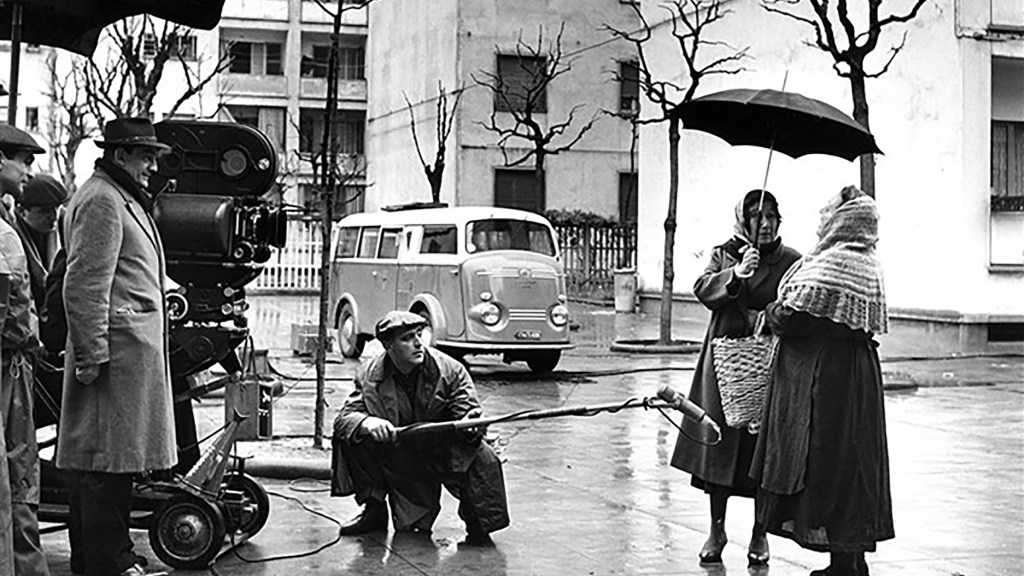
Please join us as we celebrate our 50th screening alongside Hallwalls Contemporary Arts Center with Luchino Visconti’s Italian masterpiece Rocco e i suoi fratelli [Rocco and His Brothers] [1960]. This two-night 4K restoration engagement is part of the gallery’s 20th annual Long Nights, Bright Screens series.
February 8th’s screening will be introduced by riverrun Global Film Series curator and SUNY at Buffalo professor of Film & Media Theory Tanya Shilina-Conte. Will we also be giving away a digital copy of Ivo Blom’s Reframing Luchino Visconti: Film and Art thanks to Amsterdam University Press.
February 9th’s screening will be introduced by The Public‘s chief film critic M. Faust.

  • Screening Date #1: Wednesday, February 8th, 2017 | 7:00pm
  • Screening Date #2: Thursday, February 9th, 2017 | 7:00pm
  • Venue: Hallwalls Contemporary Arts Center
  • Specifications: 1960 / 177 minutes / Italian with subtitles / Black & White
  • Director(s): Luchino Visconti
  • Print: Supplied by Milestone Films
  • Tickets: $8 general, $6 students & seniors, $5 members
  • Deal: Join us for post-screening drinks at Buffalo Proper for $5 glasses of wine, beer, or their cocktail The Mr Mule with ticket stub.

Event Sponsors:

Venue Information:

341 Delaware Ave, Buffalo, NY 14202


Synopsis

Courtesy of the Toronto International Film Festival:

Released in the same anno memorabile as Fellini’s La Dolce Vita and Antonioni’s L’Avventura, and long ensconced on Martin Scorsese’s short list of must-see films (it greatly influenced his Mean Streets and Raging Bull), Luchino Visconti’s magisterial family saga opens as an impoverished Sicilian clan arrives in dreary, mid-winter Milan in search of a better life. Their fiercely protective matriarch, who dreams of returning to what one son calls “the land of olives, moonshine and rainbows,” proves no match for the corrupting forces of the alien industrial north, and the five fratelli of the title variously fall victim to its depredations. “Among all my activities in the cinema, my favourite is working with actors,” Visconti declared in his lovely essay “Anthropomorphic Cinema,” a contention that is amply corroborated by Rocco; the film’s cinematographer Giuseppe Rotunno reports that he had to master a new method of shooting with three cameras simultaneously in order to capture the best performances in every take. While Rocco confirms Andrew Sarris’ claim that Visconti was “the best director of actresses in the world” (Annie Girardot is particularly affecting as the doomed prostitute Nadia), it also reveals that his actors were equally capable of histrionic heights: witness the sculptural potency of Alain Delon as Rocco, the sepulchral sexuality of Paolo Stoppa as a predatory sports impresario, and the injured emotionalism of Renato Salvatori as the naive boxing champion Simone. Only oxymoron suffices to describe the contradictory Visconti — communist patrician and reactionary modernist — and the teeming intensity of Rocco derives in part from the film’s seemingly irreconcilable mode of operatic neorealism. With two previously censored scenes included in this glorious restoration, Rocco more than ever qualifies as a colossus.

Tidbits:

  • Venice Film Festival – 1960 – Winner: Special Jury Prize

Inspirations

Although it is possible to see Rocco and His Brothers as a sequel to Luchino Visconti’s earlier movie on Italy’s south, La Terra Trema, there were many literary influences on the script which was written for the most part by Luchino Visconti; his frequent collaborator, the legendary scriptwriter Suso Cecchi d’Amico; and the novelist Vasco Pratolini.

Three of the stories in Giovanni Testori’s Il ponte della Ghisolfa served as major inspiration for Rocco and His Brothers (the short story collection is acknowledged in the film’s credits), including the milieu of boxing culture for young Italian men and the love triangle.

“In one of the episodes entitled “What are You Doing Sinatra?” Dario, a young man nicknamed Sinatra because of his good singing voice, becomes the lover of Gina, a young prostitute who formerly ‘belonged’ to Dario’s brother Attilio. The latter, in the presence of some friends, having surprised Gina and Dario making love in the night near the bridge of Ghisolfa, rapes the girl and ‘teaches the brother a lesson,’ by hitting him. Testori’s dialogue between the two brothers is strikingly similar to the words exchanged between Rocco and Simone, the action seen on screen closely follows the scene in the book.” — Claretta Micheletti Tonetti, Luchino Visconti

Giovanni Verga’s novel I Malavoglia, or The House by the Medlar Tree chronicled the saga of the hardworking Toscano family with five sons (one named Luca) struggling to survive poverty, terrible misfortunes, and despair in the Catania region.

“Probably my major inspiration for Rocco, a story I have been thinking about for a while, is I Malavoglia. I have been obsessed with this novel ever since the first time I read it. The principle core of Rocco is the same of Verga’s novel: in the novel, Ntoni and his family in order to survive and free themselves from material necessities, start a business of their own, while in Rocco, Rosaria’s sons try boxing, which in a way is a business. This is how this film is related to La Terra Trema — which is my interpretation of I Malavoglia — and may therefore be considered its second episode. Two more elements can be added to my ‘obsession’ for Verga’s major novel: the desire to make a film on a mother, who feels she is the owner of her sons and wants to exploit their energy to free herself from the problem of ‘daily necessities,’ without considering the young men’s differences in character or possibilities; a mother who, by aiming too far is defeated.” — Luchino Visconti

Paralleling his fascination with Verga, Visconti was strongly influenced by the work of the Italian Marxist, Antonio Gramsci. Gramsci’s analysis of the economic stagnation of southern Italy and the meaning of the mass migration of laborers from that region to northern cities like Milan brought an added dimension to Visconti: “The mythological vein which I had found in Verga no longer seemed adequate to me. I felt an impellent urge to find out for myself what were the historic, economic and social foundations on which that Southern drama had been built. Reading Gramsci I learned the truth that is still waiting to be resolved. Gramsci did not only convince me by the acuteness of his historical and political analysis but his teaching also explained to me the character of Southern Italy as a great social rupture and as a market for a colonialist type of exploitation by the ruling classes of the North.”

Thomas Mann’s Joseph and His Brothers resonated heavily with Visconti and helped shape his perception of family dynamics. The tale of a brother betrayed and sold into slavery by his own family is “inverted” in the film:

“Whereas in the novel the brothers sell Joseph to get rid of him, thus inadvertently serving a divine plan, in the film Rocco’s act of self-sacrifice for the benefit of the family is futile and destructive. The point is not just that Joseph lives in a world governed by divine Providence, whereas in the modern urban world God would be dead or simply silent. Mann’s Joseph has a remarkable ability to live in the present, to have no regrets of the past, and to reach toward the future step by step…The tender, simple Rocco is not a man of such spirit; he is a man of the past. He has the innocence of a pure fool, but he is at the mercy of time. He can bring momentary consolation to Nadia, but because she yearns for a permanent change in her life, a different kind of future, the fleeting moment of hope and happiness with him leads her to ever deeper spiritual desperation and destruction.” — Henry Bacon, Visconti: Explorations of Beauty and Decay

Fyodor Dostoevsky’s The Idiot was another powerful influence on Visconti. The plot of Rocco and His Brothers mirrors the novel’s relationship of the saintly Prince Lev Nikolayevich Myshkin and the violent and jealous Parfyon Semyonovich Rogozhin who both fall in love with the same woman, Anastassya Filippovna Barashkov.

“In both stories the woman inadvertently leads the men to compete for her, which in the end drives all three to misery. The women also die in the same way, stabbed by the more violent of their two lovers. And in both cases the two men meet after her murder and are joined in a brotherhood of pain that is beyond rational understanding.” — Henry Bacon, Visconti: Explorations of Beauty and Decay

In 1958 Luchino Visconti directed Arthur Miller’s A View from the Bridge and several aspects of the play can be seen in Rocco and His Brothers.

“The play involves not only incest and ‘brotherly’ jealousy, but traditional Southern Italian ‘honor’ put at risk in a modern urban setting, close to what occurs in Rocco.” — Sam Rohdie, Rocco and His Brothers, BFI Film Classics

In Miller’s play, a possessive and jealous uncle suspects that his niece’s charismatic immigrant lover may be gay. The theme of homosexuality is also explored in Rocco and His Brothers through the relationship of Simone and his boxing manager, Duilio Morini. During their first meeting, Morini’s motivation in hiring Simone is apparent — he appraises the young man as he would a racehorse. In the beginning their partnership is mutually beneficial — Simone’s body can win money and in return Morini enables Simone’s poor decisions and bad behavior. Simone is aware of the appeal his body has to both Morini and later to the owner of the dry cleaning store where Rocco works. In turn, Morini knows that Simone is a loose cannon who is bound to burn out his energy and the goodwill of others — in fact he depends on it. When he becomes Simone’s last resort, Morini sexually exploits the young man as he has long desired.

In “Representing the Un(re)presentable: Homosexuality in Luchino Visconti’s Rocco and His Brothers” (Studies in European Cinema Volume 7 Number 3) Eugenio Bolongaro writes:

“Simone has asked to see Duilio because he needs money, and accepts an invitation to the latter’s apartment. Once there, the conversation quickly degenerates into a brawl, which ends when Simone is knocked to the ground. In film, this kind of violence is a common means of releasing sexual tension that cannot be acknowledged, but in Rocco the sexual element is ‘elaborated’ on no less than three levels of representation: in the dialogue (which barely alludes to homosexual desire and primarily by indirect denial); in the physical interaction between the two characters (which Visconti goes to great lengths to disguise under the rhetoric of boxing); and finally and most unexpectedly in the uncanny images appearing on the brightly lit television screen that is at the center of many of the shots. These images and their strange behavior intimate to the spectator that this is not a banal homosexual encounter, but a crucial moment in the tragedy of Simone (and Rocco) and in the attempt by Visconti to forge a cinematic language adequate to that tragedy.”

A scene that was cut from the film (but appears in the published screenplay), echoed these homoerotic tensions. When Rocco returns from the army and is first noticed by Cerri (called Cecchi in the screenplay) at Simone’s gym, the two brothers talk in the locker room after sparring. While he is being massaged, Simone calls out to Rocco who is in the shower: “Don’t let that Cecchi seduce you. He gave me the same line, like he does to everybody. He’s a bastard.” He then teases Rocco about going out “wenching” — does he even know how? “Rocco,” Simone tells him, “be careful! Women are dangerous.”

The screenplay also includes an important deleted scene leading up to Simone’s meeting with Morini outside the boxing arena. Originally, the sequence began with the Cerri and his team inside, waiting impatiently for Simone to show up for his match. Simone, sweating and terrified, stands in the street outside with Luca as the fans enter. When he sees Morini get out of his car, Simone tells Luca to go ask him to meet him in a nearby cafe. Simone’s cowardice and shame underscore the stigma conveyed in the seduction in Morini’s apartment — a scene that does not exist in the screenplay at all.

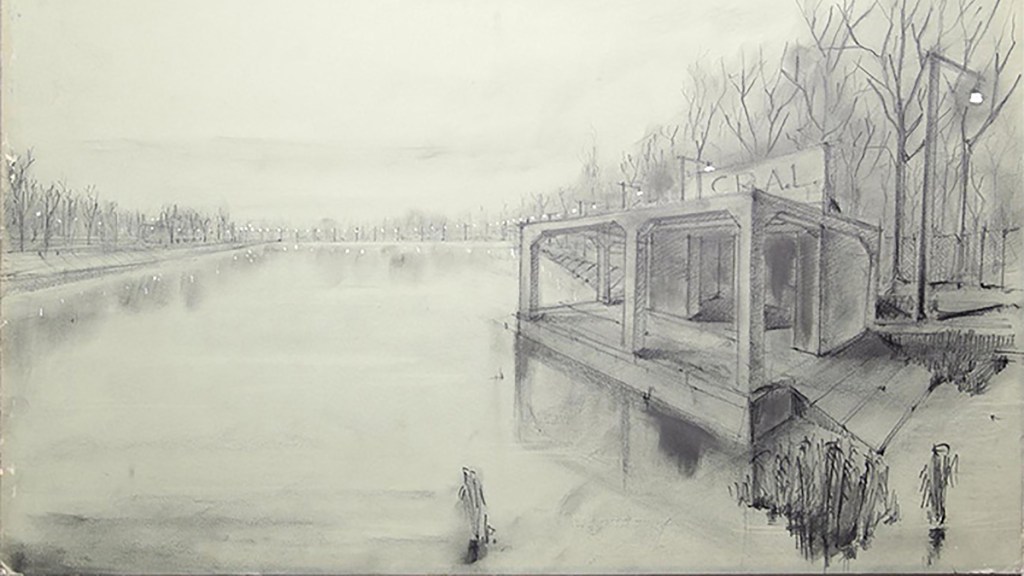
Sketches by Mario Garbuglia.


Restoration

Rocco and His Brothers is one of the most sumptuous black-and-white pictures I’ve ever seen: the images, shot by the great Giuseppe Rotunno, are pearly, elegant and lustrous — it’s like a simultaneous continuation and development of neorealism. Thanks to Gucci and The Film Foundation and our friends at the Cineteca di Bologna, Luchino Visconti’s masterpiece can be experienced once again in all its fearsome beauty and power.” — Martin Scorsese, Founder and Chair, The Film Foundation

Rocco and His Brothers was restored in 4K from the original camera negative shot on two different film stocks: DuPont LN (1959) and DuPont LS (1960). The impetus for restoring this film arose when the analysis of the elements revealed that some parts of the original camera negative were seriously compromised by fungi growing on the lightest areas of the image (those with less silver salts). Unfortunately, a few shots of the original camera negative were so badly damaged that they had to be replaced with a vintage contact-printed interpositive film. The original negative was compared with all available original elements: two first-generation interpositives printed on DuPont film stock (1960 and 1961), a second-generation duplicate negative, and the first-generation projection print shown at the Venice Film Festival in 1960 and preserved by the Archivio Storico delle Arti Contemporanee of La Biennale di Venezia (ASAC).

After the film’s debut at the Venice Film Festival in 1960, two shots were edited by order of the public prosecutor’s office and the board of censors. In this restored version, both sequences are unabridged. A previously removed scene from the last reel, found in the Venice print is also included in this restoration.

The color correction work was supervised by Maestro Giuseppe Rotunno, the film’s original director of photography, using the Venice print as a reference. The entire restoration process took more than 3,000 hours and was completed in April 2015.

Luxury Italian brand, Gucci, has been a supporter of the Film Foundation for nearly a decade. Rocco and His Brothers is the third Visconti restoration (following The Leopard (1965) and Senso (1954)) and the tenth overall film funded by Gucci. The Gucci partnership with The Film Foundation demonstrates the company’s ongoing commitment to restoring and preserving the work of artists and legacies. While statistics about the number of films lost to damage and deterioration are staggering, there is no more powerful way to make clear the preservation message than to provide audiences with the opportunity to experience cinematic treasures firsthand.

Created in 1990 by Martin Scorsese, The Film Foundation (film-foundation.org) is dedicated to protecting and preserving motion picture history. By working in partnership with archives and studios, the foundation preserves and restores cinematic treasures — nearly 700 to date — and makes these films available to international festivals and institutions. The foundation’s World Cinema Project restores, preserves and distributes neglected films from around the world. Twenty-five films from Mexico, South America, Africa, Eastern Europe, the Middle East, and Central and Southeast Asia have been preserved and are available for a global audience.

TFF is also teaching young people about the language and history of film through The Story of Movies, its innovative educational curriculum used by more than 100,000 educators nationwide. Joining Mr. Scorsese on the board of directors are Woody Allen, Paul Thomas Anderson, Wes Anderson, Francis Ford Coppola, Clint Eastwood, Curtis Hanson, Peter Jackson, Ang Lee, George Lucas, Christopher Nolan, Alexander Payne, Robert Redford, and Steven Spielberg. The Film Foundation is aligned with the Directors Guild of America, a key partner whose president and secretary treasurer also serve on the Foundation’s board.


Director Bio

“I took a round trip around Hollywood because I think it frightened me. I didn’t want to get burned in that glare.”

Courtesy of press-kit:

Luchino Visconti’s life was filled with dualities. Born Count Don Luchino Visconti di Modrone into ancient nobility and a follower of Fascism in the early 1930s, he became a devoted Marxist and a member of the Italian resistance during the war. One of the founders of neorealism (with Ossessione and La Terra Trema), his films became more and more operatic in tone in the 1950s and 1960s. A womanizer when he was young, later in life Visconti’s only important and lasting romantic relationships were with men. The journey from leisured aristocrat to one of cinema’s greatest directors was a long and convoluted road.

Visconti’s family was one of the most powerful and celebrated leaders of Milan going back to the Middle Ages and was even mentioned by Chaucer in “The Monk’s Tale.” His ancestor, Duke Carlo (1770–1836) was the first impresario of the La Scala. When the famous opera house became privately financed in 1897, the Visconti family led the efforts to support it. As president of the theater, Visconti’s grandfather Duke Guido hired a distinguished young conductor by the name of Arturo Toscanini and then supported him during his turbulent first years there while he changed the face of opera.

In 1899, Don Guido’s second son, Don Giuseppe married one of the richest women in Milan, Carla Erba, heir to a pharmaceutical company. This fortune kept their seven children in considerable wealth throughout their lives — although Luchino always seemed to find a way to spend it all. Don Giuseppe and Dona Carla were famous for their elegance and their taste for social life and culture. They introduced the young Luchino to all forms of art and theater and insisted that he study the cello. Toscanini became a major influence on Visconti’s musical upbringing and they later collaborated in the 1950s. The conductor’s daughters Wanda and Wally were his lifelong friends.

In his childhood home in Milan, the young Visconti created a theater by hanging a sheet where he and his brothers and friends would stage weekly productions, always with Luchino as director. Visconti was educated at home and later in private schools in Milan and Como, but had no plans for his future. He was a poor student and though he read voraciously, he refused to study. He discovered the cinema as a teenager and became an avid fan, first at the Cinema Centrale and later at the Palace. Rebellious, Visconti ran away from home several times. After one incident, he was sent to the boarding school of the Calasanzian Order — but even the monks failed to impress him and he never completed his education.

After failing at a job in the family business (the women secretaries were distracted by the handsome young man — and he by them), Visconti’s only option left was the army, which was already a family tradition. After a successful year in Piedmont’s cavalry school, Visconti became an officer in the Reggimento Savoia Cavalleria. He was an excellent rider and loved horses. During the period, he became close friends with Umberto of Savoia, the Prince of Piedmont and heir to the throne. On his release from the cavalry, Visconti started his first career as one of Italy’s most famous trainers and breeders of racehorses.

The young man’s passion for racing expanded into automobiles and he bought a Lancia Spider, which he liked to drive fast and recklessly at a track in Monza. On September 30, 1929, Visconti decided to take the car out and bullied his family’s chauffeur into joining him. Rounding a bend in the fog, Visconti was forced to brake suddenly and the car crashed, killing his passenger. Tortured by guilt, he did not drive again for twenty years and financially supported the chauffeur’s children for the rest of his life. Withdrawing from society, Visconti journeyed to the remote Tassili region of the Sahara. The mysterious (and seemingly mystical) two months he spent with the Touareg people there altered his life forever.

After returning from the Sahara, Visconti began to spend more time in Paris where he met and became friends with Misia Sert, Jean Cocteau, Jean Marais, Serge Lifar and other members of the artistic world. There, he wrote a one-act comedy, started a company designing chintz fabrics for upholstery and began to explore films that were banned in fascist Italy, including Josef von Sternberg’s The Blue Angel.

Visconti was able to travel internationally because he possessed a rare and precious document — an Italian passport. Very few citizens were granted passports under Mussolini, but Visconti was able to obtain one because his cousin was the Podestà of Milan, the representative of the Fascist party. While his family found Italian fascism both boorish and nationalistic, Visconti was curious about the new Nazi regime and fascinated by German culture. In 1933, he visited Munich and Berlin and was impressed by some of the changes he saw in Germany. He later explored the period and his own reactions to the rise of Hitler in his 1969 film, The Damned.

Returning to Paris, Visconti became the constant companion of Coco Chanel. The great couturier was infatuated with the young and handsome Count and introduced him to the cultural and intellectual world. Through her, Visconti met the famous German photographer Horst Horst, who became Visconti’s lover for many years and opened his eyes to the evils of fascism. It was during this time that Visconti made his first short film, as was the fashion among his French friends, starring his brother’s charming wife, Niki. Never finished and later destroyed when his palazzo was bombed during the war, the story of the film involved an adolescent boy who has three failed love affairs with three completely different kinds of women and finally commits suicide in despair.

In 1935, while skiing in Kitzbühel, Visconti met and fell in love with Irma Windisch-Graetz, a 21-year-old Austrian princess. The two corresponded and planned to marry, much to the delight of their mothers. However his fiancée’s father ordered the couple to wait until Visconti decided on a profession. Around the same time, Visconti had fallen in love with Horst Horst. Hoping that marriage would be a way to “save” himself, he issued an ultimatum: Irma must marry him at once despite her father’s misgivings. When she could not go against her father’s wishes, Visconti broke off the engagement.

That same year, Visconti met filmmaker Gabriel Pascal who later directed screen versions of Pygmalion and Major Barbara. The Hungarian was impressed with Visconti and proposed that they work together on a film based on Gustave Flaubert’s November to be produced by Alexander Korda. Visconti traveled to London to sign a contract as Pascal’s assistant director only to discover that the film was a tentative project and that there was no job.

Depressed, he returned to Paris where Chanel again had a hand in changing his life. She introduced Visconti to Jean Renoir and suggested that the young Italian should observe the great director while he was shooting La Vie Est à Nous, a film produced by the French Communist Party. It was on this film set that Visconti started both his professional cinema career and his lifelong devotion to the Communist Party.

In 1936, Visconti was hired as the assistant director on Renoir’s Les Bas-Fonds and a year later he worked on Une Partie de Campagne. On the second film, he also designed many of the costumes and during the filming; an appreciative Renoir presented Visconti with a typed translation of James M. Cain’s novel The Postman Always Rings Twice.

In a 1961 interview with London’s The Observer, Visconti said: “Renoir helped me to understand that unless the cinema is nourished by a profoundly human idea, it is empty. Man must always prevail in the landscape. A wall can only be beautiful in a film if there is someone in front of it: otherwise it says nothing.”

After Une Partie de Campagne, Visconti returned to Italy and started working in the theater. Shortly afterwards, Renoir came to Rome to make a French-Italian production of La Tosca. Visconti became his assistant again and helped on many facets of the production. But Italy’s declaration of war on the Allies ended Renoir’s involvement. In My Life and My Films, Jean Renoir wrote: “My farewells to my collaborators were sad occasions, and I particularly regretted parting from Luchino Visconti because of all the things we might have done together but did not do… I was never to see Luchino again, despite the great friendship between us. Such is life.” Carl Koch, who was working with the two on the script, took over the directing. Now lost, the film received lackluster reviews when it opened.

During the early years of the war, Visconti was actively involved with Cinema magazine, which, although published by Mussolini’s brother Vittorio, “managed to smuggle the more radical ideas of those who were anxious to abandon the ambiguity of Fascism,” according to filmmaker Carlo Lizzani. Visconti started a search for material to make his own film. He commissioned many scripts and bought the rights to three works by the 19th-century Sicilian author Giovanni Verga. But Visconti’s own hesitations and delays by the Italian government stalled the projects.

Then Visconti remembered Jean Renoir’s gift. The novels of current American writers such as William Faulkner and Cain were not banned in Italy, as the government believed that they demonstrated the decadence of American society. The Postman Always Rings Twice was the perfect vehicle for Visconti. He cast the very young Anna Magnani in her first dramatic role as Giovanna, but was forced to replace her with Clara Calamai when Magnani became pregnant. Visconti took the novel as inspiration and molded the story into an Italian neorealist cinema classic, which inspired directors such as Vittorio De Sica and Roberto Rossellini to follow in his footsteps. Ossessione was a remarkable change from the country’s ultra-glamorous “white telephone” films of the 1930s. In 1943, Visconti wrote:

“I was impelled toward the cinema by, above all, the need to tell stories of people who were alive, of people living amid things and not of the things themselves. The cinema that interests me is an anthropomorphic cinema. The most humble gestures of man, his bearing, his feelings, and instincts are sufficient to make the things that surround him poetic and alive. The significance of the human being, his presence, is the only thing that could dominate the images. The ambience that it creates and the living presence of its passions give them life and depth. And its momentary absence from the luminous rectangle gives to everything an appearance of dead nature.”

As it became evident that Italy was losing the war and the threat of German occupation grew, Visconti hid escaped prisoners and political refugees at his villa in Rome. His royal birth and prestige kept the Italian and German fascists from discovering his actions for several years. In March 1944, as part of the retaliation for a partisan bomb explosion, Visconti was imprisoned, beaten, and denied food for twelve days. Actress Maria Denis has been credited with intervening and saving Visconti’s life. “That was probably true,” Cecchi d’Amico said in a 1992 interview, “she had important friends among the fascists.”

During the war years, Visconti wrote several screenplays with the young Michelangelo Antonioni. Visconti also entered the world of theater in 1944 and for two remarkable years, presented brilliant renditions of plays that had never been seen in Italy before. Because of the starkness of the plays he chose and the intense realism of his staging, he became known as “the director of the soiled beds.”

After Italy was liberated in 1945, an American psychological warfare group approached Visconti and asked him to film the trials and executions of Pietro Koch and Pietro Caruso, both leaders in anti-partisan activities and murders during the war. His work became part of Mario Serandrei’s documentary history of the resistance and liberation, Giorni di gloria (Days of Glory). Serandrei went on to edit some of the great Italian classics including Visconti’s Senso and Rocco and his Brothers.

In 1947, Visconti started what he hoped would be a trilogy of Sicilian life entitled La Terra Trema. Inspired by the novels of Verga, Visconti journeyed to Acitrezza in eastern Sicily with assistant directors Franco Zeffirelli and Francesco Rosi. The film focused on the lives of local fisherman and their fight for survival. Without a script and using no professional actors, Visconti shot a three-hour film of incredible imagery that created great controversy wherever it was shown. When the film lost money, Visconti simply went back to the theater.

Visconti had a busy year in 1951. In addition to making a short documentary for Marco Ferreri, he shot Bellissima, one of his most important feature films. Here, the director finally was able to cast Magnani. It was on this film that Visconti first collaborated with several artists who would remain with him professionally for many years. Visconti co-scripted Bellissima with Francesco Rosi; famous neorealist writer Cesare Zavattini, who would work with Visconti several more times; and Suso Cecchi d’Amico, who would work on almost all of Visconti’s screenplays through L’Innocente — the director’s last film. Bellissima was also the first film with designer Piero Tosi, who would be responsible for costumes throughout the great director’s career.

In 1953, Visconti finished Senso, based on a short story by Camillo Boito, starring Alida Valli and Farley Granger. It was a lyric melodrama set in 1866 Venice inspired by the music of Giuseppe Verdi. The film, Visconti’s first color production, featured 1,394 actors, 2,100 horsemen and 8,000 extras. The next year, Visconti started another career as he directed the opera La Vestale for La Scala starring Maria Callas. Visconti talked about Callas in a 1968 New York Times article:

“I first saw Callas in Parsival, as the gypsy Kundry, in a rehearsal. She was horribly costumed and wore a little pill-box hat that she kept batting back on her head as she sang. I said to myself right then, ‘One day I’ll work with you and you won’t have to push hats out of your eyes.’”

It was the beginning of a great collaboration that lasted only a few years but became legendary for its artistic achievement. Visconti continued to create magnificent opera and ballet productions throughout life. He once said of his work:

“It has been said that my films are a little theatrical and my theater a little cinematic. Every means of expression is good. Neither the theater nor the cinema should avoid whatever serves it. It is possible that I have exaggerated by using techniques not typical of the cinema. But avoidance of the theatrical is not a rule.”

White Nights (Le Notti Bianche), Visconti’s next film in 1957, was a superbly romantic version of Dostoyevsky’s story, starring Maria Schell, Marcello Mastroianni, Jean Marais and Clara Calamai. It is about a humble clerk who courts a woman while she awaits the return of her lover. Financed by Visconti and three of his friends, it was supposed to be a low-budget film shot on location. Instead, Visconti decided that an artificial look was needed, so he had huge sets built on the Cinecittà lot. Considered to be one of his minor efforts, the film lost a good deal of money for the participants.

With Rocco and His Brothers, Visconti finally had a worldwide success that gave him access to Hollywood studio money. The Leopard (Il Gattopardo, 1963) with Burt Lancaster was financed by 20th Century Fox, but was brutally edited by the studio for its American release. It finally gained the public and critical acceptance it so richly deserved when the original version was restored and released by the Fox Classics’ division in the 1980s. Sandra (Vaghe Stelle Dell’orsa, 1965) and The Stranger (Lo Straniero, 1967) followed but did little for Visconti’s reputation. It was his investigation of a wealthy family in Nazi Germany in The Damned (La Caduta Degli Dei, 1969) that reaped Visconti great commercial rewards.

With Death in Venice (Morte a Venezia, 1971), the Italian director was finally able to adapt a novel from Thomas Mann who was one of the great influences of his life. His last three films, Ludwig (1973), Conversation Piece (Gruppo Di Famiglia In Un Interno, 1974) and finally, The Intruder (L’Innocente, 1976) all suffered from unfortunate casting decisions and a lessening of his directing skills and health. After suffering a stroke while editing Ludwig, Visconti directed The Intruder from a wheelchair (he stated that he’d probably direct his next film from a stretcher). On March 30, 1976, Visconti died in his villa in Rome from influenza complicated by a cardiac ailment.

“I never knew anyone like him, certainly not in the world of cinema, who could speak of Klimt, Karajan, Proust, “Peanuts,” Mozart, and Mantovani (he liked the Eurovision song contest), Duse and Doris Day.” — Dirk Bogarde, actor and writer, 1990

Visconti was often criticized for “voting left and living right” and he led a somewhat lavish lifestyle, decorating his many villas with antiques that he would buy by the dozen. But his devotion to the Communist Party was sincere. He once stated “I do like to live comfortably, but that does not prohibit me from having ideas about social reforms.” Visconti’s passion for realism was also sincere despite his “operatic” films. Ironically, his operas were famous for bringing realism to the stage —singers were asked to economize their gestures, sing with their backs to the audience, and act, as Visconti said, “like people.”

“He was terribly good looking. When he entered a room, no one could ignore him. He had a low, solemn way of moving; there was always something very solemn about him… Luchino could be very cruel; he was a very strong character… He was not a man of our time. He was a kind of Renaissance condottiere…He had no sense of money. He was the most generous man I ever knew, and when it was his own money at stake he didn’t care at all.” — Suso Cecchi d’Amico, Sight and Sound, Winter 1986–1987

Filmography:

  • L’Innocente (1976)
  • Conversation Piece (1974)
  • Ludwig (1972)
  • Death in Venice (1971)
  • Alla ricerca di Tadzio (1970)
  • The Damned (1969)
  • The Stranger (1967)
  • The Witches (1967) – “The Witch Burned Alive”
  • Vague Stars of Ursa… (1965)
  • The Leopard (1963)
  • Boccaccio ’70 (1962) – “The Job”
  • Dommage qu’elle soit une putain (1961)
  • Rocco and His Brothers (1961)
  • Of Life and Love (1958) – “The Lapdog”
  • White Nights (1957)
  • Senso (1954)
  • Appunti su un fatto di Cronaca (1953) (short)
  • Siamo Donne (1953) – “Anna Magnani”
  • Bellissima (1951)
  • La terra trema (1947)
  • Giorni di Gloria (1945) – “Lynching Of Carretta “Caruso Trial”
  • Obsession (1943)

Links

Here is a curated selection of links shared on our Facebook page for additional insight/information:

  • 12/28/16 – “Rocco is one of the most sumptuous black-and-white pictures I’ve ever seen. The images, shot by the great Giuseppe Rotunno, are pearly, elegant and lustrous – it’s like a simultaneous continuation and development of neorealism. Thanks to Gucci and The Film Foundation and our friends at the Cineteca di Bologna, Luchino Visconti’s masterpiece can be experienced once again in all its fearsome beauty and power.” Martin Scorsese – link
  • 1/7/17 – “Visconti’s 1960 epic Rocco and His Brothers has had a stealthy but perceptible influence in the 55 years since its release, most prominently in the thematics of Martin Scorsese movies such as Raging Bull, Goodfellas, Casino, and The Departed, all of which involve cohesive units gradually destabilized by forces both within and without.” Scott Eyman, Film Comment magazine – link
  • 1/29/17 – “With the emotional sweep of a Verdi opera and the narrative density of a 19th-century novel, Rocco and His Brothers by Luchino Visconti represents the artistic apotheosis of Italian neo-realism. Visconti embedded his schematic sense of history in sensual and emotional detail — you don’t observe his characters so much as live alongside them. Its richness is inexhaustible. Neither the neighborhood intimacy of Mean Streets nor the grandeur of the Godfather movies is imaginable without Visconti’s example.” A.O. Scott, The New York Timeslink
  • 2/4/17 – Forget Rossellini and Fellini – no one did as much to shape Italian cinema as Luchino Visconti. “So why is he so underrated?” asks Jonathan Jones – link
  • 2/6/17 – “The film’s initial fame was also partly caused by its scandalous content, causing serious problems with censors (the original cut was not broadly seen until restored 40 years later by cinematographer Giuseppe Rotunno). Rocco and His Brothers by Luchino Visconti is still shocking, if perhaps less for the reasons that appalled conservative politicians at the time, and rather more for its particular deconstructions of masculinity played-out within the context of larger historical forces.” Hamish Ford, Senses of Cinemalink