The Passion of Joan of Arc – February 15th, 2018

The Passion of Joan of Arc [1928]


Please join us for a one-night event screening of the brand new 2K restoration of Carl Theodor Dreyer’s cinematic masterpiece The Passion of Joan of Arc (La passion de Jeanne d’Arc) [1928] accompanied by Richard Einhorn’s acclaimed “Voices of Light” score.

  • Screening Date: Thursday, February 15th, 2018 / 9:30pm
  • Venue: North Park Theatre
  • Specifications: 1928 / 82 minutes / Silent / B&W
  • Director(s): Carl Theodor Dreyer
  • Print: Supplied by Janus Films
  • Tickets: $10.50 general admission at the door

Event Sponsors:

Venue Information:

1428 Hertel Ave, Buffalo, NY 14216


Synopsis

Courtesy of Janus Films:

Spiritual rapture and institutional hypocrisy are brought to stark, vivid life in one of the most transcendent achievements of the silent era. Chronicling the trial of Joan of Arc in the final hours leading up to her execution, Danish master Carl Theodor Dreyer depicts her torment with startling immediacy, employing an array of techniques—including expressionistic lighting, interconnected sets, and painfully intimate close-ups—to immerse viewers in her subjective experience. Anchoring Dreyer’s audacious formal experimentation is a legendary performance by Renée Falconetti, whose haunted face channels both the agony and the ecstasy of martyrdom. Thought to have been lost to fire, the film’s original version was miraculously found in perfect condition in 1981 in a Norwegian mental institution, heightening the mythic status of this widely revered masterwork.

Long available only in rare prints that necessitated live accompaniment, The Passion of Joan of Arc returns to screens in a new restoration, partnered with Richard Einhorn’s acclaimed score “Voices of Light” for the first time theatrically.

About the Restoration:

The Passion of Joan of Arc was restored in 2015 by Gaumont, with funding from the Centre national du cinéma et de l’image animée.

The restoration was created from a 2K scan of a duplicate negative made from the Danish Film Institute’s nitrate copy of Carl Theodor Dreyer’s original cut.

Notes on the score:

Unlike many other large-scale productions of the time, Dreyer’s The Passion of Joan of Arc was not released with a prewritten score for venues with live orchestras. Over the subsequent decades, many musicians and composers have filled that absence. For this release, Janus has offered two scores: Richard Einhorn’s acclaimed, Joan-inspired operetta Voices of Light, and, in its first recording, a new score by
Adrian Utley and Will Gregory.

Voices of Light is a work for voices and amplified instrumental ensemble, created in celebration of Joan of Arc. The libretto is a patchwork of visions, fantasies, and reflections assembled from various ancient sources, notably the writings of medieval female mystics. The texts may be thought of as representing the spiritual, political, and metaphorical womb in which Joan was conceived. The performance on this DCP dates from 1995 and features the Netherlands Radio Philharmonic Orchestra conducted by Steven Mercurio, with vocals by the Netherlands Radio Choir, Anonymous 4, Susan Narucki, Corrie Pronk, Frank Hameleers, and Henk van Heijnsbergen.

Born in 1952, Richard Einhorn graduated summa cum laude in music from Columbia University, and has written opera, orchestral and chamber music, song cycles, film music, and dance scores. Among many other projects, he composed the music for the Academy Award–winning documentary short Educating Peter (1992); the score for the New York City Ballet’s wildly popular Red Angels (which premiered in 1994); and an opera/oratorio based on the work and life of Charles Darwin, The Origin (which premiered in 2009).

Tidbits:

  • National Board of Review – 1929 – Winner: Top Foreign Films

Lost and Found

Courtesy of press notes:

Despite only screening in butchered, incomplete versions, if at all, for much of the twentieth century, Carl Theodor Dreyer’s The Passion of Joan of Arc (1928) was considered one of cinema’s great masterpieces, regularly finding its way onto Sight & Sound’s renowned list of the best films of all time. When a print of the original version was finally discovered in 1981, the film world breathed a sigh of relief, and archivists began to untangle the story of a film that seemed almost as doomed as its subject.

The Passion of Joan of Arc premiered in Copenhagen on April 21, 1928. Its French premiere was delayed by a campaign against the film by many on the nationalist right, who did not believe that a foreign director should be entrusted with the myth of Joan of Arc. The archbishop of Paris demanded several excisions, and further changes were made by government censors, before the film was finally screened in the city in October 1928.

Six weeks later, on December 6, a fire consumed the labs of the famous Ufa studio in Berlin, where Passion’s cinematographer, Rudolph Maté, had developed the film stock. The original negative was destroyed, and Dreyer was devastated.

However, there was an available work-around. Famous for demanding repeated takes, Dreyer had enough outtakes to create a second version. Using one of the few remaining release prints for comparison, Dreyer and his editor, Marguerite Beaugé, created a new negative that matched the original almost shot for shot. Tragically, even this second negative was lost to fire, this time at the labs of G.M. de Boulogne-Billancourt in 1929.

In 1951, the French film historian Joseph-Marie Lo Duca discovered an intact copy of the negative of Dreyer’s second version that had escaped destruction. Unfortunately, Lo Duca made significant changes. Wherever possible, he replaced intertitles with subtitles, and when that proved to be impossible, he replaced the original intertitles with text on images of stained-glass windows and church pews. The negative of Lo Duca’s version was also lost, but prints of it endured for many years. This was the version of the film that most audiences saw over the next three decades, and the one that Anna Karina famously watches in Jean-Luc Godard’s Vivre sa vie (1962).

Finally, in 1981, while cleaning out a closet in the Dikemark sykehus, a mental institution just outside Oslo, Norway, a worker found several film canisters, which were then sent to the Norwegian Film Institute. When they were opened, the canisters revealed not just a print of The Passion of Joan of Arc but wrapping paper bearing the Danish censor’s stamp of approval, dated 1928. Dreyer’s original version had finally been found.

How did the film end up in a closet? Harald Arnesen, the director of the institute at the time, may have wanted to screen it for staff and patients. (There are no records of it being screened in Oslo upon its release, but the print had been projected several times.) Regardless, the film was immediately preserved and new negatives created. Still, with very few 35 mm prints having been struck, the film remained difficult to see in a proper theatrical setting.

But no more. In 2015, Gaumont scanned a negative created from that fragile nitrate print discovered in Norway, creating a restored DCP for worldwide distribution and ensuring that Dreyer’s original vision not only exists but can be seen in theaters, in public, once again.


Director Bio

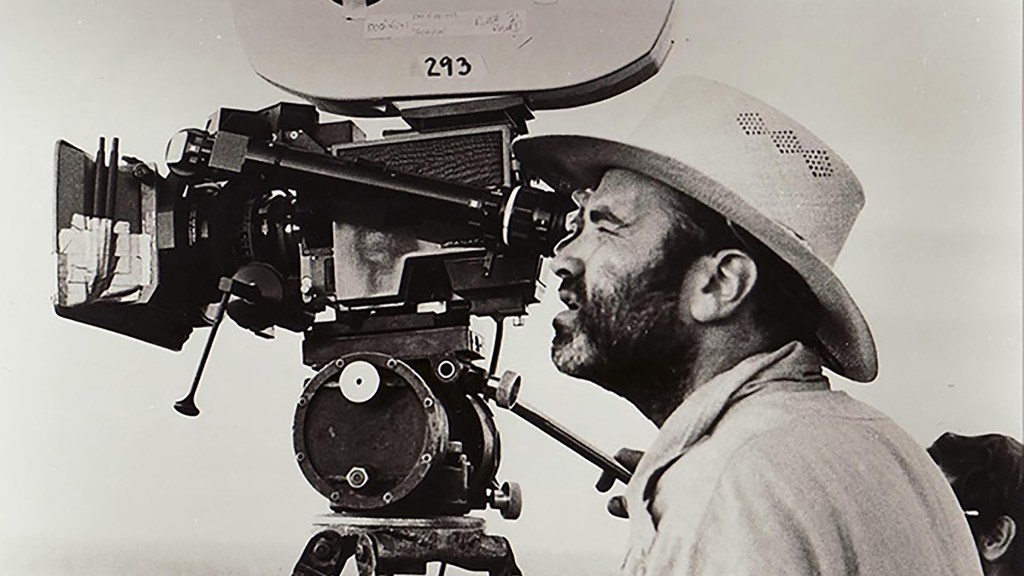
Photo by Henny Garfunkel

“Nothing in the world can be compared to the human face. There is no greater experience in a studio than to witness the expression of a sensitive face under the mysterious power of inspiration. To see it animated from inside, and turning into poetry.”

The creator of perhaps cinema’s most purely spiritual works, Danish master Carl Theodor Dreyer is one of the most influential moving image makers of all time, his arrestingly spare and innovative approach echoed in the films of Ingmar Bergman, Robert Bresson, Andrei Tarkovsky, Lars von Trier, and countless others. After making his mark with such narrative silent films as the provocative Michael (1924) and Master of the House (1925), Dreyer created The Passion of Joan of Arc (1928), which, though deemed a failure on its release, is now considered, with its mix of stark realism and expressionism (and astonishing, iconic performance by Maria Falconetti), one of the great artistic works of the twentieth century. For the next four decades, Dreyer would continue to make films about people caught in battle between the spirit and the flesh and to experiment technically with the form. Vampyr (1932) is a mesmerizing horror fable full of camera and editing tricks; Day of Wrath (1943) is an intense tale of social repression, made during the Nazi occupation of Denmark; Ordet (1955) is a shattering look at a farming family’s inner religious world; and Gertrud (1964) is a portrait of a fiercely independent woman’s struggle for personal salvation.

Filmography:

  • Gertrud (1966)
  • Ordet (1955)
  • Slot i et Slot, Et (1954)
  • Storstromsbroen (1950)
  • Thorvaldsen (1949)
  • De Naaede Faergen (1948)
  • Landsbykirken (1947)
  • Kampen Mod Kraeften (1947)
  • Vandet pa landet (1946)
  • Day of Wrath (1943)
  • Modrehjaelpen (1942)
  • Vampyr (1932)
  • The Passion of Joan of Arc (1927)
  • Glomdalsbruden (1925)
  • Master of the House (1925)
  • Michael (1924)
  • Die Gezeichneten (1922)
  • Der Var Engang (1922)
  • The Parson’s Widow (1920)
  • Praesidenten (1919)
  • Leaves From Satan’s Book (1919)

Links

Here is a curated selection of links shared on our Facebook page for additional insight/information:

  • 1/18/18 – “Dreyer’s most universally acclaimed masterpiece remains one of the most staggeringly intense films ever made.” Tony Rayns, Time Out New York
  • 1/22/18 – “The miracle of Joan is that it manages to be spiritual and visceral. It was conceived as a sort of documentary. Makeup was forbidden. The sets were constructed as actual rooms (although they were never fully shown), and the movie was shot in chronological order. This ‘realized mysticism,’ as Dreyer termed it in a 1929 essay, is reinforced by the score, Richard Einhorn’s 1995 oratorio ‘Voices of Light.’” J. Hoberman, New York Times – link
  • 2/13/18 – As Adrian Curry explores over at MUBI’s Notebook, The Passion of Joan of Arc has had some incredible poster art over the years. – link
  • 2/15/18 – “Although it might be tempting to save the best till last, Dreyer’s most respected film, The Passion of Joan of Arc (1928), offers the most accessible introduction to his work. The apotheosis of Dreyer’s silent film craft, the film is rightly considered to be one of the true masterpieces of the pre-sound era.” – link

Contemporary Color – May 2nd, 2017

Contemporary Color [2016]


Please join us for the Buffalo premiere screening of the Ross Brothers’ latest documentary Contemporary Color [2017], produced by David Byrne.

  • Screening Date: Tuesday, May 2nd, 2017 | 7:00pm
  • Venue: North Park Theatre
  • Specifications: 2017 / 97 minutes / English / Color
  • Director(s): Bill Ross IV & Turner Ross
  • Print: Supplied by Oscilloscope
  • Tickets: $10.50 general admission at the door

Event Sponsors:

Venue Information:

1428 Hertel Ave, Buffalo, NY 14216


Synopsis

Courtesy of website:

Contemporary Color is a performance event and now a major motion picture inspired by the phenomenon of color guard, colloquilally known as “the sport of the arts”—conceived by David Byrne, co-commissioned by Brooklyn Academy of Music and Toronto’s Luminato Festival, and with support from WGI Sport of the Arts. Ten 20-40 person teams from the US and Canada will perform at Brooklyn’s Barclays Center and Toronto’s Air Canada Centre, alongside an extraordinary array of musical talent—performing together live.

In David Byrne’s words:

Color guards are, well, high school (and college-level) “dance” groups who perform during half time at football games, and then compete amongst themselves later in the school year—usually in their school gymnasiums. They are, in my way of looking at them, a sophisticated folk art form that flies under the official cultural radar. They never get reviewed in the culture pages of the papers and most New Yorkers, I would wager, have never even heard or seen them (unless the New Yorkers grew up in one of the hundreds of towns where this culture thrives and evolves). I think it’s a wonderful, peculiar, under-appreciated and very creative artform and that deserves to be seen and experienced—in a slightly different context, by a wider public.

But how? The interesting thing about color guard is that the community is very insular, and I thought, “Wouldn’t it be kind of great to ask some friends to collaborate with the team’s creative folks to create original music for these guys?” That idea blossomed into the event that is now being commissioned by BAM and Luminato Festival—Contemporary Color is a performance event, where the result of a year-long musical collaboration between 10 color guard teams and 10 composers will be presented live at the Air Canada Centre and Barclay’s Center in June 2015.

The performances will mimic the energy and granduer of the color guard World Championships that take place in Dayton, OH every April—but without the competitive aspect. Instead, the exhibition event will put these amazing teams on the stages of two premiere North American venues, to perform their programs alongside a live performance of the original score by the composers themselves—and accompanied by a live band. Elaborate costumes, professional athleticism combined with modern dance, and rock starsin their element—all culminating in the biggest glitter cannon show of your life.

Our primary goal is to enhance an already extremely compelling experience, and bring it to a brand new audience in two of the world’s most visible cultural centers. My experience with this Sport of the Arts, and those of my colleagues, has been so inspiring and amazing that we feel compelled to share it with as many people as possible. Luckily, we’ve found some other folks that agree.

Tidbits:

  • Tribeca Film Festival – 2016 – Winner: Best Cinematography (Documentary) & Best Editing (Documentary)
  • CPH:DOX – 2017

Directors Statement

Courtesy of presskit:

The marquees of the concert film canon include one of history’s most indelible, Stop Making Sense, the content of which was composed by our collaborator, David Byrne. With his and so many other extraordinary examples within that genre, we had no interest in retreading known ground. What we needed was an event as wild and alive and multi-versed as Contemporary Color in order to create something unique, something that could deviate away from the predictable. And so our pitch to David and his team was one we thought they might not accept: a kinetic portrait more akin to the Muppet Show or Wrestlemania – a show in which anything, anywhere could happen at any time – something that elevated the everyman and eschewed celebrity. But they accepted. The result was one of the most positive and inclusive experiences of our lives – a true collaboration on all levels with an epic team of all stripe, from the folks behind the scenes to the people behind the cameras, from the folks on the floor to those on stage and up to the rafters. We all learned from each other, collectively creating something we were proud of, and had a wonderful time doing it – together. We weren’t sure what color guard had in store for us, and it may well be our audience doesn’t yet know it, but we hope they’ll find, as we did, something vibrantly beautiful and emotional, poetically powerful and entirely unforeseen. Contemporary Color is a kaleidoscopic portrait of a celebration, of an event, of an artform, of musicality and humanity and movement – of a transcendent moment in America.


Directors Bio

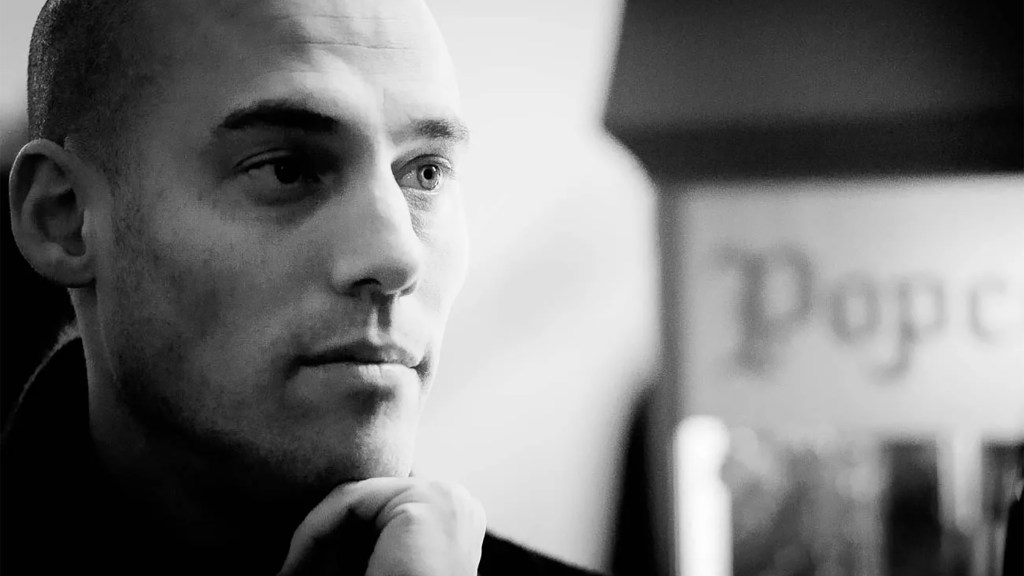
Photo by Henny Garfunkel

As brothers, we have worked together on everything for the past twenty-eight years. We have lived and created together for all of our lives. As adults, we moved to Los Angeles and began work in the film industry, honing our skills and crafting our roles as a unit. Five years ago we started off on an adventure to make our own films, free of the constrictions of commercial work. We are now producing our third independent documentary feature together. We conceive, scout, produce, shoot and edit all of our own work.

Courtesy of press kit:

The Ross Brothers are a documentary filmmaking team whose works have been featured at museums and festivals throughout the world, including the Museum of Modern Art, New York; the Centre Pompidou, Paris; and the British Film Institute, London. Their work has been supported by the Sundance Institute, the Rooftop Filmmaker’s Fund, Cinereach, The San Francisco Film Society, and the late Roger Ebert. Their first feature film, 45365, was the winner of the 2009 SXSW Grand Jury Prize for Best Documentary Feature and the Independent Spirit Truer Than Fiction Award. They went on to receive numerous accolades, including nominations for Editing, Cinematography, and Debut Feature at the Cinema Eye Honors; the film was also broadcast as part of PBS’ Independent Lens. Their second feature, Tchoupitoulas, had its world premiere at SXSW in 2012 and premiered internationally at CPH:DOX, where it won Special Mention. It went on to receive awards at the Ashland Independent Film Festival (Best Documentary), the Dallas International Film Festival (Grand Jury Prize), and HotDocs (Emerging Artist Award). In 2015, they premiered Western at the Sundance Film Festival where it was presented the Jury Award for Verite Filmmaking. Western went on to receive a number of notable awards, including the SXSW Louis Black Lonestar Award, The AIFF Les Blank Award for Best Feature Length Documentary, and the San Francisco International Film Festival Golden Gate Award, among others. Their latest project, Contemporary Color, premiered as the Opening Film of the World Documentary Competition at the 2016 Tribeca Film Festival, where it also took the top prizes for Cinematography and Editing.

Filmography:

  • Second Star to the Right and Straight on ‘Til Morning (2021)
  • Bloody Nose, Empty Pockets (2020)
  • Contemporary Color (2016)
  • Western (2015)
  • Tchoupitoulas (2012)
  • 45365 (2009)

Links

Here is a curated selection of links shared on our Facebook page for additional insight/information:

  • 4/25/17 – The Ross Brothers spoke at length about their experience directing Contemporary Color on the True/False Film Fest Podcast – link
  • 4/27/17 – “A gift to audiences everywhere, a spectacular kinetic pinwheel of a movie that whisks us away from big issues to celebrate an exceptional creative collaboration.” Peter Debruge, Varietylink

The Kids Grow Up – July 21st, 2016

The Kids Grow Up [2010]


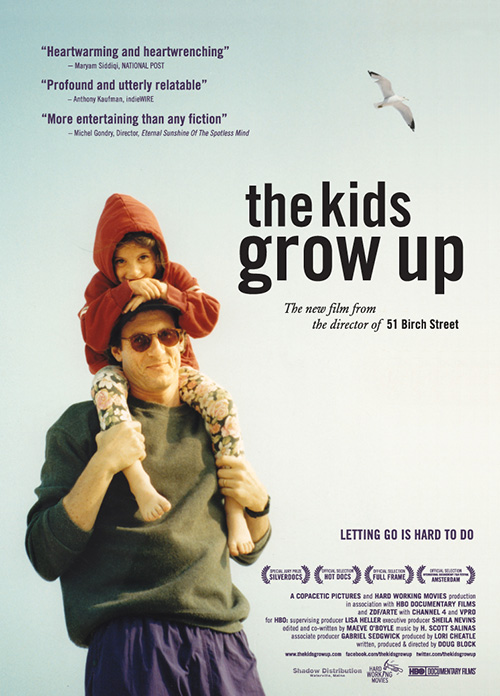
Please join us for a special evening with director Doug Block. We will be screening his documentary The Kids Grow Up [2010] followed by a brief Q&A afterwards with the filmmaker.

  • Screening Date: Thursday, July 21st, 2016 | 7:00pm
  • Venue: North Park Theatre
  • Specifications: 2010 / 90 minutes / English / Color
  • Director(s): Doug Block
  • Print: Supplied by Docurama Films
  • Tickets: $9.50 general admission at the door

Event Sponsors:

Venue Information:

1428 Hertel Ave, Buffalo, NY 14216


Synopsis

Courtesy of the press kit:

In his internationally acclaimed documentary 51 Birch Street, Doug Block examined his parents’ seemingly ordinary 54-year marriage and uncovered a universal story about the mystery of family. The Kids Grow Up sees Block turns his lens on his family once more, this time from his own vantage point as a father, to tell a larger story about modern-day parenthood and marriage.

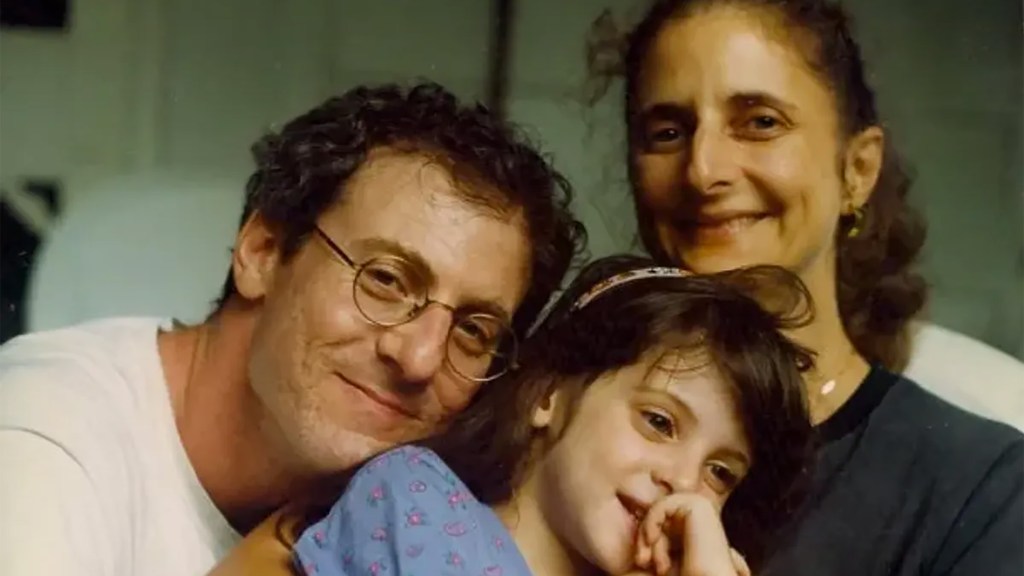
Lucy Block is Doug’s only child and, like many involved camcorder-era dads, he videotaped frequently with her as she grew up, capturing their close bantering relationship on camera in the process. An established documentary filmmaker, Block long mulled incorporating the footage into a longitudinal look at the parenting experience. It’s only when Lucy turns 17, however, and is a year away from leaving home for college, that his focus turns to the emotionally fraught period when children separate from their parents and parents must separate from their children. The Kids Grow Up is Block’s intimate and moving account of his year of learning to let go.

It turns out to be a turbulent time of transition for the entire family. Doug’s stepson Josh (14 years Lucy’s elder) has a child, making Doug and his wife Marjorie first-time grandparents. Marjorie endures a severe episode of clinical depression, her first in 13 years, then fully recovers. Lucy has her first serious romantic relationship, only to grapple with whether or not to break it off before leaving for college. And Doug’s fixation on Lucy’s departure masks a deeper anxiety about aging and the looming empty nest.

Moving seamlessly between past, present and the fast-approaching future, we see Lucy blossom from precocious kid to serious and self-possessed young woman over the course of the film. Along the way, the eternal father-daughter struggle for control plays out through the camera with warmth and humor (and occasional irritation). Marjorie candidly informs Doug that his “buddy-buddy” relationship with Lucy signifies a larger unwillingness to grow up. Meanwhile, Doug’s ongoing effort to come to peace with his aging, rigidly authoritarian father, contrasted with Josh’s eagerness to be a stay-at-home dad, illustrates just how far notions of fatherhood have shifted over the generations.

Told from Block’s engaging first-person perspective, The Kids Grow Up breathes fresh insight into the wonderful and daunting relationship between parent and child, as well as the highs and lows of long-term marriage. As Doug struggles, often less than gracefully, with letting go of his daughter, it becomes apparent that The Kids Grow Up is not just Lucy’s coming of age story but very much her father’s as well.

Tidbits:

  • Amsterdam International Documentary Film Festival – 2009

Director Statement

Courtesy of the press kit:

Many years ago, when I set out to become a proverbial “big-time” movie director, the last thing I expected was that my greatest filmmaking success until now would result from an intensely personal documentary about my relatively ordinary family.

51 Birch Street (released in 2006) was a film I never intended to make. I mean, who in their right mind would actually plan to make a documentary about their parents’ marriage? Certainly not me, at least until a series of shocking discoveries in the wake of my mother’s unexpected death caused me to reevaluate every assumption I had about marriage and family. In the process, I realized I had accidentally tapped into a story that would resonate with audiences throughout the world.

In stark contrast, The Kids Grow Up was a film that percolated in the back recesses of my brain for a long time. My daughter Lucy has always had a natural camera presence, and I couldn’t help but think there was a funny and fascinating documentary to be made about parenting over the long haul from a father’s perspective. The only problem was that I could never quite get a handle on what form such a film might take. It never seemed enough to simply see a little girl grow up on camera.

As the years (and other film projects) flew by, and a total of about 50 hours of footage accumulated, it remained a subject in search of a story. Which was fine by me. I was perfectly happy to have captured bits and pieces of my only child’s life, and a loose chronicle of our close and loving relationship, if only for posterity.

Then Lucy turned 17, and one morning it hit me that there was only one year left before she would leave the nest for college. In that moment, anticipating and dreading the emotion-packed moment of goodbye that parenthood inevitably leads to, I suddenly envisioned The Kids Grow Up almost fully formed. It would no longer be just a light and humorous look at a father-daughter relationship playing out through my camera over time. Lurking underneath was a more bittersweet story about a baby boomer parent struggling with aging and loss and learning how to let go. Eventually, the context broadened to include three generations of fathers, illustrating how exponentially more involved dads have become in their children’s lives. (With the film premiering on HBO on Father’s Day, I’m particularly happy to have the spotlight focused on that larger cultural context.)

It’s extremely challenging to make personal documentaries, and The Kids Grow Up was, if anything, even more daunting than 51 Birch Street. As the film makes clear, Lucy had a healthy amount of ambivalence about being filmed at certain moments, and I tried to be as sensitive to her feelings as possible. My rule of thumb was to begin shooting only when she was okay with it and to turn the camera off whenever she told me to. Still, Lucy is emotionally vulnerable in several scenes and, when it comes to your child, your parental instinct is to protect. Lucy was the first to see different cuts of the film and was given multiple opportunities to pull the plug on it if she felt it would adversely impact her life (fortunately, she didn’t). The only way I could make The Kids Grow Up was to be a father first and filmmaker second, although, as the film shows, I certainly tried my best to be both at the same time.

My wife Marjorie is very exposed in the film, as well, and not just because the looming empty nest cast a degree of anxiety over our marriage. She is shown, and on one occasion briefly interviewed, in the midst of a serious depressive episode that at times left her unable to get out of bed. Even knowing she would want me to, I wrestled internally for two months before I was able to point a camera in her direction in that condition.

Marjorie has always been open about her history of depression, and especially appreciates that the film will help de-stigmatize mental illness by depicting someone who suffers a depressive episode and then recovers fully without making a big fuss about it.

And so I’ve made another very personal film about my family, one that I hope will stand alone from 51 Birch Street and, at the same time, work as a companion piece. Having produced a number of personal documentaries, as well as having made three of my own (and in the middle of making yet another), I fully understand the pitfalls involved. However, the more I’ve travelled with these films around the world, the more I’ve come to realize that there’s nothing more powerful or affecting than authentically sharing who we are as human beings with one another. I’m proud and grateful that my wife and daughter feel the same way, and that they trusted I would present their lives and experiences on film in an authentic and, hopefully, entertaining way.

Finally, one regrettable aspect of making first-person docs is that people often come away from them with the misconception that I create them by myself. Happily, I had a number of extraordinarily talented collaborators who made the film infinitely better and the process so much more enjoyable. To composer H. Scott Salinas, associate producer Gabriel Sedgwick, editor Maeve O’Boyle and, particularly, my producing partner Lori Cheatle, I give my heartfelt thanks and everlasting appreciation.


Director Bio

Courtesy of the film’s website:

DOUG BLOCK (Director, producer, camera) is a New York-based filmmaker whose work includes some of the most acclaimed feature documentaries of the past two decades.

Doug’s previous film, 51 Birch Street, was named one of the 10 Best Films of the Year by the New York Times, The Chicago Sun-Times and the Ebert & Roeper Show, and it was selected as one of the outstanding documentaries of the year by the National Board of Review, the Boston Society of Film Critics and Rolling Stone Magazine. The film garnered numerous awards, including Best Overall Program at the 2008 Banff Television Awards. 51 Birch Street screened at dozens of international film festivals, followed by a 9-month U.S. theatrical release. It aired on HBO, ZDF/Arte, Channel Four and many other stations worldwide.

Doug’s first film, The Heck With Hollywood! screened at over two dozen international film festivals before being released theatrically in the U.S. by Original Cinema. The film was broadcast on PBS and Bravo in the U.S., and throughout the world. His second feature was the Emmy-nominated film Home Page, a look at the early days of online culture. Called “Groundbreaking” by Roger Ebert, the film screened at the Sundance and Rotterdam Festivals and was broadcast on HBO, IFC and in Europe after a theatrical release.

His credits as producer include: Silverlake Life (Sundance Grand Jury Prize, Peabody, Prix Italia), Jupiter’s Wife (Sundance Special Jury Award, Emmy), Paternal Instinct (Best Feature Film – NY Gay & Lesbian Film Festival), A Walk Into the Sea: Danny Williams and the Warhol Factory (top doc prizes at the Berlin and Tribeca film festivals) and The Edge of Dreaming, which aired on POV earlier this year. He is currently executive producer of the 2011 Sundance award-winner Resurrect Dead: The Mystery of the Toynbee Tiles.

Doug is also the founder and co-host of The D-Word, a popular international online discussion forum for documentary professionals.

Filmography:

  • The Children Next Door (2012) (short)
  • The Kids Grow Up (2009)
  • 51 Birch Street (2005)
  • Home Page (1998)
  • The Heck with Hollywood! (1991)

Links

Here is a curated selection of links shared on our Facebook page for additional insight/information:

  • 6/17/16 – “Remarkable … a chronicle of ordinary life that is partly a scrapbook, partly a memoir and, most movingly, an essay on the passage of time and the mysterious connection between parents and children.” A. O. Scott, The New York Timeslink
  • 7/10/16 – “Nakedly personal … profoundly universal.” Eric Hynes, Village Voicelink
  • 7/11/16 – “Block intercuts the elliptical flashbacks with contemporary footage of Lucy’s life, roaming candidly through her final moments at home with an anxious, bittersweet tenderness. His features are infused with a powerful, at times emotionally profound nostalgia intrinsic to these cinematic time capsules.” Daniel Loria on The Kids Grow Up, IndieWirelink
  • 7/13/16 – “Intimate, funny, deeply affecting; The Kids Grow Up exemplifies personal filmmaking at its most truthful and absorbing. It’s wonderful.” Ann Hornaday, Washington Postlink
  • 7/18/16 – “Powerful … funny … irresistible.” Andrew O’Hehir on The Kids Grow Up for Salonlink
  • 8/15/16 – Rule #1: Don’t make it all about you (even though, of course, it’s all about you)… – link

Local Media Coverage:

  • 7/19/16 – Jordan M. Smith interviews Doug Block in the July 20th, 2016 issue of The Publiclink
  • 7/19/16 – Christopher Schobert interviews Doug Block online at Buffalo.com – link

Lo and Behold, Reveries of the Connected World – June 13th, 2016

Lo and Behold, Reveries of the Connected World [2016]


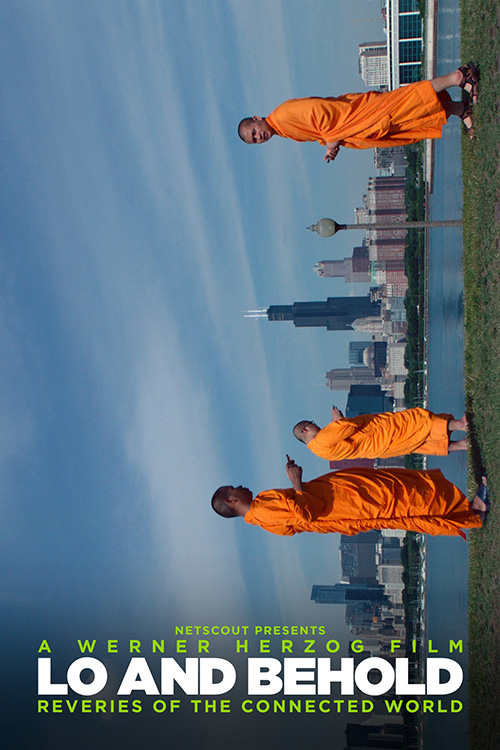
Please join us for the Buffalo premiere screening of Werner Herzog’s newest documentary Lo and Behold, Reveries of the Connected World [2016].

  • Screening Date: Monday, June 13th, 2016 | 7:00pm
  • Venue: North Park Theatre
  • Specifications: 2016 / 98 minutes / English / Color
  • Director(s): Werner Herzog
  • Print: Supplied by Magnolia Pictures
  • Tickets: $9.50 general admission at the door

Spring 2016 Season Sponsor:

Event Sponsors:

Venue Information:

1428 Hertel Ave, Buffalo, NY 14216


Synopsis

Courtesy of Magnolia:

Society depends on the Internet for nearly everything but rarely do we step back and recognize its endless intricacies and unsettling omnipotence. From the brilliant mind of Werner Herzog comes his newest vehicle for exploration, a playful yet chilling examination of our rapidly interconnecting online lives.

Herzog documents a treasure trove of interviews of strange and beguiling individuals—ranging from Internet pioneers to victims of wireless radiation, whose anecdotes and reflections weave together a complex portrait of our brave new world. Herzog describes the Internet as “one of the biggest revolutions we as humans are experiencing,” and yet he tempers this enthusiasm with horror stories from victims of online harassment and Internet addiction.

For all of its detailed analysis, this documentary also wrestles with profound and intangible questions regarding the Internet’s future. Will it dream, as humans do, of its own existence? Can it discover the fundamentals of morality, or perhaps one day understand the meaning of love? Or will it soon cause us—if it hasn’t already—more harm than good?

Tidbits:

  • Sundance Film Festival – 2016
  • BFI London Film Festival – 2016

Director Bio

“It is my duty to direct because the films might be the inner chronicle of what we are, and we have to articulate ourselves. Otherwise we would be cows in the field.”

courtesy of filmmakers’ website and Encyclopœdia Britannica:

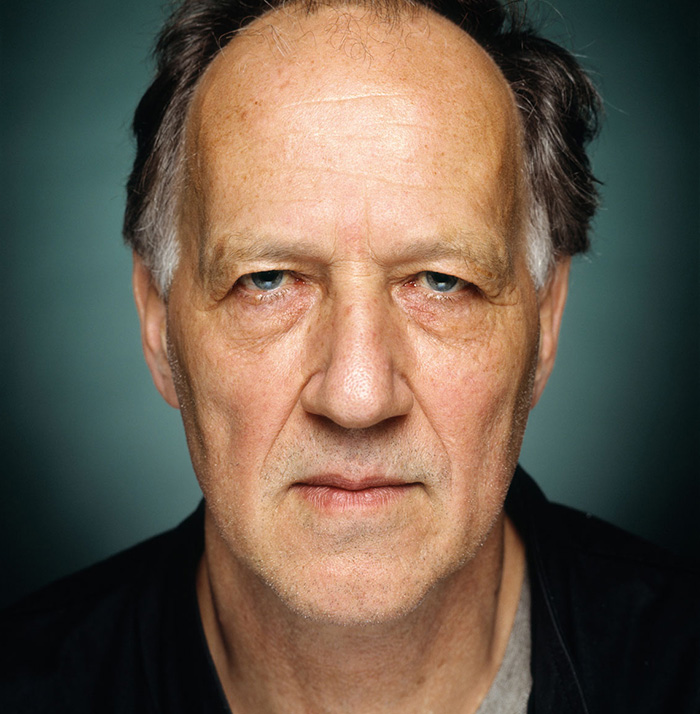
Werner Herzog was born September 5, 1942, in Munich, Germany. With Rainer Werner Fassbinder and Volker Schlöndorff, Herzog led the influential postwar West German cinema movement. During his youth, Herzog studied history, literature, and music in Munich and at the University of Pittsburgh and traveled extensively in Mexico, Great Britain, Greece, and Sudan. Herakles (1962) was an early short, and Lebenszeichen (1967; Signs of Life) was his first feature film. He became known for working with small budgets and for writing and producing his own motion pictures. Herzog’s films, usually set in distinct and unfamiliar landscapes, are imbued with mysticism.

In Auch Zwerge haben klein angefangen (1970; Even Dwarfs Started Small), the microcosm of a barren island inhabited by dwarfs stands for a larger reality, and in Fata Morgana (1971), a documentary on the Sahara, the desert acquires an eerie life of its own. One of Herzog’s best-known films, Aguirre, der Zorn Gottes (1972; Aguirre, the Wrath of God), follows a band of Spanish explorers into unmapped territory, recording their gradual mental and physical self-destruction.

Jeder für sich und Gott gegen alle (1975; Every Man for Himself and God Against All or The Mystery of Kaspar Hauser) is a retelling of the Kaspar Hauser legend. Herzog’s most realistic film, Stroszek (1977), is a bittersweet tale of isolation concerning a German immigrant who, with his two misfit companions, finds the dairy lands of Wisconsin to be lonelier and bleaker than the slums of Berlin. Herzog’s other films include Herz aus Glas (1977; Heart of Glass), Nosferatu: Phantom der Nacht (1979; Nosferatu the Vampyre, a version of Bram Stoker’s Dracula that is an homage to F.W. Murnau’s film of the same name), Woyzeck (1979), Fitzcarraldo (1982), and Schrei aus Stein (1991; Scream of Stone).

Later in his career Herzog focused primarily on documentaries, including Glocken aus der Tiefe (1995; Bells from the Deep), which examines religious beliefs among Russians, and Grizzly Man (2005), an account of Timothy Treadwell, an American who studied and lived among grizzly bears in Alaska but was mauled to death along with his girlfriend. Little Dieter Needs to Fly (1997) centres on a German American pilot shot down in the jungle during the Vietnam War; the story inspired Herzog’s narrative film Rescue Dawn (2007). Among his later documentaries are Encounters at the End of the World (2007), which highlights the beauty of Antarctica; Cave of Forgotten Dreams (2010), which explores in 3-D the prehistoric paintings at the Chauvet cave in France; and Into the Abyss (2011), a sombre examination of a Texas murder case.

Herzog’s other narrative films include Bad Lieutenant: Port of Call New Orleans (2009), a drama about a police officer (played by Nicolas Cage) struggling with drug and gambling addictions, My Son, My Son, what Have Ye Done (2009) and Queen of the Desert (2014) with Nicole Kidman, James Franco and Damian Lewis. Herzog’s films are characterized by a surreal and subtly exotic quality, and he is hailed as one of the most innovative contemporary directors. He often employs controversial techniques to elicit the desired performances from his actors: he ordered that the entire cast be hypnotized for Heart of Glass, forced the cast of Aguirre, the Wrath of God to endure the arduous environment of South American rainforests, and required his actors to haul a 300-ton ship over a mountain for Fitzcarraldo. Herzog’s subject matter has often led to such offbeat casting choices as dwarfs in Auch Zwerge haben klein angefangen and Bruno S., a lifelong inmate of prisons and mental institutions, in The Mystery of Kaspar Hauser and Stroszek. His volatile love-hate relationship with the brilliant but emotionally unstable actor Klaus Kinski resulted in some of the best work from both men, and both are best known for the films on which they collaborated. Herzog celebrated their partnership with the well-received documentary film Mein liebster Feind (1999; My Best Fiend). In addition, Herzog occasionally took acting jobs himself, with notable roles including a stern father in the experimental drama Julien Donkey-Boy (1999) and a criminal mastermind in the big-budget action movie Jack Reacher (2012).

Photo Credit: Robin Holland

Filmography:

  • Fireball: Visitors from Darker Worlds (2020)
  • Family Romance, LLC (2019)
  • Nomad: In the Footsteps of Bruce Chatwin (2019)
  • Meeting Gorbachev (2018)
  • Salt and Fire (2016)
  • Lo and Behold, Reveries of the Connected World (2016)
  • Into the Inferno (2016)
  • Queen of the Desert (2015)
  • Into the Abyss (2011)
  • Cave of Forgotten Dreams (2010)
  • Happy People: A Year in the Taiga (2010)
  • My Son, My Son, What Have Ye Done (2009)
  • Bad Lieutenant: Port of Call New Orleans (2009)
  • Encounters at the End of the World (2007)
  • Rescue Dawn (2006)
  • The Wild Blue Yonder (2005)
  • Grizzly Man (2005)
  • The White Diamond (2004)
  • Wheel of Time (2003)
  • Invincible (2001)
  • My Best Fiend (1999)
  • Wings of Hope (1998)
  • Little Dieter Needs to Fly (1997)
  • Gesualdo: Death for Five Voices (1995)
  • The Transformation of the World into Music (1994)
  • Bells from the Deep (1993)
  • Lessons of Darkness (1992)
  • Scream of Stone (1991)
  • Jag Mandir (1991)
  • Echoes from a Sombre Empire (1990)
  • Herdsmen of the Sun (1989)
  • Cobra Verde (1987)
  • The Dark Glow of the Mountains (1985)
  • Where the Green Ants Dream (1984)
  • Ballad of the Little Soldier (1984)
  • Fitzcarraldo (1982)
  • Huie’s Sermon (1981)
  • God’s Angry Man (1981)
  • Woyzeck (1979)
  • Nosferatu the Vampyre (1979)
  • Stroszek (1977)
  • Heart of Glass (1976)
  • How Much Wood Would a Woodchuck Chuck (1976)
  • The Enigma of Kaspar Hauser (1974)
  • The Great Ecstasy of Woodcarver Steiner (1974)
  • Aguirre, the Wrath of God (1972)
  • Handicapped Future (1971)
  • Land of Silence and Darkness (1971)
  • Fata Morgana (1971)
  • Even Dwarfs Started Small (1970)
  • The Flying Doctors of East Africa (1969)
  • Signs of Life (1968)

Links

Here is a curated selection of links shared on our Facebook page for additional insight/information:

  • 5/22/16 – It turns out that despite Herzog’s aversion to new technology, the legendary filmmaker has signed on to teach a 20 lesson online class on every aspect of filmmaking. Enroll at the link.
  • 6/4/16 – “The CCC turns one year old this month with a lineup highlighted by the great Werner Herzog. The Fitzcarraldo and Aguirre, the Wrath of God director is also a fascinating documentary filmmaker, and his latest looks to be no exception. Lo and Behold, Reveries of the Connected World by Werner Herzog, a study of our interconnecting online lives, has its Buffalo premiere at 7 p.m. on June 13 at the North Park Theatre (1428 Hertel Ave.). The month also includes Mark Cousins’ Atomic: Living in Dread and Promise – Free Film Screening, a documentary about the nuclear age, at 8 p.m. on June 8 at Burning Books (420 Connecticut St.). And Jan Ole Gerster’s charming narrative feature A Coffee In Berlin screens at 1 p.m. on June 25 at the Mason O. Damon Auditorium at the Buffalo & Erie Central Library (1 Lafayette Sq.).” Christopher Schobert, Buffalo Spree magazine – link
  • 6/13/16 – Werner Herzog on “The Ecstatic Truth” he seeks within his own filmmaking:
  • 7/12/16 – Magnolia Pictures has released a monolithic new poster for Herzog’s Lo and Behold, Reveries of the Connected Worldlink

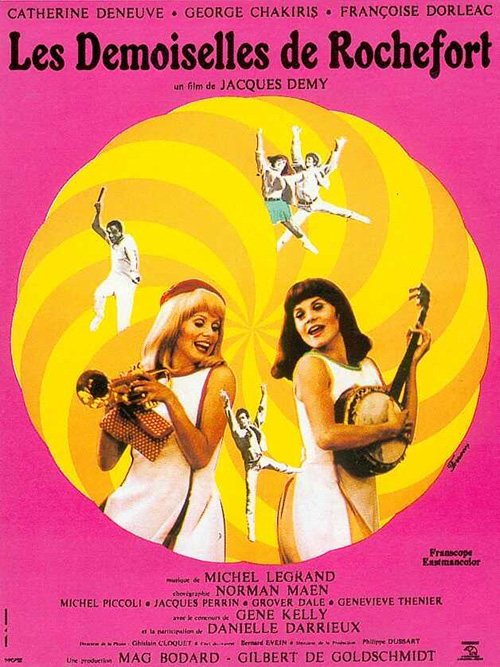
The Young Girls of Rochefort – June 6th, 2016

The Young Girls of Rochefort [1967]


Please join us for a special screening of Jacques Demy’s classic musical The Young Girls of Rochefort [Les demoiselles de Rochefort] [1967].

  • Screening Date: Monday, June 6th, 2016 | 7:00pm
  • Venue: North Park Theatre
  • Specifications: 1967 / 120 minutes / French with English subtitles / Color
  • Director(s): Jacques Demy
  • Print: Supplied by Janus Films
  • Tickets: $9.50 general admission at the door

Spring 2016 Season Sponsor:

Event Sponsors:

Venue Information:

1428 Hertel Ave, Buffalo, NY 14216


Synopsis

Courtesy of The Criterion Collection:

Jacques Demy followed up The Umbrellas of Cherbourg with another musical about missed connections and second chances, this one a more effervescent confection. Twins Delphine and Solange, a dance instructor and a music teacher (played by real-life sisters Catherine Deneuve and Françoise Dorléac), long for big-city life; when a fair comes through their quiet port town, so does the possibility of escape. With its jazzy Michel Legrand score, pastel paradise of costumes, and divine supporting cast (George Chakiris, Grover Dale, Danielle Darrieux, Michel Piccoli, and Gene Kelly), The Young Girls of Rochefort is a tribute to Hollywood optimism from sixties French cinema’s preeminent dreamer.

Tidbits:

  • Academy Awards – 1969 – Nominee: Best Music, Score of a Musical Picture (Original or Adaptation)

Director Bio

“I’m trying to create a world in my films.”

Courtesy of filmdirectorssite.com:

Jacques Demy’s first feature film, Lola, is among the early distinguished products of the New Wave and is dedicated to Max Ophüls. These two facts in conjunction define its particular character. It proved to be the first in a series of loosely interlinked films (the intertextuality is rather more than a charming gimmick, relating as it does to certain thematic preoccupations already established in Lola itself); arguably, it remains the richest and most satisfying work so far in Demy’s erratic, frustrating, but also somewhat underrated career.

The name and character of Lola (Anouk Aim?e) herself can be traced to two previous celebrated female protagonists: the Lola Montés of Max Ophüls’s film of that name, and the Lola-Lola (Marlene Dietrich) of von Sternberg’s The Blue Angel, to which Demy pays homage in a number performed by Aimée in a top hat. The explicit philosophy of Lola Montés (“For me, life is movement”) is enacted in Demy’s film by the constant comings and goings, arrivals and departures, and intricate intercrossings of the characters. Ophüls’s work has often been linked to concepts of fate; at the same time the auteurs of the early New Wave were preoccupied with establishing Freedom—as a metaphysical principle, to be enacted in their professional methodology. The tension between fate and freedom is there throughout Demy’s work. Lola‘s credit sequence alternates the improvisatory freedom of jazz with the slow movement of Beethoven’s 7th Symphony. The latter musical work is explicitly associated with destiny in the form of the huge white American car that brings back Michel, Lola’s lover and father of her child, who, like his predecessors in innumerable folk songs, has left her for seven years to make his fortune. No film is more intricately and obsessively patterned, with all the characters interlinked: the middle-aged woman used to be Lola (or someone like her), her teenage daughter may become Lola (or someone like her). Yet neither resembles Lola as she is in the film: everyone is different, yet everyone is interchangeable.

Two subsequent Demy films relate closely to Lola. In Les Parapluies de Cherbourg, Roland, Lola’s rejected lover, recounts his brief liaison with Lola to the visual accompaniment of a flashback to the arcade that was one of their meeting-places. In addition, Lola herself reappears in The Model Shop. Two other films are bound in to the series as well. Les Demoiselles de Rochefort is linked by means of a certain cheating on the part of Demy—Lola has been found murdered and dismembered in a laundry basket, but the corpse is a different Lola. Especially poignant, as the series continues, is the treatment of the abrupt, unpredictable, seemingly fortuitous happy ending. At the end of Lola, Lola drives off with Michel and their child (as Roland of Parapluies, discarded and embittered, departs on his diamond-smuggling trip to South Africa). At the conclusion of Le Baie des Anges—a film that, at the time, revealed no connection with Lola—Jackie (Jeanne Moreau), a compulsive gambler, manages to leave the casino to follow her lover before she knows the result of her bet: two happy endings which are exhilarating precisely because they are so arbitrary. Then, several films later, in Model Shop, Lola recounts how her great love Michel abandoned her to run off with a compulsive gambler called Jackie. Thus both happy endings are reversed in a single blow.

It is not so much that Demy doesn’t believe in happy endings: he simply doesn’t believe in permanent ones (as “life is movement”). The ambivalent, bittersweet “feel” of Demy is perhaps best summed up in the end of Les Parapluies de Cherbourg, where the lovers, now both married to others, accidentally meet, implicitly acknowledge their love, and return with acceptance to the relationships to which they are committed.

Outside the Lola series, Demy’s touch has been uncertain. His two fairy-tale films, Peau d’ane and The Pied Piper, unfortunately tend to confirm the common judgment that he is more a decorator than a creator. But he should not be discounted. A Room in Town, a return to the Lola mode if not to the Lola characters, was favorably received.

Demy’s final two credits, Parking and Three Places for the 26th, are musicals that disappointed in that they were unable to capture the spark of his earlier work. Agnes Varda, his wife of almost three decades, then directed a film about Demy titled Jacquot de Nantes, which was released a year after his death. The film is a poignant, straight-from-the-heart record of the measure of a man’s life, with Varda shifting between interviews with Demy (tenderly shot in extreme close-up), sequences from his films, and a narrative that details the youth of Demy in Nantes during the 1940s and relates how he cultivated a love of the movies. The film works best, however, as a beautiful and poignantly composed love letter. Its essence is summed up in one of its opening shots: the camera pans the content of a watercolor, focusing first on a nude woman, then on a nude man, and finally on their interlocking hands.

Jacquot de Nantes is obviously a very personal film. But it was not meant to be a tribute; rather, it was conceived and filmed when Demy was still alive. “Jacques would speak about his childhood, which he loved,” Varda explained at a New York Film Festival press conference. “His memories were very vivid. I told him, ‘Why don’t you write about them?’ So he did, and he let me read the pages. The more he wrote the more he remembered—even the names of the children who sat next to him in school. Most children do not know what they want to do when they grow up. But Jacques did, from the time he was 12. He had an incredible will. So I said, ‘This [material] would make a good film.’ I wrote the script, and I tried to capture the spirit of Jacques and his family, and the way people spoke and acted in [the 1940s]. We shot the film in the exact [locations] in which he grew up. I also filmed an interview with him. It’s just Jacques speaking about his childhood. It’s not a documentary about Jacques Demy. It’s just him saying, ‘Yes, this is true. This is my life.'”

“He saw most of the final [version]. When Jacques ‘went away,’ I had to finish the film. It was difficult, but that’s the only thing I know. I think the film makes Jacques very alive.”

Demy was the subject of two follow-ups to Jacquot de Nantes, also directed by Varda: The Young Girls Turn 25, a sentimental reminiscence of the filming of The Young Girls of Rochefort and The World of Jacques Demy, an intensely intimate documentary-biography which includes clips from his films and interviews with those who worked with and respected him.

– ROBIN WOOD and ROB EDELMAN

Filmography:

  • La Table tournante (1988)
  • Trois places pour le 26 (1988)
  • Parking (1985)
  • Une chambre en ville (1982)
  • Lady Oscar (1979)
  • A Slightly Pregnant Man (1973)
  • The Pied Piper (1972)
  • Donkey Skin (1970)
  • Model Shop (1969)
  • The Young Girls of Rochefort (1968)
  • Bay of the Angels (1964)
  • The Umbrellas of Cherbourg (1964)
  • Lola (1962)
  • Le Bel Indifferent (1957)

Links

Here is a curated selection of links shared on our Facebook page for additional insight/information:

  • 6/3/16 – “Given the extraordinary lift Gene Kelly gives the movie, it’s hardly surprising that Jacques Demy wanted him from the outset, though he had to wait two years before Kelly was free of other commitments. Indeed, Kelly brings to the movie the kind of boundless elation musicals exist to produce, as do Chakiris and Dale, the other two American dancers featured, though to a lesser extent. Indeed, it’s the combination of this spirit with the soul of the French cast that gives The Young Girls of Rochefort its distinctive flavor. Like the pairing of Jean Seberg with Jean-Paul Belmondo in Godard’s Breathless, or the mating of a David Goodis plot with Charles Aznavour’s mug in Truffaut’s Shoot the Piano Player, this combination provides the kind of combustion that powered the French New Wave and the general reinvention of movie energy in the 1960s. Godard and Truffaut may have watered the roots, but it was Demy who produced this relatively late blooming flower, combining the virtues of the Hollywood musical with French poetic realism to produce these fresh, colorful petals.” Jonathan Rosenbaum, Chicago Readerlink
  • 6/4/16 – “Cahiers Du Cinéma described the film as ‘the first true French musical… the most ambitious film ever undertaken, not because Demy is attempting something apart from the traditions of French cinema, but because he is in the process of creating a tradition’.” Rodney F. Hill, Senses of Cinemalink

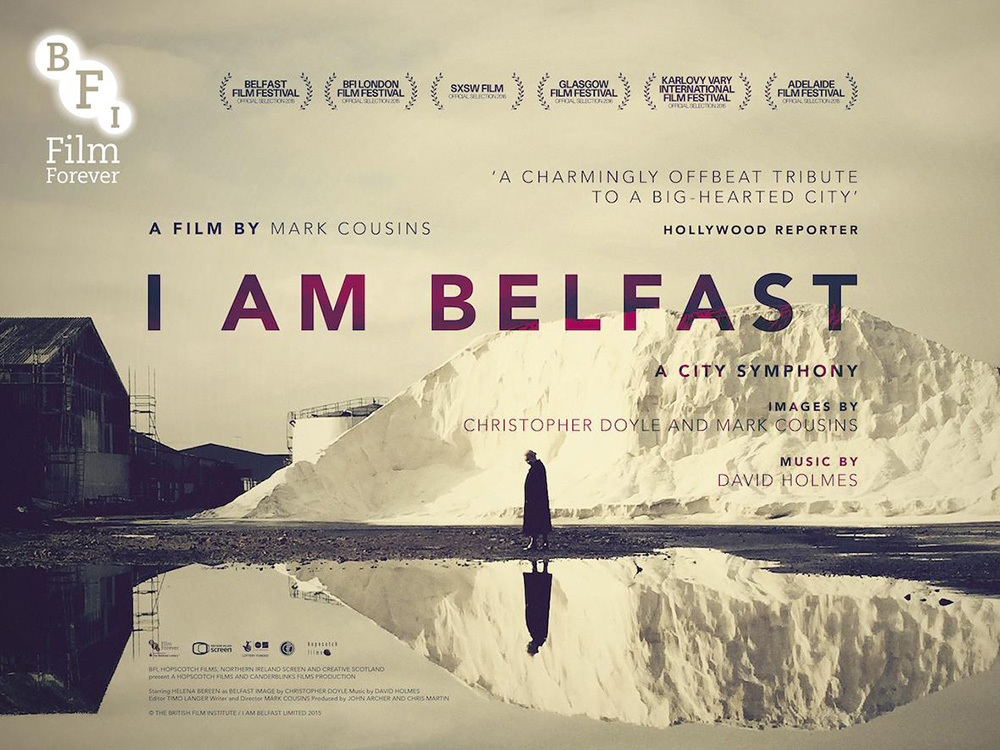
I Am Belfast – April 28th, 2016

I Am Belfast [2016]


Please join us for a special New York State premiere screening of Mark Cousins’ latest SXSW-alum documentary I Am Belfast [2016].

  • Screening Date: Thursday, April 28th, 2016 | 9:55pm
  • Venue: North Park Theatre
  • Specifications: 2016 / 84 minutes / English / Color
  • Director(s): Mark Cousins
  • Print: Supplied by New Europe Film Sales
  • Tickets: $9.50 general admission at the door

Spring 2016 Season Sponsor:

Event Sponsors:

Venue Information:

1428 Hertel Ave, Buffalo, NY 14216


Synopsis

Courtesy of the press kit:

“Belfast the City, is like a fascinating character in a book or a film, full of contradictions. It’s tragic because of the war but also warm and very human.”

— Mark Cousins

I Am Belfast is a unique film about a notorious city, Northern Ireland’s capital. Opening with filmmaker Mark Cousins saying that he met a 10,000 year old woman who claims she is the city itself. She becomes our unpredictable guide. At first she shows us fun things — the way people talk, visual surprises. But then her story deepens. She turns the clock back, unafraid of tragedy. She’s good at forgotten, shocking detail. It’s like she’s remembered everything, with x-ray vision.

With the evocative imagery of cinematographer Christopher Doyle, and a haunting new score by David Holmes, Cousins moves beyond the conventional portrayal of Belfast in the movies — as thriller, or hard man place — and shows, instead, the women and the dream life of Belfast. Magic realist with gritty truths and some flights of fantasy, Mark Cousins’ film is influenced by Soviet cinema, popular song, and the storytelling of his grandmothers, and grandmothers everywhere.

Tidbits:

  • Karlovy Vary International Film Festival – 2015

Letter to My 8 1/2 Year Old Self

Courtesy of Vertigo Magazine:

“Letter to My Eight and a Half Year Old Self”, by Mark Cousins

You are in Belfast. It is 1974. The city is a war zone, dead and locked up at night. You are living in that house on the Crumlin Road. You do not know it yet but in two years time, a bomb in that street will destroy it. Don’t worry, you will all be evacuated and, as a result, you will start a new life on a housing estate in a town called Antrim.

There will be lots of Belfast people there – tens of thousands, in fact, but Antrim will have no cinema. You will see movies on TV – BBC2. You are about to fall in love with two directors – Alfred Hitchcock and Orson Welles. In Belfast in three years time you will see a film called Jaws, but it is one by Welles – Touch of Evil – that will change your life. It will make you fall in love with the drug of cinema, the feeling it gives you.

How will cinema change your life? It will stop the world feeling scary. You will discover a quietude in cinemas, in the dark, before the lights go down. In a letter to her son, who is the same age as you are, an actress named Tilda Swinton called this feeling “ecstatic removal”. My friend Tony McKibbin says that in life people should protect their nervous systems. Looking back, I can see that you were a nervy wee boy in the 70s so maybe you went into the Odeon on Great Victoria Street to protect yourself in the way Tony describes. But protect isn’t quite the right word. You will find, as you grow up and become a man, that release is what you will feel in cinemas, the sense that your nervous system, which is usually defended, in the ready position, stops shrinking and opens out like a flower.

To what will it open out in the coming years of your life? Tilda tells her son that he will discover “the promised land of freedom”, and that’s what you will find too. You will feel imaginative fireworks explode in your head, so unfettered is cinema. You will feel the rush to tears at the beauty of Claudia Cardinale in Once Upon a Time in the West but then, later, you will realise, with life changing consequences, that it was only partially her that brought those tears. It was also, inconceivably, impossibly, ridiculously, the exalted sweep of the film’s image up into the air, over the railway station and further still to reveal a frontier town being born.

You will run like a sprinter with this realisation that form, camera moves, what Daniel Frampton romantically calls the thinking of the film, moves you and sustains you. You will come to find, as a teenager and in your early twenties, that you need cinema, the way you need to dance, to remind you of the bodily and mental liberties that existence affords you.

This sprint, this dance, this love will become your life. And here’s something you could never guess, living where you are, in working class Belfast, a planet away from Hollywood: you will earn your living in cinema, close to its contours. Are you shocked? I’d expect so. You’ll discover that documentary films – in which the director is really co-director, with life itself – suit your sense of not wanting to be in full control, and you’ll make some daring ones. You’ll write and talk about films in newspapers and on TV but, soon, you’ll find that you have made a vow to yourself not to be part of the marketing of mainstream cinema, so you will sprint some more and find that suddenly you are amongst the films of people with names like Weeresethakul, Tsuchimoto, Kiarostami, Sokurov, Dumont, Almodovar, Chahine, Farrokzhad, Mambety, Imamura, Kotting, Bill Douglas, Jarman and Malick. By the time you realise this, you will be miles from anywhere. You will feel lonely there – so letters like Tilda’s will mean a lot – but dead happy too, alert, paying attention, as John Sayles would say, astonished, as Jean Cocteau exhorted.

Then something else will happen. You will notice that most of the world is talking about a James Bond film called Casino Banal. You will go and see it and find it cheesy and boring. You will get angry at such things. You will start to write about the fact that invigorating movies get squashed, or outrun, by steroid-boosted cookie cutter ones. Tilda talked about her work as being an act of resistance. Your work will feel like that. As a passionate, decentred, curious critic, you will try to articulate an opposition to the dead contrivance of dominant cinema, in the way Terry Eagleton suggests in The Function of Criticism.

So movies will do something to you and, eventually, you will begin to do something back to them. But what, for now, at the age you are now, do I wish for you? I wish you had more film books at hand than Halliwell’s. I wish the world of cinema would open up faster for you. You found your way to Iran and its cinema, the work of Ghatak and Dutt, Gerima and Muratova, all on your own. But, tying Tilda’s thoughts and mine together, I wish for this: something called the 8 ½ Foundation. A trust, based in Scotland perhaps, where Tilda and I live, which would make 20 films available for free on DVD to children around the world, on their 8 ½ th birthday, their movie day. These films would be the best, most imaginative, movies of all time – directed by Miyazaki, Norman McLaren, Buster Keaton and Michael Powell, films with titles like Pelle Alone in the World, The Red Balloon and The Singing Ringing Tree. They would be available subtitled in 50 languages. The foundation would be funded by film studios around the world, to enrich the culture in which they operate, a gesture of optimism about their medium.

8 ½ is the perfect age to fall in love with cinema. It was the name of a great film. I found out only last year, in the dark, when someone recognized my voice at a firework display, that the Indian family who ran the Curzon cinema in Belfast in 1974 – which is now, for you – ran spectacular Indian movies in the morning back then, before the doors opened. They are running them now, as I write. Isn’t that remarkable? The 8 ½ Foundation could be remarkable.

You lucky thing. You are about to discover your passion.

Mark


Director Bio

“Painting = Seeing + Thinking.”

Courtesy of the press kit:

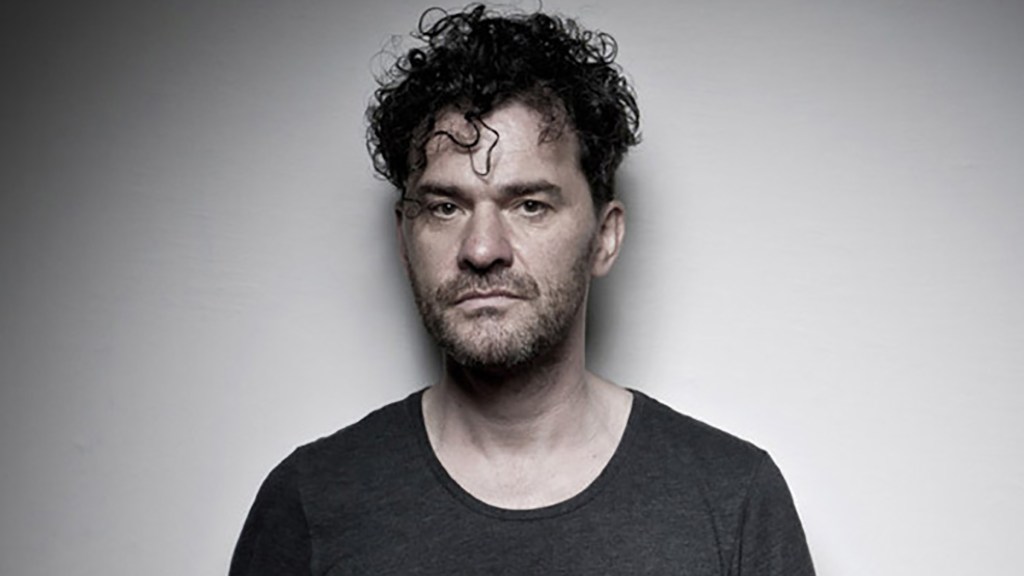
Mark Cousins is an Northern Irish filmmaker, writer and curator living and working in Scotland. In the early 1990s he became director of the Edinburgh International Film Festival. He has made films for TV about neo-Nazism, Ian Hamilton Finlay and the Cinema of Iran.

His 2004 book The Story of the Film, was published in Europe, America, China, Mexico, Brazil and Taiwan. The Times said of it “by some distance the best book we have read on cinema.” Cousins adapted the book into a 930-minute film, The Story of Film: An Odyssey (“The place from which all future revisionism should begin” – New York Times). Michael Moore gave it the Stanley Kubrick Award at his Traverse City Film Festival. It won a Peabody in 2014.

Next Cousins wrote, directed and filmed his first feature documentary, The First Movie, about kids in Kurdish Iraq. It won the Prix Italia. His other feature films include What Is This Film Called Love?, Here Be Dragons, A Story of Children and Film, which was in the Official Selection in Cannes, Life May Be, co-directed with Iranian filmmaker Mania Akbari, and 6 Desires, an adaptation of DH Lawrence’s book Sea and Sardinia. He is currently making Stockholm My Love, a symphony starring Neneh Cherry, and directing the archive film Atomic, a collaboration with the band Mogwai.

Photograph: Gareth Cattermole/Getty Images

Filmography:

  • The Storms of Jeremy Thomas (2021)
  • The Story of Film: A New Generation (2021)
  • The Story of Looking (2021)
  • Storm in My Heart (2019)
  • Women Make Film: A New Road Movie Through Cinema (2018)
  • The Eyes of Orson Welles (2018)
  • Stockholm, My Love (2016)
  • Atomic: Living in Dread and Promise (2015)
  • I Am Belfast (2015)
  • 6 Desires: DH Lawrence and Sardinia (2014)
  • The Film That Buys the Cinema (2014)
  • Life May Be (2014)
  • Here Be Dragons (2013)
  • A Story of Children and Film (2013)
  • What Is This Film Called Love? (2012)
  • 60 Seconds of Solitude in Year Zero (2011)
  • The Story of Film: An Odyssey (2011)
  • The First Movie (2009)
  • The New Ten Commandments (2008)
  • Cinema Iran (2005)
  • I Know Where I’m Going! Revisited (1994)
  • The Psychology of Neo-Nazism: Another Journey by Train to Auschwitz (1993)

Links

Here is a curated selection of links shared on our Facebook page for additional insight/information:

  • 4/4/16 – “I wanted to look at a familiar place in a non-familiar way. Other places are not as alive: people don’t drink as much, or talk as much. Polanski once spoke of life having ‘great amplitude’ and I think that’s true of Belfast. It’s a great city to study human truth: you have warmth and tragedy all in the one place. Emotions are exposed, not hidden; there’s no such thing as a stiff upper lip. We are a melodrama all to ourselves.” Mark Cousins, director of I Am Belfast, The Irish Timeslink
  • 4/7/16 – From Mark Cousins: My Guardian article on Belfast and film – link
  • 4/18/16 – Back in 2012, Mark Cousins’ The Story of Film opened the 6th annual Buffalo International Film Festival at the screening room cinema cafe! – link
  • 4/19/16 – “Mark Cousins has created a meditative tribute to his hometown of Belfast in the ‘city symphony’ tradition that stretches from Dziga Vertov’s Man With a Movie Camera to Terence Davies’s Of Time and the City. It’s musing, free-associating and visually inventive, with wonderful images from cinematographer Christopher Doyle. Like all of Cousins’s documentary film-making and criticism, it refuses easy cynicism in favour of unashamedly heartfelt human sympathy.” Peter Bradshaw, The Guardianlink
  • 4/26/16 – The Essay Film: A Manifesto by Mark Cousins –

    In the last two years I have made three essay films – What is This Film Called Love?, A Story of Children and Film, and Here be Dragons. In the next year, I will make two more – I am Belfast and Stockholm My Love.

    In making these, and watching many more – by Anand Patwardhan and Agnes Varda, for example – and after reading Philip Lopate’s book on the essay, I started to make a mental list of the elements of, and the principles behind, essay films. This list is a kind of manifesto.

    1 – A fiction film is a bubble. An essay film bursts it.
    2 – An essay film takes an idea for a walk.
    3 – Essay films are visual thinking.
    4 – Essay films reverse film production: the images come first, the script, last.
    5 – Filming an essay is gathering, like a carpenter gathers wood.
    6 – A fiction film is a car, an essay film is a bike; it can nip up an alleyway, you can feel the wind in its hair.
    7 – A road movie has outer movement, an essay film has inner movement.
    8 – An essay film is the opposite of fly on the wall.
    9 – An essay film can go anywhere, and should.
    10 – Two essay films should be made every year. Why? Because, after F for Fake, Orson Welles said this to Henry Jaglom during lunch at Ma Maison: “I could have made an essay film – two of ‘em a year, you see. On different subjects. Various variations of that form.”
    11 – Commentary is to the essay film, what dance is to the musical.
    12 – All essay films would be improved by a clip of Dietrich (see Marcel Ophuls).
    13 – An essay film cannot create the atmosphere of Wilder’s Sunset Boulevard; A fiction film cannot explain that atmosphere.
    14 – Even Hollywood makes essay films – look at DW Griffith’s Intolerance.
    15 -Essay films are what Astruc dreamt of.
    16 – Digital had made Astruc’s dream come true.
  • 3/24/17 – Cultivate Cinema Circle alum Mark Cousins wrote a letter to the late Ingmar Bergman, ten years after his death. – link
  • 4/28/17 –

Average cinema screen is abt 500 x size of average TV screen, 3000 x size of a tablet + 12000 x that of a smartphone. #BiggerThanLife

— mark cousins (@markcousinsfilm) April 18, 2017

Local Media Coverage:

  • 4/27/16 – “I Am Belfast looks at the home city of film essayist Mark Cousins, best known in the US for his 15-part series The Story of Film. Mixing leftover footage from other projects and archival clips with new footage by the brilliant cinematographer Christopher Doyle, the film is a poetic look at the past and present of a city much older than the recent troubles for which it is best known. Filled with gorgeous images, it’s a blessing that I Am Belfast – 2016 will be screened (if only once, this Thursday at 9:55pm) at the North Park Theatre.” M. Faust, The Publiclink

Abe Lincoln in Illinois – February 14th, 2016

Abe Lincoln in Illinois [1940]


Please join us Presidents’ Day Weekend for John Cromwell’s classic Abe Lincoln in Illinois [1940] on the big screen.

  • Screening Date: Sunday, February 14th, 2016 | 11:30am
  • Venue: North Park Theatre
  • Specifications: 1940 / 110 minutes / English / Black & White
  • Director(s): John Cromwell
  • Print: Supplied by Warner Bros.
  • Tickets: $7.50 general admission; $7.00 seniors

Event Sponsors:

Venue Information:

1428 Hertel Ave, Buffalo, NY 14216


Synopsis

Courtesy of Warner Bros.:

Among the most masterful matchups of actor and role in screen history is this stirring film of Robert E. Sherwood’s beloved play taking a thoroughly human look at the early years of our 16th President, with all his frailties and strength of character.

Best Actor Oscar nominee Raymond Massey (who originated the role on stage) wonderfully plays the future Great Emancipator in a chronicle of his backwoods childhood through his first romance with Ann Rutledge (Mary Howard) to his phenomenal rise to President Elect, besting the great orator Stephen Douglas (Gene Lockhart).

Ruth Gordon also does memorable work as driven, ambitious Mary Todd Lincoln, whose vision of Abe’s leadership destiny will not be denied by anyone – including her often reticent husband. There’s also no denying the enduring emotional power of this simple, magnificent movie.

Tidbits:

  • Academy Awards – 1941 – Nominee: Best Actor in a Leading Role & Nominee: Best Cinematography, Black-and-White

Director Bio

“In jail, everyone recognises my face.”

Courtesy of Britannica.com:

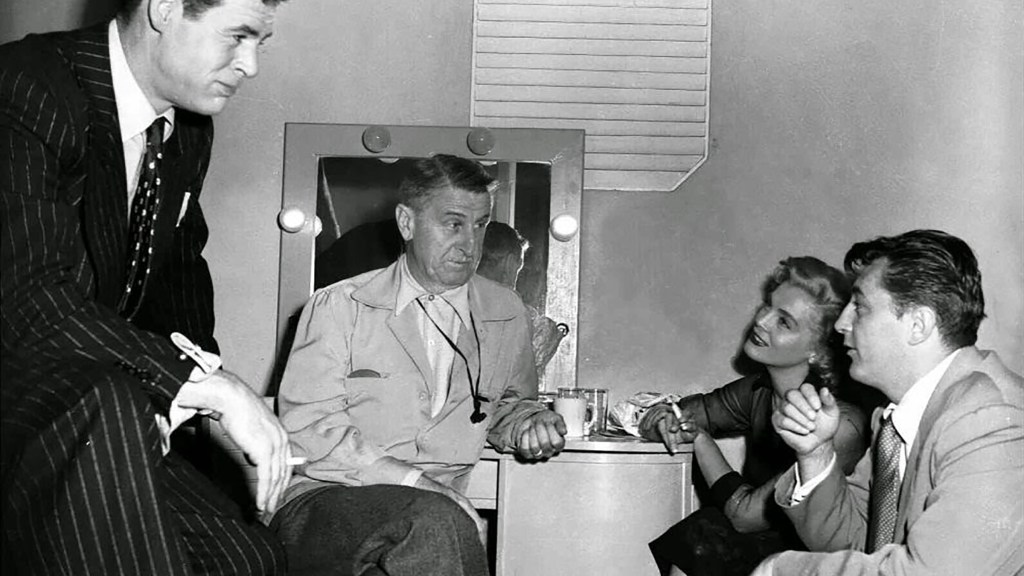
John Cromwell, original name Elwood Dager Cromwell (born December 23, 1887, Toledo, Ohio, U.S.—died September 26, 1979, Santa Barbara, California), American actor and director of stage and screen who, during a career that spanned more than 70 years, helmed a number of classic movies, including Of Human Bondage (1934), Abe Lincoln in Illinois (1940), and Anna and the King of Siam (1946).

Cromwell’s own personal golden age began in 1937 with the classic The Prisoner of Zenda for Selznick. The swashbuckler was based on Anthony Hope’s novel, and it starred Ronald Colman and Douglas Fairbanks, Jr. Cromwell then directed Algiers (1938), a remake of French director Julien Duvivier’s classic Pépé le Moko. If not quite at the level of the original, it was still a fine production, starring Charles Boyer and the Austrian actress Hedy Lamarr in her American screen debut. The tearjerker Made for Each Other starred James Stewart and Carole Lombard, while In Name Only (both 1939) was virtually a companion piece, with Lombard as a widow who falls in love with an unhappily married man (Cary Grant). Abe Lincoln in Illinois (1940) was based on the Pulitzer Prize-winning play by Robert E. Sherwood. The moving drama featured an Academy Award-nominated performance by Raymond Massey as the future president; Ruth Gordon was Mary Todd Lincoln, and Cromwell played John Brown. Victory (1940), from Joseph Conrad’s novel, was somewhat less successful, although March was excellent as the island loner who is forced to fight for his life.

So Ends Our Night (1941) starred March again, this time in a fine thriller about a German trying to escape his homeland as Nazi agents pursue him, and Son of Fury (1942) was one of Tyrone Power’s best costume pictures; Gene Tierney supplied the love interest and George Sanders the villainy. Cromwell then was reunited with Selznick for his prestigious Since You Went Away (1944), a lengthy but engrossing rendering of a family’s trials and tribulations during the war years. A critical and commercial success, it received a number of Oscar nominations, including a nod for best picture. The Enchanted Cottage (1945) was much more modest, a love story with fantasy elements that starred Dorothy McGuire and Robert Young.

Cromwell served as president of the Screen Directors Guild (later Directors Guild of America) from 1944 to 1946. During the latter year he made Anna and the King of Siam, an elaborate production of the real-life story of a British governess (Dunne) who dares to challenge the ruler of Siam (Rex Harrison). Although highly praised, Cromwell’s film was almost completely overshadowed by Walter Lang’s 1956 musical remake, The King and I. Dead Reckoning (1947) was a change of pace for Cromwell. The film noir starred Humphrey Bogart as a war hero who is betrayed by a femme fatale (Lizabeth Scott).

Cromwell had gone more than 10 years without a misfire, an incredible streak that even the greatest directors would be hard pressed to match, but Night Song (1947), with Dana Andrews as a blind pianist, ended his run. He rebounded in 1950 with Caged, one of the best (and most harrowing) of the women’s prison pictures; Eleanor Parker was cast against type as the new inmate who must learn the ropes.

Returning to RKO, Cromwell made The Company She Keeps (1951), with Scott as a parole officer and Jane Greer as an ex-convict, both of whom have set their sights on a newspaper columnist (Dennis O’Keefe). Later in 1951 he directed The Racket, which was based on the play that had helped launch his Hollywood career. However, Cromwell left the production before the film wrapped, and Nicholas Ray was among several directors who oversaw some of the later scenes.

Amid the House Un-American Activities Committee’s Hollywood witchhunts, Cromwell’s career soured. Howard Hughes accused him of being a communist, and although the charge was false, Cromwell was blacklisted. Unable to work in motion pictures, he returned to the stage, where he had occasionally performed between directing assignments. In 1952 he appeared with Fonda in the Broadway production of Point of No Return, for which he won a Tony Award.

In 1958 Cromwell was removed from the blacklist, and that year he directed The Goddess, writer Paddy Chayefsky’s dissection of the Marilyn Monroe phenomenon, with Kim Stanley as a troubled actress. The Scavengers (1959) was his last Hollywood film, and in 1961 he ended his film-directing career with A Matter of Morals, a low-budget drama made in Sweden. Cromwell continued to act on the stage, however, and late in life he returned to the screen in two Robert Altman films, 3 Women (1977) and A Wedding (1978). In 1960 Cromwell was honoured with a star on the Hollywood Walk of Fame. His son James Cromwell was a noted actor.

— Michael Benson

Filmography:

  • A Matter of Morals (1961)
  • The Scavengers (1959)
  • The Goddess (1958)
  • The Racket (1951)
  • The Company She Keeps (1951)
  • Caged (1950)
  • Night Song (1948)
  • Dead Reckoning (1947)
  • Anna and the King of Siam (1946)
  • The Enchanted Cottage (1945)
  • Since You Went Away (1944)
  • Son of Fury (1942)
  • So Ends Our Night (1941)
  • Victory (1941)
  • Abe Lincoln in Illinois (1940)
  • Made for Each Other (1939)
  • In Name Only (1939)
  • The Adventures of Marco Polo (1938)
  • Algiers (1938)
  • The Prisoner of Zenda (1937)
  • Banjo on My Knee (1936)
  • Little Lord Fauntleroy (1936)
  • To Mary—With Love (1936)
  • Village Tale (1935)
  • Jalna (1935)
  • I Dream Too Much (1935)
  • Spitfire (1934)
  • This Man Is Mine (1934)
  • The Fountain (1934)
  • Of Human Bondage (1934)
  • Ann Vickers (1933)
  • The Silver Cord (1933)
  • Sweepings (1933)
  • Double Harness (1933)
  • The World and the Flesh (1932)
  • Rich Man’s Folly (1931)
  • The Vice Squad (1931)
  • Scandal Sheet (1931)
  • Unfaithful (1931)
  • Seven Days Leave (1930) (Co-Director)
  • Tom Sawyer (1930)
  • Street of Chance (1930)
  • The Texan (1930)
  • For the Defense (1930)
  • Close Harmony (1929)
  • The Dance of Life (1929)
  • The Mighty (1929)

Links

Here is a curated selection of links shared on our Facebook page for additional insight/information:

  • 2/10/16 – Which is your favorite cinematic Lincoln? – link

The Better Angels – February 13th, 2016

The Better Angels [2014]


Please join us Presidents’ Day Weekend for the Buffalo premiere of director A.J. Edwards’ The Better Angels [2014].

  • Screening Date: Saturday, February 13th, 2016 | 11:30am
  • Venue: North Park Theatre
  • Specifications: 2014 / 95 minutes / English / Black & White
  • Director(s): A.J. Edwards
  • Print: Supplied by Amplify Releasing
  • Tickets: $7.50 general admission; $7.00 seniors

Event Sponsors:

Venue Information:

1428 Hertel Ave, Buffalo, NY 14216


Synopsis

Courtesy of Amplify Releasing:

At an isolated log cabin in the harsh wilderness of Indiana circa 1817, the rhythms of love, tragedy, and the daily hardships of life on the developing frontier shaped one of our nation’s greatest heroes: Abraham Lincoln. Using glorious black and white cinematography to conjure an America where the land was raw, The Better Angels sheds new light on the formative years of the future president and the two women who molded him into one of the most revered men in American history. Based on 19th-century interviews with Lincoln’s family members, The Better Angels is a beautiful, insightful, and brilliantly composed feature debut from producer Terrence Malick’s longtime protégé, A.J. Edwards.

Tidbits:

  • Berlin International Film Festival – 2014
  • Sundance Film Festival – 2014

History

Courtesy of film’s website:

Abraham Lincoln’s youth in Indiana occurred during a period known as the Second Great Awakening, a time of enormous growth in several Christian sects especially the Methodists and Baptists, who preached a gospel of individual freedom and a personal connection with God. This movement started in the 1790s and gained notice in 1801 when 20,000 people attend a four-day revival meeting at Cane Ridge, Kentucky. At outdoor revivals and camp meetings throughout the country and especially along the frontier, traveling preachers encouraged public confession of sins and an emotional conversion that could include wailing, singing, speaking in tongues, shaking and falling motionless on the ground.

The Awakening was a period when utopian communities and new religions were established such as the Latter-Day Saints or Mormons, the Millerites, and the Harmonists, a communal society that settled in Indiana in 1814 just sixty miles from Lincoln’s home in Pigeon Creek. Other Christian sects expanded dramatically such as the Shakers, a highly successful network of communities known for their crafts but also their distinctive forms of worship that included singing and dancing with great intensity.

Less extreme but equally influential were the efforts of ministers like Lyman Beecher of Cincinnati whose children included Henry Ward Beecher and Harriet Beecher Stowe, author of Uncle Tom’s Cabin. There is a direct connection between the evangelical efforts of religious leaders and the large number of reform movements that flourished during this time including the abolition of slavery, temperance, prison reform, and women’s suffrage. The leaders of these causes combined their religious passion with political activism. Although Abraham Lincoln never formally joined a church, he came of age morally and politically during this time of social and cultural transformation in American life.

The powerful influence of religious faith is evident throughout The Better Angels. Lincoln’s mother, Nancy, is described as “a believer.” After her death, Abraham writes to a preacher to come to the Indiana frontier and give her “a proper burial.” The Lincoln family prays at mealtime and Lincoln recites the Lord’s Prayer with his classmates at school. At home he teaches himself to read the Bible and Pilgrim’s Progress. His father is given the “honor” of building a new church and Lincoln is seen there lighting candles. Most important, he attends a service and hears the preacher’s sermon that encourages “Christian benevolence” and reminds the congregation that the person who “supports the cause of some, promotes the good of all.” These scenes suggest the way Lincoln’s childhood experience of religion shaped the man he was to become.


Pivotal Moments:

  • 1815—US victory in the Battle of New Orleans, last battle of the War of 1812
  • 1816—Lincoln family moves to Pigeon Creek, Perry County (later Spencer County—1818) Indiana
  • 1816—Indiana admitted as the 19th state; bans slavery, and promotes education
  • 1817—Abraham Lincoln shoots and kills a wild turkey and vows never to hunt again
  • 1817—James Monroe inaugurated as fifth U.S. president
  • 1818—October 5, Lincoln’s mother, Nancy Hanks Lincoln, dies
  • 1819—Spain cedes Florida to U.S.
  • 1819—December 2,Thomas Lincoln marries Sarah Bush Johnston in Kentucky, returns to Pigeon Creek
  • 1820—Missouri Compromise sets boundary where slavery will be permitted
  • 1820—Thomas Lincoln helps build Pigeon Creek Baptist Church
  • 1822—Denmark Vesey rebellion in Charleston; Vesey and 34 co-conspirators hanged
  • 1823—Monroe Doctrine declares that European colonization of New World will not be permitted
  • 1820-24—Abraham Lincoln attends school at various intervals not more than a year total
  • 1825—John Quincy Adams inaugurated at sixth U.S. president
  • 1825—Erie Canal completed
  • 1828—Sarah Lincoln, sister, dies in childbirth
  • 1828—Abraham Lincoln travels to New Orleans; sees a slave auction for the first time
  • 1828—Baltimore and Ohio Railroad construction begins
  • 1828—Chesapeake and Ohio Canal construction begins
  • 1830—Lincoln family moves to Illinois
  • 1830—Indian Removal Act
  • 1831—Abe Lincoln takes his second trip to New Orleans; resettles in New Salem, Illinois away from his family
  • 1831—Nat Turner slave rebellion in Virginia
  • 1831—William Lloyd Garrison published The Liberator, abolitionist newspaper

Director Bio

Courtesy of Amplify Releasing:

A.J. Edwards was born in Walnut Creek, CA and raised in San Antonio, TX. In 2004, he was co-cinematographer on the documentary, The Making of the New World as well as co-editor of the Terrence Malick film, The New World. Edwards has since worked with Malick as 2nd unit director and co-editor on several other features, including Palme d’Or winner The Tree of Life, starring Brad Pitt and Sean Penn, To the Wonder starring Ben Affleck, Rachel McAdams, and Javier Bardem, and Knight of Cups starring Christian Bale, Cate Blanchett, and Natalie Portman. On The Tree of Life, Edwards was also integral in the development of the project, assisting in the casting of the major players, namely, three young boys. This was achieved through an exhaustive, nationwide search that resulted in tremendous success. The naturalism of the unknown boys brought great authenticity and believability to the historical drama.

Filmography:

  • Age Out (2019)
  • The Better Angels (2014)

Links

Here is a curated selection of links shared on our Facebook page for additional insight/information:

  • 2/3/16 – Be sure to check out Jordan M. Smith’s interview with A.J. Edwards, director of The Better Angels (2015), as well as editor of To The Wonder and the forthcoming Knight Of Cups! – link
  • 2/5/16 – “Thanks to its indelible image-making and dedication to what could be termed lyrical realism, The Better Angels (2015) notably succeeds in creating a vivid impression of the physical and familial circumstances that crucially shaped [Lincoln’s] heart and mind.” Todd McCarthy, The Hollywood Reporterlink
  • 2/11/16 – Speaking of Terrence Malick, how do you feel about all the comparisons and all the mentions of his name in relation to your project? “I’m very flattered by them. For a filmmaker to be compared to him is like a first-time author being compared to James Joyce. I think some of them are a little surprising because of what a master and a legend he is, but at the same time I hope the film has its own voice, its own legs to stand on. The uniqueness of the picture relies on the subject matter itself, and I think there are many new ideas, which Mr. Malick hasn’t explored in his material.” A.J. Edwards, Indiewirelink
  • 2/11/16 – “Hypnotic….mesmerizing….The idea is to let the film wash over you, to embrace this unique opportunity to vicariously identify with an exceptional man at a stage before greatness set in, yet signs of certain special qualities were already evident.” Peter Debruge, Varietylink

Days of Heaven – January 25th, 2016

Days of Heaven [1978]


Please join us for a one-night event screening of Terrence Malick’s masterpiece Days of Heaven [1978] on the big screen.

  • Screening Date: Monday, January 25th, 2016 | 9:45pm
  • Venue: North Park Theatre
  • Specifications: 1978 / 94 minutes / English / Color
  • Director(s): Terrence Malick
  • Print: Supplied by Paramount Pictures
  • Tickets: $9.50 general admission at the door

Event Sponsors:

Venue Information:

1428 Hertel Ave, Buffalo, NY 14216


Synopsis

Courtesy of The Criterion Collection:

One-of-a-kind filmmaker-philosopher Terrence Malick has created some of the most visually arresting films of the twentieth century, and his glorious period tragedy Days of Heaven, featuring Oscar-winning cinematography by Nestor Almendros, stands out among them. In 1910, a Chicago steelworker (Richard Gere) accidentally kills his supervisor, and he, his girlfriend (Brooke Adams), and his little sister (Linda Manz) flee to the Texas panhandle, where they find work harvesting wheat in the fields of a stoic farmer (Sam Shepard). A love triangle, a swarm of locusts, a hellish fire—Malick captures it all with dreamlike authenticity, creating a timeless American idyll that is also a gritty evocation of turn-of-the-century labor.

Tidbits:

  • National Board of Review – 1978 – Winner: Best Film & Winner: Top Ten Films
  • Cannes Film Festival – 1979 – Winner: Best Director
  • Academy Awards – 1979 – Winner: Best Cinematography, Nominee: Best Costume Design, Nominee: Best Sound & Nominee: Best Music, Original Score
  • Writers Guild of America – 1979 – Nominee: Best Drama Written Directly for the Screen (Screen)
  • Golden Globes (USA) – 1979 – Nominee: Best Motion Picture – Drama & Nominee: Best Director – Motion Picture

Director Bio

“When people express what is most important to them, it often comes out in cliches. That doesn’t make them laughable; it’s something tender about them. As though in struggling to reach what’s most personal about them they could only come up with what’s most public.”

Courtesy of Biography.com:

Terrence Malick was born on November 20, 1943 in Ottawa, Illinois. After graduating from Harvard and studying abroad as a Rhodes Scholar, Malick enrolled at the American Film Institute’s Center for Advanced Studies. His debut film as director, Badlands, was critically acclaimed and established his reputation as a careful visual craftsmen whose work captured the splendor of nature. His other films include The Thin Red Line and The Tree of Life.

Early Life

A brilliant yet somewhat mysterious filmmaker, Terrence Malick has received extensive praise for his innovative and imaginative movies, but he himself stays away from the media spotlight. Born in Ottawa, Illinois, on November 20, 1943, Malick grew up in Texas and Oklahoma. His father worked as an executive in the oil industry. As a young man, Malick was a bright student. He graduated from Harvard University in 1966 with a degree in philosophy. He went to continue his studies abroad as a Rhodes scholar, attending Magdalen College in Oxford, England.

Malick worked as a freelance journalist and as a philosophy professor before discovering his interest in film. In 1969, he enrolled at the American Film Institute’s Center for Advanced Studies in Los Angeles, California. Malick made his first film—a short entitled Landon Mills—as a student there.

Film Career

To support himself while he studied his craft, Malick worked as a screenwriter. He reportedly worked on the script for 1971’s Drive, He Said, but his first major screenplay credit came the following year with Pocket Money. Malick wrote this western comedy, which was based on the J.P.S. Brown novel Jim Kane.

In 1973, Malick made an impressive debut as a feature film director and screenwriter with the crime drama Badlands. The critically acclaimed film, starring Sissy Spacek and Martin Sheen, was based in part on the murders committed by Caril Ann Fugate and Charles Starkweather in the late 1950s. Audiences would have to wait five years for Malick’s next project Days of Heaven.

Days of Heaven stars Richard Gere, Brooke Adams and Sam Shepard. The trio’s characters are involved in a love triangle, and the film is largely set on a Texas farm in the early 20th century. With its rich and compelling visuals, it is no wonder that critic Roger Ebert described it as “one of the most beautiful films ever made.” Malick earned much praise for the film and even picked up a Best Director award at the Cannes Film Festival.

Unfortunately, movie audiences were less enthusiastic about Days of Heaven, and the film did poorly at the box office. Moving to France, Malick retreated from filmmaking for nearly two decades after this disappointment. He made an impressive return with the war drama The Thin Red Line in 1998. This adaptation of a James Jones novel featured Jim Caviezel, Sean Penn and Nick Nolte, and Malick used his trademark impressionistic style to tell this tale. For his work, he received two Academy Award nominations—one for his screenplay and the other for directing.

Malick went on to tackle early American history with 2005’s The New World, exploring the lives of Pocahontas and Captain John Smith. Starring Q’orianka Kilcher, Colin Farrell and Christian Bale, the film received warm reviews.

Recent Projects

With 2011’s The Tree of Life, Malick delivered a fascinating cinematic experience. Much of the film centers on a Texas family in the 1950s. In the film, Brad Pitt plays the father and Jessica Chastain plays the mother; their characters have very different ideologies, and their son, Jack, is caught between these clashing and contradictory philosophies. This very human story is mixed with an exploration of larger themes. As Justin Chang described it in Variety, Tree of Life is “a transfixing odyssey through time and memory that melds a young boy’s 1950s upbringing with a magisterial rumination on the earth’s origins.” While some derided the project for being too pretentious or abstract, the movie won the Palme d’Or Award at the Cannes Film Festival. Malick also picked up his second Academy Award nomination for best director for the project.

Following Tree of Life, Malick began working on a number of new projects. His romantic drama To the Wonder with Ben Affleck and Rachel McAdams debuted at several film festivals in 2012, receiving mixed reviews. Around the same time, he completed filming on another drama with Christian Bale and Natalie Portman, Knight of Cups. Additionally, tackling a more philosophical project, Malick worked with Brad Pitt and Emma Thompson on the film Voyage of Time.

Photo by Edie Baskin

Filmography:

  • The Way of the Wind (2021)
  • A Hidden Life (2019)
  • Song to Song (2017)
  • Voyage of Time: Life’s Journey (2016)
  • Knight of Cups (2015)
  • To the Wonder (2012)
  • The Tree of Life (2011)
  • The New World (2005)
  • The Thin Red Line (1998)
  • Days of Heaven (1978)
  • Badlands (1973)
  • Lanton Mills (1969) (Short)

Links

Here is a curated selection of links shared on our Facebook page for additional insight/information:

  • 1/10/16 – Fandor supercut entitled “The Magic Hour” – link
  • 1/12/16 – Terrence Malick has been experimenting with the voiceover since his first feature, Badlands. With Days of Heaven, he began to perfect it. Kevin B Lee & Scott Tobias at The Dissolvelink
  • 1/14/16 – “Bresson’s ‘Notes on Cinematography’ will then prove to be the impetus that will cause Malick to scrap a dialogue-burdened version of Days of Heaven with dull performances and begin work on voiceover experiments with actress Linda Manz. Malick’s newfound Bressonian tutelage would allow him to focus on faces, bodies, and the world revealed between shots and sequences.” Reno Lauro, MUBI’s Notebook – link
  • 1/15/16 – “I say this often when I write about Terrence Malick movies, but it bears repeating: Their chief value, I think, is in simply reminding us that our lives take place in the larger context of nature and the transcendent. And it isn’t just the gesture itself that’s important, but Malick’s ability to supply image after breathtaking image of humans communing with, and sometimes resisting, the natural world. There are shots in Days of Heaven so gorgeous that they put in a lump in my throat, and it made me appreciate how far Malick goes out onto the ledge with this and his subsequent efforts. These movies have to be that beautiful, or they would collapse.” Scott Tobias, The Dissolvelink
  • 1/17/16 – “Malick is a true poet of the ephemeral: the epiphanies that structure his films, beginning with Days of Heaven, are ones that flare up suddenly and die away just as quickly, with the uttering of a single line (like “She loved the farmer”), the flight of a bird or the launching of a plane, the flickering of a candle or the passing of a wind over the grass. Nothing is ever insisted upon or lingered on in his films; that is why they reveal subtly different arrangements of event, mood, and meaning each time we see them.” Adrian Martin, The Criterion Collection – link
  • 1/19/16 – Is Days of Heaven the most beautiful film ever made? “There is no answer to this just yet, but it assists a rich argument about where the cinema is going, and I think it all began on the gorgeous prairies of Days of Heaven.” David Thomson, The Guardianlink
  • 1/20/16 – Matt Zoller Seitz’s insightful visual essay on Malick’s Days of Heaven, made in collaboration with the Moving Image Museum – link
  • 1/20/16 – “While reactions to Days of Heaven were mixed, the film still had its champions, and even won the Best Director award at the Cannes Film Festival (It was also nominated for the Palme d’Or, but lost to both The Tin Drum and Apocalypse Now, which were both worthy films of the title). You’d expect a director who still had a unanimously agreed-upon masterpiece and a more divisive but still fairly well-regarded art-film under his belt to make more movies after that. But that didn’t happen.” Christopher Runyon, Movie Mezzaninelink
  • 1/21/16 – What would have happened to Terrence Malick’s career had John Travolta actually played the lead in Days of Heaven? – link
  • 1/22/16 – “As much as I love watching Days of Heaven, I dread having to write about it. The experience of seeing Terrence Malick’s masterpiece invariably leaves me awestruck and overwhelmed, and gushing is not criticism. So much has been written about Malick and his movies, much of it effusive and insightful, that anything else one has to say seems little more than an affirmative echo. It’s always a shock to discover that Days of Heaven runs a mere 94 minutes; its scale is so impossibly vast, its perspective so breathtakingly cosmic, that wrapping your arms around it seems a fool’s errand. But if Malick’s movie tells us anything, it’s to be humble in the face of the monumental.” Elbert Ventura, Museum of the Moving Image’s “Reverse Shot” – link
  • 1/24/16 – The Buffalo News‘ Jeff Simon on Days of Heaven via Facebook: “Days of Heaven” is one of the great films of the past 50 years and should only be seen on a large screen. – link

The Look of Silence – November 24th, 2015

The Look of Silence [2015]


Please join us for a one-night screening event of Joshua Oppenheimer’s The Look of Silence [2015], the Buffalo debut of the lauded companion to his documentary The Act of Killing.

  • Screening Date: Tuesday, November 24th, 2015 | 9:30pm
  • Venue: North Park Theatre
  • Specifications: 2015 / 103 minutes / Indonesian with English subtitles / Color
  • Director(s): Joshua Oppenheimer
  • Print: Supplied by Drafthouse Films
  • Tickets: $8.00 online; $7.00 at the door
  • Deal: Discounted drinks available after the screening at Més Que with your ticket

Event Sponsors:

Venue Information:

1428 Hertel Ave, Buffalo, NY 14216


Synopsis
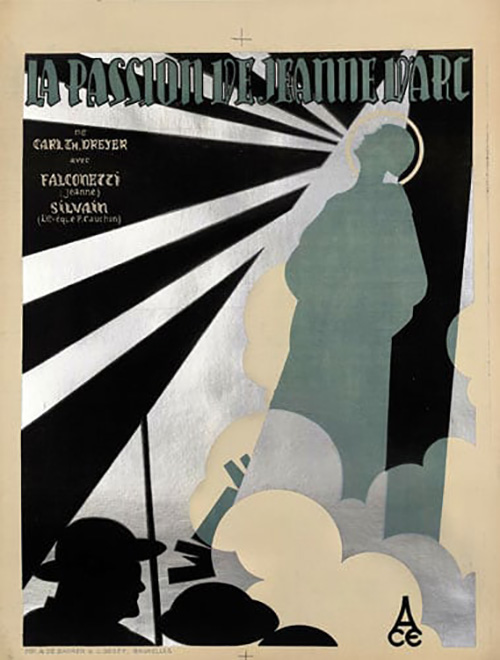
Courtesy of Drafthouse Films:

Through Joshua Oppenheimer’s work filming perpetrators of the Indonesian genocide, a family of survivors discovers how their son was murdered – and the identity of the men who murdered him.
The Look of Silence is Joshua Oppenheimer’s powerful companion piece to the Oscar®-nominated The Act Of Killing. Through Oppenheimer’s footage of perpetrators of the 1965 Indonesian genocide, a family of survivors discovers how their son was murdered, as well as the identities of the killers. The documentary focuses on the youngest son, an optometrist named Adi, who decides to break the suffocating spell of submission and terror by doing something unimaginable in a society where the murderers remain in power: he confronts the men who killed his brother and, while testing their eyesight, asks them to accept responsibility for their actions. This unprecedented film initiates and bears witness to the collapse of fifty years of silence.

Tidbits:

  • Venice Film Festival – 2014 – Winner: Best Euro-Mediterranean Film, Winner: FIPRESCI Prize, Winner: Golden Mouse, Winner: Grand Special Jury Prize & Winner: Human Rights Film Network Award
  • Berlin International Film Festival – 2015 – Winner: Peace Film Award
  • SXSW Film Festival – 2015 – Winner: Festival Favorites (Audience Award)
  • Academy Awards – 2016 – Nominee: Best Documentary, Feature
  • Independent Spirit Awards – 2016 – Winner: Best Documentary
  • Village Voice Film Poll – 2015 – Winner: Best Documentary

Director Notes

“The fundamental difference that people fail to take into account is that non-fiction filmmakers ultimately have undeserved inferiority complexes when only fiction filmmakers are described as “storytellers”, even though we are telling stories from real life. To say that is to somehow overlook what is really special about non-fiction, as we are watching real people and going through things that are changing their lives and I think there is something sacred about that material that is created.”

Courtesy of the film’s website:

The Act of Killing exposed the consequences for all of us when we build our everyday reality on terror and lies. The Look of Silence explores what it is like to be a survivor in such a reality. Making any film about survivors of genocide is to walk into a minefield of clichés, most of which serve to create a heroic (if not saintly) protagonist with whom we can identify, thereby offering the false reassurance that, in the moral catastrophe of atrocity, we are nothing like perpetrators. But presenting survivors as saintly in order to reassure ourselves that we are good is to use survivors to deceive ourselves. It is an insult to survivors’ experience, and does nothing to help us understand what it means to survive atrocity, what it means to live a life shattered by mass violence, and to be silenced by terror. To navigate this minefield of clichés, we have had to explore silence itself.

The result, The Look of Silence, is, I hope, a poem about a silence borne of terror – a poem about the necessity of breaking that silence, but also about the trauma that comes when silence is broken. Maybe the film is a monument to silence – a reminder that although we want to move on, look away and think of other things, nothing will make whole what has been broken. Nothing will wake the dead. We must stop, acknowledge the lives destroyed, strain to listen to the silence that follows.

– JOSHUA OPPENHEIMER

Photo by Heinrich-Böll-Stiftung

Filmography:

  • The Look of Silence (2014)
  • The Act of Killing (2012)
  • The Globalisation Tapes (2003)
  • The Entire History of the Louisiana Purchase (1998)

Links

Here is a curated selection of links shared on our Facebook page for additional insight/information:

  • 11/3/15 – “One recalls Claude Lanzmann’s approach in Shoah (1985), which eschewed archival footage of concentration camp horrors, allowing long shots of the grounds bearing little trace of their existence to resonate within both participants and viewers. Just as Lanzmann used that erasure to imply the unrepresentability of the crimes of the Holocaust, the silent looks and absences of Oppenheimer’s movie conjure disturbing images of what we don’t see and invite anxious meditations on the ugliest aspects of human nature.” Tony Pipolo, Artforumlink
  • 11/6/15 – “Like its predecessor, it’s a devastatingly beautiful film about the power of cinema, and its ability to testify to some aspect of human nature with a veracity and elegance that escapes other mediums. Every scene weighs on the audience. But Oppenheimer and Adi manage to locate a lightness as well that lessens the burden.” Lenika Cruz, The Atlanticlink
  • 11/6/15 – After having been selected for DOC NYC’s Oscar predicting short list a few weeks back, Joshua Oppenheimer’s The Look of Silence was nominated this week for Best Feature in the 31st annual International Documentary Association Awards! – link
  • 11/7/15 – “The film’s seeming gentleness is offered as a striking counterpoint to the urgency of its content and its very concrete import for Adi, whose manifest bravery is quite awe-inspiring.” Jonathan Romney, Film Commentlink
  • 11/8/15 – At Sight & Sound, filmmaker and film critic Robert Greene discusses two of the greatest doc filmmakers currently working: Joshua Oppenheimer & Adam Curtis – link
  • 11/10/15 – “Listening to Oppenheimer speak was, in its own way, nearly as overwhelming an experience as watching his films. He’s light-years ahead ahead of most of his fellow filmmakers, to say nothing of most people writing on the subject, in his understanding of the nature and purpose of nonfiction film, the inaccessibility of the historical past, and the effectiveness, or lack thereof, of conventional human-rights documentaries.” Sam Adams, indieWIRElink
  • 11/15/15 – Yesterday, Joshua Oppenheimer’s The Look of Silence screened as part of DOC NYC’s Oscar predicting Short List. Here’s the immensely insightful post-screening Q&A with the filmmaker – link
  • 11/19/15 – “Director Joshua Oppenheimer describes how his Oscar-nominated The Act of Killing led to a follow-up, and a sea change in Indonesian history.” David Ehrlich, Vanity Fairlink
  • 11/22/15 – “This is a portrait of the human body at degree zero, human politics at degree zero, human guilt at degree zero.” Joshua Oppenheimer on The Look of Silence, The Vergelink
  • 11/25/15 – Human Rights Watch is sponsoring a petition that would pressure the U.S. Senate to acknowledge the 1965-66 mass killings and support peace in Indonesia. Sign up at the link if you feel inclined. – link
  • 11/26/15 – “Among the docs, Joshua Oppenheimer’s sequel to The Act of Killing, The Look of Silence continues to be the one film that ALWAYS gets mentioned” Anne Thompson, indieWIRElink
  • 11/29/15 – “An incredible, jaw-dropping 2015 moment: The Look of Silence. What I appreciate more than anything in a given year are these moments when a filmmaker and reality seem to conspire to blow me away. Joshua Oppenheimer did plenty to knock our socks off with The Act of Killing, but in this follow-up film, he is able to transcend the medium in a more subtle way. In this story of the Indonesian genocide, when a perpetrator’s daughter turns to one of the victims and says that she recognizes him, it struck me to the core, recalling a moment in Flannery O’Connor’s A Good Man Is Hard to Find. It was, for me, a moment of ecstatic truth.” Tom Roston, POV Blog – link
  • 12/06/15 – Congrats to Cultivate Cinema Circle alum The Look of Silence on winning Best Documentary Feature of 2015 at the 31st Annual International Documentary Association Awards! – link
  • 12/06/15 – “A Plea to Moviegoers: See The Look of Silence for Documentary Filmmaking at Its Most Harrowing and Heroic” by Matthew Eng – link
  • 12/14/15 – The Online Film Critics Society, which Cultivate Cinema Circle programmers Jordan M. Smith and Jared Mobarak are both members of, have named Joshua Oppenheimer’s The Look of Silence the Best Documentary of 2015! – link
  • 12/26/15 – Nonfics lists Cultivate Cinema Circle alums The Look of Silence and Kurt Cobain: Montage of Heck among the year’s best documentaries! – link
  • 1/8/16 – Artvoice‘s Jordan Canahai has named his Top 10 films of 2015, including two Cultivate Cinema Circle alums among the ranks: HARD TO BE A GOD & THE LOOK OF SILENCE! – link
  • Local Media Coverage:
    11/18/15 – M. Faust review printed in The Publiclink
    11/19/15 – Jordan Canahai review printed in Artvoicelink
    11/20/15 – Christopher Schobert offers his thoughts on Buffalo.com – link
    11/24/15 – Jordan Canahai interviews Joshua Oppenheimer online at Artvoice‘s website – link