Alice in the Cities – November 5th, 2015

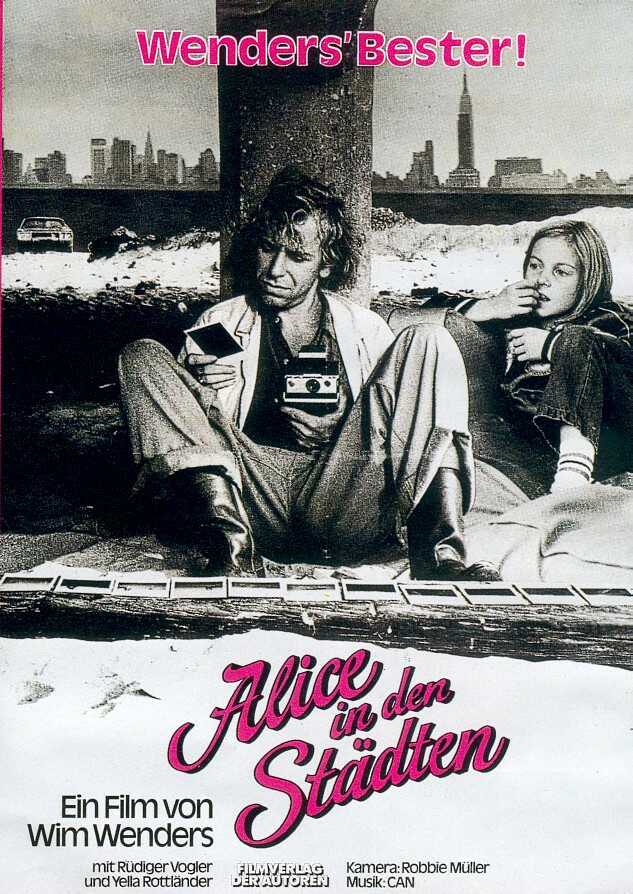
Alice in the Cities [1974]


Please join us for a one-night screening event of a restored and reframed print of Wim Wender’s Alice in den Städten (Alice in the Cities) [1974].

  • Screening Date: Thursday, November 5th, 2015 | 9:30pm
  • Venue: North Park Theatre
  • Specifications: 1974 / 112 minutes / German with English subtitles / Black & White
  • Director(s): Wim Wenders
  • Print: Supplied by Janus Films
  • Tickets: $9.50 at the door
  • Deal: Discounted drinks available after the screening at Més Que with your ticket

Event Sponsors:

Venue Information:

1428 Hertel Ave, Buffalo, NY 14216


Synopsis

Courtesy of Janus Films:

Technically, Alice in the Cities is Wenders’s fourth film, but he often refers to it as his first, because it was during this film that he discovered the genre of the road movie. (It would later become the first part of his road movie trilogy, along with Wrong Move and Kings of the Road.) It was also his first film to be shot partly in the U.S. and the first to feature his alter ego, Philip Winter (Rüdiger Vogler). Alice is often compared with Charlie Chaplin’s The Kid. In 1974, it won the German Critics Prize.

The German journalist Winter wants to write a story about America but is unable to accomplish anything but a series of Polaroids before disappointedly beginning his journey back home. At the same time, he reluctantly agrees to take little Alice (Yella Rottländer) with him, because her mother (Lisa Kreuzer)—whom he meets in New York on the day before his departure—has urgent business to take care of there. In Amsterdam, the mother then fails to appear as they agreed, so Winter and Alice set out to try to find Alice’s grandmother in the Ruhr region. During their search together, their initial mutual dislike gradually transforms into a heartfelt affection.

4K scan and 2K restoration, 2014 • 2K DCP

Tidbits:

  • Locarno International Film Festival – 1974
  • New York Film Festival – 1974

Restoration

For decades, some of Wenders’s films either remained unavailable because of unresolved rights clearances or could be seen only in poor quality due to damage to the materials. The foundation began to digitally restore them in 2014, and, as a result, the public is today once again able to experience these films in optimal quality. Restoring Wenders’s body of work represents one of the central missions and greatest challenges of the Wim Wenders Stiftung.

As a first step, the original film materials are brought together from various storage facilities and documented. The production documents are examined and analyzed with regard to the legal situation. In addition, an archiving concept with a classification scheme for the inventory and processing of both film and documentary materials is being developed. The restoration work itself consists of several stages: the evaluation of all source material, the scanning of the analog material, the retouching of individual frames from damaged film sequences by hand and the stabilization of individual frames, and the reframing and color correction of the image. The sound was already processed digitally back in 2002 by André Bendocchi-Alves. After completion of the restoration work, the source materials are then transferred to the German Federal Film Archive for proper long-term storage. It almost goes without saying that a change of medium from analog to digital will rarely pass unnoticed. For this reason, particular attention is paid to maintaining the visual “charm” of the originally analog film images with the idiosyncrasies of the film grain. Whereas the reprocessing of classic films is typically supervised and assessed by curators and archivists in order to make careful decisions for a restoration “in the sense of the director’s original vision,” the Wim Wenders Stiftung situation provides one special advantage: the director himself is involved in the restoration process, thus guaranteeing a processing of the films that is far from an outside interpretation.

The Wim Wenders Stiftung digitally restored eight films in the course of one year. Image processing was done by the company ARRI Film & TV under the supervision of Wim and Donata Wenders and was supported by grants from the German Federal Film Board (FFA) and the Centre national de la cinématographie (CNC). Further films were transferred to current state-of-the-art high-resolution digital formats in order to be able to show them in cinemas and on television. The foundation will continue to pursue the preservation of the cinematic work of Wenders and to thus make it accessible to the public on a permanent basis.

Alice in the Cities was shot on 16 mm black-and-white negative in the summer of 1973. For fifteen years, all copies in circulation worldwide were made from the original negative. By the time a 35 mm duplicate negative was finally made in 1988, the original material was damaged by countless scratches, vertical lines, and cracks.

The digital restoration of the film was done in 2014. For this purpose, the original negative was scanned in 4K resolution using the wet-gate method and retouched and color-corrected in 2K resolution. Individual sequences that were too heavily damaged on the original 16 mm negative were replaced with sections from the 35 mm duplicate negative. Although the film was shot in the 1:1.37 format commissioned by the German public broadcasting entity WDR, Wenders and his cameraman, Robby Müller, composed the shots for the widescreen 1:1.66 format. At the director’s request, Alice in the Cities was also screened in cinemas that way. With this digital restoration, the film is now finally framed in Wenders’s preferred format.


Director Bio

“Any movie that has that spirit and says things can be changed is worth making.”

Wim Wenders (born 1945) came to international prominence as one of the pioneers of the New German Cinema in the 1970s and is considered to be one of the most important figures in contemporary German film. In addition to his many prize-winning feature films, his work as a scriptwriter, director, producer, photographer, and author also encompasses an abundance of innovative documentary films, international photo exhibitions, and numerous monographs, film books, and prose collections. He lives and works in Berlin with his wife, Donata Wenders.

Wenders studied medicine and philosophy before moving to Paris in 1966 to study painting. Though ostensibly pursuing an apprenticeship in the studio of the graphic designer and engraver Johnny Friedlaender, he spent his afternoons and evenings in the Cinémathèque française. This “crash course in the history of film” would become the most important stage in his education, as Wenders soon began to think of film as an “extension of painting by other means.”

His career as a filmmaker began in 1967, when Wenders enrolled at the newly founded University of Television and Film Munich (HFF Munich). Parallel to his studies at the HFF, he also worked as a film critic from 1967 to 1970. At this point, he had already directed various short films. Upon graduating from the university in 1971, he, together with fifteen other directors and authors, founded the Filmverlag der Autoren, a distribution company for films by German auteurs, which organized the production, rights administration, and distribution of their own independent films.

After completing his debut feature out of film school, The Goalie’s Anxiety at the Penalty Kick (1971), Wenders turned to shooting his road movie trilogy—Alice in the Cities (1974), Wrong Move (1975), and Kings of the Road (1976)—in which the protagonists try to come to terms with their rootlessness in postwar Germany, among other things. His international breakthrough came with The American Friend (1977). Since then, Wenders has continued to work both in Europe and the United States, as well as in Latin America and Asia, and has been honored with numerous awards at festivals around the world, including the Golden Lion in Venice for The State of Things (1982); the Palme d’Or and the British Film Academy Award for Paris, Texas (1984); the Director’s Prize in Cannes for Wings of Desire (1987); and the Silver Bear for The Million Dollar Hotel (2000) at the Berlin International Film Festival. His documentary films Buena Vista Social Club (1999), Pina (2011), and The Salt of the Earth (2014) were all nominated for Oscars. During the 2015 Berlin International Film Festival, Wenders was presented with the Honorary Golden Bear for his lifetime achievement. His most recent feature film, Every Thing Will Be Fine, was shown in the official program of the Berlinale out of competition in 2015.

In the fall of 2012, together with his wife, Donata, Wenders established the Wim Wenders Stiftung in Düsseldorf. The establishment of the foundation was deeply rooted in the intention to create a legally binding framework to bring together the cinematic, photographic, artistic, and literary life’s work of Wenders in his native country and to make it permanently accessible to the public worldwide. At the same time, the nonprofit foundation model serves to ensure that Wenders’s whole body of work may belong only to itself as endowment capital, and that it thus remains beyond the reach of any form of private self-interest. All proceeds from the licensing business are used to finance the central purpose of the foundation: the promotion of the arts and culture through the restoration, dissemination, and preservation of Wenders’s work on the one hand, and through the support of young talents in the field of innovative narrative cinema on the other.

Photo by Donata Wenders, 2004

Filmography:

  • Submergence (2018)
  • Pope Francis: A Man of His Word (2018)
  • Every Thing Will Be Fine (2015)
  • The Salt of the Earth (2014)
  • Pina (2011)
  • Palermo Shooting (2009)
  • Invisibles (2007)
  • Chacun son cinema (2007)
  • Don’t Come Knocking (2005)
  • The Million Dollar Hotel (2000)
  • Buena Vista Social Club (1998)
  • A Trick of the Light (1996)
  • Lumiere Et Compagnie (1996)
  • Lisbon Story (1995)
  • Faraway, So Close (1993)
  • Until the End of the World (1991)
  • Notebook on Cities and Clothes (1989)
  • Wings of Desire (1987)
  • Tokyo-Ga (1985)
  • Room 666 (1984)
  • Paris, Texas (1984)
  • Hammett (1982)
  • The State of Things (1982)
  • Lightning Over Water (1980)
  • The American Friend (1977)
  • Kings of the Road (1976)
  • Wrong Move (1975)
  • Alice in the Cities (1974)
  • The Scarlet Letter (1973)
  • The Goalie’s Anxiety at the Penalty Kick (1971)
  • Summer in the City (1971)

Links

Here is a curated selection of links shared on our Facebook page for additional insight/information:

  • 10/23/15 – “We wrapped up our interview at 1pm. Afterwards, I walked across London for five hours in a daft tribute to Wenders. He’d told me that he didn’t know what a boardwalk was until he saw the one that he filmed in Alice. Places tell stories, he said. There’s a close link, as Herr Wenders knows better than any other filmmaker, between motion and emotion.” Mark Cousins, Prospect Magazinelink
  • 10/28/15 – “Where Alice in the Cities stands apart is in its delicate balance between an appreciation and criticism of the factors that have shaped Wenders as a filmmaker – neither Wenders nor Winter can entirely ignore the instinctive allure of a country that appeals so much to the imagination and yet is the source of such frustration for both director and character. As polemic as it is poetic, Alice … also represents a filmmaker at his artistic peak, drawing together the stylistic elements that would become his most recognisable without sacrificing the virility and enthusiasm that set his work apart.” Owen Armstrong, Vertigo Magazinelink
  • 11/2/15 – “For a film about national identity, Alice in the Cities is paradoxically fixated on disconnection from place. Philip Winter, the film’s key protagonist (Rüdiger Vogler, a Wim Wenders regular), is as much a foreigner in the United States and Amsterdam as he is in his own country. As he explores Germany’s Ruhr district with his 9-year-old companion (the eponymous Alice, played superbly by Yella Rottländer), it is as if Philip has carried America back with him; his homeland now replete with fast food, country music and Coca-Cola machines.” David Heslin, Senses of Cinemalink
  • 11/8/15 – Mr. Wenders on what inspired Alice in the Citieslink

Apur Sansar – October 22nd, 2015

Apur Sansar [1959]


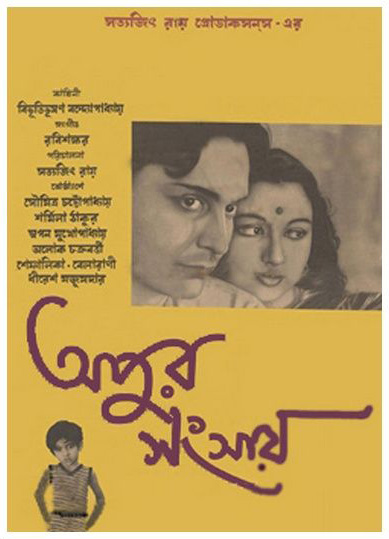
Please join us for a one-night screening event of the third film from Satyajit Ray’s famed Apu Trilogy, Apur Sansar (The World of Apu) [1959]. We are honored to also announce the return of “The New Cinephilia” author Girish Shambu to introduce the film.

  • Screening Date: Thursday, October 22nd, 2015 | 9:30pm
  • Venue: North Park Theatre
  • Specifications: 1959 / 105 minutes / Bengali with subtitles / Black & White
  • Director(s): Satyajit Ray
  • Print: Supplied by Janus Films
  • Tickets: $10.50 online; $9.50 at the door
  • Deal: Discounted drinks available after the screening at Més Que with your ticket

Event Sponsors:

Venue Information:
1428 Hertel Ave, Buffalo, NY 14216


Synopsis

Courtesy of Janus Films:

By the time Apur Sansar was released, Satyajit Ray had directed not only the first two Apu films but also the masterpiece The Music Room, and was well on his way to becoming a legend. This extraordinary final chapter brings our protagonist’s journey full circle. Apu is now in his early twenties, out of college, and hoping to live as a writer. Alongside his professional ambitions, the film charts his romantic awakening, which occurs as the result of a most unlikely turn of events, and his eventual, fraught fatherhood. Featuring soon to be Ray regulars Soumitra Chatterjee and Sharmila Tagore in star-making performances, and demonstrating Ray’s ever-more-impressive skills as a crafter of pure cinematic imagery, Apur Sansar is a breathtaking conclusion to this monumental trilogy.

Tidbits:

  • Locarno International Film Festival – 1968

Restoration

In 1992, the Academy of Motion Picture Arts and Sciences presented an honorary lifetime achievement Oscar to director Satyajit Ray. When sourcing material from Ray’s films for the Academy Awards ceremony, telecast producers were dismayed by the poor condition of the existing prints. The following year, after Ray’s death, a project was initiated to restore many of Ray’s films, including those in The Apu Trilogy.

In 1993, several of the filmmaker’s original negatives were shipped to Henderson’s Film Laboratories in London. In July, a massive nitrate fire at the lab spread to the film vaults, destroying more than twenty-five original negatives of important British classics—and burning several Ray films, including the original negatives of The Apu Trilogy. Any ashes, fragments, or film cans that could be identified as belonging to Ray’s films were sent to the Academy Film Archive, but the trilogy negatives were deemed unprintable—there were no technologies available at the time that were capable of fully restoring such badly damaged film elements.

When the Criterion Collection began working on this restoration with the Academy Film Archive in 2013, the negatives were in storage and hadn’t been seen in twenty years. Many portions were indeed burned to ash, and what remained was startlingly fragile, thanks to deterioration and the heat and contaminants the elements had been exposed to. Head and tail leaders were often missing from reels. Yet significant portions survived, from which high-quality images might be rendered.

No commercial laboratory would handle this material, so it was entrusted to L’Immagine Ritrovata in Bologna, one of the world’s premier restoration facilities. There, technicians successfully rehydrated the brittle film using a special solution (one part glycerol, one part acetone, three parts water). Scanning tests determined that pin-registered wet-gate scans yielded the best results. Technicians then set about physically repairing the elements. This meant almost a thousand hours of meticulous hand labor, which even included rebuilding the perforation holes on the sides of the film and removing melted tape and glue. Using fine-grain masters and duplicate negatives preserved by Janus Films, the Academy, the Harvard Film Archive, and the British Film Institute, the technicians found excellent replacements for the unusable or missing sections of the original negatives. In the end, 40 percent of Pather Panchali and over 60 percent of Aparajito were restored directly from the original negatives. The two surviving reels of Apur Sansar were too damaged to be used in the restoration, so all of that film was restored from a fine-grain master and a duplicate negative.

Over the course of nearly six months of steady work, the Criterion Collection restoration lab handled the digital restoration, including eliminating dirt, debris, warps, and cracks. Emphasis was placed on retaining the look and character of the original material, preferring when necessary to leave damage rather than overprocess digital images that might lose the grain and feel of film.

All in all, the restoration of The Apu Trilogy has been years in the making. The return of these films to theaters marks a triumph for the archivists and members of the preservation community who had the foresight and faith to protect these vital treasures of world cinema—even when all seemed lost.

New 4K restorations made by the Criterion Collection in collaboration with the Academy Film Archive at the Academy of Motion Picture Arts and Sciences


10 Apu Facts

1 Satyajit Ray worked a twenty-hour-a-day schedule to complete the editing of Pather Panchali in time for its premiere at New York’s Museum of Modern Art on May 3, 1955, in a print without subtitles. The New York opening of this restoration falls sixty years, almost to the day, after that premiere.

2 Pather Panchali was such a smash in New York that it played for eight months at the Fifth Avenue Playhouse in 1958.

3 Aparajito won the Golden Lion at the Venice Film Festival, making it the only sequel to have ever won the grand prize at one of the world’s three major festivals (Berlin, Cannes, and Venice).

4 Matt Groening, creator of The Simpsons, is a big fan of The Apu Trilogy, and he named the show’s convenience store owner Apu Nahasapeemapetilon after its protagonist.

5 Ray started out as a graphic designer and book illustrator, and his creations included woodcut art for a children’s edition of Bibhutibhusan Banerjee’s novel Pather Panchali. As a filmmaker, he designed all of his own publicity materials, and usually his opening credits.

6 In 1951, while Ray was trying to raise money for Pather Panchali, he drew thirtyone pages of storyboards for a documentary about Indian classical musician Ravi Shankar. The film was never made, though the storyboards have been preserved by the Satyajit Ray Society.

7 Cinematographer Subrata Mitra was only twenty-one years old when he began work on Pather Panchali, and had never handled a movie camera before.

8 Ray and Mitra pioneered the use of bounced light. For Aparajito, they had to build a studio set that would replicate the living conditions of Apu’s family in Varanasi (then known as Benares), a structure that had a central courtyard and a skylight opening at the top, and that was essentially without shadows. Mitra came up with the idea to stretch a sheet of cloth above the studio-built courtyard and bounce artificial light from below, creating more depth and natural-looking shadows in the courtyard space.

9 Chunibala Devi, who plays “Auntie” in Pather Panchali, was a stage actor at the turn of the century, worked in silent cinema, and then retired from entertainment. She was about eighty years old when Ray met her, and aside from being one of the few actors who received a small salary, she also required a daily dose of opium.

10 Apur Sansar was the first film Ray made with actors Soumitra Chatterjee and Sharmila Tagore, who would become major stars. Each went on to appear in many more Ray films.


Director Bio

“What is attempted in these films is of course a synthesis. But it can be seen by someone who has his feet in both cultures. Someone who will bring to bear on the films involvement and detachment in equal measure.”

Satyajit Ray was an only child, born in 1921 into a creative, intellectual family of Brahmos—members of a Christian-influenced Hindu movement—in Kolkata. His grandfather, Upendrakishore Ray, was a renowned writer, composer, and children’s magazine founder, and his father, Sukumar Ray, was a writer and illustrator, a household name for his nonsense verse. Satyajit had an unsurprising early facility with the arts, both musical and visual. His father died when he was not yet three, and he lived with his mother and an uncle in the southern part of Kolkata, where he taught himself to read Western classical music and discovered Hollywood movies.

After finishing college, beginning in 1940, Ray studied art for two and a half years in Santiniketan, at the university founded by the great Bengali intellectual, writer, and artist Rabindranath Tagore, who would become one of the most important influences in his life. Returning to Kolkata, Ray found work as a graphic artist at a British-run advertising agency and a Bengali-run publishing house, and cofounded the Calcutta Film Society, where he and other film lovers watched mostly European and Hollywood movies and engaged in lengthy addas (coffeehouse conversations) about what was missing from Indian cinema, which was still primarily a Bollywood landscape. While working full-time, Ray began writing screenplays on the side, for his own enjoyment and occasionally for pay, deepening his understanding of cinematic storytelling.

In 1949, Ray met the great French director Jean Renoir, who was location scouting in Kolkata for The River. When Renoir asked if he had a film idea of his own, Ray described the story of Pather Panchali, a novel by Bibhutibhusan Banerjee for which Ray had once designed woodcut illustrations and that struck him as being highly cinematic in nature. Renoir encouraged Ray’s love of film and his pursuit of the project.

In 1950, Ray and his wife, Bijoya, moved to England, where he would work at his advertising agency’s London office. During those six months, the couple saw ninety-nine films, including Vittorio De Sica’s recent neorealist masterpiece Bicycle Thieves. It was this film that had the strongest impact on Ray, as it led him to the discovery that one could make a film with nonprofessionals, on location, largely outdoors, and on a shoestring budget. In late 1950, on the boat back to Kolkata, he wrote a first treatment for Pather Panchali.

In 1955, after three years of shooting and editing that was intermittent due to a lack of financing, Ray completed his debut film, which, after legendary screenings in New York and Cannes, officially put him on the map during the golden age of art-house cinema; with Pather Panchali, Ray took his place alongside Ingmar Bergman, Federico Fellini, and Akira Kurosawa as one of the most important international filmmakers. He went on to close out the 1950s with a string of masterpieces, including the two films that rounded out The Apu Trilogy, Aparajito (1956) and Apur Sansar (1959), and The Music Room (1958).

Over the course of his thirty-six-year career, Ray would direct twenty-eight features. He also designed posters and composed musical scores for many of his own films. He won awards at the world’s major film festivals, including Cannes, Venice, and Berlin. In 1992, thanks to a campaign led by several Hollywood heavyweights, including Martin Scorsese and Francis Ford Coppola, the Academy of Motion Picture Arts and Sciences awarded him an honorary lifetime achievement Oscar, which he accepted from a hospital bed in Kolkata, where he had been admitted for a heart condition. Less than a month later, Ray died at the age of seventy. His work remains an inspiration to filmmakers around the world.

Filmography:

  • The Stranger (1991)
  • Shakha Proshaka (1990)
  • An Enemy of the People (1989)
  • The Home and the World (1984)
  • Sadgati (1982)
  • The Elephant God (1979)
  • The Chess Players (1977)
  • The Masses’ Music (1976)
  • The Middleman (1976)
  • Ashani Sanket (1973)
  • Simbaddha (1972)
  • The Adversary (1971)
  • Days and Nights in the Forest (1969)
  • The Big City (1967)
  • Kanchenjungha (1966)
  • The Coward (1965)
  • The Lonely Wife (1965)
  • Two Daughters (1963)
  • The Music Room (1963)
  • Devi (1962)
  • The Expedition (1962)
  • Three Daughters: Monihara (1961)
  • Three Daughters: The Postmaster (1961)
  • Three Daughters: Samapti (1961)
  • The World Of Apu (1959)
  • Aparajito (1956)
  • Pather Panchali (1955)

Links

Here is a curated selection of links shared on our Facebook page for additional insight/information:

  • 9/20/15 – “I watched The Apu Trilogy recently over a period of three nights, and found my thoughts returning to it during the days. It is about a time, place and culture far removed from our own, and yet it connects directly and deeply with our human feelings. It is like a prayer, affirming that this is what the cinema can be, no matter how far in our cynicism we may stray.” Roger Ebert, 2001 – link
  • 10/6/15 – “For with this beautiful picture, which completes the story of the Hindu lad we first met as a boy in Pather Panchali and saw grow into a raw young man in the succeeding Aparajito, an impressive capstone is put not only upon a touching human drama but also upon the development of a genuine artist’s skill. Mr. Ray, whose grasp of the cinema medium was uncertain in Pather Panchali, his first film, demonstrates in Apur Sansar that he is master of a complex craft and style.” Bosley Crowther, The New York Times, 1960 – link
  • 10/22/15 – “Unlike the popular cinema of his time, he did not paint his characters in extremes of black and white. Ray’s characters lived in an instantly recognisable middle ground. There are no heroes in his films; instead you have the brave heroism of ordinary individuals, battling with the demons of their day-to-day lives.” Sharmila Tagore, co-star of Apur Sansar, The Wirelink
  • 11/19/15 – Having Girish Shambu in attendance to introduce the Apu Trilogy at the North Park Theatre was an honor. Now you can read his new essay on the series over at The Criterion Collection – link
  • 11/23/15 – We stumbled upon this wonderful archive of classic Satyajit Ray posters & wanted to share! – link

Aparajito – September 24th, 2015

Aparajito [1956]


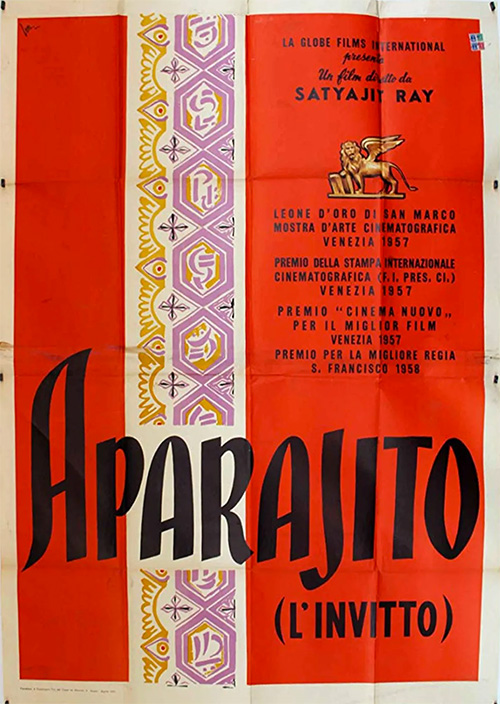
Please join us for a one-night screening event of the second film from Satyajit Ray’s famed Apu Trilogy, Aparajito (The Unvanquished) [1956]. We are honored to also announce the return of “The New Cinephilia” author Girish Shambu to introduce the film.

  • Screening Date: Thursday, September 24th, 2015 | 9:30pm
  • Venue: North Park Theatre
  • Specifications: 1956 / 110 minutes / Bengali with subtitles / Black & White
  • Director(s): Satyajit Ray
  • Print: Supplied by Janus Films
  • Tickets: $10.50 online; $9.50 at the door
  • Deal: Discounted drinks available after the screening at Més Que with your ticket

Summer 2015 Season Sponsor:

Event Sponsors:

Venue Information:

1428 Hertel Ave, Buffalo, NY 14216


Synopsis

Courtesy of Janus Films:

Satyajit Ray had not planned to make a sequel to Pather Panchali, but after the film’s international success, he decided to continue Apu’s narrative. Aparajito picks up where the first film leaves off, with Apu and his family having moved away from the country to live in the bustling holy city of Varanasi (then known as Benares). As Apu progresses from wide-eyed child to intellectually curious teenager, eventually studying in Kolkata, we witness his academic and moral education, as well as the growing complexity of his relationship with his mother. This tenderly expressive, often heart-wrenching film, which won three top prizes at the Venice Film Festival, including the Golden Lion, not only extends but also spiritually deepens the tale of Apu.

Tidbits:

  • Venice Film Festival – 1957 – Winner: FIPRESCI Prize, Winner: Golden Lion & Winner: Best Film (New Cinema Award)
  • Berlin International Film Festival – 1960 – Winner: Selznick Golden Laurel for Best Film
  • National Board of Review – 1959 – Winner: Top Foreign Films
  • BAFTA Awards – 1959 – Nominee: Best Film from any Source & Nominee: Best Foreign Actress

Restoration

In 1992, the Academy of Motion Picture Arts and Sciences presented an honorary lifetime achievement Oscar to director Satyajit Ray. When sourcing material from Ray’s films for the Academy Awards ceremony, telecast producers were dismayed by the poor condition of the existing prints. The following year, after Ray’s death, a project was initiated to restore many of Ray’s films, including those in The Apu Trilogy.

In 1993, several of the filmmaker’s original negatives were shipped to Henderson’s Film Laboratories in London. In July, a massive nitrate fire at the lab spread to the film vaults, destroying more than twenty-five original negatives of important British classics—and burning several Ray films, including the original negatives of The Apu Trilogy. Any ashes, fragments, or film cans that could be identified as belonging to Ray’s films were sent to the Academy Film Archive, but the trilogy negatives were deemed unprintable—there were no technologies available at the time that were capable of fully restoring such badly damaged film elements.

When the Criterion Collection began working on this restoration with the Academy Film Archive in 2013, the negatives were in storage and hadn’t been seen in twenty years. Many portions were indeed burned to ash, and what remained was startlingly fragile, thanks to deterioration and the heat and contaminants the elements had been exposed to. Head and tail leaders were often missing from reels. Yet significant portions survived, from which high-quality images might be rendered.

No commercial laboratory would handle this material, so it was entrusted to L’Immagine Ritrovata in Bologna, one of the world’s premier restoration facilities. There, technicians successfully rehydrated the brittle film using a special solution (one part glycerol, one part acetone, three parts water). Scanning tests determined that pin-registered wet-gate scans yielded the best results. Technicians then set about physically repairing the elements. This meant almost a thousand hours of meticulous hand labor, which even included rebuilding the perforation holes on the sides of the film and removing melted tape and glue. Using fine-grain masters and duplicate negatives preserved by Janus Films, the Academy, the Harvard Film Archive, and the British Film Institute, the technicians found excellent replacements for the unusable or missing sections of the original negatives. In the end, 40 percent of Pather Panchali and over 60 percent of Aparajito were restored directly from the original negatives. The two surviving reels of Apur Sansar were too damaged to be used in the restoration, so all of that film was restored from a fine-grain master and a duplicate negative.

Over the course of nearly six months of steady work, the Criterion Collection restoration lab handled the digital restoration, including eliminating dirt, debris, warps, and cracks. Emphasis was placed on retaining the look and character of the original material, preferring when necessary to leave damage rather than overprocess digital images that might lose the grain and feel of film.

All in all, the restoration of The Apu Trilogy has been years in the making. The return of these films to theaters marks a triumph for the archivists and members of the preservation community who had the foresight and faith to protect these vital treasures of world cinema—even when all seemed lost.

New 4K restorations made by the Criterion Collection in collaboration with the Academy Film Archive at the Academy of Motion Picture Arts and Sciences


10 Apu Facts

1 Satyajit Ray worked a twenty-hour-a-day schedule to complete the editing of Pather Panchali in time for its premiere at New York’s Museum of Modern Art on May 3, 1955, in a print without subtitles. The New York opening of this restoration falls sixty years, almost to the day, after that premiere.

2 Pather Panchali was such a smash in New York that it played for eight months at the Fifth Avenue Playhouse in 1958.

3 Aparajito won the Golden Lion at the Venice Film Festival, making it the only sequel to have ever won the grand prize at one of the world’s three major festivals (Berlin, Cannes, and Venice).

4 Matt Groening, creator of The Simpsons, is a big fan of The Apu Trilogy, and he named the show’s convenience store owner Apu Nahasapeemapetilon after its protagonist.

5 Ray started out as a graphic designer and book illustrator, and his creations included woodcut art for a children’s edition of Bibhutibhusan Banerjee’s novel Pather Panchali. As a filmmaker, he designed all of his own publicity materials, and usually his opening credits.

6 In 1951, while Ray was trying to raise money for Pather Panchali, he drew thirtyone pages of storyboards for a documentary about Indian classical musician Ravi Shankar. The film was never made, though the storyboards have been preserved by the Satyajit Ray Society.

7 Cinematographer Subrata Mitra was only twenty-one years old when he began work on Pather Panchali, and had never handled a movie camera before.

8 Ray and Mitra pioneered the use of bounced light. For Aparajito, they had to build a studio set that would replicate the living conditions of Apu’s family in Varanasi (then known as Benares), a structure that had a central courtyard and a skylight opening at the top, and that was essentially without shadows. Mitra came up with the idea to stretch a sheet of cloth above the studio-built courtyard and bounce artificial light from below, creating more depth and natural-looking shadows in the courtyard space.

9 Chunibala Devi, who plays “Auntie” in Pather Panchali, was a stage actor at the turn of the century, worked in silent cinema, and then retired from entertainment. She was about eighty years old when Ray met her, and aside from being one of the few actors who received a small salary, she also required a daily dose of opium.

10 Apur Sansar was the first film Ray made with actors Soumitra Chatterjee and Sharmila Tagore, who would become major stars. Each went on to appear in many more Ray films.


Director Bio

“What is attempted in these films is of course a synthesis. But it can be seen by someone who has his feet in both cultures. Someone who will bring to bear on the films involvement and detachment in equal measure.”

Satyajit Ray was an only child, born in 1921 into a creative, intellectual family of Brahmos—members of a Christian-influenced Hindu movement—in Kolkata. His grandfather, Upendrakishore Ray, was a renowned writer, composer, and children’s magazine founder, and his father, Sukumar Ray, was a writer and illustrator, a household name for his nonsense verse. Satyajit had an unsurprising early facility with the arts, both musical and visual. His father died when he was not yet three, and he lived with his mother and an uncle in the southern part of Kolkata, where he taught himself to read Western classical music and discovered Hollywood movies.

After finishing college, beginning in 1940, Ray studied art for two and a half years in Santiniketan, at the university founded by the great Bengali intellectual, writer, and artist Rabindranath Tagore, who would become one of the most important influences in his life. Returning to Kolkata, Ray found work as a graphic artist at a British-run advertising agency and a Bengali-run publishing house, and cofounded the Calcutta Film Society, where he and other film lovers watched mostly European and Hollywood movies and engaged in lengthy addas (coffeehouse conversations) about what was missing from Indian cinema, which was still primarily a Bollywood landscape. While working full-time, Ray began writing screenplays on the side, for his own enjoyment and occasionally for pay, deepening his understanding of cinematic storytelling.

In 1949, Ray met the great French director Jean Renoir, who was location scouting in Kolkata for The River. When Renoir asked if he had a film idea of his own, Ray described the story of Pather Panchali, a novel by Bibhutibhusan Banerjee for which Ray had once designed woodcut illustrations and that struck him as being highly cinematic in nature. Renoir encouraged Ray’s love of film and his pursuit of the project.

In 1950, Ray and his wife, Bijoya, moved to England, where he would work at his advertising agency’s London office. During those six months, the couple saw ninety-nine films, including Vittorio De Sica’s recent neorealist masterpiece Bicycle Thieves. It was this film that had the strongest impact on Ray, as it led him to the discovery that one could make a film with nonprofessionals, on location, largely outdoors, and on a shoestring budget. In late 1950, on the boat back to Kolkata, he wrote a first treatment for Pather Panchali.

In 1955, after three years of shooting and editing that was intermittent due to a lack of financing, Ray completed his debut film, which, after legendary screenings in New York and Cannes, officially put him on the map during the golden age of art-house cinema; with Pather Panchali, Ray took his place alongside Ingmar Bergman, Federico Fellini, and Akira Kurosawa as one of the most important international filmmakers. He went on to close out the 1950s with a string of masterpieces, including the two films that rounded out The Apu Trilogy, Aparajito (1956) and Apur Sansar (1959), and The Music Room (1958).

Over the course of his thirty-six-year career, Ray would direct twenty-eight features. He also designed posters and composed musical scores for many of his own films. He won awards at the world’s major film festivals, including Cannes, Venice, and Berlin. In 1992, thanks to a campaign led by several Hollywood heavyweights, including Martin Scorsese and Francis Ford Coppola, the Academy of Motion Picture Arts and Sciences awarded him an honorary lifetime achievement Oscar, which he accepted from a hospital bed in Kolkata, where he had been admitted for a heart condition. Less than a month later, Ray died at the age of seventy. His work remains an inspiration to filmmakers around the world.

Filmography:

  • The Stranger (1991)
  • Shakha Proshaka (1990)
  • An Enemy of the People (1989)
  • The Home and the World (1984)
  • Sadgati (1982)
  • The Elephant God (1979)
  • The Chess Players (1977)
  • The Masses’ Music (1976)
  • The Middleman (1976)
  • Ashani Sanket (1973)
  • Simbaddha (1972)
  • The Adversary (1971)
  • Days and Nights in the Forest (1969)
  • The Big City (1967)
  • Kanchenjungha (1966)
  • The Coward (1965)
  • The Lonely Wife (1965)
  • Two Daughters (1963)
  • The Music Room (1963)
  • Devi (1962)
  • The Expedition (1962)
  • Three Daughters: Monihara (1961)
  • Three Daughters: The Postmaster (1961)
  • Three Daughters: Samapti (1961)
  • The World Of Apu (1959)
  • Aparajito (1956)
  • Pather Panchali (1955)

Links

Here is a curated selection of links shared on our Facebook page for additional insight/information:

  • 9/19/15 – “Apu’s wonder at modern inventions and amenities like electricity, the printing press, and automobiles is like a great discovery. It is from such minute observations that a convincing picture of Apu’s transition to maturity and independence is built up in Aparajito. This application of details and the focus on human-relationship is an aspect prevalent in the films of Italian neo-realists like Vittorio De Sica, Roberto Rossellini, Federico Fellini and others. In Aparajito, Benares is seen through the eyes of the curious Apu — the narrow lanes, the sacred monkeys, the muscle builders, the boats on the river, the priests chanting their hymns, and the daily cleansing of bodies on the banks of the holy river Ganges. A parallel could be drawn between De Sica’s The Bicycle Thief where much of the city life and city activities could be viewed through the wandering Bruno’s eyes and Apu’s wonder-filled eyes on his arrival in Benares.” Abhijit Sen – link
  • 9/20/15 – “I watched The Apu Trilogy recently over a period of three nights, and found my thoughts returning to it during the days. It is about a time, place and culture far removed from our own, and yet it connects directly and deeply with our human feelings. It is like a prayer, affirming that this is what the cinema can be, no matter how far in our cynicism we may stray.” Roger Ebert, 2001 – link
  • 11/19/15 – Having Girish Shambu in attendance to introduce the Apu Trilogy at the North Park Theatre was an honor. Now you can read his new essay on the series over at The Criterion Collection – link
  • 11/23/15 – We stumbled upon this wonderful archive of classic Satyajit Ray posters & wanted to share! – link

Contempt – August 27th, 2015

Contempt [Le Mepris] [1963]


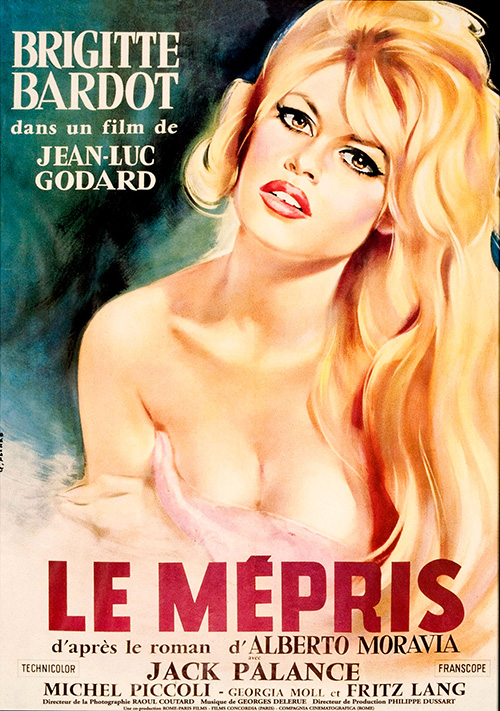
Please join us for a one-night special screening event of the 50th anniversary restoration of Jean-Luc Godard’s masterpiece Contempt [1963].

  • Screening Date: Thursday, August 27th, 2015 | 9:30pm
  • Venue: North Park Theatre
  • Specifications: 1963 / 102 minutes / French with subtitles / Color
  • Director(s): Jean-Luc Godard
  • Print: Supplied by Rialto Pictures
  • Tickets: $10.50 online; $9.50 at the door
  • Deal: Discounted drinks available after the screening at Més Que with your ticket

Summer 2015 Season Sponsor:

Event Sponsors:

Venue Information:

1428 Hertel Ave, Buffalo, NY 14216


Synopsis

Courtesy of The Criterion Collection:

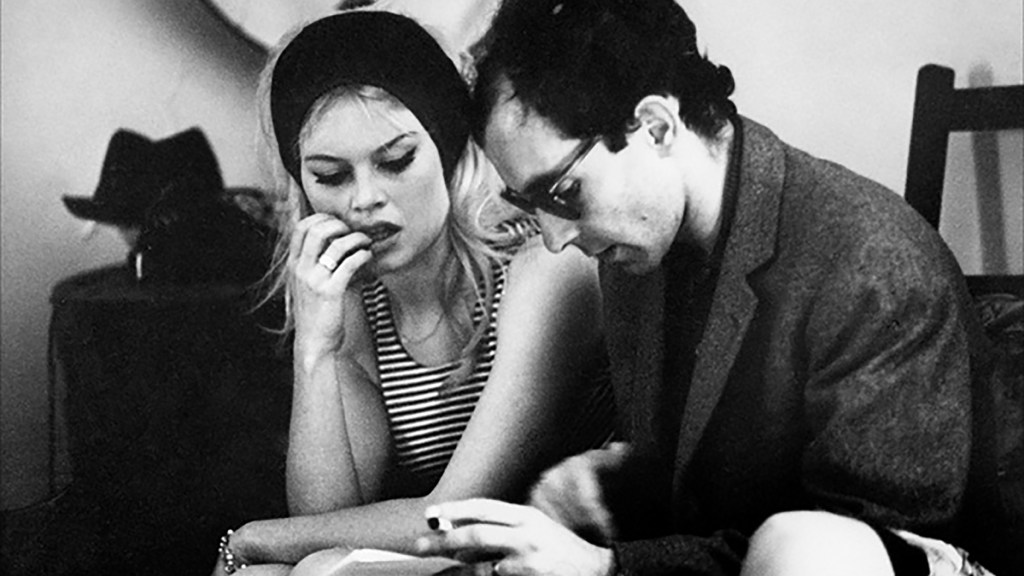
Jean-Luc Godard’s subversive foray into commercial filmmaking is a star-studded Cinemascope epic. Contempt [Le Mépris] stars Michel Piccoli as a screenwriter torn between the demands of a proud European director (played by legendary director Fritz Lang), a crude and arrogant American producer (Jack Palance), and his disillusioned wife, Camille (Brigitte Bardot), as he attempts to doctor the script for a new film version of The Odyssey. Contempt is a brilliant study of marital breakdown, artistic compromise, and the cinematic process based on Italian novel A Ghost at Noon by Alberto Moravia.

Tidbits:

  • Viennale – 2012

Director Bio

“A story should have a beginning, a middle, and an end… but not necessarily in that order.”

Courtesy of The Criterion Collection:

A pioneer of the French new wave, Jean-Luc Godard has had an incalculable effect on modern cinema that refuses to wane. Before directing, Godard was an ethnology student and a critic for Cahiers du cinéma, and his approach to filmmaking reflects his interest in how cinematic form intertwines with social reality. His groundbreaking debut feature, Breathless—his first and last mainstream success—is, of course, essential Godard: its strategy of merging high (Mozart) and low (American crime thrillers) culture has been mimicked by generations of filmmakers. As the sixties progressed, Godard’s output became increasingly radical, both aesthetically (A Woman Is a Woman, Contempt, Band of Outsiders) and politically (Masculin féminin, Pierrot le fou), until by 1968 he had forsworn commercial cinema altogether, forming a leftist filmmaking collective (the Dziga Vertov Group) and making such films as Tout va bien. Today Godard remains our greatest lyricist on historical trauma, religion, and the legacy of cinema.

Filmography:

  • Film Socialisme (2010)
  • Our Music (2004)
  • In Praise of Love (2001)
  • De L’Origine du XXIe Siecle (2000)
  • Histoire(s) du cinema (two chapters) (1997)
  • For Ever Mozart (1996)
  • Jlg/Jlg (1995)
  • 2 X 50 Years of French Cinema (1995)
  • The Children Play Russian (1994)
  • Helas Pour Moi (1993)
  • Contre l’oubli (1992)
  • Germany Year 90 Nine Zero (1991)
  • Nouvelle Vague (1990)
  • Aria (1988)
  • King Lear (1987)
  • Soigne ta droite (1987)
  • The Rise and Fall of a Small Film Company (1986)
  • Hail Mary (1985)
  • (“Je-Vous-Salue-Marie”) Détective (1985)
  • Passion (1983)
  • First Name: Carmen (1983)
  • Every Man For Himself (1980)
  • Ici et ailleurs (1976)
  • Comment ca va? (1975)
  • Numero Deux (1975)
  • A Letter to Jane (1972)
  • Tout va bien (1972)
  • One American Movie/1 A.M. (1971)
  • Vladimir et Rosa (1971)
  • Pravda (1970)
  • Le gai savoir (1970)
  • Wind From the East (1970)
  • Two or Three Things I Know About Her (1970)
  • Sympathy for the Devil (1 + 1) (1969)
  • The Oldest Profession “Anticipation” (1968)
  • Far From Vietnam (1968)
  • Six in Paris “Montparnasse-Levallois” (1968)
  • Pierrot le fou (1968)
  • La Chinoise (1968)
  • Weekend (1968)
  • Les carabiniers (1968)
  • Le petit soldat (1967)
  • Masculine Feminine (1966)
  • Band of Outsiders (1966)
  • Made in U.S.A. (1966)
  • Alphaville (1965)
  • The Married Woman (1965)
  • A Woman Is a Woman (1964)
  • Contempt (1964)
  • Reportage sur Orly (1964)
  • Seven Capital Sins “Laziness” (1963)
  • My Life To Live (1963)
  • Ro.Go.Pa.G. “Il Nouvo Mondo” (1963)
  • Breathless (1961)
  • Operation Concrete (1954)

Links

Here is a curated selection of links shared on our Facebook page for additional insight/information:

  • 8/11/15 – Prior to our screening of Jean-Luc Godard’s Contempt at North Park Theatre on August 27th, read Philip Lopate’s essay on the film from his excellent book of personal film criticism Totally, Tenderly, Tragically! – link
  • 8/26/15 – “Scorsese’s on record as labeling Contempt as one of the best movies about moviemaking going, and it is that. But though the film’s very first shot turns the/a camera literally on the audience, what’s really at stake here is not movies, but romantic love. Or, more specifically: the idea of romantic love as it has been mediated by the complicity between audiences and the motion picture industry.” Eric Hynes & Jeff Reichert, Reverse Shotlink
  • 1/19/16 – The BFI asked Steve McQueen (director of 12 Years a Slave) and Peter Strickland (director of The Duke of Burgundy) for their thoughts on CCC alum Le Mepris (Contempt)link

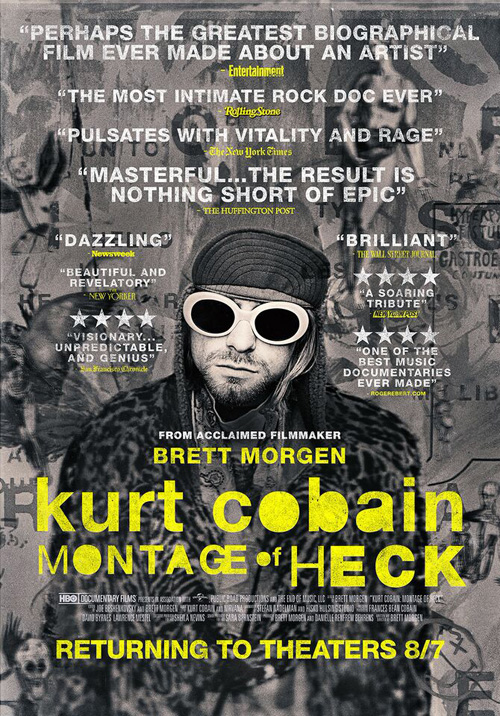
Cobain: Montage of Heck – August 20th, 2015

Cobain: Montage of Heck [2015]


Please join us for a one-night special screening event of Brett Morgan’s documentary Cobain: Montage of Heck [2015].

  • Screening Date: Thursday, August 20th, 2015 | 9:30pm
  • Venue: North Park Theatre
  • Specifications: 2015 / 145 minutes / English / Color
  • Director(s): Brett Morgen
  • Print: Supplied by HBO Documentaries
  • Tickets: $10.50 online; $9.50 at the door
  • Deal: Discounted drinks available after the screening at Més Que with your ticket

Summer 2015 Season Sponsor:

Event Sponsors:

Venue Information:

1428 Hertel Ave, Buffalo, NY 14216


Synopsis

Courtesy of HBO Documentaries:

Kurt Cobain, legendary lead singer, guitarist and songwriter of Nirvana, “the flagship band of Generation X,” remains an object of reverence and fascination for music fans around the world. His story is told for the first time in KURT COBAIN: MONTAGE OF HECK, a fully authorized feature documentary co-produced by HBO Documentary Films and Universal Pictures International Entertainment Content Group.

Brett Morgen, the Oscar®-nominated filmmaker behind such acclaimed documentaries as the HBO presentations “Crossfire Hurricane,” which celebrated the 50th anniversary of the Rolling Stones, and “The Kid Stays in the Picture,” is writer, director and producer of KURT COBAIN: MONTAGE OF HECK. Visual artist Frances Bean Cobain, Cobain’s daughter, is executive producer.

KURT COBAIN: MONTAGE OF HECK explores the indelible record of a life lived on the fine edge between madness and genius, painting a searing and unforgettable portrait of the iconic musician as it mirrors his quicksilver mind. Using Cobain’s own words and images, this intimate look at an elusive and conflicted artist marks the first documentary to be made with the cooperation of his family.

Morgen weaves together moving first-person testimony from Cobain’s mother and sister; his widow, Courtney Love; former girlfriend Tracy Marander; ex-bandmate Krist Novoselic and others with Cobain’s own words, providing an unflinching tribute to a contentious and contradictory talent, who is still revered by millions around the world 20 years after his tragic death.

Given unprecedented access to Cobain’s personal and family archives by the late rocker’s estate, Morgen uncovered a wealth of new material that documents the emotional rollercoaster of his personal life and celebrates his uncompromising creative spirit, including the inspiration for the film’s title, a circa-1988 “sound collage” he titled “Montage of Heck.” Recorded by Cobain on a four-track cassette recorder, it’s a free-form mash-up of song bites, manipulated radio recordings, elements of demos and disparate sounds created or recorded by Cobain.

Using Cobain’s artwork, photography, journals and family photographs as inspiration, the filmmakers have produced original animation to illustrate important moments in his life. Also featured are dozens of Nirvana songs and performances, as well as previously unheard Cobain originals.

“I’m extremely grateful to Courtney Love and Frances Bean Cobain for granting me unfettered access to Kurt’s possessions,” says Morgen. “There were over 200 hours of unreleased music and audio, a vast array of art projects, countless hours of home movies and over 4,000 pages of writings, which together provided a new perspective on an influential and prolific artist who rarely revealed himself to the media.”

In 1991, Seattle-based rockers Nirvana released their breakout hit, “Smells Like Teen Spirit,” taking the music world by storm with a sound that came to represent the youth of the decade. Kurt Cobain became one of the dominant voices of the era, producing songs that were an unlikely combination of nihilism and jubilation. In April 1994, Nirvana fans around the world were devastated by the news of Cobain’s suicide at age 27.

Eight years in the making, KURT COBAIN: MONTAGE OF HECK chronicles the life of the legendary musician through a lifetime’s worth of work. As a child in rural Aberdeen, Wash., Cobain was clearly gifted, as well as hypersensitive, hyperactive and relentlessly perfectionistic. With seemingly boundless creative drive, he began writing, drawing and making music at an early age.

Idealized by his mother and belittled by his father, Cobain discovered punk rock as a troubled teen. “A friend of mine… made me a couple of compilation tapes,” he remembers in an audiotaped interview. “I was completely blown away. They expressed the way I felt socially and politically. It was the anger that I felt, the alienation. And I realized that this is what I’ve always wanted to do.”

Cobain dropped out of high school shortly before graduation and worked as a janitor while trying to find an outlet for his artistic energy and emotional turmoil. “He was searching for whatever made him feel like he wasn’t alone and that he wasn’t so different,” remembers his sister, Kim Cobain.

By the time Cobain, bass player Krist Novoselic and drummer Dave Grohl were leading the northwest rock circuit, the seeds of his destruction had already taken root. Long prone to depression, Cobain began experimenting with heroin and was soon addicted. As his fame grew, so did his appetite for drugs and his self-destructive behavior.

“It’s a superficial label to put on a band that they’re going to become the next big thing without us really wanting to do it,” Cobain told a reporter at the time. “We’re prepared to destroy our careers if that happens.”
Cobain’s marriage to controversial fellow musician Courtney Love followed. Coming from a broken home and blended family, Cobain’s lifelong dream was to create the family he felt he missed out on throughout his difficult childhood. The pair made an attempt at domesticity after the birth of their only child, Frances Bean, but drama followed them everywhere they went.

Throughout his life, Cobain continued creating almost compulsively, producing work both poetic and disturbing, often manifestations of his violent dreams and fantasies. He was, in his mother’s words, on a collision course with the world.

“You see his art,” says Novoselic. “A lot of those messages are as plain as day.”

Finally, tormented by his addiction, his inexplicable but excruciating physical ailments and his own unquiet mind, Cobain was unable to escape the troubles that had haunted him since childhood, and took his own life.

KURT COBAIN: MONTAGE OF HECK had its world premiere at the 2015 Sundance Film Festival.

HBO Documentary Films and Universal Pictures International Entertainment Content Group in association with Public Road productions and The End of Music present KURT COBAIN: MONTAGE OF HECK. A film by Brett Morgen. Written and directed by Brett Morgen; produced by Brett Morgen and Danielle Renfrew Behrens; executive produced by Frances Bean Cobain, Larry Mestel, David Byrnes; co-executive producer, Dave Morrison; edited by Joe Beshenkovsky and Brett Morgen; sound design by Cameron Frankley and Kurt Cobain. For HBO: senior producer, Sara Bernstein; executive producer, Sheila Nevins.

Tidbits:

  • Indiewire Critics’ Poll – 2015 – Nominee: Best Documentary
  • Writers Guild of America – 2016 – Nominee: Best Documentary Screenplay (Screen)
  • International Documentary Association – 2015 – Winner: Best Editing (Creative Recognition Award)

Director Bio

Dubbed the “mad scientist” of documentary film, Brett Morgen has been writing, directing, and producing groundbreaking documentary films for the past fifteen years.

Morgen received a BA in Mythology and American History at Hampshire College in 1992 and an MFA in film from NYU in 1999. His NYU thesis film, On the Ropes (1999), premiered at the 1999 Sundance Film Festival, where it received the Special Jury award. The film won several awards and honors, including the 1999 DGA Award for Outstanding Directorial Achievement in Documentary, the 1999 IDA Award for Best Documentary, and an Academy Award nomination for Best Documentary.

In 2002, Focus Features released Morgen’s second movie, The Kid Stays In the Picture, which he adapted from Robert Evan’s memoirs of the same name. The film premiered at the 2002 Sundance Film Festival, and was an official selection at the 2002 Cannes Film Festival. The New York Times called the film “one of the funniest films of the year” and it was named one of the best films of the year by over fifty publications, including Entertainment Weekly. It was also named Best Documentary of 2002 by the Boston, Washington DC, and Seattle Film Critics.

In 2007, Morgen wrote, produced, and directed Chicago 10, one of the first feature-length animated documentary films. Selected as the Opening Night film of the 2007 Sundance Film Festival, Chicago 10 was released theatrically by Roadhouse Attractions. The film was the recipient of several awards and nominations, among them nominations for the Emmy, WGA, and ACE Awards.

That same year, Morgen created and served as Executive Producer on the award-winning series Nimrod Nation, an eight-part television documentary that had its first public screening at the 2007 Sundance Film Festival. Nimrod Nation was named one of the Best TV series of the year by The Los Angeles Times, and in 2008, the series was awarded the Peabody Award for its honest and unflinching portrait of small-town America.

In 2010, Morgen directed June 17, 1994 as part of ESPN’s acclaimed 30 for 30 series. Morgen’s film, which examined the infamous OJ Simpson Bronco chase, was recently named by Rolling Stone as the single best film released in the 30 for 30 series. The film received a Peabody Award and several Emmy nominations, including a nomination for Best Documentary.

In 2012, Morgen wrote and directed the critically acclaimed Rolling Stones documentary, Crossfire Hurricane. The film, which has been screened in nearly every country around the world, was the recipient of four Primetime Emmy Nominations, including Best Documentary.

In 2015, Universal Pictures International will be bringing Morgen’s latest film, Kurt Cobain: Montage of Heck, to cinemas around the world. Following its global release, the film will be broadcast on HBO in the United States. Morgen has been developing the movie for eight years and is serving as the film’s writer, director, producer, and editor.

In addition to his documentary work, Morgen has been directing commercials at Anonymous Content since 2000, where he has directed over 200 spots for some of the biggest brands in the world.

Filmography:

  • Jane (2017)
  • Cobain: Montage of Heck (2015)
  • Crossfire Hurricane (2012)
  • Truth in Motion: The US Ski Team’s Road to Vancouver (2010) (TV Movie)
  • Chicago 10 (2007)
  • The Sweet Science (2003) (TV Movie)
  • The Kid Stays in the Picture (2002)
  • On the Ropes (1999)
  • Ollie’s Army (1996)
  • Too Far from Norm (1987) (Short)

Links

Here is a curated selection of links shared on our Facebook page for additional insight/information:

  • 8/7/15 – “Watching Montage of Heck feels like being a teen-ager in the eighties or nineties: making mixtapes, making weird collages, scrawling dreams in a spiral notebook, going to shows where bands play in front of projections of, say, slaughterhouse footage. When paired with Cobain’s music, the effect can be thrilling, and a poignant reflection on time.” Sarah Larson, The New Yorkerlink
  • 8/7/15 – “The idea was not to tear him down, nor was it to put him on a pedestal. It was just simply to look him in the eye.” director Brett Morgen. Check out this wonderful interview with the filmmaker by NPR! – link
  • 8/11/15 – “The definitive Cobain documentary. There is nowhere else to go from here.” Justin Gerber, Consequence of Soundlink
  • 8/14/15 – “The fact that his concerns were so ordinary just makes his trajectory all the more extraordinary.” Spencer Kornhaber, The Atlanticlink
  • 8/15/15 – Following our screening of Cobain: Montage of Heck this Thursday at North Park Theatre, listen to this 45 minute conversation with director Brett Morgen on The Close-up from Film Society of Lincoln Center. – link
  • 8/18/15 – “The problem with most biopics is that they try to hit all the beats you see in Wikipedia, you can’t cover everything. That’s what books are for. I think my films are documentaries in the sense that they arrive at a truth. But the word ‘document’ is actually antithetical to art and cinema.” director Brett Morgen, The New York Timeslink
  • 8/20/15 – “Don’t miss your chance to catch one of 2015′s best films.” buffaBLOGlink
  • 12/26/15 – Nonfics lists Cultivate Cinema Circle alums The Look of Silence and Kurt Cobain: Montage of Heck among the year’s best documentaries! – link

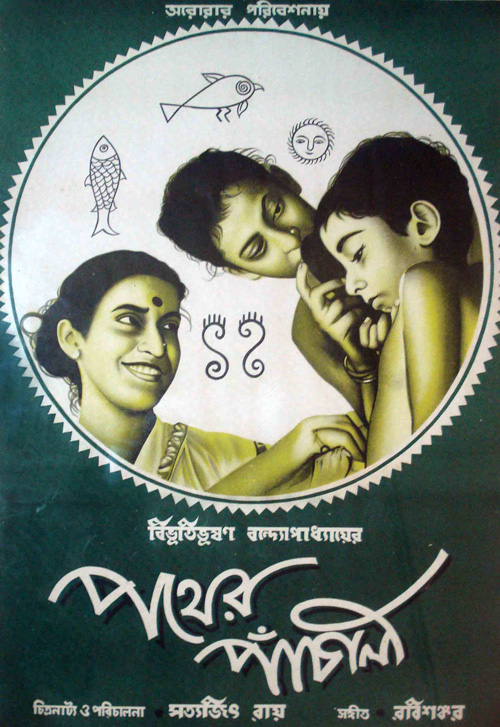
Pather Panchali – June 18th, 2015

Pather Panchali [1955]


Please join us for a one-night screening event of the first film from Satyajit Ray’s famed Apu Trilogy, Pather Panchali (Song of the Little Road) [1955]. We are honored to also have the author of “The New Cinephilia” Girish Shambu in attendance to introduce the film.

  • Screening Date: Thursday, June 18th, 2015 | 9:30pm
  • Venue: North Park Theatre
  • Specifications: 1955 / 125 minutes / Bengali with subtitles / Black & White
  • Director(s): Satyajit Ray
  • Print: Supplied by Janus Films
  • Tickets: $10.50 online; $9.50 at the door
  • Deal: Discounted drinks available after the screening at Més Que with your ticket

Summer 2015 Season Sponsor:

Event Sponsors:

Venue Information:

1428 Hertel Ave, Buffalo, NY 14216


Synopsis
courtesy of Janus Films:

The release in 1955 of Satyajit Ray’s debut, Pather Panchali, introduced to the world an eloquent and important new cinematic voice. A depiction of rural Bengali life in a style inspired by Italian neorealism, this naturalistic but poetic evocation of a number of years in the life of a family introduces us to both little Apu and, just as essentially, the women who will help shape him: his independent older sister, Durga; his harried mother, Sarbajaya, who, with her husband often away, must hold the family together; and his kindly and mischievous elderly “auntie,“ Indir—vivid, multifaceted characters all. With resplendent photography informed by its young protagonist’s perpetual sense of discovery, the Cannes-awarded Pather Panchali is an immersive cinematic experience and a film of elemental power.

Tidbits:

  • Cannes Film Festival – 1956 – Winner: Best Human Document 1956 | Special Mention: OCIC Award 1995 | Directors’ Fortnight
  • Berlin International Film Festival – 1957 – Winner: Selznick Golden Laurel for Best Film
  • National Board of Review – 1958 – Winner: Best Foreign Film | Winner: Top Foreign Films
  • New York Film Festival – 1959 – Winner: Best Foreign Film
  • Vancouver International Film Festival – 1958 – Winner: Best Film

Restoration

In 1992, the Academy of Motion Picture Arts and Sciences presented an honorary lifetime achievement Oscar to director Satyajit Ray. When sourcing material from Ray’s films for the Academy Awards ceremony, telecast producers were dismayed by the poor condition of the existing prints. The following year, after Ray’s death, a project was initiated to restore many of Ray’s films, including those in The Apu Trilogy.

In 1993, several of the filmmaker’s original negatives were shipped to Henderson’s Film Laboratories in London. In July, a massive nitrate fire at the lab spread to the film vaults, destroying more than twenty-five original negatives of important British classics—and burning several Ray films, including the original negatives of The Apu Trilogy. Any ashes, fragments, or film cans that could be identified as belonging to Ray’s films were sent to the Academy Film Archive, but the trilogy negatives were deemed unprintable—there were no technologies available at the time that were capable of fully restoring such badly damaged film elements.

When the Criterion Collection began working on this restoration with the Academy Film Archive in 2013, the negatives were in storage and hadn’t been seen in twenty years. Many portions were indeed burned to ash, and what remained was startlingly fragile, thanks to deterioration and the heat and contaminants the elements had been exposed to. Head and tail leaders were often missing from reels. Yet significant portions survived, from which high-quality images might be rendered.

No commercial laboratory would handle this material, so it was entrusted to L’Immagine Ritrovata in Bologna, one of the world’s premier restoration facilities. There, technicians successfully rehydrated the brittle film using a special solution (one part glycerol, one part acetone, three parts water). Scanning tests determined that pin-registered wet-gate scans yielded the best results. Technicians then set about physically repairing the elements. This meant almost a thousand hours of meticulous hand labor, which even included rebuilding the perforation holes on the sides of the film and removing melted tape and glue. Using fine-grain masters and duplicate negatives preserved by Janus Films, the Academy, the Harvard Film Archive, and the British Film Institute, the technicians found excellent replacements for the unusable or missing sections of the original negatives. In the end, 40 percent of Pather Panchali and over 60 percent of Aparajito were restored directly from the original negatives. The two surviving reels of Apur Sansar were too damaged to be used in the restoration, so all of that film was restored from a fine-grain master and a duplicate negative.

Over the course of nearly six months of steady work, the Criterion Collection restoration lab handled the digital restoration, including eliminating dirt, debris, warps, and cracks. Emphasis was placed on retaining the look and character of the original material, preferring when necessary to leave damage rather than overprocess digital images that might lose the grain and feel of film.

All in all, the restoration of The Apu Trilogy has been years in the making. The return of these films to theaters marks a triumph for the archivists and members of the preservation community who had the foresight and faith to protect these vital treasures of world cinema—even when all seemed lost.

New 4K restorations made by the Criterion Collection in collaboration with the Academy Film Archive at the Academy of Motion Picture Arts and Sciences


10 Apu Facts

1 Satyajit Ray worked a twenty-hour-a-day schedule to complete the editing of Pather Panchali in time for its premiere at New York’s Museum of Modern Art on May 3, 1955, in a print without subtitles. The New York opening of this restoration falls sixty years, almost to the day, after that premiere.

2 Pather Panchali was such a smash in New York that it played for eight months at the Fifth Avenue Playhouse in 1958.

3 Aparajito won the Golden Lion at the Venice Film Festival, making it the only sequel to have ever won the grand prize at one of the world’s three major festivals (Berlin, Cannes, and Venice).

4 Matt Groening, creator of The Simpsons, is a big fan of The Apu Trilogy, and he named the show’s convenience store owner Apu Nahasapeemapetilon after its protagonist.

5 Ray started out as a graphic designer and book illustrator, and his creations included woodcut art for a children’s edition of Bibhutibhusan Banerjee’s novel Pather Panchali. As a filmmaker, he designed all of his own publicity materials, and usually his opening credits.

6 In 1951, while Ray was trying to raise money for Pather Panchali, he drew thirtyone pages of storyboards for a documentary about Indian classical musician Ravi Shankar. The film was never made, though the storyboards have been preserved by the Satyajit Ray Society.

7 Cinematographer Subrata Mitra was only twenty-one years old when he began work on Pather Panchali, and had never handled a movie camera before.

8 Ray and Mitra pioneered the use of bounced light. For Aparajito, they had to build a studio set that would replicate the living conditions of Apu’s family in Varanasi (then known as Benares), a structure that had a central courtyard and a skylight opening at the top, and that was essentially without shadows. Mitra came up with the idea to stretch a sheet of cloth above the studio-built courtyard and bounce artificial light from below, creating more depth and natural-looking shadows in the courtyard space.

9 Chunibala Devi, who plays “Auntie” in Pather Panchali, was a stage actor at the turn of the century, worked in silent cinema, and then retired from entertainment. She was about eighty years old when Ray met her, and aside from being one of the few actors who received a small salary, she also required a daily dose of opium.

10 Apur Sansar was the first film Ray made with actors Soumitra Chatterjee and Sharmila Tagore, who would become major stars. Each went on to appear in many more Ray films.


Director Bio

“What is attempted in these films is of course a synthesis. But it can be seen by someone who has his feet in both cultures. Someone who will bring to bear on the films involvement and detachment in equal measure.”

Satyajit Ray was an only child, born in 1921 into a creative, intellectual family of Brahmos—members of a Christian-influenced Hindu movement—in Kolkata. His grandfather, Upendrakishore Ray, was a renowned writer, composer, and children’s magazine founder, and his father, Sukumar Ray, was a writer and illustrator, a household name for his nonsense verse. Satyajit had an unsurprising early facility with the arts, both musical and visual. His father died when he was not yet three, and he lived with his mother and an uncle in the southern part of Kolkata, where he taught himself to read Western classical music and discovered Hollywood movies.

After finishing college, beginning in 1940, Ray studied art for two and a half years in Santiniketan, at the university founded by the great Bengali intellectual, writer, and artist Rabindranath Tagore, who would become one of the most important influences in his life. Returning to Kolkata, Ray found work as a graphic artist at a British-run advertising agency and a Bengali-run publishing house, and cofounded the Calcutta Film Society, where he and other film lovers watched mostly European and Hollywood movies and engaged in lengthy addas (coffeehouse conversations) about what was missing from Indian cinema, which was still primarily a Bollywood landscape. While working full-time, Ray began writing screenplays on the side, for his own enjoyment and occasionally for pay, deepening his understanding of cinematic storytelling.

In 1949, Ray met the great French director Jean Renoir, who was location scouting in Kolkata for The River. When Renoir asked if he had a film idea of his own, Ray described the story of Pather Panchali, a novel by Bibhutibhusan Banerjee for which Ray had once designed woodcut illustrations and that struck him as being highly cinematic in nature. Renoir encouraged Ray’s love of film and his pursuit of the project.

In 1950, Ray and his wife, Bijoya, moved to England, where he would work at his advertising agency’s London office. During those six months, the couple saw ninety-nine films, including Vittorio De Sica’s recent neorealist masterpiece Bicycle Thieves. It was this film that had the strongest impact on Ray, as it led him to the discovery that one could make a film with nonprofessionals, on location, largely outdoors, and on a shoestring budget. In late 1950, on the boat back to Kolkata, he wrote a first treatment for Pather Panchali.

In 1955, after three years of shooting and editing that was intermittent due to a lack of financing, Ray completed his debut film, which, after legendary screenings in New York and Cannes, officially put him on the map during the golden age of art-house cinema; with Pather Panchali, Ray took his place alongside Ingmar Bergman, Federico Fellini, and Akira Kurosawa as one of the most important international filmmakers. He went on to close out the 1950s with a string of masterpieces, including the two films that rounded out The Apu Trilogy, Aparajito (1956) and Apur Sansar (1959), and The Music Room (1958).

Over the course of his thirty-six-year career, Ray would direct twenty-eight features. He also designed posters and composed musical scores for many of his own films. He won awards at the world’s major film festivals, including Cannes, Venice, and Berlin. In 1992, thanks to a campaign led by several Hollywood heavyweights, including Martin Scorsese and Francis Ford Coppola, the Academy of Motion Picture Arts and Sciences awarded him an honorary lifetime achievement Oscar, which he accepted from a hospital bed in Kolkata, where he had been admitted for a heart condition. Less than a month later, Ray died at the age of seventy. His work remains an inspiration to filmmakers around the world.

Filmography:

  • The Stranger (1991)
  • Shakha Proshaka (1990)
  • An Enemy of the People (1989)
  • The Home and the World (1984)
  • Sadgati (1982)
  • The Elephant God (1979)
  • The Chess Players (1977)
  • The Masses’ Music (1976)
  • The Middleman (1976)
  • Ashani Sanket (1973)
  • Simbaddha (1972)
  • The Adversary (1971)
  • Days and Nights in the Forest (1969)
  • The Big City (1967)
  • Kanchenjungha (1966)
  • The Coward (1965)
  • The Lonely Wife (1965)
  • Two Daughters (1963)
  • The Music Room (1963)
  • Devi (1962)
  • The Expedition (1962)
  • Three Daughters: Monihara (1961)
  • Three Daughters: The Postmaster (1961)
  • Three Daughters: Samapti (1961)
  • The World Of Apu (1959)
  • Aparajito (1956)
  • Pather Panchali (1955)

Links

Here is a curated selection of links shared on our Facebook page for additional insight/information:

  • 5/31/15 – How film restorers brought The Apu Trilogy back to life via A.V. Clublink
  • 6/1/15 – Bilal Qureshi speaks about Satyajit Ray’s Pather Panchali, the Apu Trilogy and the incredible story behind its new restoration on NPR All Things Considered! – link
  • 6/8/15 – I thought I’d share Richard Brody’s wonderful chronicling of the miraculous The Apu Trilogy restoration from The New Yorker! – link
  • 6/9/15 – “To live without seeing the films of the Indian director Satyajit Ray, said Akira Kurosawa in 1975, ‘means existing in the world without seeing the sun or the moon,’…In that same 1975 speech, Kurosawa marveled at the plenitude of the cinematic minicosmos Ray created in The Apu Trilogy: ‘People are born, live out their lives, and accept their deaths.’ Don’t accept yours until you’ve seen these sublime restorations of the Apu movies on the big screen.” – link
  • 6/15/15 – In 1993, a nitrate explosion in a London film lab severely damaged The Apu Trilogy‘s original negatives. Thursday night’s PRISTINE new restoration of Pather Panchali pulls largely from these original negatives, treated and miraculously restored by The Criterion Collection. – link
  • 6/16/15 – Published just last week: “Ray, who received a lifetime achievement Oscar soon before he died in 1992, never enjoyed great commercial success. But he remains incredibly relevant. Martin Scorsese has said Ray’s influence on him was “incalculable.” In a speech at the Smithsonian in 2002, Mr. Scorsese said that watching the first movie of the trilogy, Pather Panchali, which is set in a small Bengali village, helped him interpret the Lower East Side, where he grew up and which he described as a little Italian village.” Vikas Bajaj, The New York Timeslink
  • 6/17/15 – “One of the most important works of world cinema…” Jordan Hoffman, The Guardianlink
  • 6/18/15 – “I love his movies…His (Ray’s) first films are quiet and gentle and very humane” Wes Anderson via The A.V. Clublink
  • 9/20/15 – “I watched The Apu Trilogy recently over a period of three nights, and found my thoughts returning to it during the days. It is about a time, place and culture far removed from our own, and yet it connects directly and deeply with our human feelings. It is like a prayer, affirming that this is what the cinema can be, no matter how far in our cynicism we may stray.” Roger Ebert, 2001 – link
  • 11/19/15 – Having Girish Shambu in attendance to introduce the Apu Trilogy at the North Park Theatre was an honor. Now you can read his new essay on the series over at The Criterion Collection – link
  • 11/23/15 – We stumbled upon this wonderful archive of classic Satyajit Ray posters & wanted to share! – link
  • 5/14/17 – Did you know Satyajit Ray’s Pather Panchali is one of Wes Anderson’s greatest influences for The Darjeeling Limited? – link

Contempt

website-header

1963 / 102 minutes / French with subtitles / Color
Directed by: Jean-Luc Godard
Print supplied by: Rialto Pictures

Thursday, August 27th, 2015
9:30pm
at North Park Theatre

Please join us for a one-night special screening event of the 50th anniversary restoration of Jean-Luc Godard’s masterpiece Contempt [1963].

Summer 2015 Season Sponsor: Community Beer Works
Event Sponsors: Buffalo Pug & Small Breed Rescue, Perk’s Cafe and Market & Més Que
Ticket Information: $10.50 online; $9.50 at the door


Synopsis courtesy of The Criterion Collection:

Jean-Luc Godard’s subversive foray into commercial filmmaking is a star-studded Cinemascope epic. Contempt [Le Mépris] stars Michel Piccoli as a screenwriter torn between the demands of a proud European director (played by legendary director Fritz Lang), a crude and arrogant American producer (Jack Palance), and his disillusioned wife, Camille (Brigitte Bardot), as he attempts to doctor the script for a new film version of The Odyssey. Contempt is a brilliant study of marital breakdown, artistic compromise, and the cinematic process based on Italian novel A Ghost at Noon by Alberto Moravia.

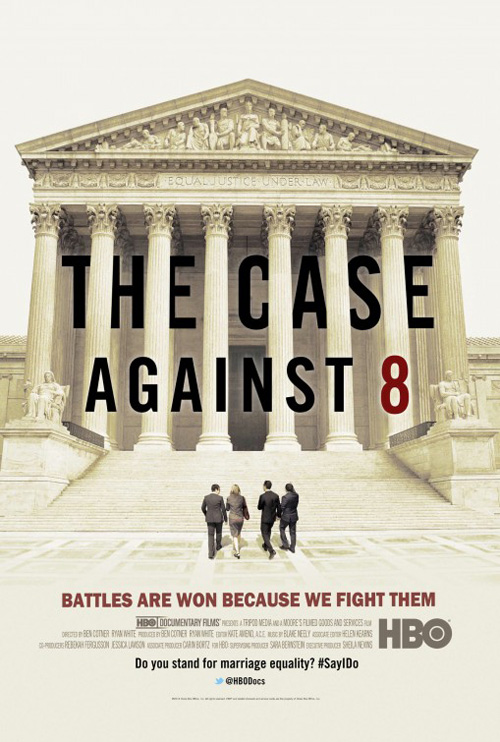
The Case Against 8 – June 4th, 2015

The Case Against 8 [2014]


Come join us for a one-night screening event of The Case Against 8 [2014] with promotional assistance from the Pride Center of Western New York during Pride Week June 1st – 7th, 2015.

  • Screening Date: Thursday, June 4th, 2015 | 9:30pm
  • Venue: North Park Theatre
  • Specifications: 2014 / 109 minutes / English / Color
  • Director(s): Ben Cotner & Ryan White
  • Print: Supplied by ro*co films educational
  • Tickets: $10.50 online; $9.50 at the door

Summer 2015 Season Sponsor:

Event Sponsors:

Venue Information:

1428 Hertel Ave, Buffalo, NY 14216


Synopsis

Courtesy of HBO Documentaries:

The riveting documentary THE CASE AGAINST 8 takes an in-depth look at the historic federal lawsuit filed in an effort to overturn Prop 8, California’s discriminatory ban on same-sex marriage. Shooting over five years, with exclusive behind-the-scenes footage of the powerhouse legal team of David Boies and Ted Olson and the four plaintiffs in the suit, directors and producers Ben Cotner and Ryan White (“Good Ol’ Freda,” “Pelada”) have created a powerful emotional account of the journey that took the fight for marriage equality all the way to the U.S. Supreme Court.

A crowd-pleaser on the festival circuit, THE CASE AGAINST 8 won the 2014 Sundance Film Festival Directing Award in the U.S. Documentary category and the SXSW Audience Award in the Festival Favorites category.

“Ben and I grew up as LGBT youth admiring those who led our movement, especially the leaders of the marriage equality cause who devoted their lives to this issue,” notes filmmaker Ryan White. “Those individuals paved the way for this case and for this moment, which we were able to capture on film.”

In May 2008, the California Supreme Court legalized marriage for same-sex couples in the state. Some 18,000 couples were married in the next few months, but the backlash was swift. Six months later, a coalition of conservative forces placed a proposition on the November statewide ballot that defined marriage as exclusively between a man and a woman. After a fiercely contested campaign that drew national attention, the controversial initiative known as Prop 8 passed with 52% of the vote, resulting in an amendment to the state constitution banning marriage for same-sex couples.

Stunned by the passage of Prop 8, activist Chad Griffin and his colleagues decided they needed to act immediately and formed the American Foundation for Equal Rights. A chance meeting pointed Griffin to an unexpected ally: Ted Olson, lead counsel for the Republicans in the critical 2000 Bush v. Gore Supreme Court decision and solicitor general under President George W. Bush, was interested in taking on the case. In contrast to many of his conservative colleagues, Olson believed in the right to marry for all loving couples.

THE CASE AGAINST 8 follows lawyers and plaintiffs from confidential war-room strategy sessions to last-minute trial preparation. From the Federal District Court in San Francisco to the 9th Circuit Court of Appeals and finally to the Supreme Court, Olson, Boies and their associates masterfully build a case with testimony from an army of experts, finally effecting a stunning last-minute reversal that Olson calls the “Perry Mason moment”: an admission from an opposition witness that changes the course of the trial.

Paul and Jeff were among the first same-sex couples to be married in California in 2013. Paul explains, “The right to get married is, to me, a civil right…so by accepting a domestic partnership, we’d also accept being second-class citizens. And that was unacceptable to us.”

Ted Olson proudly calls the Prop 8 suit “the most important case I have ever worked on.” Today, the fight continues: As of May 23, 2014, 19 states and the District of Columbia have legalized marriage for same-sex couples, while 31 states explicitly ban it. Lawsuits challenging the bans are in progress across the country and marriage equality has become one of the most visible and important civil rights issues debated today.

Director and producer Ben Cotner has served as an executive for ten years at Paramount Pictures and Open Road Films, where he most recently oversaw acquisitions and production. He has worked on such films as “An Inconvenient Truth,” “American Teen,” “Mad Hot Ballroom,” “A Haunted House,” “Side Effects,” “The Grey” and “End of Watch.”

Director and producer Ryan White is also the director and producer of “Good Ol’ Freda,” which tells the story of Freda Kelly, the Beatles’ longtime secretary, and “Pelada,” a journey around the world through the lens of pickup soccer. White’s other credits include “Capitol Crimes” and “9/11: For the Record” on PBS; “Dead Wrong: Inside an Intelligence Meltdown” on CNN; and “Country Boys” on PBS’ “Frontline.”

THE CASE AGAINST 8 is directed and produced by Ben Cotner and Ryan White; editor, Kate Amend, A.C.E.; music by Blake Neely; associate editor, Helen Kearns; co-producers, Rebekah Fergusson and Jessica Lawson; associate producer, Carin Bortz. For HBO: supervising producer, Sara Bernstein; executive producer, Sheila Nevins.

Tidbits:

  • Sundance Film Festival – 2014 – Winner: Documentary (Directing Award)
  • SXSW Film Festival – 2014 – Winner: Festival Favorites (Audience Award)

Director Bio

(l to r) Ben Cotner & Ryan White

Courtesy of HBO Documentaries:

HBO
You seem to have had incredible access. How were you able to tell this story from the inside?

BEN COTNER
We initially found out that the lawsuit was going to be filed around May 2009. We approached the American Foundation for Equal Rights, who gave us permission to meet with Ted Olsen and David Boies, as well as the plaintiffs involved in the case. We said to them, “On the outside chance that this becomes something really important, can we film this for archival purposes and maybe someday make a documentary out of it?” They were gracious enough to let us film behind the scenes, and as the case snowballed we were right there alongside them. We had already been embedded with them for four years by the time we got to the Supreme Court.

HBO
At what point did you realize the magnitude of the story you were telling?

RYAN WHITE
We worked on the movie for three years without even knowing if it would become a finished film. If the case didn’t end up before the Supreme Court, I don’t know if someone like HBO would have come on board, and the film definitely wouldn’t have had the epic third act that it does now. In December 2012, when the Supreme Court said it would hear the case, that’s when we went into hyperdrive.

HBO
The lawyers really seemed to open their doors to you.

BEN COTNER
We spent a lot of time getting to know these people and trying to blend into the background. We wanted to be as unobtrusive as possible to their process. We’d slip in and out of rooms, sometimes in the middle of meetings. People got so used to us being there that eventually we were just allowed to be part of that process.

HBO
Was it the same way with the plaintiffs?

RYAN WHITE
The plaintiffs were a little bit different. With the lawyers we were just asking to film their work lives, but with them it was their personal lives. It was definitely a process of making them feel comfortable with the fact that we would be following them. By year five we were doing a lot more following than in year one. They didn’t sign up to be celebrities or stars of a documentary, so we were incredibly grateful with the access they and their families gave us. That’s the heart of our narrative.

HBO
How were Kris, Sandy, Jeff and Paul selected as the plaintiffs?

BEN COTNER
The American Foundation for Equal Rights spent a lot of time trying to find couples that were appropriate. Because same-sex marriage had been legal in California for several months in 2008, most of the people who were ready to get married at that point in their lives had already done so. So it was a bit of a challenge to find two couples who were not married but were looking to be. They met with a lot of people and wanted to find some who would also be good spokespeople in the press, and would do well on the stand. We’re incredibly glad they picked Kris and Sandy and Jeff and Paul, since hearing them speak on the witness stand was one of the most moving days of our lives.

HBO
Were you surprised by the difference between the prep and the witness testimony?

RYAN WHITE
We show some of the plaintiff prep in the film for maybe five to 10 minutes, but that process went on for many grueling days. Each plaintiff had to go through it individually, having every moment of their life scrutinized under a microscope. You can imagine how uncomfortable that would be. But then it was powerful to watch that preparation translate to the witness stand. The moment in the film with Kris Perry reading her testimony — that wasn’t what they had prepared for. All those personal genuine feelings came out organically on the stand. Nothing we saw in the conference rooms matched that power.

HBO
And you were in the courtroom with them.

BEN COTNER
We were there, but we weren’t able to film it. Early on, District Chief Judge Walker had decided he wanted this case to be part of a trial program for broadcasting trials that had an effect on the wider public. That decision was made, and the proponents of Prop 8 appealed that decision all the way to the Supreme Court. On the first day of trial, the court issued a ruling that blocked the broadcast of the trial. The only way to experience it was to be in the courtroom, which is part of what made it so important to us to convey to people through this film what was happening in there.

HBO
Was it a challenge to make conference calls and legal rulings into something that was filmable?

RYAN WHITE
Filming the legal process definitely isn’t the most cinematic thing you can pick. We shot 600 hours of footage, and many of those hours are probably really boring stretches when we’re just rolling a camera in a conference room, since we didn’t know when an important phone call was going to come in or when a ruling might come down. On the flip side, by keeping the cameras on we were able to capture a lot of the exciting parts of the legal process, especially in a case like this with so many twists and turns. That was something we worked on in the editing room, to keep the legal process exciting for an audience of lawyers, but also for a general audience that’s not intimately familiar with the law.

BEN COTNER
No one expected this case to go on for this long and to have this many ups and downs. It really did become a legal thriller. We wanted to capture that feeling that everyone was on pins and needles for years not knowing what would happen.

HBO
You mention the legal thriller aspect of the film. What type of movie did you feel like you were making?

BEN COTNER
The legal thriller aspect is definitely what drew us to the case to begin with, but as we went on we realized that it’s a love story, and a very joyous one. These guys are also really funny — we were lucky that it had a lot of comedic elements, a lot of romantic elements, and all on that legal thriller background. We loved playing with and mixing those genres.

HBO
What was the message you were trying to impart with the film’s ending?

RYAN WHITE
Obviously, the end of the film was very celebratory. You’ve gone on this journey with these two couples and their families, and you watch them achieve what they worked so hard to do for five years. But the film’s very last card explains what the situation is in the rest of the country. We see the end as quite bittersweet. In some ways, we’re hoping that people who live in the 31 states where same-sex marriage is still illegal can watch what happened with Proposition 8 and what those two couples did, and find inspiration. We’re seeing that all over now, and in every one of those states there are lawsuits pending.

HBO
How does it feel to put this film in front of a national audience?

RYAN WHITE
It’s the most exciting thing ever. It’s been really great to do the festival circuit the last six months, and we’ve been able to take the film to lots of places in the trenches in the fight for marriage equality. But to now to take it to this level, we’re incredibly humbled that so many people are going to see this film. We hope that it reaches all types of people — obviously we would love an LGBT audience –but we’re hoping straight people, religious people, people from all over the country with all types of backgrounds will watch the story of these four people.

HBO
The supporters of Proposition 8 have some extremely smart and capable lawyers, and yet, in the film, every one of their arguments falls flat.

BEN COTNER
They had very credible lawyers, and they put out as much evidence as they could. But we saw several of their expert witnesses drop out of the case. When they did depositions, their facts just weren’t passing muster. You saw people like David Blankenhorn, who was a principal witness for the other side, come out after the case and say that he has changed his mind on the issue. When you strip away the political slogans and the religious arguments, there really is no rational reason for discrimination like this.

HBO
How would you like people to come back and look at this film?

RYAN WHITE
The marriage equality movement didn’t begin with Proposition 8. It began decades before that with people who dedicated their lives to the cause. There were a lot of stories before Prop 8, and there will be a lot after. We hope that we told one chapter of this story and that we told it well and in a way that moves people.


Links

Here is a curated selection of links shared on our Facebook page for additional insight/information:

  • 5/9/15 – LA Times‘s Kenneth Turan says The Case Against 8 is “emotional and analytical by turn…a thoroughly engaging documentary that draws back the curtain on one aspect of perhaps the most contentious legal battle of recent years, the fight for marriage equality that went all the way to the U.S. Supreme Court.” – link
  • 5/13/15 – It was announced today that directors Ben Cotner and Ryan White and producer Jessica Lawson were awarded the 2015 Silver Gavel Award by the American Bar Association for their film The Case Against 8 for its “outstanding efforts to foster the American public’s understanding of law and legal institutions”! – link
  • 5/18/15 – In the Village Voice, Alan Scherstuhl calls The Case Against 8 “the best kind of popular history, a film that trembles with tears and hope…” – link
  • 5/26/15 – At the New York Times, Tom Roston outlines the long road for The Case Against 8, which screens at North Park Theatre next week thanks to our generous sponsors Community Beer Works and Public espresso + coffee! – link
  • 5/27/15 – Prep for our screening of The Case Against 8 next Thursday at North Park Theatre with an Interactive Timeline of the Fight for Gay Rights by TIME! – link
  • 5/21/17 – Did you know Ryan White (the director behind The Case Against 8 – the first film we ever screened) has a new seven part crime documentary on Netflix called The Keepers?
  • “Netflix’s new true-crime doc, The Keepers, isn’t Making a Murderer. It’s far more haunting.” Alex Abad-Santos, Voxlink