A Coffee In Berlin – June 25th, 2016

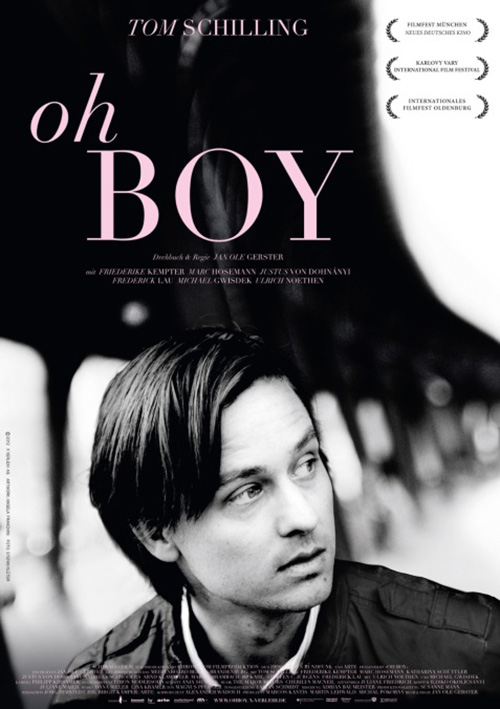
A Coffee In Berlin [2012]


Please join us for a FREE one-day screening of Jan Ole Gerster’s A Coffee In Berlin [Oh Boy] [2012], the final film of our Public Espresso themed trilogy about coffee and Constructivism.

  • Screening Date: Saturday, June 25th, 2016 | 1:00pm
  • Venue: The Mason O. Damon Auditorium at Buffalo Central Library
  • Specifications: 2012 / 86 minutes / German with Subtitles / Black & White
  • Director(s): Jan Ole Gerster
  • Print: Supplied by Music Box Films
  • Tickets: Free and Open to the Public
  • Deal: Stop in early for a FREE Breadhive soft pretzel while supplies last!

Spring 2016 Season Sponsor:

Event Sponsors:

Venue Information:

1 Lafayette Square, Buffalo, NY 14203
(please use Clinton St entrance for Mason O. Damon Auditorium)


Synopsis

Courtesy of Music Box Films:

Jan Ole Gerster’s wry and vibrant feature debut A Coffee in Berlin, which swept the 2013 German Oscar Awards, paints a day in the life of Niko, a twenty-something college dropout going nowhere fast. Niko lives for the moment as he drifts through the streets of Berlin, curiously observing everyone around him and oblivious to his growing status as an outsider. Then on one fateful day, through a series of absurdly amusing encounters, everything changes: his girlfriend rebuffs him, his father cuts off his allowance, and a strange psychiatrist dubiously confirms his ’emotional imbalance’. Meanwhile, a former classmate insists she bears no hard feelings toward him for his grade-school taunts when she was “Roly Poly Julia,” but it becomes increasingly apparent that she has unfinished business with him. Unable to ignore the consequences of his passivity any longer, Niko finally concludes that he has to engage with life. Shot in timeless black and white and enriched with a snappy jazz soundtrack, this slacker dramedy is a love letter to Berlin and the Generation Y experience.

Tidbits:

  • AFI Fest – 2012
  • Berlin International Film Festival – 2013
  • German Film Awards – 2013 – Winner: Film Award in Gold – Outstanding Feature Film, Winner: Film Award in Gold – Best Performance by an Actor in a Leading Role, Winner: Film Award in Gold – Best Performance by an Actor in a Supporting Role, Winner: Film Award in Gold – Best Direction, Winner: Film Award in Gold – Best Screenplay, Winner: Film Award in Gold – Best Film Score, Nominee: Film Award in Gold – Best Performance by an Actress in a Supporting Role & Nominee: Film Award in Gold – Best Editing

Director Interview

Courtesy of press notes:

Before we talk about the movie that is, I want to ask about the movie that wasn’t, because this sprung from an abandoned project …

Well, there have been many ambitious scripts, and parts of the script I was working on are in the film. The original script made me feel like a fraud, so I stopped working on that and did nothing for a couple of years … I call this the research. And yeah, wrote this script in two weeks and for the first time it felt good to work on something like that! People gave me good feedback on it, and I got confident.

When people make debut features about aimless young people, it’s usually assumed that it’s in some way semi-autobiographical …

As I said I had to research it, it is a little bit autobiographical. It is personally, but not necessarily private. It’s inspired by a period I went through.

Were there any particular instances that were pulled from your life, or would you say it’s a kind of autobiographically inspired fiction?

That’s a nice way of putting it. No, for example, I was thinking about the conversations I had with my dad about future job situations and how a lot of young men—at one point in their life, when they’re stuck in the process—need to have this sort of conversation. A lot people identify with that scene more than I ever thought. This is definitely inspired by something personal.

Since you wrote it so quickly, did you do any other drafts?

Yes, I think there were two other drafts because the first draft was too long and my producer asked me to make it a bit shorter and I didn’t really know where to start … so I changed the size of the letters, which gave me 10 pages … then the producer figured it out, so I made a third draft, a real draft, and kicked out a few scenes.

Were there sequences of Niko meeting characters or encounters that ended up being dropped?

Yup, there were a couple of scenes. One scene I shot but had to lose during editing, and others I kicked out at an earlier point in the screenplay. Let me think, there was a scene where he meets a priest from Africa; they have a conversation about Bono from U2 and talk about music, and it was fun, but it just wasn’t leading anywhere.

Was that something you shot?

No, we shot a scene with a little boy after Niko walks through the forest. He comes to the lake and sees a little boy fishing, and they have a conversation about fishing and it was too much of a metaphor—these two boys, traveling back in time with this innocent kid, then the father joins them, and it was too much, so I had to cut it.

Seems like many of the people Niko encounters are doubles for him?

Yeah, I always saw him as this dark something that gets more and more visible by the encounters with other people that put a light on him. Every character makes something of his character understandable …

Did the character of Niko come first, or did the idea of the structure or the other characters?

Both came at the same time. I thought it was challenging and appealing to have this passive character and portray him through encounters with others. You can’t really tell what came first. I think these types of characters always fascinated me, so I always had him in mind and the idea of some sort of a road movie that never leaves Berlin, really. It’s a road movie of someone who has to walk because he lost his license. So yeah, this is how it started, with a vague idea of this passive young man that was inspired by many characters that I always loved in films and literature.

Could you give some examples of characters you love in film and literature?

Benjamin Braddock of The Graduate is someone I identified with as a teenager, and still do in a way. Not because I had an affair with a much older woman, but because of his relationship to the world he’s living in.

How long was your shoot?

21 days.

Why black and white?

It was black and white in my head from the first page. I think I needed some kind of abstraction from the neighborhood that I know very well from real life, especially because the film is about everyday life and normal conversations. I kind of felt like it needed this distance that at the same time expresses or describes the distance that the character feels from the world.

Lit specifically for black and white?

We did a lot of tests to figure out which colors turns out to be a shade of gray. That was actually my working title: 50 Shades of Gray! But you’re right, we tested the black and white, back and forth. I think we considered 60mm until the very end, and then when we knew what our budget would be like, because we were trying to get more money, we decided to shoot digital.

What is your method when it comes to working with and shooting actors?

Actually I shot a lot; I was a little bit embarrassed when I went to editing. But it was always the same situation. We had Tom on set, and everyday someone else came in. Because every scene was like a short movie, my feeling was always like, “we only have him for one day, so let’s try this with this shot.” I hope to shoot more economically in the future.

Would you shoot the characters in blocks or would you do a character a day?

Most of the actors agreed to perform in this film for free, and said they had this one day where they could shoot it and come to my set …

Did you rehearse with them beforehand?

We rehearsed a little bit. There were a few actors that were into rehearsing. Usually I don’t really make them rehearse, because sometimes my experience has been that it’s not a good idea to rehearse forever. I was very happy with my ensemble, with my cast. Almost everyone in the picture I wanted to have, and I was very confident I was going to get good performances. For example, the neighbor character is a friend of mine, and I had no doubt that he would deliver a great performance.

Was it always part of the design to have Niko going through a downward structure through the film?

I don’t know, I enjoyed writing these scenes, I enjoyed torturing this character, it was fun to write. I tried to make the movie darker and darker, I think also the tonality of the scenes, especially the one with the old man in the bar, is different from what the film is like in the beginning …

When you were writing the film, did you have specific places in mind? Or were they more general locations, then you found where you wanted to shoot?

Well I don’t go to golf courses, for example, so I had no golf course in mind. For me, they all look the same; some are more beautiful, some…I don’t know. But there were a few locations I had in mind: for example, that theater and the restaurant where they meet Julia for the first time. When we did location scouting with the cinematographer in Berlin, we tried to find places that we kind of like but are about to disappear because the city is constantly changing. It’s becoming cleaner and slicker every day …

Is his apartment over in East Berlin?

No, this apartment was not an easy location to find. Because we wanted it to be a place where obviously no one is living, you know he just moved in. But the worst thing about a black and white film is just clean white walls. We looked for that empty apartment forever. I thought that would be the easiest location to find …

Did you have a neighborhood in mind?

Okay, so the apartment is actually put together from three different locations. There’s the living room in one location, then the bathroom (when he’s in the shower) in a different location (the same location as his backyard where he sees the neighbor playing foosball against himself), and there’s his living room and the view out of his window—which is my place.

How did you keep it straight? Did you have to draw out a floor plan?

I was thinking about that. I think, yeah, we had some sort of floor plan, but we ignored it.

Was the role written with Tom Schilling in mind?

Tom is a very close old friend of mine. We share the same taste in music and films and talk a lot about our projects. At one point I gave him the screenplay of Oh Boy for his opinion, though I didn’t have him in mind when I was writing it because he looked very young and it was important that Niko was in his late twenties. But Tom gave it his best shot to age as fast as he could … drinking in the morning, smoking, became a father, didn’t sleep very much…something changed and he became more mature, and then he wrote me a handwritten five-page letter about how he understood the character, how he loved the screenplay. So he convinced me, and I’m happy for that every day.

Did you work on the film alone with Tom before working with other actors?

We talked a lot about the script, but we didn’t rehearse a lot. We did a few rehearsals, but not every scene with every actor. The psychological test, for example, we rehearsed. I rehearsed with the neighbor. I didn’t rehearse with the old man because he’s a very well known German actor. I’m a big fan, so I asked his agent to give him the script and his first response was, “he’s not shooting anymore student films, he had some terrible experiences and he’s through with student films.” But thank god the agent made him read it and give it a try.

Where did that scene with the old man in the bar come from?

It’s pretty close to something I experienced in a bar a few months after I moved to Berlin. There was a very drunk old man sitting next to me talking about the war. I didn’t have encounters like this where I came from, so for me it described the city very well—this ultramodern new Berlin where you can still experience the ghost of history everywhere. And the fact that some people really experienced what went on and are still around stuck with me. It was one of the first scenes that made it into the script.

You’re playing this history off of modern day life, which seems totally different. What does that interest stem from, wanting to counterpoise these two worlds?

Moving to Berlin made me think about the past and what it’s like being German. These days I don’t think about it too much anymore, but when I was in my early 20s I had some experience. I was traveling to foreign countries and had experiences that make me think about what it’s like being German, what it means. I had this awareness and interest in how Germans deal with it these days. So the scenes you see in the film aren’t necessarily about the past, but how the past is still part of the present and somehow still part of our everyday life. I’ve tried to find scenes that express that the past is still everywhere, in a way, and I thought the best way to show it was this Nazi film folklore. Somehow, the whole industry is obsessed with making films about that time, but for some reason I don’t like them or they aren’t good and I was wondering what the problem was making really truthful films like that, why they always turn out to be the same kind of film. I don’t know … I found it very appealing trying to express what I felt at that time by having that scene in the script.

Do you think this generation is spoiled?

I think not, I don’t like generalizations. I meet great young people; they have jobs, dreams, and they’re happy. But I meet a lot of people as well who are unhappy, spoiled, and kind of scared about the future.

They say this will be the first generation that will be poorer than their parents; do you think they have a good reason to be scared?

That’s what the experts say, yes. I know a lot of people who have this kind of financial backup in a way. I don’t know anyone who lies to their parents about that money. Having all the freedom and all the opportunities to find yourself, whatever that means, turn out to be a jail for a lot of people.

Do you think that encounter with the old man provides Niko with a kind of motivation? Is the implication that there’s a sense of purpose in his life after that moment?

Yeah, I’ve always seen the scene, besides the strong subject, as an encounter with someone like Niko who dies alone, having never really found a way to deal with his life. So I’ve always seen this scene as a wake-up call for him.

Do you think the film within a film is kind of a double for the movie?

I was seriously thinking about making that my next film. For lack of a better idea.

At what point did the decision to use jaunty jazzy music come in?

That’s a long story. I started the editing and I had singer-songwriter music in mind. I never thought about working with classical, traditional film composers. I always wanted to make a score with musicians. Maybe I liked the idea that the music could be a character of its own.

Were you going to have songs about the characters, like commentary?

Not really. You should have told me two years ago; that would have been the best idea! Unfortunately we don’t really have a German Paul Simon, so I never found a singer-songwriter I was happy with. The singer-songwriter music I worked with in editing made the film very heavy. Then I asked a friend of mine—Sheryl McNeal from South Africa, who lives in Berlin and has a band called The Reader—to give it a try, because she plays piano. At that point, I was already trying jazz but the temp tracks were all unaffordable, blue note jazz kind of stuff. So Sheryl played around on the piano, and at that point I was already in love with jazz as the right music for the film, because it has the irony I was looking for and the melancholy that is never too heavy in one direction or the other. Besides that, I liked that it gives the film some kind of a timeless feel. Sheryl wrote a few pieces that I liked a lot, but she felt very uncomfortable with the jazz moments. She was very good at scoring the solo piano sequences with Niko, the moments that describe his inner mood, feelings and character. Every time it was more about the city, the craziness of everyday life, the jazz parts, she was very unhappy and so was I—because she’s not a jazz musician.

So I tried to find jazz musicians, but in Berlin the techno scene is huge, not jazz. And I was a little concerned I wouldn’t find a band with old school groove to it, you know. We were in the process of mixing the film and the rough cut was already getting invited to festivals. We still had no score, but they were announcing our premiere. In desperation, I went to a bar in the middle of the night. You can solve many problems in your life by going to a bar in the middle of the night, that’s what I experienced at least. And there was a band playing, one guy on piano and the other on trumpet, and I don’t know if I was slightly drunk, but they sounded like Chet Baker. I was like, “Wow, these kids can groove” and gave them a DVD of my film. They invited me to their rehearsal room, where they jammed to the film and hit every cut. They had never done film music before, but they totally got the idea of editing and composing to cuts. I felt so relieved, you can’t imagine, it was a lucky break.


Director Bio

Courtesy of press notes:

Following his civil service, including training as a paramedic, Jan Ole Gerster completed an internship at X Filme Creative Pool GmbH, where he worked as Wolfgang Becker’s personal assistant and coordinator during the preparation, filming, editing and postproduction of Good Bye, Lenin! In 2003 Jan Ole Gerster began his studies in directing and screenwriting at the German Film and Television Academy in Berlin.

From 2003 to 2009, he completed several projects, including the documentary The Making of Good Bye, Lenin! and wrote the script for Sick House, part of the short film series GERMANY 09-13 SHORT FILMS ON THE STATE OF THE NATION (which also featured directors Tom Tykwer, Wolfgang Becker, Fatih Akin and Dani Levy, amongst others). A Coffee In Berlin (titled Oh Boy in Germany) is Gerster’s feature film debut.

Filmography:

  • Lara (2019)
  • A Coffee in Berlin (2012)
  • Der Schmerz geht, der Film bleibt (2004)

Links

Here is a curated selection of links shared on our Facebook page for additional insight/information:

  • 3/31/16 – “You know there’s a thing—since I was in high school, I read a book called The Art Spirit by Robert Henri, and in it he talks about this art spirit that transformed itself into the art life for me. Coffee is part of the art life. I don’t know quite how it works, but it makes you feel really good and it serves the creative process. It goes hand in hand with painting for sure.” David Lynch on coffee and creativity – link
  • 4/3/16 – What are your favorite scenes centered around coffee? – link
  • 6/4/16 – “The CCC turns one year old this month with a lineup highlighted by the great Werner Herzog. The Fitzcarraldo and Aguirre, the Wrath of God director is also a fascinating documentary filmmaker, and his latest looks to be no exception. Lo and Behold, Reveries of the Connected World by Werner Herzog, a study of our interconnecting online lives, has its Buffalo premiere at 7 p.m. on June 13 at the North Park Theatre (1428 Hertel Ave.). The month also includes Mark Cousins’ Atomic: Living in Dread and Promise – Free Film Screening, a documentary about the nuclear age, at 8 p.m. on June 8 at Burning Books (420 Connecticut St.). And Jan Ole Gerster’s charming narrative feature A Coffee In Berlin screens at 1 p.m. on June 25 at the Mason O. Damon Auditorium at the Buffalo & Erie Central Library (1 Lafayette Sq.).” Christopher Schobert, Buffalo Spree magazine – link
  • 6/16/16 – “With themes reminiscent of Frances Ha, down to its being filmed in black-and-white, A Coffee In Berlin presents a day or so in the life of Niko, as he careens from one absurd interaction to another, clearly floundering, but still not seeing that it is up to him to create the life he wants. Not tomorrow, but right now.” Sheila O’Malley, RogerEbert.com – link
  • 6/22/16 – “Imagine if, instead of Titanic taking the day, Good Will Hunting had swept the Oscars the year both films were nominated. That’s basically what happened in Germany when Jan-Ole Gerster’s low-budget Oh Boy beat Cloud Atlas at the Lolas last year. Here was a modest, black-and-white debut coming out of nowhere to win six of the country’s top film prizes, and to see the film is to understand why: Renamed A Coffee In Berlin for its long-overdue, Music Box-backed U.S. release, this day-in-the-life indie says something profound about an entire generation simply by watching a feckless young man try to figure it out.” Peter Debruge, Varietylink

Man with a Movie Camera – May 21st, 2016

Man with a Movie Camera [1929]


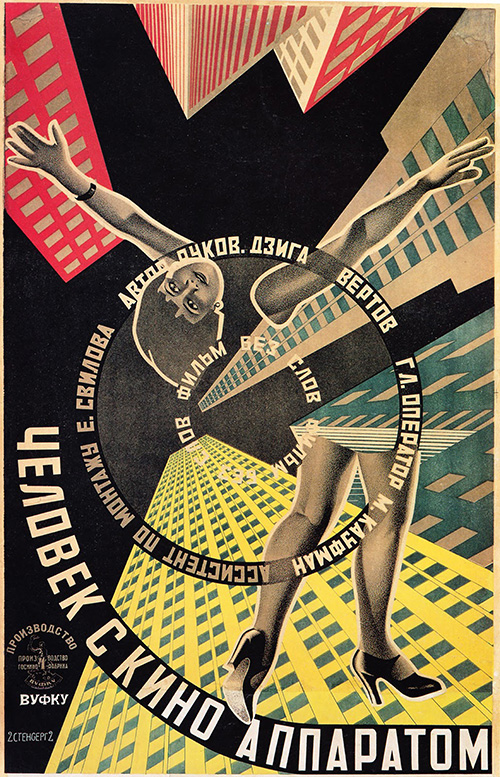
Please join us for a FREE one-day screening of Dziga Vertov’s Man with a Movie Camera [Chelovek s kino-apparatom] [1929], the second film of our Public Espresso themed trilogy about coffee and Constructivism.

  • Screening Date: Saturday, May 21st, 2016 | 1:00pm
  • Venue: The Mason O. Damon Auditorium at Buffalo Central Library
  • Specifications: 1929 / 68 minutes / Silent / Black & White
  • Director(s): Dziga Vertov
  • Print: Supplied by Kino Lorber
  • Tickets: Free and Open to the Public
  • Deal: Stop in early for a FREE Breadhive soft pretzel while supplies last!

Spring 2016 Season Sponsor:

Event Sponsors:
Venue Information:

1 Lafayette Square, Buffalo, NY 14203
(please use Clinton St entrance for Mason O. Damon Auditorium)


Synopsis

Courtesy of Kino Lorber:

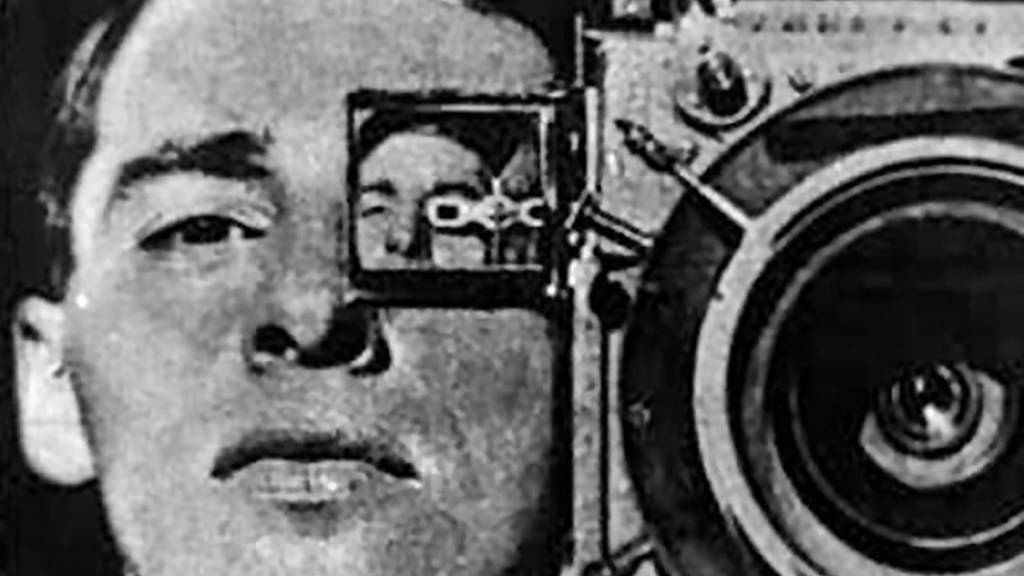
Dziga Vertov’s Man With A Movie Camera is considered one of the most innovative and influential films of the silent era. Startlingly modern, this film utilizes a groundbreaking style of rapid editing and incorporates innumerable other cinematic effects to create a work of amazing power and energy.

After his work on The Commissar Vanishes, a multi-media art event of 1999, composer Michael Nyman (The Ogre, The Piano) continued researching the period of extraordinary creativity that followed the Russian Revolution. This artistic inquiry resulted in the celebrated score for Man With A Movie Camera, performed by the Michael Nyman Band on May 17, 2002 at London’s Royal Festival Hall.

This dawn-to-dusk view fo the Soviet Union offers a montage of urban Russian life, showing the people of the city at work and at play, and the machines that endlessly whirl to keep the metropolis alive. It was Vertov’s first full-length film, and it employs all the cinematic techniques at the director’s disposal — dissolves, split-screens, slow-motion, and freeze-frames — to produce a work that is exhilarating and intellectually brilliant.

Tidbits:

  • Locarno International Film Festival – 1967
  • Berlin International Film Festival – 1985
  • BFI London Film Festival – 2010

Director Bio

“I am eye. I am a mechanical eye. I, a machine, am showing you a world, the likes of which only I can see.”

Courtesy of Britannica.com:

Dziga Vertov, pseudonym of Denis Arkadyevich Kaufman (born Jan. 2, 1896 [Dec. 21, 1895, Old Style], Belostok, Russia—died Feb. 12, 1954, Moscow, Russia, U.S.S.R.), Soviet motion-picture director whose kino-glaz (“film-eye”) theory—that the camera is an instrument, much like the human eye, that is best used to explore the actual happenings of real life—had an international impact on the development of documentaries and cinema realism during the 1920s. He attempted to create a unique language of the cinema, free from theatrical influence and artificial studio staging.

As a newsreel cameraman during the Russian Civil War, Vertov filmed events that were the basis for such factual films as Godovshchina revolyutsii (1919; The Anniversary of the October Revolution) and Boi pod Tsaritsynom (1920; Battle of Tsaritsyn). At age 22 he was the director of a government cinema department. The following year he formed the Kinoki (the Film-Eye Group), which subsequently issued a series of manifestos against theatricalism in films and in support of Vertov’s film-eye theory. In 1922 the group, led by Vertov, initiated a weekly newsreel called Kino-pravda (“Film Truth”) that creatively integrated newly filmed factual material and older news footage.

The subject matter of Vertov’s later feature films is life itself; form and technique are preeminent. Vertov experimented with slow motion, camera angles, enlarged close-ups, and crosscutting for comparisons; he attached the camera to locomotives, motorcycles, and other moving objects; and he held shots on the screen for varying lengths of time, a technique that contributes to the rhythmic flow of his films. Outstanding among Vertov’s pictures are Shagay, Sovyet! (1925; Stride, Soviet!), Shestaya chast mira (1926; A Sixth of the World), Odinnadtsatyi (1928; The Eleventh), Chelovek s kinoapparatom (1928; The Man with a Movie Camera), Simfoniya Donbassa (1930; Symphony of the Donbass), and Tri pesni o Lenine (1934; Three Songs of Lenin). Vertov later became a director in the Soviet Union’s Central Documentary Film Studio. His work and his theories became basic to the rediscovery of cinéma vérité, or documentary realism, in the 1960s.

Filmography:

  • Novosti dnya (1954)
  • Klyatva molodykh (1944)
  • V gorakh Ala-Tau (1944)
  • Kazakhstan – frontu! (1942)
  • Blood for Blood, Death for Death (1941)
  • V rayone vysoty A (1941)
  • Tri geroini (1938)
  • Lullaby (1937)
  • Pamyati Sergo Ordzhonikidze (1937)
  • Three Songs About Lenin (1934)
  • Enthusiasm (1930)
  • Zvukovaya sbornaya programma No 2 (1930)
  • Man with a Movie Camera (1929)
  • The Eleventh Year (1928)
  • Forward, Soviet! (1926)
  • The Sixth Part of the World (1926)
  • Kino-Eye (1924)
  • Istoriya grazhdanskoy voyny (1922)
  • The Battle of Tsaritsyne (1920)
  • Godovchina revoljutsii (1919)
  • Kino-nedelya (1919)
  • Le Proces Mironov (1919)

Links

Here is a curated selection of links shared on our Facebook page for additional insight/information:

  • 4/8/16 – Thanks to Google Books, you can read Vlada Petrić’s Constructivism in Film for free – link
  • 5/2/16 – Man with a Movie Camera was voted #1 in Sight & Sound‘s recent poll of the Greatest Documentaries of All Time! – link
  • 5/9/16 – A thorough primer on the Soviet filmmaker behind the doc classic Man with a Movie Camera thanks to Senses of Cinemalink
  • 5/11/16 – “More than 85 years after its release in 1929, it is difficult to watch Dziga Vertov’s most famous film, Man with a Movie Camera, without being bowled over – by its energy, its dynamism, and its visually playful nature.” Ben Nicholson, BFI – link
  • 5/16/16 – “If you want to know exactly what cinema can do, catch this silent masterpiece recently voted the best doc of all time” Tom Huddleston, Time Out Londonlink
  • 5/17/17 – “Most movies strive for what John Ford called “invisible editing” — edits that are at the service of the storytelling, and do not call attention to themselves. Even with a shock cut in a horror film, we are focused on the subject of the shot, not the shot itself. Considered as a visual object, Man with a Movie Camera deconstructs this process. It assembles itself in plain view. It is about itself, and folds into and out of itself like origami.” Roger Ebert – link

A Film About Coffee – April 16th, 2016

A Film About Coffee [2014]


Please join us for a FREE one-day screening of Brandon Loper’s A Film About Coffee [2014], the first film of our Public Espresso themed trilogy about coffee and Constructivism.


Spring 2016 Season Sponsor:

Event Sponsors:

Venue Information:
1 Lafayette Square, Buffalo, NY 14203
(please use Clinton St entrance for Mason O. Damon Auditorium)


Synopsis
Courtesy of the film’s website:

A Film About Coffee is a love letter to, and meditation on, specialty coffee. It examines what it takes, and what it means, for coffee to be defined as “specialty.” The film whisks audiences on a trip around the world, from farms in Honduras and Rwanda to coffee shops in Tokyo, Portland, Seattle, San Francisco and New York. Through the eyes and experiences of farmers and baristas, the film offers a unique overview of all the elements—the processes, preferences and preparations; traditions old and new—that come together to create the best cups. This is a film that bridges gaps both intellectual and geographical, evoking flavor and pleasure, and providing both as well.

“No matter the quality of your cup, people who love coffee, love it. Coffee is about people, and people are what I’m interested in ultimately.”

Brandon Loper, Director

Director Interview

Conducted by Matt Viser of the Boston Globe:

Describe your coffee routine. Where do you frequent, what do you like?

I have a young child, so I get up early. The first thing I want, and my wife requests, is coffee. I’m the designated barista in the house. I have the Baratza Virtuoso grinder, which I love. I used the Hario hand grinder for two years, until I could justify spending several hundred dollars on a grinder. I love it. I use that grinder and I usually try to have very fresh coffee at home. I try to be strategic about when I try and make sure it’s within five days. This morning I had a coffee from Saint Frank.

I almost exclusively do V-60 with the white paper filter. I measure everything out. Usually I make two baby cups. My ratio is 24 grams to 380 grams of water for this coffee. We have little Heath Ceramics mugs.

That’s around 7.

Usually after I take my daughter to day care I’ll come back and make a full cup for myself. That’s cup two.

After lunchtime I’ll go somewhere. Usually Saint Frank or Four Barrel or Ritual.

What’s your order?

Usually a pour-over. I went through a phase of getting a cappuccino and a cookie. But I tried to cut back on the cookie. My favorite is a competition cappuccino, which is a single shot instead of two shots. So I’ll do a single shot cappuccino and the espresso on the side. The single shot cappuccino is so good.

When you’re buying, what time? And do the baristas know you?

I still go a lot in the morning. I’ll almost always do the cup at 7 at home. If I’m going into the office I’ll go by Saint Frank on the way to work. I know all the baristas. At Four Barrel they have a pour-over bar. I know the guy who runs that. They try to make me not pay but I always insist.

How do you take it (milk, sugar)?

Just black. And I let it cool down a bit.

Iced or hot?

Almost always hot. On a rare day I’ll go iced latte or iced café tonic situation.

Alone or with company?

Almost always with company. Whether it’s just a barista working there or I’m picking up to be with someone. I really value having coffee with someone. I appreciate that time. If I’m meeting a friend or coworker I try to make it revolve around coffee. I’m one of those people who likes that. I like sharing that with people.

Where do you drink it? Seated or on the go?

Usually the first two cups I’m in motion, whether getting my daughter ready for day care or getting ready myself. I’m taking a sip. The second cup is the same way. Usually it’s in my van heading to the office. But the afternoon cup usually I’m sitting down. I’m meeting a friend for coffee or settled in.

Any simultaneous noncaffeinated stimulation (newspaper, radio, cigarettes, etc.)?

I guess if I’m driving I’ll listen to NPR. So it’s the news and coffee. But at home its “Sesame Street” and a very nice single origin pour-over. In the afternoon it’s my computer or in a meeting.

What time will you drink your last cup?

I try to drink it by 3 or so. Sometimes it’s way sooner. But last night I had a cup at almost 6 o’clock because I knew I had a bunch of stuff to do. I had to stay open till midnight so I said I’ll let it slide this time. But usually I try to have it by 3, the latest 4.

What’s your stance on decaf?

You know, I maybe have one cup of decaf coffee a year. I rarely drink it. And that would be if I’m at dinner and it’s late, like 9 or 10, but I want coffee with dessert. But almost never.

When and why did you start drinking coffee?

I started drinking coffee in college. It probably wasn’t until my senior year of college. I was, I think, 21. I liked this girl who drank a ton of coffee but just regular Dunkin’ Donuts or Folgers and she doused it with hazelnut creamer. I started drinking because she did. I wanted to impress her. It was this sugar explosion. Then one of my friends, we were at a truck stop in Mississippi. He dared me to drink it black. So I drank it. And then from that day on I have always drank it black. It made me realize I could do it.

I wasn’t even thinking about taste. It was like drinking beer. You drink it for the effects. Now you can appreciate it.

Is your wife still drinking the sweet stuff, or did you bring her along?

She will drink the coffee I make in the mornings. But when we went home for the holidays, every day my wife would want a peppermint mocha [at Starbucks]. They do a blond roast pour-over, which is what I got. It’s not good but its not horrendous either.

Describe the most memorable cup of coffee you’ve ever had.

My most memorable, probably, was an Ethiopian natural coffee from a place called Misty Valley. It was roasted by Blue Bottle. I think it was in ’08. I was currently writing a coffee and wine blog that is so bad I won’t give you the Web address. It was a place to journal my thoughts. I started writing it, and then I was writing this is good, this is fun to drink. And then I had this coffee. It was like the blueberry explosion. I loved it. So I bought a bag. It took me several years to figure out what it was.


Links

Here is a curated selection of links shared on our Facebook page for additional insight/information:

  • 3/31/16 – “You know there’s a thing—since I was in high school, I read a book called The Art Spirit by Robert Henri, and in it he talks about this art spirit that transformed itself into the art life for me. Coffee is part of the art life. I don’t know quite how it works, but it makes you feel really good and it serves the creative process. It goes hand in hand with painting for sure.” David Lynch on coffee and creativity – link
  • 4/3/16 – What are your favorite scenes centered around coffee? – link

Contest: The Case Against 8

To help increase excitement around Cultivate Cinema Circle‘s inaugural screening of The Case Against 8 on June 4th at North Park Theatre, we’ve begun a contest on Twitter.

Check out the rules below and visit our Twitter page to enter. Prize includes a theatrical size print of our event poster and a growler each from Community Beer Works and public espresso + coffee.

The winner will be announced before the screening.

website-header

The Case Against 8

website-header

2014 / 109 minutes / English / Color
Directed by: Ben Cotner & Ryan White
Print supplied by: ro*co films educational

Thursday, June 4th, 2015
9:30pm
at North Park Theatre

Come join us for a one-night screening event of The Case Against 8 [2014] with promotional assistance from the Pride Center of Western New York during Pride Week June 1st – 7th, 2015.

FREE COFFEE courtesy Public espresso + coffee!

Summer 2015 Season Sponsor: Community Beer Works
Event Sponsors: public espresso + coffee & Més Que
Ticket Information: $10.50 online; $9.50 at the door


Synopsis courtesy of HBO Documentaries:

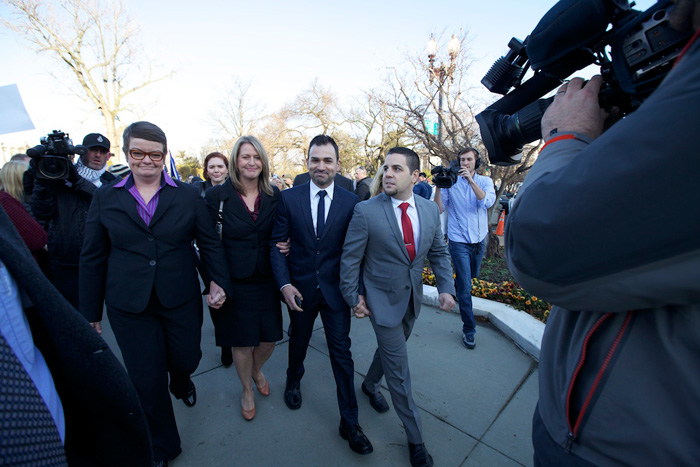
The riveting documentary THE CASE AGAINST 8 takes an in-depth look at the historic federal lawsuit filed in an effort to overturn Prop 8, California’s discriminatory ban on same-sex marriage. Shooting over five years, with exclusive behind-the-scenes footage of the powerhouse legal team of David Boies and Ted Olson and the four plaintiffs in the suit, directors and producers Ben Cotner and Ryan White (“Good Ol’ Freda,” “Pelada”) have created a powerful emotional account of the journey that took the fight for marriage equality all the way to the U.S. Supreme Court.

A crowd-pleaser on the festival circuit, THE CASE AGAINST 8 won the 2014 Sundance Film Festival Directing Award in the U.S. Documentary category and the SXSW Audience Award in the Festival Favorites category.

“Ben and I grew up as LGBT youth admiring those who led our movement, especially the leaders of the marriage equality cause who devoted their lives to this issue,” notes filmmaker Ryan White. “Those individuals paved the way for this case and for this moment, which we were able to capture on film.”

In May 2008, the California Supreme Court legalized marriage for same-sex couples in the state. Some 18,000 couples were married in the next few months, but the backlash was swift. Six months later, a coalition of conservative forces placed a proposition on the November statewide ballot that defined marriage as exclusively between a man and a woman. After a fiercely contested campaign that drew national attention, the controversial initiative known as Prop 8 passed with 52% of the vote, resulting in an amendment to the state constitution banning marriage for same-sex couples.

Stunned by the passage of Prop 8, activist Chad Griffin and his colleagues decided they needed to act immediately and formed the American Foundation for Equal Rights. A chance meeting pointed Griffin to an unexpected ally: Ted Olson, lead counsel for the Republicans in the critical 2000 Bush v. Gore Supreme Court decision and solicitor general under President George W. Bush, was interested in taking on the case. In contrast to many of his conservative colleagues, Olson believed in the right to marry for all loving couples.

website-header

“Marriage is a conservative value,” Olson explains in the film. “It’s two people who love one another and want to live together in a stable relationship, to become part of a family and part of a neighborhood and part of our economy. We should want people to come together in marriage.”

Not only did Olson agree to lead the legal team that would challenge Prop 8, he made a surprising recommendation for his co-counsel: David Boies, the attorney who opposed him in Bush v. Gore. Although they held dramatically different beliefs on many political issues, both had become an admirer of the other during that trial. Now, they had found a case they could pursue passionately together, all the way to the Supreme Court of the United States.

The unlikely pairing of Olson and Boies sparked outcry from both sides of the aisle, as conservatives protested that Olson was turning his back on traditional principles, and liberals and the LGBT community accused Boies of collaborating with the enemy. But, as Boies puts it, “Everybody on that case had a sense that what was important was the mission.”

Just as important as the legal team that would argue against Prop 8 were the two couples who would become the faces of marriage equality in California. After a lengthy vetting process, Kris Perry and Sandy Stier, and Jeff Zarrillo and Paul Katami, were selected as the plaintiffs in the case that would be known as Perry v. Schwarzenegger.

Kris and Sandy, the mothers of four sons, first attempted to marry in California in 2004, during the brief period when marriage licenses were issued to same-sex couples by the city of San Francisco. When their original marriage was declared void, their family was devastated and confused. Comments Sandy, “We receive a form letter in the mail saying, ‘You thought you were married, but you’re not.’ What does that say to these people that we invited to celebrate our love for each other? I felt badly for making them feel badly for us. It’s just this awkward circle of guilt and shame.”

Jeff and Paul were ready to start a family, but hesitated to have children without the traditional status and legal protections of marriage. Jeff explains, “We’re strong believers that we want any child that we have to have the protections that an opposite-sex couple’s children and family would have. That’s very important to us.”

In intimate interviews, both couples speak frankly and emotionally about the effect of the law on their lives and families, and about how their participation made them highly visible targets of hatred. Their decisions to join the lawsuit brought unwanted attention and anonymous threatening phone calls, but all four stayed the course, meeting with the attorneys to prepare for court appearances over the five years of the case.

“I’ve never been as nervous in my life,” says Paul before their first court appearance. “Even though we’re ready, there is the weight of ‘I can’t mess this up.’ I have to represent so many people.”

website-header

THE CASE AGAINST 8 follows lawyers and plaintiffs from confidential war-room strategy sessions to last-minute trial preparation. From the Federal District Court in San Francisco to the 9th Circuit Court of Appeals and finally to the Supreme Court, Olson, Boies and their associates masterfully build a case with testimony from an army of experts, finally effecting a stunning last-minute reversal that Olson calls the “Perry Mason moment”: an admission from an opposition witness that changes the course of the trial.

Paul and Jeff were among the first same-sex couples to be married in California in 2013. Paul explains, “The right to get married is, to me, a civil right…so by accepting a domestic partnership, we’d also accept being second-class citizens. And that was unacceptable to us.”

Ted Olson proudly calls the Prop 8 suit “the most important case I have ever worked on.” Today, the fight continues: As of May 23, 2014, 19 states and the District of Columbia have legalized marriage for same-sex couples, while 31 states explicitly ban it. Lawsuits challenging the bans are in progress across the country and marriage equality has become one of the most visible and important civil rights issues debated today.

Director and producer Ben Cotner has served as an executive for ten years at Paramount Pictures and Open Road Films, where he most recently oversaw acquisitions and production. He has worked on such films as “An Inconvenient Truth,” “American Teen,” “Mad Hot Ballroom,” “A Haunted House,” “Side Effects,” “The Grey” and “End of Watch.”

Director and producer Ryan White is also the director and producer of “Good Ol’ Freda,” which tells the story of Freda Kelly, the Beatles’ longtime secretary, and “Pelada,” a journey around the world through the lens of pickup soccer. White’s other credits include “Capitol Crimes” and “9/11: For the Record” on PBS; “Dead Wrong: Inside an Intelligence Meltdown” on CNN; and “Country Boys” on PBS’ “Frontline.”

THE CASE AGAINST 8 is directed and produced by Ben Cotner and Ryan White; editor, Kate Amend, A.C.E.; music by Blake Neely; associate editor, Helen Kearns; co-producers, Rebekah Fergusson and Jessica Lawson; associate producer, Carin Bortz. For HBO: supervising producer, Sara Bernstein; executive producer, Sheila Nevins.