Casa Susanna – June 10th, 2023

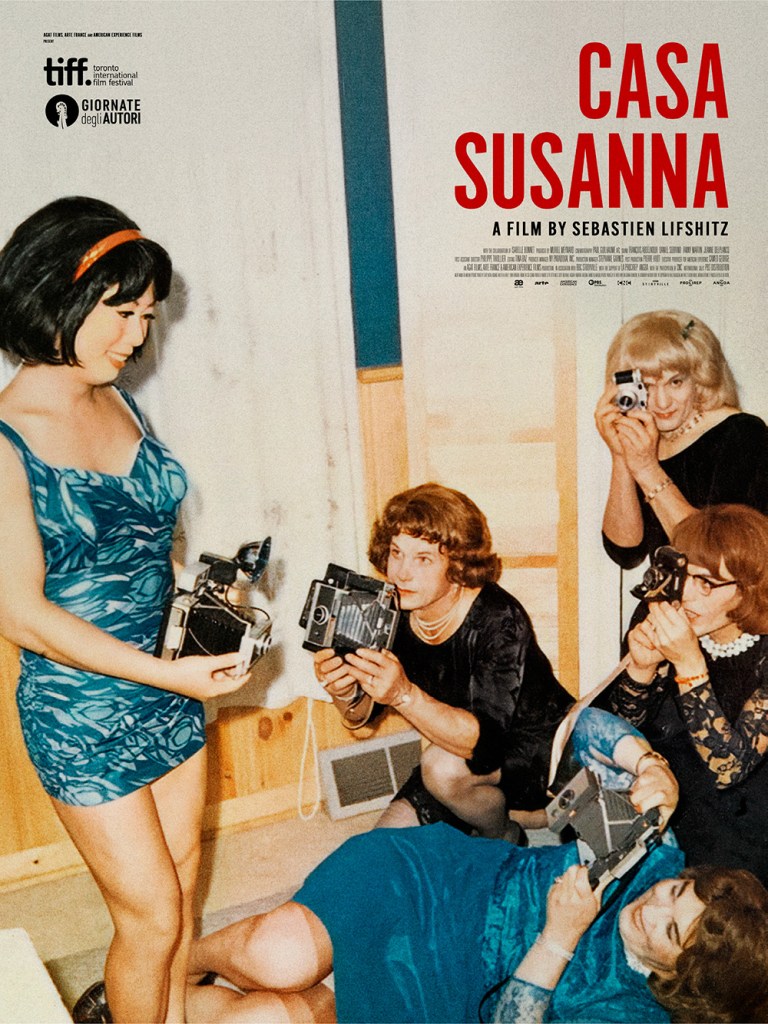
Casa Susanna


Please join Cultivate Cinema Circle for Love is Love: Sébastien Lifshitz’s LGBTQ+ Portraits, five films directed by Frenchman Sébastien Lifshitz. Last up is Casa Susanna [2022].


Event Sponsors:

Venue Information:

Downtown Central Library Auditorium
1 Lafayette Square, Buffalo, NY 14203
(Enter from Clinton Street between Oak and Washington Streets)
716-858-8900 • www.BuffaloLib.org
COVID protocol will be followed.


Synopsis

Synopsis courtesy of press kit:

In the 1950s and ‘60s, an underground network of transgender women and cross-dressing men found refuge at a modest house in the Catskills region of New York. Known as Casa Susanna, the house provided a safe place for them to express their true selves and live for a few days as they had always dreamed—dressed as women without fear of being incarcerated or institutionalized for their self-expression. Told through the memories of those whose visits to the house would change their lives, the film provides a moving look back at a secret world where the persecuted and frightened found freedom, acceptance and, often, the courage to live their lives out of the shadows. A co-production with ARTE, CASA SUSANNA is directed by the critically acclaimed French filmmaker Sebastien Lifshitz.

Using a rich trove of color photos of Casa Susanna’s guests, archival footage and personal remembrances, the film reconstructs the forgotten life of Susanna Valenti, the courageous woman who ran the house. From her enlistment in the army as a man to her marriage to Marie, an eccentric older Italian woman, Susanna led a life that, even today, many would find hard to imagine. Like Susanna, many who came to the Catskills house were married and fathers, working as airplane pilots, tugboat captains, film directors and authors. They found each other and Casa Susanna through word-of-mouth and Transvestia, a magazine for and by the trans and cross-dressing community. In the film, two people whose lives were forever changed at Casa Susanna, Diane and Kate, travel back to the now-abandoned site and share their memories of a time when people like them, from all over the country, came to a place where they were free to dress and live as women from morning to night.

Tidbits:

  • Venice Film Festival – 2022 – Venice Days
  • Toronto International Film Festival – 2022
  • CPH:DOX – 2023
  • BFI London Film Festival – 2022
  • DOC NYC – 2022

Director’s Statement

Courtesy of press kit:

In the early 2000s, while writing WILD SIDE, a movie about a transgender person, I plunged into Paris’ underground scene. Over the months, I met a host of transgender women. The chaotic nature of their life stories came across as a terrible reflection of the way society had rejected and misunderstood them. Meeting these women convinced me that I had a duty to depict their lives, so trans identity might be better understood and accepted.

While researching WILD SIDE, I stumbled on a book mysteriously entitled Casa Susanna. To my surprise, I discovered this contained a collection of images depicting a US-based trans and cross-dressing community of the 1950s and ‘60s. The most striking thing was that they did not seem to be in costume. Quite the opposite: you could tell that they were carefully, sensitively, intent on embodying elegant, upper-middle-class American womanhood, a woman next door as Life Magazine or Harper’s Bazaar might have wanted us to see her. There was no accompanying text, just a short preface explaining that these pictures had been found by an antique-dealer couple at a flea market in New York City. There was nothing on the back of the pictures either and no correspondence to support provenance or history. The only words that did appear in one of the pictures was a wooden sign on a tree trunk that read Casa Susanna. Beside the tree stood a tall, long-haired brunette in a flower-print dress. It was summer. The weather was very sunny. This, people felt, must be Susanna, proudly standing outside what must be her own house.

Years passed. I made WILD SIDE, then a film portrait of Bambi, one of the first transgender women in France, and most recently PETITE FILLE ( Little Girl ), a documentary about Sasha, a seven-year-old trans girl. All three movies relate to trans identity in different eras. Together they make up a history of sorts from the 1940s to the present in France.

Then in 2016, I was offered the opportunity to organize a vast photographic exhibit, showing images from my own collection. This was Mauvais Genre ( Under Cover: A Secret History of Cross Dressers ). The show contained more than 500 amateur photographs depicting various forms of cross-dressing from the 19th century to the 1980s. As a result, I met Isabelle Bonnet, a photographic historian who had written a paper on the Casa Susanna pictures. Sheer grit had enabled Isabelle to identify and meet with some of the people shown in these mysterious photographs and to discover the true identity of Susanna herself.

When I read Isabelle’s paper, the mass of archival material found, and the discovery of surviving eyewitnesses convinced me I had to make a movie. So I went to New York in the late summer of 2021 and traveled up to the Catskills in search of Casa Susanna. I have been lucky enough to be able to bring this secret history, this invisible world, back to life with the help of Kate, Diana, Betsy and Gregory. Now their story, the story of a clandestine community, is there for all to see. With it, a fragment of queer history, stretching from the McCarthy era to the 1970s, is revealed. The unsettled nature of their existences and their bravery ring loud and clear. But now a new conservatism is rearing its head again and the rights of yesteryear, fiercely won, may yet again be challenged. The struggle isn’t over.


Director Bio

Sébastien Lifshitz, © AGAT FILMS & CIE – ARTE France. Courtesy of Music Box Films

“My work centers essentially on the idea of the portrait, that is to pick an individual and try to picture his or her inner landscape – one could almost call it the inner space. And the discontinued narrative helps me to approach it.”

Courtesy of The Lives of Thérèse press kit:

After studying art history, Sébastien Lifshitz began working in the world of contemporary art in 1990, assisting curator Bernard Blistène at the Pompidou Center, and photographer Suzanne Lafont. In 1994, he turned to filmmaking with his first short, Il faut que je l’aime.

In 1995, he made a documentary about film director Claire Denis, and in 1998 he completed his mid-length feature Open Bodies, which was selected for numerous international film festivals, including Cannes and Clermont-Ferrand, and won the Prix Jean Vigo and the Kodak Award for Best Short Film. In 1999, he directed Cold Lands for Arte as part of their series Gauche-Droite. The film was selected for the Venice Film Festival.

In 2000, he directed his first full-length feature, Come Undone, hailed by the critics and released internationally. In 2001, his second full-length feature, a documentary – road movie entitled The Crossing, was selected for the Director’s Fortnight in Cannes. In 2004 he began shooting Wild Side, which went on to be selected for numerous international festivals and won, among other awards, the Berlin Film Festival’s Teddy Award. In 2009 he shot Going South, which was selected for the 2010 Berlin Film Festival. Then in 2012, he directed Les Invisibles, a documentary film selected in Cannes Film Festival in the Official Selection. The film won the César (French Academy Award) for Best Documentary of 2013. That same year, he completed the documentary Bambi which was presented at the Berlin Film Festival, where it won the Teddy Award. In 2014, Sébastien Lifshitz received the «Chevalier de l’Ordre des Arts et Lettres.»

Filmography:

  • Casa Susanna (2022)
  • Bambi, une nouvelle femme [Bambi, A French Woman] (2021)
  • Petite Fille [Little Girl] (2020)
  • Avenue de lamballe (2019)
  • Adolescents (2019)
  • Les vies de Thérèse [The Lives of Thérèse] (2016)
  • Bambi (2013)
  • Les invisibles [The Invisibles] (2012)
  • Plein sud [Going South] (2009)
  • Jour et nuit (2008)
  • Les temoins (2006)
  • Wild Side (2004)
  • La traversée [The Crossing] (2001)
  • Presque rien [Come Undone] (2000)
  • Les terres froides [Cold Lands] (1999)
  • Les corps ouverts [Open Bodies] (1998)
  • Claire Denis la vagabonde (1995)
  • Il faut que je l’aime (1994)

Little Girl – May 27th, 2023

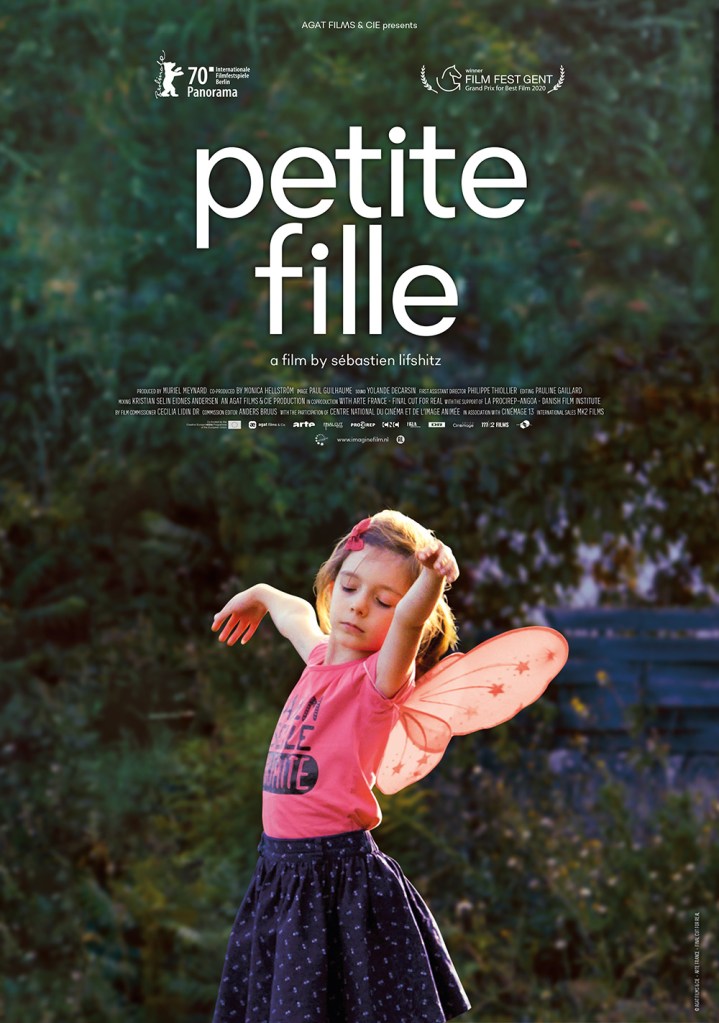
Little Girl


Please join Cultivate Cinema Circle for Love is Love: Sébastien Lifshitz’s LGBTQ+ Portraits, five films directed by Frenchman Sébastien Lifshitz. Next up is Little Girl [2020].


Event Sponsors:

Venue Information:

Downtown Central Library Auditorium
1 Lafayette Square, Buffalo, NY 14203
(Enter from Clinton Street between Oak and Washington Streets)
716-858-8900 • www.BuffaloLib.org
COVID protocol will be followed.


Synopsis

Synopsis courtesy of press kit:

LITTLE GIRL is the moving portrait of 7-year-old Sasha, who has always known that she is a girl. Sasha’s family has recently accepted her gender identity, embracing their daughter for who she truly is while working to confront outdated norms and find affirmation in a small community of rural France. Realized with delicacy and intimacy, Sébastien Lifshitz’s documentary poetically explores the emotional challenges, everyday feats, and small moments in Sasha’s life.

Out of respect and confidentiality to the family, full names will not be provided in the cast list or photo credits for this documentary. Thank you for honoring the family’s anonymity with any feature and review consideration. We hope that Sasha and her family’s story inspires others to affirm children who are comfortable addressing their gender identity publicly and that they are able to continue living out their beautiful life, uninterrupted.

Tidbits:

  • Berlin International Film Festival – 2020
  • CPH:DOX – 2020
  • European Film Awards – 2020 – Nominee: European Documentary
  • European Film Awards – 2020 – Winner: European Sound Designer

Director Bio

Sébastien Lifshitz, © AGAT FILMS & CIE – ARTE France. Courtesy of Music Box Films

“My work centers essentially on the idea of the portrait, that is to pick an individual and try to picture his or her inner landscape – one could almost call it the inner space. And the discontinued narrative helps me to approach it.”

Courtesy of The Lives of Thérèse press kit:

After studying art history, Sébastien Lifshitz began working in the world of contemporary art in 1990, assisting curator Bernard Blistène at the Pompidou Center, and photographer Suzanne Lafont. In 1994, he turned to filmmaking with his first short, Il faut que je l’aime.

In 1995, he made a documentary about film director Claire Denis, and in 1998 he completed his mid-length feature Open Bodies, which was selected for numerous international film festivals, including Cannes and Clermont-Ferrand, and won the Prix Jean Vigo and the Kodak Award for Best Short Film. In 1999, he directed Cold Lands for Arte as part of their series Gauche-Droite. The film was selected for the Venice Film Festival.

In 2000, he directed his first full-length feature, Come Undone, hailed by the critics and released internationally. In 2001, his second full-length feature, a documentary – road movie entitled The Crossing, was selected for the Director’s Fortnight in Cannes. In 2004 he began shooting Wild Side, which went on to be selected for numerous international festivals and won, among other awards, the Berlin Film Festival’s Teddy Award. In 2009 he shot Going South, which was selected for the 2010 Berlin Film Festival. Then in 2012, he directed Les Invisibles, a documentary film selected in Cannes Film Festival in the Official Selection. The film won the César (French Academy Award) for Best Documentary of 2013. That same year, he completed the documentary Bambi which was presented at the Berlin Film Festival, where it won the Teddy Award. In 2014, Sébastien Lifshitz received the «Chevalier de l’Ordre des Arts et Lettres.»

Filmography:

  • Casa Susanna (2022)
  • Bambi, une nouvelle femme [Bambi, A French Woman] (2021)
  • Petite Fille [Little Girl] (2020)
  • Avenue de lamballe (2019)
  • Adolescents (2019)
  • Les vies de Thérèse [The Lives of Thérèse] (2016)
  • Bambi (2013)
  • Les invisibles [The Invisibles] (2012)
  • Plein sud [Going South] (2009)
  • Jour et nuit (2008)
  • Les temoins (2006)
  • Wild Side (2004)
  • La traversée [The Crossing] (2001)
  • Presque rien [Come Undone] (2000)
  • Les terres froides [Cold Lands] (1999)
  • Les corps ouverts [Open Bodies] (1998)
  • Claire Denis la vagabonde (1995)
  • Il faut que je l’aime (1994)

Les Invisibles – April 29th, 2023

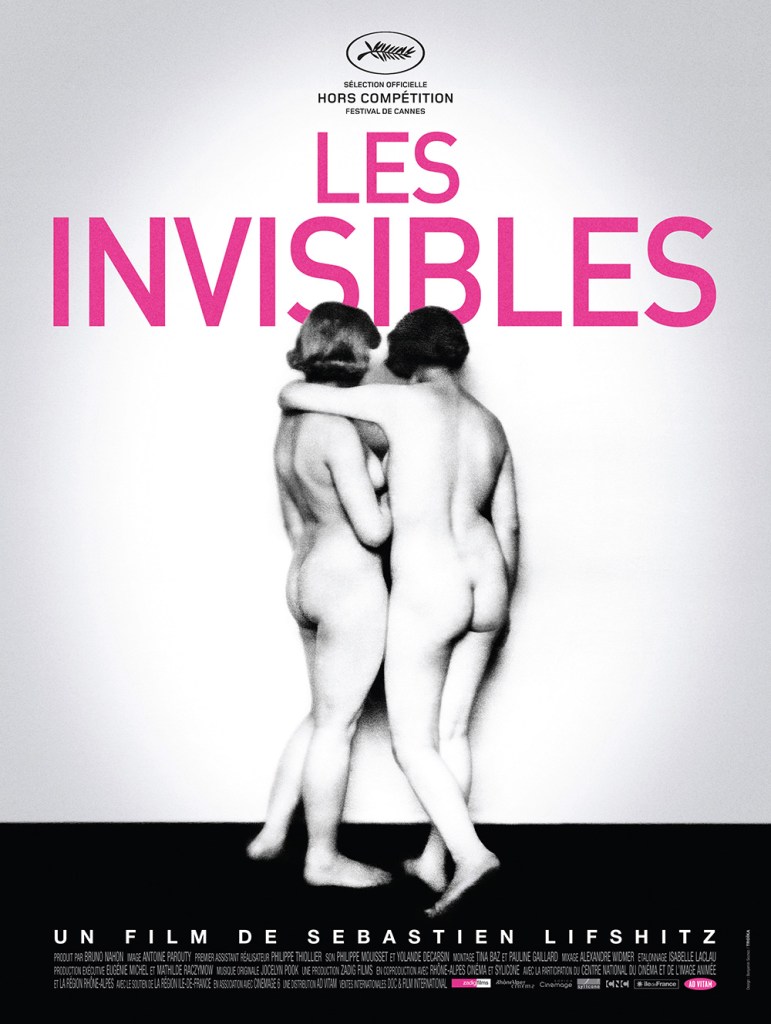
Les Invisibles


Please join Cultivate Cinema Circle for Love is Love: Sébastien Lifshitz’s LGBTQ+ Portraits, five films directed by Frenchman Sébastien Lifshitz. Next up is Les Invisibles [2012].


Event Sponsors:

Venue Information:

Downtown Central Library Auditorium
1 Lafayette Square, Buffalo, NY 14203
(Enter from Clinton Street between Oak and Washington Streets)
716-858-8900 • www.BuffaloLib.org
COVID protocol will be followed.


Synopsis

Synopsis courtesy of The Party Sales:

Men and women, born between the wars. They have nothing in common except their homosexuality, and their decision to live openly at a time when society rejected them. They’ve loved, struggled, desired, made love. Today they tell us about their pioneering lives, and how they navigated the desire to remain ordinary with the need to liberate themselves in order to thrive. They were fearless.

Tidbits:

  • Cannes Film Festival – 2012
  • BFI London Film Festival – 2012
  • César Awards – 2013 – Winner: Best Documentary Film

Director Bio

Sébastien Lifshitz, © AGAT FILMS & CIE – ARTE France. Courtesy of Music Box Films

“My work centers essentially on the idea of the portrait, that is to pick an individual and try to picture his or her inner landscape – one could almost call it the inner space. And the discontinued narrative helps me to approach it.”

Courtesy of The Lives of Thérèse press kit:

After studying art history, Sébastien Lifshitz began working in the world of contemporary art in 1990, assisting curator Bernard Blistène at the Pompidou Center, and photographer Suzanne Lafont. In 1994, he turned to filmmaking with his first short, Il faut que je l’aime.

In 1995, he made a documentary about film director Claire Denis, and in 1998 he completed his mid-length feature Open Bodies, which was selected for numerous international film festivals, including Cannes and Clermont-Ferrand, and won the Prix Jean Vigo and the Kodak Award for Best Short Film. In 1999, he directed Cold Lands for Arte as part of their series Gauche-Droite. The film was selected for the Venice Film Festival.

In 2000, he directed his first full-length feature, Come Undone, hailed by the critics and released internationally. In 2001, his second full-length feature, a documentary – road movie entitled The Crossing, was selected for the Director’s Fortnight in Cannes. In 2004 he began shooting Wild Side, which went on to be selected for numerous international festivals and won, among other awards, the Berlin Film Festival’s Teddy Award. In 2009 he shot Going South, which was selected for the 2010 Berlin Film Festival. Then in 2012, he directed Les Invisibles, a documentary film selected in Cannes Film Festival in the Official Selection. The film won the César (French Academy Award) for Best Documentary of 2013. That same year, he completed the documentary Bambi which was presented at the Berlin Film Festival, where it won the Teddy Award. In 2014, Sébastien Lifshitz received the «Chevalier de l’Ordre des Arts et Lettres.»

Filmography:

  • Casa Susanna (2022)
  • Bambi, une nouvelle femme [Bambi, A French Woman] (2021)
  • Petite Fille [Little Girl] (2020)
  • Avenue de lamballe (2019)
  • Adolescents (2019)
  • Les vies de Thérèse [The Lives of Thérèse] (2016)
  • Bambi (2013)
  • Les invisibles [The Invisibles] (2012)
  • Plein sud [Going South] (2009)
  • Jour et nuit (2008)
  • Les temoins (2006)
  • Wild Side (2004)
  • La traversée [The Crossing] (2001)
  • Presque rien [Come Undone] (2000)
  • Les terres froides [Cold Lands] (1999)
  • Les corps ouverts [Open Bodies] (1998)
  • Claire Denis la vagabonde (1995)
  • Il faut que je l’aime (1994)

Bambi, A French Woman – April 22nd, 2023

Bambi, A French Woman


Please join Cultivate Cinema Circle for Love is Love: Sébastien Lifshitz’s LGBTQ+ Portraits, five films directed by Frenchman Sébastien Lifshitz. First up is Bambi, A French Woman [Bambi, une nouvelle femme] [2021], a new longer cut of his 2013 documentary short Bambi.


Event Sponsors:

Venue Information:

Downtown Central Library Auditorium
1 Lafayette Square, Buffalo, NY 14203
(Enter from Clinton Street between Oak and Washington Streets)
716-858-8900 • www.BuffaloLib.org
COVID protocol will be followed.


Synopsis
Synopsis courtesy of website and The Party Sales:

Bambi was born in the suburb of Algiers in Bordj-Ménaïel in 1935. Her name was Jean-Pierre. Against all expectations, he tears himself away from his native land that he loves so much to join the Paris of the 1950s. He then begins a new life, where he will be able to free himself from his fears, from his malaise which the secret carefully. Thanks to the world of cabarets and his new friends at the Caroussel, he began his transformation and very quickly became a music hall star, better known as Bambi. Jean-Pierre is now called Marie-Pierre Pruvot, she is 77 years old and lives on a small pension from the National Education. It is she who tells us about her funny life.

The film will be constructed as a sort of collage made up of photos, super 8 images filmed by Bambi herself, or by her friends, including the famous Ladybug, the first famous transsexual in France; scraps of archives recovered from French or Italian television; excerpts from fiction films where Bambi played small roles.

Bambi’s life is almost a screenwriter’s invention, except it’s a real life and she’s the one who lived it. With this mosaic of sources, we are going to tell the story of a woman who was multiple, the story of a life where Bambi had to glue together faces so different from herself.

Director’s Cut:

From the day she was born in Algiers, Marie-Pierre has always wanted to wear dresses and has stubbornly refused her given name: Jean-Pierre. At the age of 17, her life takes a major turn when she comes upon a drag show on tour: le Carrousel de Paris. Marie-Pierre becomes Bambi, and within a few years establishes herself as a legendary figure of the Parisian cabaret scenes of the 50s and 60s. By collecting the story of one of the first transgender women, Sebastien Lifshitz continues his work initiated with Wild Side and Little Girl and portraits a forceful personality. This updated version of the film extends and deepens the short-film released in 2013 to become the feature-length version the director has always dreamt of making.


Director Bio

Sébastien Lifshitz, © AGAT FILMS & CIE – ARTE France. Courtesy of Music Box Films

“My work centers essentially on the idea of the portrait, that is to pick an individual and try to picture his or her inner landscape – one could almost call it the inner space. And the discontinued narrative helps me to approach it.”

Courtesy of The Lives of Thérèse press kit:

After studying art history, Sébastien Lifshitz began working in the world of contemporary art in 1990, assisting curator Bernard Blistène at the Pompidou Center, and photographer Suzanne Lafont. In 1994, he turned to filmmaking with his first short, Il faut que je l’aime.

In 1995, he made a documentary about film director Claire Denis, and in 1998 he completed his mid-length feature Open Bodies, which was selected for numerous international film festivals, including Cannes and Clermont-Ferrand, and won the Prix Jean Vigo and the Kodak Award for Best Short Film. In 1999, he directed Cold Lands for Arte as part of their series Gauche-Droite. The film was selected for the Venice Film Festival.

In 2000, he directed his first full-length feature, Come Undone, hailed by the critics and released internationally. In 2001, his second full-length feature, a documentary – road movie entitled The Crossing, was selected for the Director’s Fortnight in Cannes. In 2004 he began shooting Wild Side, which went on to be selected for numerous international festivals and won, among other awards, the Berlin Film Festival’s Teddy Award. In 2009 he shot Going South, which was selected for the 2010 Berlin Film Festival. Then in 2012, he directed Les Invisibles, a documentary film selected in Cannes Film Festival in the Official Selection. The film won the César (French Academy Award) for Best Documentary of 2013. That same year, he completed the documentary Bambi which was presented at the Berlin Film Festival, where it won the Teddy Award. In 2014, Sébastien Lifshitz received the «Chevalier de l’Ordre des Arts et Lettres.»

Filmography:

  • Casa Susanna (2022)
  • Bambi, une nouvelle femme [Bambi, A French Woman] (2021)
  • Petite Fille [Little Girl] (2020)
  • Avenue de lamballe (2019)
  • Adolescents (2019)
  • Les vies de Thérèse [The Lives of Thérèse] (2016)
  • Bambi (2013)
  • Les invisibles [The Invisibles] (2012)
  • Plein sud [Going South] (2009)
  • Jour et nuit (2008)
  • Les temoins (2006)
  • Wild Side (2004)
  • La traversée [The Crossing] (2001)
  • Presque rien [Come Undone] (2000)
  • Les terres froides [Cold Lands] (1999)
  • Les corps ouverts [Open Bodies] (1998)
  • Claire Denis la vagabonde (1995)
  • Il faut que je l’aime (1994)

Links

Here is a curated selection of links for additional insight/information:

  • Cultivate Cinema Circle info-sheet – link
  • “There have been moments in my life that have been so visually impacting that they are forever engraved vividly in my memory. I remember coming home, putting down my bags and hurriedly opening my newly bought thrift-store treasure. I sat in silence on my futon (as I had no other furniture) with an extremely bright bare light bulb over me as the wall-unit air conditioner hummed away. As I began to turn the pages I became transfixed by the extraordinary imagery before me, depicting ‘transvestites’ of the 1950s Parisian cabarets in glamour, candid, performance and group photos. I was simply astounded. Who were these creatures? How could this have existed then? How were they so beautiful? How did they have breasts? As my mind raced with endless questions I turned the pages and came upon a stunning blonde that looked like an ethereal goddess of the silver screen. The caption simply read ‘Bambi.’ Transition is unique for everyone. People often ask me, “When did you know you were trans?” – as if it was some sort of epiphany in which suddenly everything lights up theatrically, bells sound, a sequined halo appears and you declare: ‘I AM WOMAN.’ My journey was foggy at best. And in another of those visually impacting moments in my life, it was not until I saw beautiful transsexual women in American pageant videos that I realized this was possible and that it was possibly me.” — Marie-Pierre Pruvot (Bambi), Antidote [2022] – link
  • “In 2013 Sébastien Lifshitz’s documentary, Bambi, won the Teddy Award for Best Documentary at the Berlin International Film Festival, one of a series of prizes for films exploring LGBT themes as decided by an independent committee of judges. Bambi tells the remarkable story of Marie-Pierre Pruvot, a French transsexual who became one of the most famous and long-standing performers at Le Carrousel de Paris, the Parisian nightclub where the Travesty Revue drew sell-out crowds. Pruvot, now 78, tells her story in conventional documentary fashion – straight to camera with no interventions from her interviewer – intercut with archive performance footage and Pruvot’s own home movies, filmed on Super 8. This standard, even old-fashioned, format works here partly because the world of the story is so fascinating, but mainly because Pruvot herself is such an intelligent, thoughtful and articulate subject…Sébastien Lifchitz has created a very clear, direct, narrative here, as determined by Pruvot’s telling of her own story in her own way, and there is an element of performance in that. Some other voices might have been a good idea – Pruvot’s siblings perhaps? – and the film could easily have been extended to feature length. As it is, this is sixty minutes in Bambi’s company that left me wanting more. More than anything, what you take away from this film is an approach to life that faces up to, and faces down, the challenges that present themselves. Marie-Pierre Pruvot is an inspirational figure because she dared to create the person she knew she is, rather than remain the person she was born as.” — Michael Langan, Polari Magazine [2013] – link