Please join Cultivate Cinema Circle as we co-present Squeaky Wheel’s summer film series entitled Three Storms for Summer Eves. We continue with Renée Green’s Endless Dreams and Water Between [2009].
Screening Date: Wednesday, August 14th, 2019 | 7:00pm
Specifications: 2009 / 70 minutes / English / Color
Director(s): Renée Green
Tickets:$7.00 General Admission / $5.00 for Squeaky Members / Free for ArtsAccess pass holders
Event Sponsors:
Venue Information:
Market Arcade Complex (first floor) 617 Main Street, Buffalo, NY 14203
Synopsis
Courtesy of website:
Renée Green’s Endless Dreams and Water Between is a feature film with four fictitious characters sustaining an epistolary exchange in which their “planetary thought” is woven with the physical locations they inhabit: the island of Manhattan, the island of Majorca, in Spain, and the islands and peninsula that form the San Francisco Bay Area. Connected through ruminations on the 17th century author George Sand (Amantine Lucile Aurore Dupin), the characters’ reflections and dreams enact what could be described as “an archipelagic mind,” linking worlds, time, and space.
Professor Renée Green is an artist, filmmaker and writer. Via films, essays and writings, installations, digital media, architecture, sound-related works, film series and events her work engages with investigations into circuits of relation and exchange over time, the gaps and shifts in what survives in public and private memories as well as what has been imagined and invented. She also focuses on the effects of a changing transcultural sphere on what can now be made and thought.
Her exhibitions, videos and films have been seen throughout the world in museums, biennales and festivals.
Since her arrival at MIT in 2011, Green has had solo exhibitions at the Museum of Modern Art, New York; MAK Center for Art and Architecture at the Schindler House, Los Angeles; Lumiar Cité, Lisbon; Galerie Nagel Draxler, Berlin; Fondazione Antonio Ratti, Como, Italy; Prefix Institute for Contemporary Art, Toronto, and the Carpenter Center for Visual Arts, Harvard University, Cambridge, MA. In addition, her work has been featured in group exhibitions at the following institutions: Whitney Museum, New Museum, and the Studio Museum in Harlem, New York; Hammer Museum, and Museum of Contemporary Art, both in Los Angeles; Walker Art Center, Minneapolis; Museum of Contemporary Art, Chicago; Institute of Contemporary Art, Philadelphia; Museum Moderner Kunst, Vienna; Centro Andaluz de Arte Contemporáneo, Seville; Museum der Moderner, Salzburg , and many others.
In 2014, Duke University Press published Other Planes of There: Selected Writings.
Ongoing Becomings, a survey exhibition of 20 years of her work was organized in 2009 by the Musée Cantonal des Beaux-Arts, Lausanne; in 2010, Endless Dreams and Time-Based Streams, a survey exhibition highlighting her time-based work was produced in the Yerba Buena Center for the Arts, San Francisco. In 2008, Le rêve de l’artiste et du spectateur, a retrospective of Green’s films took place at the Jeu de Paume, in Paris.
Other selected solo exhibitions venues include the National Maritime Museum, Greenwich; Portikus, Frankfurt; Centro Cultural de Bélem, Lisbon; Fundació Antoni Tàpies, Barcelona; Contemporary Arts Center, Cincinnati; Vienna Secession; Stichting de Appel, Amsterdam & the Museum of Contemporary Art, Los Angeles.
Green’s work has been included in many group exhibitions; selected venues include Centro Galego de Arte Contemporánea, Santiago de Compostela, Spain; Künstlerhaus, Halle für Kunst und Medien (KM–) in Graz, Austria; Museum Ludwig, Cologne; MACBA, Barcelona; Centre Georges Pompidou, Paris; Institute of Contemporary Art, London; Museum of Contemporary Art, Chicago; UCLA Hammer Museum, Los Angeles; International Center of Photography, New York & Louisiana Museum of Art, Copenhagen; her work has also been presented at the Whitney, Venice, Johannesburg, Kwangju, Berlin, Sevilla, Manifesta & Istanbul Biennials, as well as in Documenta 11.
In spring 2014, she completed one phase of her ongoing Cinematic Migrations project, a two-year collaboration with John Akomfrah, OBE, and Lina Gopaul of Smoking Dogs Films, with a symposium.
Her books include:
Other Planes of There: Selected Writings (2014)
Endless Dreams and Time-Based Streams (2010)
Ongoing Becomings (2009)
Negotiations in the Contact Zone (2003)
Between and Including (2001)
Shadows and Signals (2000)
Artist/Author: Contemporary Artists’ Books
Certain Miscellanies: Some Documents (1996)
After the Ten Thousand Things (1994)
Camino Road (1994)
World Tour (1993)
Green has published essays and fictions in Transition, October, Frieze, Texte zur Kunst, Spex, Multitudes, Sarai Reader, and Collapse, among other magazines and journals. Her essays, as well as essays about her work, have also appeared in an assortment of international cultural and scholarly books.
Green has been a Professor at the Academy of Fine Arts in Vienna (1997-2002); a Distinguished Artist/Professor at the University of California Santa Barbara (2003-2005), and Dean of Graduate Studies and Professor at the San Francisco Art Institute (2005-2011). She is also a guest faculty at the Maumaus School of Visual Arts in Lisbon since 2000, as well as of the Independent Study Program at the Whitney Museum of Art since 1991, where she was Director of its Studio program in 1996-1997.
Please join Cultivate Cinema Circle as we co-present Squeaky Wheel’s summer film series entitled Three Storms for Summer Eves. We continue with RaMell Ross’s Oscar-nominated documentary Hale County This Morning, This Evening [2018].
Screening Date: Wednesday, July 17th, 2019 | 7:00pm
An inspired and intimate portrait of a place and its people, Hale County This Morning, This Evening looks at the lives of Daniel Collins and Quincy Bryant, two young African American men from rural Hale County, Alabama, over the course of five years. Collins attends college in search of opportunity while Bryant becomes a father to an energetic son in an open-ended, poetic form that privileges the patiently observed interstices of their lives. The audience is invited to experience the mundane and monumental, birth and death, the quotidian and the sublime. These moments combine to communicate the region’s deep culture and provide glimpses of the complex ways the African American community’s collective image is integrated into America’s visual imagination.
In his directorial debut, award-winning photographer and director RaMell Ross offers a refreshingly direct approach to documentary that fills in the gaps between individual black male icons. Hale County This Morning, This Evening allows the viewer an emotive impression of the Historic South, trumpeting the beauty of life and consequences of the social construction of race, while simultaneously offering a testament to dreaming despite the odds.
Tidbits:
Sundance Film Festival – 2018 – Winner: U.S. Documentary Special Jury Award for Creative Vision
Gotham Awards – 2018 – Winner: Best Documentary
International Documentary Association – 2018 – Nominee: Best Feature & Best Editing
International Documentary Association – 2018 – Winner: Best Music Score
Independent Spirit Awards – 2019 – Nominee: Best Documentary
Directors Guild of America – 2019 – Nominee: Outstanding Directorial Achievement in Documentary
Academy Awards – 2019 – Nominee: Best Documentary Feature
RaMell Ross is a filmmaker, photographer and writer. His photographs have been exhibited around the world and in the US most recently at a solo exhibition at Aperture Foundation in New York and in the landmark exhibition “New Southern Photography” at the Ogden Museum in New Orleans. His writing has appeared in such outlets as The New York Times, Film Quarterly and the Walker Arts Center. In 2015, he was selected as one of Filmmaker Magazine’s “25 New Faces of Independent Film” and as a New Frontier Artist in Residence at the MIT Media Lab. In 2016, he was a finalist for the Aperture Portfolio Prize, winner of an Aaron Siskind Individual Photographer’s Fellowship and a Sundance Art of Nonfiction Fellow. In 2017, he was selected for Rhode Island Foundation’s Robert and Margaret Maccoll Johnson Artist Fellowship. RaMell’s debut feature documentary HALE COUNTY THIS MORNING, THIS EVENING won a Special Jury Prize for Creative Vision at its premiere at the Sundance Film Festival in 2018 and has since gone on to secure international theatrical, broadcast and streaming distribution as well as garnering multiple awards at top tier film festivals. The film was nominated for two IDA awards and five Cinema Eye Honors. The film won the Gotham Award for Best Documentary and the Cinema Eye Honor for Outstanding Achievement in Nonfiction Feature Filmmaking and is now nominated for the ICS, Independent Spirit Award and DGA Documentary Award. RaMell is currently on faculty at Brown University’s Visual Arts Department and recently completed his first short film, EASTER SNAP, which is premiering at the 2019 Sundance Film Festival.
Filmography:
Easter Snap (2019) (short)
Hale County This Morning, This Evening (2018)
Links
Here is a curated selection of links shared on our Facebook page for additional insight/information:
7/16/19 – “It’s not every day that you witness a new cinematic language being born, but watching RaMell Ross’s evocatively titled documentary Hale County This Morning, This Evening qualifies.” Bilge Ebiri, The Village Voice – link
7/16/19 – RaMell Ross’ Oscar-nominated documentary Hale County This Morning, This Evening picked up another award notice this morning with an Emmy nomination for “Exceptional Merit in Documentary Filmmaking” – link
Please join Cultivate Cinema Circle as we co-present Squeaky Wheel’s summer film series entitled Three Storms for Summer Eves. We start with Apichatpong Weerasethakul’s feature debut Blissfully Yours [Sud sanaeha] [2002].
Screening Date: Wednesday, June 19th, 2019 | 7:00pm
Roong longs for the day when she can be in the arms of her Burmese lover, Min, an illegal immigrant. She pays Orn, an older woman to take care of Min while she looks for a place for them to share their happiness.
One afternoon, Min takes Roong to have a picnic in the jungle where they feel free to express their love. Meanwhile, Orn has also gone to the jungle with Tommy, her husband’s co-worker.
Filmmaker’s Statement:
“I treasure some kinds of old Thai disaster movies. Many of such tell a forbidden love story between a man and a woman that the mother earth destroyed them. Similarly, Blissfully Yours contains innocent narrative and simple characters. The settings are open landscapes and the disaster plot is there, except that it is transformed into another kind of disaster.”
Tidbits:
Cannes Film Festival – 2002 – Winner: Un Certain Regard
Toronto International Film Festival – 2002
AFI Fest – 2002
Director Bio
“I, as a filmmaker, treat my works as I do my own sons or daughters. I don’t care if people are fond of them or despise them, as long as I created them with my best intentions and efforts.”
Apichatpong grew up in Khon Kaen in north-eastern Thailand. He began making film and video shorts in 1994, and completed his first feature in 2000. He has also mounted exhibitions and installations in many countries since 1998. Often non-linear, with a strong sense of dislocation, his works deal with memory, subtly addressed personal politics and social issues.
His art projects and feature films have won him widespread recognition and numerous festival prizes, including two prizes from the Cannes Film Festival. In 2005 he was presented with one of Thailand’s most prestigious awards, Silpatorn, by the Thai Ministry of Culture. In 2008, the French Minister of Culture bestowed on him the medal of Chevalier de l’ordre des arts et des letter (Knight of the Order of Arts and Literature). In 2011, he was given another honor for the same field with an Officer Medal, and later in 2017, Commandeurs medal.
His film, Syndromes and a Century, completed in late 2006, was the first Thai film to be selected for competition at the Venice Film Festival. Apichatpong is also one of 20 international artists and filmmakers commissioned to create a short film for the United Nations High Commissioner for Human Rights to mark the 60th anniversary of the Universal Declaration of Human Rights. In 2009, the Austrian Film Museum published a major English language monograph on his work.
His 2009 project, Primitive, consists of a large-scale video installation, an artist’s book, and a feature film, Uncle Boonmee Who Can Recall His Past Lives. The film has won a Palme d’Or prize at the 63rd Cannes Film Festival in 2010, making it the first Southeast Asian film (and the 7th from Asia) to win the most prestigious award in the film world. In 2012, he is invited to participate in Documenta (13), one of the most well-known art exhibitions in Kassel, Germany. Apichatpong also received the Sharjah Biennial Prize at the 2013 Sharjah Biennial 11, UAE. He’s also a recipient of the Fukuoka Prize, Japan, 2013. In late 2014, he received the Yanghyun Art Prize, one of the most prestigious prizes in Korea. In 2016, a retrospective of his films was presented at Tate Britain, UK. Recently, he was the Principal Laureate of the 2016 Prince Claus Awards, the Netherlands. His current project includes Fever Room, a projection performance about displaced consciousness.
Apichatpong currently works and lives in Chiang Mai, Thailand.
Filmography:
Memoria (2021)
The Year of the Everlasting Storm (2021) (segment “Night Colonies”)
30/30 Vision: 3 Decades of Strand Releasing (2019)
Ten Years Thailand (2018) (segment “Song of the City”)
Cemetery of Splendor (2015)
Short Plays (2014) (segment “Thailand”)
Venice 70: Future Reloaded (2013)
3.11 Sense of Home (2011) (segment “Monsoon”)
Quattro Hongkong 2 (2011) (segment “M Hotel”)
Uncle Boonmee Who Can Recall His Past Lives (2010)
Stories on Human Rights (2008) (segment “Mobile Men”)
State of the World (2007) (segment “Luminous People”)
Syndromes and a Century (2006)
Tropical Malady (2004)
The Adventures of Iron Pussy (2003)
Blissfully Yours (2002)
Haunted Houses (2001)
Mysterious Object at Noon (2000)
Links
Here is a curated selection of links shared on our Facebook page for additional insight/information:
6/12/19 – For those uninitiated in the sleepy (in the best way), sensual work of the great Thai director Apichatpong Weerasethakul, let Senses of Cinema give you a thorough overview of his career – link
6/18/19 – “The film, inflected with local folklore and history, was lauded for its slow, sensual cinema style, landing it the Un Certain Regard prize at the Cannes Film Festival in 2002. When it premiered in Thailand, it was the recipient of censoring revisions for its explicit sex scenes and nudity, alongside its casting of a real-life illegal migrant to play the lead character. Inspired by Weerasethakul’s personal experience of seeing Thai police handcuffing two illegal Burmese migrants at a Bangkok zoo, the film examines how one’s relation to freedom and pleasure is shaped by acts of small indulgence. Before being arrested, how did a leisurely day at the zoo already position the women as resistors of oppression? Blissfully Yours, or Sud Sanaeha (“extreme passion” in Thai), follows this line of inquiry, prying into how those facing social oppression capture simple, defiant pleasures under limited conditions.” Katrya Bolger, cléo journal – link
Ebbo and Vera Velten have been living in Africa for a long time. Ebbo is managing a sleeping sickness program. His work is fulfilling. In contrast, Vera feels increasingly uncomfortable with her life in the expat community of Yaoundé and the separation from her daughter Helen, 14, who is attending boarding school in Germany.
Ebbo has to give up his life in Africa or he loses the women he loves. But he has become a stranger to Europe. His fear of returning increases from day to day.
Years later. Alex Nzila, a young French doctor of Congolese origin, travels to Cameroon to evaluate a development project. He hasn’t been to Africa for a long time. But instead of finding new prospects, he encounters a destructive, lost man: like a phantom, Ebbo slips away from his evaluator.
Tidbits:
Berlin International Film Festival – 2011 – Winner: Best Director (Silver Berlin Bear)
New York Film Festival – 2011
Director Bio / Interview
Bio courtesy of The Match Factory:
Ulrich Köhler was born 1969 in Marburg /Germany and lived in Zaire (now Dem. Rep. of Congo) with his family from 1974 to 1979. He studied Fine Arts in Quimper/France, Philosophy in Hamburg and later on Visual Communication at the University of Fine Arts Hamburg (Diploma 1998), where he made his first short films. His feature films Bungalow (2002) and Windows on Monday (2006) were successful at numerous festivals and won national and international awards, including the German Critics Award for Best First Feature in 2003.
Interview courtesy of press kit:
You tell the story of a man lost between two worlds. Was Ebbo’s character the starting point of the story? I was interested in the world of the international aid workers in Africa. I asked myself how do people live in an environment in which they will always remain privileged outsiders. My parents were aid workers in Zaire. I grew up in a small village on a tributary of the Congo for a few years. My brother and I spent a lot of time on the water and very little time at school. My mother was our teacher.
Is that where the story about the hippo comes from? Yes, there were hippos there and my father used to take us out in a small log boat to follow them. The villagers had warned us, but my father didn’t take it seriously. After we left the village, an American doctor was killed by one of the animals and the villagers believed that it was the hospital director, who had transformed himself into a hippo to kill her.
That sounds like an exciting childhood. Which made our return to Germany even more difficult. We had lost our friends and were forced to give up a free life in nature for a small town in Hessen. It was also a moral shock: Even a nine-year-old could not overlook the unjust distribution of wealth between these two continents.
I pushed Africa far away and in a short time I forgot how to speak Kituba, the local dialect that had become my second mother tongue. My parents on the other hand really wanted to return. Later they worked in the hospital where we shot the film. If I hadn’t wanted to visit them, I would have probably never returned to Africa.
And now you’ve made a film there. Yes and for a long time I couldn’t quite imagine it. Even though my first visit to Cameroon had been a powerful experience, it seemed presumptuous of me as a European to make a film about Africa.
I didn’t want to exploit it thematically. Perhaps it was the novel “Season of Migration to the North” by the Sudanese author Tayeb Salih that finally sparked my courage to examine my relationship to Africa. He tells the story of a Sudanese who returns to his country after having lived in England for many years only to discover that he has lost his homeland. For me, “Sleeping Sickness” is not a film about Africa; it’s a film about Europeans in Africa. It’s a film about Europe.
You begin the second part of your film with the lecture given by a critic of developmental aid. Do you share his views? No. African experts who are advocating the abolition of international aid are popular in the western press. Their solutions are just as dubious to me as the paternalistic activism of Bono and Bob Geldof. On my travels I met many foreign experts that are in a schizophrenic situation: Although they feel that the actual work they do is very useful, they doubt the sense of developmental aid in general.
I don’t believe there are any simple answers and perhaps it’s not even our job to give answers. We ought to above all be more honest and examine which governments we work with and for what reasons. Rich countries can help improve the situation of the poor but that requires sacrifices we are not prepared to make. For example, most experts agree that agricultural subsidies in developed countries hinder development in Africa.
The second main character, Alex, gets quite upset about the neoliberal lecture. But on his first assignment as an evaluator in Africa he loses all illusions. At the end Alex is rather helpless… I can highly identify with his character. I have often felt this way on my trips to Africa. The wish to do things right and have a natural relationship with the people there clashes with our fear of being cheated and exploited. The evaluator Alex Nzila is forced to realize that he cannot assess things from his European perspective.
Alex is in some way Ebbo’s counterpart. A man caught between two worlds. The conversation in the institute’s canteen shows that Europe is a difficult home for him. Alex feels like an outsider, even when he counters his colleagues’ provocations with humor. Despite Sarkozy, French society is far more cosmopolitan than in Germany. In France you find people with African roots in all social classes and professions. But during the casting, I discovered that even there dark-skinned actors are often left to serve stereotypes of illegal immigrants or drug dealers. A character like Alex is rare.
Did you find your African actors in Cameroon? The casting was quite complicated. Ulrike Müller and Kris de Bellair did a great job. The casting makes up 80% of the work of directing actors and that’s often underestimated. Little can go wrong for a director with a good script and the right cast. It’s what saved me on some days. All the African actors came from Cameroon where Kris de Bellair had searched for them. We had wanted to work with amateurs. Professional actors in Cameroon love illustrative acting and exaggerated gestures. Finally we also worked with a few professionals. We realized that they were able to adapt very well when we asked them to concentrate on the situation and go with it.
You have worked with Patrick Orth for quite a long time. Did you have a storyboard or did you decide from situation to situation? The shooting conditions were tough and the preparation time too short. We made a lot of decisions on the day of shooting. I was busy working with the actors and so Patrick had to prepare a lot of things without me. There is tremendous trust between us. We had established a few basics. The night scenes had to be realistic. We wanted to work a lot with flashlights. It was also clear that some scenes would be filmed in several classical angles and not in sequence shots.
The dinner at the Chinese restaurant was the first time I ever used a shot-reverse shot. I am surprised how well the film works with these stylistic breaks.
The film begins with the transport of tropical wood on trucks. Nothing is in place. No one has a home. Even the traditional African clothes come from China. Only at the very end do you get the feeling that Ebbo is where he belongs. Who is the hippo? Unfortunately I didn’t get a chance to ask him. I don’t think he even noticed that he was being filmed.
Filmography:
A Voluntary Year (2019)
In My Room (2018)
Sleeping Sickness (2011)
Montag kommen die Fenster (2006)
Bungalow (2002)
Rakete (1999) (Short)
Palü (1998) (Short)
Feldstraße (1993) (Short)
Links
Here is a curated selection of links shared on our Facebook page for additional insight/information:
11/14/17 – “One of this year’s very best films, and one that directly addresses Europe’s fraught relationship with its colonial and post-colonial relationship with Africa…Ulrich Köhler’s Sleeping Sickness not only focuses on two socio-politically entangled physicians — a German ‘gone native’ and an Congolese-Frenchman with no direct ties to the continent — involved in an African aid mission. It deals quite directly with the multiple levels of corruption and bureaucratic failure built into European NGOs and their African governance, a system of mutual exploitation and double-dealing.” Michael Sicinski at Cargo – link
Please join us for a special screening of Ramon Zürcher’s Das merkwürdige Kätzchen [The Strange Little Cat] [2014] at Squeaky Wheel Film & Media Arts Center.
Screening Date: Wednesday, November 1st, 2017 | 7:00pm
Tickets:$7.00 General Admission / $5.00 for Squeaky Members
Event Sponsors:
Venue Information:
Market Arcade Complex (first floor) 617 Main Street, Buffalo, NY 14203
Synopsis
Courtesy of press kit:
It is a Saturday in autumn, and Karin and Simon are visiting their parents and youngest sister Clara. This family gathering provides the occasion for a dinner together, at which other relatives appear over the course of the day. While the family members animate the apartment’s space with their conversations, everyday activities and cooking preparations, the cat and dog range through the various rooms. They too become a central element in this quotidian familial dance that repeatedly manifests stylized elements, disrupting any naturalistic mode of presentation. In this way, adjoining spaces open up between family drama, fairy tale and the psychological study of a mother.
Tidbits:
Berlin International Film Festival – 2013
Toronto International Film Festival – 2013
AFI Fest – 2013
Director Bio / Note / Interview
Courtesy of press kit:
From 2002 to 2005, he attended Bern University of the Arts (HKB), completing an art degree with a focus on video. In 2005, he received the Kiefer Hablitzel Award for Visual Arts for his video work. Since 2006, he has studied directing at the German Film and Television Academy Berlin (dffb). The Strange Little Cat is his first feature-length film.
Director’s Note:
The Strange Little Cat plays out for the most part in the enclosed area of a family apartment. In this model space, I want to create a condensed universe in which the “thrownness” of an absurd existence glimmers from behind everyday actions and conversations; in which the difficulty of communicating experiences and feelings continually renews the characters’ isolation from one another. The characters are repeatedly compelled to act, simply in order to fill the emptiness of their surroundings. Fleeting moments of mutual understanding, recognition and deep intimacy flicker and reoccur throughout. In these moments, the apartment‘s pulsing emptiness is stilled, and the scream of the space’s silence recedes. This cycle continues until the mundane choreography of everyday life comes to a halt, and the day comes to an end.
Interview:(conducted by Cécile Tollu-Polonowski)
The Strange Little Cat is your first feature-length film. Can you tell us something about its origins?
The project was initiated in the context of a dffb seminar with director Béla Tarr. We had various Kafka texts to choose from, and I opted for The Metamorphosis. The idea was to adapt the literary source very freely, without constraints, to look at the text and see what kind of cinematic universe might emerge. With “The Metamorphosis”, I found myself interested in the juxtaposition of a non-social space (the bedroom, where the insect is located), and a social space (the kitchen). This contrast between the vibrantly animated space of the kitchen and the static space in which characters sleep, where they escape from life (and are allowed to be asocial, so to speak), as well as the presence of animals and the work with a family ensemble were elements of the text that attracted me. I also knew I wanted to do a chamber drama. In other respects, the film ultimately has little to do with Kafka‘s novella. It would be absurd to speak of this as a film adaptation.
I’ve tried a number of things in my recent short films that I revisited here in The Strange Little Cat: a real-time choreography with hardly any temporal jumps, a static camera in contrast to a lively, dynamic staging. However, I had no desire to think in the mode of a short film. Rather, I wanted to make a feature film, particularly as I’ve often had the feeling of creating cinematic sketches with my previous short pieces.
How did you write the screenplay?
I had a collection of ideas in a sketchbook that I imagined would be good for a movie. The first image that interested me during the script’s development consisted of a character sleeping in a room, a cat that scratches on the outside of the closed door, and a mother who watches the cat and lets it continue scratching. I found it interesting enough to use this situation as a basis for further thinking, and as an associative stimulus for the development of additional scenes. In this way a whole web of moments, relationships between spaces, and characters developed. It was like playing billiards: You hit one ball, which knocks against other balls, and these in turn scatter and bump against each other… A network of ideas was set into motion, and gradually a model of the apartment took shape in my mind.
Before I came to Berlin, I painted as a part of my art studies. Even then, it was important to me to avoid settling on a theme for a new painting from the start, for fear of becoming a slave to the idea, or of feeling obligated to commit to it. I simply paint and see what I discover in the brushstrokes, see what develops. Something similar happens to me when writing. It‘s like improvised painting with physical actions, dialogue and sounds. A little like automatic writing. Specific themes only came up little by little. The child-mother theme for instance, then to a certain extent the story of a mother who maybe isn‘t a mother in the classic sense.
After about five months of script development I had a 40-page treatment, which I rewrote into the first draft of a script (170 pages) that still had to be cut down considerably.
I also find that The Strange Little Cat is like an audiovisual sculpture. The film came together additively at first, by collecting and fitting together a wealth of material that could afterwards be sculpted more extensively.
Were the illustrated monologues and still-life montage sequences in the script from the beginning?
Yes. I wanted from the beginning to work with illustrated monologues. I find moments in which characters digress into monologues or into the exact description of a past situation interesting. I also like breaks in which the speaker abruptly leaves the level of the image and we enter into the memory-picture being depicted, so to speak. The character continues to speak, so the language to a certain extent breaks away from the body and generates a memoryspace. The memory-pictures are like “alien shots” in the film, breaking up the chamber drama and the apartment space.
From a formal perspective, the montage sequences with the various still lives were like punctuation marks, used to separate chapters from one another and to bring the objects previously associated with the characters‘ actions into the spotlight, almost as if in a museum. The fascinating thing is that the objects in a certain sense take on emotional resonance because they were associated with an action. In this way, the objects almost become characters. In a classic story, there is a rigorous system of significance and values: This character or some object is important, another less so. Although the viewer doesn‘t regard the objects as being particularly important while watching, they are given an unusual level of significance.
Did much change during the shooting and editing processes?
No, in fact. The film remained quite close to the script. A few pieces of dialogue are improvised. The improvised moments have a nice liveliness in what is otherwise a rather austere space. It was important to me that a choreography emerge out of movement and animation, creating a contrast to the stasis. Unlike the other characters, the mother was always presented rather statically. The other characters are considerably more lively, particularly Clara, the young daughter, who is loud even to the point of screaming. Clara is a body of life, while the mother is rather a body of stasis, tending almost towards death. It was important to me to show this liveliness vividly, presenting a contrast to the mother.
How was the choreography developed? How did you work with the animals?
While I was writing, I had the ideal apartment in my head, and knew how the ideal floor plan was laid out – for instance, where the coffee machine and the sideboard were located. I also knew how characters should move through the space, and how their physical actions should take place. So I had a choreography in mind. Since the real apartment didn‘t correspond completely to this imaginary model apartment, the actions had to be adapted to the real apartment, and the apartment to the actions.
An economical, in a certain sense even simple editing style was very important to me. The actions needed to be carefully planned in order to make a static camera and a low cut frequency possible. The actions were adapted to the edit. One consequence of this was that off-camera events were registered quite strongly, which I quite like. As with the memory-pictures, the scene breaks away from the characters as a result of the off-camera voices and sounds, so that things are taking place unseen.
The points at which the cat and the moth were embedded in this choreography were also set. But you can‘t direct a cat. We always waited until the cat jumped to where it needed to be. The animals forced us to back off from the strict shooting rhythm. It was almost a meditative experience, waiting for the cat to jump onto the table.
How was the collaboration with the cinematographer?
Alex and I had already worked together on a short film, and I‘m glad we made The Strange Little Cat together as well. We‘re very similar, in that it reassures us to make decisions on the scenes as accurately as possible in advance. In this regard, Alex is very precise and focused on specifics. I have a strong need for a static camera, in order to be able to accurately determine the composition of the images and the division of the on- and off-camera action.
Before shooting, we divided the script into shots from beginning to end. If this process showed that something in the text didn‘t work (because it would have resulted in too many cuts, for example), I revised the script. The rhythm of the edits thus in a way co-wrote the screenplay.
Many small details point to an incredible tension in this family. The characters are intimate, but don’t listen to one another. Can you comment on this?
The mother is the character that displays the most passive aggression. For example, she interrupts communication with the use of the loudly droning, nearly screaming mixer. Now and then, it’s as if a pressure cooker suddenly explodes and a surge of violence is released. The film portrays a kind of relay-race of small humiliations and violent acts. Through writing, the mother has come to be the queen of this particular realm. She impresses her psyche on other characters and on the space.
Speech in The Strange Little Cat often wanders off into monologues. Someone being spoken to fails to take up an offer of dialogue, and the speaker notes that no dialogue is taking place. Language is no longer a means of connection; instead, it is perverted, isolating the characters further. They’re locked in their own lives, but have the intense desire to communicate, to share their experience and experiences with others. But they lack a medium enabling them to accomplish this. Language no longer functions.
How did you happen upon the music? Did you always intend to have a musical motif?
A few musical ideas were described in the script, but not all. I originally wanted to use as little music as possible, because for me speech and sounds are the abstract music of the film medium. During the edit, I wanted cello music at certain points. The assistant director, Nicole Schink, suggested the piece that was ultimately used in the film. At the beginning I thought it was too emotional, too dramatic for the film, and for this reason insincere. But I gradually found both courage and pleasure in rendering emotions through music, by using it consciously. I‘m no longer concerned that it might produce false emotions. The music has become very important for the film.
And the title?
It suggested itself to me at the beginning, and simply stuck. I like that it conveys something naive, fairy-tale-like, even romantic. It reminds me of titles like “Peter Schlemihl‘s Miraculous Story”. It‘s also a title that raises certain questions, and is even a bit vexing. Beyond this, I simply loved this title.
Filmography:
The Girl and the Spider (2021)
The Strange Little Cat (2014)
Gestern hat sich meine Freundin ein Fahrrad gekauft (2011) (Short)
Passanten (2010) (Short)
Reinhardtstraße (2009) (Short)
Heute mag ich dieses Lied (2007) (Short)
Links
Here is a curated selection of links shared on our Facebook page for additional insight/information:
10/25/17 – “…a beautiful, mysterious, beguiling cinematic doodle, and an absolute master class in mise-en-scène, unfolding in odd, fragmented frames and precisely choreographed movement within those frames.” Scott Tobias, The Dissolve – link
10/30/17 – “At once the scariest and funniest film of its year despite being neither a horror film nor an outright comedy, The Strange Little Cat by Ramon Zürcher is a compressed formal experiment that boasts some of the most evocative use of off-screen sound space this side of Bresson or Kiarostami.” Jake Cole, Movie Mezzanine – link
Please join us for a special screening of Kirsten Johnson’s Cameraperson [2016] at Squeaky Wheel Film & Media Arts Center. This event is a collaboration with POV, PBS’ award-winning nonfiction film series.
Screening Date: Wednesday, October 4th, 2017 | 7:00pm
A boxing match in Brooklyn; life in postwar Bosnia and Herzegovina; the daily routine of a Nigerian midwife; an intimate family moment at home: these scenes and others are woven into Cameraperson, a tapestry of footage captured over the twenty-five-year career of documentary cinematographer Kirsten Johnson. Through a series of episodic juxtapositions, Johnson explores the relationships between image makers and their subjects, the tension between the objectivity and intervention of the camera, and the complex interaction of unfiltered reality and crafted narrative. A work that combines documentary, autobiography, and ethical inquiry, Cameraperson is both a moving glimpse into one filmmaker’s personal journey and a thoughtful examination of what it means to train a camera on the world.
Tidbits:
Sundance Film Festival – 2016
SXSW Film Festival – 2016
National Board of Review – 2016 – Winner: Freedom of Expression Award
CPH:DOX – 2017
Independent Spirit Awards – 2017 – Nominee: Best Documentary
Director Statement
courtesy of press kit:
The joys of being a documentary cameraperson are endless and obvious: I get to share profound intimacy with the people I film, pursue remarkable stories, be at the center of events as they unfold, travel, collaborate, and see my work engage with the world. I experience physical freedom and the chance for artistic expression and discovery every time I hold a camera. No wonder I’ve been doing it for twenty-five years and love my life.
And yet, the dilemmas I face while holding my camera are formidable. There are the concrete challenges I must meet in the moment—how to frame, find focus, choose what direction to follow. The other troubles are implicit, and often unseen by audiences:
The people I film are in immediate and often desperate need, but I can offer them little to no material assistance.
I can and will leave a place I film—whether a war or a refugee camp—while the people I film cannot.
I traffic in hope without the ability to know what will happen in the future.
I ask for trust, cooperation, and permission without knowing where the filming experience will lead the subject.
I shift the balance of power by my very presence, and act on behalf of one side or another in a conflict.
My work requires trust, intimacy, and total attention. It often feels like a friendship or family—both to myself and the people I film—but it is something different.
I know little about how the images I shoot will be used in the future, and cannot control their distribution or use.
My work can change the way my subject is perceived by the people who surround him or her and can impact the subject’s reputation or safety for years into the future.
I follow stories the director I work for does not need and/or does not want me to follow.
I fail to see or follow stories the director hopes I will follow.
I’ve been aware of these dimensions for most of my career, as is the case for most documentarians, and I have often discussed them with colleagues. What I didn’t know until recently was how much the accumulation of these dilemmas would begin to affect me.
And what I didn’t anticipate when this film began just five years ago was how many people in the world would be using their cell phones as cameras, communicating instantaneously, and seeing images from every part of the globe. Surveillance, political repression, censorship, and the possibility of worldwide distribution of images filmed by any individual on the planet have an effect on all of us and our relation to filming in shifting and unprecedented ways.
In making Cameraperson, my team and I decided to rely as much as possible on the evidence of my experience that is contained within the footage I shot. We know this fragmentary portrait is incomplete and are interested in the way it reveals how stories are constructed. Our hope is to convey the feeling of immediacy that comes with finding oneself in new territory with a camera, as well as to give the audience a sense of how the joys and dilemmas a cameraperson must juggle accumulate over time.
Like the film, this note is an invitation to you, and an acknowledgment of how complex it is to film and be filmed.
Photo: Getty Images
Director Bio
Cinematographer Kirsten Johnson in Manhattan on Aug. 29, 2016. Johnson directed the documentary “Cameraperson” as her visual memoir, consisting of footage from over 20 films she worked on in her 25-year career. (Samira Bouaou/Epoch Times)
“I’m only ever trying to build something that will be relevant in the current conversation and clearly there were elements of that conversation that I had not addressed, specifically, do we represent other people if our images of them might put them in danger? That is a border-crossing question because talking about an abortion in one culture can have different consequences in another culture.”
Courtesy of press kit:
Kirsten Johnson (director/producer/cinematographer) has worked as a documentary cinematographer and director, and has committed herself to recording human-rights issues and fostering visual creativity. She has been the principal cinematographer on more than forty feature-length documentaries, and she has been credited on numerous others.
After graduating from Brown University in 1987 with a degree in fine arts and literature, Johnson traveled to Senegal to study with acclaimed filmmakers Djibril Diop Mambéty and Ousmane Sembène. The experience inspired her to apply to La Fémis, France’s national film school, where she studied cinematography.
Following her graduation from La Fémis, Johnson served as cameraperson on a number of highly acclaimed and award-winning documentaries, including Fahrenheit 9/11 (2004), This Film Is Not Yet Rated (2006), Pray the Devil Back to Hell (2008), and The Invisible War (2012).
Johnson has had a long-standing collaboration with Oscar-winning filmmaker Laura Poitras; she was the cinematographer on The Oath (2010) and Citizenfour (2014) and shot the upcoming film Risk. Additionally, she shot footage that appeared in Poitras’s visual-arts exhibition on surveillance, Laura Poitras: Astro Noise, which opened at the Whitney Museum in the winter of 2016.
When not filming, Johnson teaches a graduate course in visual thinking at NYU’s Arthur L. Carter Journalism Institute and a course on cinematography at the School of Visual Arts, and, working with the Arab Fund for Arts and Culture, she often leads workshops for young camerapeople and documentarians in countries such as Egypt, Syria, Lebanon, and Saudi Arabia.
Filmography:
Dick Johnson Is Dead (2020)
Cameraperson (2016)
Deadline (2004)
Innocent Until Proven Guilty (1999)
Links
Here is a curated selection of links shared on our Facebook page for additional insight/information:
9/15/17 – “Cameraperson testifies to a world in which it would be clear to see that we’re all connected, if only we took the time to look at one another with reverence and simply listen.” Ann Hornaday, Washington Post – link
9/21/17 – “No film has more eloquently revealed the provisional, flawed, hopeful, expansive, manipulative, righteous human endeavour called documentary filmmaking. Johnson lays everything on the line to articulate that troubling and continuously replenishing thing about making nonfiction films that all of we filmmakers feel but can’t quite say ourselves.” Robert Greene, Sight & Sound – link
10/2/17 – “The camera is not just a tool, it speaks for us, it writes for us, and it’s also part of us. Cinematographer Kirsten Johnson continues the ongoing interrogation of the power of the camera in her new film, Cameraperson. A labor of love of the highest order.” Michael Koresky, Film Comment – link
10/3/17 – “Johnson’s extraordinary and poetic film accomplishes for documentary cinematography what Christian Frei’s War Photographer (2001) did for photojournalism, illuminating the complex ethical, philosophical, and political stakes behind a craft that remains mostly concealed from the lay consumer of images.” Lauren Du Graf, Los Angeles Review of Books – link
10/5/17 – Some solid writing from Charlie Lyne to help mull this beautiful film over at Filmmaker magazine: “The Six Fonts of Cameraperson” – link
10/30/17 – Kirsten Johnson reflects on Cameraperson one year after its release via Salon – link
Please join us for a special screening of Christian Petzold’s Jerichow [2009] as part of our look at the director’s early work pre-Barbara and Phoenix.
Screening Date: Wednesday, June 7th, 2017 | 7:00pm
Tickets:$7.00 General Admission / FREE for Squeaky Members
Event Sponsors:
Venue Information:
Market Arcade Complex (first floor) 617 Main Street, Buffalo, NY 14203
Synopsis
Courtesy of filmportal.de:
Three people who have lost their way are brought together by fateful coincidence. Thomas, a young, strong, taciturn former soldier, dishonourably discharged from the army. Ali, still affable, despite the blows life has dealt him, is a Turkish businessman in Germany who will do all he can to avoid being taken for a ride by his snack-bar lessees. Laura is a woman with a past. She is beautiful but has become somewhat insufferable in her marriage to Ali.
Thomas, Ali and Laura hide themselves and their secrets from one another. They are searching for security as much as love. They are dependent on one another, but the price of fulfilling their desires is betrayal.
Christian Petzold’s Jerichow tells the tale of a love triangle, where time and again desires break down into a different, deeper dream. On the country roads of north eastern Germany, in the woods of this vast region and on the cliffs soaring above the sea, a drama unfolds that lends a bold new meaning to a classic cinematic constellation.
Between guilt and freedom, passion and cool calculation lie desires which, once fulfilled, could be mistaken for a curse.
Tidbits:
Toronto International Film Festival – 2008
Venice Film Festival – 2008
Berlin International Film Festival – 2009
Director Bio
“I always like it when people play something, when they believe that they have to play the role of father or daughter, but then they lose control over the staging. Those are the best moments.”
Courtesy of Goethe Institut:
By Thilo Wydra (Translated by Kevin White)
A latent vacuum emanates from Christian Petzold’s world of pictures. The often overpowering effect can be consistently attributed to the formal structure and visual approach that is a recurring theme in all of his films. Starting with his first TV movie, Pilotinnen (lit. Female Pilots, 1995), Hans Fromm has been responsible for the camera work delivering clear, strict, sober and clinical photography. Petzold’s films are defined by his ability to distill them down to their essentials, their core.
GROWING UP IN “LIMBO GERMANY”
The director, who is often labeled as part of the so-called Berlin school, was born in 1960 in Hilden, North Rhine-Westphalia, and grew up in the neighboring town of Haan. Petzold refers to life in the microcosm of these two small towns between Düsseldorf and Solingen as a life in “limbo Germany”, in the deepest, most bourgeois province. In other words, nowhere. This “purgatory” is easily transferred to any part of the country, from region to region, state to state. It is an intermediate realm between life and death where people and ghosts exist in equal numbers, as in his film Ghosts (2005).
Christian Petzold left this limbo at the age of 20 after finishing his high school degree and civil service. He has been living in Berlin since the beginning of the 1980s. After completing a course of study in dramatics and German at the Free University he went on to get a degree at the dffb (a school for film and television) between 1988 and 1994. Pilotinnen was his film debut as well as his graduate thesis project. Petzold describes his inspiration to become a filmmaker like this: “The book Mr. Hitchcock, How did You do that? (Truffaut/Hitchcock 1966/1982) and the horrible suburban sprawl devoid of cinema, markets and ideas – the idea was to create images of those things.”
ROOTS IN THE FILM ARCHIVES
Before he was able to make the jump from the TV to the big screen, his debut work was followed by two further films made for television, Cuba Libre (1996) and Die Beischlafdiebin (1998). Petzold’s cinema film debut was The State I am In (2000), after which he was invited to Venice for the film festival and also won best feature film at the German Film Awards in 2001. It is a film about a terrorist couple and their daughter, played by Julia Hummer, who also narrates. The story links the past, the RAF (a former terrorist organization) and “Germany in Autumn” (a film about RAF events in 1977), with today, German reality and the pressures of the present day. Portraying the ghost of terror and the spirit of modernity, the director’s film debut has come to represent the foundation of Petzold’s cinematic cosmos.
His television film Something to Remind Me (2001) and the feature film Wolfsburg (2003), set in the partially very “artificial” city of the same name, closely followed one another and are his first two works with actress Nina Hoss (b. 1975). Both of these films clearly show the filmmakers influences for the first time, including the works of Michelangelo Antonioni, Howard Hawks, Rainer Werner Fassbinder and, not least, the great Alfred Hitchcock. The latter’s masterpiece, Vertigo (1958), in which James Stewart, in a phantasmagoria of effects, is hired to investigate and recreate a ghost of the past, the blonde Kim Novak – it may well be the cinematographic godfather par excellence of many a Petzold film.
Petzold describes his cinematic provenance as follows: “My roots are in the film archives in Cologne and Düsseldorf and in the film clubs of Solingen and Wuppertal. And of course in WDR’s channel 3 programming. That is where my role models come from: Hawks, Anthony Mann, Hitchcock, Renoir…” Just as Hans Fromm has done all of the camera work for Petzold’s films to date, Harun Farocki, one of his professors at the dffb, has been the co-author for many of the director’s screenplays, all of which have been original works by the auteur filmmaker himself. It is very similar to how Fassbinder works: with longstanding colleagues, his so-called film family. Editor Bettina Böhler is another example along with actress Nina Hoss, both of whom are vital members of the clan – the director and his muses. The team made five films after his ethereal psychothriller Something to Remind Me and they are not finished yet.
THE DISPARITY OF CINEMA AND TELEVISION FILMS
Feature films with that lineup were Yella (2007) and Jericho (2008) – both with Nina Hoss – while TV movies included Dreileben – Somewhat better than Death (2011) one part of a trilogy consisting of three separate made-for-TV films, each independent but loosely connected with one another and each from a different director: Dominik Graf, Christoph Hochhäusler, Christian Petzold. It was an unusual, large-scale television liaison that was met with a controversial reception.
“The feature film used to be something special on TV. Friday evening on ARD: Der internationale Film with beautiful music by John Barry from the film Petulia (1968). These days only the private stations use the mainstream American material for prime time. Television tells its own stories. Cinema hasn’t been international on television for a while now,” says Petzold about the disparity of cinema and television films.
Barbara (Silver Bear, Berlinale 2012; Silver Lola, German Film Award 2012) is one of these kaleidoscopes of the intermediate realm and its inhabitants. Set in the DDR, Petzold’s 11th film is about Barbara (Nina Hoss), a doctor who puts in a request for a trip outside of East Germany and is subsequently banished to the countryside up on the Baltic Sea. It is basically the end of the world but in the small-town hospital she meets a doctor, Andre (Ronald Zehrfeld), who is her new boss. She soon becomes unsettled by the foreign sense of closeness between them. Primarily a love story, Barbara is one of Petzold’s most powerful films to date, not to mention one of his most emotional. Like many of the characters in his films, the protagonist here is also homeless, uprooted, she is outwardly and inwardly driven, a completely estranged person. The ghost of suspicion is everywhere here. Nobody trusts anyone when everyone could be a spy for the state. It is life in the pressure cooker, where love must takes unusual twists and turns. But as realistic and at the same time colorfully poetic as Barbara’s existence may appear, this film also lives in that haunting intermediate realm so effectively created by auteur filmmaker Christian Petzold.
Photo by Harry Schnitger
Filmography:
Undine (2020)
Transit (2018)
Phoenix (2014)
Barbara (2012)
Jerichow (2008)
Yella (2007)
Gespenster [Ghost] (2005)
Wolfsburg (2000)
Something to Remind Me (2001)
The State I Am In (2000)
The Sex Thief (1998)
Cuba Libre (1996)
Pilots (1995)
Links
Here is a curated selection of links shared on our Facebook page for additional insight/information:
2/18/17 – “Petzold is also regarded as the ground-breaking and most important of the group of filmmakers known as the Berlin School, which some have dubbed a ‘German New Wave.’ Although celebrated at international film festivals throughout Europe, his films are still relatively unknown in the Anglophone world, where German cinema is better known for the Nazi-era historical dramas that Petzold and the Berlin School have generally disdained.” Senses of Cinema – link
2/19/17 – Dennis Lim looks at Christian Petzold and the Berlin School filmmakers in The New York Times – link
2/22/17 – New Petzold already in the pipeline! “Paula Beer, who won the best newcomer award at Venice last year for Francois Ozon’s Frantz, and Franz Rogowski (Tiger Girl) lead the cast on the film, which will begin a 40-day shoot in Marseilles from mid-May.” – link
2/28/17 – These 70s era photos of Christian Petzold and his teacher and collaborator Harun Farocki are incredible!
Tickets:$7.00 General Admission / FREE for Squeaky Members
Event Sponsors:
Venue Information:
Market Arcade Complex (first floor) 617 Main Street, Buffalo, NY 14203
Synopsis
Courtesy of filmportal.de:
Yella has decided to leave her small town in eastern Germany for a promising job and a new life on the other side of the Elbe, leaving behind a failed marriage and broken dreams. In Hanover, Yella meets Philipp, a young executive at an equity firm, who gives her a job as his assistant. Although she has no knowledge of the world of venture capital, steel-and-glass offices and discretely-lit hotel lobbies, Yella soon discovers she has a knack with ruthless businessmen. Negotiations become a thrilling game of quick wits in which Yella′s looks and icy demeanour are major assets. Yella sees a potential future with Philipp. He is serious, determined, and his goals could become shared projects. It seems ambitious Yella could finally get everything she has ever wanted.
But strange voices and sounds are plaguing Yella – truths from her past coming back to haunt her. She begins to worry that her new life could be too good to be true. She′s determined to keep her eyes open – because those who sleep could well experience a rude awakening.
Tidbits:
Berlin International Film Festival – 2007 – Winner: Silver Bear for Best Actress & Femina-Film-Prize
Director Bio
“I always like it when people play something, when they believe that they have to play the role of father or daughter, but then they lose control over the staging. Those are the best moments.”
Courtesy of Goethe Institut:
By Thilo Wydra (Translated by Kevin White)
A latent vacuum emanates from Christian Petzold’s world of pictures. The often overpowering effect can be consistently attributed to the formal structure and visual approach that is a recurring theme in all of his films. Starting with his first TV movie, Pilotinnen (lit. Female Pilots, 1995), Hans Fromm has been responsible for the camera work delivering clear, strict, sober and clinical photography. Petzold’s films are defined by his ability to distill them down to their essentials, their core.
GROWING UP IN “LIMBO GERMANY”
The director, who is often labeled as part of the so-called Berlin school, was born in 1960 in Hilden, North Rhine-Westphalia, and grew up in the neighboring town of Haan. Petzold refers to life in the microcosm of these two small towns between Düsseldorf and Solingen as a life in “limbo Germany”, in the deepest, most bourgeois province. In other words, nowhere. This “purgatory” is easily transferred to any part of the country, from region to region, state to state. It is an intermediate realm between life and death where people and ghosts exist in equal numbers, as in his film Ghosts (2005).
Christian Petzold left this limbo at the age of 20 after finishing his high school degree and civil service. He has been living in Berlin since the beginning of the 1980s. After completing a course of study in dramatics and German at the Free University he went on to get a degree at the dffb (a school for film and television) between 1988 and 1994. Pilotinnen was his film debut as well as his graduate thesis project. Petzold describes his inspiration to become a filmmaker like this: “The book Mr. Hitchcock, How did You do that? (Truffaut/Hitchcock 1966/1982) and the horrible suburban sprawl devoid of cinema, markets and ideas – the idea was to create images of those things.”
ROOTS IN THE FILM ARCHIVES
Before he was able to make the jump from the TV to the big screen, his debut work was followed by two further films made for television, Cuba Libre (1996) and Die Beischlafdiebin (1998). Petzold’s cinema film debut was The State I am In (2000), after which he was invited to Venice for the film festival and also won best feature film at the German Film Awards in 2001. It is a film about a terrorist couple and their daughter, played by Julia Hummer, who also narrates. The story links the past, the RAF (a former terrorist organization) and “Germany in Autumn” (a film about RAF events in 1977), with today, German reality and the pressures of the present day. Portraying the ghost of terror and the spirit of modernity, the director’s film debut has come to represent the foundation of Petzold’s cinematic cosmos.
His television film Something to Remind Me (2001) and the feature film Wolfsburg (2003), set in the partially very “artificial” city of the same name, closely followed one another and are his first two works with actress Nina Hoss (b. 1975). Both of these films clearly show the filmmakers influences for the first time, including the works of Michelangelo Antonioni, Howard Hawks, Rainer Werner Fassbinder and, not least, the great Alfred Hitchcock. The latter’s masterpiece, Vertigo (1958), in which James Stewart, in a phantasmagoria of effects, is hired to investigate and recreate a ghost of the past, the blonde Kim Novak – it may well be the cinematographic godfather par excellence of many a Petzold film.
Petzold describes his cinematic provenance as follows: “My roots are in the film archives in Cologne and Düsseldorf and in the film clubs of Solingen and Wuppertal. And of course in WDR’s channel 3 programming. That is where my role models come from: Hawks, Anthony Mann, Hitchcock, Renoir…” Just as Hans Fromm has done all of the camera work for Petzold’s films to date, Harun Farocki, one of his professors at the dffb, has been the co-author for many of the director’s screenplays, all of which have been original works by the auteur filmmaker himself. It is very similar to how Fassbinder works: with longstanding colleagues, his so-called film family. Editor Bettina Böhler is another example along with actress Nina Hoss, both of whom are vital members of the clan – the director and his muses. The team made five films after his ethereal psychothriller Something to Remind Me and they are not finished yet.
THE DISPARITY OF CINEMA AND TELEVISION FILMS
Feature films with that lineup were Yella (2007) and Jericho (2008) – both with Nina Hoss – while TV movies included Dreileben – Somewhat better than Death (2011) one part of a trilogy consisting of three separate made-for-TV films, each independent but loosely connected with one another and each from a different director: Dominik Graf, Christoph Hochhäusler, Christian Petzold. It was an unusual, large-scale television liaison that was met with a controversial reception.
“The feature film used to be something special on TV. Friday evening on ARD: Der internationale Film with beautiful music by John Barry from the film Petulia (1968). These days only the private stations use the mainstream American material for prime time. Television tells its own stories. Cinema hasn’t been international on television for a while now,” says Petzold about the disparity of cinema and television films.
Barbara (Silver Bear, Berlinale 2012; Silver Lola, German Film Award 2012) is one of these kaleidoscopes of the intermediate realm and its inhabitants. Set in the DDR, Petzold’s 11th film is about Barbara (Nina Hoss), a doctor who puts in a request for a trip outside of East Germany and is subsequently banished to the countryside up on the Baltic Sea. It is basically the end of the world but in the small-town hospital she meets a doctor, Andre (Ronald Zehrfeld), who is her new boss. She soon becomes unsettled by the foreign sense of closeness between them. Primarily a love story, Barbara is one of Petzold’s most powerful films to date, not to mention one of his most emotional. Like many of the characters in his films, the protagonist here is also homeless, uprooted, she is outwardly and inwardly driven, a completely estranged person. The ghost of suspicion is everywhere here. Nobody trusts anyone when everyone could be a spy for the state. It is life in the pressure cooker, where love must takes unusual twists and turns. But as realistic and at the same time colorfully poetic as Barbara’s existence may appear, this film also lives in that haunting intermediate realm so effectively created by auteur filmmaker Christian Petzold.
Photo by Harry Schnitger
Filmography:
Undine (2020)
Transit (2018)
Phoenix (2014)
Barbara (2012)
Jerichow (2008)
Yella (2007)
Gespenster [Ghost] (2005)
Wolfsburg (2000)
Something to Remind Me (2001)
The State I Am In (2000)
The Sex Thief (1998)
Cuba Libre (1996)
Pilots (1995)
Links
Here is a curated selection of links shared on our Facebook page for additional insight/information:
2/18/17 – “Petzold is also regarded as the ground-breaking and most important of the group of filmmakers known as the Berlin School, which some have dubbed a ‘German New Wave.’ Although celebrated at international film festivals throughout Europe, his films are still relatively unknown in the Anglophone world, where German cinema is better known for the Nazi-era historical dramas that Petzold and the Berlin School have generally disdained.” Senses of Cinema – link
2/19/17 – Dennis Lim looks at Christian Petzold and the Berlin School filmmakers in The New York Times – link
2/21/17 – “Are these movies about the state of post-reunification Germany, or the state of their heroines’ inner lives? Are they tough, sharpened studies in the uses and abuses of power, like the films of Petzold’s first two cinematic influences—Hitchcock and Lang—or are they defined more by their brief-but-central moments of tenderness and mutual understanding?” Max Nelson, Film Comment – link
2/22/17 – New Petzold already in the pipeline! “Paula Beer, who won the best newcomer award at Venice last year for Francois Ozon’s Frantz, and Franz Rogowski (Tiger Girl) lead the cast on the film, which will begin a 40-day shoot in Marseilles from mid-May.” – link
2/28/17 – These 70s era photos of Christian Petzold and his teacher and collaborator Harun Farocki are incredible!
5/4/17 – “Is Yella a political ghost story? An allegory of German reunification? A young woman from the East’s dream of life in the West? It’s all of these and more. As a vision of the contemporary world, it’s perhaps best described in the words of Walter Benjamin, the great German critic whose insights resonate throughout the film: ‘the sensation of the entirely new, of the absolutely modern, is a form of becoming as oneiric as the eternal return itself.'” Chris Darke, Film Comment – link
5/8/17 – “An enigmatic thriller. The kind of movie that tantalizes the mind.” Stephen Holden, The New York Times – link
6/6/17 – “The Cinema of Identification gets on my nerves” – Christian Petzold interview at Cineaste. – link
Please join us for a special screening of Christian Petzold’s Ghosts [Gespenster] [2005] as part of our look at the director’s early work pre-Barbara and Phoenix.
Tickets:$7.00 General Admission / FREE for Squeaky Members
Event Sponsors:
Venue Information:
Market Arcade Complex (first floor) 617 Main Street, Buffalo, NY 14203
Synopsis
Courtesy of filmportal.de:
A man travels from Paris to Berlin in search of his wife. He finds her in a psychiatric hospital in Spandau and takes her back to Paris. Every year, the wife makes the journey to Berlin, desperately searching for her daughter who was abducted in 1989 at the age of three. She was never found. The wife meets a young vagabond named Nina. A drifter who doesn′t seem to have a home of her own, Nina roams about the city with Toni, taking the world as it comes, stealing whatever she can, here and there. The wife is convinced that Nina is her lost daughter.
“Ghosts are the spirits of those who refuse to believe they′re dead. Ghosts haunt the realms in between life and death, hoping that love will help them to regain life. These are the ghosts that are the subject of this film.” – Christian Petzold
Tidbits:
Berlin International Film Festival – 2005
Director Bio
“I always like it when people play something, when they believe that they have to play the role of father or daughter, but then they lose control over the staging. Those are the best moments.”
Courtesy of Goethe Institut:
By Thilo Wydra (Translated by Kevin White)
A latent vacuum emanates from Christian Petzold’s world of pictures. The often overpowering effect can be consistently attributed to the formal structure and visual approach that is a recurring theme in all of his films. Starting with his first TV movie, Pilotinnen (lit. Female Pilots, 1995), Hans Fromm has been responsible for the camera work delivering clear, strict, sober and clinical photography. Petzold’s films are defined by his ability to distill them down to their essentials, their core.
GROWING UP IN “LIMBO GERMANY”
The director, who is often labeled as part of the so-called Berlin school, was born in 1960 in Hilden, North Rhine-Westphalia, and grew up in the neighboring town of Haan. Petzold refers to life in the microcosm of these two small towns between Düsseldorf and Solingen as a life in “limbo Germany”, in the deepest, most bourgeois province. In other words, nowhere. This “purgatory” is easily transferred to any part of the country, from region to region, state to state. It is an intermediate realm between life and death where people and ghosts exist in equal numbers, as in his film Ghosts (2005).
Christian Petzold left this limbo at the age of 20 after finishing his high school degree and civil service. He has been living in Berlin since the beginning of the 1980s. After completing a course of study in dramatics and German at the Free University he went on to get a degree at the dffb (a school for film and television) between 1988 and 1994. Pilotinnen was his film debut as well as his graduate thesis project. Petzold describes his inspiration to become a filmmaker like this: “The book Mr. Hitchcock, How did You do that? (Truffaut/Hitchcock 1966/1982) and the horrible suburban sprawl devoid of cinema, markets and ideas – the idea was to create images of those things.”
ROOTS IN THE FILM ARCHIVES
Before he was able to make the jump from the TV to the big screen, his debut work was followed by two further films made for television, Cuba Libre (1996) and Die Beischlafdiebin (1998). Petzold’s cinema film debut was The State I am In (2000), after which he was invited to Venice for the film festival and also won best feature film at the German Film Awards in 2001. It is a film about a terrorist couple and their daughter, played by Julia Hummer, who also narrates. The story links the past, the RAF (a former terrorist organization) and “Germany in Autumn” (a film about RAF events in 1977), with today, German reality and the pressures of the present day. Portraying the ghost of terror and the spirit of modernity, the director’s film debut has come to represent the foundation of Petzold’s cinematic cosmos.
His television film Something to Remind Me (2001) and the feature film Wolfsburg (2003), set in the partially very “artificial” city of the same name, closely followed one another and are his first two works with actress Nina Hoss (b. 1975). Both of these films clearly show the filmmakers influences for the first time, including the works of Michelangelo Antonioni, Howard Hawks, Rainer Werner Fassbinder and, not least, the great Alfred Hitchcock. The latter’s masterpiece, Vertigo (1958), in which James Stewart, in a phantasmagoria of effects, is hired to investigate and recreate a ghost of the past, the blonde Kim Novak – it may well be the cinematographic godfather par excellence of many a Petzold film.
Petzold describes his cinematic provenance as follows: “My roots are in the film archives in Cologne and Düsseldorf and in the film clubs of Solingen and Wuppertal. And of course in WDR’s channel 3 programming. That is where my role models come from: Hawks, Anthony Mann, Hitchcock, Renoir…” Just as Hans Fromm has done all of the camera work for Petzold’s films to date, Harun Farocki, one of his professors at the dffb, has been the co-author for many of the director’s screenplays, all of which have been original works by the auteur filmmaker himself. It is very similar to how Fassbinder works: with longstanding colleagues, his so-called film family. Editor Bettina Böhler is another example along with actress Nina Hoss, both of whom are vital members of the clan – the director and his muses. The team made five films after his ethereal psychothriller Something to Remind Me and they are not finished yet.
THE DISPARITY OF CINEMA AND TELEVISION FILMS
Feature films with that lineup were Yella (2007) and Jericho (2008) – both with Nina Hoss – while TV movies included Dreileben – Somewhat better than Death (2011) one part of a trilogy consisting of three separate made-for-TV films, each independent but loosely connected with one another and each from a different director: Dominik Graf, Christoph Hochhäusler, Christian Petzold. It was an unusual, large-scale television liaison that was met with a controversial reception.
“The feature film used to be something special on TV. Friday evening on ARD: Der internationale Film with beautiful music by John Barry from the film Petulia (1968). These days only the private stations use the mainstream American material for prime time. Television tells its own stories. Cinema hasn’t been international on television for a while now,” says Petzold about the disparity of cinema and television films.
Barbara (Silver Bear, Berlinale 2012; Silver Lola, German Film Award 2012) is one of these kaleidoscopes of the intermediate realm and its inhabitants. Set in the DDR, Petzold’s 11th film is about Barbara (Nina Hoss), a doctor who puts in a request for a trip outside of East Germany and is subsequently banished to the countryside up on the Baltic Sea. It is basically the end of the world but in the small-town hospital she meets a doctor, Andre (Ronald Zehrfeld), who is her new boss. She soon becomes unsettled by the foreign sense of closeness between them. Primarily a love story, Barbara is one of Petzold’s most powerful films to date, not to mention one of his most emotional. Like many of the characters in his films, the protagonist here is also homeless, uprooted, she is outwardly and inwardly driven, a completely estranged person. The ghost of suspicion is everywhere here. Nobody trusts anyone when everyone could be a spy for the state. It is life in the pressure cooker, where love must takes unusual twists and turns. But as realistic and at the same time colorfully poetic as Barbara’s existence may appear, this film also lives in that haunting intermediate realm so effectively created by auteur filmmaker Christian Petzold.
Photo by Harry Schnitger
Filmography:
Undine (2020)
Transit (2018)
Phoenix (2014)
Barbara (2012)
Jerichow (2008)
Yella (2007)
Gespenster [Ghost] (2005)
Wolfsburg (2000)
Something to Remind Me (2001)
The State I Am In (2000)
The Sex Thief (1998)
Cuba Libre (1996)
Pilots (1995)
Links
Here is a curated selection of links shared on our Facebook page for additional insight/information:
2/18/17 – “Petzold is also regarded as the ground-breaking and most important of the group of filmmakers known as the Berlin School, which some have dubbed a ‘German New Wave.’ Although celebrated at international film festivals throughout Europe, his films are still relatively unknown in the Anglophone world, where German cinema is better known for the Nazi-era historical dramas that Petzold and the Berlin School have generally disdained.” Senses of Cinema – link
2/19/17 – Dennis Lim looks at Christian Petzold and the Berlin School filmmakers in The New York Times – link
2/21/17 – “Are these movies about the state of post-reunification Germany, or the state of their heroines’ inner lives? Are they tough, sharpened studies in the uses and abuses of power, like the films of Petzold’s first two cinematic influences—Hitchcock and Lang—or are they defined more by their brief-but-central moments of tenderness and mutual understanding?” Max Nelson, Film Comment – link
2/22/17 – New Petzold already in the pipeline! “Paula Beer, who won the best newcomer award at Venice last year for Francois Ozon’s Frantz, and Franz Rogowski (Tiger Girl) lead the cast on the film, which will begin a 40-day shoot in Marseilles from mid-May.” – link
2/27/17 – Meet the mesmerizing Julia Hummer, star of both of Christian Petzold’s first two theatrical features. Lasse Ole Hempel, Goethe-Institut – link
2/28/17 – These 70s era photos of Christian Petzold and his teacher and collaborator Harun Farocki are incredible!
3/22/17 – You may want to check out the Ghost‘s website, as its bursting with interviews, director’s notes, stills and more! – link
3/27/17 – “Ghosts are the spirits of those who refuse to believe they′re dead. Ghosts haunt the realms in between life and death, hoping that love will help them to regain life. These are the ghosts that are the subject of this film.” – Christian Petzold
6/6/17 – “The Cinema of Identification gets on my nerves” – Christian Petzold interview at Cineaste. – link
Please join us for a special screening of Christian Petzold’s The State I Am In [Die innere Sicherheit] [2001] as part of our look at the director’s early work pre-Barbara and Phoenix.
Tickets:$7.00 General Admission / FREE for Squeaky Members
Event Sponsors:
Venue Information:
Market Arcade Complex (first floor) 617 Main Street, Buffalo, NY 14203
Synopsis
Courtesy of filmportal.de:
For 15 years now, the parents have been leading an underground existence, hiding among the anonymous tourists on the beaches of Portugal. They have broken a taboo: they have conceived a daughter. A girl who has never swapped clothes with her friends, never skipped classes in school, camped out at lakes, got drunk and broken off with her boyfriend in ice-cream parlours. A girl who is alone.
The parents are just about to establish some sort of legal identity for themselves in Brazil, when a slight negligence causes everything to fall apart around them. And again they are on the run, which brings them back to Germany. Meanwhile, their daughter has fallen in love. A love which will lead to a tragedy and destroy the family.
Tidbits:
Venice Film Festival – 2001
Berlin International Film Festival – 2001
Director Bio
“I always like it when people play something, when they believe that they have to play the role of father or daughter, but then they lose control over the staging. Those are the best moments.”
Courtesy of Goethe Institut:
By Thilo Wydra (Translated by Kevin White)
A latent vacuum emanates from Christian Petzold’s world of pictures. The often overpowering effect can be consistently attributed to the formal structure and visual approach that is a recurring theme in all of his films. Starting with his first TV movie, Pilotinnen (lit. Female Pilots, 1995), Hans Fromm has been responsible for the camera work delivering clear, strict, sober and clinical photography. Petzold’s films are defined by his ability to distill them down to their essentials, their core.
GROWING UP IN “LIMBO GERMANY”
The director, who is often labeled as part of the so-called Berlin school, was born in 1960 in Hilden, North Rhine-Westphalia, and grew up in the neighboring town of Haan. Petzold refers to life in the microcosm of these two small towns between Düsseldorf and Solingen as a life in “limbo Germany”, in the deepest, most bourgeois province. In other words, nowhere. This “purgatory” is easily transferred to any part of the country, from region to region, state to state. It is an intermediate realm between life and death where people and ghosts exist in equal numbers, as in his film Ghosts (2005).
Christian Petzold left this limbo at the age of 20 after finishing his high school degree and civil service. He has been living in Berlin since the beginning of the 1980s. After completing a course of study in dramatics and German at the Free University he went on to get a degree at the dffb (a school for film and television) between 1988 and 1994. Pilotinnen was his film debut as well as his graduate thesis project. Petzold describes his inspiration to become a filmmaker like this: “The book Mr. Hitchcock, How did You do that? (Truffaut/Hitchcock 1966/1982) and the horrible suburban sprawl devoid of cinema, markets and ideas – the idea was to create images of those things.”
ROOTS IN THE FILM ARCHIVES
Before he was able to make the jump from the TV to the big screen, his debut work was followed by two further films made for television, Cuba Libre (1996) and Die Beischlafdiebin (1998). Petzold’s cinema film debut was The State I am In (2000), after which he was invited to Venice for the film festival and also won best feature film at the German Film Awards in 2001. It is a film about a terrorist couple and their daughter, played by Julia Hummer, who also narrates. The story links the past, the RAF (a former terrorist organization) and “Germany in Autumn” (a film about RAF events in 1977), with today, German reality and the pressures of the present day. Portraying the ghost of terror and the spirit of modernity, the director’s film debut has come to represent the foundation of Petzold’s cinematic cosmos.
His television film Something to Remind Me (2001) and the feature film Wolfsburg (2003), set in the partially very “artificial” city of the same name, closely followed one another and are his first two works with actress Nina Hoss (b. 1975). Both of these films clearly show the filmmakers influences for the first time, including the works of Michelangelo Antonioni, Howard Hawks, Rainer Werner Fassbinder and, not least, the great Alfred Hitchcock. The latter’s masterpiece, Vertigo (1958), in which James Stewart, in a phantasmagoria of effects, is hired to investigate and recreate a ghost of the past, the blonde Kim Novak – it may well be the cinematographic godfather par excellence of many a Petzold film.
Petzold describes his cinematic provenance as follows: “My roots are in the film archives in Cologne and Düsseldorf and in the film clubs of Solingen and Wuppertal. And of course in WDR’s channel 3 programming. That is where my role models come from: Hawks, Anthony Mann, Hitchcock, Renoir…” Just as Hans Fromm has done all of the camera work for Petzold’s films to date, Harun Farocki, one of his professors at the dffb, has been the co-author for many of the director’s screenplays, all of which have been original works by the auteur filmmaker himself. It is very similar to how Fassbinder works: with longstanding colleagues, his so-called film family. Editor Bettina Böhler is another example along with actress Nina Hoss, both of whom are vital members of the clan – the director and his muses. The team made five films after his ethereal psychothriller Something to Remind Me and they are not finished yet.
THE DISPARITY OF CINEMA AND TELEVISION FILMS
Feature films with that lineup were Yella (2007) and Jericho (2008) – both with Nina Hoss – while TV movies included Dreileben – Somewhat better than Death (2011) one part of a trilogy consisting of three separate made-for-TV films, each independent but loosely connected with one another and each from a different director: Dominik Graf, Christoph Hochhäusler, Christian Petzold. It was an unusual, large-scale television liaison that was met with a controversial reception.
“The feature film used to be something special on TV. Friday evening on ARD: Der internationale Film with beautiful music by John Barry from the film Petulia (1968). These days only the private stations use the mainstream American material for prime time. Television tells its own stories. Cinema hasn’t been international on television for a while now,” says Petzold about the disparity of cinema and television films.
Barbara (Silver Bear, Berlinale 2012; Silver Lola, German Film Award 2012) is one of these kaleidoscopes of the intermediate realm and its inhabitants. Set in the DDR, Petzold’s 11th film is about Barbara (Nina Hoss), a doctor who puts in a request for a trip outside of East Germany and is subsequently banished to the countryside up on the Baltic Sea. It is basically the end of the world but in the small-town hospital she meets a doctor, Andre (Ronald Zehrfeld), who is her new boss. She soon becomes unsettled by the foreign sense of closeness between them. Primarily a love story, Barbara is one of Petzold’s most powerful films to date, not to mention one of his most emotional. Like many of the characters in his films, the protagonist here is also homeless, uprooted, she is outwardly and inwardly driven, a completely estranged person. The ghost of suspicion is everywhere here. Nobody trusts anyone when everyone could be a spy for the state. It is life in the pressure cooker, where love must takes unusual twists and turns. But as realistic and at the same time colorfully poetic as Barbara’s existence may appear, this film also lives in that haunting intermediate realm so effectively created by auteur filmmaker Christian Petzold.
Photo by Harry Schnitger
Filmography:
Undine (2020)
Transit (2018)
Phoenix (2014)
Barbara (2012)
Jerichow (2008)
Yella (2007)
Gespenster [Ghost] (2005)
Wolfsburg (2000)
Something to Remind Me (2001)
The State I Am In (2000)
The Sex Thief (1998)
Cuba Libre (1996)
Pilots (1995)
Links
Here is a curated selection of links shared on our Facebook page for additional insight/information:
2/13/17 – “Subtle, tense and intelligent, writer/director Petzold’s film (The State I Am In) traces the life on the run of a family of German terrorists – Clara, Hans and their daughter Jeanne, a girl gifted in languages, as well she might be, given the countries where she’s gone underground.” Time Out London – link
2/18/17 – “Petzold is also regarded as the ground-breaking and most important of the group of filmmakers known as the Berlin School, which some have dubbed a ‘German New Wave.’ Although celebrated at international film festivals throughout Europe, his films are still relatively unknown in the Anglophone world, where German cinema is better known for the Nazi-era historical dramas that Petzold and the Berlin School have generally disdained.” Senses of Cinema – link
2/19/17 – Dennis Lim looks at Christian Petzold and the Berlin School filmmakers in The New York Times – link
2/21/17 – “Are these movies about the state of post-reunification Germany, or the state of their heroines’ inner lives? Are they tough, sharpened studies in the uses and abuses of power, like the films of Petzold’s first two cinematic influences—Hitchcock and Lang—or are they defined more by their brief-but-central moments of tenderness and mutual understanding?” Max Nelson, Film Comment – link
2/22/17 – New Petzold already in the pipeline! “Paula Beer, who won the best newcomer award at Venice last year for Francois Ozon’s Frantz, and Franz Rogowski (Tiger Girl) lead the cast on the film, which will begin a 40-day shoot in Marseilles from mid-May.” – link
2/27/17 – Meet the mesmerizing Julia Hummer, star of both of Christian Petzold’s first two theatrical features. Lasse Ole Hempel, Goethe-Institut – link
2/28/17 – These 70s era photos of Christian Petzold and his teacher and collaborator Harun Farocki are incredible!







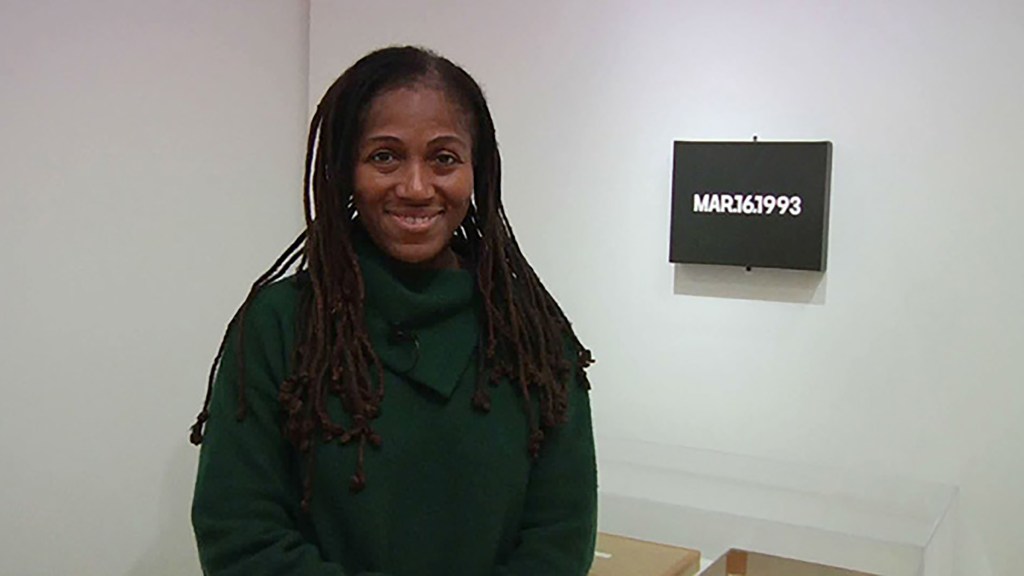
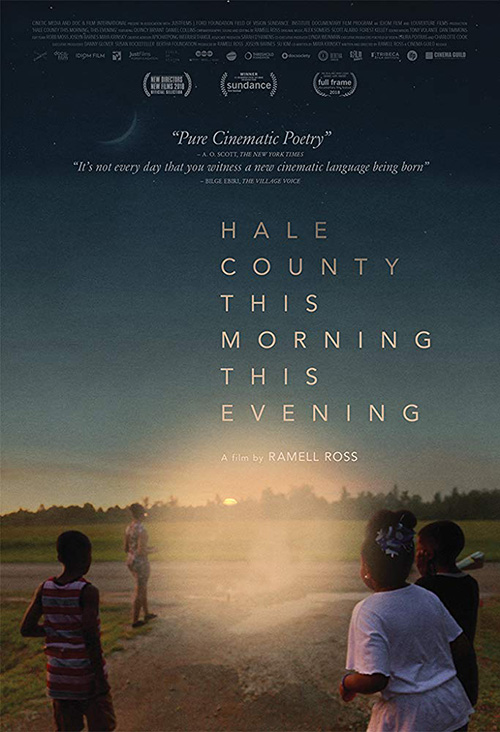
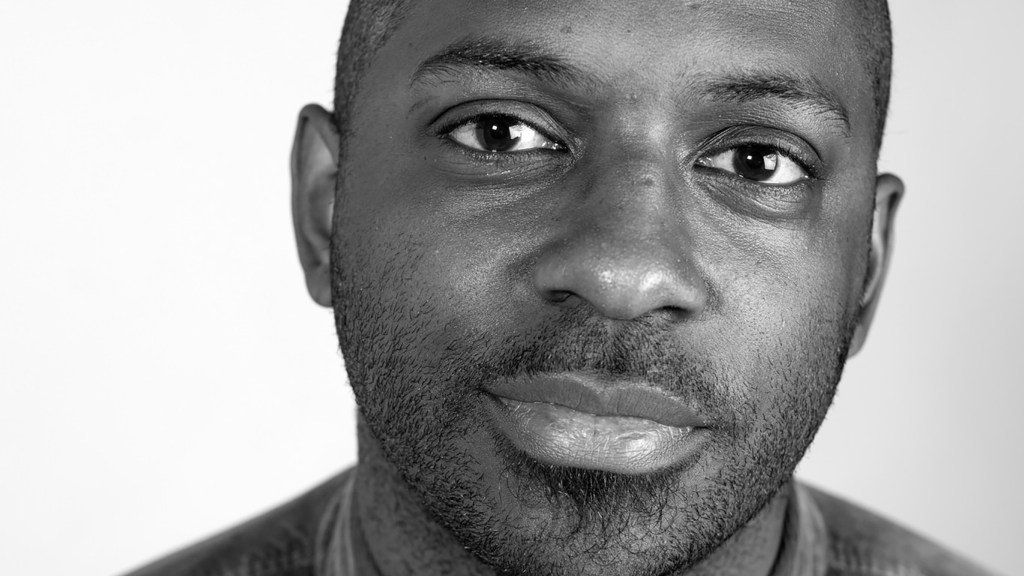

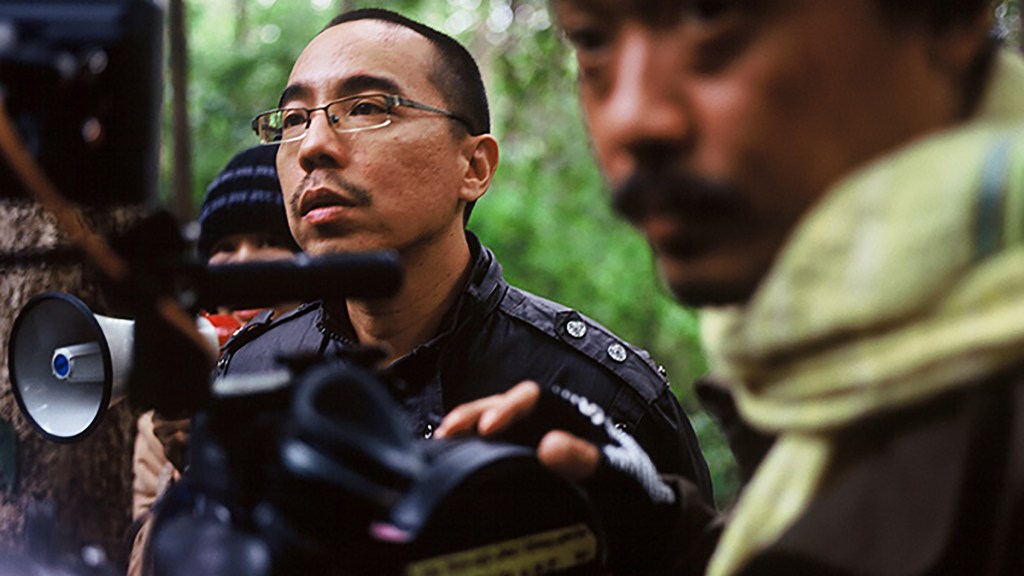


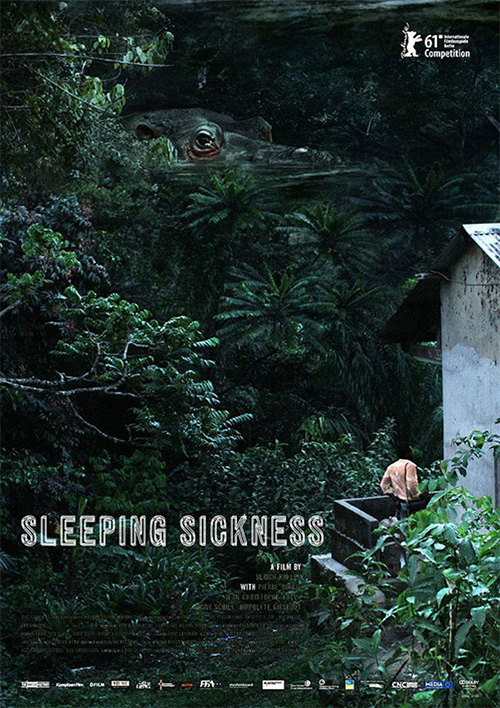


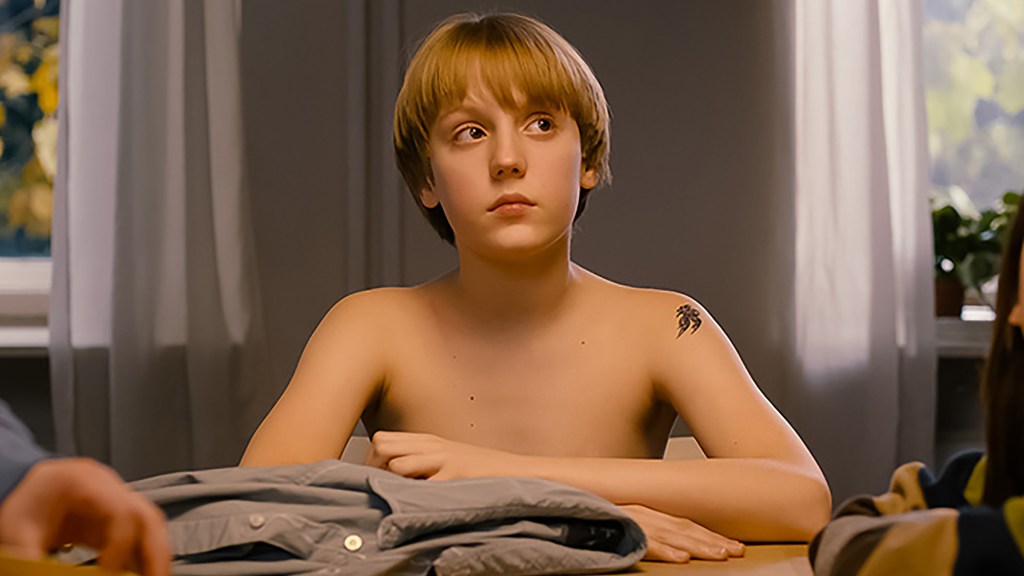

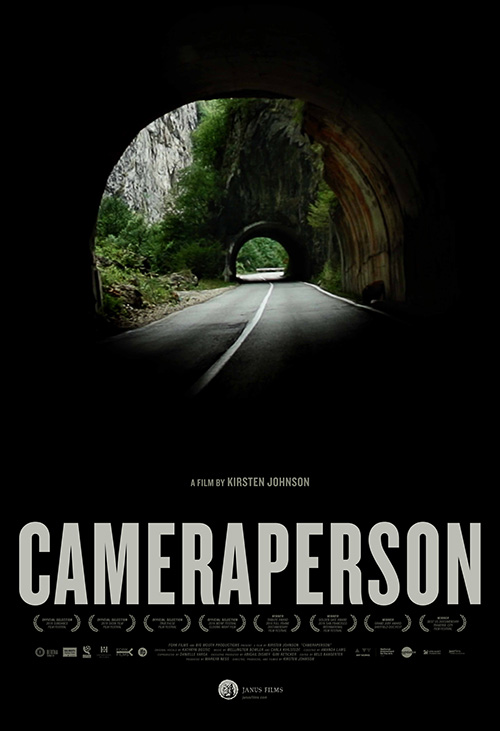


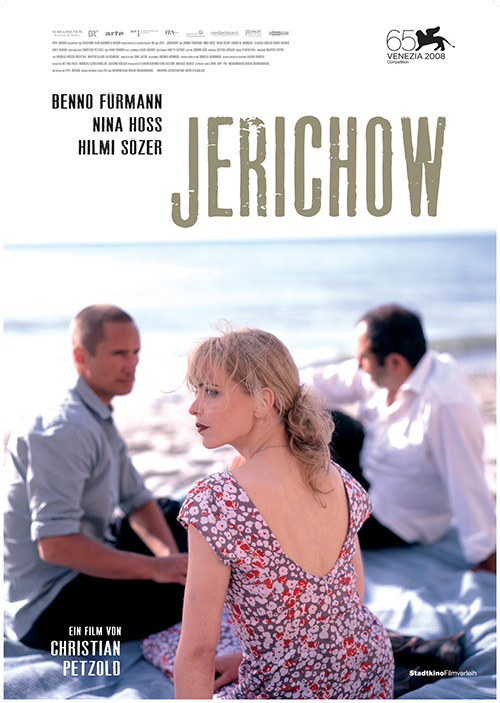


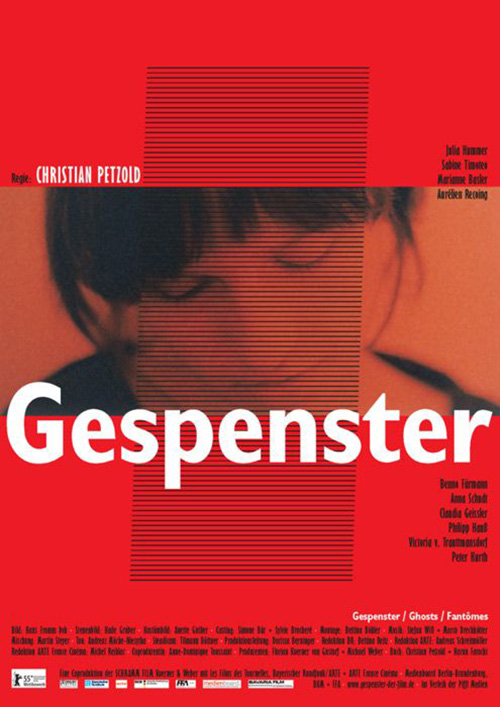
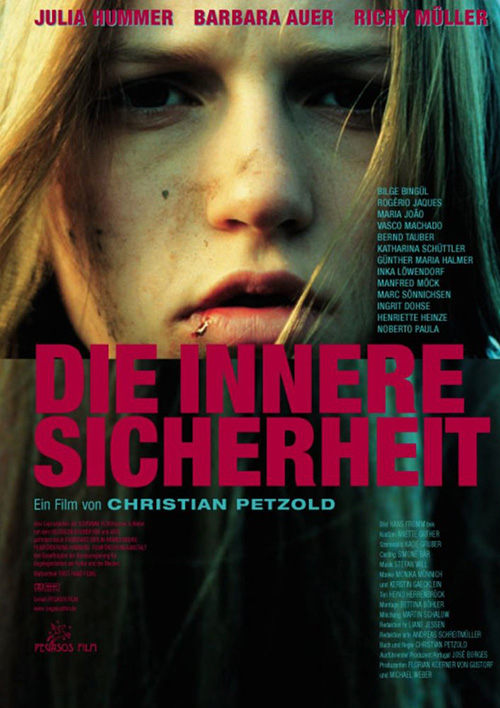
 Cultivate Cinema Circle