The Story of the Last Chrysanthemum [1939]
Please join us for a special screening of Kenji Mizoguchi’s The Story of the Last Chrysanthemum [Zangiku monogatari] [1939], newly restored by Janus Films.
- Screening Date: September 28th, 2016 | 7:00pm
- Venue: Squeaky Wheel Film & Media Arts Center
- Specifications: 1939 / 142 minutes / Japanese / Black & White
- Director(s): Kenji Mizoguchi
- Print: Supplied by Janus Films
- Tickets: $7.00 General Admission / FREE for Squeaky Members
Event Sponsors:





Venue Information:


Market Arcade Complex (first floor) 617 Main Street, Buffalo, NY 14203
Synopsis

Courtesy of Janus Films:
This achingly gorgeous emotional epic from the incomparable Kenji Mizoguchi is one of the triumphs of Japanese cinema. The Story of the Last Chrysanthemum follows the journey of a young actor who breaks away from his wealthy kabuki troupe family to marry his parents’ former servant; cruelly estranged, he and his wife descend into poverty and disillusionment on society’s margins. Featuring the kind of delicate yet dexterous camera movements for which Mizoguchi would forever be known, this patiently observed nineteenth-century drama is a poignant tale of tragedy and redemption and a moving depiction of the potency of love in the face of rigid social strictures.
Director Bio
“You must put the odor of the human body into images…describe for me the implacable, the egoistic, the sensual, the cruel…there are nothing but disgusting people in this world.”
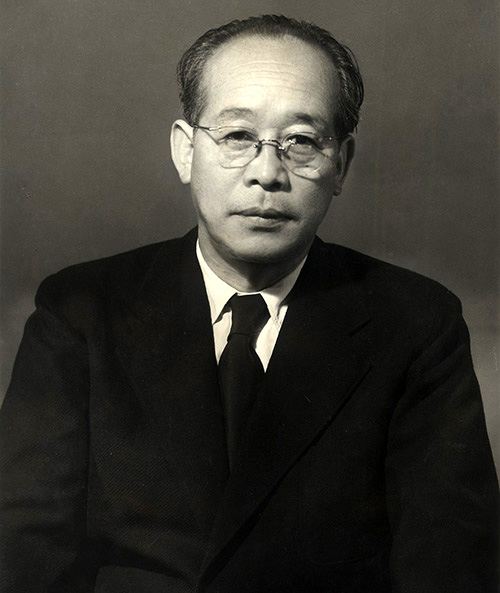
Courtesy of The Criterion Collection:
Often named as one of Japan’s three most important filmmakers (alongside Akira Kurosawa and Yasujiro Ozu), Kenji Mizoguchi created a cinema rich in technical mastery and social commentary, specifically regarding the place of women in Japanese society. After an upbringing marked by poverty and abuse, Mizoguchi found solace in art, trying his hand at both oil painting and theater set design before, at the age of twenty-two in 1920, enrolling as an assistant director at Nikkatsu studios. By the midthirties, he had developed his craft by directing dozens of movies in a variety of genres, but he would later say that he didn’t consider his career to have truly begun until 1936, with the release of the companion films Osaka Elegy and Sisters of the Gion, about women both professionally and romantically trapped. Japanese film historian Donald Richie called Gion “one of the best Japanese films ever made.” Over the next decade, Mizoguchi made such wildly different tours de force as The Story of the Last Chrysanthemum (1939), The 47 Ronin (1941–42), and Women of the Night (1948), but not until 1952 did he break through internationally, with The Life of Oharu, a poignant tale of a woman’s downward spiral in an unforgiving society. That film paved the road to half a decade of major artistic and financial successes for Mizoguchi, including the masterful ghost story Ugetsu (1953) and the gut-wrenching drama Sansho the Bailiff (1954), both flaunting extraordinarily sophisticated compositions and camera movement. The last film Mizoguchi made before his death at age fifty-eight was Street of Shame (1956), a shattering exposé set in a bordello that directly led to the outlawing of prostitution in Japan. Few filmmakers can claim to have had such impact.
Filmography:
- Street of Shame (1956)
- Taira Clan Saga (1955)
- Princess Yang Kwei-fei (1955)
- A Story from Chikamatsu (1954)
- The Woman of Rumour (1954)
- Sansho the Bailiff (1954)
- A Geisha (1953)
- Ugetsu (1953)
- The Life of Oharu (1952)
- The Lady from Musashino (1951)
- Miss Oyu (1951)
- Yuki fujin ezu (1950)
- Flame of My Love (1949)
- Women of the Night (1948)
- Joyû Sumako no koi (1947)
- Utamaro and His Five Women (1946)
- Josei no shôri (1946)
- Hisshôka (1945)
- Meitô bijomaru (1945)
- Miyamoto Musashi (1944)
- Danjuro sandai (1944)
- The 47 Ronin (1941)
- Geidô ichidai otoko (1941)
- Naniwa onna (1940)
- The Story of the Last Chrysanthemum (1939)
- Aa kokyo (1938)
- The Song of the Camp (1938)
- The Straits of Love and Hate (1937)
- Sisters of the Gion (1936)
- Osaka Elegy (1936)
- Poppy (1935)
- Maria no Oyuki (1935)
- Aizô tôge (1934)
- Jinpu-ren (1934)
- The Downfall of Osen (1934)
- Gion matsuri (1933)
- Taki no shiraito (1933)
- The Dawn of Mongolia (1932)
- Toki no ujigami (1932)
- Shikamo karera wa yuku (1931)
- Tôjin Okichi (1930)
- Fujiwara Yoshie no furusato (1930)
- Tokai kokyogaku (1929)
- Tôkyô kôshinkyoku (1929)
- Nihonbashi (1929)
- Musume kawaiya (1928)
- Hito no isshô – Kuma to tora saikai no maki: Dai sampen (1928)
- Hito no isshô – Ukiyo wa tsurai ne no maki: Dai nihen (1928)
- Hito no isshô – Jinsei banji kane no maki: Dai ippen (1928)
- Kôon (1927)
- Kane (1926)
- Kaikoku danji (1926)
- Furusato no uta (1926)
- The Passion of a Woman Teacher (1926)
- Shinsetsu ono ga tsumi (1926)
- Kaminingyô no haru no sasayaki (1926)
- Ningen: kôhen (1925)
- Ningen: zenpen (1925)
- Nogi shôgun to Kuma-san (1925)
- Ningen (1925)
- Akai yûhi ni terasarete (1925)
- Shirayuri wa nageku (1925)
- Daichi wa hohoemu daiippen (1925)
- Gakuso wo idete (1925)
- Musen Fusen Uchien Puchan (1925)
- Â tokumukan Kantô (1925)
- Kyokubadan no joô (1924)
- Kanraku no onna (1924)
- Koi o tatsu ono (1924)
- Samidare sôshi (1924)
- Itô junsa no shi (1924)
- Shichimenchô no yukue (1924)
- Jinkyo (1924)
- Josei wa tsuyoshi (1924)
- Gendai no joo (1924)
- Akatsuki no shi (1924)
- Kanashiki hakuchi (1924)
- Toge no uta (1923)
- Yorû utsukushikî akumâ (1923)
- Yorû yami no sasayakî (1923)
- Chî to reî (1923)
- Yoru (1923)
- Haikyo no naka (1923)
- Kiri no minato (1923)
- Hachi ichi san (1923)
- Haizan no uta wa kanashi (1923)
- Jôen no chimata (1923)
- Seishun no yumeji (1923)
- Kokyô (1923)
- Ai ni yomigaeru hi (1923)
Links
Here is a curated selection of links shared on our Facebook page for additional insight/information:
- 9/20/16 – “‘Read all the Russians, and then reread them,’ goes a line in Jhumpa Lahiri’s novel, The Namesake. ‘They will never fail you.’ After seeing a film by Kurosawa or Mizoguchi, that’s how I feel about the great Japanese directors. They make most other filmmakers come off as magicians or children.” Michael Sragow, Film Comment magazine – link
- 9/21/16 – “If Mizoguchi was the poet of women, he was also the poet of houses, rooms, landscape and urban vistas. His period detail and sumptuous camera style lent his stories a fantastic naturalism, heightened by an almost musical editing style. He was capable of everything from waspish comedy to tenderness to epic battle scenes. He was a director for all seasons, and Kurosawa – far better known in the west – freely acknowledged Mizoguchi as his master.” Derek Malcolm, The Guardian – link
- 9/23/16 – “The Story of the Last Chrysanthemum by Kenji Mizoguchi is a dazzling demonstration of a perfectly calibrated cinematic style.” Glenn Kenny, The New York Times – link
- 9/26/16 – “Mizoguchi’s genius lies in the judicious, brilliant way he adjusts (like his camera) to what develops before him, while ever holding his sensibility intact. He is like the kabuki actor—dancer, really—who, in memorable moments, works gradually toward an exquisitely expressive posture he knows how to hold before eventually releasing it: a mie, this is called. At once stately and quivering with life, The Story of the Last Chrysanthemum stands before us more mie than monument.” Dudley Andrew, The Criterion Collection – link


 Cultivate Cinema Circle