Edge of the City – April 23rd, 2022

Edge of the City [1957]


Please join Cultivate Cinema Circle as we screen six films starring the late, great Sidney Poitier. Second up is Martin Ritt’s BAFTA-nominated (Best Film & Best Foreign Actor) film Edge of the City [1957].


Event Sponsors:

Venue Information:

Downtown Central Library Auditorium
1 Lafayette Square, Buffalo, NY 14203
(Enter from Clinton Street between Oak and Washington Streets)
716-858-8900 • www.BuffaloLib.org
COVID protocol will be followed.


Synopsis

An army deserter gets a job on the New York City waterfront, where he befriends a black dockworker and butts heads with a corrupt, racist union boss. Martin Ritt’s first directorial effort was written by Robert Alan Aurthur, who adapted his television play “A Man Is Ten Feet Tall.” Sidney Poitier reprises his role from the TV drama.

Tidbits:

  • BAFTA Awards – 1958 – Nominee: Best Film From Any Source & Best Foreign Actor

Actor Bio

“I never had an occasion to question color, therefore, I only saw myself as what I was… a human being.”

Courtesy of TCM:

“Guess Who’s Coming to Dinner?” returned Poitier to the familiar turf of “Negro problem” pictures, but with a contemporized twist: instead of battling the unabashed ignorance of racist America, he found himself opposite sophisticated Northerners played by Katherine Hepburn and Spencer Tracy (in his last film). The grand old screen duo played an ostensibly enlightened couple who find their liberal sensibilities strained when their daughter brings home her fiancé, an older, divorced doctor, who just happens to be Poitier. Again under Kramer’s direction, the picture parlayed the myriad pitfalls of the stark realities simple “love” still faced, given the country’s darkly drawn racial lines, especially at the zenith of the civil rights movement; the Supreme Court had just that summer struck down 14 Southern states’ standing laws against interracial marriages, and Martin Luther King, Jr., was assassinated while the film was still in theaters. The film’s heady discourse struck a chord, taking in a for-the-time whopping $56.7 million at the box office in North America.

But Poitier’s most dauntlessly cool performance came in “In the Heat of the Night,” a steamy neo-noir that set Poitier in the heart of the deep South – still so blatantly segregated that Poitier nixed location shooting in Mississippi, prompting the production to move to tiny Sparta, IL. Poitier played a Philadelphia homicide detective, Virgil Tibbs, initially accused of a murder in a hick Mississippi town, who then assists the local Sheriff Gillespie (Rod Steiger) solve the case. Under the deft direction of Norman Jewison, Poitier and Steiger played a dueling character study; a sophisticated black authority the likes of which the town has never seen versus an abrasive, outwardly racist yokel stereotype more enlightened and thoughtful than he lets on. The film also proved a hit, winning Oscars for Best Picture and Best Actor (Steiger).

Poitier’s three films in 1967 made him, by total box-office receipts, the No. 1 box-office draw in Hollywood. And yet, even in the thick of his success, Poitier’s singular identification as the spokesman for African-Americans came with proportionate scrutiny. While he had embraced the civil rights movement publicly – he keynoted the annual convention of Martin Luther King’s activist Southern Christian Leadership Conference in August 1967 – some in the African-American community (as well as some film critics) began vocalizing their displeasure with the never-ending string of saintly and sexless characters Poitier played. Black playwright and drama critic Clifford Mason became the sounding board for these sentiments in an analysis published on the front page of The New York Times’ drama section on Sept. 10, 1967. Mason referred to Poitier’s characters as “unreal” and essentially “the same role, the antiseptic, one-dimensional hero.”

Although devastated by the attacks, Poitier himself had begun to chafe against the cultural restrictions which cast him as the unimpeachable role model instead of a fully flawed and functioning human. Sidney Poitier attempted to take a greater hand in his work, penning a romantic comedy that he would star in called “For the Love of Ivy” (1968), and attempting a more visceral representation of the travails of inner city America in “The Lost Man” (1969), but neither met the success of his previous films or effectively muted his critics. The Times’ Vincent Canby called the latter, “Poitier’s attempt to recognize the existence and root causes of black militancy without making anyone – white or black – feel too guilty or hopeless.” He also founded a creator-controlled studio, First Artists Corp., with partners Paul Newman and Barbra Streisand. But his damaged image, amid an up-and-coming crop of black actors unencumbered by his “integrationist” stigma, enforced a sense of isolation about Poitier, likely amplified by a falling out with his longtime friend Belafonte and his estrangement from wife Juanita.

Some of that oddly went reflected in an unlikely, blaxploitation-infused sequel, “They Call Me MISTER Tibbs!” (1970), in which he reprised his classic character to ill-effect. By 1970, Poitier had struck up a passionate new romance with Canadian model Joanna Shimkus and exiled himself to a semi-permanent residence in The Bahamas. He would make one more forgettable Tibbs sequel, “The Organization” (1971), but he would return to Hollywood in a different capacity.

With Hollywood now recognizing the power of the black purse, even for cheaply produced “blaxploitation” pictures, Columbia saw the potential for “Buck and the Preacher” (1972), in which Harry Belafonte and Poitier would play mismatched Western adventurers who team up to save homesteading former slaves from cowboy predators. Belafonte co-produced and Poitier, after initial squabbles with the director, was given reign and Poitier, after initial squabbles with the director, was given reign by the studio to complete the film in the director’s chair.

He produced, directed and starred in his next outing, a tepid romance called “A Warm December” (1973), which tanked, but he found his stride soon after back among friends. He directed and starred with Belafonte, Bill Cosby and an up-and-coming Richard Pryor in their answer to the blaxploitation wave, “Uptown Saturday Night” (1974), an action/comedy romp about two regular guys (Cosby and Poitier) whose devil-may-care night out becomes an odyssey through the criminal underworld. “Uptown” proved such a winning combo that Poitier would make two more successful buddy pictures starring himself and Cosby: “Let’s Do it Again” (1975) and “A Piece of the Action” (1977).

Poitier also returned to Africa and an actor-only capacity for another anti-apartheid film, “The Wilby Conspiracy” (1975), co-starring Michael Caine. After marrying Shimkus in 1976, he returned to the States most notably to direct Pryor’s own buddy picture; the second comedy pairing Pryor with Gene Wilder, “Stir Crazy” (1980), a story about two errant New Yorkers framed for a crime in the west and imprisoned. With Poitier letting the two actors’ fish-out-of-water comic talents play off their austere environs, the film became one of highest-grossing comedies of all time. A later outing with Wilder, “Hanky Panky” (1982), and a last directorial turn with Cosby, the infamous flop “Ghost Dad” (1990), proved profoundly less successful.

After more than a decade absent from the screen, Poitier made a celebrated return as an actor in the 1988 action flick “Shoot to Kill” and the espionage thriller “Little Nikita” (1988), though both proved less than worthy of the milestone. He would take parts rarely after that; only those close to his heart in big-budget TV movie events: NAACP lawyer -later the U.S.’s first African-American Supreme Court justice – Thurgood Marshall in “Separate But Equal” (ABC, 1991), Nelson Mandela, the heroic South African dissident and later president, in “Nelson & De Klerk” (Showtime, 1997), and “To Sir, With Love II” (CBS, 1996). He also took some choice supporting roles in feature actioners “Sneakers” (1992) and “The Jackal” (1997).

In 1997, the Bahamas appointed Poitier its ambassador to Japan, and has also made him a representative to the United Nations Educational, Scientific and Cultural Organization. In 1999, the American Film Institute ranked Poitier No. 22 in the top 25 male screen legends, and in 2006, the AFI’s list of the “100 Most Inspiring Movies of All Time” tabulated more Poitier films than those of any other actor except Gary Cooper (both had five). In 2002, he was given an Honorary Oscar with the inscription, “To Sidney Poitier in recognition of his remarkable accomplishments as an artist and as a human being,” and in 2009, President Barack Obama awarded him the Presidential Medal of Freedom. trade, accepts one teaching marginal, troubled cockney students in London and reached them via honest empathy and by treating them as adults. Buoyed by the popular title song by Brit-pop star Lulu (who also played a student), the film became a sleeper hit.

Filmography:

  • Moms Mabley: I Got Somethin’ to Tell You (2013)
  • Sing Your Song (2011)
  • Tell Them Who You Are (2004)
  • The Last Brickmaker in America (2001)
  • The Simple Life of Noah Dearborn (1999)
  • Free of Eden (1999)
  • David and Lisa (1998)
  • Mandela and de Klerk (1997)
  • The Jackal (1997)
  • To Sir With Love II (1996)
  • Wild Bill: Hollywood Maverick (1995)
  • A Century Of Cinema (1994)
  • World Beat (1993)
  • Sneakers (1992)
  • Shoot To Kill (1988)
  • Little Nikita (1988)
  • The Spencer Tracy Legacy (1986)
  • A Piece Of The Action (1977)
  • The Wilby Conspiracy (1975)
  • Let’s Do It Again (1975)
  • Uptown Saturday Night (1974)
  • Buck and the Preacher (1972)
  • A Warm December (1972)
  • Brother John (1971)
  • The Organization (1971)
  • King: A Filmed Record … Montgomery to Memphis (1970)
  • They Call Me MISTER Tibbs (1970)
  • The Lost Man (1969)
  • For Love of Ivy (1968)
  • To Sir, With Love (1967)
  • Guess Who’s Coming to Dinner (1967)
  • In the Heat of the Night (1967)
  • Duel at Diablo (1966)
  • A Patch of Blue (1965)
  • The Slender Thread (1965)
  • The Bedford Incident (1965)
  • The Greatest Story Ever Told (1965)
  • The Long Ships (1964)
  • Lilies of the Field (1963)
  • Pressure Point (1962)
  • A Raisin in the Sun (1961)
  • Paris Blues (1961)
  • All the Young Men (1960)
  • Virgin Island (1960)
  • Porgy and Bess (1959)
  • The Defiant Ones (1958)
  • The Mark of the Hawk (1958)
  • Edge of the City (1957)
  • Band of Angels (1957)
  • Something of Value (1957)
  • Good-Bye, My Lady (1956)
  • Blackboard Jungle (1955)
  • Go Man Go (1954)
  • Red Ball Express (1952)
  • Cry, the Beloved Country (1952)
  • No Way Out (1950)

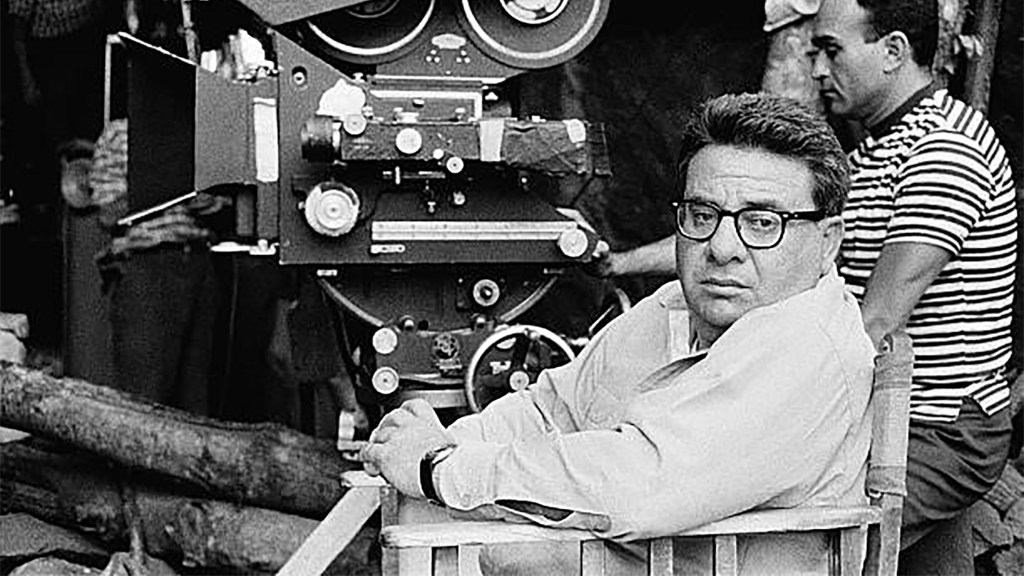
Director Bio

“I don’t have a lot of respect for talent. Talent is genetic. It’s what you do with it that counts.”

Courtesy of TCM:

In a 1987 article in The New Republic, critic Stanley Kaufman wrote that Martin Ritt “is one of the most underrated American directors, superbly competent and quietly imaginative.” While his films generally revolved around moral themes and he did not develop a particular visual style, Ritt became noted as a superlative craftsman with a particular affinity for actors, stemming no doubt from his own long and distinguished performing career. Indeed, he guided a baker’s dozen of performers to Oscar nominations with three (Patricia Neal and Melvyn Douglas in “Hud” 1963 and Sally Field in “Norma Rae” 1979) taking home the statue. Born and raised in NYC, Ritt had originally considered a career in law until he was persuaded by Elia Kazan to work with the Group Theater. His Broadway debut was in the Group’s production of Clifford Odets’ “Golden Boy,” on which he also served as assistant stage manager and understudy to lead John Garfield. Over the next five years, Ritt worked steadily with them until he was called for military service in the US Army Air Force Special Forces during WWII. Utilizing his theatrical background, he appeared with the landmark stage production “Winged Victory” and made his feature acting debut in the 1944 film version of that play. After his discharge, Ritt made the move to directing with 1946’s “Mr. Peebles and Mr. Hooker” at NYC’s Music Box Theatre.

Television was in the flourishing of the so-called Golden Age and Ritt segued to small screen work, acting in over 150 live productions and directing about 100 others. His prolific career was curtailed by the government, however, when he was one of the many artists targeted as communists by Senator Joseph McCarthy. When CBS fired Ritt, he moved to teaching at the Actors Studio, where he numbered Paul Newman, Joanne Woodward, Rod Steiger and Lee Remick among his students. Resuming his directing career with stage work in the mid-50s, Ritt caught the attention of producer David Susskind who hired him to helm the 1957 feature “Edge of the City,” a gritty waterfront drama starring Sidney Poitier and John Cassavetes that earned high critical praise.

Ritt went on to demonstrate his skill as a meticulous craftsman capable of eliciting fine ensemble performances and of tackling important and controversial social issues in an intelligent–if sometimes heavy-handed–manner. Highlights of his career include the adaptation of various William Faulkner short stories, “The Long Hot Summer” (1958), which marked the first of many collaborations with screenwriters Irving Ravetch and Harriet Frank Jr; “Hud,” which helped define the emerging “anti-hero” (Paul Newman) and earned Ritt his sole Oscar nomination as Best Director, and “The Spy Who Came in from the Cold” (1965), an adaptation of the John le Carre novel featuring a fine central performance by Richard Burton.

In 1972. Ritt directed the landmark “Sounder,” one of the first films to look at the travails of a poor Southern black family in a humanizing way. That same year, he also directed “Pete ‘n’ Tillie,” a middling romance teaming Walter Matthau and Carol Burnett. Ritt was perhaps at his most heavy-handed and on-the-nose with “Conrack” (1974), based on Pat Conroy’s autobiographical novel, in which Jon Voight starred as a dedicated white teacher assigned to an island near Beaufort, South Carolina where all the children are black and neglected. The director reteamed with Walter Matthau on “Casey’s Shadow” (1978), a light-hearted tale of horse racing before he tackled the biopic “Cross Creek” (1983), which featured Mary Steenburgen as author Marjorie Kinnan Rawlings. Ritt’s swan song was “Nuts” (1987), a courtroom drama adapted from a Broadway play that became a vehicle for Barbra Streisand.

Ritt’s serio-comic film on the travails of blacklisted writers, “The Front” (1976), drew on his own experiences in the early 1950s. His “Norma Rae” (1979), for which Sally Field won an Oscar as best actress, championed union organizing, and his last film, “Stanley and Iris” (1989) inveighed against illiteracy. He also directed Sally Field a second time in the warm “Murphy’s Romance” (1985), which Rich also co-executive produced. Ritt threw in a few acting roles in his later years. He appeared in the German “End of the Game” (1975), and in a substantial supporting role in “The Slugger’s Wife” as a Casey Stengel-esque baseball manager. Passionately political to the end, Ritt died of heart disease.

Filmography:

  • Stanley And Iris (1990)
  • Nuts (1987)
  • Murphy’s Romance (1985)
  • Cross Creek (1983)
  • Back Roads (1981)
  • Norma Rae (1979)
  • Casey’s Shadow (1978)
  • The Front (1976)
  • Conrack (1974)
  • Pete ‘n’ Tillie (1972)
  • Sounder (1972)
  • The Molly Maguires (1970)
  • The Great White Hope (1970)
  • The Brotherhood (1968)
  • Hombre (1967)
  • The Spy Who Came In From the Cold (1965)
  • The Outrage (1964)
  • Hud (1963)
  • Hemingway’s Adventures of a Young Man (1962)
  • Paris Blues (1961)
  • Five Branded Women (1960)
  • The Black Orchid (1959)
  • The Sound and the Fury (1959)
  • The Long, Hot Summer (1958)
  • No Down Payment (1957)
  • Edge of the City (1957)

Links

Here is a curated selection of links for additional insight/information:

  • Cultivate Cinema Circle info-sheet – link
  • “Long awaited star status came at last to Sidney Poitier in Edge of the City in which he recreated the TV role of the Negro railway yard worker which had won him the Sylvania Award as the Best Actor on Television during 1955-1956. (On television, as the final production of the prestigious, fondly remembered Philco/Goodyear Playhouse, it was called A Man is Ten Feet Tall, the title by which the movie was known outside of the United States). The film, displaying Poitier’s special ability to create a character of nobility and humanity, marked the theatrical feature debut of both director Martin Ritt and writer Robert Alan Aurthur, who had perfected their respective crafts in the television vineyards. It also brought producer David Susskind to filmmaking. Poitier, however, was the only actor from the original teleplay to appear in the film (the TV roles played by Murray and Martin Balsam were taken in the movie by John Cassavetes and Jack Warden).” – Alvin H. Marill, The Films of Sidney Poitier [1978] – link
  • “One article in the promotional literature for Edge of the City noted the ‘uplift philosophy’ of the black protagonist; another article detailed Poitier’s rise from poverty in a story headlined ‘Optimistic Uplift Outlook Has Paid Off for Ex-Busboy Sidney Poitier.’ The actor’s image matched the values of the era’s progressive racial politics; faith, hard work, nonviolence, sacrifice. Dorothy Masters of the New York Daily News carried this connection between actor and character to even greater heights. During her original review of Edge of the City, she named Poitier an early favorite for best actor of the year. She considered his ‘innate perceptivity’ the foundation of his success. One week later, after interviewing Poitier, she claimed to fully understand his power: ‘Sidney had only to be himself.’ Like Tommy Tyler, Poitier possessed compelling warmth – he was ‘a philosopher who has arrived at an excellent adjustment to the world.’…After Blackboard Jungle and Edge of the City, Poitier had become one of Hollywood’s few established representatives for black Americans. Professionally, and personally, that position opened new possibilities, new responsibilities, and new tensions.” – Aram Goudsouzian, Sidney Poitier: Man, Actor, Icon [2004] – link
  • Edge of the City is a fable of the mighty in spirit who have the power to rise above the crassness of their surroundings and become ‘ten feet tall.’ Stated baldly, the thesis seems perhaps too simple and naive. But in a time when group assimilation makes us seek indeterminate refuges of escapism and anonymity, Aurthur’s plea for individual courage and dignity is a poignant and gripping contribution. The most admirable character in the film is a Negro, magnificently played by Sidney Poitier. When this character is killed (sacrificed by the author to make the hero, Axel North, a man) the film begins to run downhill. The aftermath is anti-climactic because Poitier’s death is so piteously tragic that no great good coming afterward can possibly compensate…The weaknesses of Edge of the City do not include pandering. This is a rare film of high seriousness. Produced on a modest budget with a group of fine young actors, it represents a small step in the right direction.” – Jonathan Baumbach, Film Culture [1957] – link

In the Heat of the Night – April 9th, 2022

In the Heat of the Night [1967]


Please join Cultivate Cinema Circle as we screen six films starring the late, great Sidney Poitier. First up is Norman Jewison’s Oscar-winning (Best Picture, Best Lead Actor, Best Screenplay – Adapted, Best Soung & Best Editing) film In the Heat of the Night [1967].


Event Sponsors:

Venue Information:

Downtown Central Library Auditorium
1 Lafayette Square, Buffalo, NY 14203
(Enter from Clinton Street between Oak and Washington Streets)
716-858-8900 • www.BuffaloLib.org
COVID protocol will be followed.


Synopsis

Best Picture winner about a black police detective from Philadelphia who forces a bigoted Southern sheriff to accept his help with a homicide investigation after a wealthy Chicago businessman is murdered in a small Mississippi town. The film spawned two sequels and a TV-drama.

Tidbits:

  • Academy Awards – 1968 – Nominee: Best Director, Best Effects, Sound Effects
  • Academy Awards – 1968 – Winner: Best Picture, Best Actor in a Leading Role, Best Writing (Screenplay Based on Material from Another Medium), Best Sound, Best Film Editing
  • BAFTA Awards – 1968 – Nominee: Best Foreign Actor, Best Film from any Source
  • BAFTA Awards – 1968 – Winner: Best Foreign Actor, UN Award
  • Directors Guild of America – 1968 – Nominee: Outstanding Directorial Achievement in Motion Pictures
  • Writers Guild of America – 1968 – Nominee: Best Written American Drama (Screen)
  • Golden Globes (USA) 1968 | Nominee: Best Director, Best Actor – Drama, Best Supporting Actress (2)
  • Golden Globes (USA) – 1968 – Winner: Best Motion Picture – Drama, Best Actor – Drama, Best Screenplay
  • National Film Preservation Board – 2002 – National Film Registry

Actor Bio

“I never had an occasion to question color, therefore, I only saw myself as what I was… a human being.”

Courtesy of TCM:

“Guess Who’s Coming to Dinner?” returned Poitier to the familiar turf of “Negro problem” pictures, but with a contemporized twist: instead of battling the unabashed ignorance of racist America, he found himself opposite sophisticated Northerners played by Katherine Hepburn and Spencer Tracy (in his last film). The grand old screen duo played an ostensibly enlightened couple who find their liberal sensibilities strained when their daughter brings home her fiancé, an older, divorced doctor, who just happens to be Poitier. Again under Kramer’s direction, the picture parlayed the myriad pitfalls of the stark realities simple “love” still faced, given the country’s darkly drawn racial lines, especially at the zenith of the civil rights movement; the Supreme Court had just that summer struck down 14 Southern states’ standing laws against interracial marriages, and Martin Luther King, Jr., was assassinated while the film was still in theaters. The film’s heady discourse struck a chord, taking in a for-the-time whopping $56.7 million at the box office in North America.

But Poitier’s most dauntlessly cool performance came in “In the Heat of the Night,” a steamy neo-noir that set Poitier in the heart of the deep South – still so blatantly segregated that Poitier nixed location shooting in Mississippi, prompting the production to move to tiny Sparta, IL. Poitier played a Philadelphia homicide detective, Virgil Tibbs, initially accused of a murder in a hick Mississippi town, who then assists the local Sheriff Gillespie (Rod Steiger) solve the case. Under the deft direction of Norman Jewison, Poitier and Steiger played a dueling character study; a sophisticated black authority the likes of which the town has never seen versus an abrasive, outwardly racist yokel stereotype more enlightened and thoughtful than he lets on. The film also proved a hit, winning Oscars for Best Picture and Best Actor (Steiger).

Poitier’s three films in 1967 made him, by total box-office receipts, the No. 1 box-office draw in Hollywood. And yet, even in the thick of his success, Poitier’s singular identification as the spokesman for African-Americans came with proportionate scrutiny. While he had embraced the civil rights movement publicly – he keynoted the annual convention of Martin Luther King’s activist Southern Christian Leadership Conference in August 1967 – some in the African-American community (as well as some film critics) began vocalizing their displeasure with the never-ending string of saintly and sexless characters Poitier played. Black playwright and drama critic Clifford Mason became the sounding board for these sentiments in an analysis published on the front page of The New York Times’ drama section on Sept. 10, 1967. Mason referred to Poitier’s characters as “unreal” and essentially “the same role, the antiseptic, one-dimensional hero.”

Although devastated by the attacks, Poitier himself had begun to chafe against the cultural restrictions which cast him as the unimpeachable role model instead of a fully flawed and functioning human. Sidney Poitier attempted to take a greater hand in his work, penning a romantic comedy that he would star in called “For the Love of Ivy” (1968), and attempting a more visceral representation of the travails of inner city America in “The Lost Man” (1969), but neither met the success of his previous films or effectively muted his critics. The Times’ Vincent Canby called the latter, “Poitier’s attempt to recognize the existence and root causes of black militancy without making anyone – white or black – feel too guilty or hopeless.” He also founded a creator-controlled studio, First Artists Corp., with partners Paul Newman and Barbra Streisand. But his damaged image, amid an up-and-coming crop of black actors unencumbered by his “integrationist” stigma, enforced a sense of isolation about Poitier, likely amplified by a falling out with his longtime friend Belafonte and his estrangement from wife Juanita.

Some of that oddly went reflected in an unlikely, blaxploitation-infused sequel, “They Call Me MISTER Tibbs!” (1970), in which he reprised his classic character to ill-effect. By 1970, Poitier had struck up a passionate new romance with Canadian model Joanna Shimkus and exiled himself to a semi-permanent residence in The Bahamas. He would make one more forgettable Tibbs sequel, “The Organization” (1971), but he would return to Hollywood in a different capacity.

With Hollywood now recognizing the power of the black purse, even for cheaply produced “blaxploitation” pictures, Columbia saw the potential for “Buck and the Preacher” (1972), in which Harry Belafonte and Poitier would play mismatched Western adventurers who team up to save homesteading former slaves from cowboy predators. Belafonte co-produced and Poitier, after initial squabbles with the director, was given reign and Poitier, after initial squabbles with the director, was given reign by the studio to complete the film in the director’s chair.

He produced, directed and starred in his next outing, a tepid romance called “A Warm December” (1973), which tanked, but he found his stride soon after back among friends. He directed and starred with Belafonte, Bill Cosby and an up-and-coming Richard Pryor in their answer to the blaxploitation wave, “Uptown Saturday Night” (1974), an action/comedy romp about two regular guys (Cosby and Poitier) whose devil-may-care night out becomes an odyssey through the criminal underworld. “Uptown” proved such a winning combo that Poitier would make two more successful buddy pictures starring himself and Cosby: “Let’s Do it Again” (1975) and “A Piece of the Action” (1977).

Poitier also returned to Africa and an actor-only capacity for another anti-apartheid film, “The Wilby Conspiracy” (1975), co-starring Michael Caine. After marrying Shimkus in 1976, he returned to the States most notably to direct Pryor’s own buddy picture; the second comedy pairing Pryor with Gene Wilder, “Stir Crazy” (1980), a story about two errant New Yorkers framed for a crime in the west and imprisoned. With Poitier letting the two actors’ fish-out-of-water comic talents play off their austere environs, the film became one of highest-grossing comedies of all time. A later outing with Wilder, “Hanky Panky” (1982), and a last directorial turn with Cosby, the infamous flop “Ghost Dad” (1990), proved profoundly less successful.

After more than a decade absent from the screen, Poitier made a celebrated return as an actor in the 1988 action flick “Shoot to Kill” and the espionage thriller “Little Nikita” (1988), though both proved less than worthy of the milestone. He would take parts rarely after that; only those close to his heart in big-budget TV movie events: NAACP lawyer -later the U.S.’s first African-American Supreme Court justice – Thurgood Marshall in “Separate But Equal” (ABC, 1991), Nelson Mandela, the heroic South African dissident and later president, in “Nelson & De Klerk” (Showtime, 1997), and “To Sir, With Love II” (CBS, 1996). He also took some choice supporting roles in feature actioners “Sneakers” (1992) and “The Jackal” (1997).

In 1997, the Bahamas appointed Poitier its ambassador to Japan, and has also made him a representative to the United Nations Educational, Scientific and Cultural Organization. In 1999, the American Film Institute ranked Poitier No. 22 in the top 25 male screen legends, and in 2006, the AFI’s list of the “100 Most Inspiring Movies of All Time” tabulated more Poitier films than those of any other actor except Gary Cooper (both had five). In 2002, he was given an Honorary Oscar with the inscription, “To Sidney Poitier in recognition of his remarkable accomplishments as an artist and as a human being,” and in 2009, President Barack Obama awarded him the Presidential Medal of Freedom. trade, accepts one teaching marginal, troubled cockney students in London and reached them via honest empathy and by treating them as adults. Buoyed by the popular title song by Brit-pop star Lulu (who also played a student), the film became a sleeper hit.

Filmography:

  • Moms Mabley: I Got Somethin’ to Tell You (2013)
  • Sing Your Song (2011)
  • Tell Them Who You Are (2004)
  • The Last Brickmaker in America (2001)
  • The Simple Life of Noah Dearborn (1999)
  • Free of Eden (1999)
  • David and Lisa (1998)
  • Mandela and de Klerk (1997)
  • The Jackal (1997)
  • To Sir With Love II (1996)
  • Wild Bill: Hollywood Maverick (1995)
  • A Century Of Cinema (1994)
  • World Beat (1993)
  • Sneakers (1992)
  • Shoot To Kill (1988)
  • Little Nikita (1988)
  • The Spencer Tracy Legacy (1986)
  • A Piece Of The Action (1977)
  • The Wilby Conspiracy (1975)
  • Let’s Do It Again (1975)
  • Uptown Saturday Night (1974)
  • Buck and the Preacher (1972)
  • A Warm December (1972)
  • Brother John (1971)
  • The Organization (1971)
  • King: A Filmed Record … Montgomery to Memphis (1970)
  • They Call Me MISTER Tibbs (1970)
  • The Lost Man (1969)
  • For Love of Ivy (1968)
  • To Sir, With Love (1967)
  • Guess Who’s Coming to Dinner (1967)
  • In the Heat of the Night (1967)
  • Duel at Diablo (1966)
  • A Patch of Blue (1965)
  • The Slender Thread (1965)
  • The Bedford Incident (1965)
  • The Greatest Story Ever Told (1965)
  • The Long Ships (1964)
  • Lilies of the Field (1963)
  • Pressure Point (1962)
  • A Raisin in the Sun (1961)
  • Paris Blues (1961)
  • All the Young Men (1960)
  • Virgin Island (1960)
  • Porgy and Bess (1959)
  • The Defiant Ones (1958)
  • The Mark of the Hawk (1958)
  • Edge of the City (1957)
  • Band of Angels (1957)
  • Something of Value (1957)
  • Good-Bye, My Lady (1956)
  • Blackboard Jungle (1955)
  • Go Man Go (1954)
  • Red Ball Express (1952)
  • Cry, the Beloved Country (1952)
  • No Way Out (1950)

Director Bio

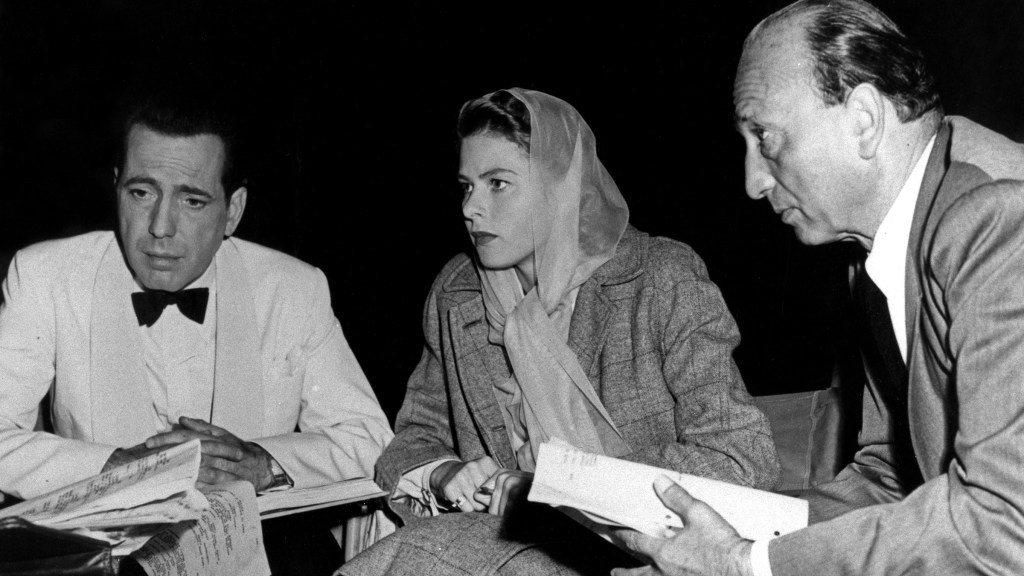
Rod Steiger, director, Norman Jewison and Sidney Poitier, rehearsing the script for ‘In the Heat of the Night.’ Everett Collection

“Betrayal … is my favorite subject.”

Courtesy of TCM:

A consummate craftsman known for eliciting fine performances from his casts, director Norman Jewison addressed important social and political issues throughout career, often making controversial or complicated subjects accessible to mainstream audiences. Jewison transitioned from directing variety shows on television to feature films in the early 1960s, helming several forgettable studio-driven comedies. He emerged later in the decade with the gritty gambler drama “The Cincinnati Kid” (1965) and the Cold War farce “The Russians Are Coming, The Russians Are Coming” (1966). But it was his simple, but superbly acted small-town crime drama, “In the Heat of the Night” (1967), that etched Jewison’s name in stone, thanks to an Oscar-winning performance from Rod Steiger and the immortal line, “They call me Mister Tibbs,” uttered by co-star Sidney Poitier. Jewison went on to helm the unforgettable adaptation of the Broadway musical “Fiddler on the Roof” (1971) before enjoying counterculture success with his take on the rock opera “Jesus Christ Superstar” (1973). Following the futuristic satire “Rollerball” (1975), Jewison had a series of critical and financial setbacks until the moving drama, “A Soldier’s Story” (1984), which he soon followed with the box office smash, “Moonstruck” (1987). He again settled into a bit of a funk until emerging once again with the biopic “The Hurricane” (1999), perhaps his finest work since “In the Heat of the Night.” Over the course of his long and venerable career, Jewison managed to keep himself relevant by continuing to tell stories that had universal appeal.

Born on July 21, 1926 in Toronto, Ontario, Canada, Jewison was raised by his father, Percy, who ran a dry goods store, and his mother, Dorothy. After developing a love for film at an early age, Jewison spent his high school years at Malvern Collegiate Institute, from which he graduated in 1944. After briefly serving in the Canadian Navy at the close of World War II, he attended Victoria College at the University of Toronto, where he earned his bachelor’s degree and received an honor award for writing and directing several college productions. Returning to Toronto and finding the job market in television wanting, Jewison drove a taxi cab to earn his bread before moving to London, England where he landed occasional work as a script writer for a children’s show and bit actor for the BBC while working odd jobs in-between. His long struggle to find consistent television work ended when he received an invitation to join a training program at the Canadian Broadcasting Corporation. Jewison started work as an assistant director and quickly rose up the ranks to director and producer, helming such major variety and comedy programs as “The Big Review” (1952) and “The Barris Beat” (1956).

In 1958, American television network CBS took note of Jewison’s talents and hired him to revitalize the weekly live music show, “Your Hit Parade” (NBC/CBS, 1950-59) during its last season on the air. His good work on the show led to several made-for-television specials starring artists such as Frank Sinatra, Danny Kaye and Harry Belafonte. But his biggest contribution to the small screen at the time was directing “The Judy Garland Show” (CBS, 1962), which served as a successful comeback vehicle for the embattled actress and singer. Jewison returned to direct episodes of “The Judy Garland Show” (CBS, 1963-64), an hour-long variety series that materialized from the previous year’s hit television special. Disillusioned by the effects of the ratings wars on the quality of television programming, Jewison relocated from New York to Hollywood to helm his first film, “40 Pounds of Trouble” (1963), an updating of the classic “Little Miss Marker” (1934), about a selfish casino manager (Tony Curtis) who adopts a spunky orphaned waif (Claire Wilcox). The film did well enough for Universal Studios to offer him a seven-picture contract, which resulted in his second film, “The Thrill of It All” (1963), a star vehicle for Doris Day and James Garner and scripted by Carl Reiner that became one of the studio’s biggest hits that year.

Still under contract with Universal, Jewison continued directing light-hearted comedies, showing no early signs of the socially and racially conscious director yet to come. He helmed “Send Me No Flowers” (1964), which paired Doris Day with Rock Hudson, and worked again with Reiner and Garner for “The Art of Love” (1965), a comedy of errors about a struggling artist (Dick Van Dyke) in Paris trying to fake his own death to make enough money to return home. Growing tired of the lightweight scripts offered by the studio, he eagerly delved into more serious fare after finding a loophole in his contract that allowed him to switch professional loyalties to MGM. Jewison replaced Sam Peckinpah at the helm of “The Cincinnati Kid” (1965), a tense and gritty tale about a New Orleans poker player (Steve McQueen) who challenges reigning champ The Man (Edward G. Robison) to a private game. Jewison reached new creative heights – not to mention achieved full artistic control – with “The Russians Are Coming, The Russians Are Coming” (1966), a farcical take on the Cold War that featured an all-star cast, including Carl Reiner, Alan Arkin and Eva Marie Saint. After winning a Golden Globe for Best Motion Picture – Musical or Comedy, the film earned the director-producer an Oscar nod in the same category.

Ever since his critical and box office success with “Russians,” Jewison enjoyed the coveted final cut on his films ever since. He followed with perhaps his most significant film, the pioneering race drama “In the Heat of the Night” (1967), which told the tale of a black Yankee detective (Sidney Poitier) who partners with a racist Southern police chief (Rod Steiger) to solve a murder in a small Georgian town. The dynamic pairing of Poitier and Steiger – the latter of whom won an Oscar for his performance – became one of the most memorable in cinema history, thanks in part to Poitier’s famous line, “They call me Mister Tibbs.” Meanwhile, the film itself earned top honors at the Academy Awards, winning a total of five awards, including for Best Picture. “In the Heat of the Night” was a landmark film, long remembered for being among Jewison’s finest work. Following up, he reunited with Steve McQueen to make “The Thomas Crown Affair” (1968), an action-packed heist flick that was a triumph of style over substance which Jewison called “the only amoral-immoral film I’ve ever done.”

Jewison returned to comedy, albeit with a harder edge, for “Gaily, Gaily” (1969), adapted from Ben Hecht’s autobiographical novel of his apprenticeship on a Chicago paper. He made up for that film’s lack of commercial success with his next two movies; both of which were adaptations of very successful stage musicals. For the first, “Fiddler on the Roof” (1971), Jewison faced one of the most agonizing casting decisions of his career, turning down both Zero Mostel, who had originated the role of Tevye on Broadway, and his good friend Danny Kaye in favor of the little-known Israeli actor, Topol. He let the press know that he wanted an Israeli Jew who didn’t speak English well in order to make the character more believable. His gamble paid off in a big way, as Topol made a distinct and lasting impression as the poverty-laden milkman who finds himself facing challenges to long-held traditions. Filmed on location in Yugoslavia, “Fiddler” received eight Academy Award nominations, including Best Picture and Best Director and earned three, for Best Sound, Best cinematography (Oswald Morris) and Best Musical Scoring (John Williams). The film also raked in the profits while becoming one of the most beloved musicals of all time.

A similar commercial fate awaited Jewison’s take on Andrew Lloyd Webber’s rock opera hit, “Jesus Christ Superstar” (1973), which he filmed in Israel while managing to simultaneously produce Ted Kotcheff’s offbeat Western, “Billy Two-Hats” (1973). Employing a contemporary feel to an ancient story, including Roman soldiers carrying machine guns instead of swords “Superstar” starred Ted Neeley as the rock ‘n’ roll Messiah who is put to death for claiming he is King of the Jews. Not as cohesive or critically lauded as “Fiddler,” Jewison’s quirky musical was significant for being a sharp look at the late-1960s counterculture world from which it derived. Proving his flexibility as well as his versatility, Jewison jumped to the future the helm the sci-fi satire, “Rollerball” (1975), which was a pointed critique on modern corporations hijacking both democracy and humanity. His next film, a labor movement political drama, “F.I.S.T” (1978), was a giant flop despite the director’s careful attention to detail and casting of Sylvester Stallone as the leader of a fledgling union. Jewison continued on in a similarly disappointing vain, directing a powerful Al Pacino in the otherwise limp legal drama, “…And Justice for All” (1979), and the Goldie Hawn-Burt Reynolds vehicle, “Best Friends” (1982), which bombed at the box office despite both stars being at the top of their game.

Jewison finally turned things around with the socially conscious military drama, “A Soldier’s Story” (1984), adapted from the 1981 Pulitzer Prize-winning play by Charles Fuller. A solid whodunit atop a probing look at racism within blank ranks during World War II, the film featured most of its original Negro Ensemble Company cast, including Adolph Caesar in his Oscar-nominated role as the bigoted master sergeant found shot to death on a country road near a Louisiana army base. It also marked Jewison’s first collaboration with Denzel Washington, as well as his return to the ranks of Oscar nominees when “A Soldier’s Story” earned a nod for Best Picture. Though it had not completely escaped its theatrical origins, the movie was nonetheless riveting and well-received by both critics and audiences. The same cannot be said for his next stage-to-film transfer, “Agnes of God” (1985), a fleshed-out adaptation of John Pielmeier’s minimalist Broadway play that was bogged down by a confusing murder mystery. Jewison enjoyed mighty box office at the helm of playwright John Patrick Shanley’s original screenplay “Moonstruck” (1987), deftly handling the romantic comedy about a widowed bookkeeper (Cher) married to a man she d s not love (Danny Aiello), only to be romanced by his younger brother (Nicolas Cage). “Moonstruck” was a huge success all around, wining Oscars for Best Actress (Cher), Best Supporting Actress (Olympia Dukakis) and Best Screenplay (Shanley).

With “In Country” (1989), however, Jewison delivered a disappointing treatment of Bobbie Ann Mason’s acclaimed novel, despite a fine performance by Bruce Willis as a cynical, shell-shocked recluse and beautifully-handled concluding scenes at Washington D.C.’s Vietnam Veterans Memorial. He served up another disappointing comedy with “Other People’s Money” (1991), which starred Danny DeVito as the nefarious Larry the Liquidator, only to fall in love with the daughter-in-law (Penelope Ann Miller) of the company’s president (Gregory Peck). Following a three-year hiatus, Jewison reemerged to direct the tepid romantic comedy “Only You” (1994), starring Marisa Tomei as a bride-to-be who leaves her groom at the altar to go search for her true soul mate (Robert Downey, Jr.). He followed with the sappy comedy-drama “Bogus” (1996), featuring Whoopi Goldberg and Gerard Depardieu in a story of a young boy’s reliance on an imaginary friend to cope with the death of a parent. Marking a return to the small screen after several decades removed, Jewison served as executive producer of the historical biopic, “Geronimo” (TNT, 1993), which chronicled the rise and fall of the famous Apache chief.

Continuing to find new life in television, Jewison executive produced and directed the “Soir Bleu” segment of the Showtime anthology series, “Picture Windows” (1994). Back in Canada, he executive produced Bruce McDonald’s feature “Dance Me Outside” (1994) and then shared executive producing responsibilities with McDonald on the Canadian series, “The Rez,” in 1996. On the heels of accepting the prestigious Irving G Thalberg Memorial Award, he helmed the feature-length Showtime documentary “Norman Jewison on Comedy in the 20th Century: Funny Is Money” (1999). But all that he did during the entire decade was just prelude for “The Hurricane” (1999), his masterful, albeit controversial, biopic about Reuben ‘Hurricane’ Carter (Denzel Washington), a former middleweight boxing champion unjustly imprisoned 19 years for murders he did not commit. Aided by three Canadian activists (John Hannah, Liev Schreiber and Deborah Unger), who helped him earn an appeal that overturned his conviction, Carter is finally released from prison a new and rehabilitated man. A grand tribute to the power of the human spirit, “Hurricane” was surpassed only by “In the Heat of the Night” as being one of Jewison’s best films. But it was largely shut out of consideration at the Academy Awards, save the Best Actor nod for Washington.

After directing “The Hurricane,” Jewison slowed down his output to a practical crawl, directing only one motion picture in the next decade. He did return to the small screen to helm “Dinner With Friends” (HBO, 2001), an adaptation of Donald Marguiles’ play about a seemingly perfect and happy couple (Andie McDowell and Dennis Quaid) who are shocked to hear that their best friends (Toni Collette and Greg Kinnear) are divorcing, forcing them to reexamine both their friendship with the couple and their own marriage. Jewison next directed “The Statement” (2003), a compelling thriller about an elderly man (Michael Caine) whose past as an executioner for the Vichy regime during World War II is revealed in 1992 after a failed attempt on his life necessitates an investigation spearheaded by an aggressive French prosecutor (Tilda Swinton) and a military colonel (Jeremy Northam). While he remained in the public eye by appearing onscreen in several interviews, Jewison remained unofficially retired from the film business, though he emerged in 2005 to release his autobiography, This Terrible Business Has Been Good to Me. In 2010, the Directors Guild of America bestowed upon him their highest tribute when they announced that he would be receiving the DGA Lifetime Achievement Award for his outstanding contributions to motion pictures.

Filmography:

  • The Statement (2003)
  • Dinner With Friends (2001)
  • The Hurricane (1999)
  • Bogus (1996)
  • Only You (1994)
  • Other People’s Money (1991)
  • In Country (1989)
  • Moonstruck (1987)
  • Agnes Of God (1985)
  • A Soldier’s Story (1984)
  • Best Friends (1982)
  • … And Justice For All (1979)
  • F.I.S.T. (1978)
  • Rollerball (1975)
  • Jesus Christ Superstar (1973)
  • Fiddler on the Roof (1971)
  • Gaily, Gaily (1969)
  • The Thomas Crown Affair (1968)
  • In the Heat of the Night (1967)
  • The Russians Are Coming The Russians Are Coming (1966)
  • The Cincinnati Kid (1965)
  • The Art of Love (1965)
  • Send Me No Flowers (1964)
  • Forty Pounds of Trouble (1963)
  • The Thrill of It All (1963)

Links

Here is a curated selection of links for additional insight/information:

  • Cultivate Cinema Circle info-sheet – link
  • “The hot surge of racial hate and predjudice that is so evident and critical now in so many places in this country, not alone in the traditional area of the Deep South, is fictionally isolated in an ugly little Mississippi town in the new film, In The Heat of the Night, which opened at the Capital and the 86th Street East yesterday. Here the corrosiveness of prejudice is manifested by a clutch of town police and a few weaseling nabobs and red-necks toward a Negro detective from the North who happens to be picked up as a suspect in a white man’s murder while he is passing through town. But the surge of this evil is feelingis also manifested by the Negro himself after he has been cleared of suspicion and ruefully recruited to help solve the crime. And in this juxtaposition of resentments between whites and blacks is vividly and forcefully illustrated one of the awful dilemmas of our times.” — Bosley Crowther, The New York Times [1967] – link
  • “This is an uncommonly alive little thriller, knowing just what it wants to do and doing it well; and any qualms one may have after the negro is arrested that is going to be another of those cinematic sorties into the Deep South are soon dispelled…Jewiston is much helped by Haskell Wexler’s hard, sharp lighting and imagitive framing, in all the night scenes, and in one superbly constructed daylight sequence in which a suspect plunges through a golden autumn wood, dogs at his heels, and out on to a bridge, and the camera pulls back to watch him stagger across, then moves away to take in the police chief calmly waiting in his car to cut him off. Wexler’s camerawork frequently gives an extra dimension to the ambivalence of the main theme, the way each man warily plays off the other. When the negro finally boards the train and the police chief hands him his suitcase, the two men know little more about each other and each other’s prejudices.” — David Wilson, Sight & Sound [1967] – link
  • In the Heat of the Night’s social commentary is knotted into its generic outline, but exists mostly in the figure of Poitier as Tibbs. His is a physical presence that both commands and demands respect. ‘They call me Mr Tibbs,’ he booms, when the dehumanising slurs of ‘boy’ and ‘nigger’ become too much. In that final handshake between Tibbs and Gillespie, as the chief sees him off, at last, for his train to Memphis, there is something more than the resolution of two different men who have, in the end, learnt something from each other. It’s a simple gesture, black skin on white, cementing the status of Poitier’s touch as one that transfers dignity to others, onscreen and off.” — Joanna Di Mattia, Senses of Cinema [2017] – link

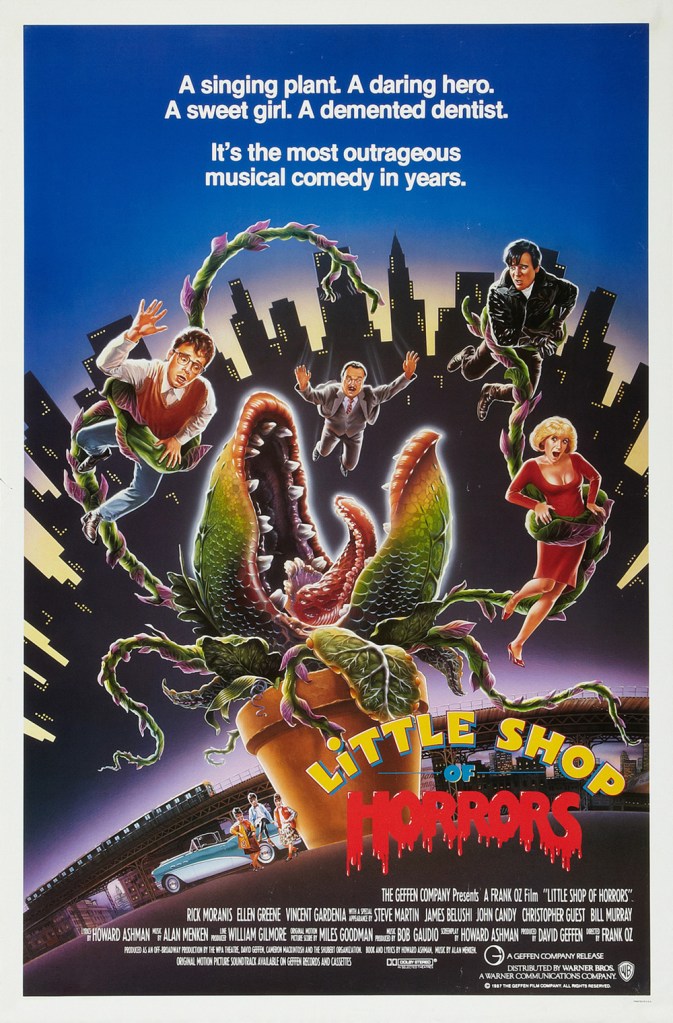
Little Shop of Horrors – March 19th, 2022

Little Shop of Horrors [1986]


Please join Cultivate Cinema Circle as we screen Frank Oz’s Oscar nominated (Best Effects/Visual Effects & Best Original Song) film Little Shop of Horrors [1986].


Event Sponsors:

Venue Information:

Downtown Central Library Auditorium
1 Lafayette Square, Buffalo, NY 14203
(Enter from Clinton Street between Oak and Washington Streets)
716-858-8900 • www.BuffaloLib.org
COVID protocol will be followed.


Synopsis

A quiet, shy flower-shop employee finds an extraordinary plant with unusual appetites.

Tidbits:

  • Academy Awards – 1987 – Nominee: Best Effects (Visual Effects) & Best Music (Original Song)

Director Bio

“The biggest problems with movies are expectations.”

Courtesy of TCM:

Because he voiced and operated several of the most beloved Muppets – Cookie Monster, Bert, Fozzie Bear and Miss Piggy – puppeteer Frank Oz firmly secured his place in pop culture history behind friend, mentor and Muppet creator Jim Henson. But always looking to branch out creatively, Oz moved into directing, starting with a co-helming effort alongside Henson on “The Dark Crystal” (1982), which led to a second career as a talented and success director of primarily comedies. Though he stayed within the Muppet universe for his second film, “The Muppets Take Manhattan” (1984), Oz branched out on his own to direct two hits, “Little Shop of Horrors” (1986) and “Dirty Rotten Scoundrels” (1988). Meanwhile, he teamed with George Lucas to bring to life the mystical Jedi master, Yoda, for “The Empire Strikes Back” (1980) and “The Return of the Jedi” (1983), creating perhaps one of the most memorable characters within the “Star Wars” universe. After losing friend and collaborator Jim Henson to pneumonia in 1990, Oz nonetheless maintained his legacy by performing his Muppet characters on a variety of television specials, guest appearances and throughout the long run of “Sesame Street” (PBS, 1969- ). Though he often had cameo roles in several John Landis like “The Blues Brothers” (1980) and “Trading Places” (1983), Oz preferred staying behind the cameras to direct eclectic fare like the Hollywood satire “Bowfinger” (1999), the heist thriller “The Score” (2001) and the black comedy, “Death at a Funeral” (2007), underscoring his unique ability to wear many hats.

Born Richard Frank Oznowicz on May 25, 1944 in Hereford, England, Oz was raised by his father, Isidore, and his mother, Frances, both of whom were puppeteers; in fact, his father once was president of the Puppeteers of America. As Holocaust refugees following their escape from the Nazis during World War II, his parents first landed in England, before relocating to Belgium when Oz was just six months old. When he was five, the family moved to the United States and lived in Montana before finally settling in Oakland, CA. By the age of 12, he was performing with his family at a local amusement park, though he later stated his ambition at the time was to become a journalist, not to follow in his parents’ footsteps. After graduating from Oakland Technical High School, Oz went to Oakland City College, where he studied journalism only to soon be pulled back into puppetry when he encountered Jim Henson in the early 1960s. The pair began their long, storied collaboration after meeting at a Puppeteers of America convention in California – Oz was blown away by Henson’s creations, the Muppets – then unknown – and so began working for his company, Muppets, Inc., when he was just 19 years old.

As a puppeteer and performer, Oz had plenty of work with Henson, though in the beginning he was dressing up in costumes for milk and toilet paper commercials. He hated the work, but soldiered on out of his love for Henson. While paying the bills doing commercials for products like Purina Dog Food and LaChoy Chinese foods, they made guest appearances on “The Jimmy Dean Show” (ABC, 1963-69) as Rowlf the Dog, who was the host’s regular sidekick while becoming the first Muppet to rise to national prominence. It was on “The Jimmy Dean Show” that Oz acquired his stage name when the host was unable to pronounce his full given name during a live broadcast. Meanwhile, Oz assisted Henson in the creation of some of his most memorable characters for the educational series, “Sesame Street” (PBS, 1969- ), including Cookie Monster, Grover and Bert, as well as countless minor characters. He worked on the series from its inception all the way into the 21st century, including the countless “Sesame Street” special programs and feature films, including the feature “Sesame Street Presents: Follow That Bird” (1985), “The Adventures of Super Grover” (1987), and the charming all-star TV special “Put Down The Duckie: A Sesame Street Special” (1988). In 1979, Oz shared a Daytime Emmy Award with Henson and other Muppet performers for his efforts.

Oz, Henson and the rest of the Muppet crew enjoyed a brief stint on “Saturday Night Live” (NBC, 1975- ) during its debut season, with Oz voicing The Mighty Favog, a grouchy stone idol that took its name from the clock in the green room at “The Ed Sullivan Show” (CBS, 1948-1971). The Henson puppeteers gave the clock that name as a playful way of praying that the show did not run too long and deny them airtime. The Not-Ready-for-Primetime-Players, including Gilda Radner, John Belushi and Chevy Chase, made no bones about the Muppets taking away from their sketch comedy time, though producer Lorne Michaels fired the puppets after learning that viewers were less enthralled with the puppets and more interested in his stock players’ cutting edge sketches. Soon, the puppets were fired from 30 Rockefeller Plaza. In 1976, Oz joined Henson as one of the principal performers on “The Muppet Show” (syndicated, 1976-1981), where he created another set of enduring characters like Fozzie, Miss Piggy, Animal, Sam the Eagle and the Swedish Chef, who was performed with Oz’s real hands exposed.

Miss Piggy was initially a supporting character, but the show’s writers and producers soon discovered her “star” potential and she soon became the second most popular Muppet behind Henson’s Kermit the Frog. Oz originally performed the character with regular puppeteer Richard Hunt, but took over the duties himself during the show’s second season. Oz handled his characters in all of the subsequent Muppet film and television projects, including the highly successful “The Muppet Movie” (1979), “The Great Muppet Caper” (1981), “The Muppets Take Manhattan” (1984), “The Muppet Christmas Carol” (1992) and “Muppets in Space” (1999). He also provided voices and puppet work in many non-“Muppet,” Henson-produced projects, including “Emmett Otter’s Jug Band Christmas” (1977) and “The Dark Crystal” (1982), Henson’s ambitious theatrical fantasy film. For their efforts on “The Muppet Show,” Oz and the rest of the Henson team was nominated five times for an Emmy, taking home the trophy for Outstanding Comedy-Variety or Music Program in 1978.

In a turn of fortune, George Lucas approached Henson in 1979 to create a puppet character for the much anticipated sequel to “Star Wars” (1977), “The Empire Strikes Back.” But Henson was too busy with “The Muppet Show” and preparations for “The Dark Crystal” that Oz was instead tapped to give voice a wizened creature named Yoda, who trains Luke Skywalker (Mark Hamill) to become a Jedi on the murky planet of Dagobah. Oz had a great deal of involvement in the character’s development, including his signature backwards speech patterns, and watched as his creation became one of the breakout stars of the film. In fact, Lucas loved his performance so much that he lobbied for Oz to receive an Academy Award nomination for Best Supporting Actor. Oz reprised his role operating and voicing Yoda in “Return of the Jedi” (1983). It was during this period that Oz began branching out into other areas, namely appearing onscreen as himself in several John Landis films while taking several turns in the director’s chair himself. He made his first feature appearance as a corrections officer who returns personal items to Jake Blues (John Belushi), including “One unused prophylactic, one soiled,” in “The Blues Brothers” (1980).

After performing his more famous characters for “The Great Muppet Caper,” Oz voiced Miss Piggy for Landis’ horror comedy, “An American Werewolf in London” (1981). Meanwhile, his directorial career was launched when Henson asked him to help direct “The Dark Crystal” (1982), a Tolkienesque children’s fantasy about two Geflings trying to heal the mysterious Dark Crystal in order to save the world. He found the experience to be so positive that he was game to helm the third Muppet film, “The Muppets Take Manhattan” (1984), which he also rewrote. Following appearances as a corrupt cop in Landis’ “Trading Places” (1983) and a test monitor in the goofy “Spies Like Us” (1985), Oz directed the feature version of the popular Broadway musical, “Little Shop of Horrors” (1986), which marked his first film project outside the Henson camp and inevitably led to other offers for live action projects. Oz followed with “Dirty Rotten Scoundrels” (1988), a crime comedy starring Michael Caine and Steve Martin as con men who target wealthy women gullible enough to fall into their good graces. Once again, Oz generated a hit film that further amplified demand for his directing services.

But what should have been a sweet moment in time for a man often viewed as copilot to Henson throughout their long and affectionate partnership, became an incalculable loss when his business partner and friend died unexpectedly from pneumonia in 1990. Devastated by the loss of Henson, Oz and the rest of the Muppet world found themselves suddenly without their creative and spiritual leader. Recovering from the shocking death, Oz continued on by directing “What About Bob?” (1991), starring Bill Murray as a clawing mental patient who ingratiates himself into the life of his egotistical psychiatrist (Richard Dreyfuss). He next directed “HouseSitter” (1992) with Steve Martin and Goldie Hawn. Both comedies were moderate hits at the box office. Following his debut as an executive producer on “The Muppet Christmas Carol” (1992), directed by Henson’s son Brian, Oz fared less well with audiences with his inventive children’s fantasy “The Indian in the Cupboard” (1995), which focused on a young Brooklyn boy (Hal Scardino) who receives a mysterious wooden cabinet as a gift that brings all his toys to life. Moving back to television, he was both a performer and executive consultant on “Muppets Tonight” (ABC, 1996), a short-lived variety show centered around the goings-on of the fictitious television station, KMUP.

Oz rebounded with the smart comedy “In and Out” (1997), which starred Kevin Kline as a high school English teacher who may or may not be gay and which earned an Oscar nomination for co-star Joan Cusack. After a cameo as a prison warden in John Landis’ misguided sequel, “Blues Brothers 2000” (1998), Oz directed “Bowfinger” (1999), an odd showbiz comedy that starred Steve Martin as a struggling director who manages to film his movie with a leading action star (Eddie Murphy) despite the star being unaware the cameras are rolling. Then after years of speculation and rumors, George Lucas made the first three episodes of his “Star Wars” franchise, starting with “The Phantom Menace” (1999). This time, however, Yoda appeared as a CGI creation, not a puppet. But Oz did reprise his vocal duties for the character, who with this series, had a much more prominent role in the story. He also voiced Yoda for the two hugely successful follow-ups, “Star Wars Episode II: Attack of the Clones” (2002) and “Star Wars Episode III: Revenge of the Sith” (2005).

Oz continued to branch out into unchartered waters, directing his first heist thriller, “The Score” (2001), led by a powerhouse cast that included Robert De Niro, Edward Norton, Marlon Brando and Angela Bassett. But the shoot was plagued by problems, due mainly to the notoriously difficult Brando and his unwillingness to be directed by Oz. Things were so bad, in fact that De Niro was forced to act as an intermediary between director and actor, who referred to deridingly to Oz as “Miss Piggy.” Despite reports of on-set tension, the film opened to positive reviews and a modest take at the box office. Following voiceover work as Fungus for “Monsters, Inc.” (2001), Oz directed the remake of “The Stepford Wives” (2004). Though full of snappy one-liners, the movie took a turn from the comic toward straightforward thriller territory, which left audiences and critics confused. Even worse, “Stepford Wives” flopped at the box office despite high-end talent like Nicole Kidman, Christopher Walken and Glenn Close onscreen. After voicing Robot for the live-action children’s fantasy “Zathura” (2005), Oz took a surprising turn to direct the British-made black comedy “Death at a Funeral” (2007), which focused on a dysfunctional family gathered for their patriarch’s funeral, only to be blackmailed by a gay dwarf (Peter Dinklage) claiming to be the dead man’s lover. The film was remade with a nearly all-black cast by director Neil LaBute in 2010. Meanwhile, Oz never lost touch with his Muppet beginnings, as he continued performing the beloved characters for “Muppet Show” specials and on the long-running “Sesame Street,” though he did turn down an opportunity to participate in the latest movie, “The Muppets” (2011), over issues with the script and his perception that the filmmakers did not respect the characters.

Filmography:

  • Death at a Funeral (2007)
  • The Stepford Wives (2004)
  • The Score (2001)
  • Bowfinger (1999)
  • In & Out (1997)
  • The Indian in the Cupboard (1995)
  • Housesitter (1992)
  • What About Bob? (1991)
  • Dirty Rotten Scoundrels (1988)
  • Little Shop of Horrors (1986)
  • The Muppets Take Manhattan (1984)
  • The Dark Crystal (1982)

Links

Here is a curated selection of links for additional insight/information:

  • Cultivate Cinema Circle info-sheet – link
  • “Who could have imagined that Little Shop of Horrors, the 1960 comic horror film shot by Roger Corman in two days’ time, would continue to grow bigger, mightier and more formidable, much like the man-eating plant that is its unsung star? From Mr. Corman’s charming throwaway film to the Off Broadway stage success, ‘’Little Shop of Horrors’’ has evolved into a full-blown movie musical, and quite a winning one. As directed by the Muppet master Frank Oz, this large-scale new film version has just the right mixture of playfulness, tunefulness and blood lust. Never has any screen killer done his job as innocently as Seymour Krelborn (Rick Moranis), the florist’s assistant who tries so hard to accommodate the large, potted creature living in the basement of his ‘’God- and customer-forsaken’’ shop that he cannot help thinking of passers-by as plant food. Little Shop of Horrors, which opens today at the Criterion Center and other theaters, isn’t uniformly entertaining, nor is its score always entirely audible; the musical dubbing is at times very awkward. But its best moments are delightful enough to make the slow stretches unimportant…It’s not hard to understand this good-natured material’s durability, or why Mr. Oz has been able to give it such a satisfactory new spin.” — Janet Maslin (The New York Times, 1986) – link
  • “In the basement of Mushnik’s Skid Row florist’s, weedy shop-boy Seymour pines for bubbly-blonde shop-girl Audrey. But the basement is also home to a strange and unusual plant, a growing, bloodthirsty demon determined to devour mankind. It’s hard to pinpoint just what makes this surreal saga such a delight. There’s the music, a wonderful doowop score from the off-Broadway hit based on Corman’s 1960 cult classic. There’s the antics of Second City veteran comedians (Murray, Candy, Belushi). There’s Steve Martin as ‘The Dentist’, Audrey’s biker-boyfriend, a happy-go-lucky sadist who nearly steals the show. And finally there’s the plant, a 50-ft jiving, root-stomping, vegetable from whose 49-ft lips comes the voice of Levi Stubbs of the Four Tops. Though Frank Oz will be damned for changing the play’s original ending – let them eat carrots – this wild and witty musical is great fun.” — Geoff Andrew (Time Out, 2006) – link
  • “One of the more delightful aspects of Little Shop of Horrors is how well it blends tragic characters and bloody murder with a genuine, heartfelt romance—an unlikely balance facilitated by Oz’s direction, as well as Menken and Ashman’s stage musical. The endearing characters and songs overcome the story’s grimmer details, so it never feels heavy in spite of its subject matter. Nevermind the comically transgressive details of Audrey’s abuse at the hand of a power-mad and perverse dentist; Seymour’s willingness to murder, however weak-willed his attempt; and the sexual current pulsing through the entire story, from Audrey’s past to Audrey II’s various come-ons. It’s seedier details—such as the somehow yet-unmentioned appearance by Bill Murray as a sadomasochist who unnerves even Scrivello with his erotic joy for pain—oddly enhance the innumerable charms of these characters. The memorable songbook, too, furthers the audience’s desire to revisit the 1986 film again and again. Indeed, Little Shop of Horrors is a cabinet of curiosities, its shelves filled to the brim with influences and the potential for varied readings, whether they dismantle the film through its uses of race or embolden its structure as a Greek tragedy. But the film’s intertextuality remains secondary to its humanity, the intimacy of its musical numbers, and its million other delights that demand to be cherished.” — Brian Eggert (Deep Focus Review, 2020) – link

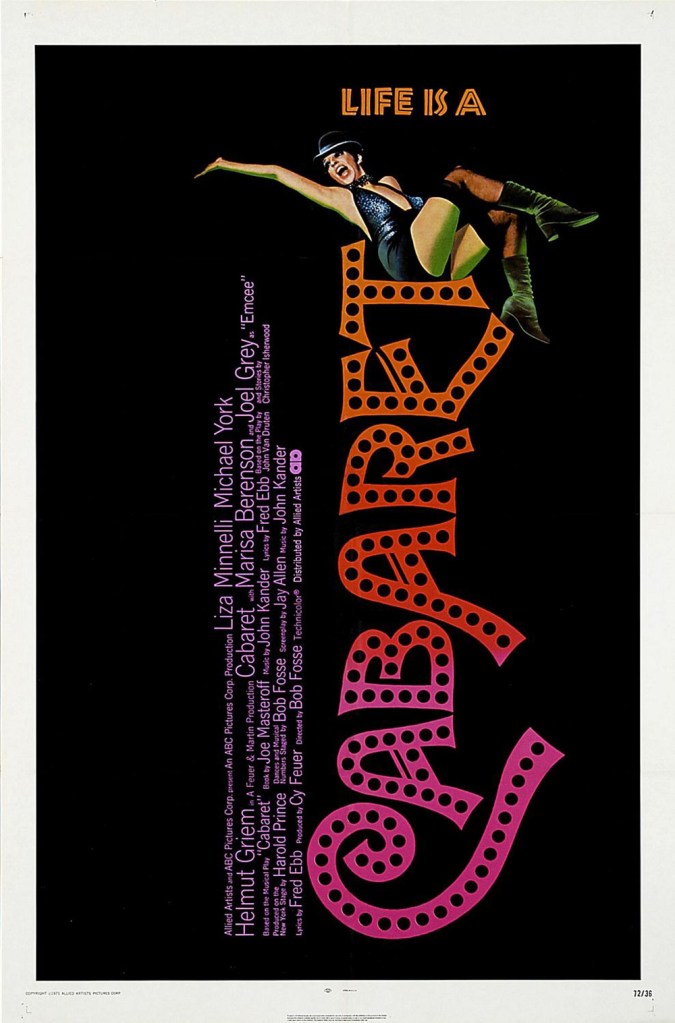
Cabaret – March 5th, 2022

Cabaret [1972]


Please join Cultivate Cinema Circle as we screen Bob Fosse’s Oscar winning (Best Leading Actress, Best Supporting Actor, Best Director, Best Cinematography, Best Art Direction/Set Direction, Best Sound, Best Editing, Best Original Score) film Cabaret [1972].


Event Sponsors:

Venue Information:

Downtown Central Library Auditorium
1 Lafayette Square, Buffalo, NY 14203
(Enter from Clinton Street between Oak and Washington Streets)
716-858-8900 • www.BuffaloLib.org
COVID protocol will be followed.


Synopsis

Berlin, 1931. As Nazism rises in Germany, flamboyant American Sally Bowles (Liza Minnelli) sings in a decadent nightclub and falls in love with a British language teacher (Michael York)–whom she shares with a homosexual German baron. But Sally’s small, carefree, tolerant and fragile cabaret world is about to be crushed under the boot of the Nazis as Berlin becomes a trap from which Sally’s German friends will not escape in this ground-breaking, blockbuster film version of the Broadway musical Cabaret. Winner of eight Academy Awards. Based on the book Berlin Stories by Christopher Isherwood, the Broadway play I Am a Camera based on the book and written by John Van Druten and on the Broadway musical written by Joe Masteroff.

Tidbits:

  • Academy Awards – 1973 – Winner: Best Actor in a Supporting Role, Best Actress in a Leading Role, Best Art Direction-Set Decoration, Best Cinematography, Best Director, Best Film Editing, Best Music (Scoring Original Song Score and/or Adaptation) & Best Sound
  • Academy Awards – 1973 – Nominee: Best Picture & Best Writing (Screenplay Based on Material from Another Medium)
  • National Film Preservation Board – 1995

Director Bio

“Dance expresses joy better than anything else.”

Courtesy of TCM:

Arguably one of the most influential and visionary choreographers of the 20th century, Bob Fosse brought style and sexuality to the Broadway stage through his dances for such memorable musicals as “The Pajama Game” (1954), “Damn Yankees” (1958), “Sweet Charity” (1969), “Pippin” (1972) and “Chicago” (1975), as well as his direction on such films as “Cabaret” (1972), “Lenny” (1974) and “All That Jazz” (1979). Fosse began his career as a dancer with aspirations of Hollywood stardom, but his slight stature and baldness put a halt to that dream. He headed for Broadway, where his steamy, jazz-influenced choreography and direction wowed audiences and earned numerous Tonys. In 1969, he made the leap to film directing, and won the Oscar for “Cabaret” before enjoying critical success with the Lenny Bruce biopic, “Lenny,” and the autobiographical fantasy, “All That Jazz” (1979). A larger-than-life figure whose passion for his art was matched by his appetite for hard, fast-paced living, Fosse’s drive and technique made him a legend in the theater world, which fell in love with him again through celebrations and revivals after his untimely death in 1987.

Born Robert Louis Fosse in Chicago, IL on June 23, 1927, he was the second youngest of six children born to a Norwegian father who performed in vaudeville and an Irish mother. Small in stature and suffering from both asthma and epilepsy, he found an outlet in dance, and began taking lessons at the age of nine. By high school, he was a veteran of the Chicago burlesque scene, and after teaming with another young performer, Charles Grass, they toured the country as The Riff Brothers. Fosse’s talents caught the attention of producers who hired him for a show called “Tough Situation.” The production toured military bases throughout the Pacific during World War II, and provided Fosse with an invaluable canvas on which he could perfect his future skills as a choreographer and director. In 1947, Fosse moved to New York City in the hopes of finding work as a Broadway dancer. He was quickly signed to the show “Call Me Mister,” where he was teamed with Mary Ann Niles, who became his first wife in 1949. After the show closed, the duo became a popular attraction on television shows like “Your Hit Parade” (NBC/CBS, 1950-59) and “The Colgate Comedy Hour” (NBC, 1950-55). After Fosse and Niles divorced in 1951, he teamed with and married dancer Joan McCracken, and began studying acting at the American Theater Wing in the hopes of becoming an actor-dancer like Fred Astaire. He soon graduated to leads in summer-stock productions, which in turn, led to a screen test for MGM.

Fosse soon found himself in demand as a dancer in Hollywood musicals, most notably in “Give a Girl a Break” (1953) and “Kiss Me Kate” (1953), which allowed him to choreograph a brief but remarkably complicated sequence with Carol Haney. Unfortunately, Fosse lacked the physical qualities of a traditional leading man: though lithe and graceful, he was also pigeon-toed, round-shouldered and most significantly, prematurely bald, which he attempted to disguise with a variety of hats, including his future signature touch, the bowler. Faced with the fact that he would never progress to the stature of an Astaire or Gene Kelly, he reluctantly returned to New York to work in theatre. His brief film career would provide him with the launching pad he needed: he was hired to choreograph the 1954 musical “The Pajama Game” based on his 48 seconds of work in “Kiss Me Kate.” The show gave the theater world their first taste of Fosse’s unique style – a seamless blend of jazz, popular dances like mambo and the eroticism of his burlesque days, with an emphasis on small but exact, almost mechanical gestures, like thrusting hips, spread-wide fingers and snapped wrists. Fosse also incorporated his own physicality into his work, with frequent rolled shoulders and knocked knees, as well as a penchant for his dancers to wear bowler hats and/or gloves; the latter being a reference to his own dislike of his hands. Broadway audiences and critics responded to his work with overwhelming praise, and “Pajama Game” earned Fosse his first of numerous Tony Awards.

The following year, Fosse struck gold again with “Damn Yankees,” which starred an exuberant red-haired dancer named Gwen Verdon. She would become his third wife and longest-running collaborator, and he would provide her with signature dances like a steamy striptease number to “Whatever Lola Wants” in “Yankees.” Both Fosse and Verdon won Tonys for their work in the show, and would continue to collaborate on numerous stage musicals, including 1957’s “New Girl in Town” and “Redhead” (1959), which marked his debut as both director and choreographer. Again, the Fosse-Verdon team claimed Tonys for actress and choreography, as well as Best Musical of 1959. Hollywood began to take notice of Fosse’s work, and lured him back to the studios to direct the dancing for “My Sister Eileen” (1955). He proved to be a natural at adapting his stage style for cinematic purposes, and made exceptional use of location work in the screen versions of “The Pajama Game” (1957) and “Damn Yankees” (1958). The latter also marked his sole onscreen performance with Verdon in a mambo for “Who’s Got the Pain.” His second stint in the movies proved equally short-lived, and by 1960, he was back on Broadway, directing and choreographing such hits as “How to Succeed in Business Without Really Trying” (1961), “Little Me” (1962) and “Sweet Charity” (1966), of which the latter two earned him Tonys. “Charity” also provided him with another trademark number, the staccato, highly stylized “Hey Big Spender,” which allowed him to further push the boundaries of sexuality in dance.

Fosse would later repeat his choreography for the film versions of “Business” (1967) and “Charity” (1969), but in the case of the latter, it came with a condition: that he be allowed to direct the film itself as well. Unfortunately, the results were mixed. Though he made excellent use of the CinemaScope process for numbers like “Spender,” the film, which replaced Verdon in the lead with former “Pajama Game” understudy Shirley Maclaine, was a dismal failure and nearly brought Universal Pictures to its knees. Broadway welcomed Fosse back with “Pippin” (1972), a surreal fantasy that became one of his biggest successes, running for over 1,900 performances and introducing the public to the unique talents of actor-singer Ben Vereen. The show’s runaway popularity was the spearhead of a long and prolific period for Fosse, and one that brought him his greatest triumphs. In 1972, he directed “Liza with a Z” (NBC), a concert film of actress-singer Liza Minnelli in performance at the Lyceum Theatre in New York. The show helped to mint Minnelli as a star in the making, and earned Fosse three Emmys, including Outstanding Directorial Achievement, as well as a Directors Guild of America Award. Fosse had also won the Tony for “Pippin” that same year, and would pull off an astonishing hat trick with the release of “Cabaret” in early February.

Fosse was an unlikely choice to direct the film version of John Kander and Fred Ebbs’ 1966 musical. His struggle with the dramatic moments in “Sweet Charity” concerned the film’s producers, who saw that equal time and attention would need to be devoted to these scenes in addition to the musical numbers. However, Fosse was hired at the insistence of veteran Broadway producer, Cy Feuer, who had mounted some of Fosse’s biggest hits and was producing “Cabaret.” The result largely dispensed with Kander and Ebb’s original text; focusing instead on the life of Minnelli’s American singer, Sally Bowles, as she descended into the decadence of Nazi Germany via its nightclub scene. Buoyed by an authentically decadent atmosphere and the venomous performance of Joel Grey as the Master of Ceremonies, “Cabaret” was a massive hit, earning eight Oscars, including Best Director for Fosse, whose competition included Francis Ford Coppola for “The Godfather.” In doing so, he had earned three of the biggest awards in show business in a single year.

For his next screen effort, Fosse eschewed the musical altogether to focus on the short but celebrated life of controversial comedian, Lenny Bruce. Dustin Hoffman portrayed Bruce in “Lenny” (1974), a decidedly dark and meditative piece about Bruce’s extraordinary incendiary talents and his ultimate downfall after becoming a target for censors. Fosse, who had faced similar challenges with his eroticized choreography, shot the film in black and white and with a riveting verite style, which earned him an Oscar nod for Best Director. However, the achievements were overshadowed by a heart attack he suffered while editing the picture. At the time, Fosse was also preparing his next Broadway show, “Chicago,” based on the scandalous real-life case of two murderesses in the 1920s, and the stresses of both productions took their toll. Those close to Fosse, however, knew that additional strains had been placed on Fosse’s health: he consumed drugs, alcohol, women and cigarettes at an alarming rate, which, when combined with his established health issues and relentless work ethic, contributed to his collapse. In 1974, Fosse underwent open-heart surgery.

Despite his setbacks, Fosse was able to continue as both writer and director-choreographer of “Chicago.” Drawing from his own background as a Windy City native and a veteran of its seamy entertainment underbelly, Fosse again found common ground in its heroes, Jazz-era libertines Roxie Hart and Velma Kelly, who flew in the face of societal norms by embracing the vices of the period and making a scene from the murders of their respective lovers. Gwen Verdon, who had divorced Fosse in 1971 after numerous infidelities, played Roxie Hart, and would look past their troubled history to remain a faithful companion and collaborator to Fosse until the end of his life. However, the production received mixed reviews during its run, and was routed in nearly every Tony race by “A Chorus Line.” It would eventually assume its place among the great musicals of the 20th century in a 1996 revival choreographed in Fosse’s style by dancer Ann Reinking, who replaced Verdon during the original Broadway run, and one of Fosse’s romantic companions following his divorce. This version eventually became the longest-running musical revival in history, and the sixth longest-running Broadway show ever.

In 1979, Fosse returned to filmmaking with “All That Jazz,” an autobiographical fantasy about a driven, pill-popping theater director (Roy Scheider) who realized that the only way to save his current project, a gargantuan musical gone far over budget, was to die. The film, which drew directly from Fosse’s own life – from his collapse while working on “Lenny” to his relationships with figures based on Verdon, Reinking (who played a version of herself) and his daughter, Nicole – took a surreal approach to the telling, with an Angel of Death (Jessica Lange) serving as Scheider’s confessor/lover and a major song-and-dance number to signal Scheider’s death. Critics were largely wowed by the film, which received the Palme d’Or at Cannes and four Oscars, including original score, as well as nominations for Fosse as Best Director. It would be his last major work for the screen.

Fosse’s final years were marked by misfires. “Star 80” (1983) was a grim biopic about Playmate Dorothy Stratten, who was murdered by her abusive husband (Eric Roberts), the subject matter turned off most audiences, resulting in a financial flop. His final original musical, “Big Deal” (1986), was based on Mario Monicelli’s celebrated Italian caper comedy “Big Deal on Madonna Street” (1958), but failed to win over audiences, despite five Tony nominations, including two for Fosse as director and choreographer. On Sept. 23, 1987, the 60-year-old Fosse suffered a heart attack on the opening night of a revival of “Sweet Charity.” He was taken to George Washington University Hospital, where he was pronounced dead. Verdon, who served as assistant director for the revival, was with him at the time of the fatal attack. In the years following his death, both Verdon and Reinking worked to keep Fosse’s legacy alive. The former served as artistic consultant for 1999’s “Fosse,” a three-act celebration of his greatest dances that won the Tony for Best Musical. Reinking’s revival of “Chicago” led to a celebrated 2002 film adaptation by director Rob Marshall, which in turn, sparked an interest in Fosse’s life and work. In 2007, Fosse was inducted posthumously into the National Museum of Dance and Hall of Fame, and a section of Paulina Street in Chicago was named “Bob Fosse Way.”

Filmography:

  • Star 80 (1983)
  • All That Jazz (1979)
  • Lenny (1974)
  • Cabaret (1972)
  • Sweet Charity (1969)

Links

Here is a curated selection of links for additional insight/information:

  • Cultivate Cinema Circle info-sheet – link
  • “A great movie musical. Taking its form from political cabaret, it’s a satire of temptations. In a prodigious balancing act, Bob Fosse, the choreographer-director, keeps the period—Berlin, 1931—at a cool distance. We see the decadence as garish and sleazy; yet we also see the animal energy in it—everything seems to become sexualized. The movie does not exploit decadence; rather, it gives it its due. With Joel Grey as our devil-doll host—the master of ceremonies—and Liza Minnelli (in her first singing role on the screen) as exuberant, corruptible Sally Bowles, chasing after the life of a headliner no matter what; Minnelli has such gaiety and electricity that she becomes a star before our eyes. From Christopher Isherwood’s Goodbye to Berlin stories, via the play and movie of I Am a Camera, and the Broadway musical Cabaret, which has been adapted for the screen by Jay Presson Allen, with the assistance of Hugh Wheeler.” — Pauline Kael, 5001 Nights at the Movies [1982] – link
  • “As Germany swings darkly through the inflationary 1920s and brownshirts take over the streets, Minnelli’s emigre entertainer Sally Bowles waves her painted fingernails (‘divine decadence’) and does weird jazz with venomous MC Joel Grey. Christopher Isherwood’s autobiographical Berlin stories (previously filmed as I Am a Camera, with Julie Harris as Sally) were turned into a play and then a Broadway musical, and are here wrestled into movie shape by choreographer Bob Fosse, who contributes an incredible razzle‑dazzle which landed the film up to its rolled stockings in Oscars.  It tries a little too hard to cross The Gold Diggers of 1933 with The Rise of the Third Reich to be comfortable, but stands as a hugely enjoyable, occasionally chilling, musical. The terrific score by John Kander and Fred Ebb includes showstoppers like ‘Cabaret’, ‘Money Makes the World Go Around’, ‘If You Could See Her Though My Eyes’ and, as repopularised by Spitting Image’s Margaret Thatcher in the late 1980s, the second most-famous Nazi anthem (after ‘Springtime for Hitler’) written by Jews, ‘Tomorrow Belongs to Me’. Few movie musicals since the Busby Berkeley days have managed so well the trick of presenting musical numbers as self-contained set-pieces – sketches rather than pop videos – that comment upon rather than advance the ‘story’.  Liza Minnelli, whose subsequent career was been spotty at best, gets her one great moment centre-screen in a Louise Brooks haircut and fabulous ‘20s fashions, while the face-painted, sing-song Grey is amazing as a cross between Leonard Sachs, David Bowie and Dracula.” — Kim Newman, Empire [2000] – link
  • “It’s not just as a Brechtian backstage ‘meta’ filmusical that Cabaret impresses us. As a parable or metonym for the rise of German Nazism, as a comedy of social and sexual manners, as a romantic drama involving widely divergent character types and sexual tastes, Fosse’s film kicks in, clicks, works triumphantly well. Much of this appears to comes together in a memorable sequence which is the film’s only number not staged inside the Kit Kat Klub, namely the ‘Tomorrow Belongs to Me’ song which is performed at a sunny, innocent-looking beergarden. Here a handsome, blonde youth stands and starts to sing of meadows, forests and stags running free which then associatively flow into images of babes in cradles and bees being embraced by blossoms. Somehow at the same time we are shown the swastika armband the tenor-voiced teen is wearing and we are aware that his solo turn is being taken up by others so that by the point where lyrics are referring to the fatherland showing us a sign to arise! arise!, a pastoral tune has become a strident populist anthem; spanning generations (middle-aged women sing, a young girl sings) and crossing classes. The literal germ of Fascism’s sentimental Utopian appeal has been lucidly demonstrated. Sally and her two bi-sexual beaus choose to leave the scene but they can’t finish it or escape its wide-spreading repercussions. The whole Dystopian turnaround of this number puts a disquieting lateral spin on any other more Utopian musicals’ paeans to beautiful mornin’s, Junes bustin’ out all over and hills being alive. For its Dystopian anti-filmusical-ness, for the ample bravura opportunities it presents to the Fosse-Minnelli-Grey triad, for its satirically cutting edginess, for its appeal to the festively corrupt (and corruptible) amongst us, Cabaret is a Pandora’s Box of ‘strange and extraordinary’ treasures. Wilkommen! Bienvenus! Welcome!” — Peter H. Kemp, Senses of Cinema [2000] – link

Hello, Dolly! – February 19th, 2022

Hello, Dolly! [1969]


Please join Cultivate Cinema Circle as we screen Gene Kelly’s Oscar winning (Best Art Direction/Set Direction, Best Sound, Best Score) film Hello, Dolly! [1969].


Event Sponsors:

Venue Information:

Downtown Central Library Auditorium
1 Lafayette Square, Buffalo, NY 14203
(Enter from Clinton Street between Oak and Washington Streets)
716-858-8900 • www.BuffaloLib.org
COVID protocol will be followed.


Synopsis

Barbra Streisand plays Dolly Levi, that matchmaker of 1890s New York, in this version of the Broadway hit, which finds Dolly pretending to have only a professional interest in a wealthy Yonkers merchant, going through the motions of finding him a new wife when in fact she’d like to be the lucky bride herself.

Tidbits:

  • Academy Awards – 1970 – Winner: Best Art Direction-Set Decoration, Best Sound & Best Music – Score of a Musical Picture (Original or Adaptation)
  • Academy Awards – 1970 – Nominee: Best Picture, Best Cinematography, Best Costume Design & Best Film Editing
  • Directors Guild of America – 1970 – Nominee: Outstanding Directorial Achievement in Motion Pictures
  • Golden Globes – 1970 – Nominee: Best Motion Picture – Comedy or Musical, Best Director, Best Actress – Comedy or Musical, Best Supporting Actress & Most Promising Newcomer – Female

Director Bio

“I wanted to invent some kind of American dance that was danced to the music that I grew up on: Cole Porter and Rodgers and Hart and Irving Berlin. So I evolved a style that certainly didn’t catch on right away.”

Courtesy of TCM:

By John Charles was even more impressive “On the Town” (1949). Having gained some experience directing while in the service, Kelly both starred in and made his directorial bow with “Town,” sharing helming duties with Stanley Donen, a talented, young choreographer who had previously worked with Kelly on “Cover Girl” and “Anchors Aweigh.” The two first-time directors picked a production that had more than the usual challenges, in that the customary studio work was complemented by some New York City location shooting at various Big Apple landmarks. This was a very rare occurrence for musicals of the time, which were almost always lensed on the studio back lots under closely controlled conditions, and helped to enhance the film’s appeal. “Black Hand” (1950) offered Gene Kelly an unusual change of pace role as an Italian immigrant battling the Mafia in New York City, but he quickly returned to familiar territory with “Summer Stock” (1950), his final collaboration with a then very troubled Judy Garland. After the inclusion of a ballet sequence in “The Pirate,” “An American in Paris” (1951) successfully incorporated a beautifully staged and shot routing that ran a then-unheard of 18 minutes. The multiple Oscar-winning production also introduced Kelly’s discovery Leslie Caron, who took the lead role when Cyd Charisse dropped out due to pregnancy.

As fine as “An American in Paris” was, Kelly’s next film was the crown jewel in MGM’s musical catalogue and widely regarded as the greatest musical of all time. Set during the time when talking pictures were being introduced in a post-silent era Hollywood, “Singin’ in the Rain” (1952) was a delightful, rollicking tribute to moviemaking. Kelly’s remarkable choreography, including his show-stopping “Moses Supposes” tap dancing number with Donald O’Connor and, of course, Kelly’s performance of the title song, performed on a rain swept street complete with an umbrella as prop, helped make this one of the most beloved musicals ever produced. Although the movie was inexplicably shut out at the Oscars, Kelly and Donen shared a Director’s Guild of America Award for their efforts and Kelly received a special Academy Award that year in recognition of his amazing achievements both on and off the silver screen.

While not as well known as many MGM musicals, the company’s adaptation of the Broadway smash “Brigadoon” (1954) had plentiful charm and offered the first chance for audiences to see Kelly glide his way across the wide CinemaScope frame. Originally planned as a direct follow-up to “On the Town,” “It’s Always Fair Weather” (1955) was slightly darker that most of Kelly’s musicals from this time, with the relationship between its three protagonists strained for part of the running time, but still ended in very upbeat fashion. Kelly co-directed once again with Donen, and the show-stopping sequence came early on, with Kelly and fellow leading men Dan Dailey and Michael Kidd dancing on, around and through a taxi cab, and finally adding grace to garbage by tap dancing with trash can lids attached to their feet. Kelly directed solo on “Invitation to the Dance” (1956), an ambitious project that sought to tell three stories solely through dance (including one starring Kelly and featuring him interacting again with animation) and no dialogue. However, the project, which started filming in 1952, experienced any number of problems, and had been greatly reworked by the time it finally appeared four years later. Although it was a success overseas, “Invitation to the Dance” failed domestically, a signal that audiences had started to tire of this sort of fare.

After 15 years and numerous hits for MGM, the following year’s “Les Girls” (1957) was Kelly’s last musical for the company. The actor’s marriage to Blair also ended that year. An outspoken liberal, Blair ended up blacklisted, but was able to find some work thanks to Kelly’s intervention, including “Marty” (1955), which earned her an Oscar nomination. In later life, Blair described Kelly, who was also a progressive liberal, as a hardworking, attentive and near perfect husband, but divorced him because she desired her freedom. With MGM no longer producing musicals, Kelly directed and starred in “Marjorie Morningstar” (1958) opposite a young Natalie Wood and “The Tunnel of Love” (1958), as well as helming a successful run of “Flower Drum Song” (1958-60) on Broadway.

In 1960, he married dancer Jeanne Coyne and received a star on the Hollywood Walk of Fame. Stanley Kramer’s acclaimed drama about the real-life controversy generated by the teaching of evolution in schools during the 1920s, “Inherit the Wind” (1960) found Kelly in fine dramatic form as a journalist based on famous writer H.L. Mencken. Kelly also explored series television with “Going My Way” (ABC, 1962-63), a network version of the hit 1944 feature, with Kelly assuming the Father O’Malley role originated by Bing Crosby. The hour-long comedy failed to click with viewers, however, and was cancelled after one season.

By this time, directing became Kelly’s primary occupation. In addition to theatrical features like “Gigot” (1962), “A Guide for the Married Man” (1967) and “The Cheyenne Social Club” (1970), he also directed and starred in an Emmy Award-winning adaptation of “Jack and the Beanstalk” (CBS, 1967). His main accomplishment at this time was “Hello Dolly!” (1969), a big-budget version of the Broadway hit that helped to solidify Barbra Streisand as a major box office attraction. Kelly returned to television as host of “The Funny Side” (NBC, 1971), a comedy series that included song and dance numbers. Although the program garnered an Emmy Award, it was gone from the air waves after only four months. Coyne died of leukaemia at the young age of 50 in 1973, and aside from a supporting role in the comedy “40 Carats” (1973), Kelly was mostly inactive throughout the 1970s. However, his talents were seen on movie screens around the world once again when MGM scored a surprise hit with “That’s Entertainment!” (1974), a collection of memorable sequences from their library of classic musicals, which included clips from such Kelly outings as “Singin’ in the Rain” and “An American in Paris” as well as new footage of the star in bookend segments. The studio also tapped Kelly to direct linking sequences and/or do additional hosting duties for the follow-ups “That’s Entertainment, Part II” (1976), “That’s Dancing” (1985), and “That’s Entertainment III” (1994).

It was a shame these compilation extravaganzas were not released at the end of Kelly’s motion picture career, as his final two original entries in his filmography were simply embarrassing. “Viva Knievel!” (1977) was a ludicrous attempt to create a motion picture career for the charmless (and frequently unsuccessful) daredevil Evel Knievel, with Kelly wasted in a nothing role as his alcoholic mechanic. Even more unfortunate was the disastrous Olivia Newton-John musical fantasy “Xanadu” (1980) in which he played a character bearing the name of his leading man from “Cover Girl,” but that was where any resemblance between the two productions ended. Despite its critical drubbing, “Xanadu” did provide Kelly with his final onscreen dance with Newton-John, giving the roller disco musical its one touch of class.

Kelly earned his final acting credits in a pair of miniseries, the Civil War epic “North and South” (ABC, 1985) and “Sins” (CBS, 1986), and accepted Lifetime Achievement Awards from the American Film Institute and the Screen Actors Guild in 1985 and 1989, respectively. In 1990, the star married his third wife, Patricia Ward, and they remained together until Kelly passed away on Feb. 2, 1996 from complications brought about by a pair of strokes he had suffered. It was safe to say that with the death of Astaire in 1987 and Kelly nine years later, the two greatest dance innovators in cinema history officially brought the curtain down on the Golden Age of movie musicals.

Filmography:

  • That’s Entertainment! II (1976)
  • The Cheyenne Social Club (1970)
  • Hello, Dolly! (1969)
  • A Guide for the Married Man (1967)
  • Jack and the Beanstalk (1967)
  • Gigot (1962)
  • The Tunnel of Love (1958)
  • The Happy Road (1957)
  • Invitation to the Dance (1956)
  • It’s Always Fair Weather (1955)
  • Singin’ in the Rain (1952)
  • On the Town (1949)

Links

Here is a curated selection of links for additional insight/information:

  • Cultivate Cinema Circle info-sheet – link
  • “If the echoes sometimes blend into a solid chorus, credit must be divided between Director Gene Kelly and his choreographer, Michael Kidd. Ernest Lehman’s script is based on the Broadway musical (which was based on Thornton Wilder’s farce The Matchmaker). It is woven from a solitary yarn. Matchmaker Dolly Levi sets great store by Horace Vandergelder’s feed and grain store and decides to snare him for her own. She does. Curtain. In between their coy runaround, tiny complications arise. None of them matter, but several are the premises for blithe and sumptuous dance numbers. The most kinetic, Dancing, is happily reminiscent of the old MGM musical It’s Always Fair Weather, starring a couple of guys named Gene Kelly and Michael Kidd. Hello, Dolly! could have used those personalities on screen. Instead, it relies almost exclusively on the celebrated eyes, ears, nose and throat of Streisand. Her musicianship remains irreproachable. But her mannerisms are so arch and calculated that one half expects to find a key implanted in her back. Still, the Widow Levi is by way of becoming a classic repertory role.” — Richard Schickel, Time Magazine [1969]
  • “More infamous for bringing Fox financially to its knees than for being the last major musical directed by Gene Kelly, Hello, Dolly! is one big-assed bull in a china shop. The film cost nearly as much to produce as Cleopatra and made far less at the box office, thus earning the film its reputation as one of Hollywood’s foremost turkeys. The role of Dolly Levi, made immortal on Broadway by Carol Channing, was given to Barbra Streisand in one of the most glaring cases of flagrant miscasting. But that’s all in the past. How does Hello, Dolly!, an update of The Matchmaker, look today? In a word: campy. Kelly, as a dancer and an actor, was never one to ask “Is this a bit over the top?” The choreography, the performances, the set decoration, the dialogue, everything about Hello, Dolly! is played directly to the back row of the theater, which would be fine on the stage, but on anamorphic widescreen close-ups tends to be more frightening than mirthful (thankfully, home viewing cuts down a bit on the mugging factor). As the youthful dancer-in-training Barnaby Tucker, Danny Lockin looks more like a gymnast doing a floor routine. Still, other aspects of Hello, Dolly! read a lot better with age. La Streisand’s rapid-fire delivery recalls such chatter-heavy early talkies as His Girl Friday. The unabated feel-good attitude and emphasis on underhanded plottiness makes the film not that far removed from Singin’ in the Rain.” — Eric Henderson, Slant [2003] – link
  • “The most cinephiliac text I have experienced in the cinema lately—one that has had film critics rhapsodizing—is actually about rewatching a single sequence on video. In Wall-E, a robot cleaning up the messes of a post-human Earth cherishes a centuries-old videotape of Hello Dolly! and plays Michael Crawford’s musical numbers each night. A movie has filled this little robot, like so many of us cinephiles, with romantic fantasies. Wall-E loves his video-tape because its content makes him feel full of love even though he’s alone.” — Lucas Hilderbrand, Framework [2009] – link

A Star Is Born – February 5th, 2022

A Star Is Born [1954]


Please join Cultivate Cinema Circle as we screen George Cukor’s Oscar nominated (Best Lead Actor, Best Lead Actress, Best Art Direction/Set Decoration, Best Costume Design, Best Original Song, Best Score) film A Star Is Born [1954].


Event Sponsors:

Venue Information:

Downtown Central Library Auditorium
1 Lafayette Square, Buffalo, NY 14203
(Enter from Clinton Street between Oak and Washington Streets)
716-858-8900 • www.BuffaloLib.org
COVID protocol will be followed.


Synopsis

Oft-filmed Hollywood fairy tale about a boozy actor, a fading star who’s lost his glitter but still mentors a young, talented up-and-coming singer with whom he falls in love. And while her career sizzles, his fizzles. Costars James Mason and Judy Garland were nominated for Best Actor and Best Actress.

Tidbits:

  • Academy Awards – 1955 – Nominee: Best Actor in a Leading Role, Best Actress in a Leading Role, Best Art Direction-Set Decoration (Color), Best Costume Design (Color), Best Music (Original Song) & Best Music (Scoring of a Musical Picture)
  • National Board of Review – 1954 – Top Ten Films
  • Golden Globes – 1955 – Winner: Best Actor – Comedy or Musical & Best Actress – Comedy or Musical
  • National Film Preservation Board – 2000

Director Bio

“I don’t weep or anything, but there’s always some part of me left bloody on the scene I’ve just directed.”

Courtesy of TCM:

One of the most respected directors of Hollywood’s Golden Age, Oscar-winning filmmaker George Cukor was frequently described as a “women’s director,” thanks to his stellar collaborations with Katherine Hepburn on ten films, including “The Philadelphia Story” (1940), as well as Joan Crawford on “The Women” (1939), Ingrid Bergman on “Gaslight” (1944), Judy Holliday on “Born Yesterday” (1950), Judy Garland on “A Star is Born” (1957) and Audrey Hepburn on “My Fair Lady” (1964). The appellation, while appropriate, did not sufficiently explain the scope of Cukor’s five-decade career; rather, it was his scrupulous attention to every detail of his films – from pace and design to casting, scripting and editing – that created a fluid, flawless aesthetic that remained almost invisible to viewers until after the final credits rolled. Though he worked in all genres – from comedies and dramas to musicals – his true focus was the complicated entanglement of relationships between friends and lovers in the face of political, social and interpersonal conflicts. In doing so, Cukor crafted a body of work that represented some of the finest pictures ever released by Hollywood studios; pictures that stood the test of time and changing audiences, who returned to Cukor’s cinematic offerings in order to see a master craftsman at work.

George Dewey Cukor was born July 7, 1899 in New York City. The only son of Hungarian Jewish parents Victor and Helen Cukor, who drew their son’s middle name from Naval hero George Dewey, he began acting in local productions as a youth, and performed in a recital alongside his future mentor, David O. Selznick, when both were just boys. Theater became his first and greatest love as a teenager; he would frequent cut classes at DeWitt Clinton High School to see afternoon matinees at the famed Hippodrome. He later worked as a supernumerary actor with the Metropolitan Opera. After graduating from DeWitt Clinton, Cukor enrolled in the City College of New York with designs on following his father, an assistant district attorney, into a career in law. While there, he joined the Student Army Training Corps in 1918, but missed serving in World War I by only two months.

After Cukor’s duty was concluded, he left school and began working in theater. In 1920, he served as stage manager for a Syracuse-based troupe called the Knickerbocker Players before forming his own company, the C.F. and Z Production Company with Walter Folmer and John Zwicki. There, he made his debut as a director on various productions before heading to Broadway with Melchior Lengyel’s “Antonia.” For the next five years, he worked on Broadway in the winters, gradually gaining acclaim for shows like a 1926 adaptation of “The Great Gatsby.” In the summer months, he returned to Rochester to work with his production company, which later became the Cukor-Kondolk Stock Company and featured the likes of Louis Calhern, Frank Morgan, Reginald Owen and a young Bette Davis. In 1927, he relocated to New York to work as the stage manager for the Empire Theater on 42nd Street, where he oversaw productions with Ethel Barrymore and Jeanne Eagles, among others.

The following year, Cukor headed to Hollywood to join the growing ranks of theater people who were finding employment in feature films. He signed a contract with Paramount Pictures and, after a six-month apprenticeship, began working as a dialogue coach and screen test director on films like “All Quiet on the Western Front” (1930). That same year, he earned his first screen credit as co-director on “Grumpy” (1930), a mystery starring English actor Cyril Maude in his signature role as a cantankerous British barrister. Two more films with Gardner followed before Cukor gained his first solo outing with “Tarnished Lady” (1931), a melodrama with Tallulah Bankhead as a socialite whose unrequited love for a callous writer leads her to personal and financial ruin. In 1932, Cukor signed on to replace Ernst Lubitsch as director on “One Hour with You” (1932), a musical comedy vehicle for Maurice Chevalier. Lubitsch, who had taken ill during the shoot, left the project to recuperate, but remained on board as producer. However, after two weeks of recuperation, Lubitsch returned to the set and began directing scenes, with Cukor’s consent. After filming wrapped, Lubitsch demanded that Paramount remove Cukor’s directorial credit, and threatened to leave the studio if his request was not honored. Studio executive B.P. Schulberg asked Cukor to cooperate with Lubitsch’s request, but the young upstart instead responded with a lawsuit. After eventually settling for a dialogue director credit, a disgusted Cukor left Paramount in disgust, instead signing with his old friend David O. Selznick at RKO.

There, Cukor developed his unique and subtle style, which over the years was defined as “theatrical,” with a heavy emphasis on female actresses in what were commonly known as “women’s pictures.” It was true that Cukor worked well with actresses and with material based in the theater and film worlds, as evidenced by his first picture for RKO, 1932’s “What Price Hollywood?” The film, which paralleled the life of rising starlet Constance Bennett with that of fading actor Lowell Sherman, was filled with sudsy romance, tear-jerking moments and touch of scandal. But as writer and Cukor friend Gavin Lambert noted in a 2002 essay, Cukor’s true interest lay with stories about truth, identity, and the self-deception that was often an integral part of the show business world, as well as interpersonal relationships between men and women. These themes would remain at the core of Cukor’s work for the next half-century.

Cukor’s championing of Katherine Hepburn also contributed to his label as a “women’s director” – a title which he loathed. He had fought for her to star in his 1932 remake of “A Bill of Divorcement” as Billie Burke’s daughter, whose impending marriage to fiancé Grey Cavanaugh is threatened by familial uproar over the return of her father (John Barrymore) after two decades in a mental hospital. Selznick, however, disliked the actress and believed that her presence in the film would actually hamper its box office success. Cukor disregarded his boss’ opinion and cast her in the film, which served as both the launch of her storied career and the beginning of their long friendship and professional relationship.

Over the next decade, Cukor would helm a string of popular comedies and dramas for the studio, all delivered with exacting detail in regard to performance, story and production. Behind each of the films, beginning with 1932’s “Rockabye” and ending with the infamous flop “Sylvia Scarlett” (1935), Cukor would explore the tensions between class, sex and society; in the wildly successful “Little Women” (1933), which netted his first Oscar nomination for Best Director, the simple New England life of the March sisters, led by Hepburn’s Jo, is tested by the demands of maturity and romance, while “Dinner at Eight” (1933), which Cukor directed as a loan-out for MGM, explored the effects of power and money on romantic and business relationships via a stellar cast that included John and Lionel Barrymore, Jean Harlow and Wallace Beery. His “Romeo and Juliet” (1936), with Norma Shearer and Leslie Howard as Shakespeare’s star-crossed lovers, was of course the epitome of class conflict, as was his celebrated take on Charles Dickens’ “David Copperfield” (1935), another loan-out to MGM with Lionel Barrymore and an acclaimed dramatic turn by W.C. Fields. In all cases, Cukor worked with the industry’s best behind-the-scenes talent, from producers Irving Thalberg and Meriam C. Cooper, to writers Frances Marion and Herman J. Mankiewicz, to composer Max Steiner, all of which generated a high level of quality that critics frequented described as “gloss,” another descriptive term that dogged Cukor throughout his career. In reality, the combined efforts of these talented people were orchestrated by Cukor to deliver consistency of product; he believed that the talents of his actors or writers should be matched on all levels by his production staff. The result was what writers and filmmakers like Francois Truffaut noted as a masterful control of tone, rhythm and pacing in his films, resulting in something like movie perfection.

Not all of his efforts were celebrated by the press and public. 1936’s “Sylvia Scarlett,” with Hepburn as a con artist who disguises herself as a man, and Cary Grant as the Cockney rogue who loves her, was one of the biggest failures of the 1930s. More famously, Cukor was fired as director of “Gone with the Wind” (1939) after devoting more than two years to the project’s development. The Hollywood rumor mill swirled around Clark Gable as the culprit behind Cukor’s removal, due to his discomfort over Cukor’s sexuality and fear that he, as the male lead, would be lost in the shuffle by the reputed “woman’s director.” In truth, Cukor had been one of the industry’s most openly gay figures since his debut in 1928, but Gable and Cukor had also worked together prior to “Wind” on 1934’s “Manhattan Melodrama” without incident. The real architects behind Cukor’s dismissal were his patron, David O. Selznick, and Cukor himself. The former had grown tired of Cukor’s methodical pace, as well as his decision to turn down such pet projects as “A Star is Born” (1937). As for the director, he complained that unless he was able to work under the conditions he desired, he would have to leave the project. Selznick agreed to Cukor’s decision, having already received quality work from him on several interim projects, including several scenes for “The Adventures of Tom Sawyer” (1938). During his downtime on “Wind,” Cukor also spent a week on the set of MGM’s “Wizard of Oz,” where he made several key decisions on the film’s development, including the change in Dorothy’s hair color from blond to auburn, and bringing Jack Haley aboard to replace Buddy Ebsen as the Tin Man. He departed the project in late 1938 to return to work on “Wind.” His replacement on both pictures would be MGM workhorse, Victor Fleming.

Following his dismissal by Selznick, Cukor moved to MGM, where he began the second and most significant period of his career. He launched his tenure at the studio with “The Women,” (1939), an acerbic adaptation of Clare Booth Luce’s play about the social and romantic travails of a group of well-heeled Manhattan women. Sporting an extraordinary cast, including Norma Shearer, Joan Crawford, Rosalind Russell and Cukor’s personal favorite, Paulette Goddard, the comedy fit neatly into the director’s oeuvre through its clash between bored socialites, the husbands who ignored them (no men appeared onscreen), and the friends they believed would support them. “The Women” was one of the biggest hits in the storied year of 1939, and was soon followed by a string of Cukor’s finest films.

His tenure at MGM was marked by a string of extraordinary hits and a smattering of dismal failures. His first picture after “The Women” was a bonafide American classic and earned his second Best Director Oscar nomination: “The Philadelphia Story” (1940), with Hepburn as a brassy socialite caught between her playboy ex-husband (Cary Grant), a do-gooder reporter (James Stewart) and the man (John Howard) she believed she needed to marry, was among the crown jewels of Hollywood comedies, and helped to re-establish Hepburn as a movie star after years as “box office poison.” He bookended his time at MGM with “Gaslight” (1944), a memorable thriller about a woman (Ingrid Bergman) who believed that her husband (Charles Boyer) was planning to murder her. It received seven Oscar nominations, including Best Picture and Best Actress for Bergman. Between these efforts was the courtroom drama “A Woman’s Face” (1941), with Joan Crawford as a disfigured blackmailer in turmoil over returning to her criminal life after her appearance is corrected by plastic surgery, and two major failures – “Two-Faced Woman” (1945), a dismal comedy that marked the end of Greta Garbo’s film career, and “Her Cardboard Lover” (1942), which rang down the curtain on Norma Shearer’s life on screen as well.

In 1942, the 43-year-old Cukor enlisted in the Army Signal Corps, where he produced training films for military personnel. The experience was a disappointment for him, as he found it difficult to give direction to his superiors. He also never advanced beyond the rank of private, despite intervention from Frank Capra, and suspected that his sexual orientation was the stumbling block. Cukor was honorable discharged in 1944 and returned to MGM, where his career picked up where he had left off.

Key to his third act success was a collaborative relationship with writers Garson Kanin and Ruth Gordon, whom he had met at his home in 1939 before they married in 1941. Together, they forged some of the most sparkling Hollywood comedies of the late ’40s and early 1950s, including two of the best Katherine Hepburn-Spencer Tracy films, “Adam’s Rib” (1949) and 1952’s “Pat and Mike, as well as “Born Yesterday” (1950), an extraordinary comedy about a politician’s mistress (Judy Holliday) who, upon discovering her own innate intelligence, throws off her boorish lover (Broderick Crawford) to fall for her tutor (William Holden). The picture earned Cukor a fourth Oscar nomination, and made a star of Holliday, who won the Oscar for her performance in the film. She would go on to appear in two more hits for Cukor, “The Marrying Kind” (1952), which introduced war hero-turned-actor Aldo Ray, and “It Should Happen to You” (1954), which brought a young comic actor named Jack Lemmon to audiences’ attention.

In 1952, Cukor experienced one of the greatest disappointments of his career with the 1952 remake of “A Star is Born.” Cukor had turned down the original version in 1937, much to Selznick’s dismay, and did the same for producer Sid Luft, who was mounting the new version as a Technicolor musical remake for his wife, Judy Garland, at Warner Bros. Cukor was hesitant, as the film’s plot was remarkably similar to his “What Price Hollywood?” but the opportunity to direct a color musical with a script by Moss Hart proved too enticing to turn down. He envisioned Cary Grant, but the actor refused the part, which ended their professional and personal relationships. Warner Bros. chief Jack Warner rejected Cukor’s next considerations, Humphrey Bogart and Frank Sinatra, and eventually decided on James Mason as the male lead. The production soon proved to be one of Cukor’s most trying, with script changes arriving daily, as well as the challenges of dealing with Garland’s addictions and personal issues. A 210-minute cut was assembled in 1954 prior to Cukor leaving for Europe and then India to begin production on “Bhowani Junction” (1954). The original cut received stellar reviews, but Warner executives, fearing its length would turn away ticket buyers, trimmed the final cut down to 154 minutes.

The creative failure of “A Star is Born” marked the end of Cukor’s career as a consistent producer of top-quality films. He would bounce between hits like the Golden Globe-winning musical “Les Girls” (1957) with Gene Kelly and Mitzi Gaynor and commercial flops like “Heller in Pink Tights” (1960), a Western comedy with Sophia Loren and Anthony Quinn that, despite its lavish sets and visuals, was a personal low point for Cukor, who disowned the final product. There was also the collapse of “Something’s Got to Give” (1962), which found Cukor shooting around an increasingly unreachable Marilyn Monroe. After a month of shooting, he had less than 10 minutes of usable footage with the often overly medicated and consistently late actress, who was summarily fired by Fox executives before the entire picture was abandoned. Two months after its collapse, Monroe was found dead at age 36 in her Hollywood home.

Cukor’s greatest triumph career triumph also came with adversity. Hired by Warner Bros. to helm their film adaptation of the Broadway musical “My Fair Lady,” Cukor was faced with conflicts both in front of and behind the camera. There were frequent disagreements with designer Cecil Beaton, while star Audrey Hepburn – already a controversial choice due to her lack of singing ability – upset the crew with her numerous diva-like demands. Critics were also unkind to the final result, with many noting that Cukor’s serene pace stifled the musical’s ebullience. Despite these issues, the film went on to be one of the biggest hits of the decade, and earned Cukor his first and only Oscar for Best Director, as well as Golden Globe and Directors Guild accolades. It would also serve as the final high note of his long and storied career.

There would be more films in the two decades following “My Fair Lady;” some inconsequential jobs for hire, like 1969’s “Justine,” on which he replaced Joseph Strick. Others were hopeless boondoggles, like “Travels with My Aunt” (1972), a project he had hoped would star Katherine Hepburn. However, studio interference led to her abandoning the project under a cloud of litigation, and the resulting film now starring Maggie Smith was largely ignored. Worse still was “The Blue Bird” (1976), a glossy fantasy based on a Russian fable with an all-star cast led by Elizabeth Taylor, Jane Fonda and Ava Gardner. Filmed entirely in the Soviet Union, Cukor found himself stranded with an uncooperative and frequently mutinous cast, and a Russian crew that spoke no English, which required him to direct via improvised sign language.

Cukor found greater success on the small screen with a pair of intimate dramas, both starring Hepburn. “Love Among the Ruins” (ABC, 1975) teamed Hepburn with Laurence Olivier as an aging London theater star who retained an old flame (Olivier) to defend her in a legal case against an alleged former lover. Originally intended as a vehicle for legendary stage performers Alfred Lunt and Lynn Fontanne, the TV movie reaped Emmy Awards for Cukor and both stars. Hepburn and Cukor would reunite for the tenth and final time for “The Corn is Green” (CBS, 1979), a remake of the 1945 Bette Davis film, with Hepburn netting another Emmy nomination as a middle-aged schoolmistress who aided a Welsh miner in reaching his academic potential.

In 1981, the 82-year-old Cukor replaced Robert Mulligan on his final motion picture, “Rich and Famous,” with Jacqueline Bisset and Candice Bergen. The film had all the earmarks of a classic Cukor film: a drama about two college friends who, in rising to their chosen professions, were tested at every turn by financial success and failure, relationships, and their own changing identities. Though not a hit with viewers or critics, what scant praise it received was reserved for Cukor himself, whose sophisticated style shone through the wan material. The following year, he was feted by the Venice Film Festival with the Career Golden Lion, as well as a Lifetime Achievement Award from the Directors Guild. On Jan. 24, 1983, Cukor died from a heart attack. He was buried in an unmarked grave at Forest Lawn Memorial Cemetery in Glendale, CA.

Filmography:

  • Rich and Famous (1981)
  • The Corn Is Green (1979)
  • The Blue Bird (1976)
  • Love Among the Ruins (1975)
  • Travels with My Aunt (1972)
  • Justine (1969)
  • My Fair Lady (1964)
  • The Chapman Report (1962)
  • Heller in Pink Tights (1960)
  • Let’s Make Love (1960)
  • Song Without End (1960)
  • Wild Is the Wind (1958)
  • Les Girls (1957)
  • Bhowani Junction (1956)
  • A Star Is Born (1954)
  • It Should Happen to You (1954)
  • Moment To Moment (1954)
  • The Actress (1953)
  • The Marrying Kind (1952)
  • Pat and Mike (1952)
  • The Model and the Marriage Broker (1952)
  • A Life of Her Own (1950)
  • Born Yesterday (1950)
  • Adam’s Rib (1949)
  • Edward, My Son (1949)
  • A Double Life (1948)
  • Desire Me (1947)
  • Gaslight (1944)
  • Winged Victory (1944)
  • Keeper of the Flame (1942)
  • Her Cardboard Lover (1942)
  • A Woman’s Face (1941)
  • Two-Faced Woman (1941)
  • The Philadelphia Story (1940)
  • Susan and God (1940)
  • Zaza (1939)
  • The Women (1939)
  • Gone With the Wind (1939)
  • The Adventures of Tom Sawyer (1938)
  • of retakes and addl scenes Holiday (1938)
  • The Prisoner of Zenda (1937)
  • of added scenes Camille (1936)
  • Sylvia Scarlett (1936)
  • Romeo and Juliet (1936)
  • David Copperfield (1935)
  • Dinner at Eight (1934)
  • Little Women (1933)
  • Our Betters (1933)
  • What Price Hollywood? (1932)
  • Rockabye (1932)
  • A Bill of Divorcement (1932)
  • Tarnished Lady (1931)
  • Girls About Town (1931)
  • The Royal Family of Broadway (1931)
  • The Virtuous Sin (1930)
  • Grumpy (1930)

Links

Here is a curated selection of links for additional insight/information:

  • Cultivate Cinema Circle info-sheet – link
  • “This is one of the greatest movies of a great movie season. Jack Warner has given it a lavish production, yet the entire film is done with such taste that not a single element of it seems overdone or unnecessary. The superb screenplay by Moss Hart keeps a personal story at all times dominating the magnitude of the production. George Cukor’s direction, briskly paced, combines heartbreaking tragedy, out-of-this-world musical entertainment and rib-splitting comedy into a coordinated whole that can only be compared for sheer cinematic know-how with Gone With the Wind. This is a picture that’s worth seeing over and over again. It should be good for endless revivals. It’s impossible to recall all of its fine touches after one viewing, and until Webster comes up with a new set of adjectives it’s impossible to tell how good it is in a review of this length. A Star Is Born is the perfect blend of drama and musical — of cinematic art and popular entertainment.” — Jack Moffitt, The Hollywood Reporter [1954] – link
  • “Fundamentally, A Star Is Born is an immaculate showcase for a prodigious, a not wholly expected talent. One expected the vivacity and the assurance with which the musical numbers are put across – but not, quite, the extra emotional edge that makes a song like The Man That Got Away so electrifying. One expected that tremulous, catch-in-the-voice manner to prove adaptable to the demands of ‘straight’ acting – but not, quite, the jagged, vibrating intensity of the performance. If we are to believe that Vicki Lester (nee Esther Blodgett) has that elusive, indefinable attribute of star quality, then the actress playing her must positively dazzle us with it. But the special fascination of Judy Garland’s playing is the way it somehow contrives to bypass technique: the control seems a little less than complete, and an emotion comes through, as it were, neat. In this incandescent performance, the actress seems to be playing on her nerves: she cannot but strike at ours.” — Penelope Houston, Sight & Sound [1955] – link
  • “Cukor’s work covers a wide spectrum of moods. Is any comedy as gentle and quiet as his Pat and Mike (1952)? Just two years later, is any movie as deeply committed to utterly uncontrolled emotional chaos as his A Star is Born? Though it was badly cut after its release and only partially restored today, A Star is Born feels like it would always be fragmented. It is both Cukor’s most characteristic film and his most flawed. The first sequence at a premiere is unusually showy for Cukor: he goes in for hand-held cameras, exploding flashbulbs and deep reds and blues, ending with the first meeting between Norman Maine and Esther Blodgett (on stage) and climaxing rhythmically with a peal of starlet laughter. Cukor is still impressed by Hollywood glamour, but, as the film goes on, he emphasises the cruel de-humanisation rampant in Hollywood studios.” — Dan Callahan, Senses of Cinema [2004] – link

Yankee Doodle Dandy – January 22nd, 2022

Yankee Doodle Dandy [1942]


Please join Cultivate Cinema Circle as we screen Michael Curtiz’s Oscar winning (Best Lead Actor, Best Sound, Best Score) film Yankee Doodle Dandy [1942].


Event Sponsors:

Venue Information:

Downtown Central Library Auditorium
1 Lafayette Square, Buffalo, NY 14203
(Enter from Clinton Street between Oak and Washington Streets)
716-858-8900 • www.BuffaloLib.org
COVID protocol will be followed.


Synopsis

James Cagney stepped into the shoes of legendary showman George M. Cohan and danced off with a Best Actor Oscar. The film chronicles Cohan’s life as he reminisces about his early days in vaudeville to his success on Broadway while preparing to meet President Franklin D. Roosevelt. Rosemary De Camp, who plays George’s mother, was actually 15 years younger than Cagney. Cagney played Cohan again in 1955’s “The Seven Little Foys.”

Tidbits:

  • Academy Awards – 1943 – Winner: Best Actor in a Leading Role, Best Sound (Recording) & Best Music (Scoring of a Musical Picture)
  • Academy Awards – 1943 – Nominee: Best Picture, Best Actor in a Supporting Role, Best Director, Best Writing (Original Story) & Best Film Editing
  • National Film Preservation Board – 1993

Director Bio

“The only things you regret are the things you don’t do.”

Courtesy of TCM:

One of the most prolific directors in the history of the cinema, Hungarian-born Michael Curtiz thrived in the studio system as the top helmsman at Warner Bros. Studio in the 1930s and 40s. Tirelessly hammering out four or five films a year, Curtiz relentlessly tackled both low-budget pictures and more prestigious Oscar-baiting fare, all the while proving amazingly adept at creating lavish results on minimal budgets in a wide variety of genres. Autocratic and overbearing to the extreme, Curtiz clashed constantly with his actors, and his most famous player, Errol Flynn, finally refused to work for him after 12 pictures, including swashbuckler classics like “Captain Blood” (1935) and “The Adventures of Robin Hood” (1938). Yet for all his unsympathetic treatment of performers, Curtiz had a knack for detecting and fostering unknown talents, including Flynn, John Garfield – whom he introduced in “Four Daughters” (1938) – and Doris Day, among others. His highly developed visual approach combined with his technical mastery could elevate the most mundane material, and three of his finest films – “Yankee Doodle Dandy” (1942), “Casablanca” (1942) and “Mildred Pierce” (1945) – made a virtue of melodrama and sentimentality. Though he reached the culmination of his creative powers with “The Breaking Point” (1950), Curtiz entered a financially successful period with more crowd-pleasing pictures like “White Christmas” (1954) and “King Creole” (1958). Having tapped out with “The Commancheros” (1961), Curtiz was nonetheless a tireless director who left behind a rich legacy, some of which displayed the very best Hollywood had to offer.

Born on Dec. 24, 1888 in Budapest, Hungary, Curtiz was raised in a moderately middle class home by his architect father and his opera singer mother. After making his stage debut as a child in one of his mother’s operas, Curtiz ran away from home at 17 to join the circus, where he performed as a juggler, acrobat and mime. He later attended Markoszy University and the Royal Academy of Theater and Art in Budapest. After completing his studies, he joined the Hungarian National Theatre, where he eventually worked as an actor and director. In 1913, he spent six months working on his craft in Denmark, where he was the assistant director on August Blom’s “Atlantis” (1913), before returning to Hungary to briefly serve in the army during World War I. He went back to filmmaking in 1915 and left Hungary four years later after the industry became nationalized, eventually settling in Vienna. There he directed a number of movies for Sascha Films, including the biblical “Sodom und Gomorrha” (1922) and “Moon of Israel” (1924). He also made “Red Heels” (1925) and “The Golden Butterfly” (1926) before catching the attention of Warner Bros. studio head, Jack Warner, who brought Curtiz over to the United States.

Curtiz’s first U.S. film, “The Third Degree” (1926), was a romantic drama that revealed a mastery of the moving camera in its flashy expressionistic sequences, at one point presenting the action from the perspective of a lethal bullet. It also marked the first of eight collaborations with Dolores Costello, one of the studio’s few established female stars. Warner Bros. thrust Curtiz into its attempts at sound innovation, and two part-talkies “Tenderloin” (1927) and “Noah’s Ark” (1928), both starring Costello, achieved considerable popularity and garnered millions at the box office. “Noah’s Ark” was also notable for having John Wayne cast as an extra during the flood scene. In 1930, Curtiz directed no less than six Warner talkies, but the studio’s attempt to partially introduce color that year in the director’s commercially successful Al Jolson vehicle, “Mammy,” fell short of expectations. As Warner Bros. became the fastest-growing studio in Hollywood, so too did the director’s fortunes. With “The Cabin in the Cotton” (1932), Curtiz helped deliver the first of Bette Davis’ malicious Southern belles, while “20,000 Years in Sing Sing” (1933) presented her in a more sympathetic light as the girlfriend of noble Spencer Tracy, who sacrifices his life for the murder she committed.

Curtiz went on to helm two of the studio’s rare excursions into horror, “Dr. X” (1932) and “The Mystery of the Wax Museum” (1933), both all-color and exhibiting the influence of Lang and Murnau in their vividly atmospheric scenes. Despite his early penchant for Swedish naturalism, Curtiz followed in the footsteps of the great German studio directors, transporting his audiences to distant lands while all the time remaining on the back lots of Hollywood. He began his 12-film collaboration with Errol Flynn, who was often paired with Olivia de Havilland, in “Captain Blood” (1935). Together, both director and actor became synonymous with the swashbuckler genre, which reached its zenith with “The Adventures of Robin Hood” (1938) – a film so popular that Flynn was inextricably tied to the character Robin Hood for the rest of his career. The pair worked together again on “The Sea Hawk” (1940), though by this time their relationship had become gravely strained, mainly due to Curtiz’s autocratic and sometimes demeaning behavior. They collaborated again on “Dodge City” (1939), which marked the first of three big-budget Westerns, and continued with perhaps their best, “Virginia City” (1940). After rounding out the Old West trilogy with “Santa Fe Trail” (1940, Curtiz directed Flynn in the mediocre “Dive Bomber” (1941). By this time Flynn had had enough of working with Curtiz and effectively ended their prolific association.

One actor who apparently did not mind the director’s imperious ways was Claude Rains, who appeared in 10 Curtiz films, including three sentimental small-town soapers, “Four Daughters” (1938), and its two sequels “Daughters Courageous” (1939) and “Four Wives” (1939). These films also introduced actor John Garfield to the public. He also elicited some of the finest work from both Edward G. Robinson and James Cagney, the former giving a bravura performance as the tough and sardonic, ultimately soft-hearted boxing manager of “Kid Gallahad” (1937), and providing perhaps an even richer portrayal as the intellectual, rampaging captain of “The Sea Wolf” (1941), the quintessential adaptation of the Jack London novel. As for Cagney, Rocky Sullivan in “Angels with Dirty Faces” (1938) represented a high point from the actor’s gangster oeuvre, and his Academy Award-winning turn as George M. Cohan in “Yankee Doodle Dandy” (1942) stands at the very pinnacle of his career. Certainly a high-point in Curtiz’s career as well, the overly patriotic musical earned the director an Oscar nomination for Best Director and entered the annals of Hollywood as a cinematic classic.

Though Curtiz’s prodigious output slowed some during the 1940s, his films often reflected the efficiency of the studio system at its best, and “Casablanca” (1942), the classic that earned him his only Oscar as Best Director, was a shining example of what could go right in that setting. Originally scheduled as a low-budget melodrama starring Ann Sheridan and Ronald Reagan, “Casablanca” acquired some cachet when Warner Bros. upgraded it to major-budget status, and brought in Humphrey Bogart and Ingrid Bergman as the leads. The supporting actors were all first rate, led by Rains as Vichy police chief Louis Renault, Paul Henreid as resistance leader Victor Lazlo, Sidney Greenstreet, Peter Lorre, Conrad Veidt and Dooley Wilson, playing that haunting melody again for Rick – the character in which Bogie, more than in any other, established his iconographic screen persona. Longtime Curtiz screenwriting collaborators Julius and Philip Epstein, fresh from scripting the director’s “Mission to Moscow” (1943), worked alongside Howard Koch on a script that was reportedly only half done before shooting began, with the famous scene between Bogie and Bergman at the end allegedly being written the night before it was filmed. Though initially a mild box office success, “Casablanca” grew in stature to become a Hollywood classic widely considered to be one of the finest films ever made.

“Casablanca” was a tough act to follow, and while the war film “Passage to Marseille” (1944) rounded up some familiar suspects like Bogart, Rains, Greenstreet and Lorre, it fell far short of its precursor. There still remained the wonderful noir classic, “Mildred Pierce” (1945), which earned Joan Crawford a Best Actress Oscar, but after that film’s success, consensus had it that the master fell victim to the sheer volume of his output. People continued going to his movies, and in fact some of his biggest moneymakers were ahead. “Night and Day” (1946), a sanitized biopic of Cole Porter (Cary Grant) that paled in comparison with “Yankee Doodle Dandy,” and the optimistic “Life with Father” (1947) were both upbeat fare that enjoyed healthy box office. The Bing Crosby-Danny Kaye vehicle “White Christmas” (1954) turned out to be the biggest commercial success of his career, which was made for Paramount soon after he ended his 28-year run with Warner Bros. Curtiz went on to direct more than 20 more pictures, including his excellent film noir, “The Breaking Point” (1950), his last collaboration with John Garfield, and the Elvis Presley vehicle, “King Creole” (1958), which The King cited as his personal favorite of his many films. He continued churning out picture after picture like “The Hangman” (1959), “The Adventures of Huckleberry Finn” (1960) and “Francis of Assisi” (1961), though by this point it was clear that his best days were behind him. In the saddle nearly to the end, Curtiz died of cancer on April 10, 1962, just six months after the release of his final film, “The Commancheros” (1961), a well-paced actioner with John Wayne as a Texas Ranger out to bring in a gang illegally supplying liquor and guns. Though he may not have demonstrated an easily identifiable style, Curtiz left behind an impressive body of work possessing an incredibly consistent narrative energy.

Filmography:

  • Francis of Assisi (1961)
  • The Comancheros (1961)
  • The Adventures of Huckleberry Finn (1960)
  • A Breath of Scandal (1960)
  • The Man in the Net (1959)
  • The Hangman (1959)
  • King Creole (1958)
  • The Proud Rebel (1958)
  • The Helen Morgan Story (1957)
  • The Scarlet Hour (1956)
  • The Vagabond King (1956)
  • The Best Things in Life Are Free (1956)
  • We’re No Angels (1955)
  • The Boy from Oklahoma (1954)
  • The Egyptian (1954)
  • White Christmas (1954)
  • The Jazz Singer (1953)
  • Trouble Along the Way (1953)
  • The Story of Will Rogers (1952)
  • I’ll See You In My Dreams (1952)
  • Jim Thorpe: All-American (1951)
  • Force of Arms (1951)
  • Young Man with a Horn (1950)
  • The Breaking Point (1950)
  • Bright Leaf (1950)
  • My Dream Is Yours (1949)
  • Flamingo Road (1949)
  • The Lady Takes a Sailor (1949)
  • Romance on the High Seas (1948)
  • The Unsuspected (1947)
  • Life with Father (1947)
  • Night and Day (1946)
  • Mildred Pierce (1945)
  • Roughly Speaking (1945)
  • Janie (1944)
  • Passage to Marseille (1944)
  • This Is the Army (1943)
  • Mission to Moscow (1943)
  • Captains of the Clouds (1942)
  • Yankee Doodle Dandy (1942)
  • Casablanca (1942)
  • Dive Bomber (1941)
  • The Sea Wolf (1941)
  • Santa Fe Trail (1940)
  • The Sea Hawk (1940)
  • Virginia City (1940)
  • Daughters Courageous (1939)
  • The Private Lives of Elizabeth and Essex (1939)
  • Four Wives (1939)
  • Dodge City (1939)
  • Angels with Dirty Faces (1938)
  • Four’s a Crowd (1938)
  • The Adventures of Robin Hood (1938)
  • Gold Is Where You Find It (1938)
  • Four Daughters (1938)
  • Stolen Holiday (1937)
  • Mountain Justice (1937)
  • The Perfect Specimen (1937)
  • Kid Galahad (1937)
  • The Charge of the Light Brigade (1936)
  • The Walking Dead (1936)
  • Black Fury (1935)
  • Little Big Shot (1935)
  • The Case of the Curious Bride (1935)
  • Front Page Woman (1935)
  • Captain Blood (1935)
  • The Key (1934)
  • Mandalay (1934)
  • British Agent (1934)
  • Jimmy the Gent (1934)
  • Private Detective 62 (1933)
  • The Keyhole (1933)
  • Mystery of the Wax Museum (1933)
  • Goodbye Again (1933)
  • The Kennel Murder Case (1933)
  • Female (1933)
  • The Strange Love of Molly Louvain (1932)
  • Doctor X (1932)
  • The Woman from Monte Carlo (1932)
  • Alias the Doctor (1932)
  • Cabin in the Cotton (1932)
  • 20,000 Years in Sing Sing (1932)
  • Dämon des Meeres (1931)
  • The Mad Genius (1931)
  • God’s Gift to Women (1931)
  • The Matrimonial Bed (1930)
  • A Soldier’s Plaything (1930)
  • River’s End (1930)
  • Bright Lights (1930)
  • Under a Texas Moon (1930)
  • Mammy (1930)
  • The Madonna of Avenue A (1929)
  • Hearts in Exile (1929)
  • The Glad Rag Doll (1929)
  • The Gamblers (1929)
  • Noah’s Ark (1929)
  • Tenderloin (1928)
  • A Million Bid (1927)
  • Good Time Charley (1927)
  • The Desired Woman (1927)
  • The Third Degree (1926)
  • Der Goldene Schmetterling (1926)
  • Fiaker Nr. 13 (1926)
  • Die Sklavenkonigin (1924)
  • Harun al Raschid (1924)
  • Eine Spiel ums Leben (1924)
  • Namenlos (1923)
  • Die Lawine (1923)
  • Der Junge Medardus (1923)
  • Sodom und Gomorrha (1922)
  • Frau Dorothys Bekenntnis (1921)
  • Satan’s Memoirs (1921)
  • Die Gottesgeissel (1920)
  • Die Dame mit den Sonnenblumen (1920)
  • Boccaccio (1920)
  • Der Stern von Damaskus (1920)
  • Die Dame mit dem schwarzen Handschuh (1919)
  • Liliom (1919)
  • A Skorpio I. (1918)
  • A Vig ozvegy (1918)
  • A Napraforgos holgy (1918)
  • Lu, a kokott (1918)
  • Kilencvenkilenc (1918)
  • Lulu (1918)
  • Az Ordog (1918)
  • 99 (1918)
  • A Fold Embere (1917)
  • Ezredes, Az (1917)
  • Tatarjaras (1917)
  • Az Utolso hajnal (1917)
  • Makkhetes (1916)
  • A Magyar Fold Ereje (1916)
  • A Karthausi (1916)
  • Az Ezust kecske (1916)
  • Doktor Ur (1916)
  • A Medikus (1916)
  • Akit Ketten Szeretnek (1915)
  • Bank Ban (1914)
  • As Ejszaka Rabjai (1914)
  • Az Aranyaso (1914)
  • A Tolonc (1914)
  • Hazasodik az uram (1913)
  • Rablelek (1913)
  • Ma es Holnap (1912)
  • Az Utolso bohem (1912)

Links

Here is a curated selection of links for additional insight/information:

  • Cultivate Cinema Circle info-sheet – link
  • “The public has been well advised for months that Warner Brothers were filming the life of George M. Cohan, with all the old Cohan songs and bits from his memorable shows. And the fact that cocky James Cagney would play the leading role has been a matter of common knowledge and of joyous anticipation all around. So the only news this morning is that all has come out fine. The picture magnificently matches the theatrical brilliance of Mr. Cohan’s career, packed as it is with vigorous humor and honest sentiment. And the performance of Mr. Cagney as the one and original Song-and-Dance Man is an unbelievably faithful characterization and a piece of playing that glows with energy.True, Robert Buckner and Edmund Joseph, the script-writers, have taken some liberties with Mr. Cohan’s life. They have juggled facts rather freely to construct a neat, dramatic story line, and they have let slip a few anachronisms which the wise ones will gleefully spot…Indeed, there is so much in this picture and so many persons that deserve their meed of praise that every one connected with it can stick a feather in his hat and take our word—it’s dandy!” — Bosley Crowther, The New York Times [1942] – link
  • “When Astaire refused the role of Cohan as not right for him, the rights were picked up by Warner Bros., who cast resident star Cagney in the role with Cohan’s blessings. Cagney, in particular, was eager to play Cohan because he was, at the time, suspected of being a communist sympathizer due to his union activities (he was president of the Screen Actors’ Guild) and because of his open support of the New Deal. He wanted to show his patriotism on screen, and the George M. Cohan story was the perfect vehicle to do this. Yankee Doodle Dandy, with its many flag-waving musical numbers, proved just the ticket for World War II-era audiences and became the top-grossing movie of its year, as well as Warners’ top-grossing movie to that time. It was nominated for Academy Awards in eight categories, including Best Picture and Director (Curtiz), and won three Oscars, including one for Cagney as Best Actor.” — Roger Fristoe & Jeff Stafford, Turner Classic Movies [2003] – link
  • “While—as far as I can tell—Cohan was much more vocal about his love of baseball than politics, he was probably not as liberal as portrayed in the film. The film’s narrative is structured on Cohan being summoned to the White House to be awarded the Congressional Gold Medal because his songs did so much to boost morale during World War I and when he meets President Franklin Roosevelt, he chats with him amicably telling his life story. The film, then, is flashbacks based on his conversations with FDR. Cagney-as-Cohan also makes a comment about being a good Democrat, even as a youngster. In real life, an-increasingly conservative Cohan was no great lover of Roosevelt and his socially and economically liberal policies.” — Felicia Elliott, The Cinessential [2017] – link

Swing Time – January 8th, 2022

Swing Time [1936]


Please join Cultivate Cinema Circle as we screen George Stevens’ Oscar winning (Best Original Song) film Swing Time [1936].


Event Sponsors:

Venue Information:

Downtown Central Library Auditorium
1 Lafayette Square, Buffalo, NY 14203
(Enter from Clinton Street between Oak and Washington Streets)
716-858-8900 • www.BuffaloLib.org
COVID protocol will be followed.


Synopsis

Fred Astaire and Ginger Rogers’ sixth screen pairing, about a professional hoofer and sometime gambler who enters into a fine romance with a pretty dance instructor. Featuring the Oscar-winning Best Song, “The Way You Look Tonight.”

Tidbits:

  • Academy Awards – 1937 – Winner: Best Music, Original Song
  • Academy Awards – 1937 – Nominee: Best Dance Direction
  • National Film Preservation Board – 2004

Director Bio

“To produce and direct a movie today, a man really ought to have two heads. It is like trying to be a traffic cop and write a poem at the same time.”

Courtesy of TCM:

Leading Hollywood craftsman, responsible for some fine films of the 1930s and 40s, but whose later output tended toward the over-ambitious and excessive.

The son of performers, Stevens entered films at age 17 as a cameraman and later worked for the Hal Roach company, where he directed his first shorts. He joined RKO in 1934 and proceeded to churn out a series of crafty comedies and light musicals, scoring his first major success with “Alice Adams” (1935), which was followed by the Astaire-Rogers classic “Swing Time” (1936), the action-packed “Gunga Din” and the brilliantly realized debut pairing of Katharine Hepburn and Spencer Tracy, “Woman of the Year” (1941).

After heading the Army Signal Corps Special Motion Picture Unit during WWII, Stevens re-entered civilian life in 1945 and hit his peak with “I Remember Mama” (1948) and “A Place in the Sun” (1951). His subsequent work, including “Shane” (1953) and “Giant” (1956), strove for epic status but came off as overblown and excessive. Stevens’s final effort, “The Only Game in Town” (1970), was a refreshing, if flawed, return to his earlier, more modest, style.

Son George Stevens, Jr., is a producer who made a well-received documentary on his father, “George Stevens, Filmmaker” (1984), served as chief of the United States Information Service’s motion picture division from 1962-67 and was named the first head of the American Film Institute in 1977.

Filmography:

  • The Only Game in Town (1970)
  • The Greatest Story Ever Told (1965)
  • The Diary of Anne Frank (1959)
  • Giant (1956)
  • The Eddie Cantor Story (1954)
  • Shane (1953)
  • Something to Live For (1952)
  • A Place in the Sun (1951)
  • On Our Merry Way (1948)
  • I Remember Mama (1948)
  • The Nazi Plan (1945)
  • The More the Merrier (1943)
  • The Talk of the Town (1942)
  • Woman of the Year (1942)
  • Penny Serenade (1941)
  • Vigil in the Night (1940)
  • Gunga Din (1939)
  • Vivacious Lady (1938)
  • A Damsel in Distress (1937)
  • Quality Street (1937)
  • Swing Time (1936)
  • Annie Oakley (1935)
  • Alice Adams (1935)
  • Laddie (1935)
  • The Nitwits (1935)
  • Hunger Pains (1935)
  • Hollywood Party (1934)
  • Bachelor Bait (1934)
  • Kentucky Kernels (1934)
  • Ocean Swells (1934)
  • The Cohens and Kellys in Trouble (1933)

Links

Here is a curated selection of links for additional insight/information:

  • Cultivate Cinema Circle info-sheet – link
  • “You will find that the astute filmmakers at RKO-Radio’s studio have not forgotten their reliably entertaining formula for an Astaire-Rogers show. The plot is never permitted to weigh upon the shoulders of the cast; of comedy there is a generous portion; of romance the lightest sprinkling; of dancing, in solo, duet and ensemble, a brisk and debonair allotment. Add to these a handsomely modernistic, even impressionistic, series of sets, the usual appreciative photography and you have a picture that unquestionably will linger for a few weeks at the Music Hall…If, by any chance, you are harboring any fears that Mr. Astaire and Miss Rogers have lost their magnificent sense of rhythm, be reassured. Their routines, although slightly more orthodox than usual, still exemplify ballroom technique at its best.” — Frank S. Nugent, The New York Times [1936] – link
  • “In addition to dances which directly advance the plot, Astaire created many which express individual character or elaborate and give depth to an emotional situation-ones integrated according to the fourth definition. While these dances do not move the plot forward, they are derived from the plot situation, and they expand upon it. Thus, despair over a shattered romance is expressed in a dance in Swing Time…It is difficult to find an Astaire number that doesn’t somehow contribute to the film’s general spirit or theme, one that doesn’t add to the genial tone of sophistication, bright humor, and love-making that is found in most of his films.” — John Mueller, Cinema Journal [1984] – link
  • “Astaire and Rogers exhaust superlatives, yet after you get tired of praising them, there is ‘Never Gonna Dance,’ their masterpiece…There will be a happy ending, of course, replete with laughter, song, and every rough edge smoothed away. But nothing can really follow this dance, and noth­ing can touch it. It goes beyond perfection, and hopelessly beyond words.” — Imogen Sara Smith, The Current [2019] – link

The Scarlet Empress – December 18th, 2021

The Scarlet Empress [1934]


Please join Cultivate Cinema Circle as we screen Josef von Sternberg and Marlene Dietrich’s film The Scarlet Empress [1934].


Event Sponsors:

Venue Information:

Downtown Central Library Auditorium
1 Lafayette Square, Buffalo, NY 14203
(Enter from Clinton Street between Oak and Washington Streets)
716-858-8900 • www.BuffaloLib.org
COVID protocol will be followed.


Synopsis

Josef von Sternberg’s stylized look at Catherine the Great (Marlene Dietrich). Louise Dresser, Sam Jaffe, C. Aubrey Smith, John Lodge, Olive Tell, Ruthelma Stevens.

Tidbits:

  • National Board of Review – 1934 – Top Foreign Films

Actor Bio

This image has an empty alt attribute; its file name is marlenedietrich-1024x576.jpg

“I had no desire to be an film actress, to always play somebody else, to be always beautiful with somebody constantly straightening out your every eyelash. It was always a big bother to me.”

Courtesy of TCM:

Arguably one of the most beautiful women ever to grace the silver screen, actress Marlene Dietrich utilized her cat-shaped eyes, high cheekbones, and halo of blonde curls to capture the imagination of fans both male and female. At once alluring and sexy, Dietrich projected a curious androgyny by casting off societal mores and sometimes dressing as man, wearing trousers, vests and ties. She received her start in her native Germany working as a chorus girl and later performer in silent films, where she caught the attention of director Josef von Sternberg, who became both mentor and lover. It was von Sternberg who introduced Dietrich to America in “Morocco” (1930), a bold and rather scandalous debut that featured the actress dressed in a man’s tuxedo and kissing another woman. She went on to star in a number of hit movies with von Sternberg, including “Shanghai Express” (1932) and “The Scarlett Empress” (1934), before the two broke off their professional and personal relationship. Though one of the highest paid actresses of her day, Dietrich nonetheless made a series of flops like “Angel” (1937) and “Knight Without Armor” (1937) that tagged her as box office poison. Meanwhile, she became actively involved in selling war bonds and performing for the troops during World War II. Dietrich’s film career wound down in the 1950s following noted performances in “Witness for the Prosecution” (1957), “Touch of Evil” (1958) and “Judgment at Nuremberg” (1961). During this time, she found second life as a stage performer who sold-out houses the world over. But a series of injuries suffered in the mid-1970s forced her retirement while raising charges that she was battling alcoholism. Though she remained in seclusion for the rest of her days, Dietrich left behind a legacy as an alluring screen goddess whose sensual, yet mysterious persona embodied the true definition of movie star.

Born on Dec. 27, 1901 in Schöneberg, Germany, Dietrich was raised with her sister, Elizabeth, in Berlin and Dressau by her father, Louis, a policeman, and her mother, Wilhelmina, a jeweler’s daughter. After her father’s death in 1907, her mother remarried his best friend, Edouard von Losch, who later died on the battlefield in World War I. As a child, Dietrich showed promise as a violinist, attending the Hochschule fur Musik following her attendance in all-girls schools for her primary education. But her dreams of becoming a concert violinist were cut short after she suffered a wrist injury. Luckily she was also interested in theater and dance, which led to auditioning for famed stage impresario Max Reinhardt’s school in Berlin, though she failed to earn a place on her first try. Eventually, Dietrich was accepted, but in the meantime she made her stage debut as a chorus girl in 1921. The following year, she made her first film, “So Sind die Manner” (“The Little Napoleon”) and landed her first lead, opposite William Dieterle in his directorial debut, “Der Mensche am Wege” (“Man by the Roadside”) (1923). It was while working on “Tragödie der Liebe” (“Love Tragedy”) (1923) that Dietrich met actor Rudolf Sieberwhich, whom she married later that year. The two had their only child, Maria Sieberwhich – who later changed her name to Maria Riva – in 1924.

Dietrich continued to appear in German films, including the Alexander Korda-directed “Eine DuBarry von Heute” (“A Modern Dubarry”) (1926) and “Madame Wunscht keine Kinder” (“Madame Wants No Children”) (1926). But despite being married, Dietrich engaged in a seemingly endless string of affairs with both men and women throughout her life. One of the earliest and most beneficial was with Austrian filmmaker, Josef von Sternberg, who had established himself in Hollywood and returned to Germany at the suggestion of actor Emil Jannings to make the country’s first sound feature, “Der Blaue Engel” (“The Blue Angel”) (1929). Casting the lead role of the sexy cabaret star Lola Lola, who could drive men to the most extreme humiliations in the name of love, proved to be a challenge for von Sternberg until he met Dietrich. If ever an actress and a role were right for one another, this was it. But her screen test failed to impress those working for the director, who dismissed her as commonplace. With the cameras rolling, however, there was nothing common about Dietrich, which von Sternberg recognized immediately and prompted a multi-film collaboration that brought out the best in both actress and director. Meanwhile, “Die Blaue Engel” was an international success and led Paramount Pictures to offer Dietrich a contract in the hopes the actress would be their answer to MGM’s great import, Greta Garbo. By the spring of 1930, she arrived in Hollywood.

The first U.S. film between Dietrich and von Sternberg was “Morocco” (1930), a bold debut that featured the actress as cabaret singer Amy Jolly, an independent woman who dressed as a man, locked lips with a woman and referred to her leading man (Gary Cooper) as her girlfriend. Showcasing the actress’ smoldering charisma, made more striking by von Sternberg’s dark-shadowed lighting that brought out her simultaneously alluring and androgynous qualities, “Morocco” was a hit for the studio, netting some $2 million in revenue while firmly establishing Dietrich as an overnight star. The role also earned the actress her only Academy Award nomination of her career. Over the next five years, director and star worked together on what may have been one of the more intriguing collaborations of the Golden Age. Each of their films was manufactured in the studio, despite being set in foreign lands. Von Sternberg, however, used light and shadow to paint visual poetry and conjure an image of a leading lady that was at once alluring and scathing. Whether it was playing a spy dressed in black leather in “Dishonored” (1931) or the glamorous lady of the evening in “Shanghai Express” (1932) or Russian monarch Catherine the Great in “The Scarlett Empress” (1934), Dietrich projected an ineffable allure that turned her into one of the biggest stars of her day. Cultivating a dual appeal, her sultry come-hither eyes basked in heavy makeup and shadow drew in the men, while her penchant for wearing more masculine clothes, including slacks, blazers and ties, made her a hit with women itching for liberation of that kind.

With “The Devil Is a Woman” (1935), a controversial box office flop criticized for its apparent denigration of Spanish people, Dietrich and von Sternberg worked together for the last time. Meanwhile, the delightful Ernst Lubitsch-directed romantic comedy “Desire” (1936) proved a hit and solidified her status as the highest-paid actress in Hollywood before fellow Paramount contract player Carole Lombard usurped her a year later. Dietrich made a smooth segue into her first Technicolor movie, “The Garden of Allah” (1937), a romantic melodrama starring Charles Boyer and produced by David O. Selznick. But her next couple of films, “Angel” (1937) and the notoriously expensive flop “Knight without Armor” (1937), earned the tag of box office poison and led Paramount to buy out the remainder of her contract. Defying the pundits, Dietrich roared back with one of her best performances as the saloon entertainer Frenchy who winkingly crowed “See What the Boys in the Back Room Will Have” in the James Stewart Western, “Destry Rides Again” (1939). But it would be Dietrich’s last brush with her former glamorous glory, which waned in the years prior to World War II despite the actress continuing to make movies. By this time, Dietrich was prolifically engaged in many affairs with famous men and women. Among the many conquests she indulged in over the years were the likes of Gary Cooper, John Wayne, German cabaret singer Margo Lion, George Bernard Shaw, female speedboat racer Marion Carstairs, Yul Brynner, Cuban writer Mercedes de Acosta and President John F. Kennedy. While some affairs lasted decades, others were perfunctory. But almost all were committed while she remained married to Sieberwhich, though the two were long separated by the time of his death in 1976.

Though on top once again, Dietrich – who was put under contract by Universal – made a number of lackluster films, including “Seven Sinners” (1940) and “Pittsburgh” (1942) opposite John Wayne, “Manpower” (1941) with Edward G. Robinson, and “The Lady is Willing” (1942), screwball comedy starring Fred MacMurray. But while her career was flagging, Dietrich was actively involved on the home front with the war effort. A virulent anti-Nazi – reportedly she was disgusted to learn that Adolf Hitler considered her his favorite actress – Dietrich went above and beyond the call of duty, becoming one of the first celebrities to raise war bonds – she went on to sell more than any other star – while going on extended USO tours in 1944-45. Meanwhile, she participated in a series of propaganda broadcasts for the radio that were meant to demoralize enemy troops. When all was done and told, few could point to another celebrity outside of Bob Hope who did more for the boys at war. In 1947, Dietrich was awarded the Presidential Medal of Freedom for her efforts, which she considered to be her proudest moment. Following the war, she co-starred opposite Jean Gabin in the unspectacular French crime film “Martin Roumagnac” (1946) before turning in an amusing turn as a gypsy in “Golden Earrings” (1946).

Dietrich went on to deliver an underappreciated performance as a wisecracking and cynical ex-Nazi chanteuse in the Billy Wilder-directed comedy “A Foreign Affair” (1948), one of the director’s more forgotten films. Although she was still a star, Dietrich had become known as “the world’s most glamorous grandmother” after her daughter Maria Riva gave birth. Hollywood has never quite known what to do with actresses of a certain age, particularly those whose careers were based on their looks. Unlike her former rival Garbo, who retired in 1941, Dietrich continued to work despite her reputation as difficult. Still commanding hefty paychecks, she appeared in a variety of projects, most notably Alfred Hitchcock’s “Stage Fright” (1950) and Fritz Lang’s “Rancho Notorious” (1952). But when Tinseltown failed to provide consistent work, Dietrich turned to the concert stage, spending four years in the mid-‘50s on tour in venues as diverse as Las Vegas hotels and London nightclubs. In fact, her primary source of income came from a long string of stage performances that she continued well into the 1970s, with every increasingly limited onscreen appearances. Her act – which was honed with composer Burt Bacharach – consisted of some of her popular songs, which were sung while wearing elegant gowns, while for the second half of her performance, she would wear a top hat and tails, and sing songs often associated with men.

Despite being a stage sensation, Dietrich appeared sporadically on screen, becoming one of the many performers who made cameo appearances in the Oscar-winning Best Picture “Around the World in 80 Days” (1956). But her film work was questionable at best, as demonstrated with the rather unimpressive Italian comedy-drama, “The Monte Carlo Story” (1957). Dietrich did offer a nice turn as the stylish title character in “Witness for the Prosecution” (1957), a courtroom drama directed by Billy Wilder that was widely considered one of his best films. She was also terrific in a small role as the fortune-telling brothel madam who advises corrupt cop Hank Quinlan (Orson Welles) that his future was all used up in the director’s film noir classic “Touch of Evil” (1958). Meanwhile, director Stanley Kramer tapped her to portray the widow of a German officer in another superb courtroom drama, “Judgment at Nuremberg” (1961), which marked the end of a mini-resurgence that offered audiences a last glimpse of the actress in top form. Aside from a cameo appearance as herself in the Audrey Hepburn romantic comedy, “Paris When It Sizzles” (1964), Dietrich failed to grace the screen again until her final appearances in the German-made romance “Just a Gigolo” (1978).

For much of the 1960s and 1970s, Dietrich headlined concert performances around the world, playing everywhere from Moscow to Jerusalem, where she broke the social taboo of singing songs in German while in Israel. In 1960, her tour of Germany met with some derision from her former countrymen who felt that Dietrich had betrayed them during the war. Later in the decade, she enjoyed a spectacular run on Broadway in 1967 and even earned a Special Tony Award for her performance the following year. The show was later recreated for the television special “Marlene Dietrich: I Wish You Love” (CBS, 1973). It was during this time that her health began to deteriorate, exacerbated by increased use of alcohol and painkillers to ease the pain caused by injury. In 1973, Dietrich required skin grafts after falling off the stage in Washington, D.C., while the following year she fractured her leg. During a performance in Australia in 1975, Dietrich fell off the stage and broke her leg, forcing her to retire. Meanwhile, in 1984, Maximilian Schell – who starred with Dietrich in “Judgment at Nuremberg” – made the fascinating documentary “Marlene,” in which the actress refused to be photographed, though she consented to recorded interviews. By this time, she was living in virtual seclusion in the Paris apartment where she died on May 6, 1992 at the age of 90.

Filmography:

  • Entertaining the Troops (1989)
  • Going Hollywood: The War Years (1988)
  • Marlene (1984)
  • Just a Gigolo (1978)
  • Paris When It Sizzles (1964)
  • Black Fox (1962)
  • Judgment at Nuremberg (1961)
  • Touch of Evil (1958)
  • The Monte Carlo Story (1957)
  • Witness for the Prosecution (1957)
  • Around the World in 80 Days (1956)
  • Rancho Notorious (1952)
  • No Highway in the Sky (1951)
  • Stage Fright (1950)
  • Jigsaw (1949)
  • A Foreign Affair (1948)
  • Golden Earrings (1947)
  • Martin Roumagnac (1946)
  • Kismet (1944)
  • Follow the Boys (1944)
  • The Lady Is Willing (1942)
  • Pittsburgh (1942)
  • The Spoilers (1942)
  • Manpower (1941)
  • The Flame of New Orleans (1941)
  • Seven Sinners (1940)
  • Destry Rides Again (1939)
  • Knight Without Armor (1937)
  • Angel (1937)
  • Desire (1936)
  • The Garden of Allah (1936)
  • I Loved a Soldier (1936)
  • The Devil Is a Woman (1935)
  • The Scarlet Empress (1934)
  • The Song of Songs (1933)
  • Shanghai Express (1932)
  • Blonde Venus (1932)
  • Dishonored (1931)
  • Morocco (1930)
  • The Blue Angel (1930)
  • Das Schiff der Verlorenen Menschen (1929)
  • Die Frau Nach der Man Sich Sehnt (1929)
  • Prinzessin Olala (1928)
  • Ich kusse ihre Hand, Madame (1928)
  • Cafe Electric (1927)
  • Manon Lescaut (1926)
  • Madame Wunscht keine Kinder (1926)
  • The Joyless Street (1925)
  • Der Mensch Am Wege (1923)
  • Tragodie der Liebe (1923)

Director Bio

“I care nothing about the story, only how it is photographed and presented.”

Courtesy of TCM:

Once considered one of Hollywood’s premier directors during the 1930s, Josef von Sternberg was mainly remembered for his seven films with German actress Marlene Dietrich. But his main contributions were actually to the language of film, particularly his handling of lighting and mise-en-scene. Von Sternberg was first and foremost a master cinematographer whose expressionistic use of light and dark created stunning visuals onscreen that took on a life of their own. He made his mark as a director during the silent era with “The Salvation Hunters” (1925), “Underworld” (1927) and “The Last Command” (1928). Following the failure of “Thunderbolt” (1929), von Sternberg went back to Germany and cast the then-unknown Marlene Dietrich in “The Blue Angel” (1930), which he shot concurrently in English and in his native tongue. The film turned Dietrich into an international star, and with the exotic actress as his muse, rejuvenated his Hollywood career. Von Sternberg directed Dietrich in six more films, most notably “Morocco” (1930), “Blonde Venus” (1932), “The Shanghai Express” (1932) and “The Scarlett Empress” (1934). But once “The Devil is a Woman” (1935) failed at the box office, von Sternberg’s collaboration with Dietrich was over. While he directed a few more films like “Crime and Punishment” (1935) and “The Shanghai Gesture” (1941), von Sternberg’s career diminished. Despite the rather quiet end to his days as a director, von Sternberg’s influence and reputation as the ultimate Svengali remained consequential for generations of filmmakers.

Born on May 29, 1894 in Vienna, Austria, von Sternberg was raised by his father, Moses, a former soldier in the Austrian-Hungarian army who made his way to America was his son was three, and his mother, Serafin. In 1901, his father sent for the family after obtaining work and von Sternberg lived for a time in New York, before going back to Vienna. In 1908, he returned to the States, this time for good, and grew up on Long Island, where he worked as an apprentice at his aunt’s millinery store and as a stock clerk for a lace store. After dropping out of Jamaica High School, von Sternberg found work cleaning and repairing movie prints at the World Film Company in Fort Lee, NJ, where he rose to chief assistant to the director general. He went on to help make training films for the U.S. Army Signal Corps before earning his first credit as an assistant director on “The Mystery of the Yellow Ribbon” (1919), directed by Emile Chautard. In 1923, he moved to Hollywood and was the assistant director on “By Divine Right” (1923), before marking his debut as a director on “The Salvation Hunters” (1925), a successful picture widely considered to be America’s first true independent film.

After joining Paramount Pictures as an assistant director, von Sternberg returned to directing his own films, making pictures like “Exquisite Sinner” (1926), “Underworld” (1927) and “The Last Command” (1928), which starred the great German actor Emil Jannings. It was Jannings who recommended that von Sternberg return to Europe to direct the film version of Heinrich Mann’s “The Blue Angel” (1930). Casting the lead role of the sexy cabaret star Lola Lola, who could drive men to the most extreme humiliations in the name of love, proved to be a challenge for von Sternberg until he met Marlene Dietrich. If ever an actress and a role were right for one another, this was it. But her screen test failed to impress those working for the director, who dismissed her as commonplace. With the cameras rolling, however, there was nothing common about Dietrich – particularly when she sang “Falling in Love Again” to a smitten Jannings – which von Sternberg recognized immediately and which prompted a multi-film collaboration that brought out the best in both actress and director. Though some would claim he would later exert too much of a Svengali-like influence over both her film roles and her personal life. Meanwhile, “Die Blaue Engel” was an international success and helped rejuvenate von Sternberg’s Hollywood career, which faltered after the failure of “Thunderbolt” (1929).

The first U.S. film between von Sternberg and Dietrich was “Morocco” (1930), a bold debut that featured her as cabaret singer Amy Jolly, an independent woman who dressed as a man, locked lips with a woman and referred to her leading man (Gary Cooper) as her girlfriend. Showcasing the actress’ smoldering charisma, made more striking by von Sternberg’s dark-shadowed lighting that brought out her simultaneously alluring and androgynous qualities, “Morocco” was a hit for the studio, netting some $2 million in revenue. Over the next five years, director and star worked together on what may have been one of the more intriguing collaborations of the Golden Age. Each of their films was manufactured in the studio, despite being set in foreign lands. Von Sternberg, however, used light and shadow to paint visual poetry and conjure an image of a leading lady that was at once beautiful and scathing. Whether casting his actress as a spy dressed in black leather in “Dishonored” (1931) or the glamorous lady of the evening in “Shanghai Express” (1932) or Russian monarch Catherine the Great in “The Scarlett Empress” (1934), von Sternberg shaped Dietrich’s ineffable allure that turned her into one of the biggest stars of her day. But with “The Devil Is a Woman” (1935), a controversial box office flop criticized for its apparent denigration of Spanish people, von Sternberg and Dietrich worked together for the last time.

During his post-Dietrich era, von Sternberg directed a handful of projects before his career went into permanent decline. He directed an adaptation of Fyodor Dostoevsky’s “Crime and Punishment” (1935) before launching an attempt to helm “I, Claudius” in 1937, which remained unfinished due to problems with financial backers. After “Sergeant Madden” (1939), starring Wallace Beery, he directed “The Shanghai Gesture” (1941), a delightfully dark film noir of suspense and exoticism in which Gene Tierney, Ona Munson, and Victor Mature together assume the Dietrich persona in this exploration of the denizens of a lurid Shanghai gambling house. It would be another 11 years before he directed his next film, “Macao” (1952), a financial disaster that turned out to be the last he made for Hollywood. He went on to help the Japanese-made war film, “The Saga of Anatahan” (1952), a poetic study of Japanese soldiers isolated on an island at the end of WWII, which the director later cited as his favorite work. Meanwhile, he was one of several directors to work on Howard Hughes’ “Jet Pilot” (1957), which starred John Wayne and took four painful years to make. In 1959, von Sternberg began teaching film courses at the University of California, Los Angeles, where two of his students turned out to be Jim Morrison and Ray Manzarek of The Doors. Manzarek later cited von Sternberg as the greatest influence on the band and their music. He left his post at UCLA in 1963 and died six years later on Dec. 22, 1969 of a heart attack. He was 75 years old.

Filmography:

  • The Epic That Never Was (I, Claudius) (1965)
  • Jet Pilot (1957)
  • Macao (1952)
  • Anatahan (1952)
  • The Shanghai Gesture (1942)
  • I Take This Woman (1940)
  • Sergeant Madden (1939)
  • I, Claudius (1937)
  • The King Steps Out (1936)
  • Crime and Punishment (1935)
  • The Devil Is a Woman (1935)
  • The Scarlet Empress (1934)
  • Shanghai Express (1932)
  • Blonde Venus (1932)
  • Dishonored (1931)
  • An American Tragedy (1931)
  • Morocco (1930)
  • The Blue Angel (1930)
  • Thunderbolt (1929)
  • The Case of Lena Smith (1929)
  • The Dragnet (1928)
  • The Docks of New York (1928)
  • The Last Command (1928)
  • Underworld (1927)
  • A Woman of the Sea (1926)
  • The Exquisite Sinner (1926)
  • The Masked Bride (1925)
  • Salvation Hunters (1925)

Links

Here is a curated selection of links for additional insight/information:

  • Cultivate Cinema Circle info-sheet – link
  • “Cossacks gallop furiously through this picture and Miss Marlene Dietrich is photographed in as many ways and from almost as many angles as a Warner Brothers chorus ensemble. Not much story and less history.” – Ann Ross, Maclean’s [1934]
  • The Scarlet Empress had been unavailable for years…Ostensibly it is about the marriage of the young and innocent Sophia Frederica to the mad Grand Duke Peter of Russia, and the insurrection which resulted in her becoming the new Empress Catherine. Looking at it today, one is continually puzzled (and delighted) by Sternberg’s ambivalent attitudes towards the material. Surely nobody could have doubted that he was sending it up (‘those ideas are old-fashioned—this is the eighteenth century’ proclaims the ardent, black-wigged Count Alexei to the pouting young Catherine). Yet Sternberg’s insolent wit was the last thing commented on at the time. Strange, too, how these comic anachronisms are made to alternate with set-pieces played solely for their dramatic or exotic appeal; all dialogue ceases and Sternberg constructs a sequence ‘painted with light’ which fully confirms his reputation as one of cinema’s great visual stylists.” – John Gillett, Sight & Sound [1965]
  • “‘It is a relentless excursion into style,’ Josef von Sternberg said of his The Scarlet Empress. That’s putting it mildly. Here is a film so crammed with style, so surrounded by it and weighted down with it, that the actors peer out from the display like children in a toy store. The film tells the story of Catherine the Great as a bizarre visual extravaganza, combining twisted sexuality and bold bawdy humor as if Mel Brooks had collaborated with the Marquis de Sade…As drama, The Scarlet Empress makes no sense, nor does it attempt to. This is not a resource for history class. Its primary subject is von Sternberg’s erotic obsession with Dietrich, whom he objectified in a series of movies that made her face one of the immortal icons of the cinema. Whether she could act was beside the point for him; it would have been a distraction.” – Roger Ebert, Chicago Sun-Times [2006] – link

Shanghai Express – December 4th, 2021

Shanghai Express [1932]


Please join Cultivate Cinema Circle as we screen Josef von Sternberg and Marlene Dietrich’s Oscar winning (Best Cinematography) film Shanghai Express [1932].


Event Sponsors:

Venue Information:

Downtown Central Library Auditorium
1 Lafayette Square, Buffalo, NY 14203
(Enter from Clinton Street between Oak and Washington Streets)
716-858-8900 • www.BuffaloLib.org
COVID protocol will be followed.


Synopsis

Political intrigue, murder, espionage and romance aboard a train during the Chinese Civil War. A Best Picture nominee.

Tidbits:

  • Academy Awards – 1932 – Winner: Best Cinematography
  • Academy Awards – 1932 – Nominee: Best Picture & Best Director

Actor Bio

This image has an empty alt attribute; its file name is marlenedietrich-1024x576.jpg

“I had no desire to be an film actress, to always play somebody else, to be always beautiful with somebody constantly straightening out your every eyelash. It was always a big bother to me.”

Courtesy of TCM:

Arguably one of the most beautiful women ever to grace the silver screen, actress Marlene Dietrich utilized her cat-shaped eyes, high cheekbones, and halo of blonde curls to capture the imagination of fans both male and female. At once alluring and sexy, Dietrich projected a curious androgyny by casting off societal mores and sometimes dressing as man, wearing trousers, vests and ties. She received her start in her native Germany working as a chorus girl and later performer in silent films, where she caught the attention of director Josef von Sternberg, who became both mentor and lover. It was von Sternberg who introduced Dietrich to America in “Morocco” (1930), a bold and rather scandalous debut that featured the actress dressed in a man’s tuxedo and kissing another woman. She went on to star in a number of hit movies with von Sternberg, including “Shanghai Express” (1932) and “The Scarlett Empress” (1934), before the two broke off their professional and personal relationship. Though one of the highest paid actresses of her day, Dietrich nonetheless made a series of flops like “Angel” (1937) and “Knight Without Armor” (1937) that tagged her as box office poison. Meanwhile, she became actively involved in selling war bonds and performing for the troops during World War II. Dietrich’s film career wound down in the 1950s following noted performances in “Witness for the Prosecution” (1957), “Touch of Evil” (1958) and “Judgment at Nuremberg” (1961). During this time, she found second life as a stage performer who sold-out houses the world over. But a series of injuries suffered in the mid-1970s forced her retirement while raising charges that she was battling alcoholism. Though she remained in seclusion for the rest of her days, Dietrich left behind a legacy as an alluring screen goddess whose sensual, yet mysterious persona embodied the true definition of movie star.

Born on Dec. 27, 1901 in Schöneberg, Germany, Dietrich was raised with her sister, Elizabeth, in Berlin and Dressau by her father, Louis, a policeman, and her mother, Wilhelmina, a jeweler’s daughter. After her father’s death in 1907, her mother remarried his best friend, Edouard von Losch, who later died on the battlefield in World War I. As a child, Dietrich showed promise as a violinist, attending the Hochschule fur Musik following her attendance in all-girls schools for her primary education. But her dreams of becoming a concert violinist were cut short after she suffered a wrist injury. Luckily she was also interested in theater and dance, which led to auditioning for famed stage impresario Max Reinhardt’s school in Berlin, though she failed to earn a place on her first try. Eventually, Dietrich was accepted, but in the meantime she made her stage debut as a chorus girl in 1921. The following year, she made her first film, “So Sind die Manner” (“The Little Napoleon”) and landed her first lead, opposite William Dieterle in his directorial debut, “Der Mensche am Wege” (“Man by the Roadside”) (1923). It was while working on “Tragödie der Liebe” (“Love Tragedy”) (1923) that Dietrich met actor Rudolf Sieberwhich, whom she married later that year. The two had their only child, Maria Sieberwhich – who later changed her name to Maria Riva – in 1924.

Dietrich continued to appear in German films, including the Alexander Korda-directed “Eine DuBarry von Heute” (“A Modern Dubarry”) (1926) and “Madame Wunscht keine Kinder” (“Madame Wants No Children”) (1926). But despite being married, Dietrich engaged in a seemingly endless string of affairs with both men and women throughout her life. One of the earliest and most beneficial was with Austrian filmmaker, Josef von Sternberg, who had established himself in Hollywood and returned to Germany at the suggestion of actor Emil Jannings to make the country’s first sound feature, “Der Blaue Engel” (“The Blue Angel”) (1929). Casting the lead role of the sexy cabaret star Lola Lola, who could drive men to the most extreme humiliations in the name of love, proved to be a challenge for von Sternberg until he met Dietrich. If ever an actress and a role were right for one another, this was it. But her screen test failed to impress those working for the director, who dismissed her as commonplace. With the cameras rolling, however, there was nothing common about Dietrich, which von Sternberg recognized immediately and prompted a multi-film collaboration that brought out the best in both actress and director. Meanwhile, “Die Blaue Engel” was an international success and led Paramount Pictures to offer Dietrich a contract in the hopes the actress would be their answer to MGM’s great import, Greta Garbo. By the spring of 1930, she arrived in Hollywood.

The first U.S. film between Dietrich and von Sternberg was “Morocco” (1930), a bold debut that featured the actress as cabaret singer Amy Jolly, an independent woman who dressed as a man, locked lips with a woman and referred to her leading man (Gary Cooper) as her girlfriend. Showcasing the actress’ smoldering charisma, made more striking by von Sternberg’s dark-shadowed lighting that brought out her simultaneously alluring and androgynous qualities, “Morocco” was a hit for the studio, netting some $2 million in revenue while firmly establishing Dietrich as an overnight star. The role also earned the actress her only Academy Award nomination of her career. Over the next five years, director and star worked together on what may have been one of the more intriguing collaborations of the Golden Age. Each of their films was manufactured in the studio, despite being set in foreign lands. Von Sternberg, however, used light and shadow to paint visual poetry and conjure an image of a leading lady that was at once alluring and scathing. Whether it was playing a spy dressed in black leather in “Dishonored” (1931) or the glamorous lady of the evening in “Shanghai Express” (1932) or Russian monarch Catherine the Great in “The Scarlett Empress” (1934), Dietrich projected an ineffable allure that turned her into one of the biggest stars of her day. Cultivating a dual appeal, her sultry come-hither eyes basked in heavy makeup and shadow drew in the men, while her penchant for wearing more masculine clothes, including slacks, blazers and ties, made her a hit with women itching for liberation of that kind.

With “The Devil Is a Woman” (1935), a controversial box office flop criticized for its apparent denigration of Spanish people, Dietrich and von Sternberg worked together for the last time. Meanwhile, the delightful Ernst Lubitsch-directed romantic comedy “Desire” (1936) proved a hit and solidified her status as the highest-paid actress in Hollywood before fellow Paramount contract player Carole Lombard usurped her a year later. Dietrich made a smooth segue into her first Technicolor movie, “The Garden of Allah” (1937), a romantic melodrama starring Charles Boyer and produced by David O. Selznick. But her next couple of films, “Angel” (1937) and the notoriously expensive flop “Knight without Armor” (1937), earned the tag of box office poison and led Paramount to buy out the remainder of her contract. Defying the pundits, Dietrich roared back with one of her best performances as the saloon entertainer Frenchy who winkingly crowed “See What the Boys in the Back Room Will Have” in the James Stewart Western, “Destry Rides Again” (1939). But it would be Dietrich’s last brush with her former glamorous glory, which waned in the years prior to World War II despite the actress continuing to make movies. By this time, Dietrich was prolifically engaged in many affairs with famous men and women. Among the many conquests she indulged in over the years were the likes of Gary Cooper, John Wayne, German cabaret singer Margo Lion, George Bernard Shaw, female speedboat racer Marion Carstairs, Yul Brynner, Cuban writer Mercedes de Acosta and President John F. Kennedy. While some affairs lasted decades, others were perfunctory. But almost all were committed while she remained married to Sieberwhich, though the two were long separated by the time of his death in 1976.

Though on top once again, Dietrich – who was put under contract by Universal – made a number of lackluster films, including “Seven Sinners” (1940) and “Pittsburgh” (1942) opposite John Wayne, “Manpower” (1941) with Edward G. Robinson, and “The Lady is Willing” (1942), screwball comedy starring Fred MacMurray. But while her career was flagging, Dietrich was actively involved on the home front with the war effort. A virulent anti-Nazi – reportedly she was disgusted to learn that Adolf Hitler considered her his favorite actress – Dietrich went above and beyond the call of duty, becoming one of the first celebrities to raise war bonds – she went on to sell more than any other star – while going on extended USO tours in 1944-45. Meanwhile, she participated in a series of propaganda broadcasts for the radio that were meant to demoralize enemy troops. When all was done and told, few could point to another celebrity outside of Bob Hope who did more for the boys at war. In 1947, Dietrich was awarded the Presidential Medal of Freedom for her efforts, which she considered to be her proudest moment. Following the war, she co-starred opposite Jean Gabin in the unspectacular French crime film “Martin Roumagnac” (1946) before turning in an amusing turn as a gypsy in “Golden Earrings” (1946).

Dietrich went on to deliver an underappreciated performance as a wisecracking and cynical ex-Nazi chanteuse in the Billy Wilder-directed comedy “A Foreign Affair” (1948), one of the director’s more forgotten films. Although she was still a star, Dietrich had become known as “the world’s most glamorous grandmother” after her daughter Maria Riva gave birth. Hollywood has never quite known what to do with actresses of a certain age, particularly those whose careers were based on their looks. Unlike her former rival Garbo, who retired in 1941, Dietrich continued to work despite her reputation as difficult. Still commanding hefty paychecks, she appeared in a variety of projects, most notably Alfred Hitchcock’s “Stage Fright” (1950) and Fritz Lang’s “Rancho Notorious” (1952). But when Tinseltown failed to provide consistent work, Dietrich turned to the concert stage, spending four years in the mid-‘50s on tour in venues as diverse as Las Vegas hotels and London nightclubs. In fact, her primary source of income came from a long string of stage performances that she continued well into the 1970s, with every increasingly limited onscreen appearances. Her act – which was honed with composer Burt Bacharach – consisted of some of her popular songs, which were sung while wearing elegant gowns, while for the second half of her performance, she would wear a top hat and tails, and sing songs often associated with men.

Despite being a stage sensation, Dietrich appeared sporadically on screen, becoming one of the many performers who made cameo appearances in the Oscar-winning Best Picture “Around the World in 80 Days” (1956). But her film work was questionable at best, as demonstrated with the rather unimpressive Italian comedy-drama, “The Monte Carlo Story” (1957). Dietrich did offer a nice turn as the stylish title character in “Witness for the Prosecution” (1957), a courtroom drama directed by Billy Wilder that was widely considered one of his best films. She was also terrific in a small role as the fortune-telling brothel madam who advises corrupt cop Hank Quinlan (Orson Welles) that his future was all used up in the director’s film noir classic “Touch of Evil” (1958). Meanwhile, director Stanley Kramer tapped her to portray the widow of a German officer in another superb courtroom drama, “Judgment at Nuremberg” (1961), which marked the end of a mini-resurgence that offered audiences a last glimpse of the actress in top form. Aside from a cameo appearance as herself in the Audrey Hepburn romantic comedy, “Paris When It Sizzles” (1964), Dietrich failed to grace the screen again until her final appearances in the German-made romance “Just a Gigolo” (1978).

For much of the 1960s and 1970s, Dietrich headlined concert performances around the world, playing everywhere from Moscow to Jerusalem, where she broke the social taboo of singing songs in German while in Israel. In 1960, her tour of Germany met with some derision from her former countrymen who felt that Dietrich had betrayed them during the war. Later in the decade, she enjoyed a spectacular run on Broadway in 1967 and even earned a Special Tony Award for her performance the following year. The show was later recreated for the television special “Marlene Dietrich: I Wish You Love” (CBS, 1973). It was during this time that her health began to deteriorate, exacerbated by increased use of alcohol and painkillers to ease the pain caused by injury. In 1973, Dietrich required skin grafts after falling off the stage in Washington, D.C., while the following year she fractured her leg. During a performance in Australia in 1975, Dietrich fell off the stage and broke her leg, forcing her to retire. Meanwhile, in 1984, Maximilian Schell – who starred with Dietrich in “Judgment at Nuremberg” – made the fascinating documentary “Marlene,” in which the actress refused to be photographed, though she consented to recorded interviews. By this time, she was living in virtual seclusion in the Paris apartment where she died on May 6, 1992 at the age of 90.

Filmography:

  • Entertaining the Troops (1989)
  • Going Hollywood: The War Years (1988)
  • Marlene (1984)
  • Just a Gigolo (1978)
  • Paris When It Sizzles (1964)
  • Black Fox (1962)
  • Judgment at Nuremberg (1961)
  • Touch of Evil (1958)
  • The Monte Carlo Story (1957)
  • Witness for the Prosecution (1957)
  • Around the World in 80 Days (1956)
  • Rancho Notorious (1952)
  • No Highway in the Sky (1951)
  • Stage Fright (1950)
  • Jigsaw (1949)
  • A Foreign Affair (1948)
  • Golden Earrings (1947)
  • Martin Roumagnac (1946)
  • Kismet (1944)
  • Follow the Boys (1944)
  • The Lady Is Willing (1942)
  • Pittsburgh (1942)
  • The Spoilers (1942)
  • Manpower (1941)
  • The Flame of New Orleans (1941)
  • Seven Sinners (1940)
  • Destry Rides Again (1939)
  • Knight Without Armor (1937)
  • Angel (1937)
  • Desire (1936)
  • The Garden of Allah (1936)
  • I Loved a Soldier (1936)
  • The Devil Is a Woman (1935)
  • The Scarlet Empress (1934)
  • The Song of Songs (1933)
  • Shanghai Express (1932)
  • Blonde Venus (1932)
  • Dishonored (1931)
  • Morocco (1930)
  • The Blue Angel (1930)
  • Das Schiff der Verlorenen Menschen (1929)
  • Die Frau Nach der Man Sich Sehnt (1929)
  • Prinzessin Olala (1928)
  • Ich kusse ihre Hand, Madame (1928)
  • Cafe Electric (1927)
  • Manon Lescaut (1926)
  • Madame Wunscht keine Kinder (1926)
  • The Joyless Street (1925)
  • Der Mensch Am Wege (1923)
  • Tragodie der Liebe (1923)

Director Bio

“I care nothing about the story, only how it is photographed and presented.”

Courtesy of TCM:

Once considered one of Hollywood’s premier directors during the 1930s, Josef von Sternberg was mainly remembered for his seven films with German actress Marlene Dietrich. But his main contributions were actually to the language of film, particularly his handling of lighting and mise-en-scene. Von Sternberg was first and foremost a master cinematographer whose expressionistic use of light and dark created stunning visuals onscreen that took on a life of their own. He made his mark as a director during the silent era with “The Salvation Hunters” (1925), “Underworld” (1927) and “The Last Command” (1928). Following the failure of “Thunderbolt” (1929), von Sternberg went back to Germany and cast the then-unknown Marlene Dietrich in “The Blue Angel” (1930), which he shot concurrently in English and in his native tongue. The film turned Dietrich into an international star, and with the exotic actress as his muse, rejuvenated his Hollywood career. Von Sternberg directed Dietrich in six more films, most notably “Morocco” (1930), “Blonde Venus” (1932), “The Shanghai Express” (1932) and “The Scarlett Empress” (1934). But once “The Devil is a Woman” (1935) failed at the box office, von Sternberg’s collaboration with Dietrich was over. While he directed a few more films like “Crime and Punishment” (1935) and “The Shanghai Gesture” (1941), von Sternberg’s career diminished. Despite the rather quiet end to his days as a director, von Sternberg’s influence and reputation as the ultimate Svengali remained consequential for generations of filmmakers.

Born on May 29, 1894 in Vienna, Austria, von Sternberg was raised by his father, Moses, a former soldier in the Austrian-Hungarian army who made his way to America was his son was three, and his mother, Serafin. In 1901, his father sent for the family after obtaining work and von Sternberg lived for a time in New York, before going back to Vienna. In 1908, he returned to the States, this time for good, and grew up on Long Island, where he worked as an apprentice at his aunt’s millinery store and as a stock clerk for a lace store. After dropping out of Jamaica High School, von Sternberg found work cleaning and repairing movie prints at the World Film Company in Fort Lee, NJ, where he rose to chief assistant to the director general. He went on to help make training films for the U.S. Army Signal Corps before earning his first credit as an assistant director on “The Mystery of the Yellow Ribbon” (1919), directed by Emile Chautard. In 1923, he moved to Hollywood and was the assistant director on “By Divine Right” (1923), before marking his debut as a director on “The Salvation Hunters” (1925), a successful picture widely considered to be America’s first true independent film.

After joining Paramount Pictures as an assistant director, von Sternberg returned to directing his own films, making pictures like “Exquisite Sinner” (1926), “Underworld” (1927) and “The Last Command” (1928), which starred the great German actor Emil Jannings. It was Jannings who recommended that von Sternberg return to Europe to direct the film version of Heinrich Mann’s “The Blue Angel” (1930). Casting the lead role of the sexy cabaret star Lola Lola, who could drive men to the most extreme humiliations in the name of love, proved to be a challenge for von Sternberg until he met Marlene Dietrich. If ever an actress and a role were right for one another, this was it. But her screen test failed to impress those working for the director, who dismissed her as commonplace. With the cameras rolling, however, there was nothing common about Dietrich – particularly when she sang “Falling in Love Again” to a smitten Jannings – which von Sternberg recognized immediately and which prompted a multi-film collaboration that brought out the best in both actress and director. Though some would claim he would later exert too much of a Svengali-like influence over both her film roles and her personal life. Meanwhile, “Die Blaue Engel” was an international success and helped rejuvenate von Sternberg’s Hollywood career, which faltered after the failure of “Thunderbolt” (1929).

The first U.S. film between von Sternberg and Dietrich was “Morocco” (1930), a bold debut that featured her as cabaret singer Amy Jolly, an independent woman who dressed as a man, locked lips with a woman and referred to her leading man (Gary Cooper) as her girlfriend. Showcasing the actress’ smoldering charisma, made more striking by von Sternberg’s dark-shadowed lighting that brought out her simultaneously alluring and androgynous qualities, “Morocco” was a hit for the studio, netting some $2 million in revenue. Over the next five years, director and star worked together on what may have been one of the more intriguing collaborations of the Golden Age. Each of their films was manufactured in the studio, despite being set in foreign lands. Von Sternberg, however, used light and shadow to paint visual poetry and conjure an image of a leading lady that was at once beautiful and scathing. Whether casting his actress as a spy dressed in black leather in “Dishonored” (1931) or the glamorous lady of the evening in “Shanghai Express” (1932) or Russian monarch Catherine the Great in “The Scarlett Empress” (1934), von Sternberg shaped Dietrich’s ineffable allure that turned her into one of the biggest stars of her day. But with “The Devil Is a Woman” (1935), a controversial box office flop criticized for its apparent denigration of Spanish people, von Sternberg and Dietrich worked together for the last time.

During his post-Dietrich era, von Sternberg directed a handful of projects before his career went into permanent decline. He directed an adaptation of Fyodor Dostoevsky’s “Crime and Punishment” (1935) before launching an attempt to helm “I, Claudius” in 1937, which remained unfinished due to problems with financial backers. After “Sergeant Madden” (1939), starring Wallace Beery, he directed “The Shanghai Gesture” (1941), a delightfully dark film noir of suspense and exoticism in which Gene Tierney, Ona Munson, and Victor Mature together assume the Dietrich persona in this exploration of the denizens of a lurid Shanghai gambling house. It would be another 11 years before he directed his next film, “Macao” (1952), a financial disaster that turned out to be the last he made for Hollywood. He went on to help the Japanese-made war film, “The Saga of Anatahan” (1952), a poetic study of Japanese soldiers isolated on an island at the end of WWII, which the director later cited as his favorite work. Meanwhile, he was one of several directors to work on Howard Hughes’ “Jet Pilot” (1957), which starred John Wayne and took four painful years to make. In 1959, von Sternberg began teaching film courses at the University of California, Los Angeles, where two of his students turned out to be Jim Morrison and Ray Manzarek of The Doors. Manzarek later cited von Sternberg as the greatest influence on the band and their music. He left his post at UCLA in 1963 and died six years later on Dec. 22, 1969 of a heart attack. He was 75 years old.

Filmography:

  • The Epic That Never Was (I, Claudius) (1965)
  • Jet Pilot (1957)
  • Macao (1952)
  • Anatahan (1952)
  • The Shanghai Gesture (1942)
  • I Take This Woman (1940)
  • Sergeant Madden (1939)
  • I, Claudius (1937)
  • The King Steps Out (1936)
  • Crime and Punishment (1935)
  • The Devil Is a Woman (1935)
  • The Scarlet Empress (1934)
  • Shanghai Express (1932)
  • Blonde Venus (1932)
  • Dishonored (1931)
  • An American Tragedy (1931)
  • Morocco (1930)
  • The Blue Angel (1930)
  • Thunderbolt (1929)
  • The Case of Lena Smith (1929)
  • The Dragnet (1928)
  • The Docks of New York (1928)
  • The Last Command (1928)
  • Underworld (1927)
  • A Woman of the Sea (1926)
  • The Exquisite Sinner (1926)
  • The Masked Bride (1925)
  • Salvation Hunters (1925)

Links

Here is a curated selection of links for additional insight/information:

  • Cultivate Cinema Circle info-sheet – link
  • “Von Sternberg, who was forever looking for new kinds of stylisation, said that he intended everything in Shanghai Express to have the rhythm of a train. He clearly meant it: the bizarre stop-go cadences of the dialogue delivery are the most blatantly non-naturalistic element, but the overall design and dramatic pacing are equally extraordinary. The plot concerns an evacuation from Peking to Shanghai, but it’s in every sense a vehicle for something else: a parade of deceptive appearances and identities, centering on the Boule de Suif notion of a prostitute with more honour than those around her. Dietrich’s Shanghai Lily hasn’t aged a day, but Clive Brook’s stiff-upper-lip British officer (her former lover) now looks like a virtual caricature of the type. None the less, the sincerity and emotional depth with which Sternberg invests their relationship is quite enough to transcend mere style or fashion.” – Tony Rayns, Time Out [2006] – link
  • “In the Pre-Code era, before the Hays/Breen Office clamped down on precisely the sort of moral ambiguity that Shanghai Express displays, Sternberg’s dictatorial approach to the cinema – my way or the highway – resulted in a string of artistic and box-office triumphs. The film was a huge hit with the public, grossing $3,700,000 US in its initial engagements in the United States alone. That’s in 1932 dollars; adjusted for inflation, that’s more than $55 million today. So, here’s a film that has it both ways; a completely personal vision that nevertheless struck a reverberating chord with a public desperate to escape the darkest days of the Depression for a world of fantasy and romance, exoticism and danger. This, for me at least, is Sternberg’s most resonant film, and one that I doubt you’ll forget. All aboard, then, for the Shanghai Express!” – Wheeler Winston Dixon, Senses of Cinema [2012] – link
  • “Dietrich is an extreme case—not just because she simultaneously emphasized the erotic and the ridiculous in sexuality, but because it is unclear how far this was her projection. Although she seemed self-possessed, tantalizing the feelings she aroused with her very indifference, it is possible that, more than any other great star, she was a cinematic invention—a message understood by viewers but not by herself. Was that knowingness the product of her mind, the vision of an audience, or the light laid on her skin by Josef von Sternberg?” – David Thomson, The New Biographical Dictionary of Film [2014]